Salish Sea Sciences
Programs
Field & Lab Research
June 21 - July 17, 2026
Ecology & Conservation
July 19 - August 1, 2026
|
Waitlist for Ecology & Conservation is open—contact us to learn more!
Salish Sea Sciences connects high school students with mentors and peers across a range of disciplines in a stunning maritime setting, forging career pathways that take students where they want to go. |
||
|
|||
|
Each year, scientists from around the world convene in the San Juan Islands of Washington State to pursue research interests in diverse fields including genomics, biomechanics, ecology, physiology, water chemistry, epidemiology, and megafauna—to name just a few. Many of these scientists are looking forward to sharing their research with motivated high school students whose questions and supervised projects contribute to active inquiries.
|
 |
|||||||||||||||||||||||||||||||||||||
|
A local scientific treasure...
For over 30 years, local high school students have had access the UW Friday Harbor Laboratories, the SeaDoc Society, San Juan County Land Bank, The Whale Museum, San Juan Islands Conservation District, and other scientific organizations investigating and protecting the incredible water, land, flora, and fauna of the Salish Sea.
...now a global opportunity
Salish Sea Sciences extends this opportunity to motivated science students everywhere, offering a rare chance for high school students to participate with real science and working scientists in a range of hands-on projects—the equivalent to over 200 instructional classroom hours in marine biology, environmental science, and leadership.
 Develop your scientific literacy.
Learn from working research scientists.
Participate in active investigations.
Experience the scientific life. Develop your scientific literacy.
Learn from working research scientists.
Participate in active investigations.
Experience the scientific life.
A three-phase program
Phase one: scientific processes
Activities include interactions with scientists, data-collection and analysis, and exposure to an array of research disciplines, projects, field sites, labs, methodologies, and data sets.
Phase two: 3-day/2-night boat-based expedition
Students practice leadership and collaboration while navigating the inland waters of the Salish Sea, exploring island habitats only accessible by small crafts or by private invitation.
Phase three: independent project
Students design their own investigations, combining their ideas and analyses of data collected earlier in the program to create pilot study posters for presentation to their peers, mentors, and guests followed by the end of session barbecue bash.
Thank you for facilitating such an AMAZING learning experience for our daughter. She was transformed by her time with you. I knew it was going to be a remarkable experience, but had no idea it was going to be that remarkable! —Parent
A typical day
Way beyond the classroom
Throughout the program, our team of instructors and mentors encourage students to build on their knowledge toward new observations with potential to open new lines of inquiry. Our experience over the years proves that motivated high school students, under the guidance of mentors, ask questions that can open new inroads to scientific knowledge.
...I learned more about science and the acquisition of knowledge in those 26 days than I did throughout middle and high school. Furthermore, the knowledge I now have about the diversity of foci in the realm of science has helped me choose a school and delve into what I truly wish to study. —Eric S.
|
   |
|||||||||||||||||||||||||||||||||||||
|
|||
|
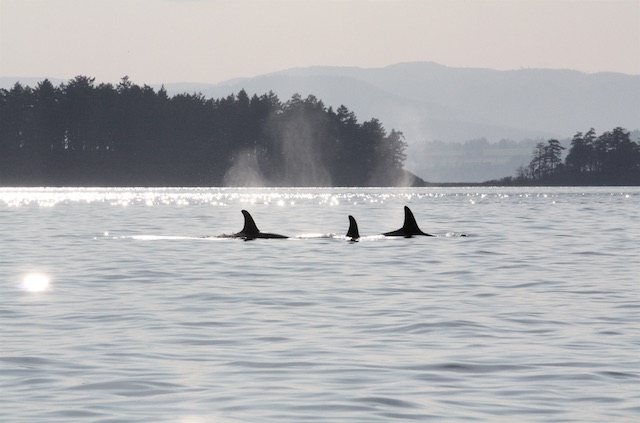
Ecology & Conservation is an intensive two-week immersion into environmental science, marine ecology, and conservation operated in conjunction with investigators from local organizations, such as the University of Washington Friday Harbor Laboratories, the SeaDoc Society, the US National Parks Service, Friends of the San Juans, San Juan County Land Bank, San Juan Islands Conservation District, the Whale Museum, among others.
|
 |
|||||||||||||||||||||||||||||||||||||
|
Here on San Juan Island—at the heart of the Salish Sea—the mountains, forests, rivers, estuaries, shore lands, and waters are our classroom. Combined, these forces tell a complex story of life support that defines the Pacific Northwest.
Evidence-based, creative solutions
Professional research scientists, ecologists, policy-makers, and environmental advocates engage our students, guiding them toward a deep understanding of natural systems, the causes and impacts of climate change, conservation and mitigation efforts, and environmental policy and law. Students gain the knowledge, skills, and career awareness they will need to advance evidence-based, creative solutions toward sustainability in their home communities and the larger world.
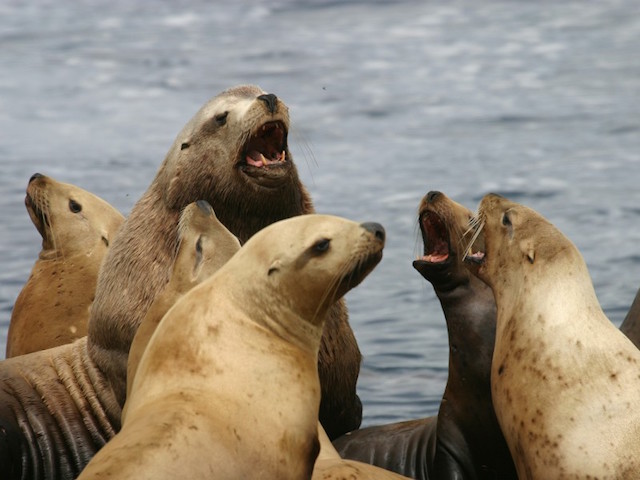
Endangered species of the San Juan archipelago
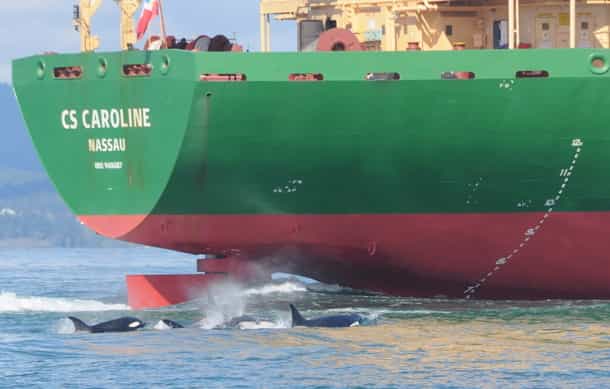
Ship noise impact and mitigation
Environmental dispute analysis and policy
Conservation issues and practices
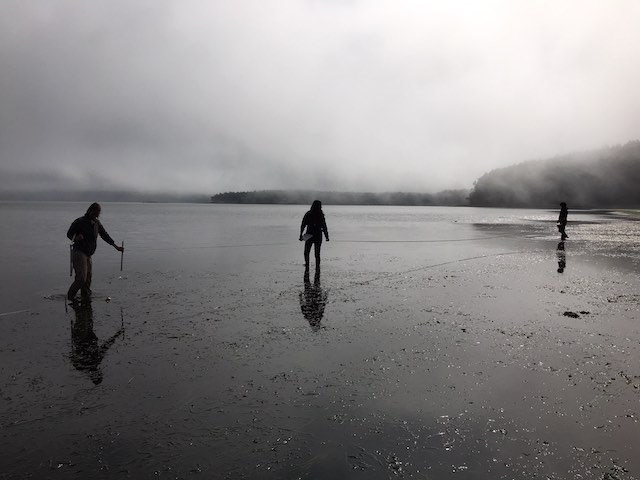
Field studies, observation, interpretation
World-class mentors
A three-phase program
Phase one: environmental science and coastal ecology
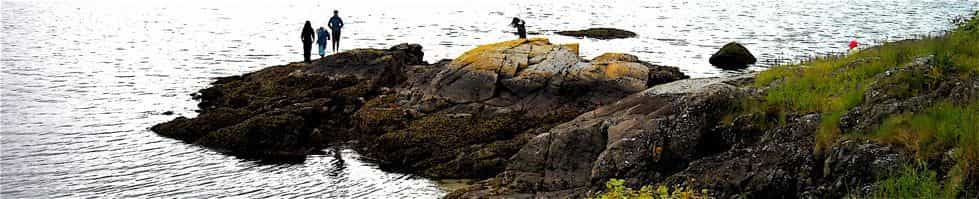
Activities include interaction with research scientists and ecologists, skill development with methodologies and data sets, familiarity with conservation and mitigation issues and practices, and an in-depth examination of the Salish Sea ecosystem, including a 2-day/1-night kayak expedition to explore island habitats accessible only by boat.
Phase two: conservation and mitigation
The Salish Sea ecosystem is unique to the planet. As climate change, broadly, and human impact, regionally, test the sustainability of that ecosystem—no more obviously than the severe decline in salmon, especially chinook, decline of all important kelp forests and eelgrass meadows, and the near extinction of the Southern Resident killer whale—many individuals and organizations have risen to the task of finding solutions through science, conservation, and law. Many work here in the San Juan Islands. Students learn from and engage with the SeaDoc Society of the Karen C. Drayer Wildlife Health Center at the UC Davis School of Veterinary Medicine, Friends of the San Juans, San Juan County Land Bank, San Juan Islands Conservation District, Washington State Department of Fish and Wildlife, the Whale Museum, and the Center for Whale Research.
Phase three: individual projects and presentations
Students develop their own take-away projects to bring back home to their communities based on prompts similar to those typically found in grant applications and RFPs. Students establish their take-away question and project during phase one, but have time with their mentors to shape those projects during phase three. The program culminates with students presenting a five-minute elevator pitch with visualization and taking questions from their peers, mentors, families, and guests at the end of session barbecue bash.
A typical day
A social mix
Often, tonight's dinner guest will be tomorrow's field or studio host, making it easy for students to engage with professionals on a personal level, as colleagues, sharing conversation, meals, career directions, field and lab experience, and asking questions in an informal low-pressure context.
Thank you again for feeding our daughter's passion at Salish Sea Sciences. Salish was the highlight of her summer. I think it also gave her the confidence to get herself an internship at UCSB Marine Science Institute this year. She fell in love with the San Juan Islands and everything she did there. As a result, we were in the Northwest doing college tours! —Parent
|
   |
|||||||||||||||||||||||||||||||||||||