By: Kelly, Sophia, Mika, Chloe B
Our first full day on San Juan Island after a long “Day 1” of travel…

After breakfast and a brief orientation, we set off on a Friday Harbor scavenger hunt and explored the town for around 2 hours. We were tasked with taking group selfies at each subsequent location on our list. Pictured below is an image of Team Smack completing the task of “taking a photo of another group taking their photo.”
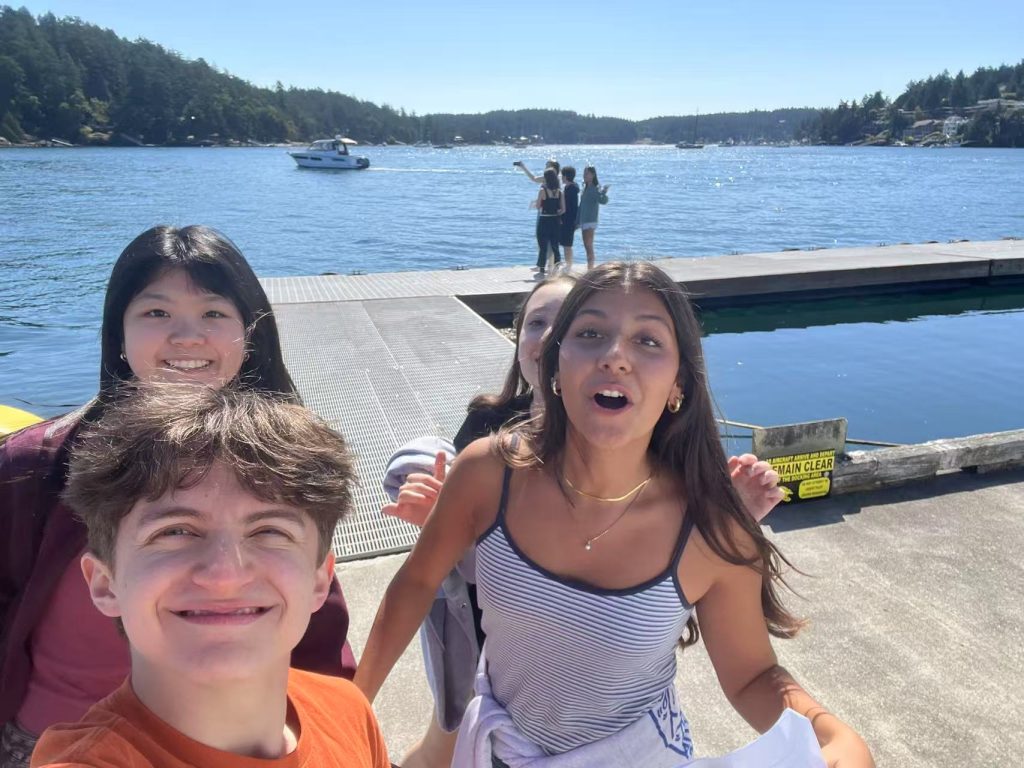
After over an hour of scavenging, teams were challenged with taking a selfie of everyone drinking water. With no water bottles handy, Team Smack made a quick stop at the gas station to pick up a drink and hydrate using their hands in order to complete the task.
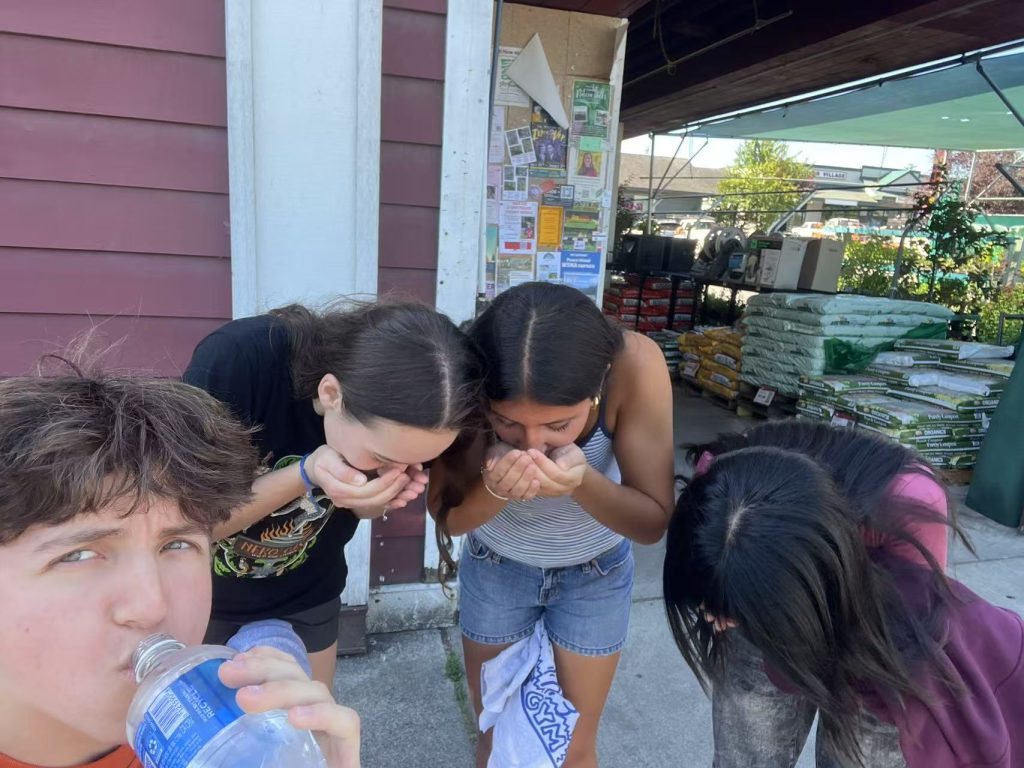
Team Smack completing the “drink water” task. Photo credits: Mika
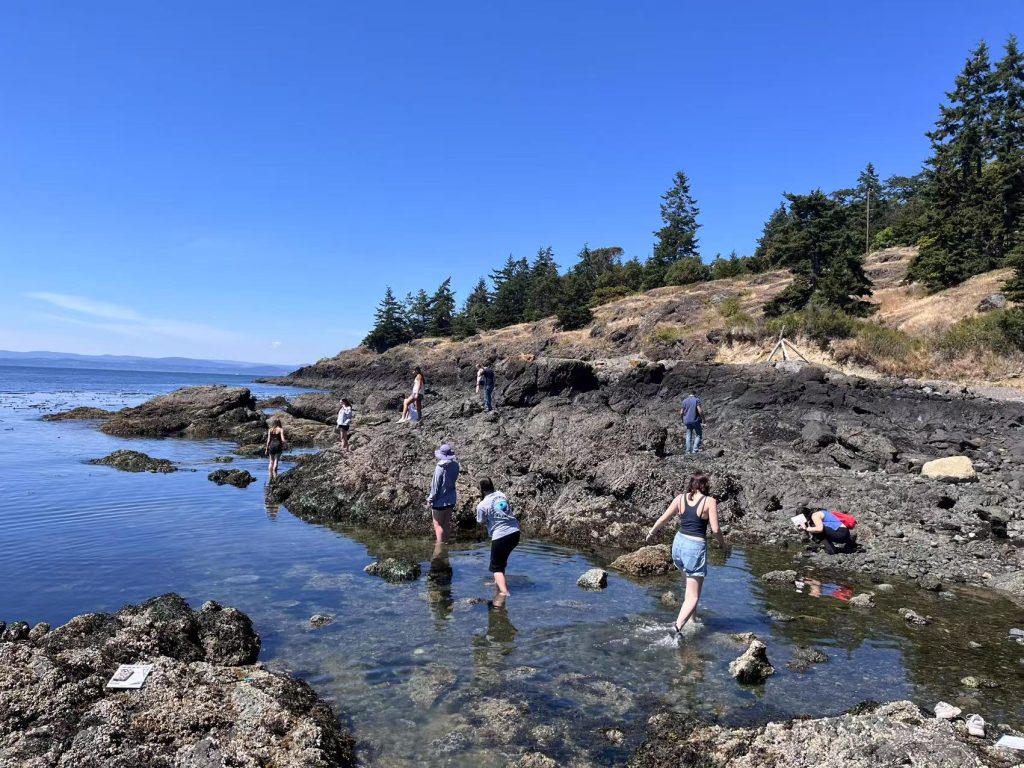
After a quick regrouping back at the Spring Street dorms, everyone packed their field lunch, and we headed out to Deadman’s Bay on the west coast of San Juan Island. Here we sat on the beach and ate our lunch while being viciously swarmed by hungry wasps. Afterwards, we spent the following couple of hours exploring the tidepools in an effort to complete the tidepool bingo.
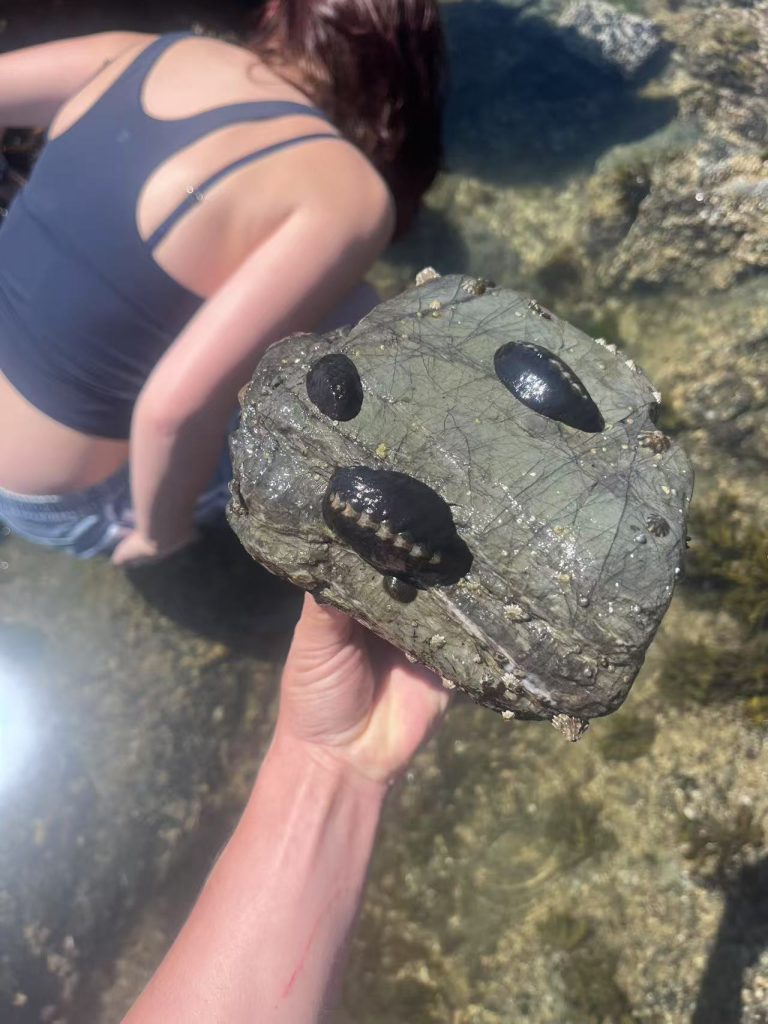
At the tidepools, we came across numerous diverse species, but something that caught our eye were the fossil-like chitons that stuck to the rocks. We later found that chitons are characterized by their eight shells and are members of the phylum Mollusca, a species that has an incredibly muscular foot, allowing them to hold on to various surfaces. Pictured below are three hairy chitons (Pos M. ciliata). These chitons were found after turning over a rock.
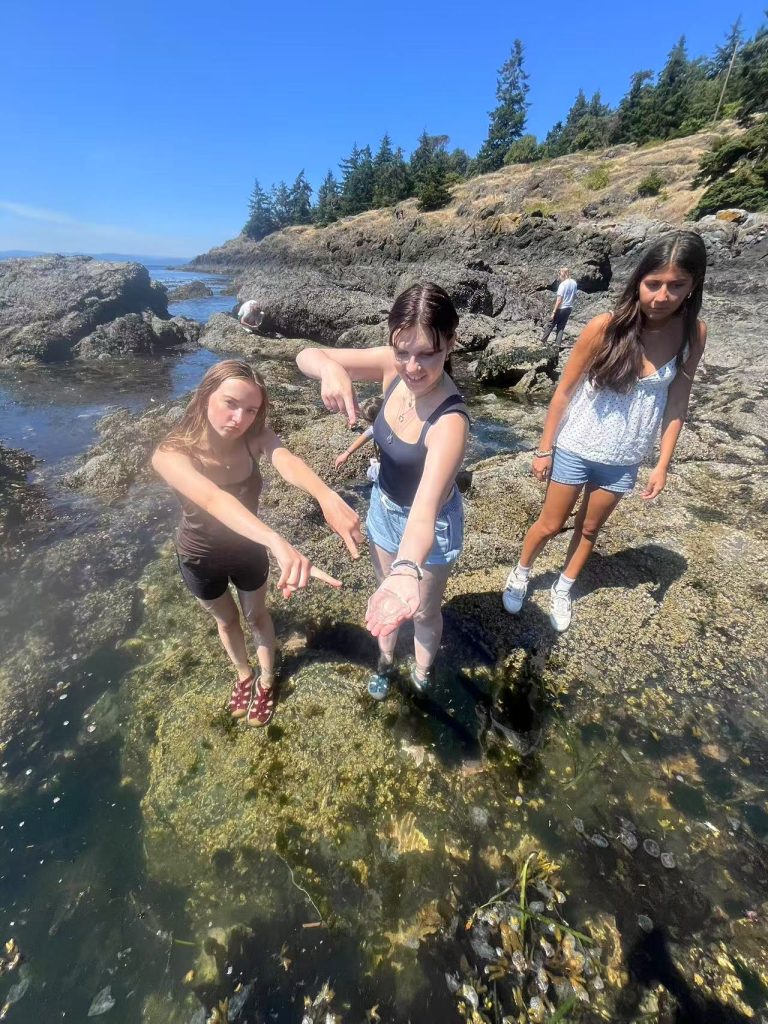
At the tidepools, we found copious amounts of moon jellies (Aurelia sp.). Although many of them seemed lethargic due to the heat, we still managed to find some lively jellies. Pictured below is an image of a particular crystal jelly (Aequorea victoria) that stood out due to its larger comparative size and intriguing radial pattern.
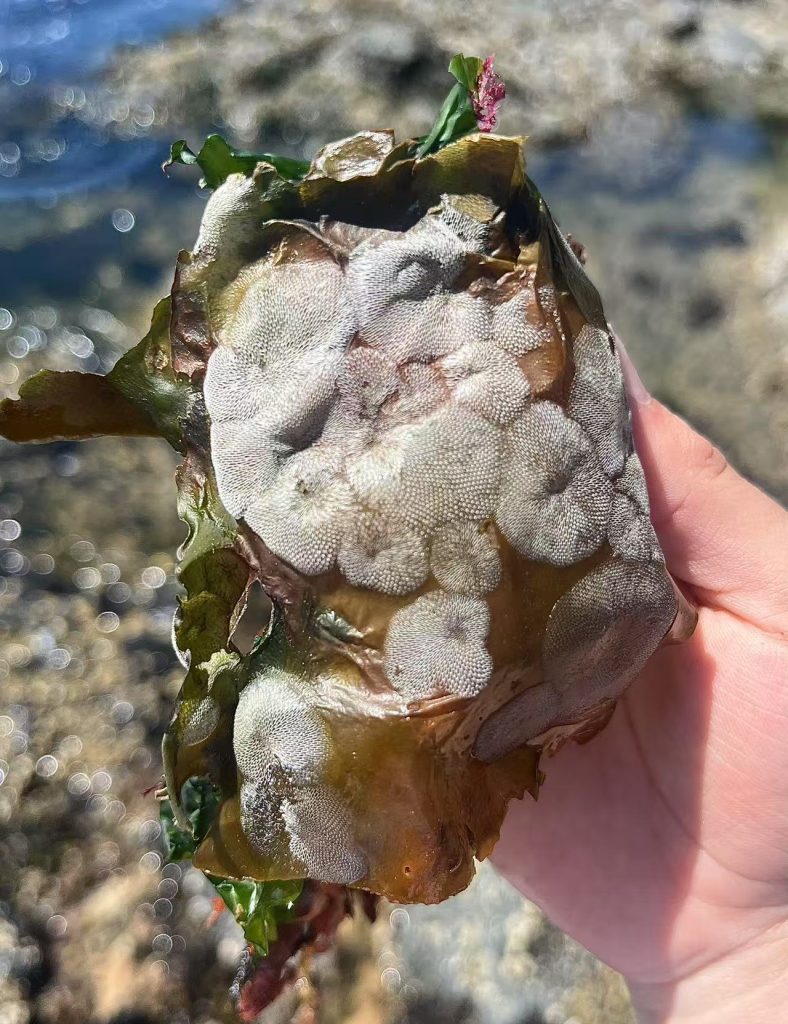
Another intriguing find was a colony of kelp lace bryozoan occupying a piece of kelp. This is a sedentary colonial organism, and each individual organism is an exact clone of the others surrounding it. Finding a colony of lace kelp bryozoan indicates a sign of good water quality due to its sole occupancy of healthy waters.
After our tidepooling, our science directors, Adam and Maya, led a group lesson in taxonomy and regional phyllum with a reflection on our sightings. We then left Deadman’s Bay and headed back to the Spring Street dorms. Here, Adam gave a presentation on invertebrate phylum. And we broke into our groups to complete our assigned jobs. Now we are super excited and preparing for our dinner with special guest John Michael Racy, who is a member of the University of Washington’s Illimited Lab and is currently working on integrating stingray skeletal designs into mechanical engineering, mentored by Dr. Adam Summers!