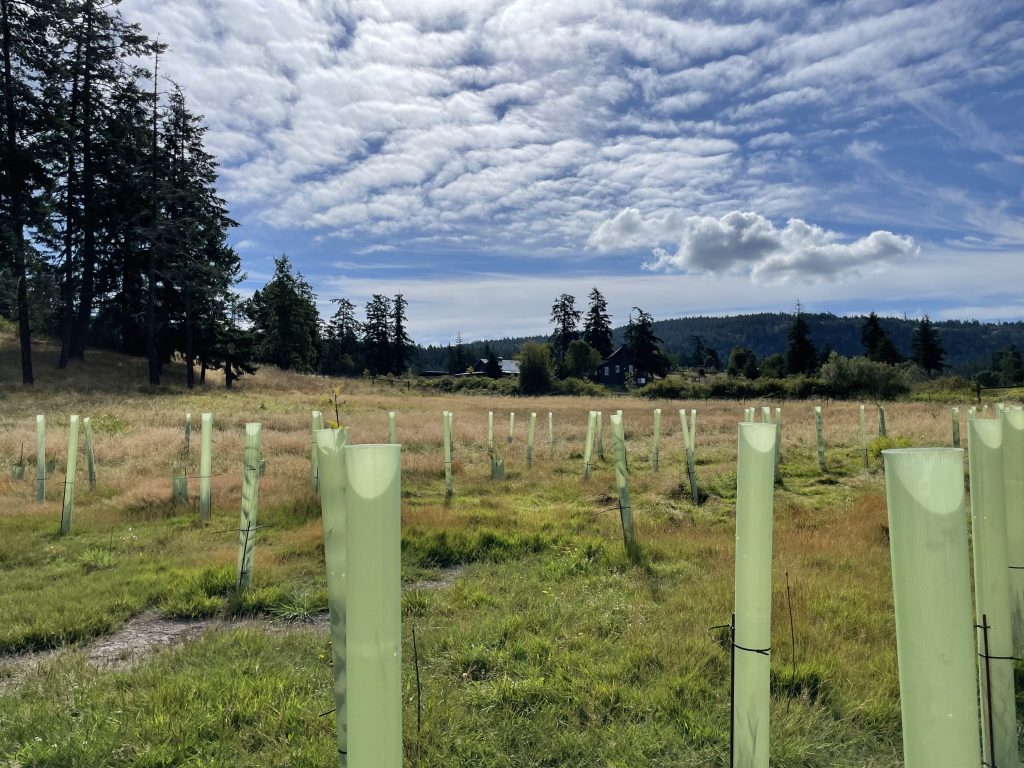
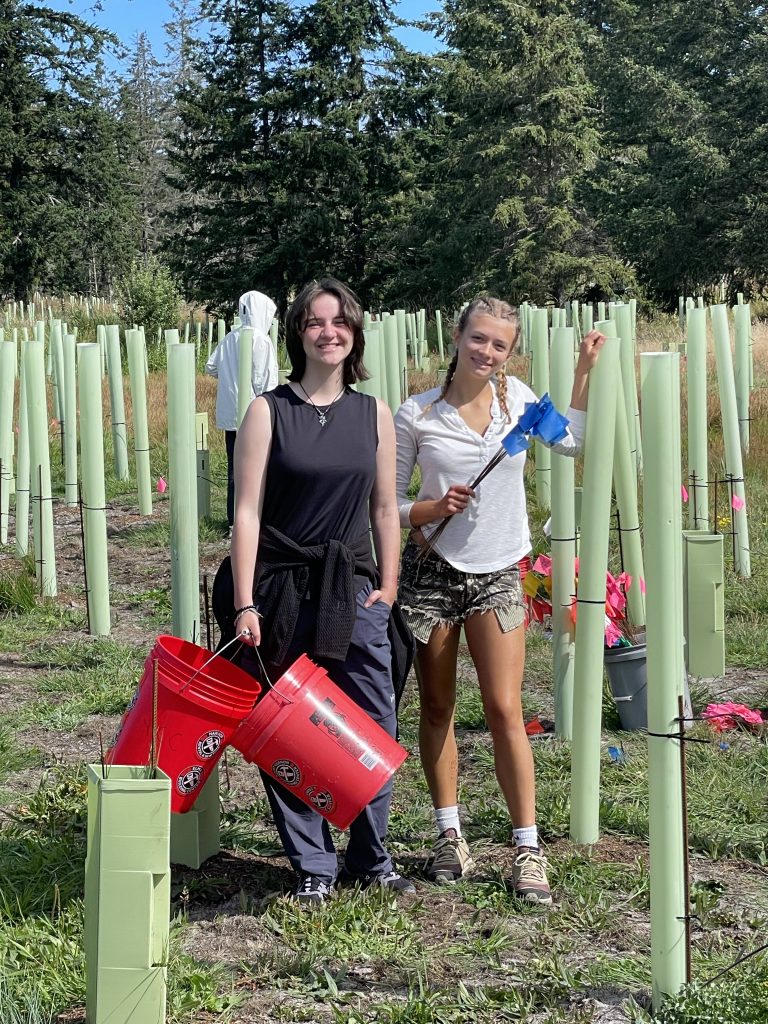
The day started off with the usual: wake-up, breakfast and packing lunch, and preparing to leave. This morning, we headed off to Krystal Acres to work with Charlotte Kratovile-Lavelle, helping to water trees that had been planted in a large field next to a small pond. All of the saplings also had a green plastic cover encircling them to stop deer from eating and killing them.
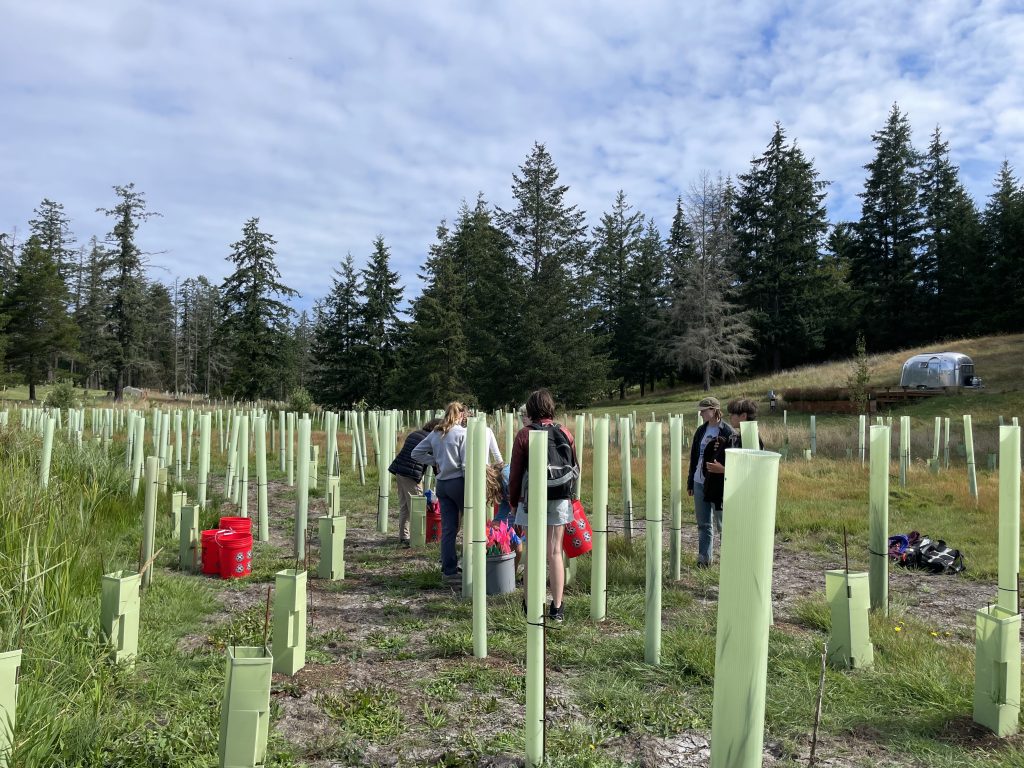
The field of tree saplings (Photo Credit: Olivia)Everyone carrying gear into the field (Photo Credit: Olivia)
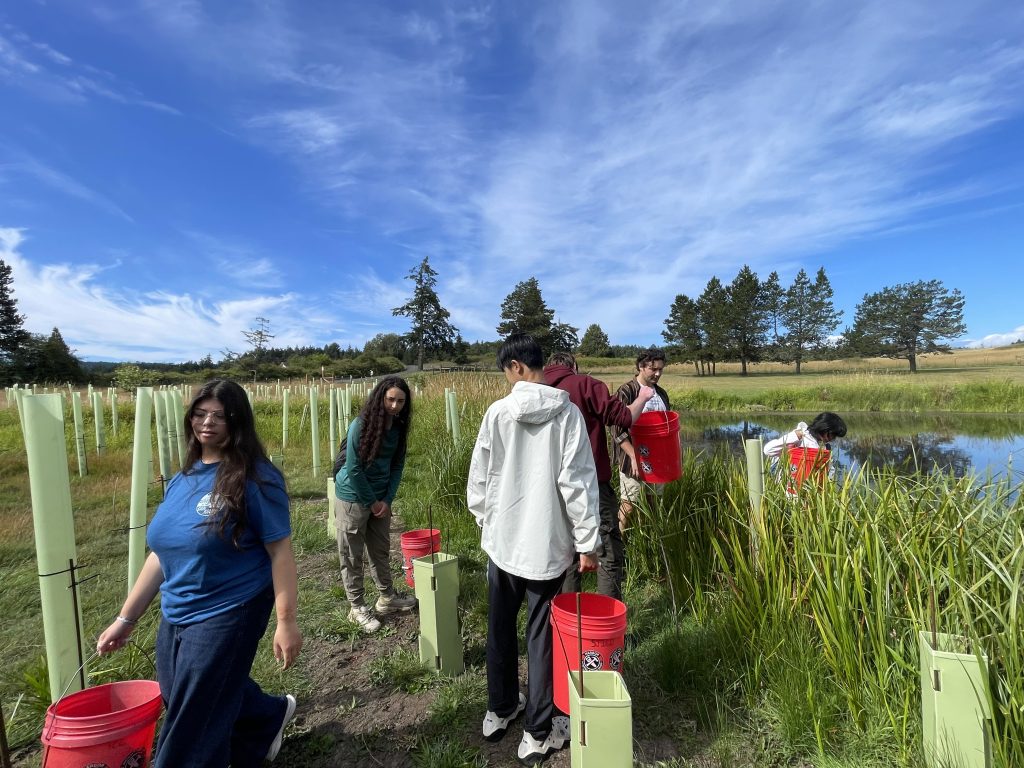
Charlotte first explained to us the some of the history of the area we were in and the work she (as part of the Island Conservation Corp) was doing, and then we began going around flagging saplings to mark which of them were still alive. After that, we formed a sort of assembly line, with two people filling large buckets with water from the pond, and then passing them off to everyone else to go water all of the flagged saplings. We then used a blue flag to mark that the sapling had been watered.
Everyone carrying buckets of water (Photo Credit: Olivia)Nina and Chiska with their buckets and flags (Photo Credit: Olivia)
After a couple of hours, everyone was tired, and it was time to grab all of the gear and head out.
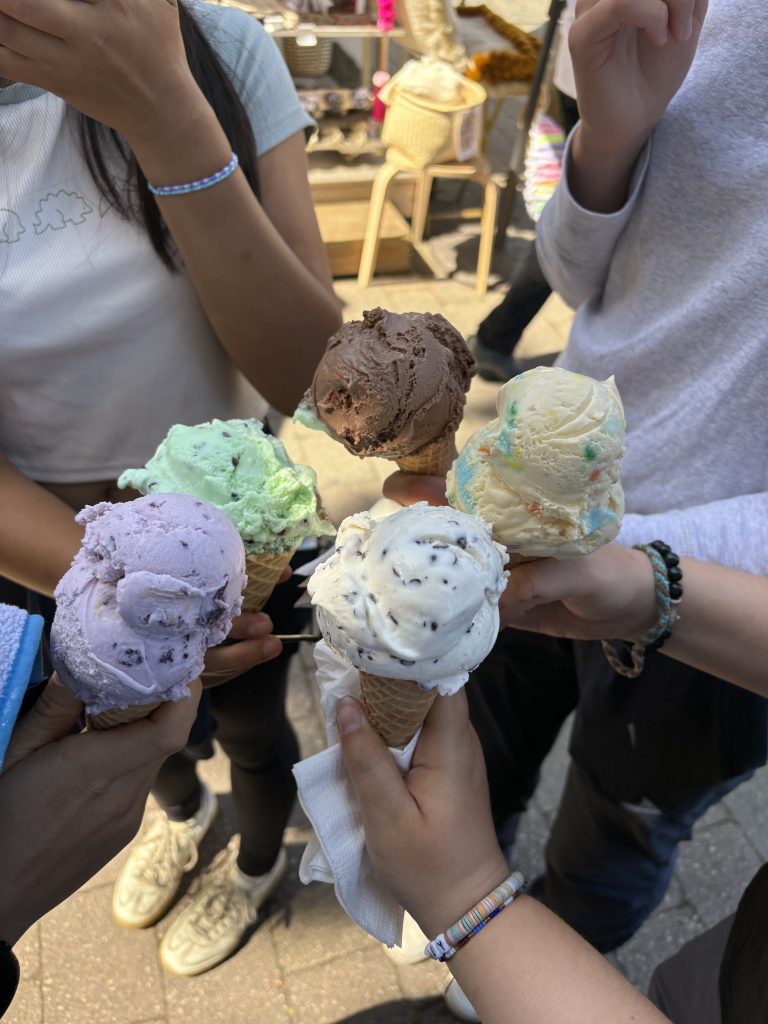
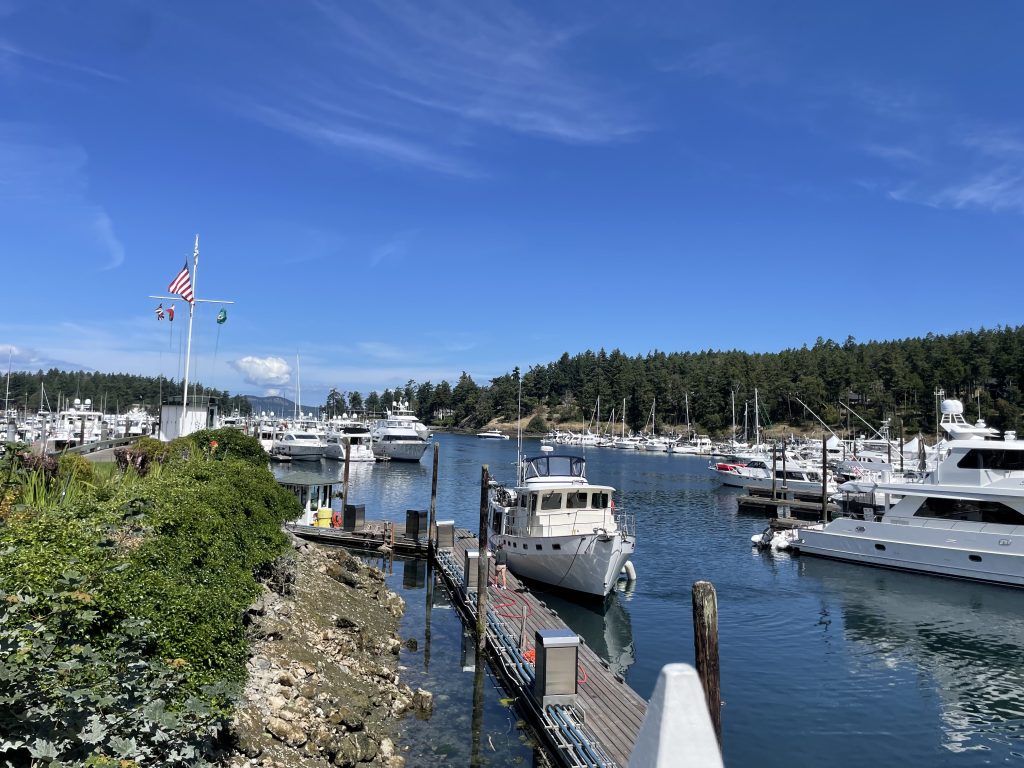
Then we were given a surprise of ice cream! We walked around the cute village and docks while savoring our well earned treat.
Katelyn, Olivia, Nina, Emily, and Isabelle holding out their different ice cream flavors! (Photo Credit: Olivia)A sunny day at Roche Harbor! (Photo Credit: Olivia)
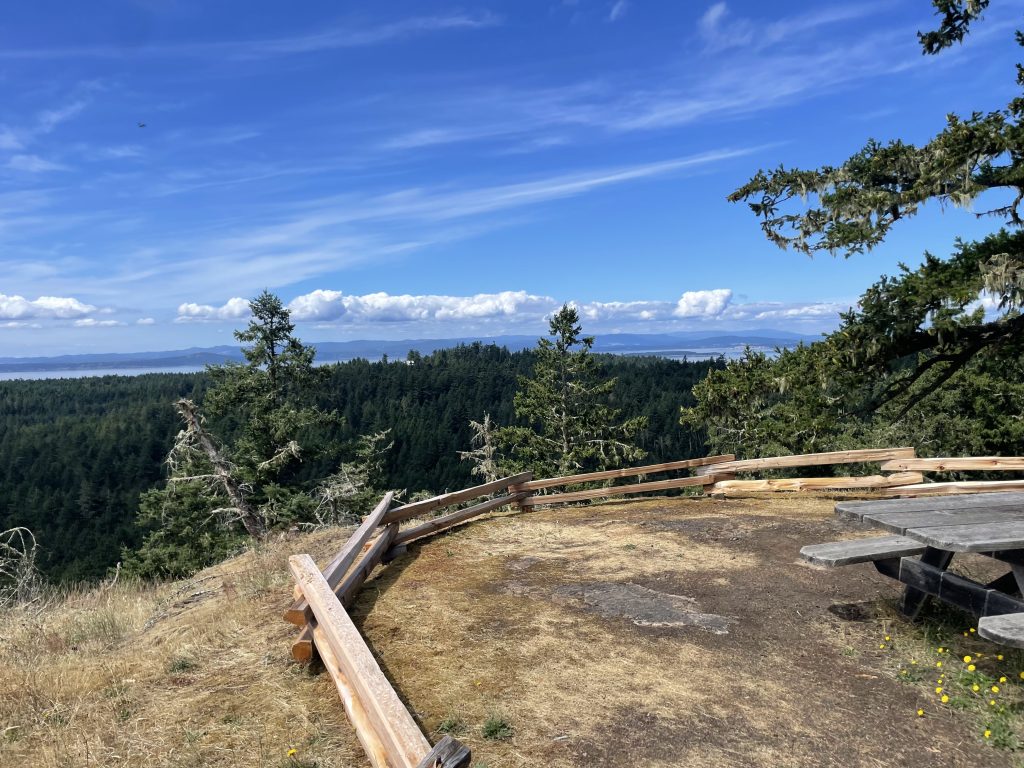
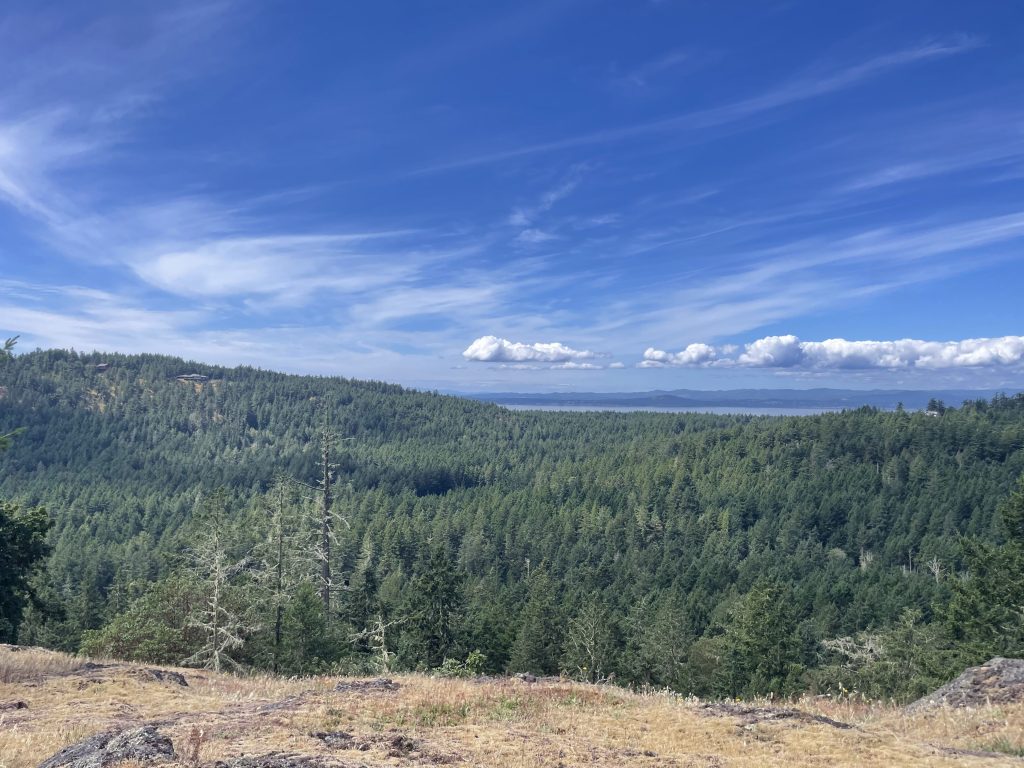
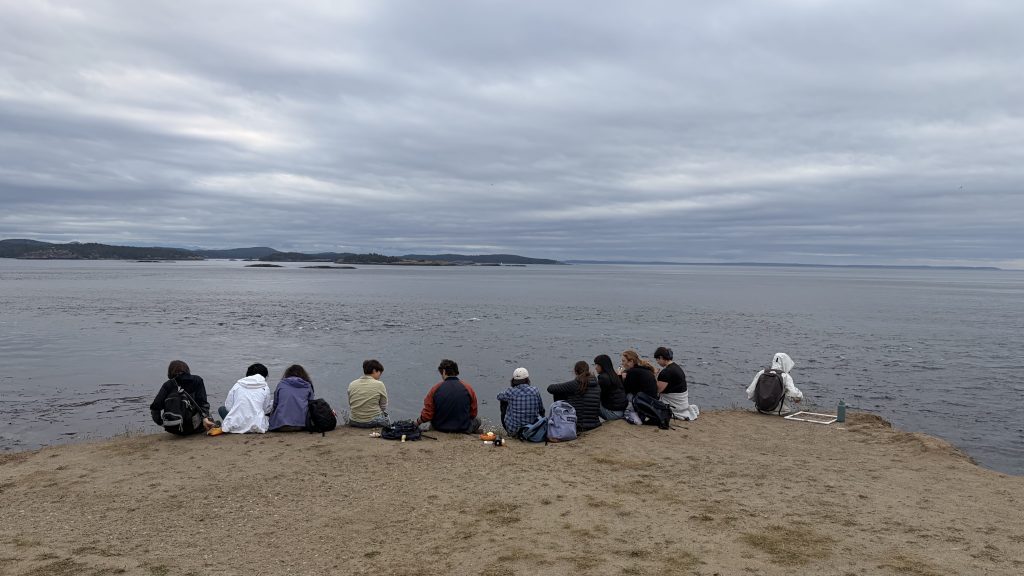
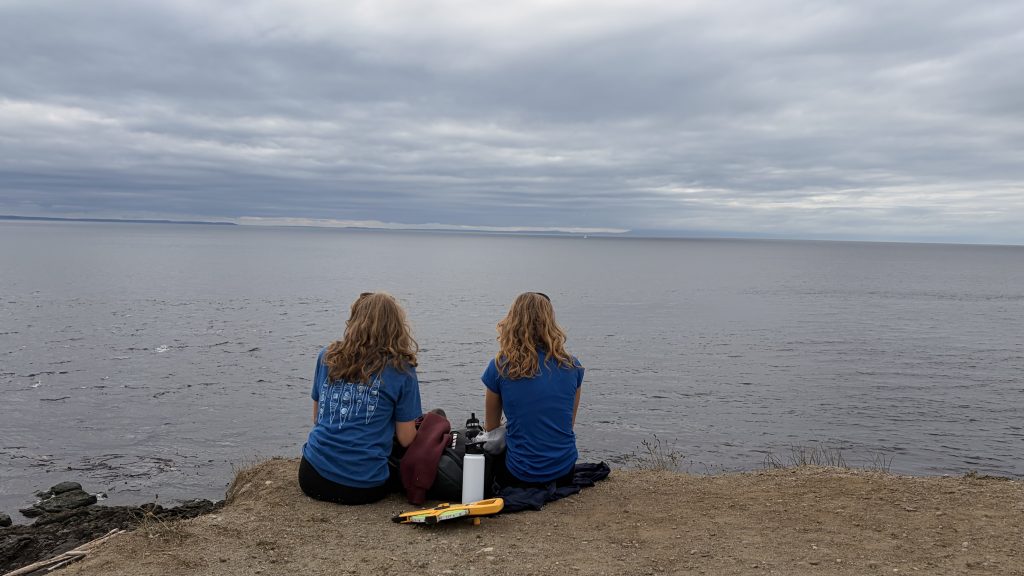
After finishing our ice cream, we got into the van and headed over to Mount Grant to eat lunch. We were high enough to see in all directions and played a fun game of guessing which way was North (everyone failed terribly).
The view from lunch! (Photo Credit: Olivia)Looking out at the island from Mount Grant (Photo Credit: Olivia)
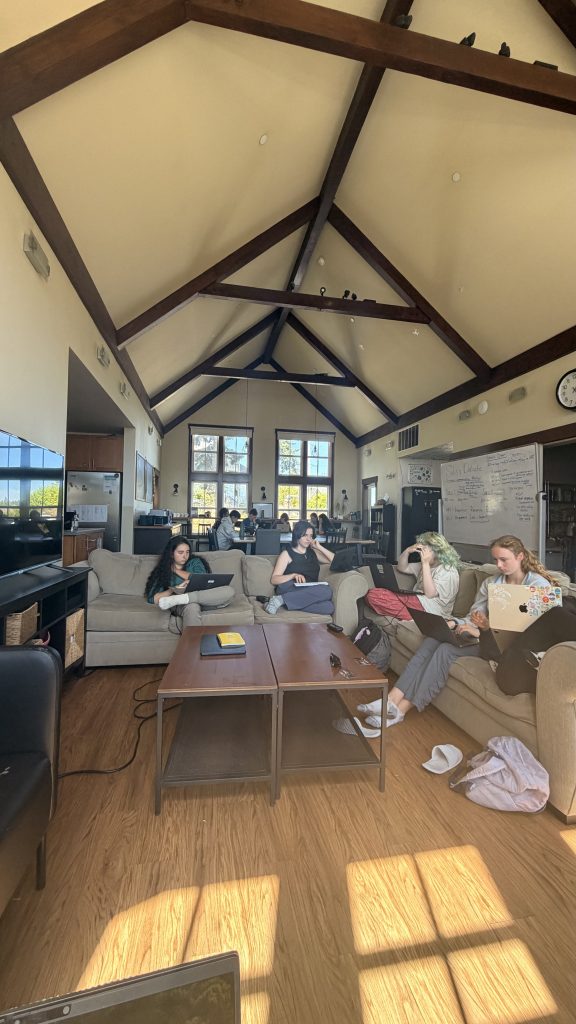
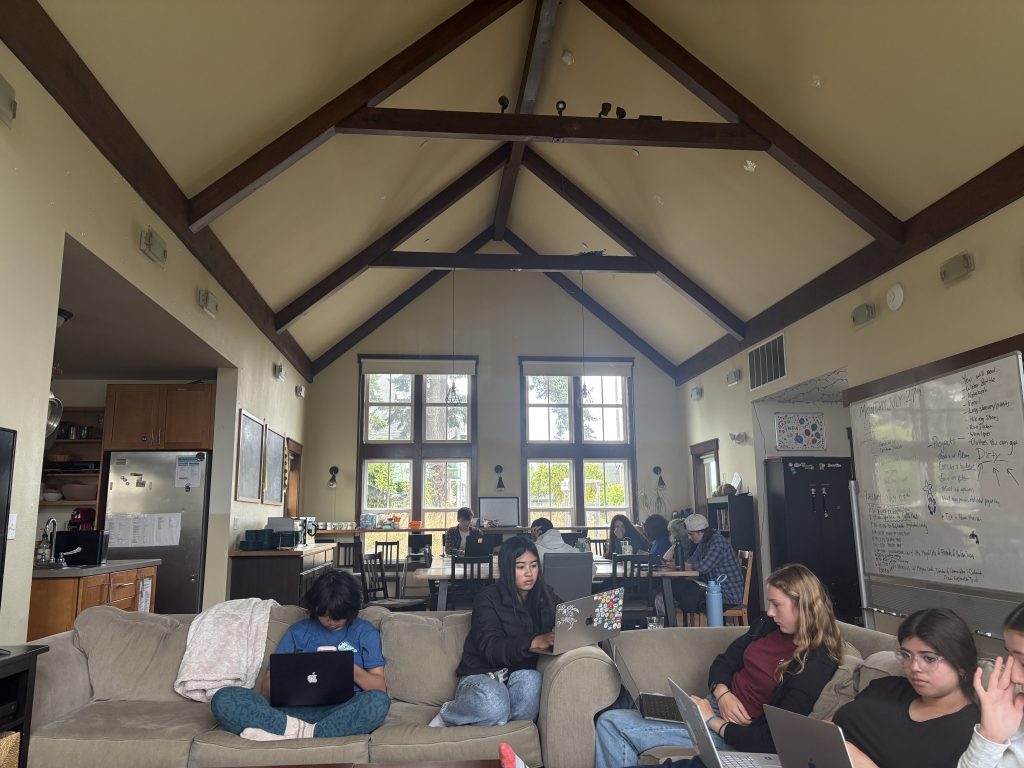
Very full and happy, we headed back to the house to have project time to work on our debate prep and final projects.
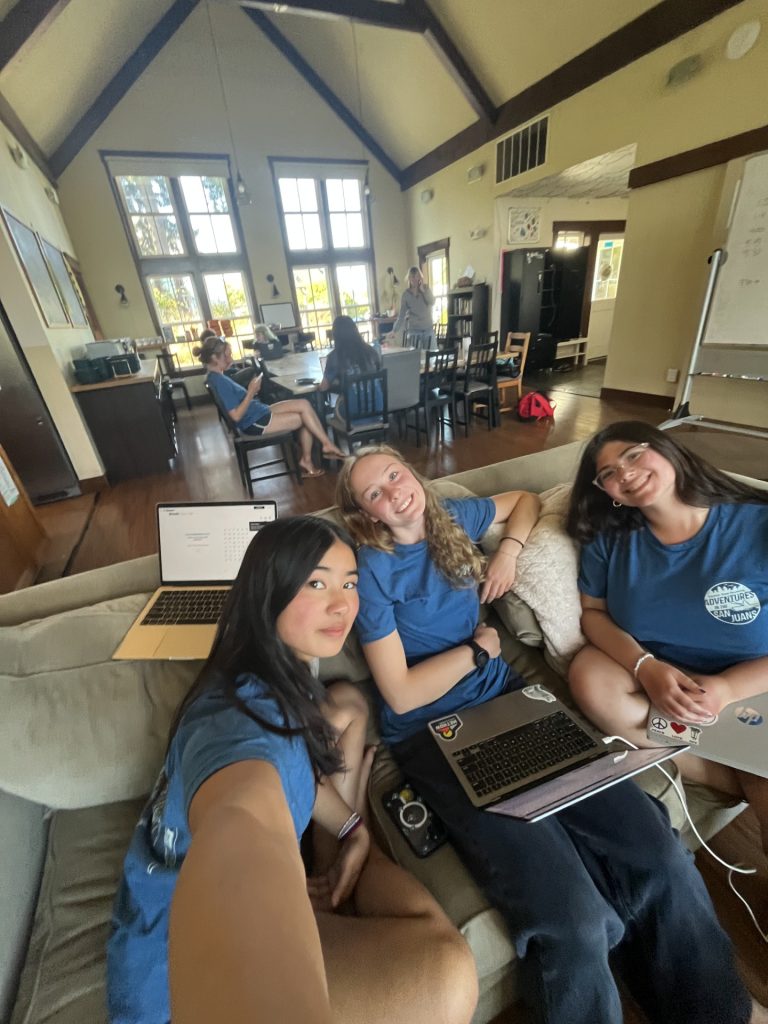
Everyone working diligently on their projects (Photo Credit: Annalise
After working very hard, we all attended a lecture at Friday Harbor Labs on the importance of preserving specimens. After a very interesting, but long, lecture, we were all very hungry and went back to the house to eat dinner. After a busy day, we had the luxury of free time after dinner. Everyone relaxed and went to bed excited for the next day!
Blog Credits: Chiska Francis, Satya Mayeux, Max Chung
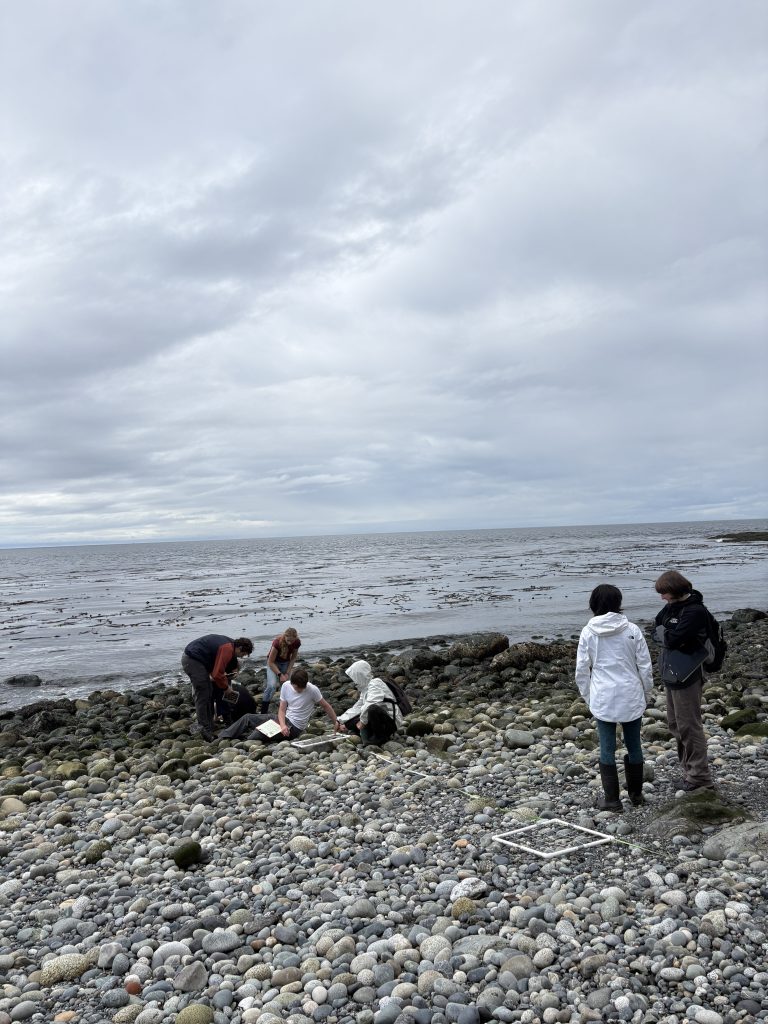
Students surveying the algae and seaweed growth (Photo credit: Chiska)
After a tiring day of weeding and surveying the Westside Preserve with Shauna Barrows, this morning we slept in until 7:15 am, and headed to Cattle Point to survey algae and seaweed growth with Dr. Dobkowski and her class from Friday Harbor Labs (FHL).
Dr. Dobkowski is conducting research on the strength of species interactions between Northern Kelp Crabs (Pugettia producta), numerous species of macroalgae (including bull kelp, Nereocystis luetkeana), and other species of invertebrates in the nearshore subtidal to understand what level of top-down control kelp crabs might exert in the system.
Everyone eating lunch at Cattle Point (Photo credit: Annalise)
After transecting and surveying 4 locations, we stopped at the lighthouse to have lunch. Not pictured, but on the drive home we saw a black fox with a white tail tip!
We then headed back to the dorms to prepare for our debate on Thursday and project presentations on Friday!
Can you tell the difference between Annalise and Chiska? (Photo credit: Fenn)Everyone working on our projects in the dorms (Photo credit: Chiska)
We are all so excited to present our projects to the parents, guest speakers, and staff on Friday! This project focuses on developing a preliminary proposal for a conservation or restoration project that could conceivably be implemented in our home areas. The prompts for our projects are grant applications and an RFP (Request for Proposal).
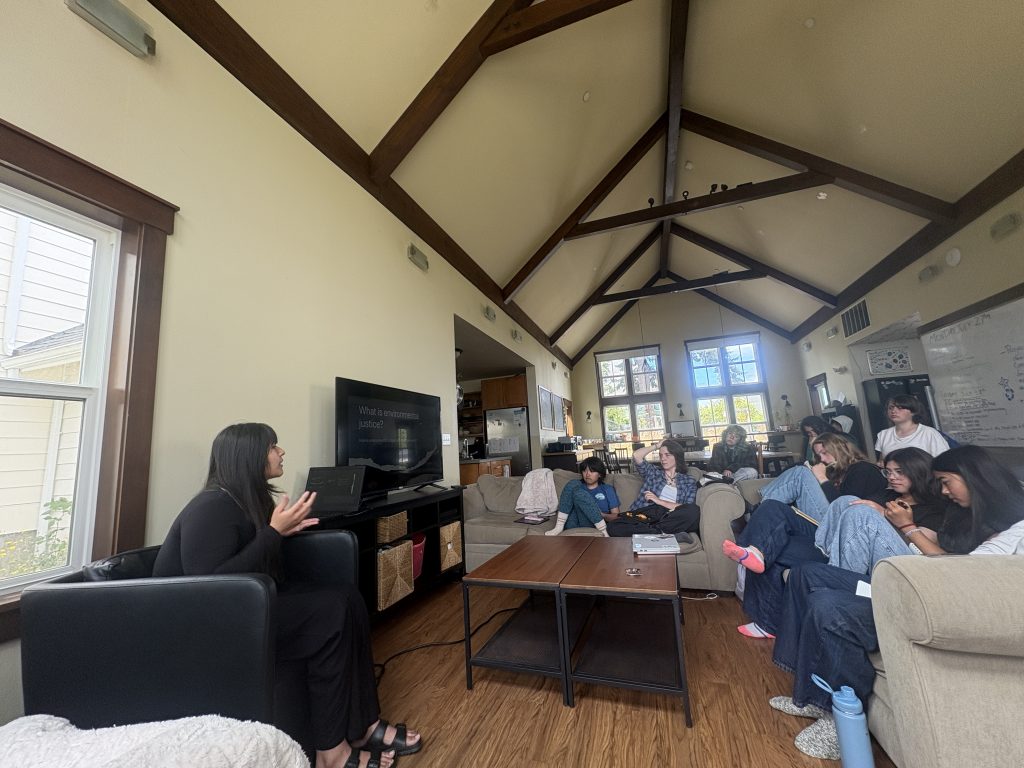
Then Magali Cota gave us a wonderful presentation about her job as an environmental law attorney at Friends of the San Juans, going into the ins and outs of her job and the things she is doing to help the community here on San Juan Island!
After Magali Cota’s presentation, our amazing dinner crew (Cooper, Bella, and Sophie) made a delicious dinner.
We are very excited to have Megan Cook tonight. She will be speaking with us from the E/V Nautilus, which is a research vessel stationed above the Mariana Trench! She is the Director of Communications and Outreach for the Ocean Exploration Trust, which was founded by Dr. Bob Ballard, who discovered the Titanic! We are all ready to hear what she has to tell us!
Blog Credits: Sophie Li, Cooper Allin, Isabella Akalin
Continuing on our Journey, today we woke up at 8:00AM, later than we usually do. But we wasted no time and got straight to work! We went to Westside Preserve and hiked the mountain to meet up with Shauna Barrows who we’ve met before, to help her remove some of the invasive Himalayan Blackberry species, along with some Thistles.
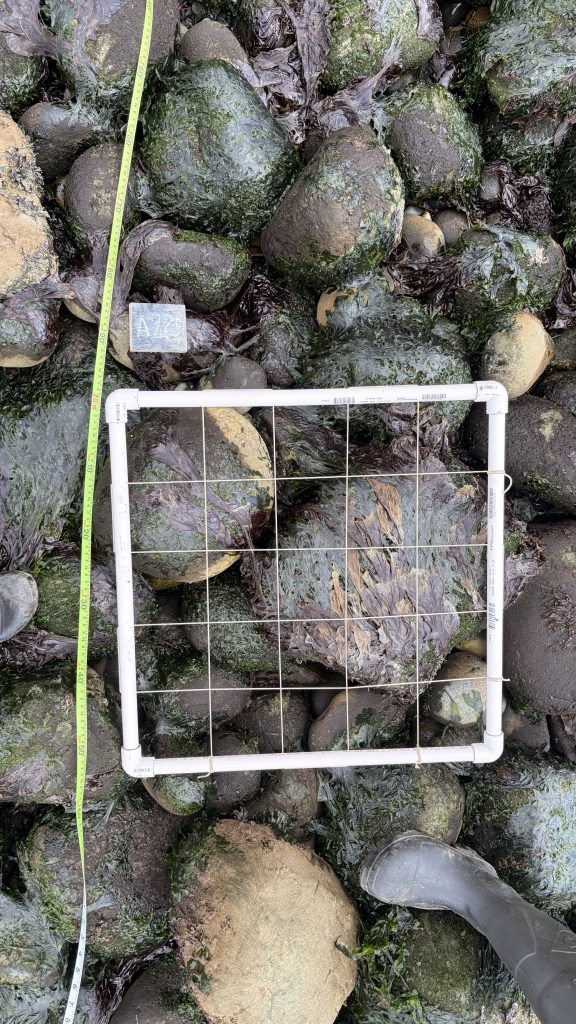
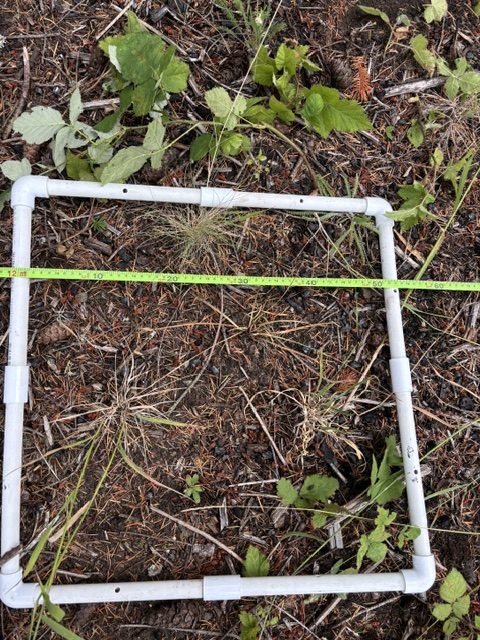
We used quadrants to sample out some of the species and how many of them were in the area. Many of our teammates also used shovels and hoes to dig out the hearts of the blackberry bushes to remove them completely.
A photo of one of the Squares we used to count the species of plants in it. (Photo Credit: Isabelle)
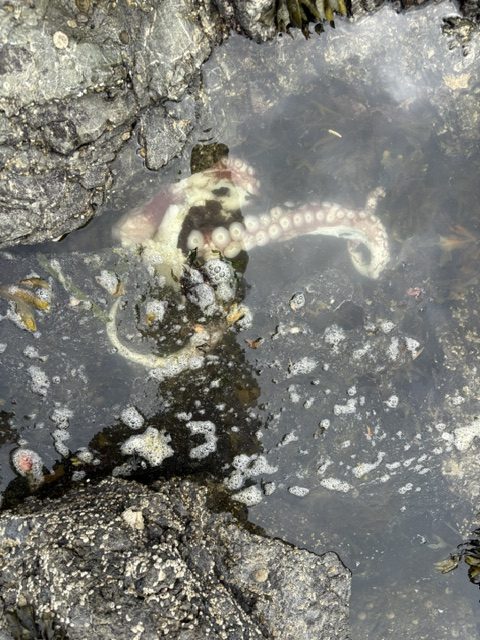
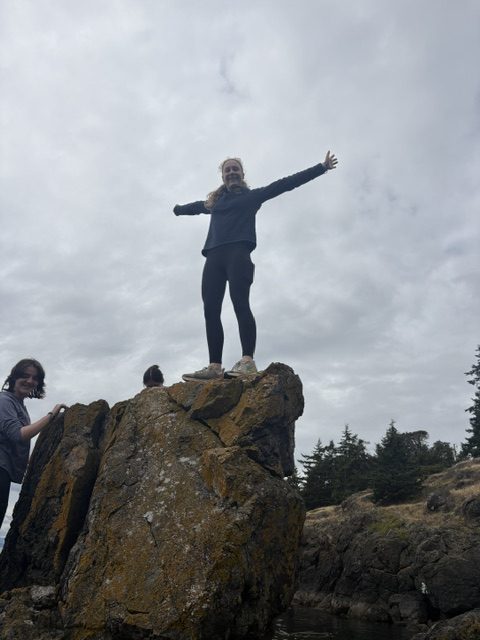
After that we went to the Deadman’s bay to eat lunch, a quick break before heading out to our next activity. Many of our friends went to go take a look in the tidepools, they found many interesting things, including a dead octopus, some crabs, and a jellyfish!
A picture of the dead octopus they found in the tidepools! (Photo Credit: Emily)A picture of Emily and Nina chilling at the Tidepools! (Photo Credit: Emily)
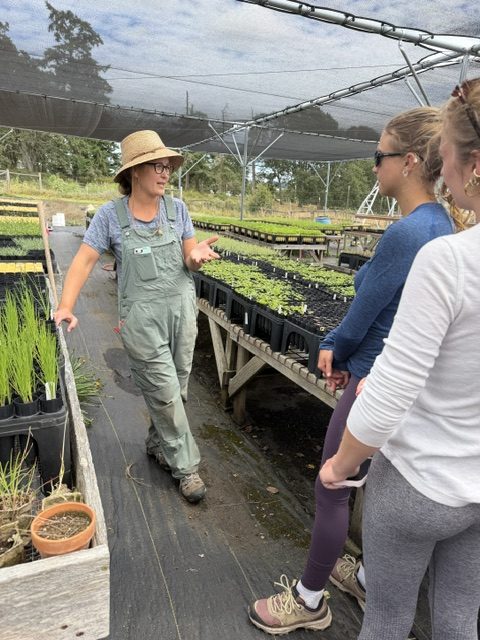
the Redmill farm for seed collection at the Salish Sea Nursery with Margo Thorp, she’s been working on these seeds for the past six years! She showed us the types of native plants that grew in the Salish Sea Area, and how she removes the seeds from the plants she’s grown each year.
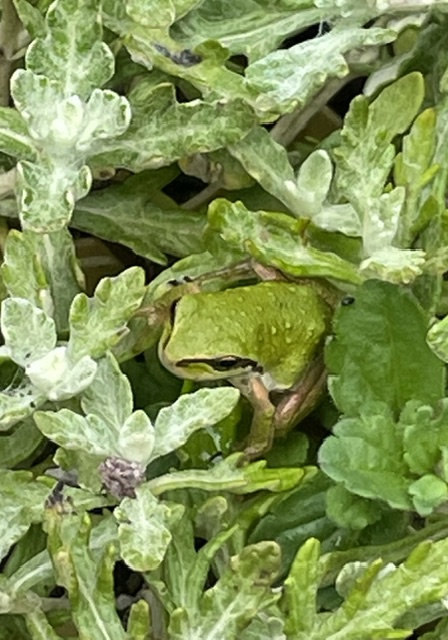
A picture of Margo teaching us about the plants she’s planted! (Photo Credit: Sophie)A cute frog we found within the plants! (Photo Credit: Isabella)
Everyone worked hard to help Margo with her seeding this year! Once we came back our dinner crew (Thank you Emily, Isabelle, and Katelyn) went straight to work to make us some vegetable fried rice and chicken on the side for dinner! Including a salad bar and fruit bar!
Tonight, Tony Casper from the Island Conservation District will come eat dinner with us, we’re so excited to learn more about environmental sciences and forestry! We’re so grateful to him taking his time to educate us about what he does!
After dinner its lights out at 10:30PM for everyone again and we will see you tomorrow with our next blog. Stay tuned!
Blog Credits: Katelyn Poon, Emily Mark, and Isabelle Osborn
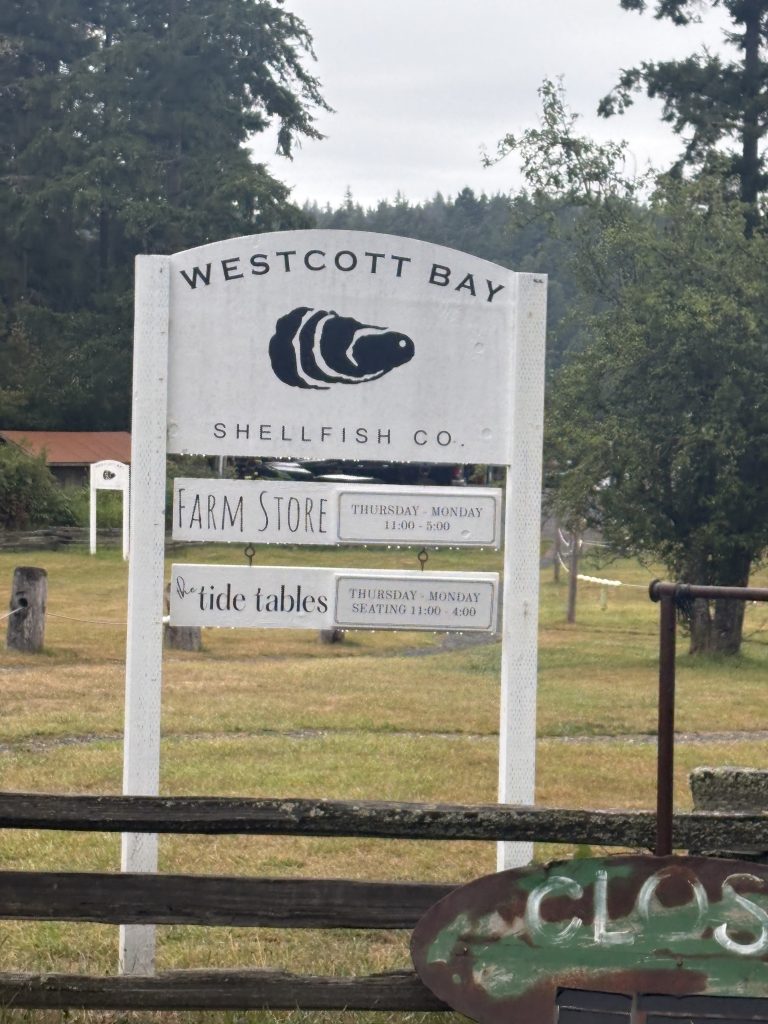
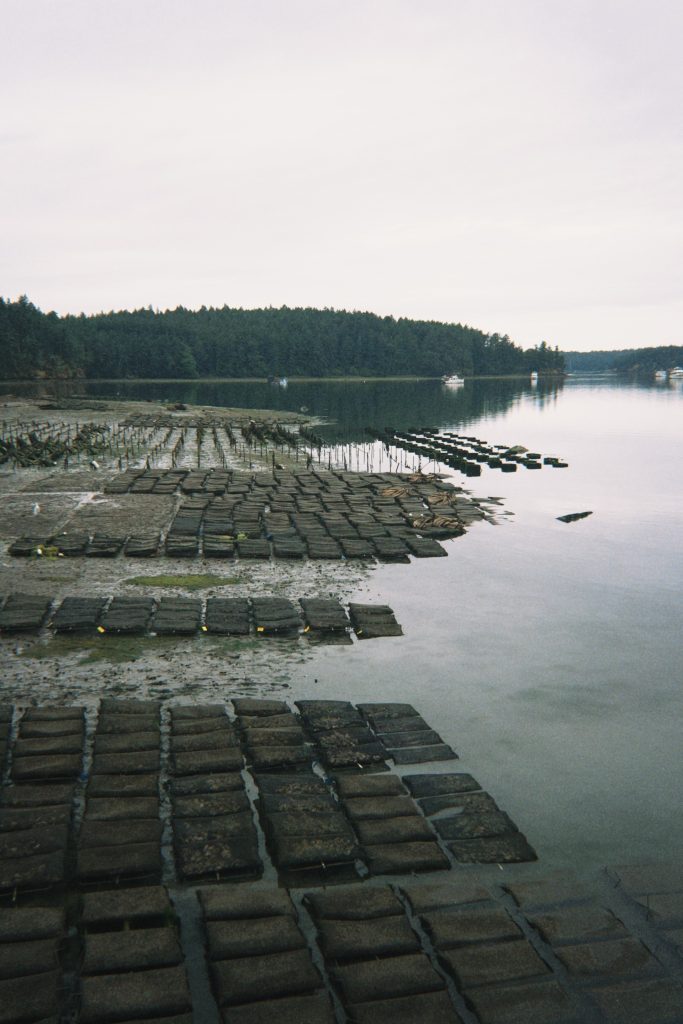
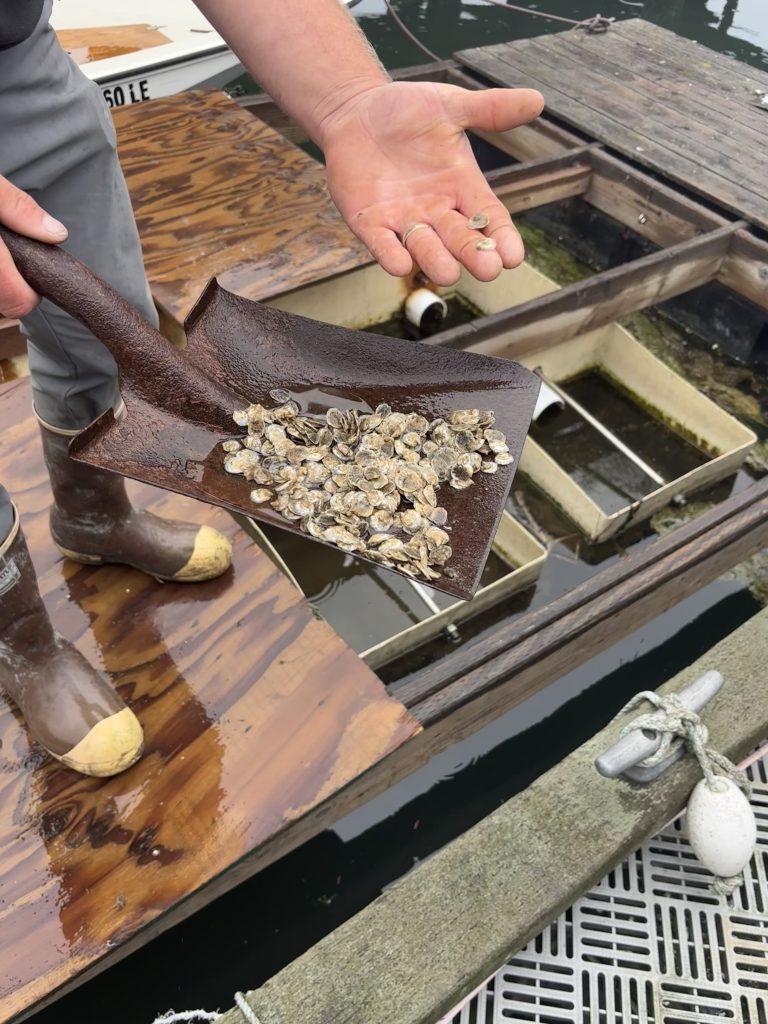
Today we returned to our early wakeup times, waking up at 6:45 am. Everyone was a little tired as we made our way downstairs to breakfast. We then headed to the Westcott Bay Shellfish Company to learn from Chas Lawson on how they farm oysters. There we received a tour of the docks, getting to see the oysters being grown on the beach and the baby oysters also.
The Westcott Bay Shellfish Company (Photo Credit: Emily)A photo of the oysters growing at Westcott Bay (Photo Credit: Katelyn)Chas Lawson showing us the baby oysters (Photo credit: Isabelle)
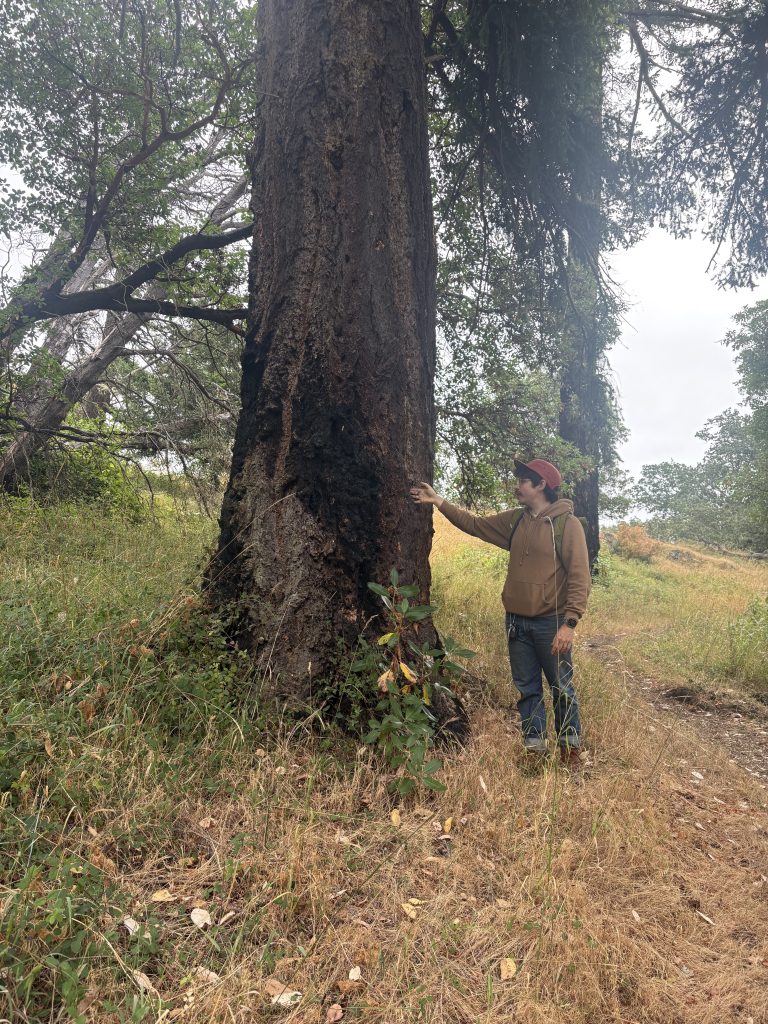
After visiting Westcott bay we headed to Young hill to learn more from Adam Martin about the ecology of the region. As we hiked up to the top of young hill to see the spectacular view, Adam Martin taught us about the history of the forest and prairie there and we learned how to read the land and understand what we were seeing. We learned how Young Hill didn’t used to be a forest, but rather a prairie, and how it was only in the last century that the young Douglass Fir forest grew. Additionally, we learned about the frequent burnings Native Americans used to do to the forest, and how many of the trees evolved with this.
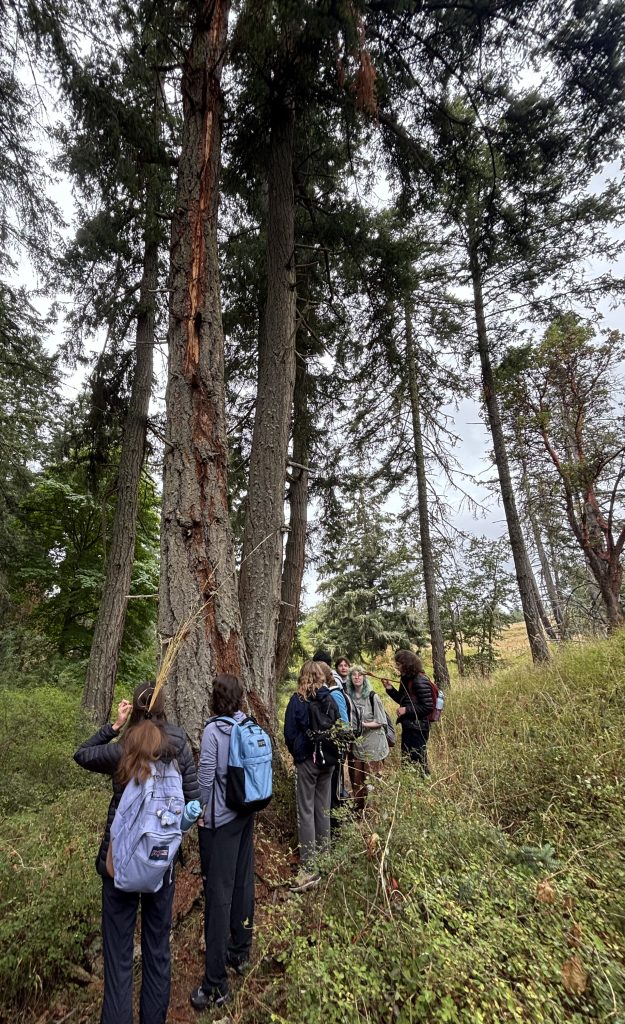
Adam Martin showing us the burn scars on a Douglass Fir (Photo Credit: Emily)
Adam taught us how to tell how old the trees were by looking at the harness and depth of the groves in the park and the amount of small branches on the tree. On our hike we also encountered the Gary Oak, or the Oregon White Oak, and learned how important they are to the ecosystem. They provide important shelter and food to a wide variety of animals, and there are currently many efforts being done to preserve them. They are the only Oak that grows in Washington. We also encountered a tree that was struck by lightning in the storm two days ago, which was really incredible to see.
A photo of students looking at the lightning struck tree (Photo credit: Isabelle)
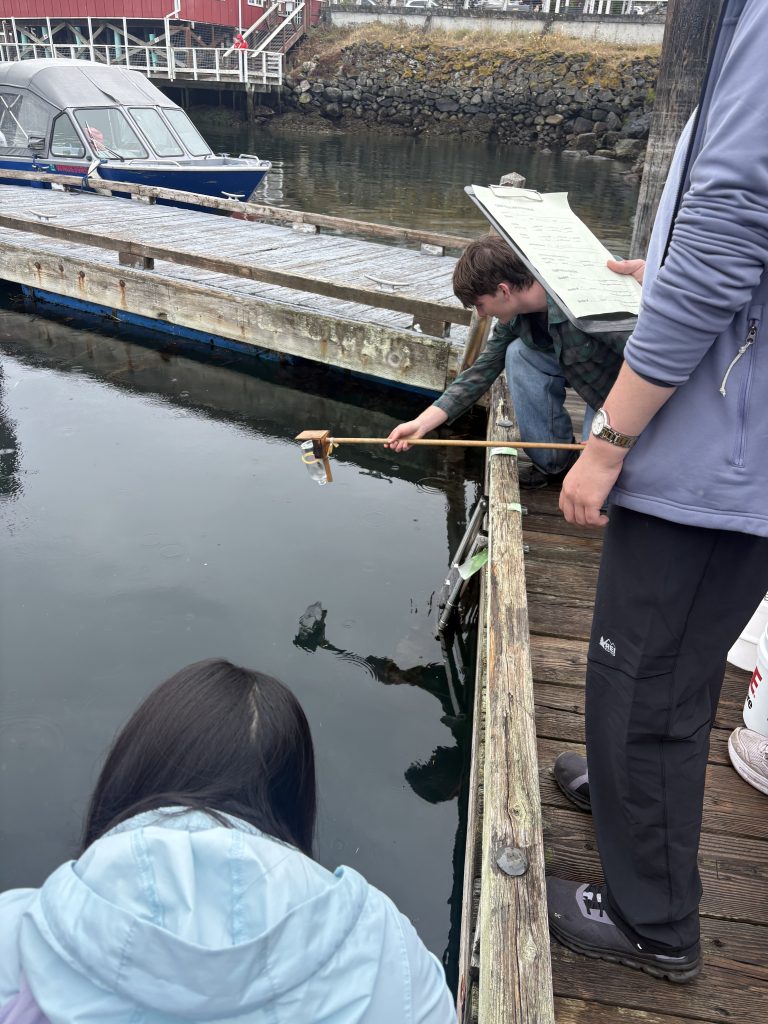
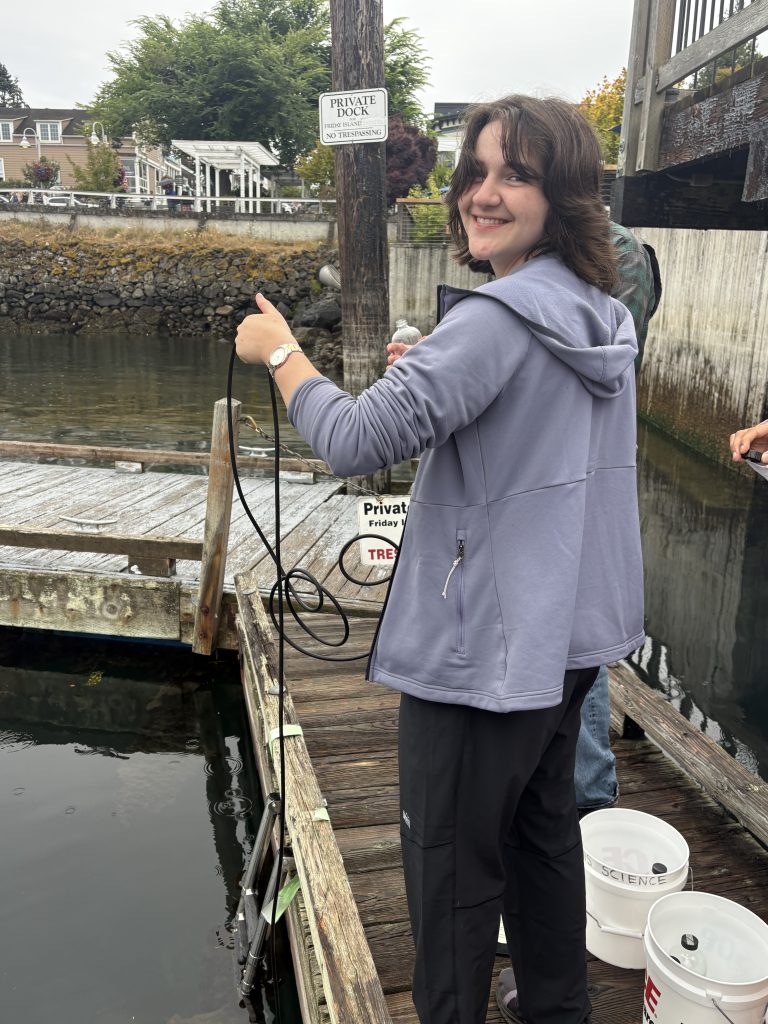
Finally, we made it to the top, eating our lunches and discussing our project ideas with Adam Martin. For the third section of our packed day, we headed to the Friday Harbor Marina to monitor to water quality, testing for the presence of Fecal Coliform, a bacteria that comes from the feces of warm blooded animals and is harmful to humans. We took glass bottles and using a wooded holding stick dipped them into the water additionally monitoring the water temperature and salinity.
Fenn scooping up a water sample (Photo Credit: Emily)Nina holding up the tool to measure salinity and water temperature (Photo Credit: Emily)
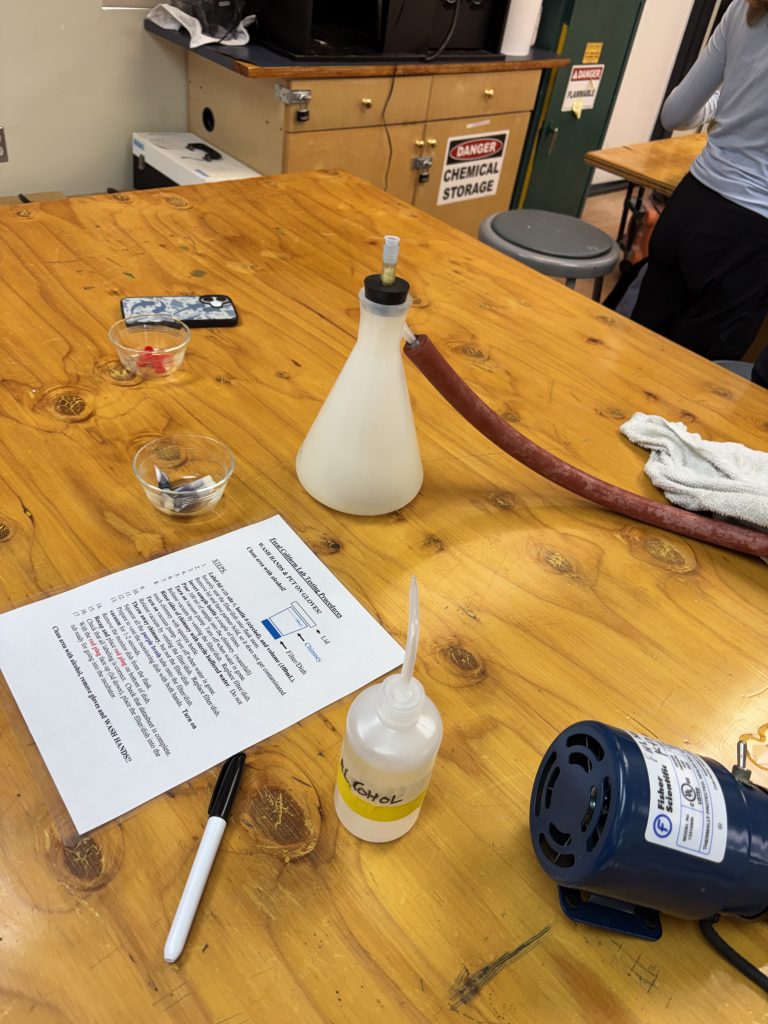
Once back at the dorms we headed to the school’s lab, where we used a vacuum pump to collect the bacteria into a filter, placing them in an incubator with the aim to grow them to become visible to our human eyes. Once visible we will be able to quantify the amount of bacteria. We will update you tomorrow with the experiment’s results!
A photo of the lab workspace (Photo Credit: Isabelle)
We then settled back in at the dorms, spending some time working on our projects and getting to our various tasks!
Tonight we are excited to welcome UW research scientist Dr. Sandy Wyllie-Echeverria, a globally respected specialist in sea grasses, whose primary investigations are at the Friday Harbor Labs focused on eelgrass. He is also on the faculties of the School of Environmental Sciences at University of Victoria in BC and the College of Science and Math at the University of the Virgin Islands. Our homework for this evening is to read two of his papers that will shape tonight’s discussion, one is: Tending the meadows of the sea: a disturbance experiment based on traditional indigenous harvesting of Zostera marina L.(Zosteraceae) the southern region of Canada’s west coast. Aquatic Botany, 127, pp.26-34.
After our harrowing journey the day before, everyone was incredibly greatful for a late wake up time of 8 am. The morning started out nice and slow, a great reprieve from the frantic nature of previous days. We all slowly ate breakfast and got ready for the day, still sore and tired from our adventures, before we packed into the van to head to Jackson Beach.
We emerged from the van to a cold and windy Jackson Beach, to meet with Sage Enright, and work with her to find eelgrass, the nursery of the sea.
Isabelle, Emily, and Olivia searching for eelgrass, while Sage oversees
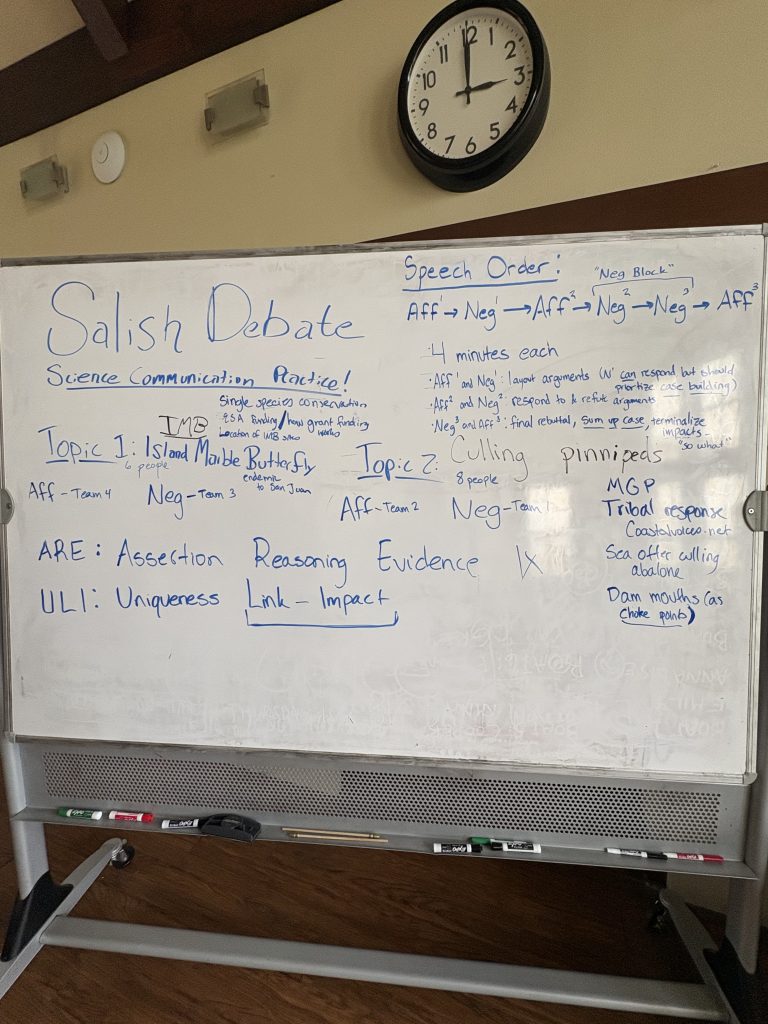
When we returned, we worked with Shauna to start preparations for our debate we will be having later this week.
The stuff Shauna said
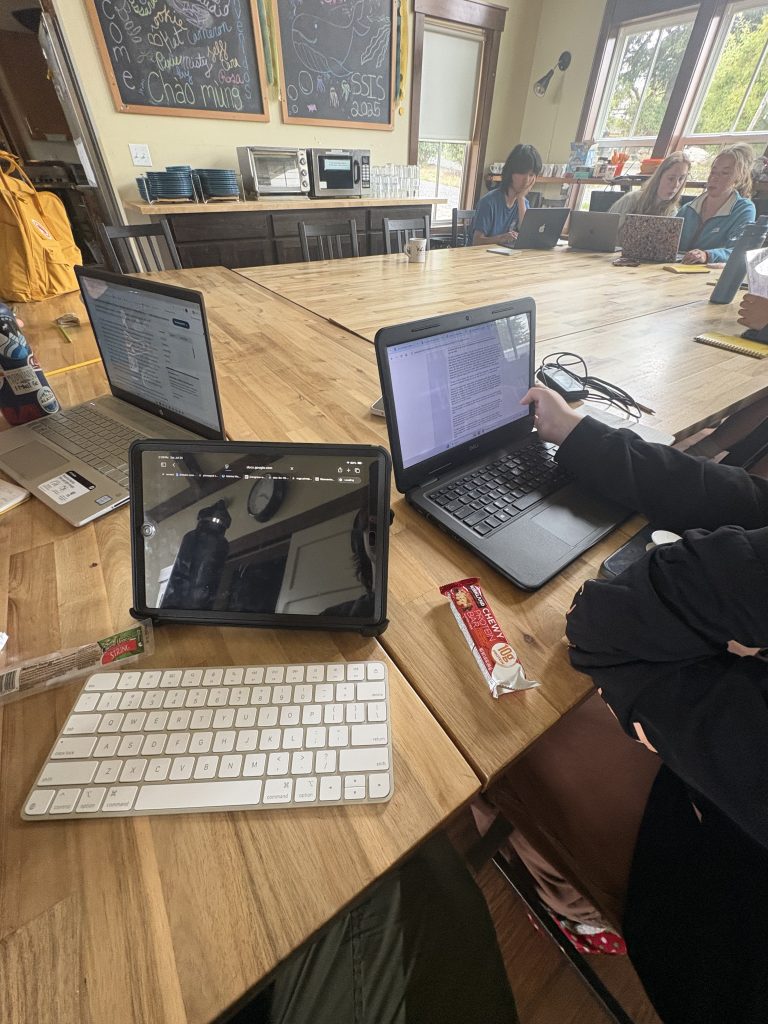
Then everyone hunkered down to do work and research for their individual project.
Everyone working studiously
Tonight we are excited to welcome Dr. Joe Heras, an evolutionary geneticist and biologist, based in San Bernardino California. He obtained a Phd in quantitative and systems biology at up Merced. Now, he works as an associate professor of biology in San Bernardino and runs the Heras lab. His work involves looking into the molecular evolutionary processes in fishes, and he spends his summers working at the Friday harbor labs!
Blog Credits: Emily Mark, Katelyn Poon, and Isabelle Osborn
The day started off early with a wonderful wake up time of 5:00 am. We emerged from our tents to a cold and foggy dawn, with our ticket to breakfast being fully packed. Half asleep, we packed up our tents with frigid fingers and sat down to a breakfast of yogurt and granola, with hot chocolate and coffee for those who wanted. Thank you to our awesome guides Maggie, Maddy, and Kate!
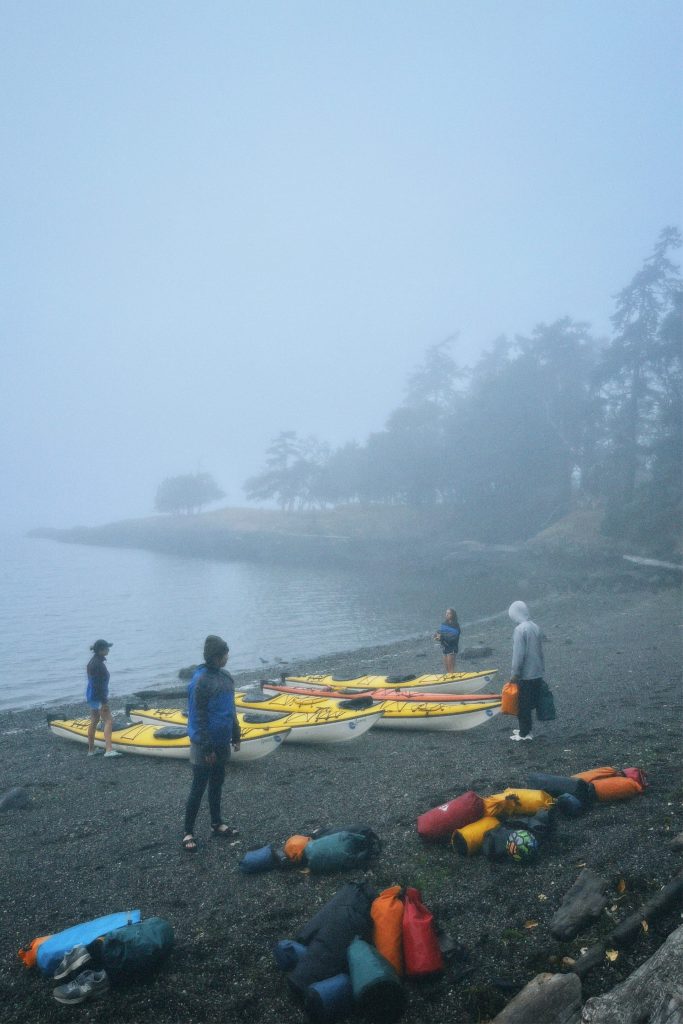
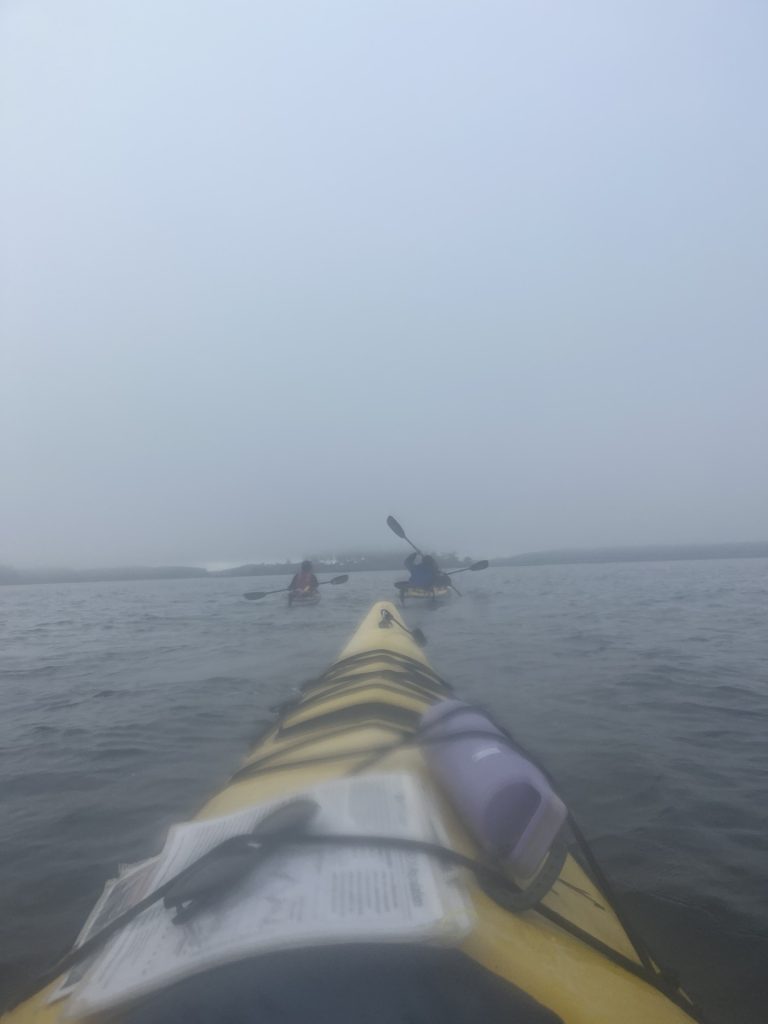
After an hour of packing we made our way down to the beach to load up our kayaks with all the gear. Everything had to fit within tiny dry bags and be shoved into a compartment in the kayak. Wrapped up in many layers and rain coats, we ventured out on the frigid water.
A photo of the group packing the kayaks on the beach (Photo Credit: Katelyn)A photo of us traversing the perilous seas (Photo Credit: Katelyn)
Finding the Kayaking much easier this time than two days ago, due to the currents and winds lending us their strength, we made quick time past Yellow Island and landed on a beach on San Juan Island in just under two hours, for a short pee and snack break.
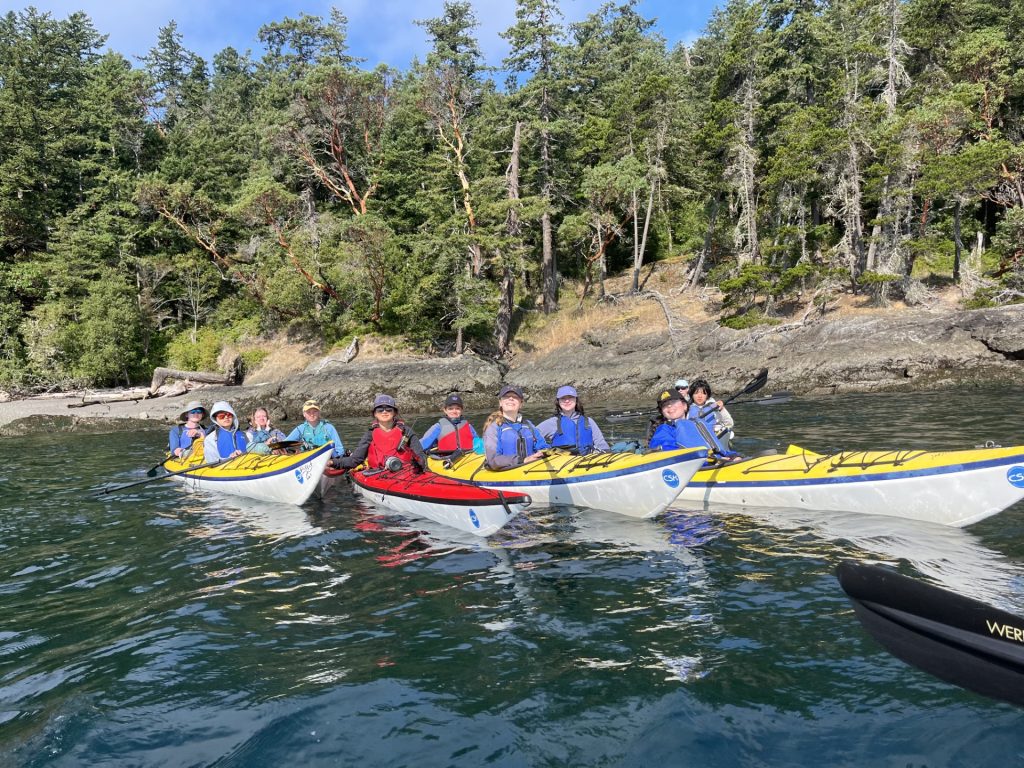
Our flotilla of kayaks during the snack break (Photo credit: Katelyn)
We then set off again for another long crossing, some of us soaking wet, and braved the fearsome ferries attempting to plow us down. The current turned against us and paddling became tedious but luckily lunch was not far out! We stopped at Turn Island to eat our turkey sandwiches, oreos, and chips, doing our best to dry off in the fleeting sunlight.
Olivia enjoying the sun on Turn Island (Photo credit: Katelyn)
After Turn Island we had only a short 10 minute crossing left. All of us suddenly learned how to paddle without splashing water just in time to make our final destination on San Juan Island. On the beach we mustered our strength one last time to haul the kayaks up to the vans. We arrived back at the dorms very excited for clean clothes and a warm shower! After a break, some ventured into town to shop, others played cards in the yard, and some took naps. We all came together around 3 pm to work on the blogs.
Emily, Isabelle, and Katelyn working hard on the blogs, wearing the Crystal Seas Kayaking t-shirts that were gifted to us! (Photo credit: Katelyn)
Tonight we are so excited to welcome a very special guest, Emilio Santiago, an Archaeological Anthropologist. He has worked in many states and places including the San Juan archipelago, Arizona, California, and Colorado to manage and document historical and archaeological site. He has worked with the National Park Service across multiple regions, focusing on San Juan Island National Historic Park. Tonight he is joining us for pizza from Bakery San Juan and will talk to us about his experiences.
Learn more about him at: emiliosantiago.wordpress.com
(Everyone’s phones were dead by the end of the trip, except for Katelyn. She is also a great photographer).
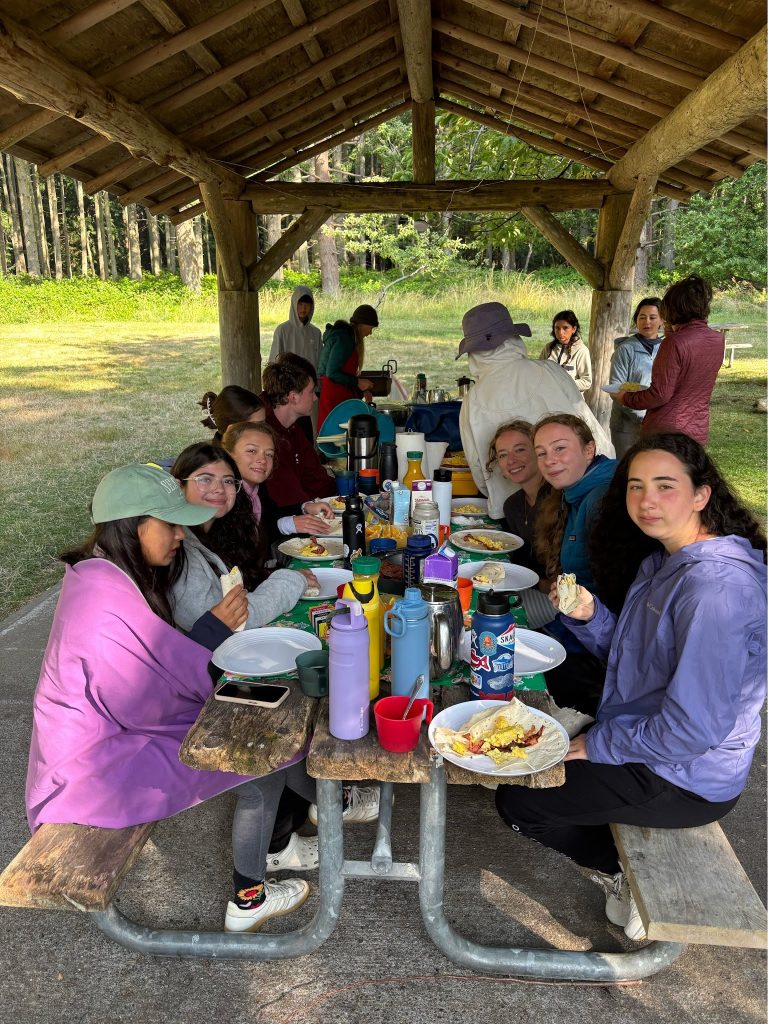
The day started off at 8:40 with a breakfast of eggs, tortilla, bacon, and fruit at the picnic tables. It was nice to get a lazy wake up especially because many of us struggled to sleep our first night in the tents on the ground.
The group at breakfast (Photo credit: Isabelle Osborn)
After breakfast we took a light walk towards the dock to meet up with Caroline Grauman-Boss, Tom Grauman, and Adam Martin. Adam works at the Ecology Institute as one of Washington’s most respected applied restorative ecologists. He specifically studies the impacts of pressures of the Anthropocene on alien and native plant diversity in the San Juan area. Once we had met up with Adam we took a leisurely walk around the forested area near the dock, pausing to look at seemingly small yet quite significant pieces of Jones Island’s ecosystem.
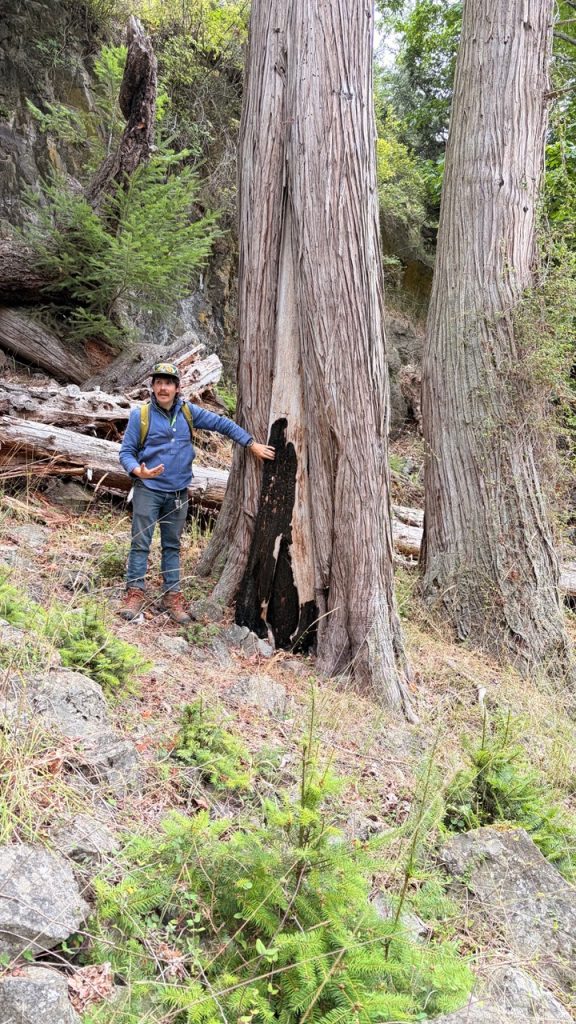
Adam explaining the burn marks on a douglas fir (Photo credit: Annalise Krabak)
Our walk ended with us up on a bluff by a burn site of overgrown Douglas firs that Adam Martin and his team dealt with a couple years ago by protecting the native Garry oaks along with their burning maintenance.
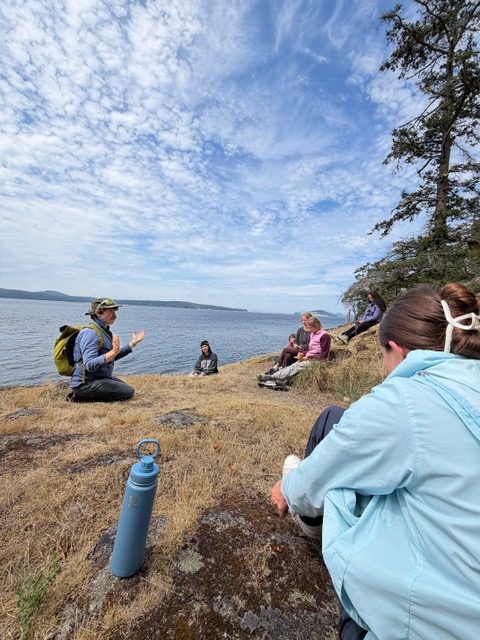
Adam talking to the group on the bluff (Photo credit: Sophie Li)
After our walk we had a lunch of pita pockets and fixings then a couple hours of free time which many took to enjoy a hike around the island. During one group’s hike they saw baby Harbour seals.
Seal pups Frank Ocean and George Clooney (Photo credit: Isabelle Osborn)
After free time we had dinner together despite the rain and thunder with a tasty treat of strawberry shortcake. Lights out for most was 9pm due to the early wake up time of 5am the next day for the kayak back.
The day started off with a 7am wakeup call to grab a quick breakfast, do last minute packing, and prepare to leave for our kayaking trip. At 8:30, the Crystal Seas Kayaking guides picked us up and we headed to Jackson beach to launch.
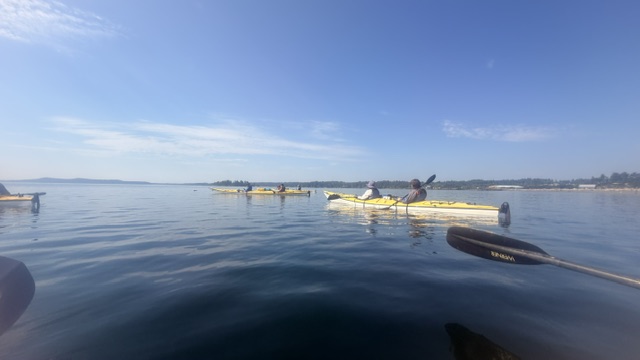
Kayaking on the water! (Photo credit: Annalise)
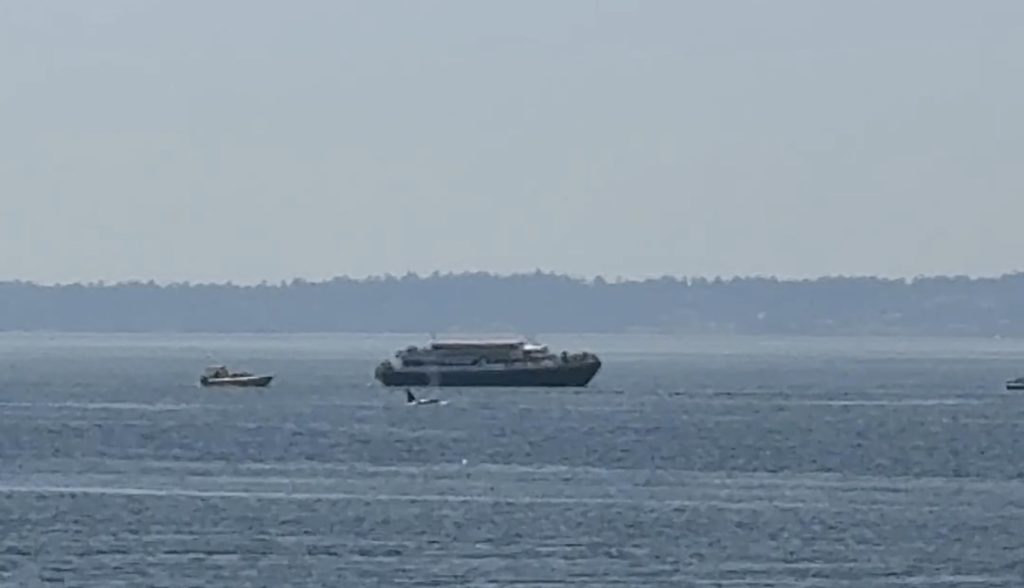
We spent our morning on the water, making our way along the coast of San Juan for a couple of hours before crossing Friday Harbor. We noticed whale watching boats following a pod of whales near us, and to our delight, the whales passed right by us, and we got to stop and catch a glimpse of a pod of about seven orcas swimming through the water!
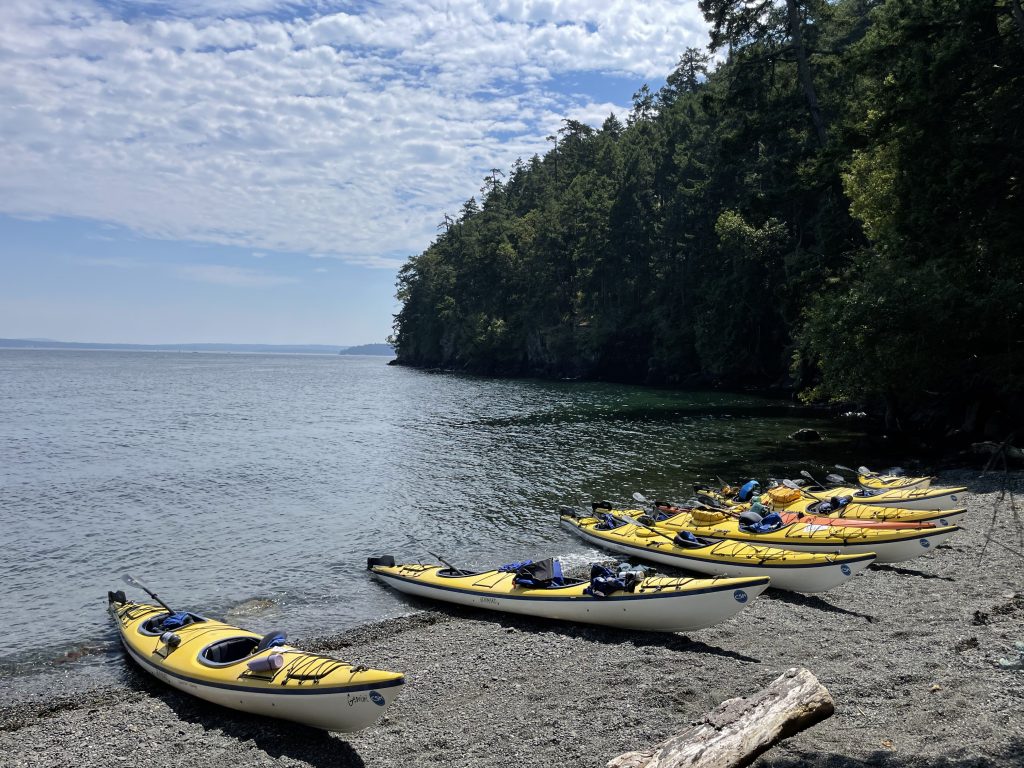
We pushed on, and after about an hour we stopped for lunch on a small island. Our wonderful guides, Maggie, Maddie, and Kate, prepared a sandwich station and set out chips and fruit for everyone, which was quickly devoured by 14 very hungry teenagers.
All the kayaks on the beach where we stopped for lunch (Photo credit: Olivia)
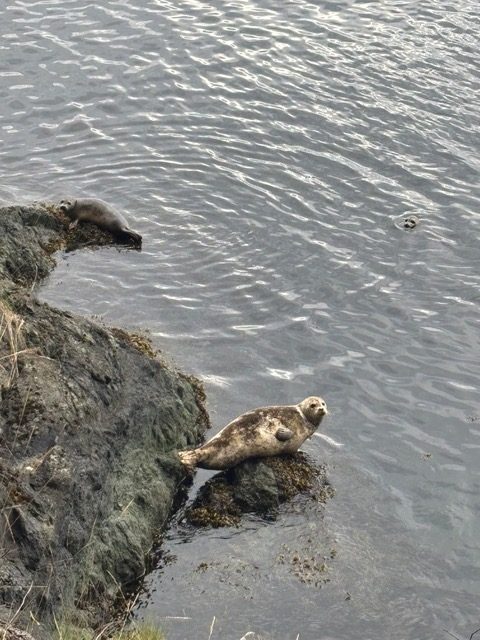
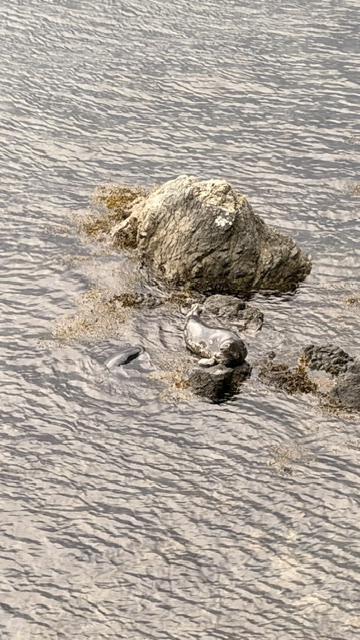
Along the way we saw many cute sea lions and harbor seals resting on the rocks and swimming in the water.
A harbor seal on the rocks watching its friend in the water (Photo Credit: Annalise)
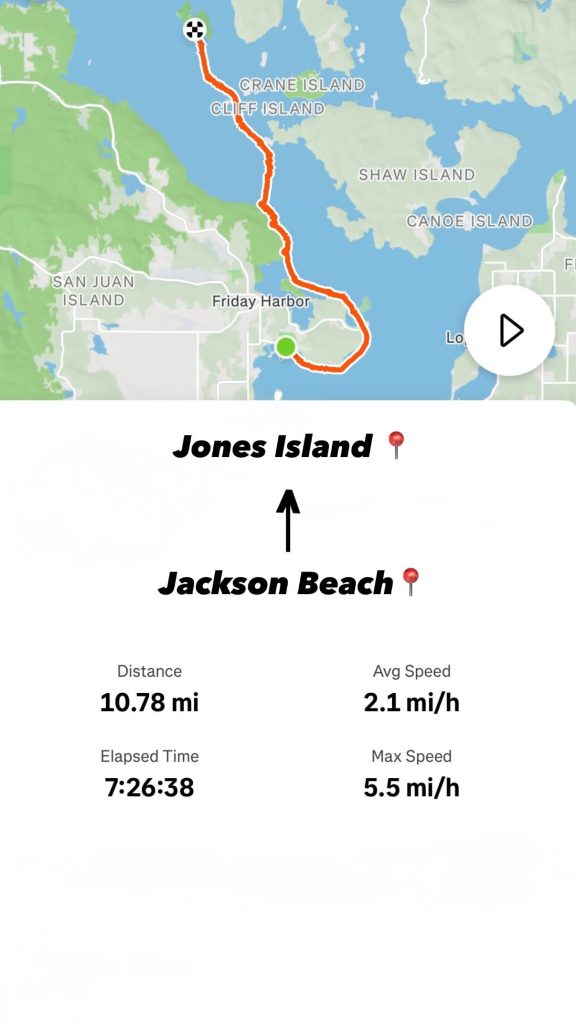
After lunch, we went through the hardest and longest stretch of paddling, and unfortunately, the winds were not in our favor. After more than seven hours on the water, we finally made it to Jones Island.
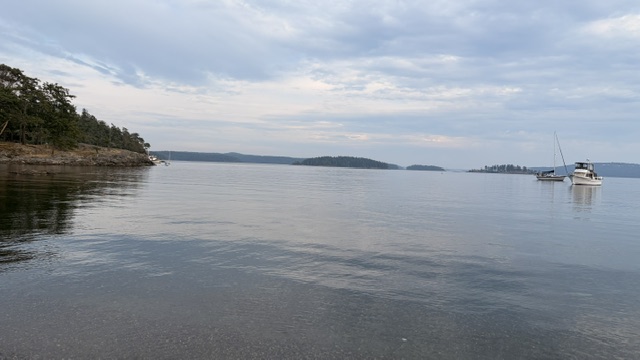
The beach where we landed on Jones Island (Photo credit: Annalise)A strava map of our route (Photo credit: Isabelle)
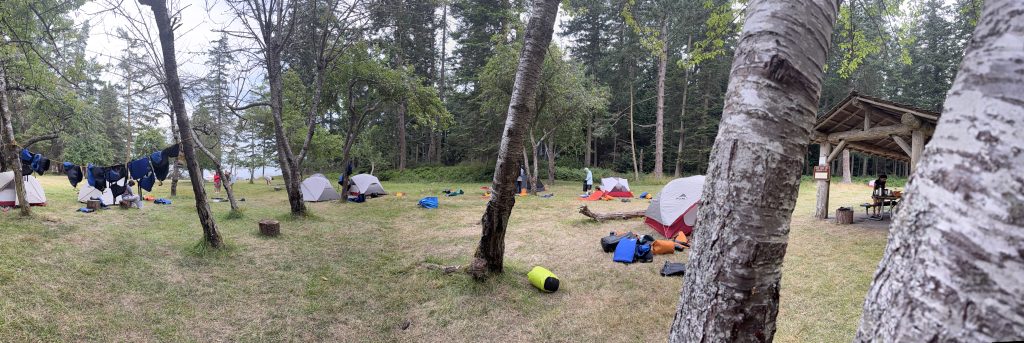
We set up our tents and rested up until dinner, which was burgers, yum!
Everyone’s tents spread out throughout the campsite (Photo credit: Sophie)
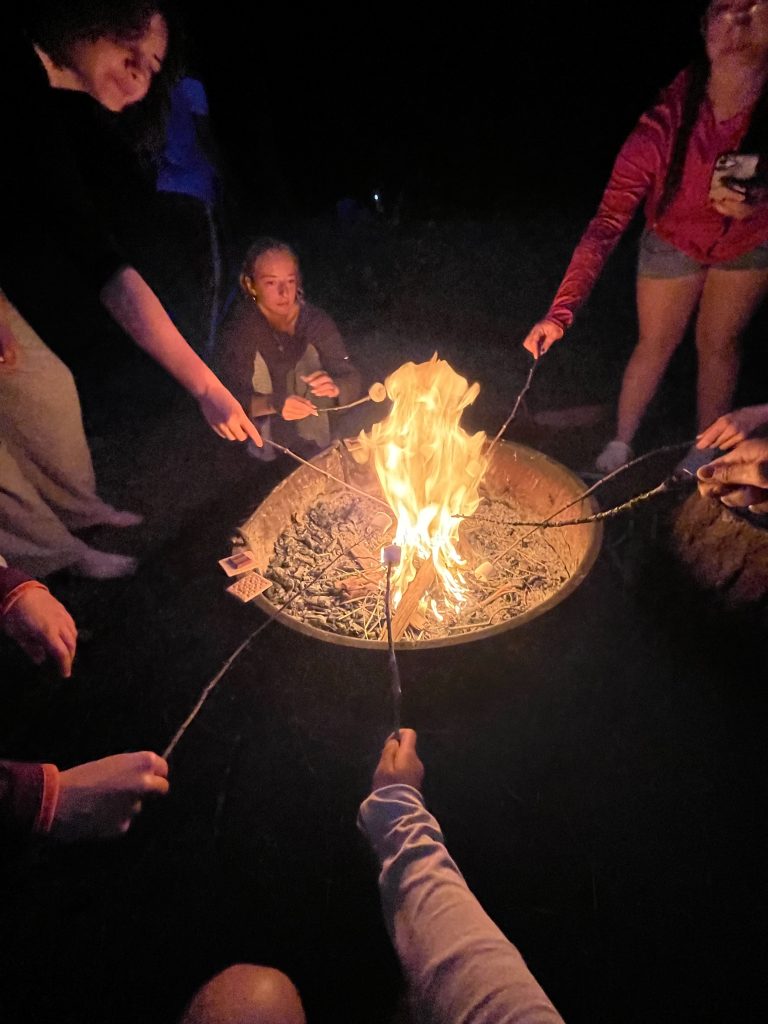
After dinner, we worked together to start a fire and made s’mores. Many people were tired from a long day of kayaking, but some chose to stay up till dark in hopes of seeing bioluminescence. Although it was very faint, we were able to see the lights when moving through the water.
Everyone gathered around the campfire making s’mores (Photo credit: Katelyn)Trying to see bioluminescence in the water (Photo credit: Annalise)
We are looking forward to sleeping in a bit tomorrow, so stay tuned to hear about the rest of our kayaking adventure!
Blog Credits: Chiska Francis, Satya Mayeux, Max Chung
The day started off with breakfast and lunch makings that we are soon to be tired of. Everyone is starting to get oriented and used to the routine. We had a packed day of activities and listening to speakers.
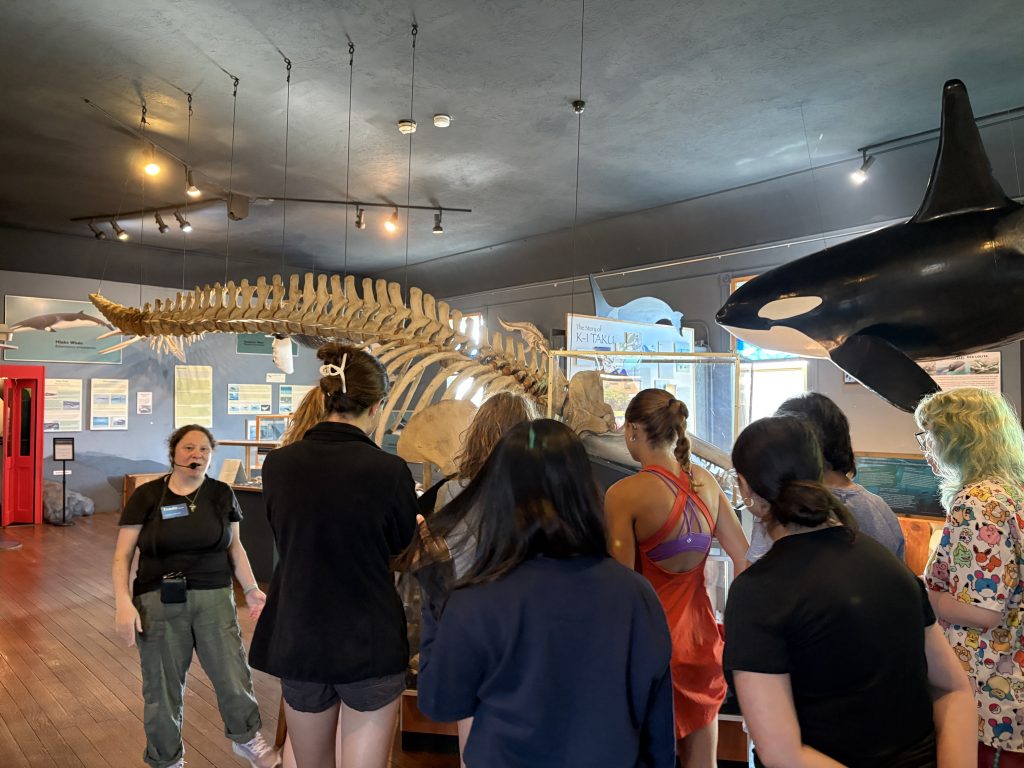
The group listening to Tracie Merrill’s introduction to the Whale Museum. (Photo Credit: Satya)
The day started off with a short walk to the Whale Museum down in Friday Harbor. Tracie Merrill, the Education Director gave us a in-depth tour of the different pods of orcas in the Salish Sea. We learned the difference between a transient and resident orca.
Transient orcas eat big mammals such as seals, sea lions, and porpoises. Residents really like Chinook salmon, which is especially popular May through September.
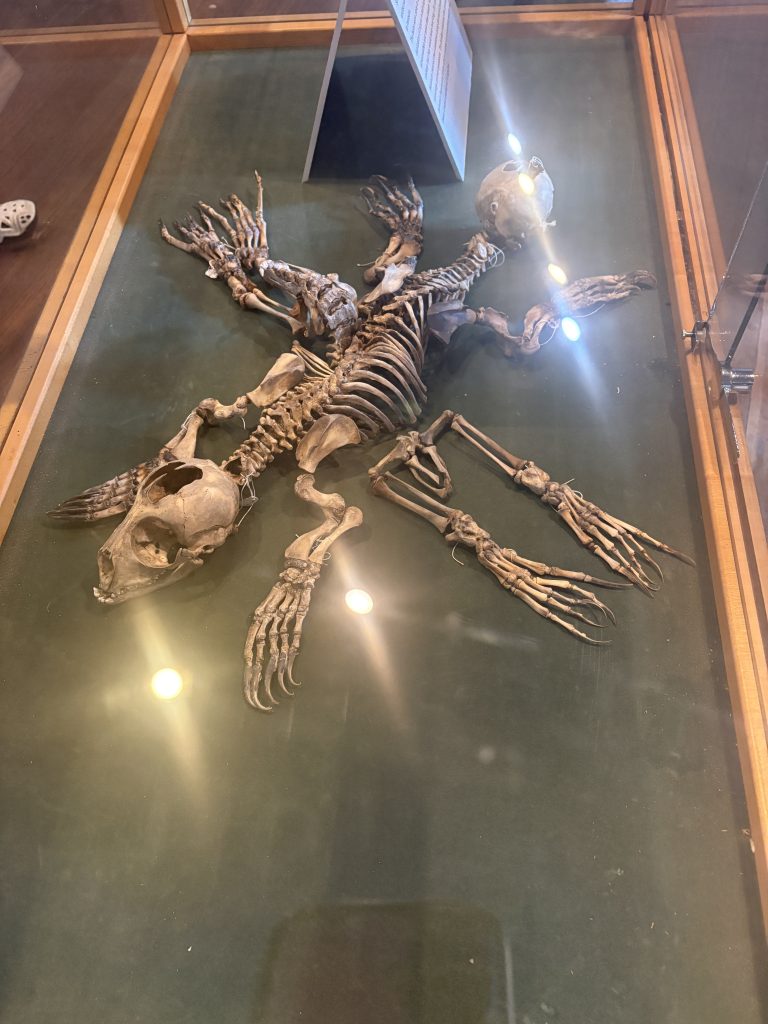
The first documented case of conjoined harbor seal twins found in the world. (Photo Credit: Chiska)
In Tracie’s very interesting tour, she showed us the worlds first documented case of conjoined harbor seal twins. The mother sadly died at birth due to the complications and the seals died before or during birth. Tests confirmed that the anomaly was not due to environmental toxins or contaminants, but because of disordered embryonic migration and fusion.
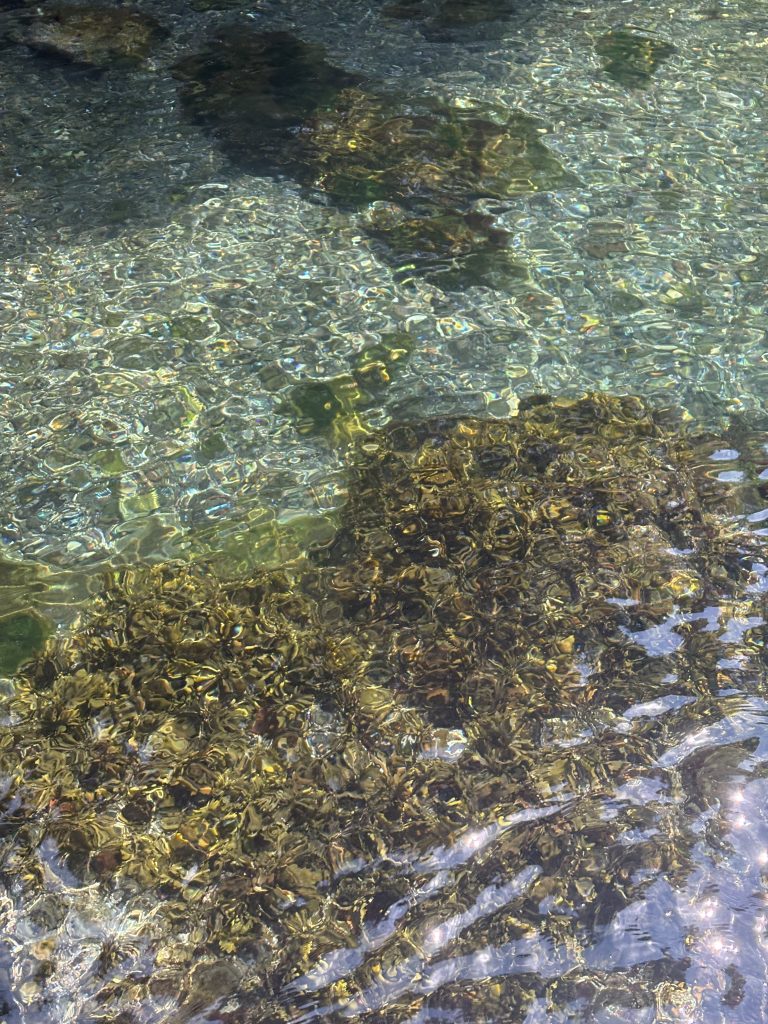
A photo of the clear, shiny water at County Park (Photo Credit: Chiska)
After leaving the Whale Museum, we shortly after headed to County Park where we enjoyed a nice lunch packed in the morning. After staying there for nearly 1.5 hours, we spotted something in the distance.
Transient 100 pod spotted at County Park (Photo Credit: Chiska)
Right when we were loading into the van to head to Lime Kiln, 7 whale watching boats were spotted, so we knew there was something attracting the attention. After waiting 10 minutes, we spotted the Transient 100 pod only with Laurel (female) Estrella (female) Hutchins (female). They were reaching the surface every 30 seconds, and watching them for 25 minutes was peaceful. Others gathered around and we whale watched until it was time to head to Lime Kiln Point State Park.
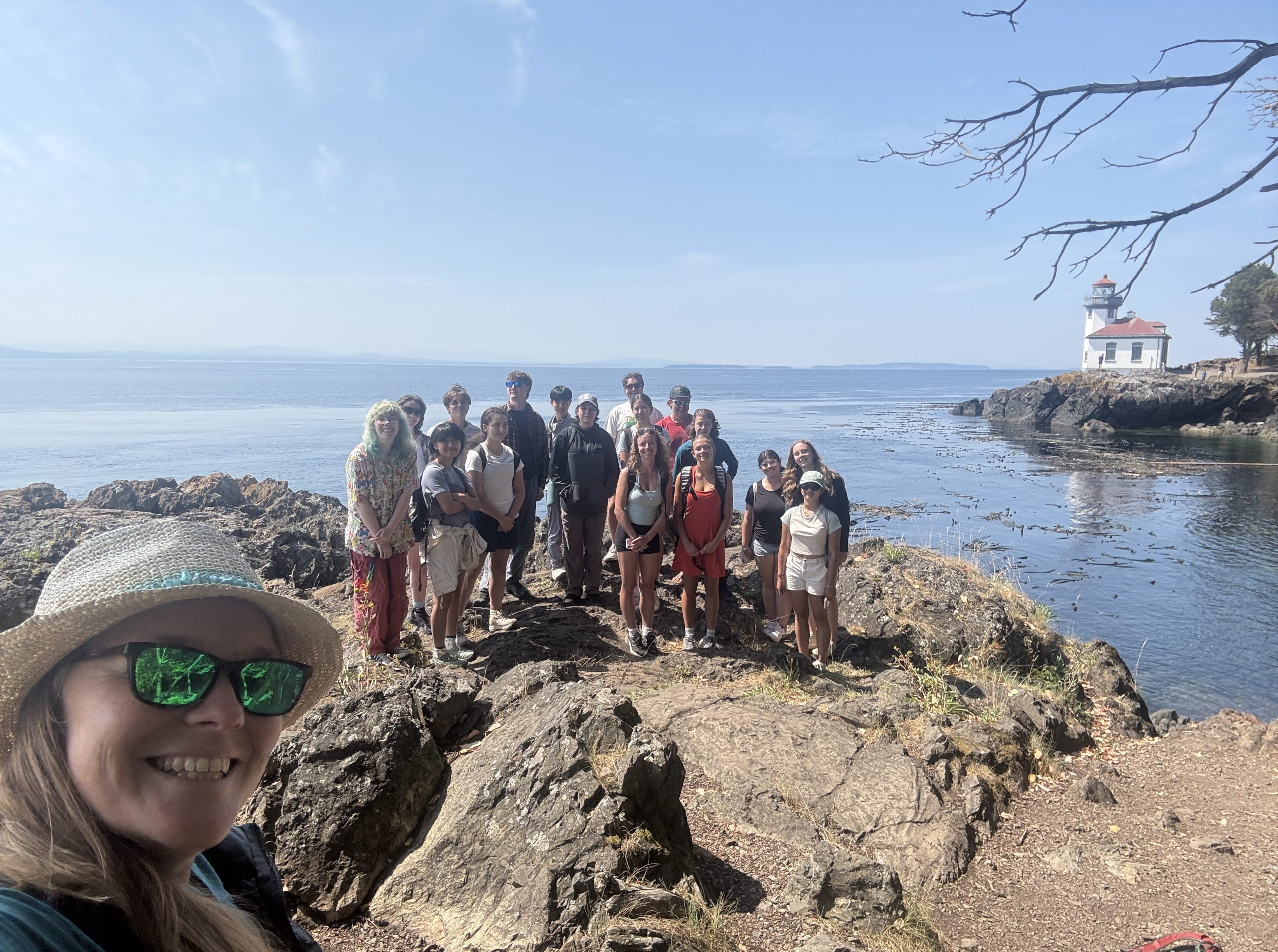
Our group pictured in front of the light house with Josiah and Erin. (Photo Credit: Erin)
After a nice lunch with whales, we headed to Lime Kiln to meet Josiah Feld and Erin Audrey Corra.
Josiah Feld is the Vice President of PKOLS Preserving Knowledge of Land and Sea. He is Straits Salish SENĆOŦEN W̱SÁNEĆ and Pyramid Lake NUMU Paiute from STOLȻEȽ (San Juan Island). His initiatives use cultural preservation, language restoration, and grassroots organizing to heal the generational divides caused by historical colonization and forced borders.
Erin Audrey Corra is the Founder and Executive Director of the Friends of Lime Kiln Society (FOLKS). Dedicated to Lime Kiln Point State Park, this nonprofit inspires stewardship by connecting people to its cultural and ecological heritage. Educator and naturalist Erin brings over 30 years of experience to this mission, driven by her mantra: “Inspiring awe into action”.
Tom, Sophie, Cooper, and Bella making dinner (Photo credit: Chiska)
After a day full of sun and learning, we are ready for the pesto pasta salad and roasted chicken the dinner prep group is making tonight. Thank you Tom, Sophie, Cooper, and Bella!
Blog Credits: Sophie Li, Cooper Drew Allim, Isabelle Ava Bruni Akalin
Day 1 started with ferries and socializing too much. New introductions were in order for the faces no one recognized yet. Everyone stuck together as we all rode the ferry to the San Juan Island, and made our way to our new home for these two weeks.
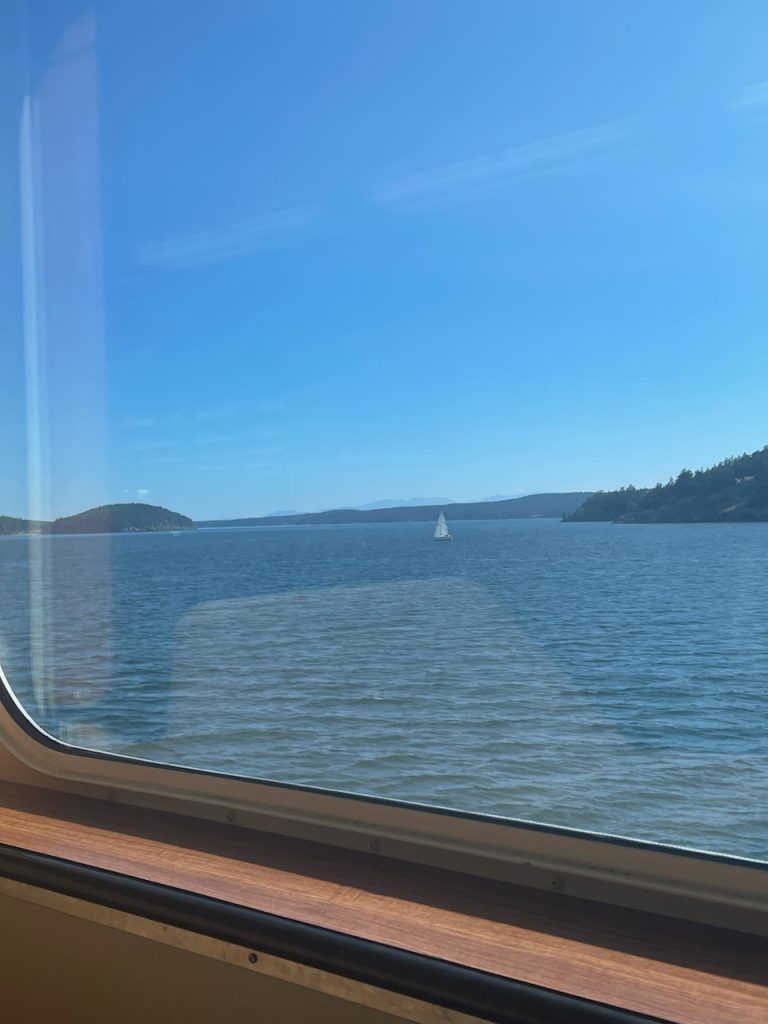
A picture of the view outside the ferry window. (Photo credit: Cooper)
Our first day was just time for us to get oriented and settled into our respective dorms. It was lights out at 10:30pm for everyone, we needed a full nights rest for Day 2!
A picture of a bed in the dorm, featuring a Seal plushie! (Photo Credit: Sophie)
Day 2 started bright and early for everyone. We had a fun breakfast that was set out by our breakfast team (Thank you Annalise, Grey, and Olivia), packed lunch and then head out to compete in a scavenger hunt race! Our Breakfast prep team ended up winning the scavenger hunt, but everyone tried their best, congratulations to our winners!
Photo of the winning team on their scavenging journey. (Photo Credit: Olivia)
After the scavenger hunt, we had time to regroup, eat ice cream, and change. Then we set out to the Friday Harbor Labs (FHL for short). There we ate our lunch, and took a look at many varieties of Starfish and Fish that belong to the Salish Sea.
We also learned about the Starfish wasting disease that FHL is trying to prevent from killing any more starfish. We saw how Starfish infected with this bacterial disease would tear off their legs, but we also saw how the lab helped rehabilitate these Starfish. Giving them a chance to heal and grow new legs.
A photo of Beignet (Benny) The Starfish, growing new legs and recovering well! (Photo Credit: Sophie)
In the Fish lab we learned about how the researchers there studied and learned about the insides of fish using 3D printers and CTL scans. They also had us take a look at all sorts of varieties of fish with dyed bones and cartilage. It was very interesting!
A photo of a frog with dyed bones in red, and dyed cartilage in blue. (Photo Credit: Sophie)
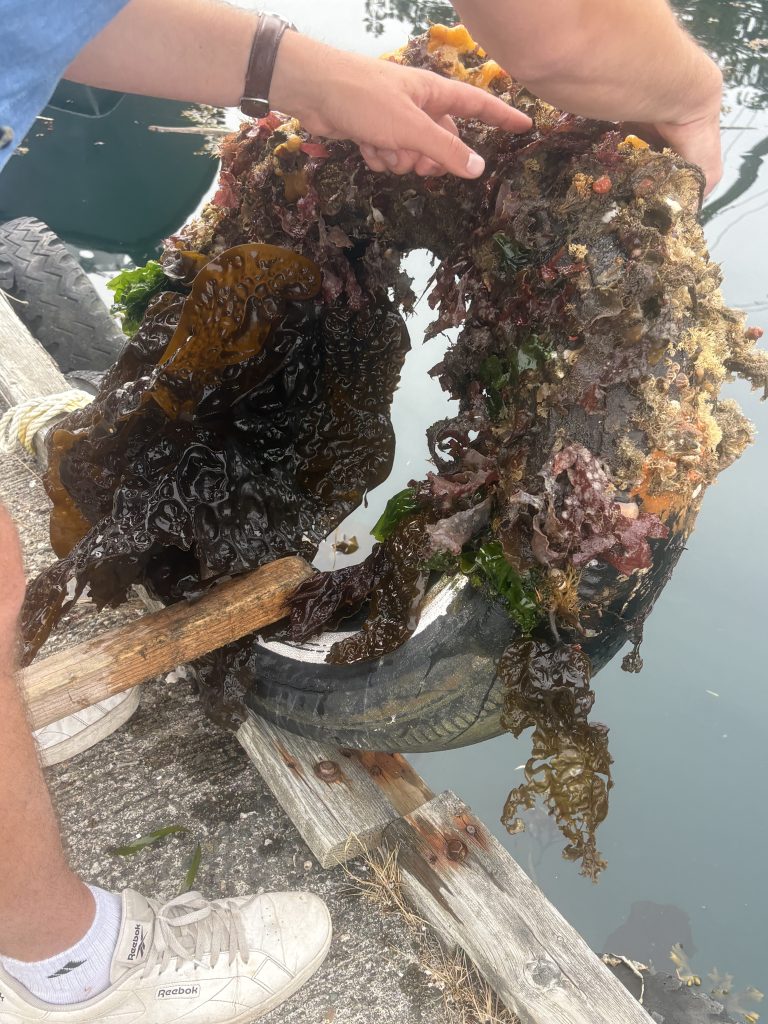
After we explored the Starfish and fish labs everyone took a short walk to the docks. There we used long sticks to flip over the tires at the edge of the wooden dock, where the boats would park. We flipped those tires over because they would show a variety of organisms that grow near the docks and use these human made structures as a ecosystem and home for them.
Photo of a living anemone on one of the tires. (Photo Credit: Sophie)A Photo of one of our teams lifting one of the tires! (Photo Credit: Emily)
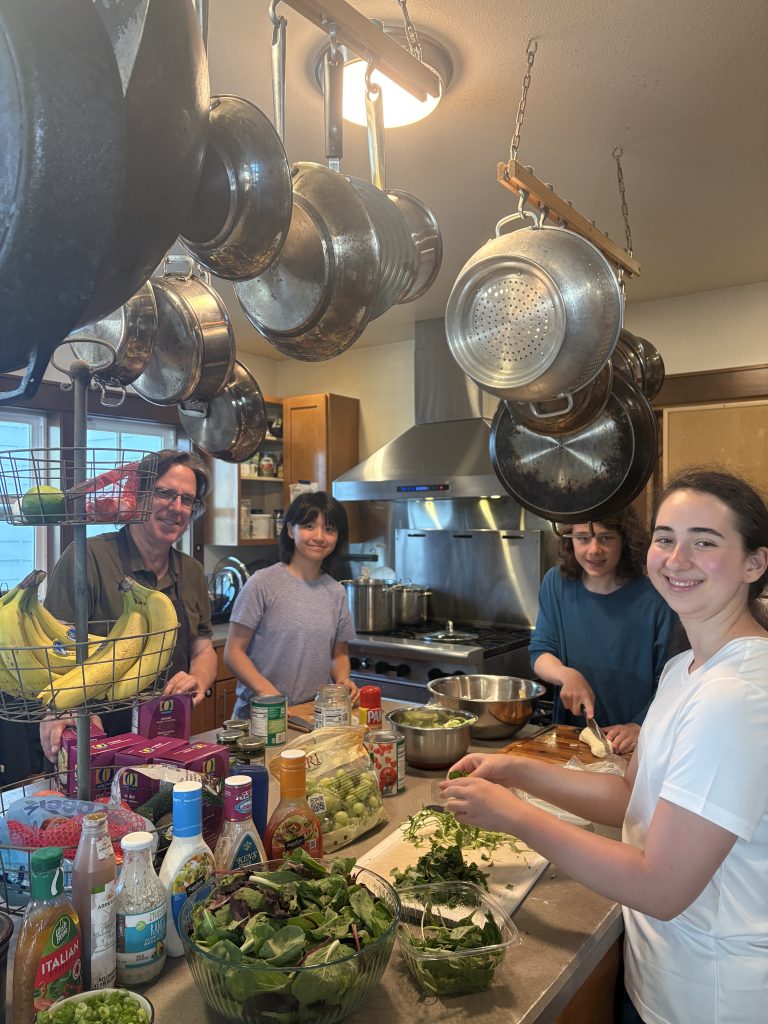
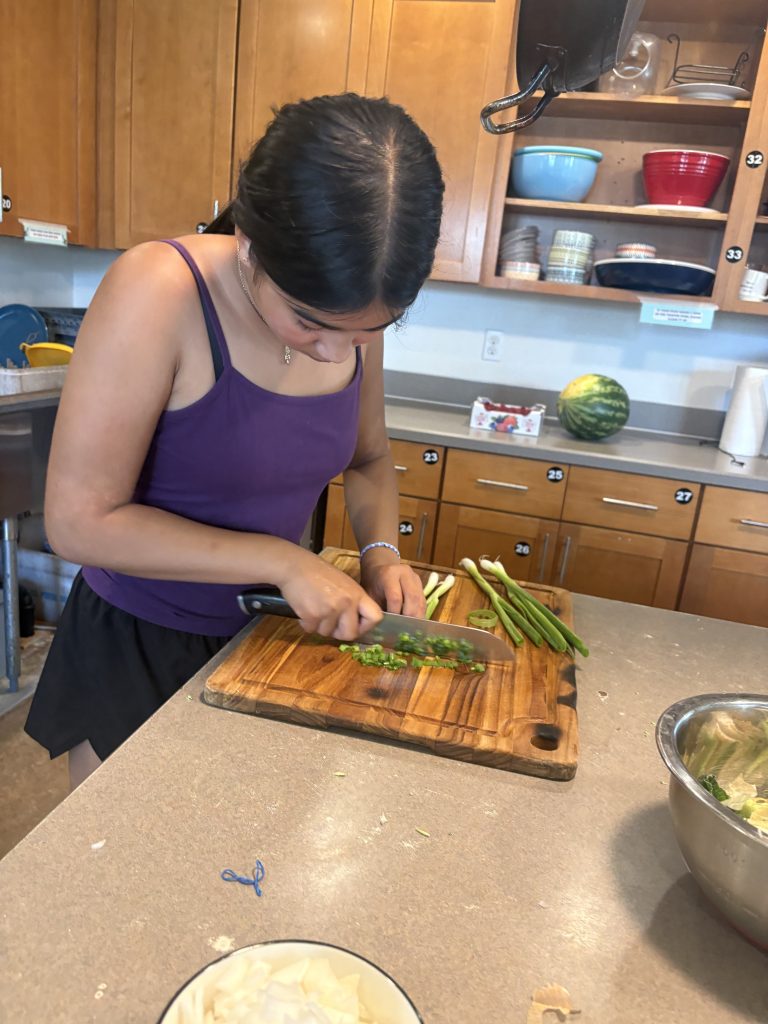
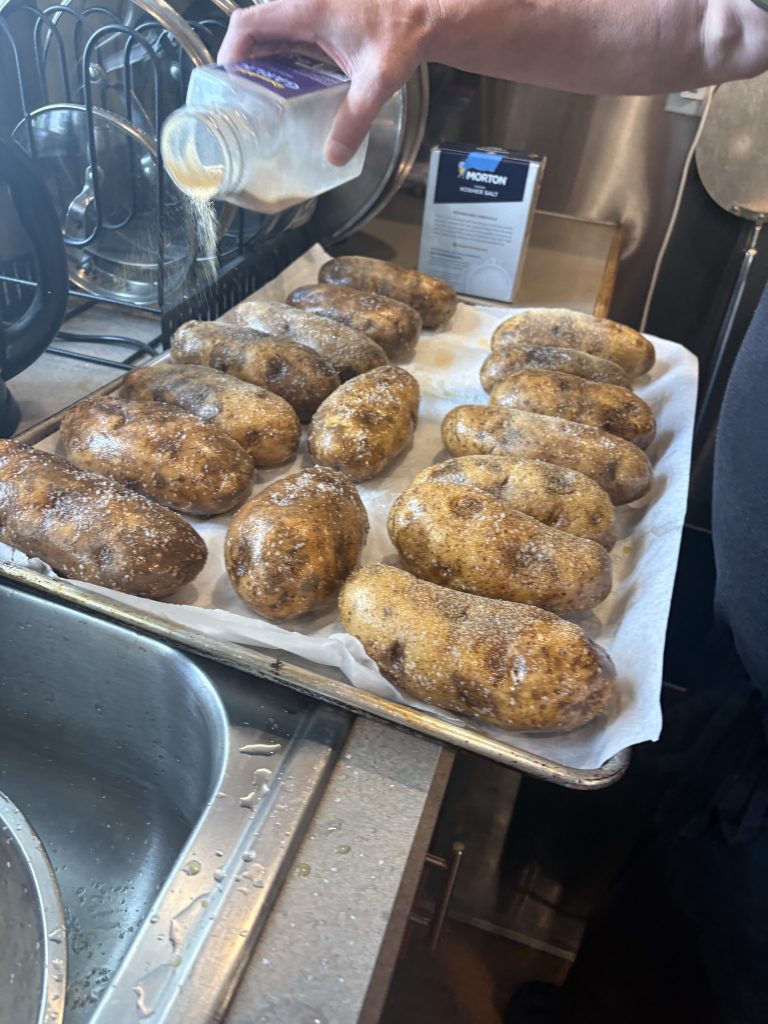
The trip to FHL ended there, and we took the van back to our dorms. There, our dinner prep team (Thank you Emily, Katelyn, and Isabelle) made “fancy baked potatoes” and salad with “very yummy blueberries”.
A picture of the dinner prep crew making dinner for everyone! (Photo Credit: Isabelle)A photo of the dinner prep crew making the “fancy baked potatoes”! (Photo credit: Isabelle)
We are very excited to have Shauna Barrows from the San Juan County Land Bank join us for dinner as she shares her experiences in ecosystem restoration and land conservation work which she has been doing since 2017.
A Land bank is guided by the local community’s input, and works “To preserve in perpetuity areas in the county that have environmental, agricultural, aesthetic, cultural, scientific, historic, scenic or low-intensity recreational value and to protect existing and future sources of potable water.” Which is what Shauna Barrows is coming to talk about with us today!
Learn more about her with: https://www.hometrust.org/shauna-barrows
And: https://sjclandbank.org/staff/
Once dinner is over, its lights out for everyone again at 10:30pm for we have a lot to do for tomorrow! Day 3 of our two week journey in the San Juan Islands.