Today we woke up at 7:30 am and were greeted by a nice fog cover over the island. It was not raining however so we were looking forward to our exploration of American Camp around 9:00.
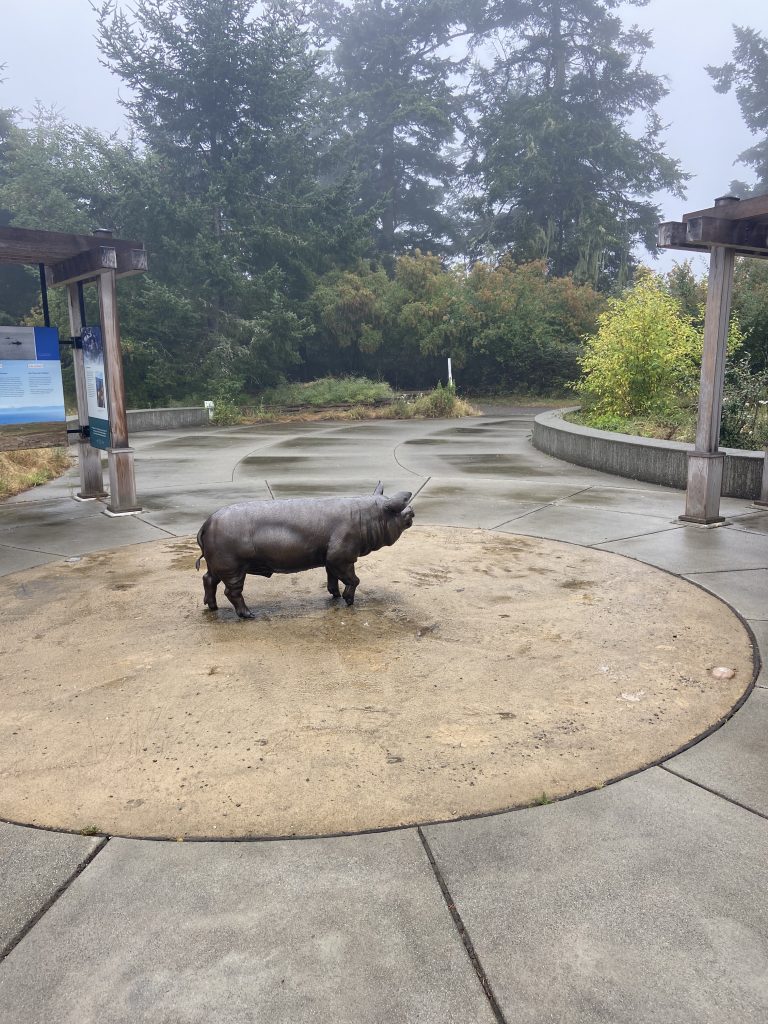
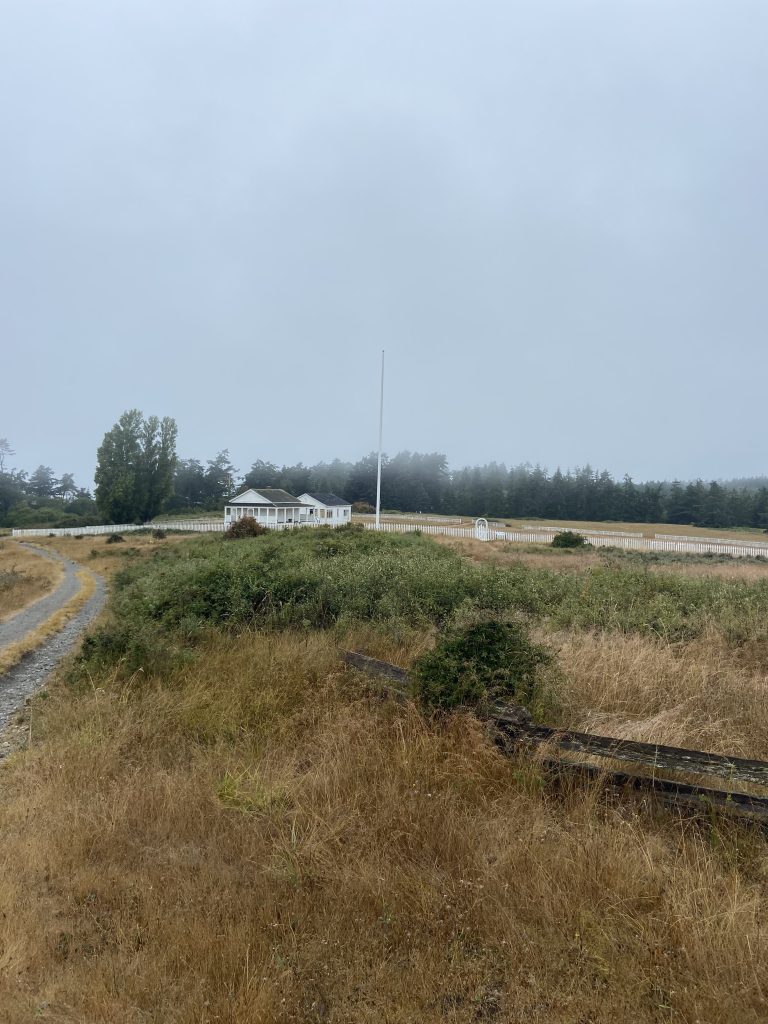
We loaded up the vans and were met by Emilio Santiago, a park expert who gave us a personalized tour of the visitors center. There, we learned about the histories of the Coast Salish people who have lived on the land around us since time immemorial. After the visitor’s center, we embarked on an interpretive walking tour of the American Camp park. We saw the quarters of some of the soldiers and learned about the history of occupation in the area.
PC: Greta- American Camp PlazaPC: Greta- American Camp Buildings
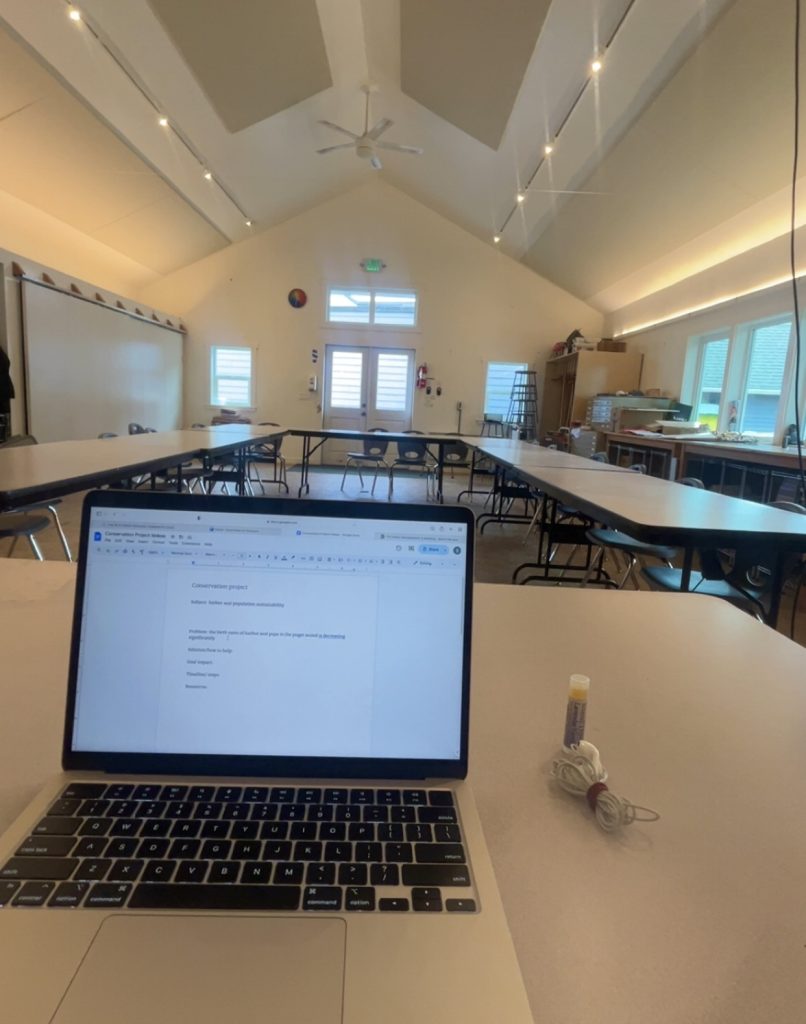
We have been working hard on our projects, and with lots of time to review today we are getting closer to our final goals. With help from Adam and Emma, we are moving toward the best pitches for our conservation hopes. we are looking forward to presenting our ideas to all of you after our revisions and research. We had two sessions of project time today!
PC: Susanna- Project Work Time
At 1:00, we went to see scientific study presentations from UW undergrad students. We learned about many cool things, ranging from sea star larvae to eelgrass disease. The presentations were short, but we managed to keep captivated due to the energy the students exerted while presenting. They had been working on their studies for several weeks and it was evident that they had put in much work to make their research matter. Many thanks to Friday Harbor Labs for providing us with this excellent learning opportunity!
Tonight we will have spinach pie with Dr. Ken Sebens who focuses his studies on benthic and coral reef ecology.
Today we woke up at 8 am. Cloudy skies and rain welcomed us to start the day. We soon had breakfast at 8:15 am. We ran out of everything bagels, which as of today we now know is everyone’s favorite breakfast item! So sad, everyone started crying. (It’s chill though ‘cuz we had plenty of oatmeal and other things) 🙂
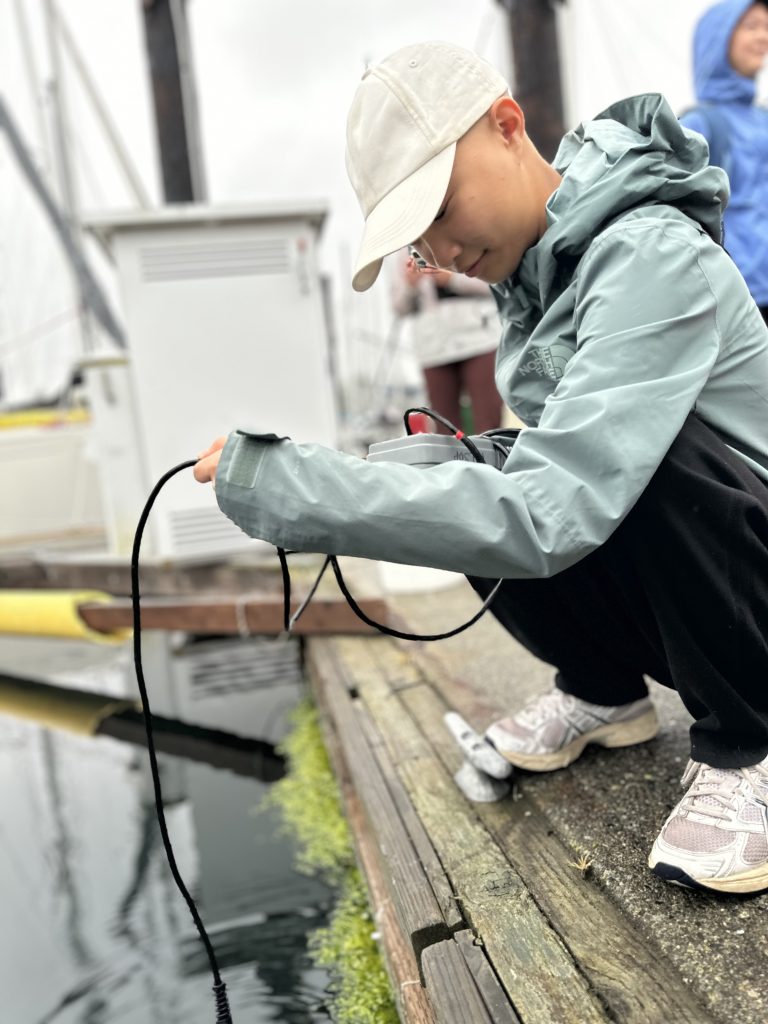
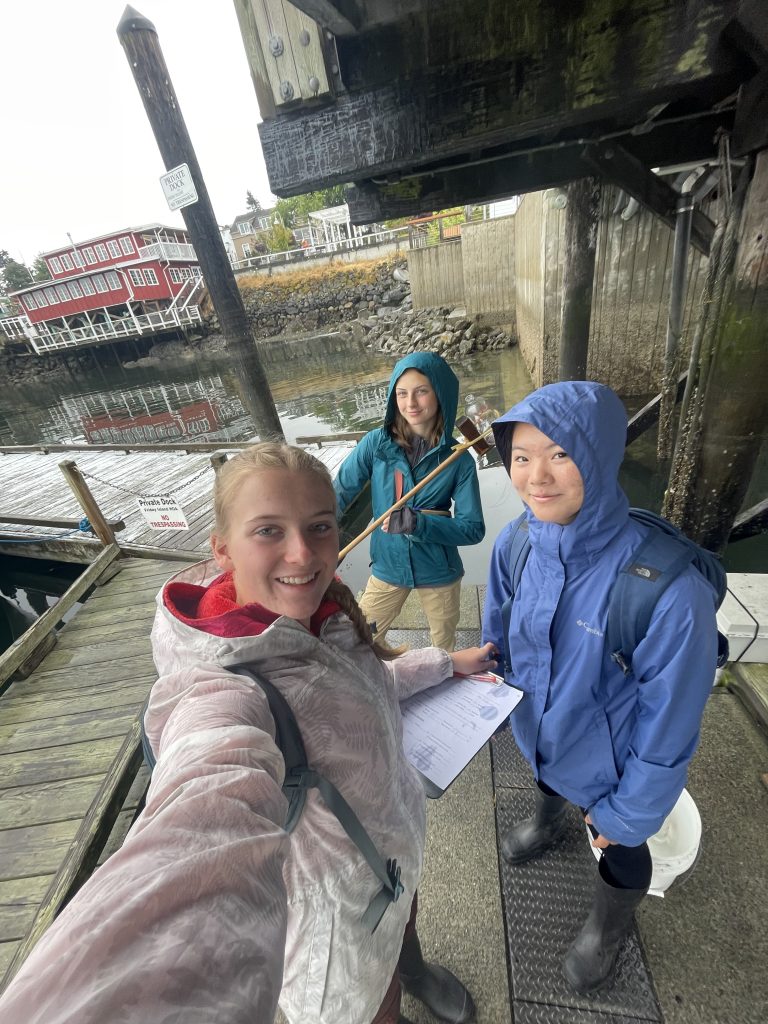
For today’s main activity, we surveyed the water by the marina! the survey intends to measure the fecal coliform in the water. It’s super important work, as no one else is measuring the fecal coliform but us!! (Actually, it’s a longitudinal study for the Port of Friday Harbor, but cool that we’re the one’s who took on this round!)
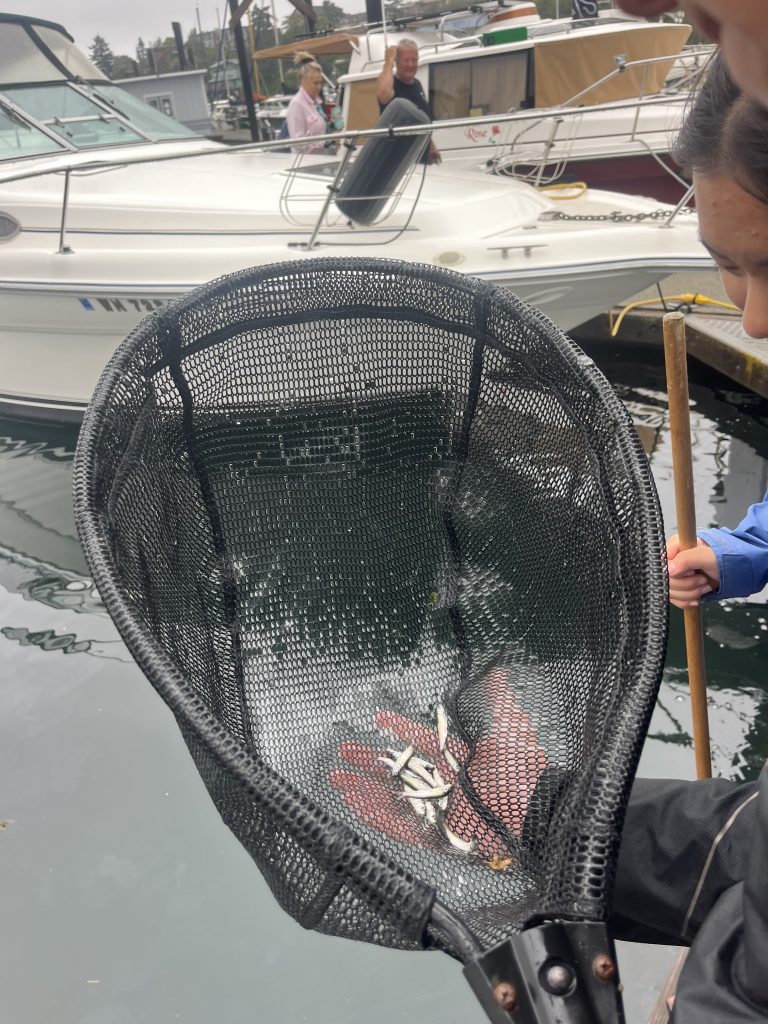
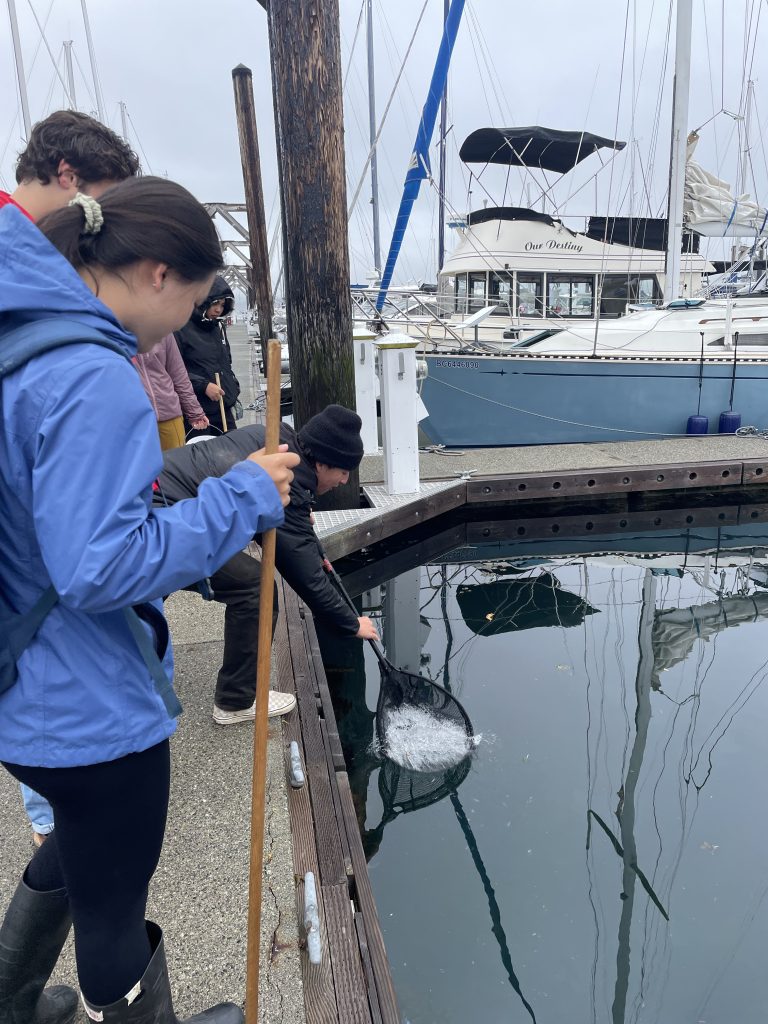
PC: Maxene – Leanne expertly measuring water quality at Friday HarborPC: Sophia – Watts catching fish on the dockPC: Sophia – Watts catching fish on the dockPC: Sophia – Grabbing more water samples at the dock
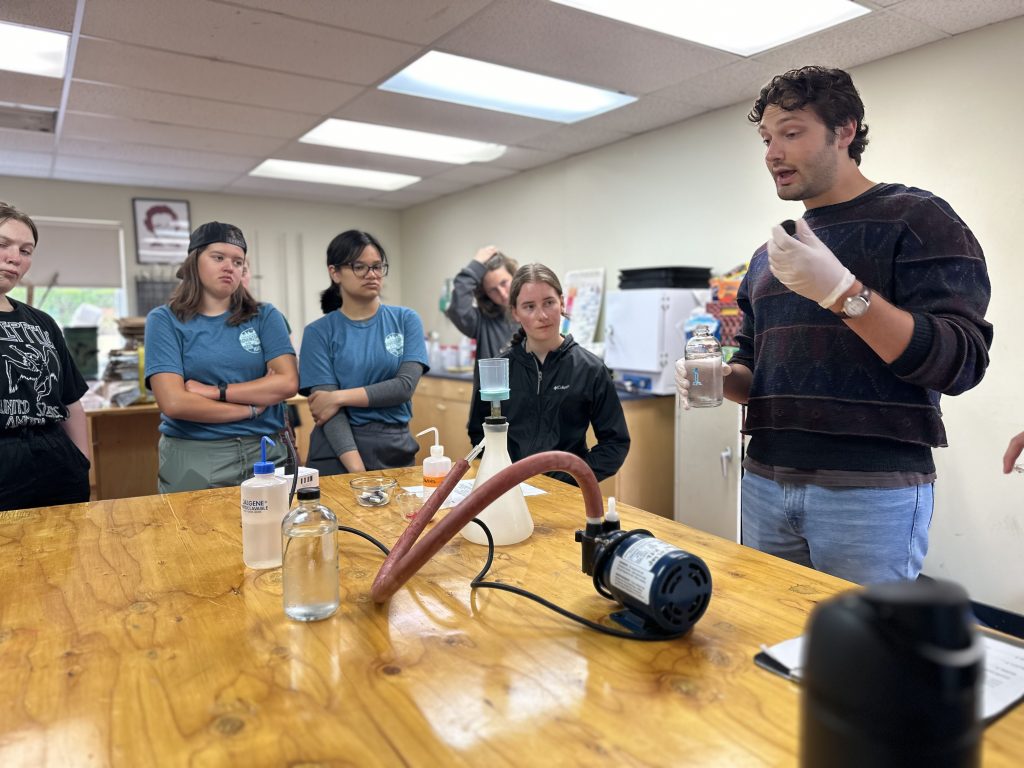
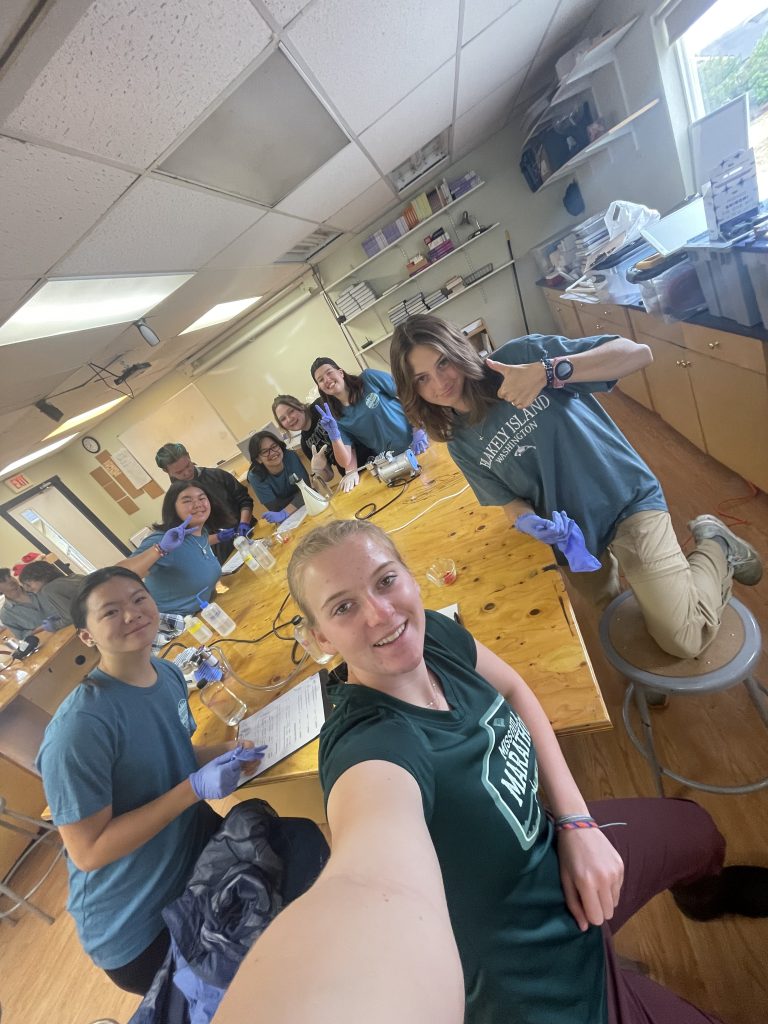
After an hour or so of measuring salinity and temperature and carefully collecting water samples at different test sites around the marina, we brought our samples home to be tested in the Spring Street School’s science lab. We ended the activity with 20 samples of bacteria that are sitting in the incubator as we patiently wait for them to be ready to be tested on.
PC: Maxene – Adam demonstrating how to test the samplesPC: Sophia – Testing water samples
After lunch, Dr. Jess Lundquist, Associate Professor of Civl & Environmental Engineering at the University of Washington, joined us at our residence to give us a lecture on her work. Dr. Lundquist’s research focuses on “spatial patterns of snow and weather in the mountains and how those patterns are likely to affect streamflow and water resources in a changing climate.” She shared with us her recent research related to the hydrodynamics of fog and how it informs our understanding of how the heat waves in June of 2021 killed a lot of intertidal organisms. This was very fascinating and sparked some ideas for our Conservation Projects.
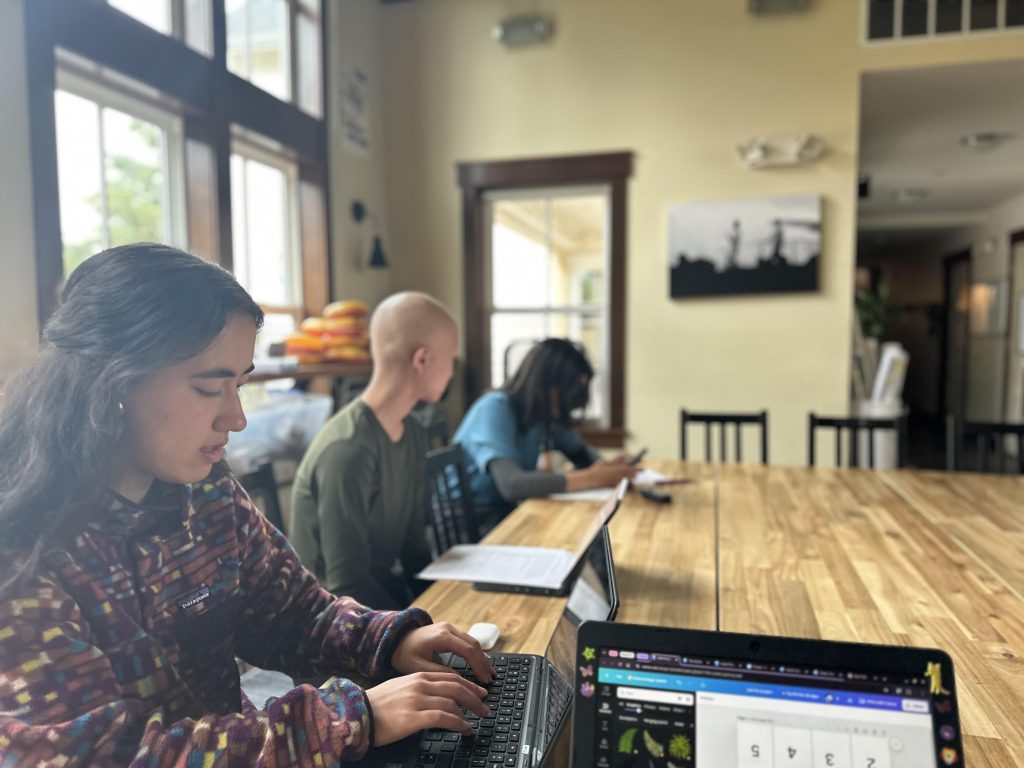
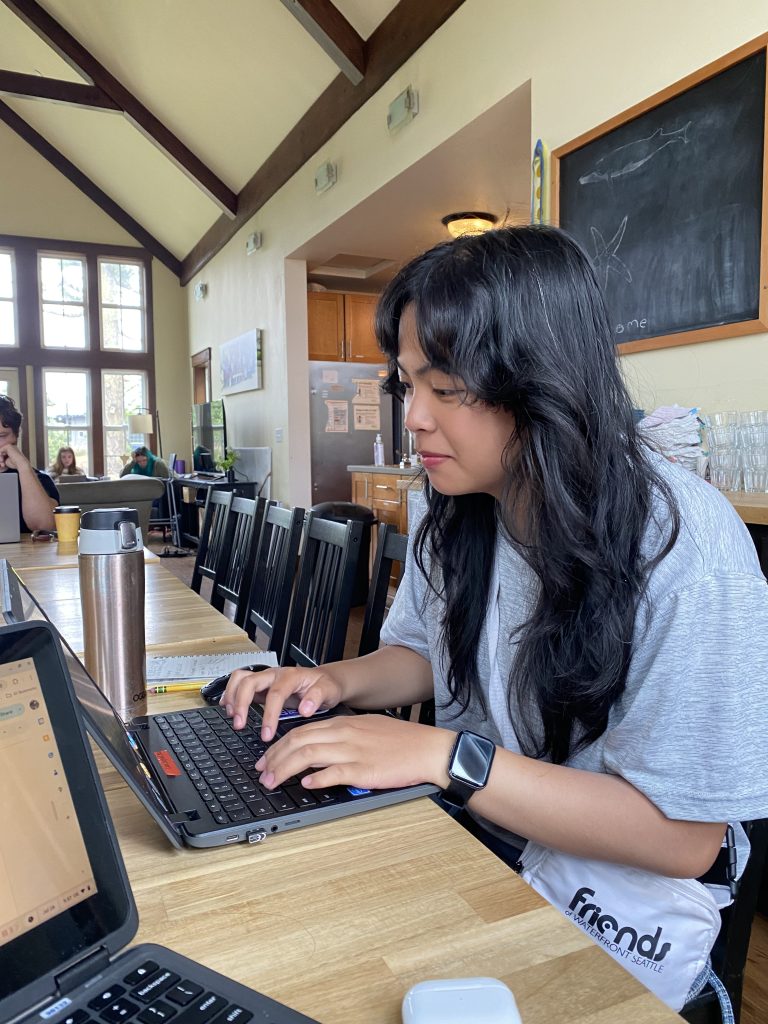
Afterward, we worked on our projects for an hour. Many of us were locked in and smashed away at our keyboards in utter silence and focus.
PC: Maxene – Working on our projects
Dinner Crew cooked up some good chili and cornbread. We were glad dinner crew found the honey. Because who has cornbread without honey and butter? Tonight we look forward to challenging Emma and Adam’s team to some trivia at JP’s. Bowling and other fun activities will end our wonderful rainy day.
After three fantastic days of kayaking with the Crystal Seas Kayaking Guides, it was a relief to be waking up in a nice comfortable bed. We sat down to breakfast as usual and kicked off our projects. It was time to brainstorm because the project deadline is rapidly approaching!
Maxene absolutely destroying her keyboard, diligently working away (Photo by Mia Widrow)
Then, we hopped into the vans to begin our voyage to the Friday Harbor Labs (FHL). There, we met up with Dr. Rebecca Guenther, who is a renowned algae specialist and long time resident at FHL. First, Dr. Guenther gave us a briefing about the day, which included algae collection at the docks of FHL, followed by a lecture and then some algae pressing and cyanotype print making.
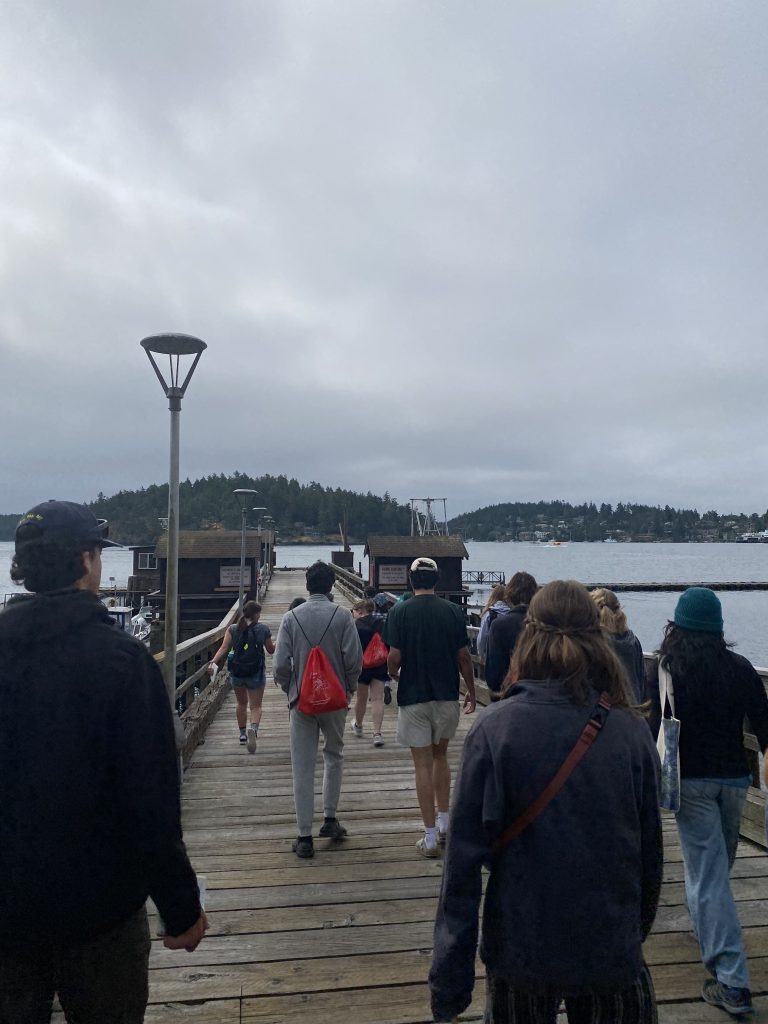
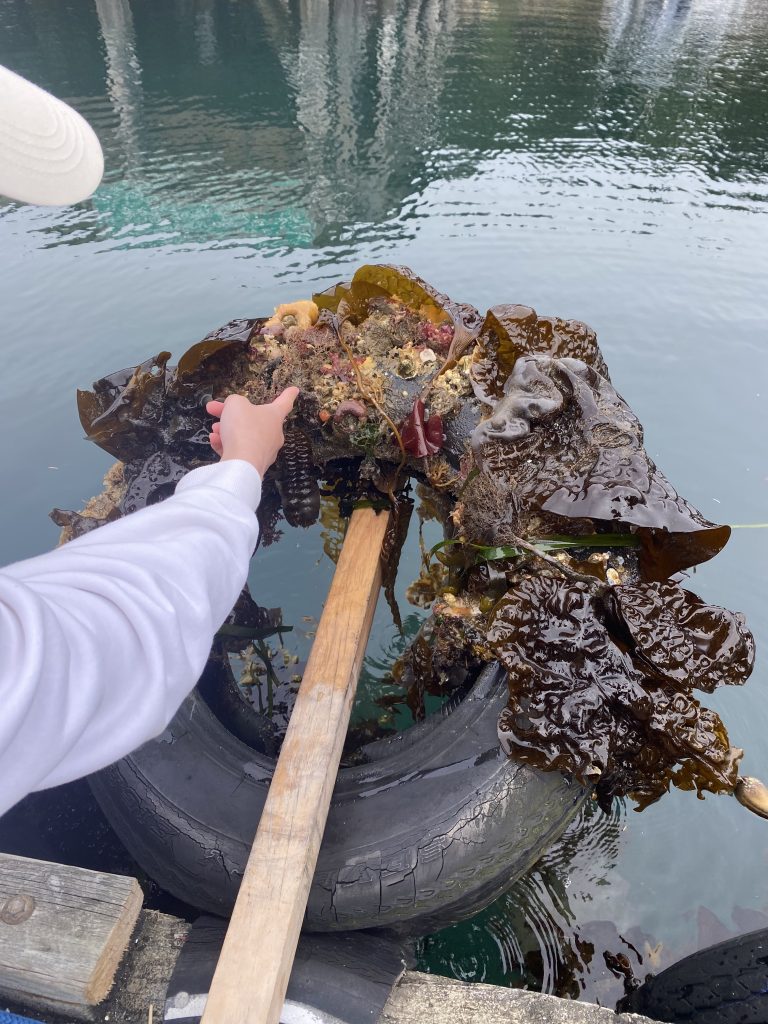
First, we headed down to the dock at FHL. We split into small groups, and fished up tires which lined the sides of the dock. On the tires, there were many types of algae growing, as well as many other marine organisms. The dock was shaky and we were fearful of falling in. However, no one did! We all remained dry.
Everyone off to the docks (Photo by Mia Widrow)
Leanne observing some funky marine organism (photo by Mia Widrow)
After collecting sufficient samples we returned to Spring Street with hungry bellies. Some of us went into downtown Friday Harbor and got seafood at The Bait Shop, while others stayed at the dorms and ate spaghetti.
After lunch, Dr. Guenther joined us at Spring Street to begin an informative lecture about algae. We learned all about the many different types of algae, as well as how to identify them. We also learned about dichotomous keys, life cycles, and harmful algal blooms. Now that we know so much more about algae, we were ready to continue our deep dive into the world of algae through some artistic exploration!
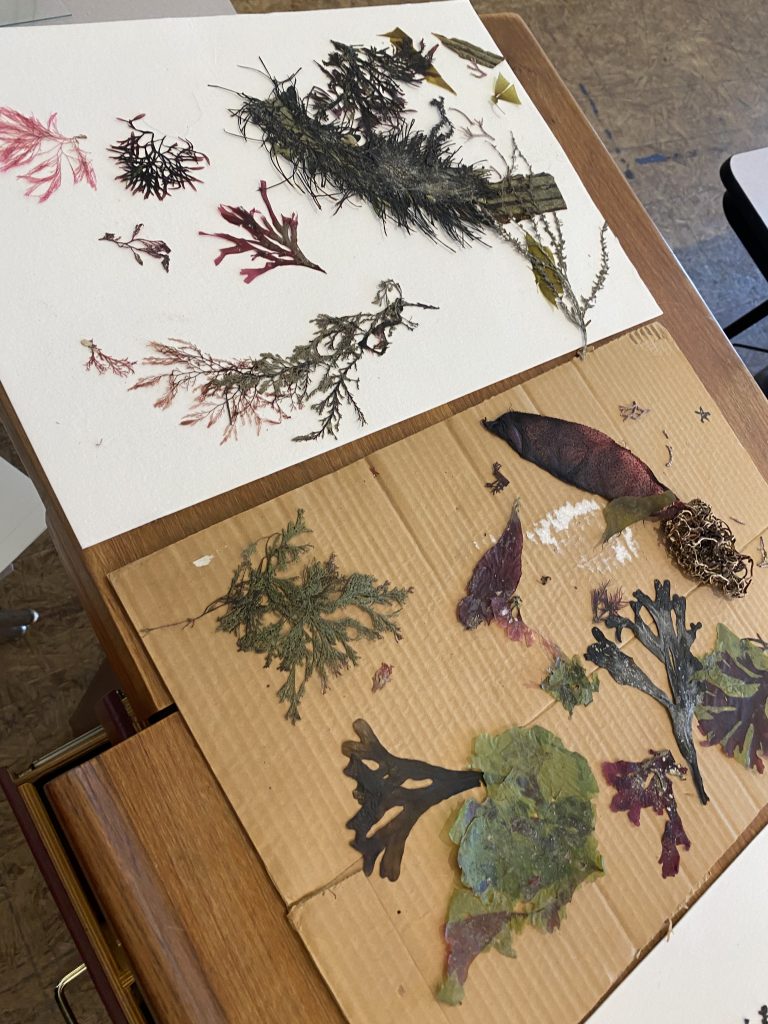
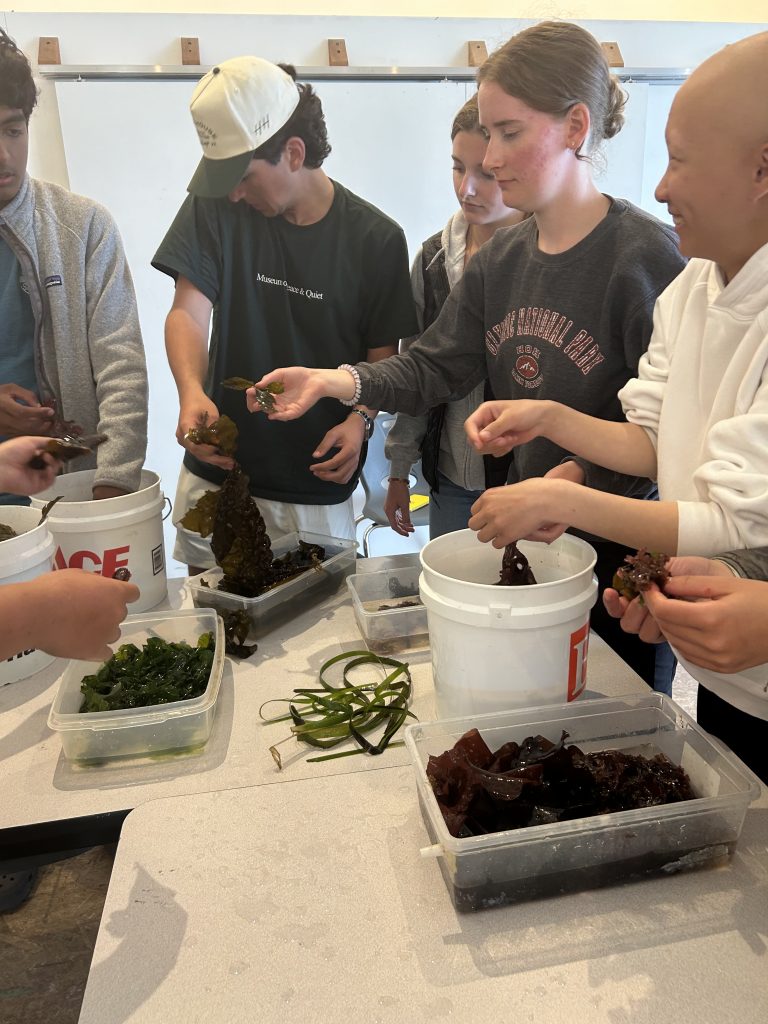
We did two different kinds of art using the algae we collected earlier in the day at the docks. First, we made some algae prints using a wooden press similar to flower pressing for all botanists out there. We made some gorgeous art pieces by laying algae onto paper, then covering it with fabric and sandwiching it between cardboard and blotter paper. We loaded all of our pressings into a wooden presser and they will be done by the end of the week. We are excited to see how they turn out!
Red, brown and green algae, already pressed into beautiful creations. (Photo by Mia Widrow)Everyone unlocking their inner artist through the medium of slimy algae. (Photo by Wats Littman)
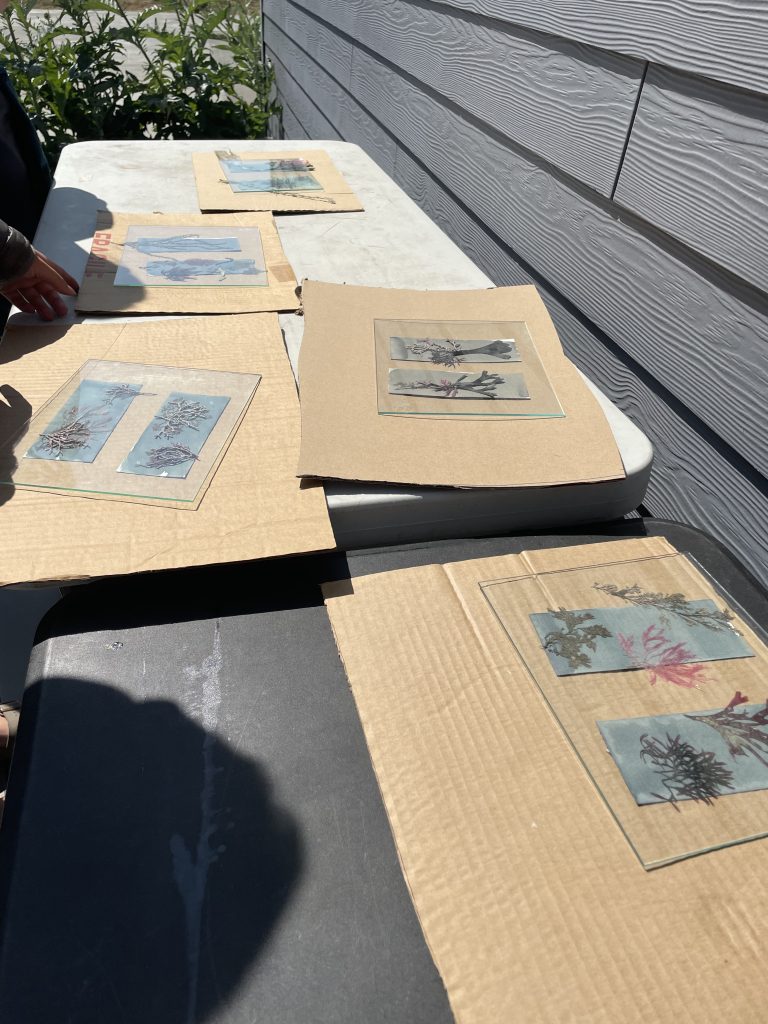
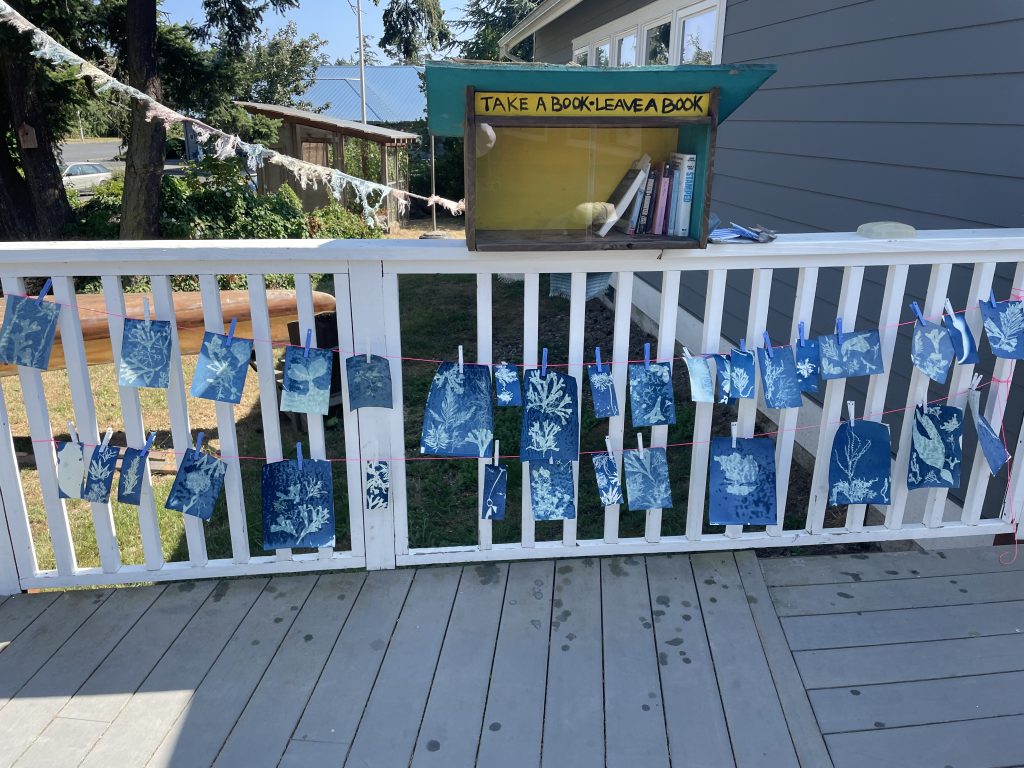
The next medium we explored was cyanotype printing. This works by exposing a paper coated in a special chemical to the sunlight, and then dunking it into a hydrogen peroxide solution. Dr. Guenther prepared pressed algae for us to use, and then we artfully arranged them on sheets of paper. The algae arrangements block the sun from reaching certain points on the paper, which creates wonderful silhouettes of the algae on the paper.
The algal arrangements baking out in the sun. (Photo by Leanne Zhang)Everyone’s finished artwork, drying in the Salish breeze. (Photo by Leanne Zhang)
We are all hungry and excited for a nice dinner tonight prepared by some of our fellow students. After dinner, we will be watching a performance of A Midsummer Night’s Dream courtesy of Shakespeare Under the Stars. It has been a great first day back from the kayaking trip and we are ready for the week ahead.
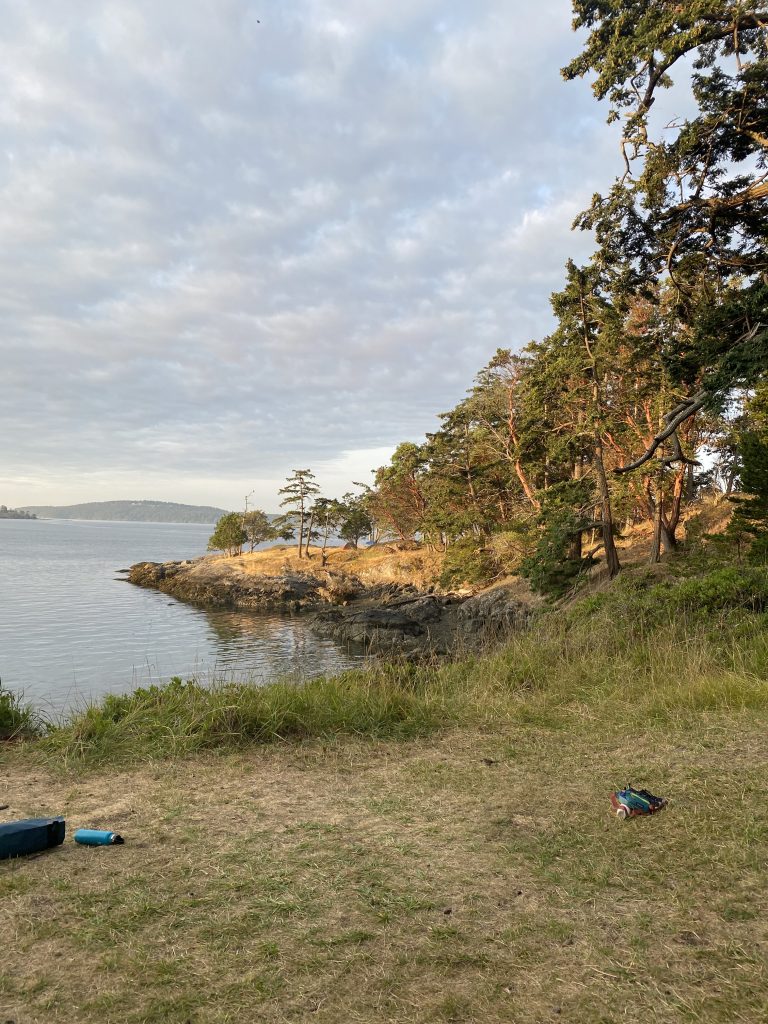
Our final day was our earliest by far. We woke up at the lovely hour of 5:30 am to have an amazing breakfast of oatmeal and fresh fruit at 6:15 am courtesy of Clark, Dylan, and Charlie. We broke camp, packed the kayaks, and began the voyage back to Jackson Beach. With two long days of paddling behind us, we were slow and tired, which yielded many breaks along the way. We briefly stopped at a small cove to rest and eat some snacks.
The beautiful Salish Sunrise on Jones Island. (Photo by Mia Widrow)
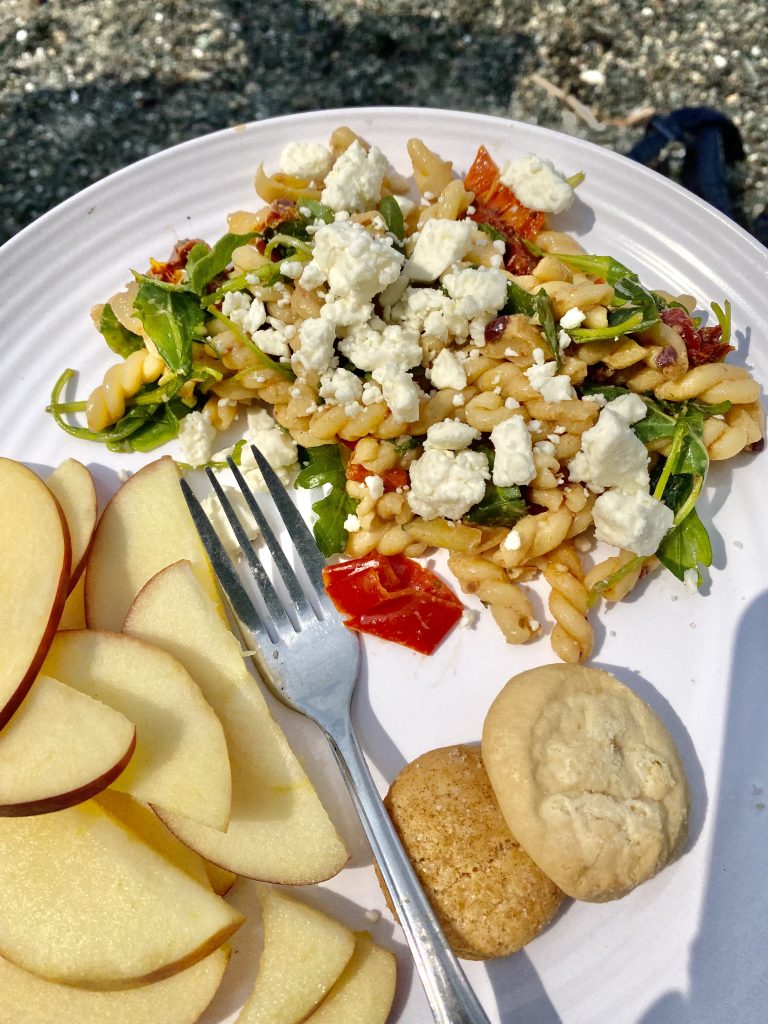
Our next stop was at the same island we stopped at for lunch on the first day, Turn Island. The rocks on the beach were incredibly sharp and painful, but somehow our three guides were able to walk on it barefoot. Thanks to Charlie, Clark, and Dylan, we were able to enjoy a delicious meal of pasta salad, along with some juicy apple slices and cookies. The recipe they used was Charlie’s personal family recipe. It was so delicious!
The lunch at Turn Island, courtesy of our guides. (Photo by Mia Widrow)
After having lunch, we jumped back in the boat. A second wind swept over us all and a final push to Jackson Beach felt like nothing relative to the rest of out paddeling. With the beach in sight, we raced the last bit and joyfully jumped out of our kayaks. We unpacked all of our gear from the kayaks and rode back to the dorms.
When we returned to the dorms, the wonderful people of Crystal Seas Kayaking gifted us each with a shirt! We showered and washed all our grimy clothes in the laundry machines. After that, we were gifted with free time, which many people used to get some meaningful rest. Some people chose to use this opportunity to explore downtown Friday Harbor, and run some errands.
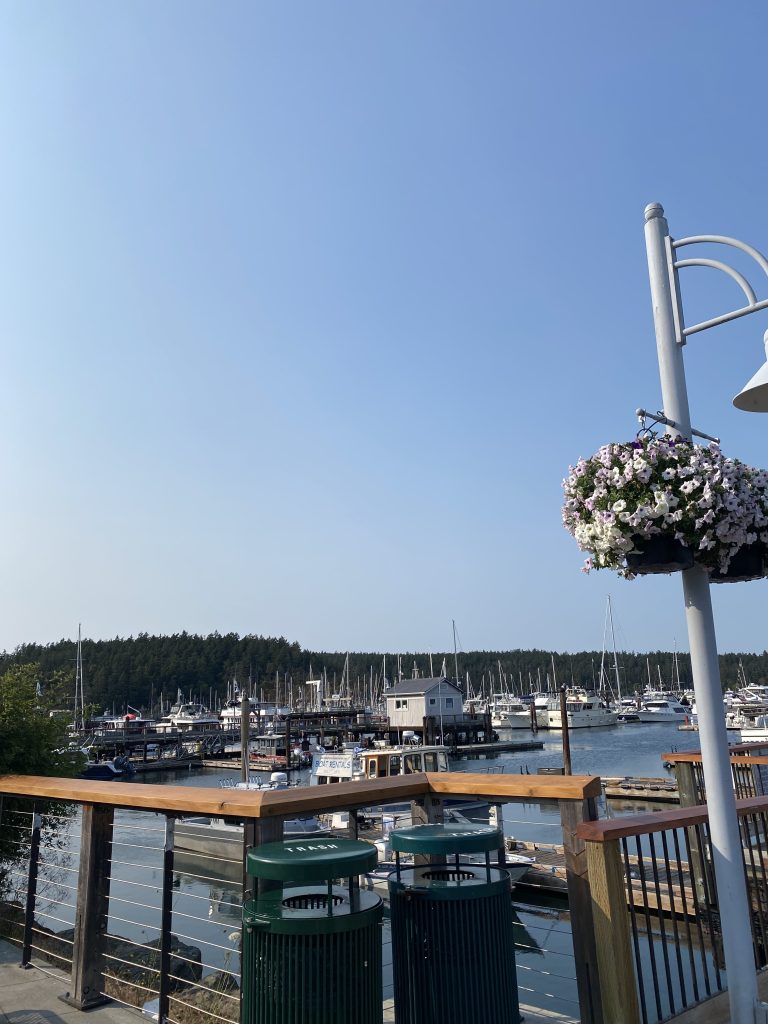
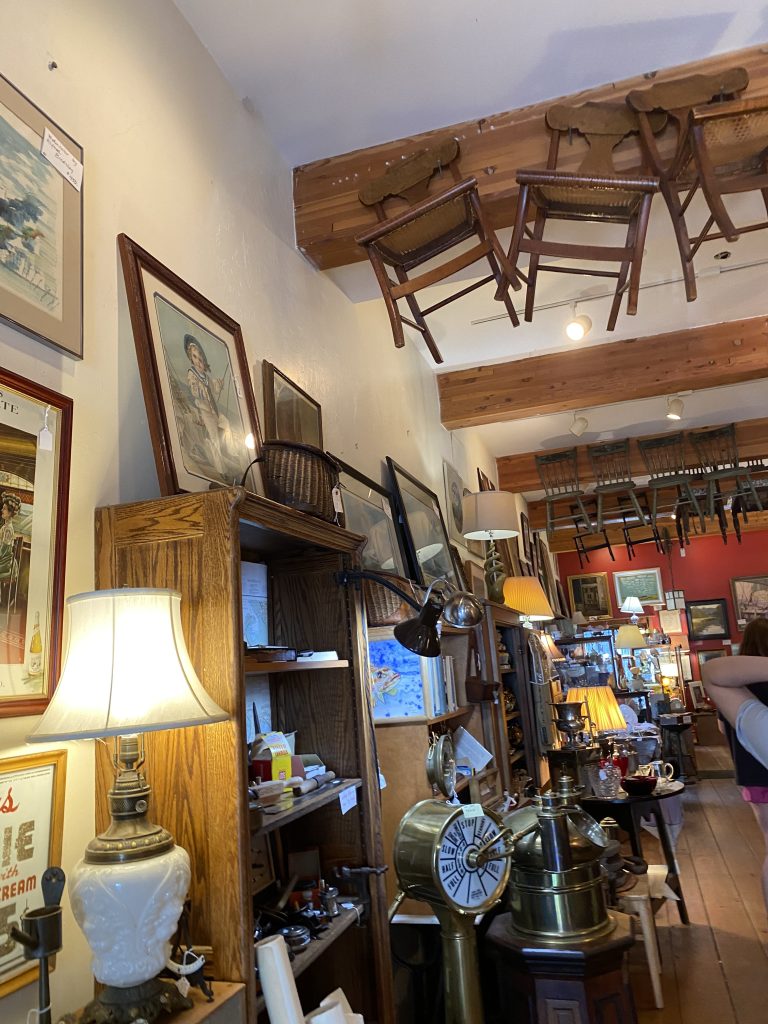
The afternoon sun of Friday Harbor. (Photo by Mia Widrow)Funk and Junk, a lovely thrift store downtown. (Photo by Mia Widrow)
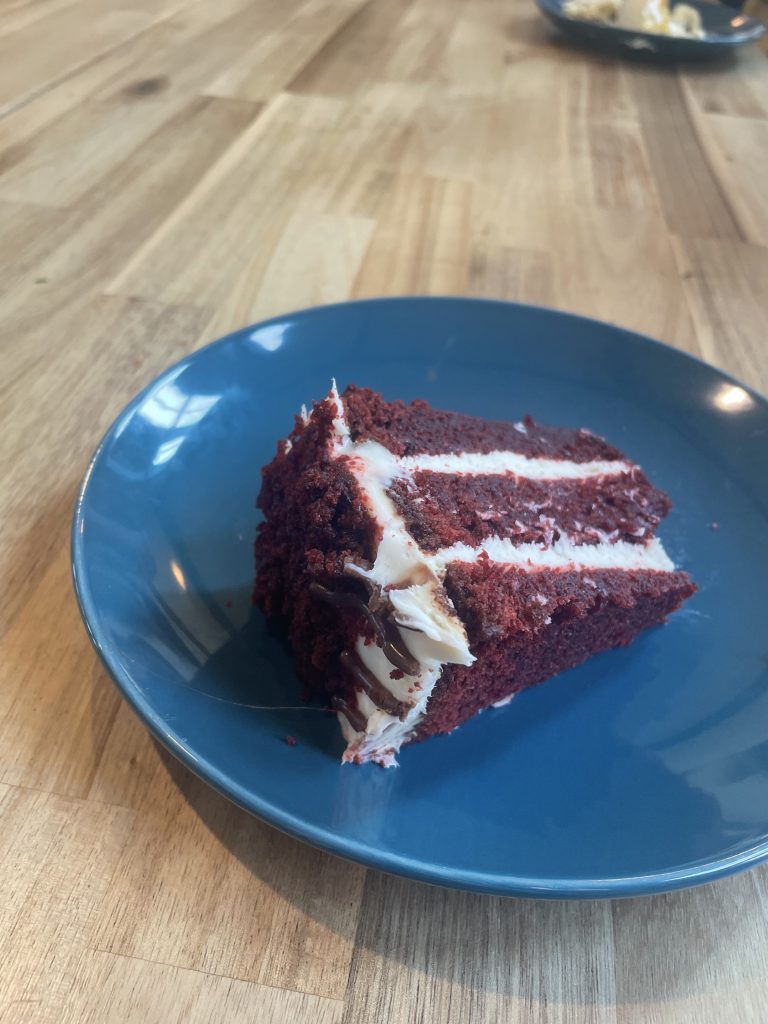
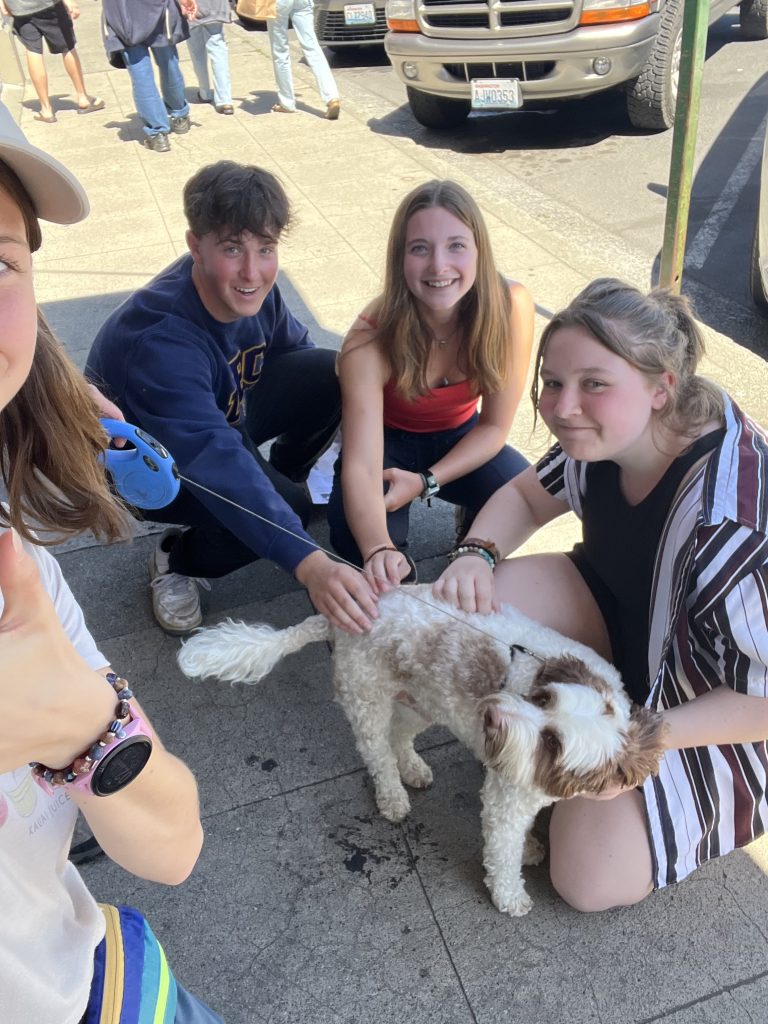
After returning to the dorms, we ate a filling dinner and met Cassandra, the new dorm parent. We also met her daughter, Cara, and her cute dog. They will be with us for the duration of the program. We were sad to hear that Riley was leaving, but we were grateful for the time he spent with us. He also gave us some cakes courtesy of San Juan Bakery which were absolutely delicious!
A red velvet cake, courtesy of Riley and San Juan Bakery (Photo by Sophia Wolf)
After doing so much kayaking, we were glad to be back and getting some much needed rest. This experience was incredibly valuable, and we are grateful for the memories we made. Overall, the kayaking trip had moments of difficulty, but we all had so much fun!
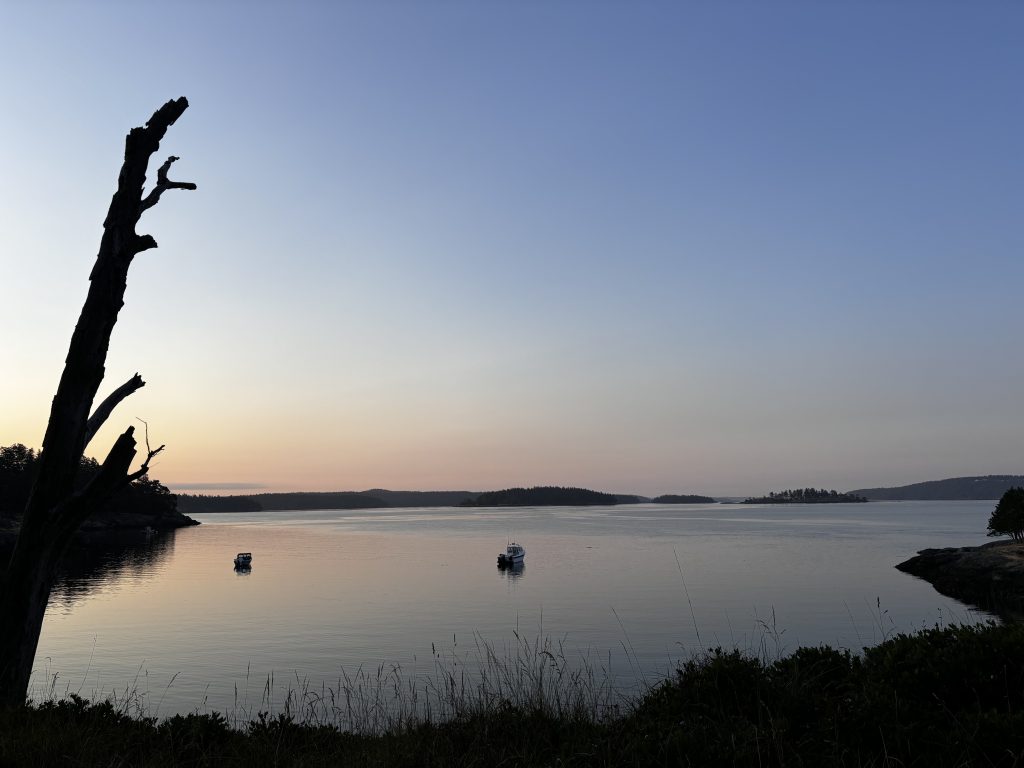
We began the day with fruit and scrambled eggs for breakfast while watching the sunrise. Camping by the beach was fun for everyone; some of us slept outside under the stars.
Credit: Josie Sunrise at Jones Island
As the day warmed up, we explored the North Beach and walked around the island’s east side. The morning was spent recovering from the arduous kayaking the day before. When noon hit, we ate sandwiches and started preparing to kayak around Jones and to the nearby Reef Island, Yellow Island, and McConnell Island. It was so beautiful!
Credit: Evan The Kayaking Adventure Begins
The weather was warm and there was little wind; it was perfect for kayaking. We saw many harbor seals lounging around, bright red sea stars hanging about, and moon jellies floating by. After an easy paddle around, we headed back to Jones Island. Dinner was delicious burgers and hot dogs. After dinner, we played card games and ate homemade donuts.
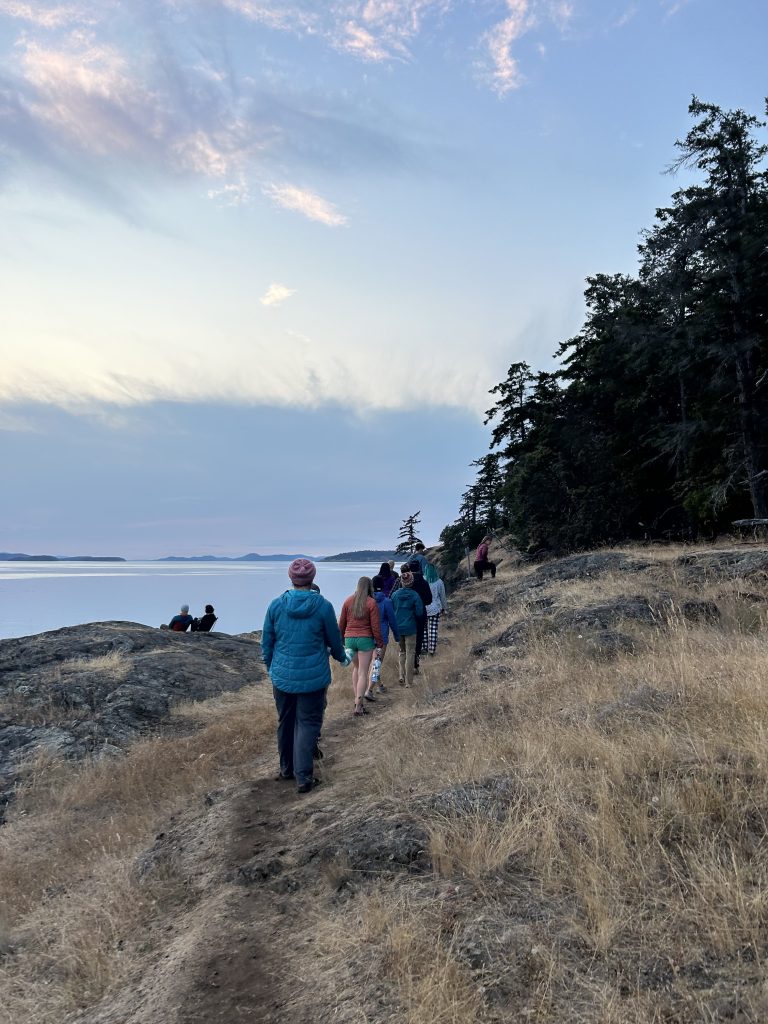
Later that night, we went on a quick walk to see the sunset. It was beautiful and calming; the sky was painted in shades of blue, purple, and pink. We spotted a family of four silky grey river otters heading back to their den, and we also saw some pretty brown porpoises playing in the water.
The Salish Sea group was awakened bright and early, and we soon settled into our vans with our gear to set out for our 3 day kayak/camping trip. We had packed everything we needed into two 10 ounce dry-bags the night before, which prepared us for the upcoming days. When we arrived at the beach we were launching from, we were blown away by the view.
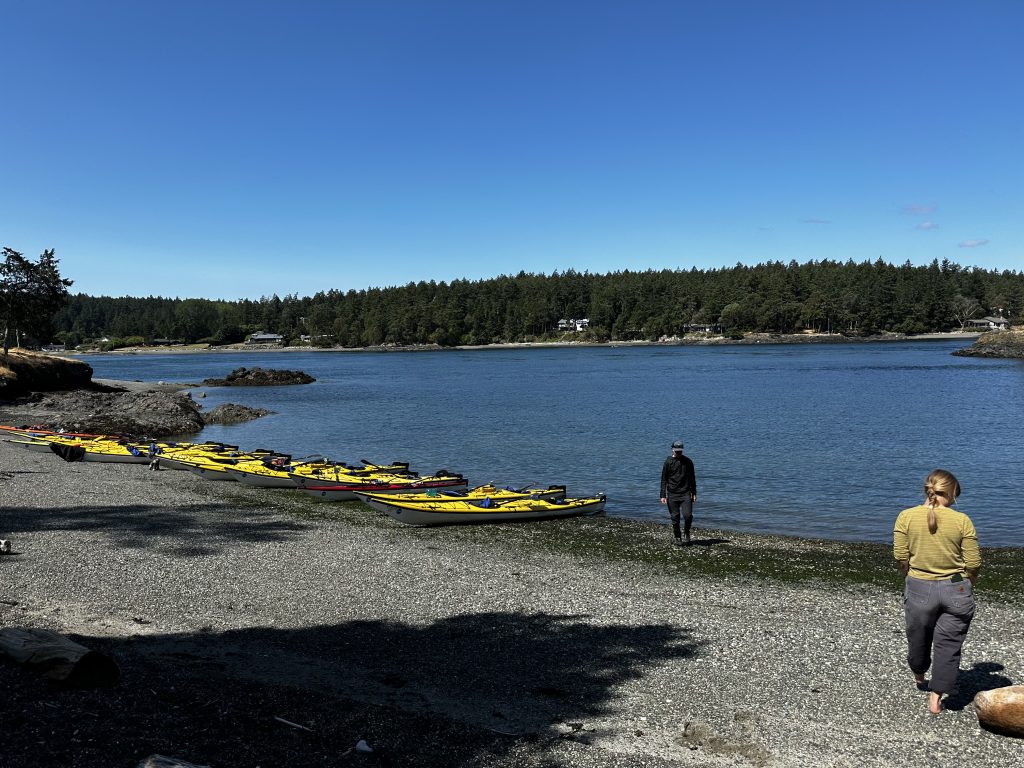
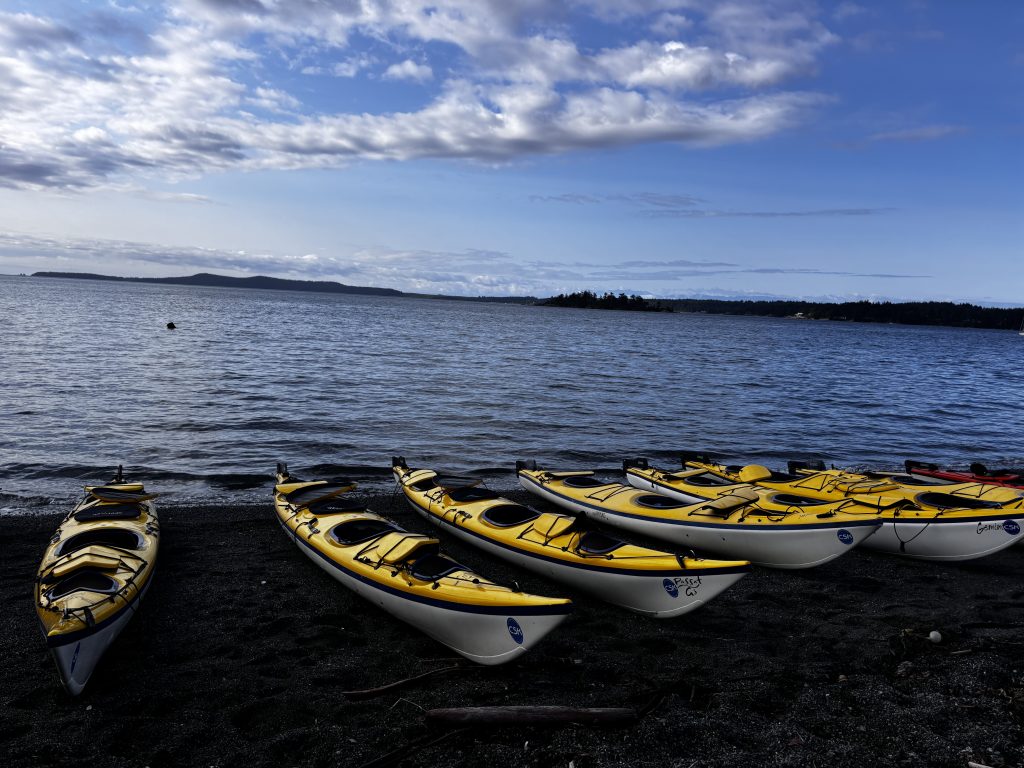
Credit: Josephine, Kayaks on Jackson’s Beach, 8:00 am
We had three awesome tour guides, Charlie, Clark and Dylan, who met us on the beach that morning, and they were fully prepared for all nineteen of us. They gave us each a sleeping bag and had already packed food, tents, and other sleeping materials into our kayaks. We split into pairs with our science director, Emma. We then kayaked through the Salish Sea to our lunch spot. We were exhausted from the sun, paddling and steering. Luckily, our guides prepared us a delicious lunch!
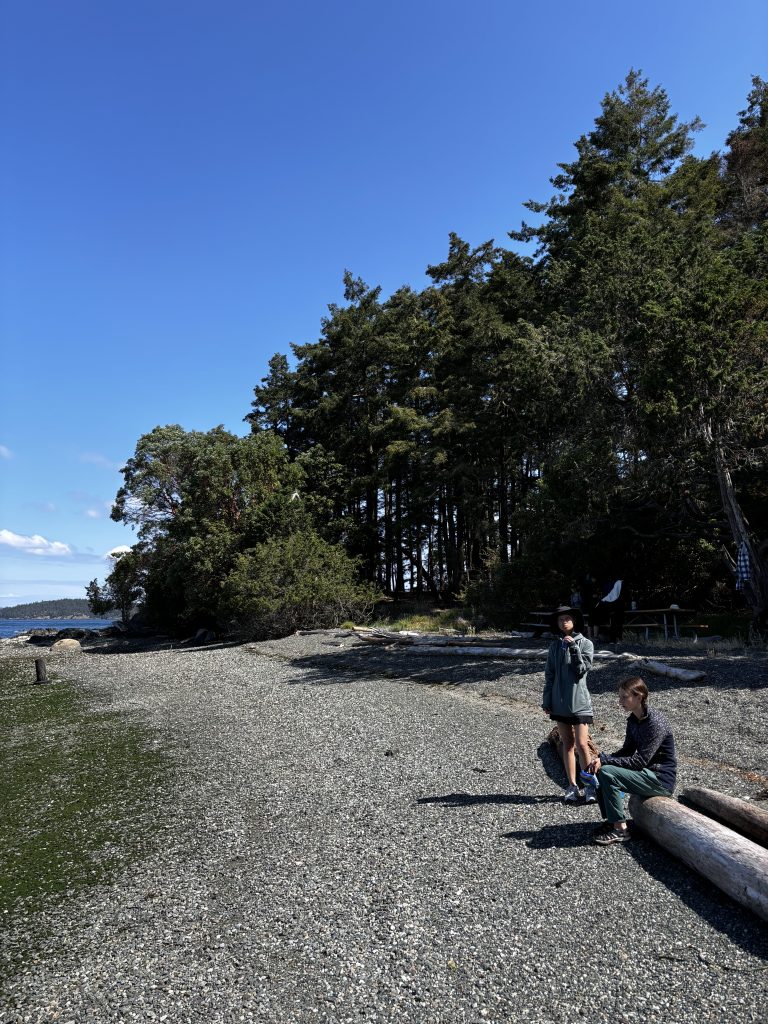
Credit: Josephine, Leanne and Susanna on the beach during our lunch
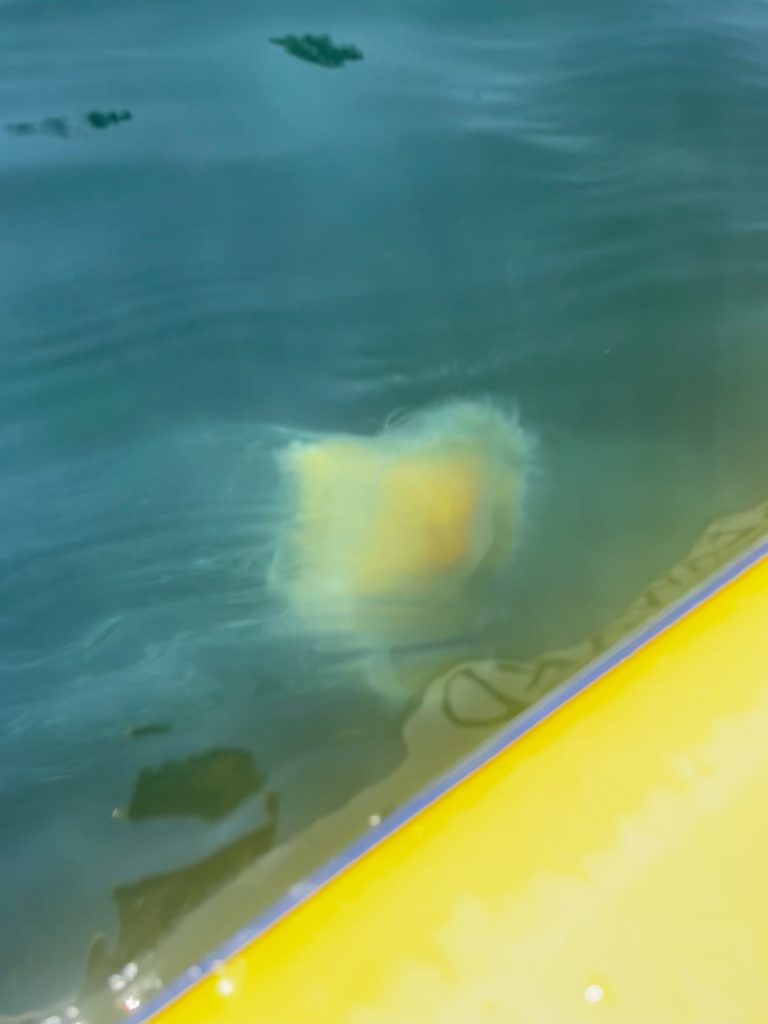
On the beach we ate sandwiches and Numenos’. We then got back into our kayaks and continued our journey to Jones Island. This section of the travel took around two hours; the whole adventure was about three hours. While it was hot, salty and exhausting, there were some great moments too! A couple people brought speakers onboard, which truly kept the vibe alive. We listened to some Lady Gaga and Taylor Swift, and sang along to the some Disney songs. We also had the amazing experience of kayaking with jellyfish!
Credit: Susanna, Egg Yolk Jelly (Phacellophora Camtschatica) off the side of a kayak
When we finally arrived at Jones Island, we unpacked from our kayaks and brought our stuff from the beach to our campsite. We then put our kayaks on pieces of driftwood to keep them from floating away when the tide rose later that night. Afterwards, we quickly set up our tents at our site, moving even faster as dinner was prepared.
Dinner was carnita tacos and dessert was chocolate fondue with various fruits, marshmallows, and graham crackers. Our guides were master chefs! We then either crawled into our tents or set up under the stars. We had a tiring but fulfilling day!
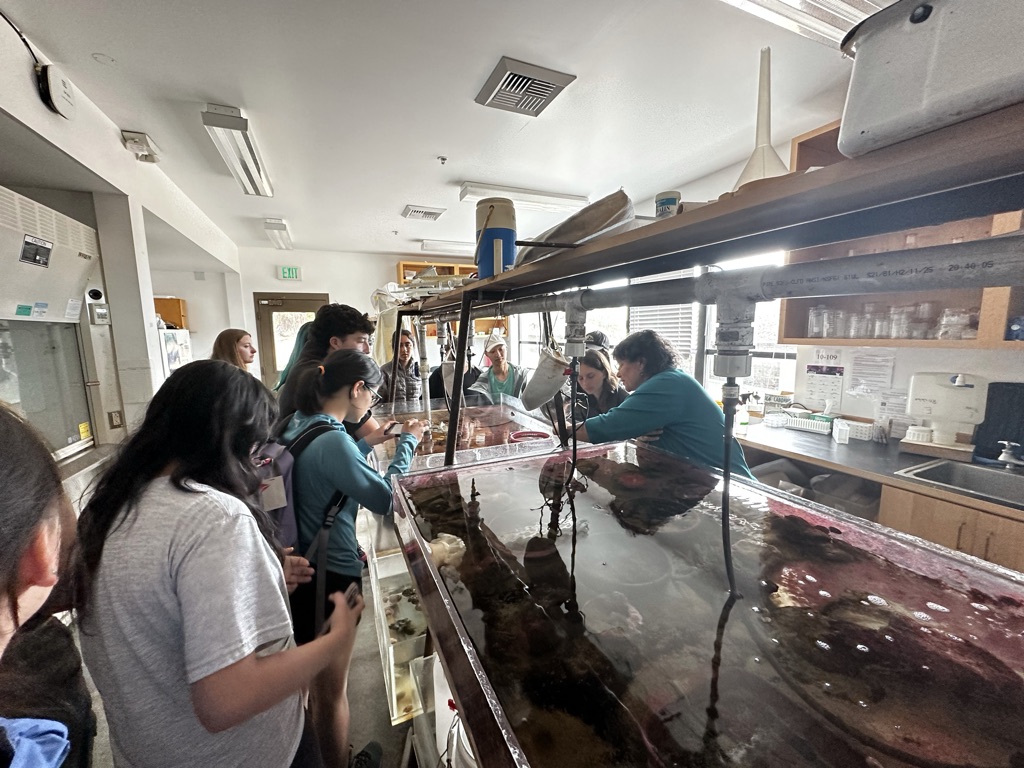
The group looking at sea tables in one of the lab buildings at Friday Harbor Labs–Credit to Evan
Today was a later morning, with wake-up an hour later at 8:30. Our first “activity” of the day was learning about the packing for our imminent kayaking trip to Jones Island with Crystal Seas Kayaking. We learned more about how to pack and what we would need for our 3-day trip. At around 10:30, we left for Friday Harbor Labs, a world-renowned research facility used by professors and students from all over. The facility has 12 labs and can accommodate 80 researchers and 175 people. Michelle Hecko was kind enough to give us a great tour of the Lab’s campus, and provided an interesting insight into some of the projects and unique features of the facility. One of the most interesting things about the lab as a whole was their flow-through water system, which brings water in and out of the facility quickly, allowing the scientists to observe the creatures in their sea tables and aquariums in a very natural water setting. In fact, this is one of the top reasons for people to come and use the labs! Another thing we learned about was a fairly new project regarding sunflower stars. Sunflower stars are a type of sea star that was heavily affected by the sea star wasting disease, and the labs are home to a project attempting to grow them artificially and return them to their natural habitats. This has been done before, but no other labs have been able to grow them from their first larval stage to full adults before releasing them, which was really interesting to learn about!
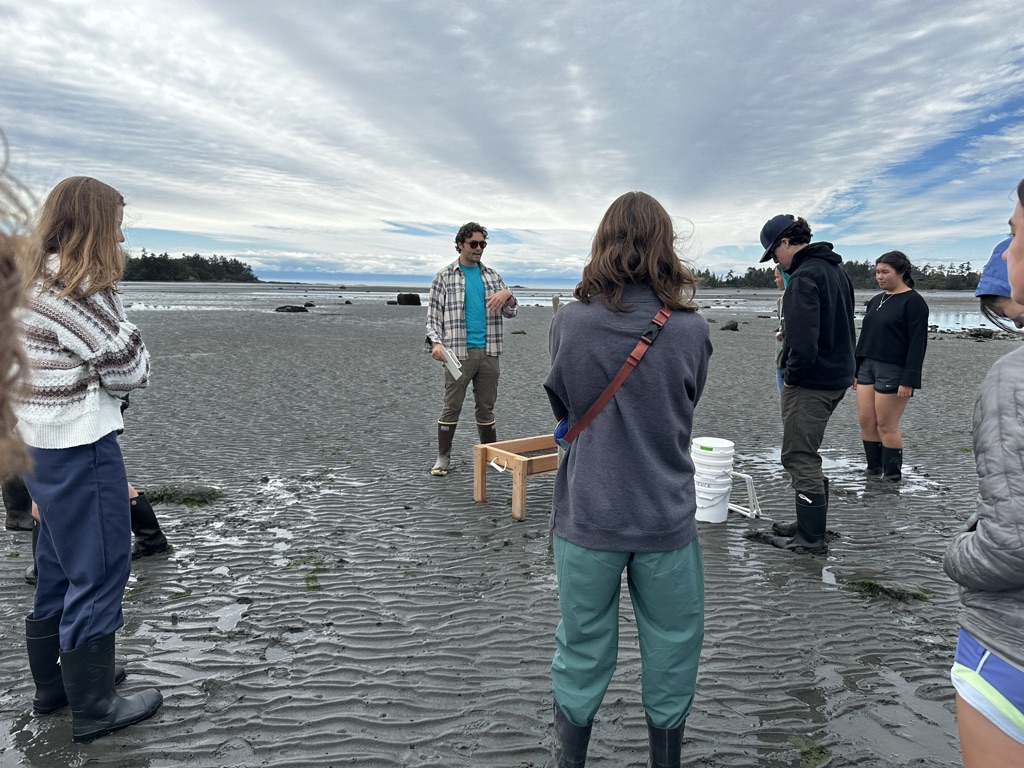
The group learning about survey methods at False Bay.–Credit to Evan
After leaving Friday Harbor Labs, we went to perform field research at False Bay. We first ate lunch by the vans and then we finally got to wear our mucking boots! We had all been eagerly awaiting this moment since we first picked our boots. We took research equipment such as quadrats, shovels, buckets, and a big sieve (not like the one in your kitchen). We all had a surprise when we learned we were looking for lugworm fecal casings (poop). We split into three groups. One group walked through the muddy water with quadrats (a quarter meter slate) to count the number of fecal casings throughout the beach. Another group shoveled holes in the beach in spots, where there was evidence of critters crawling under the sand/mud, to see what we could find other than fecal casings. The last group sifted through the shoveled sand in the big sieve to try to see what was hiding in the sand. We found some shrimp, lugworms, crabs and even some jellyfish in the water. At the end we stood in a circle and discussed our findings, some of us sunk into the mud and got stuck, but overall it was a very fun and educational experience!
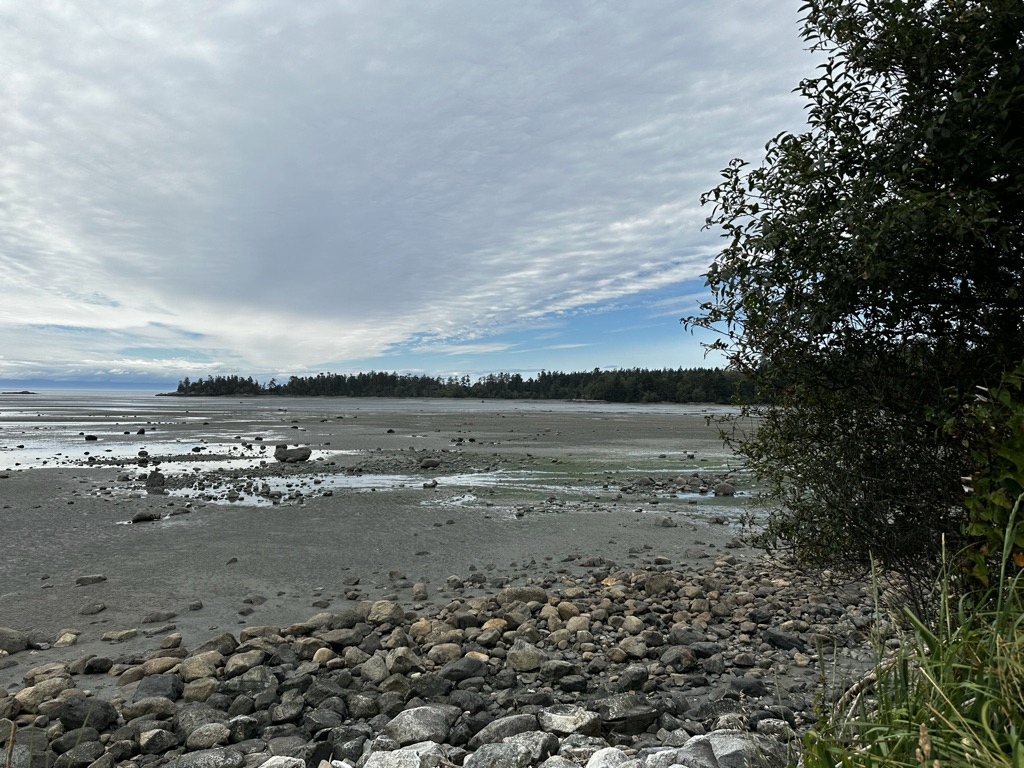
A view of False Bay’s mud flats from the rocks above. –Credit to Evan
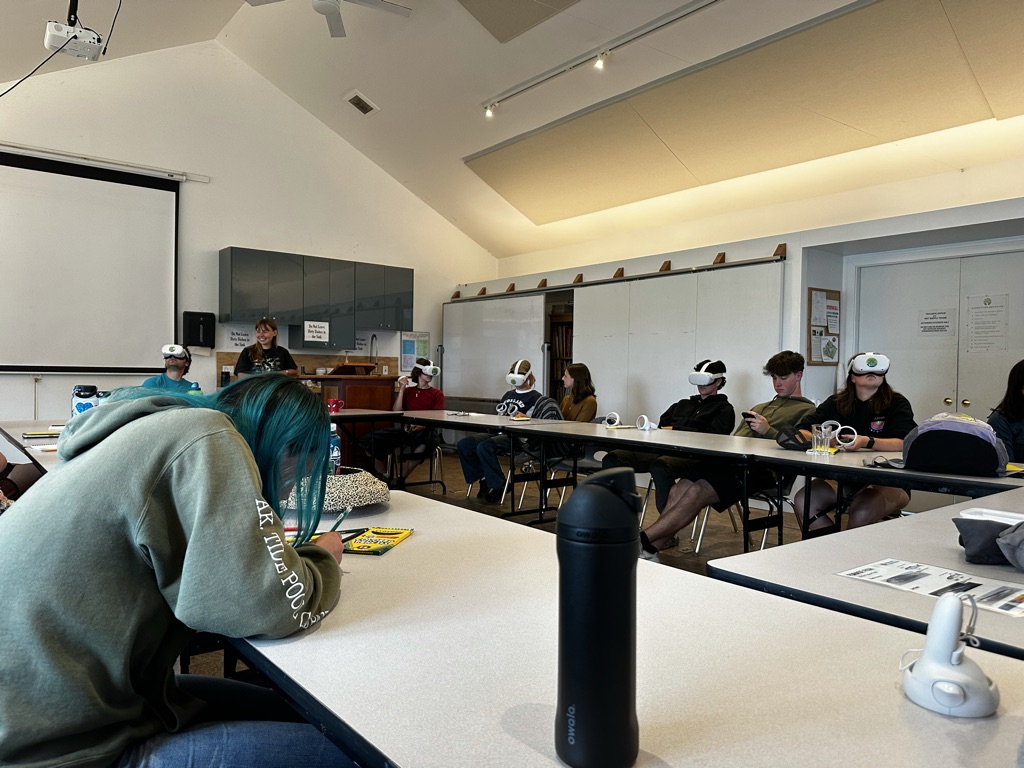
At about 2:00 pm, we went to the art classroom to hear a talk from Jess Newley of the “Friends of San Juan Islands” organization. She brought along her cute dog Ollie! We learned about significant organisms in the waters around the San Juan Islands, but we mainly learned about her teaching style! Jess believes it’s super important to incorporate what you love into your teaching (for her, it’s ocean photography!) At the end, she showed us the product of her underwater photography, using Oculus VR sets to show us salmon she encountered on her 360° camera to present to students!
The group trying out Jess’ VR headsets!–Credit to Evan
After eating the amazing sandwiches provided by the team at Salish Seas Sciences we attended a lecture at the Friday Harbor Labs commons where speaker Alyssa M Hernandez presented her talk “Robots For Biology”. During this presentation, Hernandez covered her story in science regaling her journey through biology to engineering where she continues to use her knowledge of the natural world to inspire her current work. We learned about her studies in robotic mobility where she used beetles in designing terrain-effective legs. We also learned about improvements to suction cups inspired by fish such as the cling fish and Snail fish. This was a great way to experience a college lecture and learn about new ways that robotics can help people learn about biology and vice versa. Overall, this was a busy but fulfilling day and we’re all looking forwards to our kayaking trip tomorrow morning!
This morning we woke up at 7:30 again and after enjoying our breakfast together listened and read about our session capstone project. The project will be an environmental proposal aiming to solve an environmental problem or execute continuing research to further conserve our environment. We saw some project examples and then made our lunches together. This project will be completed throughout the session, and we are excited to begin brainstorming.
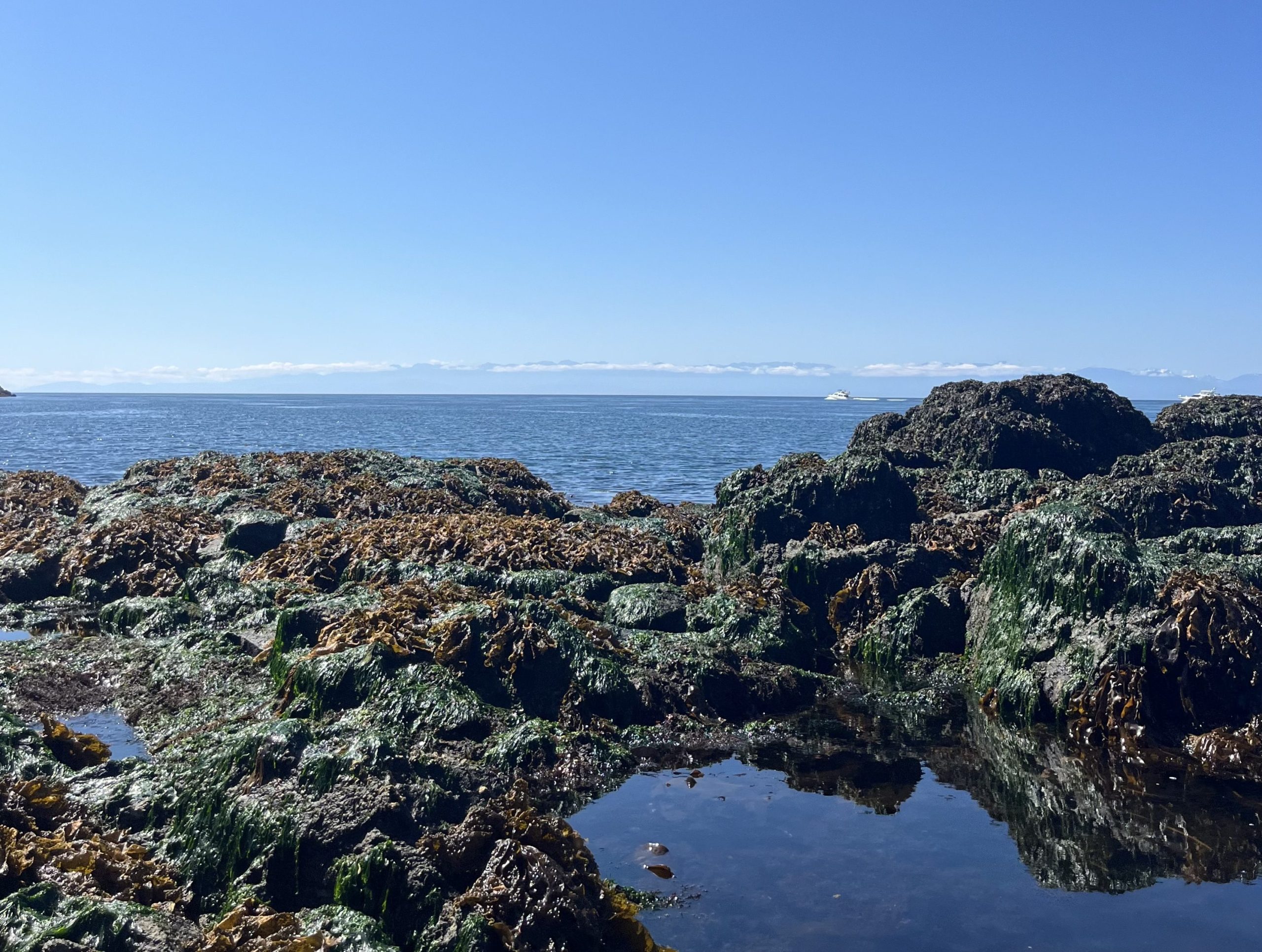
Tide pools at Deadman’s Bay
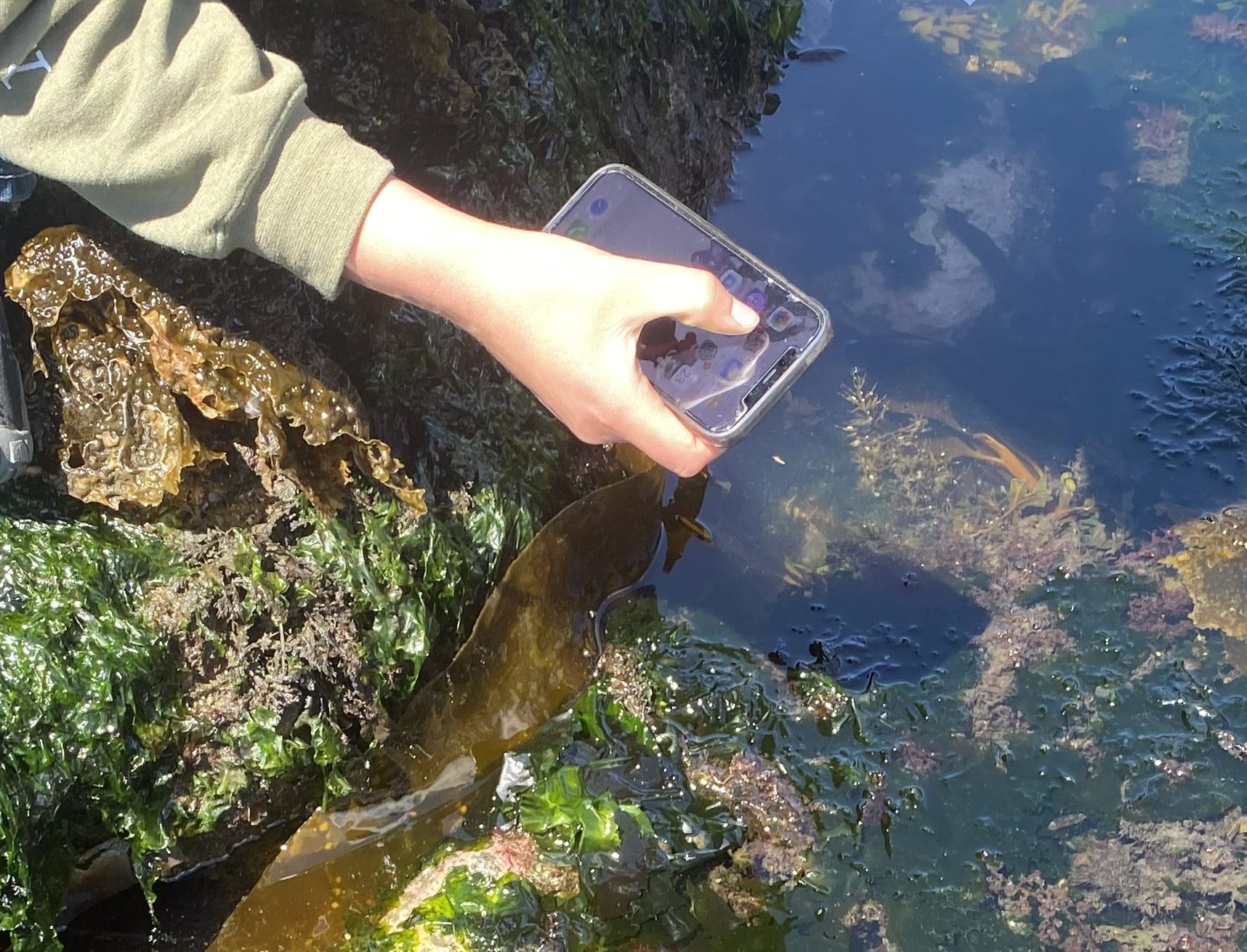
At 10:00, we left for Deadman’s Bay, crawling over plenty of seaweed to find different species for a game called Intertidal Bingo. We crossed off squares based on how many separate species we could find in the tide pools and on the beach, and thanks to a bit of teamwork, many of us were able to black out our bingo cards. The sea lettuce caused the rocks to become slippery, but luckily none of us sustained notable injury. This was a great opportunity to learn about the different creatures living in tide pools and how they interact with one another.
Finding a Sea Urchin to help complete Intertidal Bingo!
After tide pooling, we sat down on some large driftwood for lunch before piling back into the vans and heading to the Whale Museum.
In the afternoon our group toured the Friday Harbor Whale Museum, our tour guide explained the different groups of orcas living in the Salish Sea. We learned about many types of whales and porpoises living in our area. The tour guide talked about the endangerment of the orca whale, human impact, and that there are many ways that we can help.
After a quick drive back from the museum we prepared for our next activity, team town scavenger hunt. Each team had to find specific locations or actions and take a photo of everyone at or doing the task. Each team had a blast exploring the town and finding all sorts of different places. In the end, every team did quite well, with three teams getting over 375 points and the winning team getting a total score of 405. Tonight we will meet with Tim Dwyer who is currently co-teaching the Marine Subtidal Ecology course with Dr. Katie Dobkowski at the Friday Harbor Labs and was the founding Science Director for Salish Sea Sciences. Mr. Dwyer will teach us more about marine biology in the Salish Sea as we enjoy a delicious dinner and, afterwards, he will regale us with his experience with marine science research and communications in Antartica!
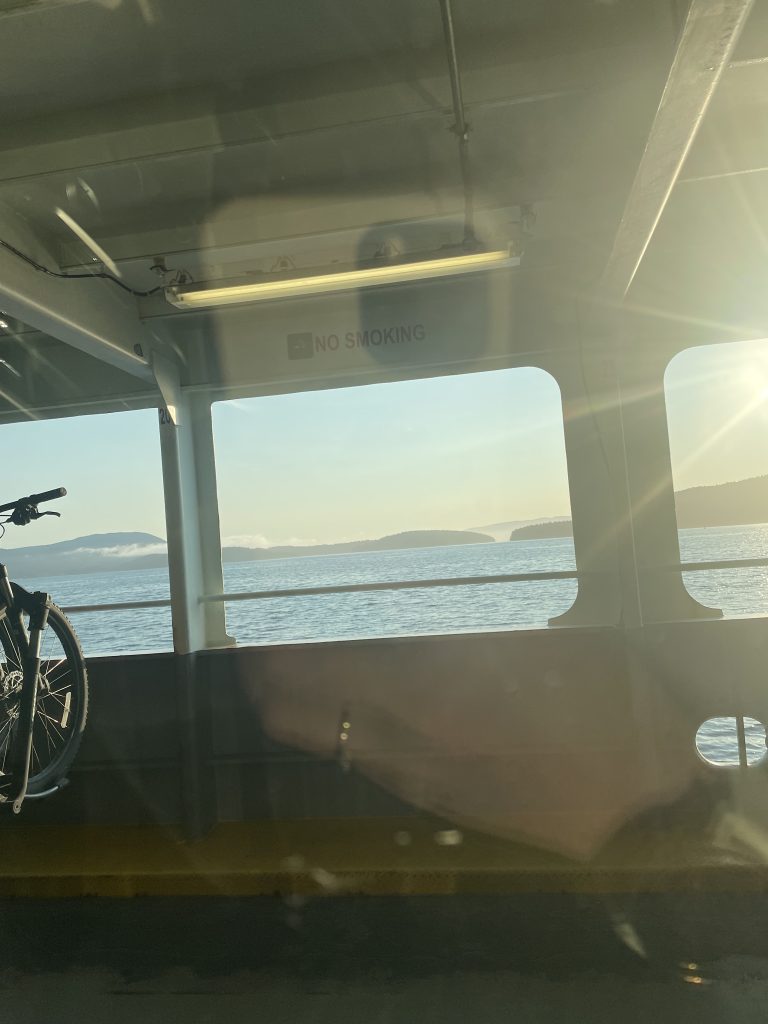
Yesterday was an exciting day, anticipation was high as students finished last-minute packing and readied themselves for a long day of transportation. Two students touched down from out of state before seven more piled into the van for the long drive to Anacortes. After meeting three more students there, we enjoyed a scenic ferry ride to Friday Harbor, the place we’d be spending the next two weeks learning about and exploring the Salish Sea. After being acquainted with the final seven students at the dorms, all 19 of us were excited and ready to begin the program. We met our roommates, settled into our dorms, and ate a delicious meal together before turning into a good night’s sleep before an eventful day.
Photo provided by Sophia – Ferry to Friday Harbor
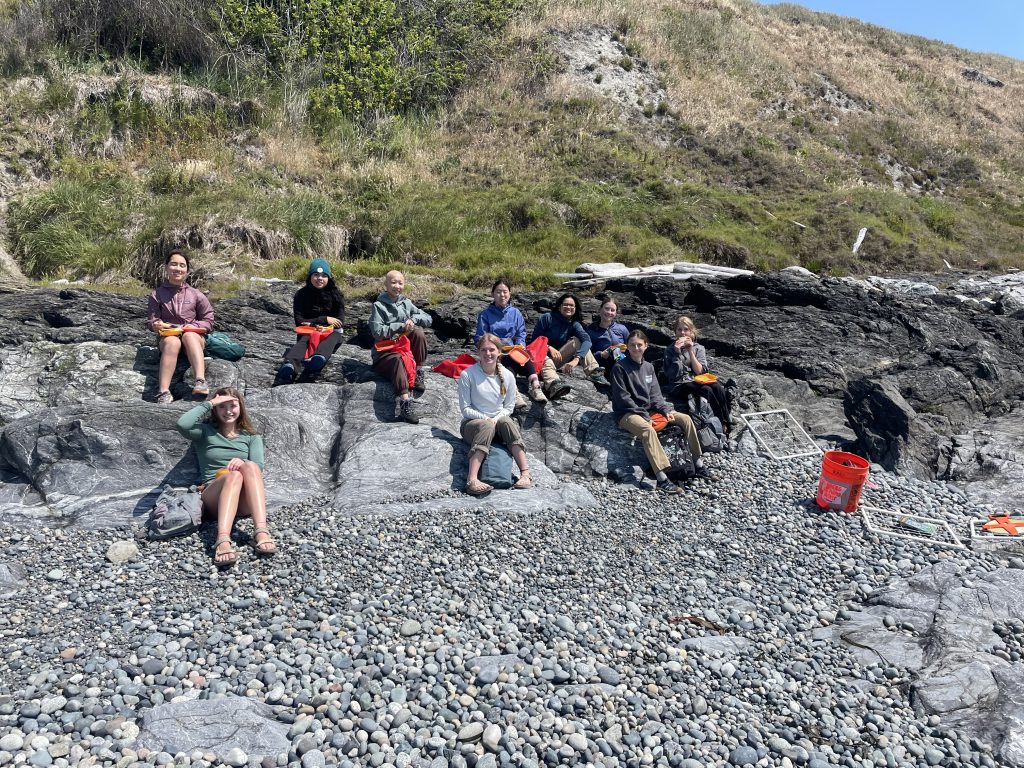
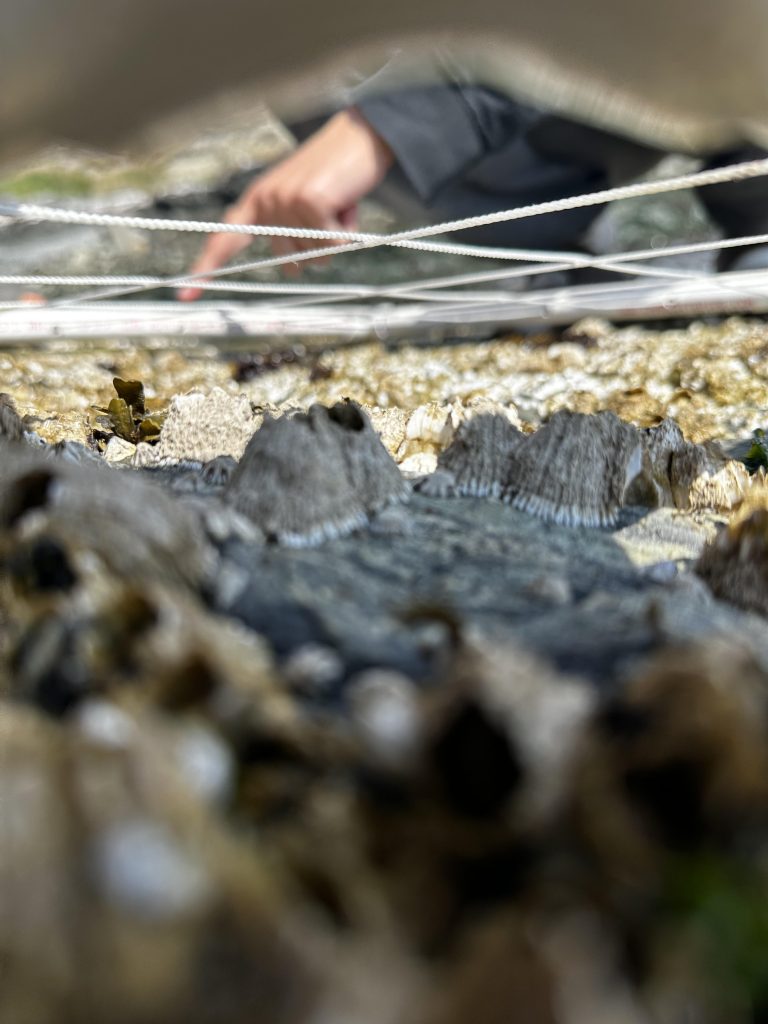
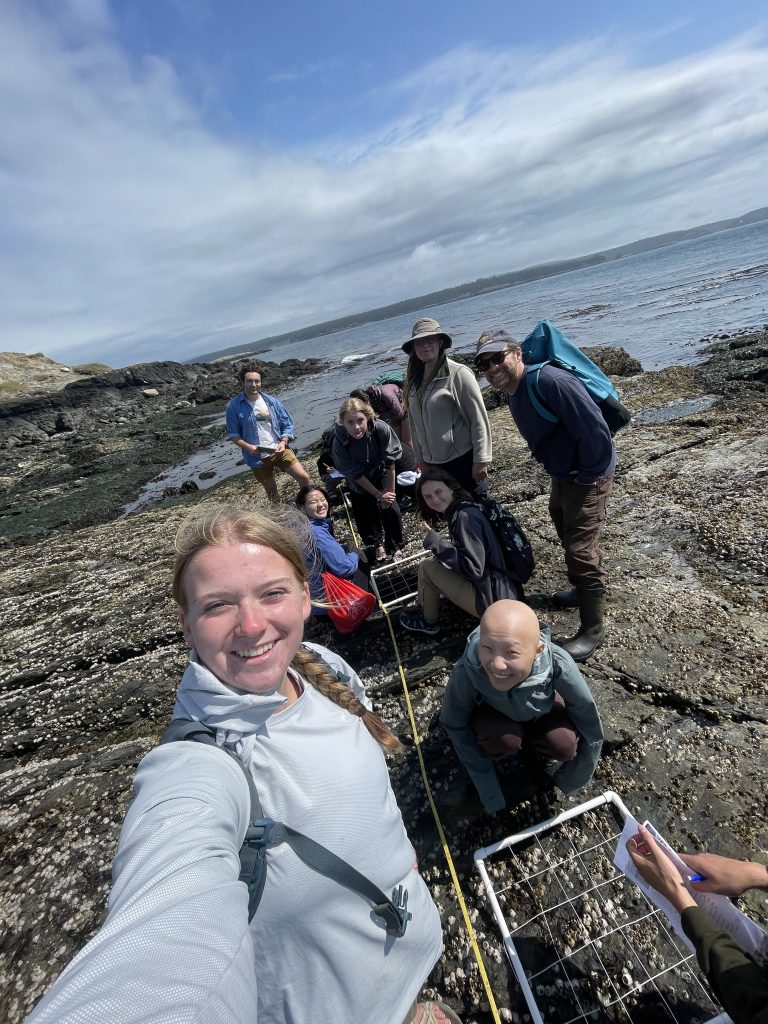
On the morning of the 22nd, we woke up at a very acceptable 7:30 am, ate a quick breakfast that consisted mostly of Cheerios, and went to Cattle Point to meet Dr. Dobkowski for seaweed surveys! Dr. Dobkowski’s research seeks to provide sound science for future conservation, restoration, and management efforts; she was a perfect fit for this activity. throughout the activity, all groups were able to identify different types of seaweed that are including but not limited to rusty rock, fucus, sea cauliflower, sea lettuce, sea moss, rockweed, and much more. overall a very fun experience, and a perfect way to start out this 2 week adventure.
Photo provided by Sophia – Eating lunch at Cattle Point Photo provided by Maxene – Seaweed surveys with Friday Harbor Lab students Photo provided by Sophia – More seaweed surveys!
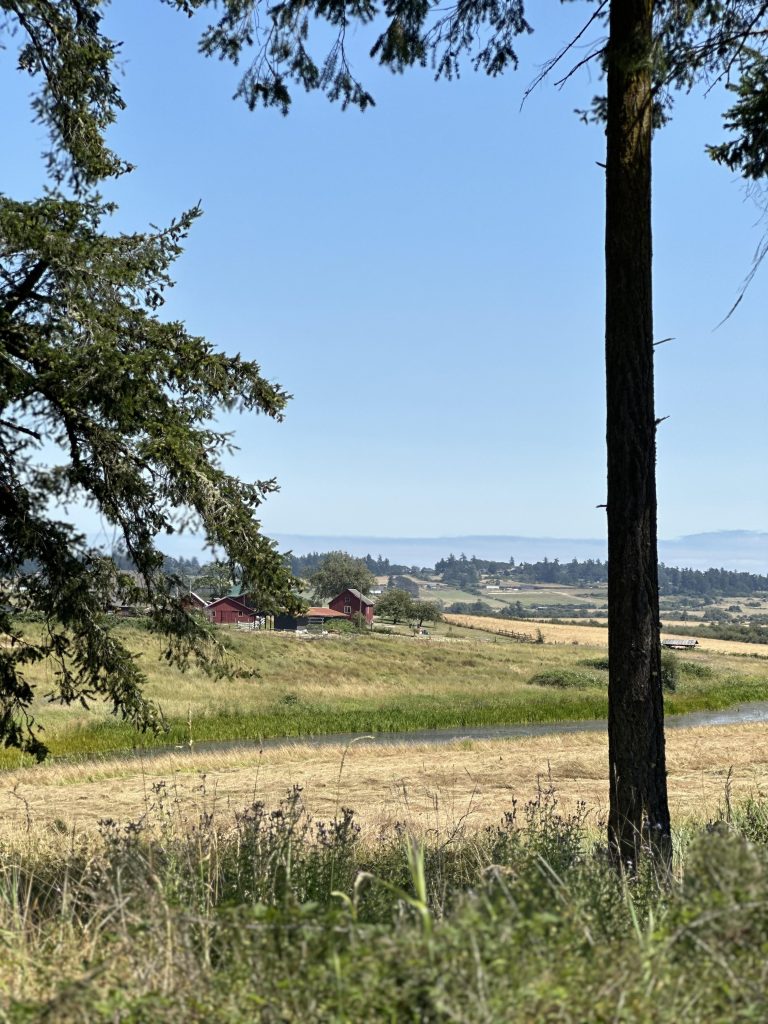
Shortly after eating lunch, we rode the van to Lake Zylstra, a nature preserve on the San Juan. Lake Zylstra is one of the most fertile lands on the San Juan Islands and is home to many keystone species. Today, Lake Zylstra is used for low-intensity recreation, farming, fishing, and hiking. Students were introduced to Shauna Barrows, a field assistant at the San Juan Conservation Land Bank. Barrows started off by describing the lake and land, that it was important to preserve. She described her stewardship and her dedication to the land, such as the importance of water quality in the streams and creeks. Our 2-mile hike started in the parking lot, then we made our way to the Beaver Dam Analog Area. Barrows stated how the Land Bank worked with native communities on how to best conserve the Land, motioning to the wooden posts. Soon followed a discussion on water ownership, the effect of cow feces on the land, invasive species such as thistle, how the indigenous people burned the land to maintain it, and more. Around us were Gary oak trees, English daisies, Salmonberries, and more. Afterward, we left and rode the van back to Spring Street International School, arriving around 3 pm.
Photo provided by Maxene – View from Lake Zyltra
After our long day full of adventures we came back to Spring Street, where Ms. Caroline enlightened us with an orientation to the program. She told us how to preserve and respect the island. This is so important because we want to make sure that everyone can experience this beautiful island as we get to do. We had a great ending to our wonderful first day, officially, with Tom’s delicious Lausanne! Which was graciously prepared with help from the dinner prep team. Our meal was nicely accompanied by a guest speaker, Ms. Shauna Barrows. Ms. Shauna works for the San Juan County Conservation Land Bank. It is her mission to create a better environment by providing help to the numerous ecosystems that are interconnected on the island. She demonstrates how the poor water quality in one stream can have an effect on the wildlife from inland to the bay. Ms. Shauna and her team have already done so much to better this island. We are so very thankful to Ms. Shauna and all of our wonderful staff members who made our first day a success.
Kindly recounted by Caleb Zulauf, Finlee Rice, and Tatum Bunting
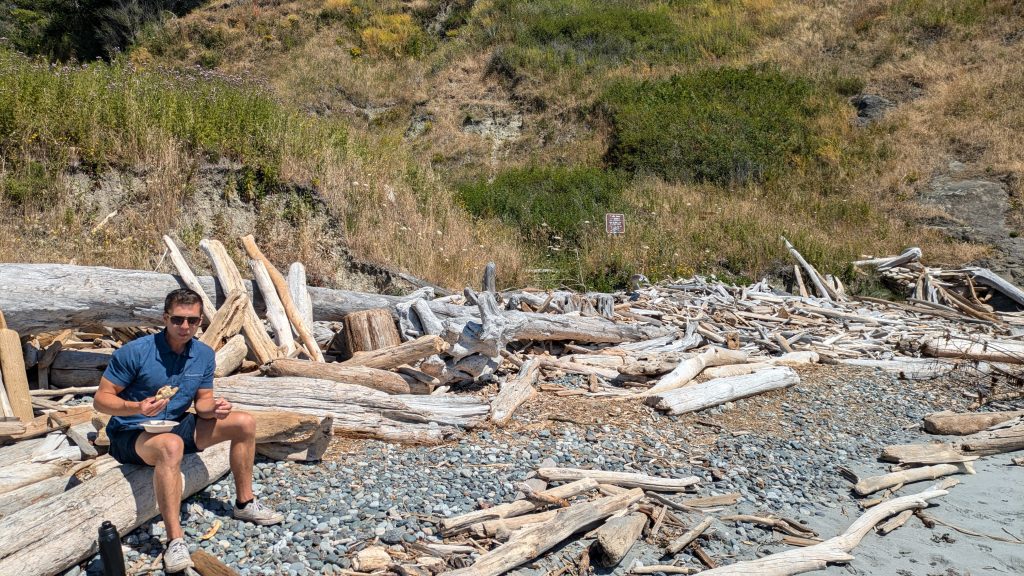
Co- Scientific Director Adam eating lunch at Eagle Cove – Photo Credits: Caleb
Today was a day. As we are all gearing up for the end of the program, the presentations that come along with it, and our posters that are due tomorrow at noon, we didn’t have much time to go out and about. For most of us, our day was dominated by statistical and graphical analysis, polishing our posters’ content, and struggling to format our long lists of acknowledgements. A few students working at FHL headed to the labs early this morning, for the first of their three trips of the day, to finalize data collection.
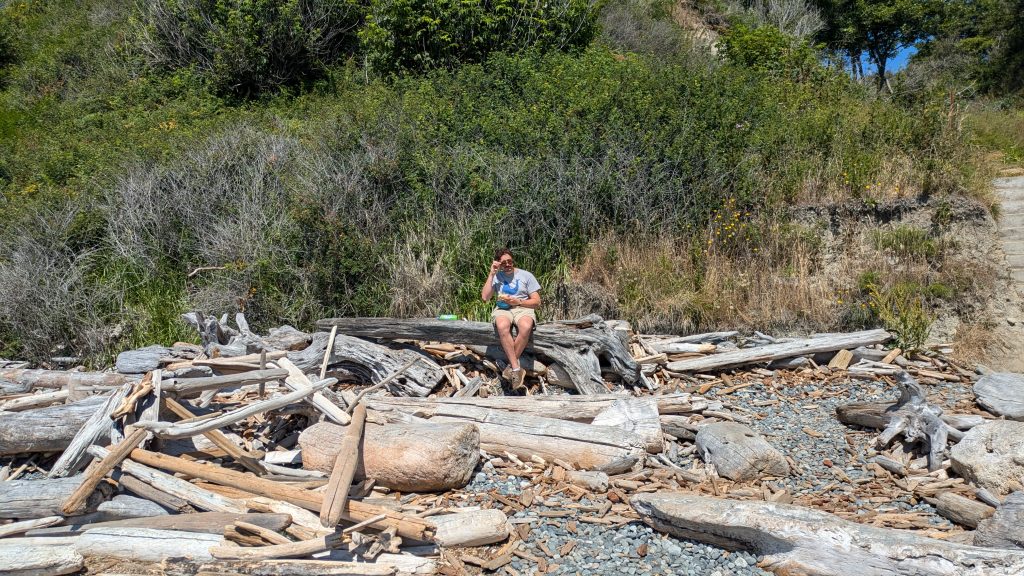
Co- Scientific Director Riley eating lunch at Eagle Cove – PC: Caleb
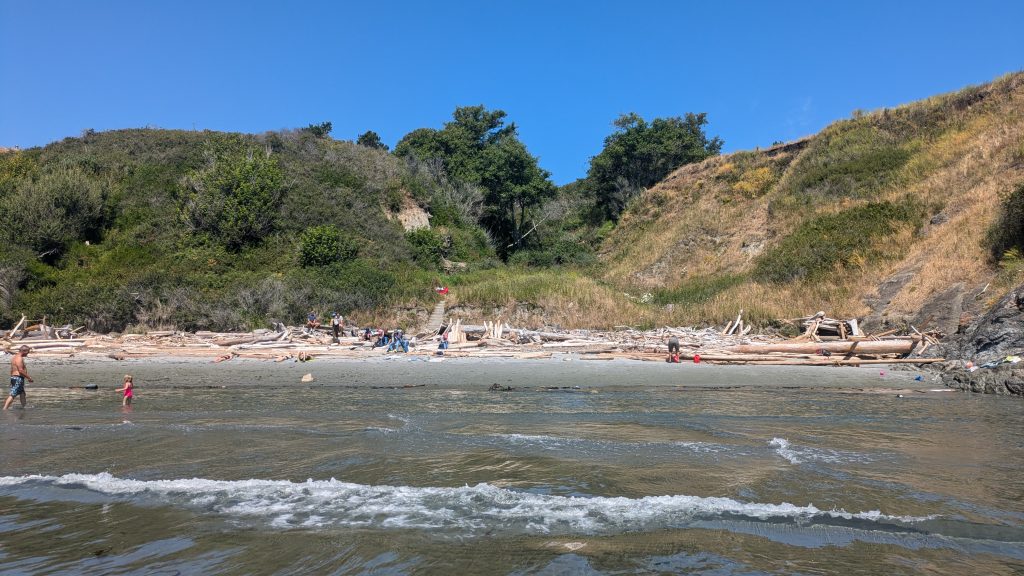
After a long morning of stress-fueled productivity, we regrouped at the dorms for a beach lunch at Eagle Cove.Scarlett, Nina, Max, and Caleb all went swimming while the others spent their time on the sand laughing and looking at the driftwood. So far, every workday has been broken up by a nice long lunch break, giving us students the much needed chance to touch grass and mentally refuel before returning to our work.
Eagle Cove from the water – PC: Caleb
The afternoon mirrored the morning in terms of productivity by the students. However, thanks to Cara, we could also snack upon delicious rice crispy treats, lemonade, and sweet tea from her very successful lemonade stand.
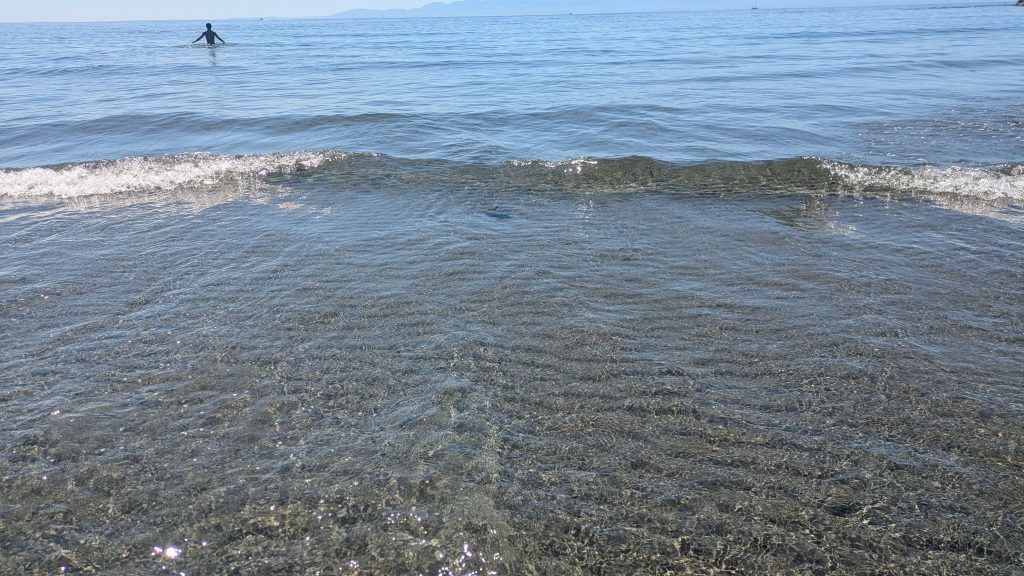
Water at Eagle Cove – PC: Caleb
Tonight Helen Yip and Dr. Joe Heras have been gracious enough to agree to join us for dinner and give a talk on both DEI and genetics. Ms. Yip has worked with WISEST (Women In Scholarship, Engineering, Science, and Technology) in order to promote the presence of women and genderqueer people in STEM (you can find the link to the very cool WISEST women-in-STEM posters here) and has a master’s in biology, with a focus on marine biology. Dr. Heras works using gene sequencing to look at the history of evolutionary adaptations in fish. His research program also examines how gene expression and the gut microbiome of fish shape their dietary specialization.
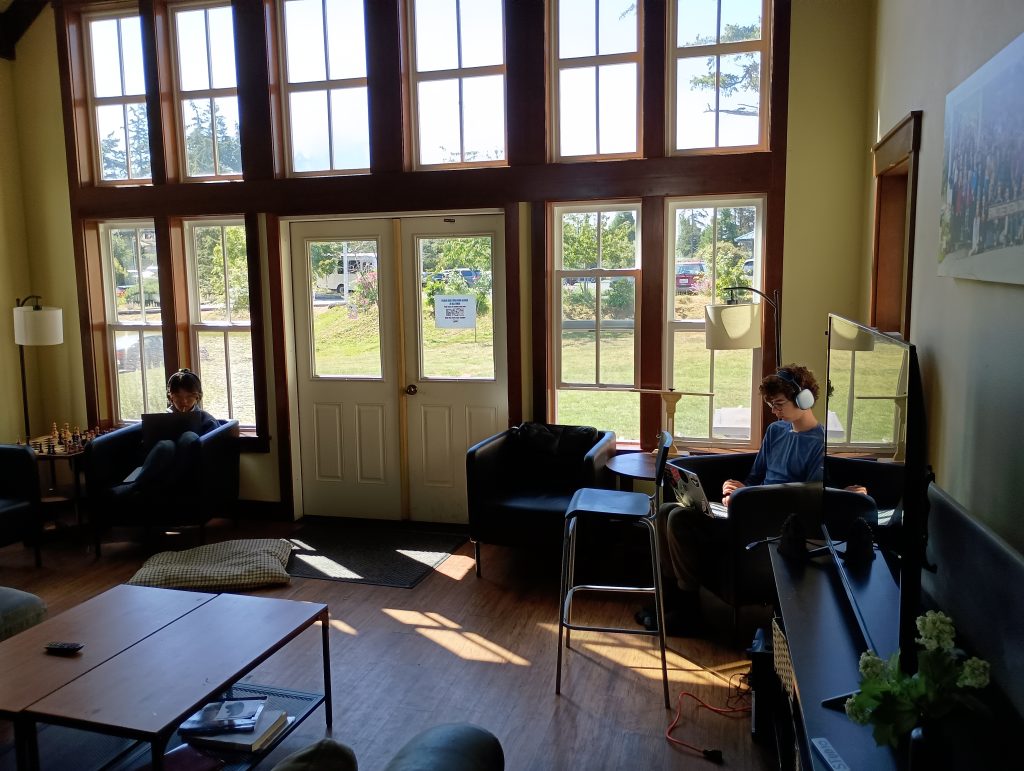
Sam and Katie working away on their projects – PC: Adam