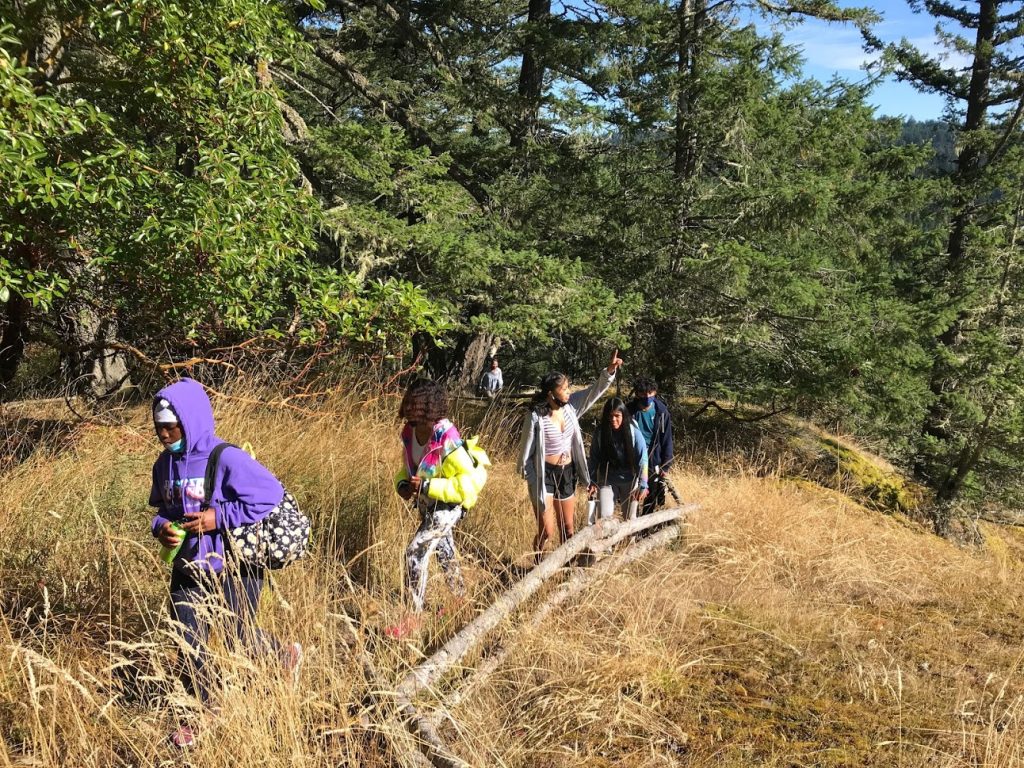
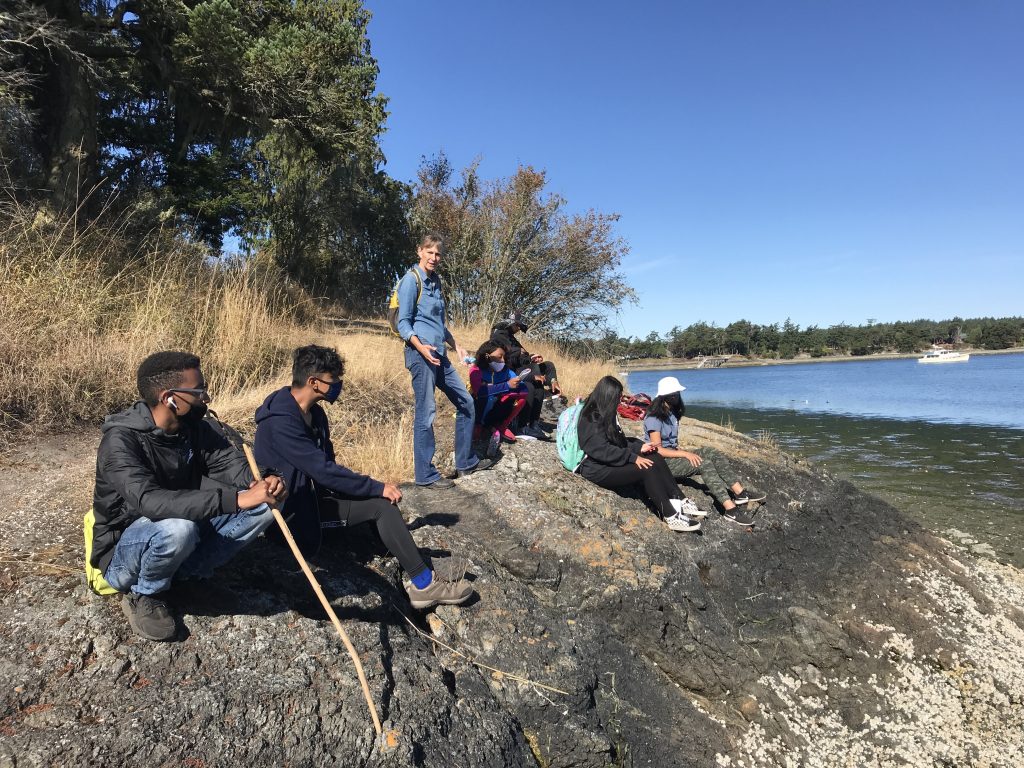
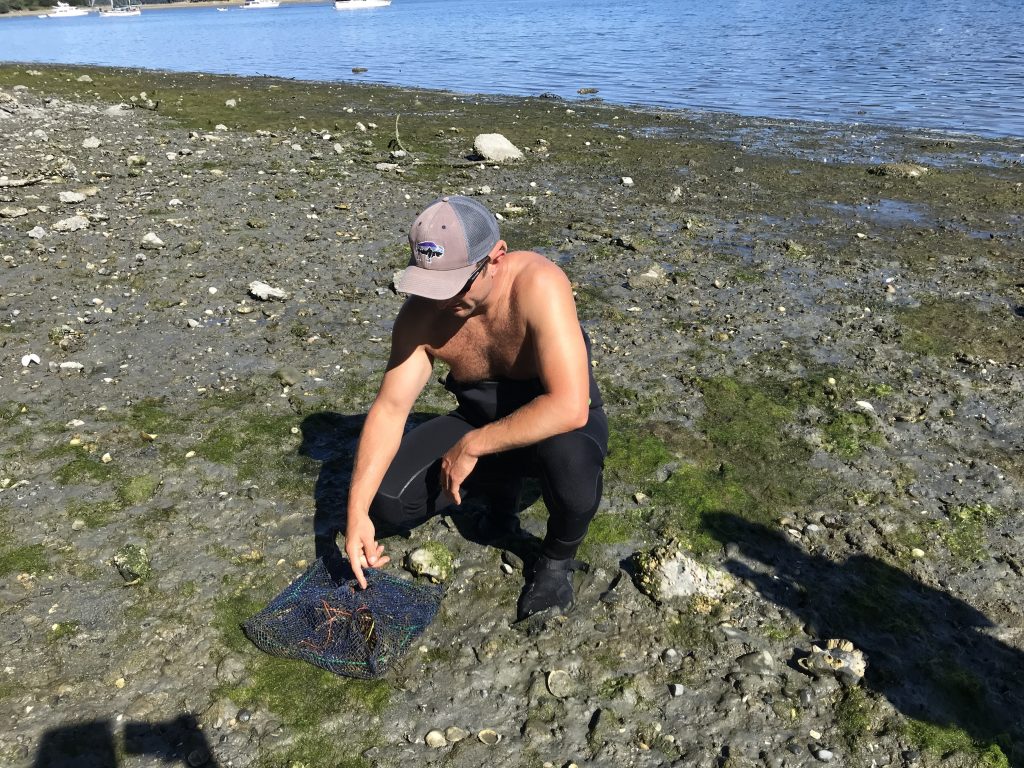
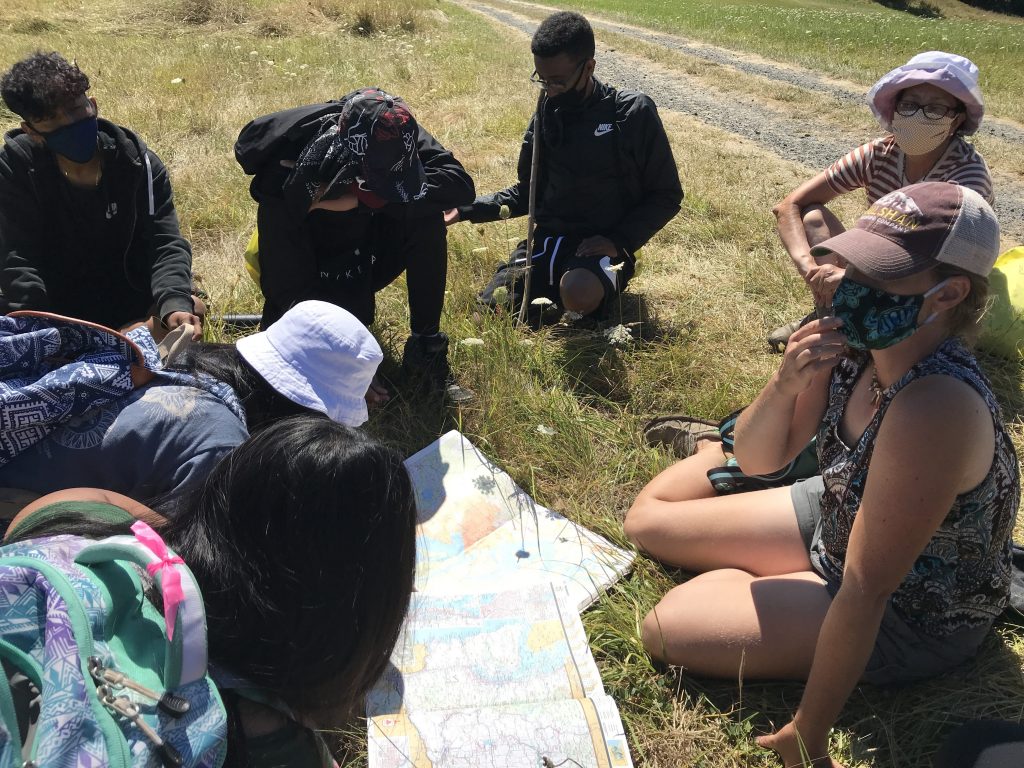
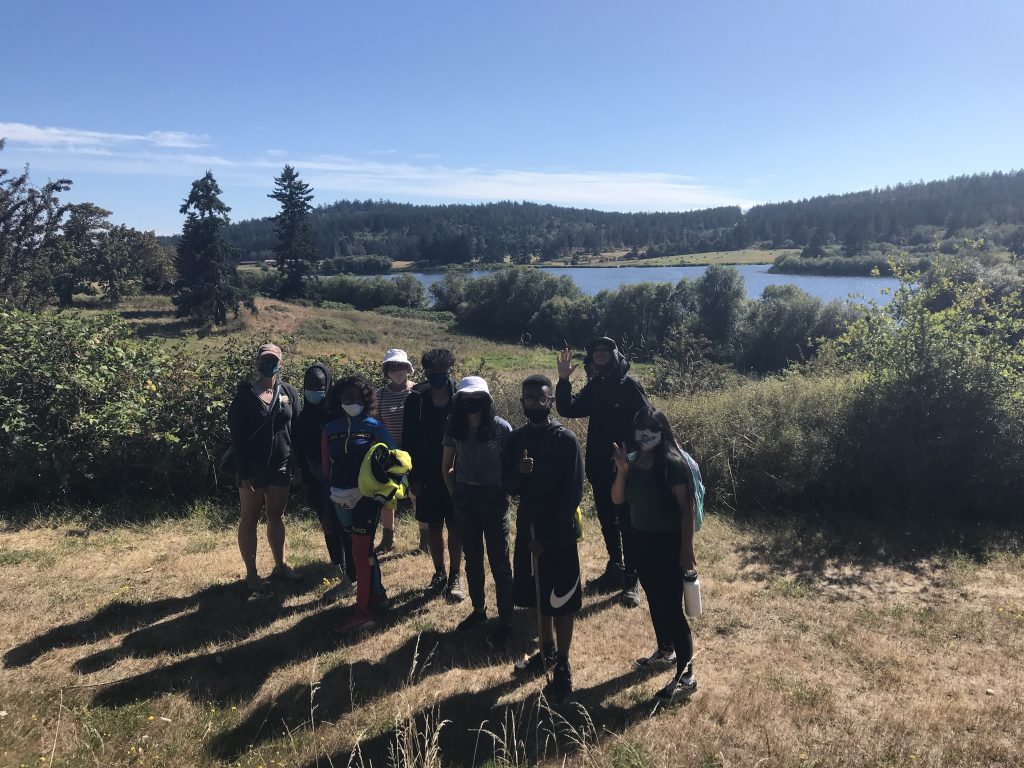
Today we woke up nice and early to set off on a hike first thing in the morning. We hiked up Mount Grant and admired the labor it took to create the beautiful path on the mountain. As we got higher, we started picking up cell signal from Canada so we had to turn our phones into airplane mode. It was a nice way to start the day and a memorable weekend activity as well as a great place to hike.
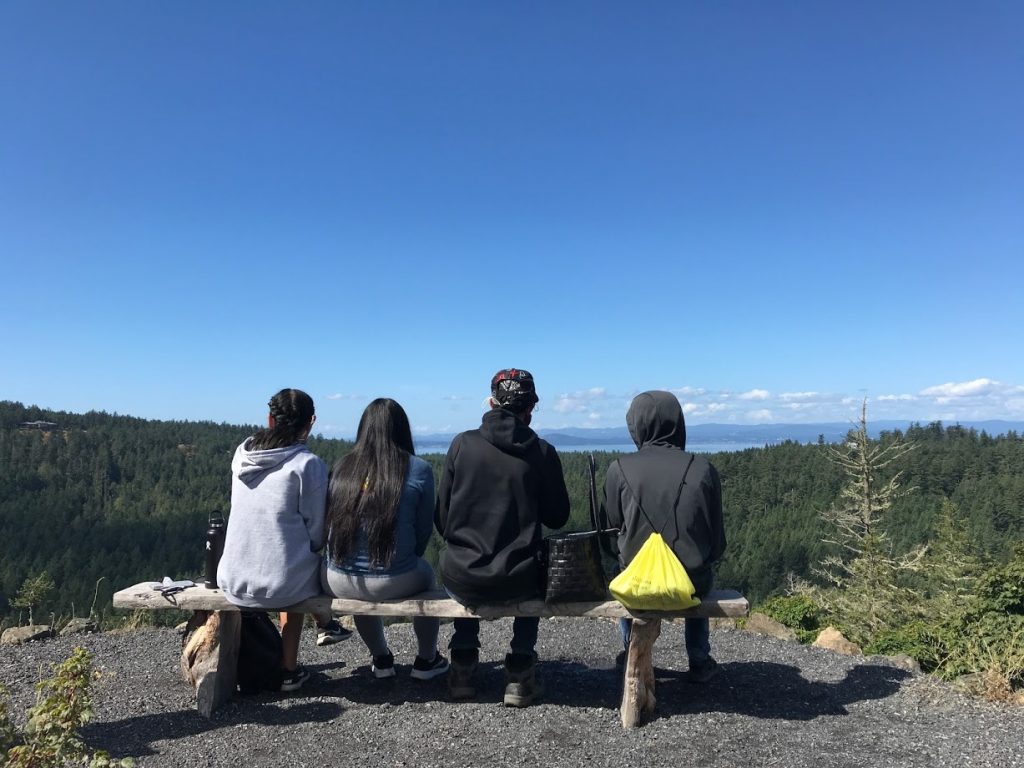
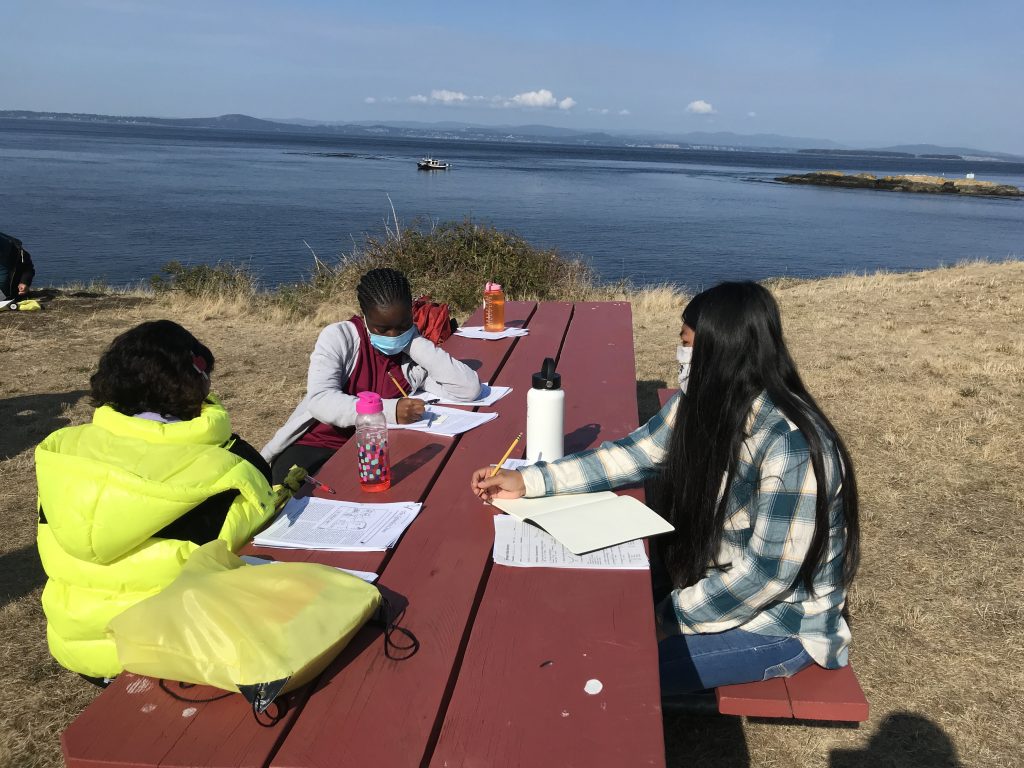
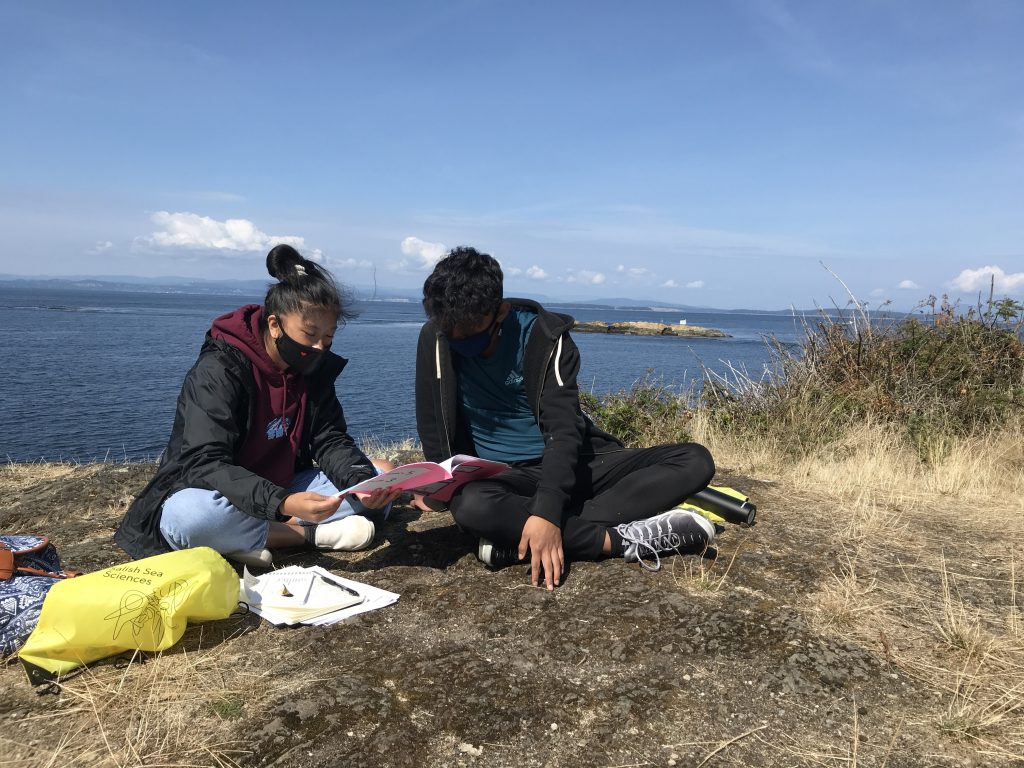
When we reached the top of the mountain it was a stunning view of the San Juan islands! It was a breezy morning and the sun was out making it such a great view. Here we are sitting on a bench thats near a ledge of the mountain enjoying every moment of the sight. They say hard work pays off and our hike definitely payed off!
When we reached the top of the mountain, it was a stunning view of the San Juan Islands! It was a breezy morning and the sun was out making it such a great view to look at. Here we are sitting on a bench that’s near a ledge of the mountain enjoying every moment. They say hard work pays off and the hike definitely payed off!
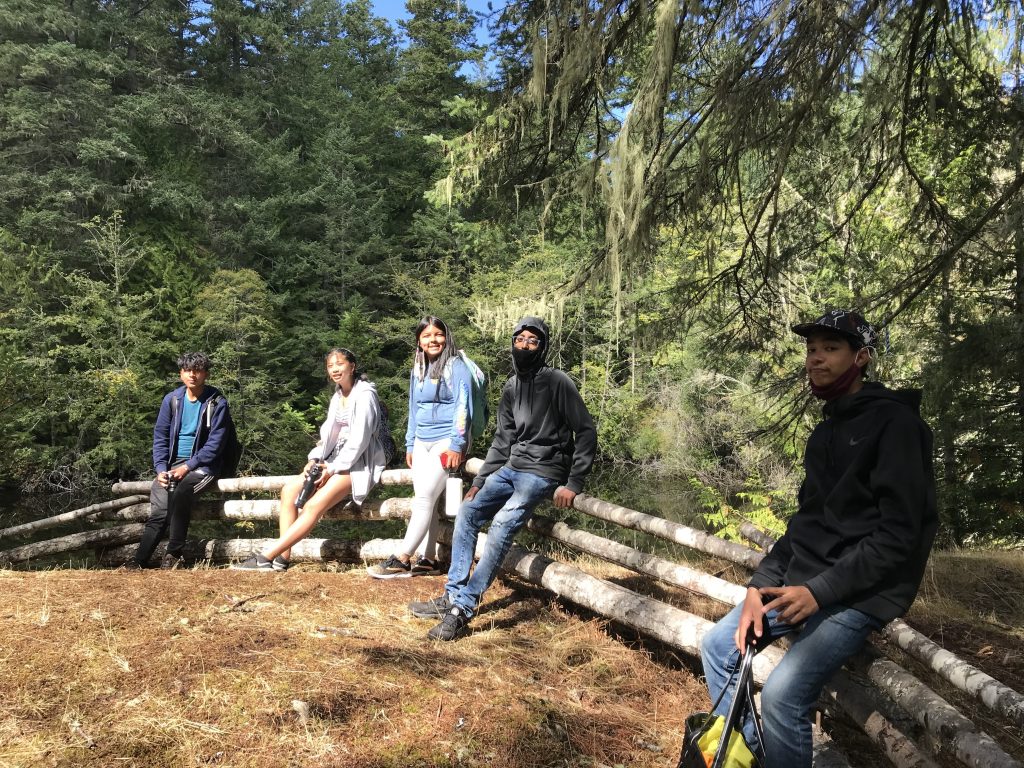
On the way down from the top of the mountain, we stopped by the newt pond. Sadly, we weren’t able to find any newts but we did find a little frog hopping when we went back onto the main trail. The view was fantastic near this small pond and a good place to stop to take a sip of refreshing water after a long hike.
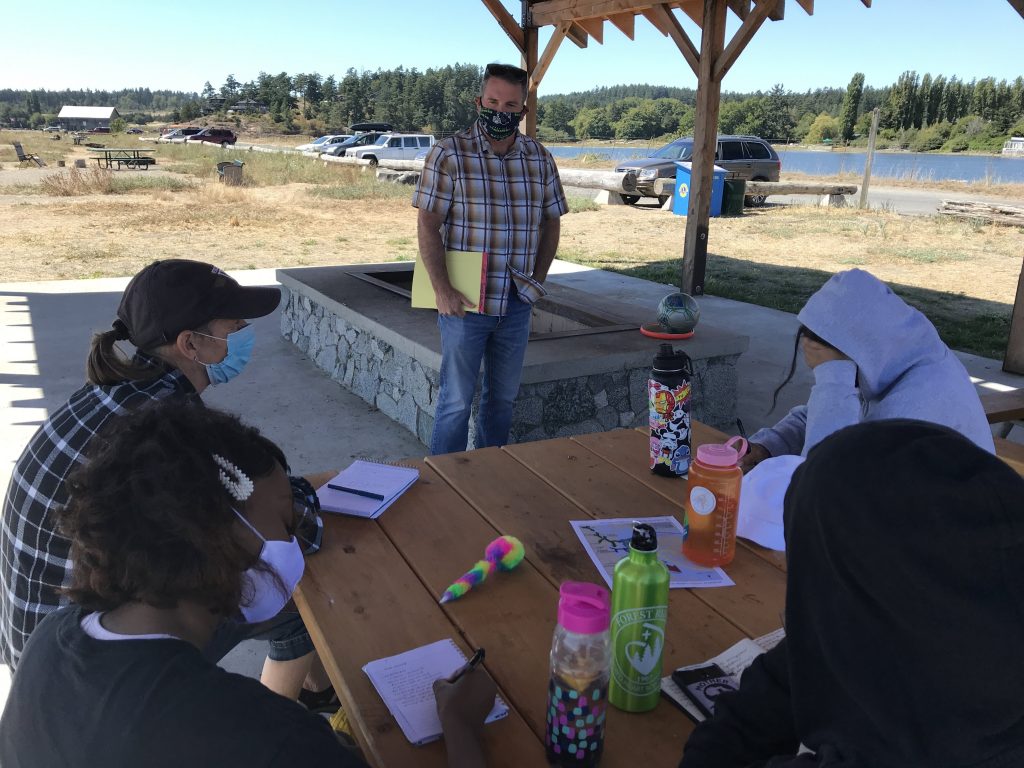
After lunch had passed, we worked on our projects that we will be presenting tomorrow at 3 pm to Salish Sea Sciences staff, people we have met while on this trip, and a few others from back home. A majority of us have already finished our project outline and are currently working on the visual aspects of our projects. We are so excited to have a lasting impact in the community around us!
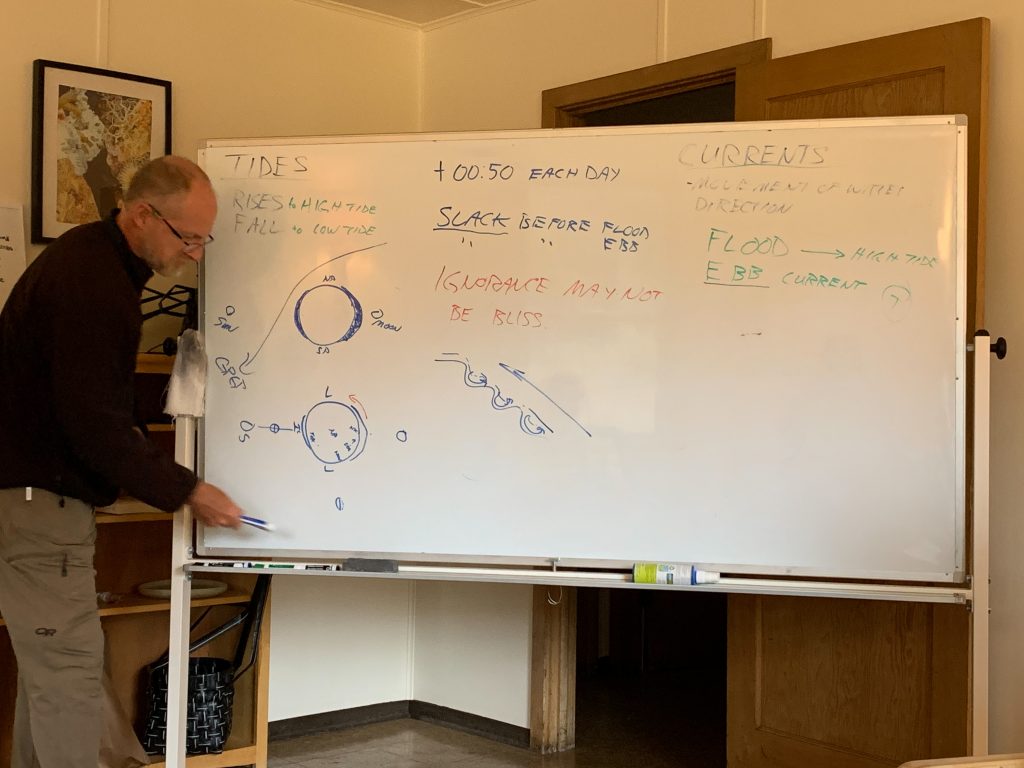
We started off our day with a lesson from Sockeye about tides and currents. We learned that they are effected by the moon. The moon’s cycle is 28 days and each day the highest tide time advances 50 minutes each day. We knew that the Earth does a full rotation in 24 hours but we learned wherever we are position wise, the gravitational pull from the moon will effects the tides. We learned that there are two types of currents, the flood and ebb current, the flood current effects high tide and the ebb current effects low tide.
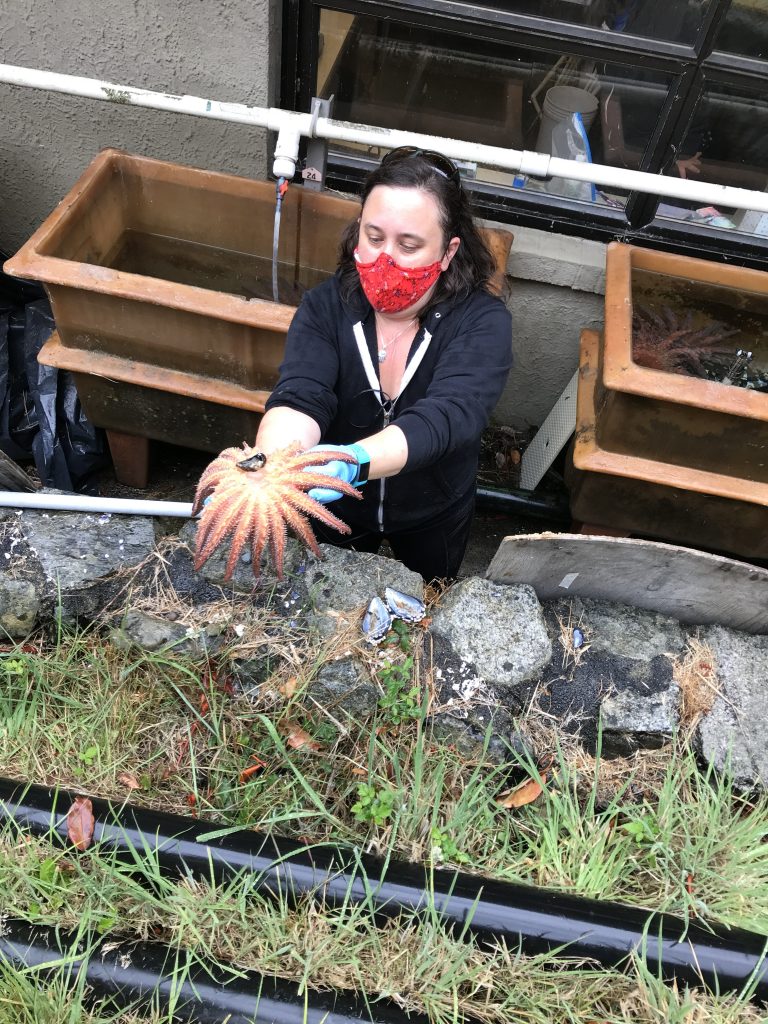
We talked to Pema about the Sunflower Seastar. We talked about their food diet and how they almost went extinct because of the Seastar wasting disease (it looked like the Seastar were melting and their legs looked twisted). We talked about how they reproduce and how they can determine whether they are male or female. We also learned that even though they do not look like a vicious predator they are actually dangerous because they can eat almost anything. We also found out that they have eyes on their legs.
( This is Mrs. Pema holding a sea star while it’s eating)
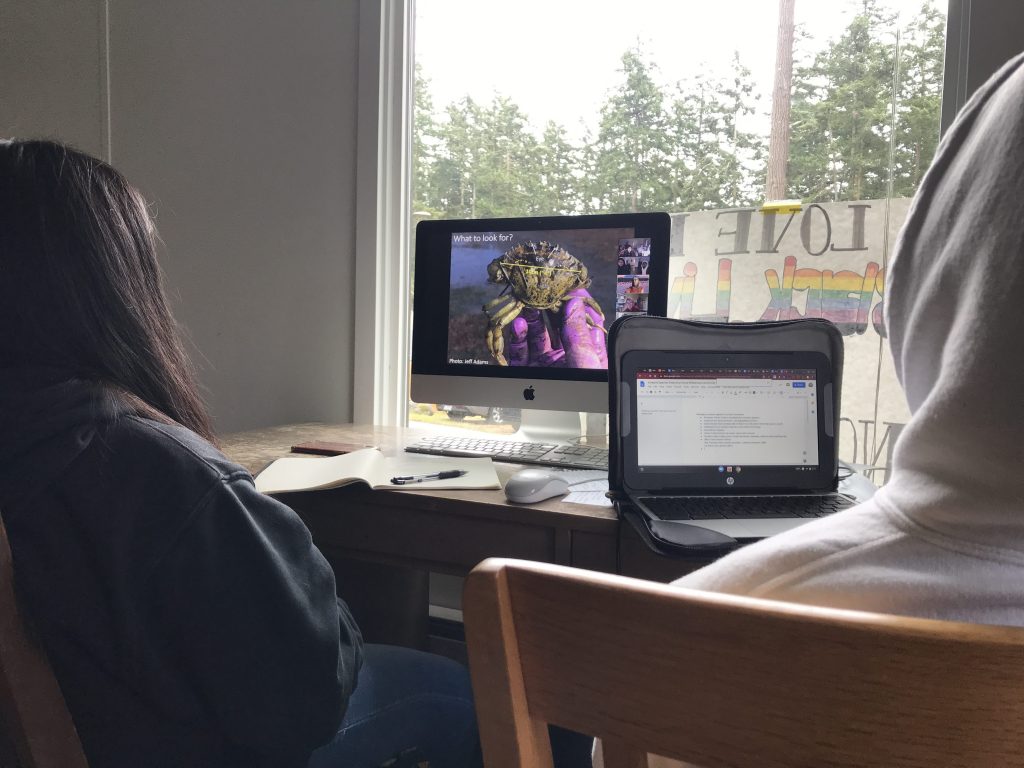
Shortly after seeing Seastars, we attended a zoom meeting with Alex Ramel. We filled him in on our latest activities and we talked to him about the research he asked us to do that had to do with youth getting more involved with political issues that we are passionate about. Shown above is a photo of the zoom we had with Tanja Williamson and Emily Grason who are involved with the effects of invasive European Green Crabs. They taught us about their diets, how damaging the species can be, and how fast they populate after being established.
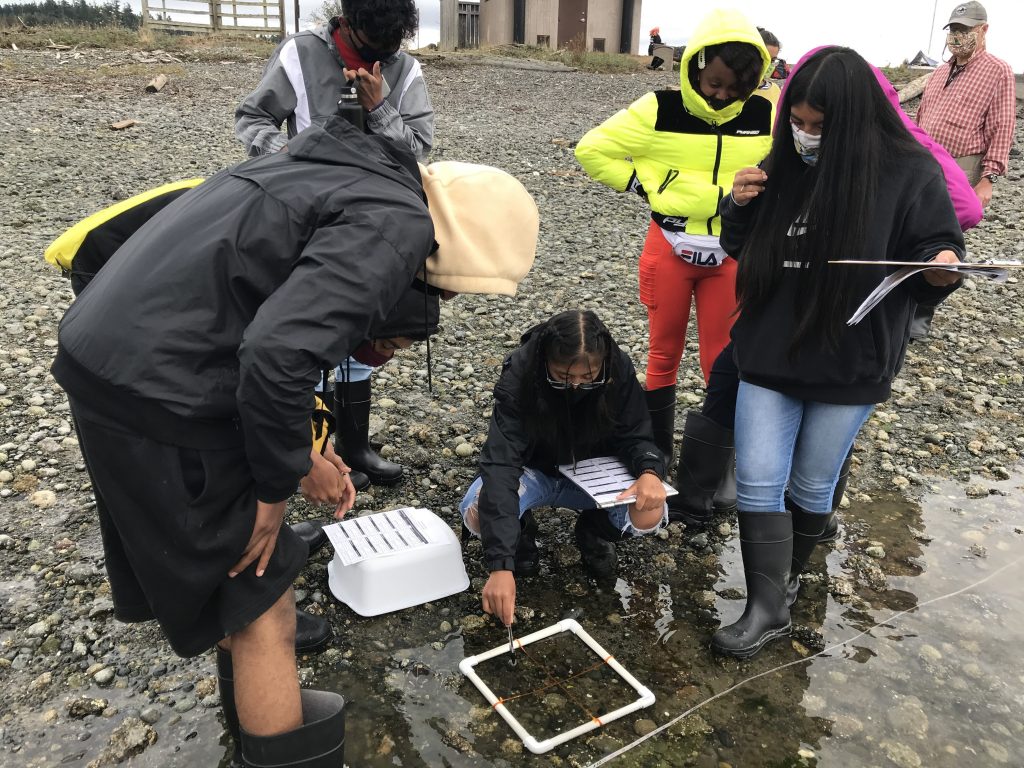
( This this us looking quadrants trying to identifiy what species are in the quadrant)This is us out in the field with one of the speakers from the zoom, Tanja Williamson
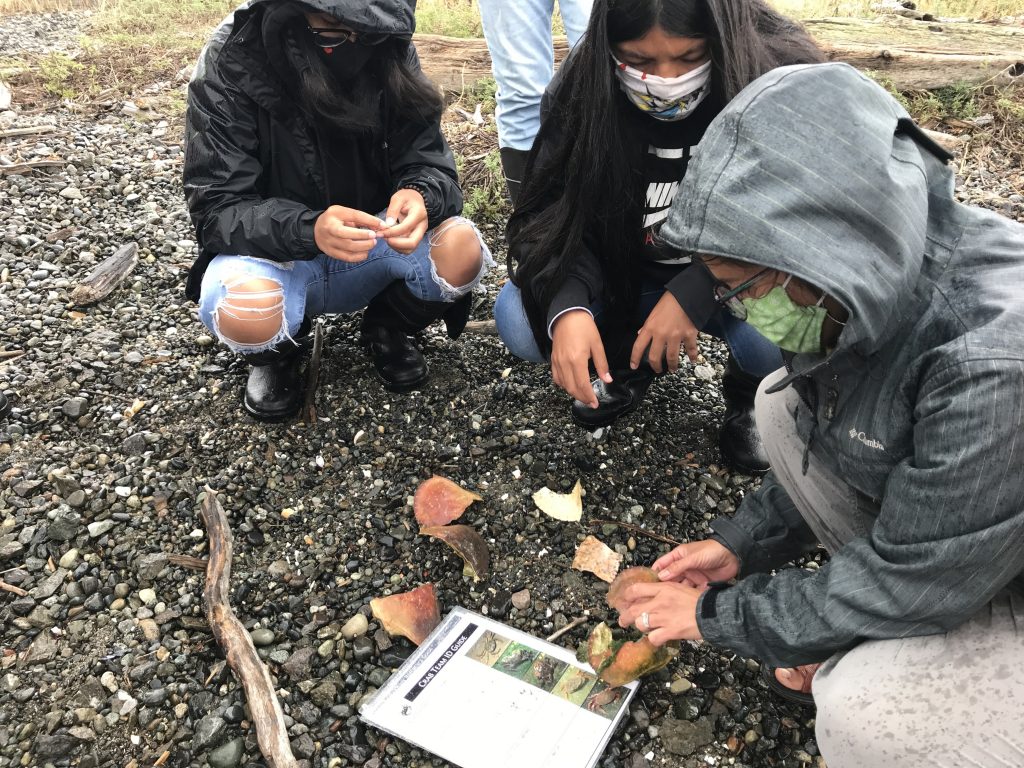
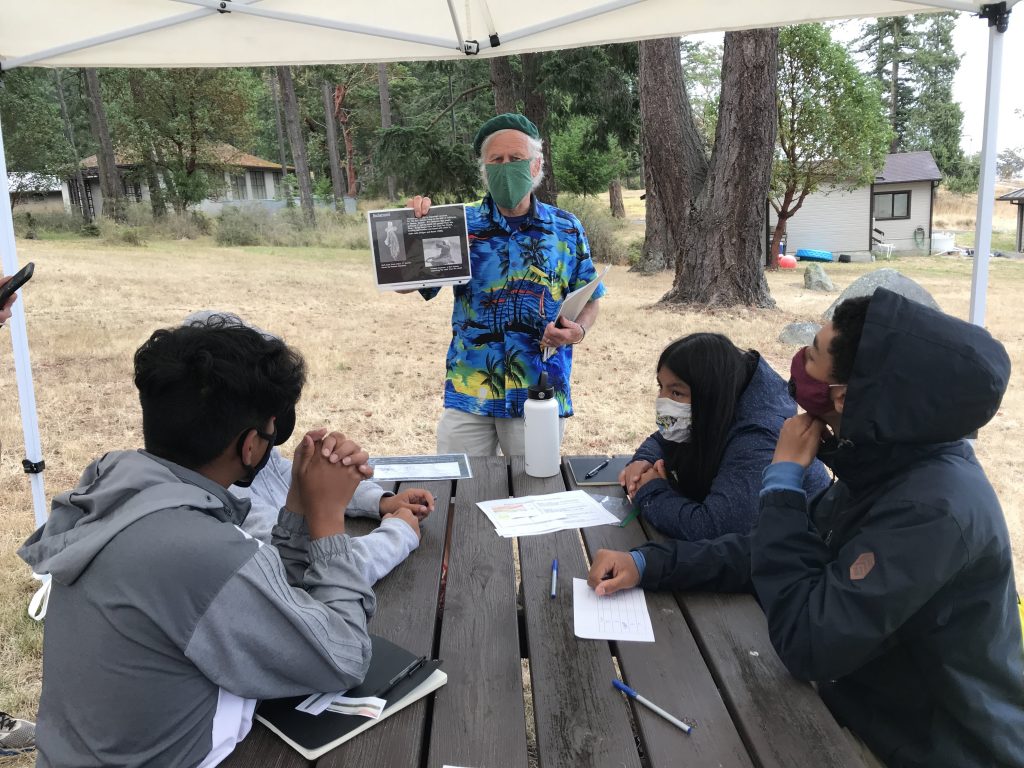
We went on a search for molted crab. After 7 minutes, we came back together and showed the group what molts we found and tried to identify them by their shell. We talked about how to identify the specie of crab by their spines and the size. The identification charts showed our native species as well as the invasive green crab. We also discussed how to determine if they’re either a male or female.
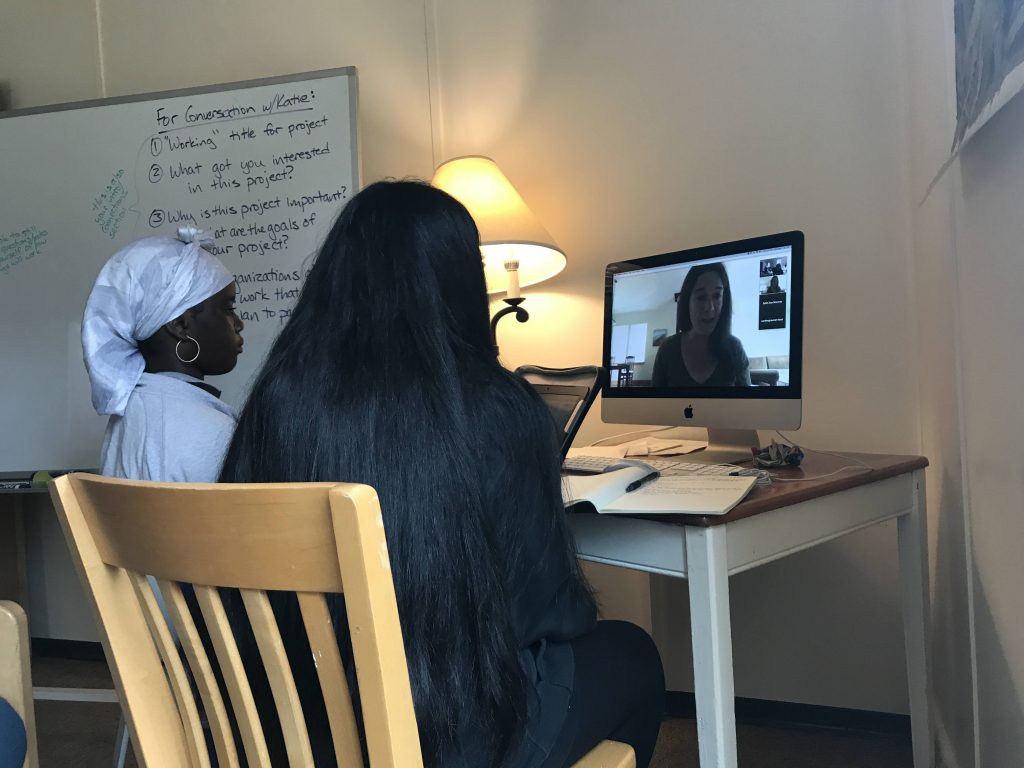
In the morning we shared our project ideas with Katie Fleming for feedback. We all got some really good advice that will help us further improve our ideas. Thank you Katie!
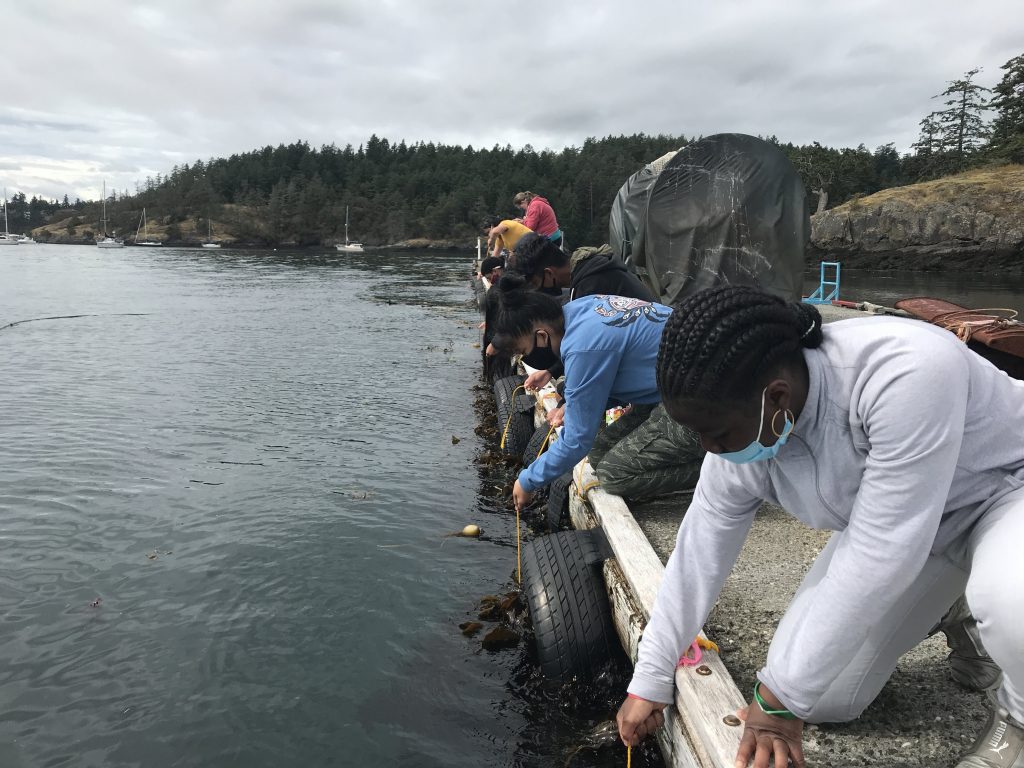
We then met with Kate Dobkowski at the docks to see her experiment on the competitive interaction between bull kelp and wire weed. We learned that kelp starts off as a microscopic critter then turns plant-like in it’s later stages of life.
Photo credit Flora Weeks Photo credit John Calogero
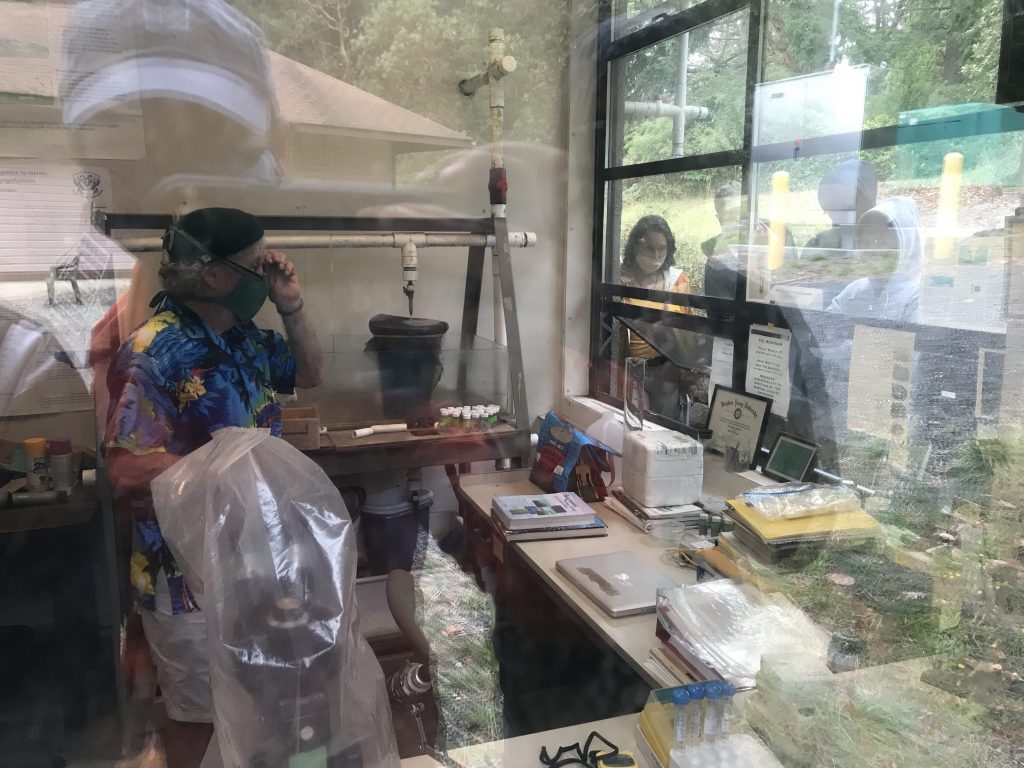
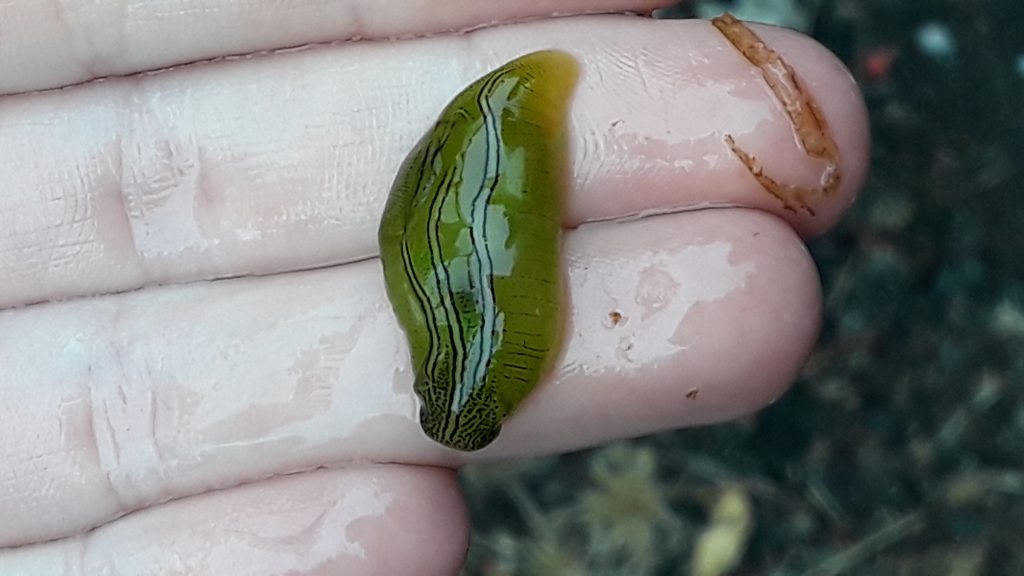
After that we talked with Sandy WyllieEcheverria about eelgrass and then told us a poem. Isabella Brown showed us eelgrass that they were raising which had aquatic slugs that ate algae growing on the eelgrass.
Photo credit Flora Weeks
We took cover from the rain and talked about the uses of sea grass indigenous culture such as dolls, hats, insulate, food. He also gave us some helpful career advice and inspiring philosophy as a finisher to our meetup.
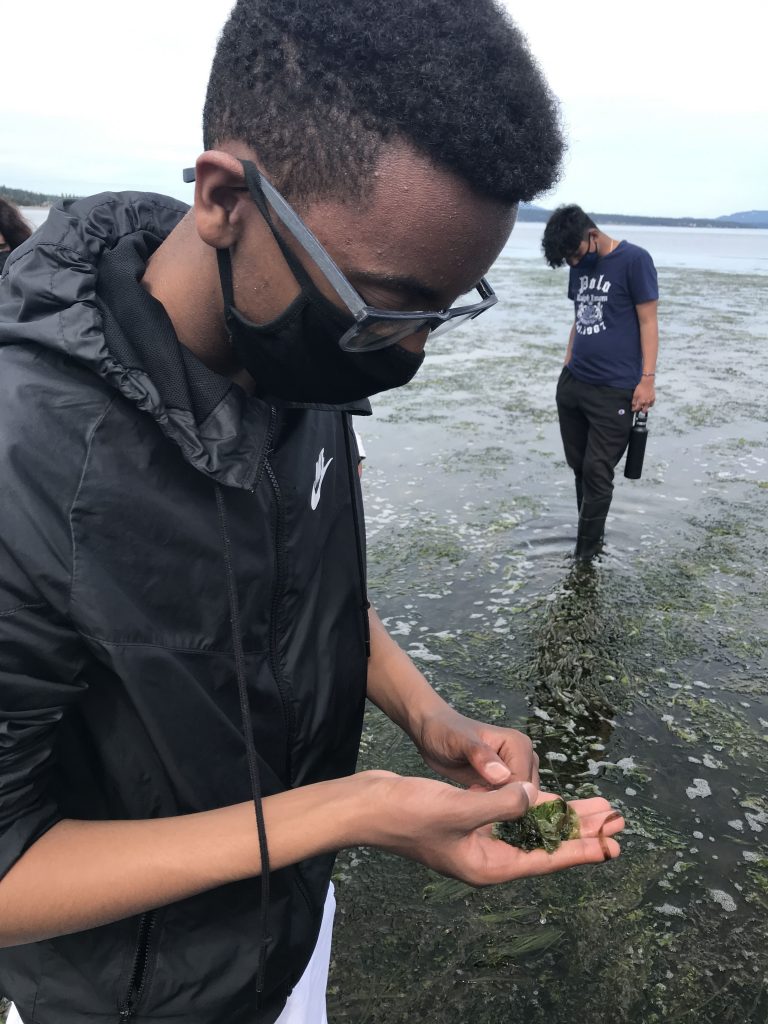
We started our adventure of the day at Fourth of July beach where we met with Olivia Graham, a PHD student who studied at Cornell University and has a bachelor’s degree in biology. She explained throughly her work on the diseased eelgrass in San Juan Island. We were able to wade in the water for a little bit and picked up some sea lettuce.
We got our hands in the water as she pointed out many things in the water. We found cool things in the bed of eel grass. It was very cool because the tide was going up as we waded in the water! Over all the amount of things that live in the bed of eel grass are amazing.
In the eel grass bed we found donut/seed like balls which turned out to be eggs! They were snail eggs which are really fascinating because there are lots of snails that live in that habitat. We found other things like worms and crabs while we were there. Overall a really great experience and enjoyable afternoon activity!
Lastly, we walked to the Friday Harbor Lab dock and met with Erika Nilson, the executive assistant at the SeaDoc Society. She talked to us about the work SeaDoc Society has done in the past as well as offered us some advice on the projects we are currently working on. We asked her an abundance of questions that are vital to our projects’ success. Today was definitely a great day to go out!
We started off our daily adventure by going Bell Point at English Camp. While we were there and waiting on our speaker Shawn, we made observations about what we saw on the low tide shoreline. We saw things such as clams, oysters, and even got to take a closer look as we walked along the shore.
Shawn is explaining how the net distributes seeds to make eelgrass meadows.
Once Shawn arrived, we walked with him along the shore as he explained his works on the restoration project for distribution of eelgrass seeds. He also covered how this restoration project method and how it is effective.
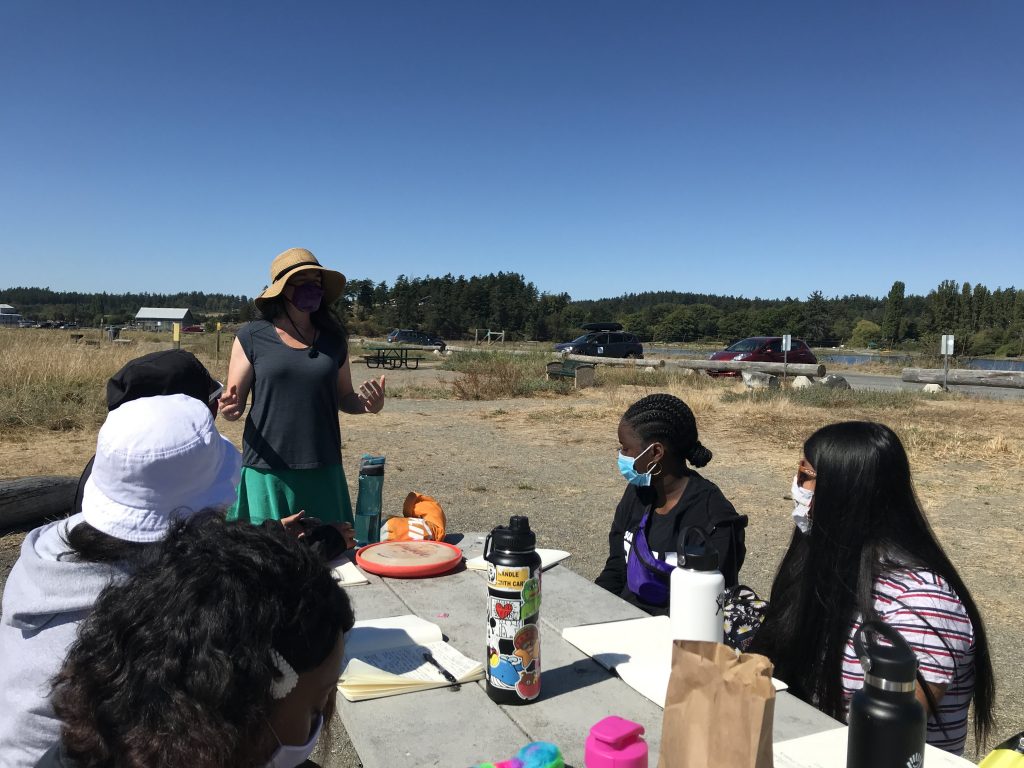
After we came back from seeing Shawn, we came back to work on our project proposals ideas research. We all presented our research homework from the night before and we got assigned into the groups who picked the same topic as another. After that, we all just talked about our project with our partner to get an idea of what the project would look like realistically in the field.
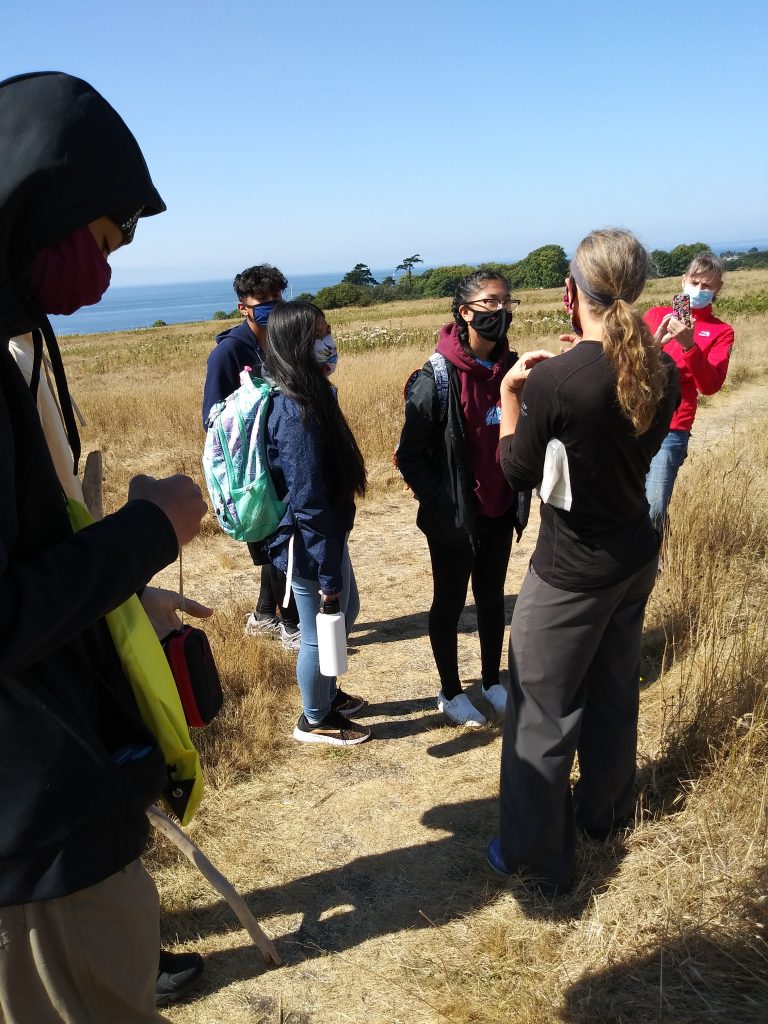
We went to Zylstra Lake to meet with Sarah Hanson to discuss what permaculture is. She explained how different ecosystems, species, and abiotic factors interconnect and the importance of that. There was such good conversation about species of trees, differences between bodies of water, soil saturation, natives and invasive, and so much more. As a group we had a little bit of fun eating blackberries along the way.
Ending our time with Sarah, we took a photo to see how far we walked. We spotted a bench surrounded by beautiful fruit trees and very peaceful setting which we hung out in before walking back to our cars.
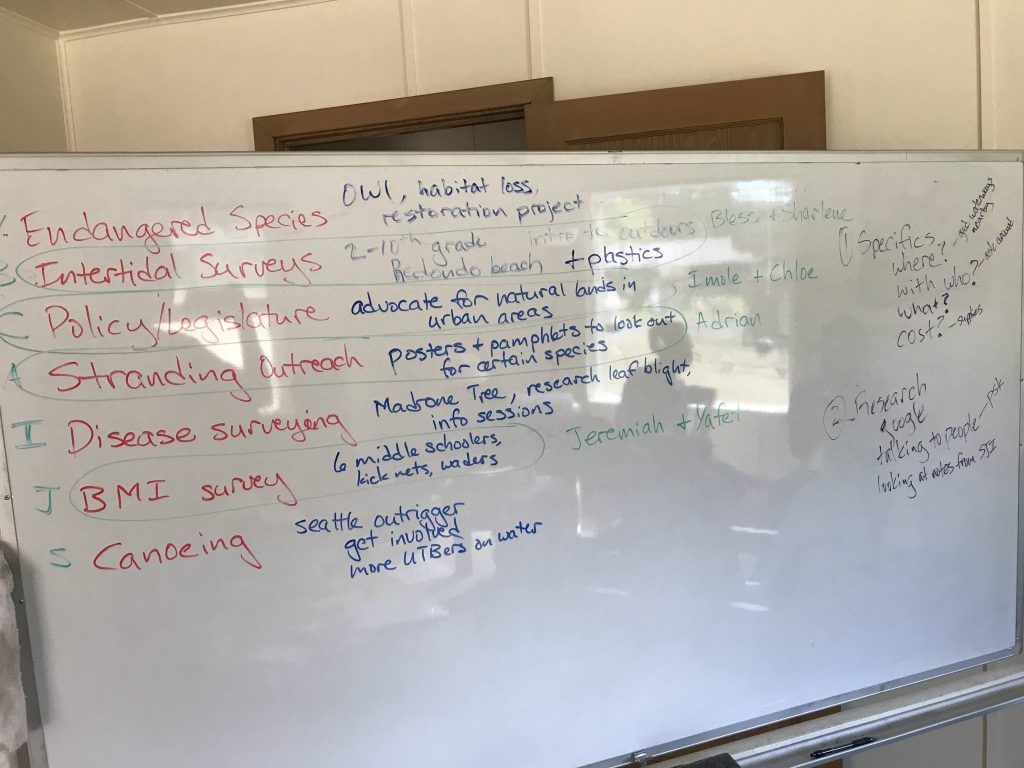
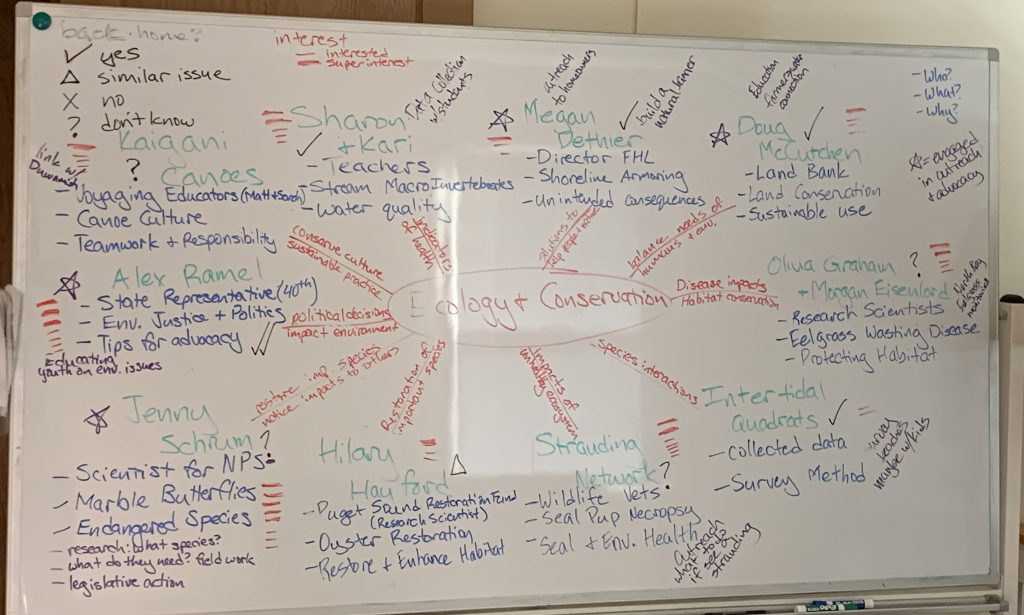
To start off the week, we made a web chart to connect everything that we learned from everyone we had met to ecology and conservation. Later on we came up with some project ideas based around each topic.
Katie Fleming (The Community Engagement Director for the Friends of the Salish Sea) met with us to and talked about who she is and what she does. We also discussed multiple issues revolving climate change.
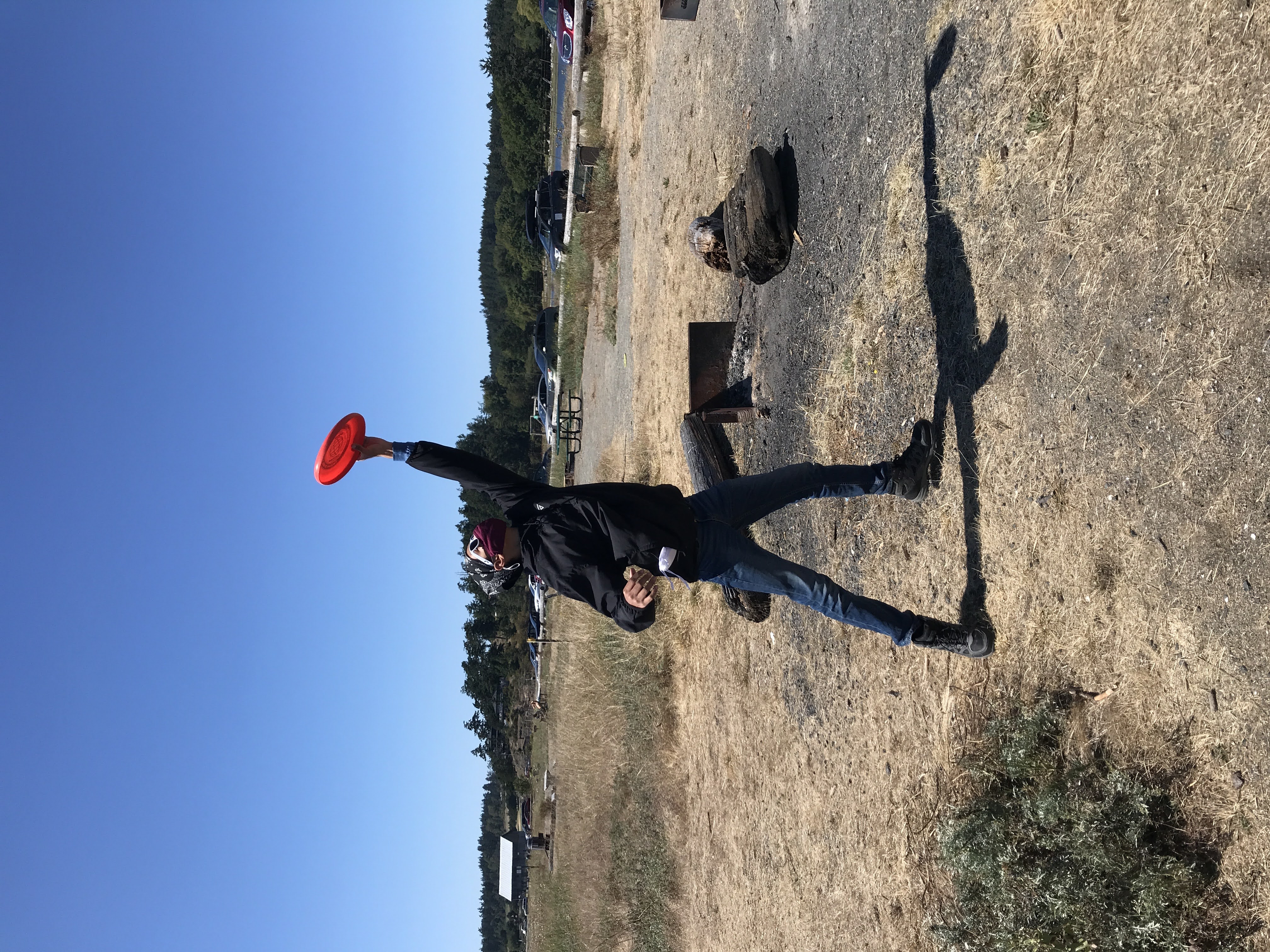
In our free time we took the opportunity to play some frisbee and soccer. I believe it is always good to take breaks, not only for reflecting on information, but also to stretch the body so it’s not stiff.
After that exhilarating brake, we talked with Mike Ramsey. He discussed some projects that are being worked on such as the one in Blind Bay, where some restoration on eelgrass is taking place.
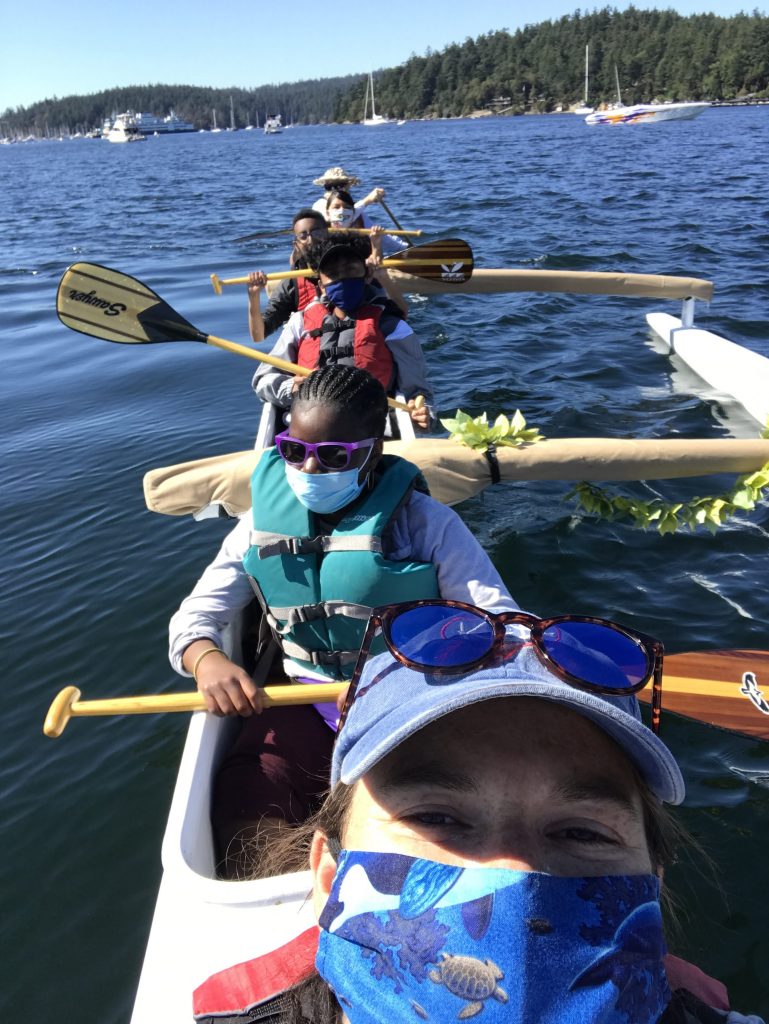
After a brief discussion with our guides Matt and Sarah from Kaigani Canoe Voyaging, we headed out to sea. We learned about the history of the canoe, we learned to use the canoe respectfully, and how to use the paddle most efficiently. We had some trouble moving with the waves but we were able to make it work. We made the best out of our trip and would like to go back on the water soon!
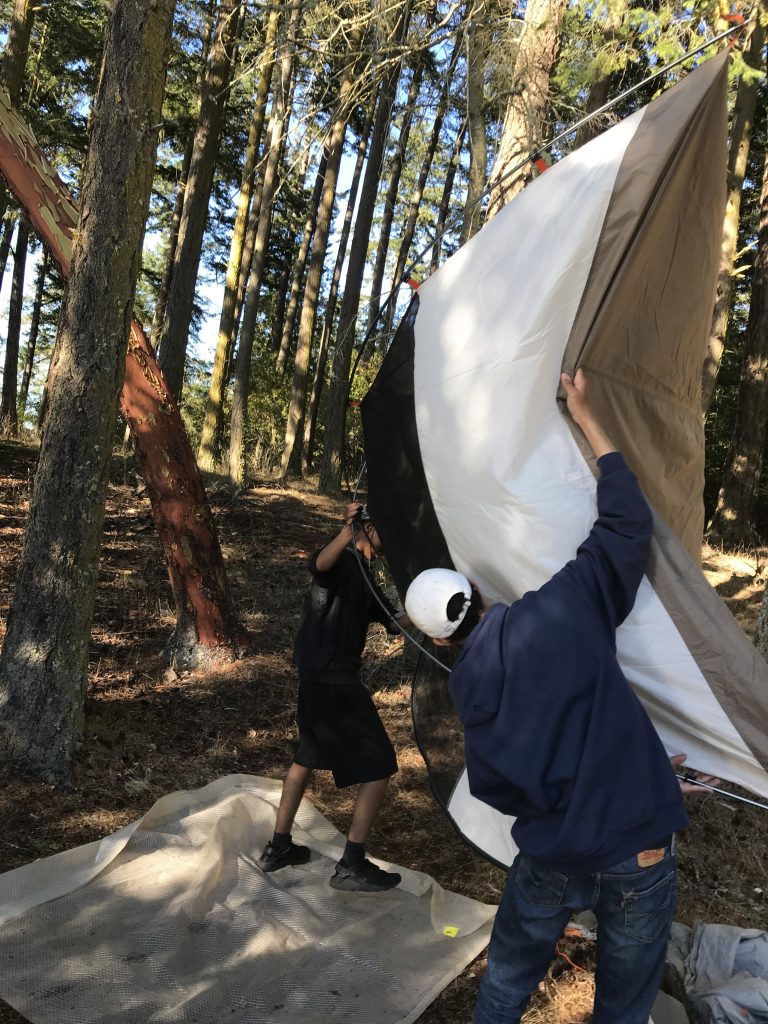
Once we arrived to Turn Island which would be our campsite for the night, we began to set up our tents. It was the first time camping for some of us so getting everything ready was a group effort. Some of our tents had a little dirt in them from their last use, so we picked it up and vigorously shook the dirt out of it.
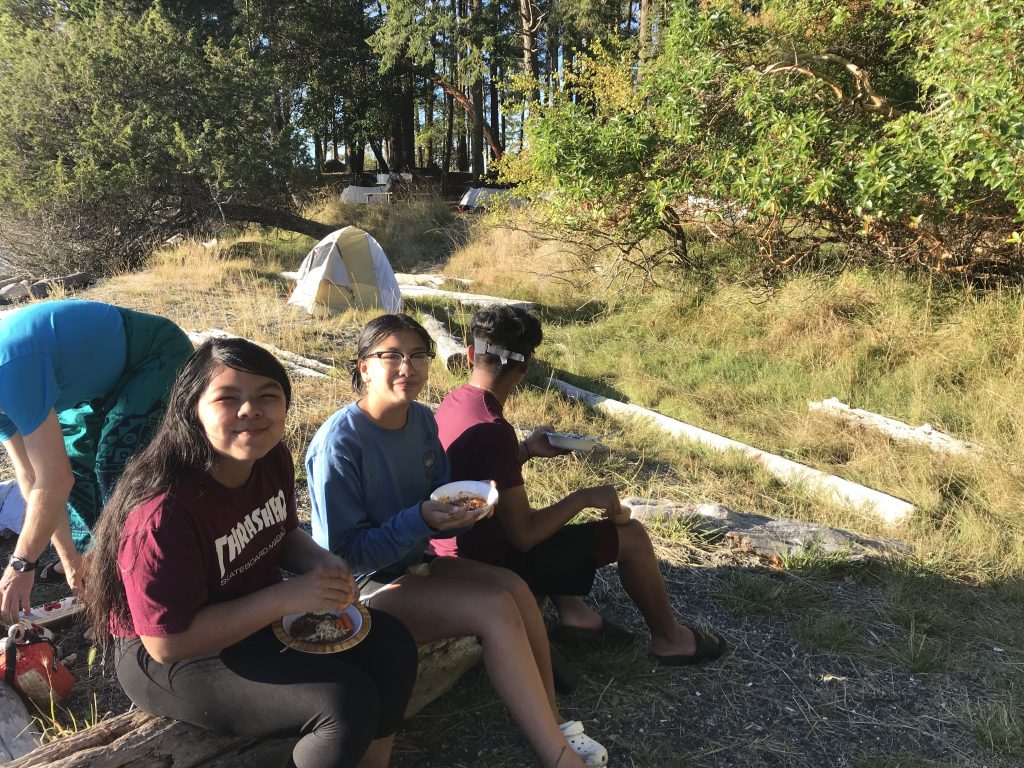
Shortly following setting up everything for the night, we took a break to enjoy our dinner and each other’s company. Some of us hopped into the water and it was freezing. After we got out of the water and finished eating, we set off for our silent reflection hike.
The silent hike was very peaceful and a good way to end our extensive journey to the island. We were able to think of all the things we have learned so far during this trip. On the hike itself, all of us were able to see a harbor seal that was just on the coast of the island. We sat down for 30 minutes and we watched the waves crash into the rocks as we wrote in our journals.
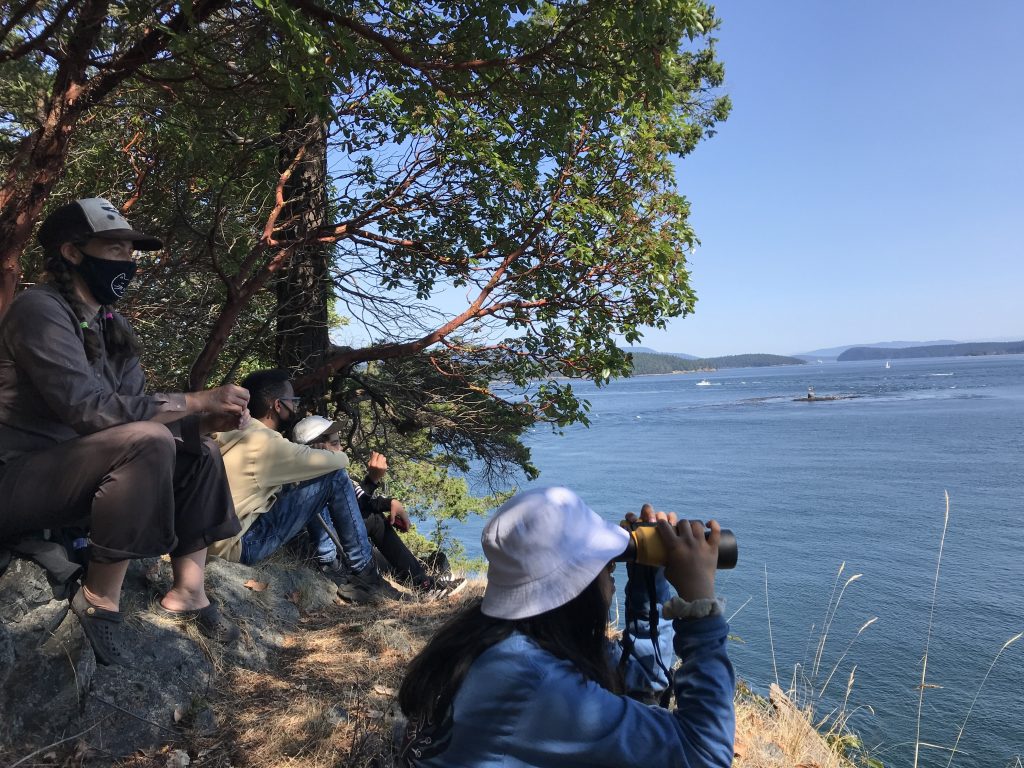
Before heading home, we saw a little glimpse of a whale coming up and using its blowhole. We quickly rushed to the other side of the island to see if we could catch any other sightings. Our chaperone Sockeye told us that it was a humpback whale. One of us was able to look through binoculars and see the back of the whale coming out of the water. After seeing this majestic species, we headed back to Friday Harbor Labs.
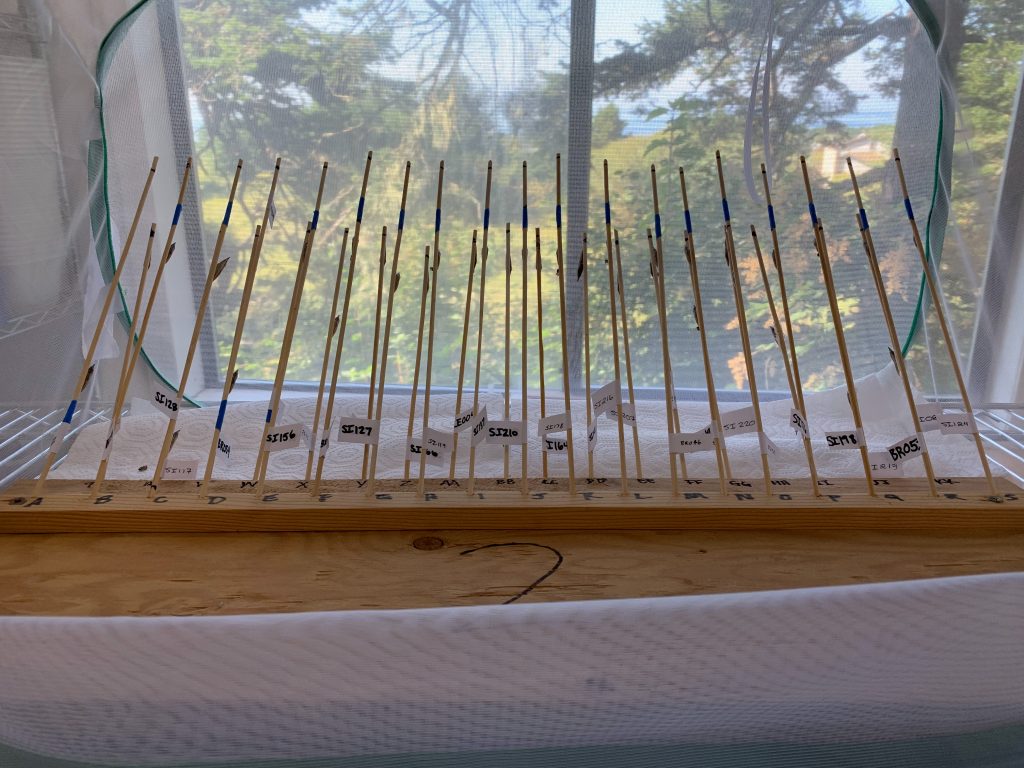
We drove to the American Camp to meet Jenny Shrum. While we were there, we learned about the endangered Island Marble Butterfly and what her lab is doing to learn more about the species and possibly help restore the species habitat. We went into the lab to see the chrysalis stage of the butterfly. Then, we went out to collect seeds of the butterfly’s host plant.
( This is us out gathering seeds )
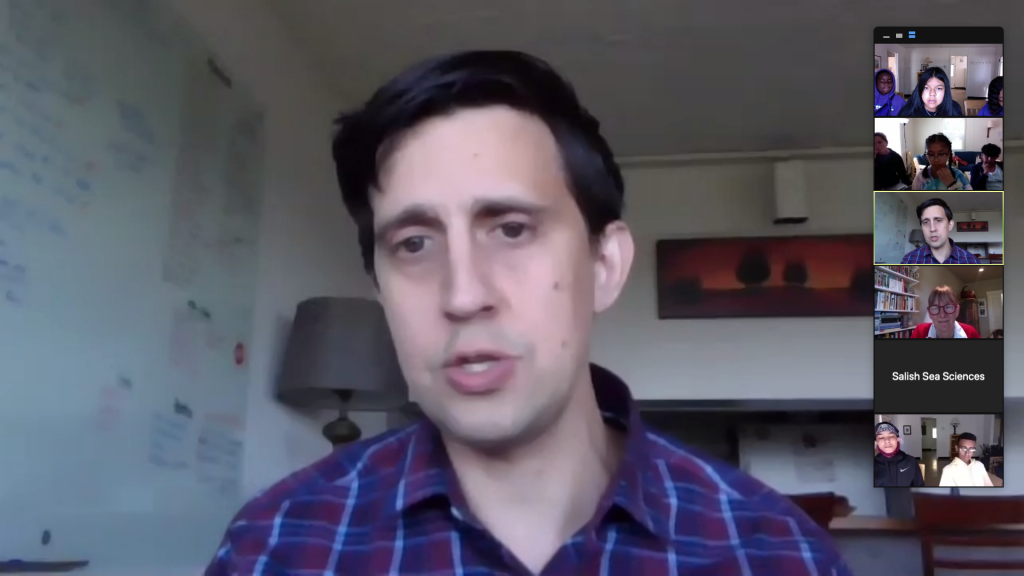
After we got back, we had a zoom call with the Washington State Representative Alex Ramel. He explained the process of a Bill being passed. He also talked about legislature and what he is doing for the environment. He also gave some advice on how to get involved with politics.
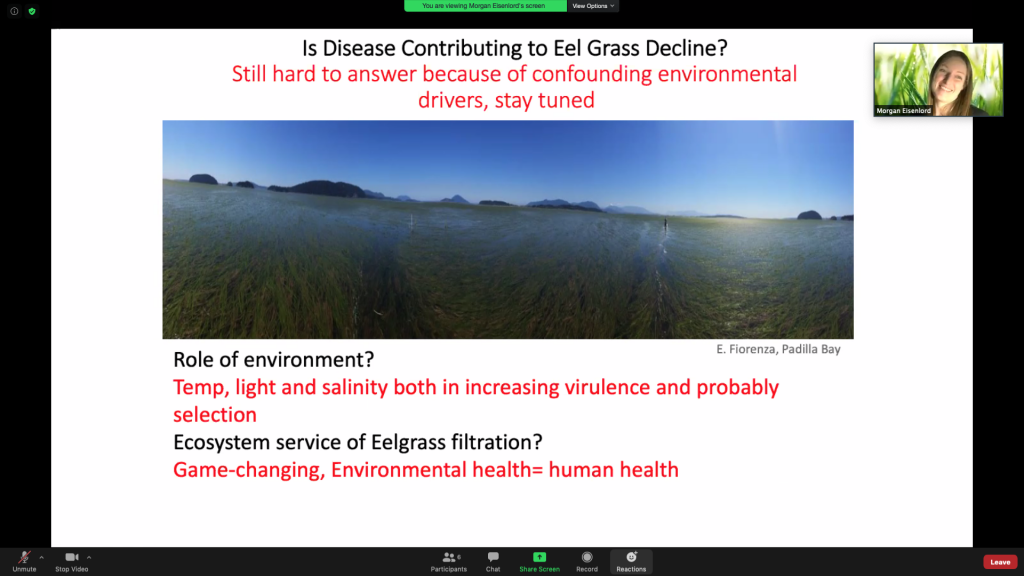
Shortly after the Zoom meeting with Alex Ramel, we had a meeting with Ms.Morgan Eisenlord a PHD candidate in the Harvell lab at Cornell University. Ms.Morgan spoke about the eelgrass wasting disease that doesn’t necessarily kill the host. She also talked about how there was a decline in eelgrass in the 1930’s to the 1980’s and it’s still currently happening today, but we are still unsure if the eelgrass wasting disease is the cause of the decline of eelgrass.
This morning we drove to San Juan County Park and discussed our findings on the BMIs (Benthic Macro Invertebrates) done on the 12th. We sat down near the shore with Kari Koski and Sharon Massey and took notes of the stream quality.
We sorted the invertebrates into groups based on tolerance to pollution. Turns out the creek had fair quality. We got into are groups and started to make questions about the BMIs.
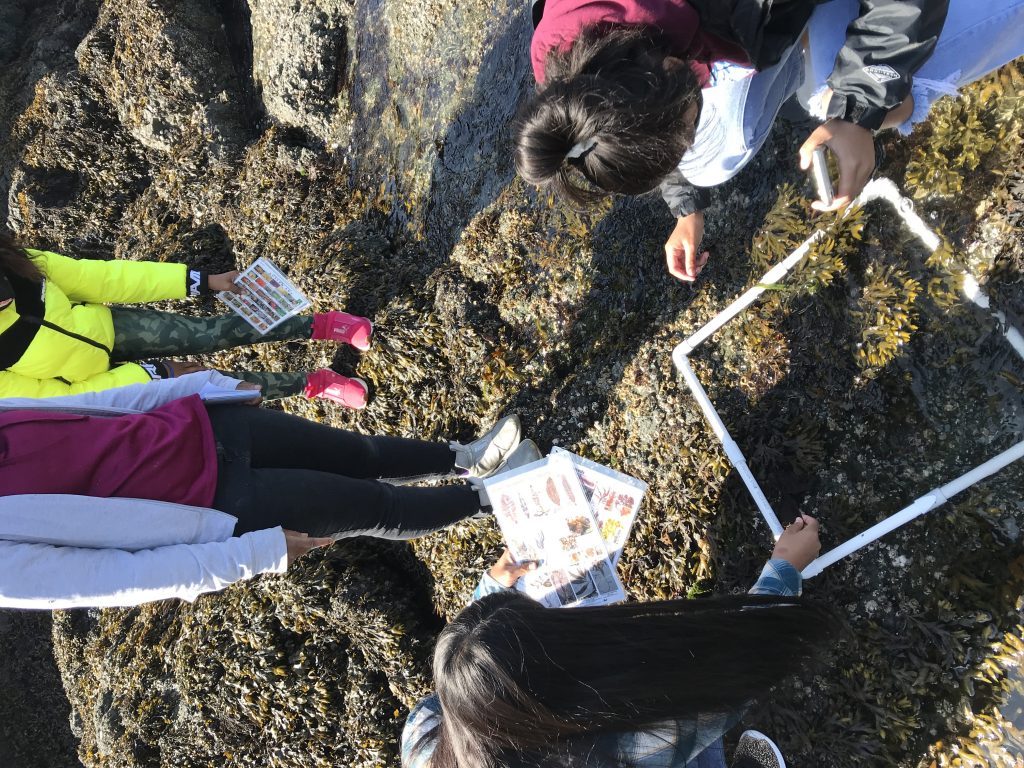
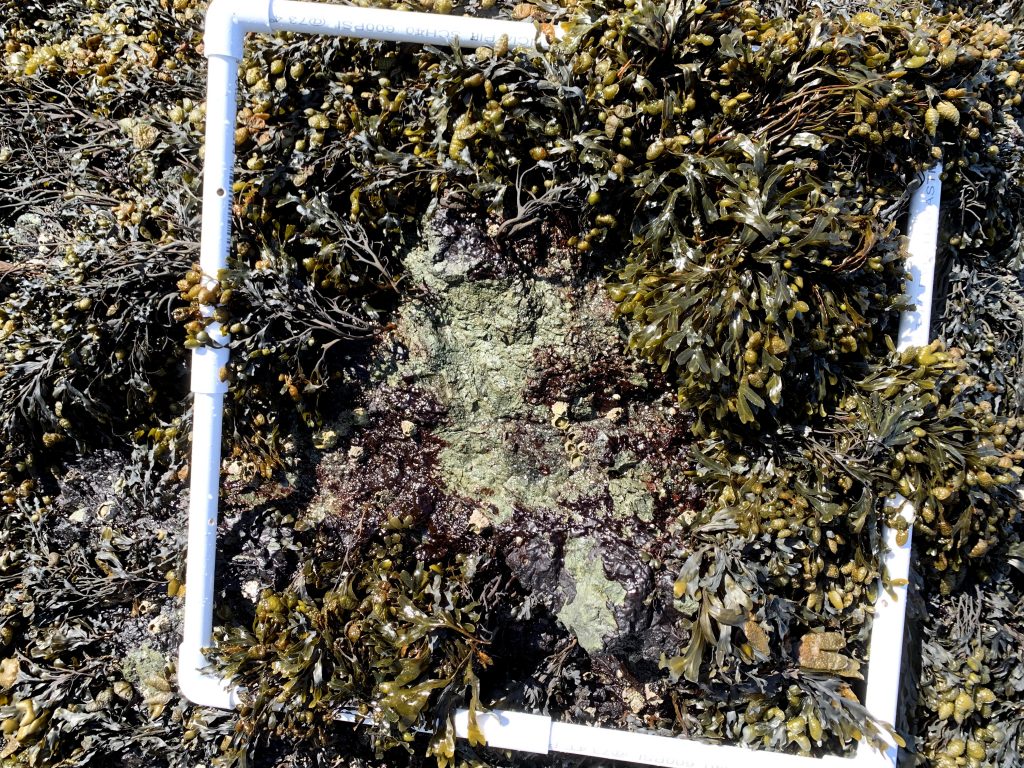
We walked a little farther and arrived at the intertidal zone. While there, we used a tool called a quadrat. You just throw it in a random place, and that’s your sampling site!
Different groups observed and wrote down all the critters and plant life within the quadrats. We mostly found barnacles, snails, and rock weed.
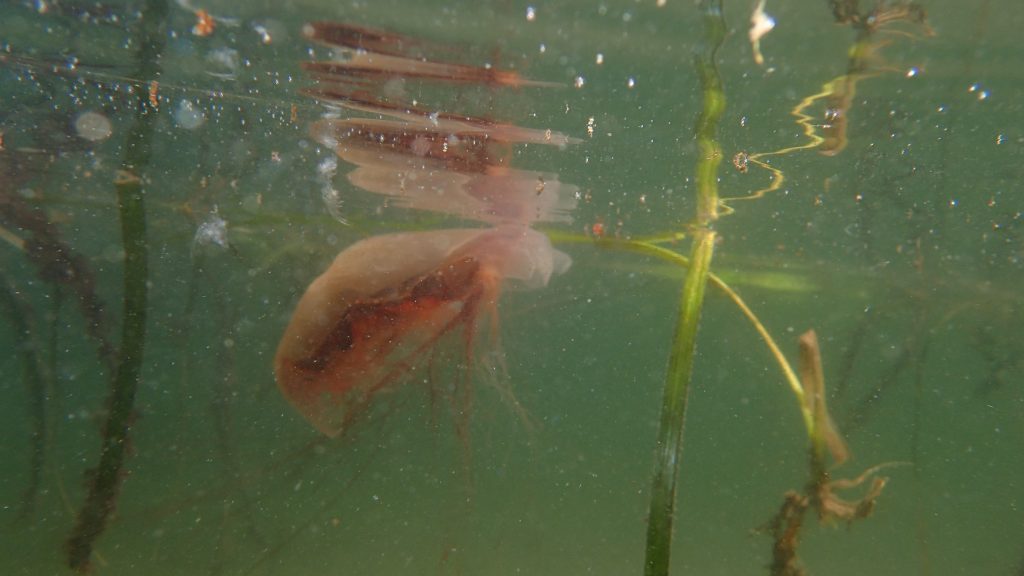
When leaving we almost missed this vibrant jellyfish along the shore. Yafet Amine stepped into the cold water and blindly took this photograph.
We also had a live demonstration of a necropsy of a dead baby seal. We had a interesting presentation with Hilary Hayford, PhD about oysters restoration.
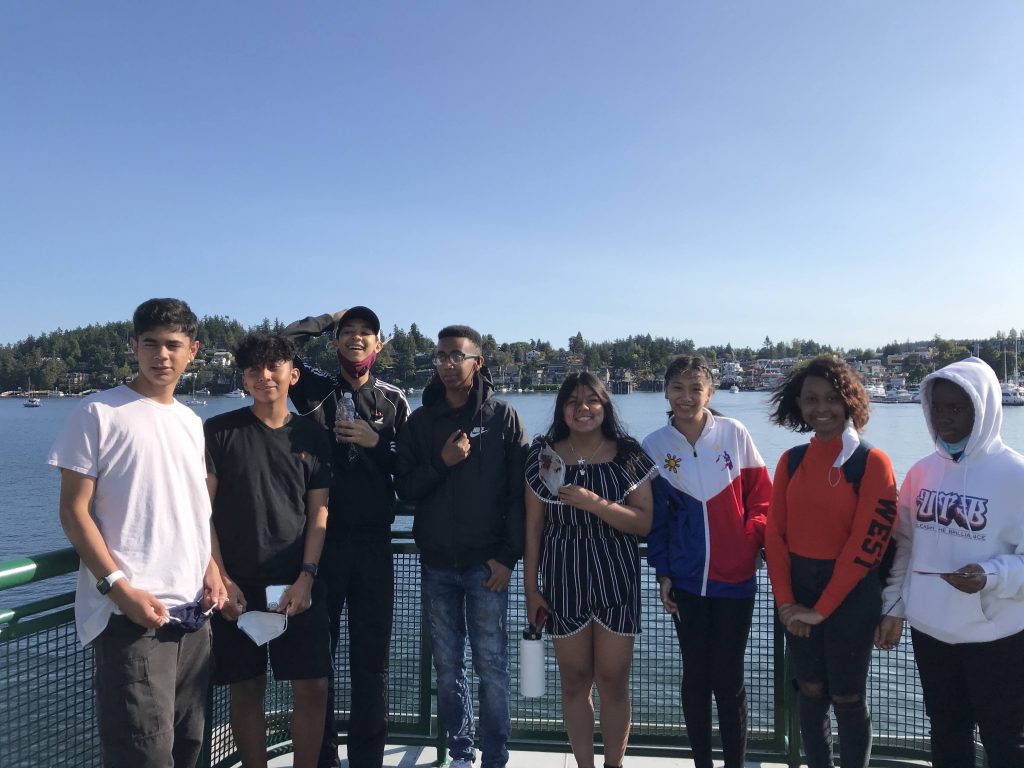
1) Youth from Unleash the Brilliance start off their trip by going on the ferry starting at Anacortes and ending up in Friday Harbor. It was many of the youth leaders’ first time on the ferry and one of the youth said it was a very scenic ride and an enjoyable leg of the journey. The image is of all eight of the youth before arriving at the Friday Harbor Port.
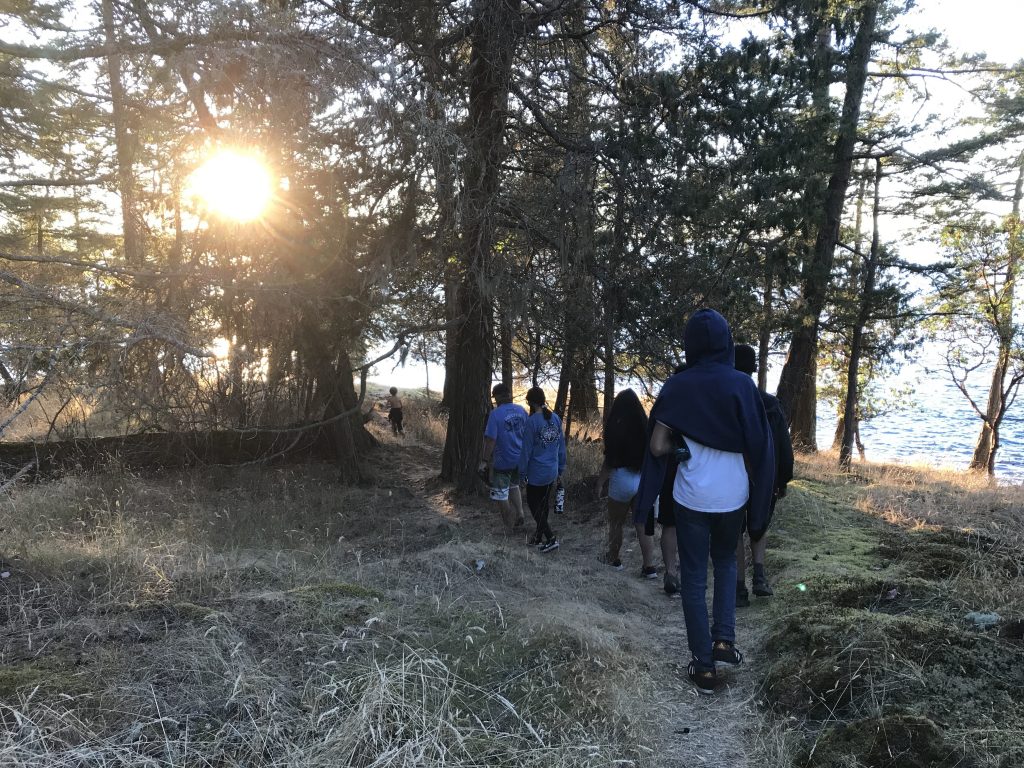
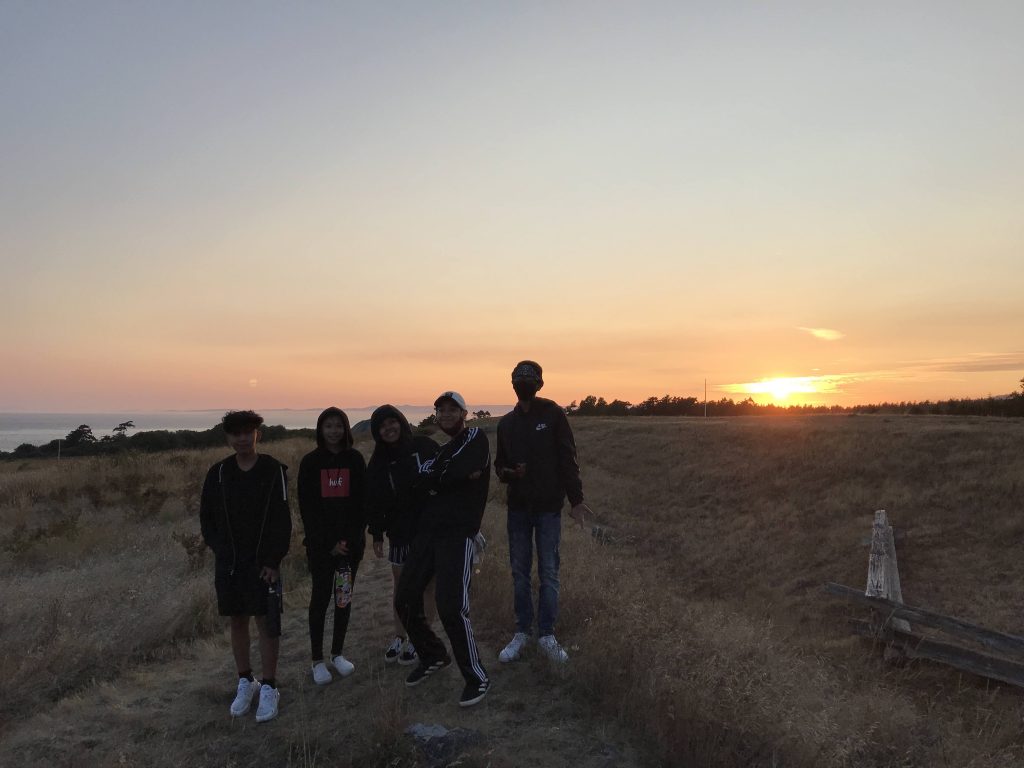
2) The group ended up at South Beach where they started to wind down for the evening after a long day of travel. They took a hike up the trail to enjoy a beautiful sunset and while they hiked, they realized that the island is home to various animals due to their encounter with deer and photographers aiming to capture a glimpse of foxes. It was definitely a relaxing view from the hilltop of South Beach.
Tuesday
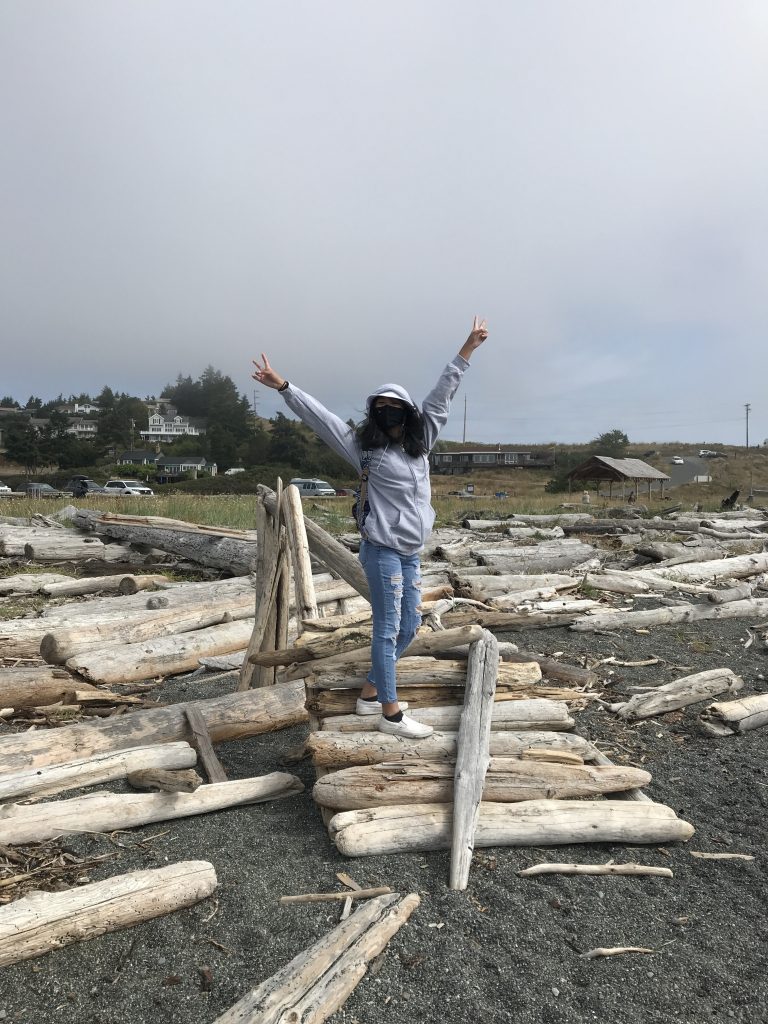
3) We all met up at Jackson’s Beach the following morning and learned about maps and charting. As we looked at the waterways, we were fascinated by the fact that the fresh water going out into the Salish Sea and through the Strait of Juan de Fuca into the Pacific Ocean had an effect on the speed and direction of the current. We enjoyed a breezy morning on the San Juan Islands while we picked up plastic found on the beach and observed wildlife.
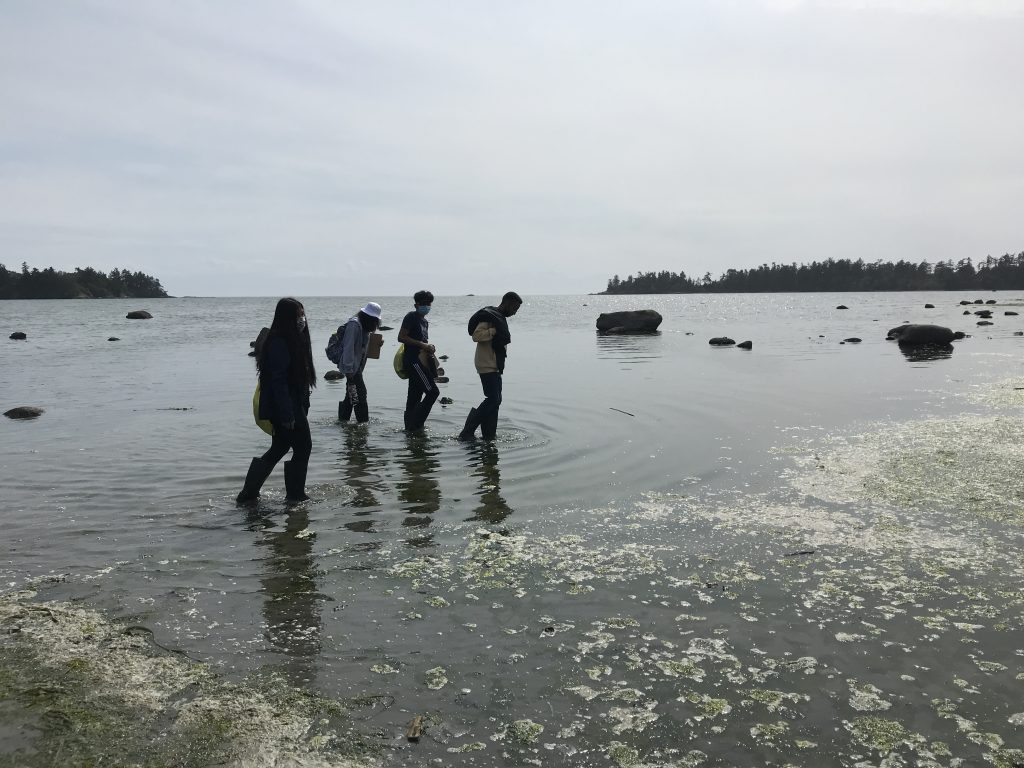
4) We met with Sharon Massey and Kari Koski, two naturalists and senior science educators who have a passion for the water quality on the island. We checked out a local creek with them and surveyed the physical characteristics of the creek. We then headed out to False Bay where the creek flows out into the Salish Sea. We enjoyed wading in the water with our rubber boots on but not very fond of the smell of the decaying algae.
Wednesday
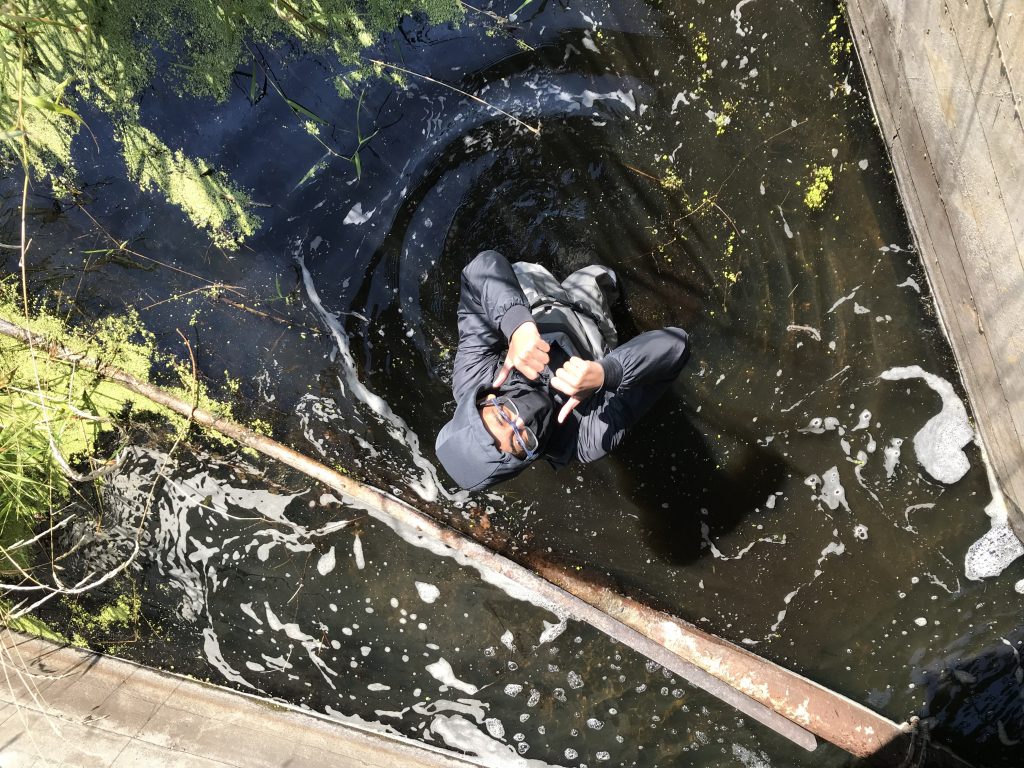
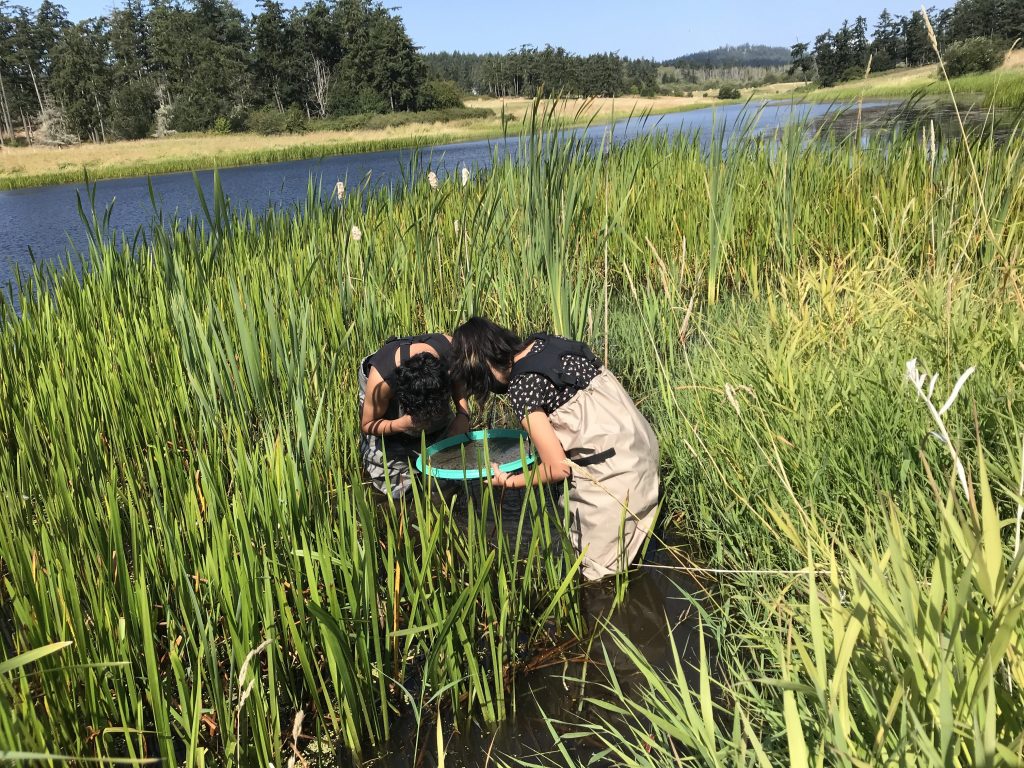
5) Waders are like overalls that go down over your feet and keep you dry while you’re in the water. We were all excited to get into our waders and get our hands dirty!
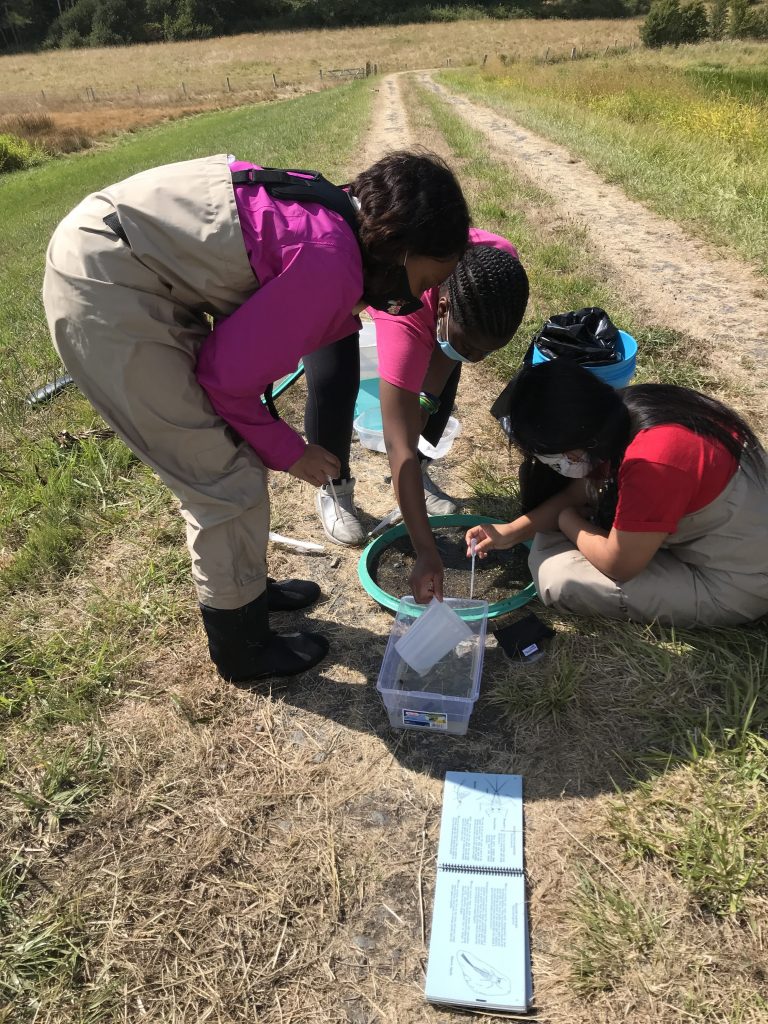
6) We quickly made our way into the water where we collected samples. We collected the substrate in the water and tried to pick up as many critters as we could find. These critters are also known as macroinvertebrates that live in these ecosystems.
7) We thoroughly investigated our samples in the nets we caught them in and we used magnifying glasses to identify the different species in the pond. We found a number of macroinvertebrates along with spiders, mini snails, and a tadpole. We returned the samples to their natural habitat and then went off to lunch.
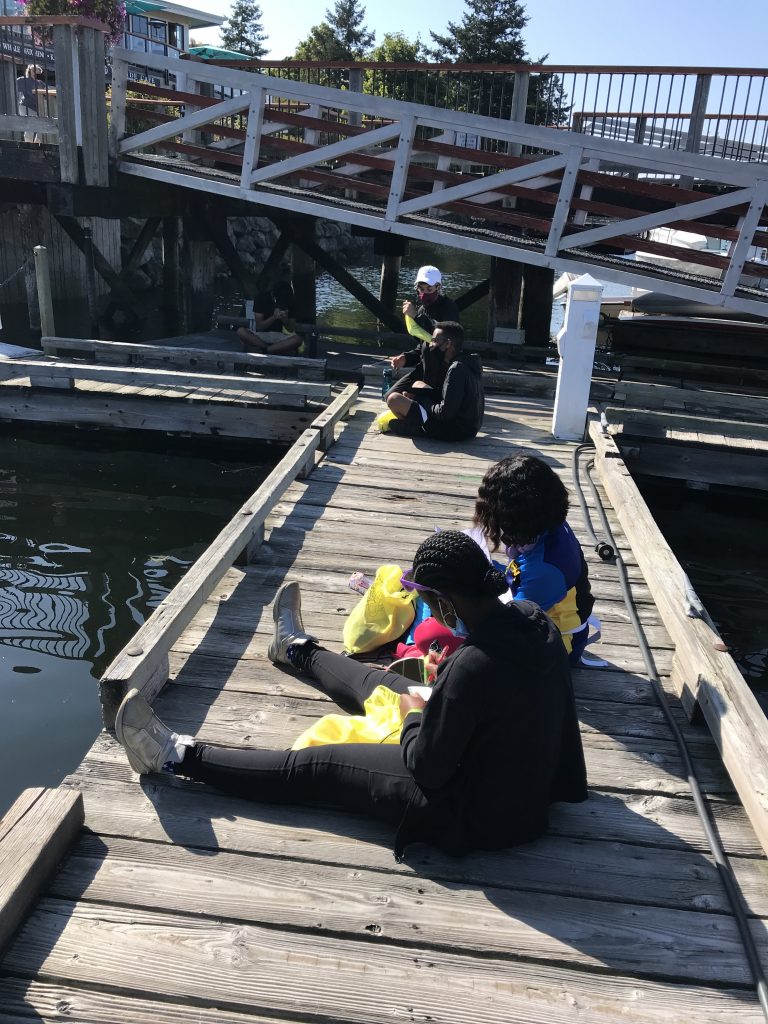
8) After lunch, we took a 45 minute walk down to the harbor where we looked at the shoreline armoring. We had learned about shoreline armoring from Dr. Megan Dethier, the Director of UW Friday Harbor Laboratories. Shoreline armoring is a wall made to protect the shoreline from eroding too quickly but it also has a negative effect on the beaches. It acts like a dam and holds in the sediment which causes beaches to wash away. On the dock, we were able to see two different shoreline armoring techniques which includes rocks and a concrete wall.