Day 12: Fantastic Field Friday

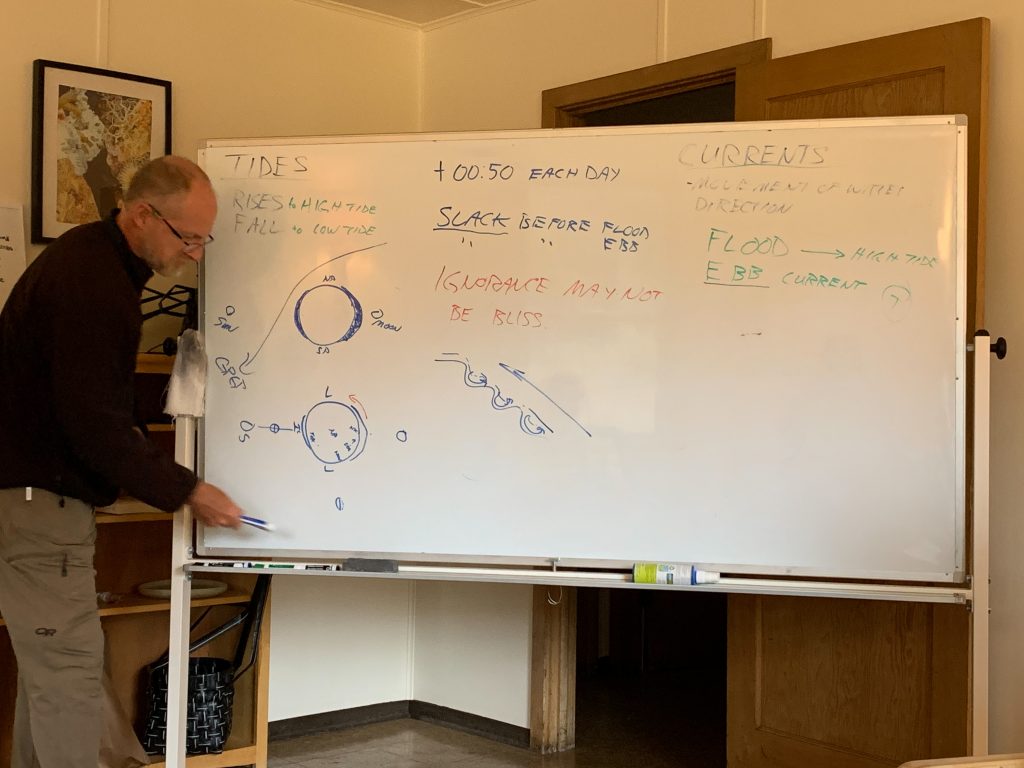
( This is us learning about tides & currents)

We started off our day with a lesson from Sockeye about tides and currents. We learned that they are effected by the moon. The moon’s cycle is 28 days and each day the highest tide time advances 50 minutes each day. We knew that the Earth does a full rotation in 24 hours but we learned wherever we are position wise, the gravitational pull from the moon will effects the tides. We learned that there are two types of currents, the flood and ebb current, the flood current effects high tide and the ebb current effects low tide.

We talked to Pema about the Sunflower Seastar. We talked about their food diet and how they almost went extinct because of the Seastar wasting disease (it looked like the Seastar were melting and their legs looked twisted). We talked about how they reproduce and how they can determine whether they are male or female. We also learned that even though they do not look like a vicious predator they are actually dangerous because they can eat almost anything. We also found out that they have eyes on their legs.
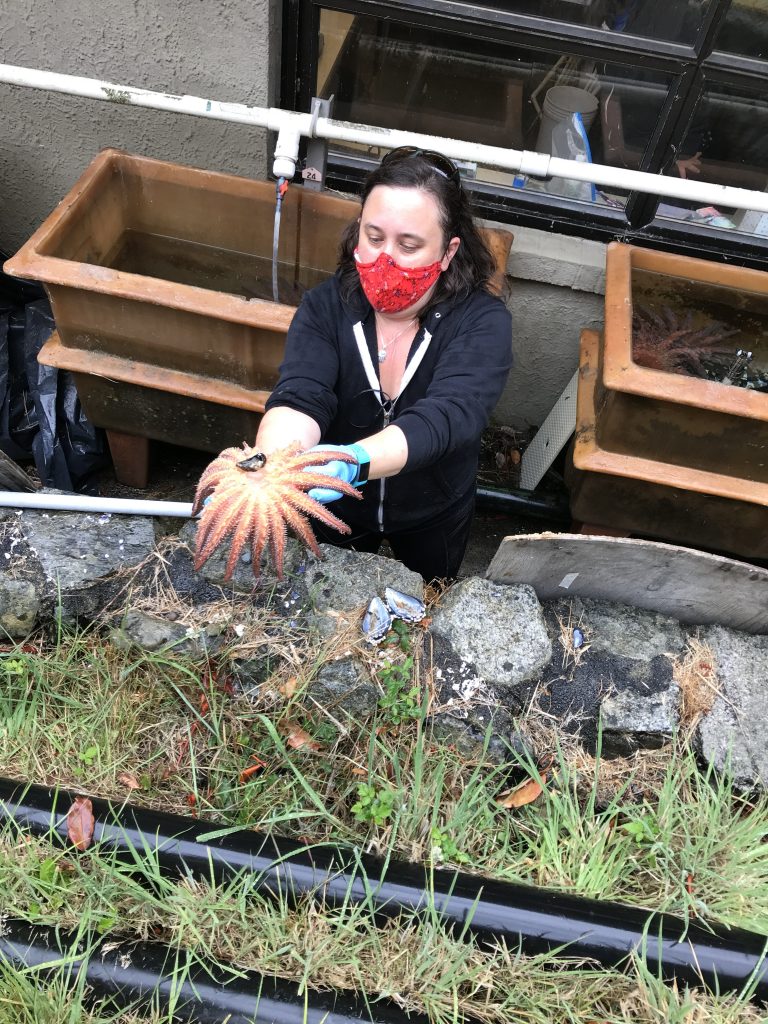
( This is Mrs. Pema holding a sea star while it’s eating)

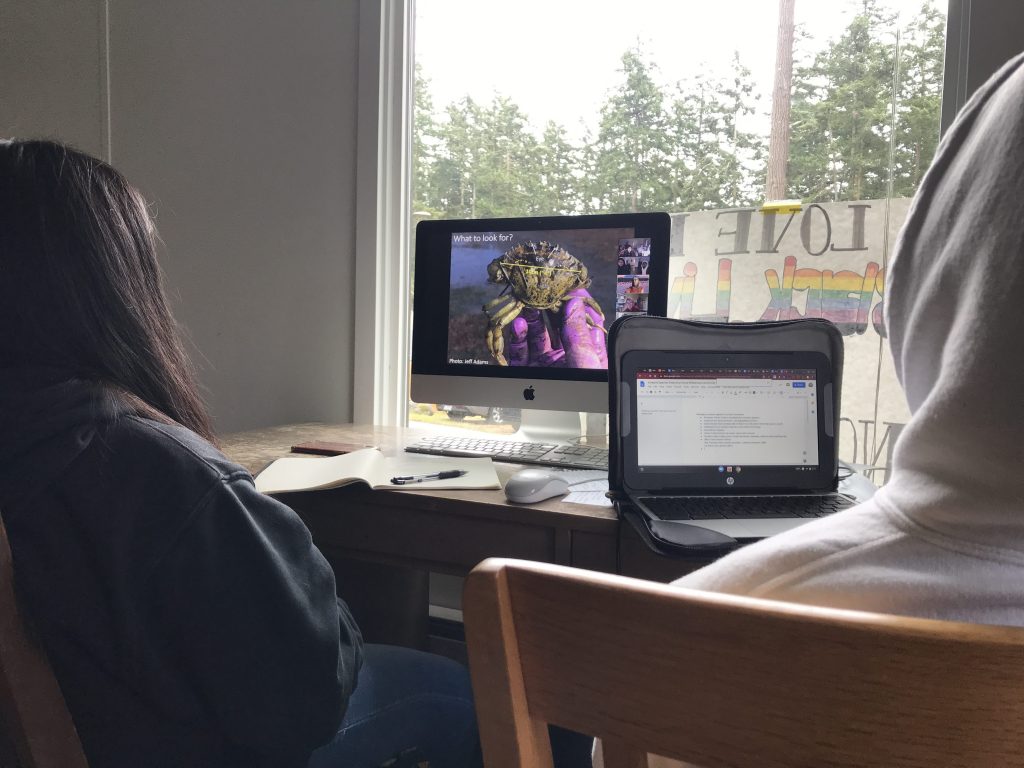
Shortly after seeing Seastars, we attended a zoom meeting with Alex Ramel. We filled him in on our latest activities and we talked to him about the research he asked us to do that had to do with youth getting more involved with political issues that we are passionate about. Shown above is a photo of the zoom we had with Tanja Williamson and Emily Grason who are involved with the effects of invasive European Green Crabs. They taught us about their diets, how damaging the species can be, and how fast they populate after being established.
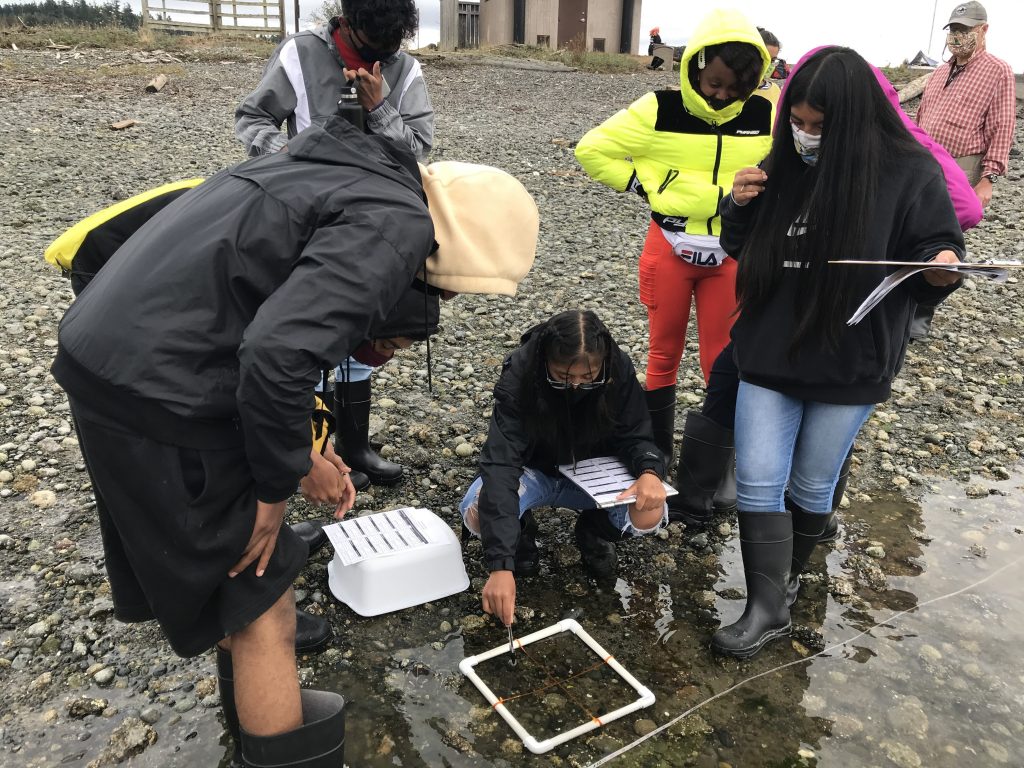
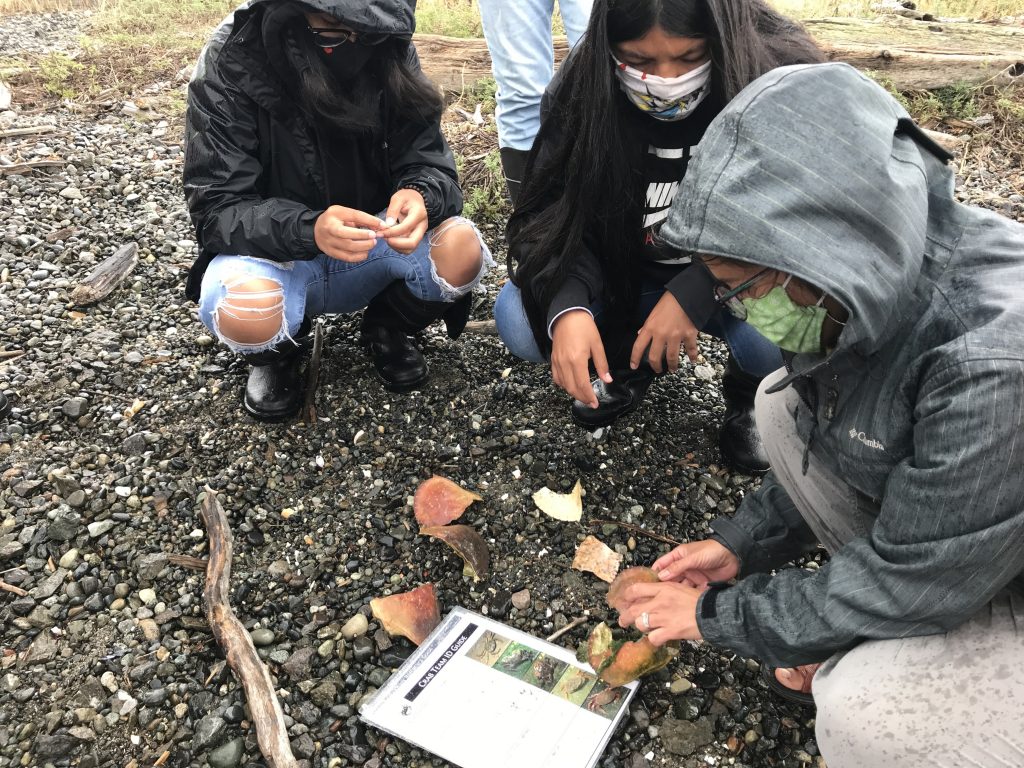
( This this us looking quadrants trying to identifiy what species are in the quadrant)
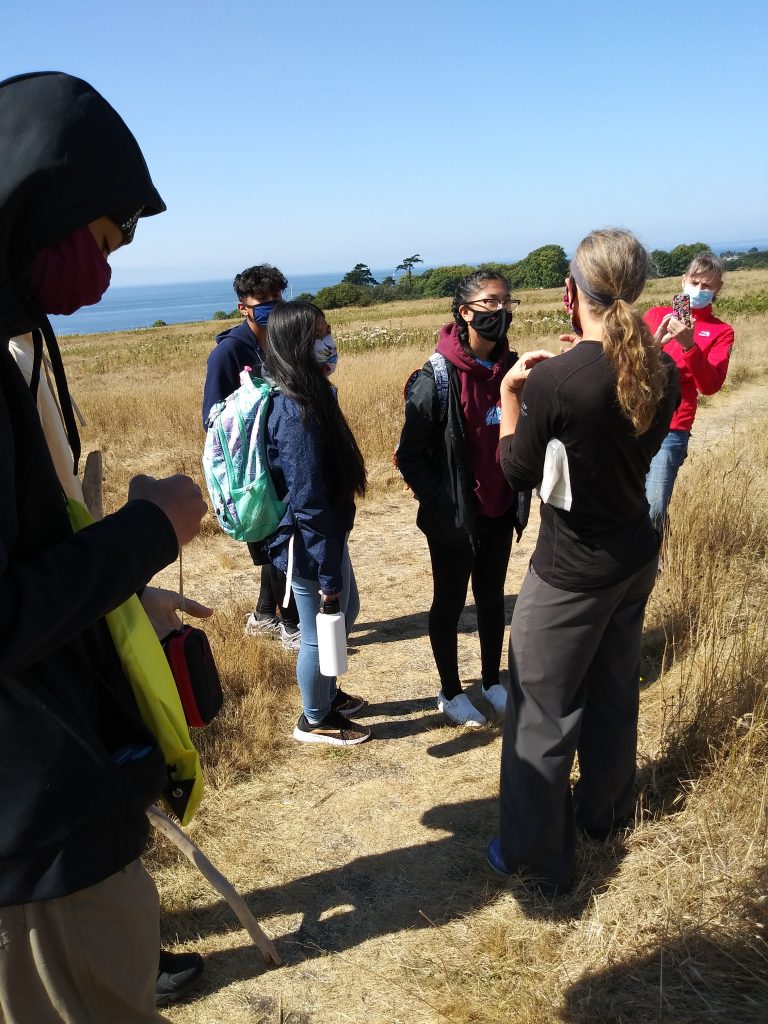
This is us out in the field with one of the speakers from the zoom, Tanja Williamson

We went on a search for molted crab. After 7 minutes, we came back together and showed the group what molts we found and tried to identify them by their shell. We talked about how to identify the specie of crab by their spines and the size. The identification charts showed our native species as well as the invasive green crab. We also discussed how to determine if they’re either a male or female.

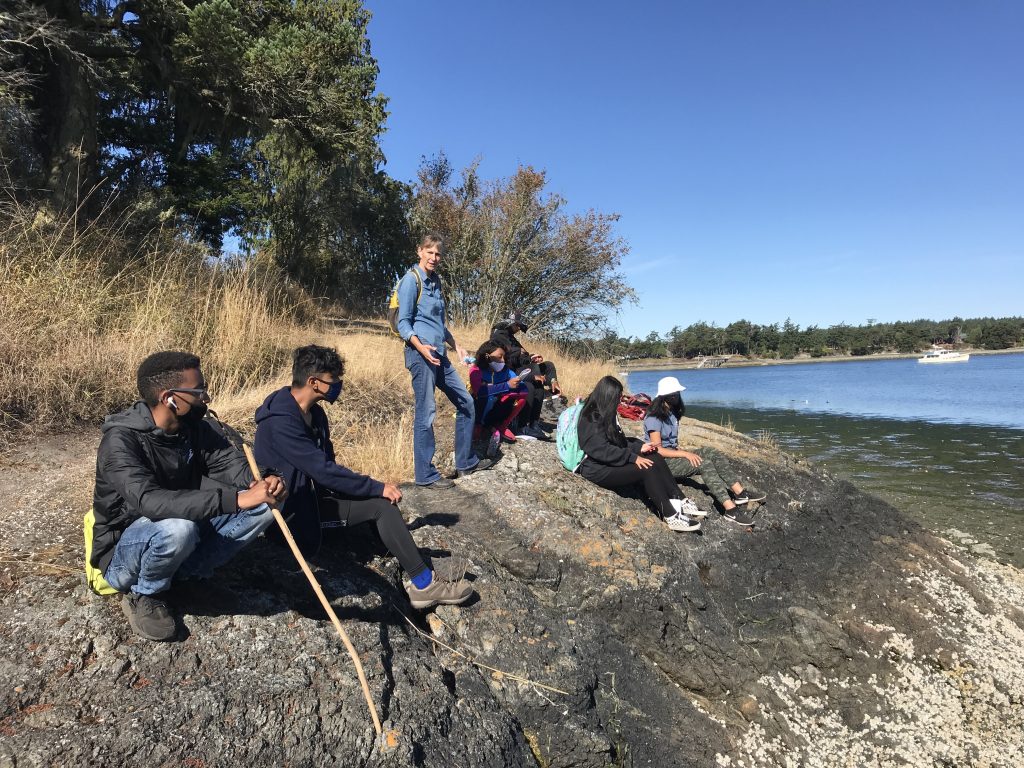
( We found small crabs while at Jacksons beach )

Day 9: Restoration, Projects, and Permaculture

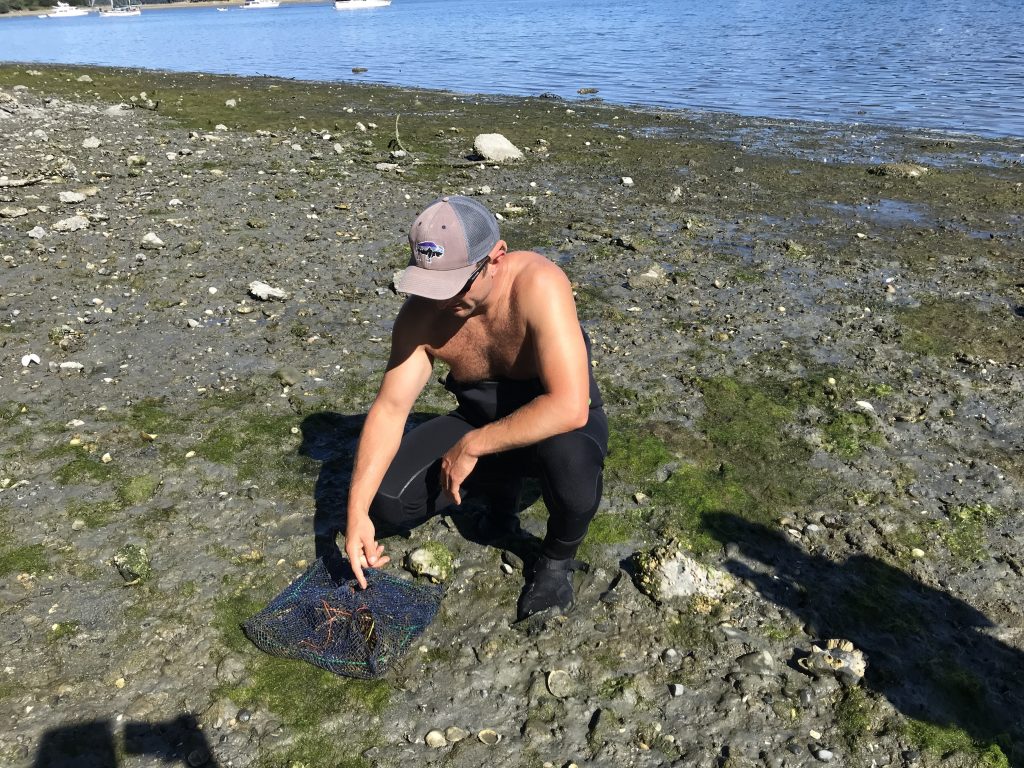
We started off our daily adventure by going Bell Point at English Camp. While we were there and waiting on our speaker Shawn, we made observations about what we saw on the low tide shoreline. We saw things such as clams, oysters, and even got to take a closer look as we walked along the shore.

Shawn is explaining how the net distributes seeds to make eelgrass meadows.

Once Shawn arrived, we walked with him along the shore as he explained his works on the restoration project for distribution of eelgrass seeds. He also covered how this restoration project method and how it is effective.

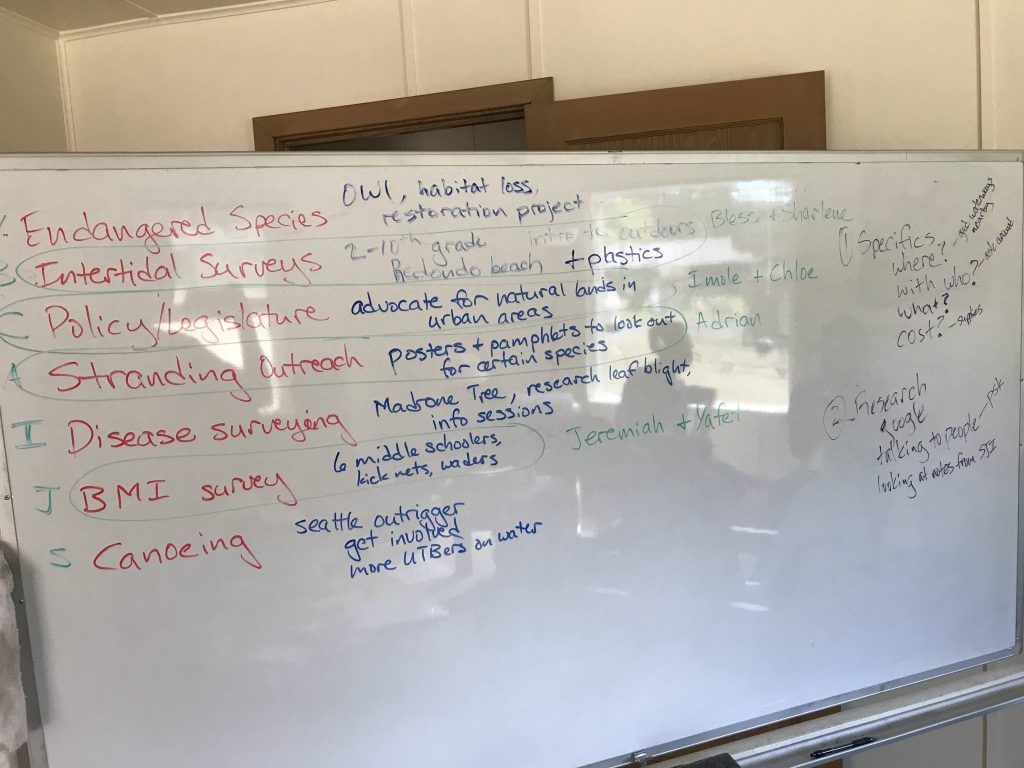
After we came back from seeing Shawn, we came back to work on our project proposals ideas research. We all presented our research homework from the night before and we got assigned into the groups who picked the same topic as another. After that, we all just talked about our project with our partner to get an idea of what the project would look like realistically in the field.

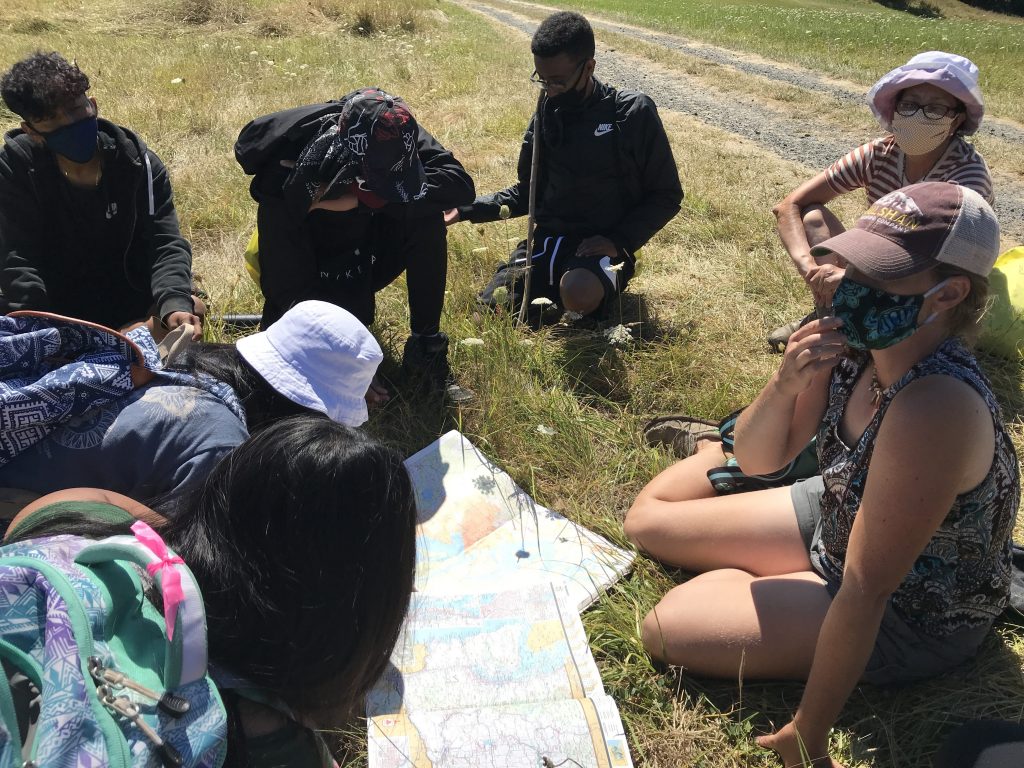
We went to Zylstra Lake to meet with Sarah Hanson to discuss what permaculture is. She explained how different ecosystems, species, and abiotic factors interconnect and the importance of that. There was such good conversation about species of trees, differences between bodies of water, soil saturation, natives and invasive, and so much more. As a group we had a little bit of fun eating blackberries along the way.

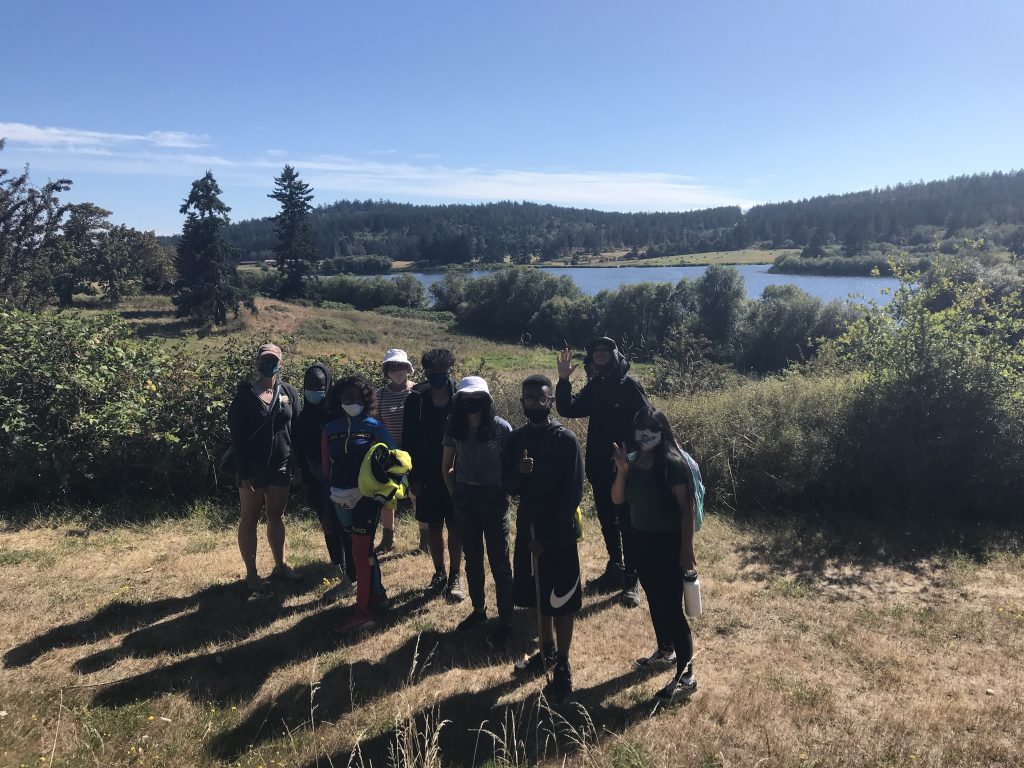
Ending our time with Sarah, we took a photo to see how far we walked. We spotted a bench surrounded by beautiful fruit trees and very peaceful setting which we hung out in before walking back to our cars.

Day 5: Butterflies, Politics, and Eelgrass

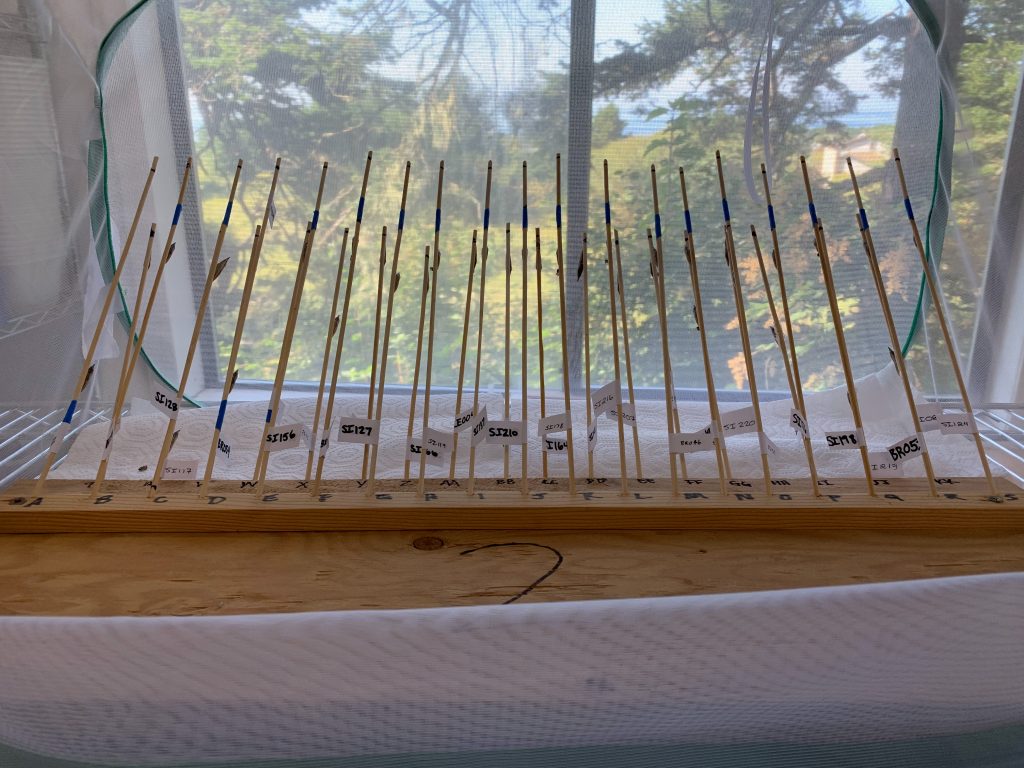
We drove to the American Camp to meet Jenny Shrum. While we were there, we learned about the endangered Island Marble Butterfly and what her lab is doing to learn more about the species and possibly help restore the species habitat. We went into the lab to see the chrysalis stage of the butterfly. Then, we went out to collect seeds of the butterfly’s host plant.

( This is us out gathering seeds )

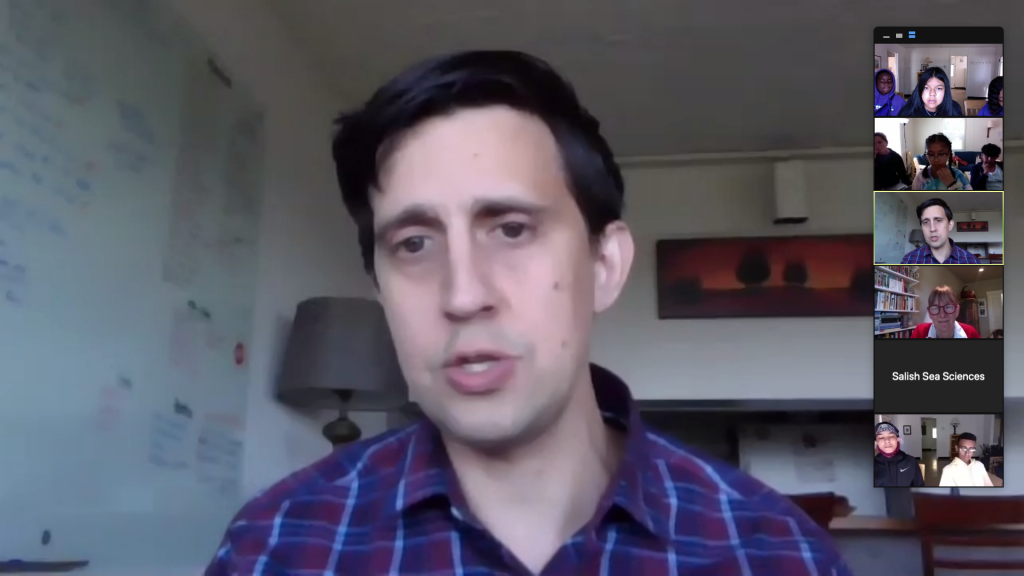
After we got back, we had a zoom call with the Washington State Representative Alex Ramel. He explained the process of a Bill being passed. He also talked about legislature and what he is doing for the environment. He also gave some advice on how to get involved with politics.

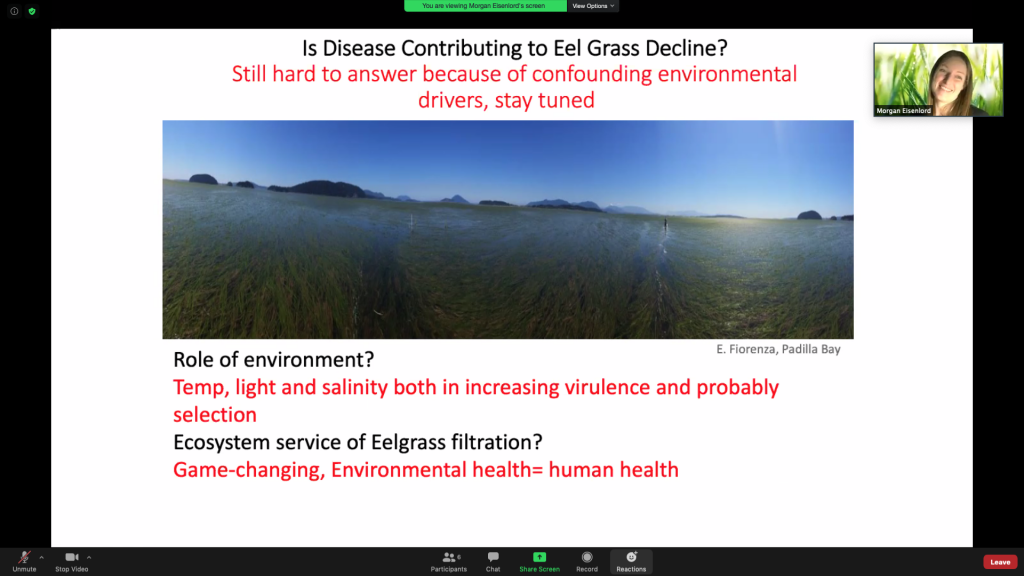
Shortly after the Zoom meeting with Alex Ramel, we had a meeting with Ms.Morgan Eisenlord a PHD candidate in the Harvell lab at Cornell University. Ms.Morgan spoke about the eelgrass wasting disease that doesn’t necessarily kill the host. She also talked about how there was a decline in eelgrass in the 1930’s to the 1980’s and it’s still currently happening today, but we are still unsure if the eelgrass wasting disease is the cause of the decline of eelgrass.