Day 20: Final Farewell

By: Naomi, Ashley, Jesse, Colette, Anders, Julia

Sunrise Start

The sunrise signals the start of a new day and a new beginning. We started off our last day by watching the sunrise in everyone’s hometowns. Nothing can bond a group like waking up at 4:45 to watch a sunrise.

Like the sunrise, we learned that while today might be the last day of the program, it’s certainly not the end of the book. Instead, today was the beginning of the next chapter. 

The friendships we have made and the lessons we have learned throughout this program will continue to follow us throughout our time. We can’t wait to see what the six of us accomplish.

Colette’s Colorado Sunrise
Salish Seas Sunrise
Seattle Sunrise
SoCal Sunrise

Feedback Frenzy

It’s impossible to wrap up an experience like this. Fortunately, Foundry10 lent us a hand in simplifying things.

We shared our feedback, positive and negative, about the program. Using those thoughts, we time-traveled to the year 2025 where we simulated a zoom reunion…

Our imaginations brought us across the galaxy. One of us was busy researching cancer on Mars, another had created a multi-million dollar flipper company, Julia was busy unearthing Spanish medallions in thousand-year-old shipwrecks, and a few were lucky enough to become roommates at the University of British Columbia…

We all shared a good laugh discussing our aspirations. 

Lovely, Long, Legendary, Lengthy, Lavish, Lush, Lasting List

Lunch led us to lists. Reminiscing on our four-week experience, we created a lovely, long, legendary, lengthy, lavish, lush, lasting list of guest speakers, topics, skills, and knots. 

This seemingly meaningless list indicates so much more than one would think. Each event listed shows our growth and development along the way.

Gracious Growth

Throughout the program, we’ve been ever so grateful for the multitude of guest lecturers; however, none of this would have been possible without the support of the Salish Sea Sciences team.

Derek, thank you for keeping the Zoom calls light and fun and directing this program! You have always made sure to keep us engaged. Our off-track conversations have taken us across the world and to the ninth planet. Thank you for your constant encouragement. Many of the things we go on to do following the program, wouldn’t have been possible without you. So we encourage you to continue to change the world. 

Kay, thank you for helping us along the way and teaching us about the wonderful butterflyfish! Your enthusiasm brought the program to a whole new level. You’ve supported us throughout our whole journey, and we can’t thank you enough for helping us grow as a whole. You are an amazing role model and we can’t wait to see you again!

Bea, thank you for showing us we can. Your journey to get where you are now followed so many twists and turns, but you got there. We admire your RESILIENCE and vigor to get where you want to go. We’re all hoping that starting today, we can recreate that in our own lives. Also, thank you for helping us with our independent projects, you helped guide us through our challenges.

Tom, thank you for always being there for us and listening to our suggestions for Salish Sea Sciences. You’re always open to hear our opinions on improvement and trust our judgment. You make us feel like true adults who can do anything we put our minds to. We admire your dedication to helping Morgan Eisenlord with your new program and we thank you for being just as dedicated to us in this program.

Last but most certainly not least, Caroline. Thank you for bringing us all together. You and Tom have created such an amazing, impactful program, and have changed so many lives for the better. Your constant support, advice, and mentorship throughout this program have been incredible and we can not thank you enough.

Thank you. 

This is the Makos and Bottlenose Dolphins, signing off… But not really. 😉

Final group photo

Day 19: We’ll Keep This Quick

Our day today was packed.

As incredibly exciting and fulfilling as today was, it was equally exhausting. For the sake of our sleep schedules and easy readability, we’ll keep this quick. 

The Return of the Pauly

While being online for the duration of this program has had its lows, to an extent it’s been a blessing in disguise. Being online has allowed us to connect with incredible people we would have otherwise never met, including the likes of Daniel Pauly. 

In his second appearance with us, Dr. Pauly shared one of his more recent studies. His research suggests that as our oceans warm, the fish that inhabit them will become increasingly small due to a lack of oxygen. We are honored to be one of the first student groups he has shared this lesson with and we hope to help spread his crucial message worldwide.

Mo Sea Stars!

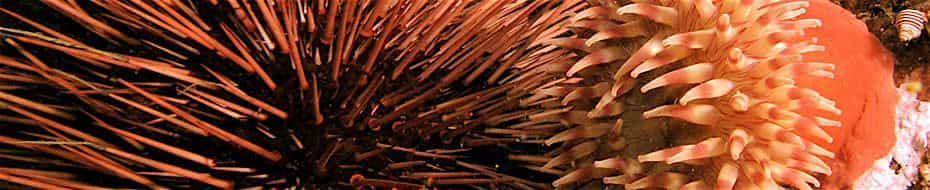
In between scrambles to complete posters, Mo Turner joined us to talk sea stars. We’ve met many remarkable scientists during our time at Salish, so this being the second to last day, it was enjoyable to circle back around. It was definitely a more casual conversation; filled with random star-y questions. We even got a chance to view many of the specimens from one of FHL’s sea star galleries. The Vermillion Sea Star (pictured below) garnered many oohs and ahhs.

Image Source ( Vic High Marine )

Lights, Camera, Action!

We spent countless hours today finalizing our posters and preparing to present our research. As nerve-wracking as it was, our discussions went surprisingly well. We each got to speak with an abundance of people ranging from family members to scientists we’ve never met before. It was nice to finally be able to wrap up our past few weeks of doing research and collecting data.

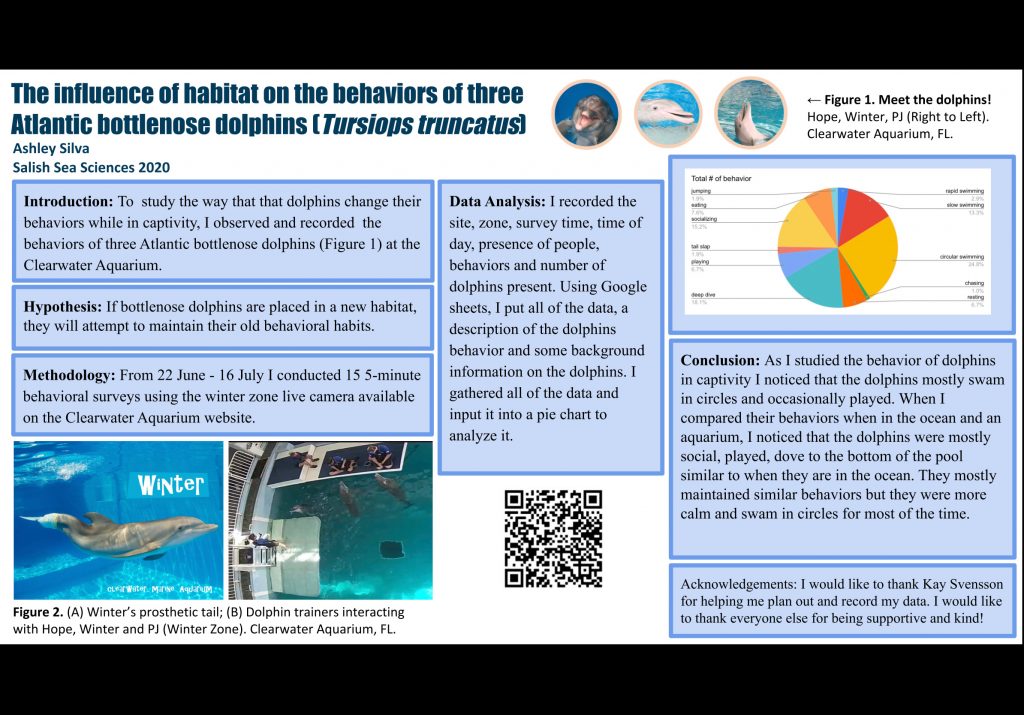
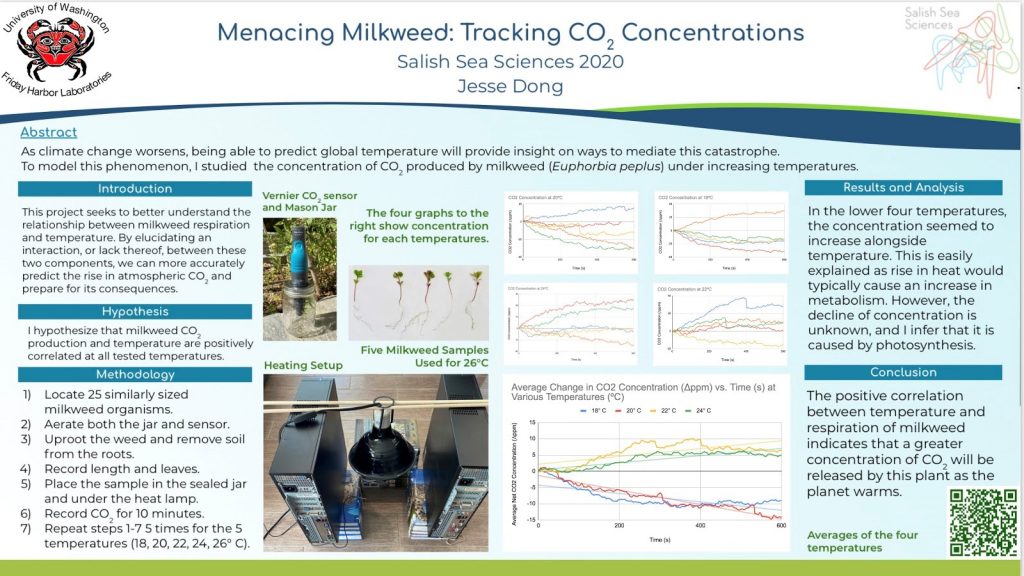
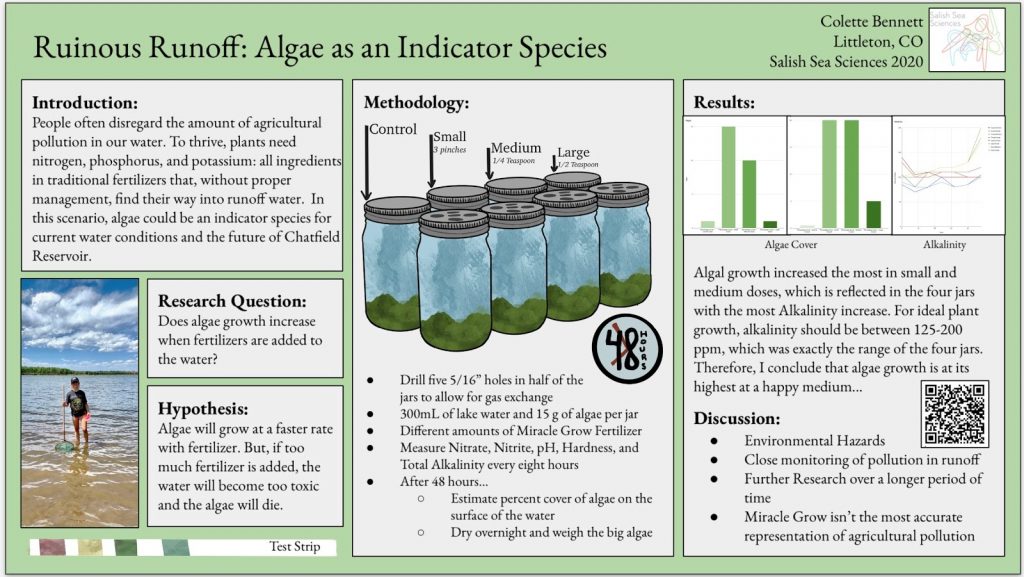
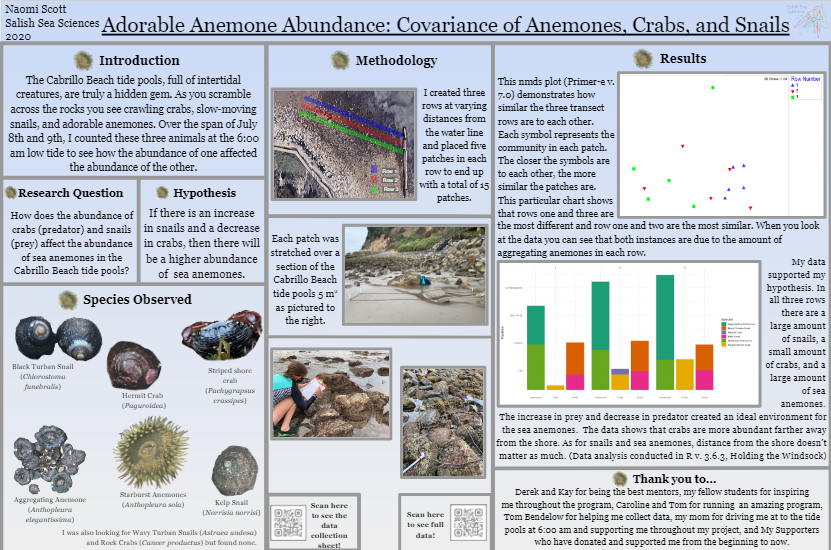
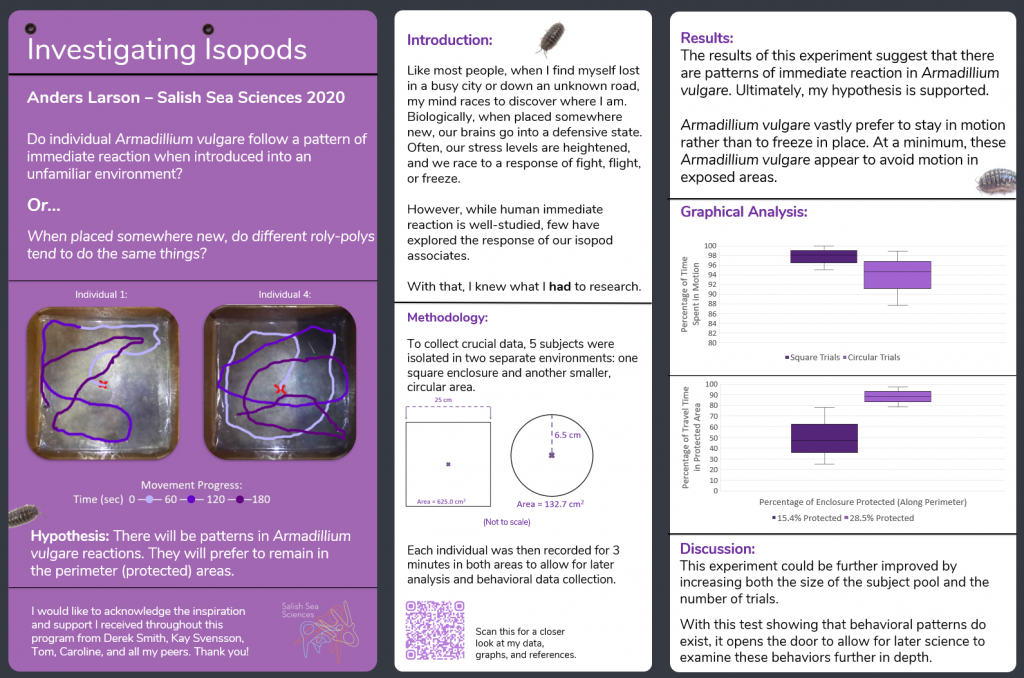
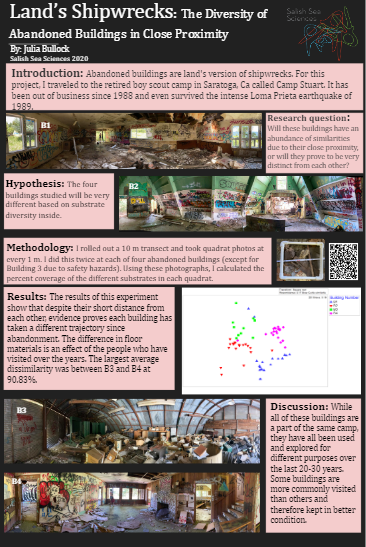
The Salish 2020 Posters

Getting Sleepy

It’s astonishing how fast time truly flies when you’re engaged, supported, and constantly amazed. This program has been a once in a lifetime experience for all of us. Despite our small group size of 6, we’ve accomplished more than we ever thought possible.

These past weeks have pushed us to improve our speaking, listening, and learning. In this time, we’ve connected with artists, activists, humorists, and scientists; many of which we could have only dreamed of meeting beforehand.

We have to thank those that have been essential in molding this time into an unforgettable period.

Derek, thank you for your constant enthusiasm and endless ideas. Kay, without your experience and guidance we’d surely be lost. Caroline, thank you for always helping us to improve. Tom, your technical savvy and inspiring ideas have saved the day more than once. Bea, thank you for your crucial project help. And, for all the inspiring guest speakers we’ve had, thank you for making time in your busy schedule to meet with us. It means the world.

To be completely honest, we could talk endlessly about all of the incredible experiences we’ve had with this program. 

However, as we keep writing this, we’re beginning to get tired and we think we better call it a nigh…

Day 18: Brain Brawl

By Naomi, Ashley, and Jesse

The Terrific Trifecta

We’ve had plenty of lectures throughout the program. But none quite like this.

Today’s lecture was more of a discussion. The conversation members? Ray Troll, an astounding marine artist, Dr. Kirk Johnson, the director of THE Smithsonian’s Museum of Natural History, Dr. Milton Love, an inspiring ichthyologist, and the Salish Sea Sciences team.

After asking a few questions, we found that it was much more fun to sit back and listen to the three talk and catch up. As the buddies filled each other in, they provided us insight on various topics, from the malacosteus niger’s dislocated jaw to empty pandemic museum exhibits. 


Ray Troll vs. Anders

At one point, an artifact battle took place as each scientist tried to show us an even more impressive replica or skull! We have to say, Anders might have won the whole thing with his paper mache walrus head.

Watching the three scientific celebrities discourse this way is not something you get to be a part of every day. This is just one of the many amazing opportunities we have experienced over the past four weeks.

Deep Down Discoveries

As our conversation with the three titans came to a close, Megan Cook, a Manager of Education Partnerships and Programs at OET, joined our Zoom call. 

Megan mesmerized us with her octopus-covered whale skeleton and colorful underwater mapping diagrams. After explaining the motivation behind marine discoveries, Megan discussed all the different ways that OET uses underwater ROVs to explore and discover on the ocean floor. 


Mapping the Ocean Floor

Not only can the giant ROVs collect samples of different underwater organisms, but every expedition is live-streamed on Nautilus Live’s website!


Inside look at OET’s ROV

Matching one of the program’s main themes of discovering the many marine biology paths, Megan showed us the variety of people involved in making these expeditions possible. When these positions are combined, they make one big dream team that can accomplish amazing things!


ROV captures octopus brood around a whale carcass

Plentiful Poster Planning

In between the wonderful conversations we had with these knowledgeable guests, we were constantly working on our individual projects, specifically, our posters! With the majority of our research done and the poster session occurring tomorrow night, it was time to work on the public engagement step and share our results. It was crunch time!

Although this task may seem deceptively simple, the formatting and organizing practically fried our brains. We were able to collect loads of data, but if we didn’t present it in a clear manner, then hours of grueling research and analysis would go to waste. The task of trying to fit a research paper’s worth of information onto a single Google slide might have been the biggest challenge of the whole program. 😉
Despite the obstacles that we faced, the Salish team was able to pull through and design aesthetically pleasing posters. Tomorrow at 5:00 pm will be the true test as we will finally share our projects with the public. We can’t wait to see what our guests have to say!

Day 17: “What You Do in the Present Will Define What the Future Will Be”

By Anders, Colette, and Julia

A Lovely Lecture

In all likelihood, most reading this blog aren’t exceptionally well versed in the radical world of rockfish. Oftentimes, when faced with unfamiliar science, it can be extremely difficult to work past the inexpressive style and surmount the barrier of confusing jargon.

While some scientists (like Sasha Seroy) choose to combat this issue with art, others choose a more comedic path…

This morning, we had the pleasure of meeting and talking with Dr. Milton Love, a scientist and humorist working at UC Santa Barbara. While he has experience in a broad range of fields, our discussion today mostly concerned the ecological value of offshore oil rigs. Dr. Love shared with us both scientific and personal wisdom. His approachable demeanor had us asking constant questions, whether they be about science or personal. All puns aside, it was lovely to speak with him today.

Captain’s Orders

There are always multiple stages of every issue. In science, while a critical aspect is research and documentation, equally important is actually taking action on that work.

Today we spoke with world-famous ocean conservationist, Paul Watson.

Captain Paul Watson has been a lifelong steward and advocate for our planet. At only age 11 he spent his summers releasing beavers from hunting traps. Later in his journey, he co-founded Greenpeace, directed Sierra Club, and began the Sea Shepherd Conservation Society; one of the world’s leading marine conservation groups. 

While to some Captain Watson is an inspiration and a hero, others purport he’s an eco-terrorist and extremist. He philosophizes: “it doesn’t matter how thin the line is if you don’t cross it”.

From what we gathered, Watson believes that if critical action is being taken and still we receive backlash from governments and corporations, then something is wrong. “The earth has been around for 4.5 billion years, yet we still think it was made for us”. 

It was so kind that Captain Watson was willing to take the time out of his busy day to speak with us. He left us feeling inspired, (full of quotes), and ready to save the world.

Exploring Octopodes

For the second time this week, we dove into octopuses and their many talents.

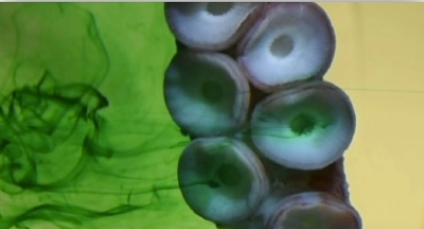
Octopus scent is relatively unexplored, hopefully Willem can find some interesting answers. (Photo Credit to the Gire Lab)

University of Washington graduate Willem Weertman gave us a detailed explanation of his graduate school thesis exploring octopuses’ ability to track odor plumes (, odor released and carried by some sort of current). Recently, he’s been busy building a flume at Friday Harbor Laboratories for use in his future studies.

Those Who Came Before Us

As an excellent end to the busy day, we got to speak with a former Salish Sea Sciences member, Ayla Ridwan. She is currently a senior at Friday Harbor High School and is an intern at FHL where she is looking at fish and soon, sharks.

It’s awesome to see how her experience with Salish Sea Sciences opened such an incredible door of opportunity, we hope to be just as fortunate. Just as Captain Paul Watson suggested today, “What you do in the present will define what the future will be”.

Day 16: Captivating Creatures and Crammed Calendars

By: Naomi, Ashley, and Jesse

Mussels!

Today, we spoke with Dr. Emily Carrington, a biology professor at the University of Washington  who studies mussels and the ecophysiology of wave-exposed organisms. Dr. Carrington explained the many behaviors of mussels and their impact on the environment (aside from the amazing food). 

Dr. Carrington studies how the mussels attach, what causes these attachments to weaken, and how global warming impacts the mussels. The focus of Dr. Carrington’s lecture was the glue and byssus that mussels use to attach to rocks. These materials help the mussels stick to wet, salty surfaces, and keep them grounded when exposed to the elements. 

Are Dr. Carrington and her team on to a new type of super glue?


Comic of the waves’ impact on mussels.

And Snails!

Next up, Dr. Hilary Hayford, a coastal marine geologist who tracks the effects of climate change on nearshore species. She spoke to us about Dogwinkle (Nucella lapillus) snails and how the tides affect their feeding patterns. 

Her numerous experiments demonstrated when and how the snails forage. A snail’s journey to their prey – mussels – is long and dangerous as they are slow-moving and vulnerable to heat. The snails must time their trips wisely.

The Dogwinkle snails are unable to survive heat over 34º Celsius. They must forage during the two high-low tide cycles when the lowest tide occurs at night. This way, the outside temperatures will be cool enough for the snails to stay hydrated.

Dr. Hayford made it clear that the window of time to help these creatures survive the effects of global warming is small. Soon it will become too warm for the snails to make the long journey up to their food. However, climate change’s ticking time bomb doesn’t just impact the intertidal zones: practically every environmental ecosystem will be adversely influenced. We must act quickly!


Mussels in areas with high and low temperatures

And Octopuses!

Yep. You heard us right, octopuses! Dominic Sivitilli, a Ph.D. student in behavioral neuroscience and astrobiology, confirms that the plural of octopus is in fact “octopuses”.

The final hours of the day flew by as Dominic hypnotized us with videos of wandering octopus legs and suckers. These benthic beings are some of the most ecologically unique in the ocean. With camouflaging powers, soft bodies, and decentralized nervous systems, octopuses are quite an unusual intelligent being.

Dominic’s work mainly focuses on the nervous system of this intricate invertebrate. Thousands of suckers line the eight flexible arms of the octopus, each equipped with chemical and mechanical receptors. Each individual sucker is hundreds of times more sensitive than the human fingertip!

Armed with its own computational system, each sucker is constantly scouring the surrounding objects in order to decipher between food and foe. When one sucker finds something intriguing, it recruits its buddies in hopes of possessing the object.


An octopus examines its surroundings

Although the octopus is colorblind, it is mysteriously capable of amazing camouflage.

Oh My!

In between the constant, captivating lectures, we have been continuing to conduct our own research in hopes of making our own great scientific contributions.

Day 15: How Did I Get Here?

By Anders, Colette, and Julia

Sometimes when things around us get crazy, we find ourselves asking, “How did I get here?” 

Ascidian Update 

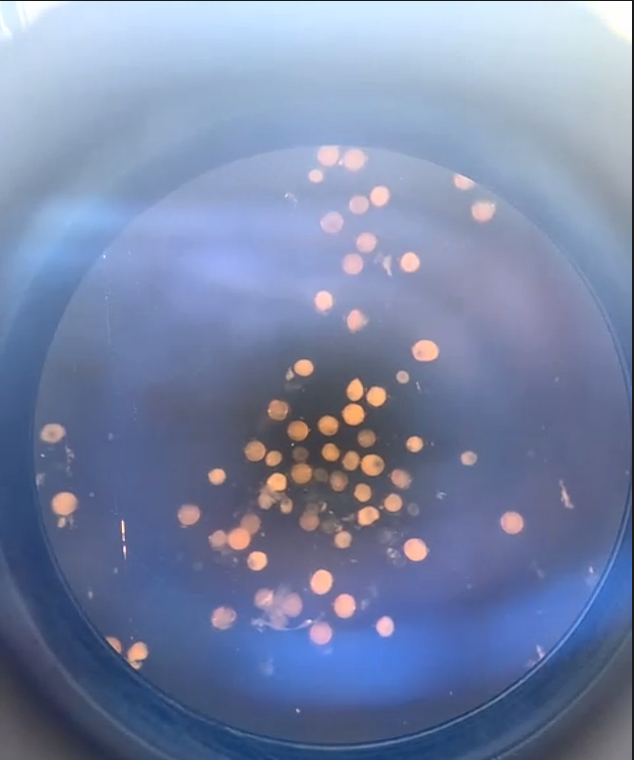
In some cases, the answer is pretty simple. Those who read our blog on Day 13, might remember the ascidian zygotes Dr. Billie Swalla fertilized in vitro.

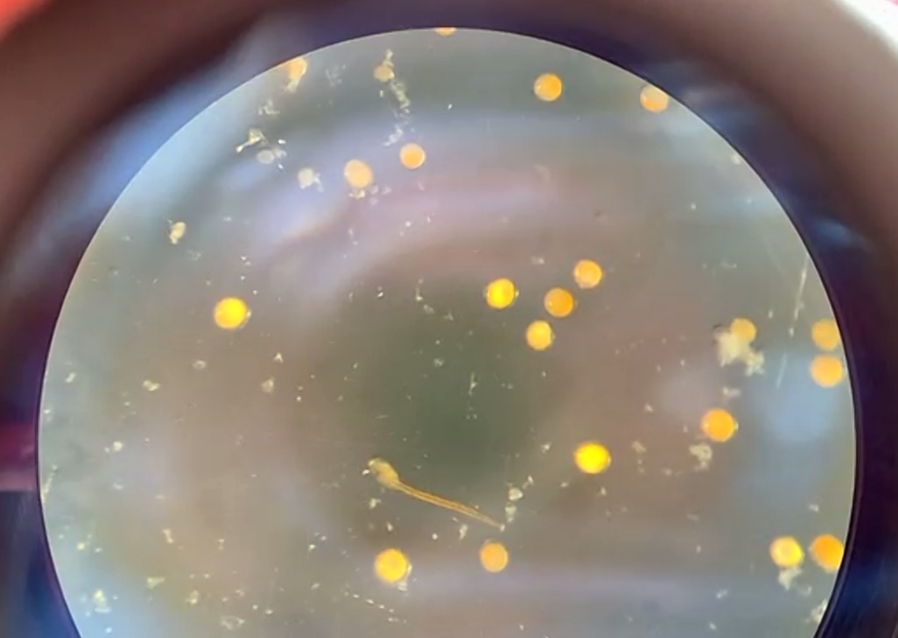
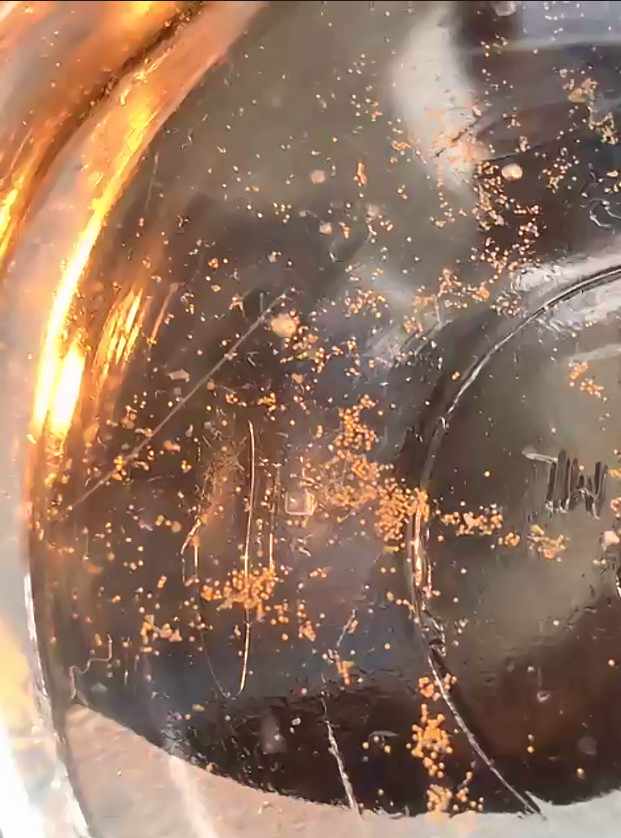
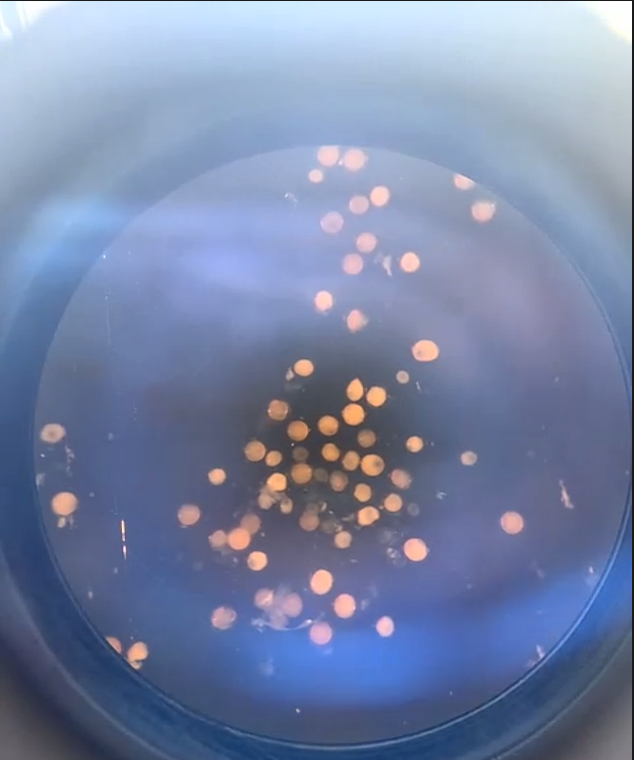
In over just two days, the unassuming clumps of cells have taken shape, forming tiny ascidian larvae (also known as ascidian tadpoles due to their resemblance to… tadpoles). 

The Marvelous Daniel Pauly

However, while tracking the growth of ascidians might come down to basic biology, following our own path, things can get confusing.

Today we were visited by Dr. Daniel Pauly, an influential fisheries scientist at the top of his field. As we listened to his stories and ideas, we couldn’t help but wonder how we came to be here; learning from such a knowledgeable person, while seated in the comfort of our own homes. 

Dr. Pauly shared with us the most concise version of his journey he could muster, before opening up to our questions. He emphasized the importance of involvement and even expressed his willingness to speak with us next week about his recent research.

We are so grateful that Dr. Pauly was willing to speak with us today. It almost goes without saying that we are brimming with excitement to hear what he has to share next week.

Projects Continued…

As the third week of this program draws to an end, we’re inching closer to the grand conclusion of our individual projects. 

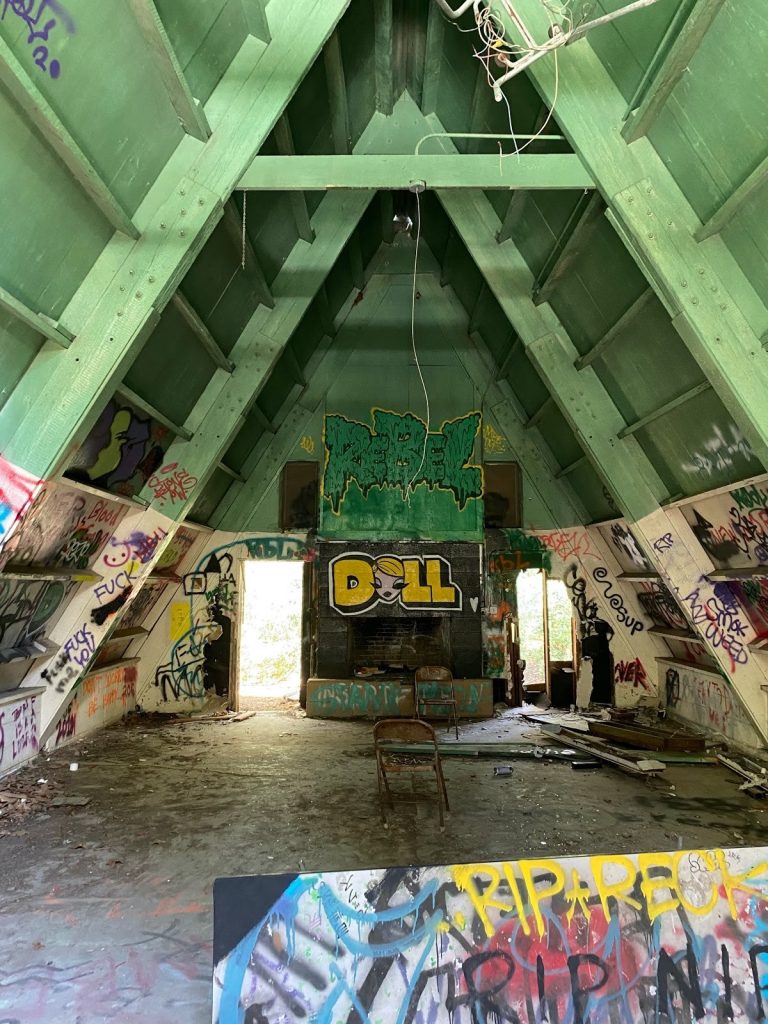
While Naomi spent the past week counting anemones, Ashley logged hours reviewing footage of the behaviors of marine mammals. With climate change in mind, Jesse considered the significance of weeds and oxygen. On the muckier side of things, Colette trudged through the mud at Chatfield Reservoir to collect her data. Using his backyard inhabitants as study subjects, Anders explored the behavior of pill bugs while Julia has devoted her time to documenting the reclamation of nature. In her last day of data collection, Julia ventured to an abandoned Boy Scout Camp to gather the remainder of her data. 

Who knew collecting data could be so spooky?

It’s super exciting to watch all this effort materialize, our ideas are finally coming to life!

We are so happy to be where we are today, surrounded by like-minded people, and learning from incredible teachers. 

We simply wouldn’t be where we are right now without the guidance of Derek and Kay, the knowledge of Tom, and the support of Caroline. We couldn’t be more thankful for the incredible experience we’ve had with Salish.


Day 14: Future and Framework

By Naomi, Ashley, and Jesse

Alone but Together

If we were to sum up today in one word it would be productive! We spent our 8 hours following a detailed schedule; something we haven’t done since the beginning of the program. There was work to be done!

From monitoring dolphins to designing t-shirts, everyone had something to do. Even while we worked on our projects individually, we were all connected through our usual Zoom room (a.k.a our second home). Through the main room, breakout rooms, and chats, our unity kept us motivated!

Engaging with the Public – Always Advancing Awareness

Today, Tom met with us in response to our email pitch for our new podcast-art engagement project. The new tab was a go! We all searched up the Salish Sea Sciences website as fast as possible to view the new update. The new outreach tab will take visitors to a webpage on which they can view informative blogs, podcasts, and artwork. We can’t wait to upload even more work. Stay tuned for more factual figures!


Final Version of Comic by Colette Bennett

Ever since Derek received the exciting news that Dr. Daniel Pauly, a celebrity in the world of fishery studies, would be joining us for a Zoom discussion tomorrow, we have been inspired. Dreaming big, we’ve brainstormed other famous figures to invite to our Zoom meetings. If Dr. Daniel Pauly will come and talk to us, who’s to say Sylvia Earle – a scuba diving star – won’t! 

With high hopes, we have emailed other inspirational individuals such as Al Gore, Angela Sun, Hank & John Green, and Leonardo DiCaprio. We eagerly await their responses! Even if one of our idols is able to join us, it will be the opportunity of a lifetime.

Engaging with the Private – Investigating Individual Ideas

Focusing more on our personal projects, we each took 15 minutes with Kay & Derek to discuss logistics and potential ideas that would spur our experiments. After researching and collecting data, we all had our share of tedious work. Despite the tasks, the outcomes were truly rewarding as we all made great headway (whether it was starting to analyze data or designing a pillbug container).

Naomi explores the tide pools at Cabrillo Beach.

Ander’s is conducting roly-poly studies.

Though we may all be conducting our research separately, there still remains what could possibly be the most important aspect of this program: the t-shirt. Throughout the program, some of the best artists of the group have been submitting t-shirt designs. Today was the day to decide which design we would use! Once the shirts arrive, Derek will screen-print the design onto the garment along with the names of the students in the program and the Salish Sea Sciences logo.

While it’s possible that we may never be in the physical company of one another, (which we hope isn’t true) these shirts will remind us of the ties (and knots) that we made in this program.

As the program end date starts to creep up on us, we have discussed ways to keep in touch with each other after this amazing experience ends. We agreed to update each other on our future endeavors and to never be afraid to reach out for support.

Time for our daily cheer!

Day 13: Life… and Death

By Anders, Colette, and Julia

The creation of life is certainly an interesting process…

While Mary Shelly’s Frankenstein presents a shocking inception, (pun intended) Dr. Billie Swalla showed us today that things are often far simpler. With some elbow grease and a pair of tweezers, Dr. Swalla set out to create some ascidian zygotes. After harvesting a few sacrificial Sea Squirts, Dr. Swalla then surgically removed both male and female gametes from the adult ascidians.


Dr. Swalla showed off her stylish nails as she gathered some Ascidian sperm and egg cells.

We later had the excellent opportunity to see these rapidly growing ascidians up close using one of the marine lab’s microscopes.

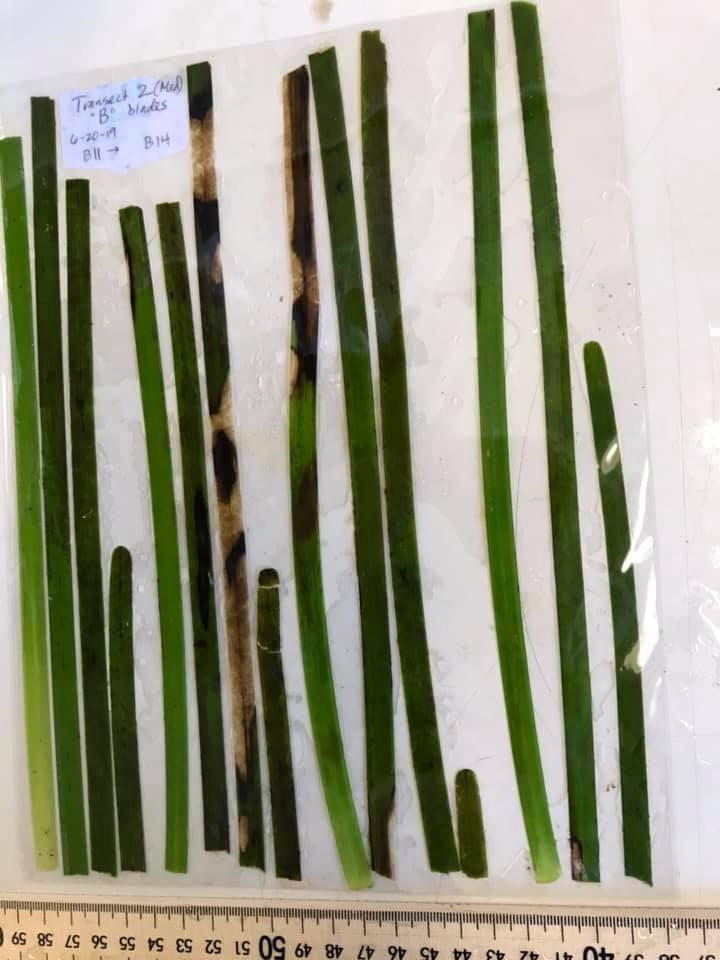
As easy as it may be to create life, Morgan Eisenlord’s work with eelgrass wasting disease shows how life can also be taken away just as swiftly. Today, we devoted much of our time to helping Morgan with her data analysis. By crowdsourcing some work to us, we’ve been able to lighten the load. As they say, “teamwork makes the dream work”!

Eelgrass wasting disease leaves the infected individuals darkened and scarred with lesions.

Eelgrass wasting disease has wreaked havoc on eelgrass beds worldwide. Scientists like Morgan are working diligently to help this species and document the effects of the eelgrass plague. 

Unlike the disappointing outlook for the eelgrass, this afternoon brought us plenty of excitement. Yesterday, Derek went out on a limb and contacted Daniel Pauly, a world leader in fisheries science and conservation, to ask if he’d be interested in speaking with us this week. To everyone’s astonishment, Dr. Pauly responded… and he loved the opportunity to share! At that moment, more than a few jaws dropped. Or in Derek’s case, his jaw practically fell off.

With project deadlines growing ever closer, Derek and Kay showcased a handful of previous projects to get our gears turning. By discussing past posters, we’ve gained a better understanding of scientific media.

We quickly recognized that, regardless of how much we have to say, fitting everything on a small poster is simply not realistic. Nevertheless, excluding pieces of our projects seems unimaginable. But, just like the conclusion of this blog, the end is ultimately inevitable. 

Day 12: Researchers and Repetition

By Naomi, Ashley, and Jesse

Researchers helping researchers from afar

When you think about the people affected by Covid-19, patients and essential workers immediately come to mind. But the underlying effects of the coronavirus branch much farther than the doctor’s office. As far as the Salish Seas. 

The Salish Seas and other marine science data collection hubs around the world are inaccessible to many researchers this summer due to the effects of Covid-19. Scientists are unable to visit their typical research areas leading to data gaps, unproductive summers, and incomplete research projects with years worth of data. 

However, the Salish Sea Sciences team was able to help out one of these scientists today; specifically, we had the chance to go out and collect earwigs for Dr. Vikram Iyengar. 

Earwig Encounters 

Dr. Iyengar studies sexual selection and dimorphism in maritime earwigs (Anisolabis maritima). (Dimorphism is when opposite sexes have physical differences other than their sexual organs). This entomologist is one of the many scientists who has volunteered their time to speak with our cohort about their work. These scientists are truly interested in what we are doing and we couldn’t be more grateful.

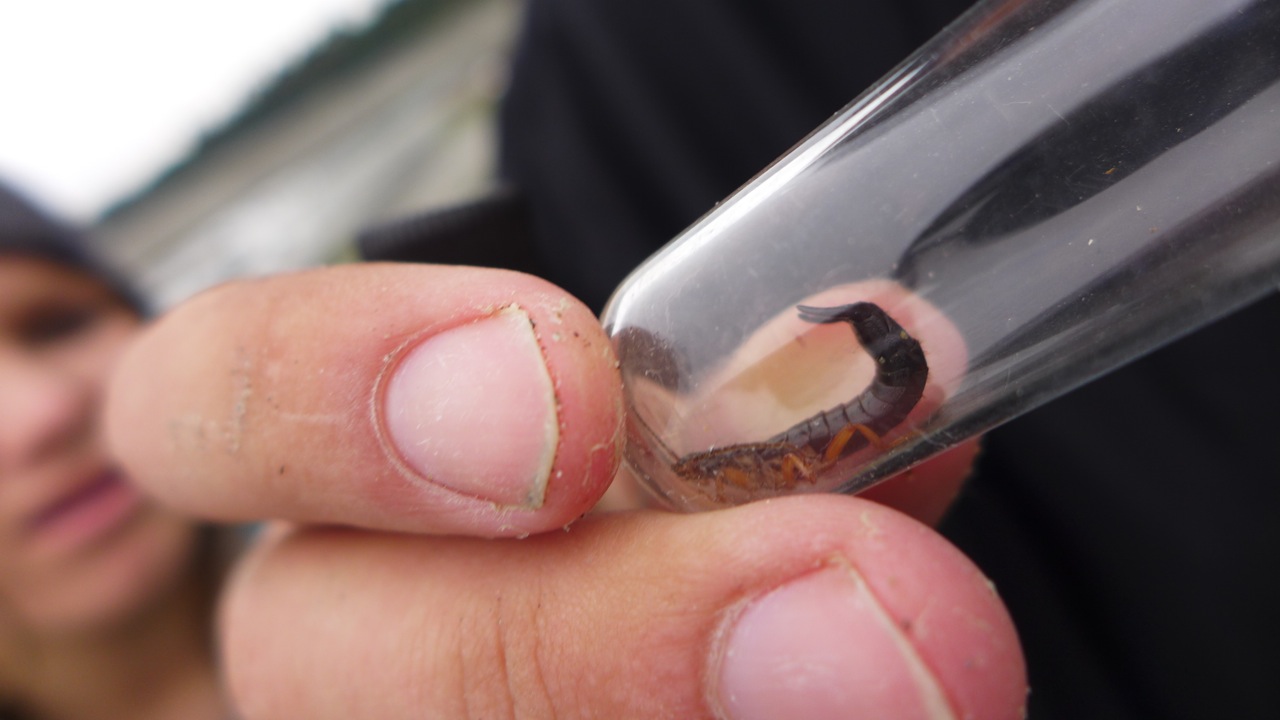
In an attempt to repay his kindness, we watched from afar as the team collected maritime earwigs for Dr. Iyengar’s labs. They turned over driftwood and scooped the bugs into a tub as fast as they could. They then packed the earwigs in little vials and made sure they were ready for their flight to Philadelphia. Have a safe trip little arthropods!!


We watched as the team collected earwigs and placed them in tubes.

As we watched, we were able to learn even more about the Earwigs habitat. Tim Dwyer – a high school teacher who has an Antarctic giant sea spider collection, ancient pottery surveying experience, and who has explored the deep sea using ROVs – explained why the earwigs were being collected and demonstrated how to identify the earwigs’ sex. As we learned yesterday during Dr. Iyengar’s lecture, the male earwigs have asymmetrically curved pincers while the females have straighter ones.


The very first earwigs to be collected!

They even found an albino earwig! We wonder how rare these are.

Tedious tasks 

Last week we had the chance to speak with Morgan Eisenlord about her research on eelgrass wasting disease. Morgan introduced us to the methods required to measure the infected lesions of the grass blades. Today we were able to give back by helping her measure the area of different eelgrass blades. This process was new to almost all of us, and as we downloaded ImageJ and began to measure, we realized why Morgan had left the task for us! The tedious task had us fried! 

Despite this mental setback, we powered through, and the Salish team made noticeable progress on the data collection. We will continue to analyze Morgan’s data as the program goes on.

Podcasts and Planning

Since Colette was unable to record the Mako’s podcast yesterday due to data collection for her individual project, Derek and Kay split us up into 2 different breakout rooms. The Makos worked on the recording, while the Bottlenose Dolphins planned for future outreach projects.

The Bottlenose Dolphins researched and found different topics and media to spread awareness of environmental issues. Our ultimate goal, create a page on the Salish Sea Sciences website with podcasts and artwork on environmental conservation. Stay tuned for future developments!

Here is a sneak peek of a comic strip for our most recent podcast episode.

In the meantime, please enjoy this podcast from the Bottlenose Dolphins on A Decade After Deepwater, the documentary we had the fortune of seeing before it was released! Click on the link or search for A Decade After Deepwater Review on Spotify.

Day 11: Is it Gross? Or is it Science?

By Anders, Colette, and Julia

Earwigs … 

If you’re like us, you might hear the word earwig and feel a chill rise up your spine. Earwigs are generally despised and often regarded as pests. However, to the very few, the thought of Earwigs prompts nothing more than excitement.

Introducing… Dr. Vikram Iyengar!

Maritime Earwigs with Vik Iyengar | Salish Sea Sciences Blog
A Maritime Earwig, ready for Dr. Iyengar’s studies


Dr. Iyengar is a busy biology professor at Villanova University, having devoted the past few years to studying Maritime Earwigs (Anisolabis maritima) and all their many secrets. 

Today, he taught us about his adventures researching the sexual dimorphism present in these insects. Through his work, he’s analyzed the sexual preferences and aggression of these unexpected creatures. During mating season, sexual tensions between males and females turn especially strange; occasionally entailing jousts with forceps and often triggering wholesome mother-offspring cannibalism. Watch your fingers

Mysterious Remains

Luckily we were all able to spend some individual time today with Derek and Kay to discuss our research projects. While Julia hopes to explore abandoned buildings, Colette enjoys a muddy sludge through Chatfield reservoir. We are all now finalizing our research questions and should soon be collecting data. 

Colette, already with one foot in the door of her research project, had to leave for a couple of hours to collect data at the reservoir she’s been working at. While her data collection may not have been as fruitful as she expected, she picked up something pretty interesting on the way.


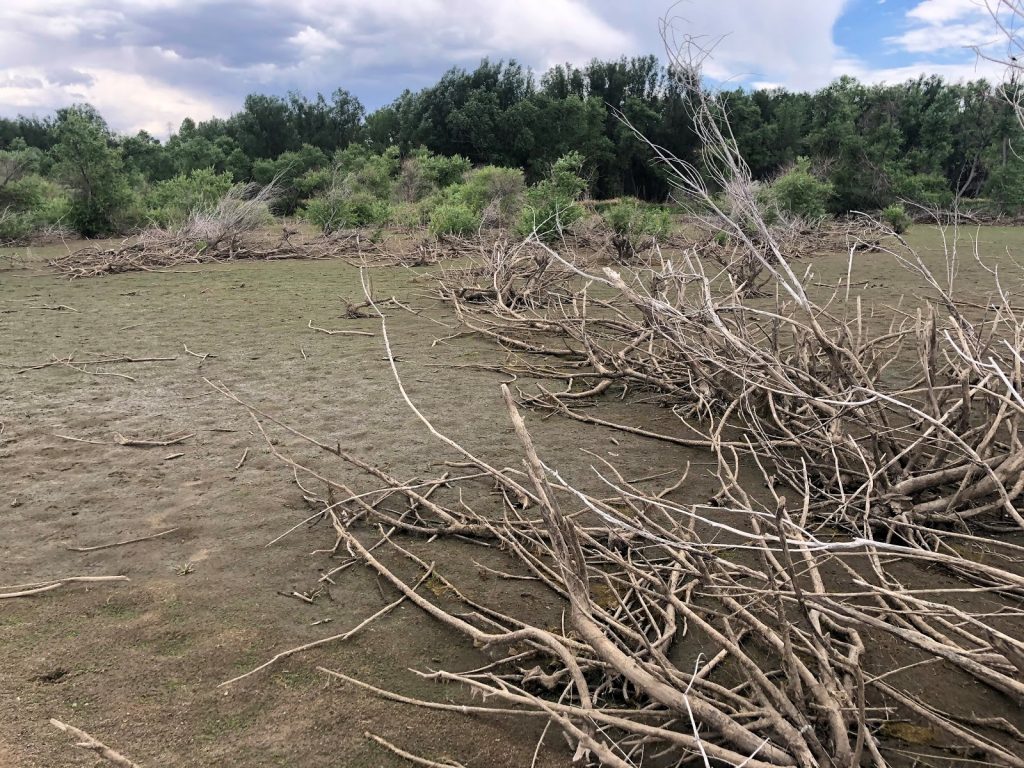
Chatfield Reservoir in Littleton Colorado

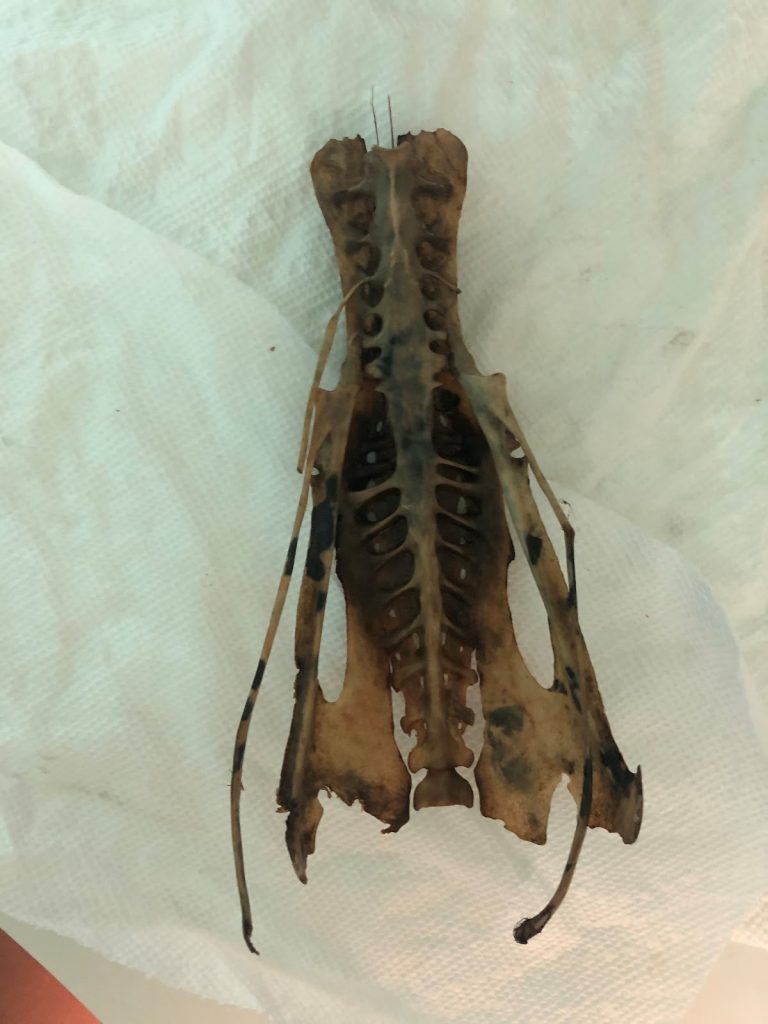
Back in the Zoom call, Colette presented what appeared to be some sort of skull. Everyone pondered at the bone through the screen. Educated guesses ranged from fish to deer. Nevertheless, our search results never matched the artifact…

(If you’d like to take a guess yourself, take a look at the photo below, or if you’d rather just skip to the answer feel free to scroll to the bottom)

This mysterious bone certainly perplexed us for a while…

Today was another jam-packed adventure. With individual projects now in full swing, we couldn’t be more excited. In the end, it seems as though a lot of awesome science originates from some pretty gross things. I suppose the answer is: both.

Turns out, the mysterious skull wasn’t a skull at all! Anders exclaimed that it must be a synsacrum—which according to dictionary.com, is “a dorsal ridge of bone in the pelvic region of birds”. Nevermind the skull, this was some breastplate of a bird. Though the question still remains who it belongs to.