By Anders, Colette, and Julia
Earwigs …
If you’re like us, you might hear the word earwig and feel a chill rise up your spine. Earwigs are generally despised and often regarded as pests. However, to the very few, the thought of Earwigs prompts nothing more than excitement.
Introducing… Dr. Vikram Iyengar!
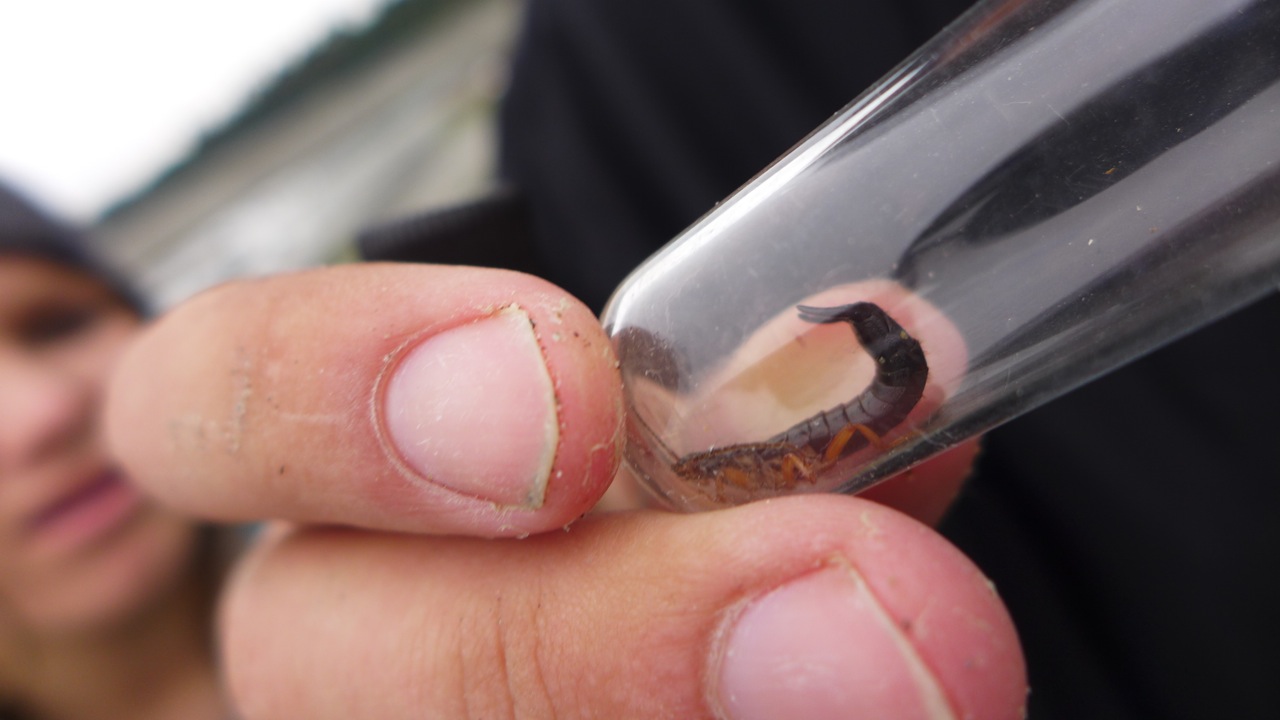
Dr. Iyengar is a busy biology professor at Villanova University, having devoted the past few years to studying Maritime Earwigs (Anisolabis maritima) and all their many secrets.
Today, he taught us about his adventures researching the sexual dimorphism present in these insects. Through his work, he’s analyzed the sexual preferences and aggression of these unexpected creatures. During mating season, sexual tensions between males and females turn especially strange; occasionally entailing jousts with forceps and often triggering wholesome mother-offspring cannibalism. Watch your fingers
Mysterious Remains
Luckily we were all able to spend some individual time today with Derek and Kay to discuss our research projects. While Julia hopes to explore abandoned buildings, Colette enjoys a muddy sludge through Chatfield reservoir. We are all now finalizing our research questions and should soon be collecting data.
Colette, already with one foot in the door of her research project, had to leave for a couple of hours to collect data at the reservoir she’s been working at. While her data collection may not have been as fruitful as she expected, she picked up something pretty interesting on the way.
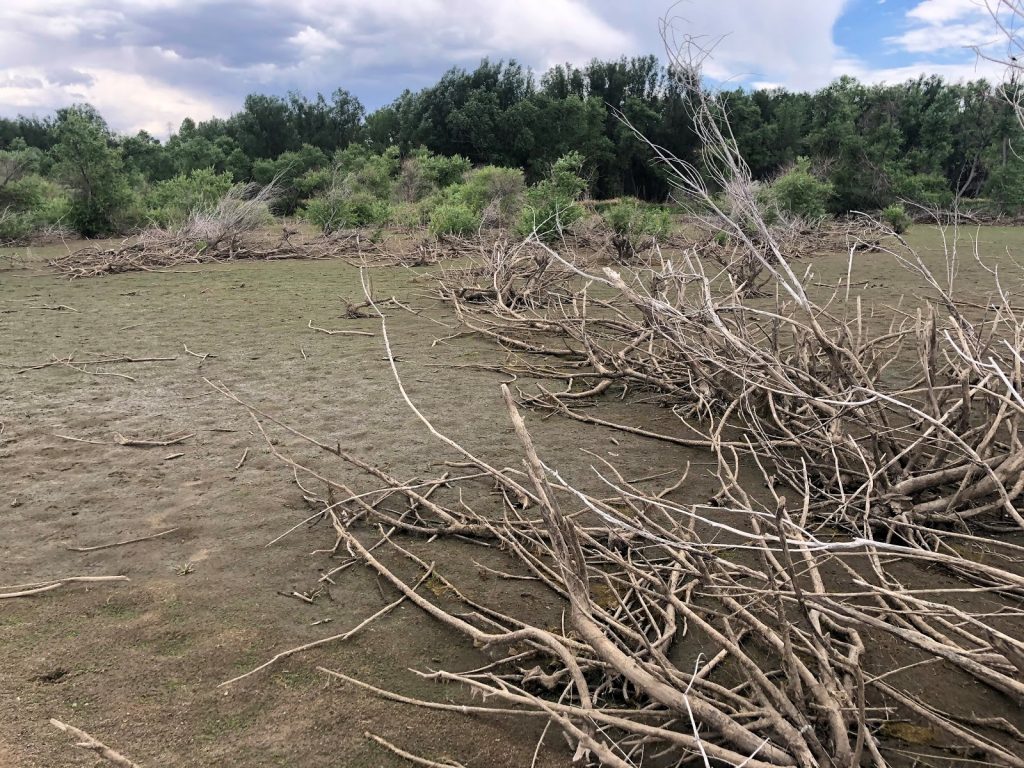
Chatfield Reservoir in Littleton Colorado
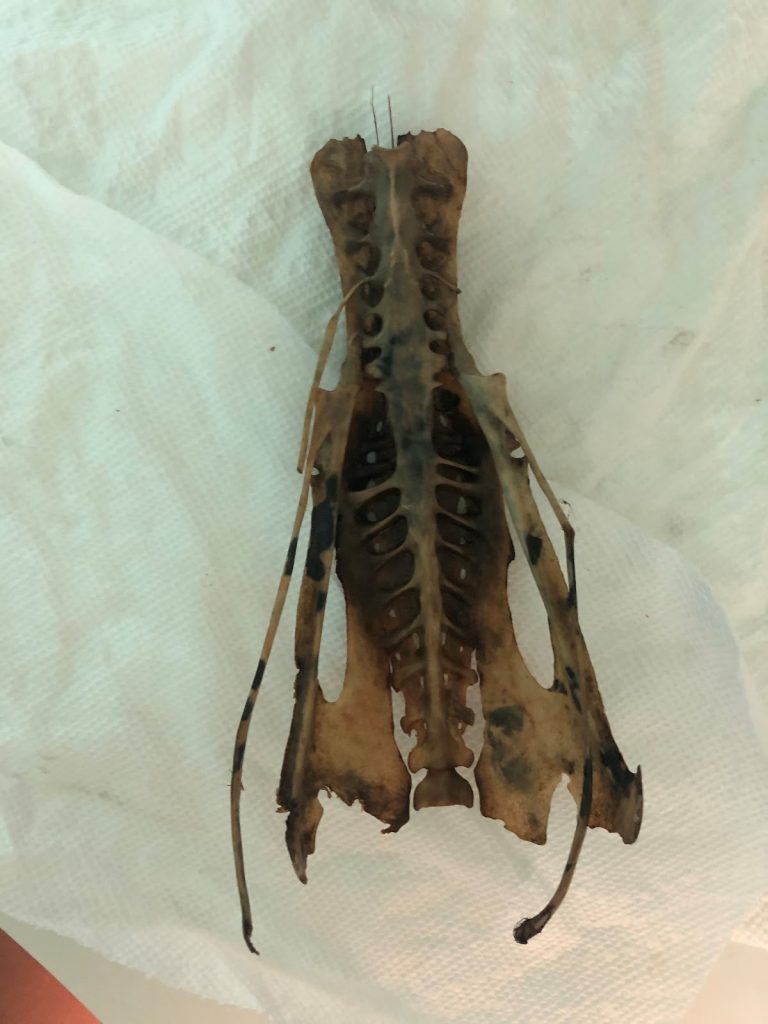
Back in the Zoom call, Colette presented what appeared to be some sort of skull. Everyone pondered at the bone through the screen. Educated guesses ranged from fish to deer. Nevertheless, our search results never matched the artifact…
(If you’d like to take a guess yourself, take a look at the photo below, or if you’d rather just skip to the answer feel free to scroll to the bottom)
Today was another jam-packed adventure. With individual projects now in full swing, we couldn’t be more excited. In the end, it seems as though a lot of awesome science originates from some pretty gross things. I suppose the answer is: both.
Turns out, the mysterious skull wasn’t a skull at all! Anders exclaimed that it must be a synsacrum—which according to dictionary.com, is “a dorsal ridge of bone in the pelvic region of birds”. Nevermind the skull, this was some breastplate of a bird. Though the question still remains who it belongs to.