Monday
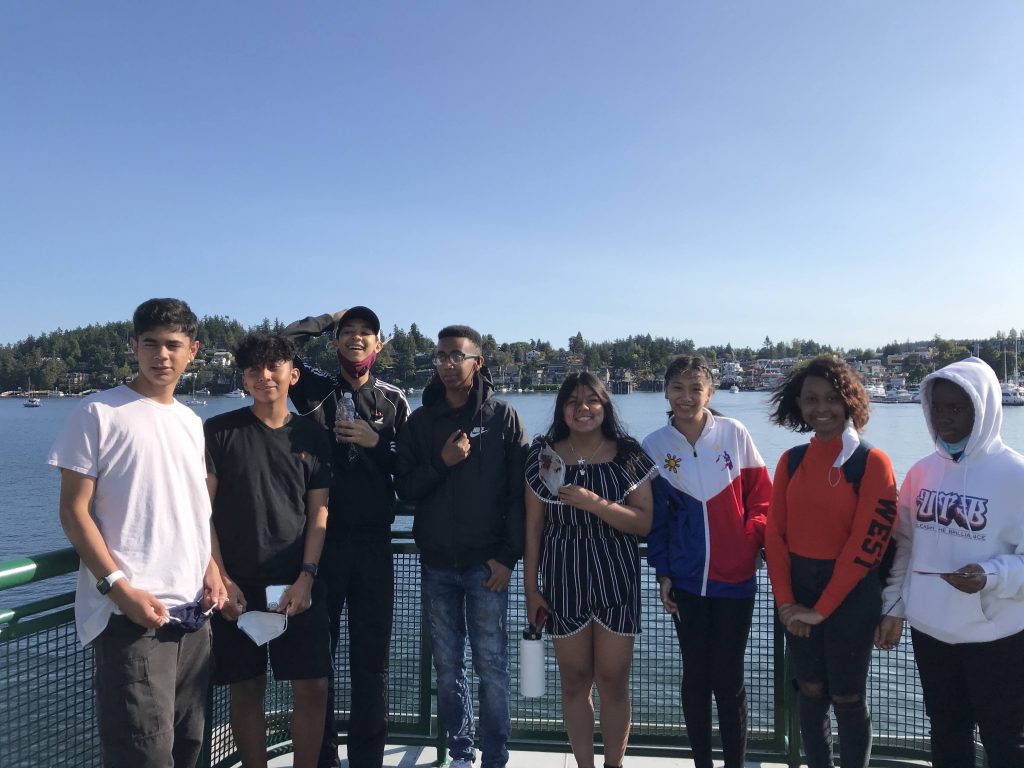
1) Youth from Unleash the Brilliance start off their trip by going on the ferry starting at Anacortes and ending up in Friday Harbor. It was many of the youth leaders’ first time on the ferry and one of the youth said it was a very scenic ride and an enjoyable leg of the journey. The image is of all eight of the youth before arriving at the Friday Harbor Port.
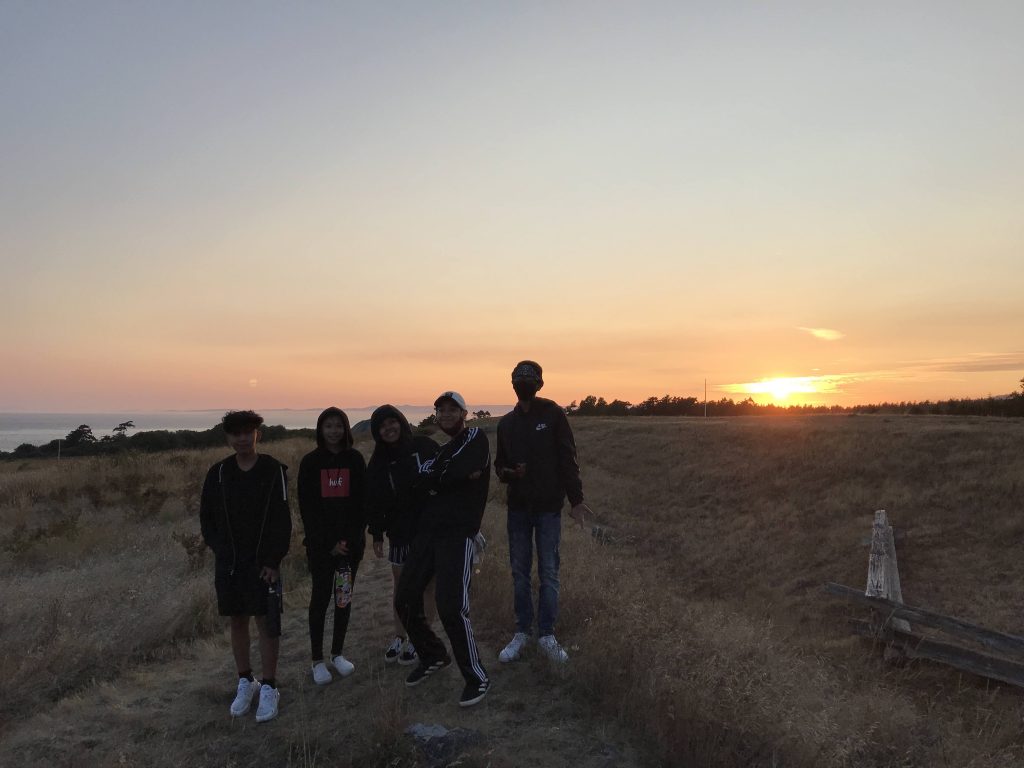
2) The group ended up at South Beach where they started to wind down for the evening after a long day of travel. They took a hike up the trail to enjoy a beautiful sunset and while they hiked, they realized that the island is home to various animals due to their encounter with deer and photographers aiming to capture a glimpse of foxes. It was definitely a relaxing view from the hilltop of South Beach.
Tuesday
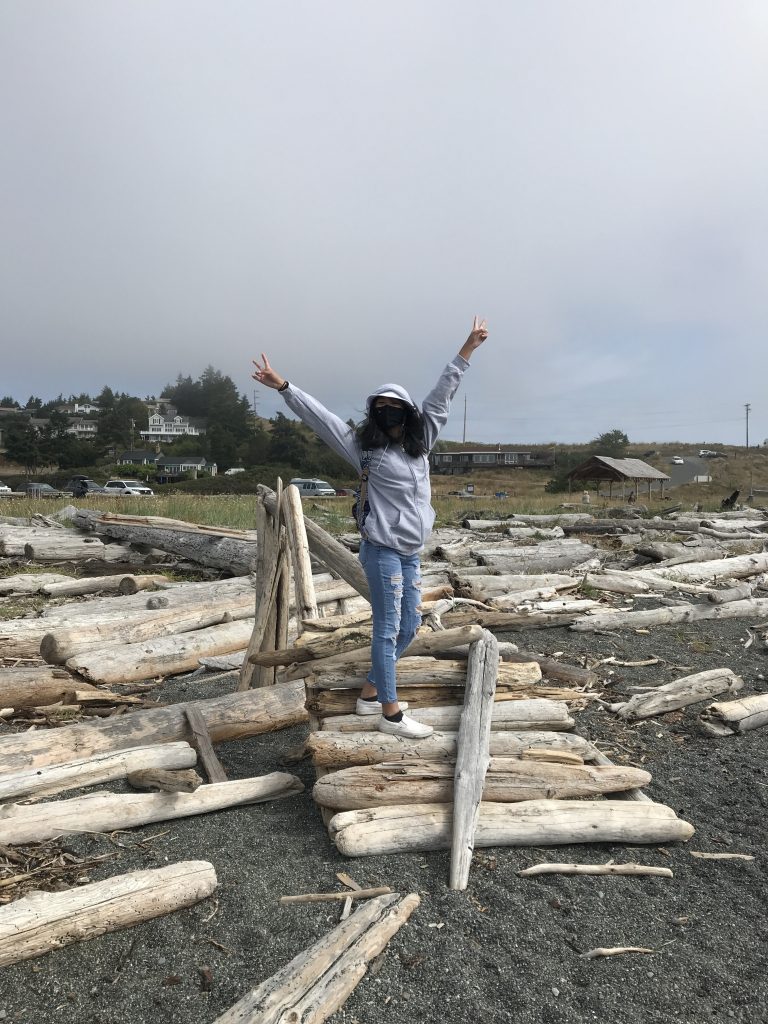
3) We all met up at Jackson’s Beach the following morning and learned about maps and charting. As we looked at the waterways, we were fascinated by the fact that the fresh water going out into the Salish Sea and through the Strait of Juan de Fuca into the Pacific Ocean had an effect on the speed and direction of the current. We enjoyed a breezy morning on the San Juan Islands while we picked up plastic found on the beach and observed wildlife.
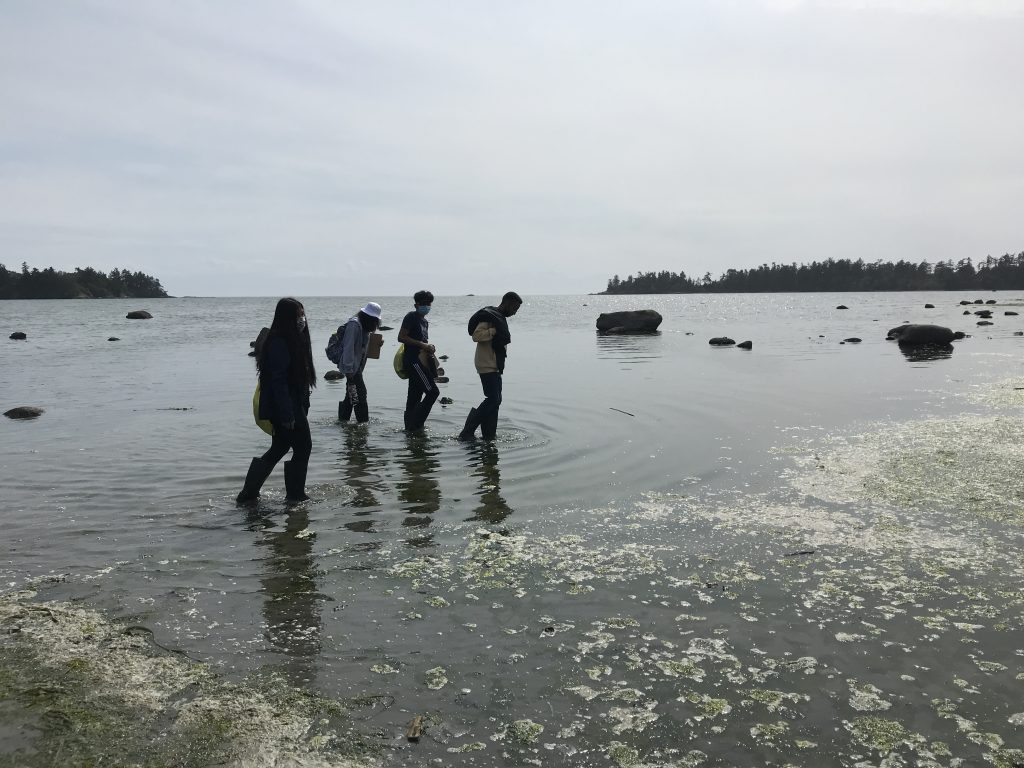
4) We met with Sharon Massey and Kari Koski, two naturalists and senior science educators who have a passion for the water quality on the island. We checked out a local creek with them and surveyed the physical characteristics of the creek. We then headed out to False Bay where the creek flows out into the Salish Sea. We enjoyed wading in the water with our rubber boots on but not very fond of the smell of the decaying algae.
Wednesday
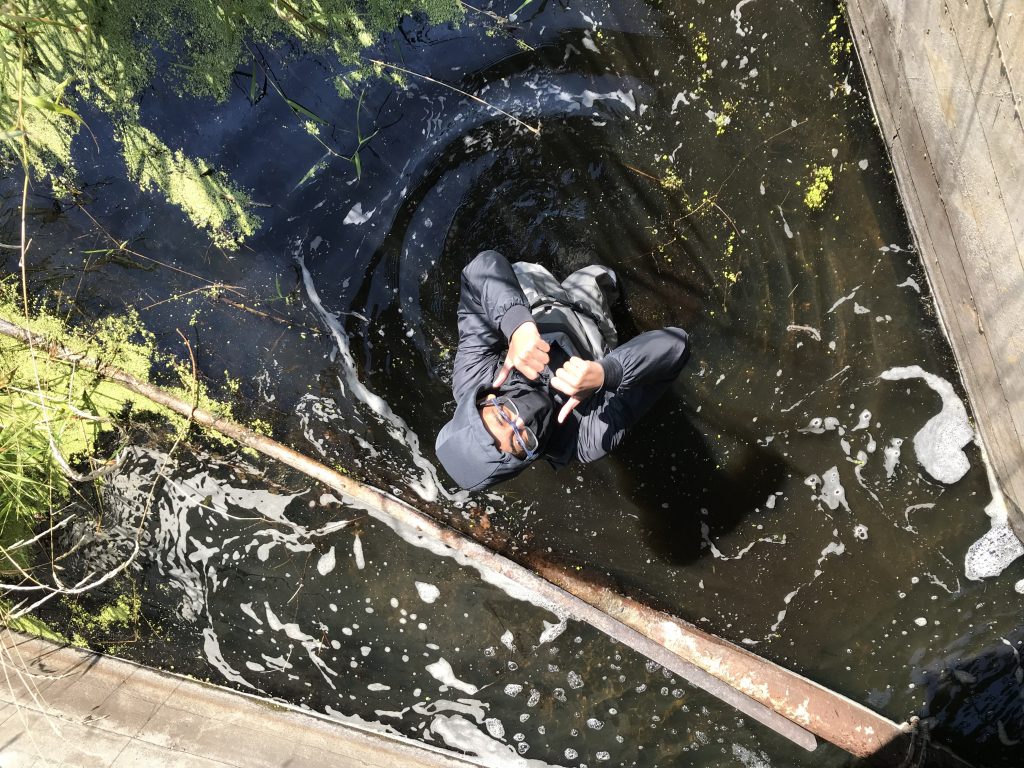
5) Waders are like overalls that go down over your feet and keep you dry while you’re in the water. We were all excited to get into our waders and get our hands dirty!
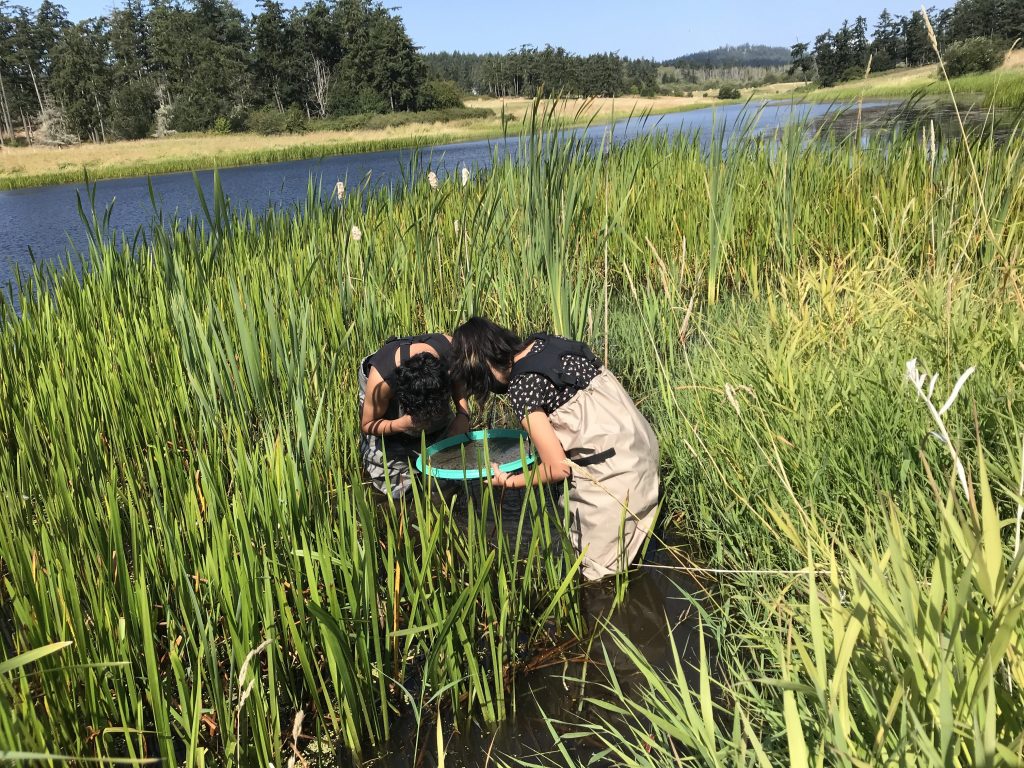
6) We quickly made our way into the water where we collected samples. We collected the substrate in the water and tried to pick up as many critters as we could find. These critters are also known as macroinvertebrates that live in these ecosystems.
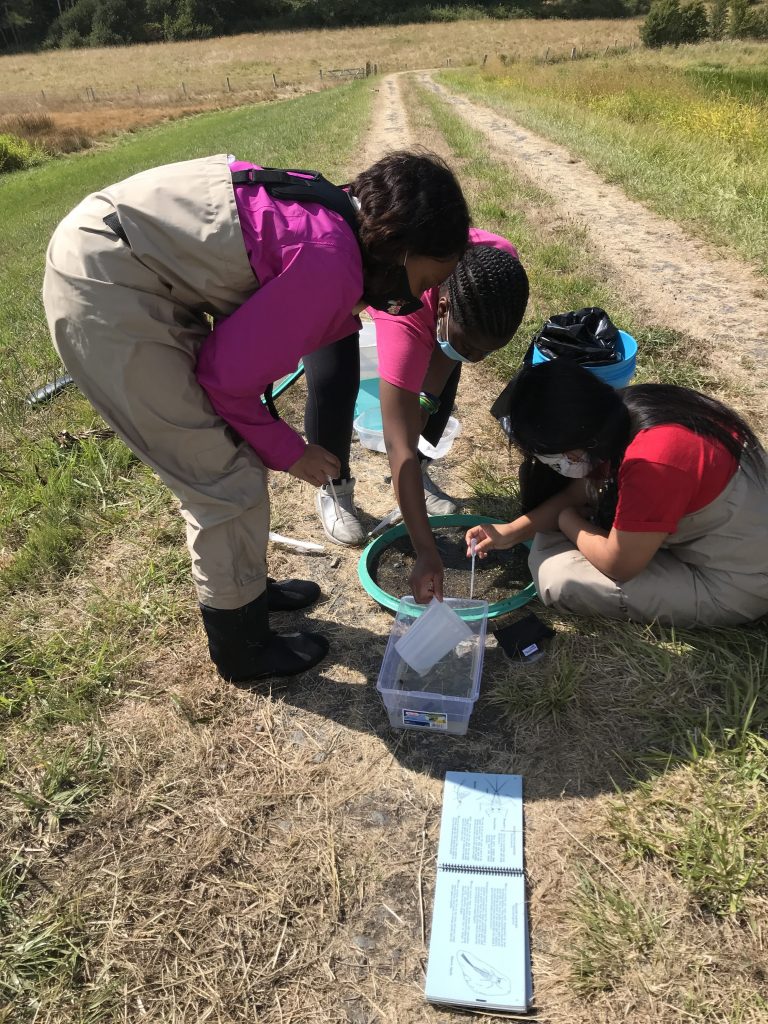
7) We thoroughly investigated our samples in the nets we caught them in and we used magnifying glasses to identify the different species in the pond. We found a number of macroinvertebrates along with spiders, mini snails, and a tadpole. We returned the samples to their natural habitat and then went off to lunch.
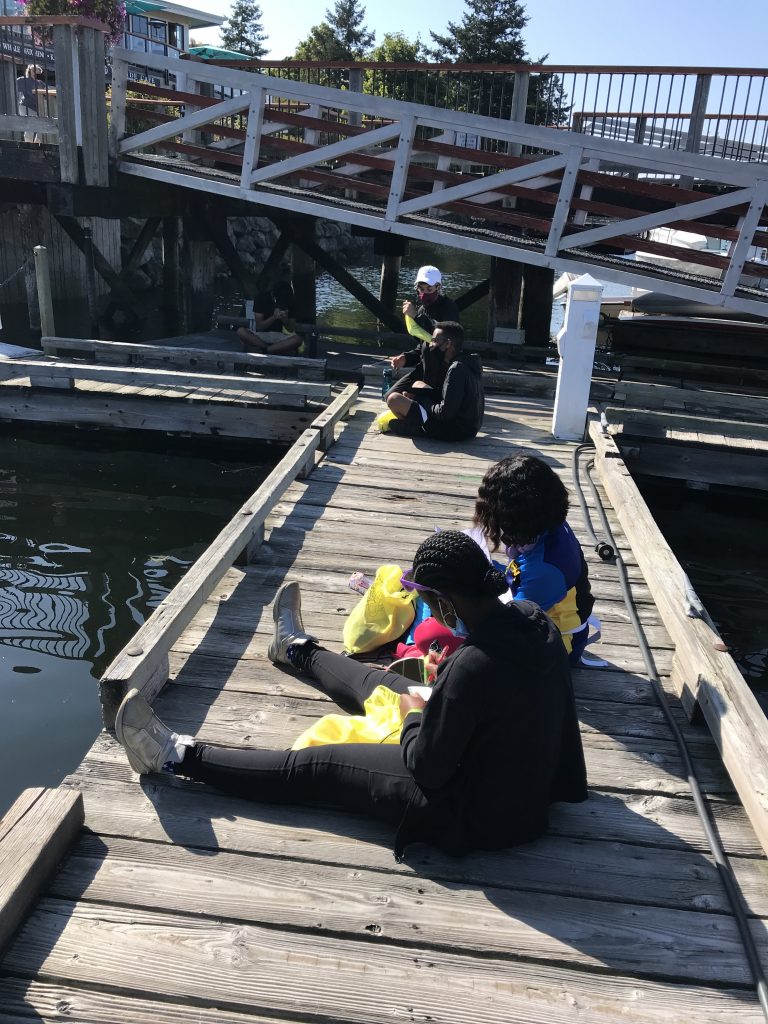
8) After lunch, we took a 45 minute walk down to the harbor where we looked at the shoreline armoring. We had learned about shoreline armoring from Dr. Megan Dethier, the Director of UW Friday Harbor Laboratories. Shoreline armoring is a wall made to protect the shoreline from eroding too quickly but it also has a negative effect on the beaches. It acts like a dam and holds in the sediment which causes beaches to wash away. On the dock, we were able to see two different shoreline armoring techniques which includes rocks and a concrete wall.