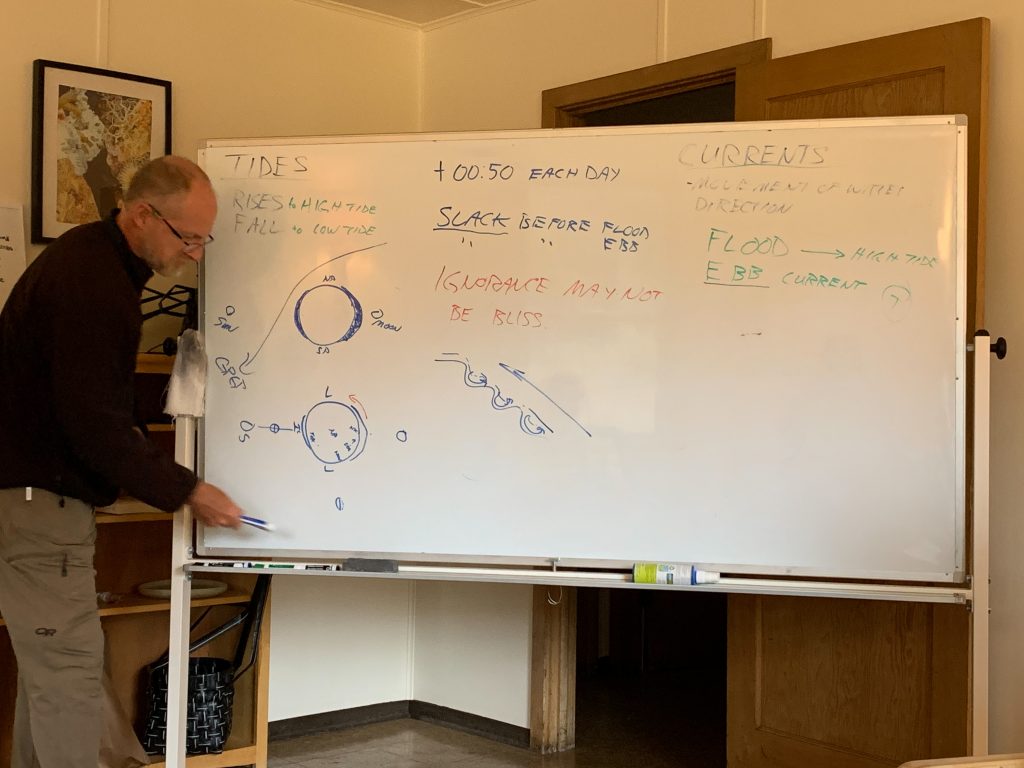
We started off our day with a lesson from Sockeye about tides and currents. We learned that they are effected by the moon. The moon’s cycle is 28 days and each day the highest tide time advances 50 minutes each day. We knew that the Earth does a full rotation in 24 hours but we learned wherever we are position wise, the gravitational pull from the moon will effects the tides. We learned that there are two types of currents, the flood and ebb current, the flood current effects high tide and the ebb current effects low tide.

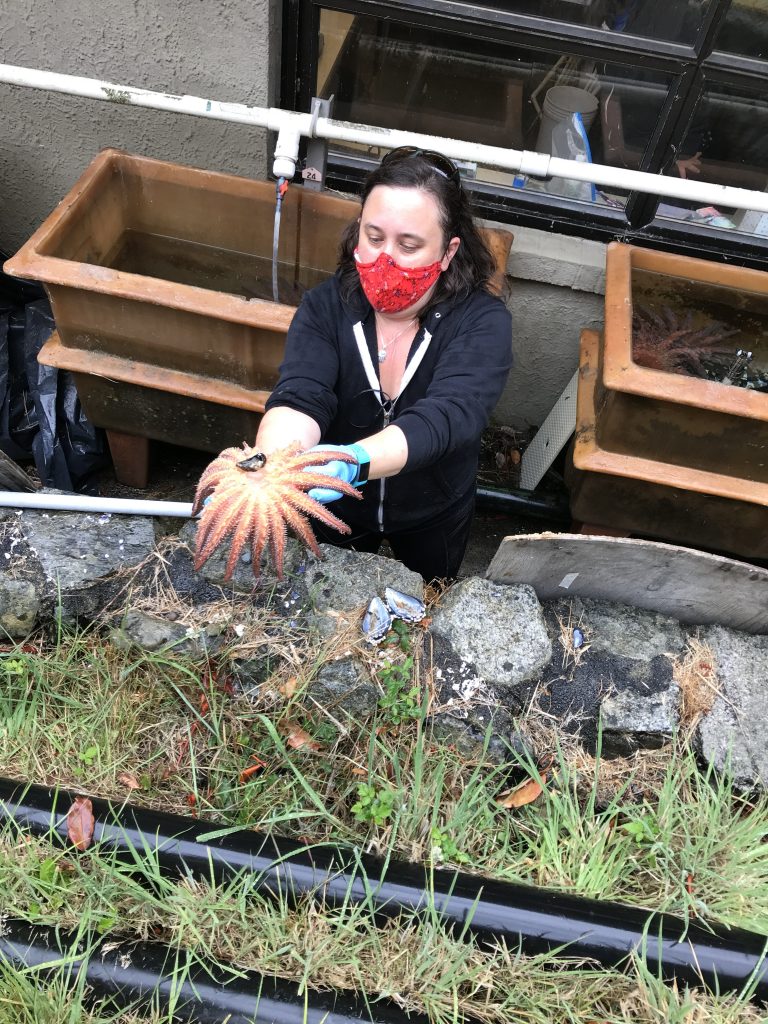
We talked to Pema about the Sunflower Seastar. We talked about their food diet and how they almost went extinct because of the Seastar wasting disease (it looked like the Seastar were melting and their legs looked twisted). We talked about how they reproduce and how they can determine whether they are male or female. We also learned that even though they do not look like a vicious predator they are actually dangerous because they can eat almost anything. We also found out that they have eyes on their legs.
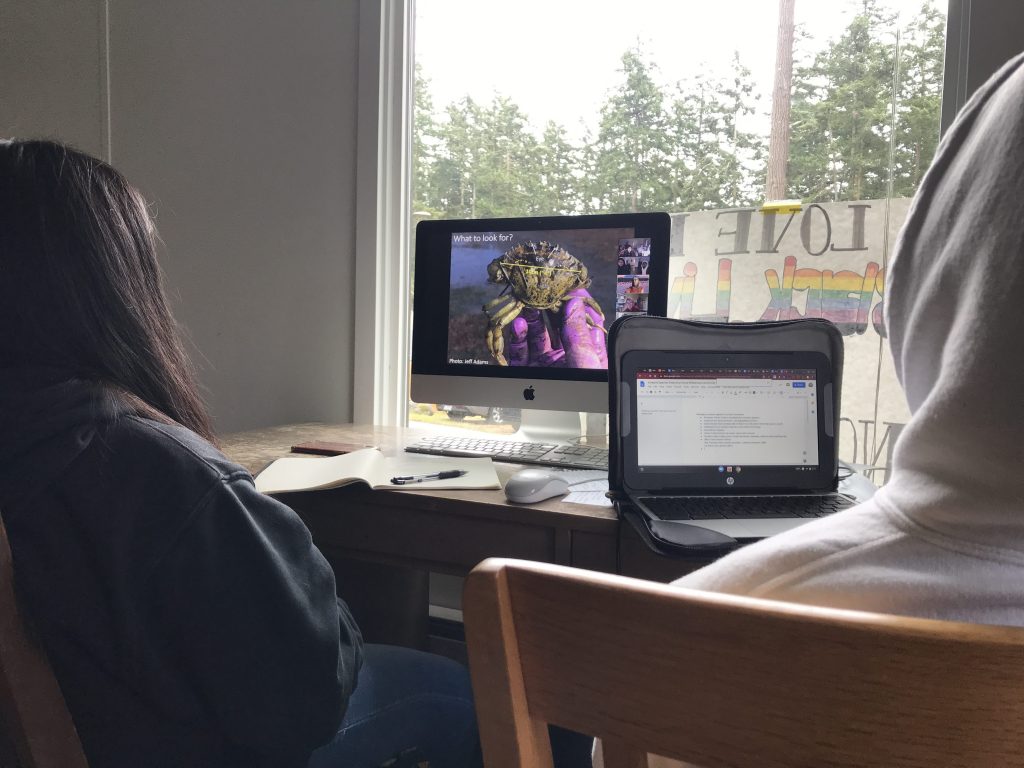
Shortly after seeing Seastars, we attended a zoom meeting with Alex Ramel. We filled him in on our latest activities and we talked to him about the research he asked us to do that had to do with youth getting more involved with political issues that we are passionate about. Shown above is a photo of the zoom we had with Tanja Williamson and Emily Grason who are involved with the effects of invasive European Green Crabs. They taught us about their diets, how damaging the species can be, and how fast they populate after being established.
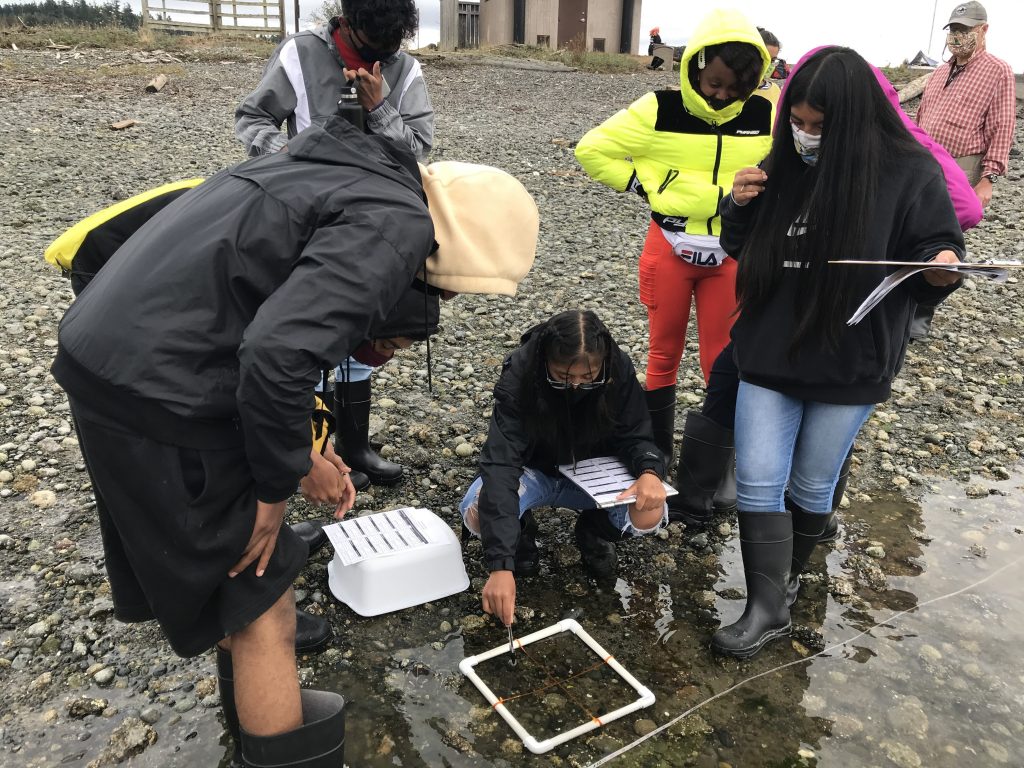
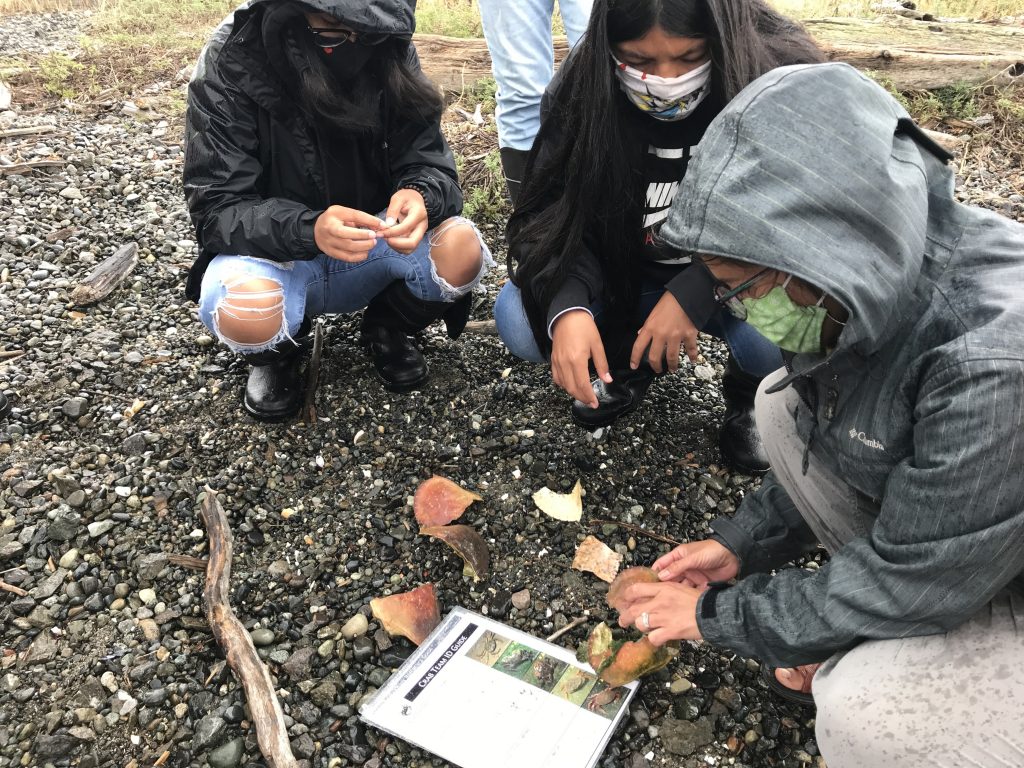
We went on a search for molted crab. After 7 minutes, we came back together and showed the group what molts we found and tried to identify them by their shell. We talked about how to identify the specie of crab by their spines and the size. The identification charts showed our native species as well as the invasive green crab. We also discussed how to determine if they’re either a male or female.
