Day 11 of our Salish Summer

Photo credit Flora Weeks

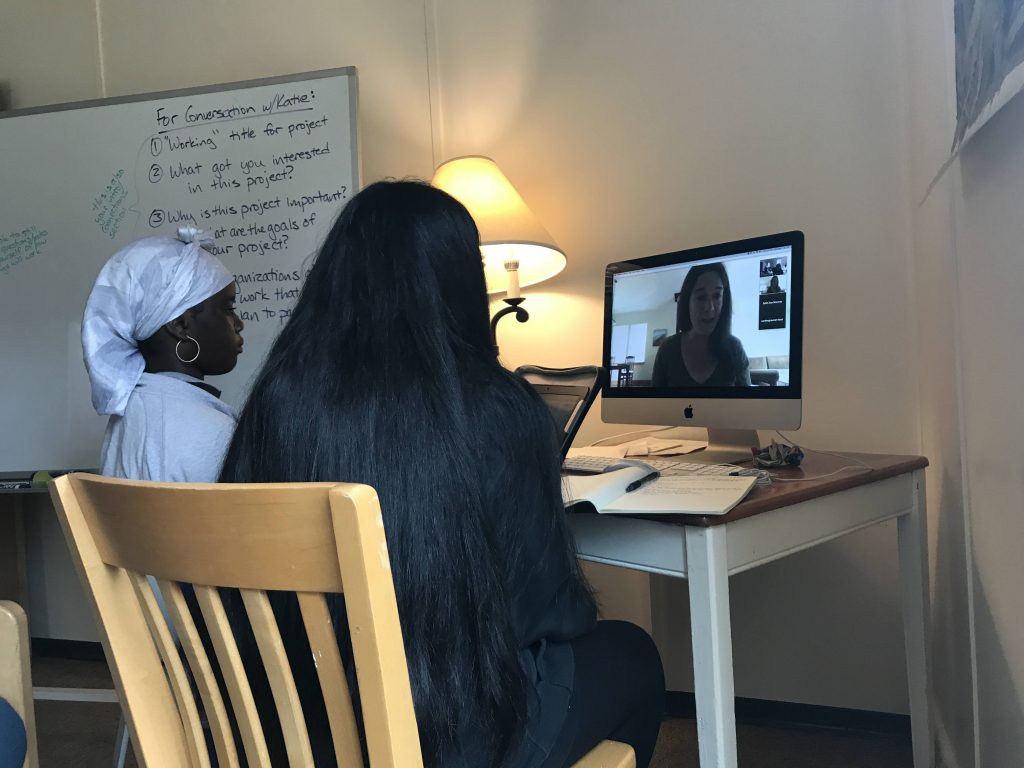
In the morning we shared our project ideas with Katie Fleming for feedback. We all got some really good advice that will help us further improve our ideas. Thank you Katie!
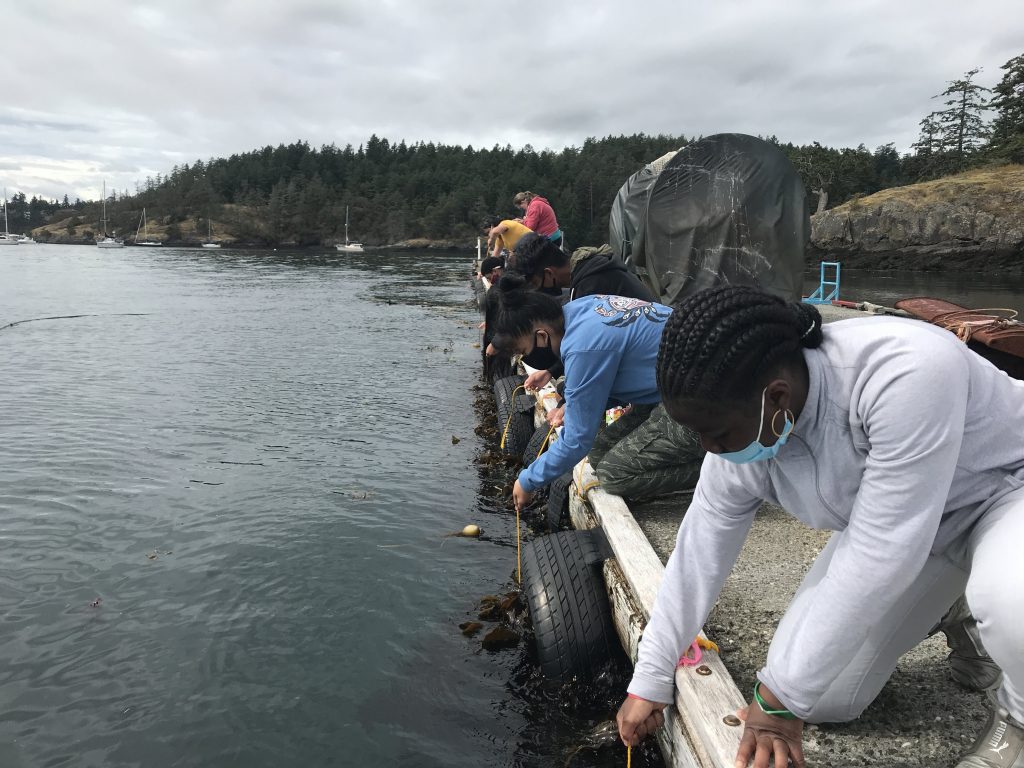
We then met with Kate Dobkowski at the docks to see her experiment on the competitive interaction between bull kelp and wire weed. We learned that kelp starts off as a microscopic critter then turns plant-like in it’s later stages of life.
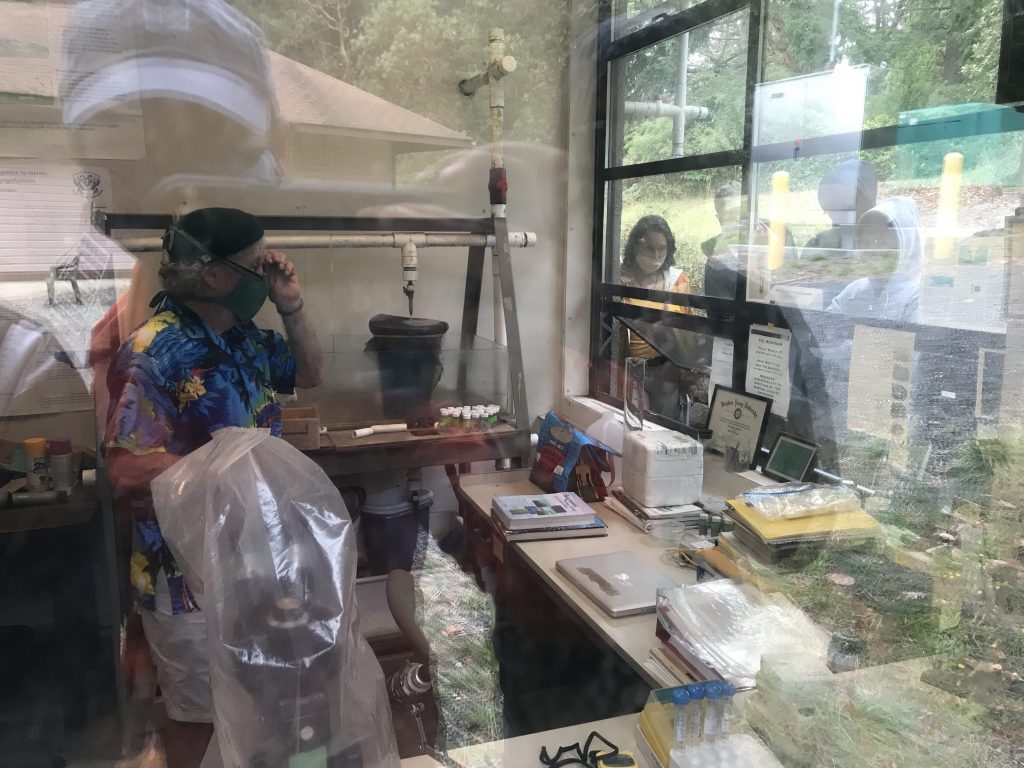
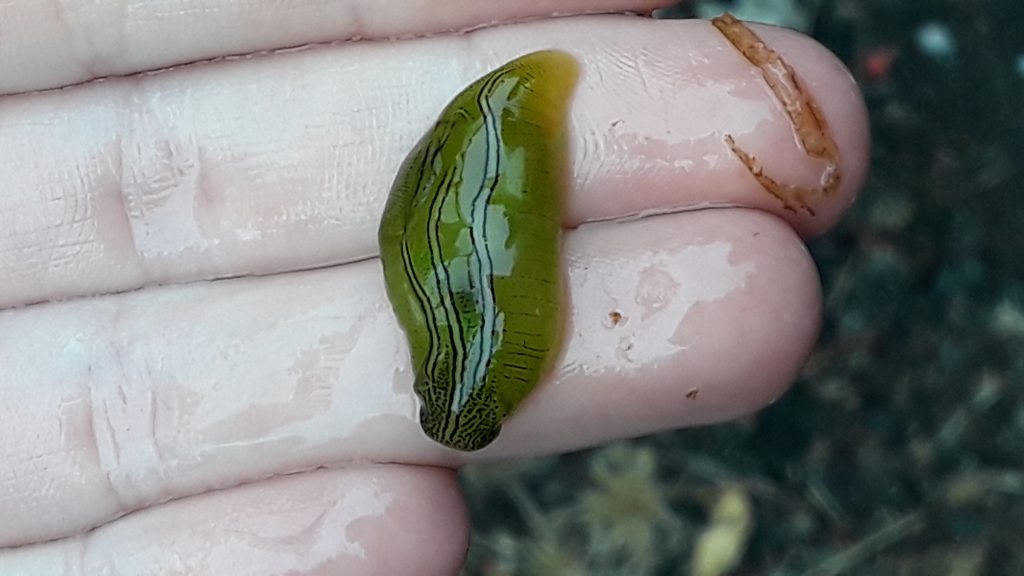
Photo credit Flora Weeks
Photo credit John Calogero

After that we talked with Sandy WyllieEcheverria about eelgrass and then told us a poem. Isabella Brown showed us eelgrass that they were raising which had aquatic slugs that ate algae growing on the eelgrass.
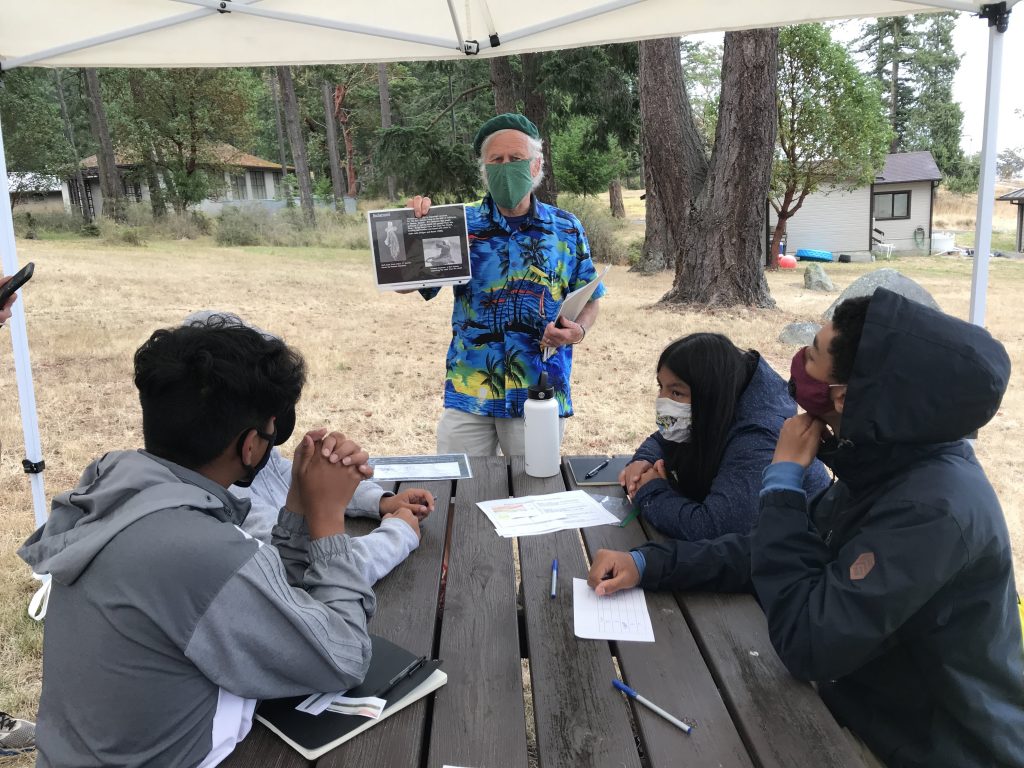
Photo credit Flora Weeks

We took cover from the rain and talked about the uses of sea grass indigenous culture such as dolls, hats, insulate, food. He also gave us some helpful career advice and inspiring philosophy as a finisher to our meetup.
8th Day of our Salish Summer – A New Week Begins

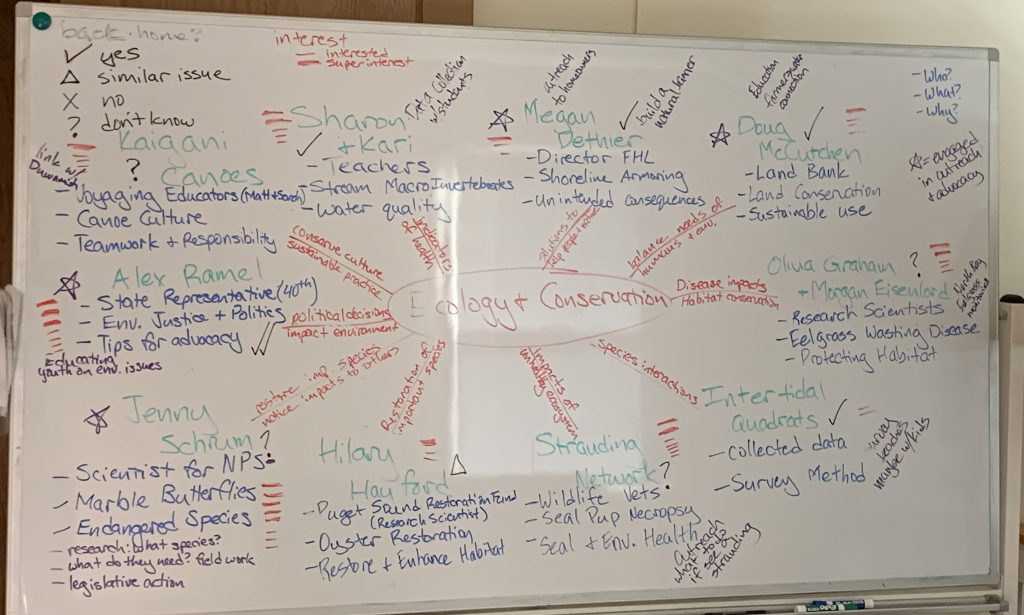
To start off the week, we made a web chart to connect everything that we learned from everyone we had met to ecology and conservation. Later on we came up with some project ideas based around each topic.

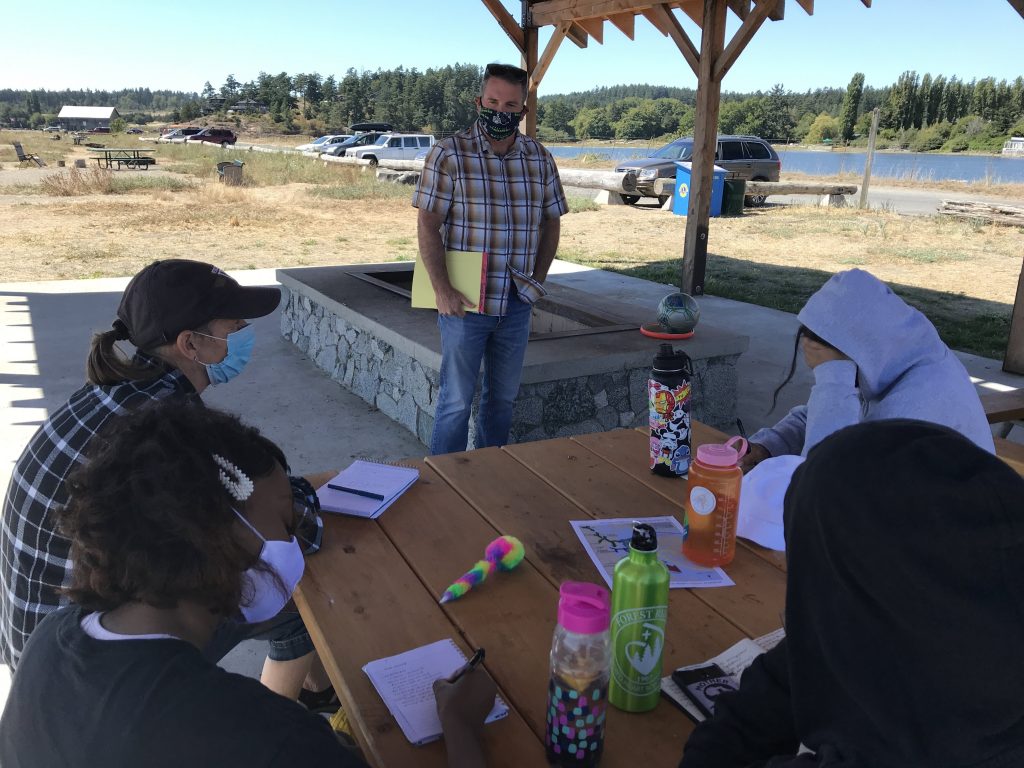
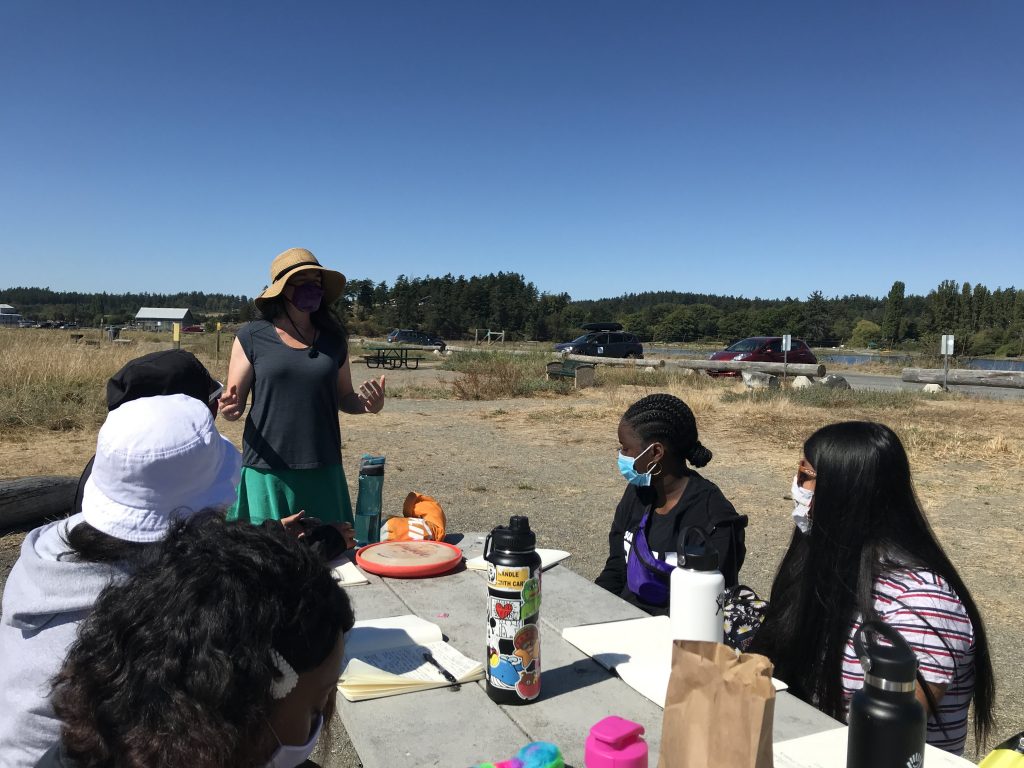
Katie Fleming (The Community Engagement Director for the Friends of the Salish Sea) met with us to and talked about who she is and what she does. We also discussed multiple issues revolving climate change.

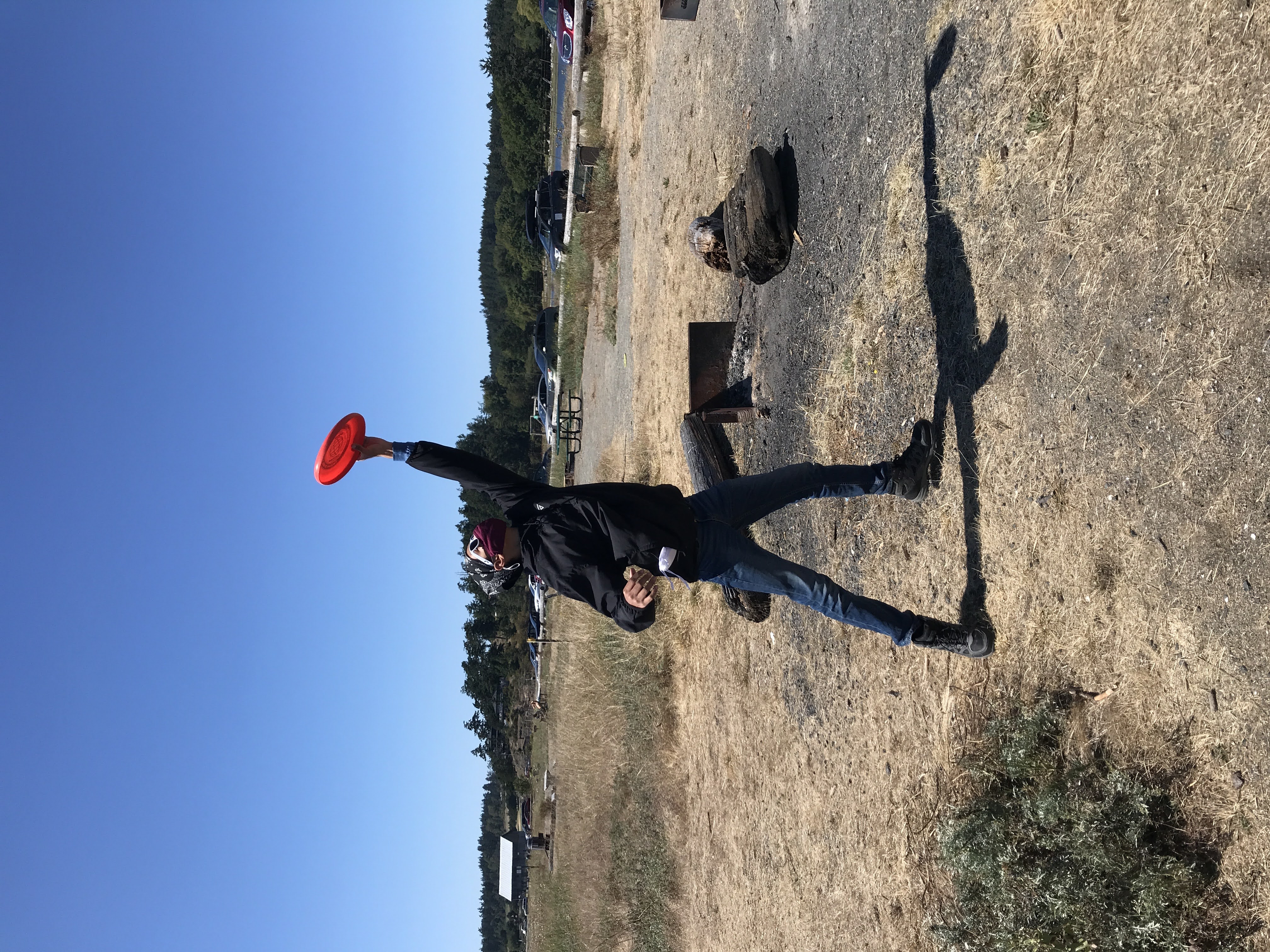
In our free time we took the opportunity to play some frisbee and soccer. I believe it is always good to take breaks, not only for reflecting on information, but also to stretch the body so it’s not stiff.

After that exhilarating brake, we talked with Mike Ramsey. He discussed some projects that are being worked on such as the one in Blind Bay, where some restoration on eelgrass is taking place.

Fourth day of our Salish Summer

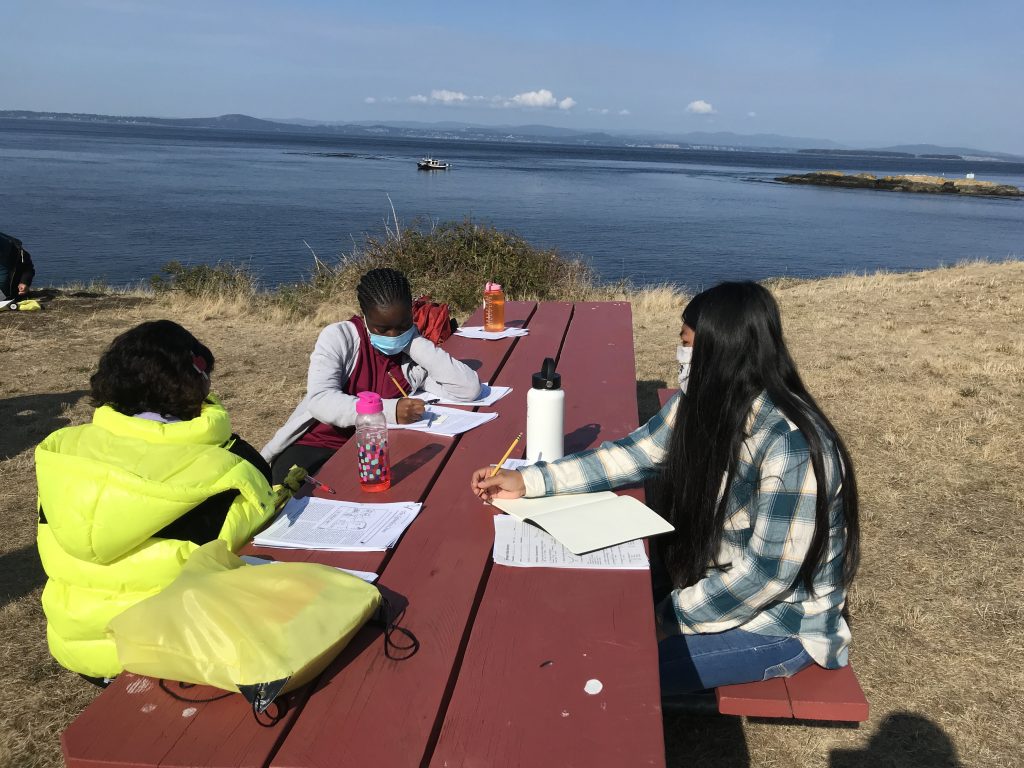
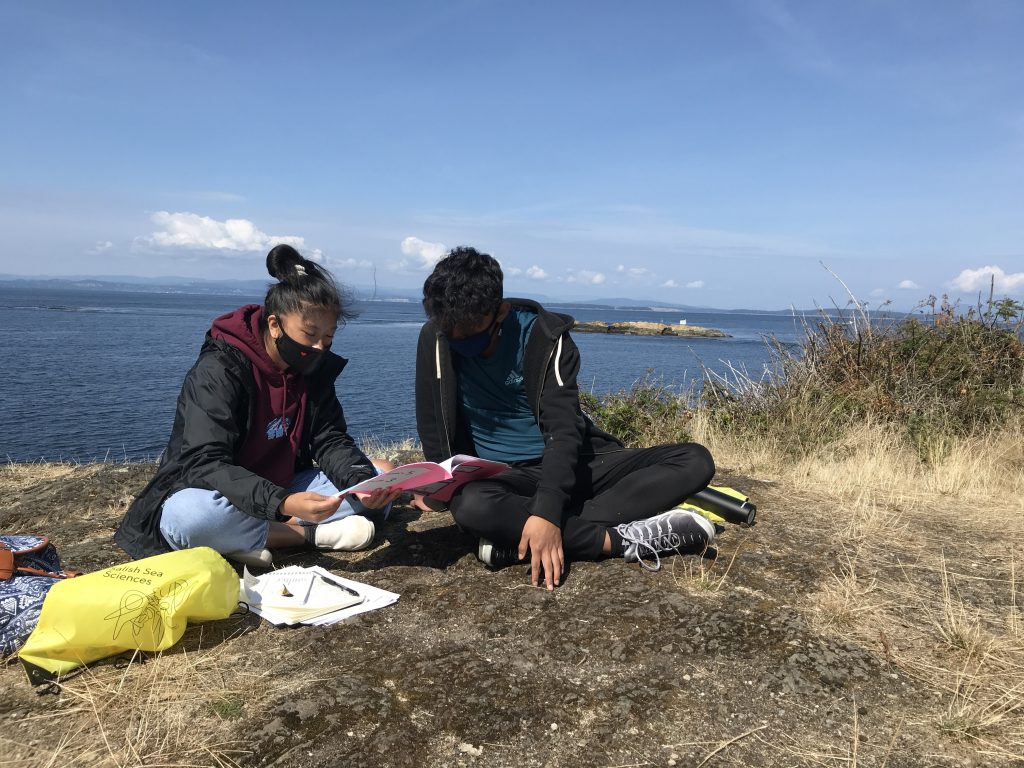
This morning we drove to San Juan County Park and discussed our findings on the BMIs (Benthic Macro Invertebrates) done on the 12th. We sat down near the shore with Kari Koski and Sharon Massey and took notes of the stream quality.

We sorted the invertebrates into groups based on tolerance to pollution. Turns out the creek had fair quality. We got into are groups and started to make questions about the
BMIs.

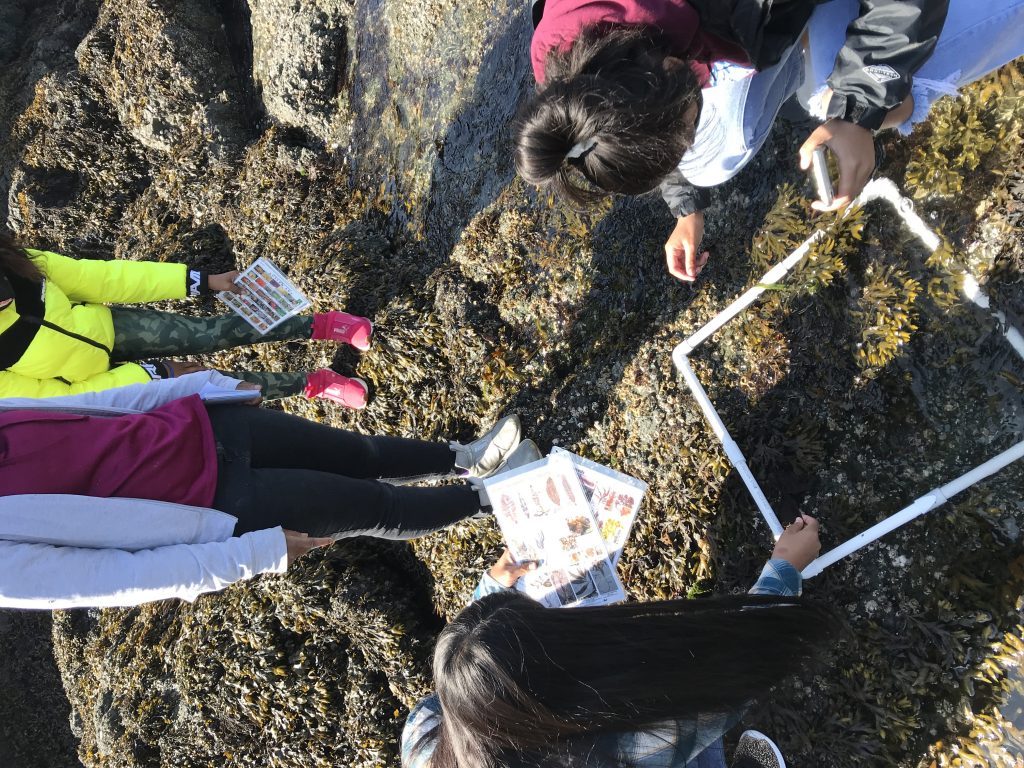
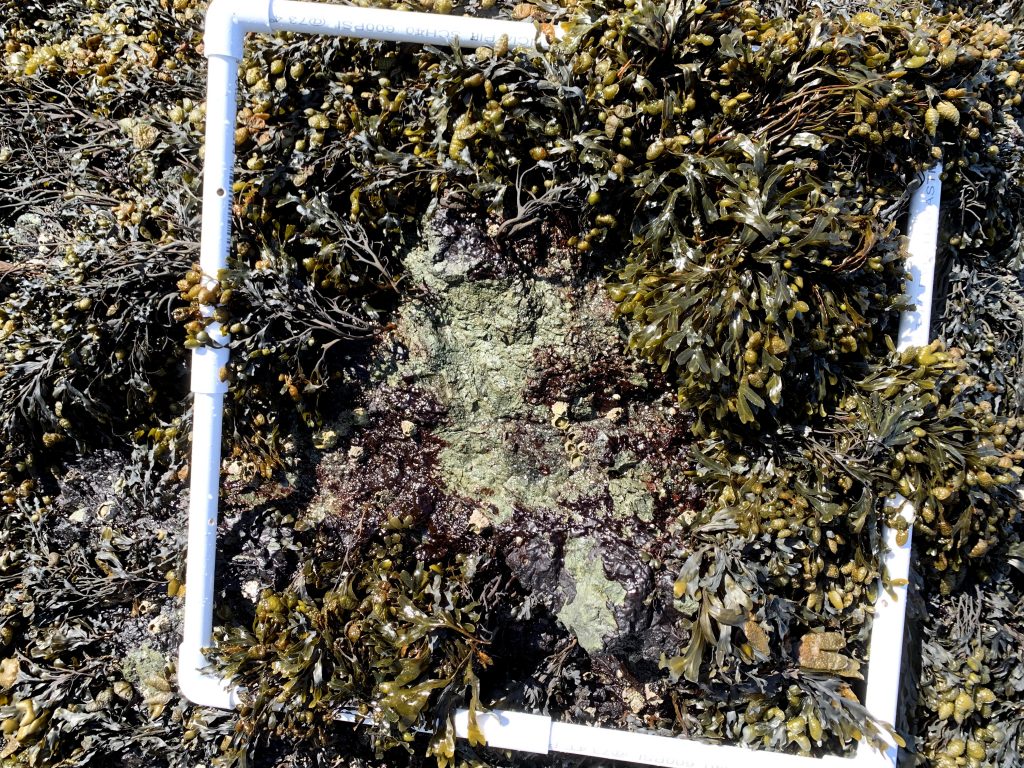
We walked a little farther and arrived at the intertidal zone. While there, we used a tool called a quadrat. You just throw it in a random place, and that’s your sampling site!

Different groups observed and wrote down all the critters and plant life within the quadrats. We mostly found barnacles, snails, and rock weed.

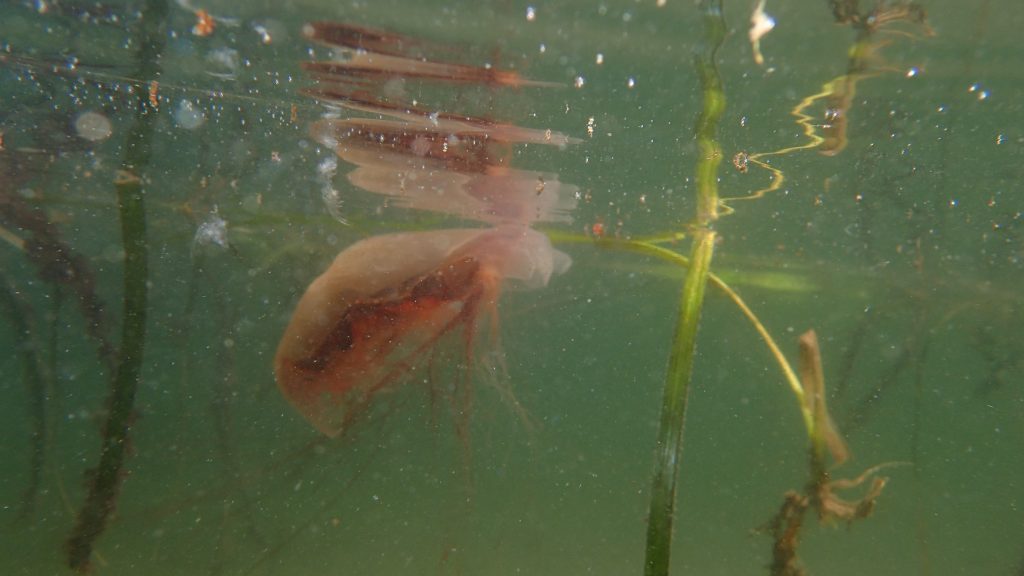
When leaving we almost missed this vibrant jellyfish along the shore. Yafet Amine stepped into the cold water and blindly took this photograph.

We also had a live demonstration of a necropsy of a dead baby seal. We had a interesting presentation with Hilary Hayford, PhD about oysters restoration.