(Written by Matt, Ben, Claudia, and Nina)
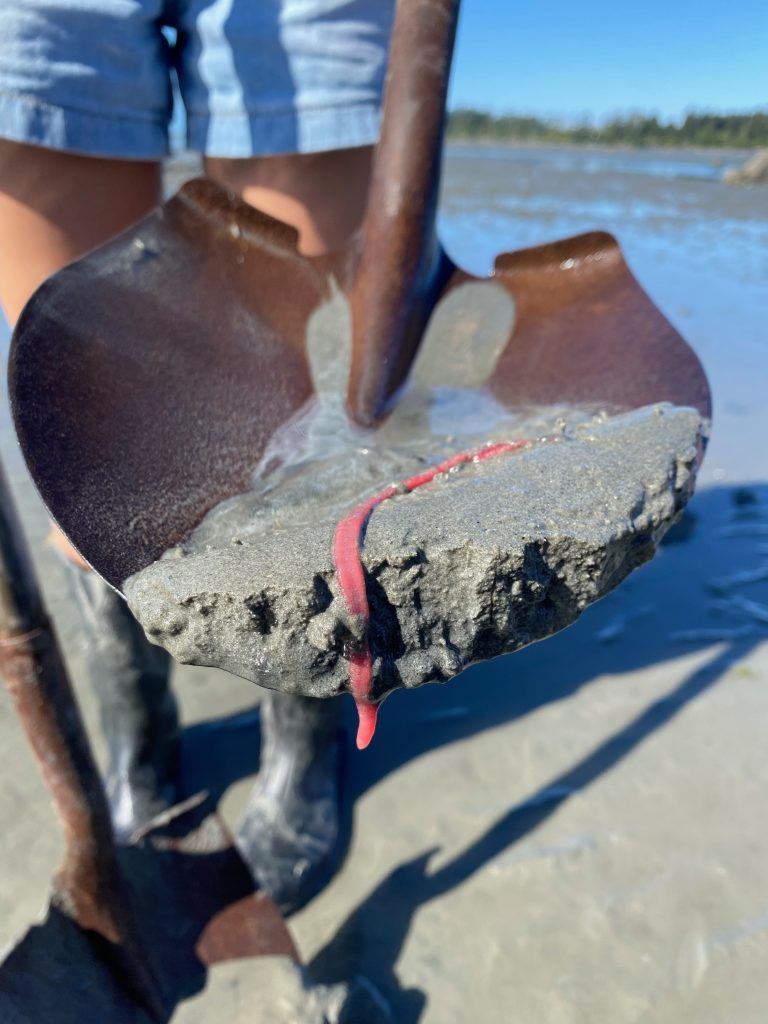
Photo by Sam
We left the dorms at 8:00 AM and soon arrived at False Bay to meet and aid three graduate students from Dr. Emily Carrington’s Ecological Biomechanics class: Alyssa Giedd, Jenny Duncan, and Frankie Hedge.
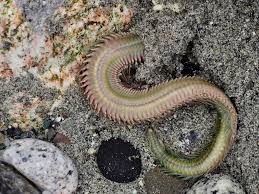
Each of these researchers focused on different topics. Alyssa Giedd, a talented mechanical engineer, was looking at the fascinating legs of polychaete worms in the design of worm-shaped robots. Jenny Duncan was our only non-Annelid researcher focusing on ghost, and mud shrimp and how they interacted with the sediment of their habitat. Frankie Hedge had us collect bloodworms. She was planning to test how worms affect the sediment that passes through their digestive tract. Working with these researchers was an incredible experience.
The blood worms have a bite that is comparable to a bee sting, so we had to be especially careful when identifying them and holding them in our hands before dropping them in the holding containers. Thankfully, no one was bitten, and after around two hours of looking for invertebrates, we found enough worms for Frankie to run two more trials and enough polychaete worms so that Alyssa could study their movements. Following our time digging at False Bay, we returned to the dorms for lunch.
Labs and Projects
After lunch, a few students headed off to the Friday Harbor Labs to meet with scientists and hone their project ideas. Caleb, Finlee, Ansuya, and Gretchen assisted Frankie Hedge in identifying the worms collected in the morning. Although Frankie was focusing on blood worms, polychaete worms, lug worms, and various other species were also identified. Ansuya and Flora met with Dr. Sandy Wyllie-Echeverria, a specialist in seagrass conservation, to brainstorm ideas for their projects.
Nina accompanied Dr. Mike Nishizaki, a professor at Carleton College who specializes in research on intertidal organisms, and a Research Experience for Undergraduates (REU) student, Sophie Elam, to Cattle Point to assist with data collection of mussels. They recorded the temperature of the mussels from the low, mid, and high tide lines, observing the percentage of mussels that were open. The data will contribute to a project that is examining the effects of temperature on mussels and the mechanisms the mussels use to regulate their temperature at different tides and times of day.
Other students branched off to help Dr. Amy Cook with her project on Pidgeon Guillemots. A specialist in animal behavior, Dr. Cook is observing Pigeon Guillemot nesting habits due to urbanization. Katie and Tatum learned about Dr. Cook’s process in analyzing animal behavior and spent time observing a local nest.
photo by Claudia
Hike:
The rest of us stayed back and did some brainstorming on our projects, followed by a hike up Young Hill. Riley compared the hill’s ecosystem to that of others we have seen throughout the island; admirably, the hill was covered in oaks, native to the San Juans. We learned about how spacing between trees keeps the forest healthy by leaving room for growth and shrubbery. When we reached the top, we were greeted by a charming view and a flock of turkey vultures.
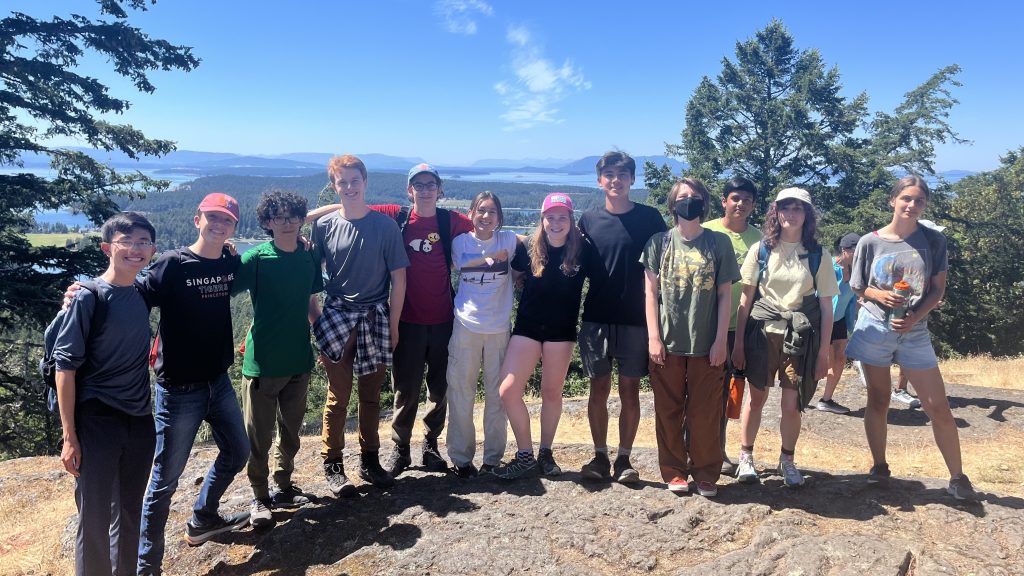
Photo by Riley
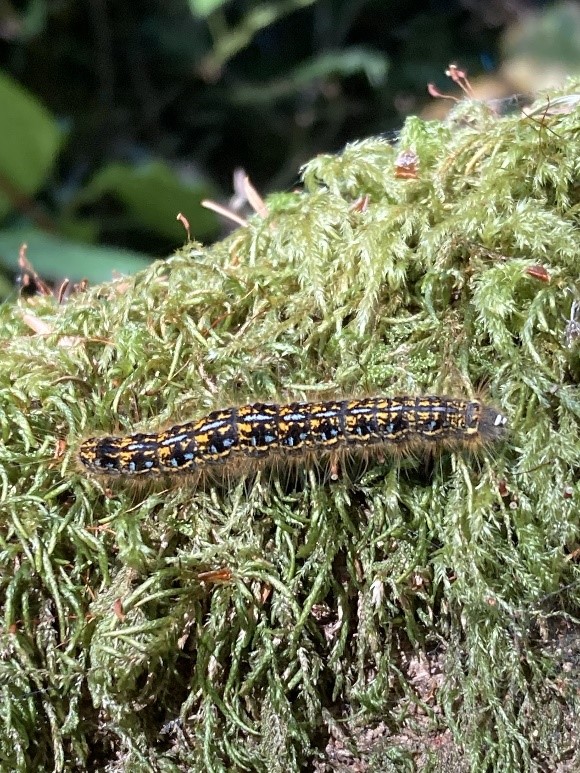
Caterpillar! (Photo by Claudia)
Dinner:
We dined with Olivia Carpenter and Olivia Trahan from Soundwatch, an organization dedicated to reducing vessel disturbance of marine wildlife. Founded by the San Juan Whale Museum in 1993, Soundwatch collects data on marine vessels that frequent the Salish Sea and their effects on local marine wildlife, especially Southern Resident Killer Whales.
The welcome team prepared for dinner by researching Soundwatch and their work and setting the table. They tackled the challenge of deciding where everyone will sit by drawing a diagram on the whiteboard.
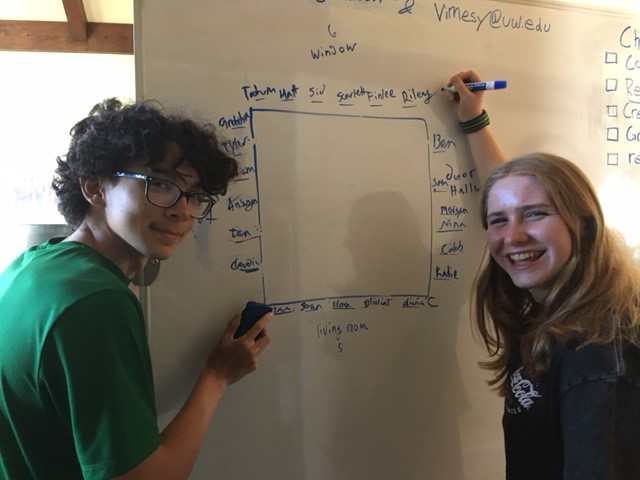
Morgan and Ian draw the layout of the table. (Photo by Caroline)


