Kindly recounted by Caleb Zulauf, Finlee Rice, and Tatum Bunting
After two days of running all over the island for various project needs, the students at Salish Sea Sciences were in need of a late start. Ever the generous leaders, our co-science directors Adam Rogowski, Emma Ledin, and Riley Conley granted us a 9:00 wake-up and a delicious hot breakfast this morning. Cassandra was kind enough to prepare waffles, sausage, bacon, and eggs for a lovely start to the day. Though most took advantage of the late start, a few students were eager to get on top of things and began work on projects (mostly eelgrass related) at FHL.
Once we had all regrouped, we continued our streak of untimeliness by barely getting out of the door at 10:20 to venture off to Friday Harbor High School.
Under the guidance and help of Sam Garson, we conducted a PCR (Polymerase Chain Reaction) to identify the species of various mussels we collected at Cattle Point. Frustratingly, the invasive mediterranean mussel is nearly impossible to distinguish from the native pacific mussel based on appearance alone. Because of this, DNA analysis is essential to gauging the presence of this intruder in the Salish Sea and beyond.
Mr. Garson, beyond guiding a very interesting lab, is an incredibly accomplished educator, communicator, and scientist who has worked on everything from deep sea exploration with the Nautilus to infectious disease at Children’s Hospital in Seattle. He is now utilizing his skills to encourage and inspire the next generation as a high school educator on San Juan Island. These authors would highly recommend reading about his unbelievable accomplishments in everything from managing ferocious army ants in the Amazon Basin to dominating spelling bees at the Kremlin. Or to learn more about his eventful past few weeks in Brazil, click here.
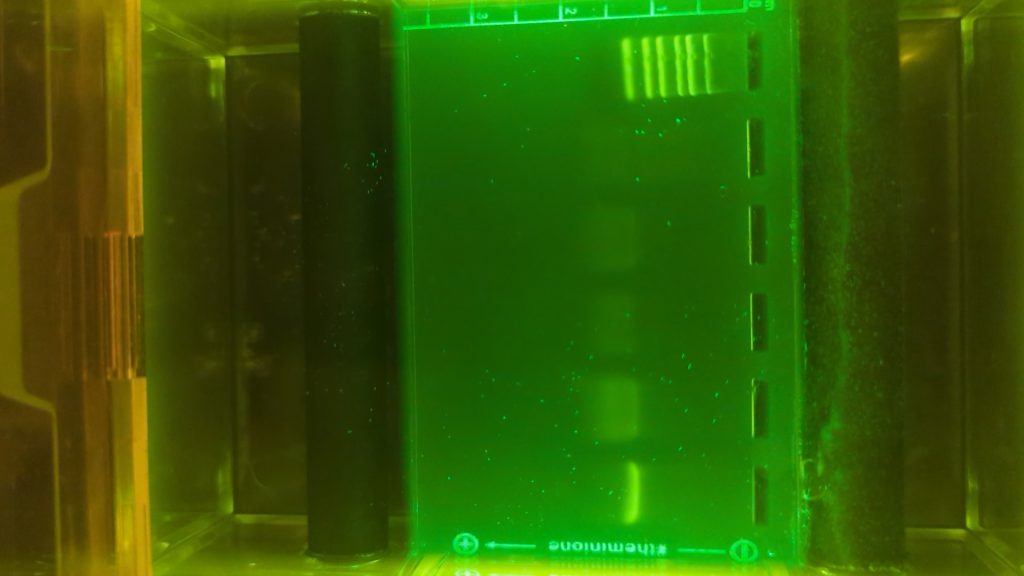
Utilizing a new type of TAQ polymerase, we were able to condense a multi day process into just a few hours. After crushing and extracting tissue from our mussels (some more gently than others), we created our PCR cocktail and eagerly awaited our gels to phoresis. After a few hours of careful micropipette work, deliberate mussel crushing, and many conversations about our deepest fears to fill the time, we saw… *drumroll please*… few legitimate results (likely due to the Jenga tower that is global shipping). Despite finding few results from our PCR tests, we did learn a lot about micropipetting, PCR (polymerase chain reaction), and invasive mediterranean mussels.
After saying goodbye to the icon that is Mr. Garson, we were scheduled to go on a hike with Shauna Barrows of the San Juan Island Land Bank at the Zylstra lake land preserve. Unfortunately it didn’t work out, and instead we had more project work time. A lot of us spent our time at the dorms compiling and analyzing data, learning how to use certain scientific tools (specifically dissolved oxygen meters), and observing wildlife. Another small group ventured back to the labs to monitor and work on their projects.
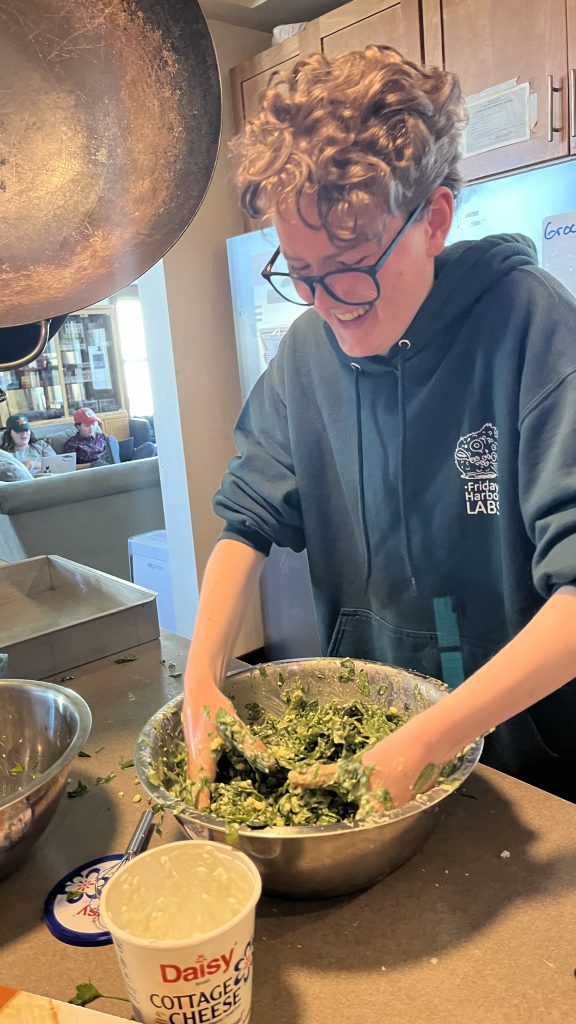
Tonight we are going to be dining on Tom and the kitchen crew’s finest (rumor has it spanakopita might be involved).
We will be joined by Jess Farrer who is the Research Director at The Whale Museum and previously served as the San Juan County Marine Mammal Stranding Network Coordinator and Data Specialist. Currently, she is also working with SR3 (SeaLife Response, Rehabilitation, and Research) as a researcher studying Killer, Minke, and Humpback Whale populations in Antartica. She has extensive experience on this remote continent, having worked with the United States Antarctic Program studying Weddell seals at a small camp near McMurdo station and as a naturalist for National Geographic expeditions.
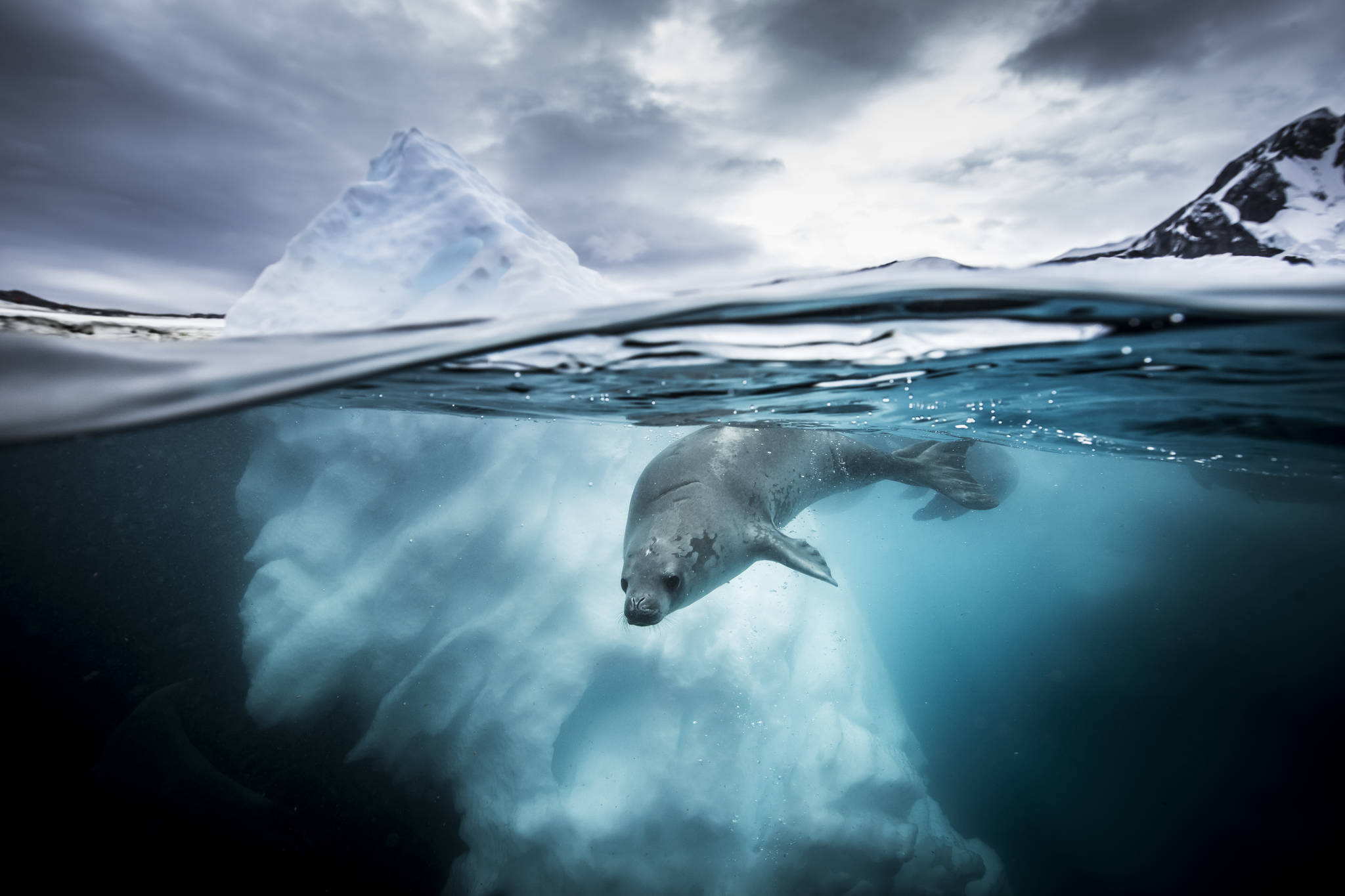
While working in Antartica, Farrer started utilizing photography and videography to document and share this incredible region. In 2019, the photo, “Curious Crabeater”, earned her runner up in The Underwater Photographer of the Year Competition in the wide-angle category. This award was founded in 1965 by British diver and magazine editor Bernard Eaton and it receives around 5000 entries every year.
On the videography side of things, (besides filming one of the most influential cinematic masterpieces of the 21st century, “Crybaby Learns to Swim”) Farrer has also worked with the BBC as a contributor to Frozen Planet.
To explore more of her wildlife photography, find her on instagram @jessica_farrer.