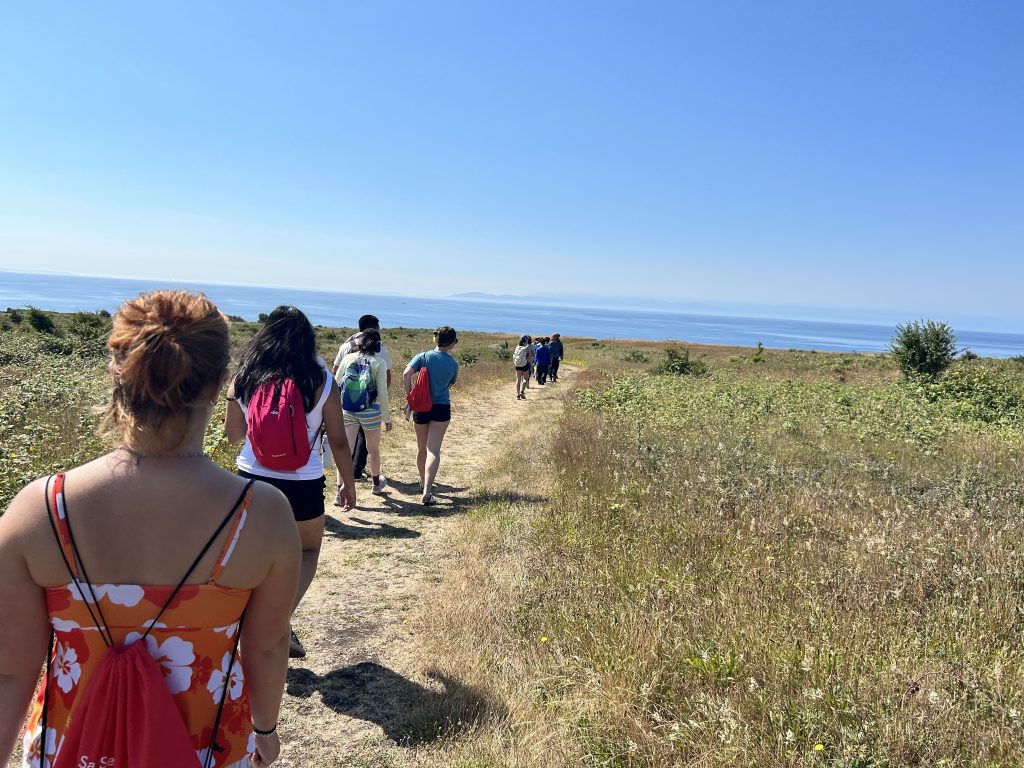
We started our day at American Camp! It was a pleasure being shown around by Emilio Santiago, who works for the National Park Service and was one of our dinner guests last week. At a seemingly uninteresting expanse of grass, we were flabbergasted to learn that we were standing at the remains of an old graveyard!
Students following our fearless leader, Emilio Santiago, to the graveyard & Granny’s Cove – Photo Credits: Olivia
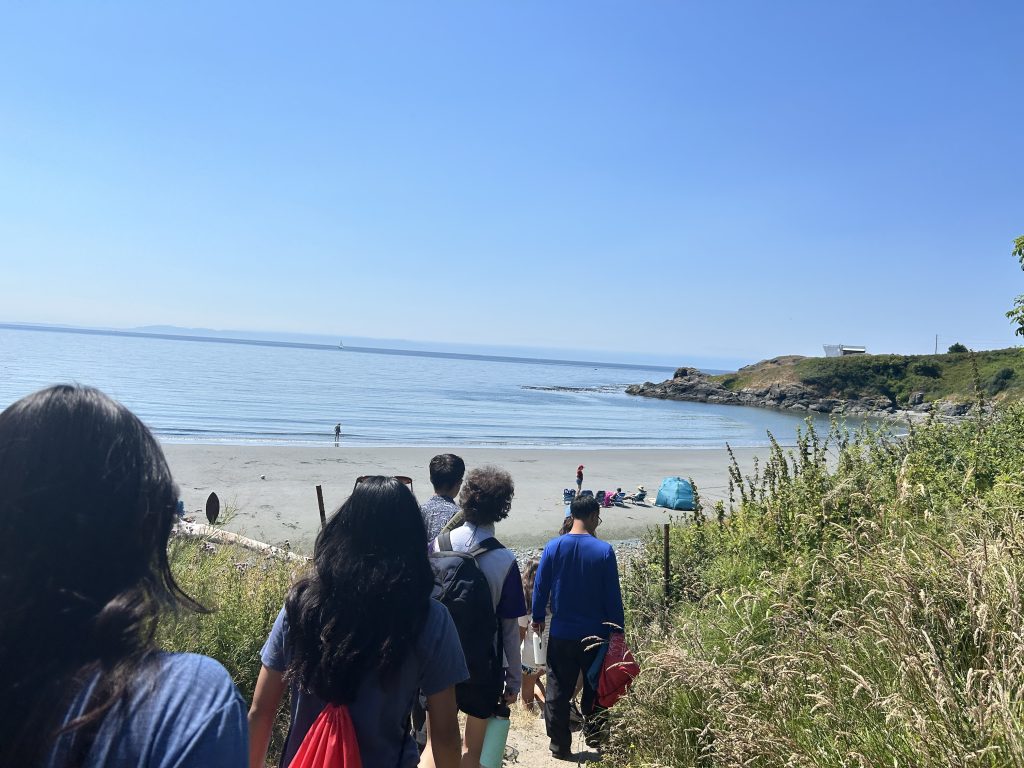
After American Camp, we headed off to Eagle Cove for lunch and swimming in the freezing, salty water. We reconnected with our inner mermaids as we explored the sandy beach and tested our cold-water tolerance.
Our first view of Eagle Cove! – Photo Credits: Olivia
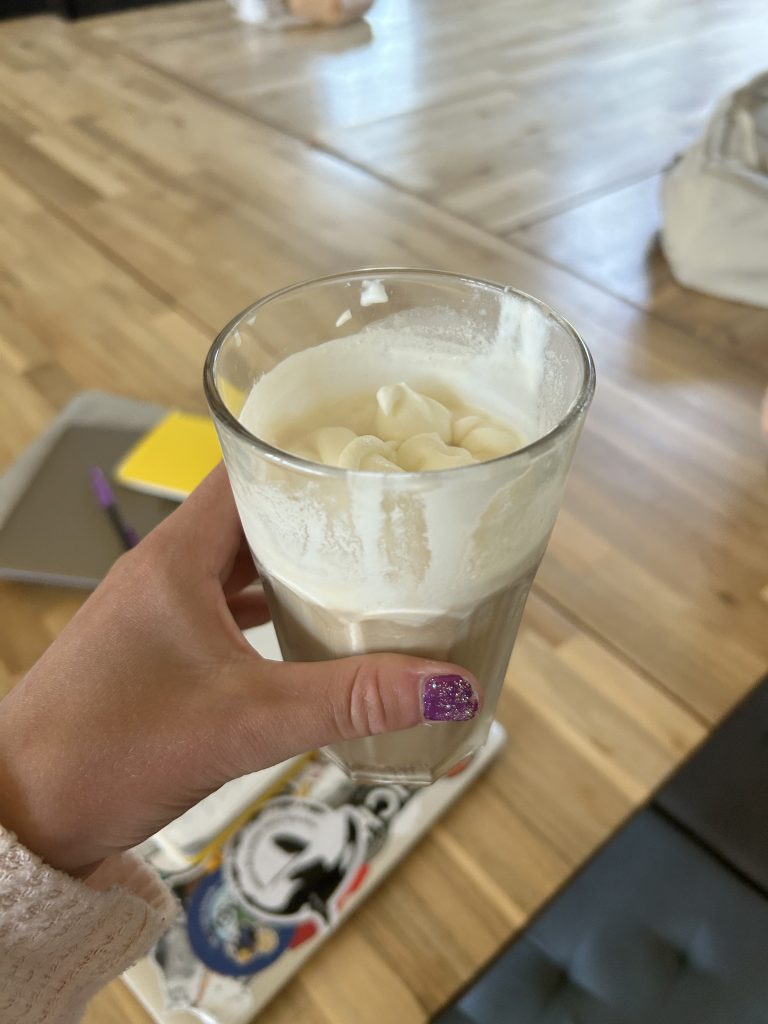
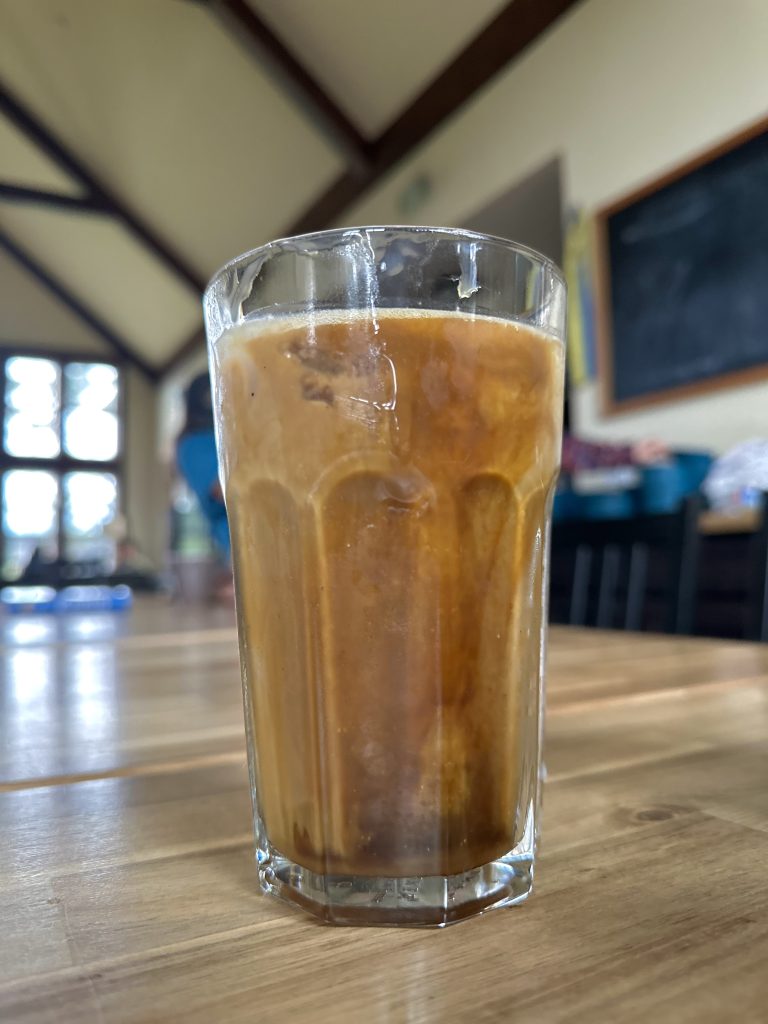
We headed back to the dorms for a quick rinse and to begin project time. However, some of us were quickly derailed as we learned the devastating news that half of our precious aquarium water had mysteriously emptied overnight! Only one inch of lukewarm water remained. A couple of us went to the rescue by laboriously filling buckets with water to rejuvenate the tank. Others were lured to the heating kettle and enjoyed hot chocolate, ice cream, and iced coffee.
One of many iced coffees that fueled us through the day! – Photo credits: Olivia
Recovering from the tank fiasco, we quickly settled in to finalize our research questions and hypotheses. Later tonight, we will attend the “Keystone molecules and kleptoplasty: new insights from sea slugs” lecture at Friday Harbor Labs by Dr. Patrick Krug. We are overjoyed and intrigued to hear this talk that turned our evening schedule upside down!
Today we woke up at 8 am. Cloudy skies and rain welcomed us to start the day. We soon had breakfast at 8:15 am. We ran out of everything bagels, which as of today we now know is everyone’s favorite breakfast item! So sad, everyone started crying. (It’s chill though ‘cuz we had plenty of oatmeal and other things) 🙂
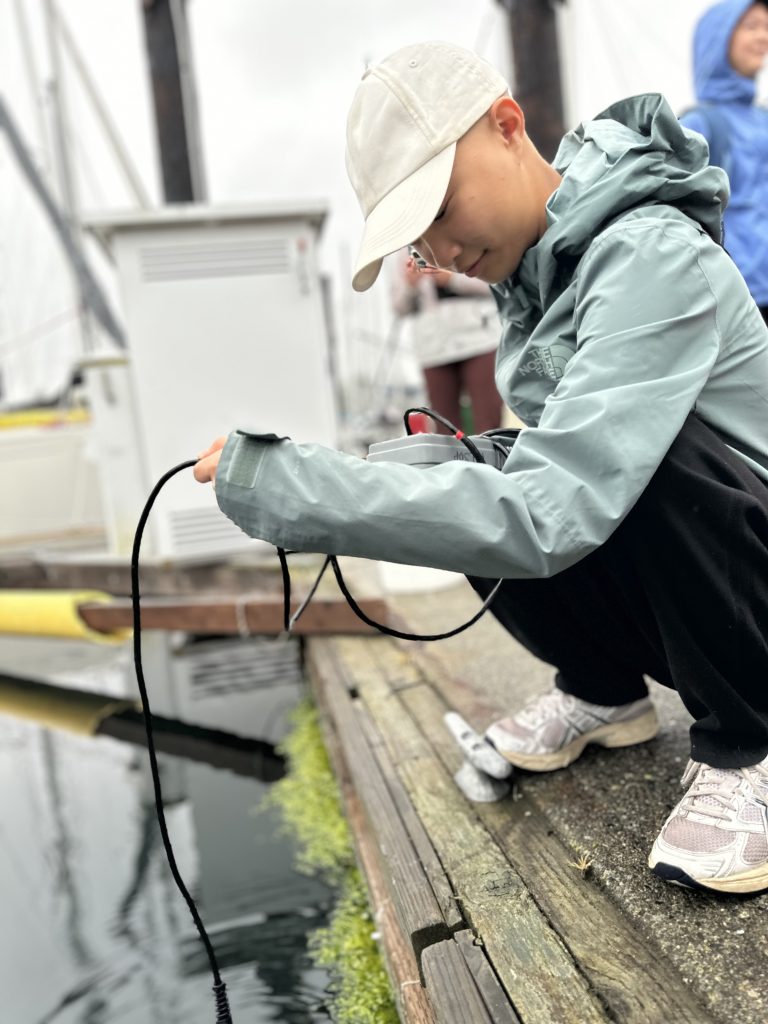
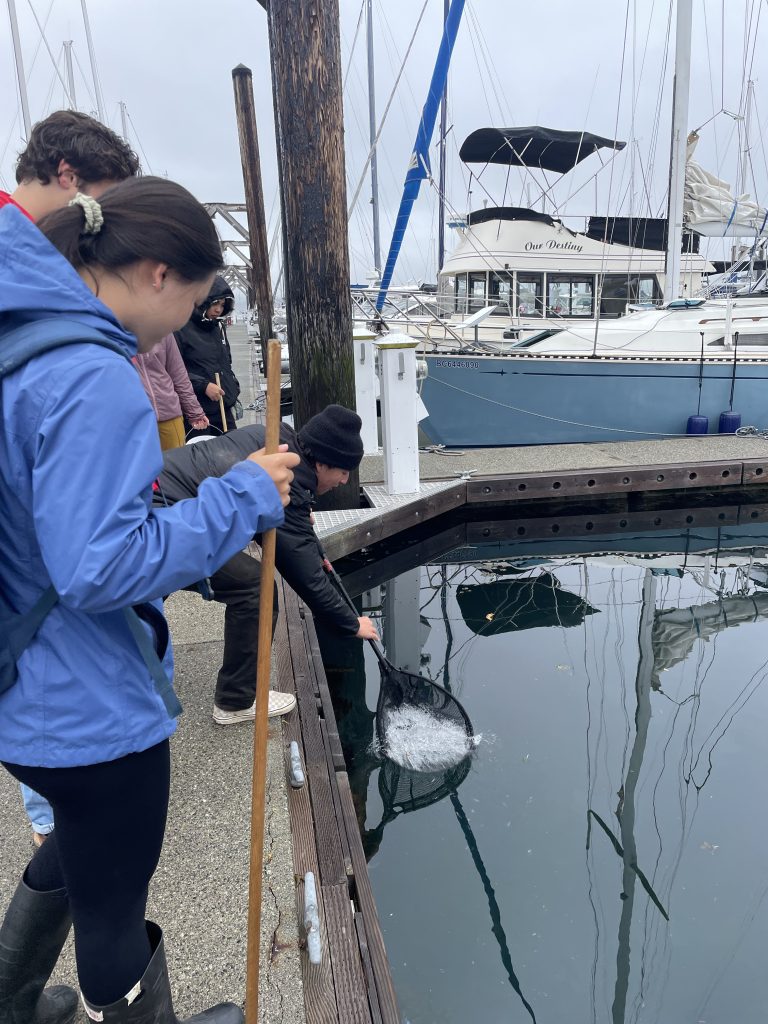
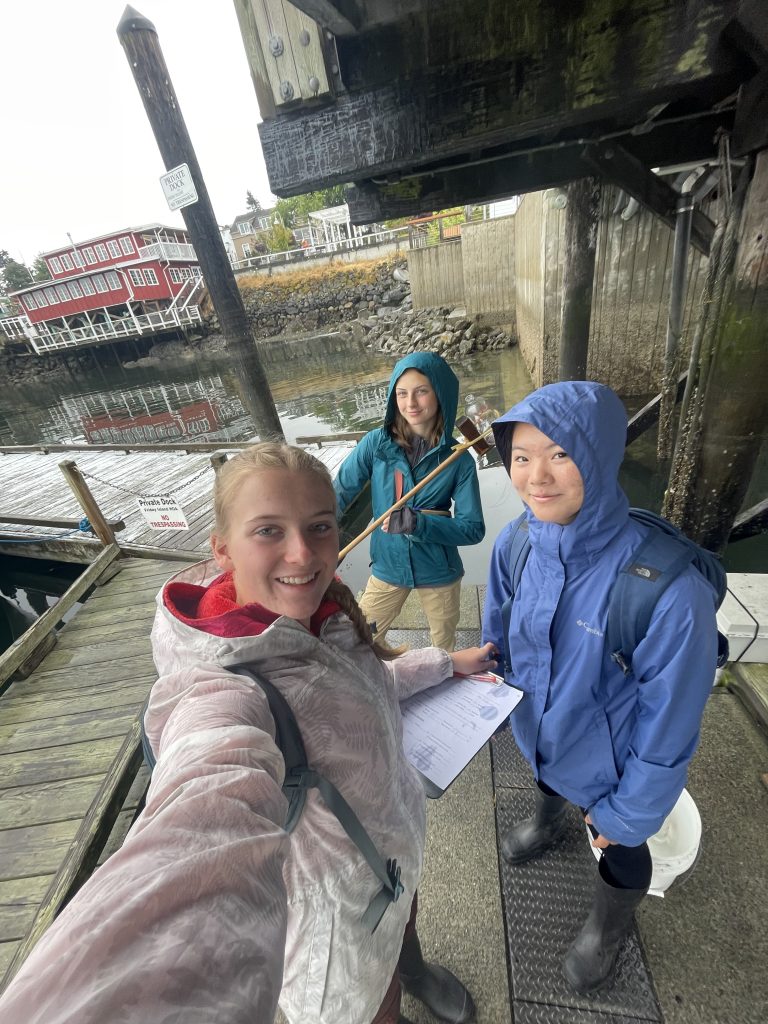
For today’s main activity, we surveyed the water by the marina! the survey intends to measure the fecal coliform in the water. It’s super important work, as no one else is measuring the fecal coliform but us!! (Actually, it’s a longitudinal study for the Port of Friday Harbor, but cool that we’re the one’s who took on this round!)
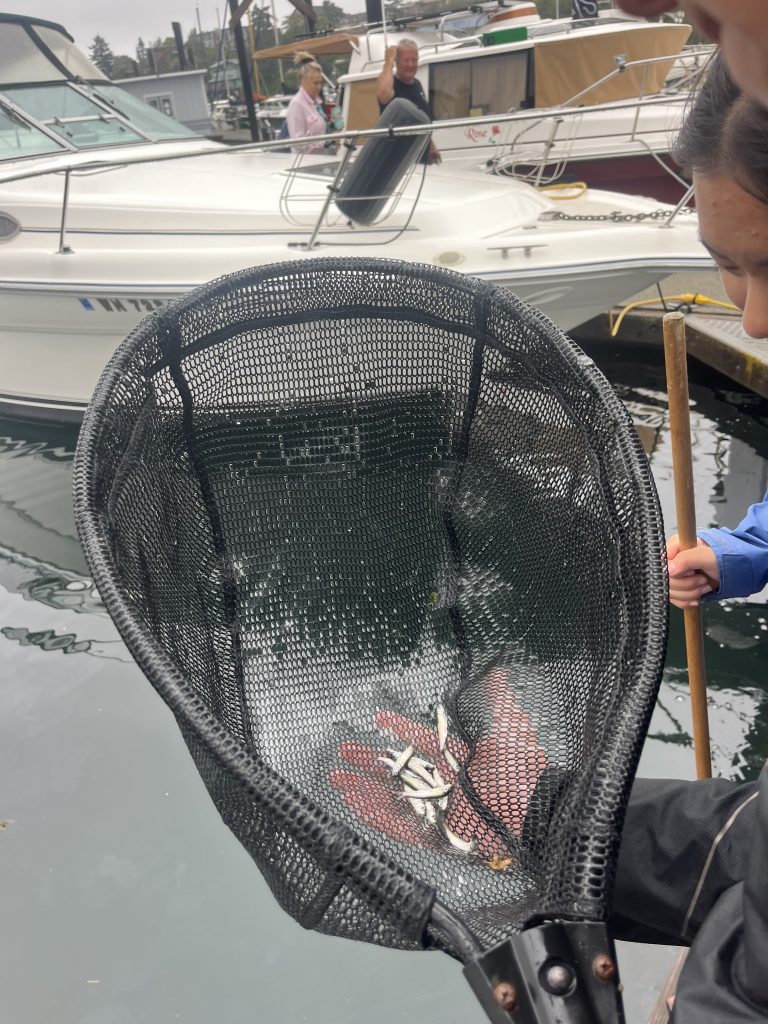
PC: Maxene – Leanne expertly measuring water quality at Friday HarborPC: Sophia – Watts catching fish on the dockPC: Sophia – Watts catching fish on the dockPC: Sophia – Grabbing more water samples at the dock
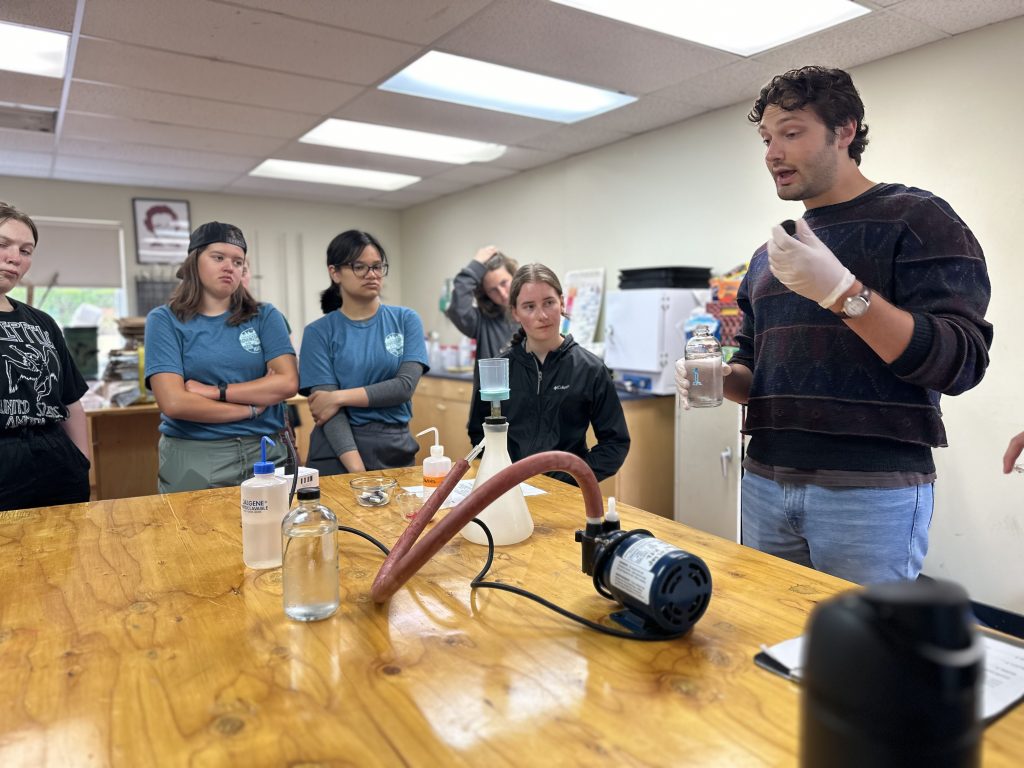
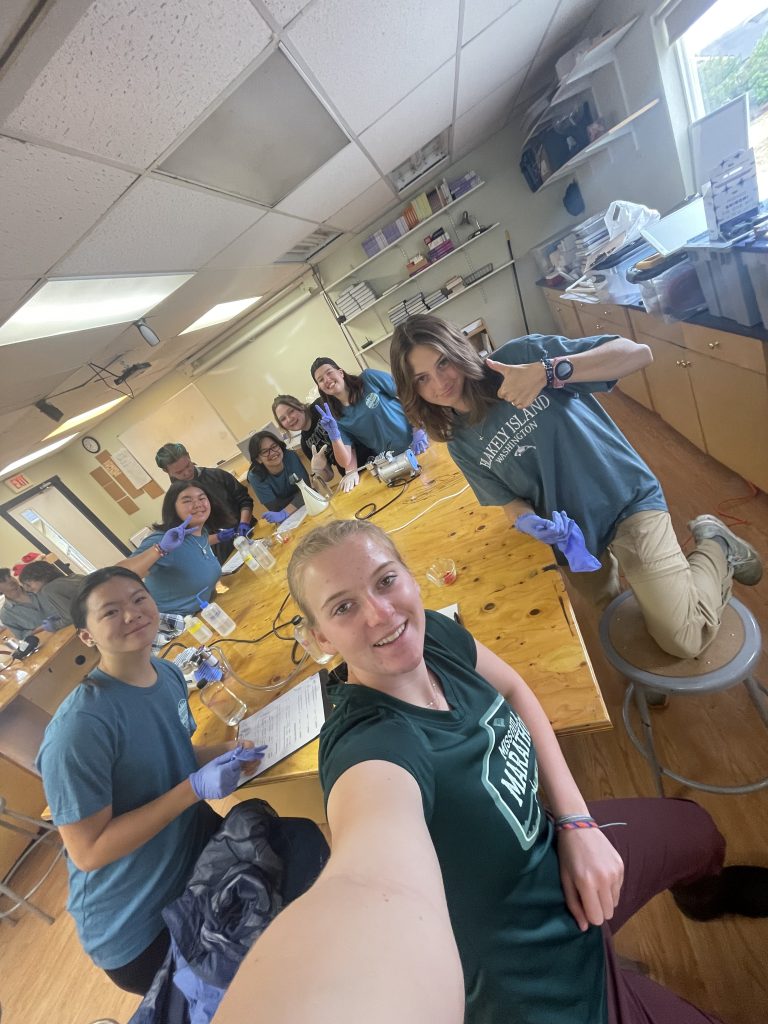
After an hour or so of measuring salinity and temperature and carefully collecting water samples at different test sites around the marina, we brought our samples home to be tested in the Spring Street School’s science lab. We ended the activity with 20 samples of bacteria that are sitting in the incubator as we patiently wait for them to be ready to be tested on.
PC: Maxene – Adam demonstrating how to test the samplesPC: Sophia – Testing water samples
After lunch, Dr. Jess Lundquist, Associate Professor of Civl & Environmental Engineering at the University of Washington, joined us at our residence to give us a lecture on her work. Dr. Lundquist’s research focuses on “spatial patterns of snow and weather in the mountains and how those patterns are likely to affect streamflow and water resources in a changing climate.” She shared with us her recent research related to the hydrodynamics of fog and how it informs our understanding of how the heat waves in June of 2021 killed a lot of intertidal organisms. This was very fascinating and sparked some ideas for our Conservation Projects.
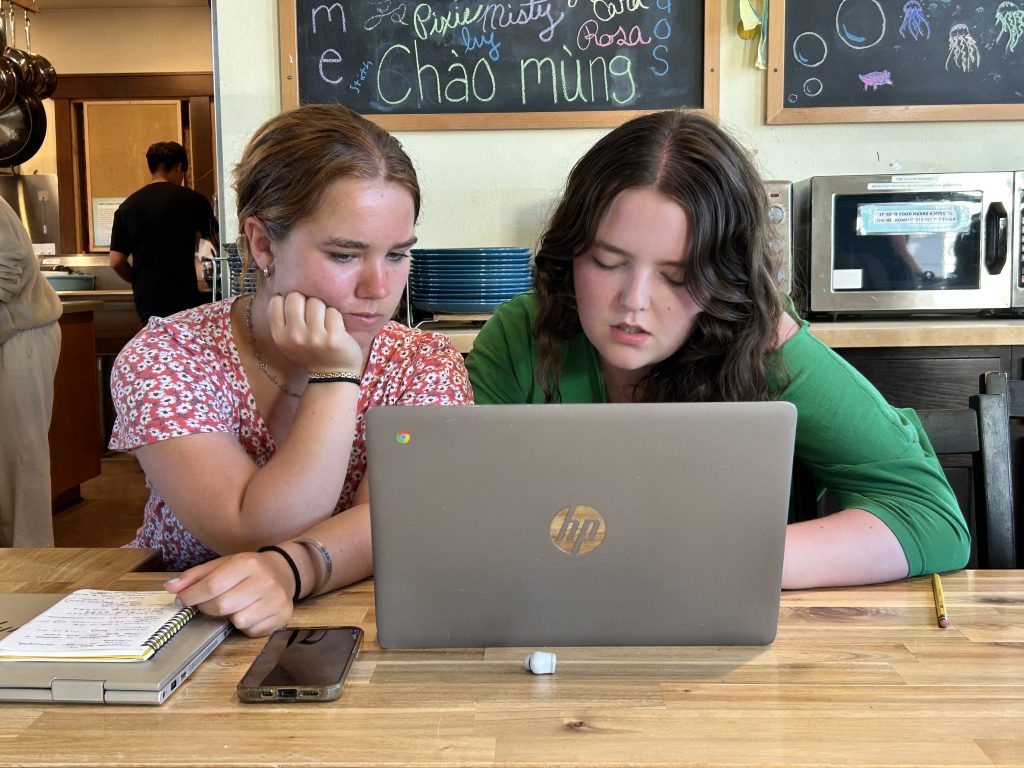
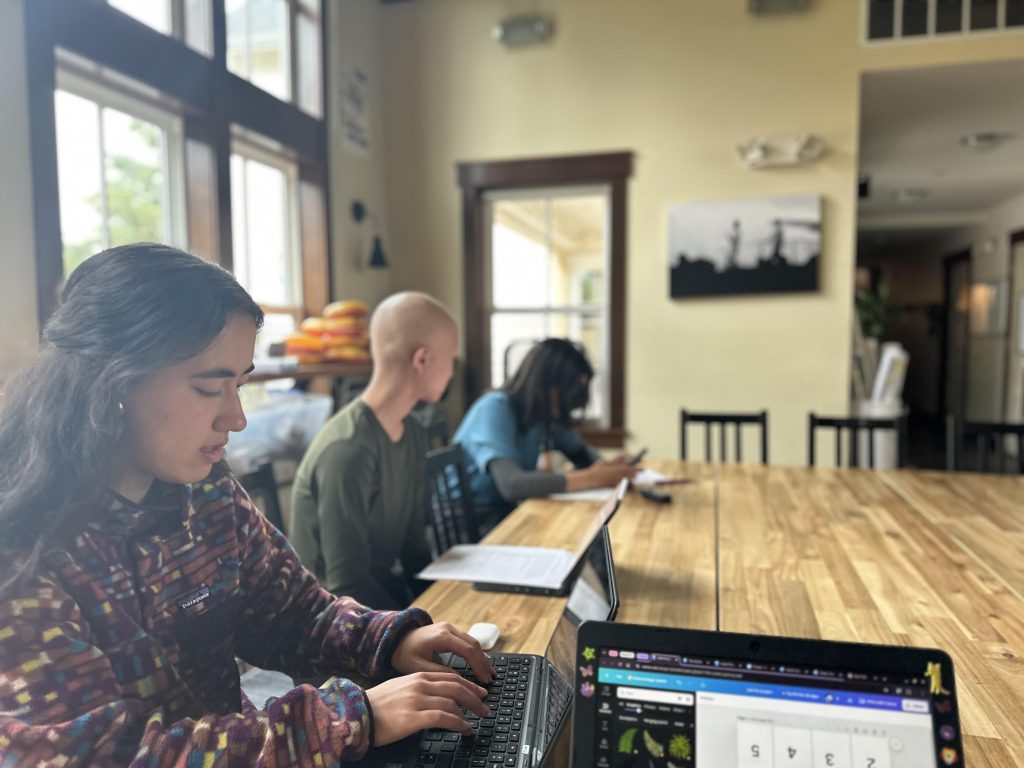
Afterward, we worked on our projects for an hour. Many of us were locked in and smashed away at our keyboards in utter silence and focus.
PC: Maxene – Working on our projects
Dinner Crew cooked up some good chili and cornbread. We were glad dinner crew found the honey. Because who has cornbread without honey and butter? Tonight we look forward to challenging Emma and Adam’s team to some trivia at JP’s. Bowling and other fun activities will end our wonderful rainy day.
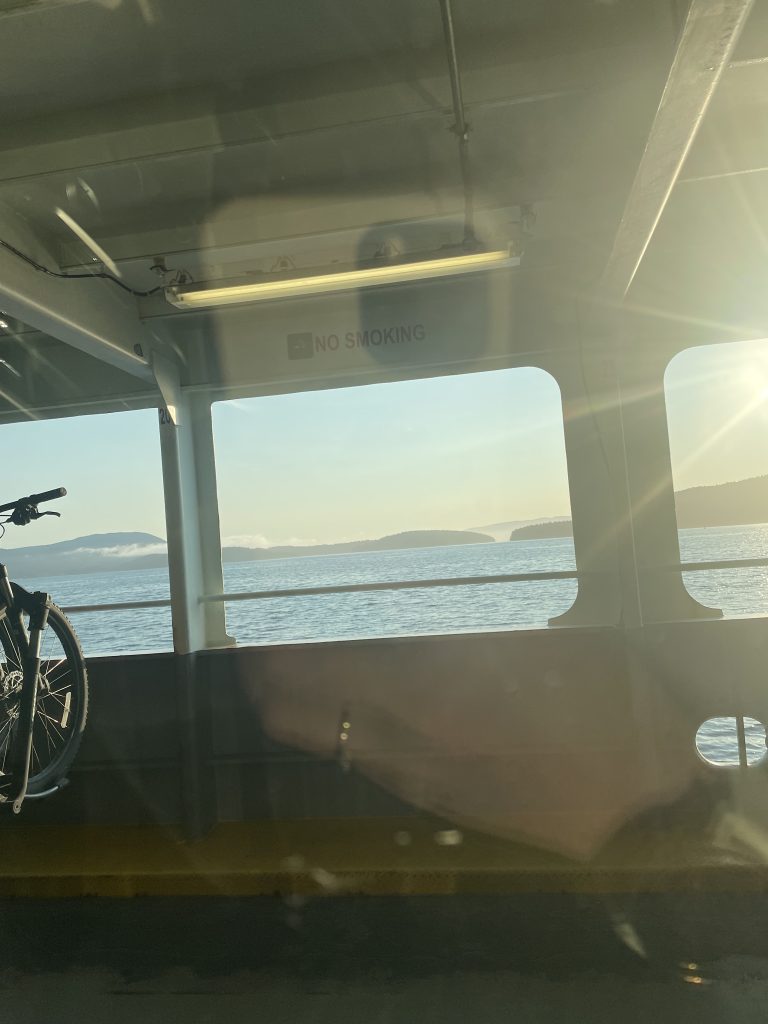
Yesterday was an exciting day, anticipation was high as students finished last-minute packing and readied themselves for a long day of transportation. Two students touched down from out of state before seven more piled into the van for the long drive to Anacortes. After meeting three more students there, we enjoyed a scenic ferry ride to Friday Harbor, the place we’d be spending the next two weeks learning about and exploring the Salish Sea. After being acquainted with the final seven students at the dorms, all 19 of us were excited and ready to begin the program. We met our roommates, settled into our dorms, and ate a delicious meal together before turning into a good night’s sleep before an eventful day.
Photo provided by Sophia – Ferry to Friday Harbor
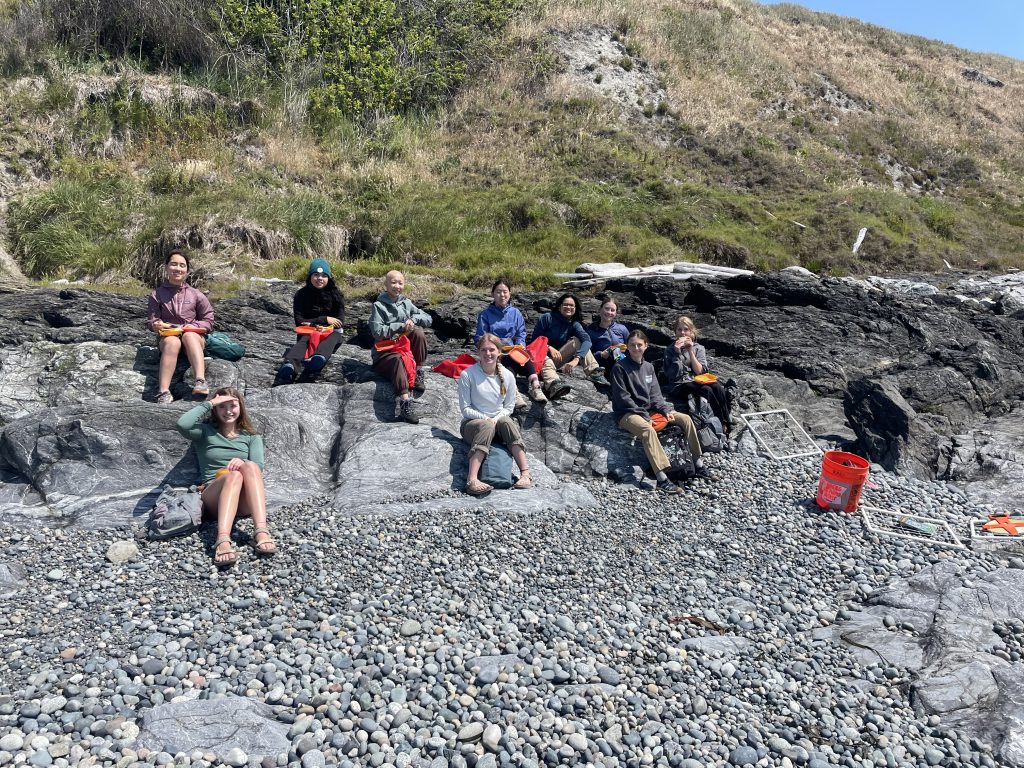
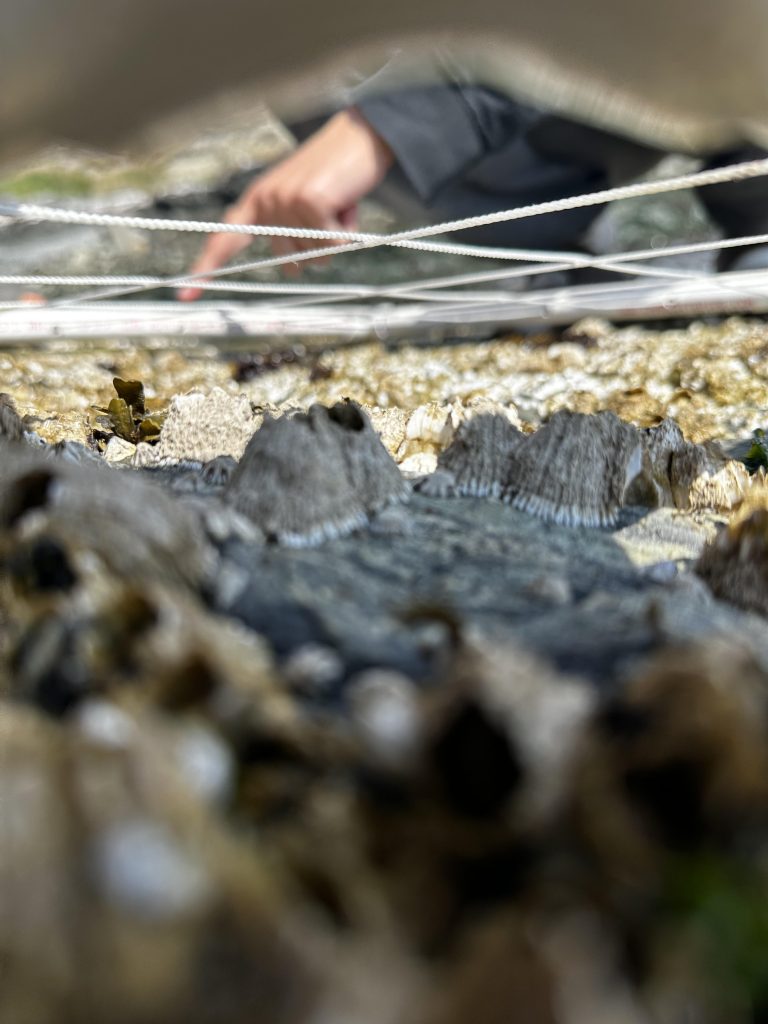
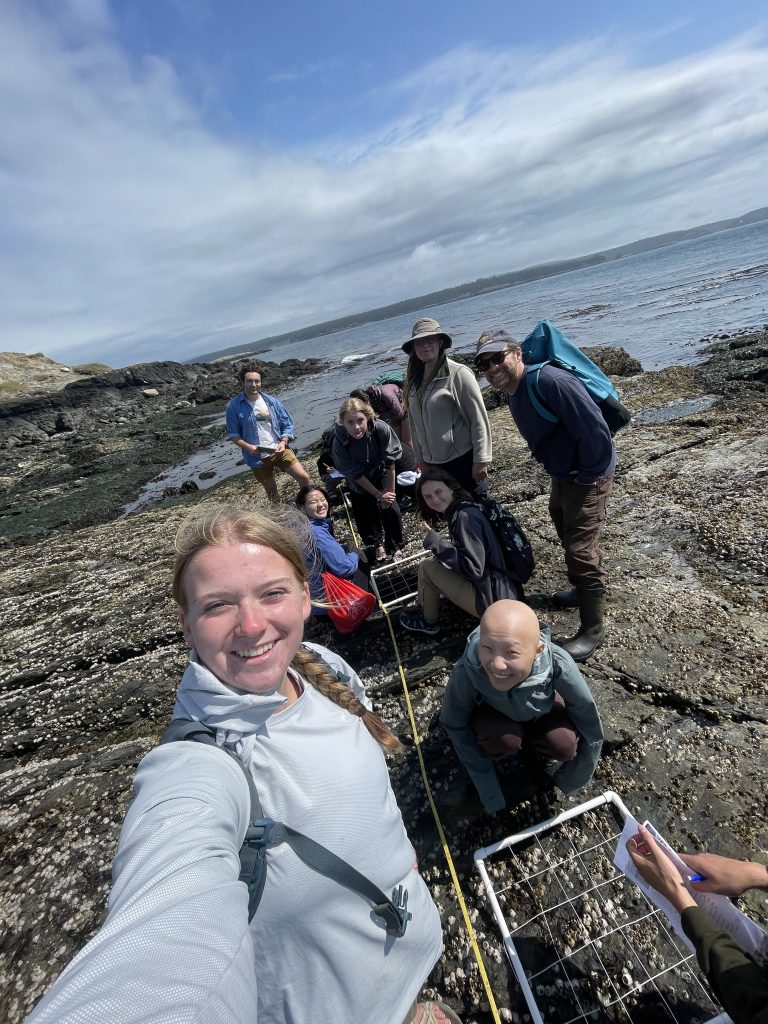
On the morning of the 22nd, we woke up at a very acceptable 7:30 am, ate a quick breakfast that consisted mostly of Cheerios, and went to Cattle Point to meet Dr. Dobkowski for seaweed surveys! Dr. Dobkowski’s research seeks to provide sound science for future conservation, restoration, and management efforts; she was a perfect fit for this activity. throughout the activity, all groups were able to identify different types of seaweed that are including but not limited to rusty rock, fucus, sea cauliflower, sea lettuce, sea moss, rockweed, and much more. overall a very fun experience, and a perfect way to start out this 2 week adventure.
Photo provided by Sophia – Eating lunch at Cattle Point Photo provided by Maxene – Seaweed surveys with Friday Harbor Lab students Photo provided by Sophia – More seaweed surveys!
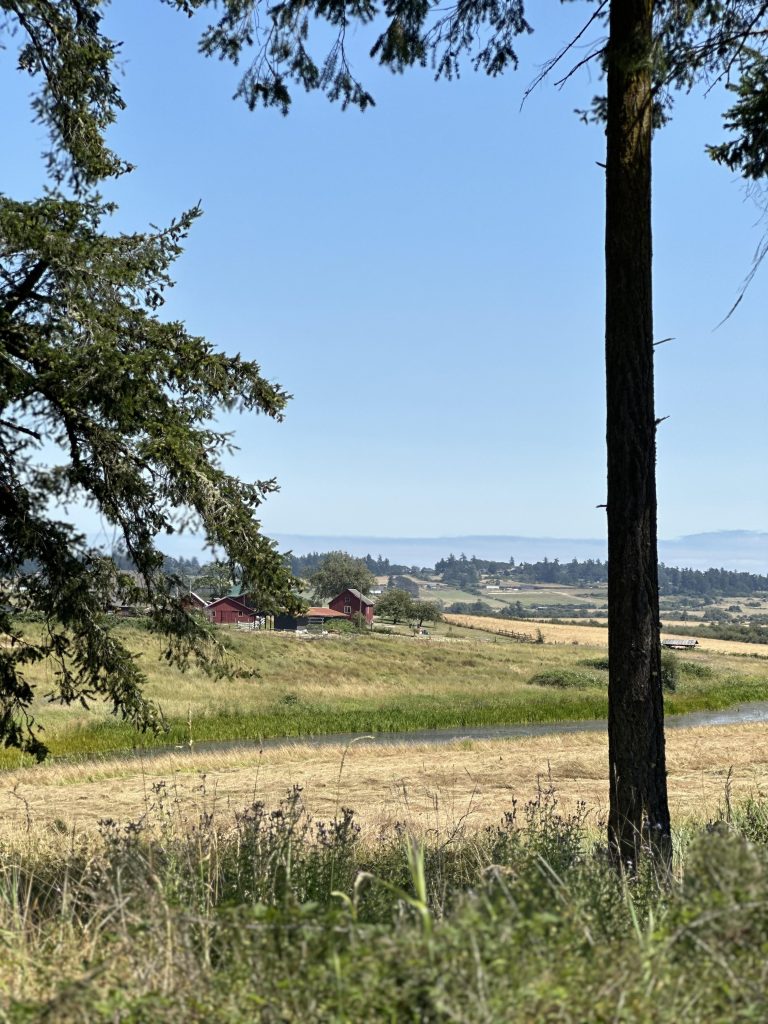
Shortly after eating lunch, we rode the van to Lake Zylstra, a nature preserve on the San Juan. Lake Zylstra is one of the most fertile lands on the San Juan Islands and is home to many keystone species. Today, Lake Zylstra is used for low-intensity recreation, farming, fishing, and hiking. Students were introduced to Shauna Barrows, a field assistant at the San Juan Conservation Land Bank. Barrows started off by describing the lake and land, that it was important to preserve. She described her stewardship and her dedication to the land, such as the importance of water quality in the streams and creeks. Our 2-mile hike started in the parking lot, then we made our way to the Beaver Dam Analog Area. Barrows stated how the Land Bank worked with native communities on how to best conserve the Land, motioning to the wooden posts. Soon followed a discussion on water ownership, the effect of cow feces on the land, invasive species such as thistle, how the indigenous people burned the land to maintain it, and more. Around us were Gary oak trees, English daisies, Salmonberries, and more. Afterward, we left and rode the van back to Spring Street International School, arriving around 3 pm.
Photo provided by Maxene – View from Lake Zyltra
After our long day full of adventures we came back to Spring Street, where Ms. Caroline enlightened us with an orientation to the program. She told us how to preserve and respect the island. This is so important because we want to make sure that everyone can experience this beautiful island as we get to do. We had a great ending to our wonderful first day, officially, with Tom’s delicious Lausanne! Which was graciously prepared with help from the dinner prep team. Our meal was nicely accompanied by a guest speaker, Ms. Shauna Barrows. Ms. Shauna works for the San Juan County Conservation Land Bank. It is her mission to create a better environment by providing help to the numerous ecosystems that are interconnected on the island. She demonstrates how the poor water quality in one stream can have an effect on the wildlife from inland to the bay. Ms. Shauna and her team have already done so much to better this island. We are so very thankful to Ms. Shauna and all of our wonderful staff members who made our first day a success.