Blog Credits: Katelyn Poon, Emily Mark, and Isabelle Osborn
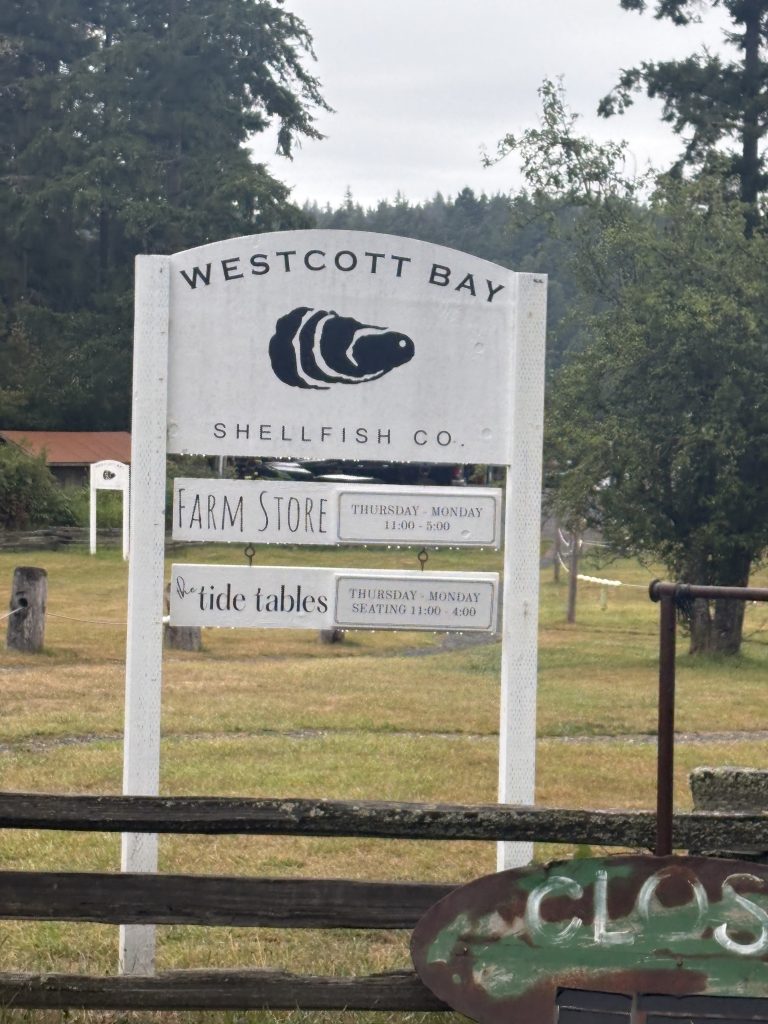
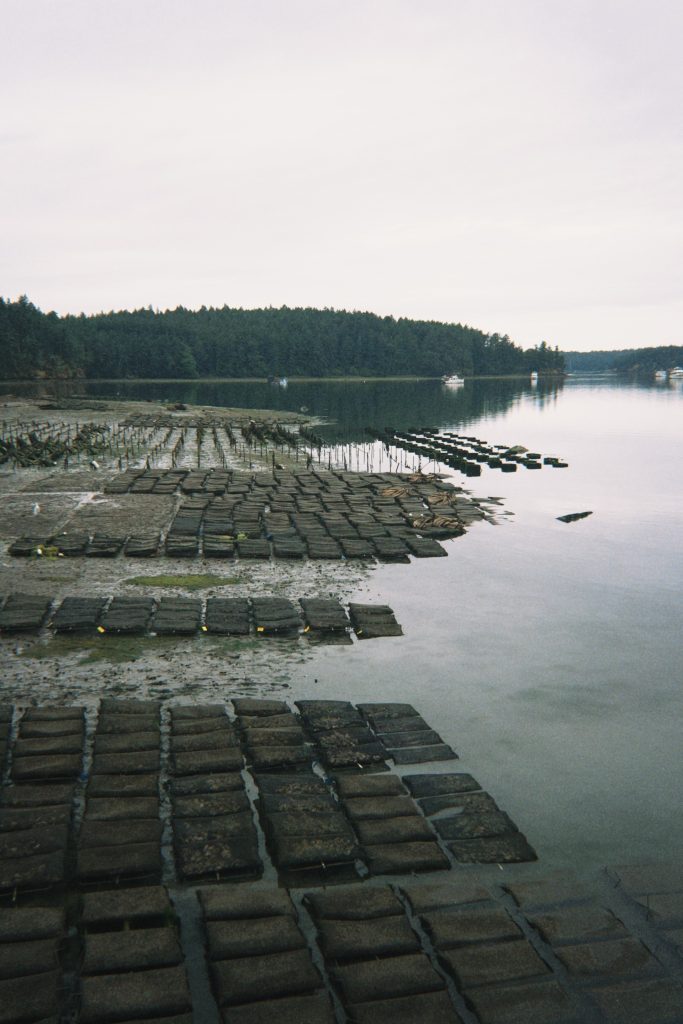
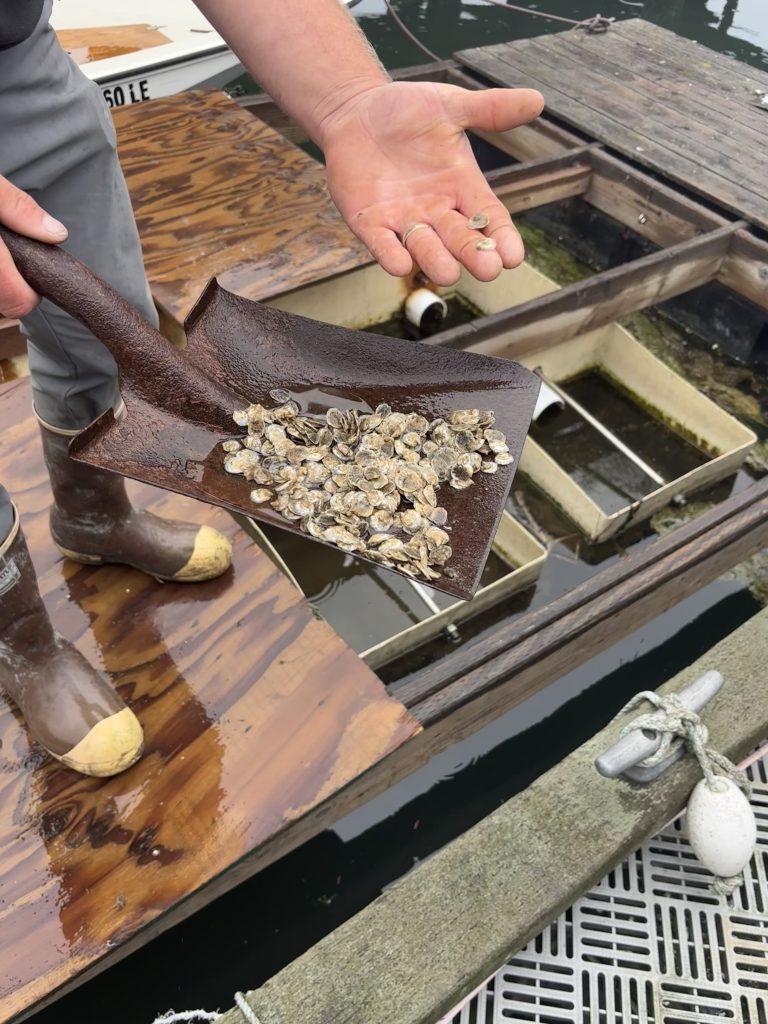
Today we returned to our early wakeup times, waking up at 6:45 am. Everyone was a little tired as we made our way downstairs to breakfast. We then headed to the Westcott Bay Shellfish Company to learn from Chas Lawson on how they farm oysters. There we received a tour of the docks, getting to see the oysters being grown on the beach and the baby oysters also.
After visiting Westcott bay we headed to Young hill to learn more from Adam Martin about the ecology of the region. As we hiked up to the top of young hill to see the spectacular view, Adam Martin taught us about the history of the forest and prairie there and we learned how to read the land and understand what we were seeing. We learned how Young Hill didn’t used to be a forest, but rather a prairie, and how it was only in the last century that the young Douglass Fir forest grew. Additionally, we learned about the frequent burnings Native Americans used to do to the forest, and how many of the trees evolved with this.
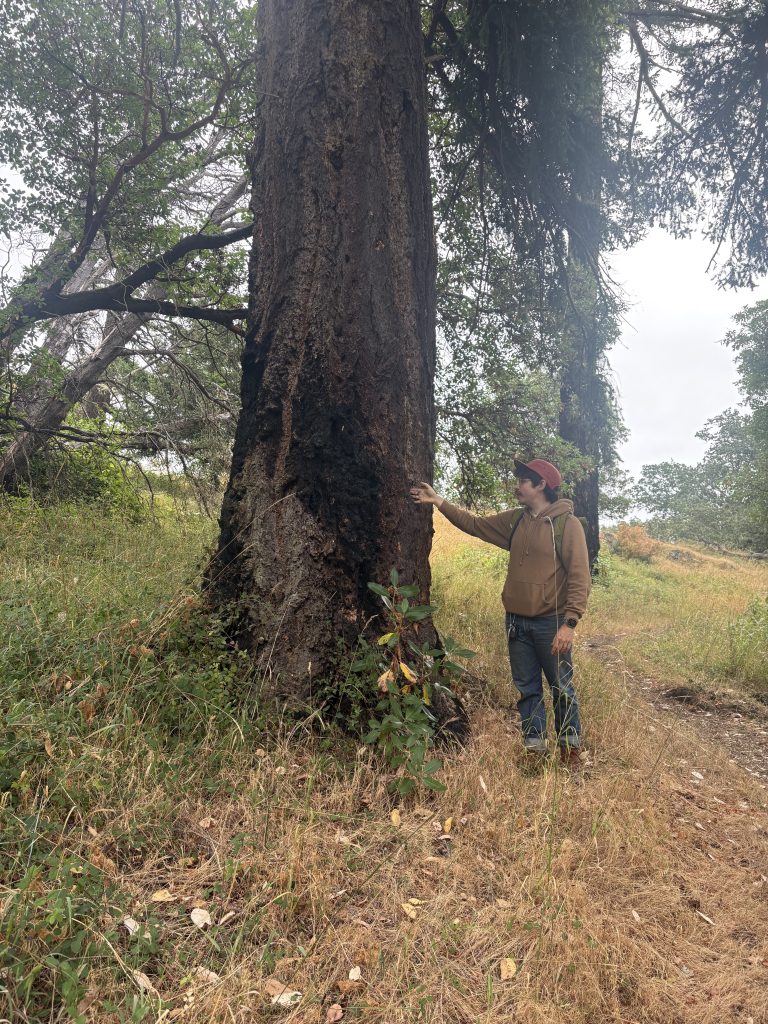
Adam taught us how to tell how old the trees were by looking at the harness and depth of the groves in the park and the amount of small branches on the tree. On our hike we also encountered the Gary Oak, or the Oregon White Oak, and learned how important they are to the ecosystem. They provide important shelter and food to a wide variety of animals, and there are currently many efforts being done to preserve them. They are the only Oak that grows in Washington. We also encountered a tree that was struck by lightning in the storm two days ago, which was really incredible to see.
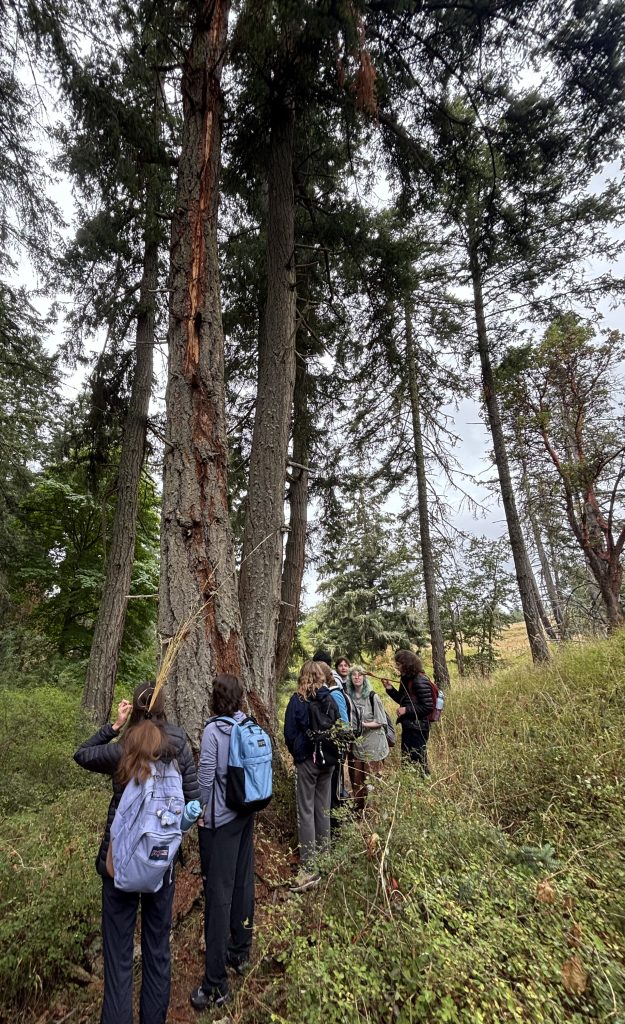
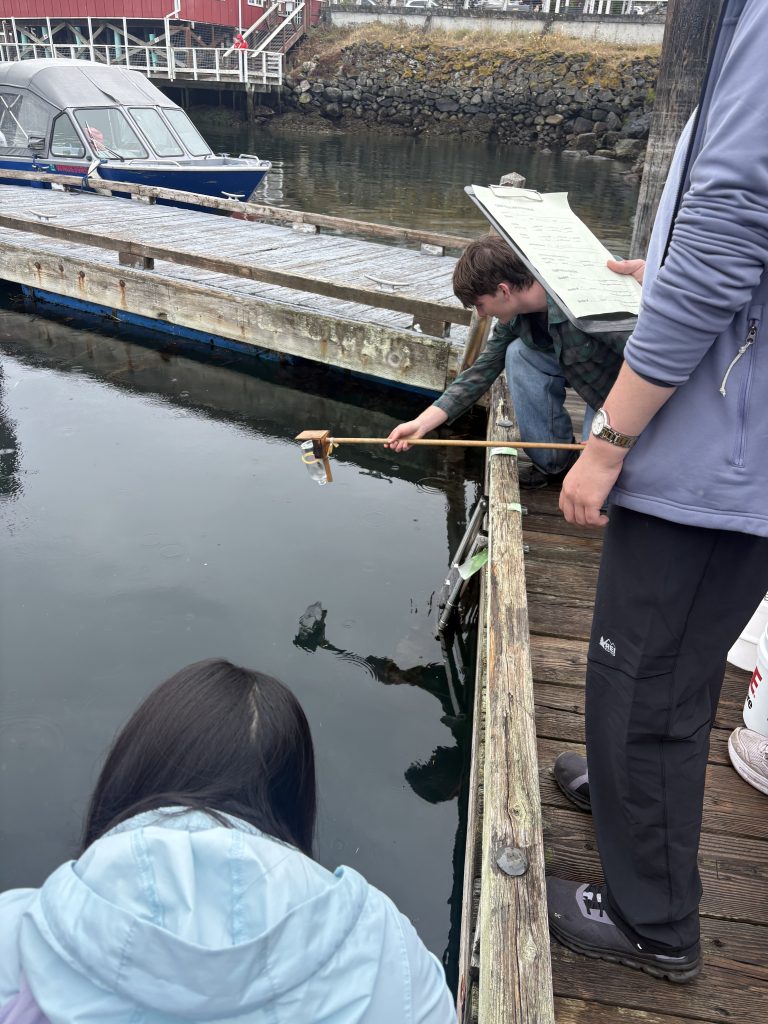
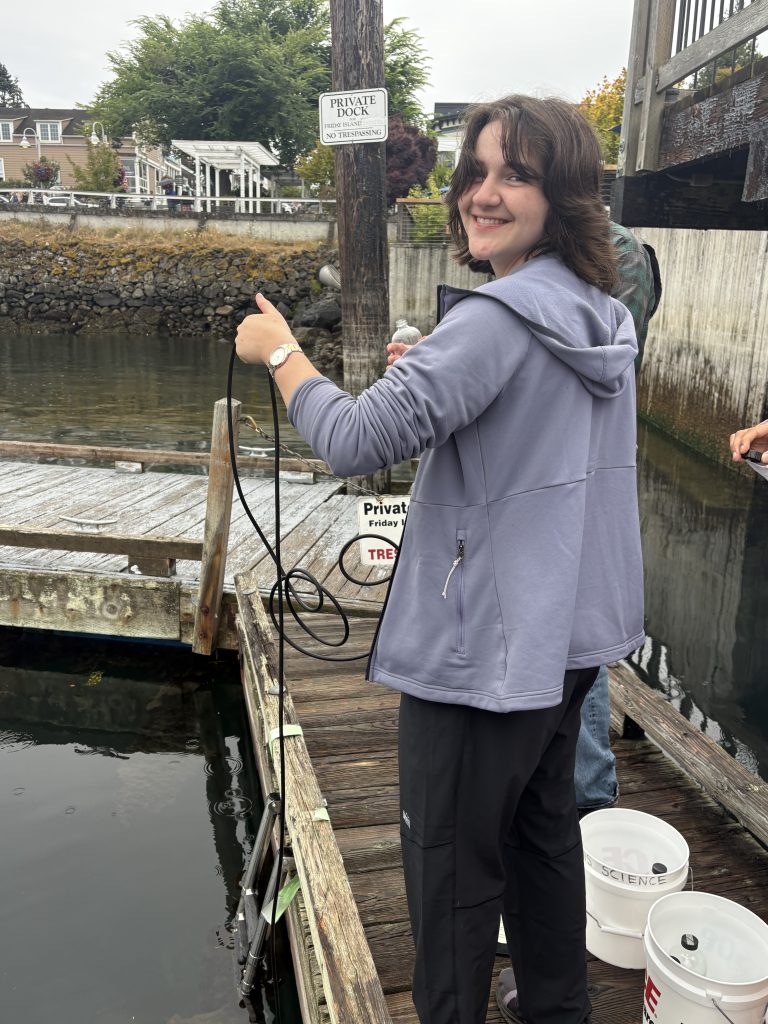
Finally, we made it to the top, eating our lunches and discussing our project ideas with Adam Martin. For the third section of our packed day, we headed to the Friday Harbor Marina to monitor to water quality, testing for the presence of Fecal Coliform, a bacteria that comes from the feces of warm blooded animals and is harmful to humans. We took glass bottles and using a wooded holding stick dipped them into the water additionally monitoring the water temperature and salinity.
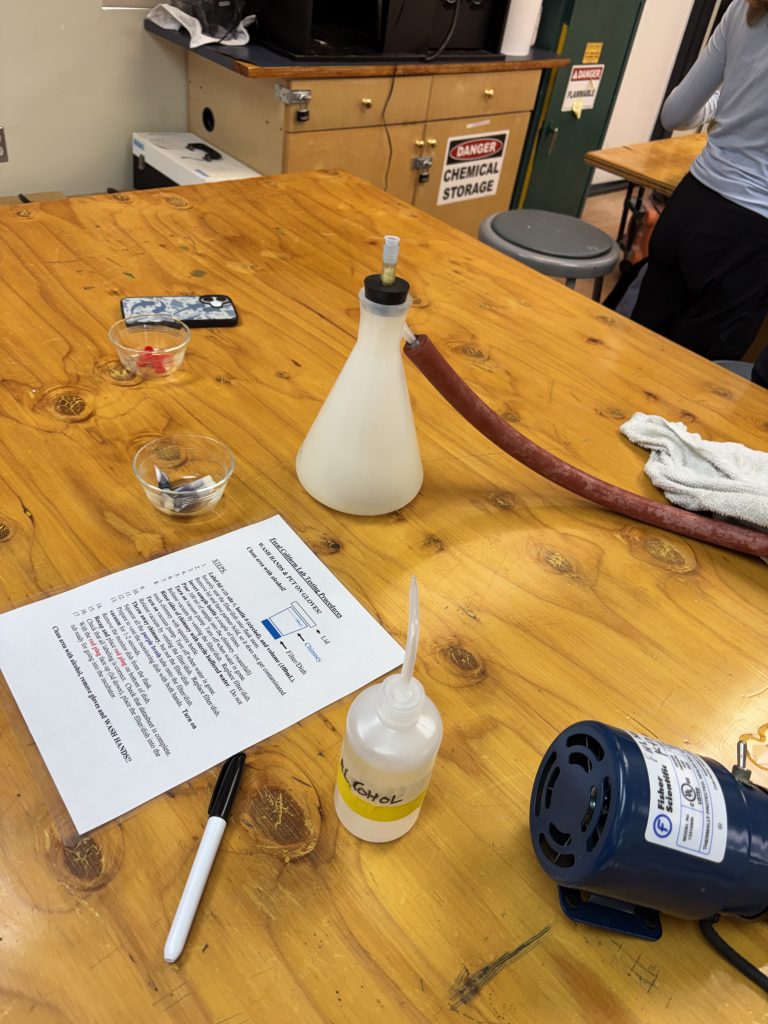
Once back at the dorms we headed to the school’s lab, where we used a vacuum pump to collect the bacteria into a filter, placing them in an incubator with the aim to grow them to become visible to our human eyes. Once visible we will be able to quantify the amount of bacteria. We will update you tomorrow with the experiment’s results!
We then settled back in at the dorms, spending some time working on our projects and getting to our various tasks!
Tonight we are excited to welcome UW research scientist Dr. Sandy Wyllie-Echeverria, a globally respected specialist in sea grasses, whose primary investigations are at the Friday Harbor Labs focused on eelgrass. He is also on the faculties of the School of Environmental Sciences at University of Victoria in BC and the College of Science and Math at the University of the Virgin Islands. Our homework for this evening is to read two of his papers that will shape tonight’s discussion, one is: Tending the meadows of the sea: a disturbance experiment based on traditional indigenous harvesting of Zostera marina L.(Zosteraceae) the southern region of Canada’s west coast. Aquatic Botany, 127, pp.26-34.