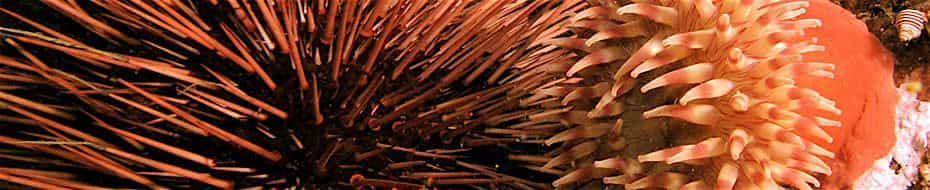
Salish Sea Sciences trip to The Whale Museum and Lime Kiln Point State Park. Thursday, July 3rd, 2025. By: Asher, Mira, Noam, and Vidita
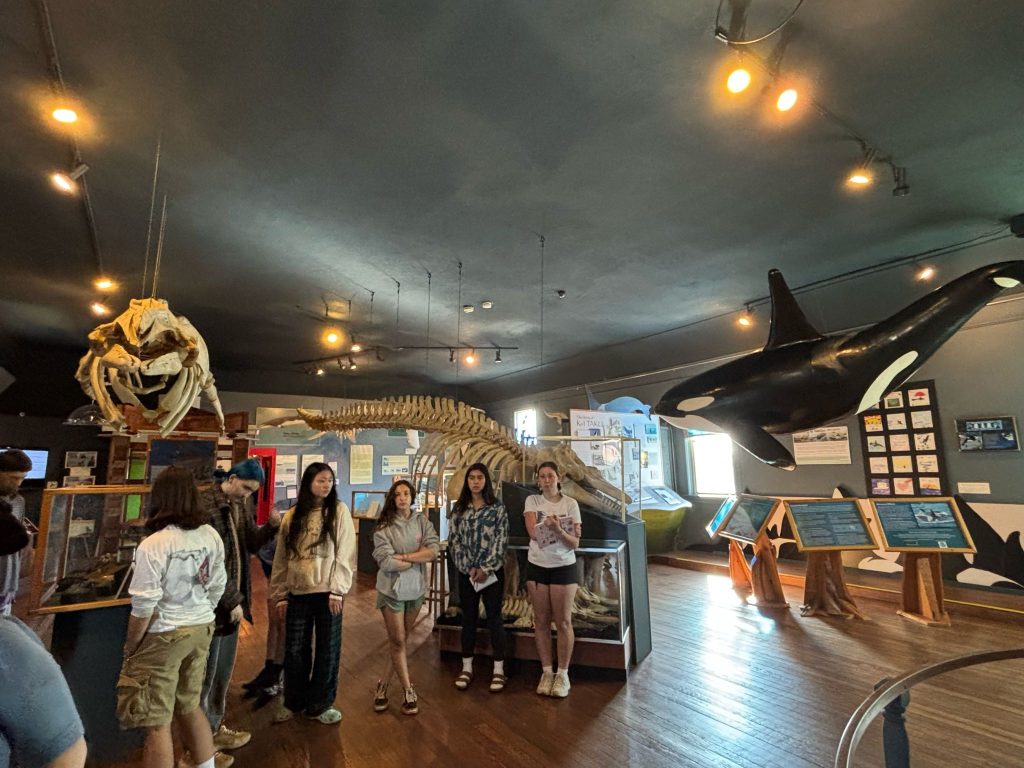
The Salish Sea cohort woke up to a clear-skied, warm morning in the dorms. After eating breakfast together–cereal, fruits, and other such things–we head out into town to find The Whale Museum, which, surprisingly, is a museum about whales.
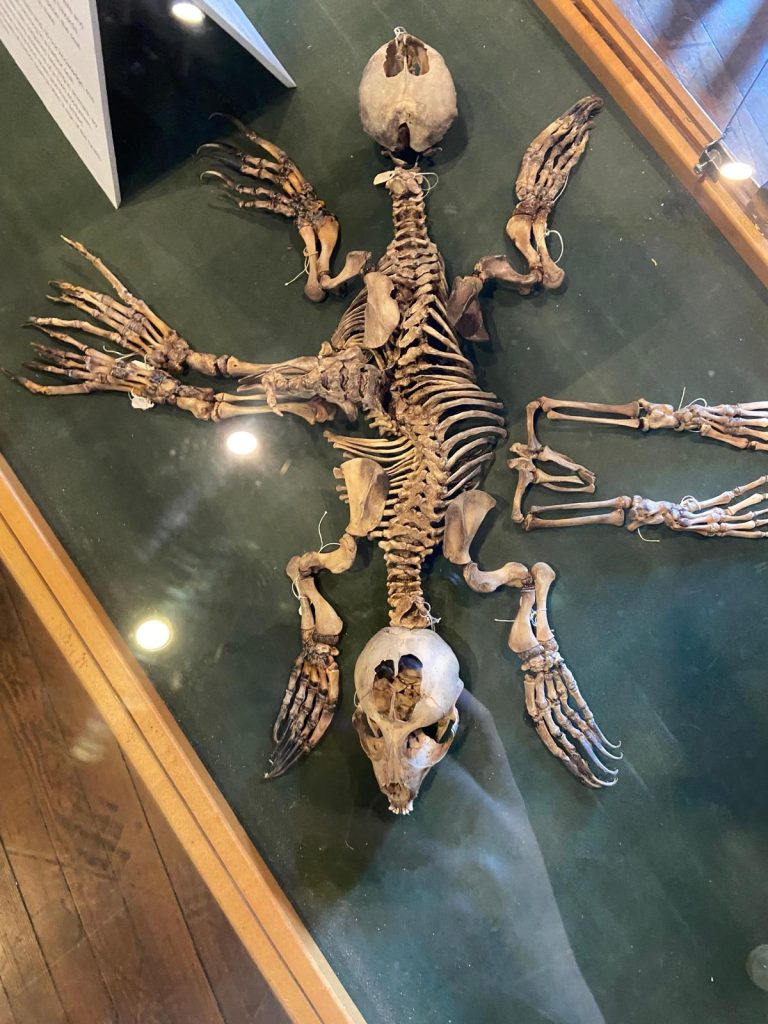
Once arriving, we were kindly greeted by Tracie Merrill, who had thoughtfully allowed our group to enter the museum before opening hours. Tracie led us through the exhibits, which covered different topics such as morphological variations between species, Coast Salish cultural stories, and the demise of conjoined twin seals. The group was quizzed on various topics about whales, such as the difference between baleen and toothed whales–which we aced. She also opened a touch-table, where the cohort was allowed to feel the skulls and furs of various marine animals.
Upon being freed to explore the museum alone, the majority of the group trailed towards a movie that explained sound pollution and its effect on whales. It explored equitable ways to reduce noise in our precious waters–including slower cargo ships and efficient propellers. Others wandered into a red, vintage booth that allowed one to ‘call’ different species such as humpback whales and otters and listen to their noises. Certain whales were so quiet one had to strain to hear their screeches, but others were so loud one could hear it from a few feet away. Some students colored shrimp, seals, and whales in whimsical colors in the children’s section.
All in all, it’s not difficult to conclude that our cohort thoroughly enjoyed learning about different species of whales and sustainability. We left the museum feeling fulfilled in our experience and excited to spend the rest of the day outdoors.
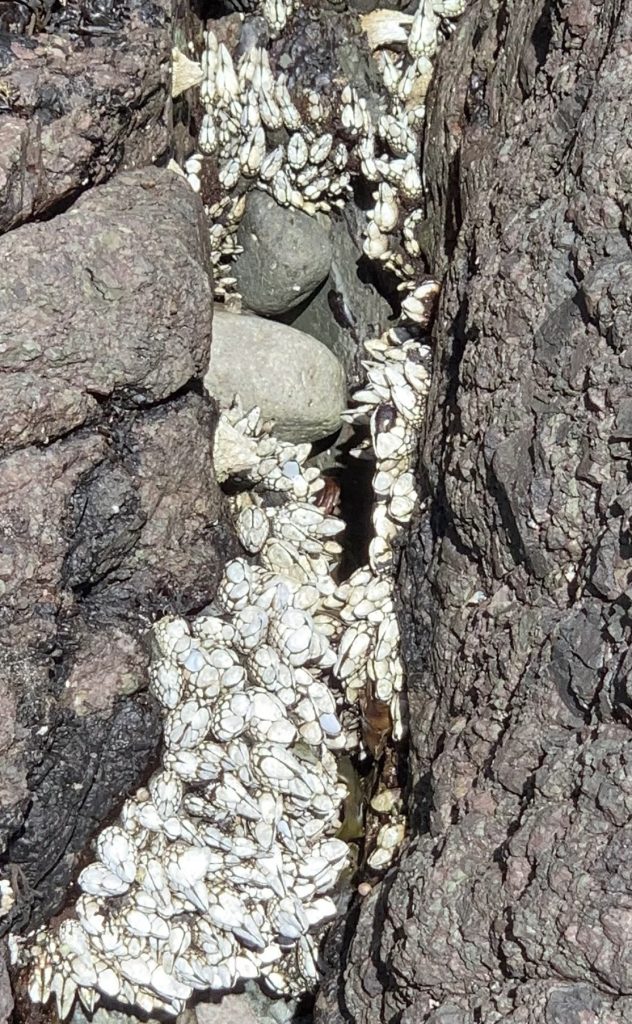
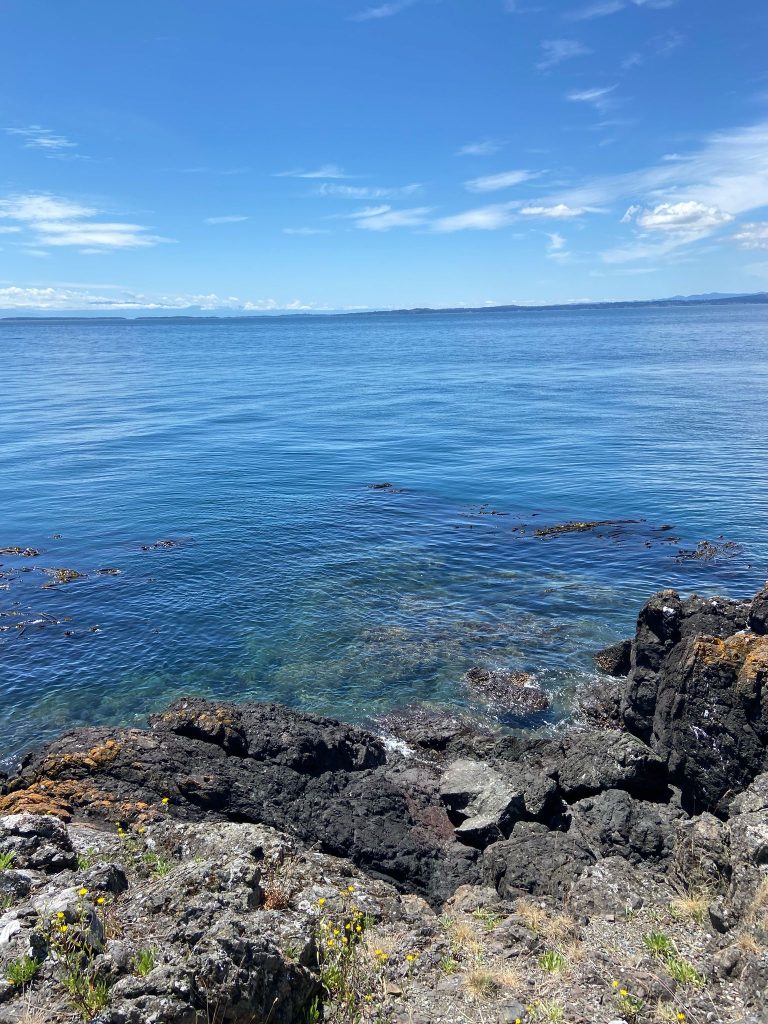
After our time at the museum, we returned to our dorm to pack lunch, which was sandwiches, fruit, and various trail snacks, to take to Lime Kiln State Park. We spent an hour there, eating, and going down to the water to stand on the pillow basalt, which, as we learned later, is cooled at a different rate, allowing it to take on a more ‘pillowy’ shape. We enjoyed our time at a new inter-tidal zone, with acorn and gooseneck barnacles, egg yolk, and moon jellies, one of whom had six gonads(the four clover rings) instead of the regular four. The jellies seemed to enjoy a mass of fallen leaves, sticks, and kelp that was floating by the shore. We certainly had fun peering at anemones after eating a fulfilling meal, and were ready to head into our next adventure.
Next, we were lucky enough to get a tour of part of Lime Kiln State Park by Erin Corra, who is the founder and program director of Friends of Lime Kiln Society (Folks). We saw many types of beautiful trees including Douglas firs and Mandronas. One tree that stood out in particular was “Old Man Doug:” a 250 year old Douglas Fir! Additionally, we passed several divers from the Friday Harbor Laboratories (where we visited yesterday) wearing gear that they said weighed over 100 pounds. We then watched as they embarked on their journey of measuring sea urchins. Our final destination was the lighthouse, where we made our way to the top and gazed out over the gorgeous Salish Sea. Some of us even spotted the beloved harbor seal, Snowball! Visible from the lighthouse was Vancouver Island and the Olympic Peninsula, providing a breathtaking view that we were all too engrossed in, ending up arriving back at the dorms late.
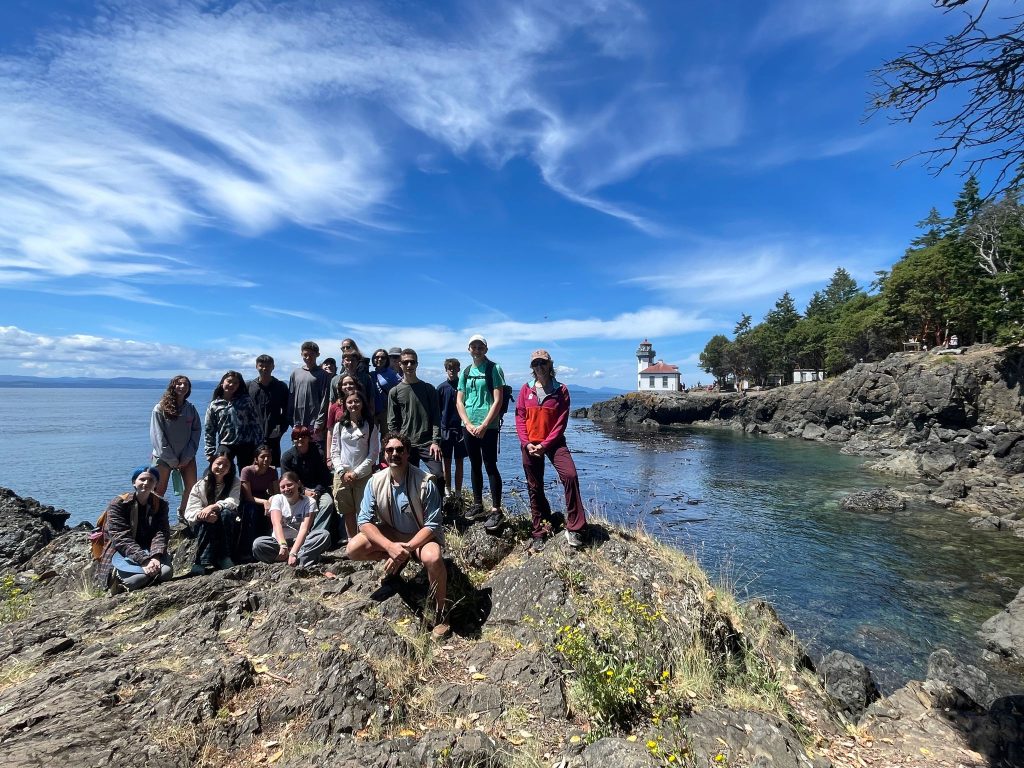
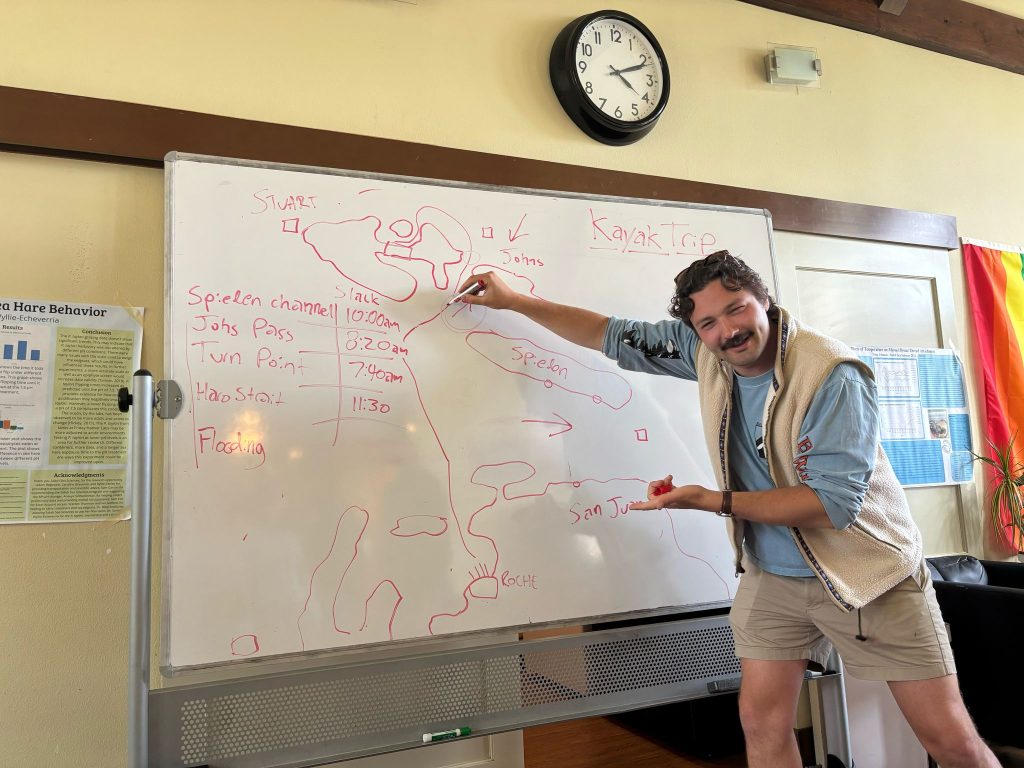
After our tour of the park, we returned(belatedly) to the dorm, where Adam, our instructor, was to tell us about our kayaking trip that we leave for on Saturday.
To end out our day, we had a delicious dinner of Indian chickpea and spinach curry, naan, salad, and fruit. Joining us were Mitch McCloskey, the Project Manager of Eelgrass Restoration for San Juan, who is in the process of completing his Masters degree at Alaska Pacific University, and Sage, an undergraduate with Western Washington University, who earned her Bachelors degree, also from Western, in geology. After dinner, they informed us of their attempts to repopulate the San Juan coasts with eelgrass by various methods. In a few days, we’ll be helping them with their research.
Overall, it was a very fun day, lots of interesting insights into the ecology of the whales and other marine mammals!