Thursday, July 10th, 2025; by Asher, Mira, Noam, and Vidita
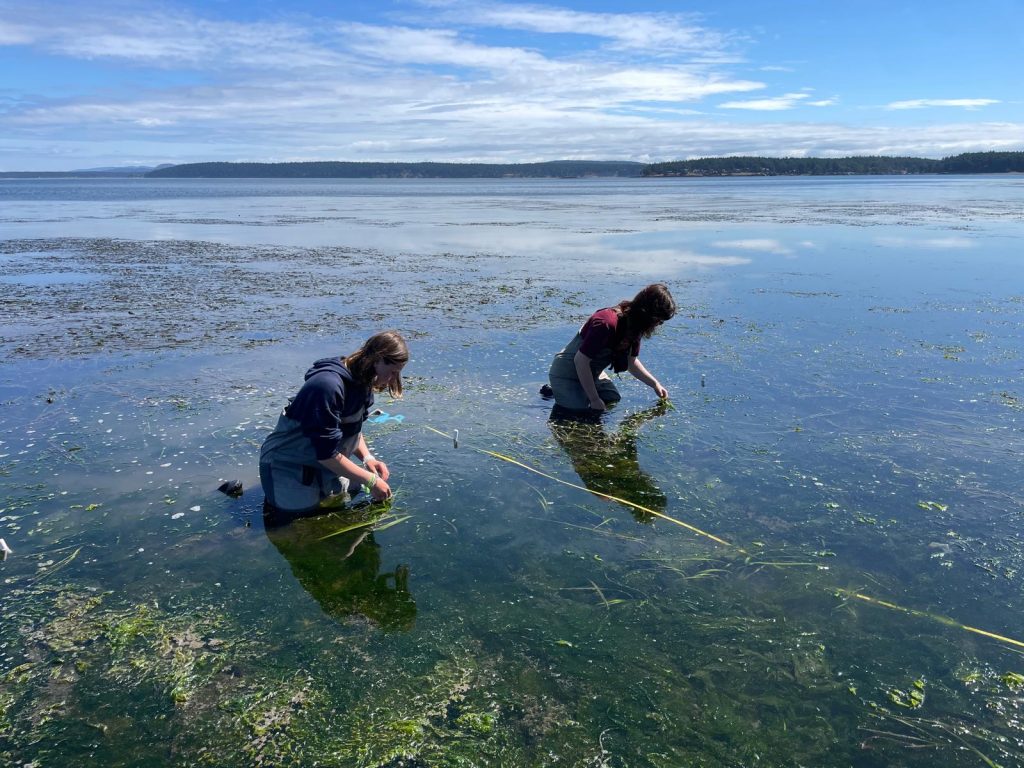
Lars and Mira trampling eelgrass (Photo from Maya)
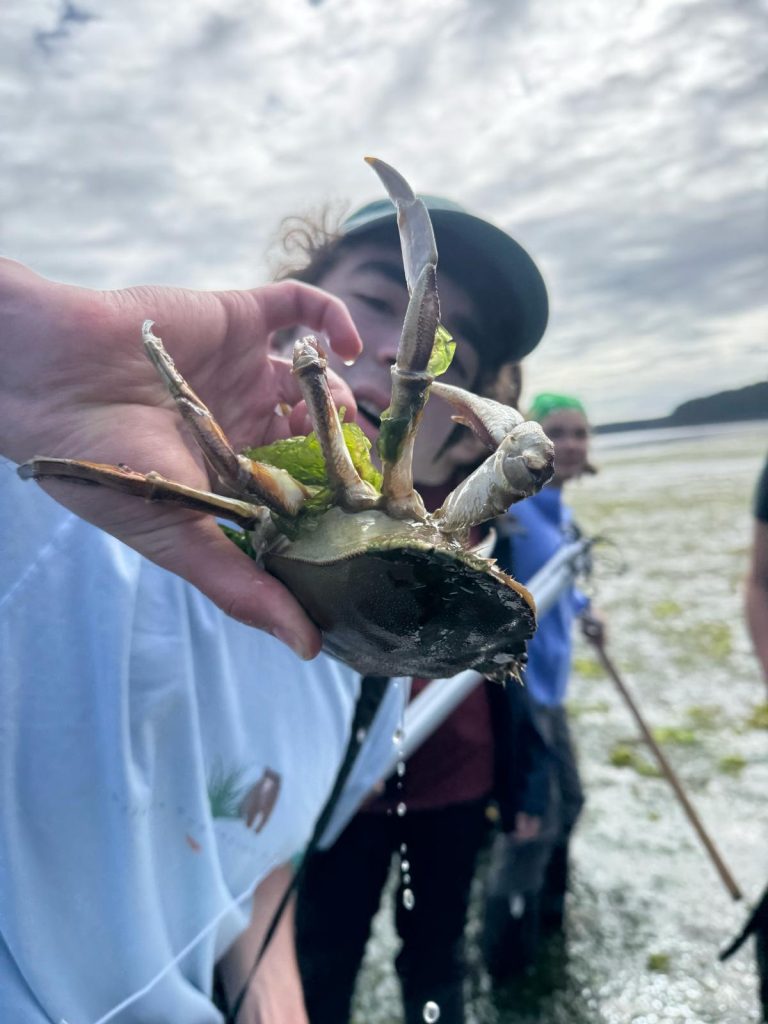
Today we were thankfully back to waking up at our regular time. We had breakfast at 8:00 and headed out a bit after 9:00, returning to 4th of July Beach to do an eelgrass survey! We were helping the San Juan Conservation District, as their eelgrass conservation crew is only two people (Mitch McCloskey and Sage, who we had over for dinner last week), making it difficult for them to get work done quickly. While there, we made note of the population of flowering heads and did several treatments to determine the effect of harvesting. We also saw many megafauna, including a giant dungeness crab, many shore crabs, and several species of bird.
Miles holding a Dungeness crab (Photo from Orrin)
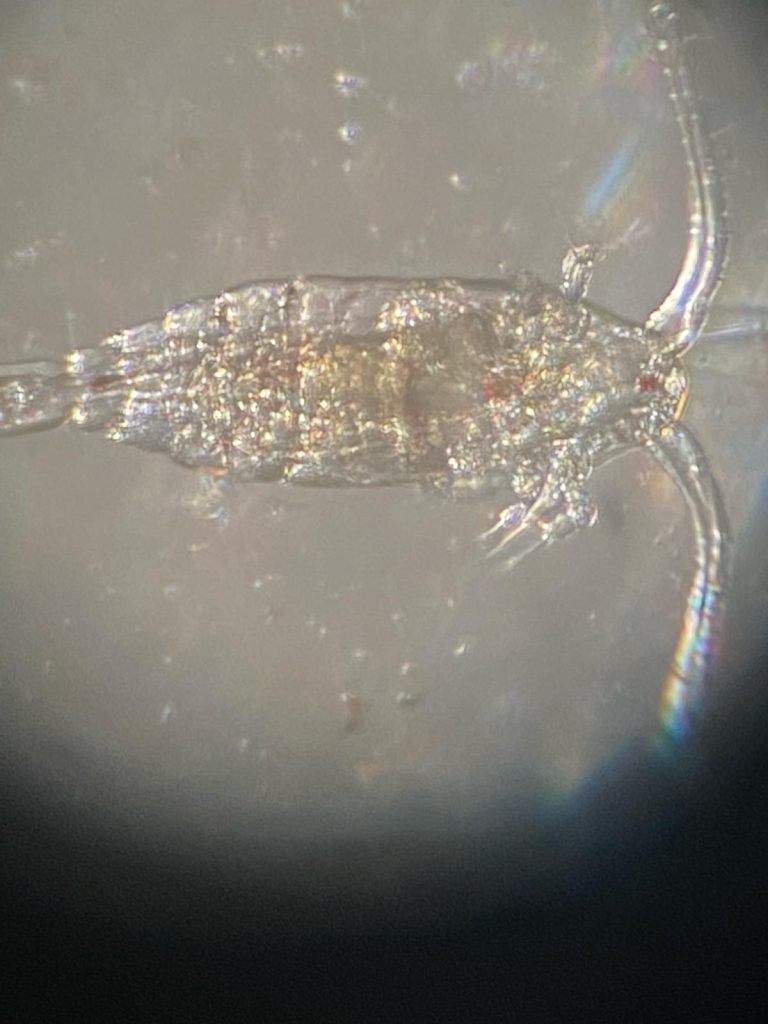
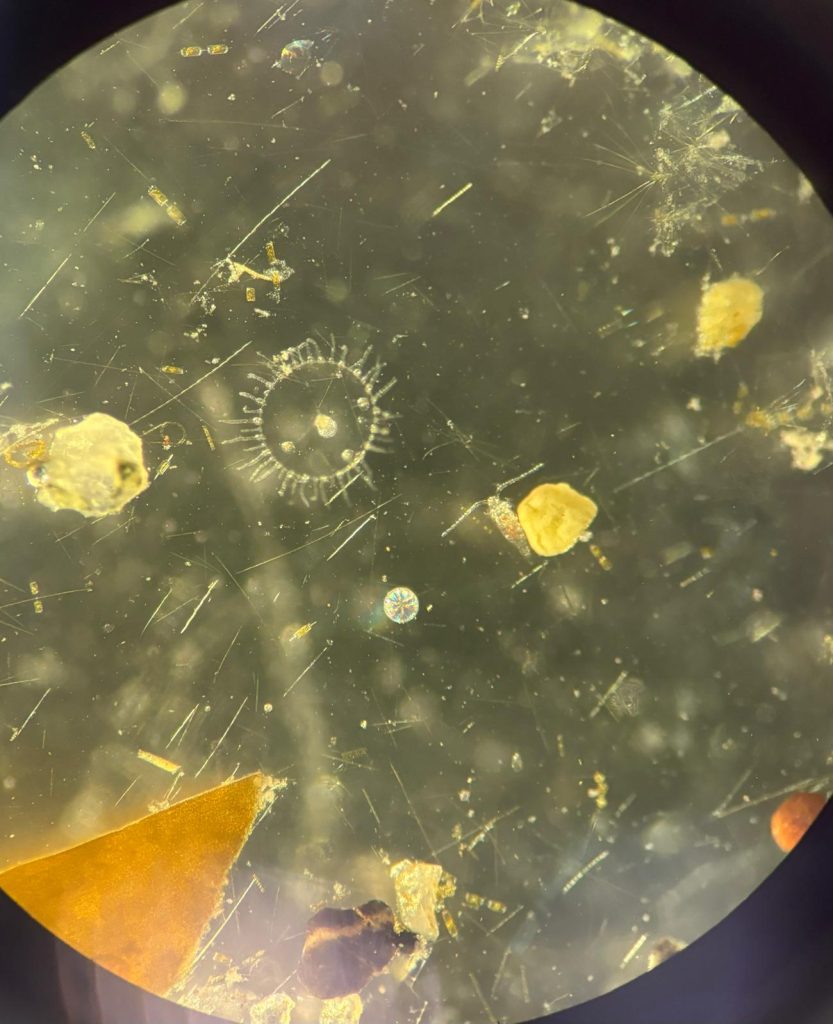
We returned to the dorms for lunch after a brief detour to look for orcas that we tragically did not see, then headed out again to pull in plankton down at the marina and examine it under our microscopes. We found many types of zooplankton and phytoplankton, including baby jellyfish and some krill. Although the lab was rather hot, it was worth it to observe these fascinating organisms.
A copepod in the genus Euchaetidae (Photo from Miles)A zoomed out microscope, showing many different types of plankton (Photo from Mira)
After free time and dinner prep, we had dinner with Jess Farrar, the research director at the Friday Harbor Whale Museum. She gave us an interesting lecture about her journey into the marine science world and pinniped facts. Some highlights include smiling at cute baby seals, learning about opportunities to contribute to The Whale Museum exhibits, and the entire room gasping at the story of “Hoover the harbor seal” who imitated his owner’s thick New England accent. We ended the presentation with a round of applause and several more questions.
The Salish Sea Sciences’ hike to Turn Point Light House on Stuart Island, Sunday, July 6th, 2025. By: Asher, and Miles
On our second day on Stuart Island, we woke bright and early, (mostly) ready to go on a three mile hike to Turn Point Lighthouse! After breakfast, we prepared for the hike, and headed out.
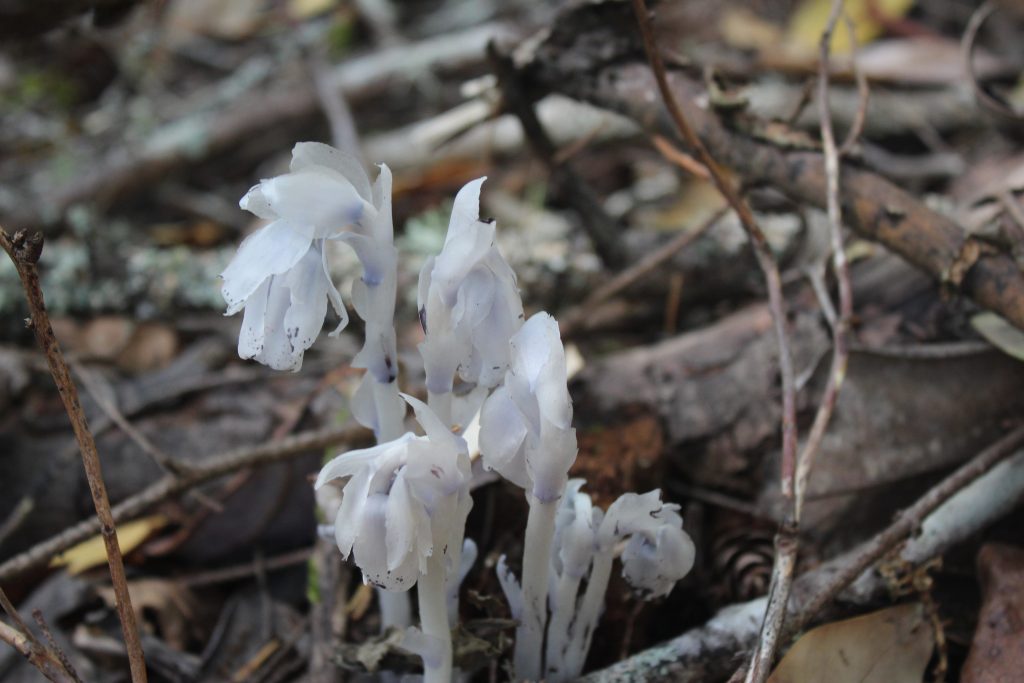
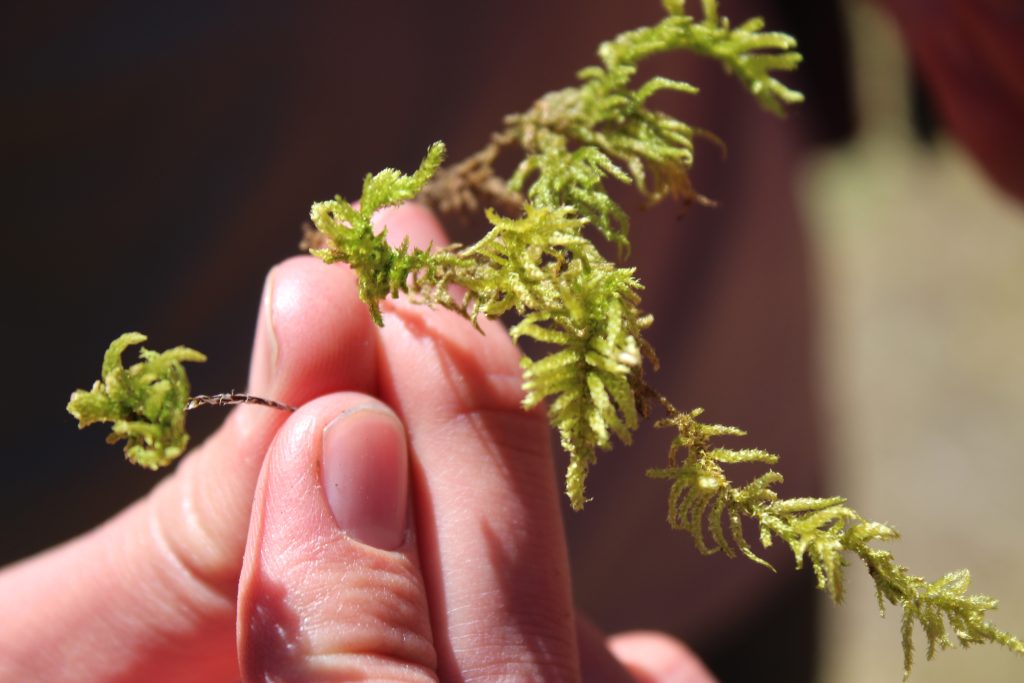
Ghost plants on the hike (Photo from Orrin)Two mosses: an acrocarp (moss that goes up, not out), left, versus a pleurocarp (moss that goes out, not up) (Photo from Orrin)
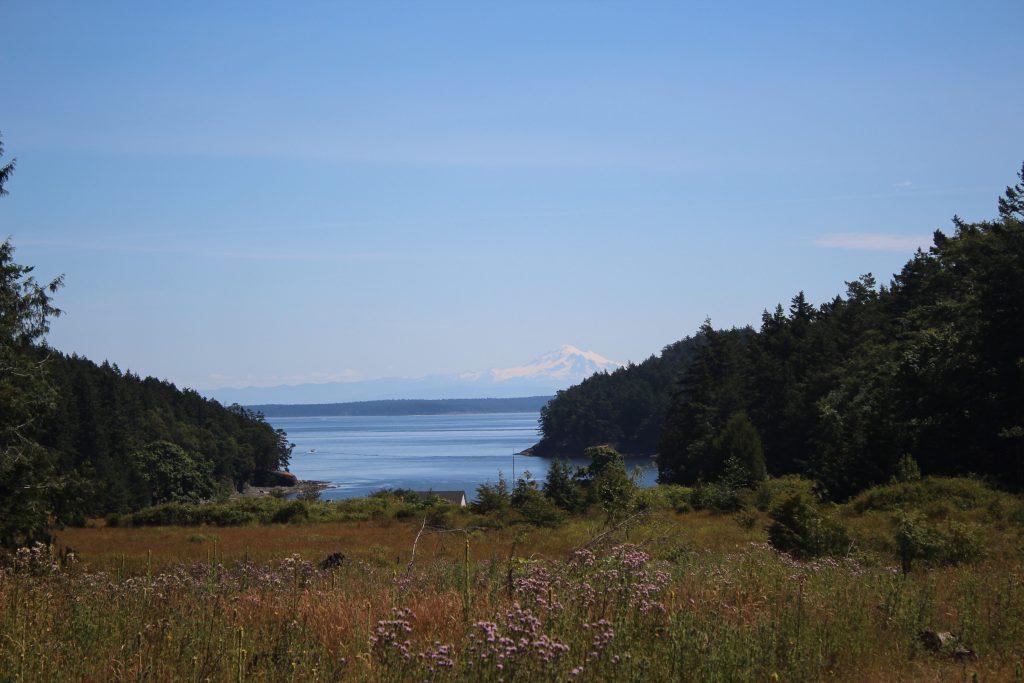
We stopped, shortly after setting out, to look around the old Stuart Island Schoolhouse and the historical museum there. We learned all about the former residents of Stuart Island and facts about the current living conditions on the islands. After that, we continued on the trail where we found a great view of Mount Baker, an impressive sight.
The view of Mount Baker (Photo from Orrin)
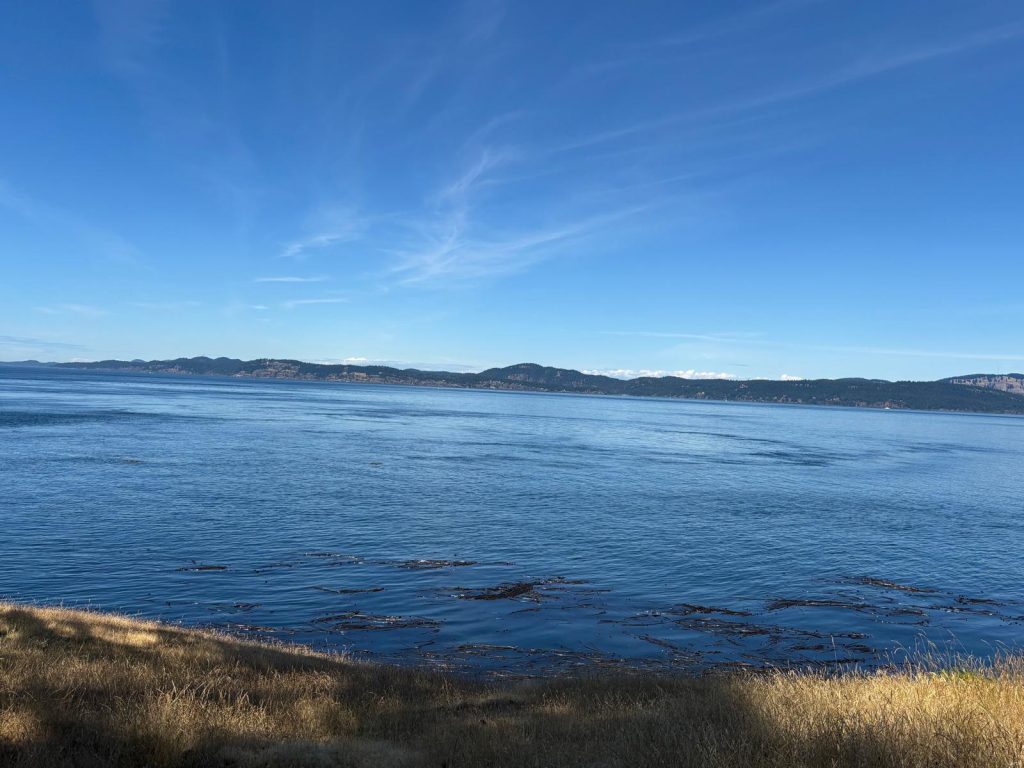
Once at Turn Point, we had a delicious lunch of pita sandwiches and looked at the view for a while—some of us were lucky enough to see a harbor seal playing in the bull kelp. After lunch, we took a small guided tour of the lighthouse keeper’s quarters. We hung around for a while longer, looking at tide pools, birds, plants, kelp, and the like.
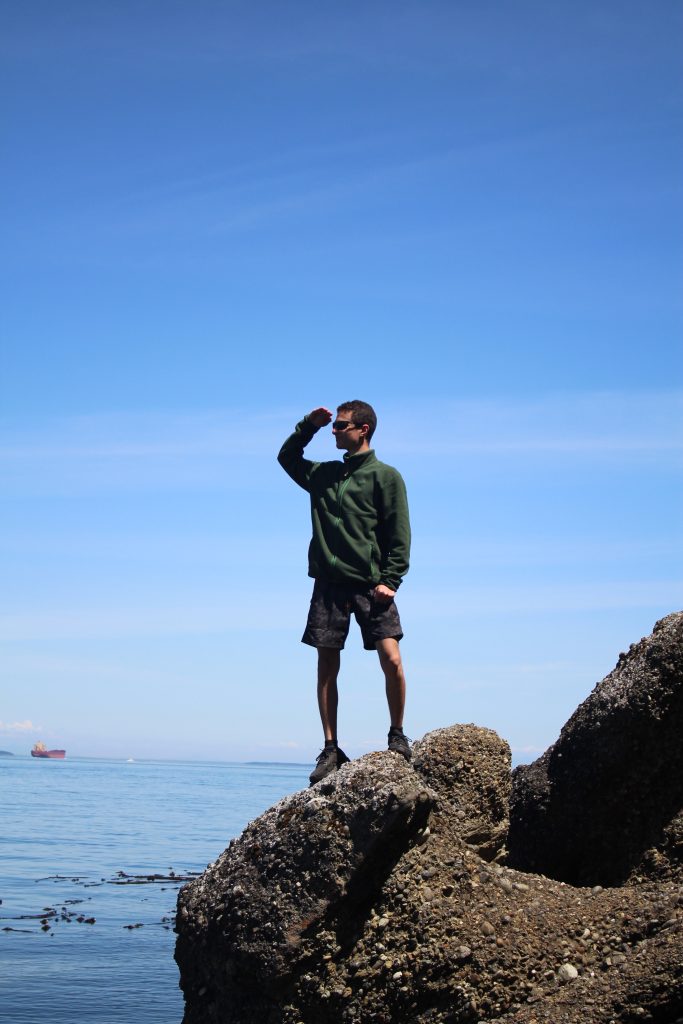
The view from Turn Point Lighthouse (Photo from Mira)Noam on a rock, majestically (Photo by Orrin)
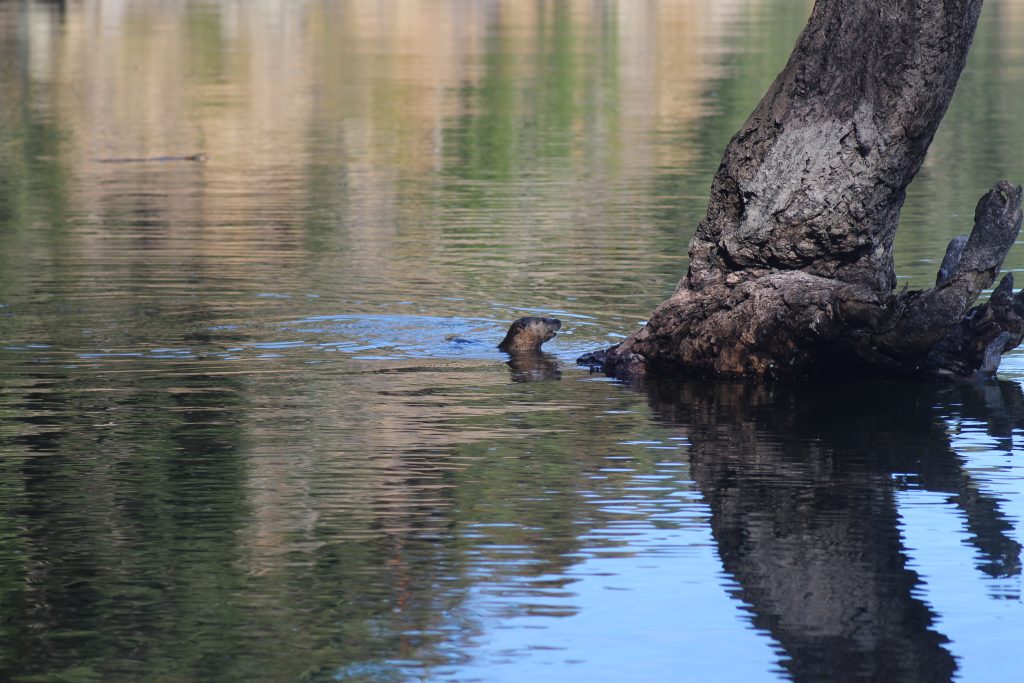
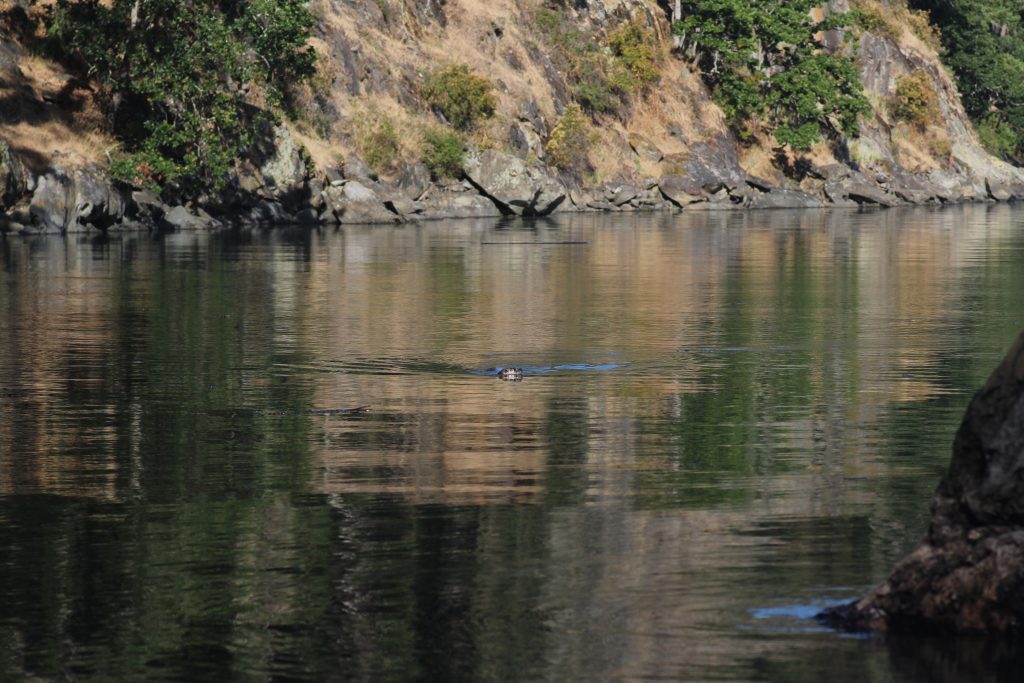
We then hiked back to the campsite and got several hours to relax before one of our science directors, Maya, gave an interesting talk about kelp. The talk, though, was interrupted by a river otter swimming by, which we took delight in watching. We then got some more time to rest and socialize, before a delicious dinner (pasta, both pesto and red sauce).
Damn charismatic megafauna, distracting everyone from the algae (an otter examining a log) (Photo from Orrin)The otter swimming away in Reed Harbor, Stuart Island (Photo from Orrin)
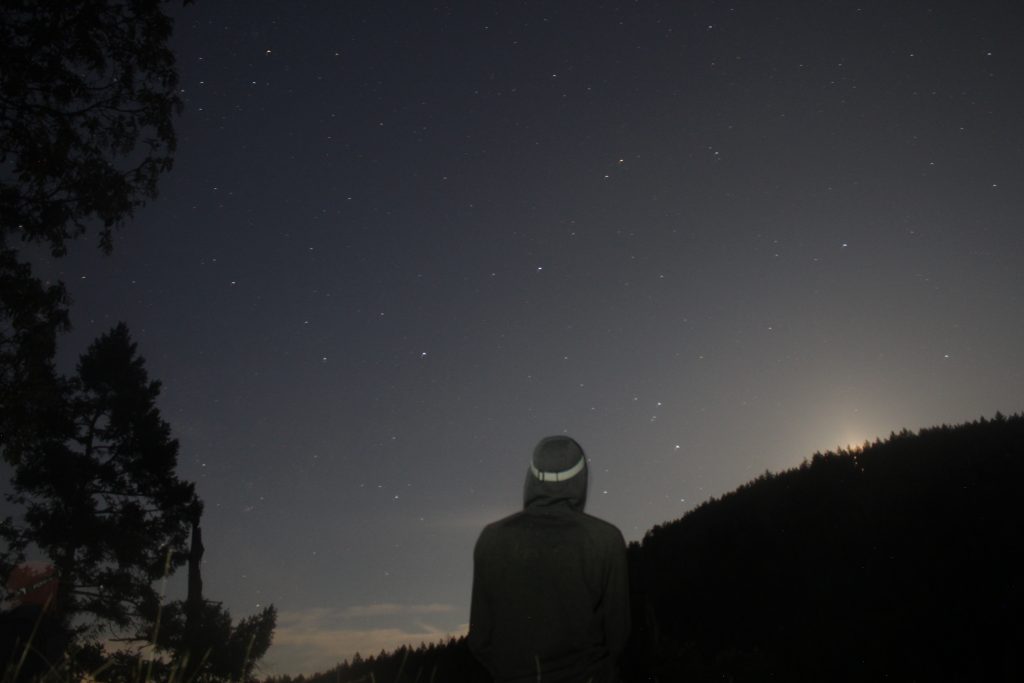
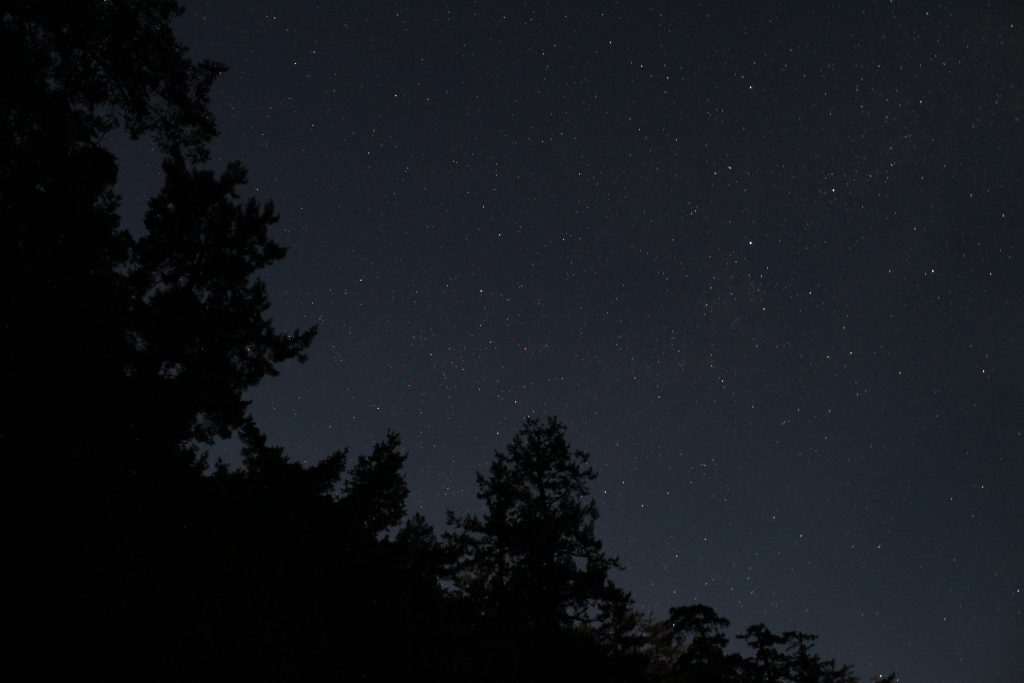
After dinner, many of us stayed up late to stargaze, despite having to get up at 7 am the next morning. The stars were beautiful and a lovely way to close out a trip.
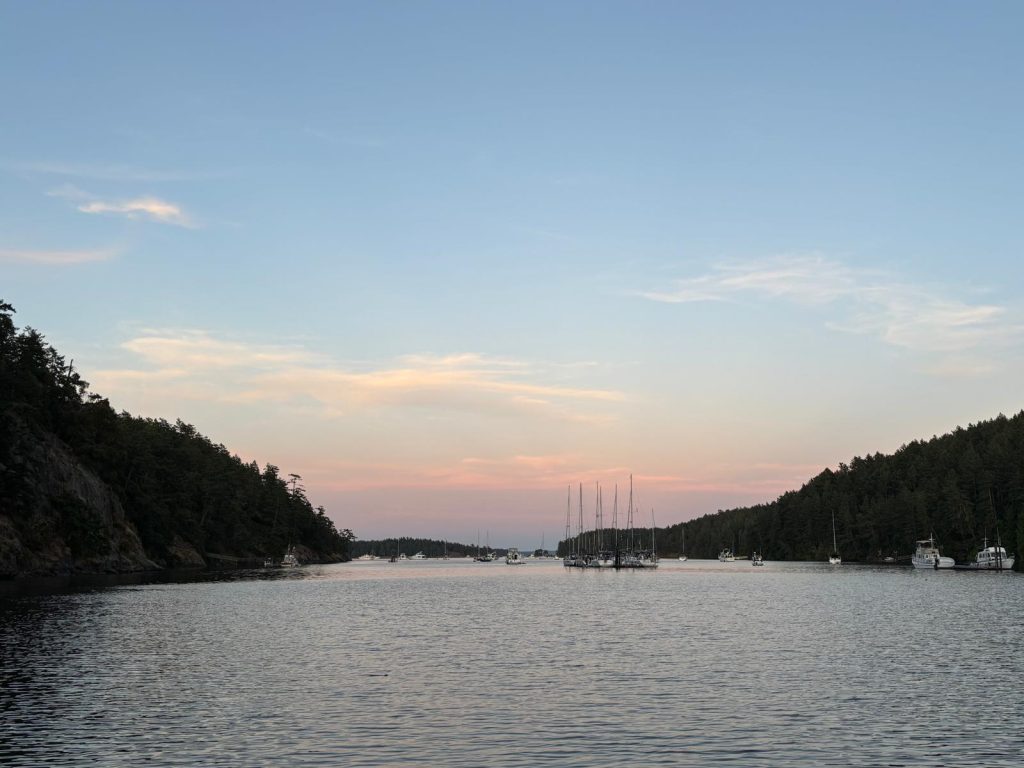
Sunset from Stuart Island (Photo from Mira)The stars (+ Trevor) (Photo from Orrin)The stars behind Douglas firs (Photo from Orrin)
Salish Sea Sciences trip to The Whale Museum and Lime Kiln Point State Park. Thursday, July 3rd, 2025. By: Asher, Mira, Noam, and Vidita
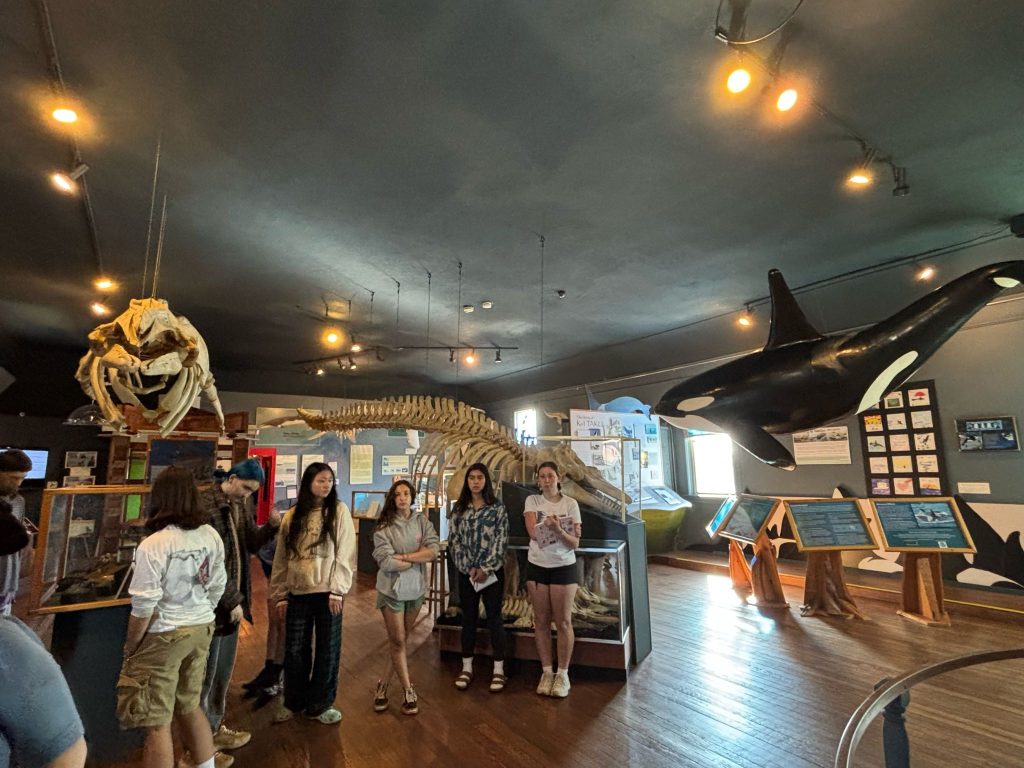
The group in the Whale Museum(Photo by Mira)
The Salish Sea cohort woke up to a clear-skied, warm morning in the dorms. After eating breakfast together–cereal, fruits, and other such things–we head out into town to find The Whale Museum, which, surprisingly, is a museum about whales.
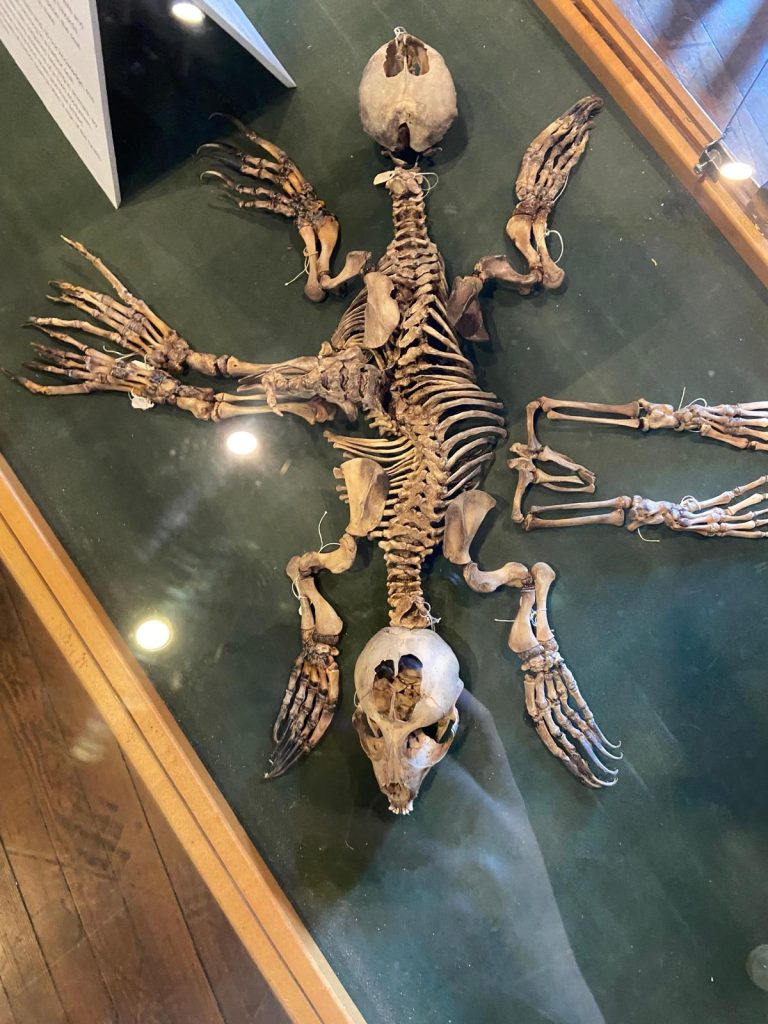
Once arriving, we were kindly greeted by Tracie Merrill, who had thoughtfully allowed our group to enter the museum before opening hours. Tracie led us through the exhibits, which covered different topics such as morphological variations between species, Coast Salish cultural stories, and the demise of conjoined twin seals. The group was quizzed on various topics about whales, such as the difference between baleen and toothed whales–which we aced. She also opened a touch-table, where the cohort was allowed to feel the skulls and furs of various marine animals.
Upon being freed to explore the museum alone, the majority of the group trailed towards a movie that explained sound pollution and its effect on whales. It explored equitable ways to reduce noise in our precious waters–including slower cargo ships and efficient propellers. Others wandered into a red, vintage booth that allowed one to ‘call’ different species such as humpback whales and otters and listen to their noises. Certain whales were so quiet one had to strain to hear their screeches, but others were so loud one could hear it from a few feet away. Some students colored shrimp, seals, and whales in whimsical colors in the children’s section.
All in all, it’s not difficult to conclude that our cohort thoroughly enjoyed learning about different species of whales and sustainability. We left the museum feeling fulfilled in our experience and excited to spend the rest of the day outdoors.
Conjoined Harbor Seal twins from 2010, the only specimen of its kind(Photo by Asher)
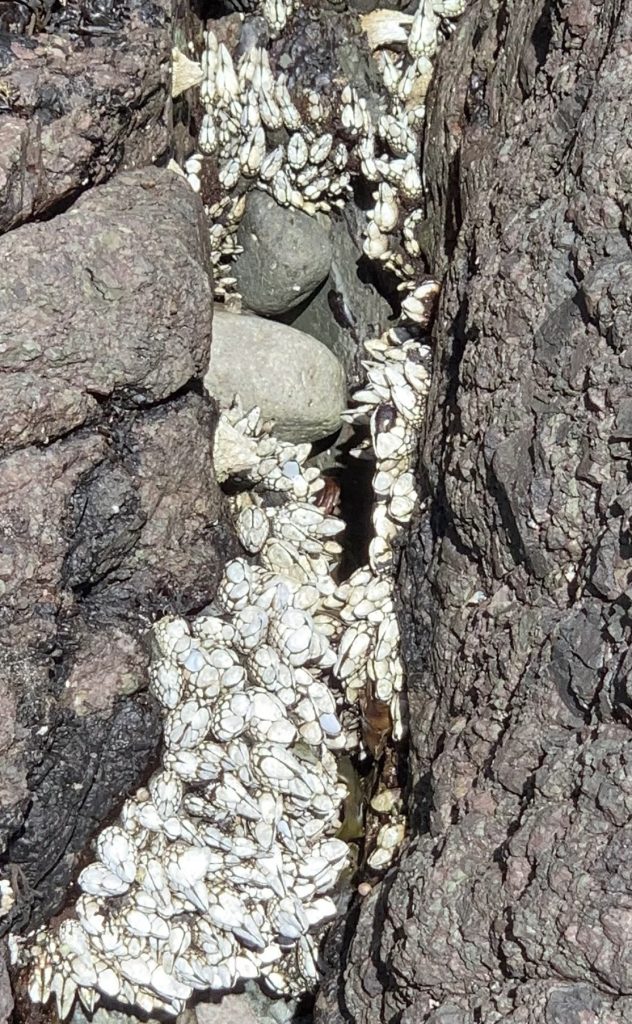
After our time at the museum, we returned to our dorm to pack lunch, which was sandwiches, fruit, and various trail snacks, to take to Lime Kiln State Park. We spent an hour there, eating, and going down to the water to stand on the pillow basalt, which, as we learned later, is cooled at a different rate, allowing it to take on a more ‘pillowy’ shape. We enjoyed our time at a new inter-tidal zone, with acorn and gooseneck barnacles, egg yolk, and moon jellies, one of whom had six gonads(the four clover rings) instead of the regular four. The jellies seemed to enjoy a mass of fallen leaves, sticks, and kelp that was floating by the shore. We certainly had fun peering at anemones after eating a fulfilling meal, and were ready to head into our next adventure.
Some gooseneck barnacles on the rock reefs at Lime Kiln State Park(Photo by Noam)
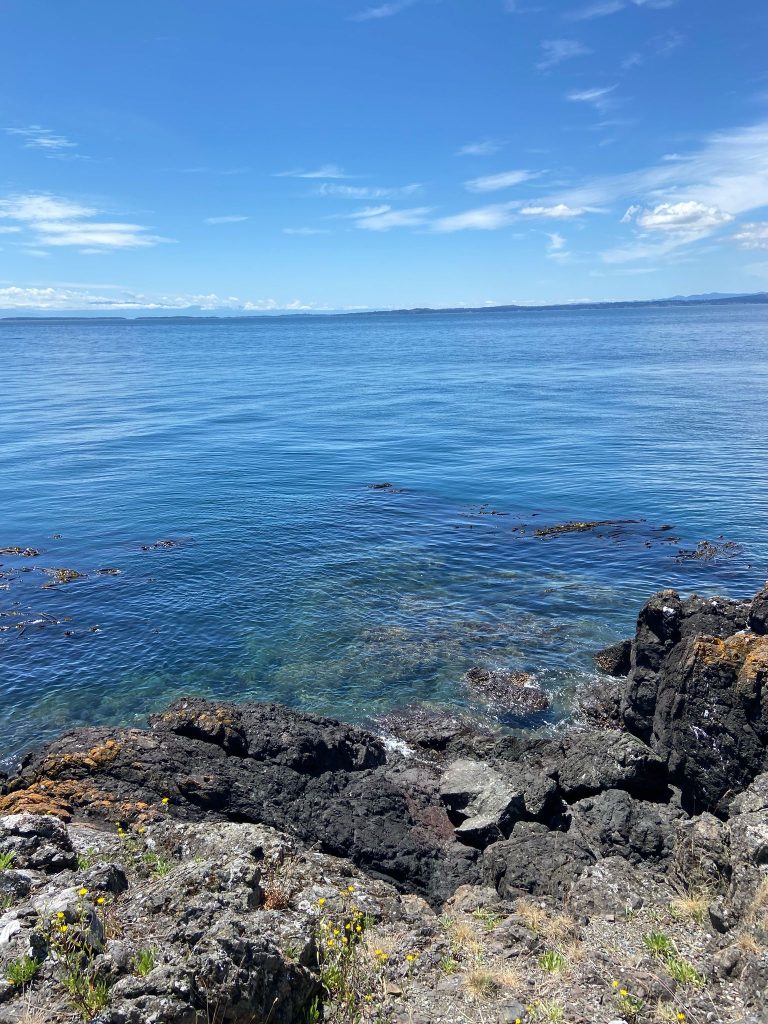
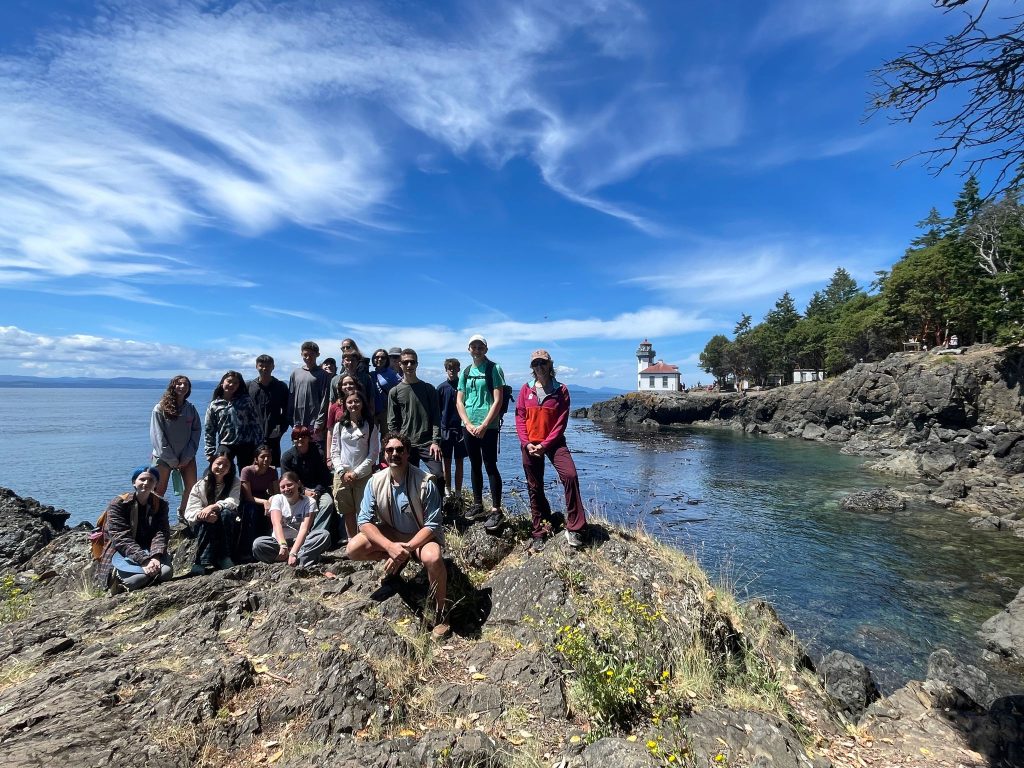
Next, we were lucky enough to get a tour of part of Lime Kiln State Park by Erin Corra, who is the founder and program director of Friends of Lime Kiln Society (Folks). We saw many types of beautiful trees including Douglas firs and Mandronas. One tree that stood out in particular was “Old Man Doug:” a 250 year old Douglas Fir! Additionally, we passed several divers from the Friday Harbor Laboratories (where we visited yesterday) wearing gear that they said weighed over 100 pounds. We then watched as they embarked on their journey of measuring sea urchins. Our final destination was the lighthouse, where we made our way to the top and gazed out over the gorgeous Salish Sea. Some of us even spotted the beloved harbor seal, Snowball! Visible from the lighthouse was Vancouver Island and the Olympic Peninsula, providing a breathtaking view that we were all too engrossed in, ending up arriving back at the dorms late.
The view from the cliffs in Lime Kiln Point Park(Photo by Asher)The group in front of the lighthouse in Lime Kiln Point Park(Photo by Erin Corra)
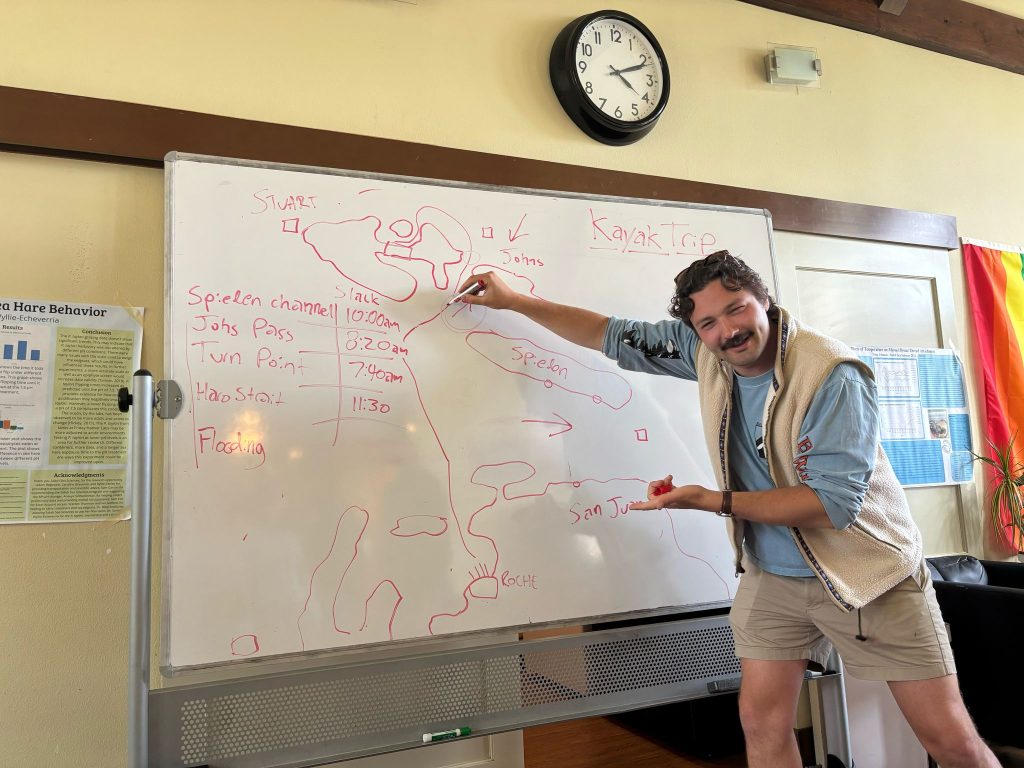
After our tour of the park, we returned(belatedly) to the dorm, where Adam, our instructor, was to tell us about our kayaking trip that we leave for on Saturday.
Adam posing in front of his glorious map of our kayaking trip(Photo by Mira)
To end out our day, we had a delicious dinner of Indian chickpea and spinach curry, naan, salad, and fruit. Joining us were Mitch McCloskey, the Project Manager of Eelgrass Restoration for San Juan, who is in the process of completing his Masters degree at Alaska Pacific University, and Sage, an undergraduate with Western Washington University, who earned her Bachelors degree, also from Western, in geology. After dinner, they informed us of their attempts to repopulate the San Juan coasts with eelgrass by various methods. In a few days, we’ll be helping them with their research.
Overall, it was a very fun day, lots of interesting insights into the ecology of the whales and other marine mammals!