Blog Credits: Aoife, Violet, Ripley, Wesley
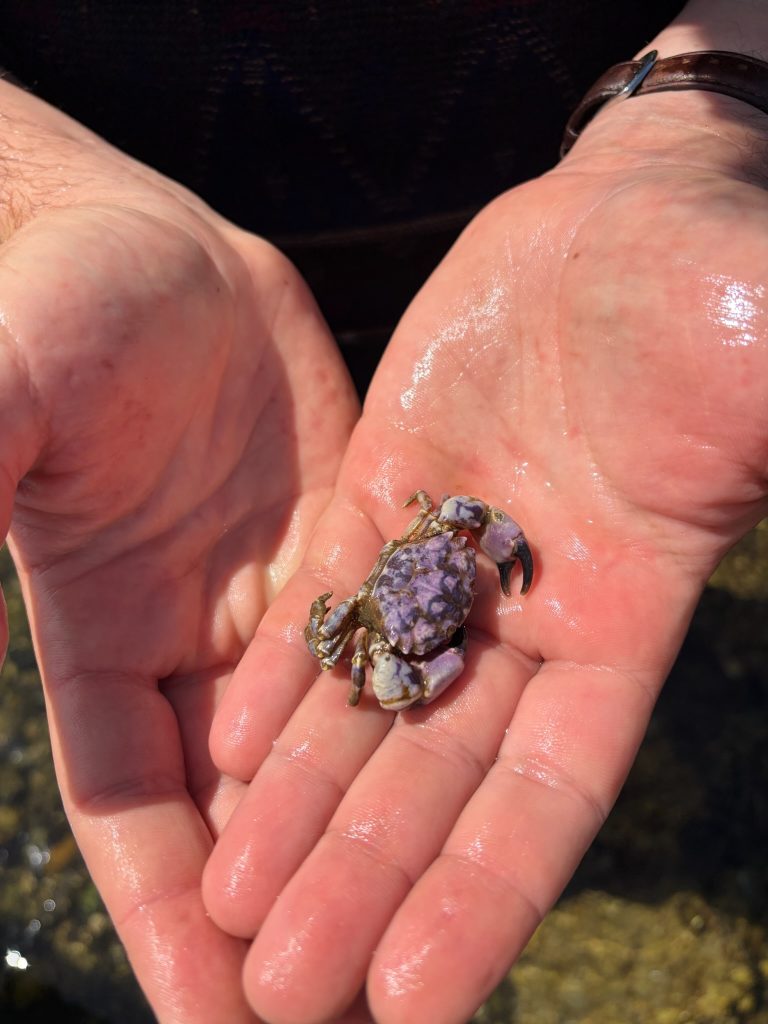
Do you know how many species of clams there are around Argyle Beach? Today we learned about the little neck clam, the butter clam, and the invasive varnish clam, among many other organisms by the beach. The start to today, however, was a little more laid-back.
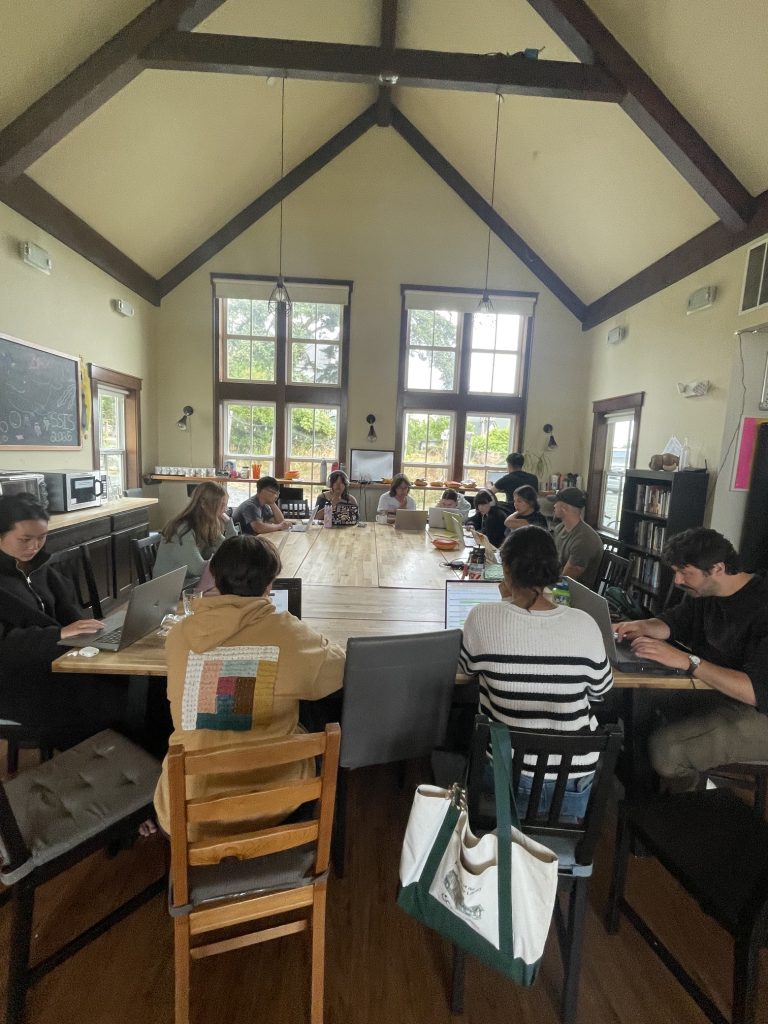
Today we switched it up with a relaxing, project-focused morning in preparation for Monday, when our topic selection is due. This mainly included background research, hypothesis development, methodology, and much support from our wonderful science team!
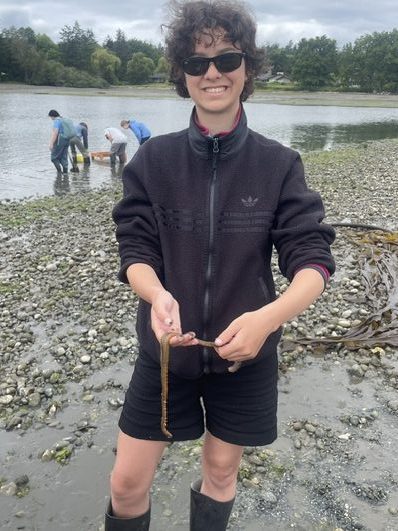
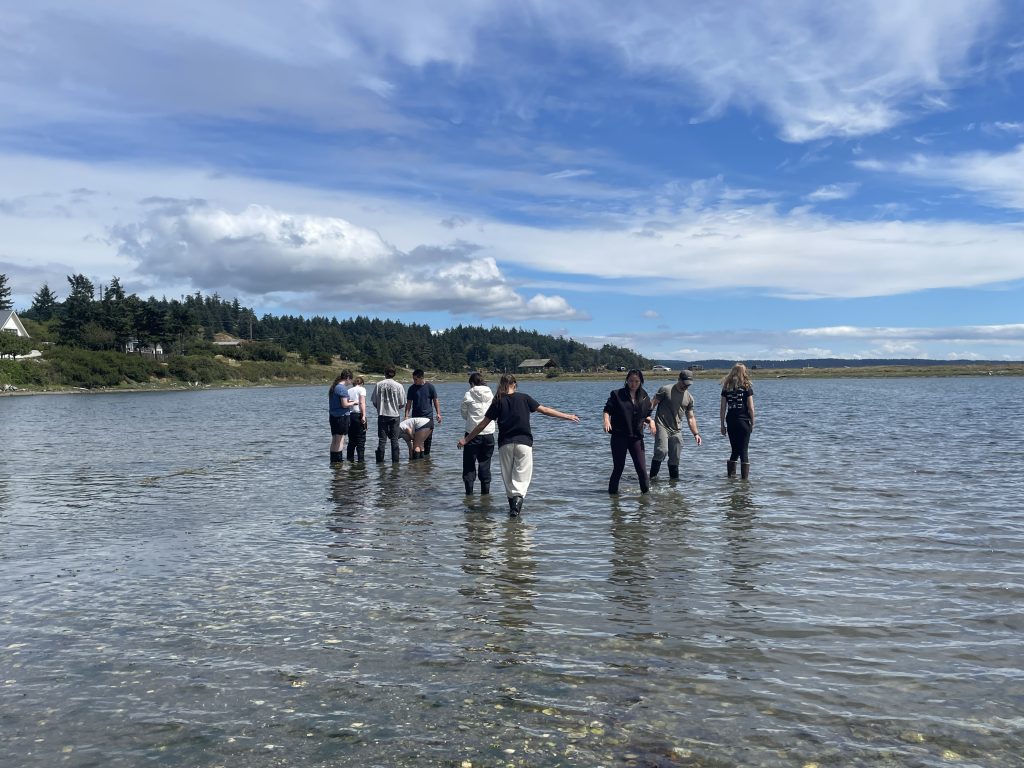
For a nice mid-day break, we packed lunch and headed out to Jackson Beach, where we explored the bay and adjacent Argyle Lagoon. While we were there, we dug for clams and waded in the natural saltwater stream flowing from the lagoon to the sea.
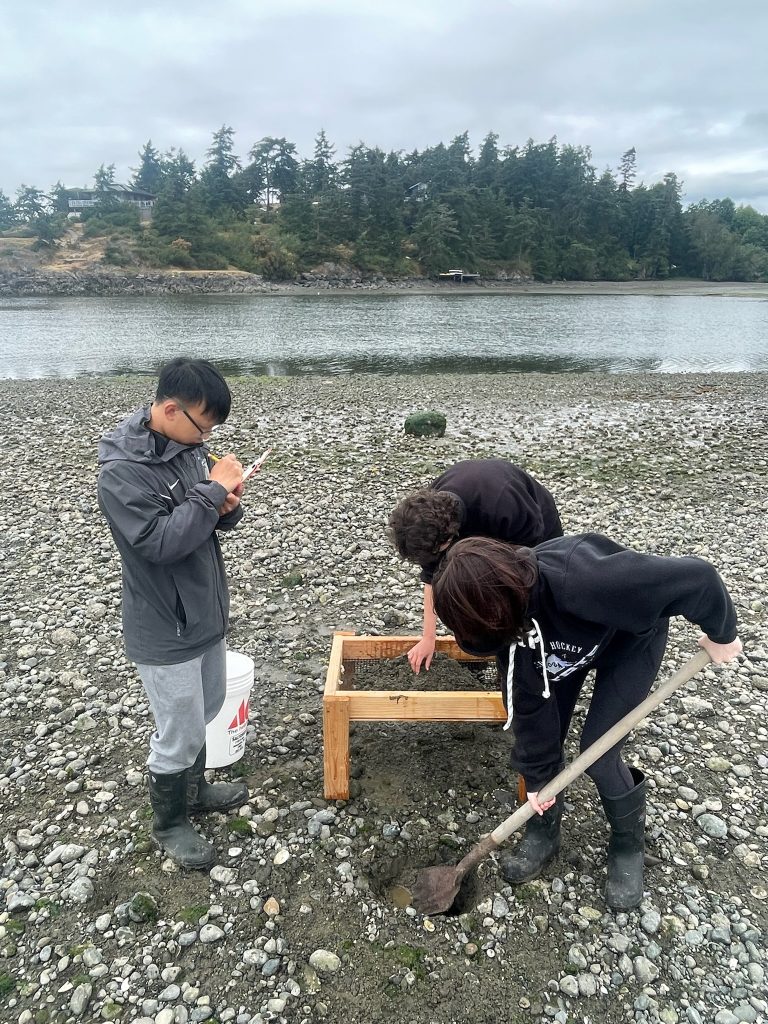
Today’s clam dig was both fun and informative, as any good scientific field work should be! Each group of students dug four 1×1” holes, two further up the beach (high intertidal) and two near the water (low intertidal). The extracted sediment was placed into large sieves, where clams were sorted from rocks and other invertebrates. Additionally, invasive Varnish Clams were separated from native clams–such as butter clams–which were reburied.
We are excited to welcome our guest for dinner tonight: Joe Heras, a scientist currently doing work with genomics and environmental DNA, or eDNA for short, at the FHL labs. Dr. Heras and his team are able to analyze water samples to determine what fish have been in the water. His experience in the field, as well as the lab, makes him a valuable mentor going forward as students continue to develop their experiments and become immersed in the world of science.