By: Hitomi, Eden, Trevor, and Harper
The dorm woke up to beautiful sunny weather and the breakfast crew’s spread of scrumptious cereals, yogurt, granola, bread, and fresh berries. Some eager folks went out for a quick morning workout, while others helped themselves to coffee in the area. First, we were introduced to the structure of our Pilot Project and shown examples from past years projects. Maya and Riley led a tour of our on-campus lab, which will act as a workspace for some over the next 4 weeks, and shortly after, we were delighted by Adam’s “Phyla of the Salish Sea” presentation. We gained base-level knowledge of local marine organisms, which was later used to explore the tide pools at Deadman’s Cove.
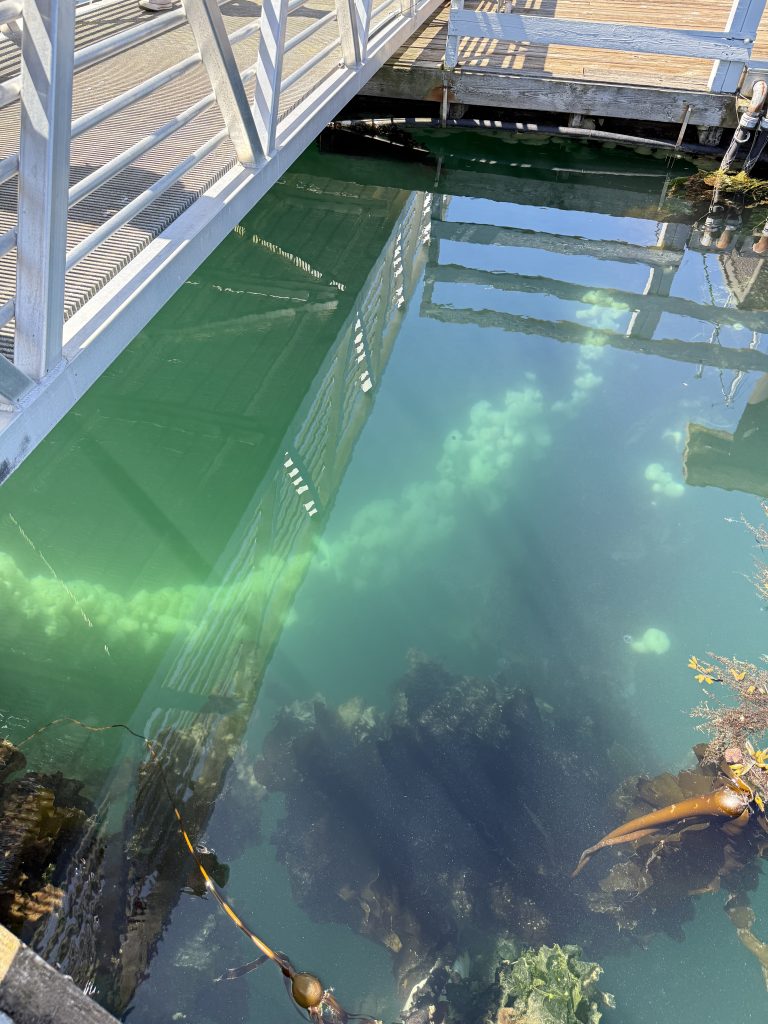
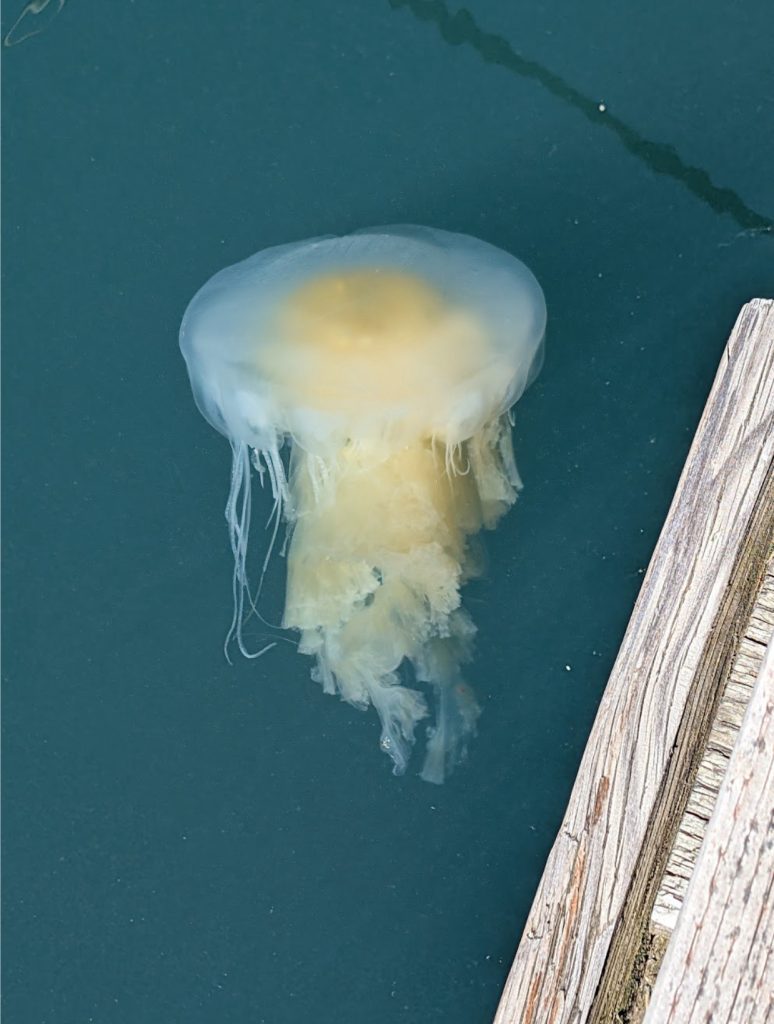
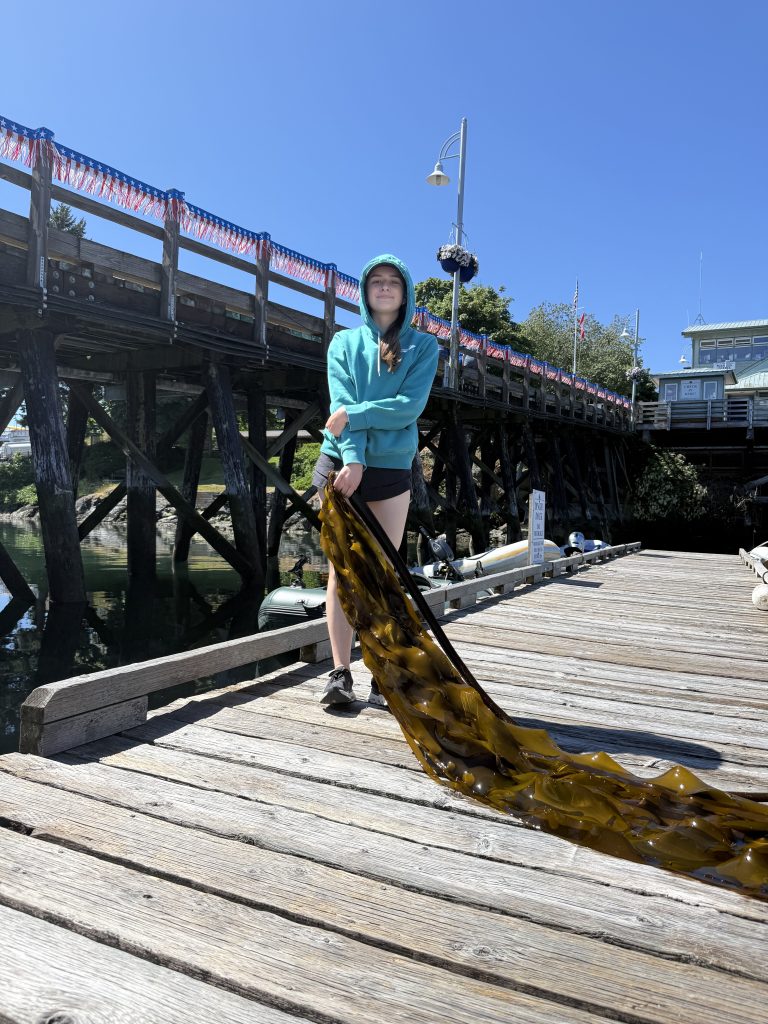
After Adam’s phylum presentation, we strolled into town to put our knowledge to use at the marina. Our main focus there was the fouling communities, which are congregations of animals found on man-made objects. We spent about an hour exploring over, under, and around the docks, searching for any organism we could find. While we were there, we had to apply our newly acquired knowledge of species and phyla to identify patterns in organism density, dispersion, and relationship to other organisms. In our full-group meetup afterwards, we all agreed that there was more seaweed on the upper section of the pilings (due to photosynthesis) and that there was a higher concentration of organisms, specifically plumose anemone, in the gaps between the dock (because of current and nutrient flow). Notably, we also saw plumose anemones, a red rock crab, and a few massive egg yolk jellyfish. Afterwards, we enjoyed a short hike back up through town and settled in for lunch.
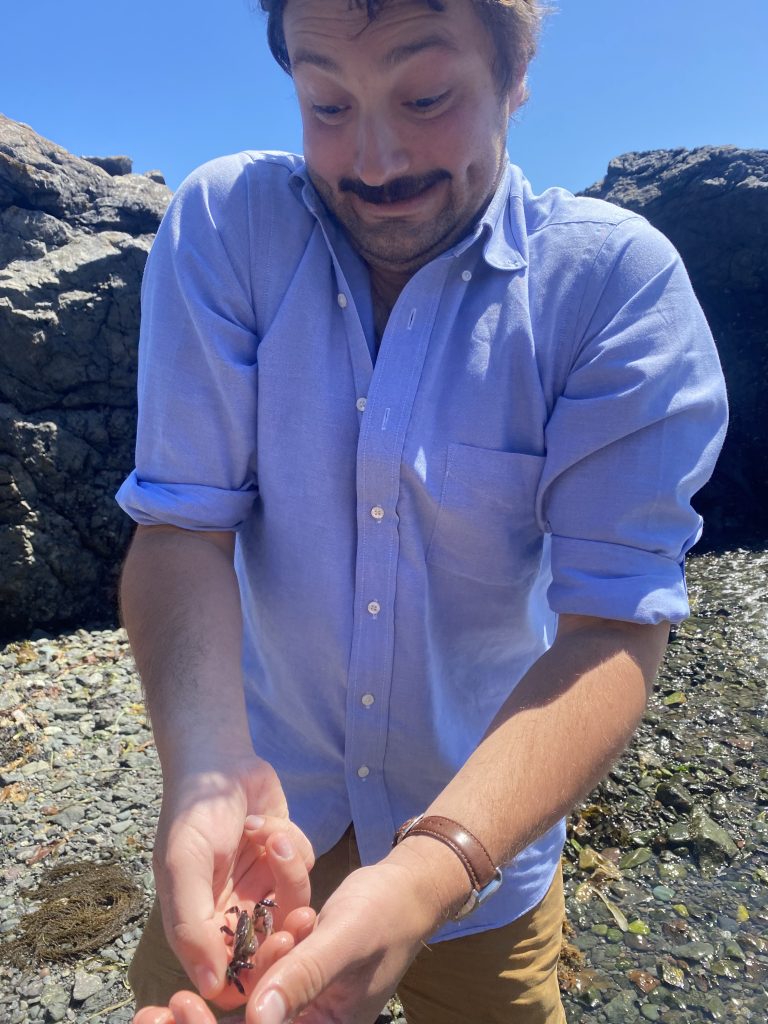
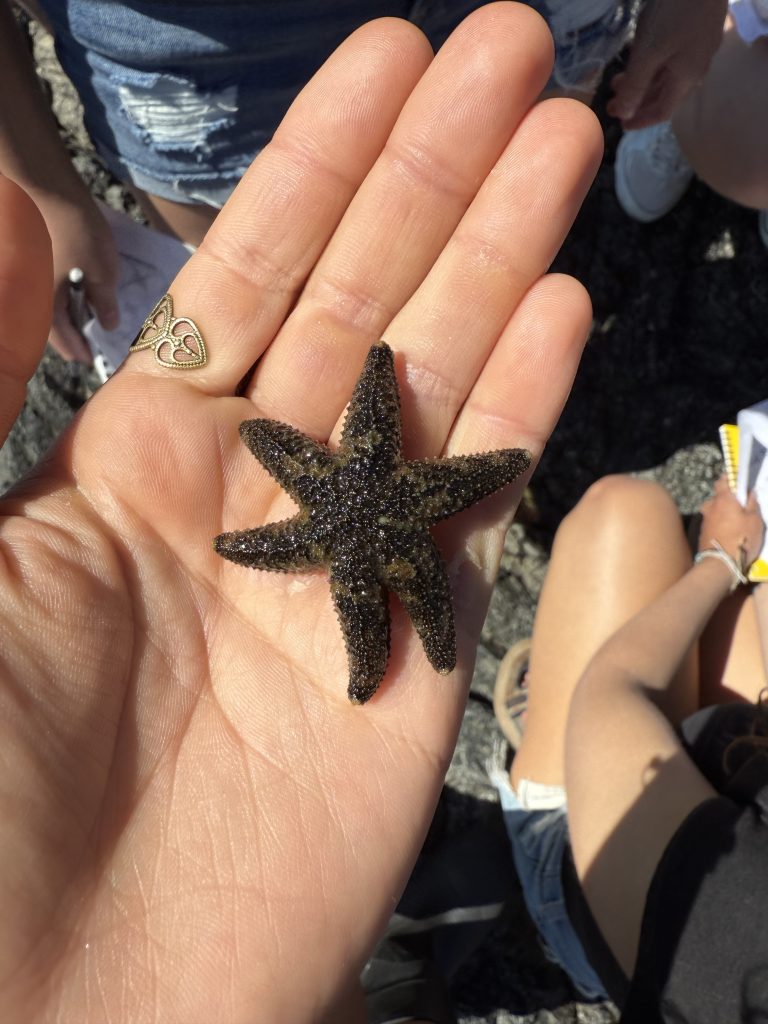
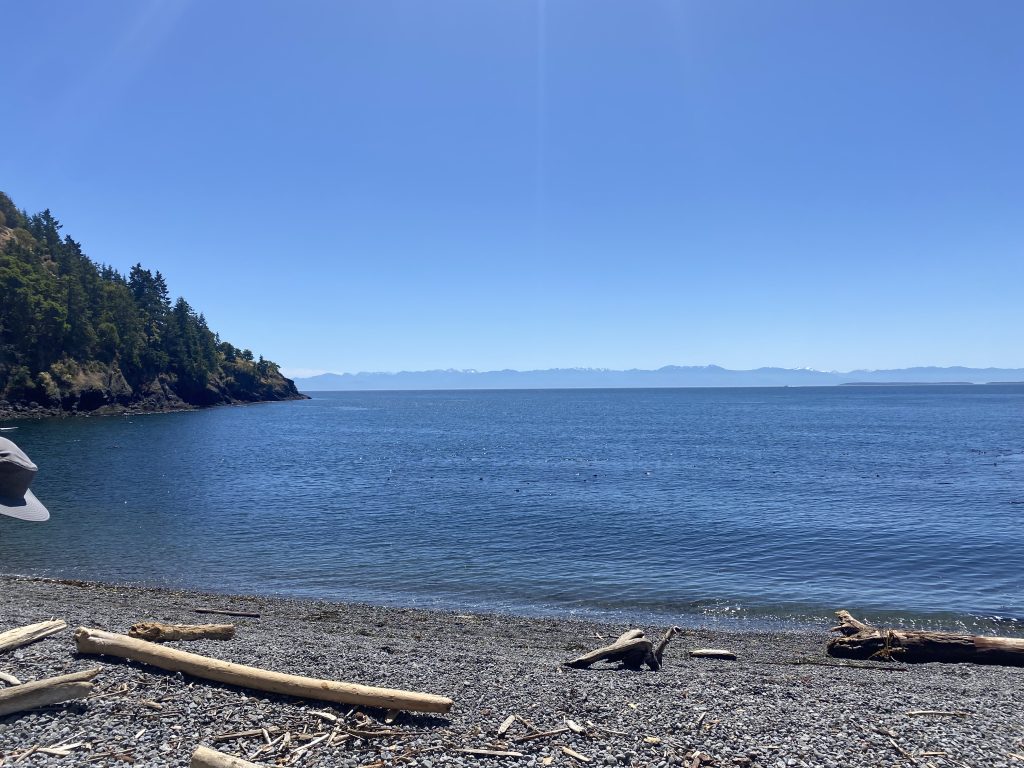
Following a lunch of sandwiches and fruit, we packed up our supplies and piled into the van as we set out for our last event of the day: studying tidepools at the ominously-named “Deadman’s Bay”. After a winding drive which took us west along the slopes of a cliffside forest, we parked beside the road and made our way down a steep trail to the shoreline. From the pebble-laden beachfront, the distant figure of Canada’s Vancouver Island sat in the shadow of the Olympic Mountains, which stood as a row of massive dark teeth against the blue sky. Once settled, our directors asked us to reflect on the potential biotic and abiotic factors around us. After this, we were handed “Tidepool Bingo” sheets and instructed to find the organisms on the sheet among the tidepools off to our right. Among the tidepools, we found rock crabs, barnacles, snails, algae, anemones, the occasional tidepool sculpin, and even a few sea stars. Unfortunately, we had to leave after a few hours due to the rising tide, though one of our directors was lucky enough to find the carcass of a sea urchin on her way back to the group. After our adventure at Deadman’s Bay, we drove back to the dorms and settled down for a snack while our dinner crew prepared for the arrival of our evening’s guest: Dr. Olivia Graham.
After a short break following tide pooling, a special guest Dr. Olivia Graham joined our dinner table! She is a marine disease ecologist and research associate at Cornell University. At dinner, Dr. Graham will present and discuss her research on the effect of seagrass wasting disease on eelgrass beds throughout the Northeast Pacific. We will be able to dine with her and ask her questions about her research and scientific goals, creating a comfortable space to talk scientist-to-scientist. Following dinner, we will have some free time to chill before heading to bed, ready for our next long day.