Kindly recounted by: Finlee Rice, Tatum Bunting, and Caleb Zulauf
We all rolled out of bed this morning, feeling refreshed from the night of rest following our kayaking trip. SOME ate breakfast while others slept in as we waited for the first post-sea-kayaking meeting with a scientist. Dr. Becca Guenther an accomplished scientist, professor, artist, and overqualified hot tub fixer upper with a Ph.D in Coraline Algae, gave an insightful lecture touching on the life cycles of algae, their uses, what qualifies an algae, and the polyphyletic nature of algae. She also made it amply clear that algae is already plural, and that “algaes” is grammatically incorrect.
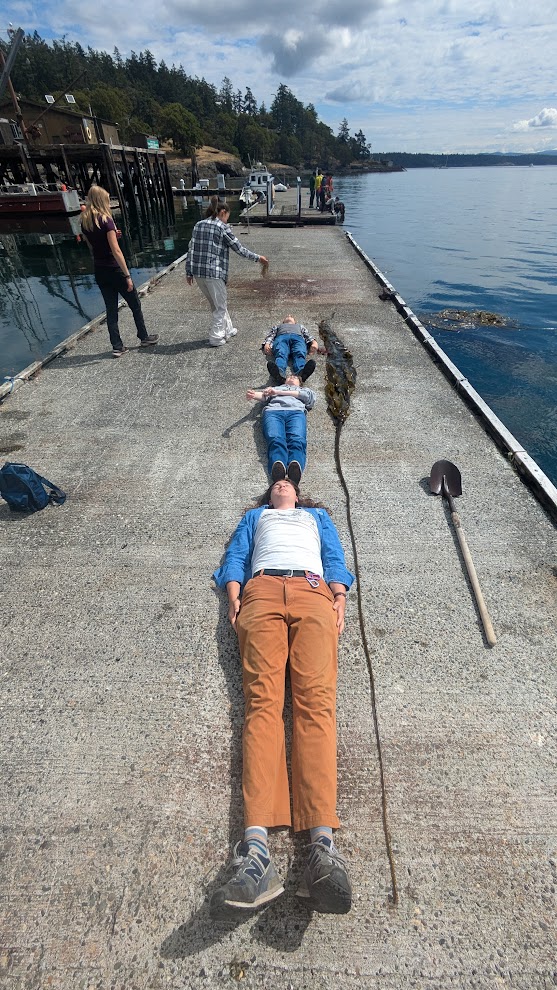
(photo credits go to Tyler)
Once our interest in seaweeds and algae was appropriately piqued, we ventured back to the increasingly familiar Friday Harbor Labs. Armed with buckets and shovels, we spread out along the docks to collect algae and seaweed samples for pressings. Tires, leveraged onto the dock with the ends of shovels, proved treasure troves for interesting specimens of seaweed (and a few well-dressed kelp crabs, sea squirts, and sponges). After a few water fights with rockweed vesicles and a bull kelp horn solo (courtesy of Sid), we lugged our overflowing buckets back to Spring Street.
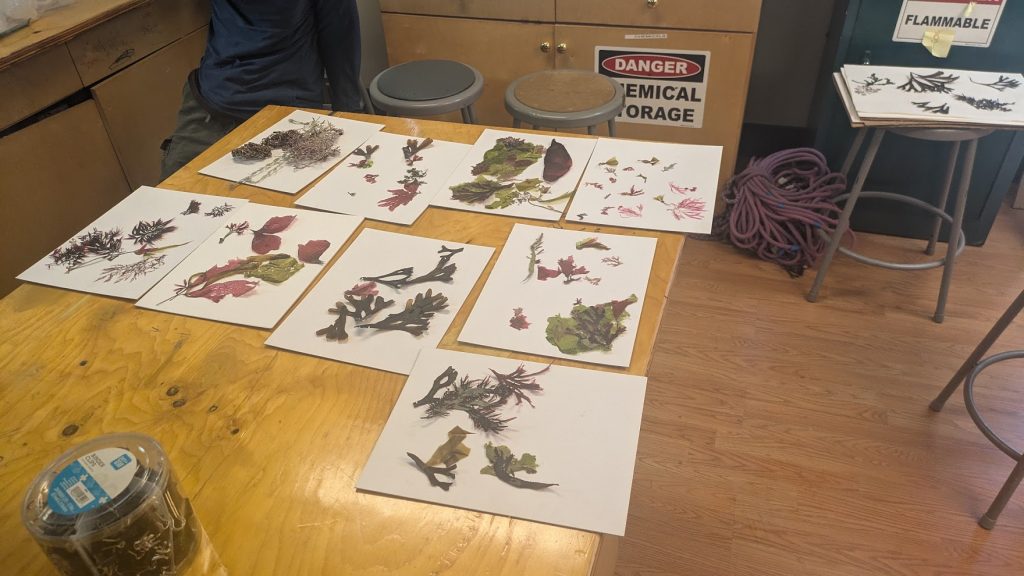
(All further photos by Caleb)
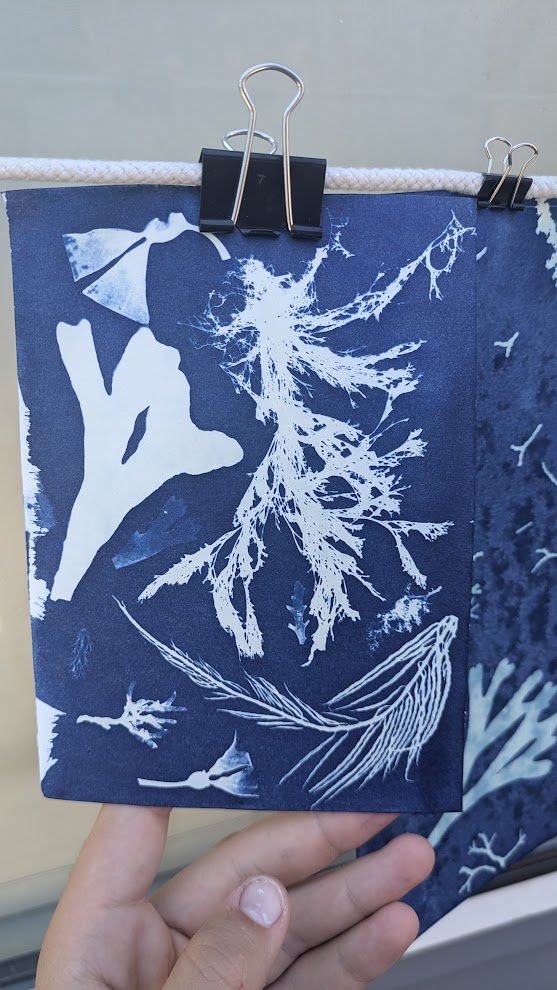
Once back at the science rooms, we started by setting up our seaweed presses in which we carefully arranged different seaweeds. Some of us made pictures while others simply arranged them in a pattern. From there we layered them between cardboard and blotting paper and placed them in a press. In a few days we are going to remove our pieces of art and observe how they have changed with time and pressure. After clamping our press down we got going on making cyanotypes. We took previously pressed and dried algae and placed them on photoreactive pieces of paper, left them in the sun to photoreact, and finally washed them in water and a diluted H₂O₂ solution and let them dry. All this work resulted in vibrant blue backgrounds with the white negative space of algal specimens.
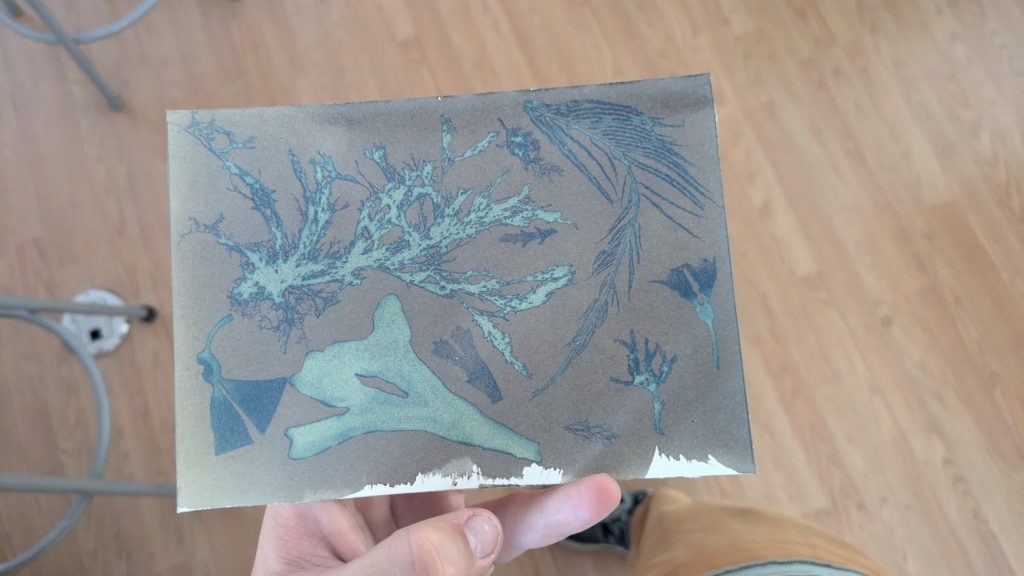
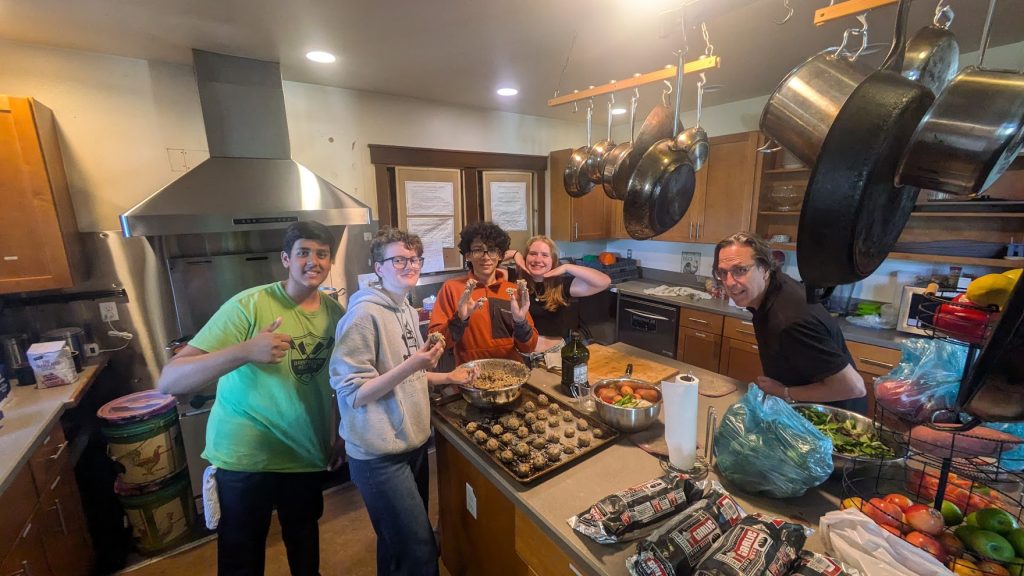
Listed left to right is Sid, Gretchen, Ian, Morgan, and Tom.