By Olivia, Ezra, and Orly (with help from Toffee)
We voyaged out into the wide Salish Sea on the Centennial! It was a great introduction to how oceanographers collect scientific data. A plankton tow, which is used to collect plankton near the surface, was lowered into the ocean very slowly and glided along the surface for a couple of minutes. The results proved very fruitful – who knew there could be so many plankton in one petri dish? The microscope was the center of attention for quite a while – we all oohed and aaahed over plankton unseeable to the naked eye.
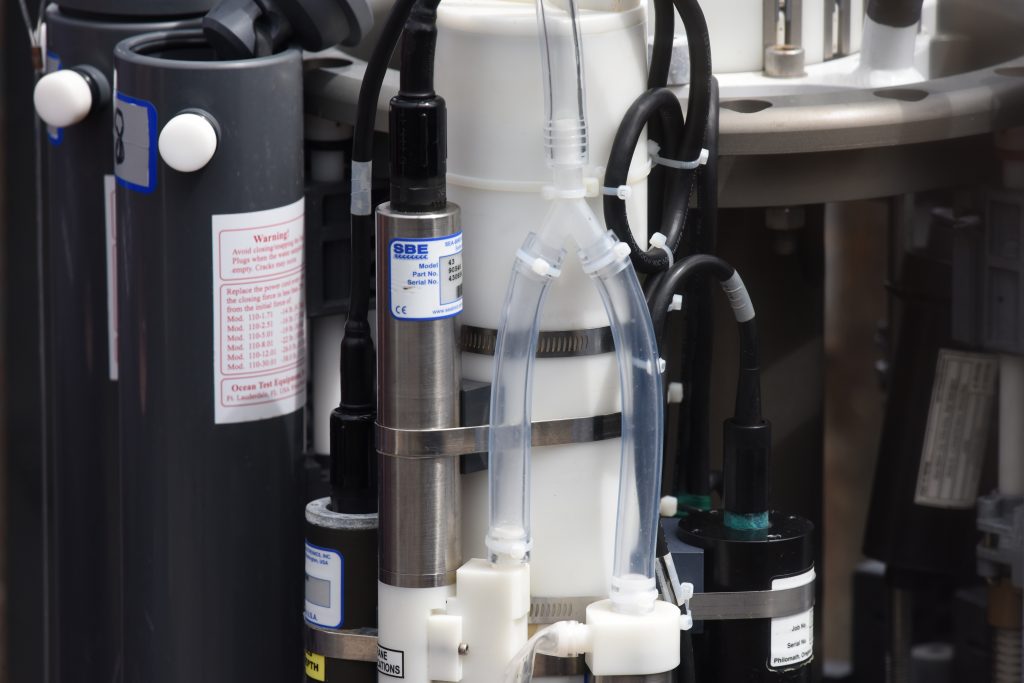
Not only did we discover plankton on that trip, our group of over 18 also learned how Nisken bottles operate. Nisken bottles collect water at different depths by remotely closing the containers at specific water levels. The water contained information on the salinity, ph, and temperature. This information unfortunately did not get used in a hands on experiment, but it was a fundamental and interesting introduction to the tool.
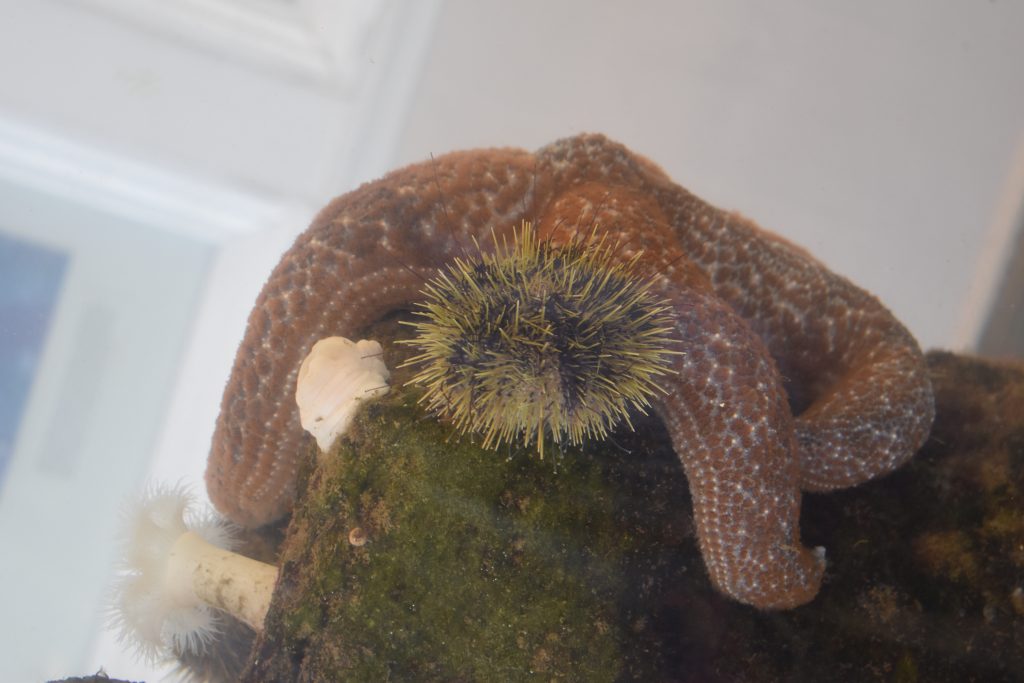
Luckily, we had other activities that were very hands on, literally. Using a box dredge, rarely seen ocean floor creatures were brought to the light and scrutinized by our curious eyes and hands. Bull kelp, sea cucumbers, and crabs were all combed through among a variety of other interesting animals. The excavation was peppered with shouts of “duck your head! There’s flying shrimp!” as we threw the live shrimp overboard. The benthos, or bottom dwelling creatures, were all kept alive during our thorough examination.
Out came the notebooks for our first scientific lecture. Our first guest of the trip, Dr. Megan Dethier, is a specialist on shoreline ecology and was recently appointed to be the director of Friday Harbor Laboratories. Dethier’s talk covered everything from armored sea walls to the impacts of climate change on shorelines. Both her information and speaking style created a presentation that even us amateurs could understand.
The main focus of Dr. Dethier’s talk was on the extremely fascinating topic of beach armoring. Beach armoring is the building of walls to prevent erosion of seafront properties. However, this practice is detrimental to the ecosystem because it limits the crucial deposition of sediments into the inter tidal zone. Wow! It’s surprisingly easy that even with good intentions one misguided action can ruin the health of a whole ecosystem.
Throughout the first full day of the program, we bonded as a group over gooey sea cucumbers, challenging new concepts, and our first of many scientific expeditions. We have spent the last 10 minutes trying to find a presentable concluding sentence, so this is it.