SSIS College Spotlight: Tools For Finding the Right Fit
volume 1, issue 2. Fall (updated September 2016)
Dear Students and Families,
With over 2000 colleges to choose from the college search process can appear daunting, but it need not be so. The focus of this Spotlight is on processes, tools, and tips for finding the right fit.
As always, my door is open. Come in, sit down and peruse the brochures, ask questions, have a cup of tea. You are also free to use the office as a quiet study space. Please know that I am happy to meet with you during non-school hours by appointment.
Best always,
Caroline
Your College Counselor
_________________________________
THERE ARE SO MANY COLLEGES AND UNIVERSITIES! HOW DO I START LOOKING?
The simplest answer is: start with you. There are a lot of choices out there and many might be right for you. The only way you can assess which they are is to get to know your own needs and desires. Here is a short list of questions that can help you narrow down your choices:
Academics and Extracurriculars
* What subject areas and projects most interest you?
* What are you good at; what achievements are you proud of?
* What do you enjoy doing, perhaps so much you don’t realize how much time has gone by?
* Have you considered a career goal or goals? What are they?
Personal Traits and Predilections
* Are you fairly self-sufficient or do you do better with more structure supporting you?
* Can you learn in a large lecture hall or do you prefer the intimacy of the seminar classroom?
* What are your favorite topics of conversation and activities with friends and/or family?
* Are you an all-weather person or do require a specific climate?
* Do you like the excitement of the city? Do you want to be in it or near it?
* How important is it for you be in a culturally diverse environment?
* How much do you want to live abroad, do research or apply new skills in an internship or job?
* What hobbies and interests do you intend to continue through college?
Your answers to these few questions above already narrow your search considerably. Be aware too, that as you get more into it, you may find some surprises along the way. We have had students who swore off the cold midwest only to find themselves happily thriving in that very location.
I GET THAT I SHOULD LOOK FOR THE “RIGHT FIT,” BUT HOW DOES THAT TRANSLATE INTO A COLLEGE SEARCH?
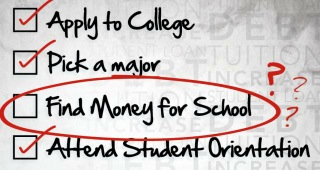
Once you have a sense of what you are looking for, you are ready to create a college checklist. The checklist should include data from your self-reflection. It is important to note that you may have some blanks on your checklist; that is okay! Some blanks such as “financial need” can be addressed by using an online college calculator (more on that later). Other information like “career interest” may remain blank until you are a junior in college. It is very common, and often preferable at liberal arts colleges, not to declare a major until then as the idea is for you to have enjoyed the discoveries of your freshman and sophomore years, before narrowing your curriculum. That said, this is a great time to let yourself wonder “what you want to be when you grow up.”
Here is a sample checklist:
When you have completed your personal checklist, you are ready to ask useful questions of family, friends, and community members. Your use of college search tools will be more meaningful and efficient. You will get a lot more out of your review of individual college websites. And, you will be prepared to make a college list using three important categories: reach, target, and safety.
WHAT ARE “REACH,” “TARGET,” AND “SAFETY” SCHOOLS?
Reach schools are those that are desirable but may be difficult to get into. For every person “difficult” means something different. For some people it implies “wow, their median SAT math score is 790!” For others, it may mean “I doubt that I can afford it, but it’s worth applying and seeing what the financial aid package turns out to be if I get in.” For most people, it means “thousands of people are applying to this school and there are only 500 seats in the freshman class, I have to be realistic about this.”
A “safety” school is not a worse school. The market for outstanding college professors is tough—there is more talent out there than there are jobs. This is good for you, the student. Did you know that the new president of Cornell University, one of the Ivies, began her illustrious career as a graduate of the University of Oklahoma? Ultimately what makes a college career successful is what you put into it, what you leave there, and where you take those experiences next. A safety school is no less capable of helping you get where you want to go, it is just easier to get into. What makes it easier? The number of applicants to available spaces, the location, whether the school has a specialization or religious affiliation, and whether the school is part of your state’s public university system.
WHAT TOOLS WILL HELP ME FIND SCHOOLS THAT MIGHT BE THE RIGHT FIT?
The websites of individual schools provide you with crucial information, but you can’t just march from A-Z through every school in the country!
The Internet is your friend. Two websites in particular, one provided by the Department of Education and the other by the New York Times, are great compare and contrast resources.
Here are several Internet tools that when used together are especially helpful:
The College Board BigFuture college search tool allows you to mix and match variables to arrive at different kinds of college lists.
This website is the work of a non-profit organization of the same name (CTCL) and provides great advice and information; the best part is that they list 40 small to medium liberal arts colleges from 24 states that are distinguished by their commitment to undergraduates. The organization looks for schools that provide significant opportunities for community engagement, undergraduate research, networking and post-college placements, small student-professor ratios, and high happiness ratings as determined by student surveys. SSIS graduates have done well with their CTCL college experiences.
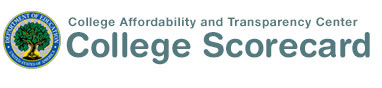
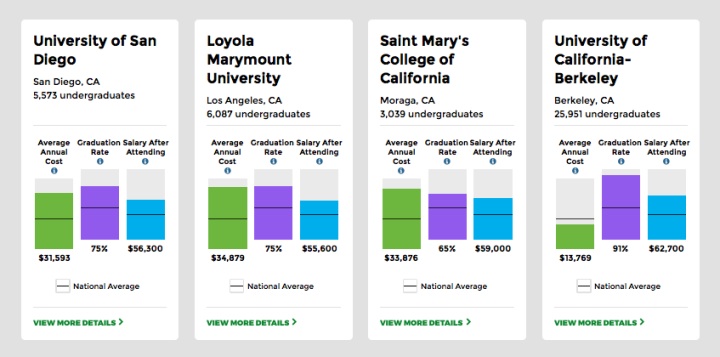
Launched on September 14, 2015, the Scorecard web app may lack the ranking component the Obama administration promised, but it nonetheless provides students and families with valuable information. Select a state, a program, a size and you get a reasonable number of colleges and universities to consider. Further refine your search by sorting the list by indicators such as average out-of-pocket costs for lower income families, graduation rates, and post-graduation earnings 10-years out. The only caveat is that you need to “read between the lines” (another issue of Spotlight explicitly addresses how to do this).
EXAMPLE:
For example, compare the Scorecard salary data: the average salary after attending the Art Center College of Design in Pasadena, California is $51,700. Seattle’s Cornish College of the Arts compares at $29,900. Can it be that Cornish is that much worse a school? Probably not. If you flip open “More Details” for each school, you will find that 89% of Cornish students receive federal loans and 39% represent economic diversity whereas only 51% of Art Center students have those loans and 37% represent economic diversity. Federal loans go to families earning less than $70,000. The greater financial burden may affect earnings outcomes as students scramble to pay bills.
It is also possible that there are a greater number of Arts Center students who go into commercial art rather than fine art. It can make a difference which arts their students pursue. Some artistic pursuits pay more than others; freelance artists have a harder time making ends meet. Let’s also not forget that Los Angeles has a much greater market for artists than Seattle. It is much bigger, economically more diversified, and home to a thriving film and television industry.
Lastly, we do not know whether salary outcomes are skewed by the percent of students who did not need financial aid. In an entirely different search, you can discover that Bennington College in Vermont, a school with a tremendous, longstanding reputation for excellence, does very poorly on the salary scale; the average salary 10 years after graduation is reported at $26,500. 60% of Bennington students manage federal loans, but only 22% come from economically stressed homes with less than $40,000 annually. Bennington is a liberal arts school with 45% of its students majoring in the arts. It is a magnet school for reasonably secure families. Bennington’s graduates in the arts may be just fortunate enough to take the time to hone their crafts without worrying over rising rents and student loans. Bennington is a superb college for many students, despite what the numbers imply. It is currently seeking to diversify its student body—post-grad. incomes will likely trend upward as a result.
The College Access Index is a new tool aimed at measuring efforts toward economic diversity by the nations top colleges as indicated by those colleges with a five-year graduation rate of 75 percent or higher. They provide three very interesting pieces of information: 1) the percent of low-income students, (2) what middle-income parents are likely to pay out of pocket (as compared to the school’s sticker price), and (3) the schools endowment per student. The latter indicates the resources available to colleges and has some bearing on student success. The graduation rate is a useful indicator as it implies students received the necessary financial and academic support to receive a degree within a 5-year window.
National Center for College Statistics Navigator
The Navigator is an essential tool. For every college you find on a college search, you will want to check out some of their statistics. This website has the stats on all schools in one convenient spot.
According to the New York Times article, Wellesley College economist Phillip Levine designed a superior calculator that is easier to use than most. Calculator tools are intended to help you get a decent idea about how much you can expect to pay out of pocket each year.
ARE THERE ANY TRICKS THAT CAN HELP ME WITH MY RESEARCH?
Yes! Here are a few tips:
When a school’s website is too complicated, type “[schoolname] student profile” into the browser search field. For many schools, current freshman class statistics become immediately available. There, you will learn who was admitted last spring—where they are from, what their backgrounds and interests are, what their average scores were, and what percent got what kind of financial package. Here is an example from Williams College and another example from the University of Washington. This is valuable information when you are trying to decide if a school is a reach, target, or safety. It may also help you learn whether you have a shot at being able to afford it, if it seems like a school with like-minded people, and whether their strongest academic departments align with your interests. It is an excellent partner to the College Statistics Navigator (above).

Once you are looking at a potentially interesting college, you need to dig deep. Don’t just look at the list of majors, click through to a department or two. Look at the courses offered. Click through to faculty pages. Let’s say you are interested in Biology and what excites you most is pathogens in the human body. While every school will teach you the necessary introductory material, you want to be sure that your professor’s specialties are in your general area of interest or you could be in for quite a shock. You do not want to discover too late in the game that your Biology faculty is especially focused on forest ecology.
Engineers and pre-meds beware! Yes, the rest of you too. Please pay attention to the industries and businesses in close proximity to the schools you are interested in. For example, in Seattle, University of Washington and Seattle University students have ample opportunity to engage in research pertaining to genetics whereas in Boston, students will find many more opportunities to learn about bio-technologies. Of course there is is a bit of both, but look at the big picture! You don’t want to go to an “engineering” program that turns out to specialize in aerospace when what you had in mind was web apps.
There are many more tools and search details to share. You want to get a feel for who your fellow students are likely to be and what sort of lifestyle is common on campus. But, this is already a long list. Get started at the beginning: YOU. Focus on the academics, location, and size first, but don’t ignore the rest. And have some fun. There is a “right fit” out there, more than one.