By Naomi, Ashley, and Jesse
**Broadcasting from Team Bottlenose Dolphins…
To start off the day, we dove right into discussing last night’s coral epigenetics lecture. During the lecture, Dr. Sarah lemur mostly discussed coral bleaching and how corals can be acclimated to mild heat stress early on in order to withstand greater heat stress later in their lives. Our discussion of methylation and morphology evolved into a discussion of Earth’s history in which we tried to understand the many intricacies that lie within this planet. For example, we covered many different aspects of speciation and the function that evolution plays when regarding this state. By the end of the talk, we had come up with more questions including the thought “We know where the ocean’s water comes from, but where did the salt come from?”
Our guest speaker of the day was Pema Kitaeff. Pema has been working on a
Sunflower Sea Stars (Pycnopodia helianthoides) restoration project and she introduced us to her many sea stars along with their prey – mussels and urchins. Clooney, one of the sea stars, was handed a mussel which was gone from our sight within a minute. Pema informed us that underneath the sea star, Clooney’s tube feet were applying pressure to the mussel’s shell in order to create a crack. Once the crack was formed, Clooney would insert his stomach into the mussel shell in order to devour the animal inside! In another tank, many of the sea stars were positioned awkwardly on the wall. Using her extensive knowledge and expertise in the field, Pema was able to deduce that the water flow within the tank was too low and was inducing the stars’ stress. But after turning up the water flow, the sea stars repositioned back to normal. The purpose of the restoration project is to spawn more Sunflower Sea Stars (Pycnopodia helianthoides) in order to learn how we can better raise juvenile sea stars. The end goal is to release the sea stars back out into the wild to help repopulate the natural population.
After examining the sea stars, we moved on to developing a new project for the Salish Seas Sciences: podcasts! Naomi and Anders researched what platforms to use, we decided on Anchor; Ashley and Colette brainstormed ideas on what to talk about in the podcast, and Jesse and Julia found example podcasts about marine science for inspiration. After discussing in individual breakout rooms, we rejoined to combine our research and to plan out the podcast. Once this was settled, we headed for lunch.
We returned energized with full stomachs, prepared for Kay’s presentation on the behaviors of 3 different species of butterflyfish. With this information in mind, we headed out to our own ecosystems to observe how organisms behaved in their own environments. Some of us discovered the particular behaviors of insects such as bees and ants, while others examined larger creatures like squirrels and lizards. We then discussed and observed each other’s collected data. To finish off our day we shared our joys and challenges. Today definitely was an exciting day of exploration, and we are looking forward to tomorrow’s visit with phycologist Dr. Katie Dobkowski!
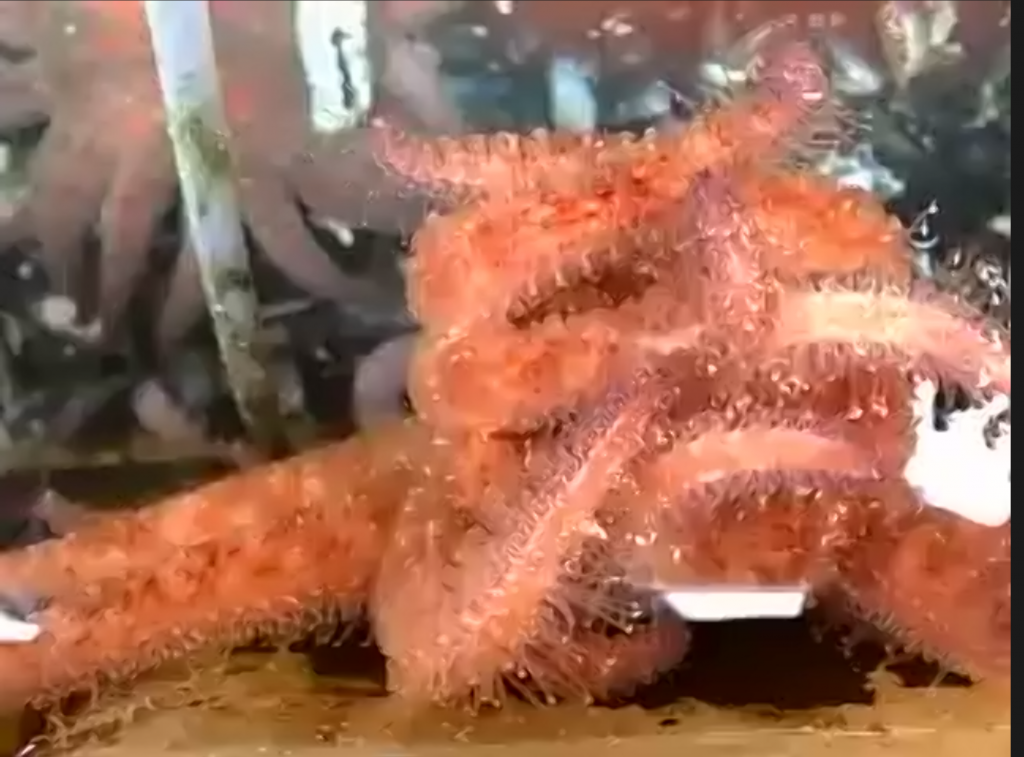
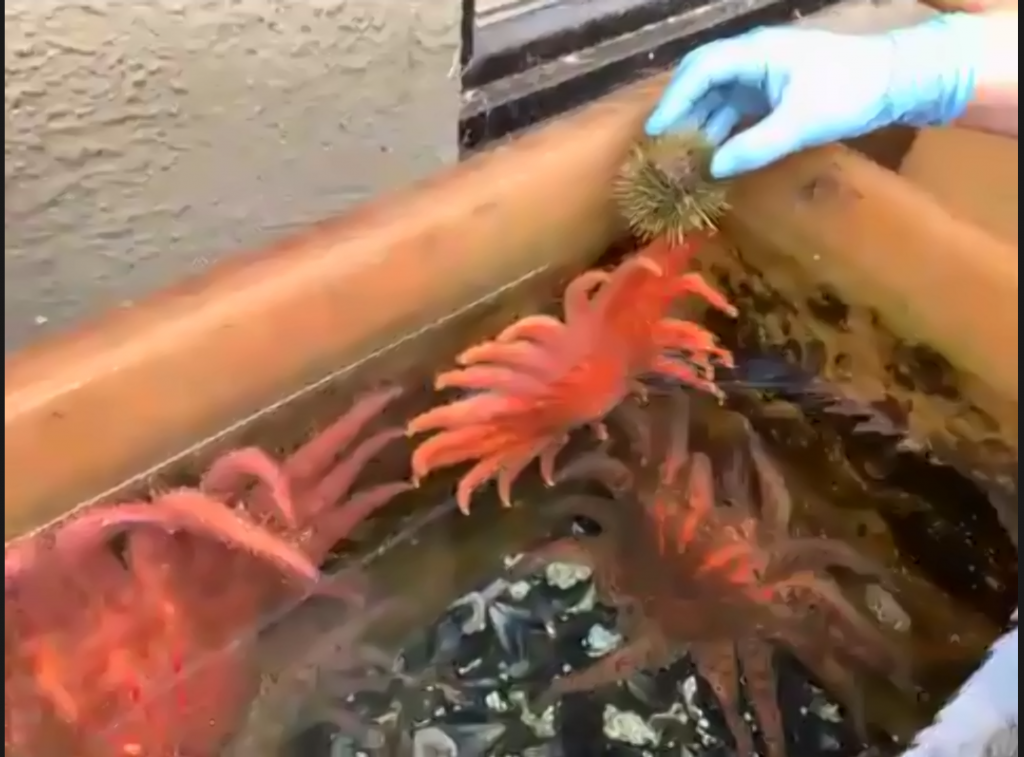
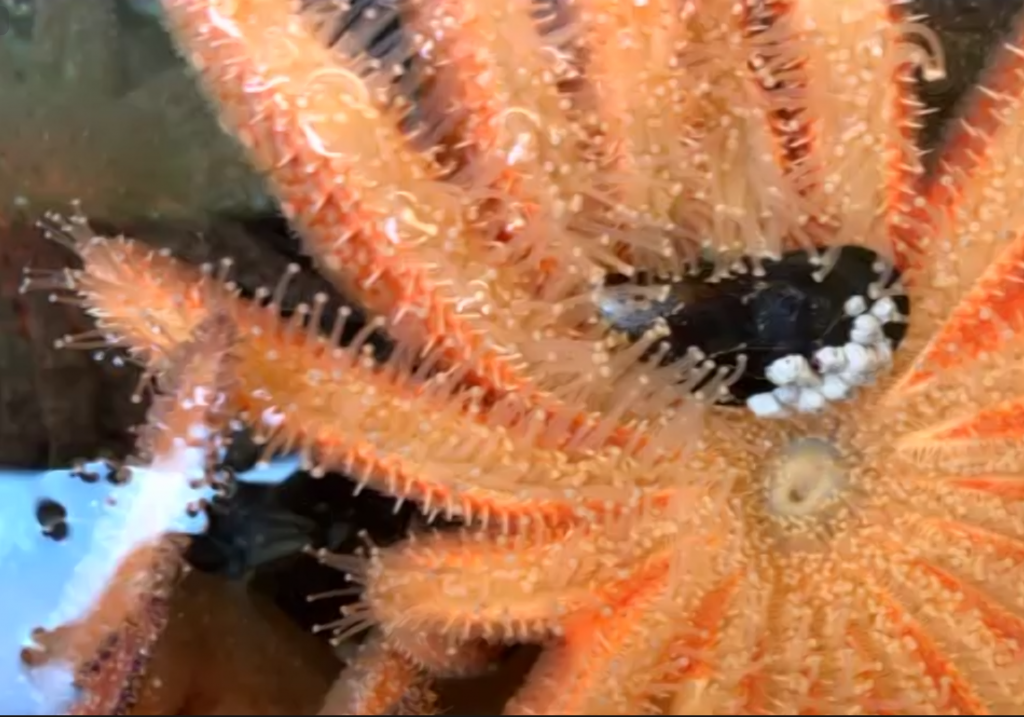
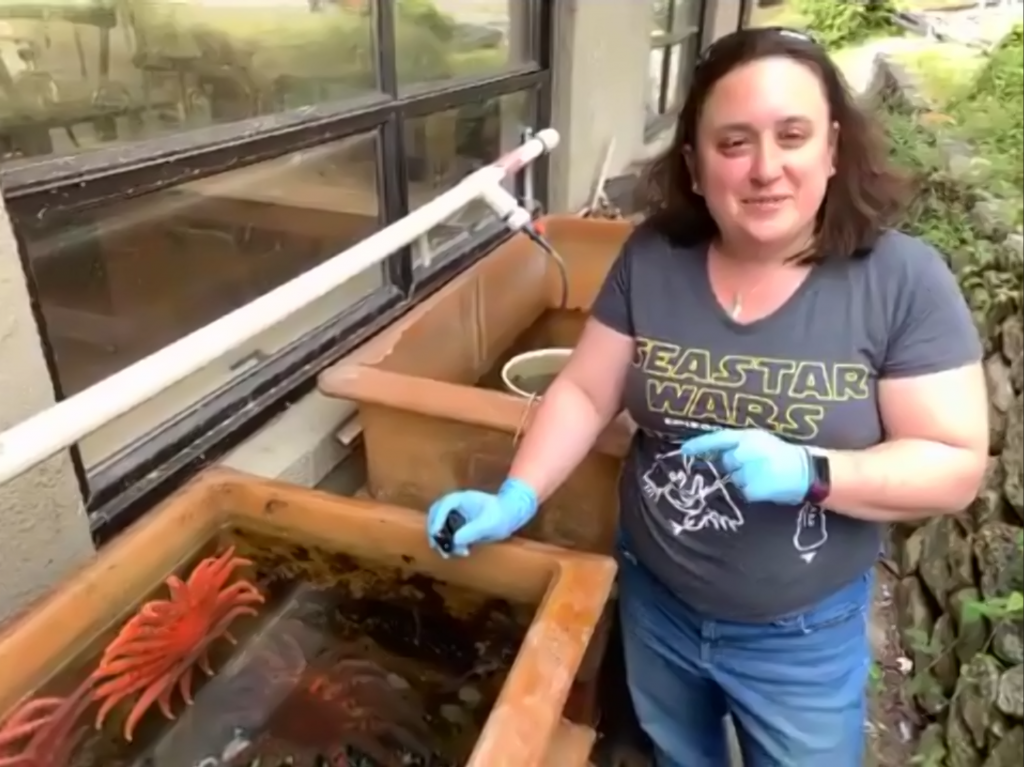
Sunflower Sea Stars (Pycnopodia helianthoides).