Spirits were high this morning. We started off this morning with an extra hour of sleep, and woke up to a hot breakfast of eggs and donuts (kudos to Tom).
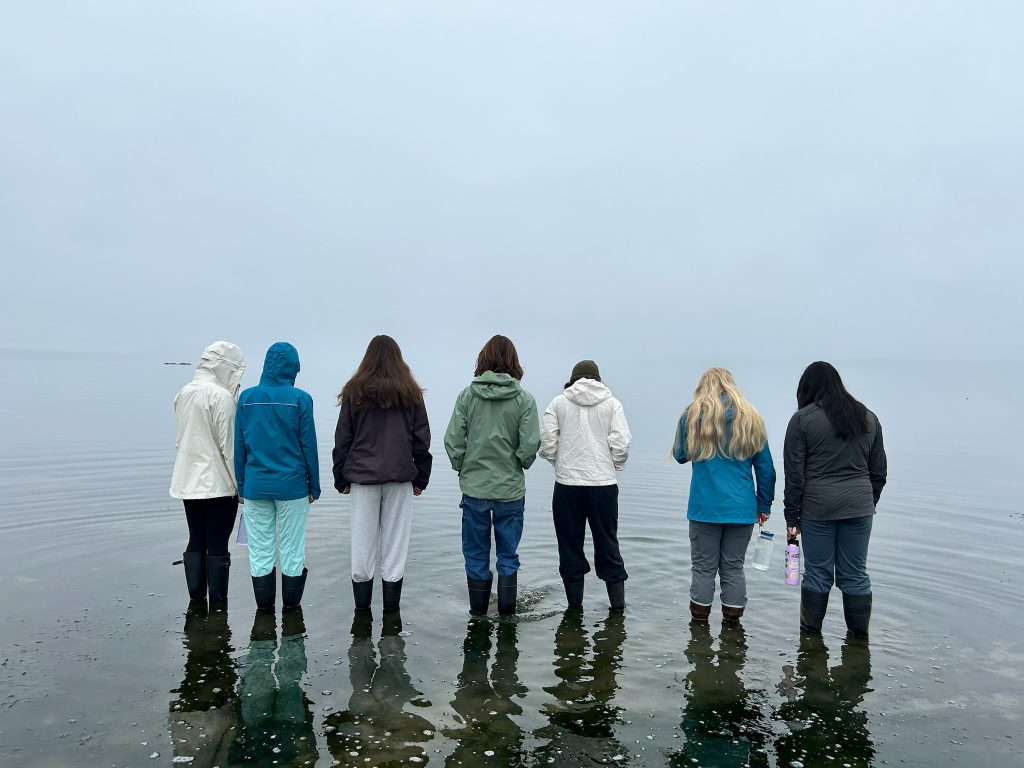
Fog over 4th of July beach Credit: Silas
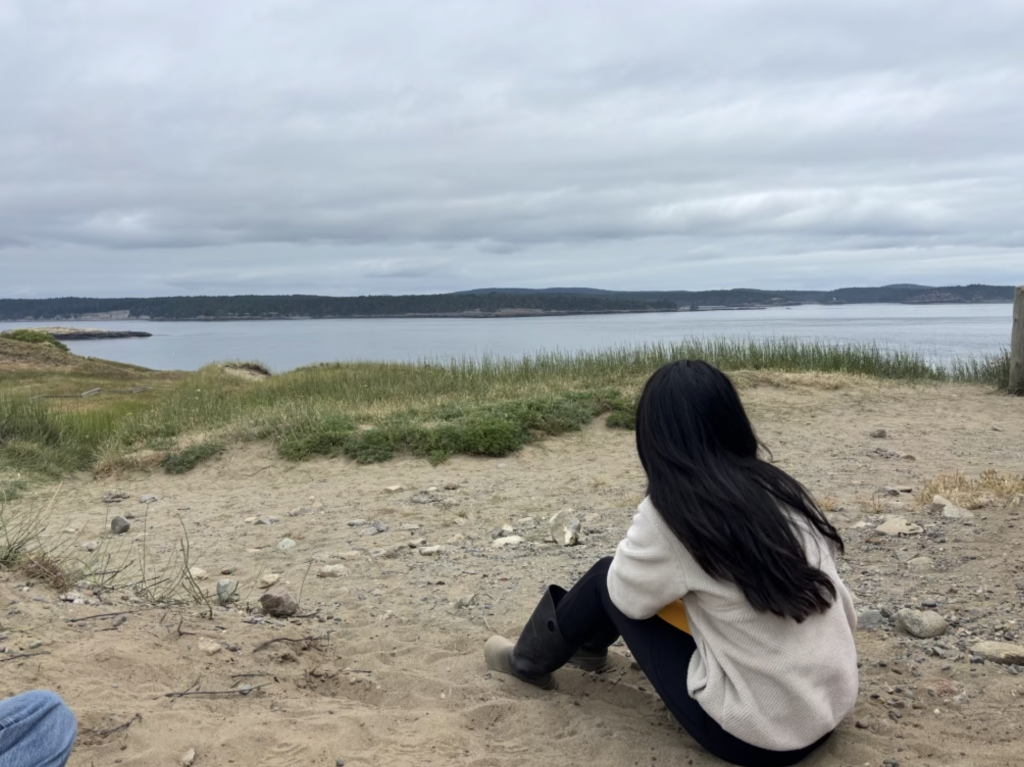
Although the weather was gloomy, we loaded into the vans to go to 4th of July Beach to meet Kate Kelly, a PhD student studying eelgrass wasting disease. After a couple minutes of sloshing through the marshy shore, we reached our destination and started our surveying.
Student standing in the water (L to R: Isla, Violet, Addie, Silas, Alice, Aoife, Maxene) Credit: OliviaA fantastic find! Credit: AliceHelping Kate set up a transit for eelgrass! 🙂 Credit: Olivia
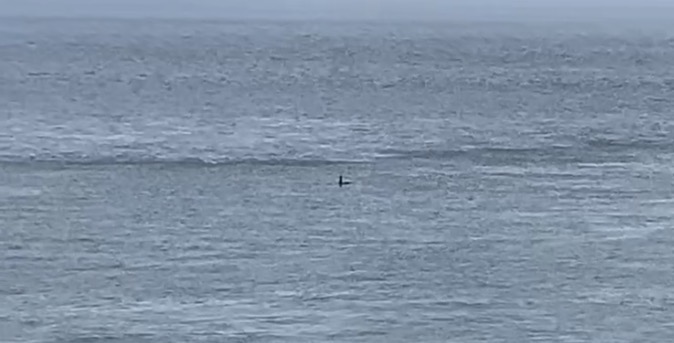
Lunch found us on a bluff overlooking the shore, where we enjoyed beautiful views, an Orca sighting, and some (almost) successful fishing.
First Orca sighting! Credit: Olivia
We later met with Shauna Barrows, to assist her in cleaning up a restoration site on the West side of San Juan.
Una, Eva, and Addy, ready to trim some plants! Credit: Olivia
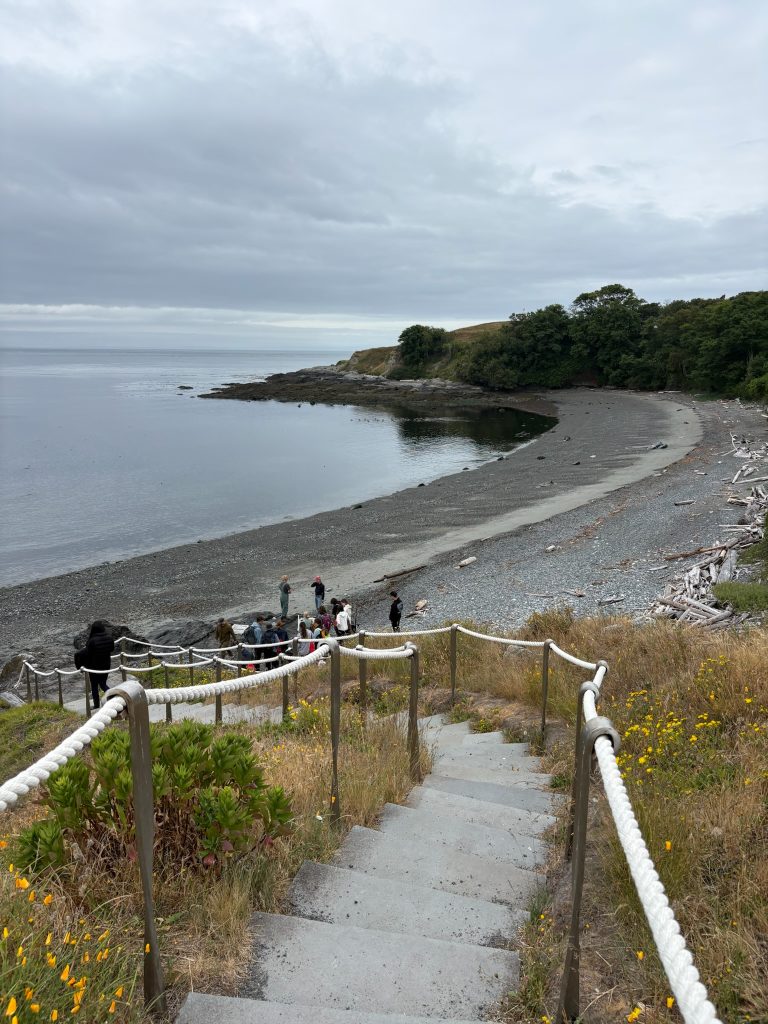
We started our day with a 7:00 am wake-up call and took a 20-minute van ride over to Cattle Point.
Cattle Point (taken by Cynthia)
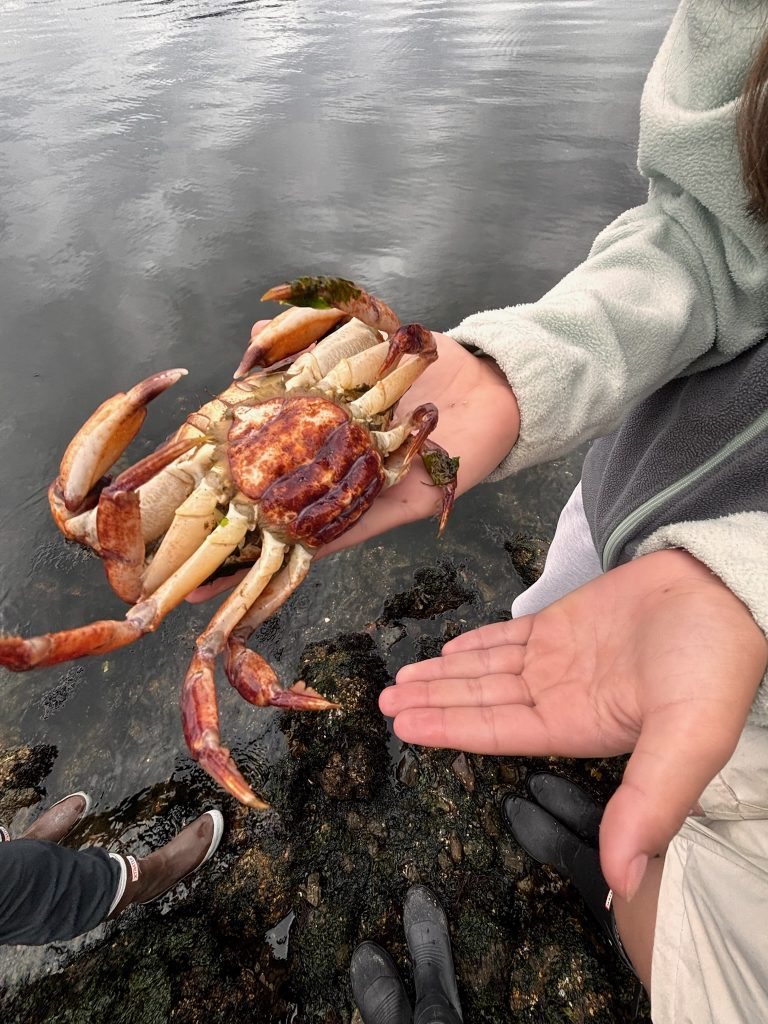
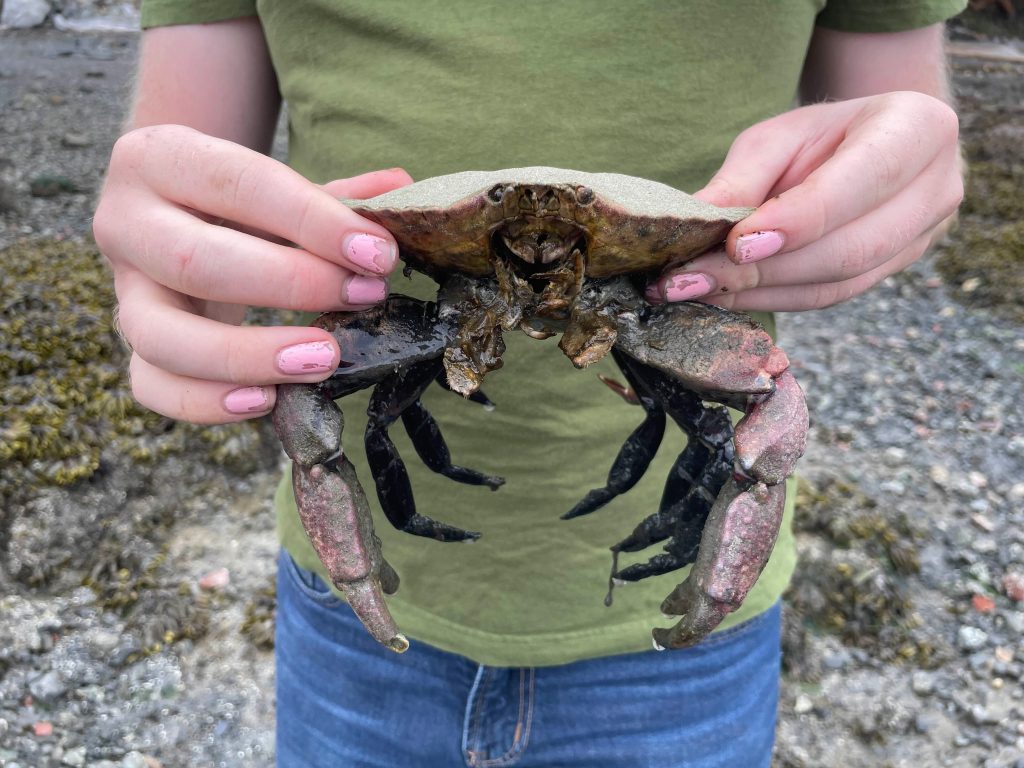
There, we met Dr. Katie Dobkowski, an associate professor at Woodbury University, and two undergraduate students studying with her. We first did a quick survey of the beach, picking up pieces of crabs and their molts.
Addie holding a crab! (taken by Kate)
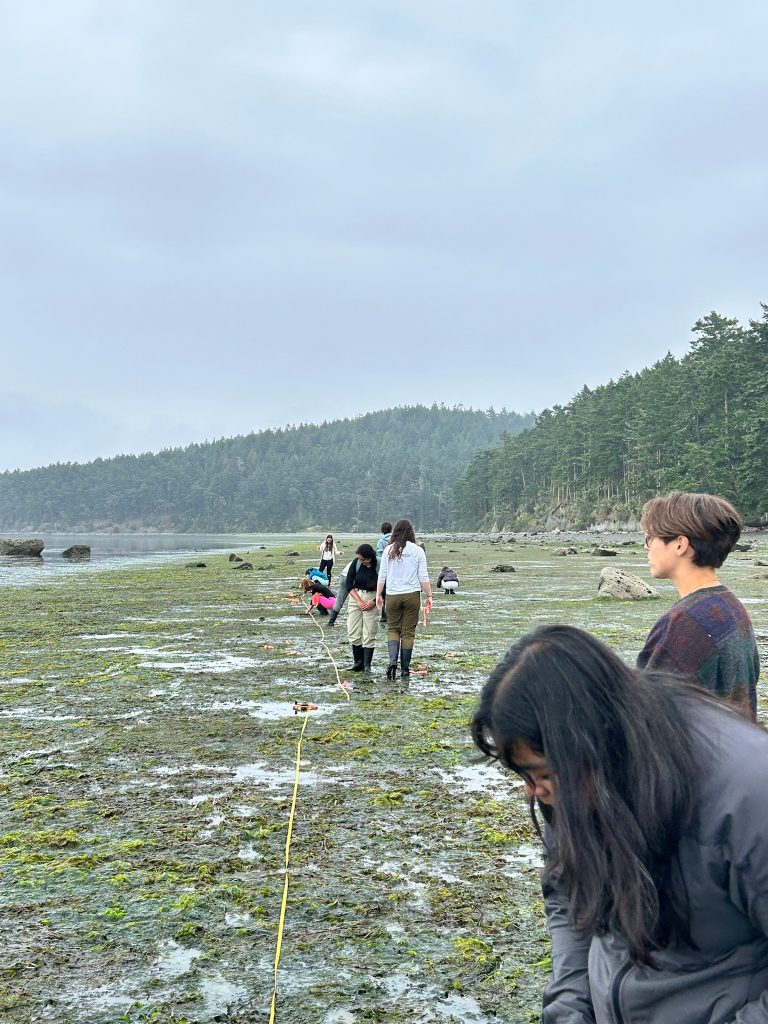
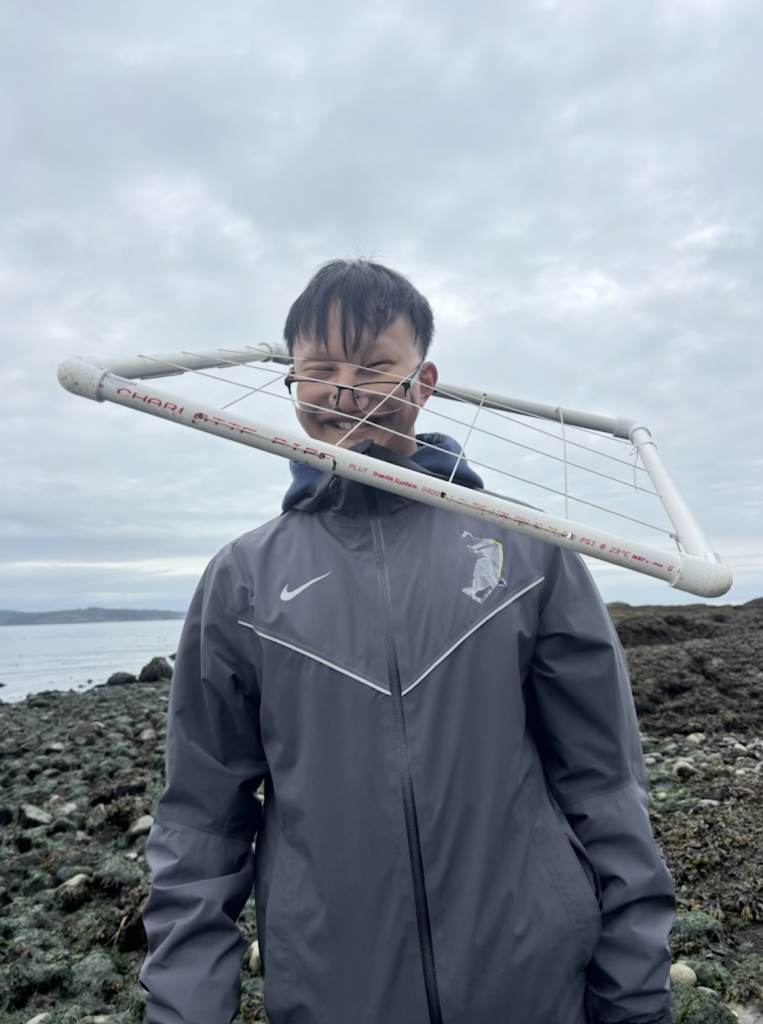
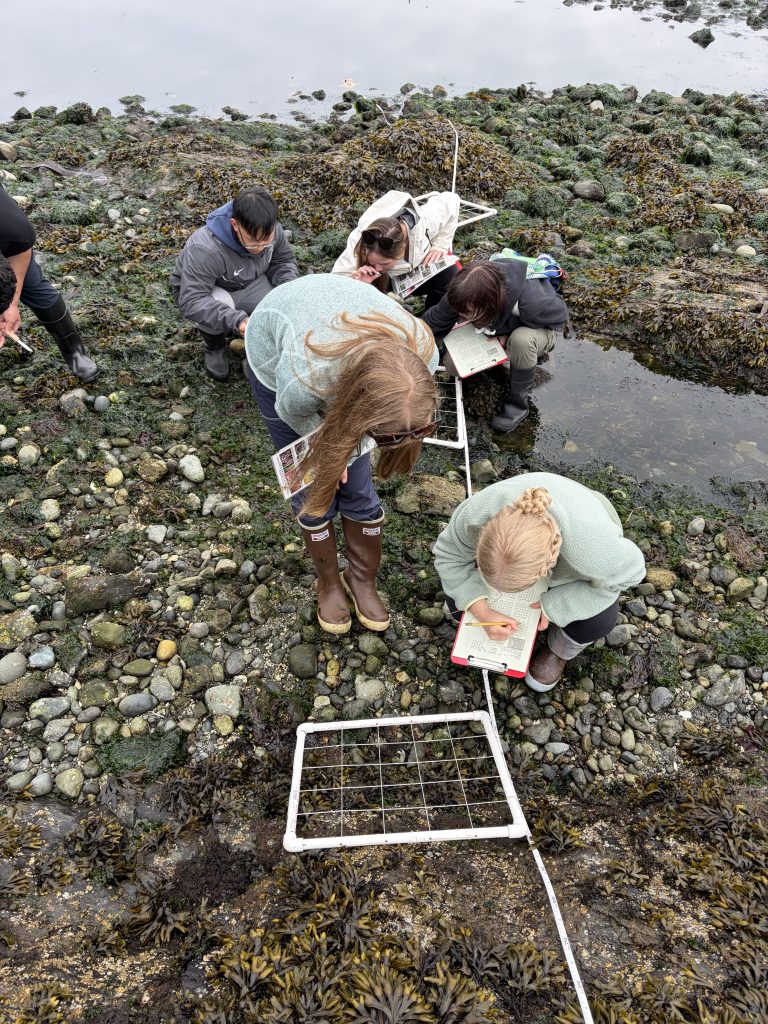
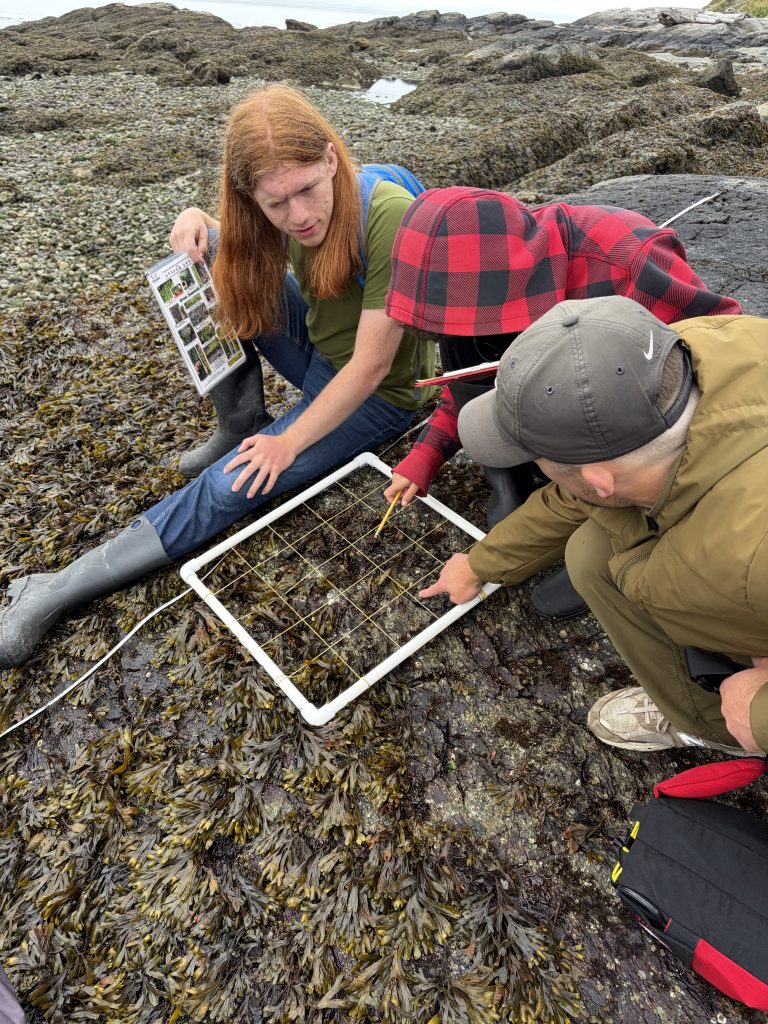
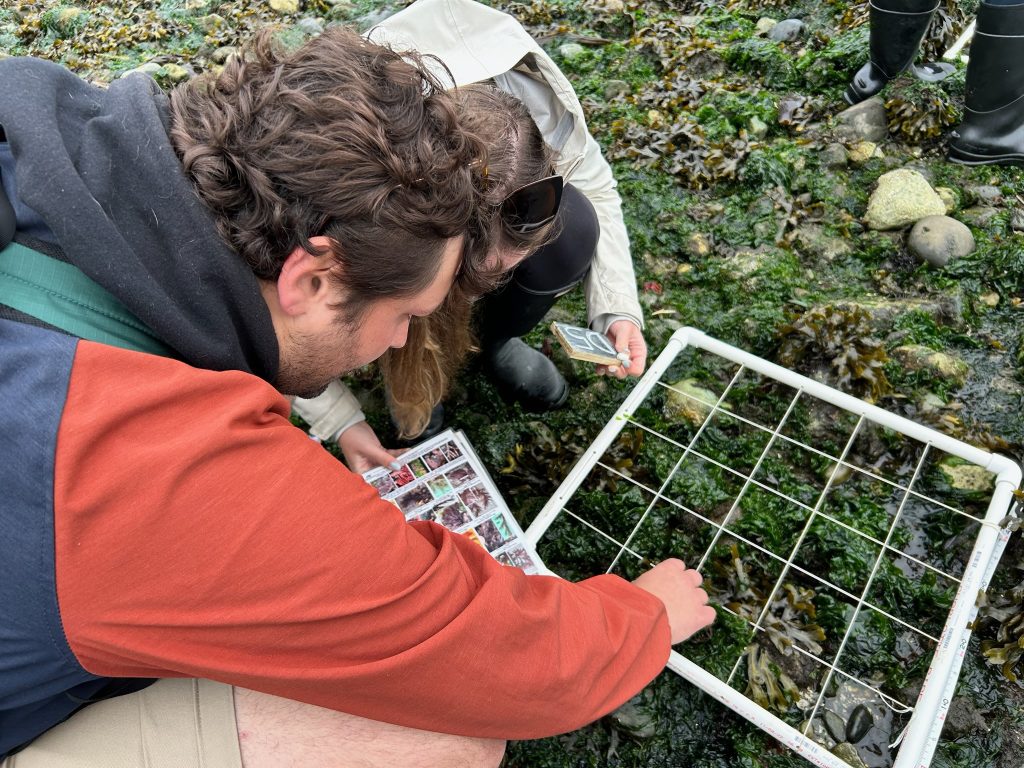
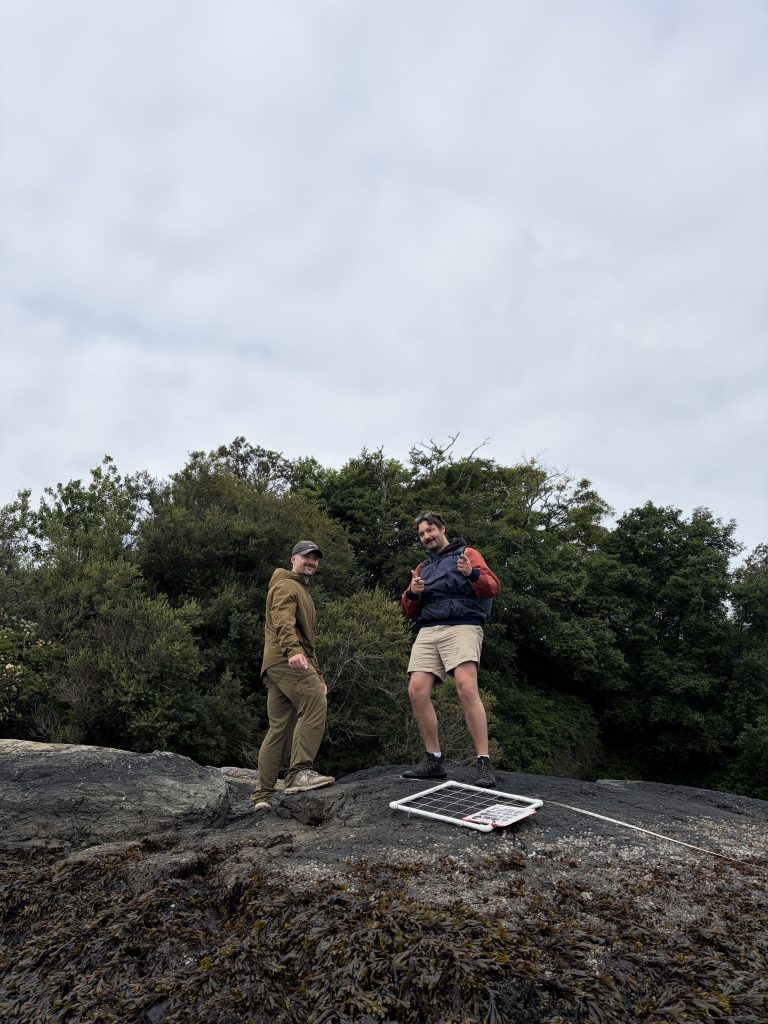
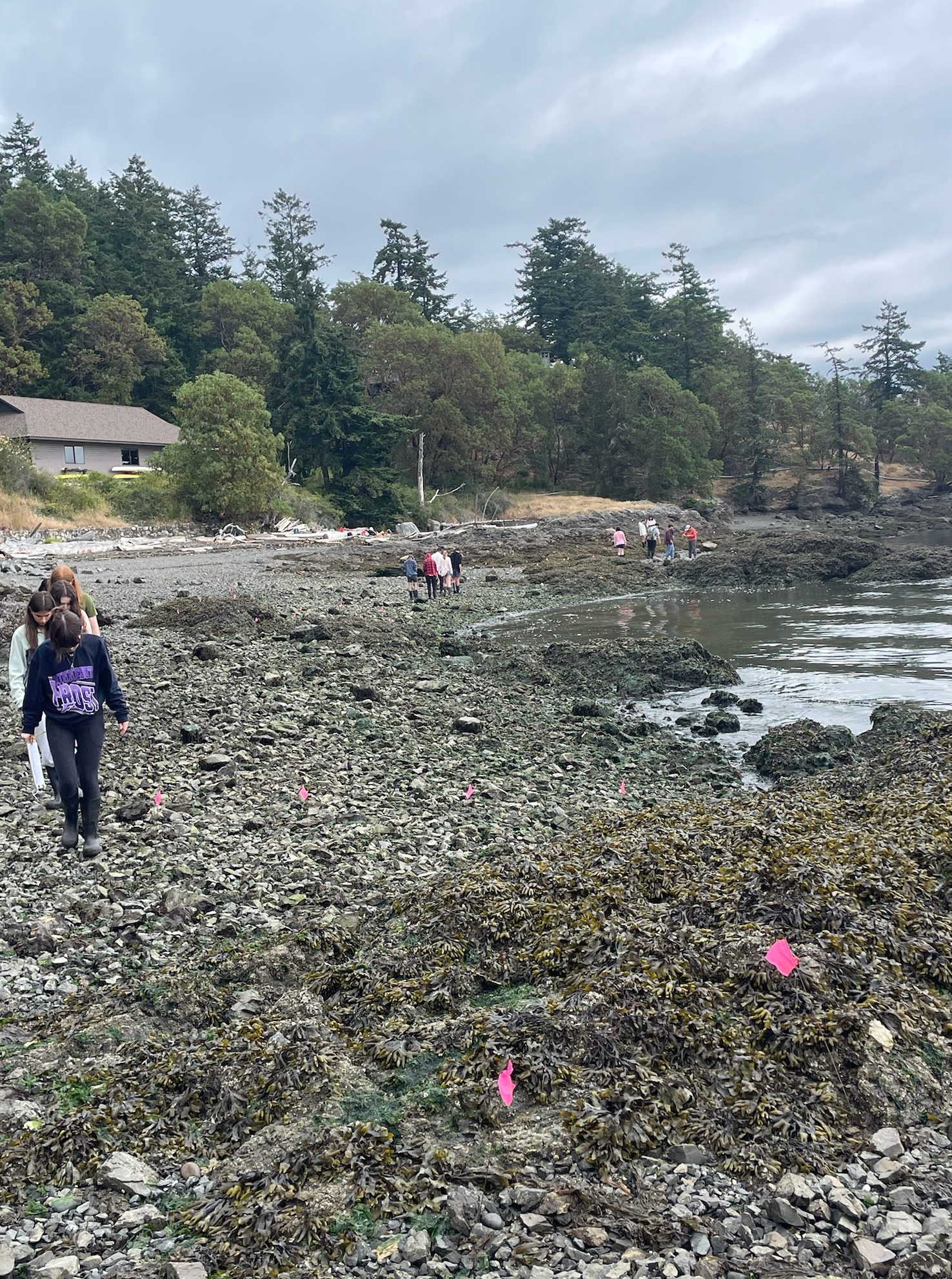
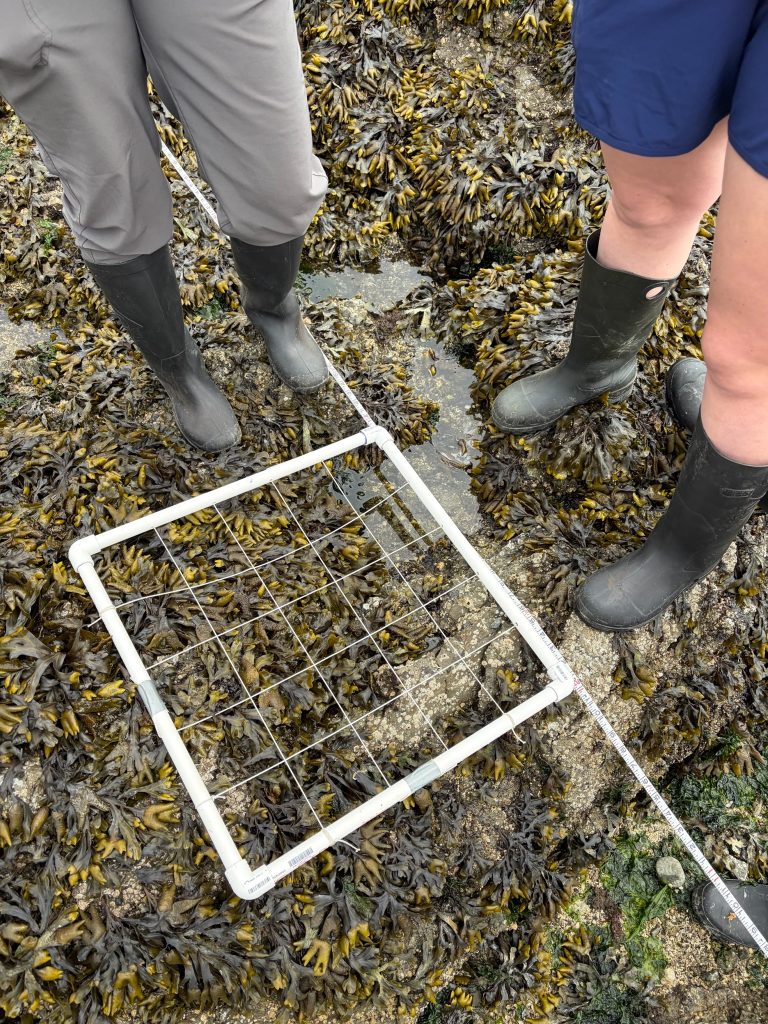
Our next task was to contribute to a 40-year data set on differences in algae biodiversity based on distance from the water. We laid out a transect and placed quadrats every two meters.
Wesley + a quadrat (taken by Isla)
Within the quadrats, we identified the coverage percentage of the different species of algae.
Front: Olivia and Aoife collecting data Back: Wesley, Isla, and Violet collecting data (taken by Alice) Owen, Ripley, and Ethan collecting data (taken by Alice) Adam and Isla collecting data (taken by Olivia)
The data we collected offers a better understanding of algae population changes on the Cattle Point shore.After a couple of hours of observing and recording, we ate lunch up by the lighthouse.
Cynthia during lunch at the lighthouse (taken by Isla)
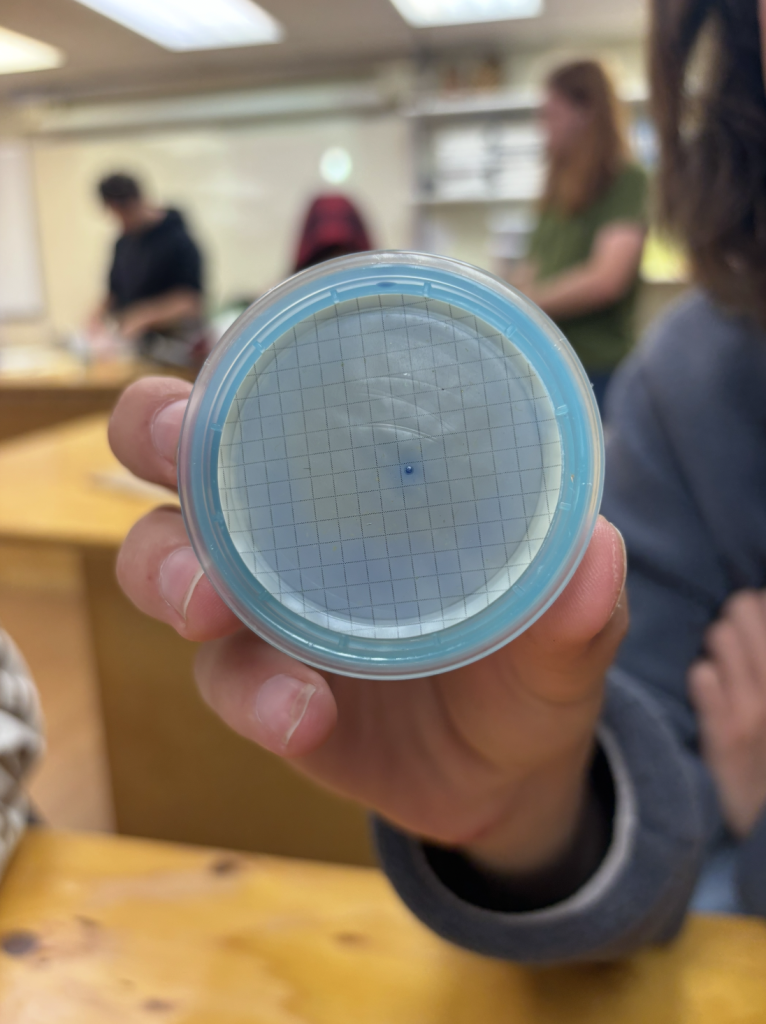
Back at the lab, we revisited our fecal coliform test on the marina water. Based on the colonies that grew in our samples, we were able to determine that the water is in excellent condition.
The blue dot is a bacterial colony! Thanks for holding it up Silas! (taken by Isla)
This means that the water treatment facility in Friday Harbor is working well!
Later, we went back to the dorms to continue our individual project brainstorms.
Adam and Ethan at Cattle Point. Thank you for helping us with our project brainstorms! (taken by Alice)
Our morning began as any good morning should–with eelgrass! We met up with local ecologist Sage Enright, who works with the San Juan Islands Conservation District to restore a rapidly declining population of eelgrass. We surveyed the beach at Friday Harbor Labs, recording the number of cockle shells carrying eelgrass seeds that were attached by scientists. These shells act as “planters”, burrowing into the sand and dispersing the seeds among the sediment.
Salish Sea Students surveying their transects for cockles with eelgrass seeds (taken by Wesley).Owen holding a large red rock crab molt (taken by Kashi).
For a short break in-between surveys, we were able to explore the beach and tide pools. It was interesting to observe how the organisms at Deadman’s Bay and the beach at Friday Harbor Labs compared. Oysters and large crabs were abundant at the beach today, something we hadn’t seen at Deadman’s.
Two students surveying algae coverage through their quadrat (taken by Alice).
We ended our busy morning with a lunch break at Turn Point County Park. Luckily for us, Sage joined us to teach more about the structure and uses of eelgrass, which is vitally important to both the ecosystem and Coast Salish Peoples.
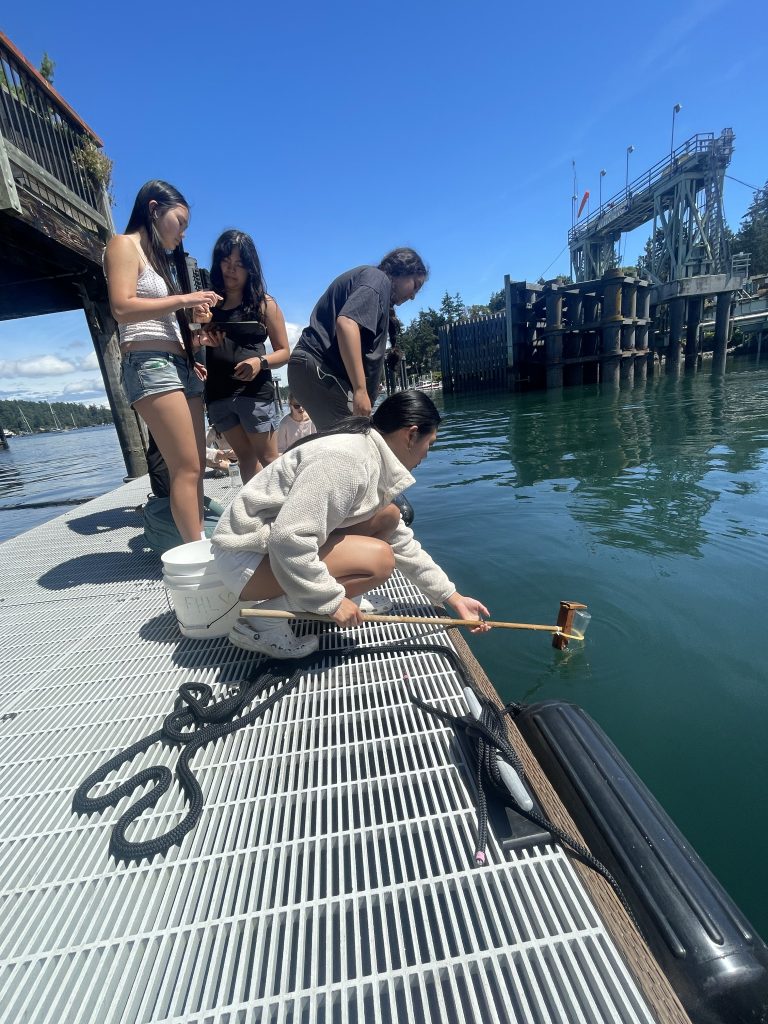
Cynthia, Kashi, Maxine, and Kate using their dip stick to collect a sample of water from the marina (taken by Aoife).
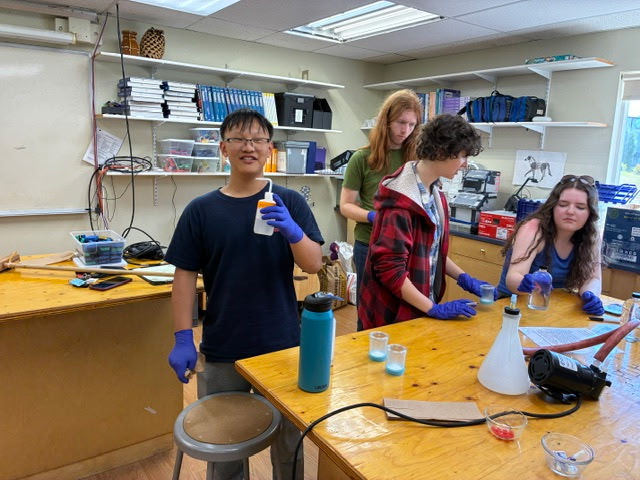
Each month, scientists conduct water testing on behalf of the Port of Friday Harbor to ensure the safety of the community. This month, we got the privilege to assist in the collection and processing of seawater samples from selected locations around the marina. These water samples are used to check for overabundance of a harmful bacteria, fecal coliform. We took our samples back to the lab to prepare them for incubation, where we can record the bacterial concentration.
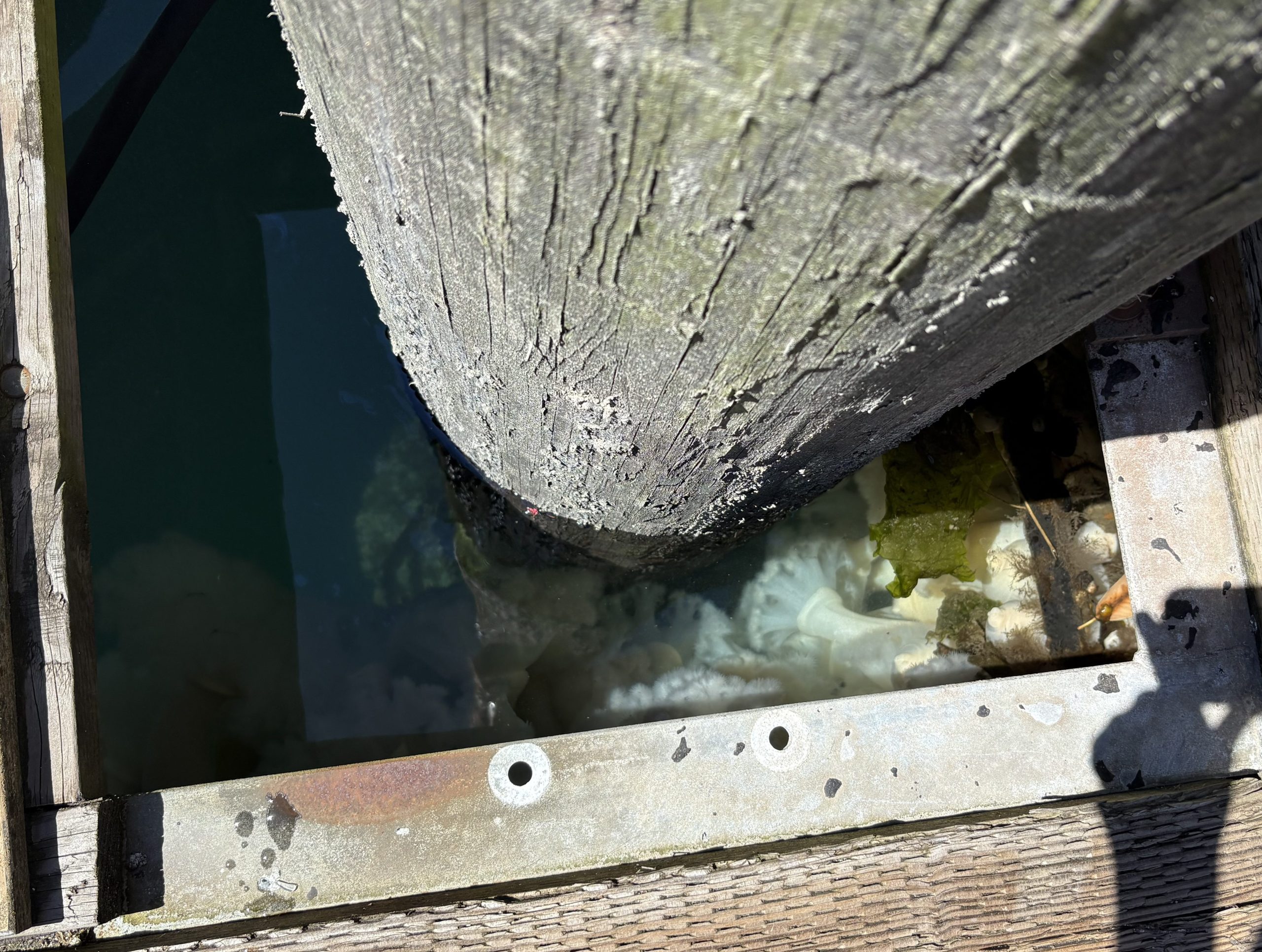
Fun plumose anemones hanging onto the dock at the marina (taken by Violet).Wesley, Owen, Ripley and Una concentrating and dyeing the bacteria from water samples taken on the marina (taken by Ani).
Today was an exciting blur of hands-on field and lab work. We’re excited to get back out there tomorrow and assist another scientist with their research. Tonight, we are having dinner with Dr. Richard Strathmann, a professor at the University of Washington who also focuses on embryology at Friday Harbor Labs.
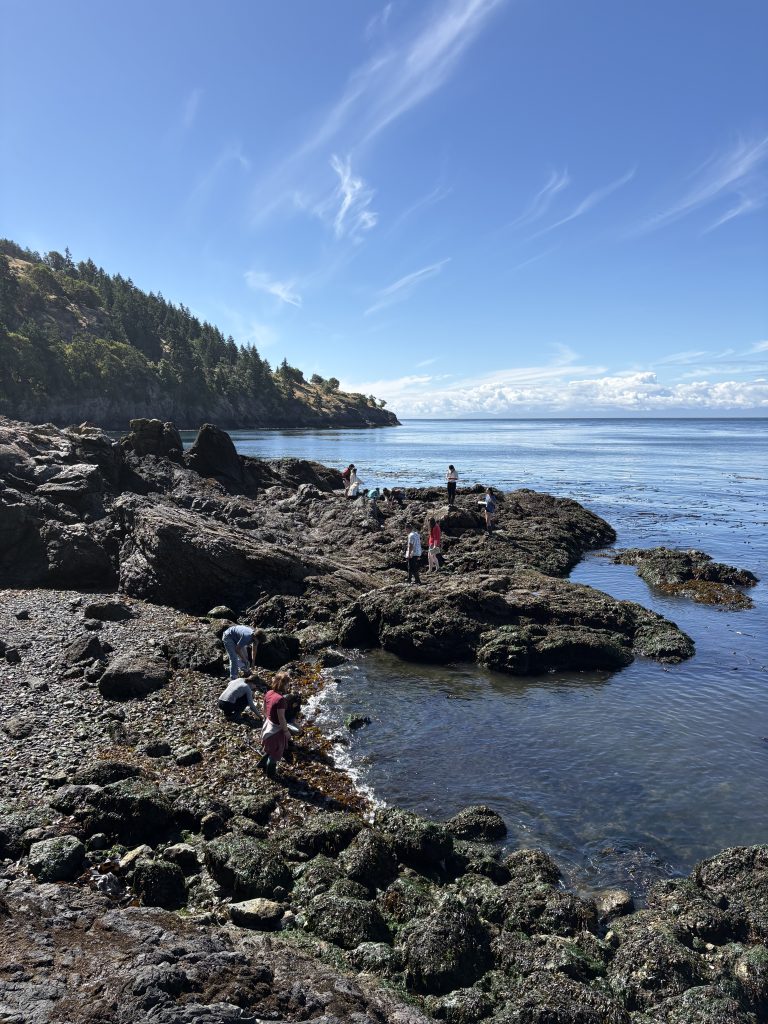
It was an earlier morning than usual, since we were going tide pooling. We had the same breakfast we’ve had for the past forever, but it still hit the same. With an early start, we headed to Deadman’s Bay for low tide.
Eva, Una, and Addy getting ready for tide pooling (taken by Eva).
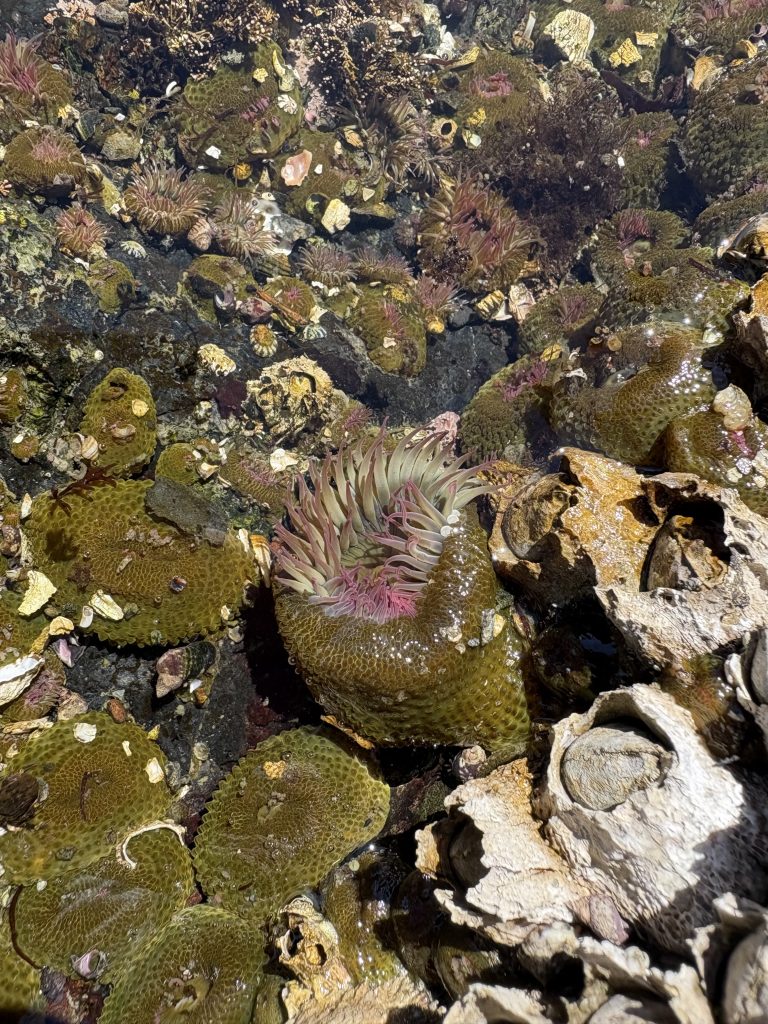
We arrived before the lowest tide so we could have more time exploring all of the diverse tidepools. We found many different organisms down at the bay, such as sea stars, sea urchins, crabs, and much more.
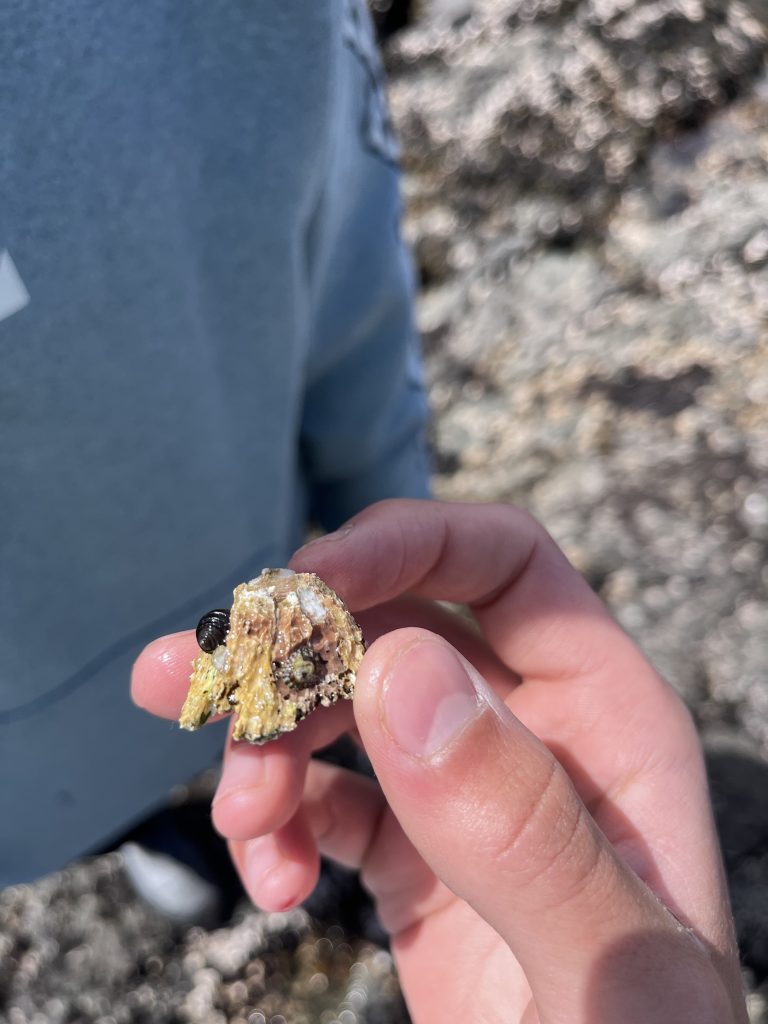
Tide pooling creatures (taken by Addy).A barnacle with other organisms living on it (taken by Sam).
After our time in the tidepools, we had a nice lunch with a view on the beach.
Deadman’s Bay (take by Sam)
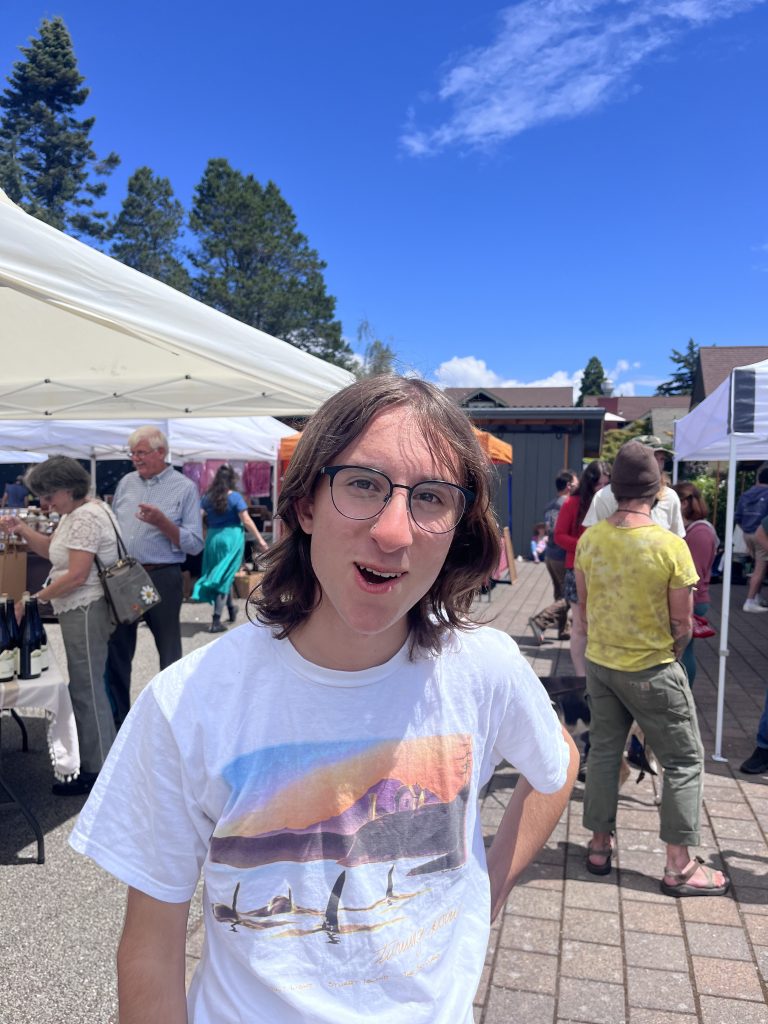
We visited the farmer’s market in town and all the stalls of produce, artisan baked goods, and handmade art.
Silas at the farmers market, we’re all grateful for this picture (taken by Sam).
We then made our way back to the dorms to get a talk on invertebrate phyla from Adam. After a great lecture on all the invertebrates in the Salish Sea, we were introduced to our personal projects, and what resources we will be able to use for our end-of-course presentation. Afterwards, we sat down and brainstormed and prepared for an amazing dinner prepped by our fellow friends. Tonight we plan to have a wonderful talk from Shauna Barrows, she works for the land bank on San Juan Island. She does lots of ecosystem restoration in the island and keeps it looking as beautiful as it does. https://www.hometrust.org/shauna-barrows
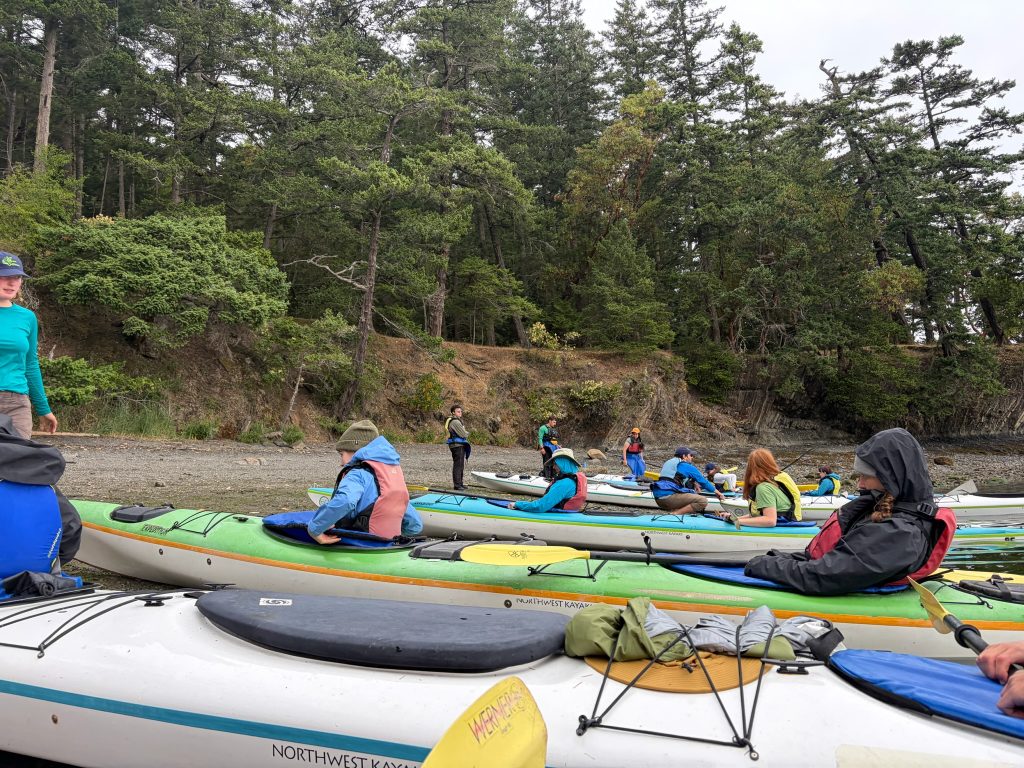
Today was an early morning, we awoke grateful it didn’t rain and began with packing up all our gear. Before we could have yogurt and granola or oatmeal, we had to turn in our tents to prove we were all packed up. After eating, we began to move boats into the water and bring all our gear down to the shore. We packed up the boats and loaded up. Spray skirts and PFD’s on and we were so ready to paddle back. We began our journey back. Through wind, rain, strong current, and lots of scattered singing, we made it through John’s pass, Spiden channel, and back to Rosche Harbor. Once we got out of the kayak and stretched our legs, we unloaded the boats and loaded up the trailer. Since it was pouring, we headed to Jackson beach for some pulled pork sandwiches and snacks. After eating, we loaded back into the vans and to the dorms. We all showered, did laundry, and relaxed to reset from our long but amazing trip. We had some lasagna for dinner and are now winding down for probably an early night to prepare for tide pooling tomorrow. Unfortunately, not many photos today since the conditions were questionable and not many safe opportunities to take out our phones.
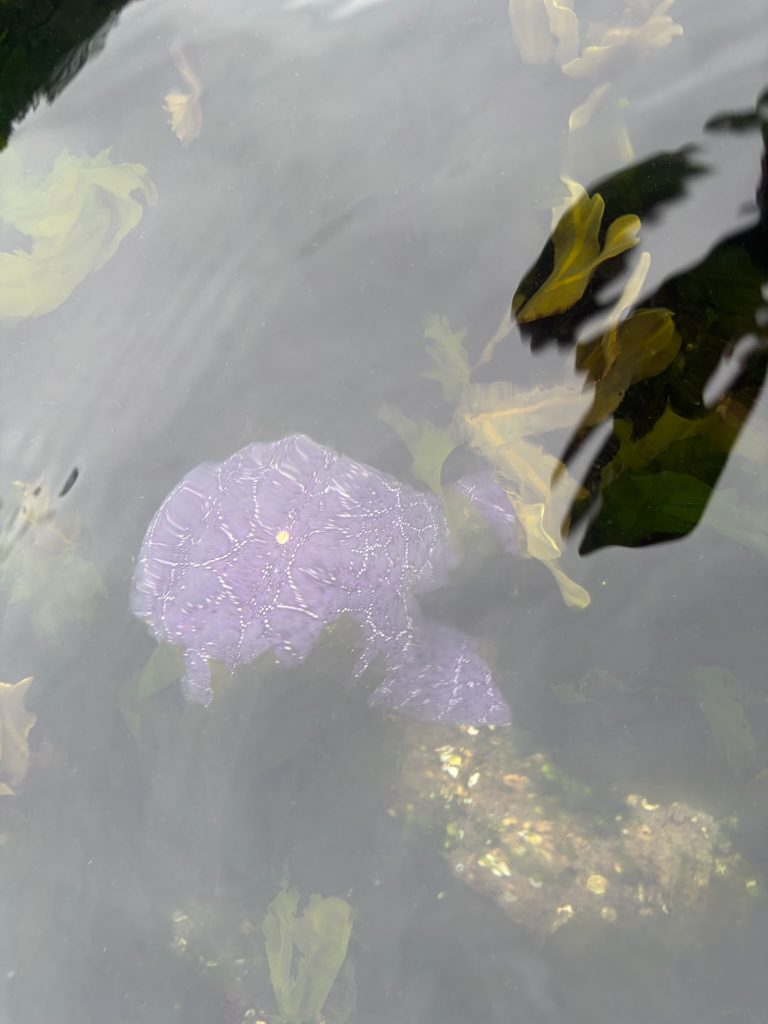
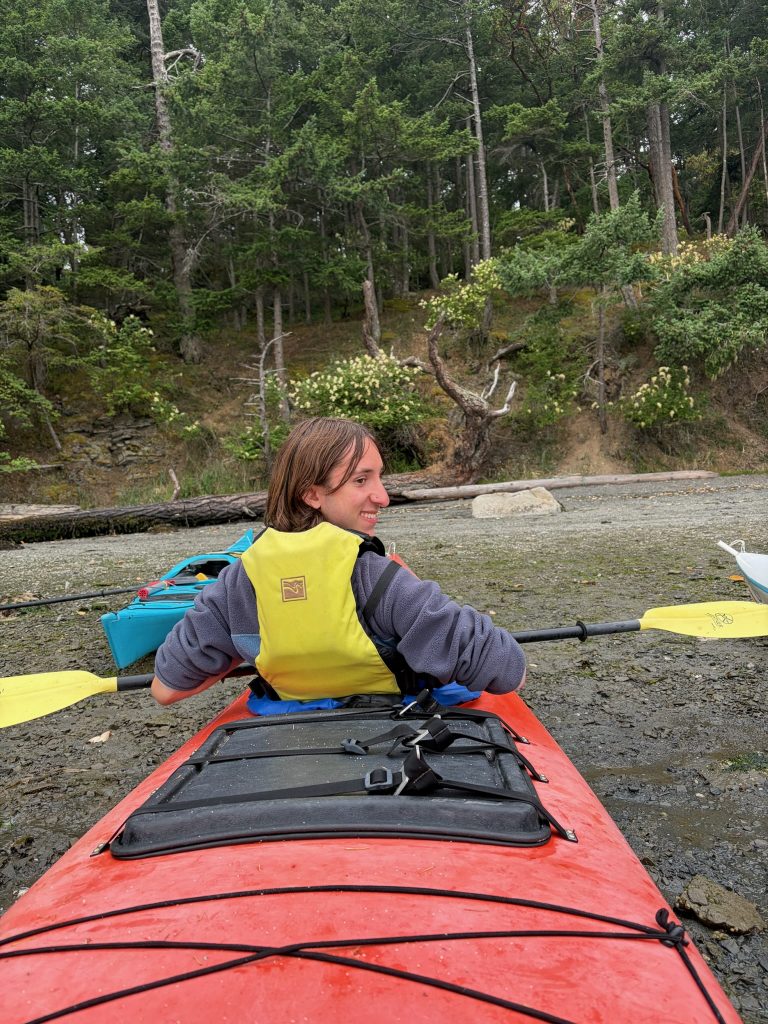
A beautiful purple star fish! Credit: AliceEveryone in their kayaks ready to start our journey home. Credit: AliceSilas all tucked into his kayak. Credit: Alice
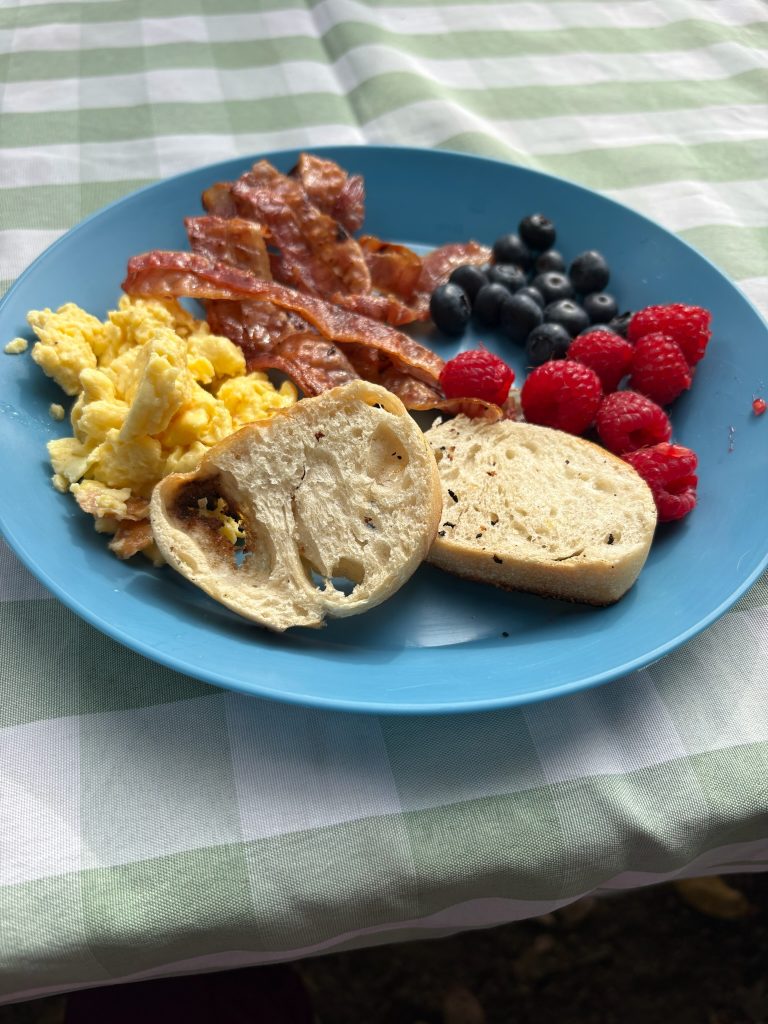
We had a slow start to our day, waking up to a hot breakfast at 9:30 am. The bacon and cheesy eggs boosted our morale after a long kayak the afternoon before.
Our breakfast — Credit: Violet
To give our arms a break, we set off for a six-mile round hike. On the way to the lighthouse (our turnaround point), we stopped at the old Stuart Island school house and a museum about the island’s settlers’ history.
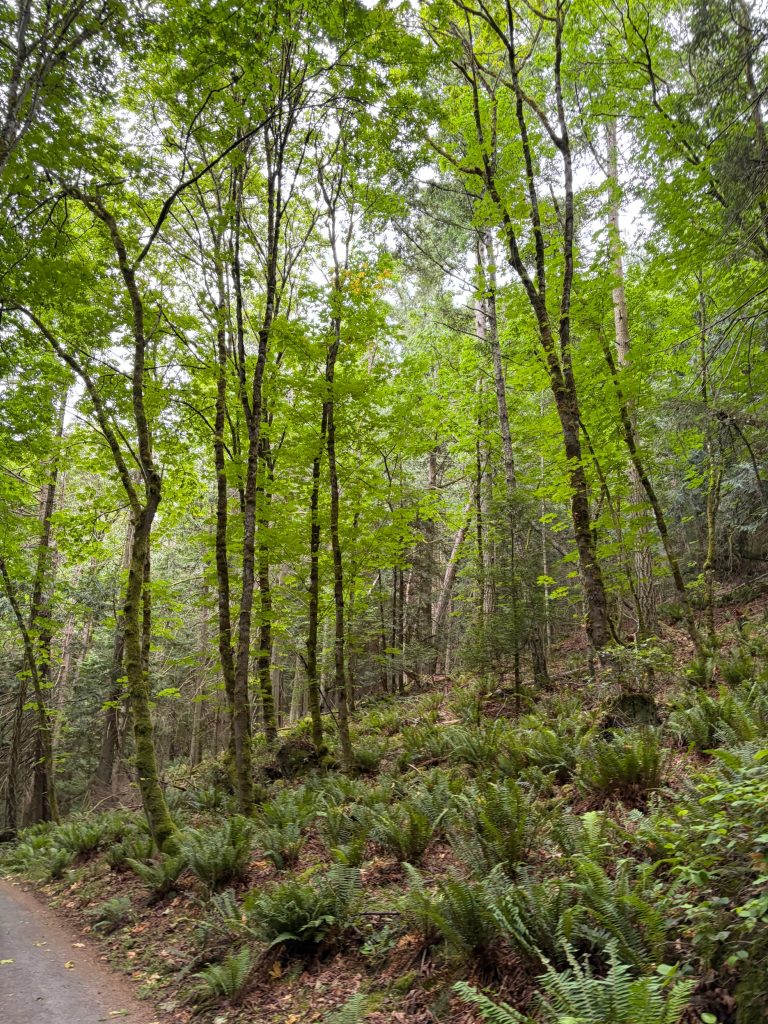
As we continued to the lighthouse, we saw beautiful views of the environment around us. We noticed the contrasting biodiversity between Stuart Island and San Juan Island.
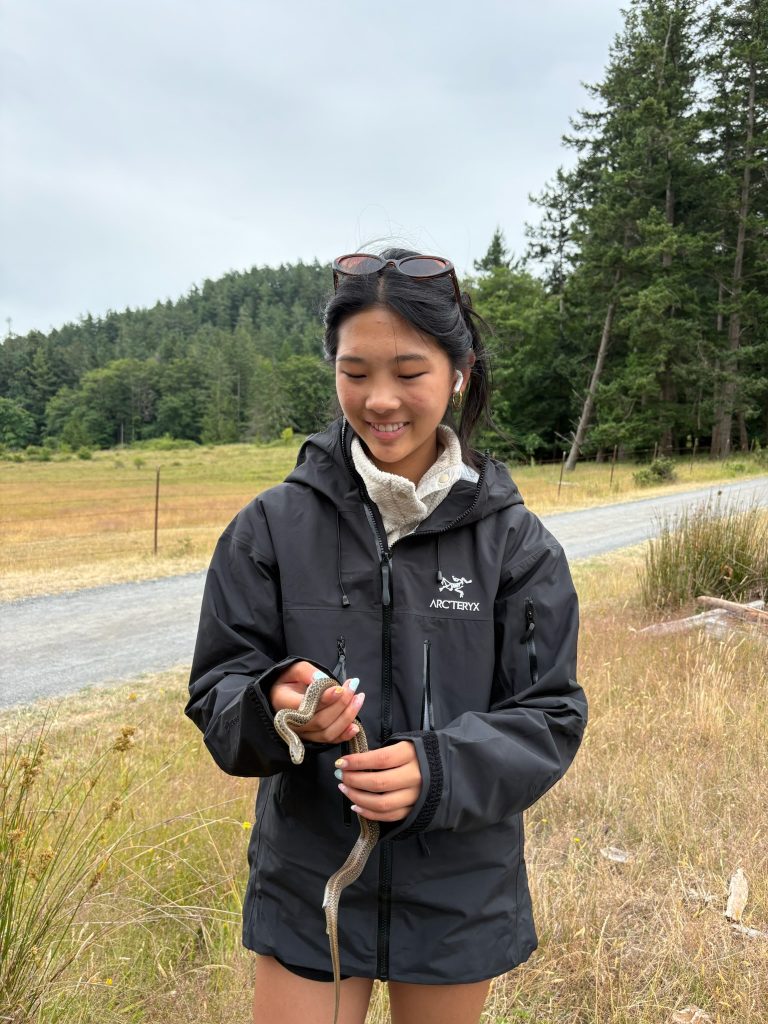
The nature of our hike — Credit: Alice Cynthia holding a snake on our hike — Credit: Kate
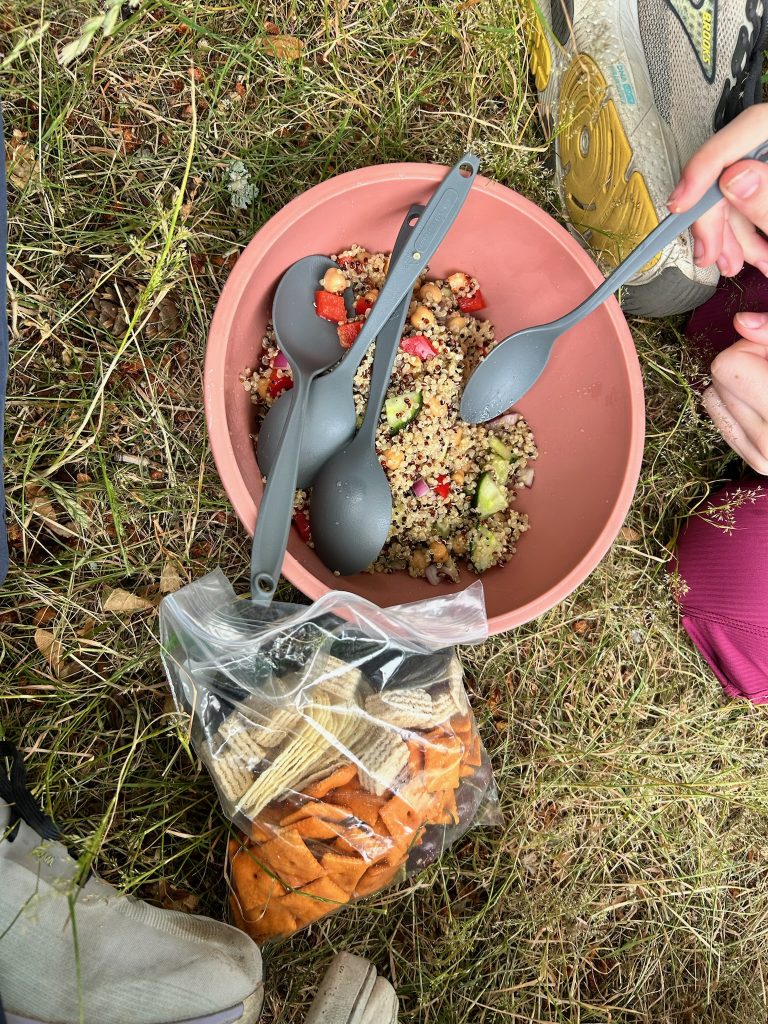
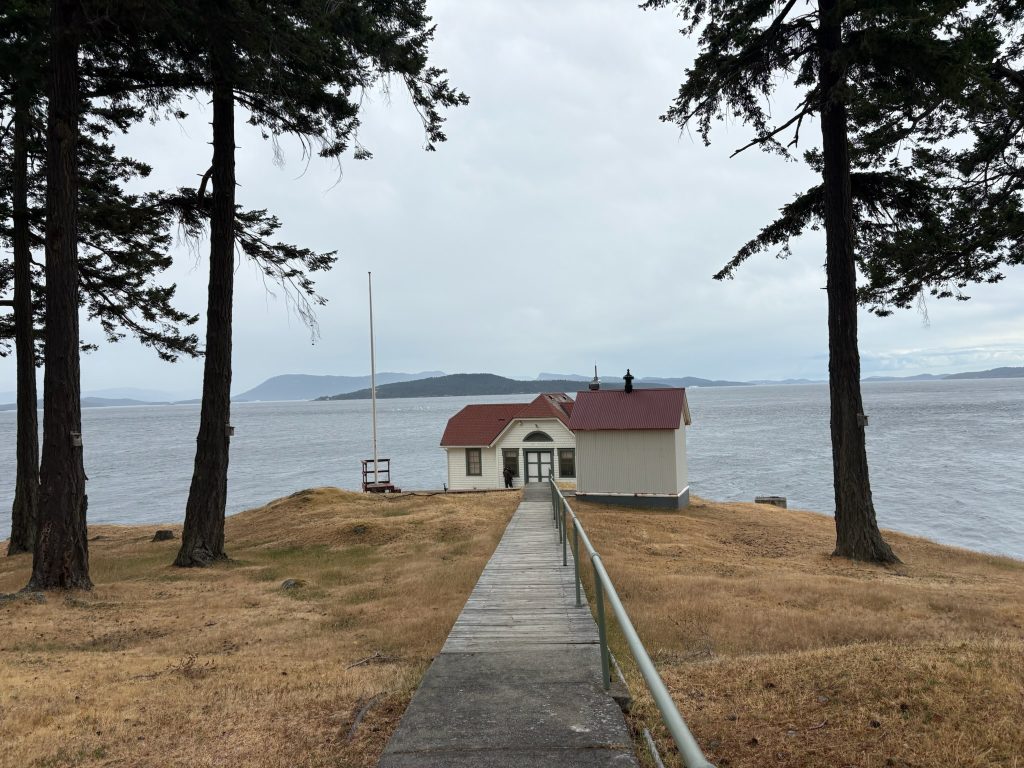
At the lighthouse, we ate a fresh quinoa salad with a side of cherries, crackers, and cookies.
Lunch by the lighthouse — Credit: Olivia By the lighthouse — Credit: Violet
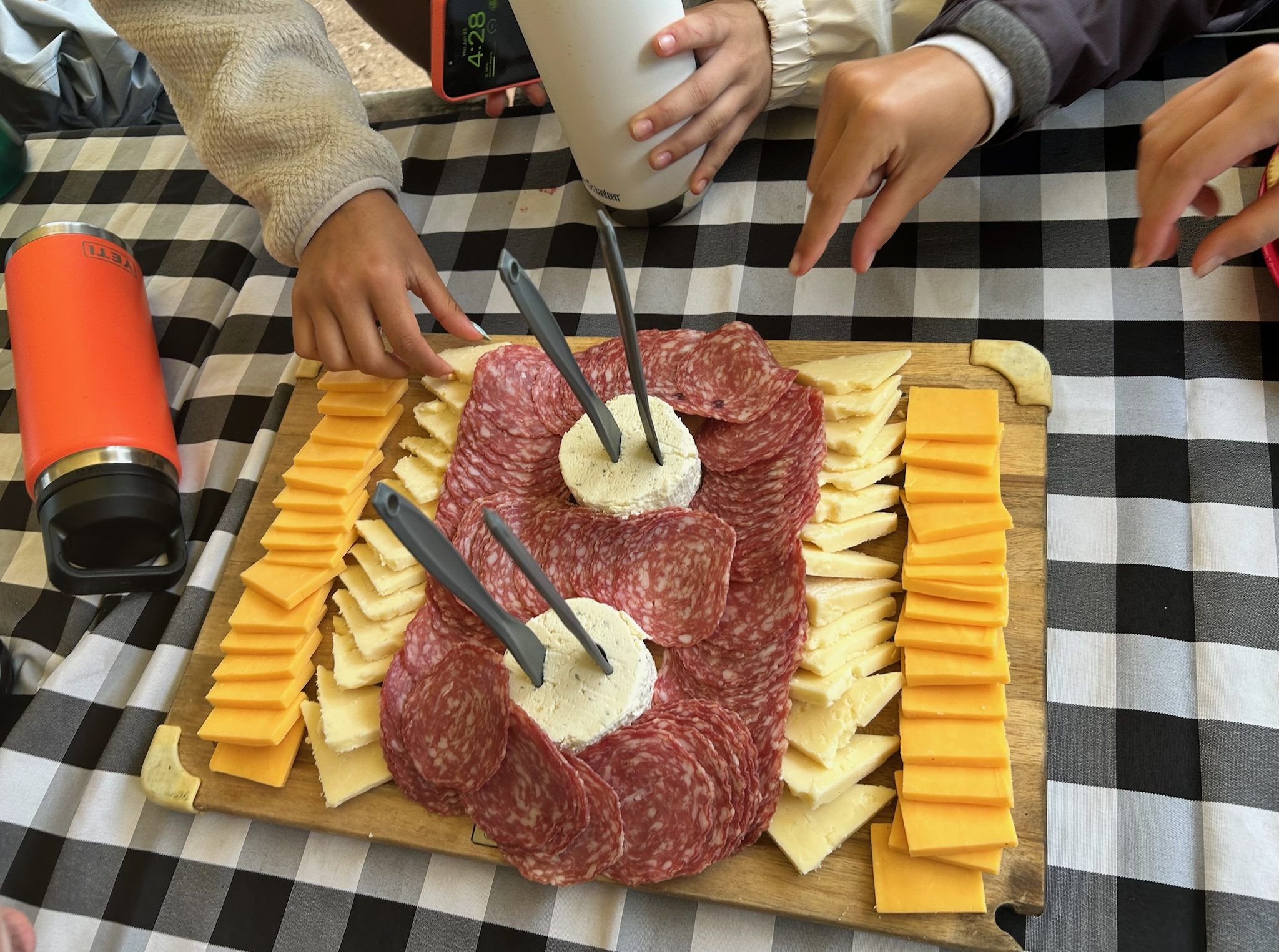
On our trek back, we took a different trail, walking along the beach. At the beach, we saw harbour seals hunting and river otters swimming. It was a fascinating sight! After our hike, we had free time to explore. Our guides put together a delicious charcuterie board for us.
Charcuterie board — Credit: Olivia
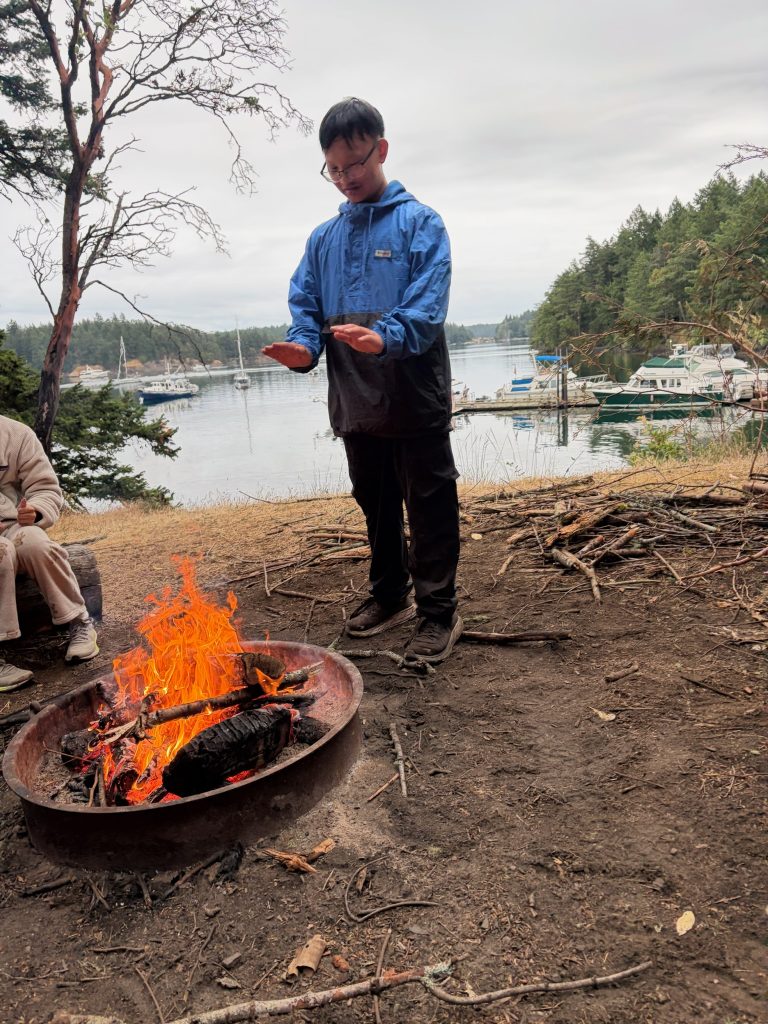
After eating, some jumped into the ocean, and others warmed up by the fire.
Wesley by the campfire — Credit: Alice
Ending our day with campfire songs and cake, we went to bed at 10:30 pm for our early morning of paddling the next day.
For an exciting break in the usual pattern, we began our 3-day kayak excursion. Our route to Stuart Island was long and arduous, but worth it once we arrived at the place we’d call home for the next two nights.
Students holding onto the other kayaks to make a raft during a paddle break. Photo Credit: OliviaOn our way to Stuart, we had to pause for an unexpected humpback whale crossing. Can you spot them?Photo Credit: OliviaEventually, everybody managed to set up their tents correctly (for the most part). Photo Credit: Violet
When we got camp we had plenty to do, including collecting firewood, swimming in the chilly water, and exploring the forest. Later, we all gathered for dinner to eat delicious fish tacos prepared by our kayak guides. Eli and Zoe, our guides from San Juan Outfitters, were incredibly helpful, reliable, and kind throughout the whole trip.
After a long day of paddling (over 8 miles…) students enjoyed some tasty s’mores around the campfire. Photo Credit: KateAfter the sun set, students went night lighting at the dock and saw many interesting marine creatures, including tube worms (pictured above). Photo Credit: Alice After our lovely campfire experience, we observed a not so-lovely worm spawning extravaganza. Photo Credit: Alice Photo taken moments before disaster: Gabe attempted to hold one of the worms, but unfortunately he karate chopped it in half instead. Did you know that these worms can still move after being severed? Photo Credit: Olivia
Later, some of us decided to sleep under the stars with no tent–also called cowboy camping! We fell asleep to the sound of waves and chittering raccoons. Although it was a late night, we hope to wake up in the morning feeling refreshed and ready to rock.
blog credits: Kate Ji, Una Gaffney, Addy Brautigam, Gabe Shih
We woke up bright and early this morning to go to the Whale Museum where we got an exclusive tour before they opened! We got to learn about toothed whales, baleen whales as a few other marine mammals! They had some really cool skeletons including a grey whale and a few orcas.
A real life size grey whale skeleton! Credit: Una Gaffney
These are the skeletons of conjoined seal twins. The first recorded case! Credit: Kate Ji
Students checking out the whale museum, with a friend peeking in on the right side;) Credit: Una Gaffney
After the Whale Museum we loaded into the vans and headed to County park to eat lunch. We got to see some beautiful views as well as lots of moon jellies! When we finished lunch we got back in the vans and went to Lime Kiln state park where we got a wonderful tour from Erin and Josiah. That concluded our activities for the day so we came back to the dorms and discussed our plans for the kayak trip tomorrow!
A beautiful view of a cove at the County Park. Credit: Una Gaffney
Moon Jellies! Fun fact, if a moon jelly looks pink, they’re pregnant. Credit: Una Gaffney
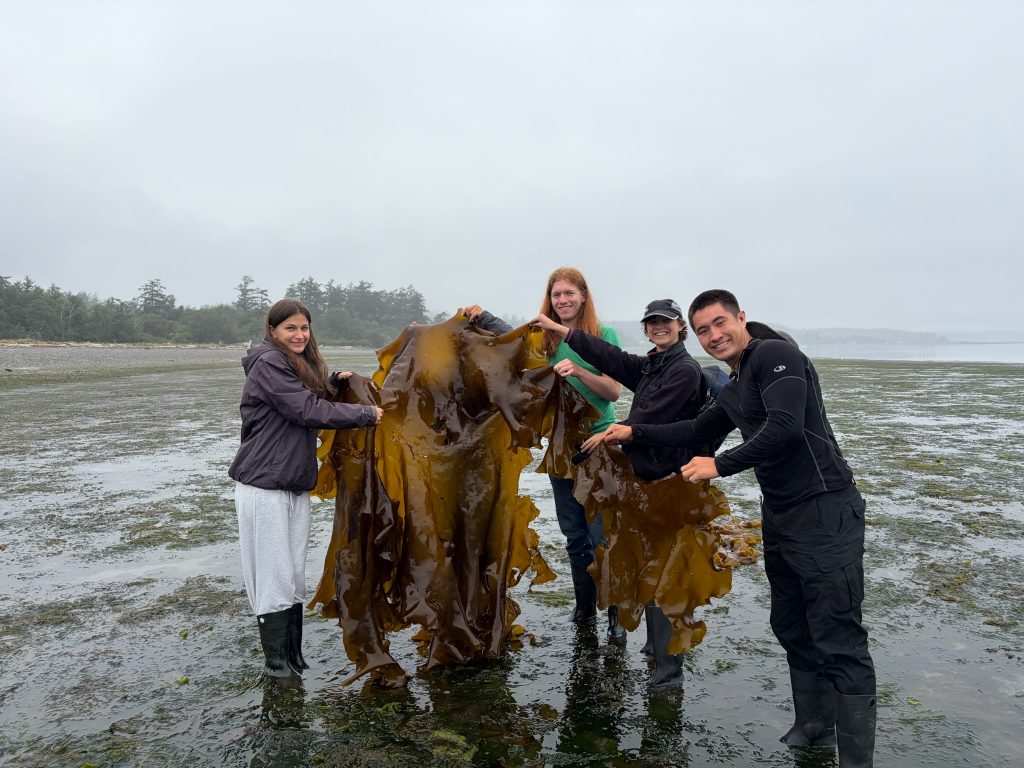
We played jump rope with bull kelp on the beach. Credit: Kate Ji
The view on our hike to to Lime Kiln light house. Credit: Kate Ji
Students walking down to the lighthouse with our amazing tour guides. Credit: Addy BrautigamStudents huddle around listening to our guides, learning about the native and nature history. Credit: Addy Brautigam
The dinner crew is hard at work as we speak and we’re excited to welcome Hazel M. Havens who got her PHD for her work studying the Caribbean spiny lobster’s magnetic sense at UNC at dinner tonight! We are also welcoming Dr. Dennis Willows who was Director of Friday Harbor Labs from 1972 to 2005 and was excited to hear Hazel Havens speak.
We are so excited to start our kayak journey out to Stuart Island for 2 nights! Stayed tuned for photos and our experience coming Friday.
Some students went on a walk to the docks last night after our guest presentation. Credit: Una Gaffney
After many long journeys to Anacortes from places as far as Guam and Alaska we were grateful for a long nights’ sleep in our comfortable dorms.
Silas Unger: First view of the Spring Street International School dormsOlivia Lessens: Stepping off the ferry into Friday Harbor!
This morning we woke, rested and ready for an exiting and packed day. We began with a scavenger hunt to get to know the town of Friday Harbor, running around looking for niche spots. The winner of this competition would get to bragging rights, stickers, and the first pick for team names.
Olivia Lessens: Team Medusa completing the handstand scavenger hunt challenger (for just 5 points)
After moments of success (and some backtracking), we quickly rearranged to drive to Friday harbor labs. We thoroughly toured the campus and went inside a few of the lab buildings.
Our group began in the Sunflower Sea Star lab, where Dr. Rebecca Guenther, an instructor at Friday Harbor Labs, showed us her most recent research project. She and her team have been studying the effects of the Sea Star Wasting Disease on the sunflower sea stars in the area for years, describing the problem and her solution.
As we listened attentively, she explained the artificial reproduction process, and opened the lids to the many generations of Sunflower sea stars in tanks.
Silas Unger: Benny the sea star (top corner) who lost nearly all of his limbs from the wasting disease, and is now safely recoveringKashi Kulkarni: A tank of Dr. Rebecca Guenthers Sunflower sea stars. Each tank of sea stars has their own unique name theme!
Our final scheduled visit was the fish lab where we got to see diverse fishes, and how the fields of biology and engineering intersect. The researchers at this lab were studying bone structures using a CT scanner.
Kashi Kulkarni: How they used different chemicals to turn the bones pink, while turning the tissues of the turtle transparent. Olivia Lessens: Salish Sea Science student are transfixed by various preserved specimens
We saw one final lab where we observed University of Washington students conducting their own experiments and projects, with invertebrates and other marine life looking on.
We are looking forward to an engaging conversation over dinner with Dr. Billie Swalla, an expert in Marine Genomics and the first female Director of UW Friday Harbor Laboratories from 2012 – 2019.