Last Day

By: Ben, Sonja, Chloe

SPOILER ALERT: today was the last full day.

On the last full day, we were woken up early so that we could finish our posters. After we finished them, Megan Cook talked to us about how to present our posters. She helped us all relax and gave us some tips to make our presentations better.

Then we went into cleaning mode. We spent the next 3 hours packing and cleaning up.

Finally it was time to set up our posters. We all raced to claim the best spots to hang up our projects. Before our guests arrived, many of us decided to do some power posing to get us ready for the evening ahead. Then, the doors opened, people flooded in and they began to examine our work. Many family members  and scientists that we previously worked with showed up to listen to our presentations.

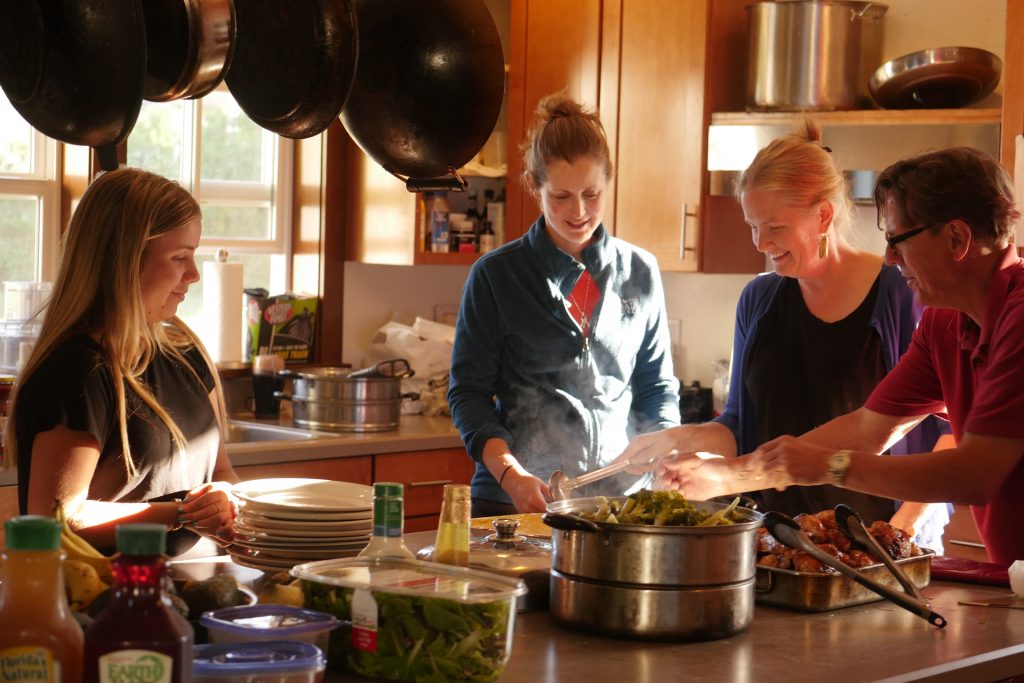
After the presentations, everyone feasted on a delicious meal of hamburgers and hot dogs. Some guests and students later played badminton and volleyball before everyone had to leave.
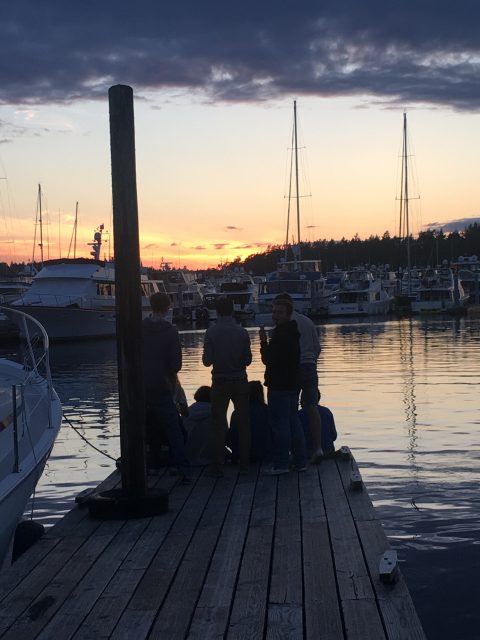
Roche Harbor

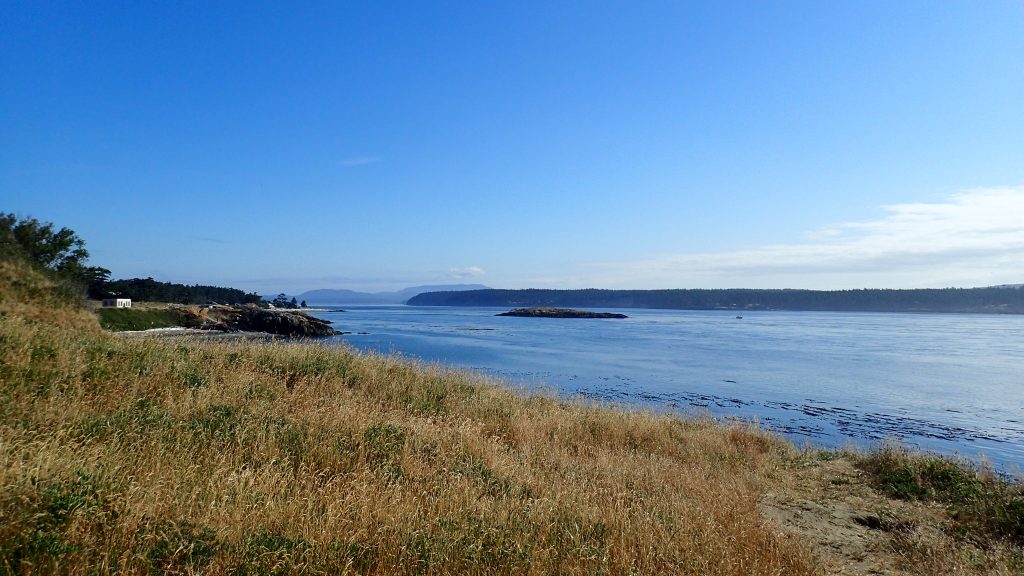
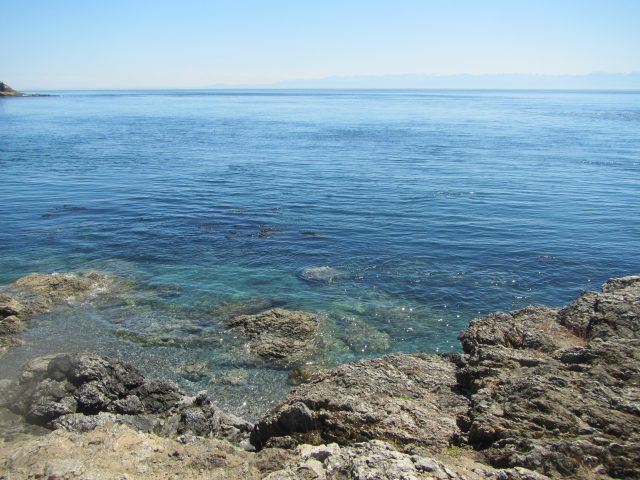
The students then traveled to Roche Harbor where we saw the changing of the colors and got ice cream for one last time!

In conclusion there isn’t enough words to sum up this amazing experience. Tomorrow morning we leave for the ferry to which we will leave not empty handed but full of many memories that will last a lifetime.
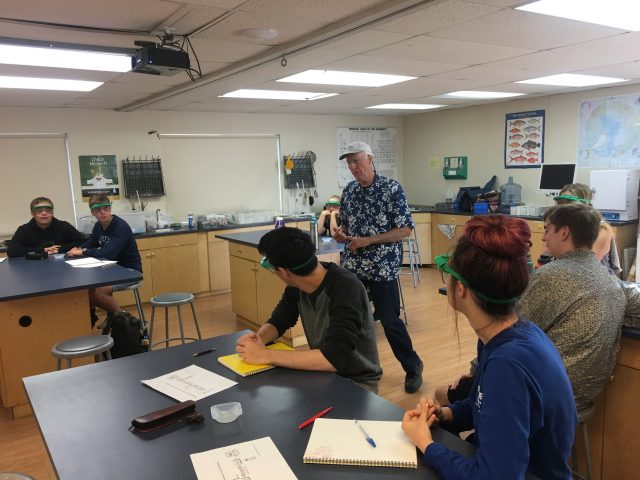
Tim B Giving Life Advice

By: Ben, Sonja, and Parker

Did you know that store bought mac and cheese can contain a small amount of BPA in it? Luckily, according to Dr. Jack Bell, you would have to consume many boxes a day to feel any effects.

Dr. Jack Bell

Creating mussel extract

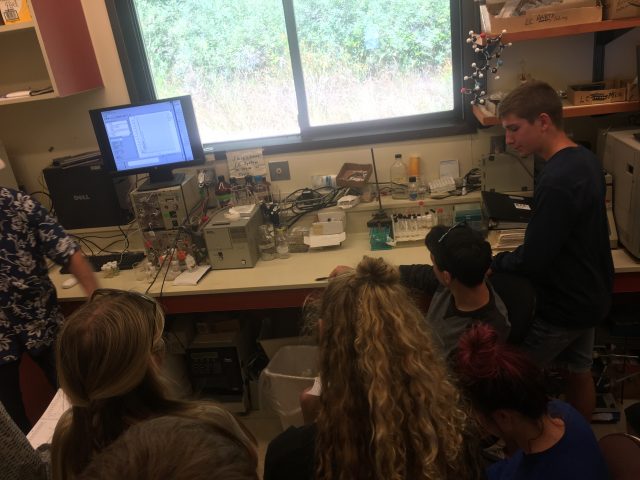
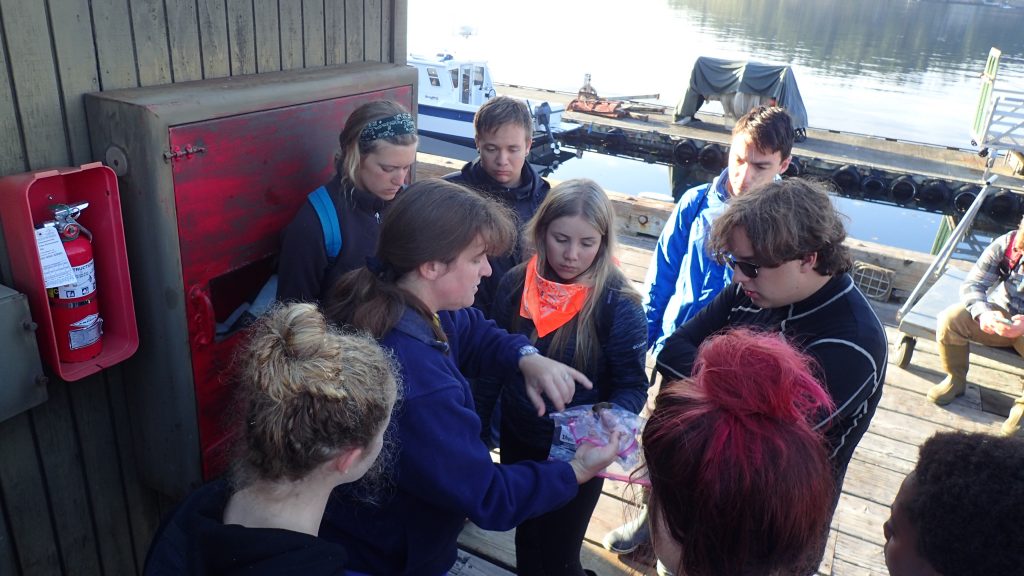
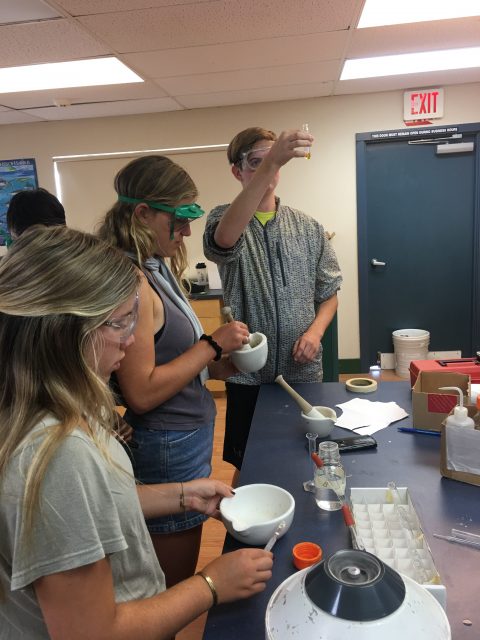
Early in the morning, Dr. Bell came to the Spring Street International School lab to help us create samples to run in the High Performance Liquid Chromatography (HPLC) machine at the Friday Harbor Labs. We were testing for BPA levels in mussels, who are known to be early warning organisms since they are filter feeders. To make the sample, we crushed mussel tissue and a variety of chemicals using a pestal and mortar. We then put the sample into a centrifuge and then pressed it through a filter. Later, at the labs we ran the samples through the HPLC machine which did not reveal any traces of BPA in the mussel tissue.

HPLC Machine

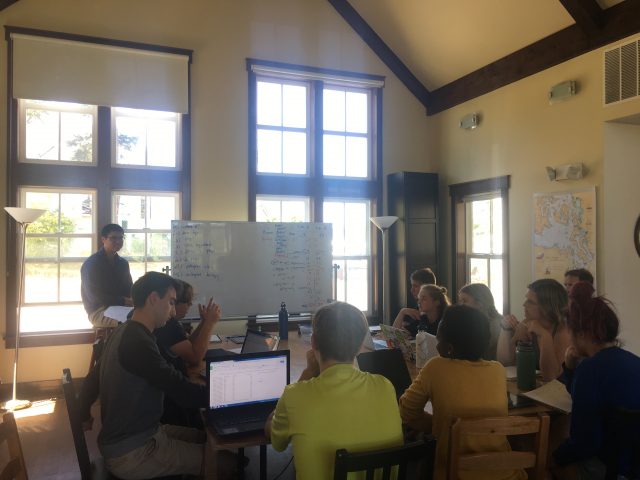
In the afternoon, Will King taught us how to use certain statistical tests for our final projects. We learned about T-tests, linear regressions, and Chi squared tests.

Stats with Will King

For dinner, the guest of honor was our own Tim Brogdon. He gave us a valuable and relevant presentation about life skills that can set us apart when looking for a job.

Putting Leashes on Snails

Why don’t oysters give to charity?

Because they’re shellfish! Haha!

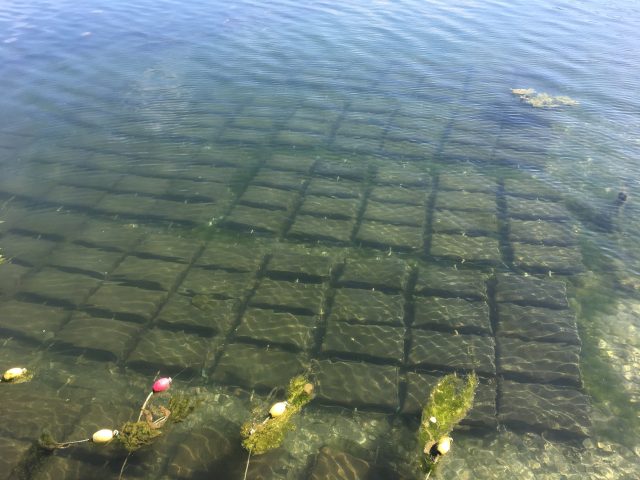
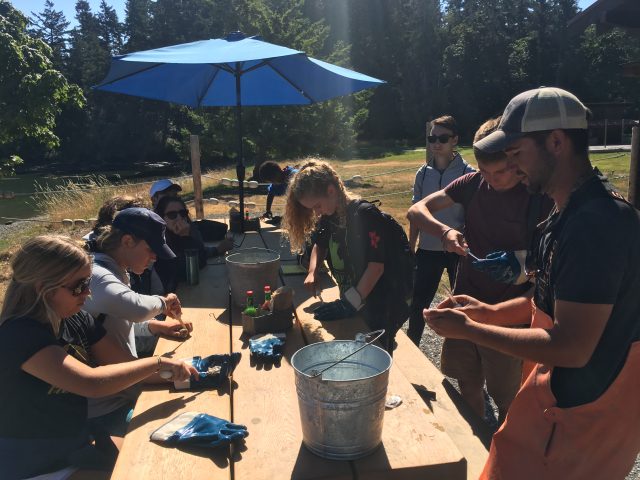
In the morning, we got an exclusive tour of the Wescott Bay Shellfish Farm. The farm buys larval shellfish from hatcheries and then raises them until they can be sold to local restaurants or from their storefront. Our tour guide, Sam, demonstrated how to use some of the machinery and let us eat some delicious oysters.

Oyster bags

Shucking oysters

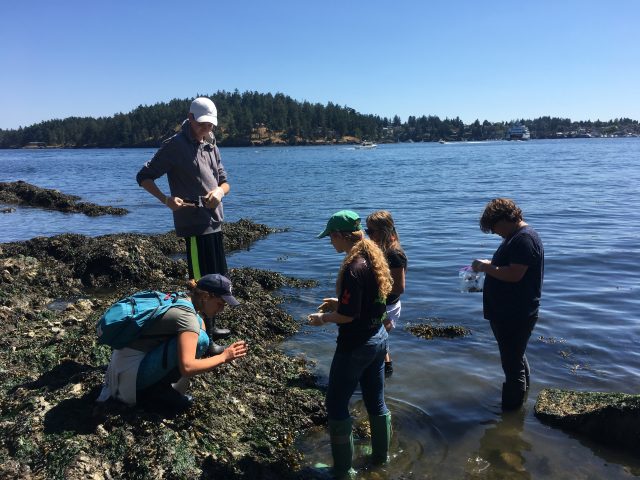
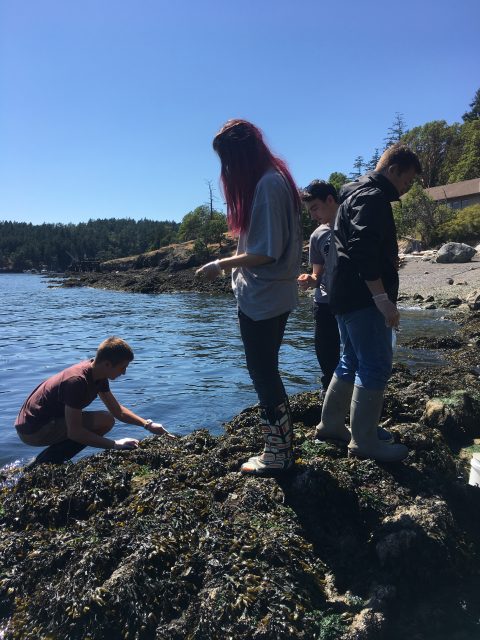
After an early lunch, we drove to the Friday Harbor labs to use our previously collected whelks for an experiment. First, we sorted the whelks into their different species and then measured the length of their shells. Once we had graphed the size of the shells, we super glued pieces of string onto the shells as a tether. We then brought the snails down to the intertidal zone where we used epoxy to attach the other side of the string to the rocks. We will return tomorrow to see how many snails were eaten and to analyze the data to find patterns.

Tethering snails

Tethering snails pt. 2

Since it was a relatively hot day, when we returned to the dorms, some people set up a Slip and Slide in the backyard.

For dinner, we hosted Matt Wickey, the leader of a non-profit organization, Kaigani Canoe Voyaging Society. He spoke to us about his previous environmental work in Hawaii and the San Juan Islands.

Tomorrow we are excited to have the chance to paddle in a traditional Hawaiian outrigger canoe with Matt.

Slimy Slugs and Slippery Snails

By: Ben, Sonja, and Parker

Did you know that slugs can posses both male and female sex characteristics at the same time?

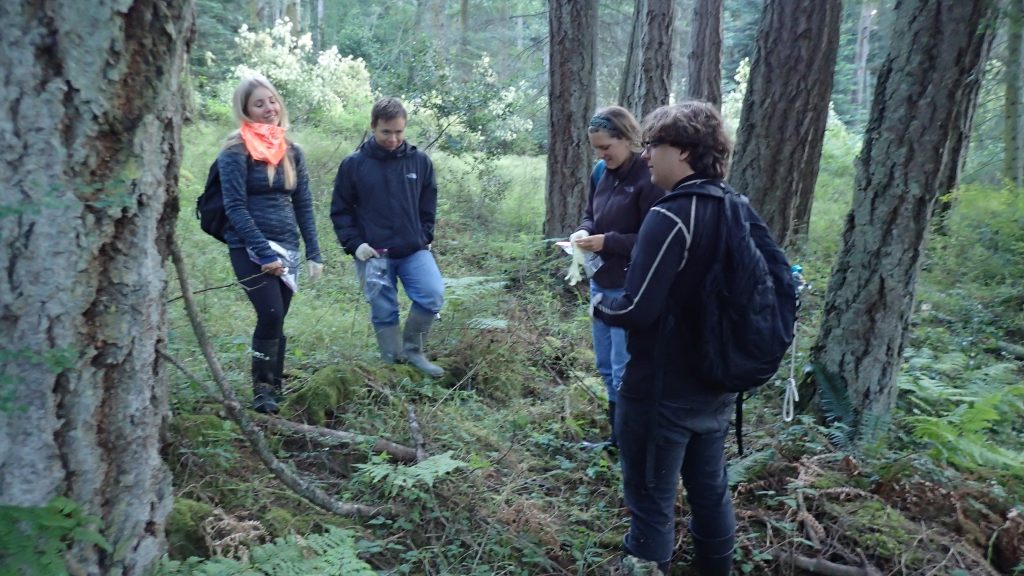
We learned this today, when we woke up at a painfully early, 4:30 A.M. to hunt for snails with Dr. Erika Iyengar. We helped her document the number of invasive slugs, compared to native banana slugs in the Friday Harbor Lab area. There were many more invasive slugs than banana slugs in the area, which is not a good sign for the native population.

Looking for slugs

Dr. Erika Iyengar showing us slugs

After a quick breakfast back at the dorm, we went back out into the field, this time to Cattle Point. Here, we collected two species of whelks for a later experiment. Tim D. also gave us a fascinating lecture on the geology of the surrounding area.

Cattle Point

Since we got up so early, we had a very relaxing afternoon. Some people took naps, while others watched a movie and went to get frozen yogurt.

For dinner, we had Hilary Hayford, an intertidal ecologist from the University of Washington, and Jen Olson, the stranding network coordinator of the Marine Mammal Stranding Network, as guests. Both of them gave presentations on their respective research and work.

Dinner with our guests

Tomorrow, we are looking forward to observing a marine necropsy of harbor seal pups with Jen Olson.

Invertebrate Ballerz

By: Ben, Sonja, and Parker

High school kids enjoy an exclusive college party- for invertebrates.

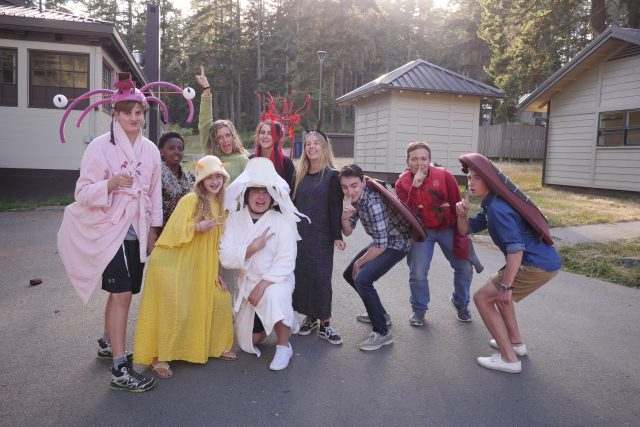
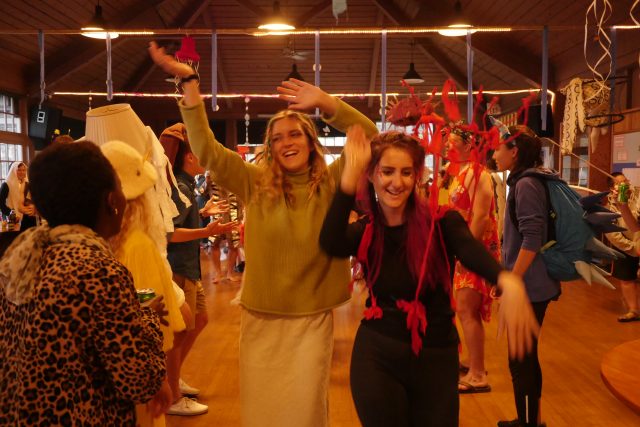
The Invertebrate Ball was hosted at the Friday Harbor Labs dining hall. It is an exclusive party for scientists and graduate students who love invertebrates. We each dressed up as an invertebrate, or a related pun, and put our costumes up for judging and our dancing skills to the test. Aaron took home the title of best cosmopolitan costume as a shrimp cocktail.

Earlier in the day, we journeyed to a “mistical” land called False Bay. We walked out onto an expansive sand flat, where mist rose from the ground. Some students sieved the sand, while others counted lugworm holes or dug them up. Our goal was to determine the population density of lugworms in various locations in the bay. We found out that the area closer to the ocean had larger grains of sand and less lugworm holes. Conversely, the near portion of the sand flat had finer grains of sand and more lugworm holes.

For lunch, we traveled to the San Juan farmer’s market and enjoyed a variety of foods, music, and art. Next time you visit, try the focaccia bread with tomatoes and pesto.

Jim Murray then gave us a tour of his lab, which is home to a baby giant red octopus and a plethora of invertebrates such as sea slugs, nudibranchs, sea stars, crabs, and sea pens.

When we returned to the dorms, we used our creative skills to perfect our costumes for the Invertebrate Ball.

Getting ready for the ball

Before the Ball

Dancing at the Ball

Tomorrow we are looking forward to another exciting day!

Domino Sample Size

By: Ben, Sonja, and Parker

What does science mean to you?

Tim asked us this during our field work at the San Juan Island Land Bank today. We came up with many different responses to this question, and we settled on our definition as ‘the study of the natural world through evidence and the scientific method.’ However, there are many other possibilities to answer this question.

At the Land Bank, we also had the opportunity to learn about random sampling and how to find population density. Tim B. set up an exercise for us to practice this skill by placing dominoes in a field for us to find the size and density of the population using sampling. While we were doing this, we were lucky enough to spot some minke whales swimming in the foreground of Vancouver Island.

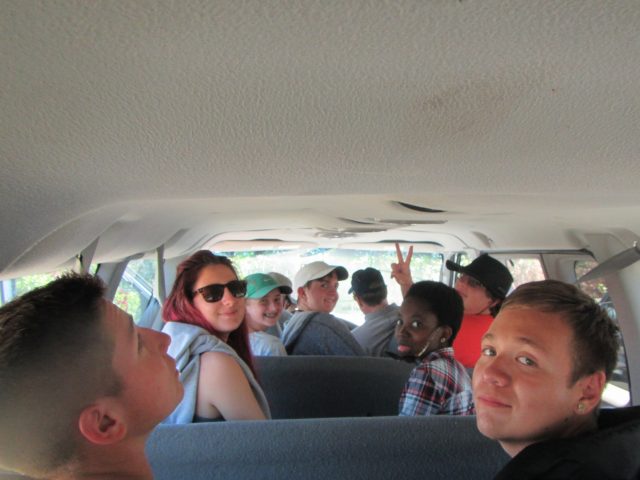
On the bus to Land Bank

Land Bank

Earlier in the day, we sat in on a Marine Resource Committee meeting where they discussed various issues, including salmon preservation and limiting noise pollution to help save the orcas.

In the evening, we hosted the manager of the Ocean Acidification Environmental Lab, Dr. Rebecca Guenther for dinner. After dinner, she gave a presentation about the dangers of ocean acidification and how it can impact us.

Whales and the Weeds

By Ben, Sonja, and Parker-

On the second full day, we arose from our chambers to a brisk summer morning. We then came into the kitchen to have a delicious meal of various cereals, fruits, and other breakfast options.

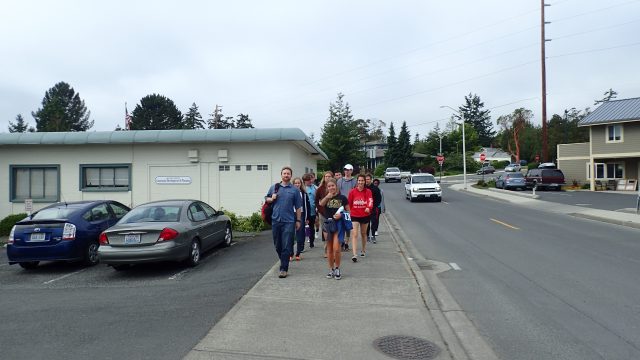
After finishing breakfast we took a quick walk to the Whale Museum where we were given a lecture about the local orca population.

Walking to the Whale Museum

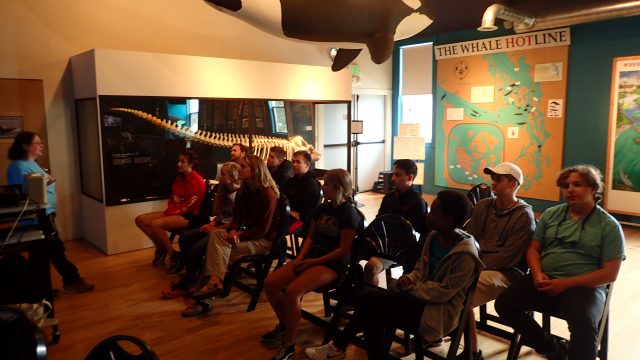
During this lecture we listened to a conversation between a family of Southern Resident Killer Whales named Oreo, Double Stuff, and Cookie. We could hear the various clicks and other sounds that they used to communicate with each other. Unfortunately, these orcas face many threats to their already endangered population, such as noise pollution caused by humans, decreasing prey populations (specifically Chinook salmon), and the accumulation of toxins in predators on top of the food chain. After the lecture, we moved up to the different exhibits in the museum and were given a scavenger hunt to “dive deeper” into the fascinating lives and behaviors of these amazing marine mammals.

Listening to a lecture on orcas

If you are wondering how you can help support orca populations worldwide, it can start with simple things such as picking up trash and limiting electricity use, along with many other solutions. For more information, please visit the link above to the Whale Museum website.

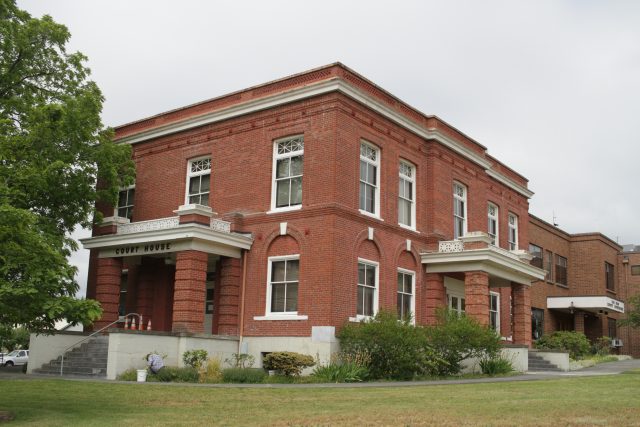
After leaving the museum, in small groups, we explored Friday Harbor through a photo safari, during which we searched for areas depicted in historical photographs. Attempting to recreate the photo in the modern era, to examine the transformation in the people, landscape, and culture of the island.

san juan county courthouse

Photographer: Peter


After a lunch of sandwiches, we prepared for our longboat voyage starting on Wednesday, June 28th.

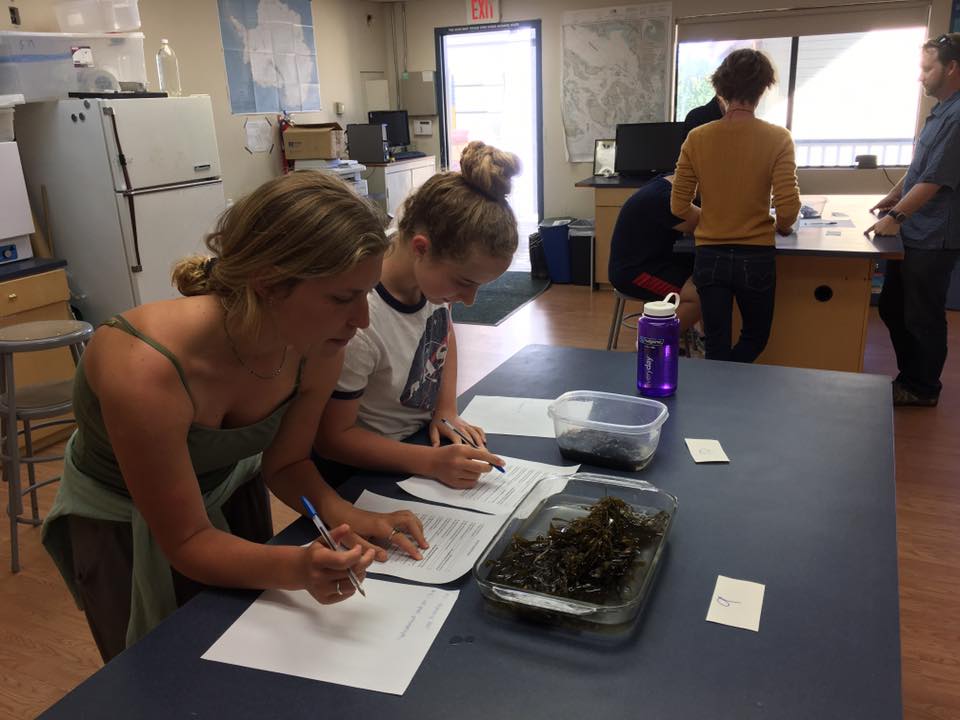
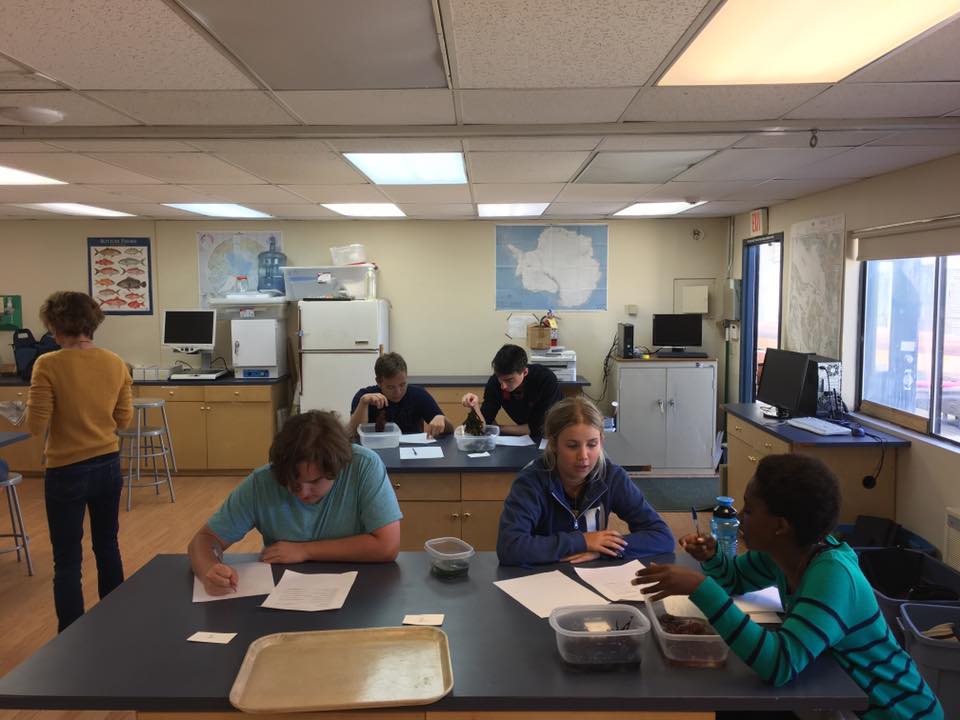
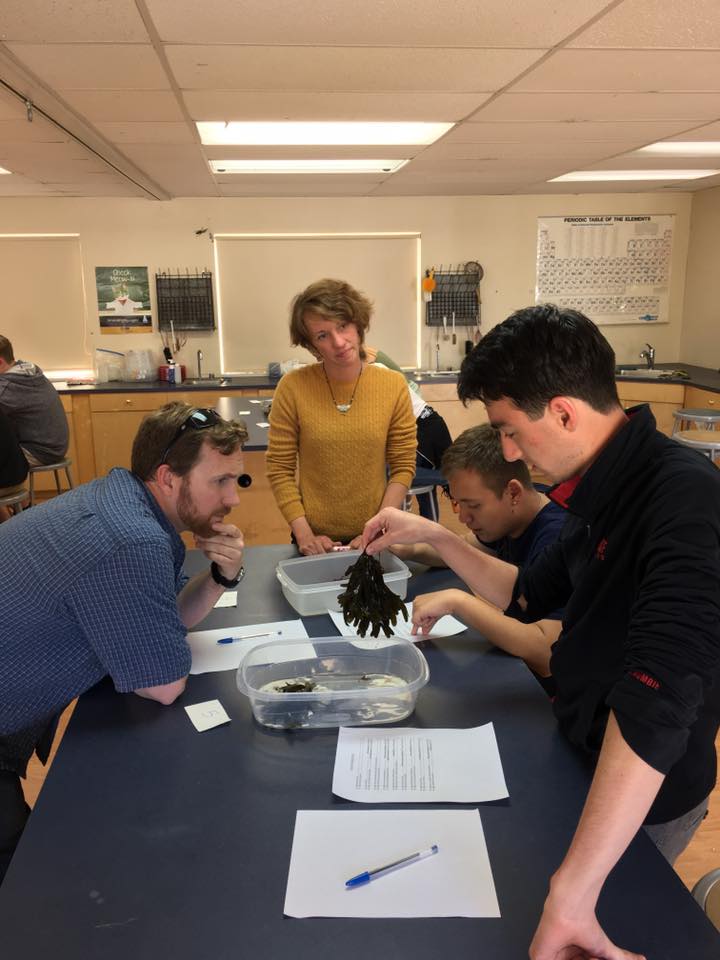
We then traveled to the Spring Street International School labs where we received a lecture on algae by Dr. Rebecca Guenther, manager of the Ocean Acidification Environmental Laboratory in Friday Harbor.

We learned the major characteristics of algae and how to identify them with a dichotomous key.

There are thousands of species of algae, but are divided into three main groups: green, brown, and red algae.

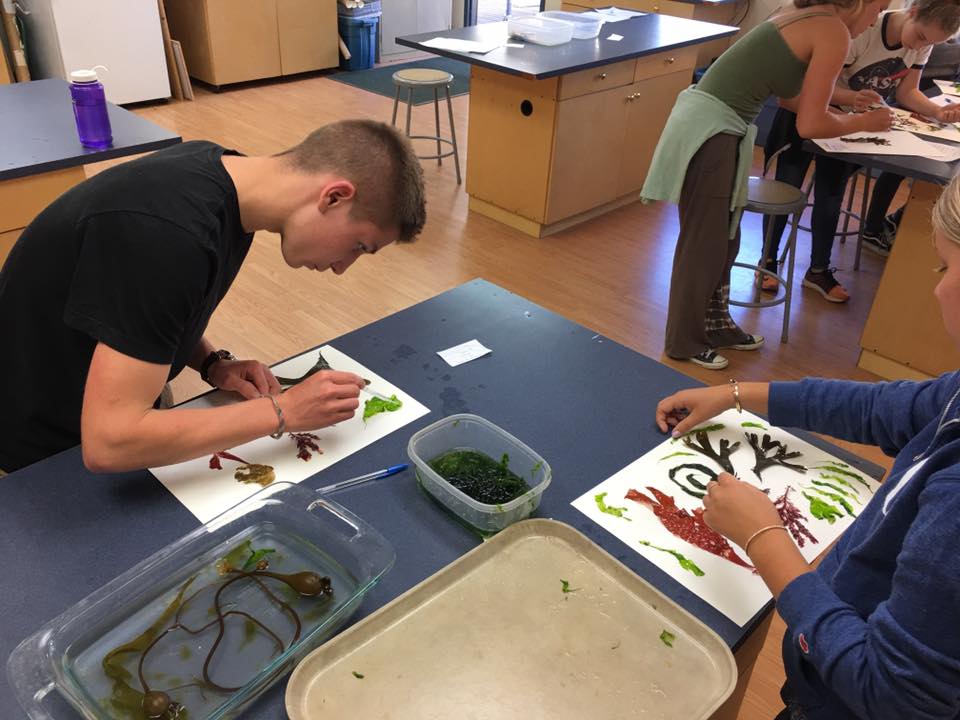
Later, we created plant presses of algae specimens which will be dried and completed by the time we return from our longboat voyage.

Dr. Guenther then joined us for a scrumptious pizza dinner with flavorful toppings such as potatoes, artichokes, and different types of cheese.

Now we will finish our preparations for the long-boat journey and prepare ourselves to wake up early and catch our ferry to Anacortes!