Day 21: I Hope We Can All Algae, Today Was Pretty Fun

By Ezra Bergson-Michelson, Orly Lindner

At 6:00 AM, the tap-tap on every door aroused us and alerted us to the start of our busy day. After dragging ourselves out of bed, we soon embarked on our journey. While a few people journeyed with our always electrifying leader, Dr. Derek Smith, to the tidepools, the bulk of us drove to Cattle Point to begin our kelp and algae identifying quest.

We worked with Dr. Katie Dobkowski, a specialist in bull kelp and professor at Bates College, to identify algae along transects that graduate students have been analyzing for over 40 years. We split into two groups, each group taking two transects, and began the long process of identifying algae along it. Each group worked on identifying algae in different quadrats along the transect, moving down the beach, identifying every scrap of algae in the square. Every two meters, the pairs would photograph their quadrat, count percent cover of each species of algae, and log the data to be added to the database.
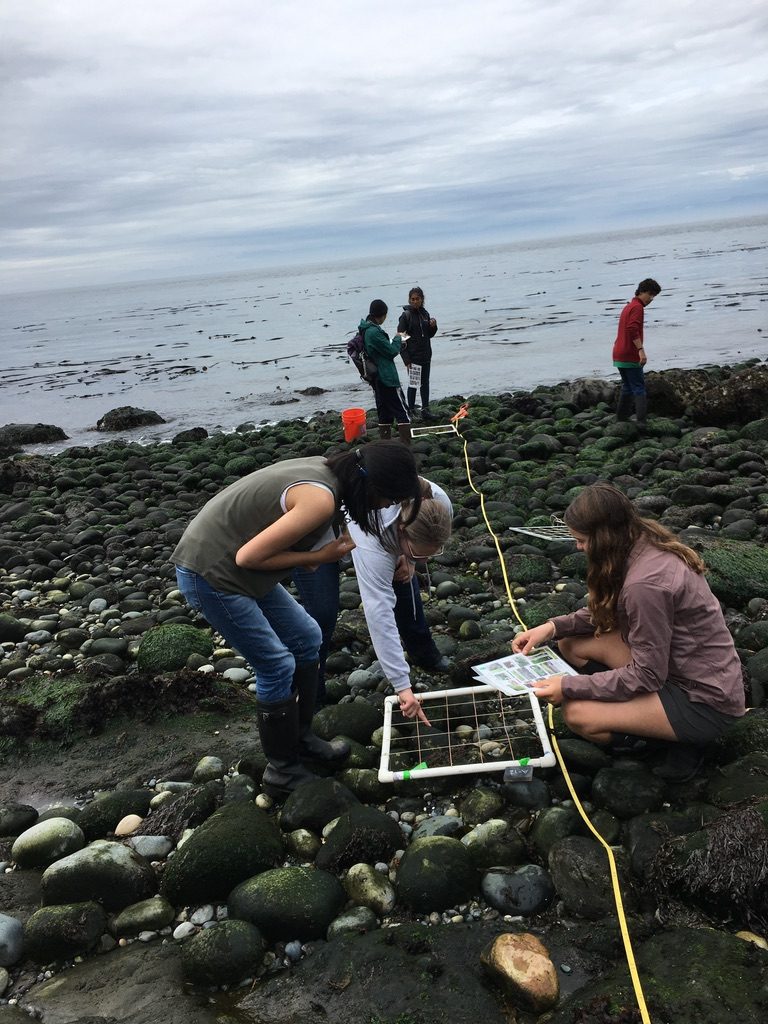
Dr. Katie Dobkowski assists Leighna and Ella in identifying algae
Photo Credit: Caroline Grauman-Boss

While we counted algae at four sites, each corresponding to a different substrate, we also collected kelp and decorator crabs. We mainly found kelp crabs, eventually finding a total of 19 crabs through the two groups. The crabs, lurking among the eelgrass, pinched and prodded before being collected for Dr. Katie Dobkowski’s future projects.
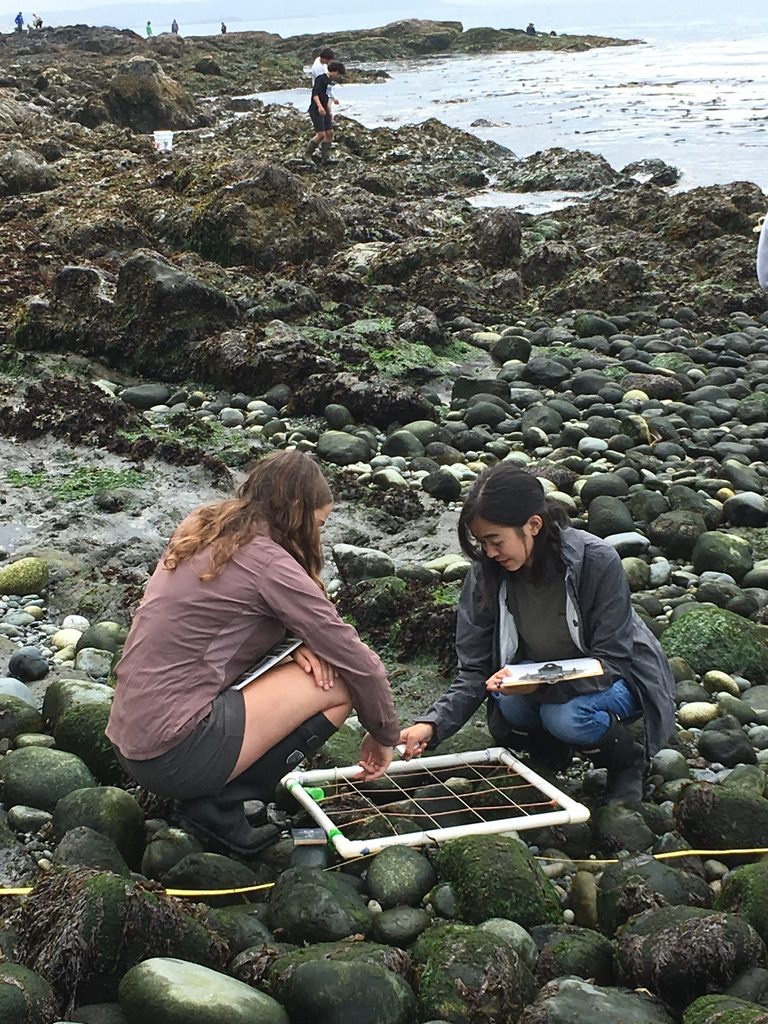
Leighna and Ella identify algae, while Camden and Ben hunt for kelp crabs in the background
Photo Credit: Caroline Grauman-Boss

Afterward, we followed up on our earlier learning from the renowned musician, Alex Shapiro, by attending an exhibition of her music in an Orca-awareness event. Her nature music paired with her breathtaking photos were filled with the true spirit of the event.

Throughout the rest of the day, we all worked on our projects, from spreadsheets to nudibranchs, at the dorm or Friday Harbor Laboratories. We ended the night with a wonderful bonfire on the beach, after a hearty burrito dinner.
Day 11: Iceberg and Ice Cold

By Ezra, Olivia, and Orly

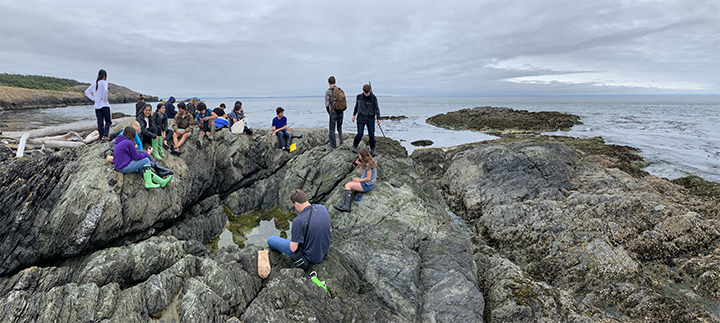
From the neuroscience of nudibranchs to inspection of Iceberg Point, we had a day chock-full of learning. We began the day with an early wake-up call, crawling out of bed and out onto the ferry. We traveled from our home-base on San Juan Island, using a ferry to cross Cattle Pass, and deposited our weary but excited bodies on Lopez Island.

Photo Credit: Dr. Derek Smith


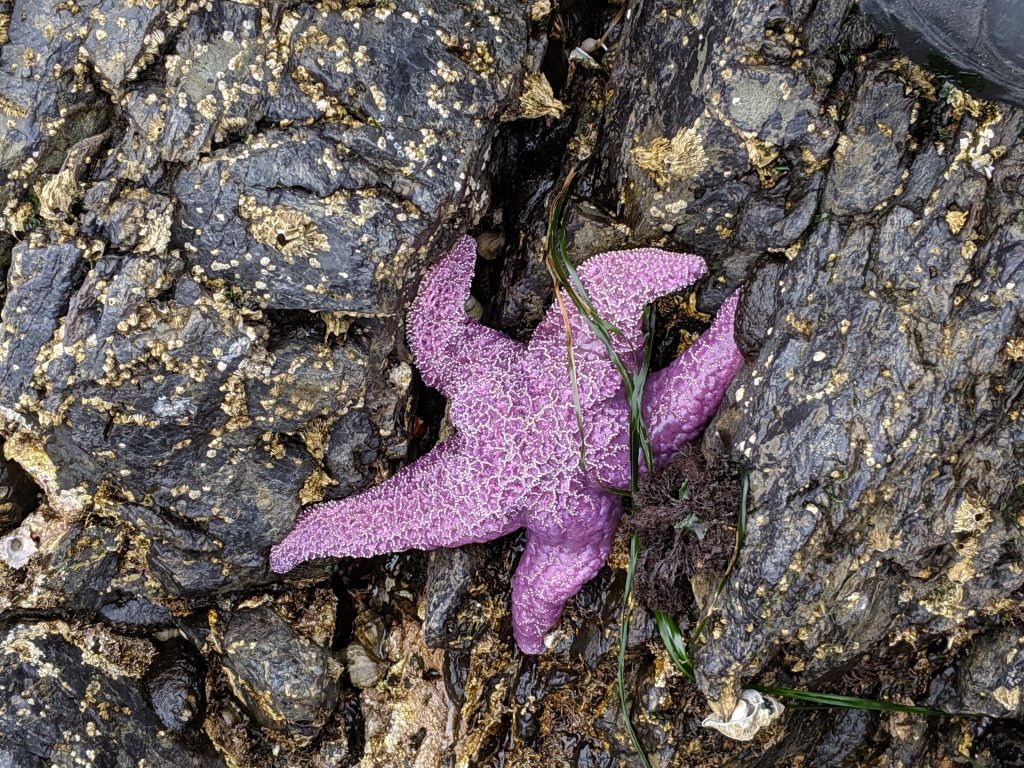
Lopez Island is home to Iceberg Point, a maze of tide pools and bluffs, that proved ripe for exploration. Despite our planned repeat of scientific tests, the identification of animals and the lure of the low tide led our entire group, and our head scientist, to continue our exploration. We combed over the countless barnacles, mussels, sea stars, and crabs, occasionally dipping our hands into pools of freezing water to examine a sculpin or a snail. Splashing through kelp and the rising tide, we found rare sponges and the disease-ravaged ochre sea star, we recorded the movement of tide pools, and 3D modeled different species.

An Ochre Sea Star
Photo Credit: Ezra

Afterwards, we had the good fortune to hear presentations from two renowned scientists who were presenting at Friday Harbor Laboratories, Dr. James Murray and Dr. Andreas Heyland. Dr. Heyland is a specialist in the field of environmental toxicology. He presented ro many scientists at the labs, and us, on the topic of the effects of different metals and pharmaceuticals on the lifecycle and adaption of freshwater plankton.

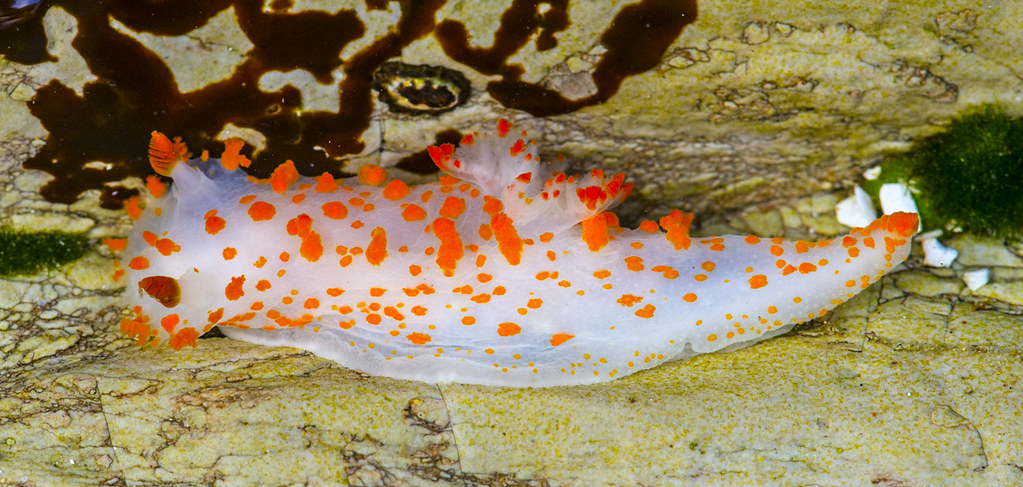
Dr. Murray, on the other hand, presented on the neurology of nudibranchs. Nudibranchs are mostly blind and deaf sea slugs that roam the seafloor. Nudibranchs are unique as they own neurons so big, they can be seen with the naked eye. In addition, the sensory inputs of the nudibranch are mostly touch and “smell” related. Throughout the presentation, we learned about how open brain surgery on T. diomedia slugs revealed different links between limbs and senses and how each sense functioned. Afterwards, we got the rare and unique opportunity to got into his workspace and look at how he developed the discoveries. He showed us around the nudibranch holding tanks and his Faraday cage. Throughout the fascinating experience, Dr. Murray was very open and eager to answer any and all questions.

A clown nudibranch
Image labeled for reuse
Image credit: https://www.flickr.com/photos/jkirkhart35/14361459417

Today was an opportunity for Salish Sea Sciences that very few people get. Take advantage of your unique opportunities in life to learn about our wonderful world.