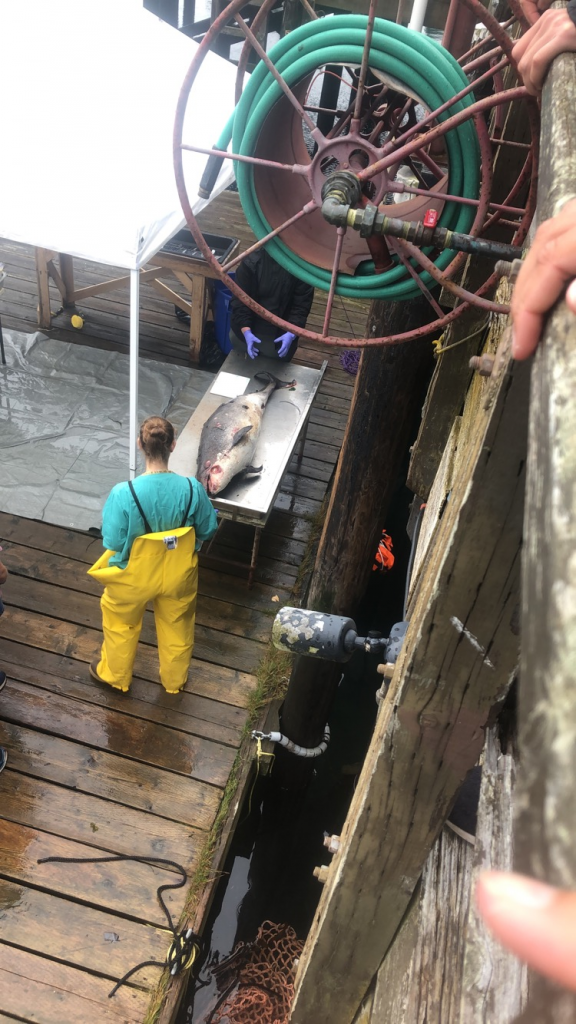
Today we had another slightly early morning (7:30) because we had to catch the necropsy happening at the Friday Harbor Labs. For the week leading up to this event, Derek wouldn’t tell us what animal it was, except for that it was a marine mammal. However, when we arrived, we soon saw that it was a porpoise. Members of the Seadoc Society and the Whale Museum participated in this autopsy of the mammal, which they found floating in the water this past Sunday. The whole process took about an hour, and the scientists inspected every part of the animal and speculated the cause of death to be anything from cancer to a boating incident. However, upon further inspection, they concluded that what most likely happened was that this porpoise was hit by a killer whale, which caused internal bleeding, causing the animal to die. It was an incredible experience to see how much scientists can learn from these animals, even after they’re dead. That part was cool, but I think it’s safe to see on behalf of the group that we won’t be missing the smell at all…
Necropsy of a Porpoise Photo By: Ben Logel
When we arrived back at the dorms, it was eminently time to work. With the project deadline drawing ever nearer, we found ourselves scrambling to put the finishing touches on. Some of us had not started the poster (I included) due to the fact that our experiments took longer than expected. Still, even those who had had ample amount of time to do their projects still felt ill prepared. Lucky by the end of the day, after hours of work, most of us had finished our projects. Many of us wear now the glazed expression of someone who has stared at a spread sheet for far too long. Those who have not finished their projects will either be staying up late into the night or else wakening up early tomorrow. After all of this work, I hope that the presentations go well, and that people fully understand how much time and energy went into making them happen (even if it does not appear so).
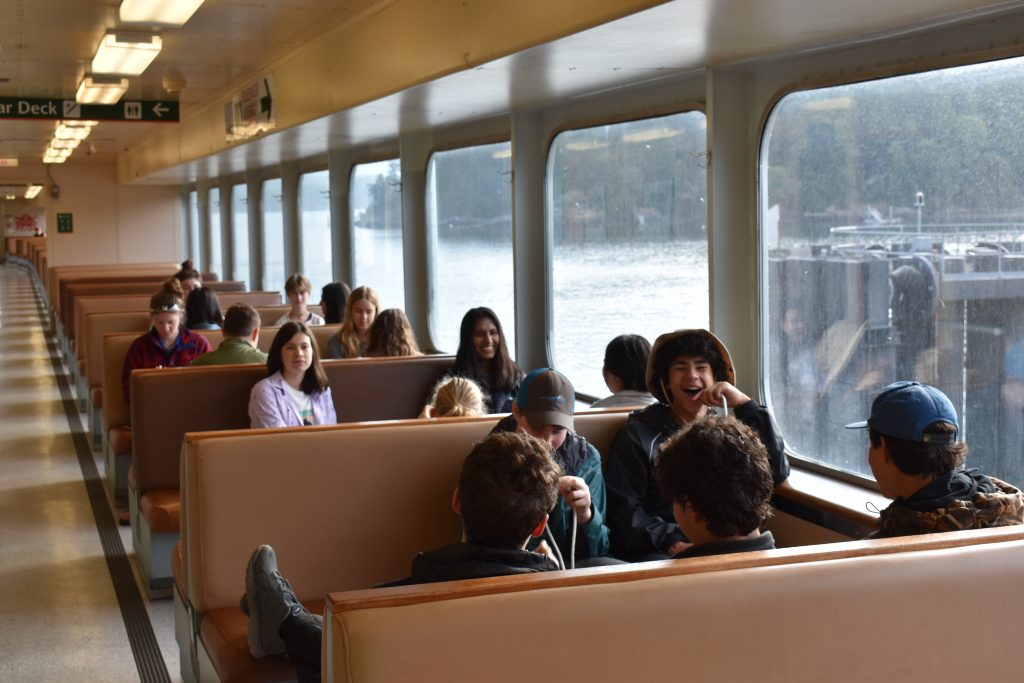
I awoke to a clear, sunny morning on June twenty-sixth with one clear thought in my mind; that it was to be the last time in the next five days that I would feel clean and the slightest inkling of something like being rested. Hurriedly, all of us gathered our remaining things and ate breakfast. While every day at Salish Sea Sciences offers the promise of something intriguing, today was especially exciting. Finally the long anticipated start to our long boat trip had arrived. Five days and four nights of camping out, rowing, and cooking on some of the abundant islands of the Salish Sea. It did not take long for our group of eighteen to get ready, and before I realized it, we were on the ferry heading for Anacortes, a port city on Fidelio Island and the launching point for our long boats.
On the Ferry to Anacortes Photo Credit: Tony
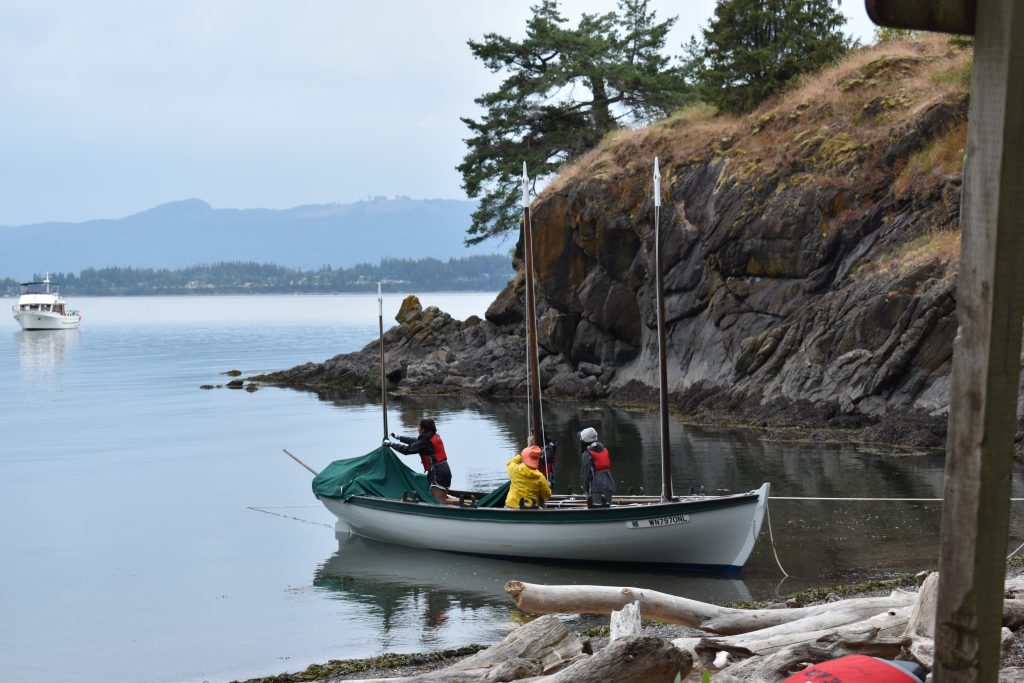
The sun pelted down on us as we walked towards our meeting spot at the marina where we were greeted with smiles and food by the instructors who would be guiding us on our journey. And while meeting our instructors and having lunch with our new found friends was exciting, it soon became apparent that was work and preparation to be done. To be honest I expected everything to be ready when I got there and that I would be able to sail off into the wind without having to do very much, but this was most definitely not the case. The prep work was not hard or strenuous, just long and boring. Primarily, most of the work had to do with preparing gear for ourselves. We had to be outfitted in rain gear and exposure suits, a type of full body life suit that can adequately deal with the cold waters of the Salish Sea if need be (I hoped I would not be needing either). We also received a twenty liter water proof “bag” to fit all of our stuff in. I say “bag” but it was more like a long sack that could be clipped at the top. Let’s just say trying to fit all of our stuff in was difficult for most and I knew I would not be getting anything from the bottom anytime soon. The thing was that the boats were only twenty feet long for twelve people and all their stuff so, as you can imagine, space was limited. Thus it made since we could only have a small amount of stuff. Even so, the packing the boats was like one giant puzzle. Finally we got under way after a large amount of people made one last trip to the restroom (the only form of a restroom on the boats was a bucket).
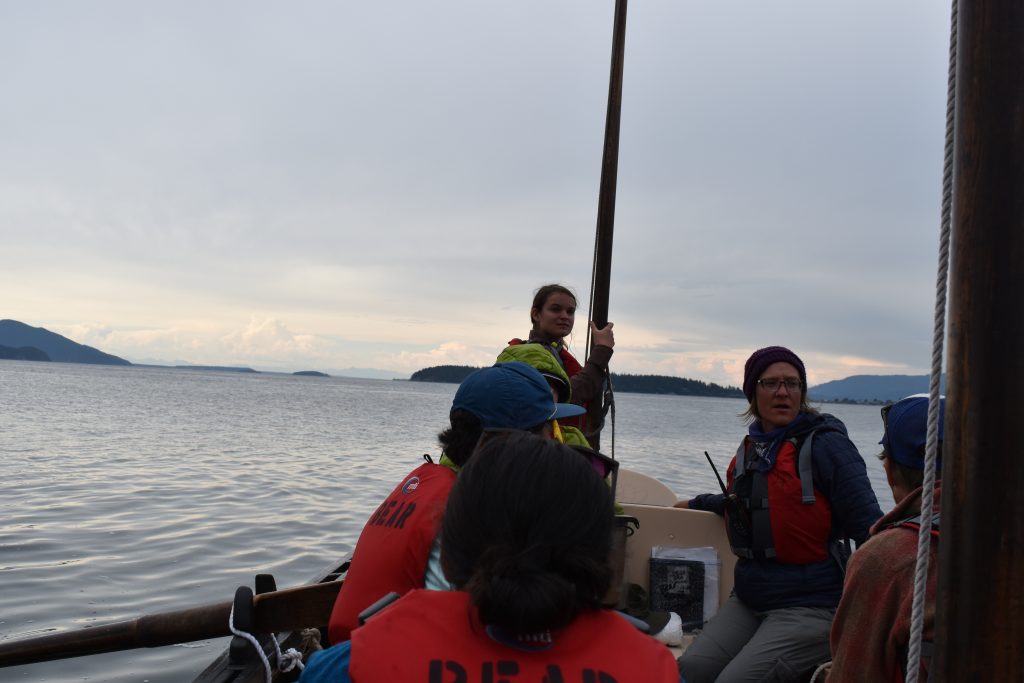
Out on the Water Photo Credit: Tony
Long Boat Bear Photo Credit: Tony
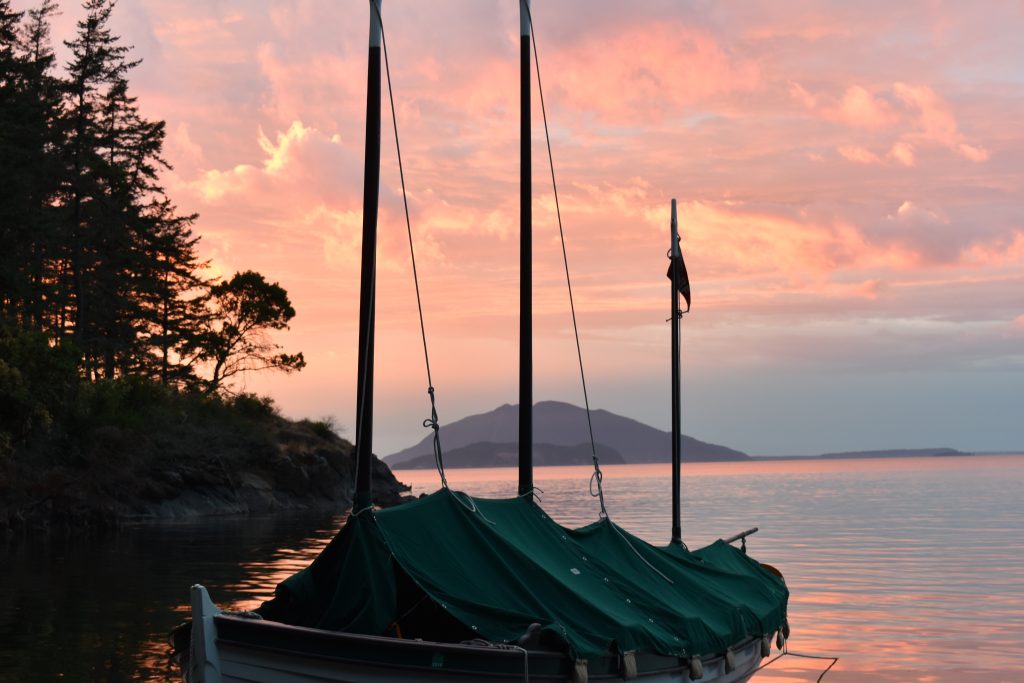
Sunset over Saddle Bay on Saddle Bag Island Photo Credit: Tony
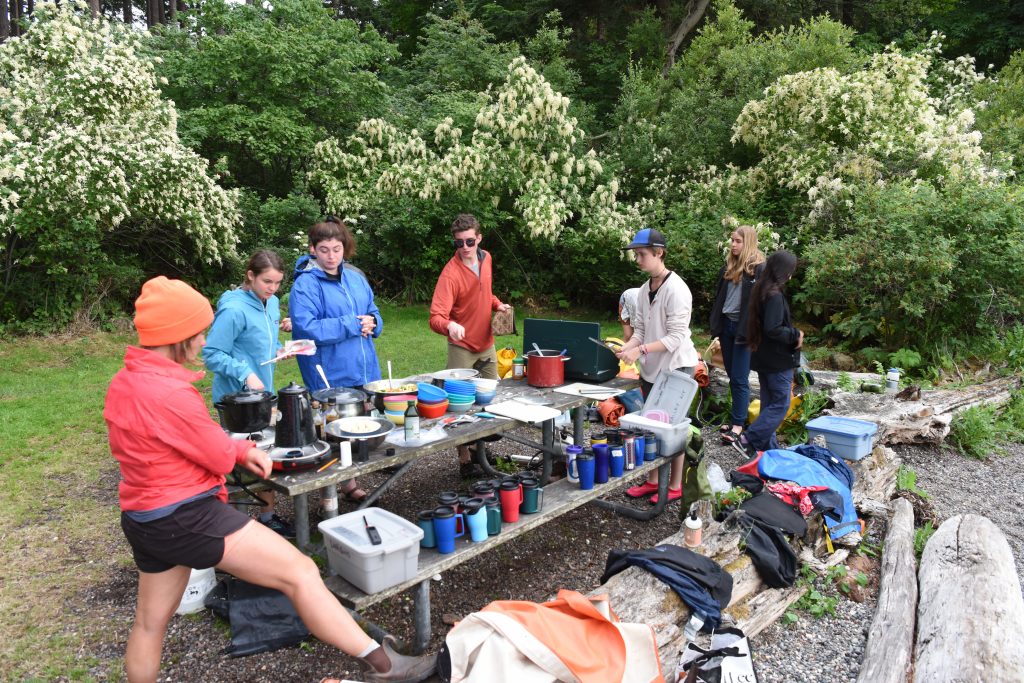
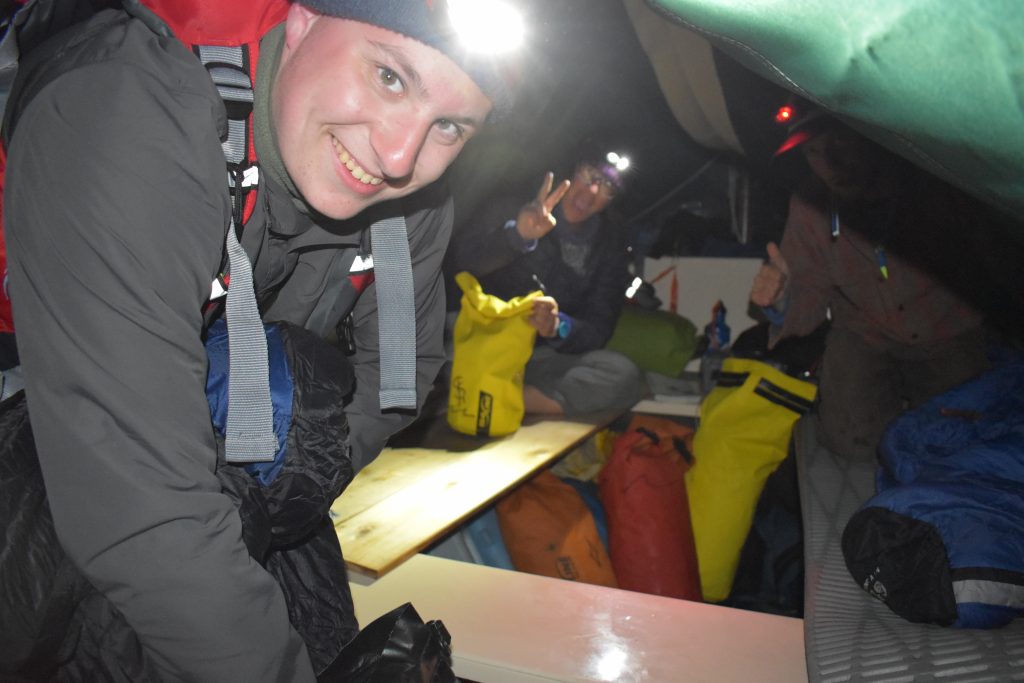
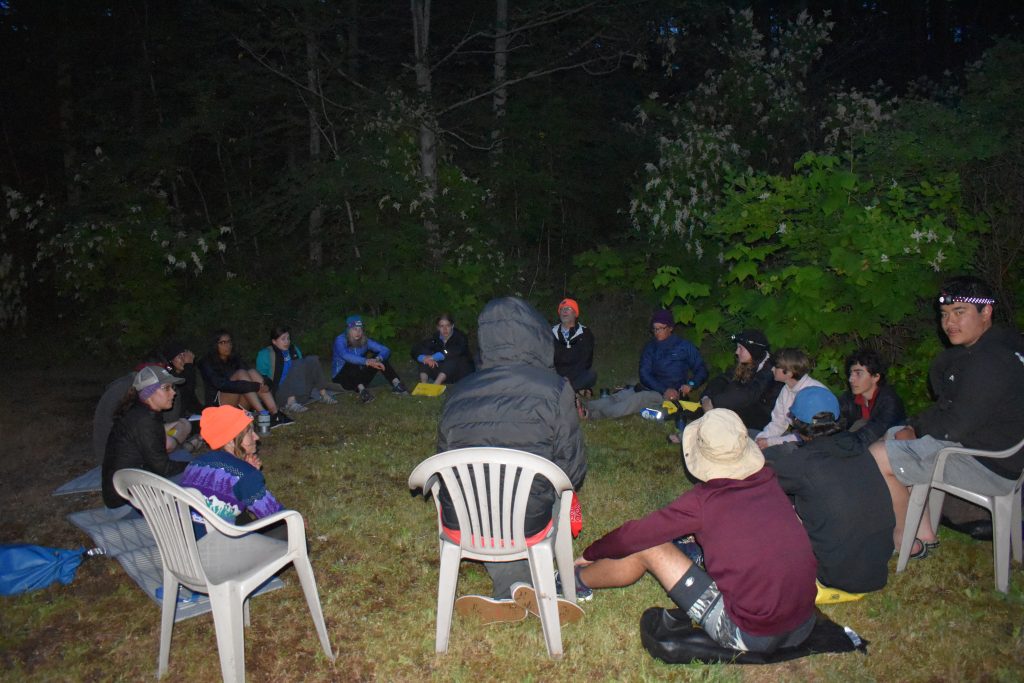
With eight people manning the oars, three navigating the boat, and a captain, our two boats slowly began moving towards Saddlebag Island, a small island off the much larger Guemes Island. It took much longer than I anticipated to reach Saddlebag, maybe three hours or so. I think this is primarily due to the fact that we were not exactly in sink when rowing. By the time we landed, we were all tired and hungry. We quickly separated into groups and made camp. We had a cooking group, a group that set up tents and a boat cover, and a group that made the rowing plan for the next day. I personal was on the cooking crew. Let’s just say it was quite hard. Between struggling to find all of our supplies and prepping a meal on a small picnic table, cooking for twenty-four people was defiantly an experience. Together, the cooking crew made a quinoa vegetable stir fry with peanut sauce which was pretty good. After washing dishes with sea water, bleach, and a bit of eel grass it became clear to me that this was not going to be the most sanitary trip. Soon we had all eaten and set up our sleeping arrangements. With our stomachs somewhat full, went to bed at around eleven o’clock, and I do not believe I have ever fallen asleep faster. And while the beginning of the trip was difficult, I still really enjoyed the experience.