Day 21: Eelgrass bracelets

Written by Elliott Jones, Sonja Larson and Colette Bennette

Sleeping in was a relief. We needed that, as we do now, while we write this. Anyways, the morning went smoothly and we eventually made our way to the 4th of July Beach over on the South end of the island to perform some eelgrass surveys, instructed by Morgan.

Due to the changes brought on by climate change many organisms are being affected by epidemics and such, similar to our own. Eelgrass is one of these organisms, and being the foundation of an entire ecosystem, as we learned today, it’s extremely important we monitor these changes.

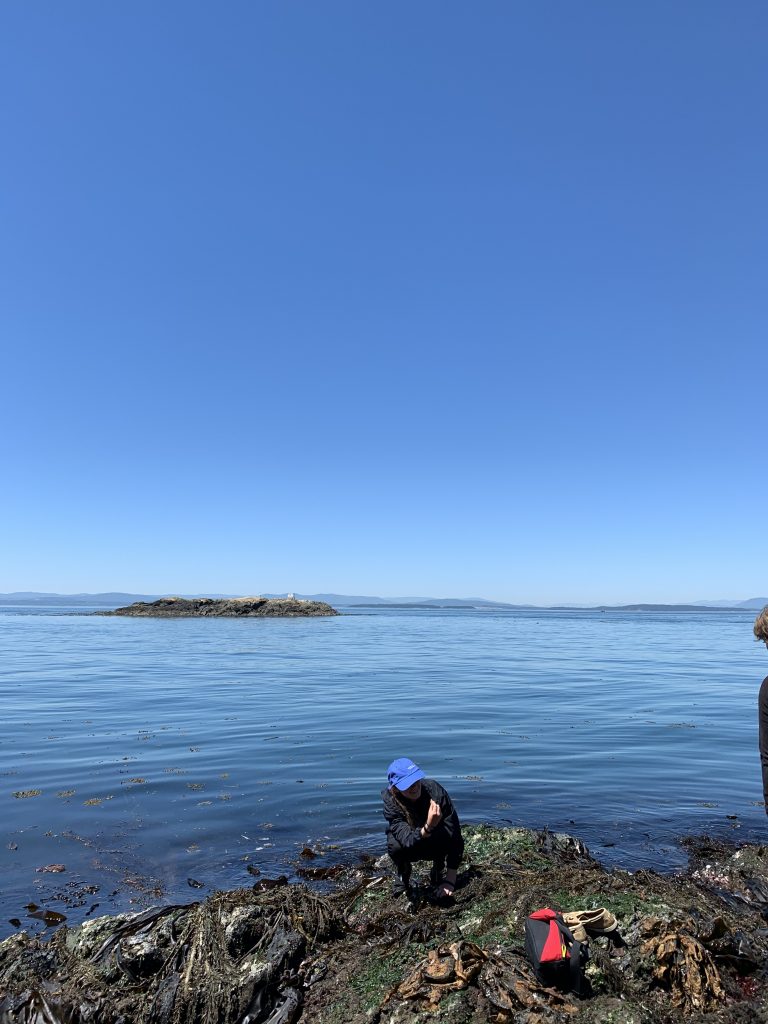
From the parking lot on the hill we trekked down to the beach where we observed a local salt marsh and the expansive array of birds that rely on it. We then headed out far down the beach, trudging through the rocks, mud, and algae. 

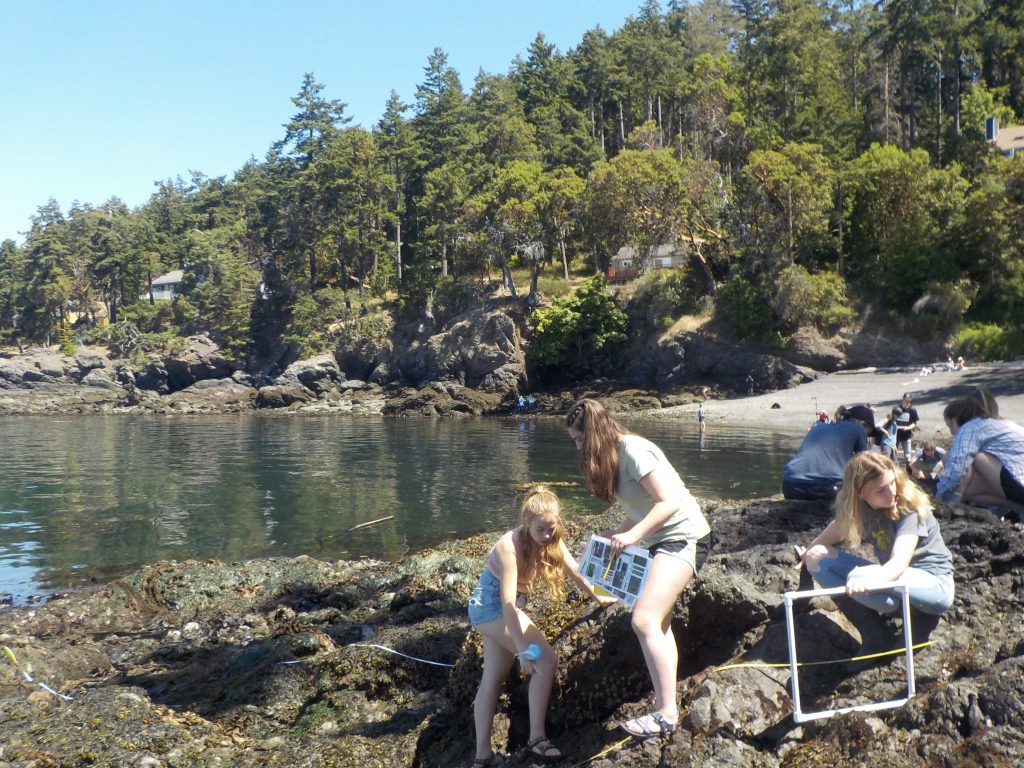
When we reached the site, we set out transects at different depths to start recording the population of eelgrass shoots in our quadrats, all the while avoiding interrupting the rambunctious activities of the seagulls.
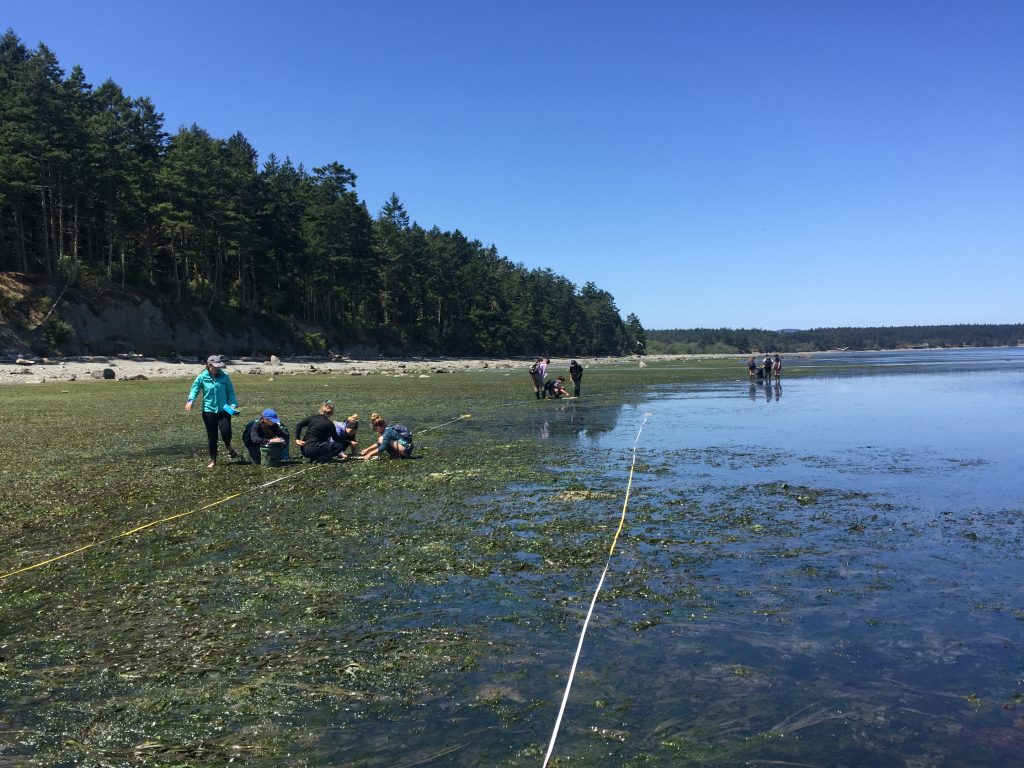
Photo of us all working to collect eelgrass. Picture credit: Sonja Larson

Legs cramping and boots full of water, we finally finished and headed up to the shore to eat our packed lunches, before heading into the mossy and overgrown forest on the way back to the van.                         

Once we got back from the field and laid around the dorms for a bit, we got to do something fun…tie dying!! We all had picked out our shirt sizes the day before so we were ready to start today (well yesterday but shhh) We all grabbed our shirts and got to work on coloring the shirts and setting up what designs we would have on our shirts. Even though we all had the same materials, each and every shirt turned out different. Most of the peers here did spiral designs while others just scrunched up our shirts and poured some color on it. 
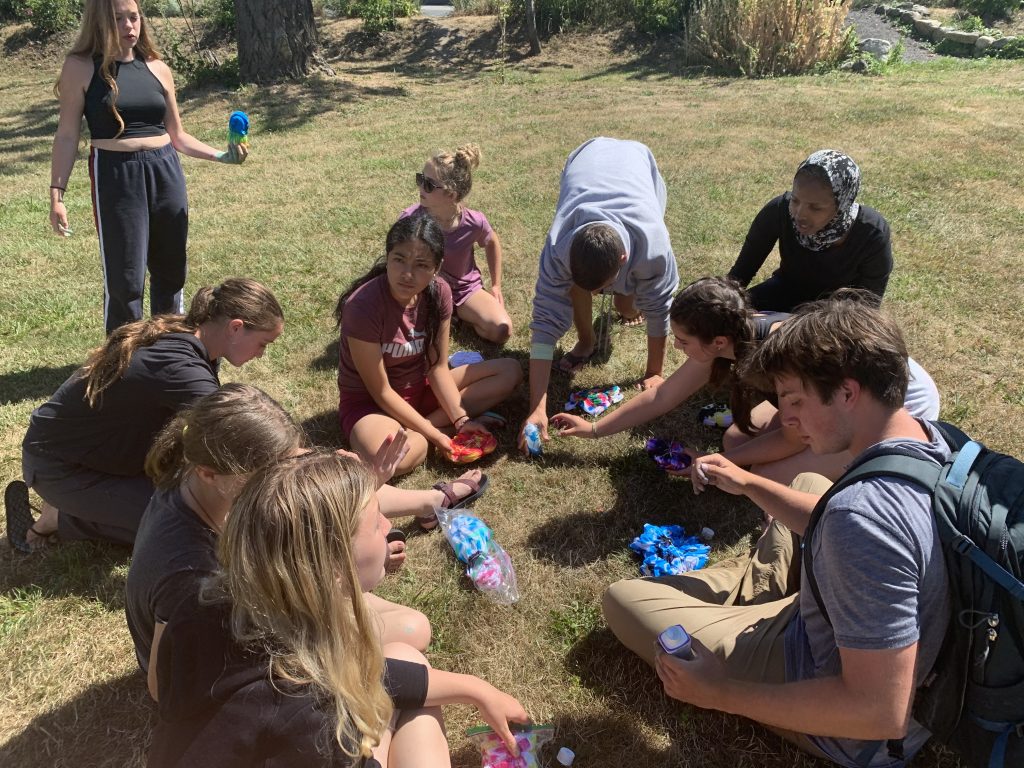
Here’s most of us all together tie-dying our shirts. Photo credit: Sara Sarmiento Ruiz

Once we got done, all of our hands were covered with dye. Some of our hands were solid colors like green, orange and blue. Today, our hands are still dyed, so if you see us with stained hands, now you know why. Hopefully the dye will wash off soon but until then, we’ll stay colorful. 

After eating way too much spaghetti, we all settled down for a couple hours of free time. Dustin and Estevan made their way down to a nearby beach to go swimming, while others took the time to work on their independent projects. 

Since we had finally gotten our hands on some embroidery thread, a bunch of us sat down around the dining table and taught each other how to make friendship bracelets. Now we are all pro bracelet makers. 

This is the bracelet Elliott made. Aren’t you jealous of its beauty? – Photo taken by Sonja

Putting on warm jackets and sweatpants, and made our way down to the town docks. Using a car jump starter and a couple of lights, we did some night-lighting in the water. Putting the light in the water and using the jump starter to power it, we were able to illuminate the nearby ocean and reveal what seemed to be a whole new world of life. The water was full of floating particles and the occasional jellyfish and shrimp. We laid down on the docks and spent just over an hour staring into the water. It was super cool to see all of the larvae, fish, and polychaetes in the water.
Photo of Abby, Colette, Ana and Islay looking down at the water where we have a green light floating in it. Picture credit: Elliott Jones

Once we returned to the dorms, we were all very tired from the day, but still very excited from doing the night-lighting at the docks. After some late night ice cream and talking about what we would do the next day, we all headed to bed to get enough rest for the next day. See you tomorrow (oh wait today haha we posted the blog late).

Day 16: Data and Earwigs Ruin Our Lives

Hello everyone, it’s Elliott, Sonja, and Colette writing the blog here today. 

Though we were all tired, we still started our day off at the normal 7:00 wake up. After the usual breakfast of cereal, bagels, or toast, we all grouped up for our knot of the day.

Today we learned how to tie the heaving knot. It is apparently helpful to throw at people when you are on a boat so that they can pull you in and tie your boat to the dock. That is because they are supposed to be able to catch it easier when the knot is weighted. We all tried throwing the knots at each other, and it was overall successful (many ropes were caught), so I guess we are in no place to doubt its usefulness.

The foggy landscape at the tide pools at Friday Harbor Labs. Picture by Colette.

After finishing breakfast, we headed to FHL (Friday Harbor Labs) to collect data for our independent projects. The bay this morning was covered in a mystifying blanket of fog—something we haven’t had the chance to see often on this trip. 

While some of us couldn’t collect data quite yet, we helped our peers to collect theirs. The projects ranged from jellyfish sightings to barnacle disturbance responses. We spent three hours down by the docks and the shore sharing what we’ve found with each other. We spotted a few Harbor Seal sightings and Estevan, Hebaq, Sonja, Dustin, and Islay were fortunate enough to lay eyes on a Minke Whale, which is pretty cool. We had a very successful day at the lab today.

Following lunch, we made a quick departure to False Bay to meet with Dr. Iyengar, Professor of Biology at Villanova University and last night’s speaker, to assist in some maritime earwig collection. 

Dr. Iyengar greeted us at the roadside landing above the beach. His son was by his side. His son is supposedly the reason Vik is able to comfortably handle the creepy bugs. We could’ve stood to learn a few of his tips.

False Bay is a peculiar San Juan destination, one that you can smell from miles away. We have been to False Bay before; however, the smell was much worse today. 

This could’ve been because of high tide or our location in the bay, but whatever it was, it was strong. Unfortunately, as we worked, many of us were bothered with the False Bay side effect of nose plugging and headaches.

We spread out along the beach flipping over flat pieces of driftwood and shoveling out the earwigs by the plenty. Underneath the logs, the bugs were in unsettling abundance and plucking them out was fun and exhilarating, much like a game.

(Left to right:) Dustin, Elliott, and Kira handling a tub filled with earwigs… a very leggy sight Photo by Colette.

After the initial collection, we all formed a sort of ‘packaging assembly line.’ All the earwigs we captured would go from the large tub where they swarmed, to a vial filled partially with sand, to another tub full of the earwigs in their vials. I’d say our system was pretty efficient. Counting them all up, we had about seventy individuals.

Here are the earwigs in their new ‘packaging’. The vials are partially opened so that the earwigs can breathe (don’t worry, they should not open, we wouldn’t risk letting the earwigs free anywhere near the dorm). Photo taken by Sonja Larson.

Once we finally arrived back at our dorms, we headed up to the lab at Spring Street International School and brought out containers to do some entertaining behavioral experiments on the earwigs. 

After filling the plastic containers with sand, we put various shelters made of red-tinted plastic into the containers. We then placed female earwigs into the containers to observe their reactions to the new environment.

An earwig running around and investigating the scary environment of the Tupperware and its various contraptions. Photo by Colette.

Thereupon a couple of uneventful trials, we figured out new ways to tweak the experiment to make it more eventful and relevant for finding out anything other than the fact that the earwigs did not want to be in the containers. We covered some of the shelters in sand while others were uncovered, and brought the earwigs outside to where they would be exposed to more light. Exposing the earwigs to more light seemed to make them more eager to find shelter.

After finishing up our very interesting work with the earwigs, we were set free to our exploration time. A few of us returned to Friday Harbor Labs to work on their projects a bit more, while other people took time to relax or walk around town. 

Later, we all regrouped for a couple quick games of ‘ Heads Up!’ and a filling dinner of chili and rice. I really like chili so I think it was a very good meal (the dinner crew did very well). Since we didn’t have a speaker tonight, we were open to split up after dinner. Some of us played basketball, while others of us spent time relaxing or working on our projects.

After such a packed day, we can’t help but be a bit tired, and I know that none of us can forget the very overwhelming scent of False Bay. Even with all that, I think it’s clear that everyone is excited to keep on making progress with their independent projects. 

Day 6: Fun in the Sun

Written by Elliott Jones, Kira Bretsky and Dustin Hendrix Photos by Kira Bretsky and Elliott Jones

We began our day by learning yet another Knot of the Day: the Sheet Bend, which is a helpful knot for tying together two lines of different diameters.  We discovered Tim is not the Master of Knots we thought he was, as he first demonstrated the same knot we had learned yesterday and then was required to look up the Sheet Bend in order to teach us correctly.  After we had all semi-successfully figured out how to tie our latest knot, we received more advice on how to get through the increased temperatures approaching the region.  Hydrate! Drink water! Intake fluids! Gulp it! Slurp it! Sip it! Better yet, guzzle it!  Anyway, you get the idea.  

Laughter during low tide! Photograph taken Sara Sarmiento

Then we went to the Lab located on campus to digitally input the lugworm data we had collected yesterday.  Tim explained the importance of quality assurance/quality control, especially in large data sets such as the one we had.  (Collectively, we had 600 values to input into a spreadsheet!)  We also learned a couple shortcuts for copying or inputting values with a pattern (for example, 1, 2, 3, 4, 5, 6, … all the way to 100).  

While the lugworm surveyors were inputting data, yesterday’s Sieve Team checked on their sediment. The night before, they had transferred sand of different densities from each of their respective Ziploc bags into aluminum trays. The aluminum trays were then placed into a dryer oven (to evaporate liquid from the sand), which was definitely smelling funny by this morning.

Various teams hard at work, setting up measurement tools for our surveys.

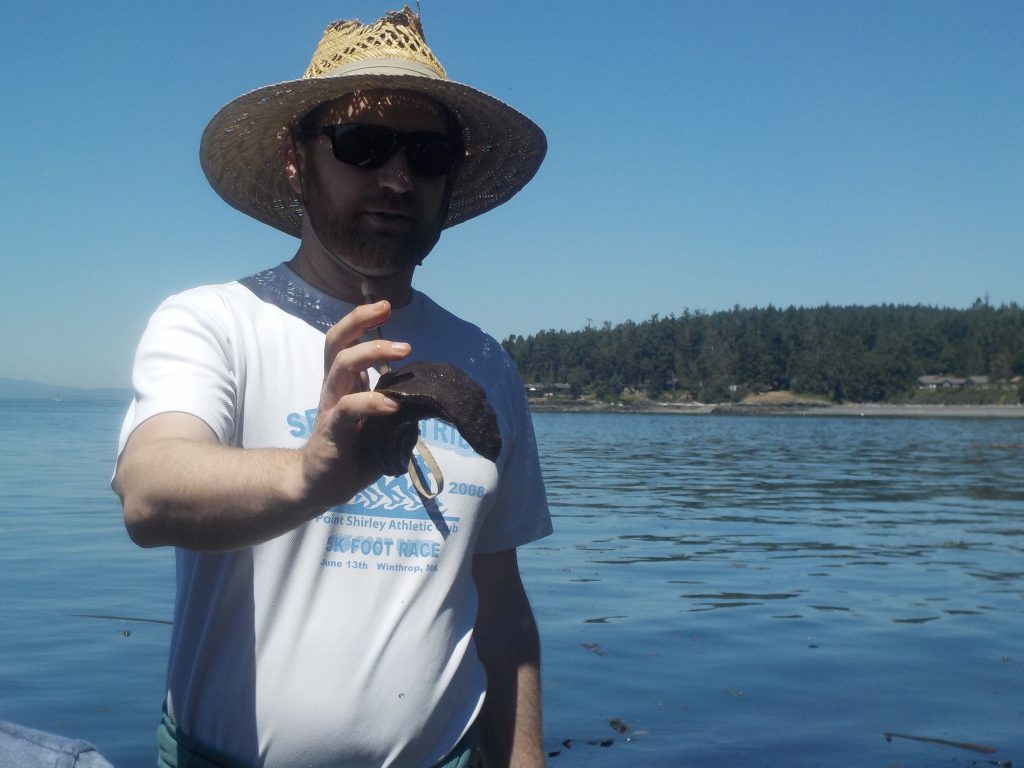
After we put in our data from yesterday, we went to San Juan County Park to collect data on what was near the shore in certain sections. We split into 5 groups of three to check the shore about every meter to see what occupied the area of about half-a-meter. We mostly found different types of seaweed and barnacles. It was quite slippery, and you should definitely ask Maddy and Kira about their pants. Tim showed us an Apostichopus californicus (which is just a fancy scientist term for Sea Cucumber), as well as a Chiton, and we passed them around in a bucket before returning our new friends to their homes.

Here, Tim is holding the Chiton we found.

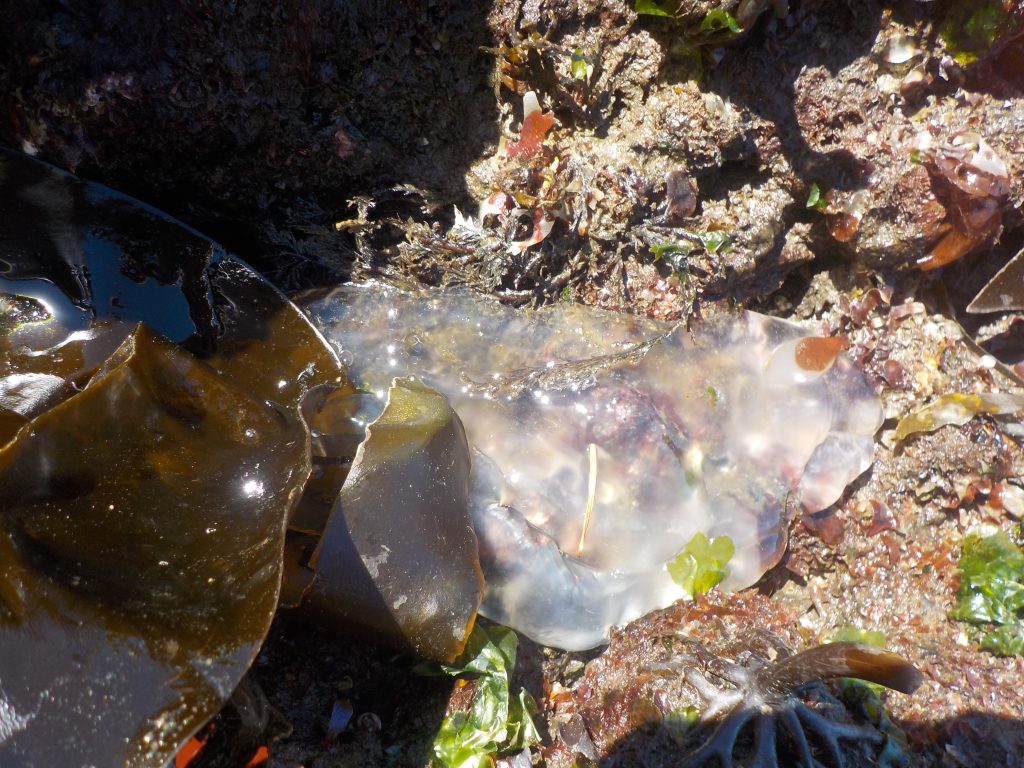
As time moves on, we’re thinking more and more about our projects. Some of us are researching Nudibranchs, while others have taken an interest in Zooplankton photography and Jellyfish in general.

A stray Jellyfish in the Intertidal Zone. This is the only one we saw out of the water.

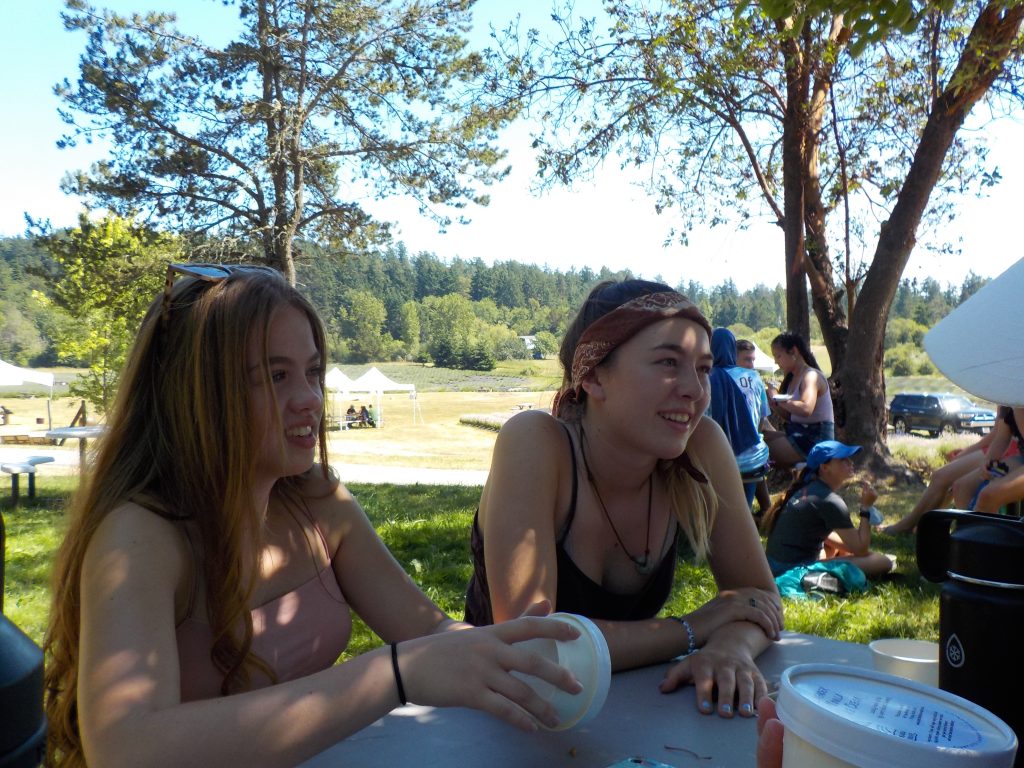
Our afternoon was hot and smelly. The bad kind of hot, and the good kind of smelly. Now before you think we’re weird (we’re not, just keep reading) we’re talking about the smell of lavender. After we stopped back at the dorms to change into something nicer and grab our small bags and some cash, we headed to a local lavender field that was nearby. Most of us took pictures of each other and of ourselves. The lavender fields smelled amazing and it was really beautiful. We also got to try some lavender ice cream, which they had many flavors. There was lavender lemon sorbet, lavender vanilla, lavender chocolate chip and lavender chocolate. Basically they had a lot of lavender which makes sense since it was a lavender field. Overall, it was a great day even though it was very hot but we’ve been finding ways to beat the heat and just finding fun ways to enjoy the sun. 

Ana and Islay with their lavender ice creams. Maddy (across the table, not pictured) has some interesting opinions on the ice cream.

Remember, HYDRATE HYDRATE HYDRATE!!!

Field & Lab Day 1 Summer 2021

Today’s blog written by Elliott Jones, Kira Bretsky and Dustin Hendrix
Photos taken by Kira Bretsky

We experienced our first full day in Friday Harbor together. We got to know each other a bit more and we were able to explore some of the south side of the island.


This morning we met the woman behind the emails, Caroline herself! She gave us an in depth orientation and explanation of the program we’ll be a part of this summer. We also learned our first Knot of the Day, a figure-eight knot. The early part of the day consisted of a map lesson, interrupted frequently by planes taking off from the nearby airport, and a tour of the Spring Street School Campus. After lunch, we split ourselves between a large red van and Morgan’s Subaru to be shuttled around the island.


Over the course of the first day and a half, we were able to see quite a few different organisms that call that Salish Sea their home. On the boat ride here, most of us got to see a pod of orcas, a few whales and some jelly fish. And then earlier today while we were exploring we had the ability to see a few seals, a bald eagle and a few porpoises.


We spent most of the day exploring the South side of the island and learning about the geography of the island and the area around it. We gained knowledge about who the land around Friday Harbor was named after and how if you “discovered” or map that land then you got to name it. We learned that many people from many different places from around the world came over to the Salish Seas and named different parts of the land and even the water because they were the ones to map that territory.


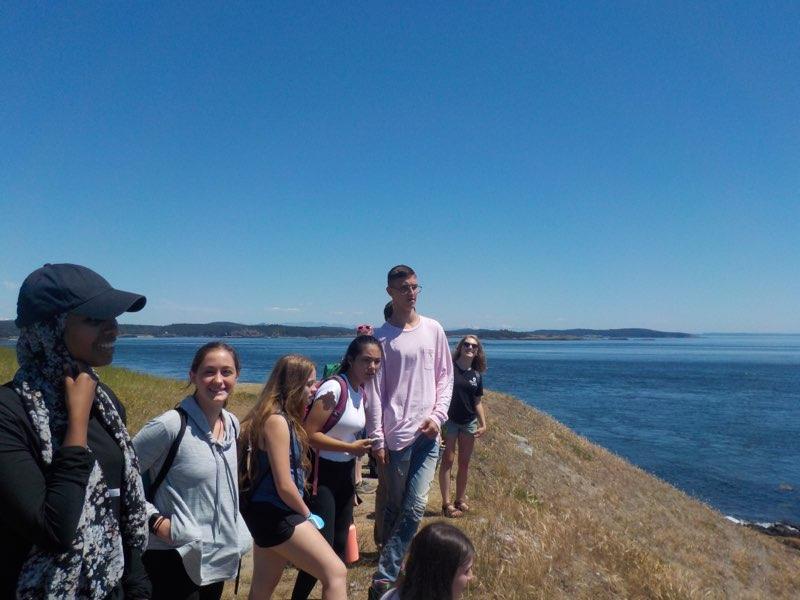
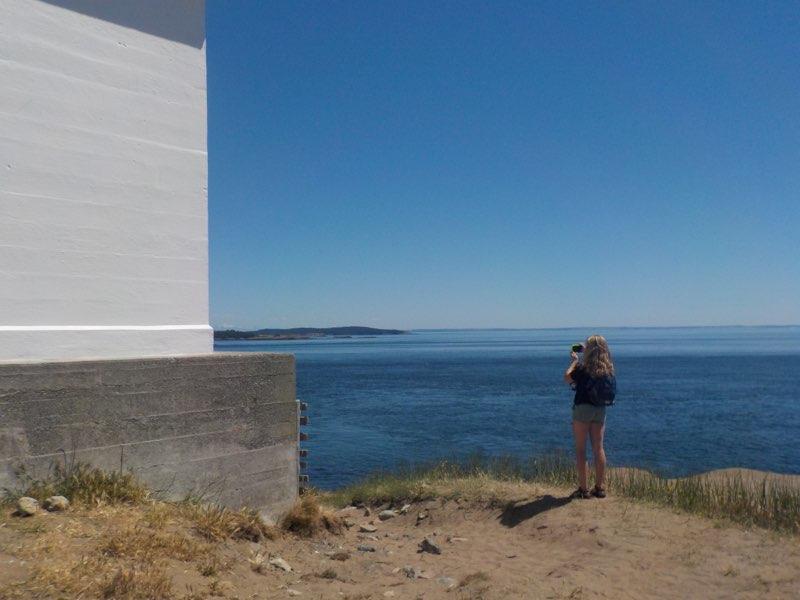
The view from the lighthouse was one of the first wonders of San Juan Island that we saw. All of us were sure to take lots of pictures for friends and family, just in case they didn’t believe how beautiful it actually was. A little while after we arrived, a few of us got text messages welcoming us to Canada. We then learned how to turn off roaming data on our phones. That way, we wouldn’t pick up cell signals from our northern neighbors.


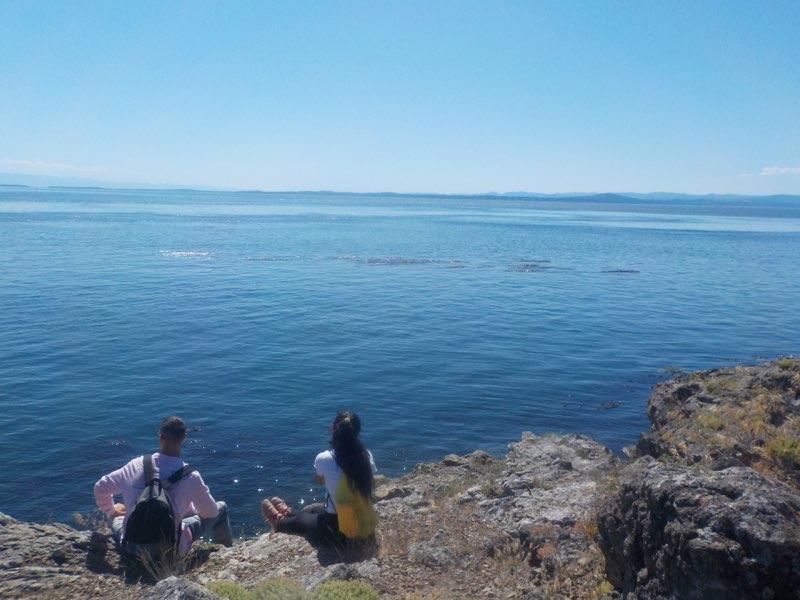
We ended the tour with a visit to the Lime Kiln Point State Park & Reserve. Tim and Morgan, our supervising scientists of the day, pointed out where to keep an eye out for wildlife, and we saw some commotion in the area even though we weren’t able to identify anything. It was exciting to use our new weather-proof notebooks for the first time, although the weather was far from needing “proofing”. Those of us from California and Texas adapted very easily, while the Seattle folk admired the clear skies and light breeze that kept us cool.

As we reflect on our day with the smell of dinner distracting us, we think about how much fun we’ve had and how much more is to come. The bar is very high, based on today’s experience!!