King of Stats

By Evelyn Wyman, Brian Chu, and Gabrielle Cooper

Apologies for not making a blog post yesterday, we were out late on a wonderful canoe trip, courtesy of the Pacific Northwest Voyagers. The water was such a nice temperature many of us brave souls ended up swimming. Although swimming got us slightly behind schedule, the perfectly refreshing water and the gorgeous view of the sunset from the row back were completely worth it.  After the long night, most of us were pleasantly exhausted this morning, but we still had an exciting morning of science studying Eelgrass Wasting Disease with PhD candidate Morgan Eisenlord.

View from Kaigani

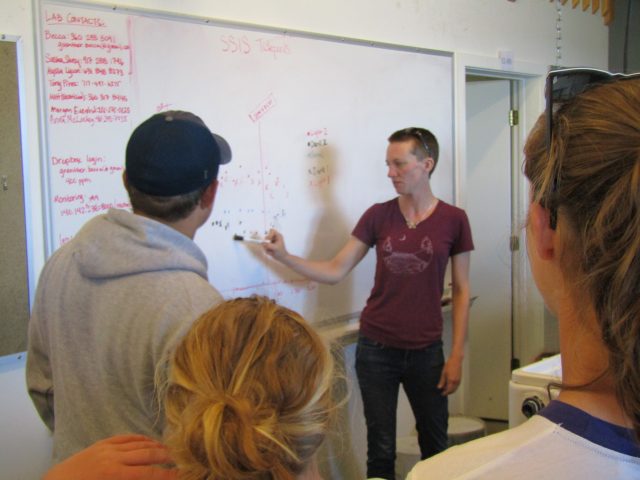
For the past few days we have been out in the field and in the lab with Morgan. A few days ago we went out to Fourth of July beach with her and collected samples to work with in the lab. Today we laid out more samples from different locations for scans and did some analysis to see the severity of the infection. After two days of entering eelgrass data into spreadsheets, we were lucky enough to have Will King, a graduate student, talk to us about statistics and how to transform data into visual information. He talked to us about proving significance in data, and also helped us individually determine what techniques we would use for our end of the program presentations, which are rapidly approaching!

Will King teaching us stats

Tim Dwyer also mentioned the significance of statistics, and how it separates the “I think” or “I feel like”, from the “I know”.

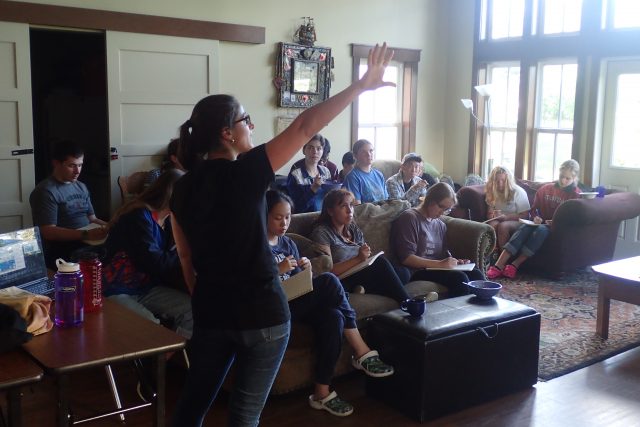
After a wonderful dinner cooked by chef Tim Brogdon, everyone gathered in the warm common room for Tim B.’s lecture on life skills. Wanna hear a construction joke? Sorry, still workin’ on it! He taught us the importance of being able to keep a positive attitude, how to be a successful leader, and how to be a wonderful human being. Being able to survive in society can be a rigorous adventure, but we are the ones who can make it fun and meaningful. Just as Avicii once sang, “He said, ‘One day, you’ll leave this world behind, so live a life you will remember.’
Keep Your Friends Close and Your Anemones Closer

By Brian Chu, Evelyn Wyman, and Gabrielle Cooper

We woke up to a beautiful morning, and headed to the infamous False Bay, where we met up with Dr. Vik Iyengar to collect samples of marine earwigs.We had lots of fun flipping over logs and searching for the wriggly creatures underneath, which reminded Evy of every hike she has been on with her brother. We learned not only about earwig mating and fighting habits, but also about how Dr. Iyengar became interested in earwigs in the first place.One day while walking on the beach with his twins, he flipped over a log and was filled with wonder about why earwigs lived in this habitat. Many of us were intrigued by the different patterns of earwig behavior and are eager to learn more about them.

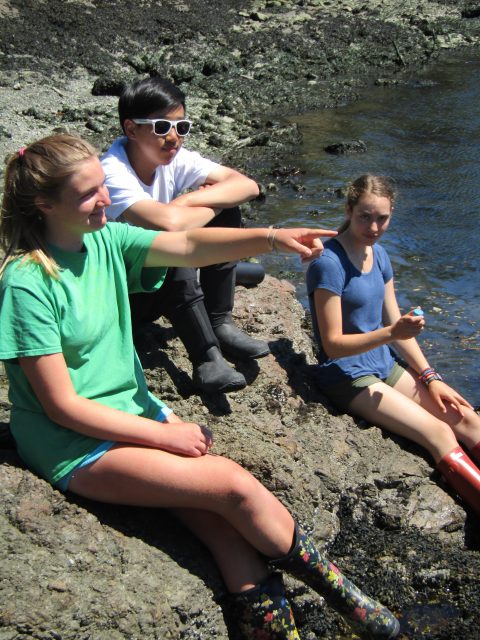
Relaxing on the beach in between runs to the lab

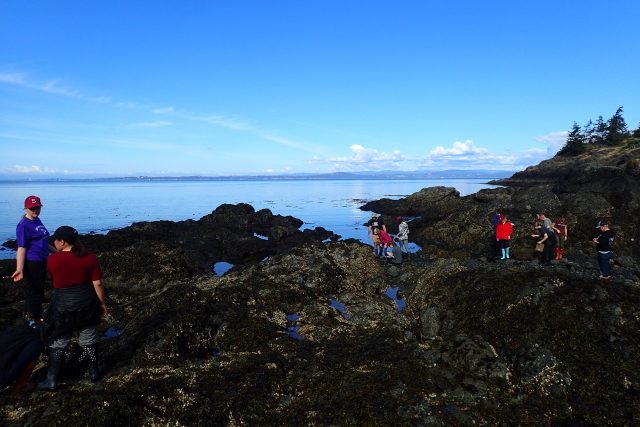
After our earwig adventures, we headed to Friday Harbor Labs and had the opportunity to participate in an ocean acidification experiment with Dr. Rebecca Guenther. Earlier in the program, Dr. Guenther visited us to talk about ocean acidification and algae identification. We were finally able to use the valuable information she taught us during the tide pool pH experiment at the Friday Harbor Labs tide pools. From 11:30 to 1:20 we ran up and down from the tide pool to the lab to measure the effects of light on photosynthesis and respiration occurring in the tide pools. In between the frantic runs to the lab, we enjoyed a sack lunch on the beach with a beautiful view.

Dr. Guenther talking to us about tide pool pH

After spending hours baking in the sun, we were all exhausted. After a few precious minutes of down time, we were whisked up to Spring Street lab to enter and analyze data. We also talked about the differences between mensurative and manipulative experiments in preparation for experiments we will be doing tomorrow with the earwigs we collected this morning.

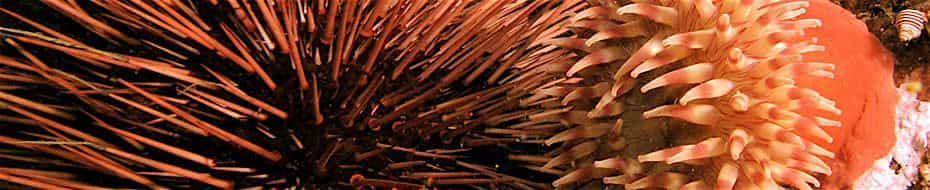
We had a delicious dinner with Ph.D candidate Christopher David Wells who studies anemones. After dinner, while enjoying bowls of ice cream, he gave us a stunning presentation on the complexities of the interactions between sea anemones and sea stars. We can’t wait to observe and study these fascinating sea creatures with Chris tomorrow!

A Day in the Life of a Salish Sea Sciencer

By:  Gabrielle Cooper, Evelyn Wyman, and Brian Chu

Pancakes, warm, tasty, fluffy and light

And bacon and eggs, whipped cream and all the fruit our hearts desire

Nothing to worry about throughout the day or night

Cruising around the farmers market, seeing food cooked by an open fire

A day of buying oysters, a day of leisure, a day of rest

Kids out in the town, walking around

Exploring, and thinking today was the best

If you couldn’t tell, this poem describes a few of the highlights from our day. Saturday was our first day off from field work, and we had an opportunity to sleep in and make a gourmet pancake breakfast. We also visited the farmer’s market, unfortunately it was rainy – but we had a blast exploring. The locals took us to a quaint used bookstore called Serendipity where we were able to check some items off our summer readings lists.

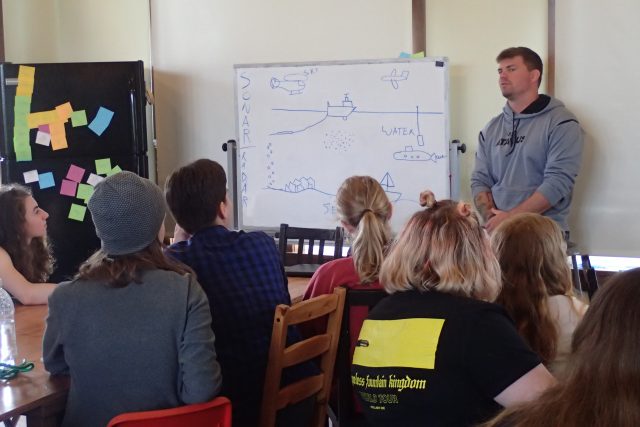
Tim giving a sonar lecture

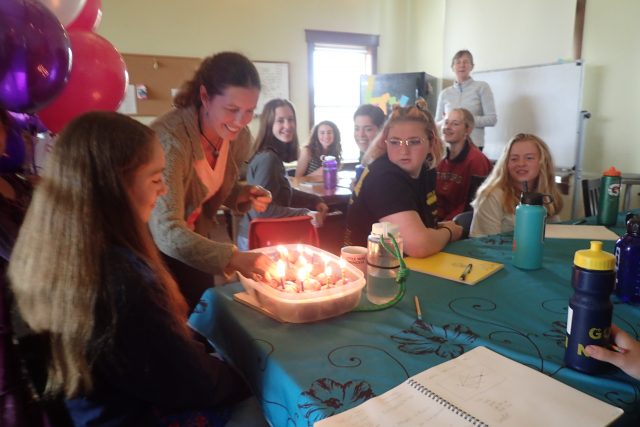
After our excursion to the farmers market, we returned to the Spring Street dorms, where Tim, one of our counselors, taught us about the use of sonar technology in the Navy, which he specialized in during his service. It was especially interesting to consider the ways that Naval use of sonar influenced the marine mammals and environment, which was especially relevant to this program. As a special surprise, Ela’s family visited the dorm with cupcakes in hand so we could all wish her a happy birthday.

Ela’s birthday celebration

To wrap up the day, Beatrice Grauman-Boss and Sasha Seroy, a PhD student at UW had dinner with us to talk about plasticity in bryozoans. We had the opportunity to visit each of their labs earlier, where Sasha let us help her set up a different experiment involving her research on snail teeth and environmental changes, and Beatrice showed us her research on barnacle cloning. Tomorrow we get to go out with Beatrice to participate in field study on invasive rabbits!

Sasha teaching us about bryozoans

Happy Birthday Michael

Good day, ladies and gentlemen!

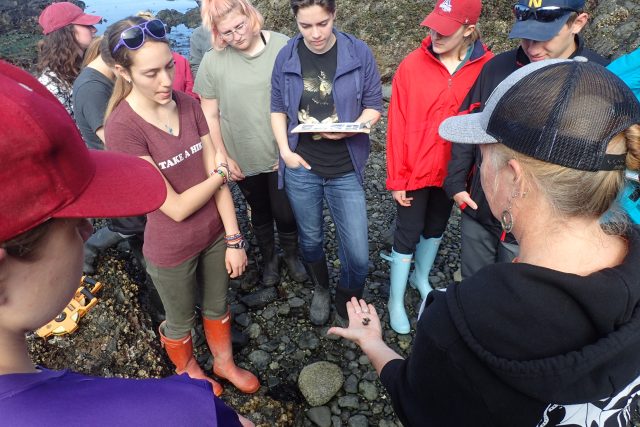
What did we do today? Well, it was a dark and stormy night…. No. It was morning. Against our will, we were awakened at the way too early time of 6:30 am. We dragged our feet down to the breakfast, a meal of heavenly taste. Cereal. Toast with a multitude of condiments, including butter and jam. Then we set off for the day, to Deadman’s Bay, where we met with Dr. Hilary Hayford. Dr. Hayford is a UW biologist who is interested in intertidal ecology at Friday Harbor. We got to participate in a pilot study that looked at changes in snail feeding behaviours due to temperature changes and environmental stressors. We also spotted a river otter in the tide pools! After some fieldwork and a long-awaited lunch, we joined Dr. Rebecca Guenther, a phycologist (studier of algae), who taught us about algae life cycles, species identification, and even helped us press our own seaweed art! After the interesting lectures, we had an amazing dinner with Jennifer Olson. Jennifer works at the Whale Museum’s Stranding Network Program, where she coordinates rescues and research for marine mammals stranded on the shores. After dinner, we sang Happy Birthday to Evelyn’s dad Michael. All in all, it was a great and educational day.