Can your mac n cheese hurt you?

By: Gabi, Paradis, Daniel, and Chloe

“Tadalatadala” the alarm rang, making sure to wake us all up. It was as if it was angry at us for sleeping and wanted to take revenge. Yes, it fully succeeded and got us uttering our “ummmmmhhh, I want to go back to bed. Why does morning have to come.” But science answered our question, in order to be successful we have to work and never be lazy.  We have to give our efforts if harbor seals and snails are willing to give their lives for our learning. We had an amazing breakfast and then prepared ourselves to work on our projects.

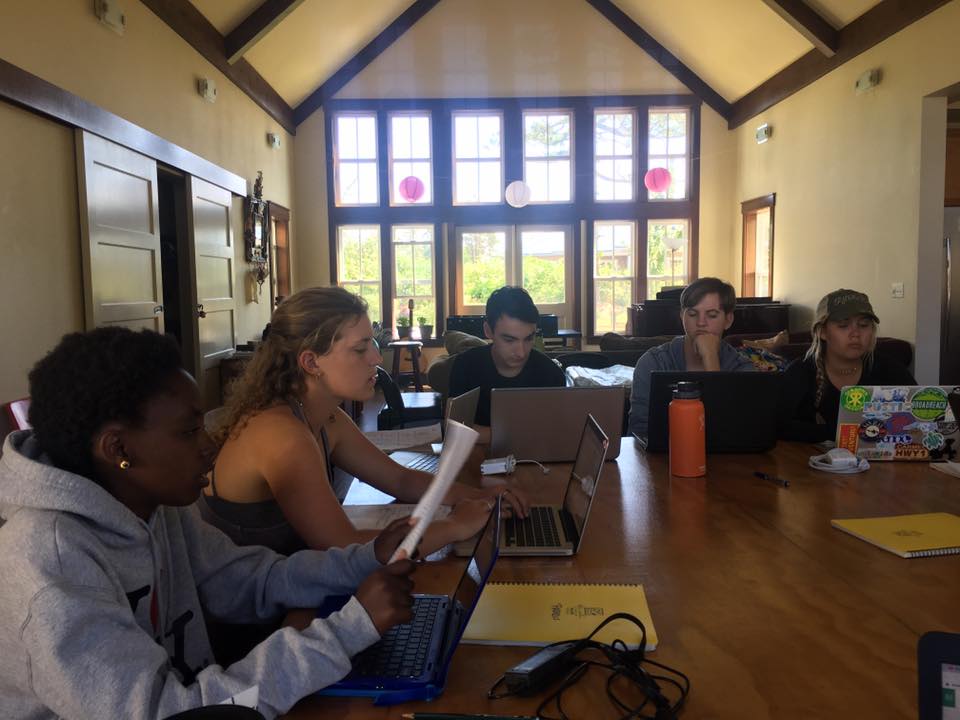
9:00 am: the spirit and the mood changes. The crazy and fun actions that paint the walls of the dorm change to focused and serious scientific faces as we were trying to analyze our data. It was astonishing to see how something we had collected could be used to test our own hypotheses. It was like building a house from scratch and we were all excited to see how our own constructions would turn out. Some people say that it’s better to see a finished house, but we say that it is fun and cool to see a house under construction—we learn better and it helps us figure out the direction we want to take going forward. We know that it might be hard and will require a lot of thinking and efforts, but we are ready for it and we aren’t scared at all. There is no science noble prize that isn’t worth $100.000, so our eyes are wide open and we want to get our noble prizes on Thursday whatever it  takes. Our own noble prizes are knowing that we made it.

After a morning of working on our projects, we went to Friday Harbor Labs where we met Dr. Katie Dobkowski, a recent PhD from the University of Washington.  She is an expert on the plants of the Pacific Northwest to say the least, and she shared some of her wisdom with us.  She started by teaching us some important skills and terms about plant biodiversity, including terms like richness vs. evenness.  After our botanist briefing, we started down the FHL fire trail which leads into a portion of the UW biological preserve.

With guidebooks in hand, we identified every plant species our eyes could see; we were all clearly intrigued by the huge plant variety that we had overlooked this whole time.  After developing a list of 30+ plant species, we did some biodiversity / density samples using quadrats along the fire road trail to try and find out a little more about the prevalence of the plants in the San Juan Island forest.  Upon returning to the dorms after our enlightening walk under the beautiful trees of the Pacific Northwest, we collectively input our data into a spreadsheet to record all the information we had observed.

To wrap up our day, we had Dr. Jack Bell, an analytical chemist at the FH Labs join us for dinner.  Throughout the evening, he shared tons of new facts all about chemistry, a subject that wasn’t too familiar to us, especially in the environmental and marine science fields. We all enjoyed hearing about some of his research projects and interests, from the “so-called” harmful chemicals in our mac n cheese to the presence of BPA in mussels along the Washington coast.
Hunting Wabbits

Throughout the past couple of weeks, we (and maybe you) have been asking why are we doing this?  Why are we measuring the aperture size on barnacles? Why are we counting the number of lugworm holes we see in the sand?  Why are we collecting 200 whelks from the intertidal zone? What is all of this data collection for?  What does it mean?

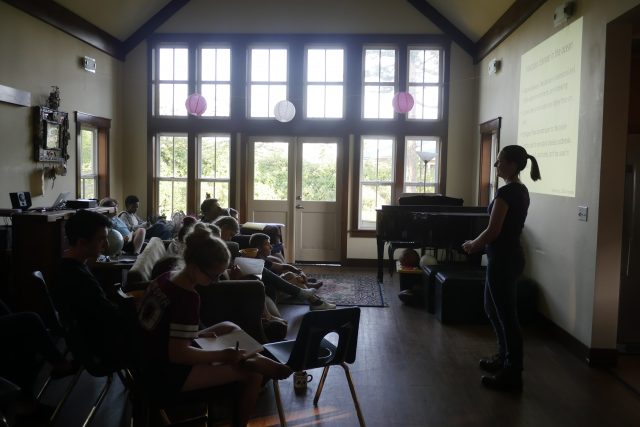
Today, we started our day with an explanatory lecture from Tim D introducing us to the structure and methods for our final project.  Throughout our discussion of the project and the scientific method we will display through writing, graphs, and photos, we got the answer to our questions.  Tim(s) explained that with this final project, we are given the freedom to analyze any of the data we have collected or will collect.  It is our job to ask and answer questions about the observations or data we have collected and create a symposium-worthy poster to display our work.  We all felt the gears in our minds start to turn as we thought about the possibilities of questions and hypotheses we could test using the various data we had collected.

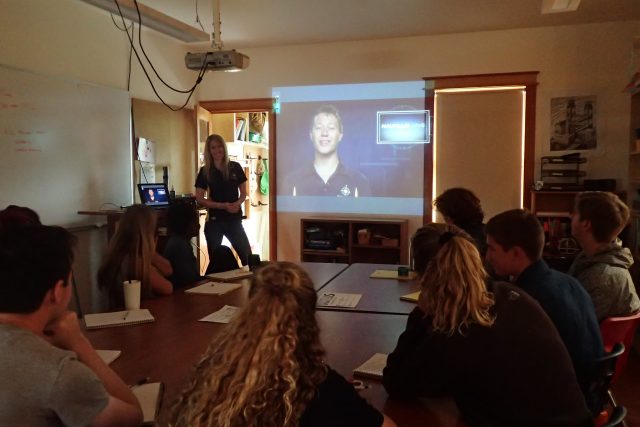
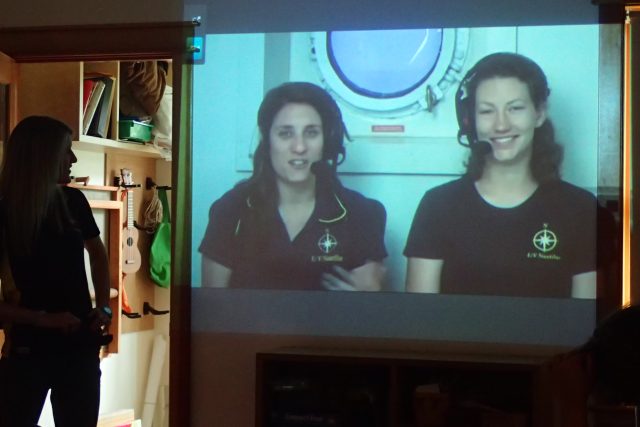
Next on the agenda was something we were definitely all looking forward to: a live chat with some of the workers on the E/V Nautilus.  Megan Cook returned to help connect us to two of the communications officers. The Nautilus is currently exploring the backyard of a couple of our students—the Channel Islands—which are located off the coast of Southern California.  We were astounded by the technology as we asked questions and they responded with insightful answers about the work they are doing.  We learned that many of the Channel Islands used to be one large island during the last glaciation due to a large decrease in sea level, so the Nautilus is currently looking for old shorelines and marine biodiversity around the current Channel Islands.

Megan helping us connect with the Nautilus

Two Nautilus workers answering our questions through a live video chat

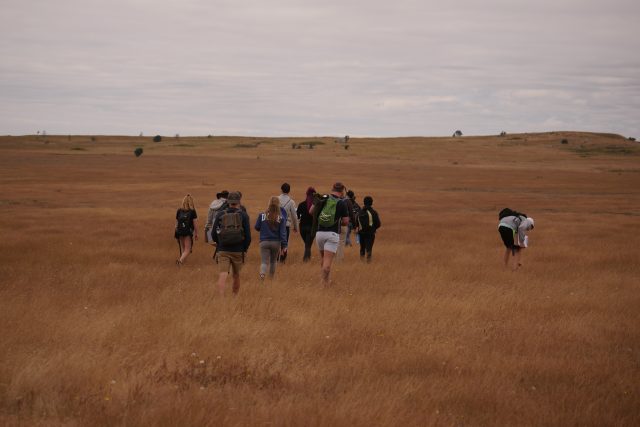
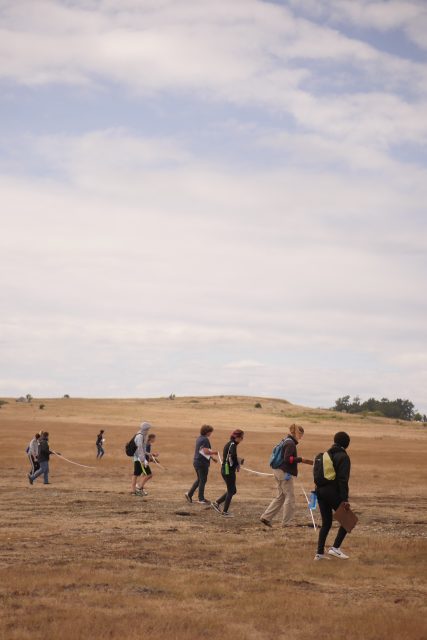
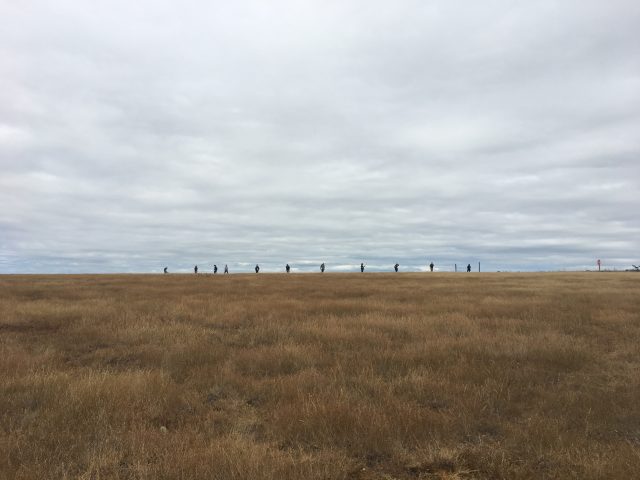
After our live chat  with the Nautilus, we had lunch as we prepared to leave for the rabbit survey with Beatrice Grauman-Boss. We had to stand 5m from each other, then count how many warrens there were in a certain location and the number of holes in one warren. This helped us to estimate the population of rabbits. We were all pleased to be part of this survey since rabbits have negatively impacted the ecosystem for a long time.

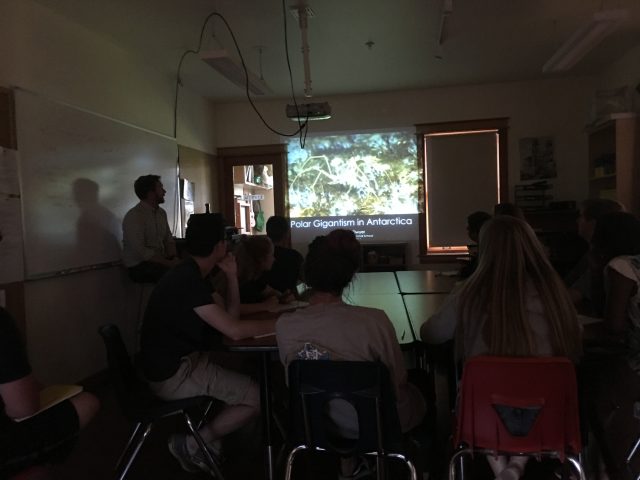
After we finished up the rabbit surveys, we had the pleasure of having our one and only Timothy Dwyer as our dinner guest, even though he is one of the camp directors. We used our dinner together as an opportunity to ask him all kinds of questions about his life and career and ask for his advice for us.  After dinner, Tim gave a fascinating presentation on his two month trip to Antarctica to study Polar Gigantism, more specifically giant sea spiders.  He showed us lots of great pictures he took on his expedition, some of which are currently featured in National Geographic, the New York Times, and several other big name newsletters.

Forest Yielding the Best Fruits

By Gabi, Paradis, Chloe, and Daniel

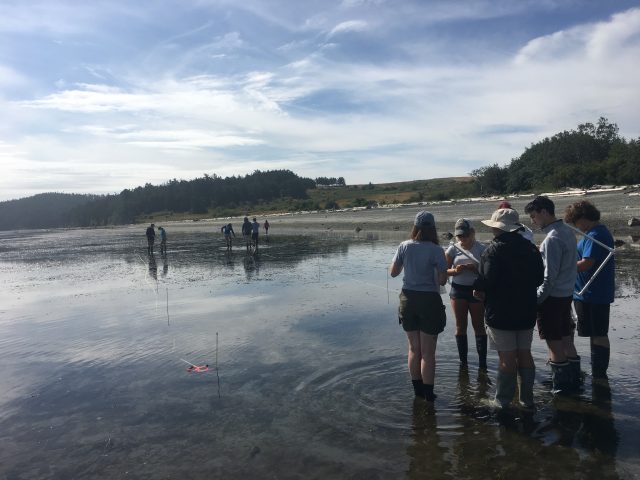
Another day of finding ourselves in the forest of science began with the Eelgrass Wasting Disease survey. With Morgan Eisenlord, a Cornell University marine ecologist studying infectious diseases, biodiversity and trophic ecology at the Friday Harbor Labs. We went to 4th of July beach to get some samples of eelgrass, with which we would later scan to examine for the prevalence and severity of a pathogen causing a wasting disease in the leaves of the plant. At first we were worried about putting our hands in the stinky, gross water and worried about our feet getting soaked since the tide was really high when we arrived at the beach. But little did we know that being exposed to weird, rare experiences would make us feel like real scientists who are ready to step up and walk through the challenges of everyday science life. It was a fun moment of knowing that science doesn’t come only with glory, but also with hard work, commitment, perseverance and collaboration. After collecting our samples we headed back to the dorm to grab lunch and get ready for an afternoon of analyzing our samples.

With full stomachs, we headed to the lab. Morgan and her team (Miranda and Clio) welcomed us in the lab with many plastic sheets and scrapers to make pressings of our data in order to scan it. It took us a while, but by the time we were done our numerous amount of eel grass data was more than encouraging. Looking at our data we were able to pin point how much area on a plant was infected as well as how many plants on average were affected. With the application of J image we were also able to observe the amount of already dead chloroplasts among our data. Having this much information at our fingertips made for a much more involved understanding of Morgan’s work with infections diseases as well as what she would be presenting that evening at our dorm.

After we finished up with the eelgrass we have some exploration time, so some people went into town while others tried to catch up on some sleep.When it was time for dinner with our guests Morgan, Miranda and Clio. Morgan gave a presentation on eelgrass wasting. That was our day.

Testing tides and Creating Life

Loading into the van, one by one, we stomped around with our mud boots on as we headed out for a day of field work and observation at the UW Friday Harbor Labs.  We began our day with Dr. Rebecca Guenther, from whom we had learned all about algae about a week and a half ago.  Dr.  Guenther is the manager at the FHL (Friday Harbor Laboratories) Ocean Acidification and Environmental Lab.

We had the privilege to test the alteration in tidepool temperature, salinity, and pH amongst tidepools at different elevations in the intertidal zone that all held different abundances of plants, animals, and rocks.  All 10 of us chose a tidepool from which we recorded the salinity and temperature and also took a water sample.

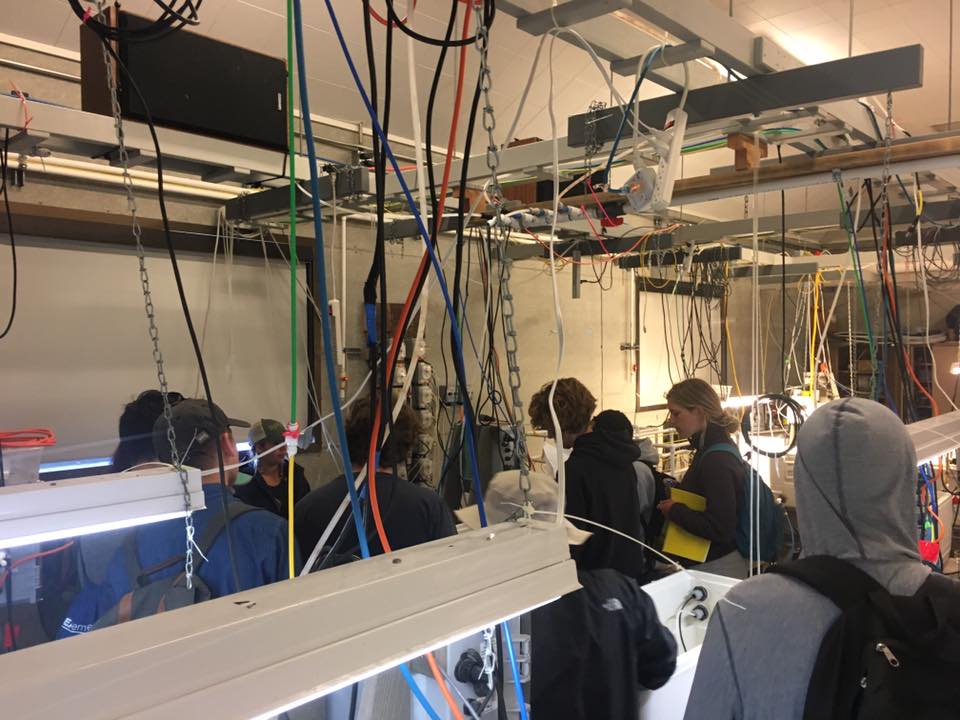
With water samples in hand, we walked over to Dr. Guenther’s overwhelmingly elaborate Ocean Acidification Lab to tour the lab and learn all about what kind of experiments that are run in the lab by students and faculty.

The lab was full of different types of water tanks, coolers, and valuable chemical equipment- some reaching a value of over $80,000! With some of the equipment, we tested the pH, also known as the acidity or alkalinity of a substance.  We repeated the collection and recording of data two more times to gather more data that we could later analyze.

Sand dollars. Have you ever seen something that looks like a rock but actually is a living organism? That is how sand dollars look like, and we were all surprised at how life on this planet is broad and diverse. We had our sand dollar spawning experience with Beatrice Grauman-Boss, a recent high school graduate who has worked at the FH Labs for two years on several experiments, including her own.

Beatrice is on the left.

Beatrice is currently researching whether sand dollar larvae will feed on kelp detritus. We got to inject potassium chloride into the sand dollars to stress them enough to spawn. Then, we got to see with our own eyes the eggs and sperm of different sand dollars.

Later, we used a microscope to see the eggs clearly. What we saw under the microscope was astonishing.

We saw larvae start to form, and we left the room feeling like real geniuses and scientists. We created baby sand dollars and now we are rich. After we finished researching sand dollars we went to check on our invertebrates that we keep in the tanks at the labs.

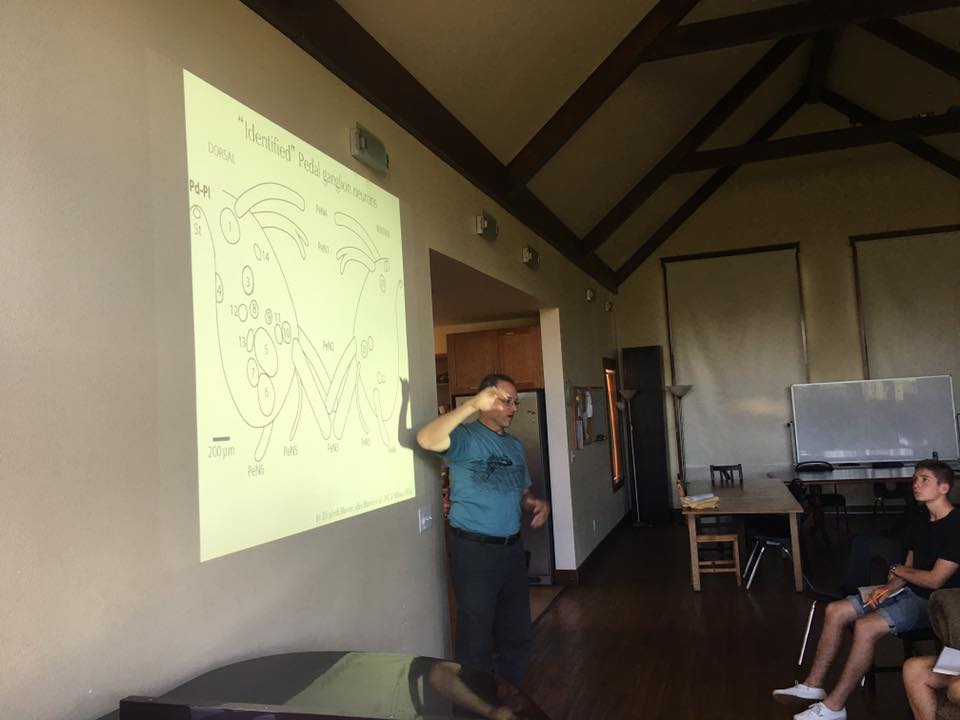
When we returned to the dorm, we input our pH data collected earlier that day. This meant getting out our laptops and working on the excel spreadsheet. We input the data we had collected fairly quickly. After that we had free/exploration time. Some chose to get some rest but others chose to work on their costumes for the Invertebrate Ball that will be taking place tomorrow. At around 6:30 our guests showed up—it was Dr. Jim Murray and his family. Dr. Murray is an expert in neuroethology and is a professor at California State University East Bay. Once we finished up dinner, Dr. Murray gave a presentation on the sea slug Tritonia diomedea.

We will visit Dr. Murray’s lab tomorrow!

The sixth best small town 4th of July Celebration in the US: Friday Harbor!

“When in the Course of human events it becomes necessary for one people to dissolve the political bands which have connected them with another and to assume among the powers of the earth, the separate and equal station to which the Laws of Nature and of Nature’s God entitle them, a decent respect to the opinions of mankind requires that they should declare the causes which impel them to the separation…”

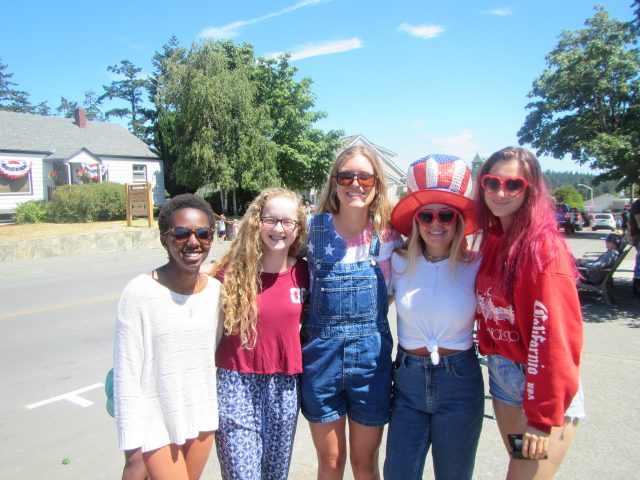
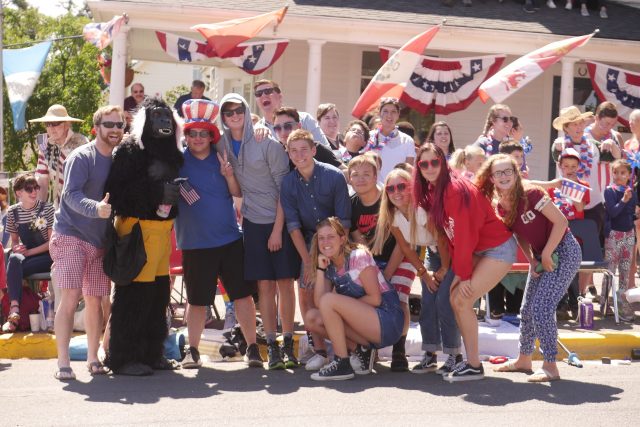
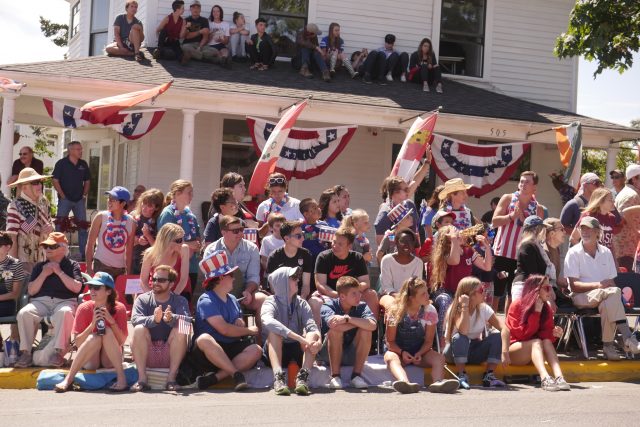
These patriotic words started our morning on the Fourth of July as Tim Dwyer recited the Declaration of Independence to help remind us of the true meaning of Independence and what kind of emotions the American colonists felt more than 200 years ago.  After a quick yet inspiring review discussion on the American Revolution, we all put on our red, white, and blue to show off our patriotic pride.  The Salish Sea Sciences students sat along the curb in front of the Spring Street school alongside hundreds of other people to watch the highly anticipated town parade.  We all waved our flags and cheered on the countless floats and organizations found in Friday Harbor. 

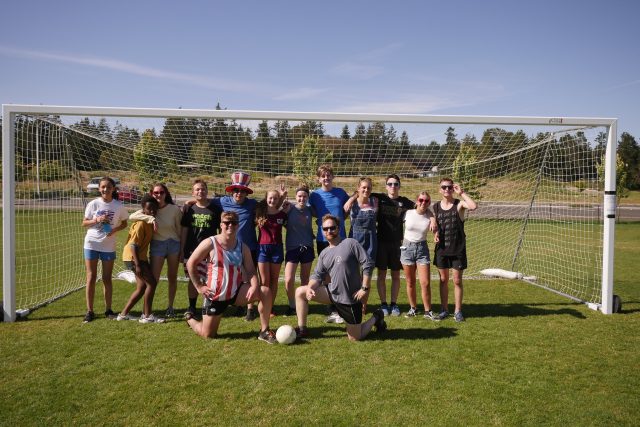
Feeling hungry for some classic barbecue, we followed the crowds of people to the town’s historical society’s picnic to get some good food and listen to the story of the Pig War: a battle over land that occurred right here in the San Juan Islands in 1859 between the United States and Great Britain!  Following lunch, we got to explore the streets of Friday Harbor and experience the comforting feelings of a good ole small town Fourth of July.  To finish up the fun afternoon activities, we all drove down to the local fields to battle it out with a game of soccer.  Even with the many different levels of soccer skills, we all had a great time playing together.

The small town of Friday Harbor provided us with the  wonderful experience of touring Friday Harbor labs. The lab’s inside held a beautiful array of libraries and rooms filled with knowledge on marine biology. More than just book education, the labs also stored an interesting touch tank where we all dipped our hands in to feel sea cucumbers, urchins and sea stars. After our tour on the inside of the Labs, Tim lead us to the living quarters of the labs where graduate students lived comfortably and the undergraduates lived in shacks. Nevertheless, all of the scientist there seemed enthused as they talked to us about their studies and teachings that they participated in at the labs.

To cap off our perfect day, we all watched the stunning fireworks on the shores of the labs. The show this year was many things but unmemorable wasn’t of them. The long and colorful explosions of colors lit up the sky for all to see. For one of us, this was the first time experiencing the beauty we call fireworks. This girl described the show as ‘real’ which to me, seemed like the most perfect explanation —even as someone who has observed fireworks for many years before.

Longboat Day 2: Row, Row, Row your Boat!

By Gabi, Chloe, Daniel and Paradis —

Wake up at 7:00AM to leave Saddlebag for Pelican Beach. It was a beautiful morning, and we were all excited for what today had to offer us. We didn’t have our cups of coffee to help us start the day, but luckily we had skip-and-dip. We put on our swimming suits, warmed ourselves up, and then ran into the COLD, freezing water. The feeling was amazing. We later had breakfast: yogurt and granola and then began to prepare ourselves to leave the most beautiful island ever.

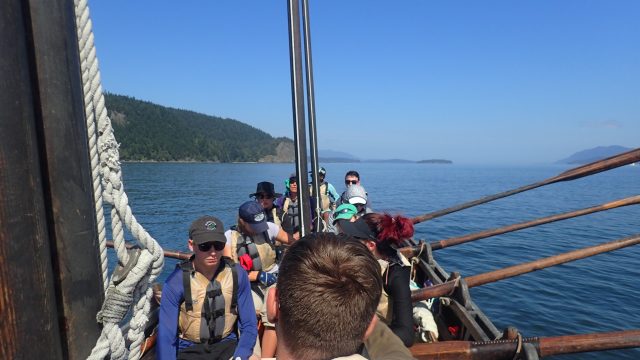
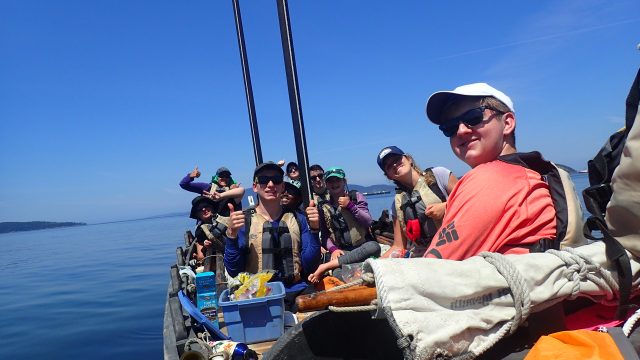
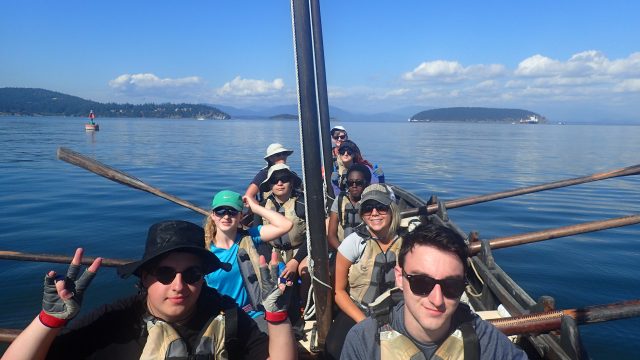
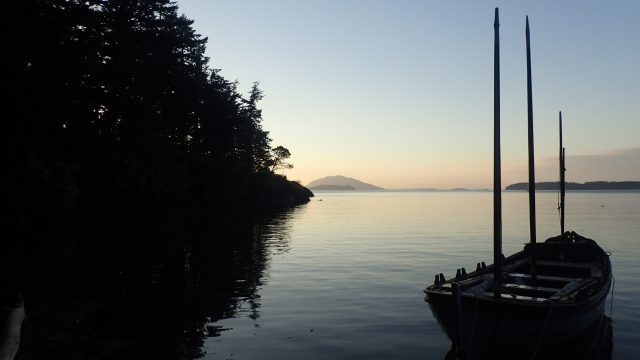
We got on the boat, stood by our oars, and started our journey for the day’s trip to Pelican Beach, an estimated 7.5 nautical miles from Saddlebag. If that wasn’t already a long enough journey, we didn’t have the wind in our favor. That meant that it would be a long, intense day of rowing for our crew. After rowing for what seemed like an eternity, we finally got to our first check point, which was Clark Point. We, as a group, decided to take a break so we set the anchor and enjoyed a bagel lunch. After our break, we began to row hard to catch the slack tide.

Unfortunately, the ebb was still continuing and impeding our progress. We decided that it would be in our best interest to change course from Pelican Beach to Cypress Head instead, since we could see that Pelican Beach was crowded and all the moors were taken by various sailboats.  The final push against the winds and currents to cross the Bellingham Chanel in order to get to Cypress Island was strenuous to say the least, but we did it by working together and using the power of pop music to sing our way through the struggle.

After dropping the anchor at our new destination, we eagerly unloaded all of our belongings and items we needed for the night.  The dinner crew worked quickly so we could all indulge in the wonderful comfort food of mac-n-cheese after our long day out on the water.  With full stomachs and weary bodies, we set up our sleeping arrangements in order to recharge for another fun filled day in the San Juans.

Longboat Day 1: The First Strokes and Seeking Crabs

By: Gabi, Chloe, Paradis, Daniel —

After packing all of our belongings in countless dry bags and learning some basics of our boat: the Townsend, we finally pushed off the dock in the Marina to start our journey to our first destination, Saddlebag Island.  Within the first few strokes with our paddles, we all quickly realized that the old-timey way of transportation of longboats is not an easy task.  Rowing took some serious muscle power, but when we all worked together and got our strokes in sync, we were able to row our way to Saddlebag Island, which was about 2.5 nautical miles away.  With the winds on our side, we were able to raise two of our sails to help push us to our destination, which was a joyous relief for all of us.

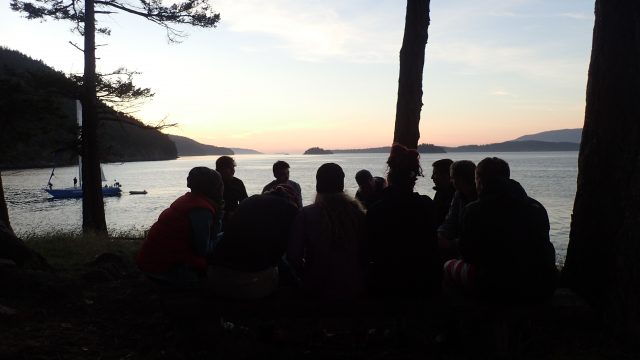
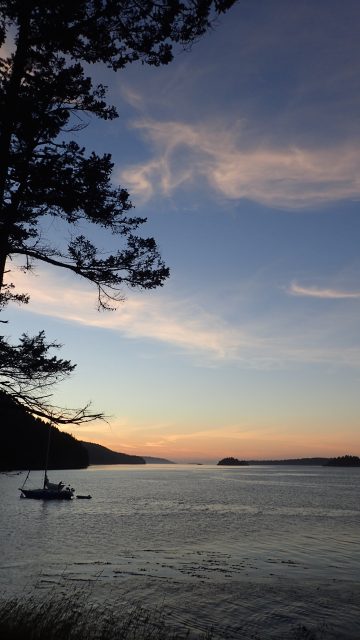
Arriving at saddlebag island, we were welcomed by the rocky shores of a small beach. Saddlebag gave our crew a quaint yet great place to stay with two small grass patches just perfect for our two tents. We decided at Saddlebag that the girls and boys would be alternating between the boat and the tents for sleeping—luckily for the girls, land would be their sleeping spot for night one. But not to get to ahead of ourselves, before any talk of going to sleep happened, we all enjoyed a lovely dinner of burrito bowls and a desert of hot cocoa with chocolate squares. We all sat out by the beaches’ edge and talked over our difficult yet fulfilling first day.

First Day in a New World

By Gabi, Paradis, Chloe, and Daniel-

Wake up early in the morning, anxious of this new world and what it was offering us on our first day. The sun shining, the clouds low; it didn’t look like the San Juan Island. It was a new world and we are happy to be here. Some of us woke up really early to rock and roll, and some of us were ready to sing Bruno Mars’s The Lazy Song. But no matter how much were anxious or tired, we all were excited to be part of this new adventure called The Salish Sea Sciences Program.

Breakfast, the joyful part of everyone’s morning when that first meal is served, and for those of us who aren’t morning people, enjoying a cup of coffee. This morning happened to bring forth eggs, toast and VERY LARGE MUFFINS all of which tasted amazing. After eating and congregating at our first breakfast, it was decided that a tour was in order to set up boundaries and see the little town of Friday Harbor. By “little,” we mean little; this small town is so close together that its almost impossible to get lost. That being said, what was lost in quantity was for sure made up in quality as Friday Harbor was immaculately clean and all so adorable.
After walking the quaint yet charming streets of Friday Harbor, we headed back to the dorms for some lunch.  We dove into all sorts of sandwiches, salads, and more to fuel ourselves for our next outing: a visit to the Friday Harbor Laboratories associated with the University of Washington.  After arriving at the Lab, we boarded the Centennial, UW’s marine research vessel.

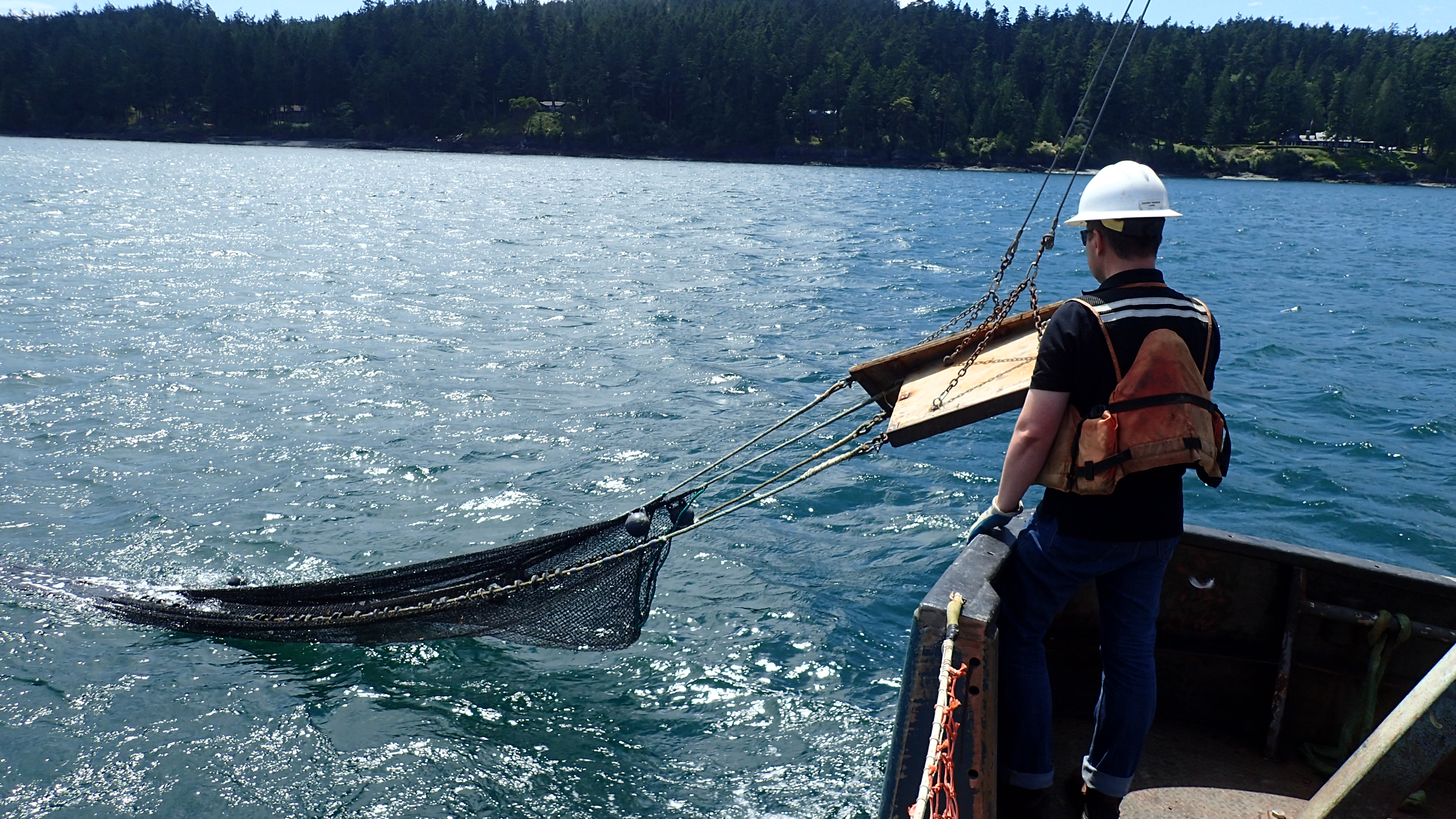
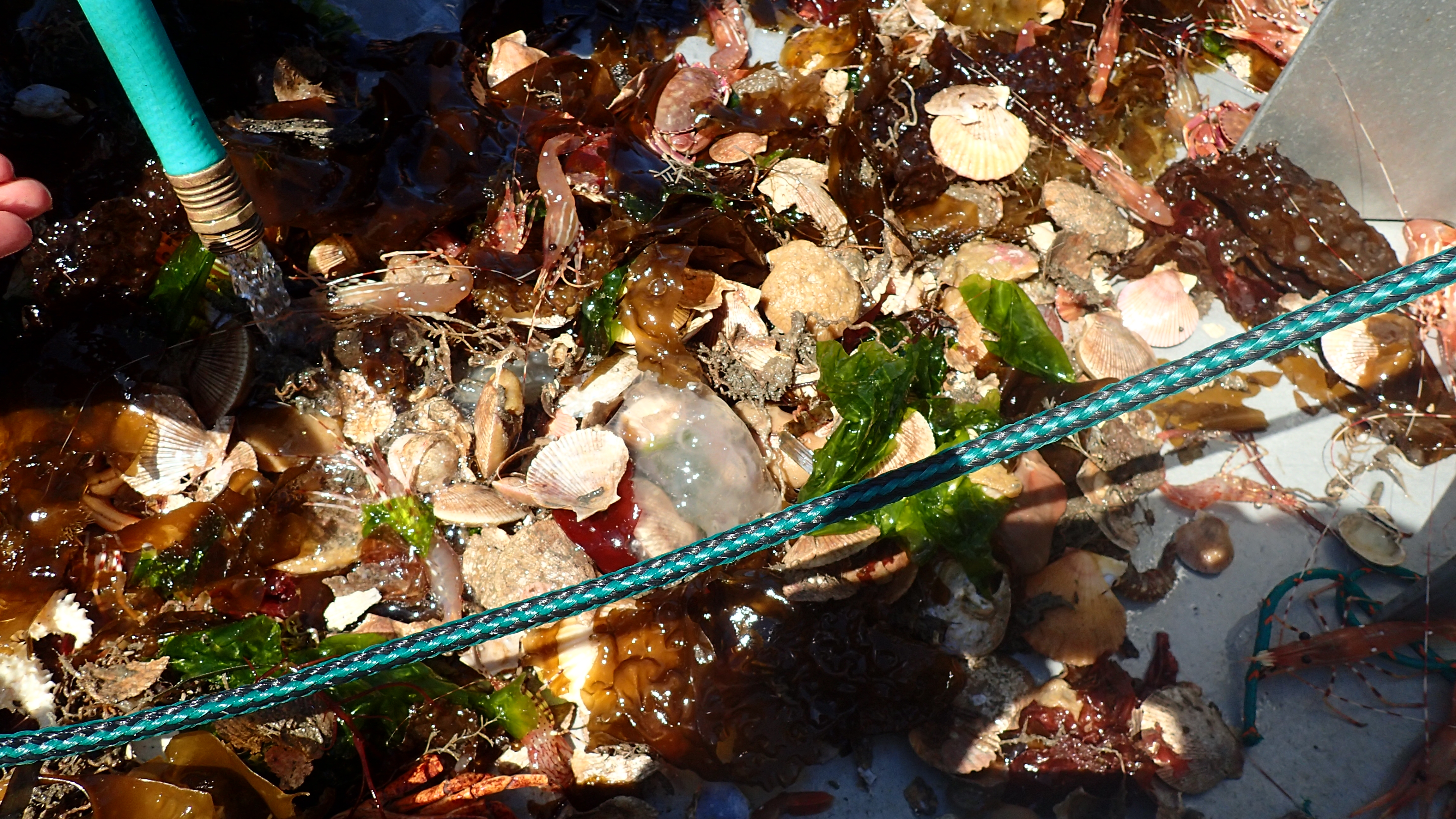
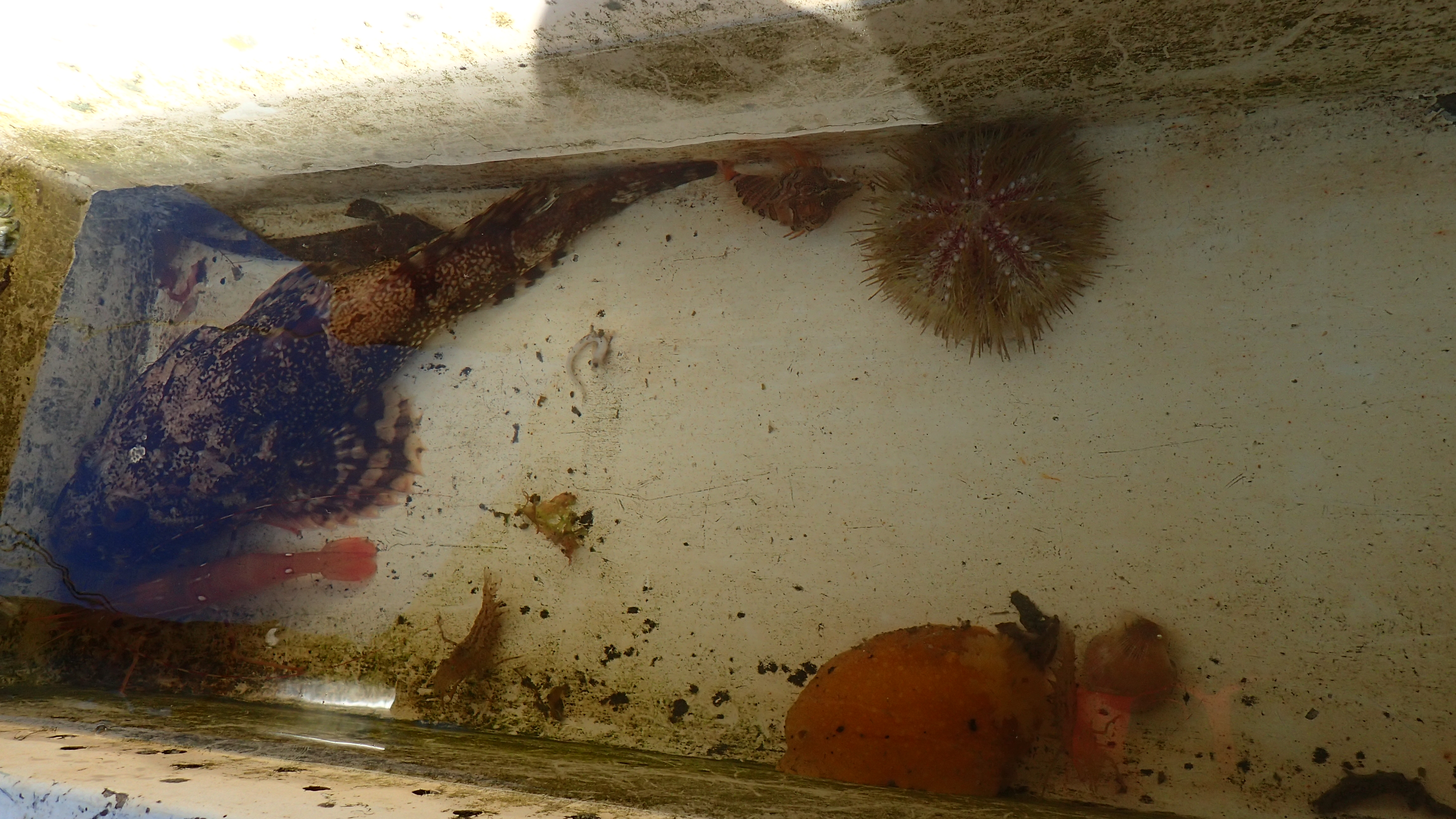
We headed out onto Griffin Bay so we could let down a net to trawl along the sea floor to pick up some of the local diverse flora and fauna.

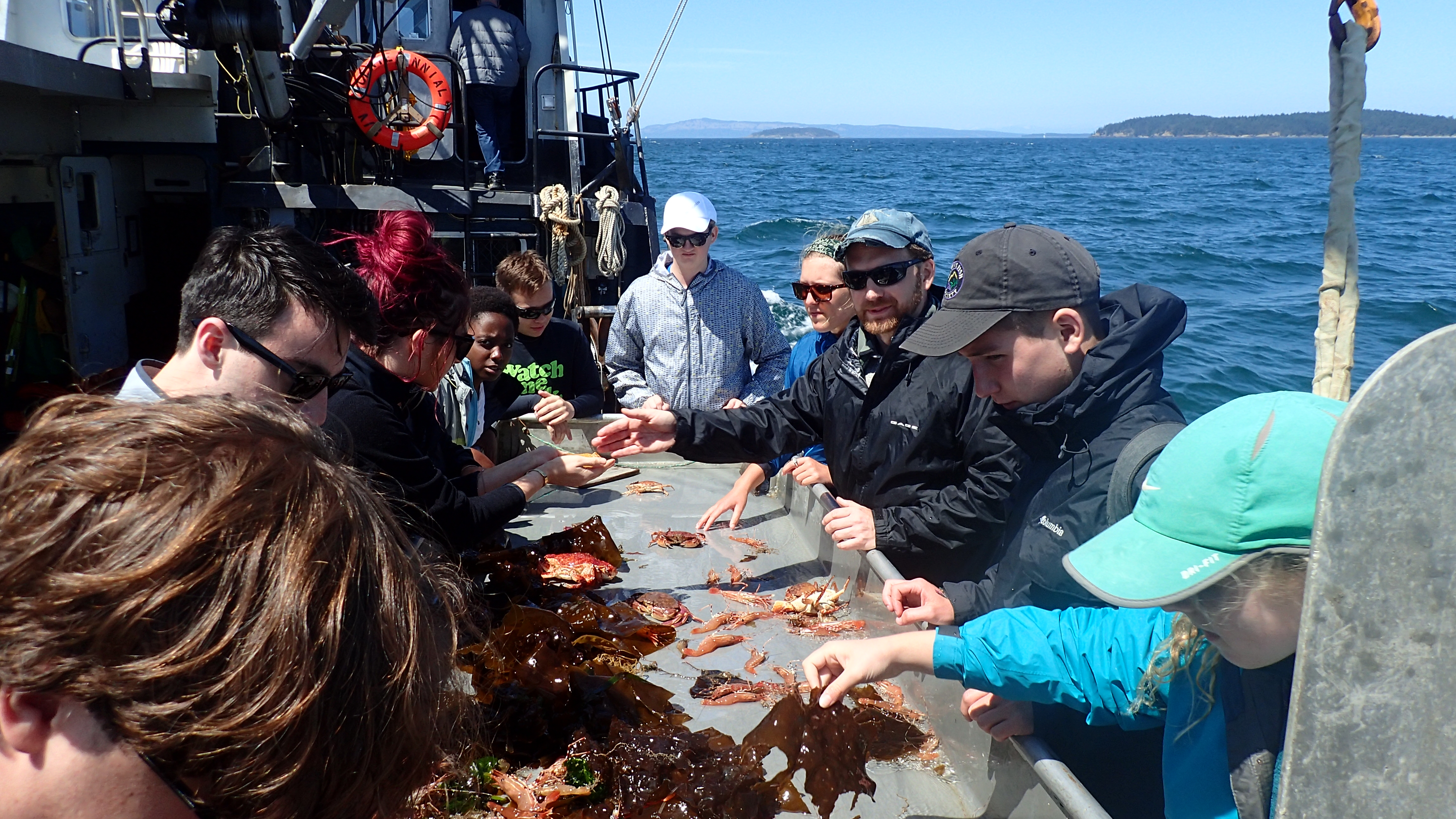
After pulling the net on the ocean floor for about 10 minutes, the captain pulled up the net and released all the catch onto a sorting table for us to look through.

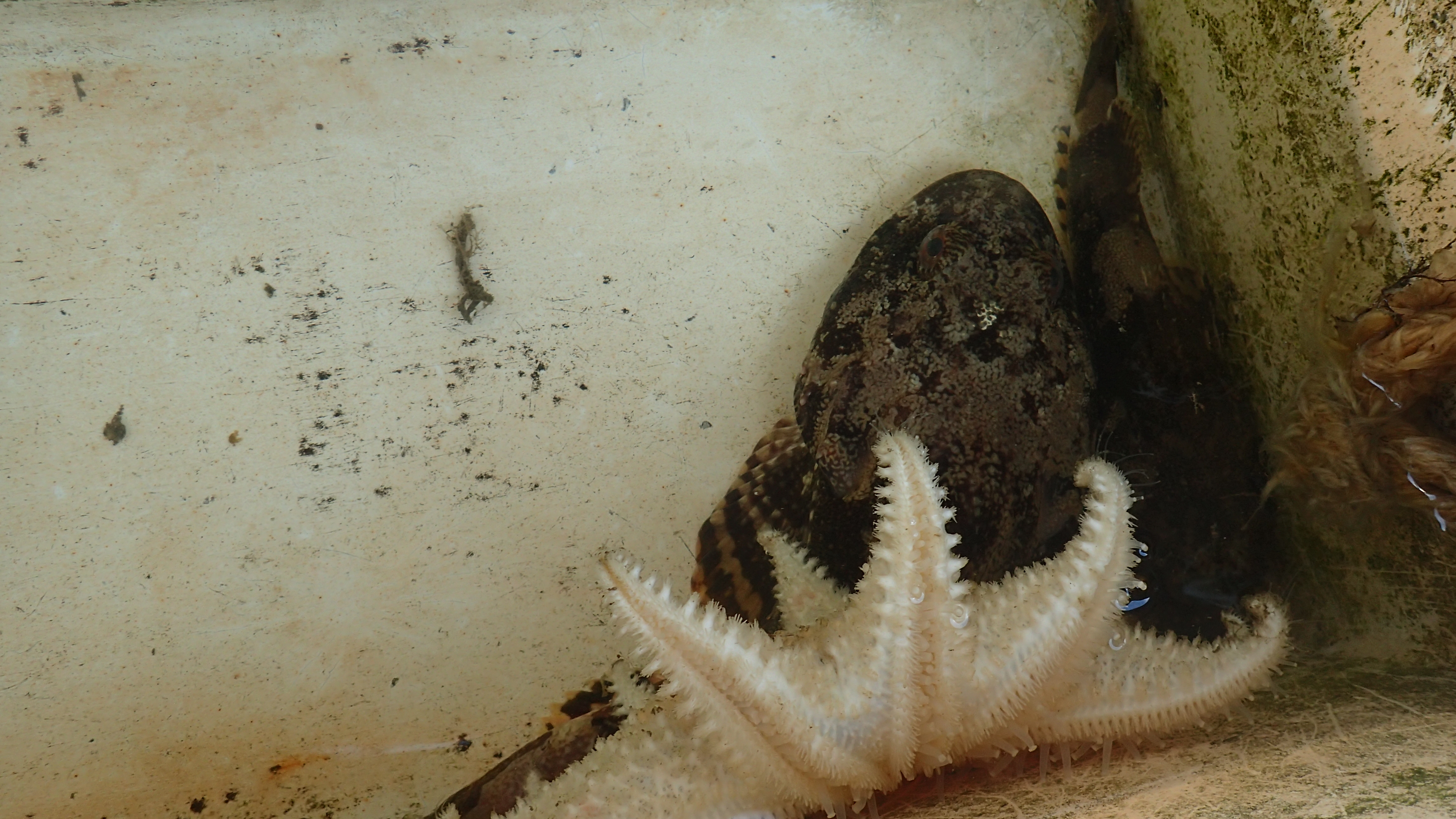
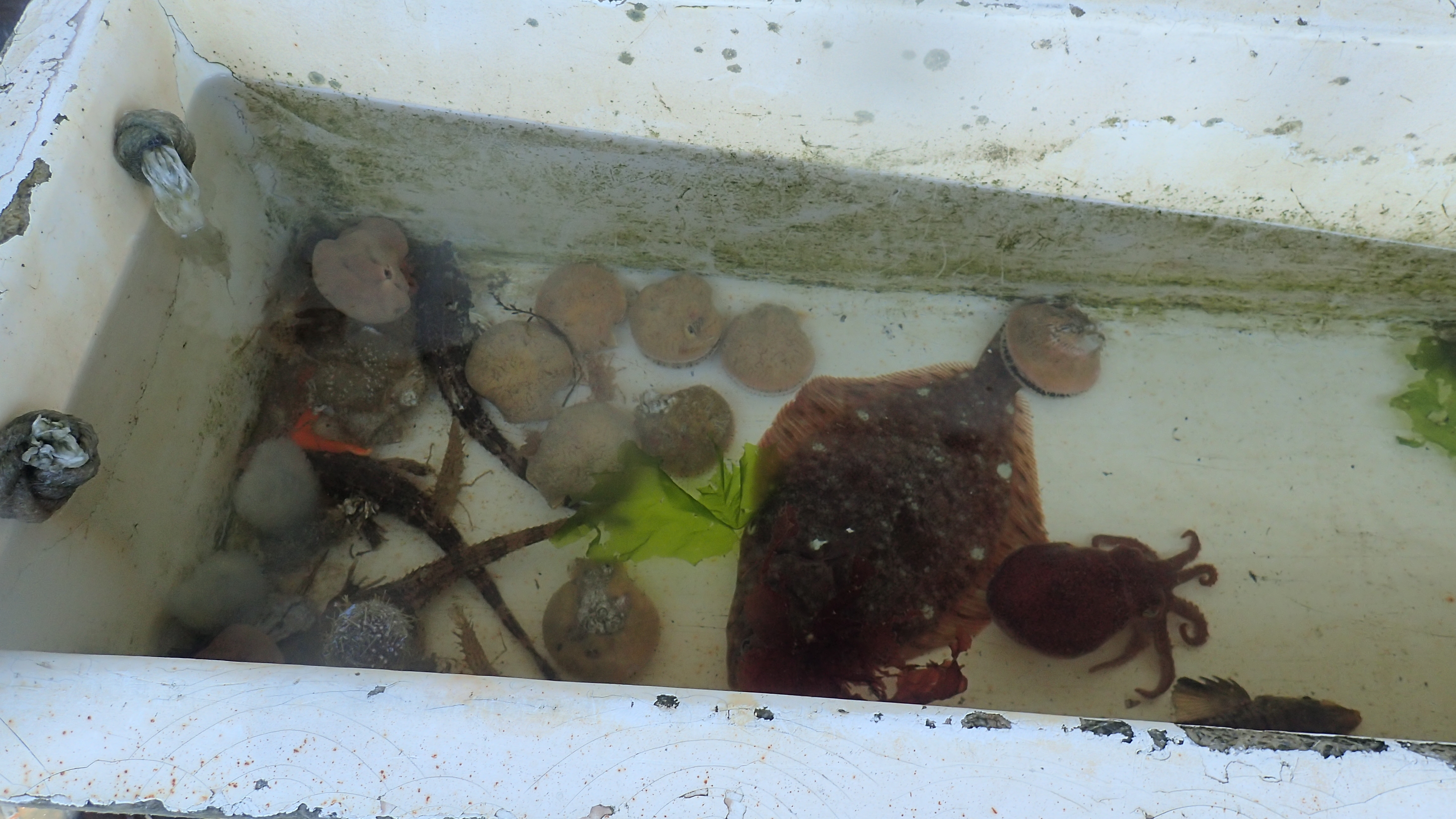
We were all amazed by all of the shrimp, crab, sea slugs, nudibranchs, sea stars, scallops, clams, and much more.

We all felt like true research scientists when we were aboard the Centennial, and it was a great first experience in the field for us.

After we returned from the Friday Harbor Laboratories we enjoyed an amazing dinner which consisted of pasta salad and grilled chicken accompanied by various vegetables. After we finished our delicious dinner we headed off to the Community Theater for a lecture by Dr. Lauren Mullineaux, a senior researcher and biology professor at Woods Hole, MA, which was about deep sea hydrothermal vent communities.

And now, we’re enjoying some relaxation time as we conclude our day!