Day 25: A Summer to Remember: Farewell from the 2025 Field Science Cohort

Thursday, July 24th, 2025. By: Lars, Miles, and Leah
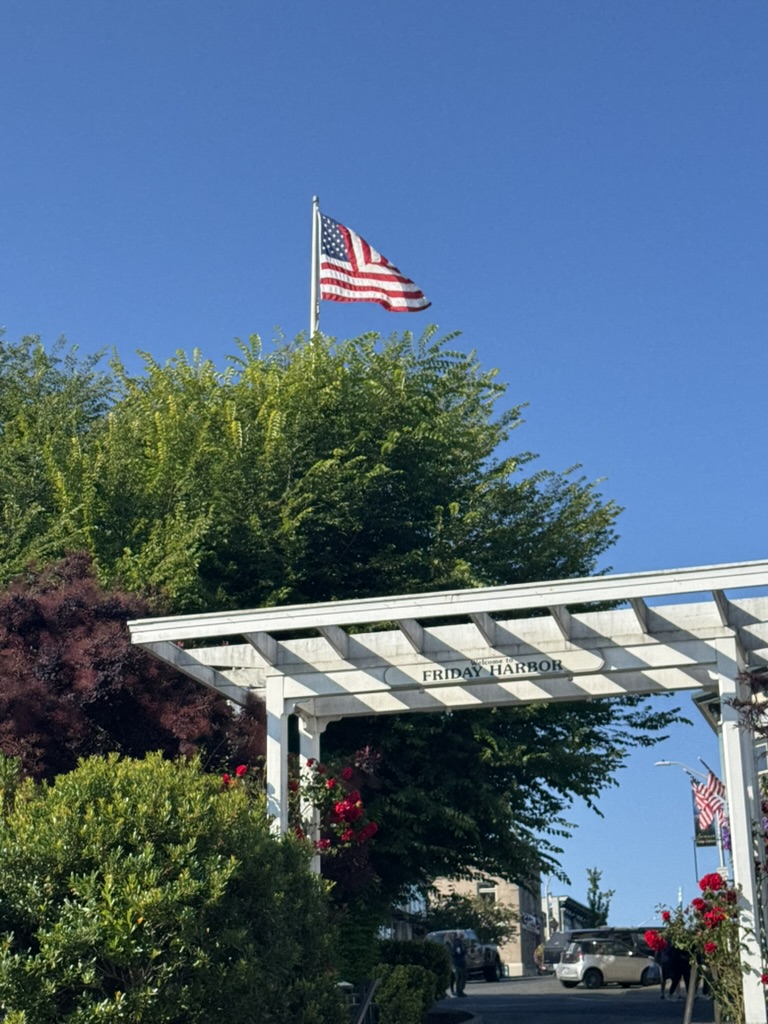
Picture from downtown Friday Harbor (photo by Lars)

I thought a lot about how I wanted to write this post. As we got towards the end of our time with Salish Sea Sciences, chore groups understood what jobs they were doing on the last day. I knew right away- I wanted this final post, this final message from our cohort, to be special. In an effort to maintain the original goal of the blog, as a daily tracker of all of our growth and learning, I will be talking about the day mostly as normal. Please, if you have any inclination to click off the blog now, don’t.

Although some of us were gifted the luxury of waking up peacefully, others had a violent awakening. With an extra hour of beauty sleep under our belts, we each approached the big day excited! Pumped to see our families again, share with the science community all of our findings, and give the 2025 Field Science Cohort one last “hurrah!”.

Our first activity of the day was cleaning! We wanted the dorms and labs to be spotless for the next group of kids to enjoy the space as much as we did. So, in typical fashion, we cleaned to music! Pop songs playing on Ella’s speaker, trumpet noises coming out of Miles’s mouth, and piano notes bouncing off the walls all the way up to the top floor. Similar to science, music is all about communication. We have grown together in that way, playing different songs with each other, dancing to new tunes, being amazed at all of the positive energy each one of us brings to the table.

We also began to pack up some of our belongings during this time. For some, this was done in a neat, organized manner. Separating clean clothes from dirty, neatly folding shirts and shorts, even organizing clothing items into packing cubes! For others, it was more of a shove everything into the bag and see if it fits.
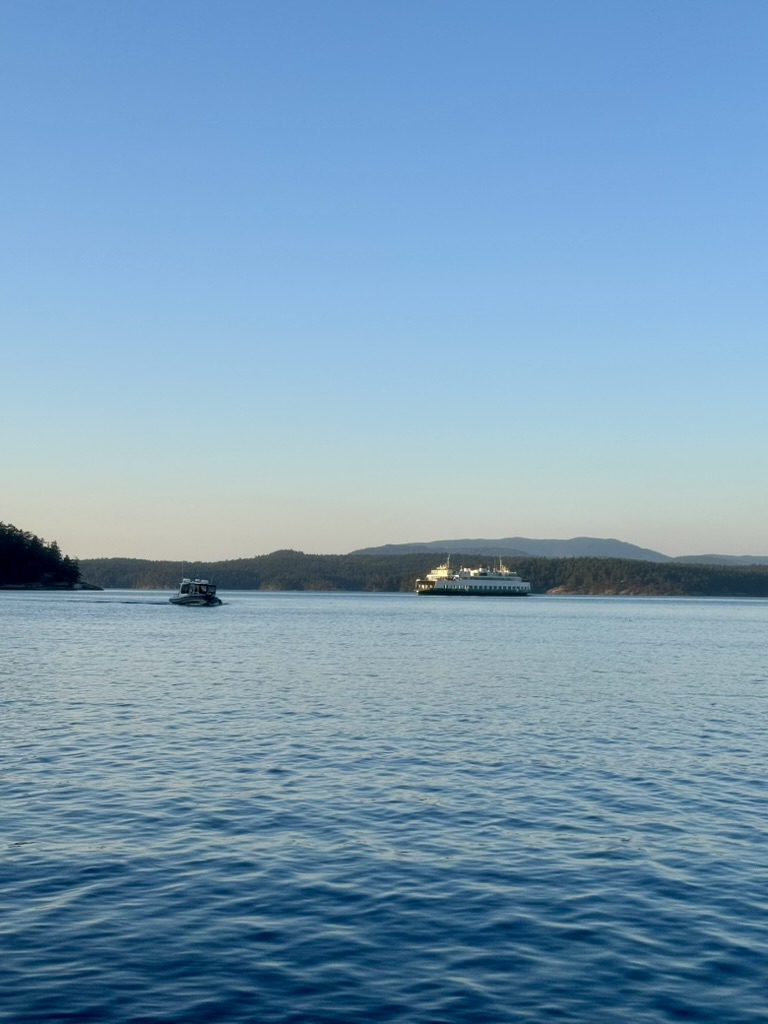
Photo of post-sunset from Friday Harbor Marina (photo by Lars)

Next, we had an hour to write thank you notes to all of the amazing people who inspired us this summer! Whether that’s scientists at the labs, educators on restoration for the San Juan Islands, people who kept the dorms from burning down, or helped us with each step of our projects. There was a broad spectrum of how many cards people wrote, and how well they wrote them. The science team challenged us to write as many as possible! Orrin beat Wyatt over some clear differences in card quality. They both wrote a total of 22 cards!

Our final piece on the agenda before the big project symposium was structured recreational free time! We went to go get ice cream downtown, many of us enjoying a variety of flavors on a waffle cone. We took our time to enjoy the moment, each other’s presence, and our ice cream, before heading back to the dorms to get symposium ready!
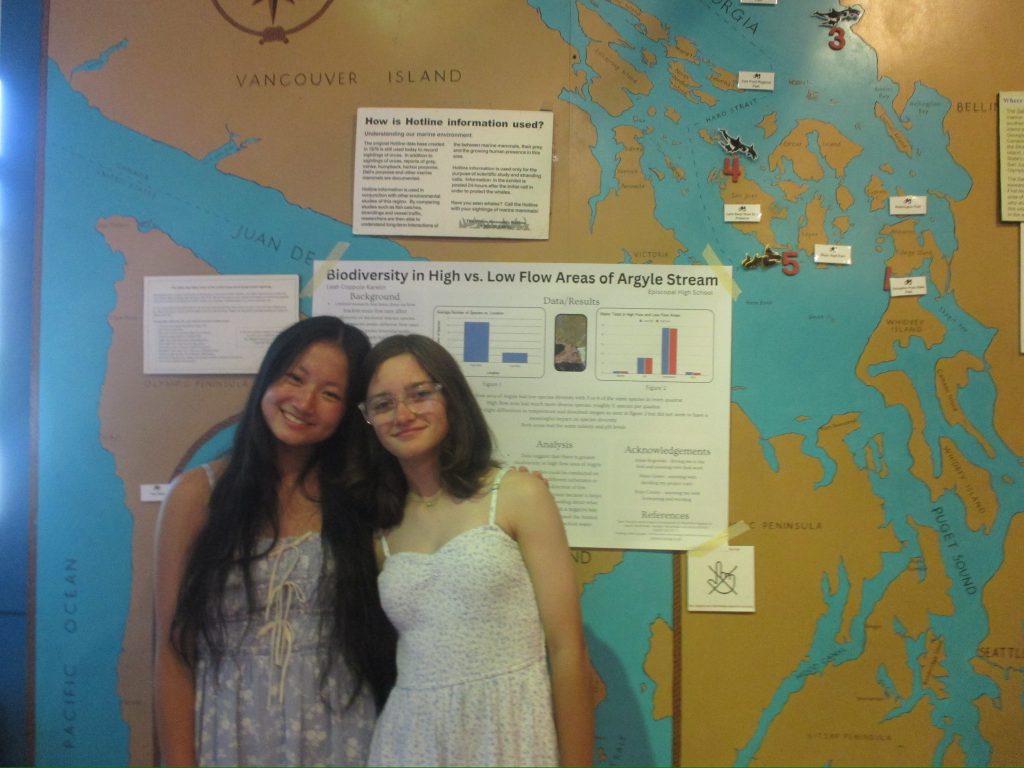
Annika and Leah symposium ready! (photo by Hitomi)

For the first time ever, the project symposium was being held at a very special place. Whale Museum Research Director Jessica Farrer (who had had dinner with us earlier) invited the idea that our program share our posters to the scientific community, our parents, and the public at The Whale Museum! This is such a huge step towards furthering our understanding of youth science communication, and I was honestly stoked we could make it happen! At 5 pm it started. Quickly the room filled up with mentors, families reunited, and friends from all around came together. It didn’t feel like a room full of strangers, it felt like a room full of knowledge, and appreciation, and science.
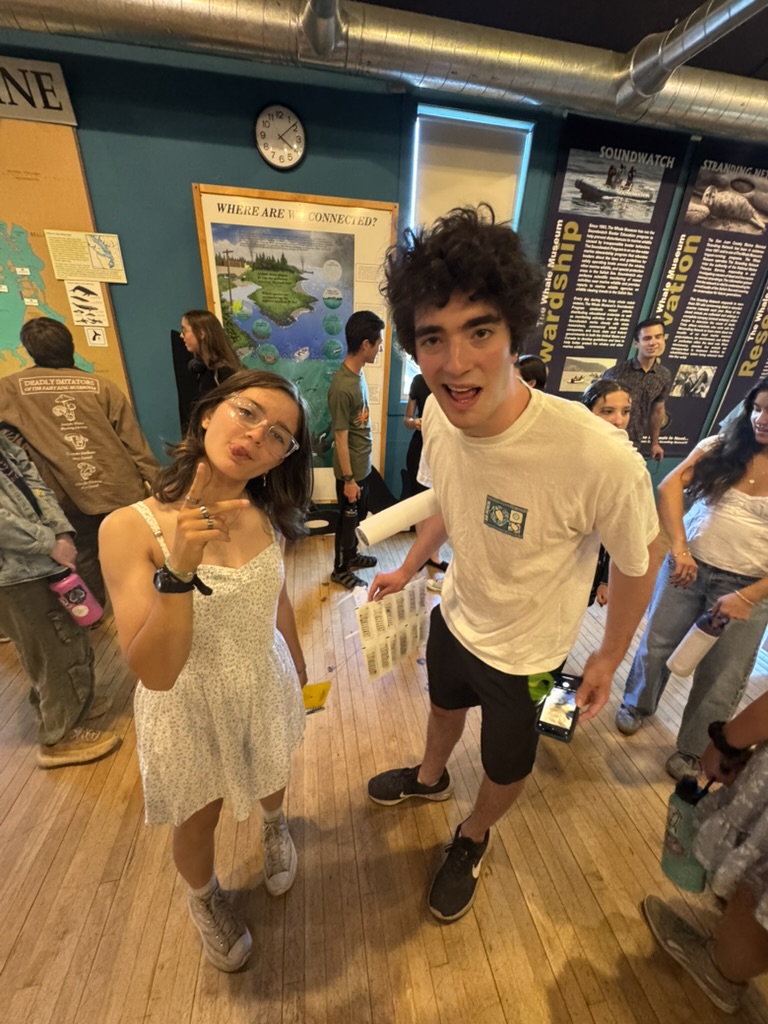
Leah and Miles at symposium (photo by Lars)

It is a beautiful thing when you realize that although you’re practically shouting to make sure the person you’re talking to can hear you, you have to shout because there is so much going on! So much of the information being shared was newly learned through our own hard work! To see so many brilliant minds in one room discussing their passions was simply astounding. You can’t recreate it; it’s a one-time thing. We all came to Salish Sea Sciences for different reasons. Maybe some of us really wanted to learn about one marine organism, or maybe some of us were looking for something fun to do over the summer. No matter what the circumstance was that brought us here – we all arrived on June 29th. Bags in hand, maybe a little nervous of what was to come in the next month–Completely a different person than who we each were in that room. Experiences build us as people. They change who comes forward when you present yourself at a time and place. Obviously Salish Sea Sciences built us up to be better scientists. But it also built us up to be better roommates, better town citizens, better conversation listeners, better note takers, and better friends. All of this hard work got all 19 of us in that room with an amazing poster right behind us. That is special, that is unique, and it deserves to be cherished.

Our throats sore, and legs a little wobbly we returned to the vans for our final ride back to the dorms. Met with warm burgers, bags of potato chips, and yummy fruit we chatted with symposium participants, and reflected on the event with friends and family.

The night ended with bowling and stargazing together. All of the 2025 Field Sciences cohort relaxed for the final time together. Pointing our constellations, cheering each other on when we knocked out all the pins. Cherishing our final hours together.
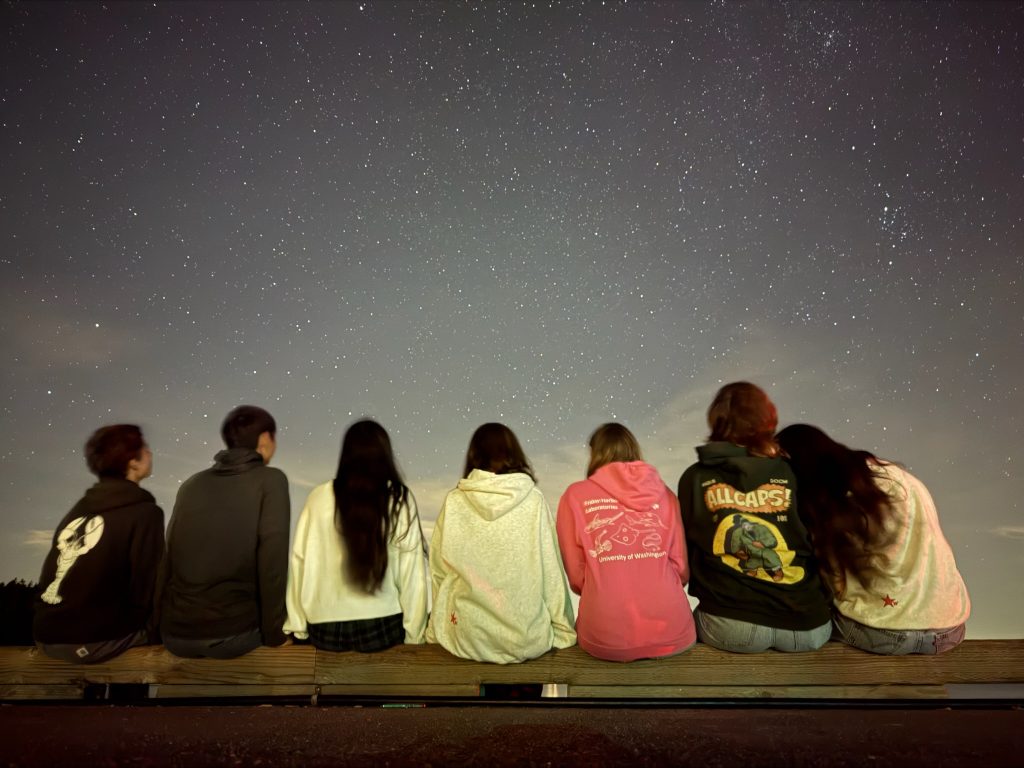
Stargazing (Photo by Orrin)

The next morning, the majority of us departed at 7 am in a van with bags in hands. Tearful goodbyes were had, long hugs, and plans of reunions in the air. What we did this summer was once in a lifetime. You can only be in Friday Harbor in July of 2025 with the same 19 amazing people once. It was a rare summer, no matter where we end up, we had this summer together and we’ll all remember it. Nothing can replace it, no one can redo it. It’s like finding the perfect beach to watch an amazing sunset on. It’s a moment where everything was timed up right with the people and the place. It is so perfect, and then it ends. And you get back in your car, and think “wow what a great sunset,” you go home and tell your family about this great sunset, maybe you even took lots of sunset pictures! Every so often you bring up that sunset again and it’s just warm fuzzy feeling takes hold of you. and your back in the sunset, or watching the constellations, or seeing orcas from Deadman’s Bay.
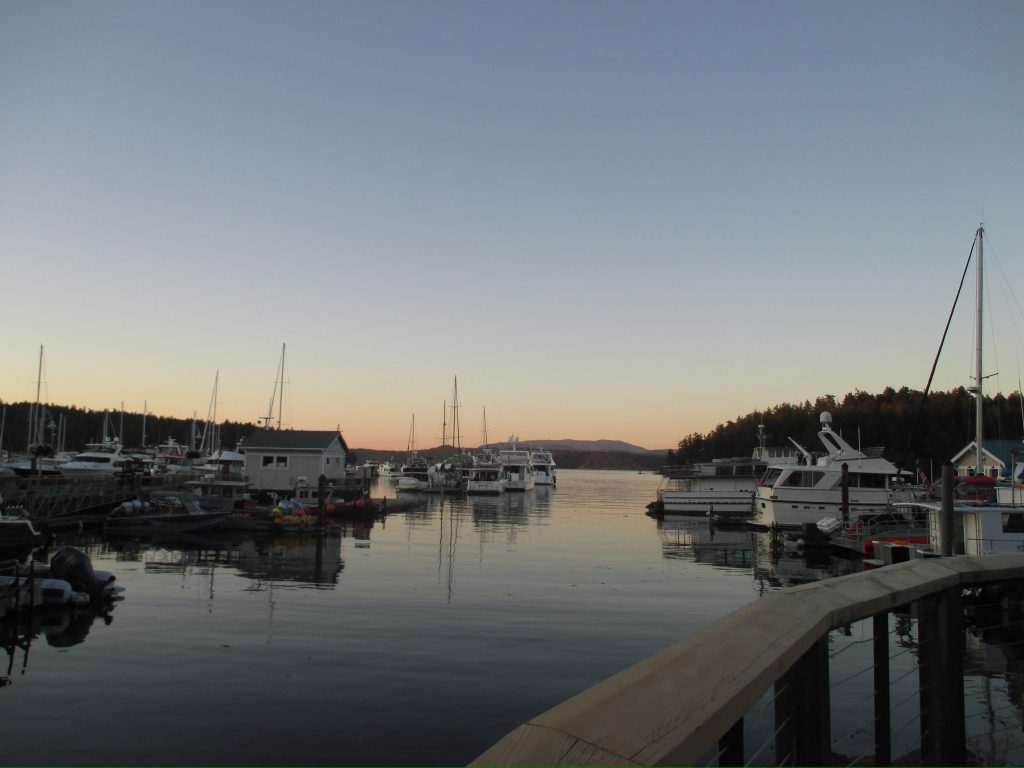
Sunset at marina (photo by Hitomi)

Thank you for the summer of our lives Field Science Cohort of 2025. Thank you to Maya, Adam, and Riley for your science and advice support. Thank you to Cassandra and Cara for being the most welcoming dorm family. Thank you to Tom and Caroline for running the whole program, keeping dinners yummy, and everything in tip top shape. And thank you again- to the science nerds. “A dream you dream alone is only a dream. A dream you dream together is reality.”
Sleeping in, Stepping Out: Our Final Saturday: Day 19

Salish Sea Sciences Blog, Saturday, July 19th, 2025. By: Lars, Leah, and Miles

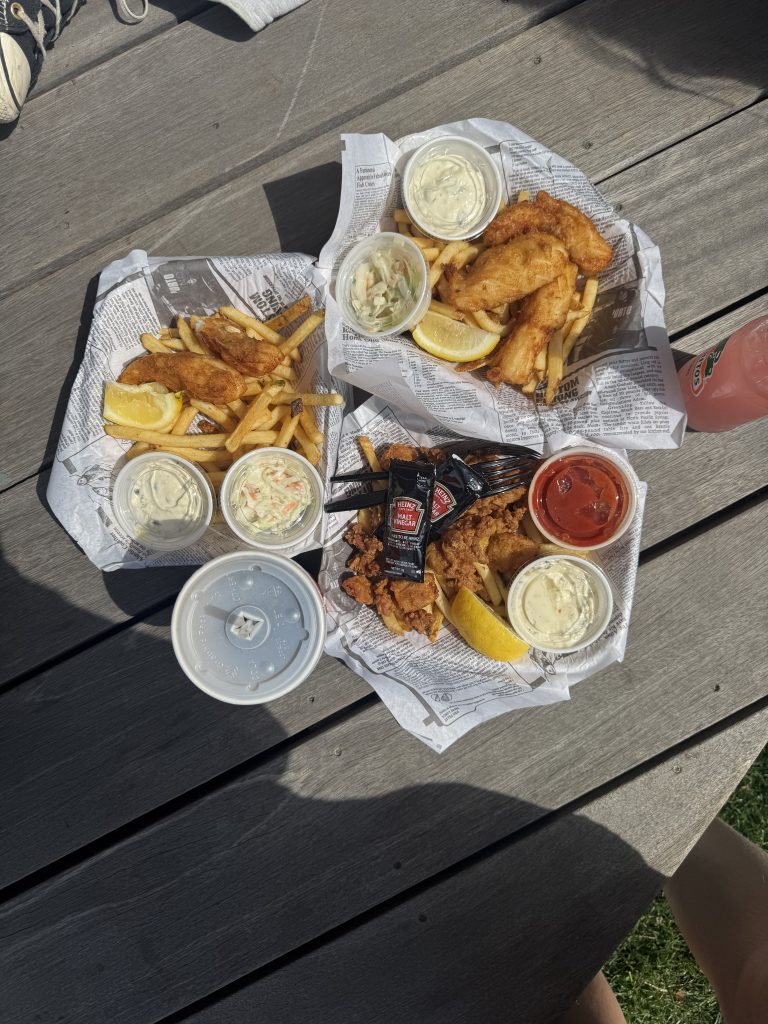
Welcome back to another day in the life of a Salish Sea Science student! Your hosts, Miles, Leah, and Lars are going to take you through the final Saturday with the Field Science cohort. After a super late night night lighting at the dock, with an inspiring appearance by a local Harbor Seal, everyone got at least an extra hour of sleep. At 10 am, we all sprinted towards Brickworks, excited to frolic in the town as Caroline locked the doors to the dorm behind us. Our science directors gave us the second gift of the day – an opportunity to hit up the Friday Harbor Farmers Market with a bit of cash in our pockets! Miles packed his lunch beforehand to save some money, Leah had a bagel when the dorms were unlocked after, and Lars tried some yummy local fish and chips with a side of calamari! Sooo yummy!

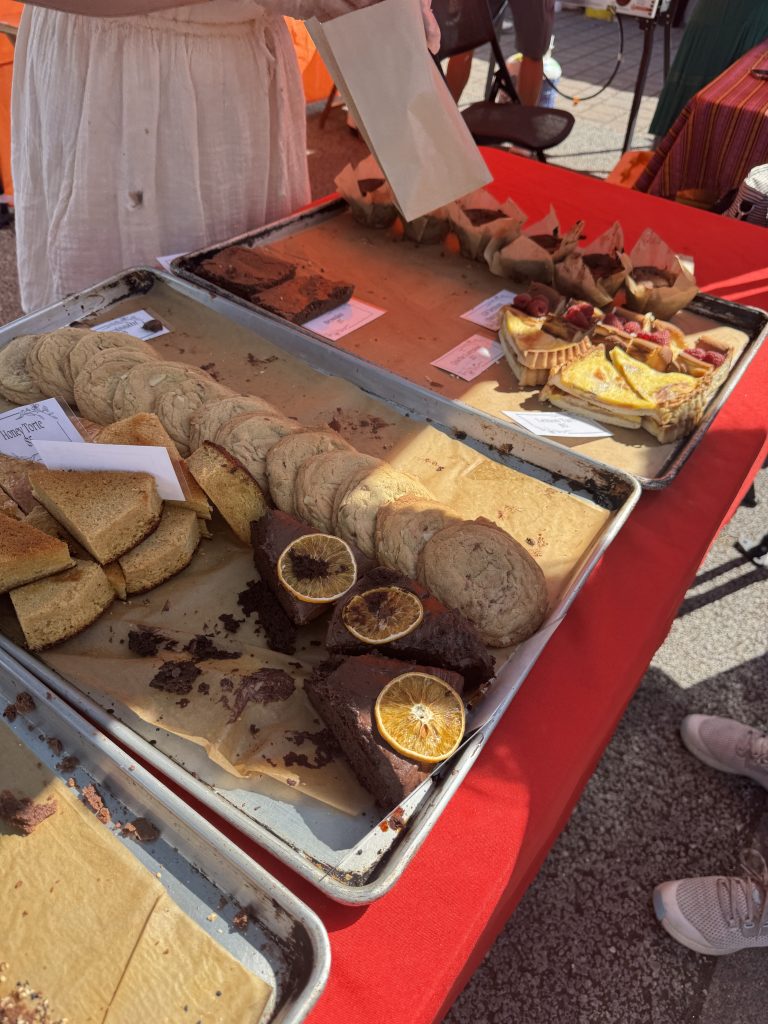
Assortment of pastries at Friday Harbor Farmers Market (photo by Lars)
Fish and Chips, and Calamari from The Bait Shop (photo by Lars)

  At 12:30, the crew, full and content with any purchases made, headed back to the dorms to cool off and get ready for a conversation about college with Caroline. She helped us better understand what aspects of a college decision may be important to consider, some less obvious to us than others! She also strongly encouraged us to further look into liberal arts colleges. She stressed understanding whether you prefer a degree focused on getting you job ready right after college, or well rounded life learning, and possibly a further degree from a professional or graduate school.

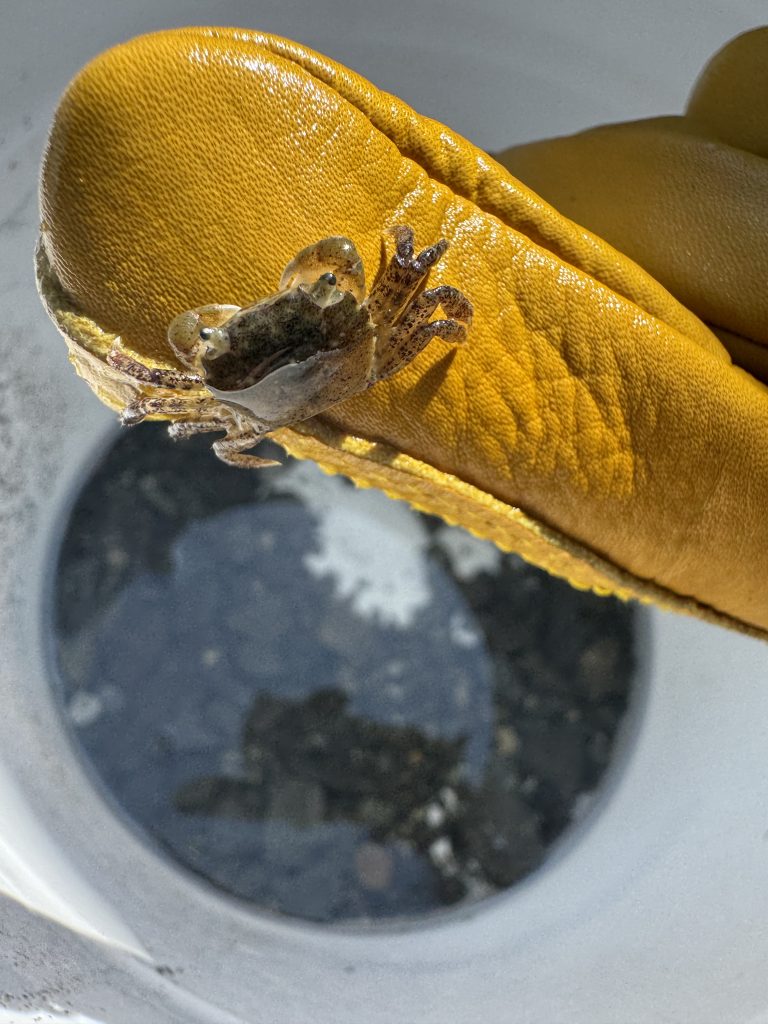
2 to 4pm was our project work time! Miles found a new species of seaweed fly only identified in Canada before! Leah polished her data collections and progressed steadily on her poster. Lars studied crabs righting response times with the boat noise treatment.

Hairy Shore Crab clinging to Lars’s glove (photo by Lars)

Finally, to wrap up our day, we are welcoming Shauna Barrows from The Land Bank for a mac and cheese dinner! Shauna, raised amid California’s droughts and wildfires, followed her passion for water, wild places, and poetic inquiry to the Pacific Northwest—earning degrees in Environmental Education and English, working in conservation, and ultimately returning to the San Juan Islands with deep gratitude and love for nature.

Shauna Barrows defines restoration as fixing the relationship between people and land. People who are connected to the land—and therefore to the nature around them—develop a deeper sense of care and responsibility for its protection. She began by sharing her own story, reminding us that it’s okay (and often necessary) to change paths—she herself started out in computer science before finding her passion in environmental work. Shauna now works with the San Juan County Land Bank, one of only two land banks in the U.S., funded entirely by a 1% tax on property sales in Washington. She described her role in reducing wildfire risk on the island through controlled burns, and how restoration isn’t just ecological—it’s deeply cultural. She encouraged us to question the Western idea of nature as something separate from humans, and instead consider how Indigenous communities have long maintained reciprocal relationships with the land through traditional knowledge and practices—many of which were disrupted or erased by colonization. We also explored the complex politics that often accompany restoration efforts.

One example Shauna shared that brought these ideas to life was the story of camas flowers, a striking purple bloom native to the Pacific Northwest. Coast Salish peoples once cultivated extensive camas prairies, using controlled burning and seasonal harvesting to manage the landscape and sustain this vital food source. These were not untouched wild spaces—they were shaped by generations of stewardship. What truly surprised us was learning that camas prefer disturbed soil and actually rely on being harvested by hand in order to pollinate and reproduce. Without that human relationship, camas populations can decline. Today, Shauna and her team are working to reintroduce camas as part of larger efforts to restore not only ecosystems, but cultural memory and interdependence. Her story helped us see that restoration isn’t about returning land to a “natural” state, but about remembering and reactivating the connections between people and place.

As the sun sets on another incredible day with the Salish Sea Sciences cohort, we’re left with a deeper appreciation for the land, the sea, and the dynamic relationships between people and nature. From the joy of local flavors at the Farmers Market to eye-opening conversations about college choices and career paths, today was packed with learning and connection. Shauna Barrows’ visit reminded us that restoration begins with relationship—an idea that resonated deeply as we reflected on our own paths and roles in environmental stewardship. Whether it’s discovering a new fly species or questioning societal narratives around land, our journey as young scientists continues to evolve with each experience. Here’s to waking up early and staying curious.

Day 11: Salish Sea Sciences Gets Tangled in Seaweed Science!

Wednesday, July 9th, 2025. By: Lars, Miles, and Leah

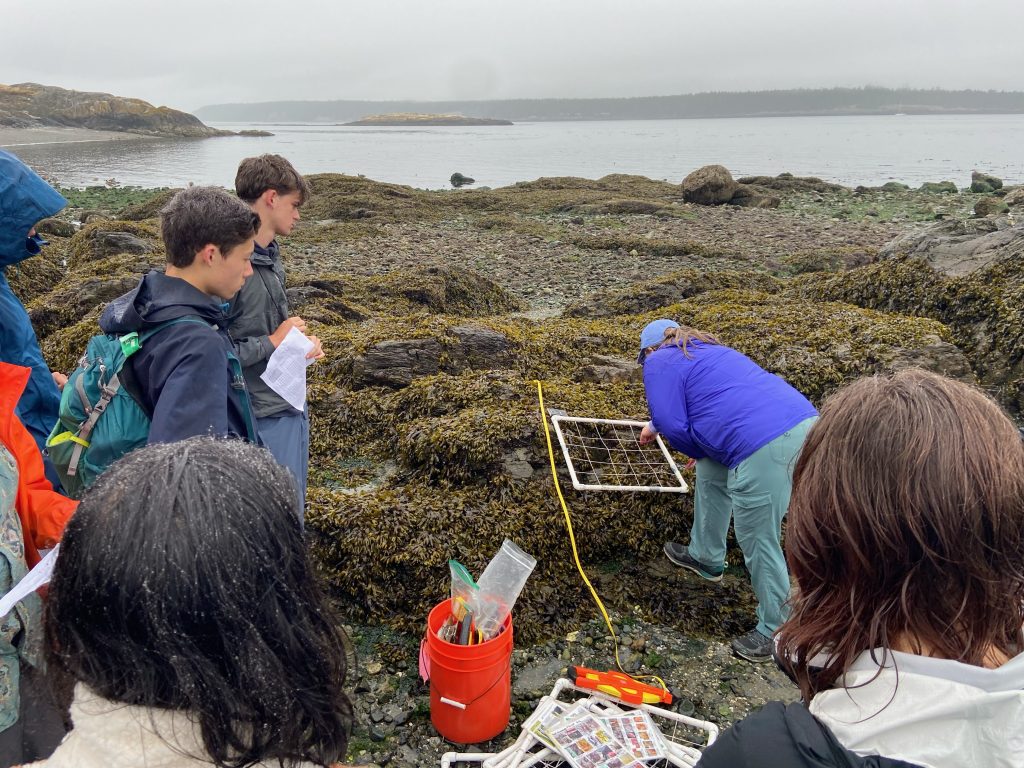
Dr. Katie Dobkowski explaining how to properly conduct the seaweed surveys (photo by Miles)

Our day started out at an ungodly hour .. 7 am! We had to get up and out the door by 8 am to catch the low tides to for our surveys. We were also charmed by the piercing winds on the coast, a kind drizzle from the sky by mother nature, and the overall dewy weather. Despite all odds against us, many of our spirits remained lifted!

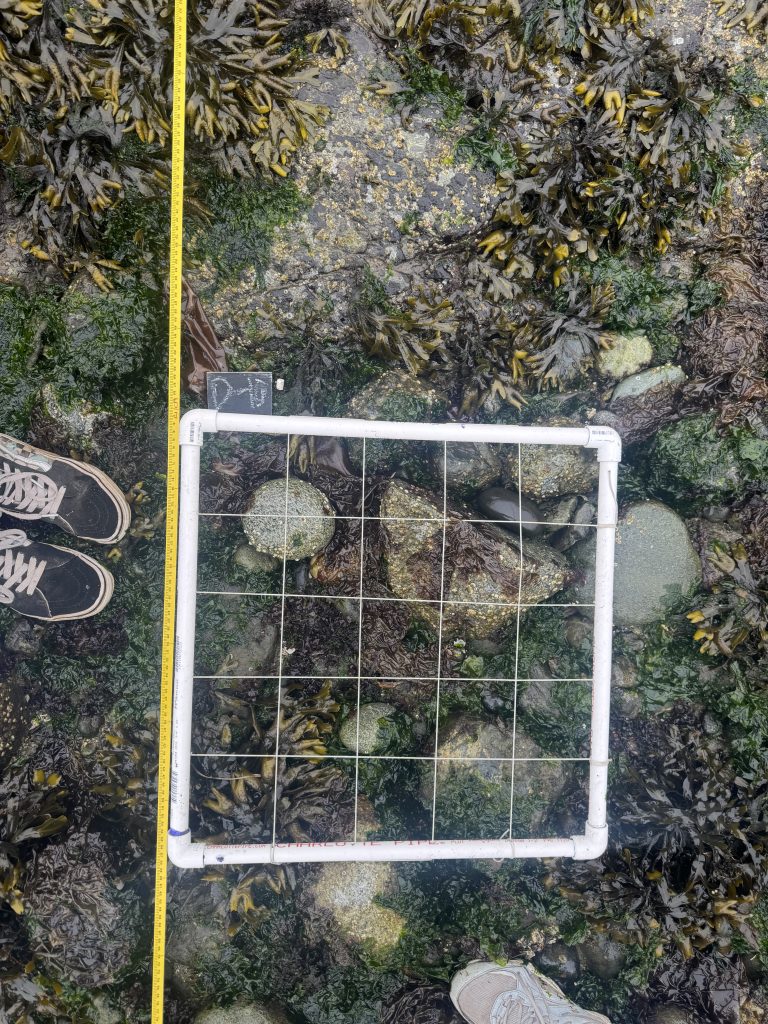
Seaweed quadrad (photo by Lars)

We started our surveying with a warm up led by Dr. Katie Dobkowski and her undergraduate research assistant Gabby. They asked us to walk arms length apart, in an even line down the beach for 1 minute. Searching intensely for crab molts. The goal was to understand weather any of the crabs living in this area were part of the invasive green crab species. We did a total of 3 of these walks, finding many crab molts varying in size along the way – none were green crabs! Currently, European Green Crabs are considered one of the most invasive species in the marine environment. Efforts from university researchers, and state researchers are coming together to prevent the spread of this species into the beautiful marine ecosystem surrounding the San Juan Islands. “Green crab could potentially damage Alaska’s multi-billion dollar fisheries industries, especially for salmon, crab, and mariculture operations.” (NOAA Alaska Regional Office, 2023)

Continuing on with our deep dive scientific studying, we moved onto instruction and participation in a continuous survey Dr. Dobkowski keeps up on seaweed species on Cattle Point. We scaled down the dangerous-ly slippery rocks COVERED in seaweeds of red, green, and brown. Our quadrads were used to identify the various species within them. Our groups identified lots of rock weed, rusty rock, and Turkish towel. We layed out our measuring tape from the sector identifier at the top of the rock, and laid a quadrad down at each even meter on the line. Based on speed, some groups did many quadrads while some only completed one. On our survey sheets, we would make note of many things, most notably how much of the identified species of seaweed was identified within each section of the quadrad. Some sections were identified with having a 5 level, or 50 to 100% seaweed within the section. Others were identified with 1 or 0, 5% to 0%. Feeling pretty accomplished, we spent some time reflecting on our work with Dr. Dobkowski spotted many foxes and retreated to our warmer vans.

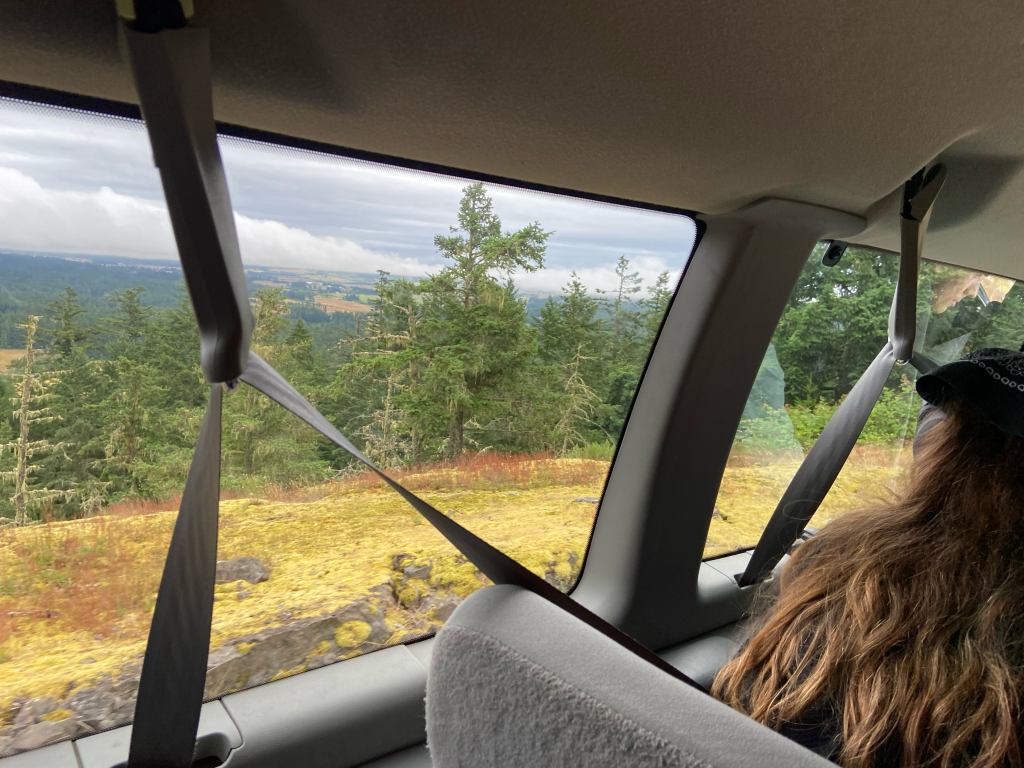
Driving to Lunch at Jackson Beach (Photo by Miles)

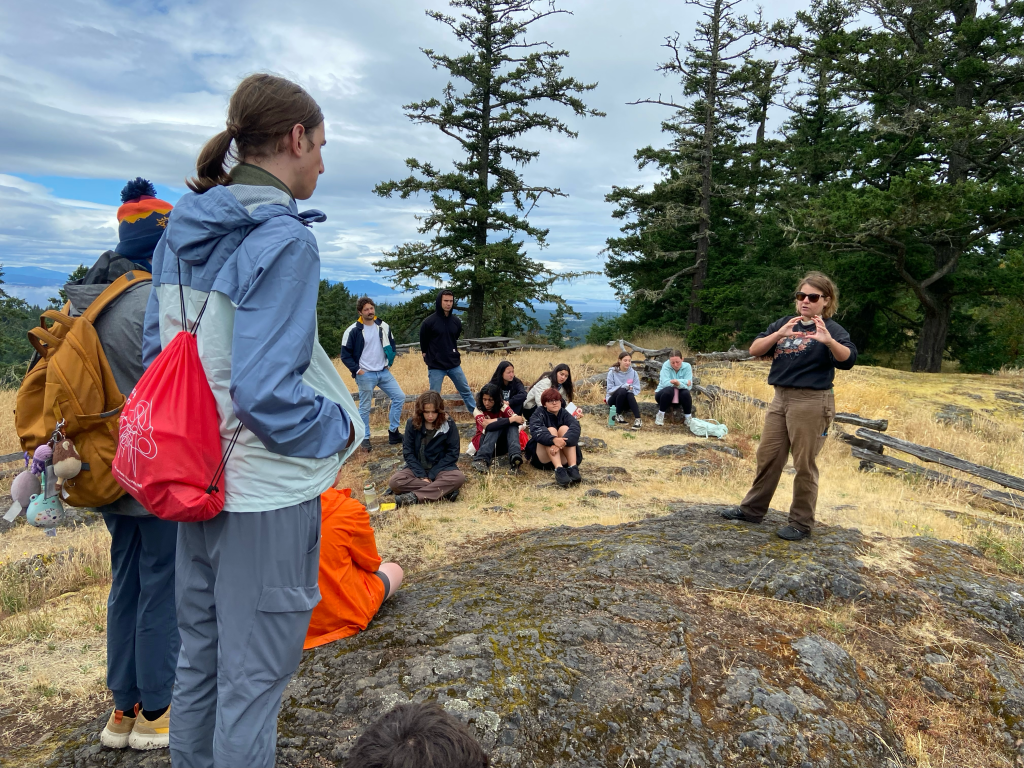
We stopped at the lovely Jackson Beach to get a quick bite and rest our bodies and minds before returning out to the field. While at Jackson Beach, we met more scientists from the Washington Department of Fish and Wildlife attempting to trap our enemies, the European Green Crab. Next, we slid on over to Mt. Grant, and met up with the wonderful Shauna Barrows from the San Juan County Land Bank. She shared some thought provoking insights on the local water sheds on the island and the role they play in marine organism health, specifically salmonids. The County Land Bank is putting in a lot of effort into conserving the watershed, but the large amount of local agriculture causes degradation on the streams and creeks. They have began problem solving ways to keep the water quality up, without the full support of the land owners. I had no idea that there was a time when salmon spawned in the San Juan Islands watersheds every fall, and its sad to know that they no longer do that due to our impacts.

Shauna Burrows teaching on Mt. Grant

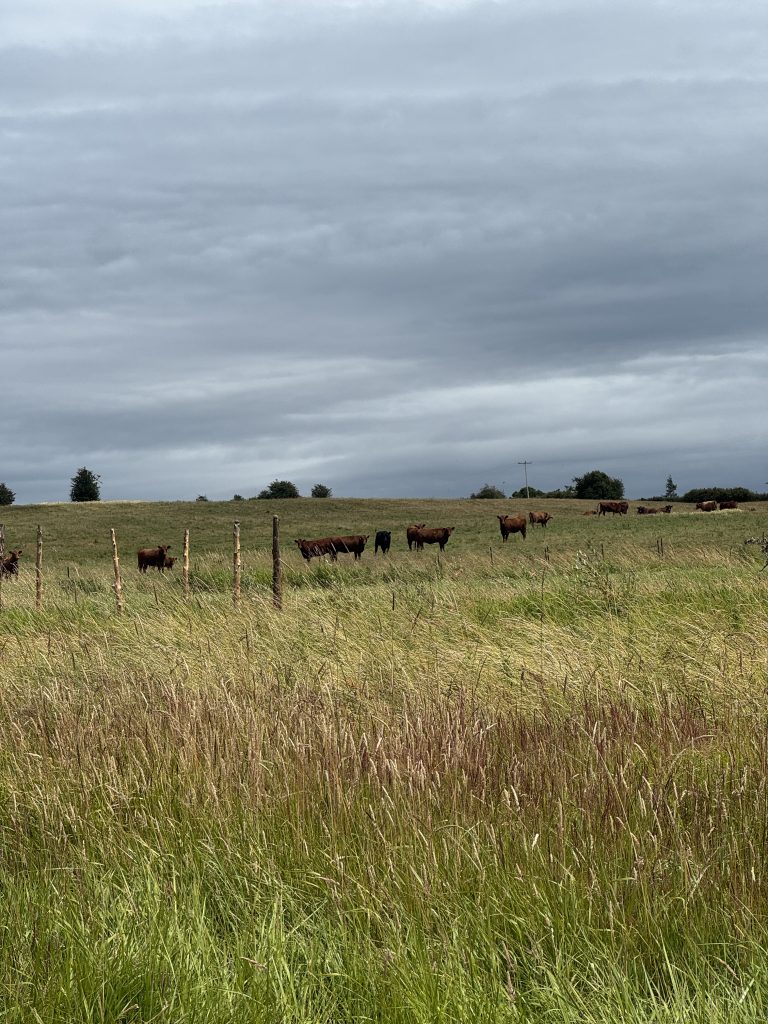
We concluded our journey at Zystera Lake, and discussed the history and cultural significance of that specific man-made lake. The lake is currently having a lot of problems with toxic algea blooms due to an abundance of nutrients in the water. As a solution, the County Land Bank is attempting to built these “beaver damns” in order to better slow down and filter the water coming from the creek to the lake. They are currently only working on this at a small scale, but hope to expand in the near future. Finally, Shauna drove home the point that conservationist like herself have to continuously think of ways to conserve the depleting nature around them without attempting to control the locals, because at the end of the day us, and her have no control over how the publics actions influence the environment if we don’t make an attempt to repair it, and educate.

Cows at Zystera Lake (photo by Lars)

We returned to the dorms briefly for a quick bite, and maybe an outfit change and heading out one final time! This time we were catching one of the weekly seminars hosted by UW at the Friday Harbor Labs. This talk by Shirel Kahane-Rapport on filter feeding in mobuilds (manta rays). She dove right into the fascinating topic of how she used models in person and on a computer to simulate the lobes in a mobulids filter and how changes may impact a mobulids ability to feed. The talk was super physics, data, and graphs heavy but the majority of our students seemed to stick onto her train of thought super well. In fact, I would say our body of students asked her more questions at the end than the other researchers at the lab! My favorite feature of her talk was her opening of background information on mobulids, how they feed. She made it possible for those outside of her area of study to understand her work without any background experience. Although that seems like it should be obvious, it is not always a given in the scientific community! If your interested in learning more about ricochet separation and the science behind how manta rays feed, we recommend skimming through this paper! https://pmc.ncbi.nlm.nih.gov/articles/PMC6157963/#:~:text=Our%20results%20indicate%20that%20manta,flow%20rates%2C%20and%20resists%20clogging.

Riley suited up at Zystera Lake (photo by Lars)

Finally, we relaxed after a long, eventful day! Food on our plates, minds full of new knowledge, we begin to reset for another adventurous day ahead!

Day 9: A Restful Return

Salish Sea Sciences returns to Friday Harbor.

By: Lars, Eden, and Hitomi

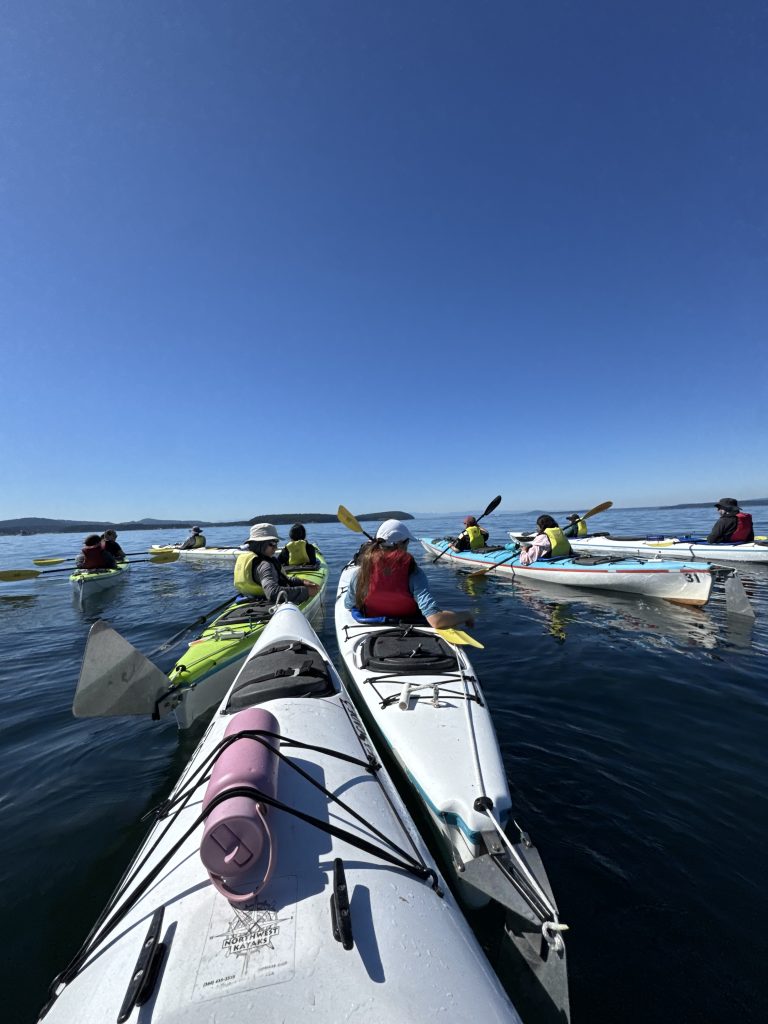
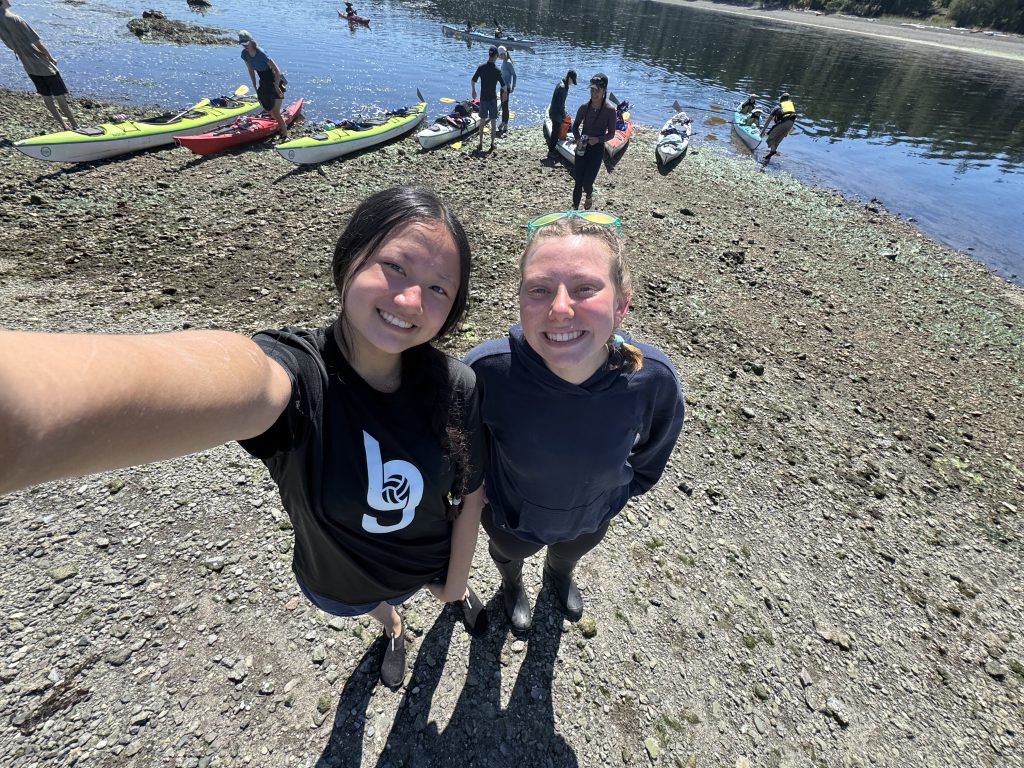
Salish Sea Sciences kayaking in the sea between Stuart Island and Roche Harbor. (Photo by Lars Hill)

Starting early in the morning we packed up our kayaks and left Stuart Island and voyaged back to Friday Harbor! We had a pretty smooth trek with 4 knots of wind behind us.

Arrival at Posey Island. (Photo by Annika)

Tyler and Zoe were super helpful! They made us amazing pulled pork sandwiches for lunch! They cleverly included apples in the coleslaw – super yummy!

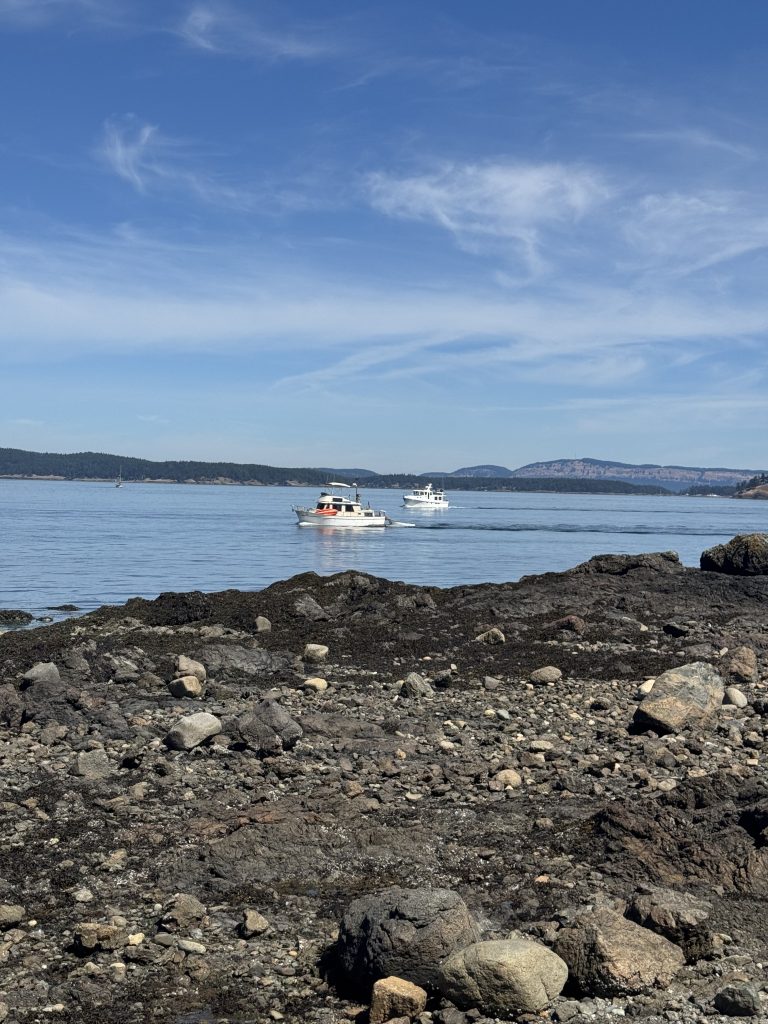
Photo from Posey Island. (Photo credits to Lars)

While waiting for our sandwiches to be prepared by our guides, we explored the whole island. “Posey Island, at 1.1 acres, was never transferred out of the federal public domain into private ownership.” (Washington State Parks, n.d) If your interested in reading more on the history of this island, look into this great source! https://parks.wa.gov/about/news-center/field-guide-blog/posey-island-marine-state-park-history

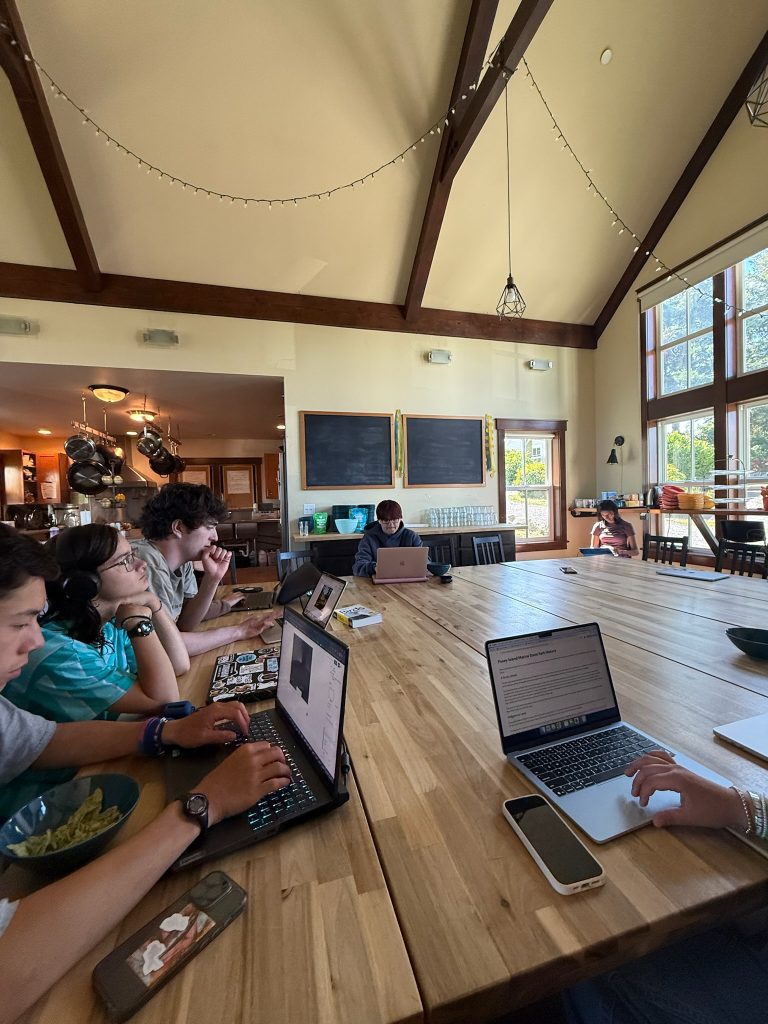
Writing blogs! (Photo credit to Hitomi)

Post arrival to the dorms, we swiftly gathered our belongings and fought for shower and laundry spots. Caroline called everyone down to regroup, to catch up on chores, reflect on our kitchen habits, and catch up on blog posts! We are looking forward to a restful evening full of yummy dinner, ice cream, and hangouts. See y’all tomorrow for an exciting visit from an impressive guest!!

Day 4: Shark Attack!!!

Salish Sea Sciences trip to The University of Washington’s Friday Harbor Labs (FHL). Wednesday, July 2nd, 2025. By: Lars, Miles, and Leah

We were graced with a half half hour later start for breakfast – but! We also had to pack our lunches whilst making our breakfast to prepare for a full day on the University of Washington’s Friday Harbor Lab (FHL) campus. The drive over to the labs was breathtaking, each window we looked out of had the shore right in front of us. Everyone was definitely antsy to get out and meet the scientists awaiting our arrival.

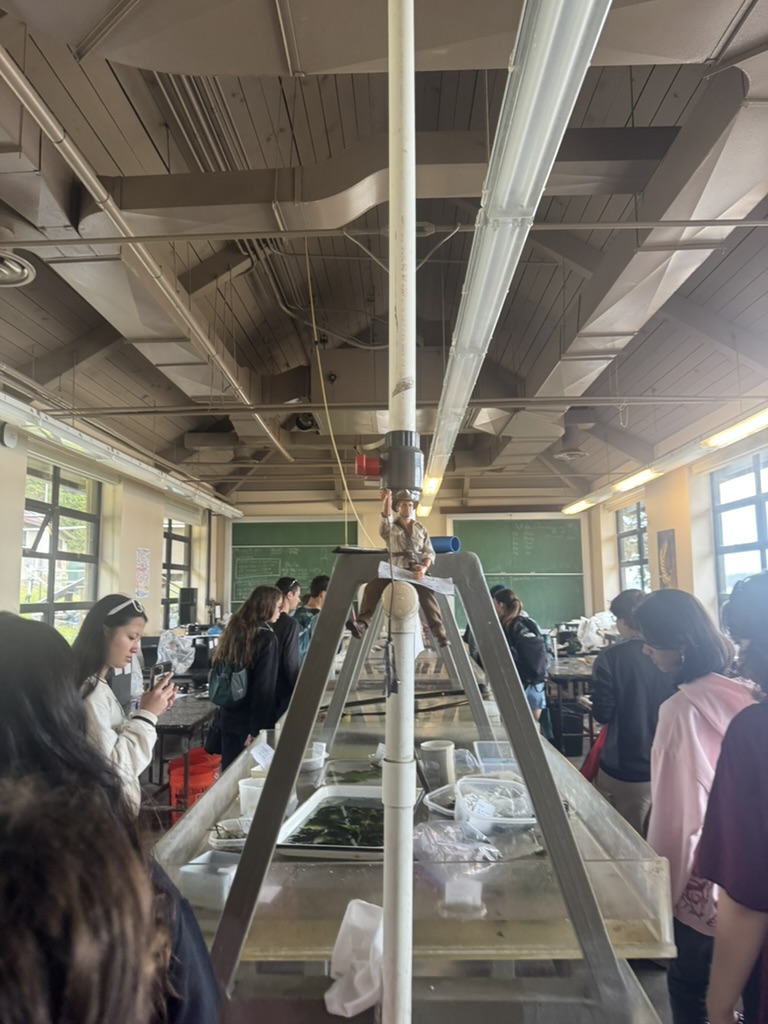
First, we met Michelle Herko, the program director of the FHL Science Outreach Program. She was very excited to tell us all about the history of the campus, and the work done at the lab on green florescent proteins. While showing us around the physyology labs, she explained how the bioluminescent reaction became widely used marker for studying gene expression and protein localization in living cells. https://pubmed.ncbi.nlm.nih.gov/31342754/#:~:text=Abstract,transgenic%20animals%20in%20biomedical%20research One aspect of the labs I found the most fascinating was its flow through water system. The system rapidly circulates water in and out, allowing scientists to observe the creatures in a natural aquatic environment. This is one of the many great features of these labs that attract world renowned scientists!

Walking through kelp lab! Photo credit to Lars Hill

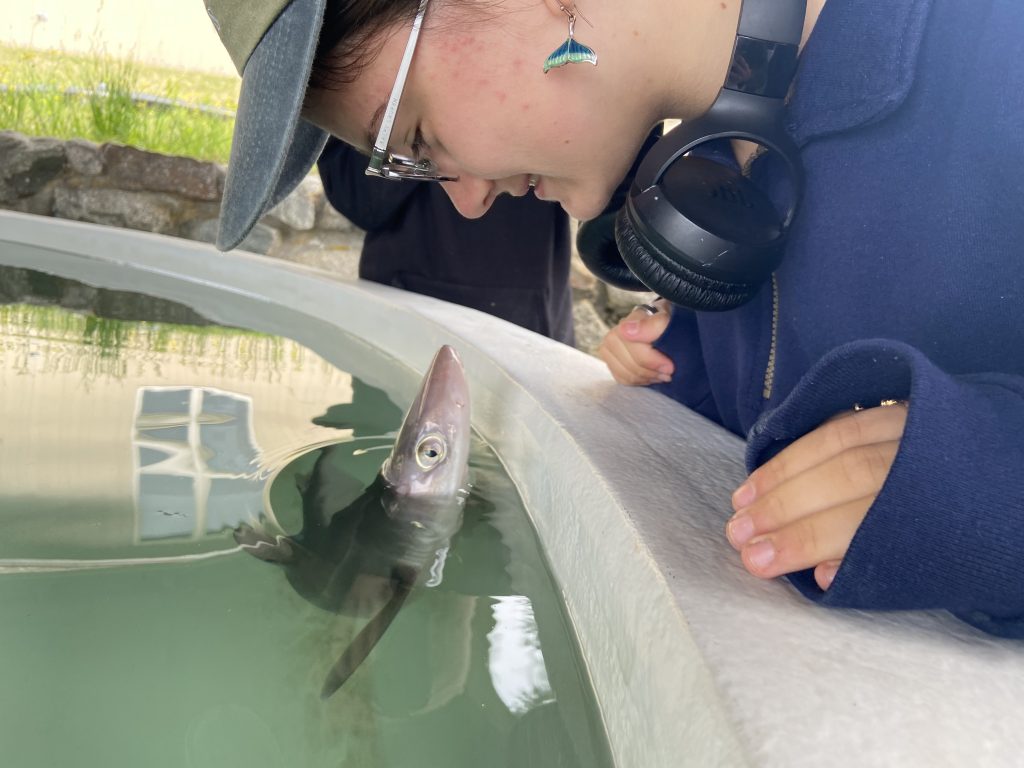
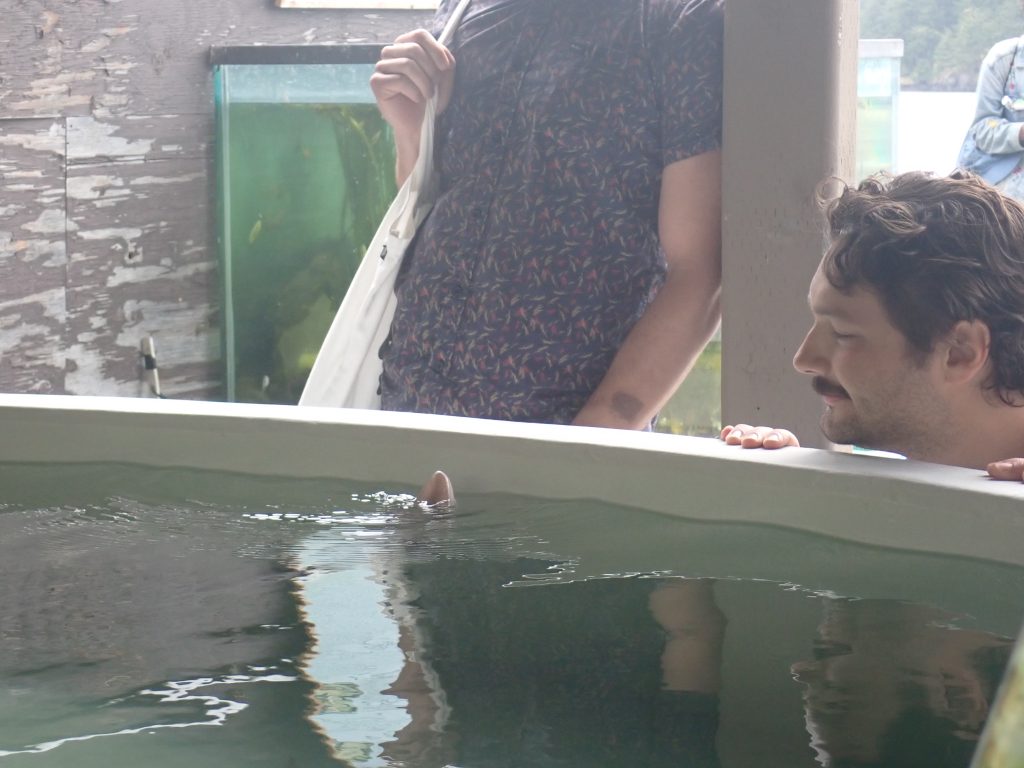
Our tour continued, as Michelle offered us the opportunity to look at some awesome high powered microscopes. We could only have about 6 students at a time through those labs, so we split up. Those who were first to see the microscopes also discovered another cool project happening in the room next store. A scientist excitedly popped in, interrupting Michelle with the opportunity to see her spawning sea cucumbers! Of course we took her up on the rare opportunity, especially sense the sea cucumber spawning is not a simple process. Their study included injecting peptides to stimulate spawning, very neat! While the others waited, the stumbled upon a tank of dog fish! A sneak peak for a future tour! They were very friendly, and our young scientists quickly chose names corresponding with their spot patterns. As the groups switched off, some groups began opening their lunch boxes and digging in!

Adam adoring the snout of a dog fish. Photo credits to Lars Hill

After a decently satisfying lunch, our tours prevailed. We met Cassandra Donatelli, an assistant professor at UW’s School of Engineering and Technology. Donatellii got her doctorate in 2019 in biology from Tufts University in Medford, Massachusetts. Again, our group split up. Half of us continued with Dr. Donatelli, who, along with several other undergraduate researchers, guided us through the lab and introduced their individual projects. A highlight for many students was listening to an undergrad from The University of Massachusetts Amherst explain his project. He used CT scans to study the animals physical structures through their skeleton. Another researcher was 3D printing different crushing structures to study when fish bones may buckle and how to avoid that. Each of these researchers were surrounded by a supportive team from the University getting personalized feedback on each decision. The majority of these researchers were also from universities outside of the Seattle or Friday Harbor areas. Continuing the trend, a group of mostly undergraduate researchers studying aerodynamics showed us around their lab to better understand how to incorporate the swimming habits of Dog Fish into engineering. This tour also included a portion of the tour returning to our beloved dog fish in the pool, where we learned the researchers had also given them name based on their spot patterns! Clearly scientists think alike!

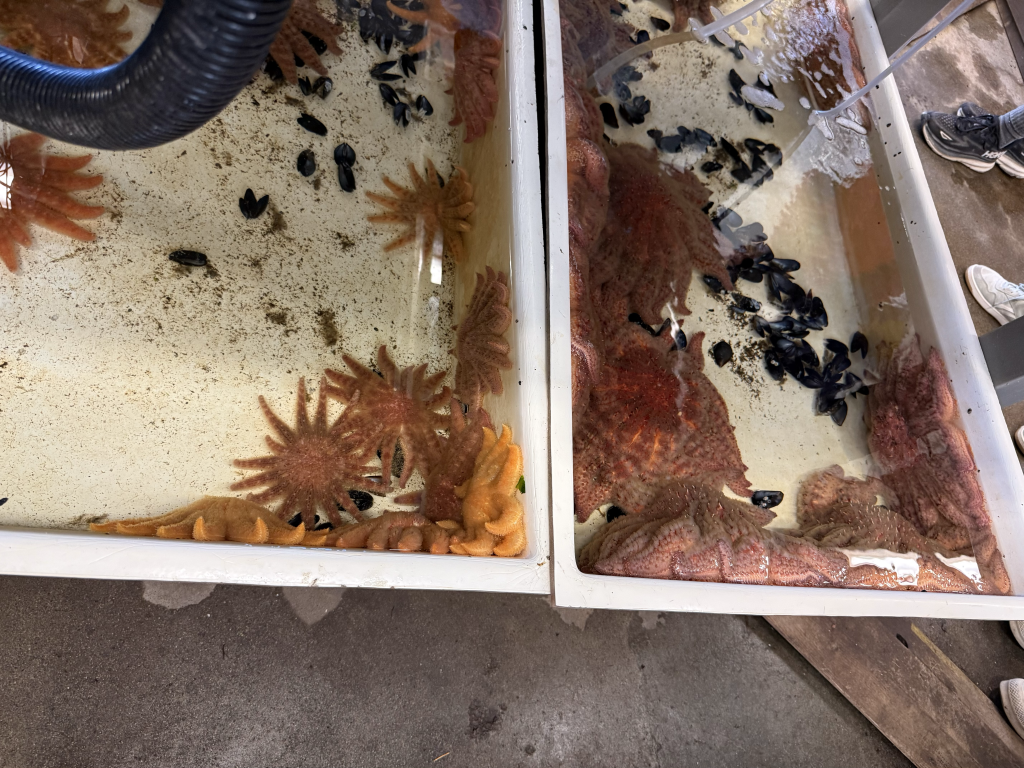
At this point in the day, attention spans were getting smaller, legs were beginning to hurt, and eyes were getting heavy. Yet we prevailed into our final set of tours! Our last introduction of the day was to the lovely Becca Guenther (who wrote this amazing newsletter on her ocean acidification lab, which we also toured!) She is currently the lab manager for FHL’s Sea Star center. (but may also be or have previously held the role as the lab manager for the ocean acidification lab?) The Sea Star lab was very visually satisfying! Many little oysters, clams, sea urchin and sea stars sat in tanks of varying size and length! Their biggest Sea Star was 7 years old, and a whopping 60 pounds! Becca detailed the danger she puts her and the organism in when she attempts to move him during routine tank cleanings. When he began to understood that he was being moved from his comfy spot, he would latch his suction feet on even stronger to the sides. This lab was established during the rise of Sea Star Wasting Disease, which has nearly wiped out any wild population of the Pacific Sunflower Stars. The researchers’ dedication to supporting these species—through feeding, tank maintenance, and ongoing study—is truly inspiring and deserves to be shared with a wider audience. If your interested in learning more, we recommended reading this fascinating article by Jason Hodin. https://depts.washington.edu/fhl/tidebites/Vol93/index.html

Size comparison of a tank with 2 year old Sunflower Sea Stars and 3 year old Sunflower Sea Stars. Photo taken by Hitomi

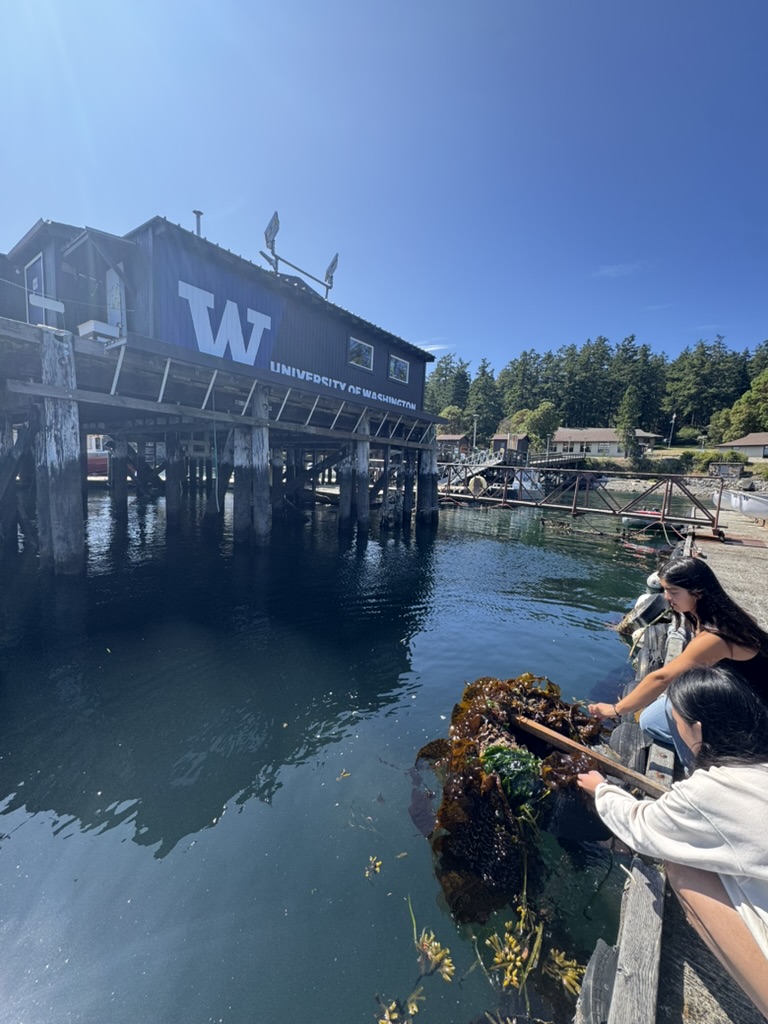
The final rotation of the day trip involved searching for a variety of marine phyla by pulling up the tires hanging off the side of the boat dock. The first group’s favorite find was a nudibranch, while the second group discovered a crab. It was fascinating to see the wide range of life—sponges, kelp, algae, and more—thriving on these tires, originally placed as buffers for the boats. I also noticed how much clearer the water was around this dock compared to the murkier water downtown, likely due to less boat traffic and runoff. This difference in water quality may very well explain the greater diversity of marine life we observed. Overall, it was a memorable way to end the day—full of discovery and a deeper appreciation for the subtle factors that shape marine ecosystems.

Pulling the tires up to the docks. So much giant kelp! Photo taken by Lars Hill

We left the labs ten times more tired than when we arrived. After a well-earned and satisfying dinner, we decided to skip the evening lecture in favor of some much-needed rest and preparation for the day ahead. Most of us spent the evening unwinding—watching TV, playing games with friends, or relaxing at the beach. The downtime was just what we needed to recharge and return even more excited for another science-filled day tomorrow!