It was pretty relaxed, as we did nothing else. Anna and Derek stayed around for the whole morning and afternoon to drop students off of at the Friday Harbor Labs, the Friday Harbor library, or to tide pools. They also helped us grind through our research projects and taught us how to make our posters for the big presentation day on the 18th.
Photo Credit: Leighna Sugimoto
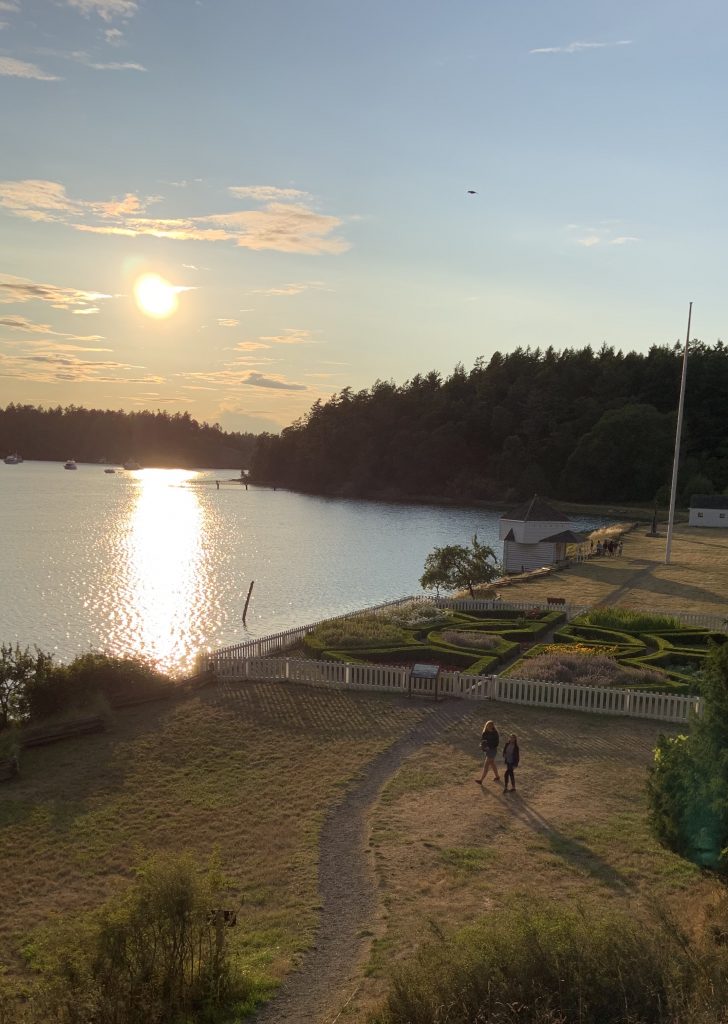
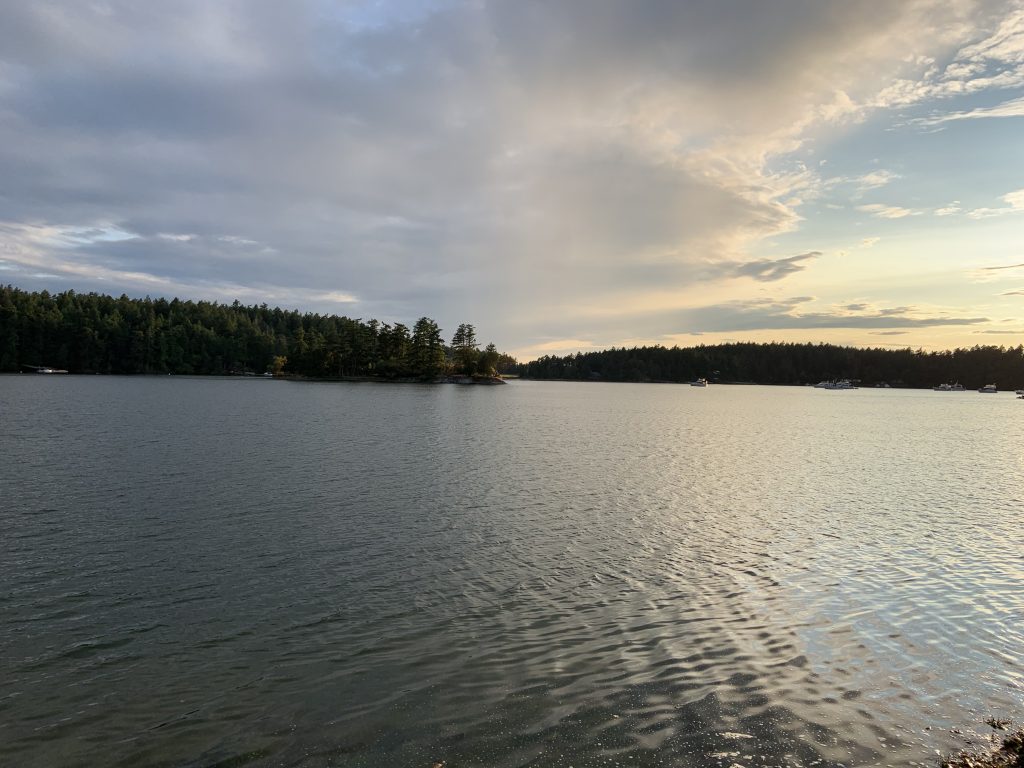
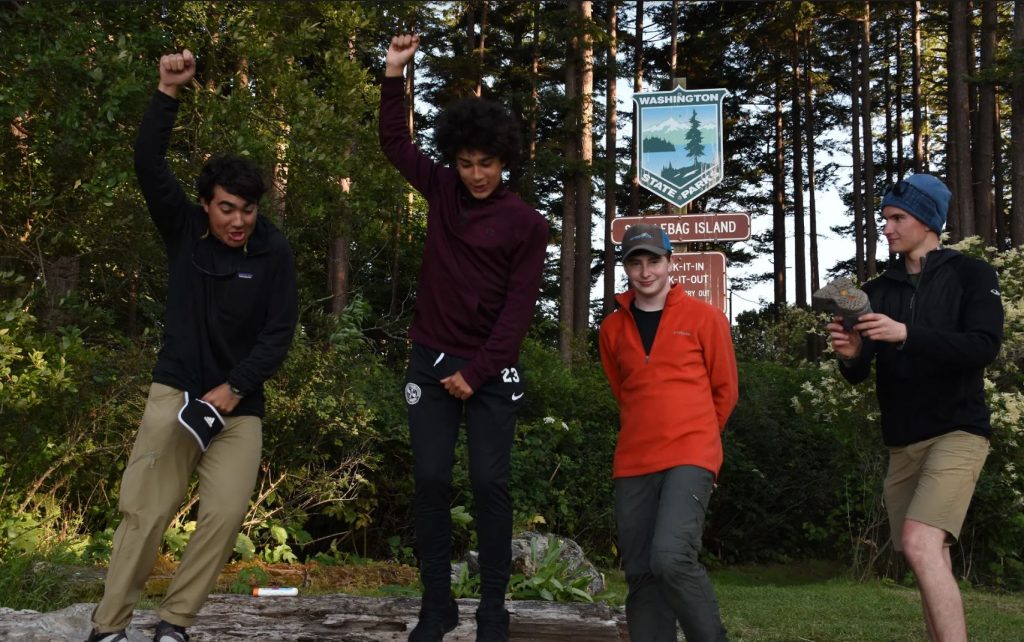
After hours of hard work, we drove to the English (or British) camp to attend a small dance. We had a whole hour to roam around and explore the forest trails, the dock at the beach, and dance together in the camp. Accompanied by mostly clear skies and a beautiful sunset, we were able to enjoy a relaxed hour to ourselves.
Photo Credit: Leighna Sugimoto
After we got back to the dorms, many of us raided the refrigerator for some well-deserved ice cream before going to sleep at 10:30.
This morning, there were two groups of people: students who woke up early to hit three low-tide beaches and those who elected to sleep in until breakfast. The early risers went to Dead Man’s Bay, Reuben Tarte, and another beach on the north end of the island to collect data. Little did they know that they would see the rare and glorious Fin Whale off of Dead Man’s Bay that day, an elusive mammal that has not been sighted around the area since 2015.
On the other hand, those of us who stayed at the dorms woke up to a rude, loud fire alarm (there was no fire, fortunately). Although no one knows who or what or why the fire alarm went off, but nothing was on fire and nobody was hurt. Some students took that as a sign to wake up and get started on the day, while others fell right back to sleep. We had a lazy breakfast and had until noon to work on our research projects. Derek came back with a tired but happy group of the explorer students, and we immediately went to the classroom to learn about scanning eelgrass with Morgan Eisenlord.
With the guide of the eelgrass specialist, we learned how to properly dispose of and rinse eelgrass scans, as well as how to create new slides and labels for the next scans. These scans are used to measure the prevalence and severity of eelgrass wasting disease. After around an hour, we left for Friday Harbor Labs to watch Tim Dwyer and our very own Derek Smith dive under the docks.
Photo Credit: Leighna Sugimoto
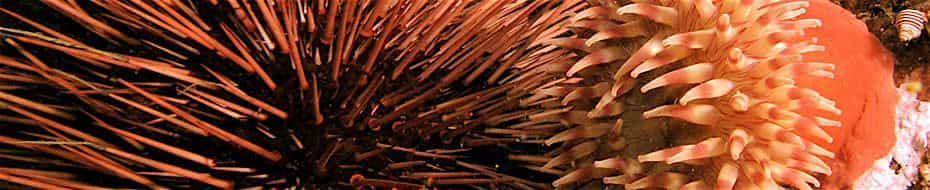
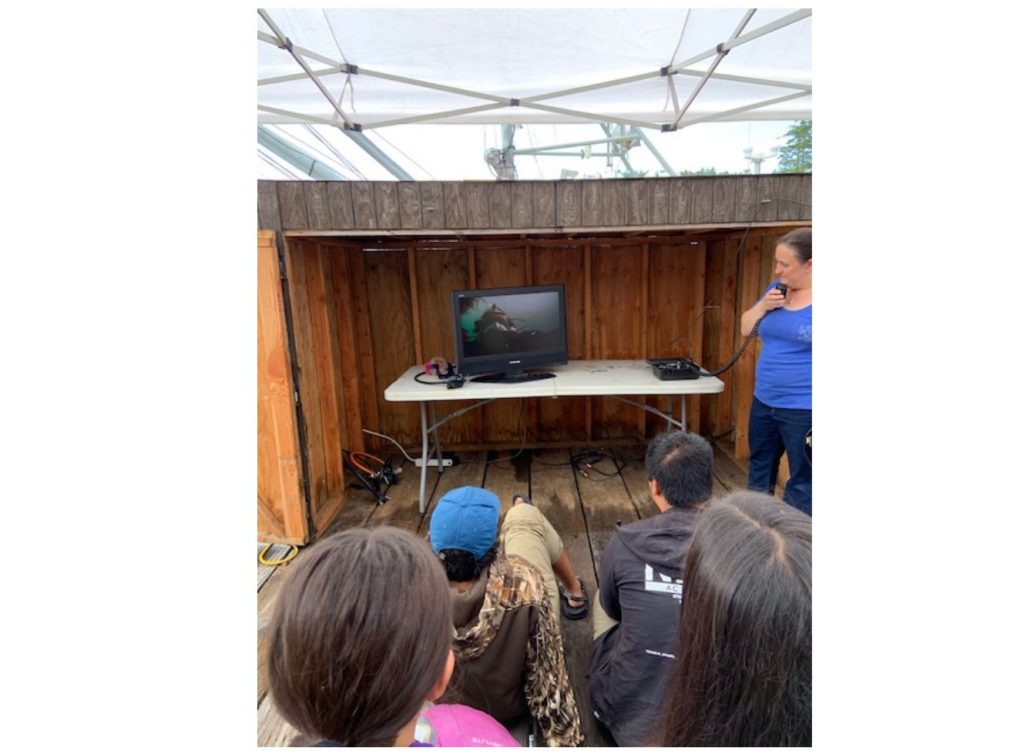
The divers began their presentations by walking us through the gear and how to properly prepare for a cold water dive. They have to wear many layers and weights as well as air tanks to prep for the cold waters and crushing water pressure. When the time for the divers to jump into the water came, all of the students crowded around the one and only diver elevator at FHL. Derek and Tim then began their dive, starting a beautiful underwater show for the rest of us on land watch through the lens of an underwater camera. The duo found many anemones, barnacles, a disregarded iPhone 6, two clown nudibranch, two sea lemons, two blood stars, and even a sunflower sea star! They dove under the FHL research vessel Centennial, showed us around the large sea anemone garden, and taught us about the organisms that thrive under the docks.
Photo Credit: Leighna Sugimoto
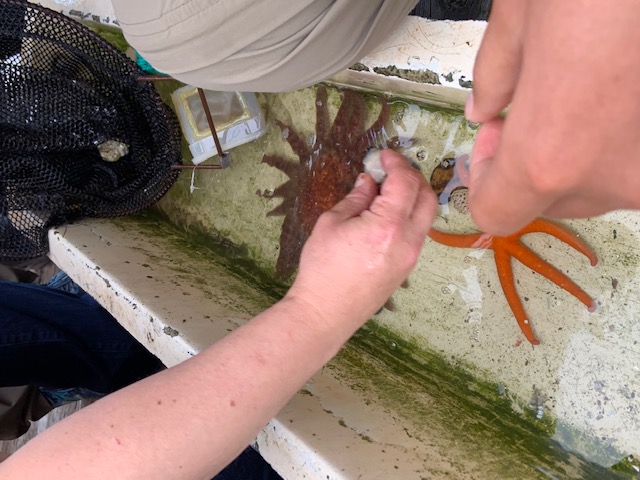
After the dive was over, we looked at the organisms the divers caught (the nudibranch, sea lemons, blood stars, sunflower star, and a couple anemones) closer. We learned about where nudibranch’s gills are, the sensitivity and surprising power of sea stars, and the evolution of the number of sea star arms. Those 2-3 hours flew by in the blink of an eye, and we unfortunately had to leave to get back to the dorms for a break and an early dinner at 5:30. (We are writing this blog in this break time.)
The accreditor readiness review team from AdvancEd, Joanne and Nancy, are joining us for the dinner of Israeli salad and barbecue chicken. After the meal, we will head toward to the San Juan Island Library presentation at 7:00 by Thor Hanson, lecturing us about berries for 2 hours.
Using Derek’s convenient acronym, we now know how scientists classify the marine species that we love. Today, the group focused on taxonomy (Kingdom, Phylum, Class, Order, Family, Genus, Species).
Photo Credit: Ayla Ridwan
After a fun and eventful Fourth of July, breakfast began at 9:00 AM, allowing everyone to sleep in and prepare for a whole day of even more exciting activities! After a quick breakfast, all of us loaded onto the vans to head to Reuben Tarte. Once we got to our destination, Derek announced a friendly competition between the house groups (Seals, Orcas – obviously the best of the groups, Salmon, Octopodi, Sharks) that challenged each of the groups to classify as many organisms on the beach as possible.
Photo Credit: Leighna Sugimoto
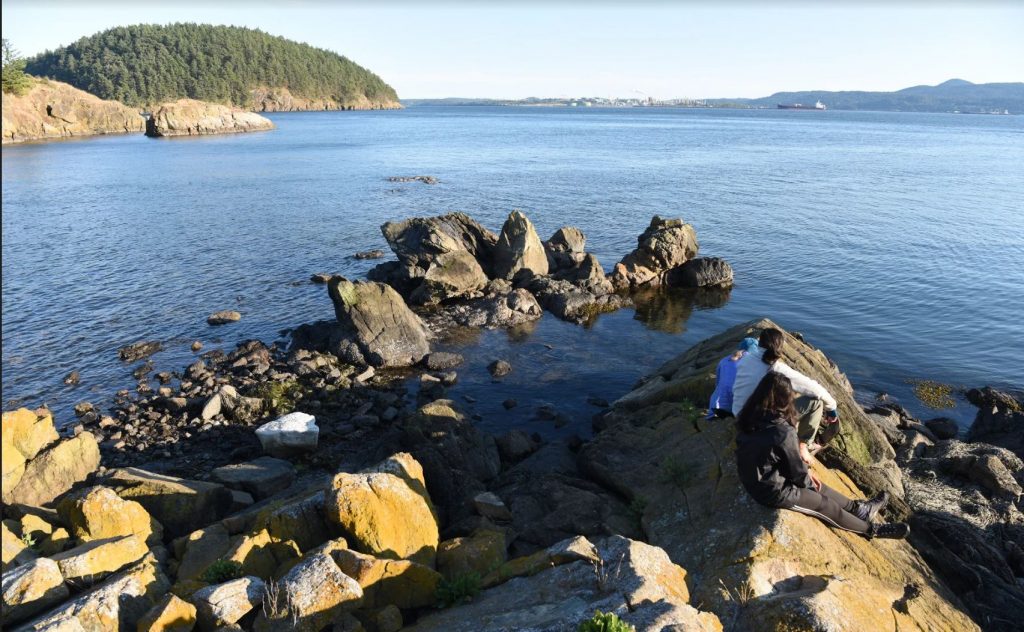
We walked among the slippery sea lettuce frantically turning over rocks to uncover many crabs, ocher sea stars, and gunnels. A true miracle of biology was witnessed by some of the group members when they saw two crabs reproducing. Four hours were spent at Reuben Tarte exploring the beach, allowing everyone to discover and identify marine species they had never seen before.
Even though a student suffered a sprained ankle from slipping on the cold rocks, we did find a dead 1.5 meter-long fish lying in an obscure corner of a tide pool. Dr. Adam Summers, the head ichthyologist at Friday Harbor Labs, was contacted about the fish. He texted Derek to “leave the fish in a tank if he wasn’t there to shriek with excitement”. After the disgustingly smelly carcass was loaded into a van, Ben and Camden accompanied the fish to Friday Harbor Labs. The rest of the students went to visit the pleasant-smelling Pelindaba Lavender Farm.
Photo Credit: Devika Dwivedi
At Friday Harbor labs, Camden and Ben carried the log into Dr. Adam Summer’s lab. The log was carefully placed onto a tank while the rest of the group searched for an empty tank to put the fish into. Camden and Nicholas put gloves on to lift the fish into the empty tank. Dr. Summers was there quietly shrieking with joy! The fish head was squeezed to remove the eye lens. Scissors were then used to remove the eye of the fish. The log was then removed from the lab and tossed onto the beach.
The Lavender Farm, on the other hand, smelled very pleasant. Some students opted to take a peaceful and relaxed walk through the abundant fields of purple, while others went straight to the gift shop to taste test and try out lavender products. After a short 20 minutes at the farm, the students arrived back to the dorms to spend some personal time until dinner.
Photo Credit: Leighna Sugimoto, Model: Grace Davis
To end the day, we watched the new Spider-Man movie, Spider-Man: Far From Home as a whole group! It was quite unexpected, but it was a pleasant surprise and a fun movie to watch together.
Despite all of the fun that we had, both the Bear and Townshend groups were ready to get back to San Juan Island.
We began our day bright and early by waking up at 5:30 AM, where a soft-colored sunrise greeted us. Those who slept on the boats greeted the day eagerly and began to ferociously take down the boat covers. Everyone who had slept on land took down tents and packed up their personal gear, which were then fire-lined onto the boats. After much trial and error, everyone safely climbed up onto the boats.
With everyone the boats and everything secured, both boats began rowing to their anchors. After cautiously getting the anchors back on board, the groups embarked on their final journeys to Cap Sante Marina. The cook crews, consisting of Ella, Jeremy, Nicholas, Ezra, and Olivia, started on breakfast bagels. Starting on the forward-most thwart, pairs of rowers took turns to taking breaks to eat their bagels.
Photo Credit: Olivia Stults
June 30th was an eventful (and interesting) day for navigation. The boat crew had to navigate the boats with no wind aiding us and the searing sun on our faces. We had to row through a gnarly current, but we eventually made our way through the obstacles. Bear longboat hit a fat Tokyo drift singing Moana on our way to the docks (vocabulary courtesy of Camden and Ben).
Seeing land that marked the end of our trip sparked excitement and elation as we docked at Cap Sante Marina. A lot of seals popped their heads out of the water to bid us goodbye from the sea. Once docked, we stepped off of the boat just in time for Tony to catch a surprising number of sea jellies. After our short break, we got back on our boats for one last circle time with our individual boat crews. Under the exhausting heat, we briefly went over challenges that we overcame, what we did for each other as a group, and what we would remember the most on the longboats.
The highlight of the day was when Miles fell into the ocean. He walked around the side of the boat to put a bag down and fell into the sea due to faulty footing. Upon touching the surface of the water, he let out a screech saying, “Yay! I fell into the ocean!”.
Photo Credit: Harris Yu
The Townshend and Bear crews came together to cart all of the gear off the longboats, marking the beginning of a long three hours of cleanup to follow. All 17 of us split up into two groups: one that would clean out the boat, and one that would clean all of the equipment that had been taken on the trip. The boat crew worked diligently to scrub the boat with seawater, hosed off and pumped the bilges, vacuumed the whole boat, and picked up miscellaneous celery. The land crew, on the other hand, worked on cleaning dry bags, dishes, and rain gear. We stuffed sleeping bags into each other and distributed the personal gear. After a fashionably late lunch at 1:00 PM, we did our last duffel shuffle and loaded our gear into the vans. Everyone then wrote evaluations for the trip after everything was packed.
For our final step, the Townshend group helped get the longboat onto the trailer of the manager’s car. The Bear crew walked in the nice weather to the boat lift, where we watched Townshend get raised out of the water. With the longboat secured, we began our goodbyes, thanking all of the instructors for an amazing five days. We then loaded onto the Salish Sea Sciences vans, where we headed to the ferry landing. With time to kill waiting for the ferry, some people enjoyed the view or took walks along the beach. When the ferry finally was ready to board, we got out of the vans and headed upstairs, where many people took well deserved naps or sat around having conversations.
The ferry landed at Friday Harbor, and the vans unloaded, giving everyone in the Salish Seas Sciences program a wave of relief as we pulled into the Spring Street International School parking lot. In a frenzy, everyone grabbed their gear and raced to take showers and do their laundry. The rest of the day was used to rest. Dinner was lasagna with salad and garlic bread; a great way to mark the beginning of our more extravagant dorm life! The lasagna was amazing and had a meat option, causing the non-vegetarians to rejoice.
The rest of the evening was spent lounging around the dorms and getting ready for bed, ending a long and busy day.