We headed down to the University of Washington Friday Harbor Laboratories’ docks to watch a necropsy. A necropsy is a surgical procedure that consists of a thorough examination of a corpse by dissection to determine the cause, mode, and manner of death or to evaluate any disease or injury that may be present for research or educational purposes. We watch 11/2 seals being dissected and sent to labs. It made most of us a little squeamish. While being dissected, we learned about how they relocate baby seals that have been orphaned and rehabilitate them to give them a better chance of survival. The one that we watched had climbed onto the beach where several eagles scavenged it alive, after being relocated.
When the Marine Mammal Stranding Network and the Seadoc Society found him, they made the tough decision to euthanize him, since he had undergone immense suffering. They let us go down and look at the pup, it was quite bloody. We could see the teeth that had just started to grow in and the crevice where the pup’s eye should’ve been, but all that was left was an empty shell, carved out by the eagles. Then it was cut open and the liver, kidneys, lungs, and heart were removed. I learned about how the skull doesn’t get damaged even when the eye is eaten. They then showed us the brain. A few of us stayed behind to watch the start of the second seal pup’s dissection and ask questions. Afterwards, those that stayed behind left to catch up with the rest of the group who wanted to go up to the library.
(Gray and Joey looking through books in the library, photo by Madelyn Crist)

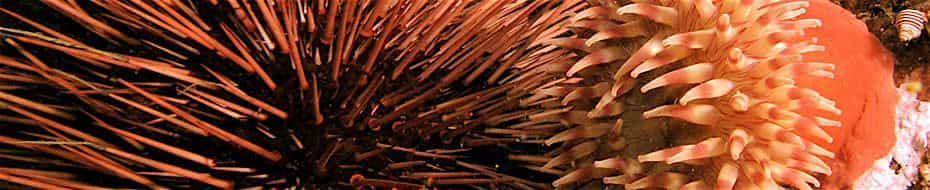
( Gray touching a sea urchin in the tidal pool, photo by Gray Rager )

After the dissection fun, we were able to look around the Friday Harbor Laboratories. Walking in, we each picked up a postcard with a creature on it, varying from a sea anemone to a nudibranch. With colorful postcards in hand, we sauntered into the lab’s library. The room was flooded with warm sunlight coming in from the skylights carved into the ceiling overhead. Bookcases full of science discoveries and lab reports, bound by bright blues and soft yellows and cardinal reds lay out in front of the group. Books dating all the way back from the early nineteen hundreds, carrying evidence found by renowned scientists, sat in the rickety brown shelves before us as we perused between the tall structures.
Not too long after admiring the old and new science pages, we carried on down the steps of the labs to find a small tide pool. We were each able to stick our hand in the cold, Pacific waters and touch a sea slug and a sea urchin or sea anemone. The sea urchins and anemones moved about our fingers when we plunged them into the water, as Derek gave us some quick interesting facts about the creatures.
Once we came back to the house, some of us found it more difficult than others to choke down lunch, while others were completely unphased after the dissection. Following the leftover pasta salad lunch, we began working on pisaster.org again, designing a logo, fixing the website structure, and writing blurbs for different sections of our lovely webpage. Working for a while, we made a lot of progress in layout and content, which is great and soon we took a break to play volleyball before dinner.


(the group working on our website, photo by Sara Sarmiento Ruiz)