Hey Blog! Welcome back to another post. We started off the day with a 7 am wake up followed by project work. As we finish up our projects, I can’t help but feel like it’s the end of a journey. We’ve all learned so much in this camp and have made so many good friends along the way. As Philip likes to say, “Perhaps the real journey is the friends we made along the way”. Anyways, after a period of work time we decided to go out on this fine afternoon for lunch to enjoy our last few days as a group. Soon after we ate lunch it was time to head to the Friday Harbor Labs to go dock jumping. A couple of jumps and dives later we were all tired and ready to head back. As we were walking back to the van we decided to head to the stock room on last time to buy some apparel. When we got back, we had a chill and relaxed couple of hours before we headed out to south beach for dessert. Instead of the dessert, people were more interested in exploring and watching the sunset go down. Collectively, lots of us thought that this was the best part of the program due to it being one of the last times we would all be together.
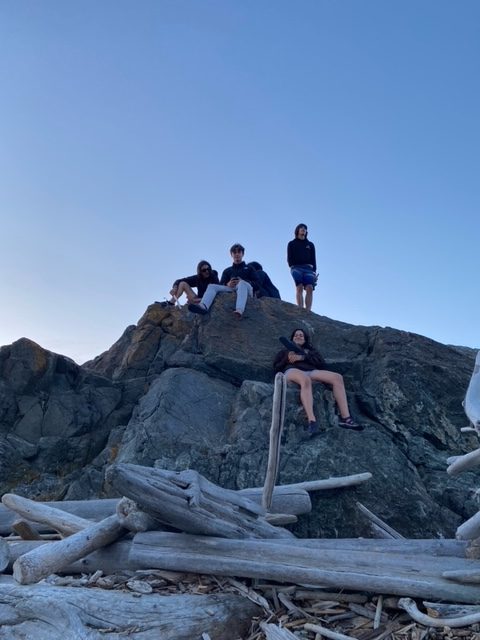
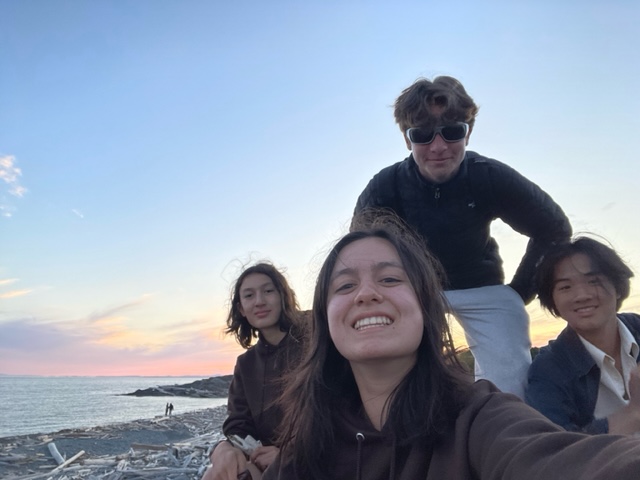
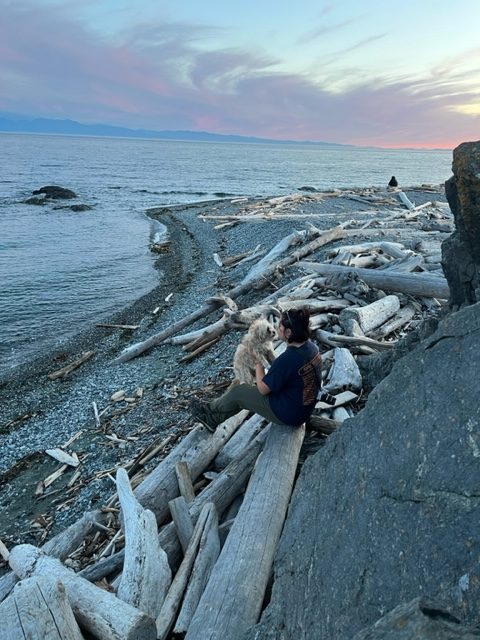
Pictured here are Tommy, Maddie, Philip, and James enjoying the view on a large rock.Pictured here are Tommy, Maddie, Philip, and Ethan taking a selfie at one of our last group hangouts. Pictured here is Hannah with Bea’s adorable dog Ollie also enjoying the lovely ocean view.
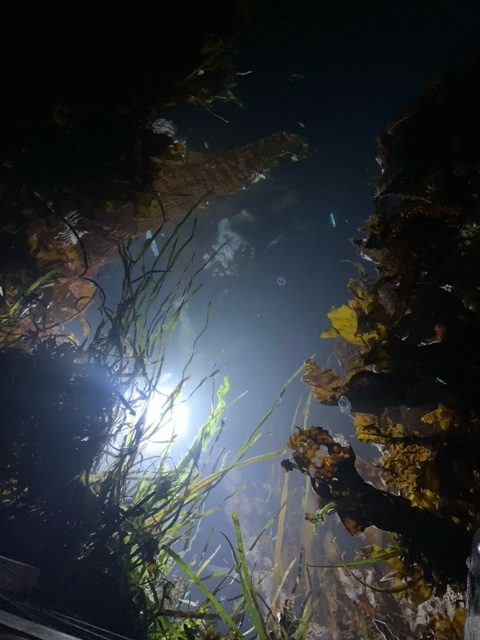
After the sunset we all decided it was time to head back to go night lighting at the FHL docks. We saw a lot of jellyfish, polychaetes, and other fish swimming around in the night. Something else that a lot of people got to see was the bioluminescence in the water due to the plankton.
Pictured here is the diverse underwater water at the docks during nightlighting.
Finally it was time go back to the dorms and head to bed for a late wake up.
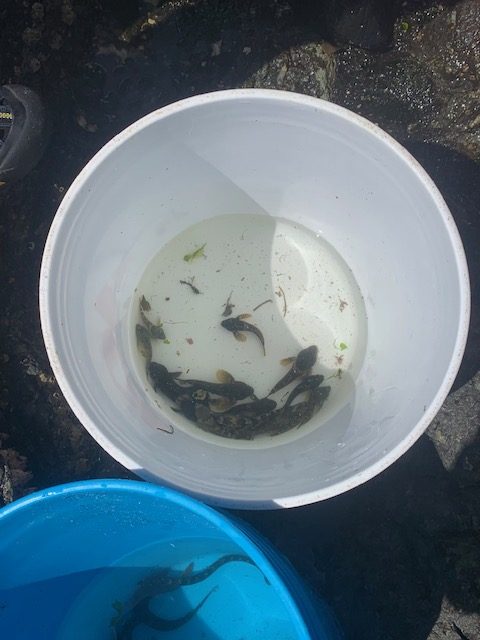
Welcome back to the blog! Today we started the day off early in an attempt to locate the Rockhead Poacher at Deadmans Bay’s intertidal zone. We assisted ichthyologist, Daniel Geldof in finding his research project about this specific type of Poacher and their oddly shaped head. The first step of this process was emptying the water out of two specific tidal pools. To achieve this, we used numerous buckets by passing up and down the intertidal zone. After this long process we were left with the different types of creatures that inhabited these pools, making it easier to catch them with nets. After many scrapes and falls we finally finished the grueling task with absolutely no poachers, but we did find other species of marine creatures. Even though we didn’t succeed, we still had a great time exploring the intertidal zone.
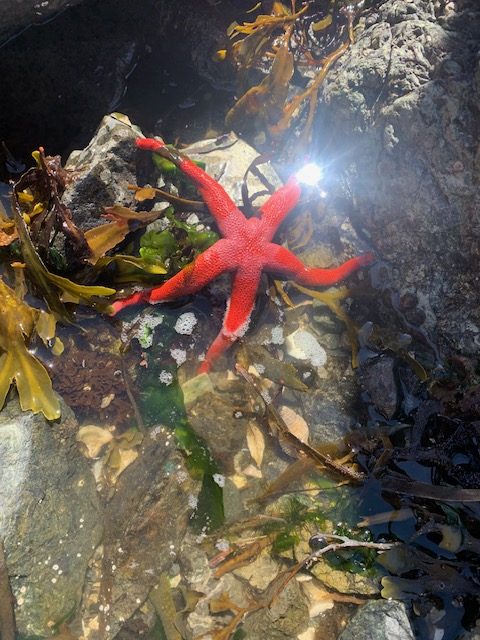
Pictured is a pacific blood star in one of the tidal pools. Picture taken by MaddiePictured are the fish we caught in our nets from the tidal pools. Most were released back while some were kept for furth research back at the labs. Picture taken by Maddie.
After a good lunch it was time to go for a little hike at the well known historical park, American Camp. With the help of multiple signs and our personal tour guide Ms. Bea, we were able to grasp the captivating history. The American Camp was inhabited by US soldiers back in 1850s in order to stake out the land and sea from above. With little interaction from others they ultimately decided to abandon the camp, leaving it’s ruins for curious tourists to observe centuries later.
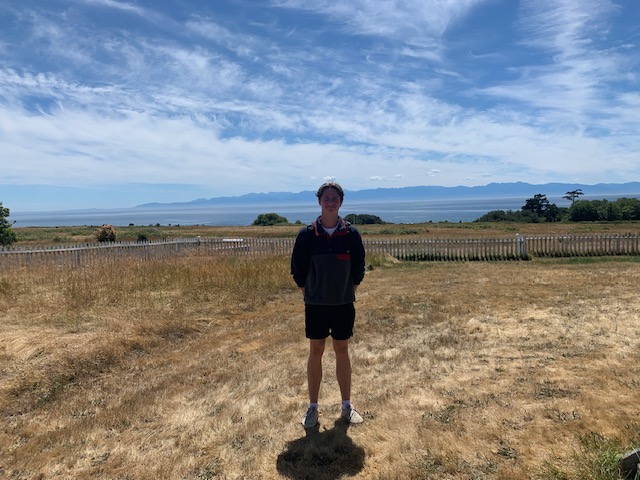
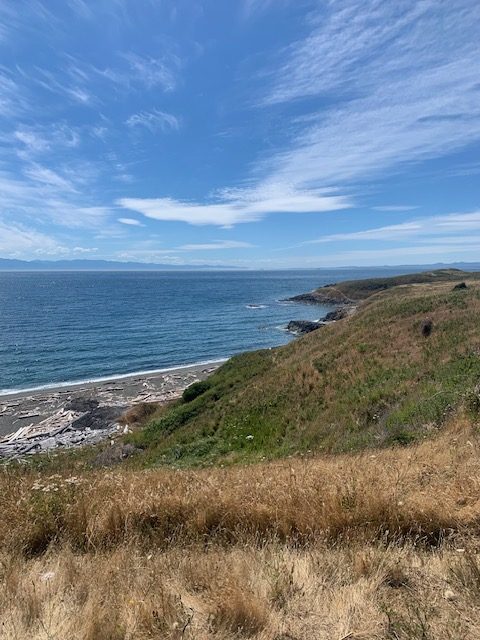
Pictured here is Tommy, and behind him the gorgeous panoramic view of the mountains across the water. Picture taken by Maddie.
Our first stop of the journey was the town, where only two of the houses remained. After little history talk we ventured more into the settlement being able to view the water from all sides.
Pictured is the view from the ruins of the houses left from the American camp. Picture taken by Maddie
We made our way to the rocky cliffs where we were able to climb and explore the terrain before heading down the the beach. We played in the sand and water along with climbing the near by rocks.
Soon it was time to depart dragging ourselves back up the hill towards the van. Finally we got back to the dorms preparing for the night ahead with our special guest, Mr.Tim Dwyer who was the previous director of Salish Sea Science Program. Tim gave us a an in depth lecture on his experiences in Antarctica specifically on gigantism in marine arthropods. Some of his amazing work has been published in National Geographic. He is also a science teacher at the local high school here. We thoroughly enjoyed his talk due to how interesting the diversity of the marine environment in Antarctica can be. After he left, everyone was convinced that they wanted to live there. Later we all decided to go play volleyball to finish off the day. Signing off for now!
The Salish Sailors (written by Maddie, Ingrid, and Tommy)
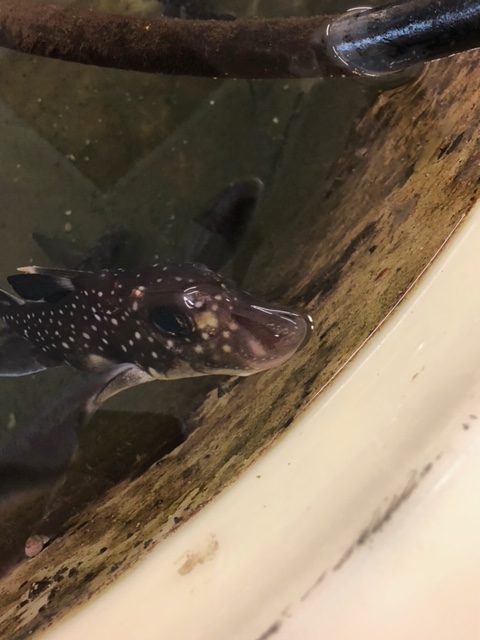
Hey blog! As we get back to our regular posts, we return to FHL for an in-depth tour of their fish labs, observing the many fascinating species held within. From the slippery prickleback , to the almost birdlike ratfish, there was a plethora of marine life being held in the labs for various research.
Pictured above is a ratfish from the tanks in the fish lab at FHL. This was taken by Ingrid.
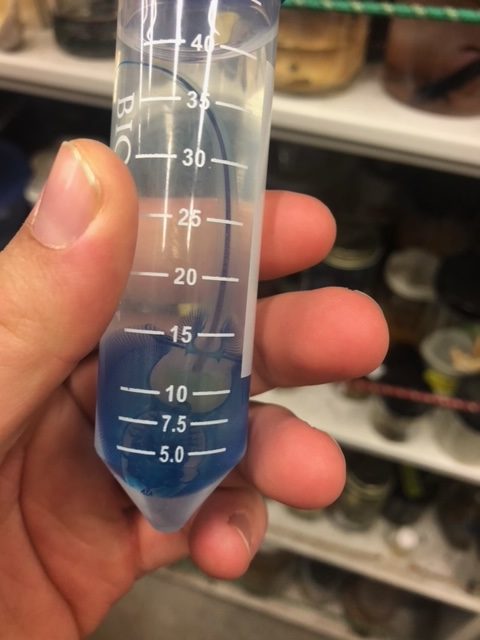
We received a tour of the preserved specimens, as well as a walkthrough of how the dyed specimens are stained and preserved in jars.
Pictured above is a dyed preserved skate specimen in a tube. The blue shows the cartilage, and the clear body is from enzymes that were injected to eat away the tissue to leave it clear to dissect. This was taken by Ingrid.
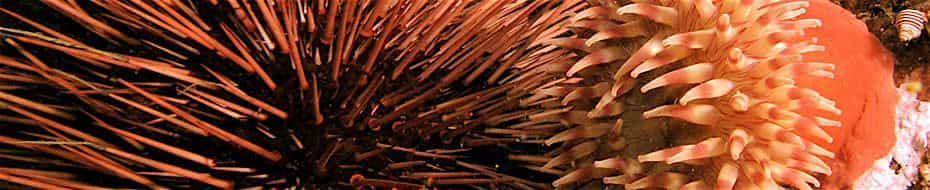
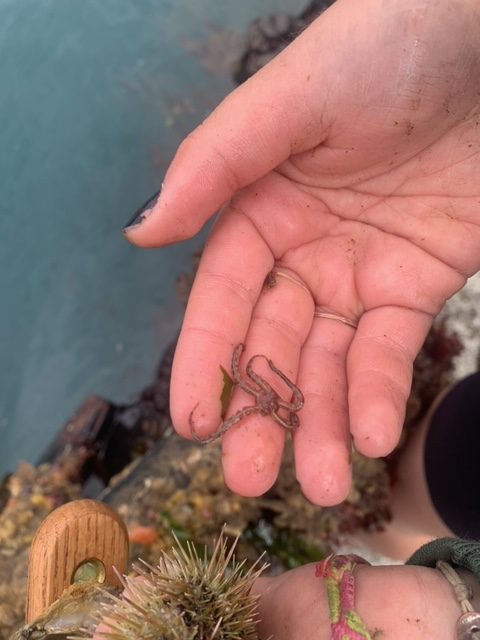
Our group continued the tour with a demonstration of the lab’s CT (computerized tomography) machine, often used in the medical field. This particular CT was being used to create high quality 3D scans of fish later used to created life-like models. Next, we listened to a lecture from two resident scientists studying baleen whales and the mechanics of how they feed. After that, Dr. Sebens (Professor in the Department of Biology at the University of Washington) whom we had over for dinner the previous night lead us down to the FHL docks to collect all sorts of marine organisms. To do so, we flipped over tires along the docks covered in all types of algae, sponges, crustacean, urchins, etc.
Pictured above is a brittle sea star that was found on one of the tires we flipped over. A green urchin is also shown, which we also put in the bucket. This was taken by Maddie.
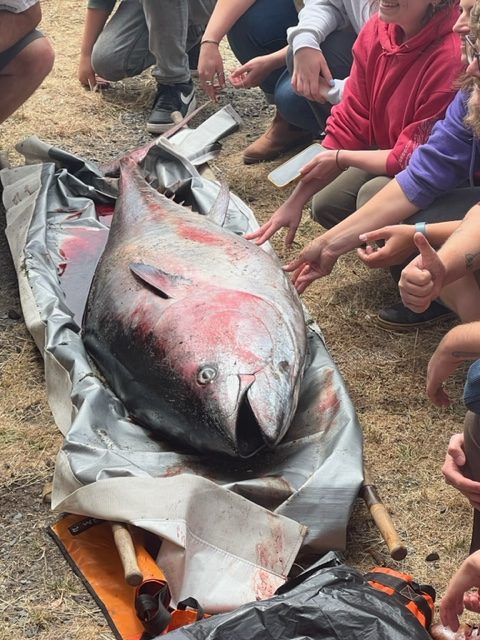
We put the organisms that we gathered in a bucket to be later taken to the labs for further inspection. As we were finishing up, a boat full of scientists came rushing back revealing a one of a kind discovery. A group of six of them carried a covered figure on a stretcher, later being told it was a giant blue fin tuna. What we didn’t realize is that we were about to witness history. Apparently, tunas are only found in warmer water which is why it was so strange to see a tuna so far up north.
Pictured above is the bluefin tuna that was found by the scientist on Orca Island. This was taken by Vedha.
Finally, it was time to head back the van to our next destination.
This destination was the Lime Kiln State Park also known as the “Whale Watch Park” due to it being known as one of the best places to whale watch in all of the San Juan Island. The park also has a rich history most commonly known for the beginning of lime kiln production. Caroline introduced us to Erin Corra who was a naturalist along with many past duties such as being the head director of Friends of Lime Kiln Society. As she took us through the park she quizzed us on many difference species of trees which Finlee answered all. Next, she took us to the watch point where there was many signs talking about the marine animals that passed through the Haro Strait. Many stops later we finally reached the main feature of the park, the lighthouse. Inside there were many displays of posters showcasing the vast history of the lighthouse and of marine life in the surrounding area. Unexpectedly, we were told that we could venture to the top of the building. We split in to groups for this due to the small staircase and size of the upstairs. From the top, we got a wider view of the area, being able to see much of Vancouver Island.
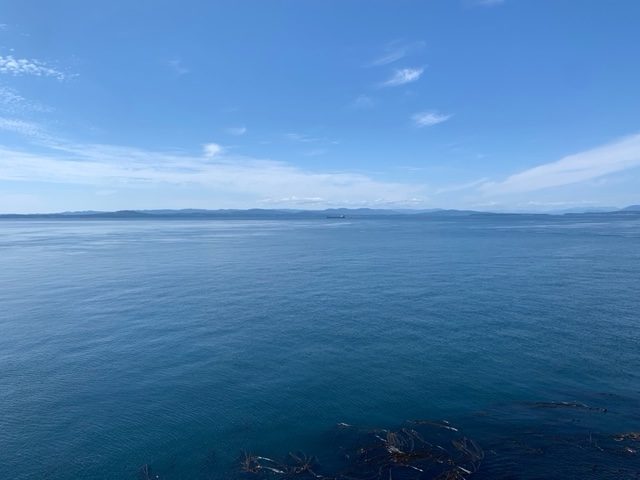
Pictured above is the panoramic view from the top of the lighthouse. Across the sea is Vancouver island. This was taken by Maddie.
After all of the groups got back down we hiked over to the Lime Kiln where a small beach took our main focus. We explored the area by dipping our feet into the cold salty water along with climbing the nearby cliff.
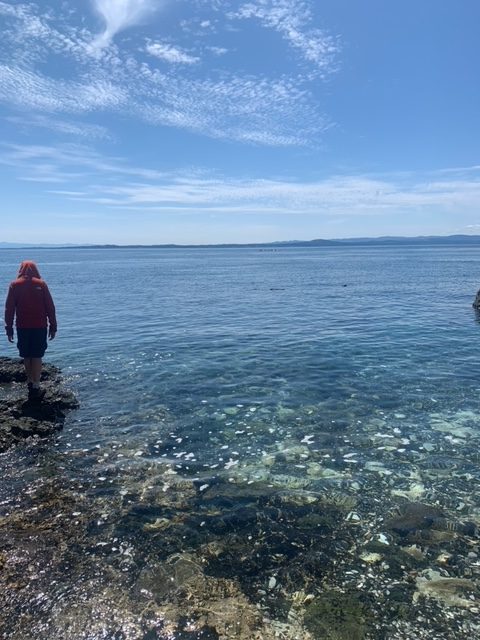
Pictured above is the intertidal zone we could explore around in. There were many marine organisms that were found such as sea anemones, crustaceans, etc. This was taken by Maddie.
Finally, we made our way back to the van to return back to the school.
Overall, this was a very enjoyable experience where everyone learned something new that was so close to our school. We got see the daily life of marine biologist and what they do to help the science community out. That’s all for now. Signing off from the Salish Sailors! (Written by Tommy, Ingrid, and Maddie)