Intertidal Mammal

By: Aaron, Peter, Rosie—

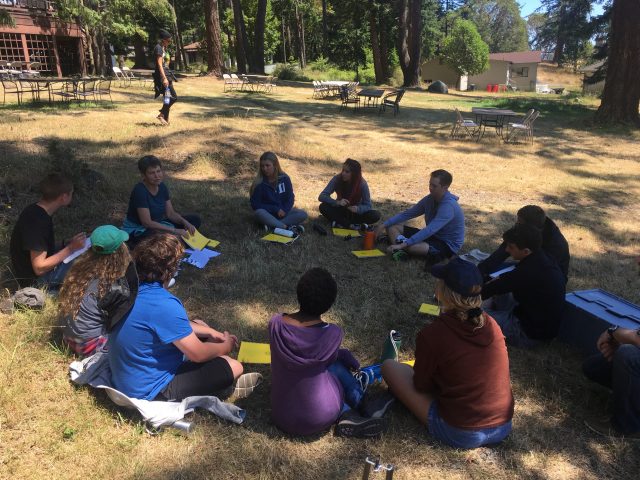
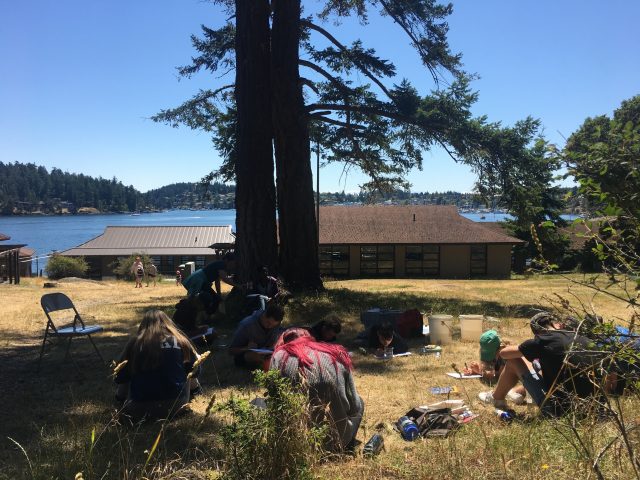
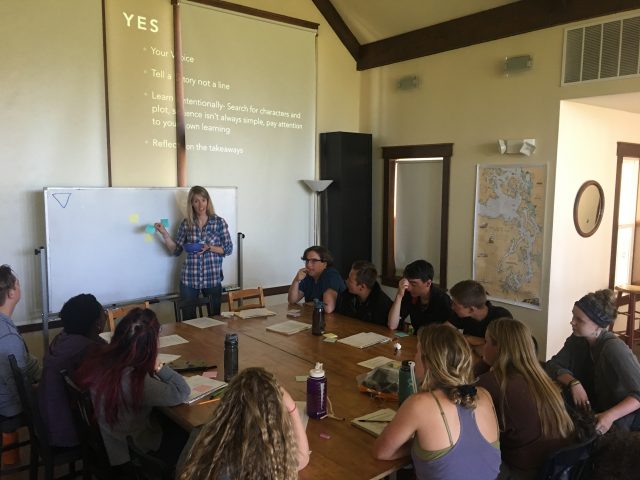
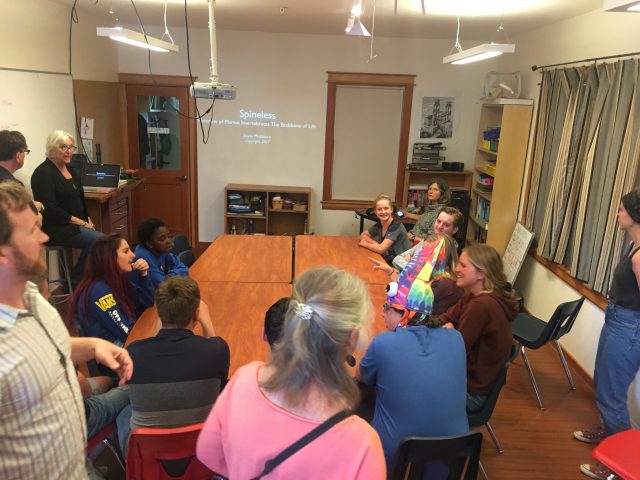
The majority of our day was devoted to working on our projects which meant our brains were going at full racing speed. Aaron noted, “You could see smoke coming out of our heads.”
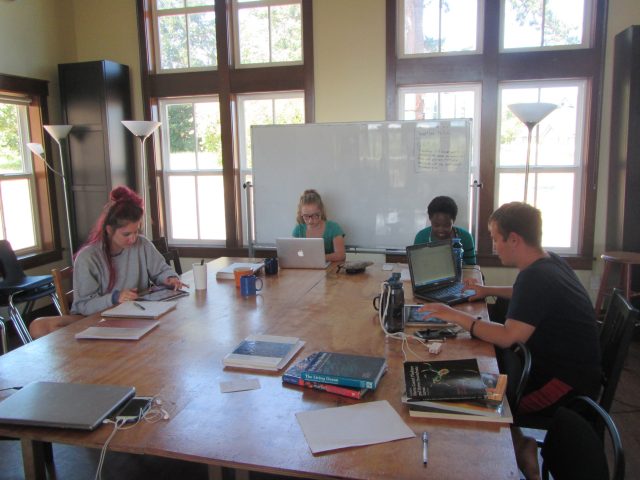
Students working hard for SCIENCE!

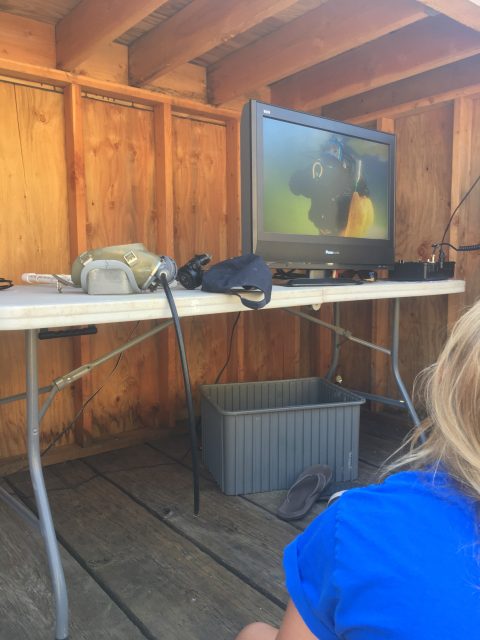
Once we made some progress crunching numbers and writing up our methodology, we headed over to the Friday Harbor Labs to observe a scientific dive with our friend and marine life expert, Tim Dwyer, where we were able to watch the dive on a screen up on the dock and he was able to communicate with us what he was seeing. It was like we were having the underwater experience but still staying dry and warm.
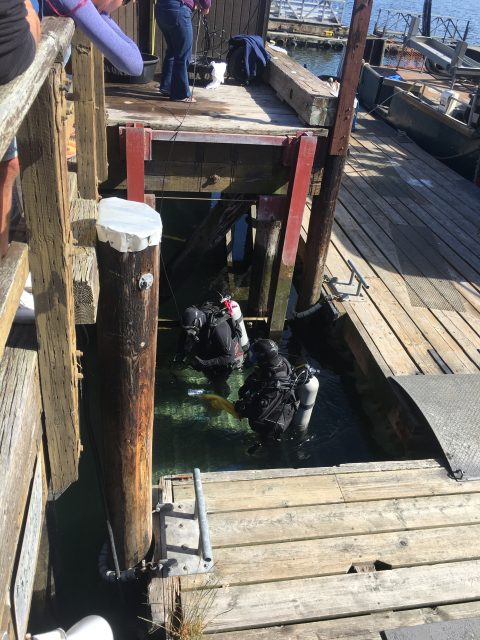
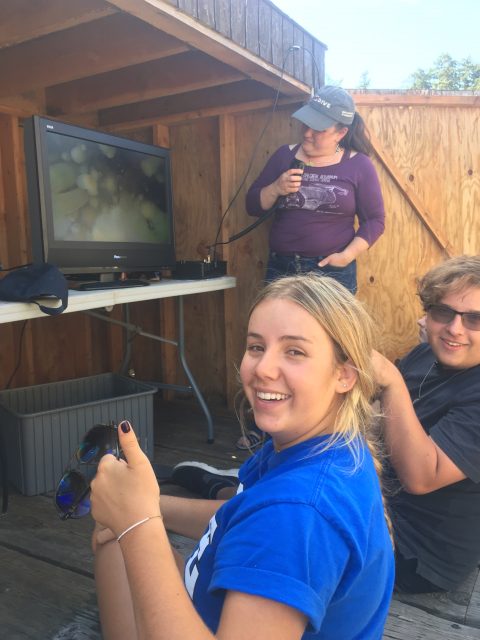
On the way back to the dorm we saw a deer grazing along a beach at the FH Labs. We couldn’t tell if it was our fried brains hallucinating or not but that moment was declared our first intertidal mammal sighting!

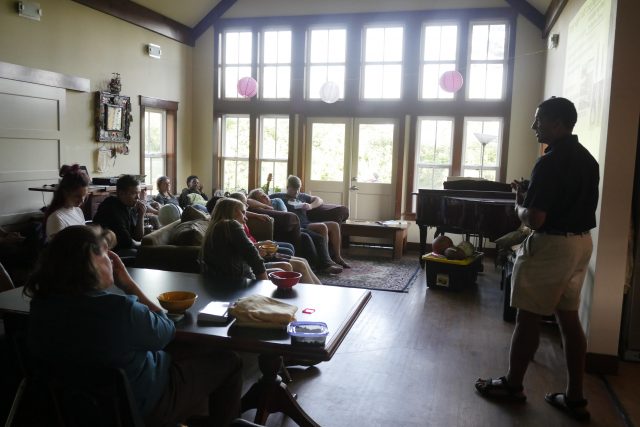
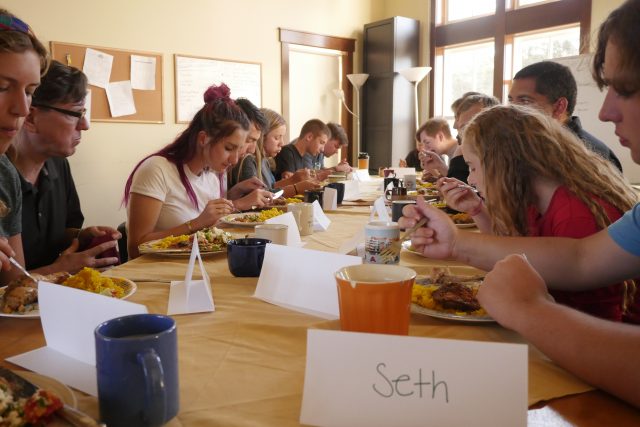
After our exciting excursion, we all sat down and had a fun dinner with Dr. Matt Kolmann in which we talked over our chili bowls about funky fish and shark myths. Then shortly after dinner he gave his presentation on the unknown purpose of serrated Piranha keels, giving some theories supported by different skeletal scans of Piranhas. It was interesting to make observations and guess what the keel could possibly be used for and be able to go through the scientific process with him. Our scientific curiosity was flying today.
Hawaii in the San Juans

By: Aaron, Peter, Rosie—

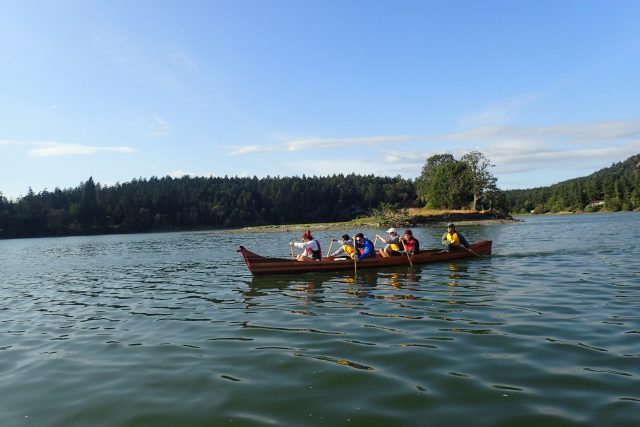
For one of the first times in hundreds of years a traditional Hawaiian vessel shared the waterways of the San Juans with a traditional Coast Salish vessel.

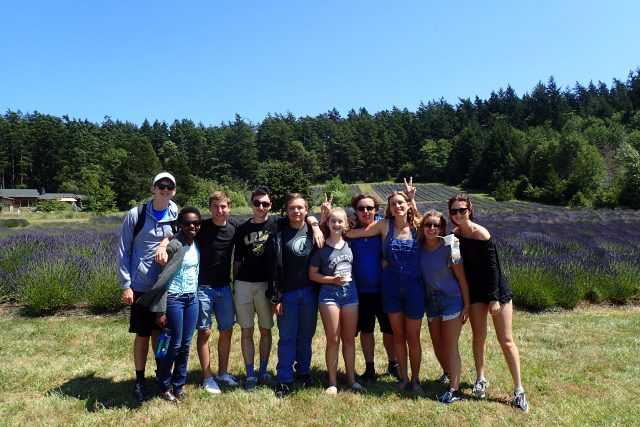
Our day began with the lavender festival, an annual celebration hosted by Pelindaba Lavender Farm.  We ate and tried all things imaginable that were infused with lavender including coffee, ice cream, lotions and teas.  

Afterwards we raced back to the labs to collect our tethered snails before the tide could rise and hide our specimens. We got there just in time to get the data we needed. 

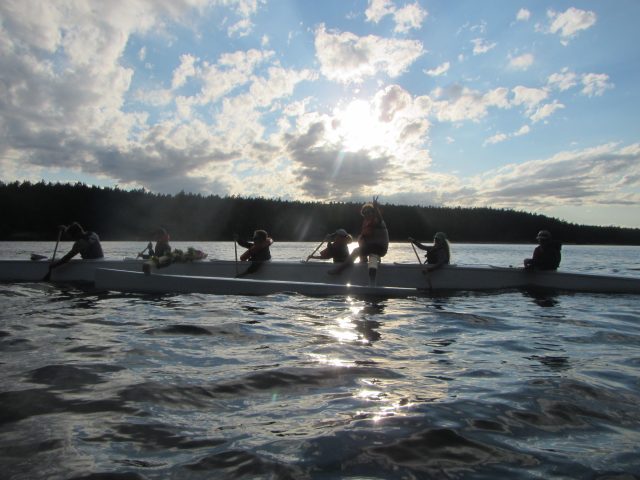
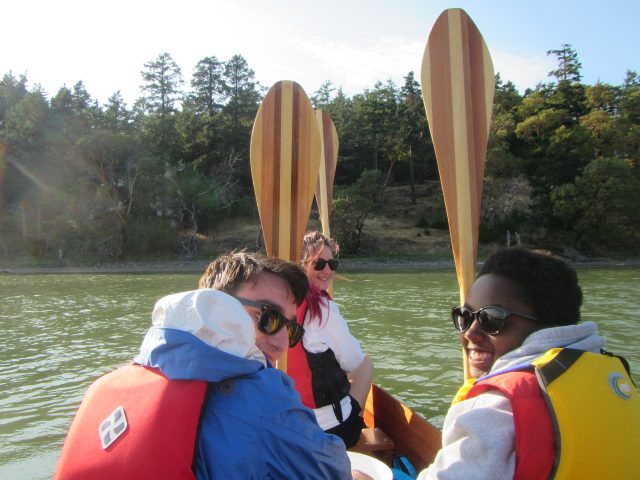
Lead by Matt Wickey, canoe builder and cultural expert, we set out in the two canoes at about six o’clock.  The Hawaiian canoe named Kaigani was made in Poulsbo Washington by an expert boat builder in a fusion of Tahitian and Hawaiian style.  The Coast Salish canoe was built in Friday harbor by youth and community members using cedar strip technique.

Hawaiian canoe: Kaigani


We ventured out of Mitchell Bay to Mosquito Pass and eventually Westcott Bay as the sun set to the West.  Many songs were sung and conversions had before the peaceful journey came to an end.

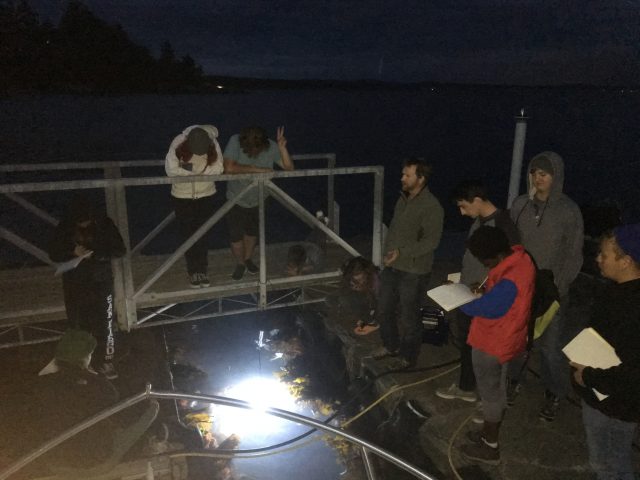
After, we cruised back to the Friday Harbor Labs for some nightlighting.  We took a powerful LED light and hung it off the dock into the water.  For many smaller organisms such as zooplankton and copepods, the light indicates to them the proximity to the surface, the desired feeding location. 

The water was soon teaming with life of all kinds.  The organisms arived nearly in order of their level on the food chain.  First the tiny plankton, then the larger copepods and worms, next came small fish.  Had we stayed out longer we likely would have seen this trend continue.  It was striking to see how such a light brought so many organisms into view. 
We ended the evening with a few glimpses of magical bioluminescence.

Spines for a change

By: Peter, Rosie, Aaron—

Harbor seal pups gain 11 kilograms (24 lbs) in the first 5 weeks of their life, if everything goes according to plan.  However harbor seals in the Salish Sea are at their environmental carrying capacity, meaning that the population is the maximum that can be supported by the ecosystem.  This is, unfortunately, indicated by the number of seal pups that are found stranded or dead each year due to food shortages.

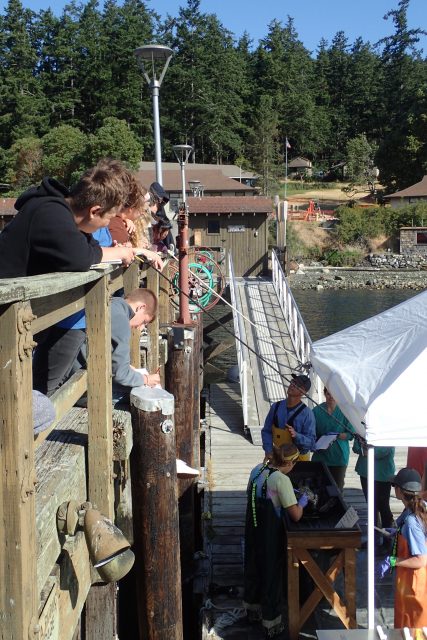
We began our morning at Friday Harbor Laboratories, where the necropsy of a seal pup was being conducted.  Lead by Dr. Joe Gaydos, author of our Salish Sea guidebook, Salish Sea: Jewel of the Pacific Northwest, and director of the SeaDoc Society. We observed the operation outdoors on the dock.  

The pup had been found a few days previous stranded on the beach and they had been forced to euthanize it because its mother was nowhere to be found at it was clearly in poor condition.  In the necropsy, the specialists examined the organs of the pup to determine what had caused its mother to separate from it and why it was so underweight.  They learned, by the inflammation and depressions in its lungs, the presence of pink foam in the trachea and the partial circumvention of the lungs in the circulatory tract that the pup was having difficulty receiving the oxygen that it needed.  They concluded that this was likely caused by a combination of factors stemming from the lack of sufficient food.

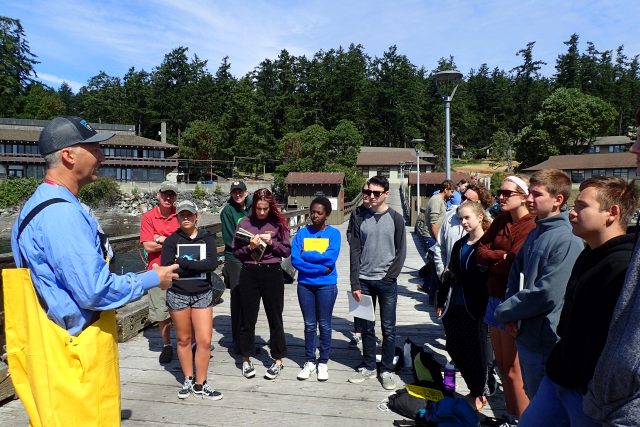
Students looking over the necropsy from the FHL pier.

Joe Gaydos answering our questions on marine mammal anatomy.

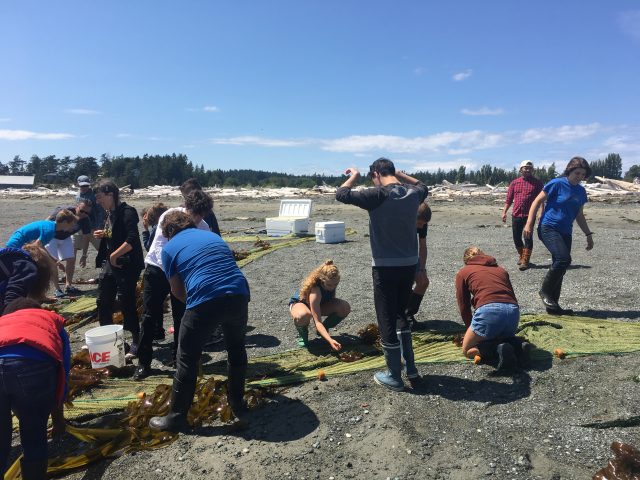
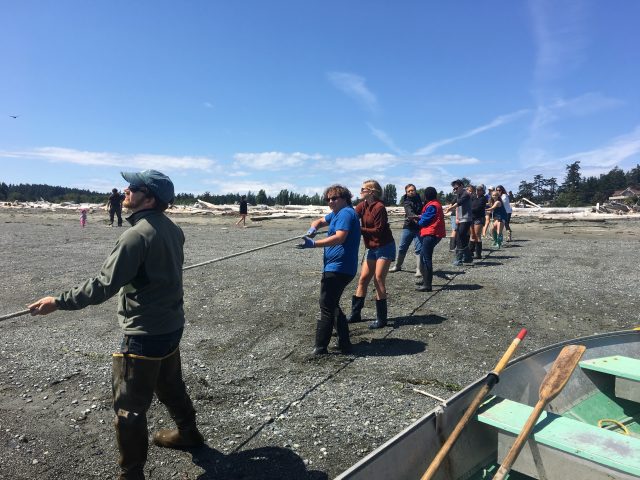
Next we arrived at Jacksons Beach on Griffin Bay to assist in the netting of fish for upcoming lab research at the Friday Harbor Labs.  We helped by loading the nets on the boat and pulling them in from shore after they were towed out.  Then we sourted through fish to find sand lance, flatfish and sculpin.

Looking through the nets for fish used for research at FHL.

After lunch we received an introduction to SONAR technology from our very own Tim Brogden, a former Navy SONAR technician.  We then followed this up with dinner with Megan Cook, a Community STEM Program Coordinator for the Nautilus, a unique research vessel that travels around the world doing deep sea exploration.  After dinner she presented about the Nautilus and its mission. Here is their website where you can see live footage of deep underwater exploring: http://www.nautiluslive.org. Our eyes were wide as we watched videos of thousand year old ship wrecks and organisms that seemed to be from another planet. Megan reminded us that humans are natural born explorers and that we are made to discover parts of our unknown world.

Signing off from new found Nautilus enthusiast and future leaders in ocean exploration!

Turning tide pools

By: Peter, Rosie, Aaron—

How does the intertidal life differ between areas with more and less sun?  

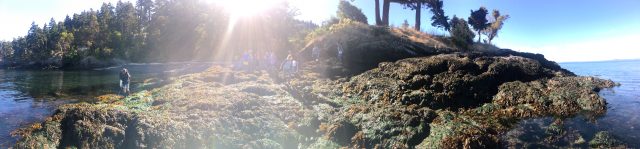
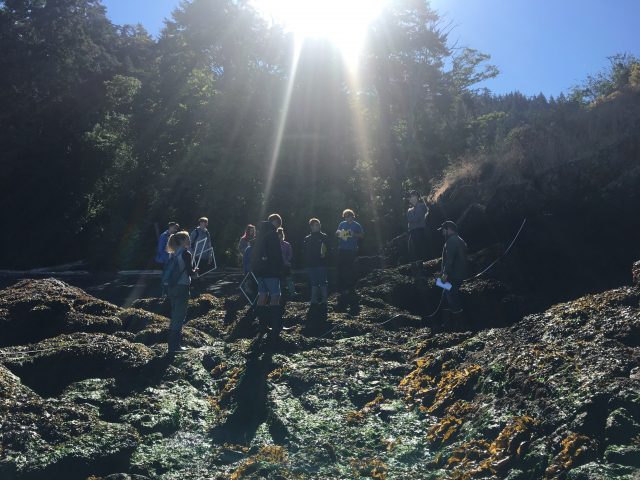
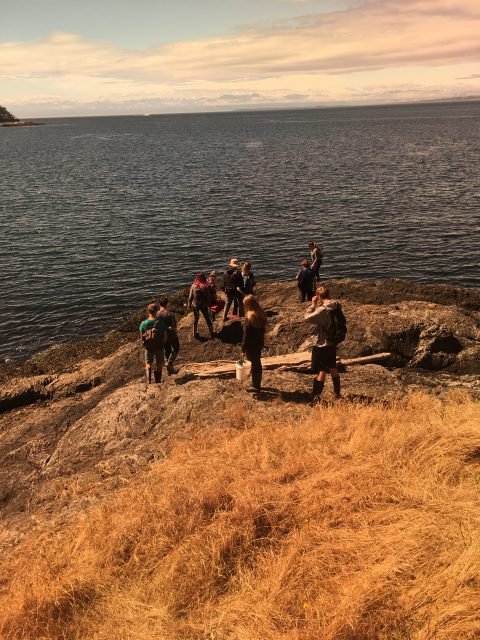
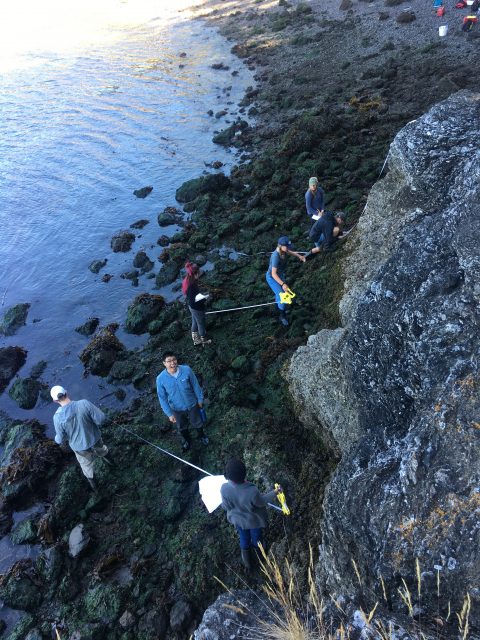
This is the question that we set out to answer with Dr. Hilary Hayford, another specialist from Friday Harbor Laboratories.  Out in Andrews Bay, on the northwestern portion of the island we gathered data in an observational study; a study where we surveyed a the amount of preexisting life along different levels in the intertidal zone.  We calculated the percentage of the surface rock that attached animals and algae covered on two separate sites and then returned to Spring Street to input and analyze our findings.

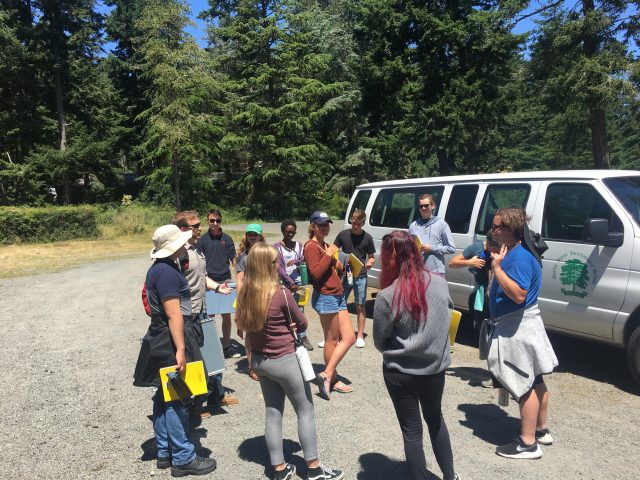
Here are students getting a lesson on tide pool surveying with Tim D and Dr. Hillary Hayford.

Sharon Massey let us study her property’s tide pools as our second survey site.

After a well deserved lunch siesta we drove over to the soccer fields for a rematch of the previous week’s game.  Tim B.’s team, the former champions and favorites for the win suffered a glorious upset aided by a few local players who joined in.  

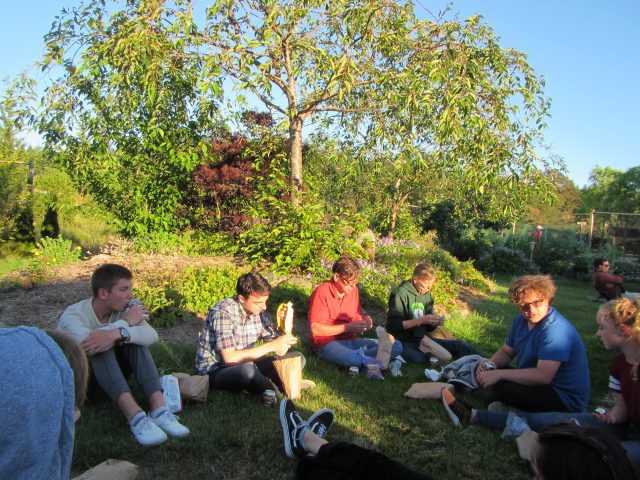
We returned and packed our dinner sandwiches for an evening picnic and show at with the Island Stage Left theater.  The play was Humble Boy, a modern take on the Shakespearian Hamlet.  There was not a dry eye in the audience, both happy and sad tears. The play surely received the Salish Sea Sciences students’ seal of approval.

Picnic dinner in the garden.

How do barnacles like their lemonade?

By: Peter, Aaron, Rosie–

On the rocks!

Today we got to do actual scientific research with the help of Will King, a grad student at University of Washington. We conducted an observational study of how barnacle size correlates to its position in the intertidal zone. We learned that the optimal position for barnacles is to be high enough away from predators but also close enough to the water to obtain food. We observed that the larger barnacles were located at a middle point and they got smaller as elevation increased and decreased.


photo by Gabi

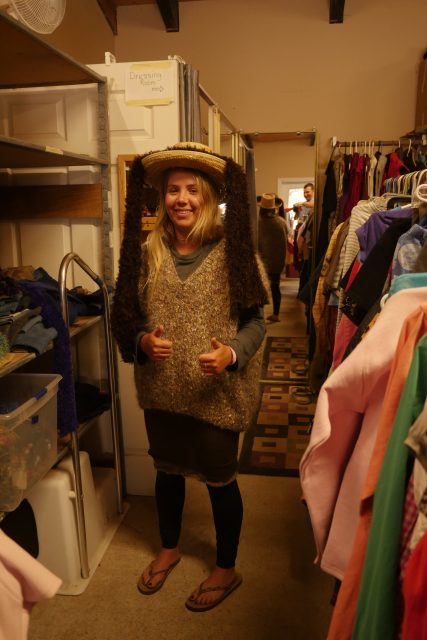
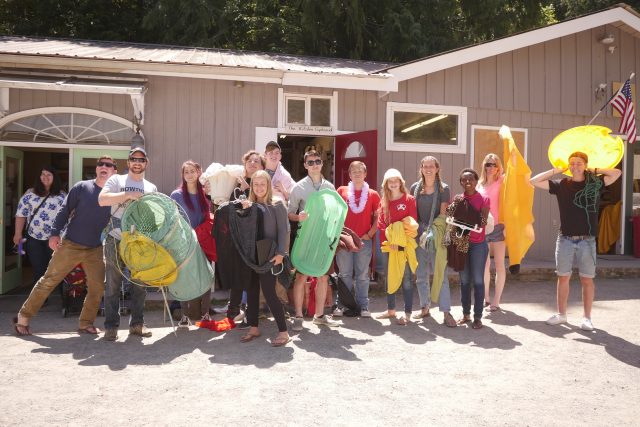
After lunch, we had the pleasure of rummaging through old treasures at the local thrift store to find pieces for the Invertebrate Ball coming up this weekend. Everyone was attempting to channel their inner invertebrate as people were looking through old sweaters, garden supplies, and sports gear. We are all excited to debut our final product on Saturday.

We got to top off the day with a lovely Mediterranean inspired dinner and an interesting talk about terrestrial (WHAT?) organisms with scientific duo Dr. Erika (Muhlenberg College) and Dr. Vik Iyegar (Villanova University), both ecologists doing summer work at the Friday Harbor labs. We learned some interesting facts about earwig sexual behavior as well as slug populations and interactions on San Juan Island.

From slimy slugs to brittle barnacles, the day was packed with learning about important small beings.

No Backbone, No Problem: I’m an Invertebrate

By: Rosie, Aaron, Peter —

Meeting with renowned photographer Susan Middleton, invertebrate specialist Dr. Bernadette Holthius, and scientific illustrator Sharon Massey brought us with a flurry of colors and textures into the world of the spineless.

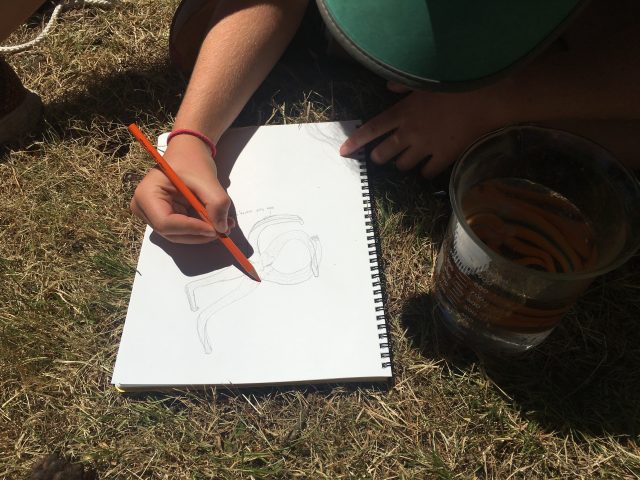
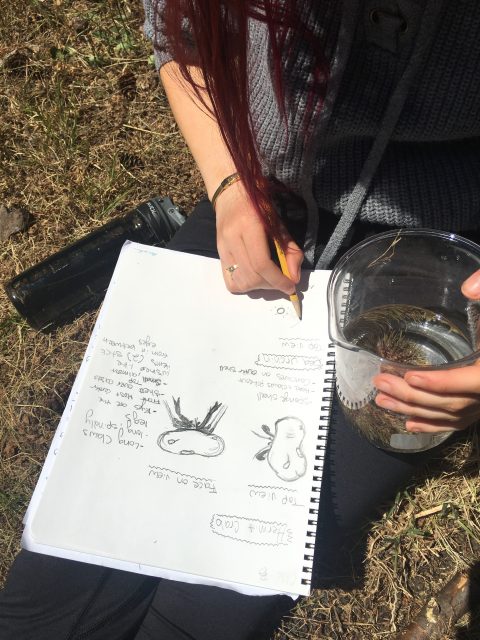
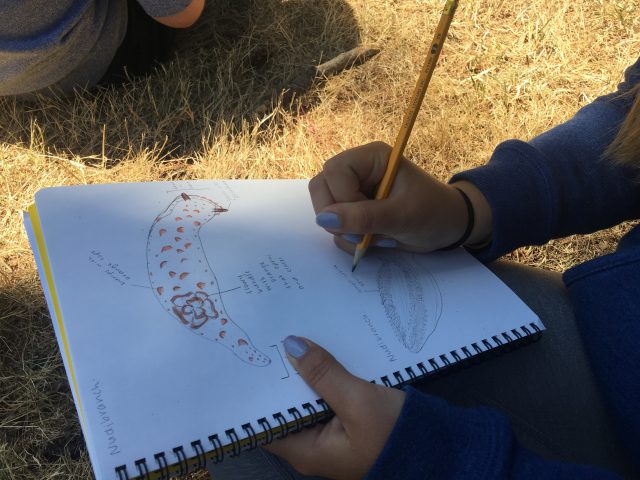
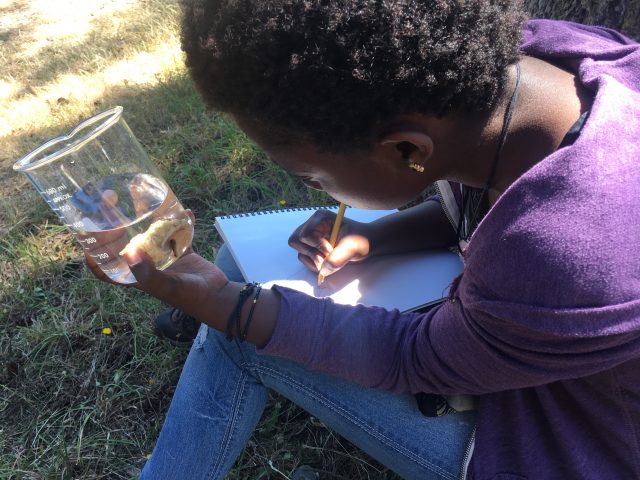
After the first full night of sleep in a week, we ventured over to Friday Harbor Laboratories, and met with Spring Street International School science teacher and local naturalist, Sharon Massey who tutored us in scientific illustration.  When trying to draw the invertebrates that we captured on The Centennial on Monday, many of us struggled with our limited artistic abilities.  However, our scientific drive motivated us to continue.  Many students were surprised by how much detail they observed about the organisms by attempting to draw them.

Upon returning to the campus, we received a hearty lesson in scientific communication from Megan Cook, the Community STEM Program Coordinator at the Ocean Exploration Trust.  We took an hour to explore Friday Harbor before enjoying a scrumptious meal prepared by local cook Tom Grauman and the dinner prep squad.  Our evening guests were Susan Middleton, author/photographer of Spineless and her friend Robin along with Megan whom we had met earlier in the day. We had an inspiring presentation of some of the images included in the book. The whole room had their jaws hanging.

Today was a great day to be an invertebrate!

Longboat Day 5: Bringing it Home

By: Sonja, Ben, Parker—

At the disagreeable hour of 5:30 in the morning, our alarms went off and we reluctantly opened our groggy eyes. The day had finally arrived. It was time to begin our journey back to the marina, where our adventure had begun five days before.

After packing the rest of our supplies, we were on our way for the last time. Before we got going, Captain Sonia and Chrissy gave up a list of challenges to complete before reaching the marina. These challenges included: compiling a comprehensive list of all the marine life we had seen, doing a 360 degree turn in the boat, setting and furling the mizzen sail, singing a sea shanty, doing 20 power strokes, performing a man overboard drill, a moment of silence, and tying a round turn and two half hitches, all with little help from our captains.

The first leg of our journey took us from Saddlebag Island to Southeast Point, right before Guemes Channel. We knew that we would not be able to take any breaks once we were into the channel, so we had some snack breaks to gather our energy and prepare us for the hardest part of the day.

As we continued to Anacortes, the wind and the current pushed against us, but our rowers worked hard to keep us moving steadily towards our destination. Throughout the trip, moral was maintained by singing upbeat sea shanties.

Right before entering the marina, we took a moment to gather our thoughts and appreciate the events of the last four days. When we pulled into the marina dock, we all sat together to reminisce over our favorite memories of the trip and what we wanted to take away from this experience.

Although we had arrived at the dock, our work was not yet finished. We still had to clean up all of our supplies, as well as our beloved boat, the Townshend. Everyone split into three groups to take on our tasks. The boat crew completely emptied the boat and gave her a thorough wash. The “dip and dry” crew rinsed our gear with water and bleach and hung it on a clothesline to dry. The galley crew washed all our dishes with warm water and soap. After completing our individual chores, we all worked together to repack the boat in order to get it ready for the next voyage. Once all of this was done, we could finally rest and eat lunch of all the leftovers from the trip, our “roadkill” as Captain Soso said. Finally, Tim showed up with the van to take us back to the ferry and bring our adventure to an end.

It was a long journey with many different challenges we had to overcome, and through it all, we learned a lot about ourselves and how well we worked together. On this trip, we shared a lot of memories and experiences that we will remember for many years.

Longboat Day 4: A Windy Sail to Saddlebag

By: Peter, Aaron, Rosie—

In the morning of the fourth day, the boys awoke from a long and troubled night of wind and boat rocking.  The flapping boat cover had prevented sleep for all but the most drowsy of them.  Upon removal of the boat cover it was revealed to be a cloudy and windy day.  As the girls arrived from the tent site it was apparent that they had slept much better.

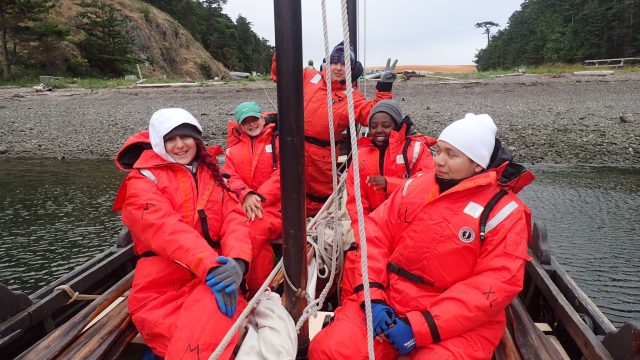
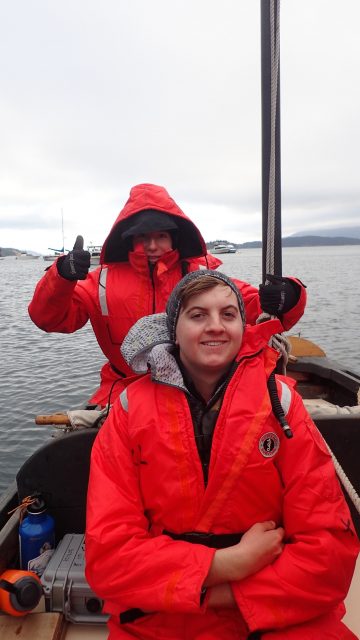
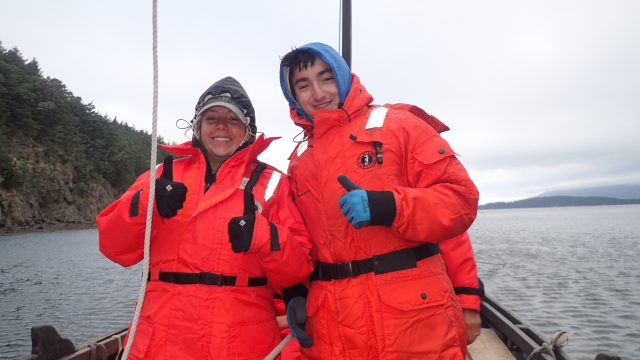
We all got together on the beach at 6:00.  It was soon apparent that everyone was freezing.  After slowly loading the longboat it was suggested that we get on our bright neon orange exposure suits. We looked like a small army of orange marshmallows.


Preparing the sails beforehand, we lifted the anchor and rowed out into Bellingham Channel where we were greeted by a hair raising site, a giant oil tanker heading in our direction.  Captain Chrissy got on the walkie-talkie and called up Seattle Traffic to tell them to connect us to the tanker’s captain.  We informed him of our location and type of boat, preventing a collision.

After the tanker passed safely in front of us we raised our sails and steered towards the northern tip of Guemes.  From there we handed out breakfast: bagels with cream cheese, peanut butter, and/or jelly.

While heading for our next destination, Saddlebag Island, we had to circumnavigate around Jack Island.  We then sailed back and forth across Padilla Bay slowly making our way towards Saddlebag.  After a brief encounter with a barge towing tugboat, some of the crew took the time to cozy up in their exposure suits for a nap.

Finally we arrived at our destination at around 12:45 PM.  We quickly set up camp and took a few hours of free time before dinner.

Dinner that night was lentil curry soup which we enjoyed with a side of sailor boy crackers.  We then played a friendly round of The Malorie Family Fun game, a combination of charades and a talking guessing game and went to bed for our final night of the voyage.

Longboat Day 3: Adventure at Cypress Head

By:Peter, Aaron, Rosie—

The third day of our longboat voyage awoke at the luxuriously late hour of 8:00.  The day had been set aside with the initial plan to explore the beautiful Cypress Island, a much needed rest day.  Breakfast was similarly extravagant with fried potatoes, scrambled eggs and apple juice.

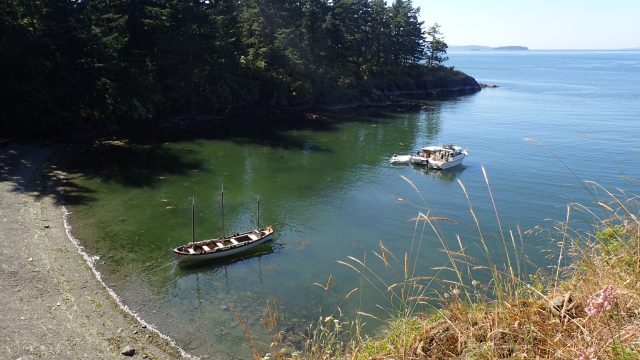
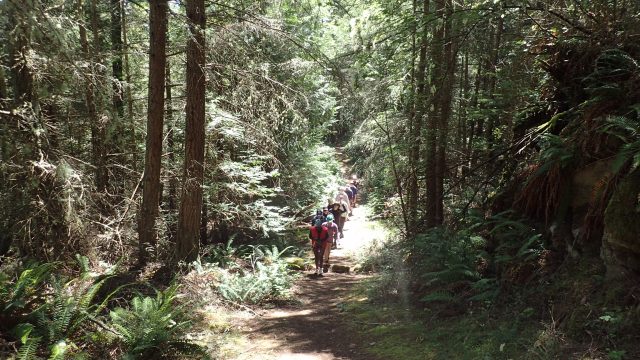
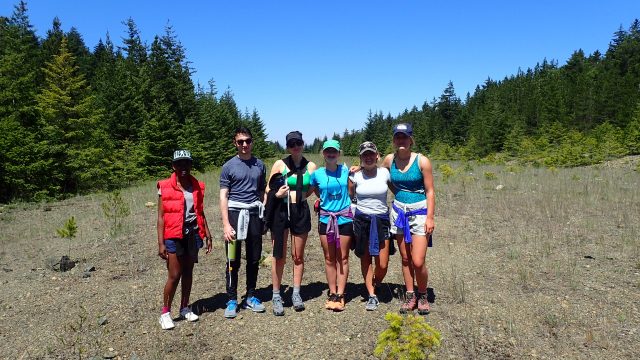
We set out from our camp at Cypress Head, a peninsula shaped campground that nearly becomes an island during high tide, on the Cypress Head Trail.  A small group split off to return with Captain Soso to watch over the boat.  The remainder of us continued to the Old Airfield Trail which wandered through a former airstrip that is now part of a forest reclamation project.  From there we continued to the Bradberry Lake Trail and arrive at Bradberry Lake.

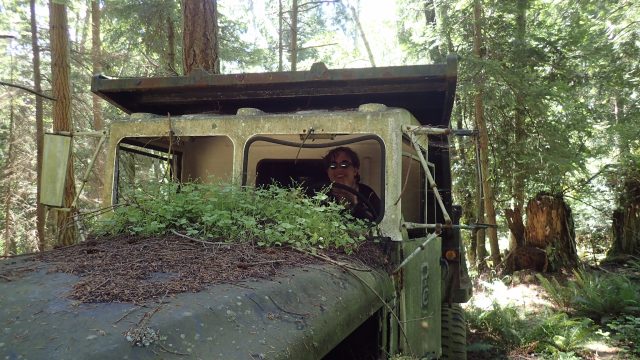
Parker (aka Agatha) hijacking an old abandoned truck we found

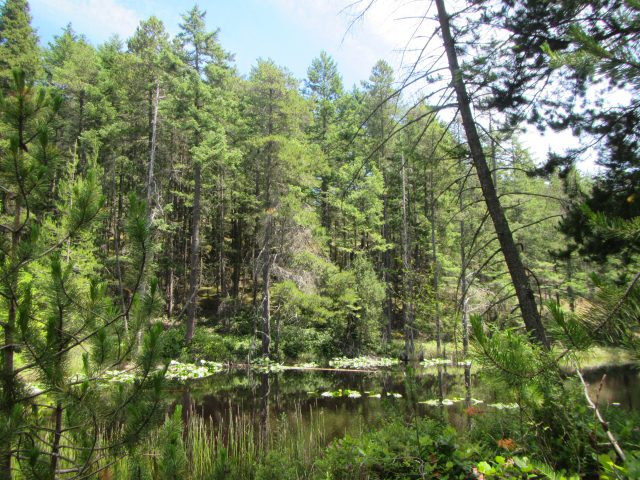
Our arduous climb was compensated with a gorgeous view of the inland lake.  After taking water samples and temperature recordings we sat down for a snack.  Many of us were struck by the dryness of the ecosystem surrounding the lake, the soil appeared dry and cracking in places.

The hikers who made it to the lake (minus the cross country superstar, Peter)

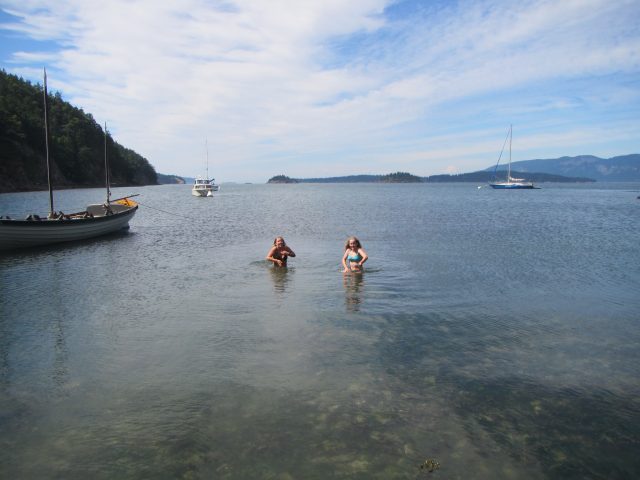
Upon returning we were greeted by a lunch of hummus and pita bread. Some of us took the time to swim and explore the tide pools while others settled in for a nap.

skip and dip!

We ended the day with bean and rice burritos, AGAIN, and turned in for an early evening.