Day 8: Whales at Lime Kiln

Today morning, we were planning on following up on our photo shoot that we started on Day 2. Unfortunately, before we could embark on this exciting journey, we were notified that the critically endangered resident killer whales’ J pod was passing by near Lime Kiln State Park. We hopped in the van and rushed toward the park, where we were able to see J-38 (Cookie), J27 (Blackberry), and many other orcas pass extremely close to the shore.
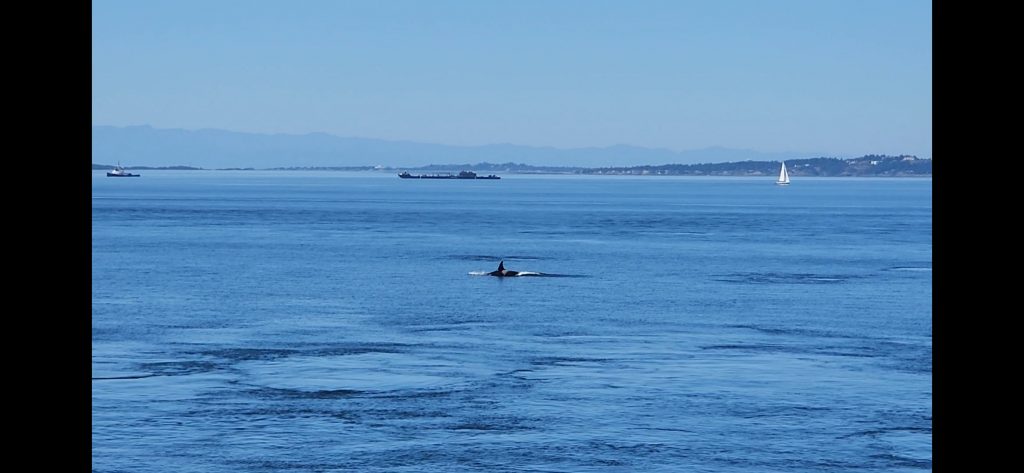
Orca (J40 “Suttles”) near Lime Kiln State Park

There were more than ten members of the J pod near us, and we were also able to hear the clicks and chirps of the whales through the local hydrophone. Unfortunately, our whale watching was cut short by the fact that we had scheduled a hike and appointment with Jacob from Landbank. We all grudgingly left the whales to meet with Jacob, who led us up the summit of Mt. Grant, learning about various plant species along the way. The “no-shoe-gang” (Carter, Athena, and Dylan) faced an arduous challenge when they decided to hike barefoot for half the time. Even after hiking to the summit with limited complaints, they were forced to bow down to the higher power which is gravel. This hike was very fun and we learned about lots of different flora in the area.
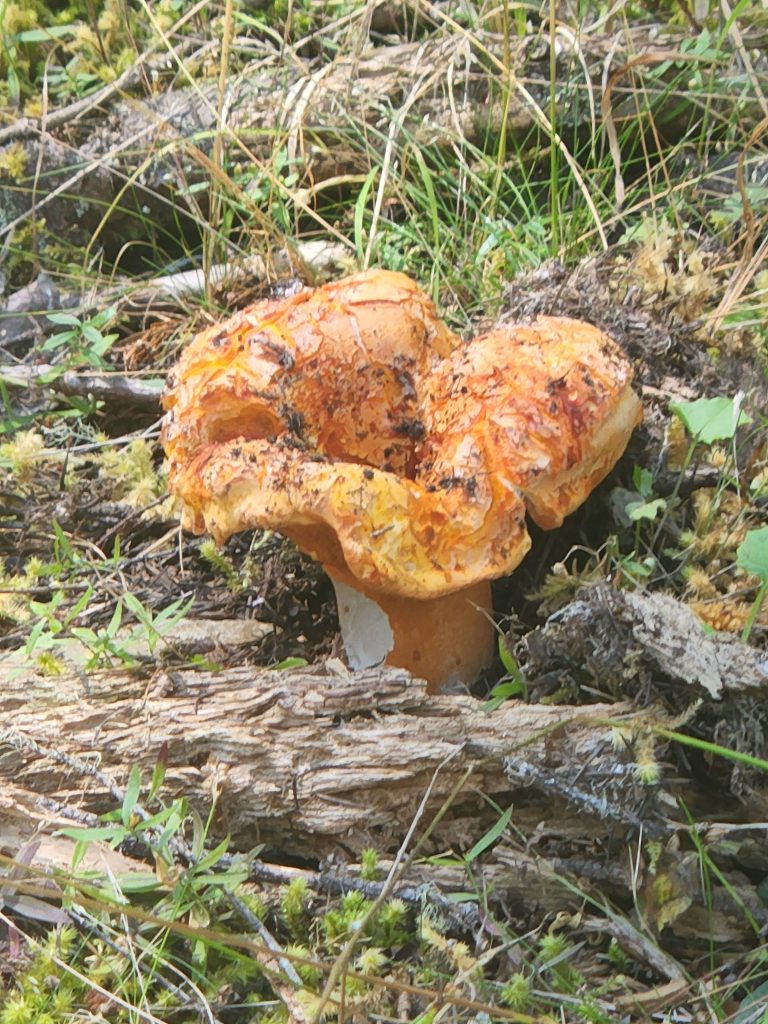
Lobster mushroom that we found on the hike

Once we got home, we were greeted by local solid waste disposers Katie Fleming and Ayla Ridwan. They educated us about the importance of composting and how to make a difference in communities. To put this in practice, we headed off to local restaurants to check if they were aware of the new law that had put regulations on single-use plastic utensils. Even though half of the restaurants were closed, the workers at the other half were kind enough to voice their opinions about this subject, kindly or not. Most thought that it was a great idea.

Later that evening, we were fortunate enough to dine with Jessica Farrer and Eric Guth, researchers and photographers that have had loads of experience with marine mammals. We learned that they had journeyed to Antarctica to learn about the local fauna. They were very fun to talk to and were very knowledgeable. Overall, our day was extremely fun. 🙂
Day 2: Whale Watching at Lime Kiln

By Sohum Ratnaparkhi, Carter Kitterman, and Nyomi Garcia

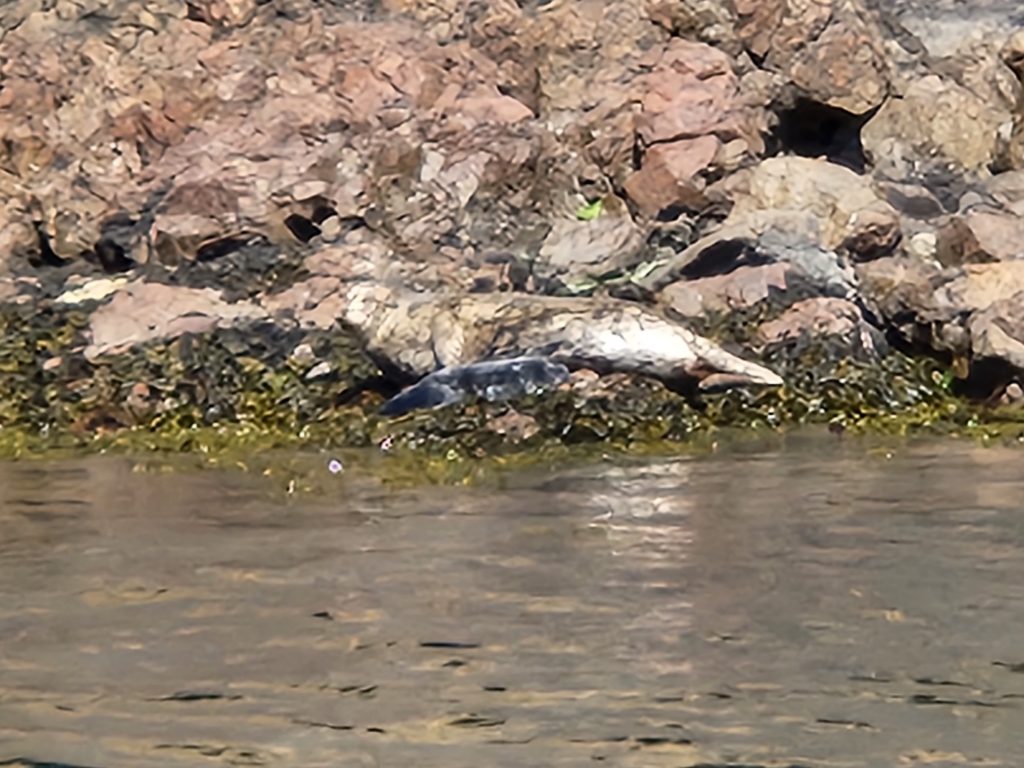
Today, we learned about the species classification of different animals in the area. For those unfamiliar with the term “taxonomy,” it is the process of sorting animals into groups that are easy to understand. For example, an animal we were lucky to see on the shore near the docks of Friday Harbor was the Pacific harbor seal. Its scientific name is Phoca vitulina, the first word being the genus and the second being the species. We also learned about the different orders of classification (kingdom, phylum, class, order, family, genus, species). Then, we went down to the Friday Harbor docks where we saw all sorts of invertebraes and a harbor seal with its pup. We found more than ten different species and wrote down their phylum, genus, and common name, along with quick sketches of the animals.

Harbor seal with pup resting on shore near Friday Harbor docks.

After lunch, we headed west toward Lime Kiln State Park, famous for its land-based whale watching. We met up with Erin, who works at Lime Kiln and told us about the different plant species that made up the park. When we met the coast, we were fortunate enough to see a couple humpback whales off in the distance. The fact that we could see them from over two miles off certainly emphasized their enormous size.

Humpback whale blowhole in the distance (sorry for bad quality).

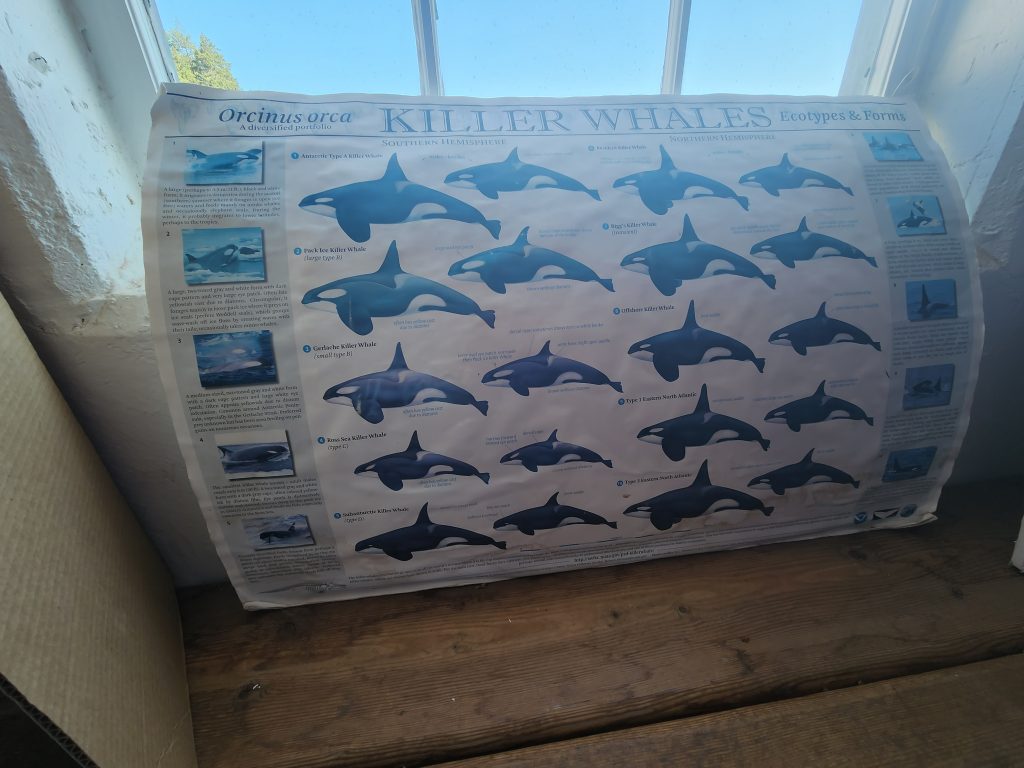
We visited the local lighthouse where we met Dr. Bob Otis, who has been studying orcas for over thirty years. He was able to inform us about the local pods of orcas and the importance of the species as a whole. His sheer amount of knowledge and data surprised us all. Through Dr. Otis, we learned that often data can produce more questions than results.

Different orca ecotypes around the world.

Once we were thoroughly fascinated, we proceeded to go on a small hike up to a limestone kiln which gave the park its name. This experience was also very fascinating in its own way. Our guide Erin told us about the history of the kiln as well as the dangers that workers had to face while working. After learning about this interesting economy, we were able to check out the kiln up close. It was very large and very simple. You could clearly see the way that the kiln had once operated. We were also able to spot a pair of bald eagles perched on a tall tree in the distance. Satisfied with our experience at Lime Kiln State Park, we returned home fueled with excitement and ready to tackle the next project: dinner. And thus, we concluded our second full day at Salish Sea Sciences!

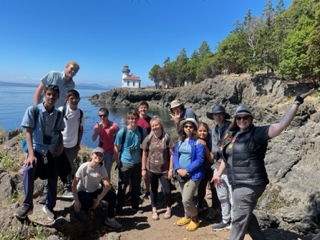
Group picture at Lime Kiln State Park with lighthouse in background.