Day 6: Island Inspecting

Written by Jacob and Madelyn

Today we got to sleep in, which was amazing! Then we all got up and had breakfast. After breakfast we headed over to the couch and the surrounding chairs where we recapped the week and thought back to what we had done in the first couple of days. After this reminisce we packed our bags and headed down to the dock to embark on a journey towards Yellow Island. On the boat ride we kept changing positions from sitting on the back, then going up to the front of the boat, and finally finding a comfortable spot on the roof. It seemed to pass very quickly.

Once we (From left to right) Jacob, Joey, Gray, and Madelyn on the boat to Yellow Island  arrived near the island we had to anchor and row boats to shore as there was no dock. Photo by Kika.

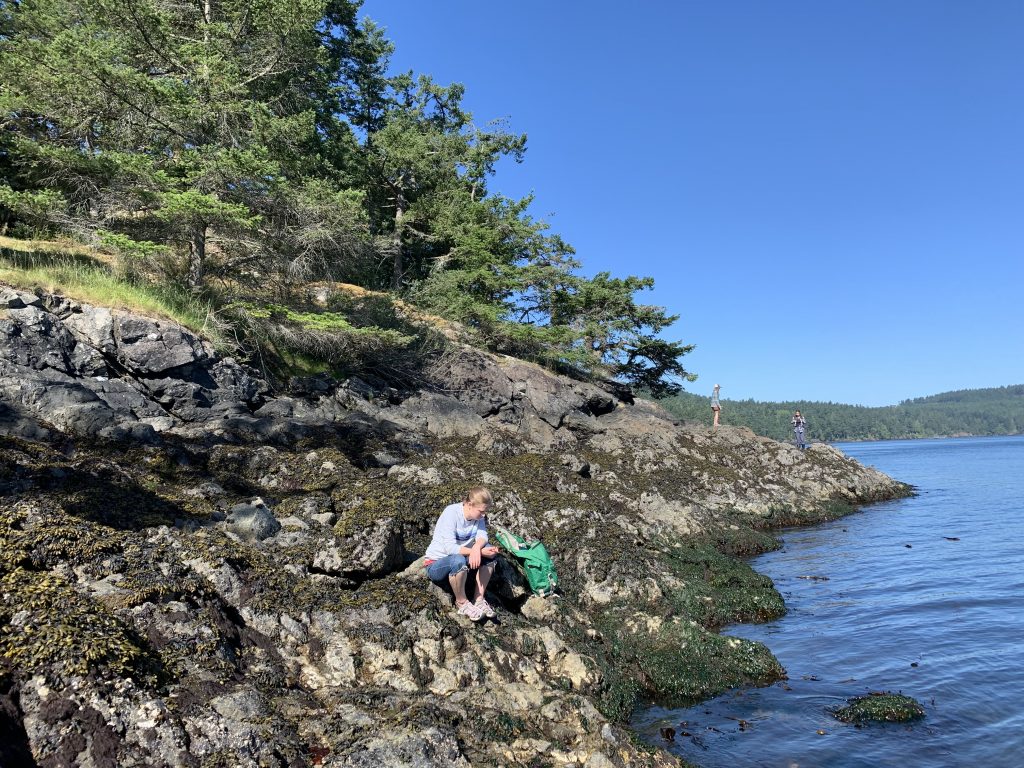
It took a bit of rowing back and forth but eventually we all made it ashore. We were introduced to the islands’ steward, Matt Axling. Then, we continued on through a trail onto a rocky outcropping on the other side of Yellow Island. There, we searched for Pisaster (sea stars). We found eleven of them. 

Instead of walking through the lovely terrain and extremely friendly thorns we had before, we trekked back the long way. On the trails, we wandered through the twelve acre island, seeing the bright orange and green madronas stand out amongst the rather unvarying land, pale yellow prairie flowing in the breeze, and Joey even saw a bald eagle swoop down from a tall tree where the land met the sea. Once we made it to the small cabin where we had originally left all of our things, we carried our cooler to a picnic table that looked out over the channel. Some of us sat in the grass, leaning on the old rickety fence that directed trail walkers, while others talked at the picnic table, admiring the view. 

Yellow Island cabin and view, Photo by Madelyn Crist.

Slowly, but surely we loaded all of our things and ourselves into the two dinghies. It took several trips back and forth to get everyone to the boat and some of them may or may not have struggled getting in and out of the boats and rowing them across the blue, green waters from the shore. We rocked back and forth as the waves battered the boat’s sides; the sun warmed the seats and the roof, making for a really nice place to take a break and watch the various islands pass by from the top of the boat, where we all were sitting and talking.
When we got back to San Juan Island, we docked the boat and grabbed our things to stroll up to Spring Street. Derek met us in the living room and we all gathered on the couch to learn about website building and owning domains. We were all helping Miranda own a sea star domain and were figuring out the undertaking ourselves in the process. After a while we ended up with the perfect domain: www.pisaster.org. Gray and Kika then started making our delicious pasta, broccoli, “chicken,” and vegan sausage dinner, while the rest of us took a break.

Day 5: Constitution Conundrum

By Kika Dunayevich, and Gray Rager

 This morning, we woke up bright and early in preparation to leave for Orcas island. Everyone was thrilled at the opportunity to explore more of the Salish Sea archipelago, but our departure was hectic as we scrambled to eat breakfast and pack for the day. Last night’s volleyball game had left some among our group a little weary and worn-out, resulting in our sluggish start to the day. We meandered into town and boarded the ferry, arriving in the bohemian port town perched upon Orcas Island. We needed to wait for the low tide so to bide time we toured the surrounding area. Exploring a grocery co-op, a quaint bookstore populated with gentle village seniors, a local print shop, and an Italian-style bakery serving freshly baked loaves of bread and an assortment of pastries.

From the Darvill’s bookstore we headed to Crescent Beach to start our sea star survey. We moved along the beach together looking for sea stars, measuring all Pisasters we could find. After about an hour of measuring sea stars we started our walk back and met a man working an oyster farm. We had a lengthy conversation about oyster farming, and the heat wave and its effects on the oyster crop. We headed back to the van knowing a little more about oysters (try Judd Cove oysters).

A Pisaster sea star at Crescent beach (photo by Maddy Glaser).

Before departing for Mount Constitution, we had a lovely discussion with Dr. Joe Gaydos, the author of The Salish Sea: Jewel of the Pacific Northwest and a Senior Wildlife Veterinarian and the Science Director of the Seadoc society. He explained the importance of outreach, activism, and communication in the field of ecology and conservation, and prompted us to think critically about our strategies for influencing politicians and corporate leaders to protect this critical ecosystem. He proceeded to sign our copies of his book, and we thanked him for his contribution to the Salish Sea ecosystem and its diverse and magnificent flora and fauna.

Kika and Jacob explore a squid egg sack on the beach (photo by Sara Sarmiento Ruiz).

We proceeded to hike up Mount Constitution, trekking around the aquamarine mountain lake glimmering with sunbeams and teeming with toddlers. We marched up the dust-strewn trail, wandering into the dense woods populated with young Douglas fir and nitrogen-fixing blankets of moss. Brimming with energy and naïve self-confidence, we hiked for a total of two hours and ascended over 2,000 feet of craggy mountain trails, gradually wearing out our strained muscles. We rapidly became separated, panting heavily and coated with sweat – Gray, Joey, and Jacob had the GALL to race up the mountaintop, leaving the stragglers in the dust. Thankfully, after the many winding detours of the trail, we crested the mountain and were rewarded with a staggering view of the San Juan Islands. Crystal clear waters stretched out for kilometers in all directions, emerald forested islands perched on the plane of azure like the toes of an immense giant. 

Jacob and Joey in the old wood box at the top of mount Constitution (photo by Gray Rager).

We returned, exhausted and sweaty, to the dorm room after a brief respite from activity following lunch. We relaxed in our dorms and concluded the day with a meal of tex-mex tacos, guacamole (salad?), salsa, and assorted toppings.

That concludes our fifth day in the Salish Sea Sciences program!

Day 3: The Eelgrass Excursion

Written by Madelyn, Gray, and Jacob

We awoke today at 6am to clean dishes, eat breakfast, and prepare for the day’s adventure. We arrived at the Anacortes ferry around 7:45am. On the drive to Padilla Bay, we stopped at a local hotspot, the Donut House that had an astounding range of donuts in different sizes and shapes. They also had some doll statues that were more than a little creepy. After we all ordered drinks and donuts we headed out to the van and continued to Padilla Bay.

Once there, we descended a wobbling, spiral staircase. In the bay we walked out to the deeper mud, where each of our steps squelched in the muck. When we entered the sampling area we each had to sample 15 pieces of both types of eelgrass. The native eelgrass grew further out and was taller, growing in harmony with the native grass because it thrived closer to shore and was shorter, forming a symbiotic relationship.  We all had some fun in the mud: Kika fell in, Jacob and Gray raced through it, and both Derek and Joey ended up chasing bags caught by the wind, across the bay. We then headed back to land to wash off our boots and hear more about the place we were sampling and the research that routinely goes on there. 

Gray and Maddy descend the spiral staircase (photo by Derek).

Next, we grabbed our lunches and chilled our eelgrass samples in a cooler. Because the grass around the benches was spiky, those of us without shoes had to be exceedingly careful when we sat down to munch. While eating, we shared stories about interesting family histories.

The van’s next stop was Fidalgo Bay.  The tide was high enough to where we didn’t really see any eelgrass, but the view and the walk were gorgeous. The sun reflected off the waters as they rippled and flowed with the wind, causing the waters to glisten in the light. The crisp air was warm, a refreshing change in the mood of today which was mostly cold, damp, and cloudy. We walked and talked, swapping various stories including Derek’s close calls with bombs when he went diving through shipwrecks in the Adriatic Sea, off the coast of Albania. After our short walk, we reminisced about the views and took in the moments as we stole our final glances of the textured waters, up the vast, green trees, and to the bright, blue sky. We loaded back into the van; on the ride over to the ferry, we stopped to pick up dinner at a Safeway.

Pictured left to right: Jacob, Joey, Gray, Madelyn, and Maddy (photo by Derek).

We arrived early enough for a short walk on the beach before boarding the ferry. Once we began moving, we exited the van and made our way to the upper deck to eat our makeshift dinner. Orange chicken, pita chips, fried rice, assorted salads, and sushi made for a variety of meals and even some drinks (we recommend Dad’s old fashioned Root Beer). The ferry ride home was fun and exciting and as soon as we returned to Spring Street we wrote this wonderful blog for you. 

The gang take samples to assist Morgan Eisenlord with her research into Eelgrass Wasting Disease (photo by Derek). 

Ecology & Conservation 2021 Day 1: The Watershed in a Day

By Gray, Madelyn, and Joey

You can see everything on the island from the top of Mount Grant. After a short hike up the mountain, we were amazed by the lakes, farm land, and even the snowy peak of Mount Baker. The rest of our day consisted of data collection, discussion, and adventure.

After our first breakfast on the island and some “icebreakers,” we climbed into the van and made our way to Mount Grant. At the bottom, we met up with Shauna who is a conservationist working for the San Juan County Land Bank as a field researcher. Responsible for the protection and management of the wildlife on the steep slopes of the mountain and surrounding area, she gave us a “guided tour” and explained to us the significance of each plant and animal and how they all worked together in this biome. 

As we hiked, we periodically stopped to observe flora and fauna like the Madrona, Gary Oak, deer, other animals, and views. She provided us with many interesting facts and thoroughly answered our questions. One of the most interesting things we stopped for was a dead deer on the side of the trail. She explained to us how she had been called to move it off of the trail just a month or two before. Apparently, there has been an outbreak of a deer virus on the island. Another big stop we made was at a clearing, near the top, where we could see Trout Lake along with beautiful landscape and seascape scenery.

Finally, we arrived at the top of the mountain. After taking in the amazing view (below) of the island’s rolling hills and Mount Baker on the mainland, we sat and had an intriguing and wandering discussion. We talked about the future for the islands and how they would be affected by climate change, what an isolated system is and how it affects research and data collection, and how to “do what you can” in helping the ecosystem, however small. On our way down the mountain we continued our philosophical discussions and upon reaching the bottom we said our goodbyes and parted ways.  

The view from the top of Mt. Grant. (Photo by Madelyn Crist)

We headed to Lake Zylstra to eat our lunch and conduct an ecology survey. We ate in the cool shade under the Madronas. Subsequently, we split into three groups to conduct our survey: birds, trees, and insects. The bird group was able to spot nine species of birds; totaling one hundred and ten birds, one of them being a majestic Bald Eagle who had just recently nested in the area. The tree group found eight species of trees with an estimated total of 2,781 trees inside the property line. Our insect group was unable to directly quantify the number of insects as they were limitless; however, they were able to find seventeen different species. The area around Lake Zylstra is teaming with life of all varieties and a great place to take a walk with your dog or friends. 

The tree tunnel at Zylstra lake. (photo by Madeyln Crist)

Lastly we headed for False Bay, the final stop on our tour of the watershed. Because we had spent so long on our other activities we only had fifteen minutes to complete our tour. We threw on our boots and tramped along False Bay’s muddy beach. Because of all of the decomposing seaweed, it had a sulfur smell. After reaching a small creek inlet where the water was flowing upstream because the tide was coming in, we turned around. Exhausted, we boarded the van and  drove home, excited for dinner and some relaxation.

Lake Zylstra. (photo by Madeyln Crist)
While we wrote this blog, Jacob and Kika recreated MasterChef Junior, making a delicious tri-bean chili. Joey was so ecstatic about the meal, tears began to pour down his cheeks. After a splendiferous dinner, we planned logistics and decided that the 5:45 am ferry ride would not be blessed with our presence.

Pictured left to right: Kika and Jacob (photo by Madeyln Crist).

Day 24: Concluding Day Eve

Hello everyone,

If you have kept up to date with the blogs this summer, I’m sure the effort has shown through! Our students have worked collaboratively nearly every day and graciously revised their writing to communicate their experiences with you all. In this moment, they are busy preparing for the pilot project presentations tomorrow. Instead of a conventional blog, below you will find a brief recap of today’s activities.

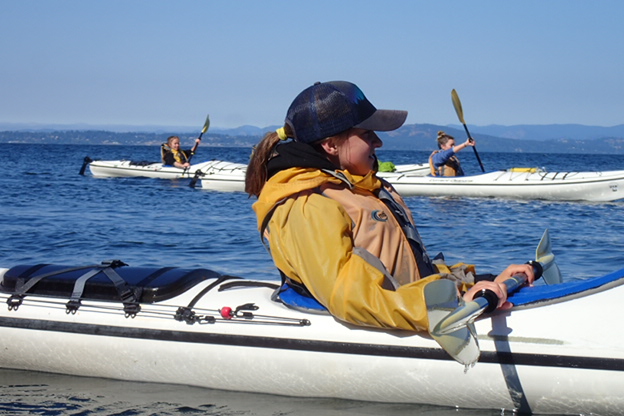
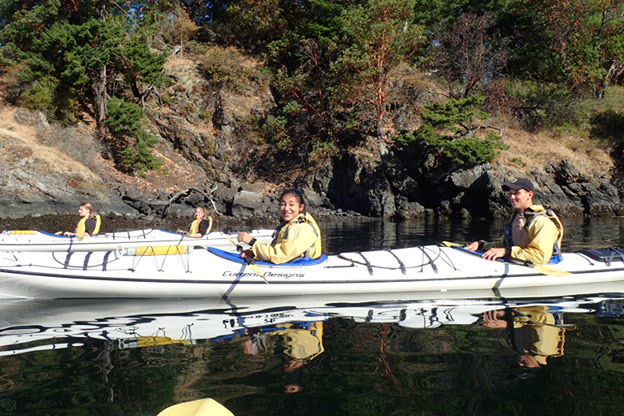
Students faced one of the earliest wake up calls this summer at 6:30am to embark on a Discovery Sea Kayak tour on the West side of the island. Between experienced kayakers and sea-sick troopers, the group arrived safely back at the shore.

Maddy, Ana, Andrea, and Estevan exemplifying the “calm” before the storm. Photograph by Sara Sarmiento Ruiz.
A moment of rest. Photography by Sara Sarmiento Ruiz.

Following this labor intense journey, students ate lunch at the dorms and headed off towards the Swalla Lab at Friday Harbor Labs. Despite some difficulty in understanding, students later commented on their fascination with the lab, especially after their conversations with Dr. Billie Swalla earlier this week.

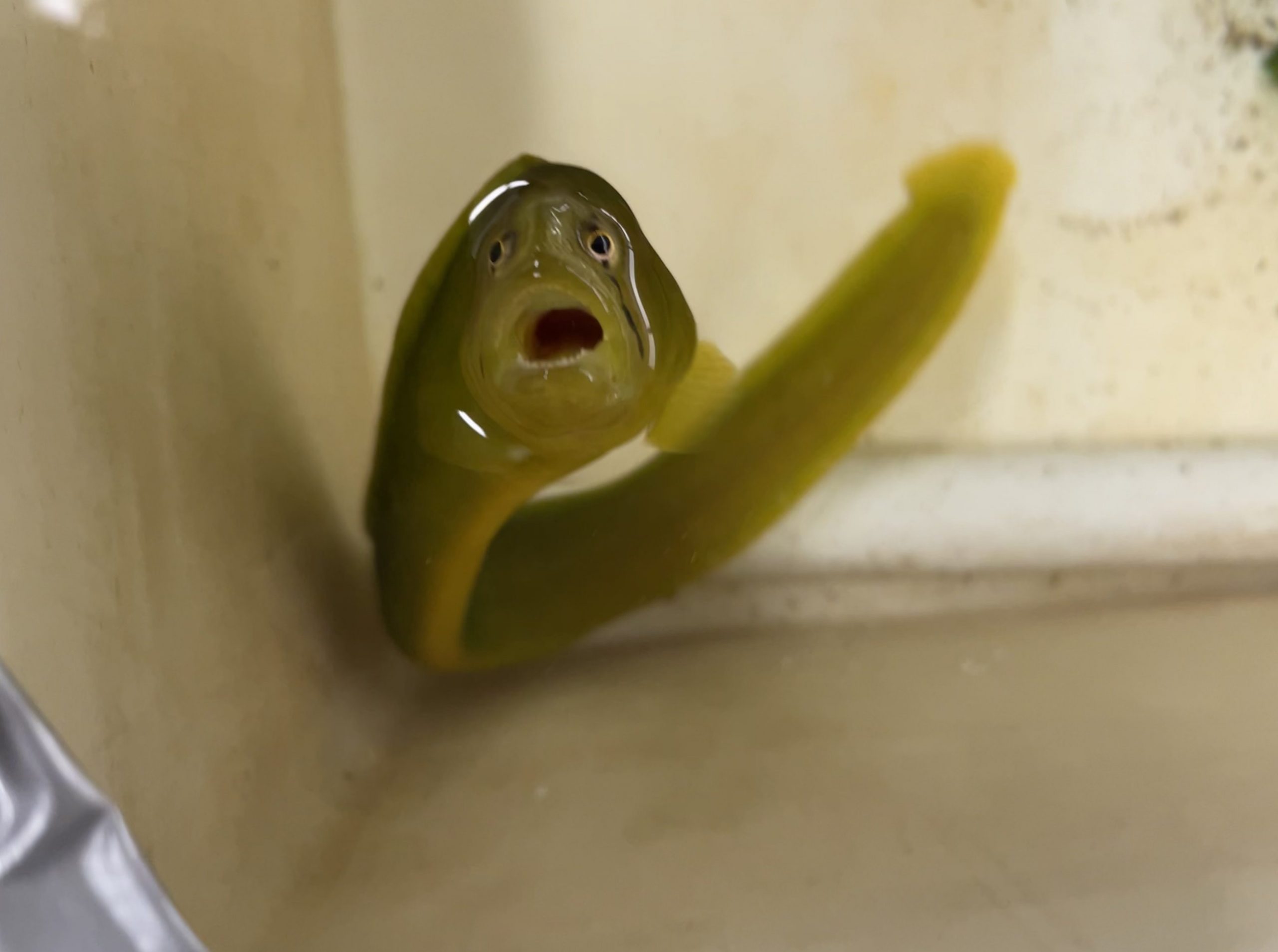
A gasping organism. Photograph by Islay Ross.

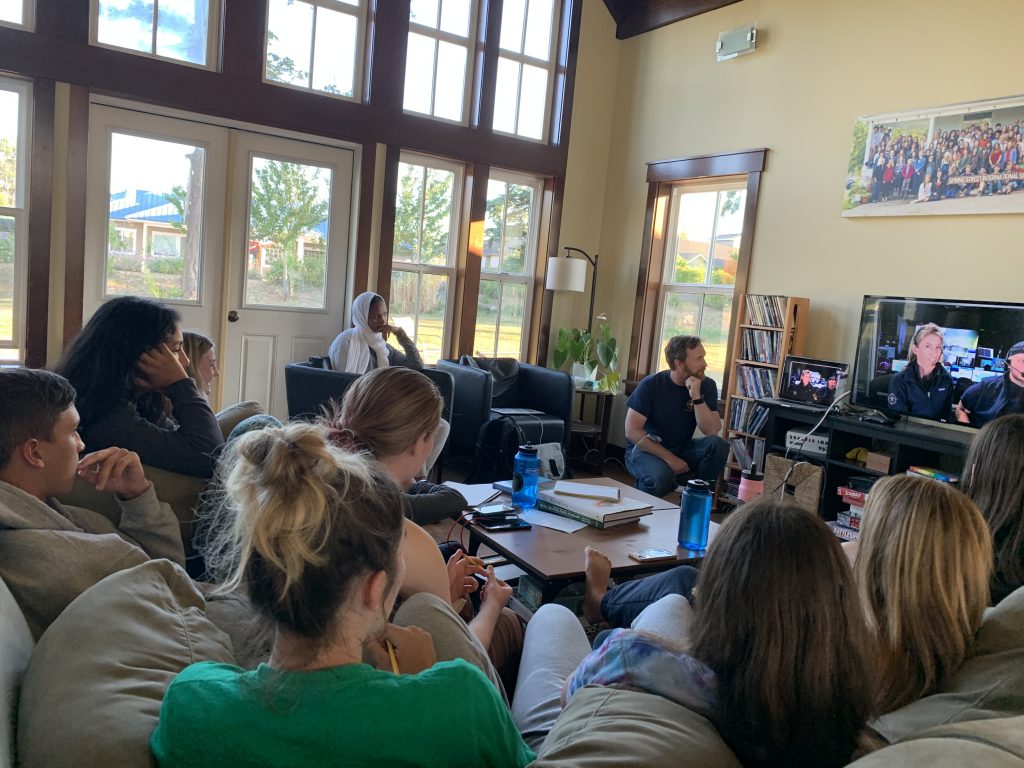
While finishing up their posters, students have also been taking necessary breaks to have dinner, enjoy music, and have a Q&A session with Megan Cook and DJ Yousavich live aboard the Exploration Vehicle Nautilus.

Zoom call with members of the communications and data/science team. Photograph by Sara Sarmiento Ruiz.

We hope you are able to join us tomorrow at the Student Posters & BBQ event from 5-8pm!

Weekend Update

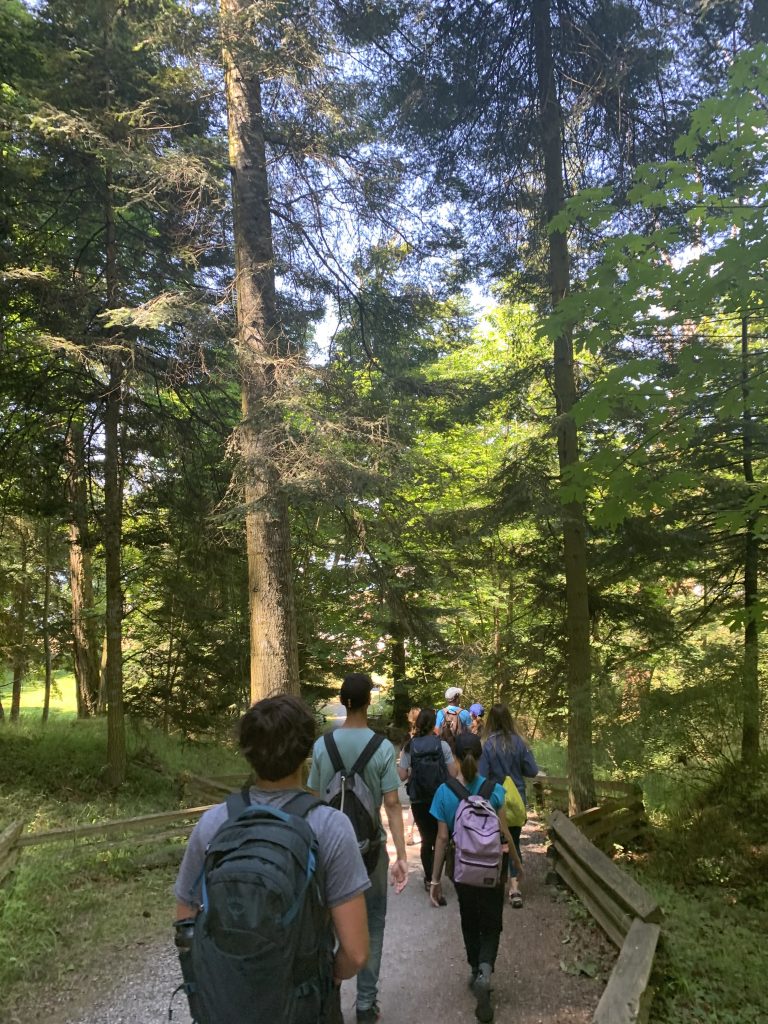
Today’s (short!) update is brought to you by Sara and Miranda after (what felt like) a long day of hiking to the top of Young Hill, a part of English Camp, one of two National Historical Parks on San Juan Island, and waiting for the other half of the group to return from their canoe voyage. After spending the morning working on project development and turning in research proposals, we headed out to English Camp.

Making our way down to English Camp! Photograph by Sara Sarmiento Ruiz.

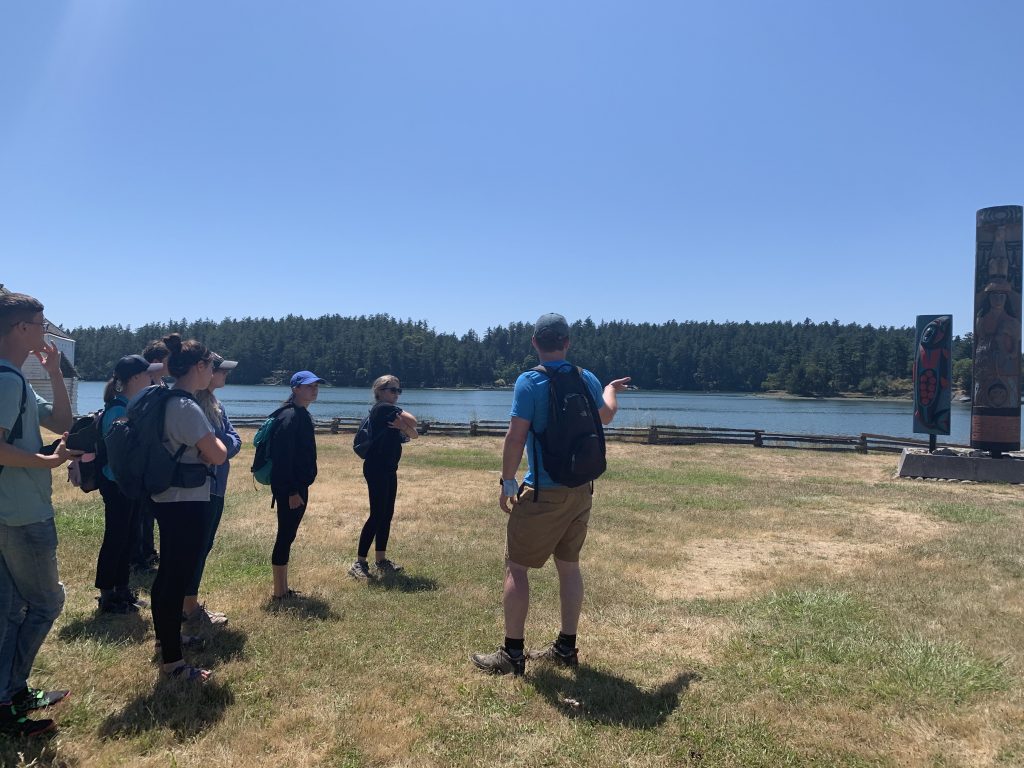
Upon arriving at English Camp, Science Director, Tim gave the students a brief history of English modifications to the area including houses, gardens, and introduced species. Making the trek along the North end of the island, we headed West afterwards up Young Hill. Read here to learn more about historical and current day Lummi experiences.

Lummi totems placed in 2014 to commemorate cultural heritage of Garrison Bay. Photograph by Sara Sarmiento Ruiz.

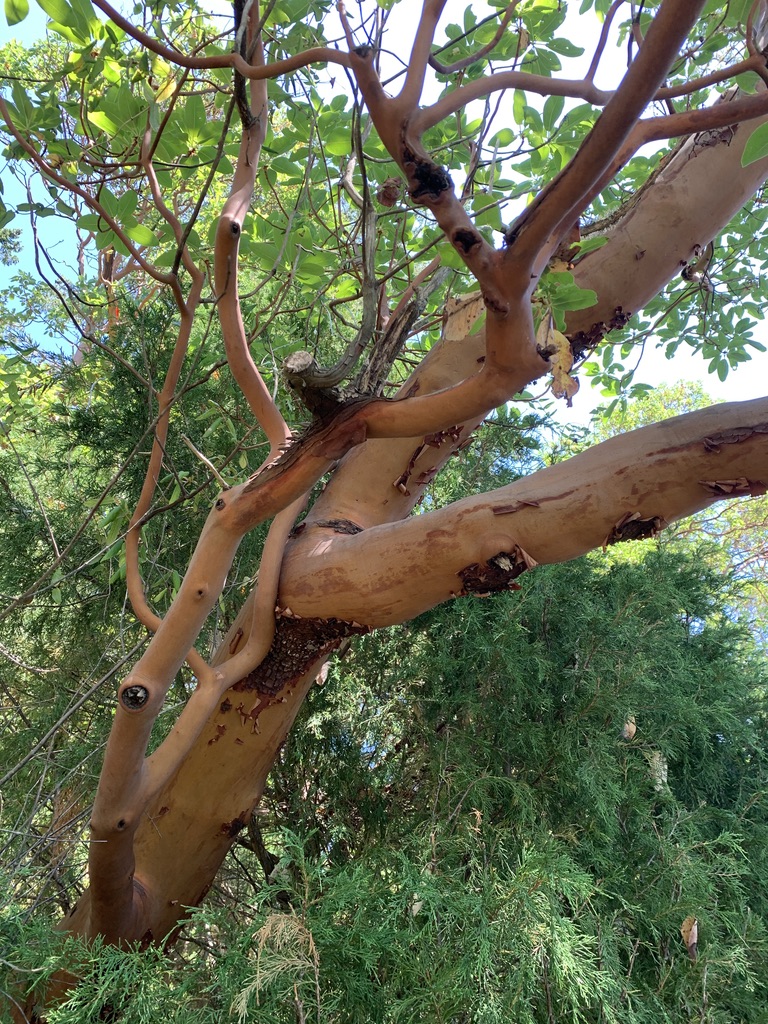
Students spotted Douglas Firs (which are actually pines), Madrona trees, and one bald eagle! 

Madrona Tree’s smooth trunk! Photograph by Miranda Winningham.
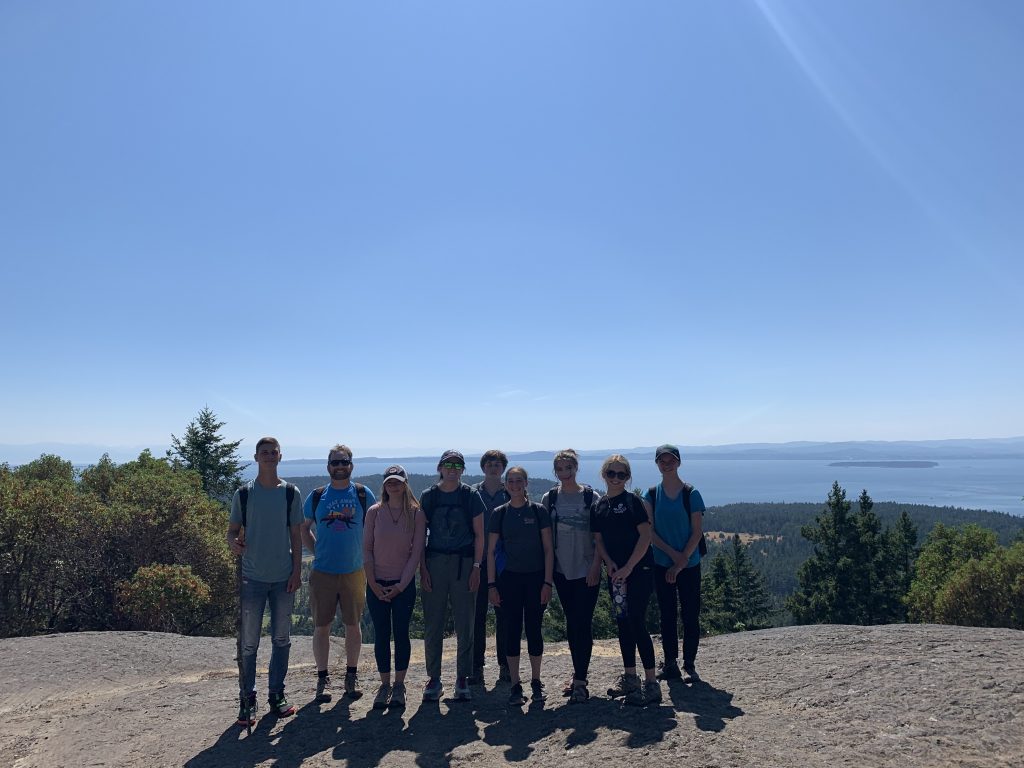
Group photo atop Young Hill. Photograph by Sara Sarmiento Ruiz.

In the evening, our second Kaigani Canoe voyage group joined us once again at the dorms where we gathered for a meal of leftovers!

First Few Days of Field & Lab Science!

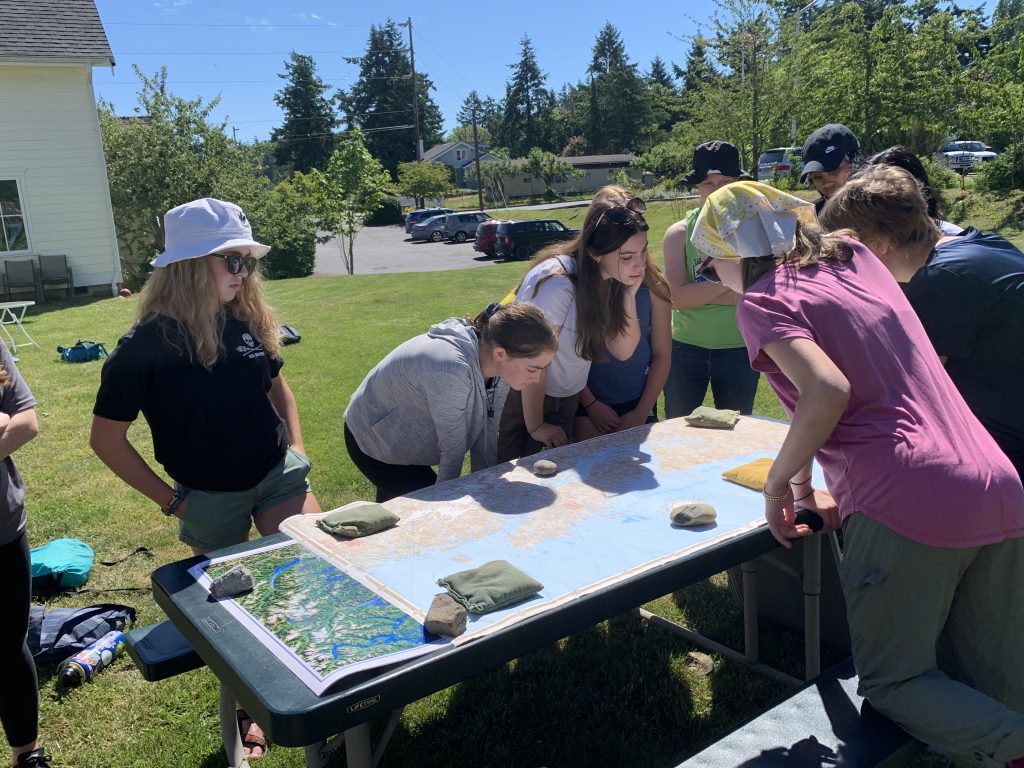
Students gathered for a geopolitical mapping exercise of the Salish Sea and surrounding land.

The Field & Lab Science portion of Salish Sea Sciences summer programs is off to a warm start! Following an evening of unpacking, settling in, and introductions, students woke up bright and early Monday morning to begin learning about their home for the next four weeks.

Students conduct population surveys on sea stars (Pisaster Ochraceus) at Strathmann’s Beach.

Our first student written blog is up! Please stay tuned for more updates to be posted soon.