By Victoria, Zack, Maya, and Rachel
An epidemic sweeping the globe. Thousands, even millions, of individuals infected with the unforgiving pathogen Labyrinthula zosterae. Scientists desperately searching to find the source and cure of this crippling affliction, to save victims whose bodies are literally being eaten alive by this virulent parasite.
If this terrifying description made you shake in your boots, have no fear. Labyrinthula zosterae has no effect on humans- in fact, it is the pathogen responsible for eelgrass wasting disease, a plague affecting the leaves of Z. marina that spreads rapidly through contact with ocean water. Labyrinthula, or Labi, as it is called by some of the experts who study it, made its first major mark on the world in the 1930’s and has been spreading throughout the US ever since. Eelgrass on North American and European coasts even suffered from population decimations as high as 90%.
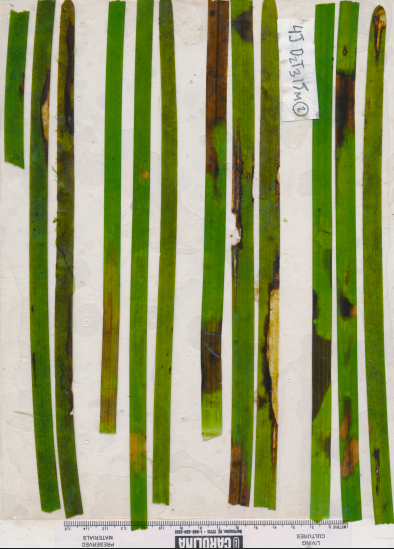
Afflicted Eelgrass (Zostera marina)
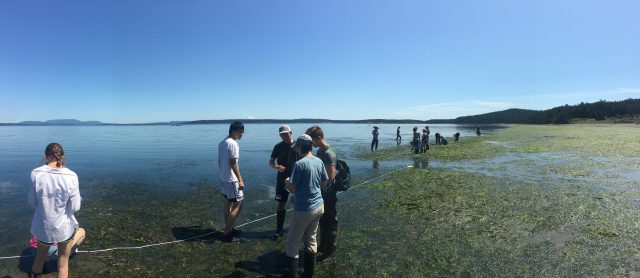
Today our program had a chance to interact with the disease at Fourth of July Beach, a research site and local eelgrass bed in Morgan Eisenlord’s current study. Morgan, along with several other scientists and interns, is currently conducting research on factors that affect Labi’s virulence, or it’s capability of causing disease, as well as how the pathogen is influencing eelgrass populations in the Salish Sea.
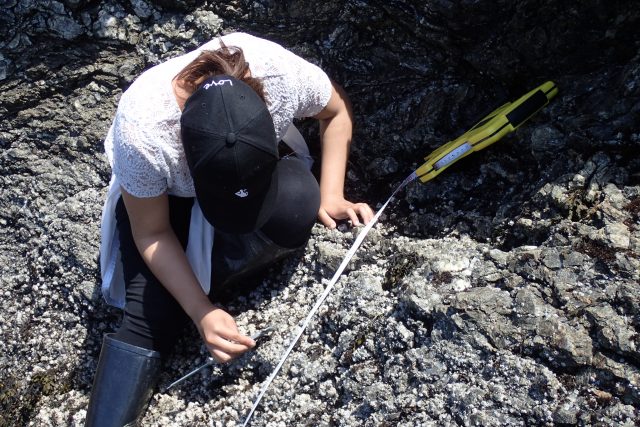
We helped contribute to her research by collecting around 200 samples of eelgrass leaves for later study that day, also measuring eelgrass population density with the help of our two most beloved field tools: quadrats and transect tapes. Post-collection, we took the aforementioned samples and scanned them, before running the photos through a program which we intend on using tomorrow to measure and log both the size of the eelgrass blades and their disease-induced lesions.
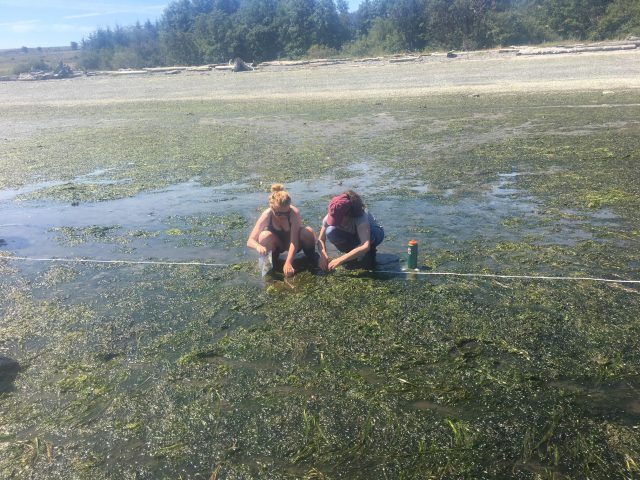
Zoe and Gabrielle sampling infected grass
Today was a beautiful, sunny day. Hopefully we continue to get lucky with such nice weather for the rest of our 5 days together!