Day 2: Whale Watching at Lime Kiln

By Sohum Ratnaparkhi, Carter Kitterman, and Nyomi Garcia

Today, we learned about the species classification of different animals in the area. For those unfamiliar with the term “taxonomy,” it is the process of sorting animals into groups that are easy to understand. For example, an animal we were lucky to see on the shore near the docks of Friday Harbor was the Pacific harbor seal. Its scientific name is Phoca vitulina, the first word being the genus and the second being the species. We also learned about the different orders of classification (kingdom, phylum, class, order, family, genus, species). Then, we went down to the Friday Harbor docks where we saw all sorts of invertebraes and a harbor seal with its pup. We found more than ten different species and wrote down their phylum, genus, and common name, along with quick sketches of the animals.

Harbor seal with pup resting on shore near Friday Harbor docks.

After lunch, we headed west toward Lime Kiln State Park, famous for its land-based whale watching. We met up with Erin, who works at Lime Kiln and told us about the different plant species that made up the park. When we met the coast, we were fortunate enough to see a couple humpback whales off in the distance. The fact that we could see them from over two miles off certainly emphasized their enormous size.

Humpback whale blowhole in the distance (sorry for bad quality).

We visited the local lighthouse where we met Dr. Bob Otis, who has been studying orcas for over thirty years. He was able to inform us about the local pods of orcas and the importance of the species as a whole. His sheer amount of knowledge and data surprised us all. Through Dr. Otis, we learned that often data can produce more questions than results.

Different orca ecotypes around the world.

Once we were thoroughly fascinated, we proceeded to go on a small hike up to a limestone kiln which gave the park its name. This experience was also very fascinating in its own way. Our guide Erin told us about the history of the kiln as well as the dangers that workers had to face while working. After learning about this interesting economy, we were able to check out the kiln up close. It was very large and very simple. You could clearly see the way that the kiln had once operated. We were also able to spot a pair of bald eagles perched on a tall tree in the distance. Satisfied with our experience at Lime Kiln State Park, we returned home fueled with excitement and ready to tackle the next project: dinner. And thus, we concluded our second full day at Salish Sea Sciences!

Group picture at Lime Kiln State Park with lighthouse in background.

Day 1: Trip To The Tidepools

By Athena Burk Bravo, Uma Garcia, Akira Wittkamper

Our first full day on the island started off by getting familiar with the local wildlife found in the tide pools of Deadman Bay. During our first hour, we spent time exploring the tidepools, at a high level and beginning to identify the species we were seeing.

Photo taken by Athena

We were lucky to have our guide Alex with us able to answer the questions regarding the ecosystem we were seeing. When we first got to the beach, we noticed the abundance of barnacles. As we began to explore further, we saw sea cucumbers, sea anemones, crabs, chitons, sea stars and even a bald eagle! We were able to identify the types of species more specifically with the help of our group and Alex.

Included below are some of the sights we saw this afternoon.

Seal to Carcass: Tale of a Necropsy (Warning: Graphic Images)

By Denny Bromley, with William, Elspeth, and Johnathan

Today, Salish Sea Science students were given the rare opportunity to watch the necropsy of a seal pup. The few-day-old pup was called in by someone who had noticed its umbilical cord and placenta still attached, thinking it was an entangled balloon or plastic bag. Assuming they were doing the right thing, they cut off the cord. The seal was brought to rehab to recover from so much human contact, for eventual release back into the wild. Sadly, it passed away. Harbor Seal pups only have a 50% survival rate, and this individual didn’t make the cut. In order to figure out the cause of death to prevent in-care deaths again, FHL performed a necropsy on the animal.

The necropsy began with one of the scientists cutting into the pup’s neck. Folding the flap back, they measured the thickness of the blubber layer to determine how healthy the pup was, and how well it was nursing from its mother. After that, they cut open the seal from chin to pelvis, opening it up into the muscle layer until the ribcage and intestines were visible.

After this, they removed the sternum and cut the ribs off of one side to better access the chest cavity. Then, they began removing and inspecting individual organs. Pieces of its heart, lungs, stomach, intestines, and kidneys were all stored for later research.

Finally, they removed the head from the body and began peeling back the skin and blubber from the skull. They removed one of its eyes and we were able to see it up close.

They finished skinning the head, but rather than enter the cranial cavity on the docks, they took the skull back into the labs to do it there. Thus ended our experience of the necropsy.

After the necropsy, we were given a brief tour of some of the labs at FHL. We saw students working, and even an electron microscope!

Finally, we were given some pamphlets and drove home. Later, students finished up their posters and even printed a few of them.

Day 24 – Sniffing for Some Scat

Eba sniffing the camera. Photo by Bryce.

Today was spent working diligently on projects, but we took a break from that to have an exciting visit from Dr. Deborah Giles of the University of Washington and her dog Eba. Eba is a working dog who works to sniff out killer whale scat to be analyzed for chemicals, diet of the whale, and even pregnancy. Dr. Giles explained to us how to tell individual whales apart simply through scat and also how the Snake River Dam is affecting our Southern Resident killer whale population. Eba was a delight to have as well, appreciating all of the love and new friends. While their visit was short, it was a pleasure and an honor.

Day 23: A Day of Discovery

By Eliza, Henry and, Samuel

Today was a project day meaning  we all went our separate ways to complete our various studies. Many of the Southern Resident Orcas came to the island and we got an opportunity to listen to their echolocation. The sculpins got their first concert of viola and clarinet in order to assess their reactions to the music while the bioluminescence team learned about the circadian rhythms of the Noctiluca Scintillans. More research was done into the sleep cycles of Nudibranchs. Saml did dock biodiversity surveys and underwater footage collection via a kayak and Gopro rig he’d built. We were also honored with a visit from the esteemed A. O. Dennis Willows, a UW professor Emeritus directed the incredible Friday Harbor Labs for over thirty years from 1972 to 2005, he taught us about what had made him and his colleagues successful and gave us advice for our futures in the sciences.

Slow Day

By Denny Bromley

Today’s activities were entirely focused on students’ individual projects, and as such, there won’t be much to report in this blog. However, after dinner, we will have a special speaker. Dennis Willows is a director of FHL, as well as an aviator, ship captain, and neuroscientist. He’ll be talking about the 2008 Nobel Prize in Chemistry awarded to three FHL scientists, as well as the story behind the discovery and development of the GFP first observed in 1972.

Day 21- Lights and Lavender

By Bryce Ridwan, Ian Connolly, and Sarah White

Harbor seals off the dock in Friday Harbor, By Bryce.

Last night after the blog had been written we decided to go out in the harbor and drop lights down into the water. At first all we were seeing was a few polychaetas but then something amazing happened. Harbors seals came from all around there were about 4-5 seals one of which was just a pup. We stayed and watched until about 11:30 PM before finally going home.  Today we were woken up at around 9:00 AM and as people started to meander down the stairs and come down to eat breakfast we were told we would be going down to the Farmers Market. After everyone was ready we were given $20 each to go explore and eat whatever we wanted. We walked down to the farmers market which is near the Brickworks building, and there we saw a collection of tents selling all sorts of different products ranging from food to jewelry. After about 2 and half hours we all came back and grouped up to leave for the Pelindaba Lavender farm. Once we arrived at Pelindaba we were greeted by Dr. Stephen Robins, the founder and owner of the farm. We were seated on and around a picnic bench where he told us the story of how the farm was founded. Dr. Stephen Robins was previously a physician and came to the Island to retire. At first he bought 10 acres of land and later 10 more to preserve the land. After the purchases he wanted to make sure the land would stay open far into the future, and the best way to do that was to start farming. Dr. Stephen didn’t know what to plant and had no knowledge in farming, so he started to research. After a time he landed on lavender which fit all four of his criteria: 1) it didn’t need a lot of water since the island is in a rain shadow 2) it couldn’t compete with the local farmers 3) the plants did not need to be fertilized and 4) it needed to be economically viable. Once the decision was made he started to transform the land. The farm is surrounded by French drains to make sure water wouldn’t kill the lavender and the mounds, which make any water that does fall on them funnel away, all faced downhill which leads to a steam. He also told us about all of the amazing properties of lavender. Lavender can be used and an antiseptic, sedative, and an anesthetic and Dr. Stephen has made a swath of products that are sold in both the Pelindaba stores and online website pelindabalavender.com. After he was done telling us all about the farm we got to enjoy all the flowers and products that can be made for about an hour before we finally headed home.

Lavender at Pelindaba farms, by Sarah.

Day 20: A Whale of a Tale

By Eliza and Henry

Whale hello there! Today, the Salish Sea Science students met pod T065A, a pod of 6 transient killer whales with 2 brothers from pod T077. Pictured is  T077D, a male born in 2009. The Salish Sea crew was abruptly awoken at 8 a.m. by the sound of Alex yelling that there were orcas spotted at eagle bay. We all hustled into the van and drove to Land Bank and eagerly awaited the orcas. When they finally made their way to us, we all watched in awe as they swam by together as a pod. Once they were farther out, we hurried over to San Juan County Park and watched as they departed over to Canada. After this exciting event, students went back to the dorm and began working on project introductions. This included blacking out a room for some students, setting up tanks, and heading to a tide pool to collect data. We then planned our night walk to the Friday Harbor docks to look at the different abundance of life present at this time and bioluminescence.

Day 19 – Cartoon Communication

by William, Denny, and Elspeth

Today, we awoke with the luxury of a little extra sleep, since our wake-up time was 9:00. After eating breakfast and going through our morning routine, we headed up to the science classroom to do a Zoom meeting with Sasha Seroy, PhD, a lecturer in oceanography at the University of Washington. She had us go through two activities concerning scientific communication, which in simple terms is how scientists are able to communicate with their audience, as the name suggests. In the first activity, we had to explain how ocean acidification impacted mussels to a politician, kindergartener, grandmother, and several others. This really showed how much you had to change the wording of your messages according to your audience! Next, we drew comics about marine animals. As it turns out, Sasha draws her own comics titled Interviews with Invertebrates! (By the way, you can find her @IWIComics on Instagram.) 

Watching Sasha Seroy’s presentation.
Sarah’s comic about a Harbor seal therapist.

After we bid her farewell, we had lunch and embarked upon our final activity of the day: some time at the beach! People both worked on their projects and enjoyed the beach until it eventually came time to head home. 

Day 18 – In Deep Water

Rights, Ocean Exploration Trust. To learn more about Ocean Exploration Trust click this link

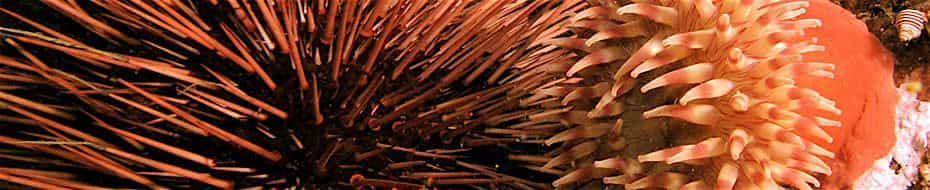
The crew had plenty of time to sleep in today before we came together in the science room to embark on a call with Tim Dwyer, video engineer, and Megan Cook, communications lead and co-expedition lead and both Friday Harbor natives. They are currently working on the E/V Nautilus in the Johnston Atoll National Wildlife Refuge, about nine hundred nautical miles west southwest of Hawaii. The crew’s mission is to map and explore previously uncharted sections of the sea floor, and to take samples along the way. They spoke to us about the crew shifts, the marine life they are encountering on the seafloor, and we had the exciting experience of getting to watch the recovery of their two ROVs, Atalanta and Hercules. We had the opportunity to ask questions about their life at sea, what led them to the Nautilus, and how samples are collected remotely. After our meeting, we headed down to the Port of Friday Harbor where we completed a taxonomy activity and viewed the giant plumose anemones growing on the docks. We enjoyed poking our heads under the docks and pointing out decorator crabs, sculpins, and green sea urchins.