Day 20: The Salish Dip

Today, a few peers started their day at 0700 and headed to Deadman’s Bay, as well as Reuben Tarte (differing intertidal zones) to collect data for their differing science projects. While out at Deadman’s Bay, Miles found a piece of what seems to be a very old metal piece, possibly from a ship. Derek mentioned sending it to the museum to see how old the piece of metal is.

While some people were in the intertidal zones this morning, others were with Morgan Eisenlord, a PhD candidate at Cornell university in the Harvell lab, talking about strategies for how we will collect eel grass on Sunday (7/14) with Morgan to do further research on the pathogen that is harming eel grass.

After lunch, almost everyone went back up to the classroom with Morgan Eisenlord to do more planning and preparing for the mission on Sunday. I, Zoey, decided to go to the Friday Harbor Marina docks after lunch to work on my science project where I saw 21 Aequorea jellyfish, 2 Beroe and 1 fairly large jellyfish that is called Aurelia Aurita, a moon jelly. When I got back to the dorms I learned that everyone else had gone swimming in what I know as very cold waters.

When getting back from swimming and other activities everyone enjoyed a little free time and then headed to dinner where we met our guest for the night, Katie Dobkowski, a professor at Bates College in Maine, who specializes in many things but mainly the biotic and abiotic factors of organisms and also specializes in bull kelp.
Day 19: An Inkredible Day!

By Kalena, Devika, Nick and Miles

Today was a laid-back day. We lazily rolled out of bed at eight, starting our morning with a few hours of individual research. After days of emailing and planning with Derek and Anna, most of us had began or were ready to begin our projects. Leighna, Ella, Jeremy, Ezra and Orly headed to FHL around nine. The group of five met with researchers that specialized in fields related to their projects and even began setting up their experiments.

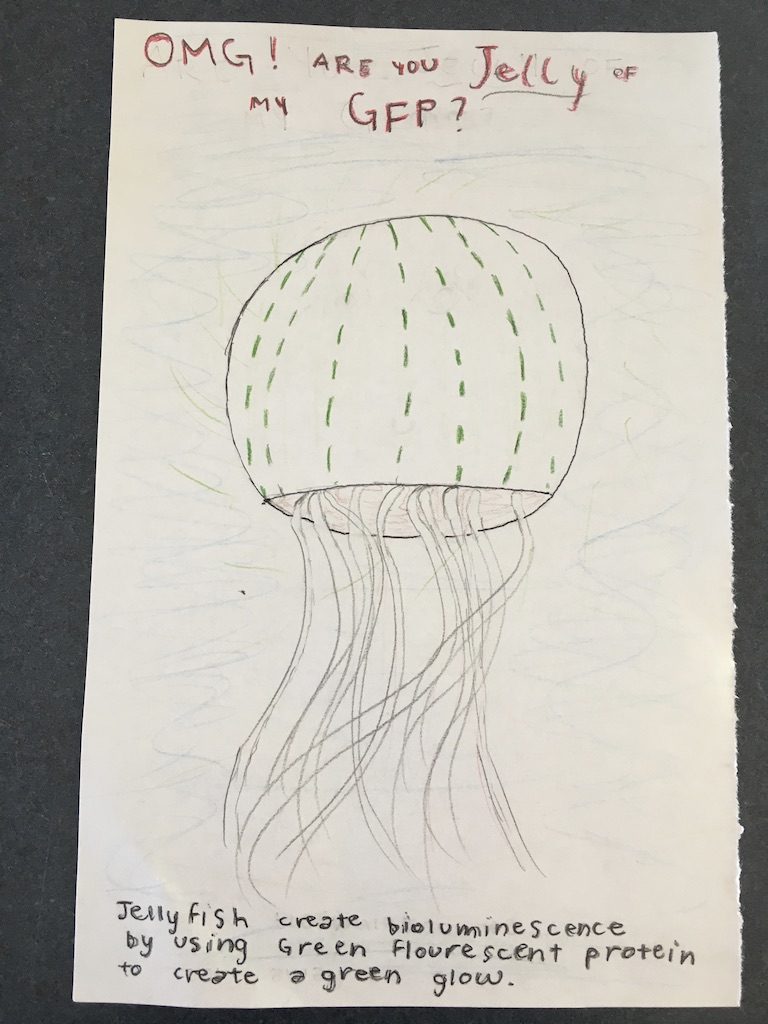
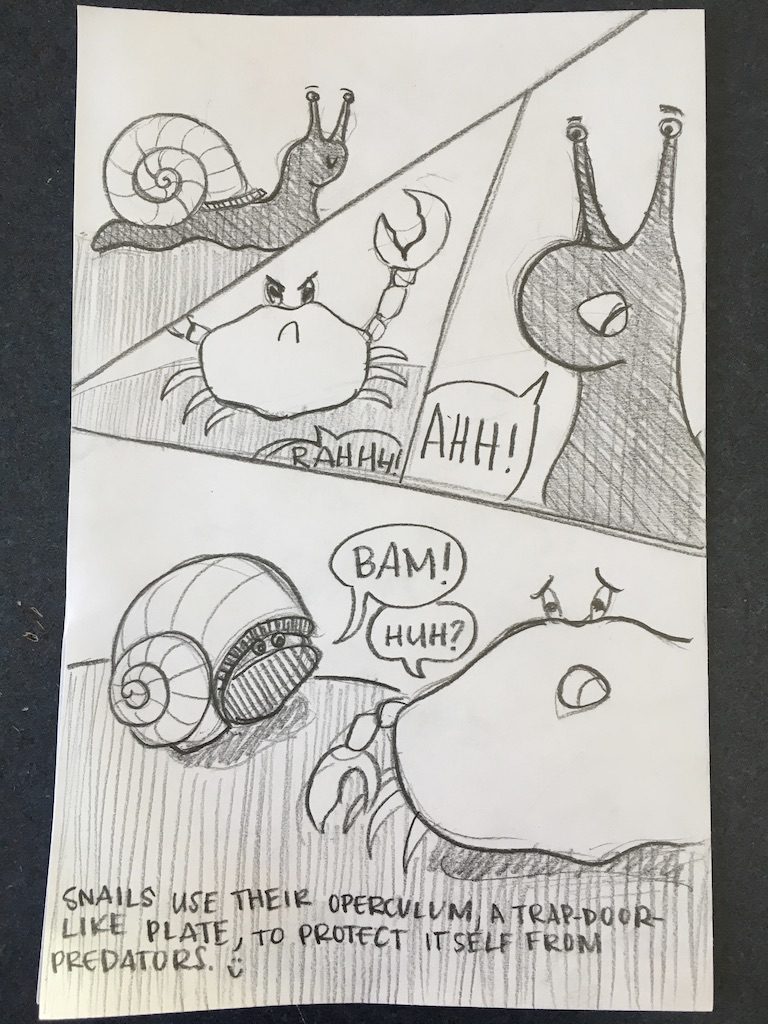
In the afternoon, we met with Sasha Seroy, a UW PhD candidate studying snails at the lab. She explained scientific communication, methods of sharing information with the public in a way that’s engaging and easy to understand. This can be through writing, art, social media, photography, outreach and games. Scientific communication is not only important because you need to get your point out to the public, it’s also a way that you can bring in sponsors and funding. With Sasha, we focused on communicating through art and drew cartoons about our projects. Our ideas included puns, interesting facts or pressing issues. Some of us went up and presented are comics to the whole group while others were reluctant to share their ideas. Sasha’s talk helped us better prepare for how to present our posters next Sunday.

While the most of the group did scientific cartooning, Devika, Nick, and Ella worked on their research projects at Friday Harbor Labs. Devika and Nick spent a couple hours in the octopus lab to observe and record the behavior of the octopuses. Unfortunately, there wasn’t much to to observe since one of the octopus was hidden under a towel and the other was camouflaged in a corner. Still, it was entertaining to see one of the crabs wander into the tentacles of the octopus.

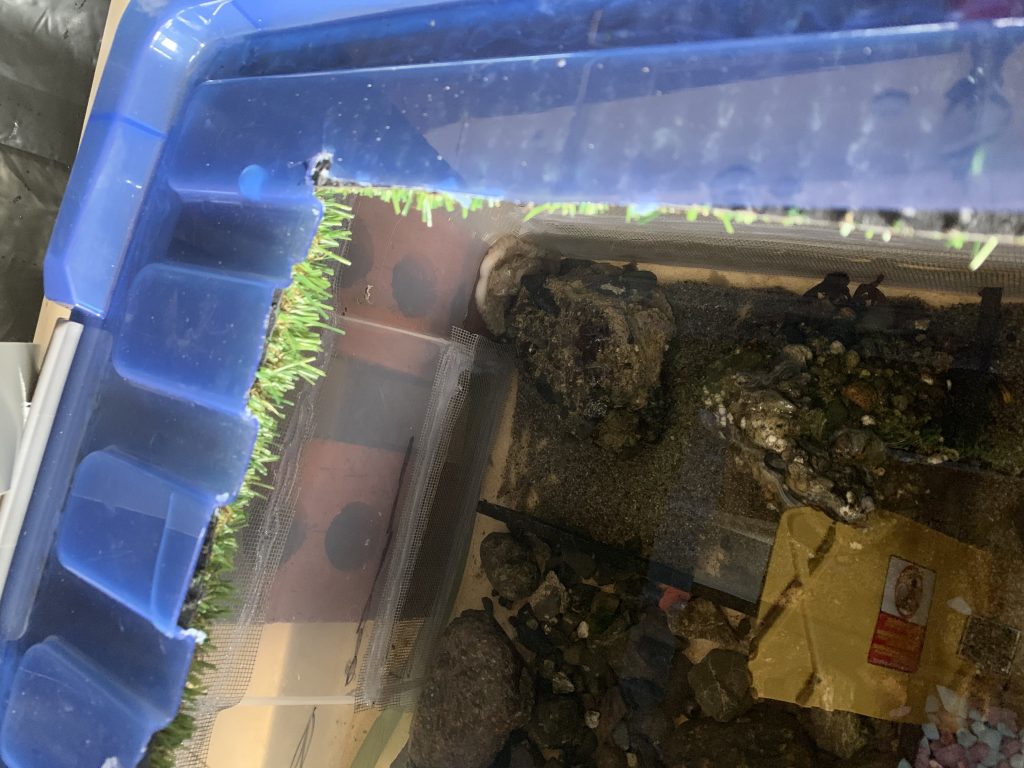
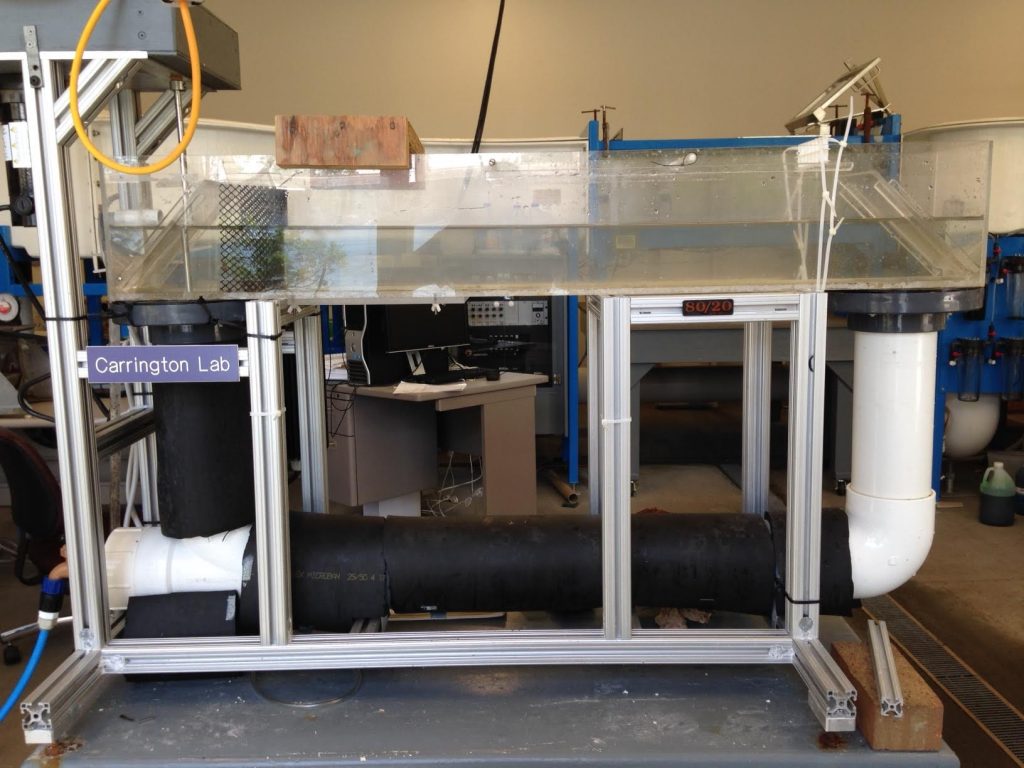
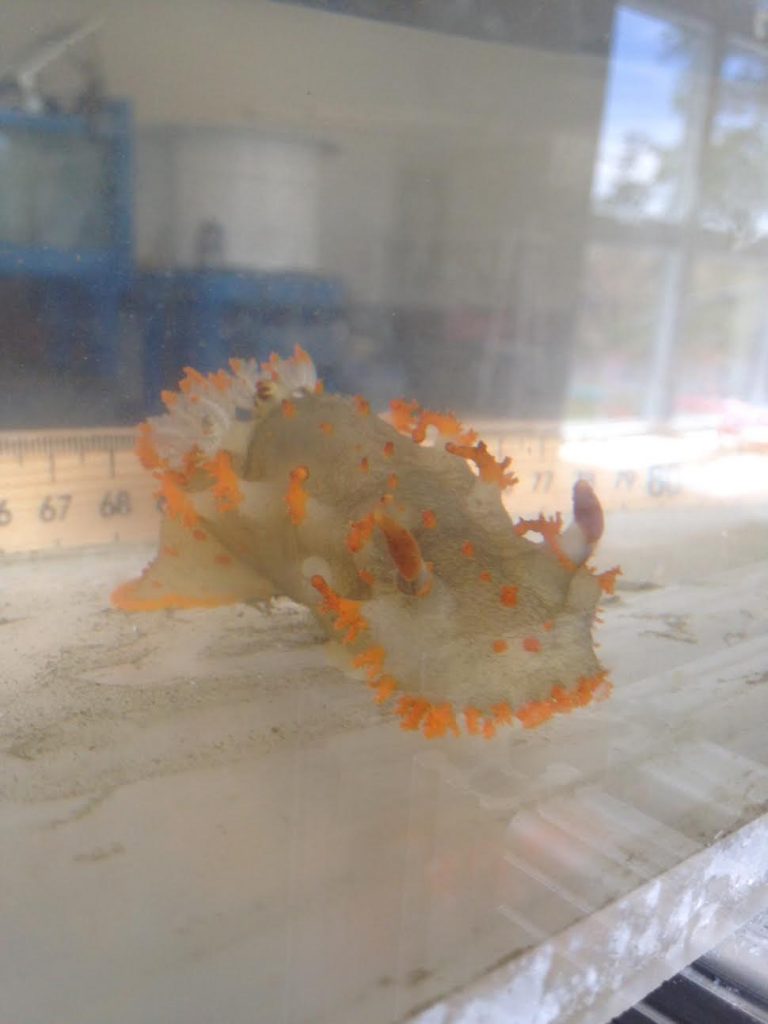
Ella worked in a nearby lab on her project about sea slugs and currents. She had been working hard for many hours to get her tank ready and when she was finally finished, her GoPro stopped working. Still she has persevered with a happy attitude and is hoping to start testing with the slugs tomorrow!