By Ezra, Olivia, and Orly
From the neuroscience of nudibranchs to inspection of Iceberg Point, we had a day chock-full of learning. We began the day with an early wake-up call, crawling out of bed and out onto the ferry. We traveled from our home-base on San Juan Island, using a ferry to cross Cattle Pass, and deposited our weary but excited bodies on Lopez Island.
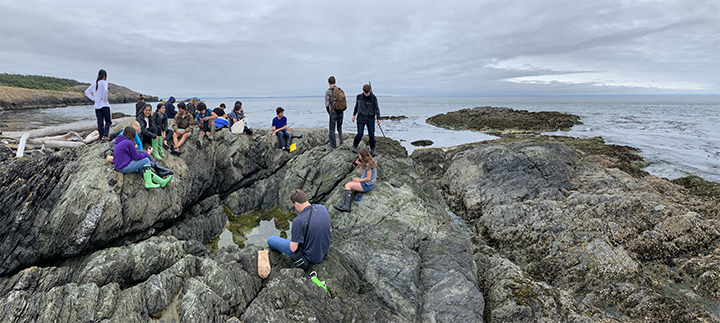
Lopez Island is home to Iceberg Point, a maze of tide pools and bluffs, that proved ripe for exploration. Despite our planned repeat of scientific tests, the identification of animals and the lure of the low tide led our entire group, and our head scientist, to continue our exploration. We combed over the countless barnacles, mussels, sea stars, and crabs, occasionally dipping our hands into pools of freezing water to examine a sculpin or a snail. Splashing through kelp and the rising tide, we found rare sponges and the disease-ravaged ochre sea star, we recorded the movement of tide pools, and 3D modeled different species.
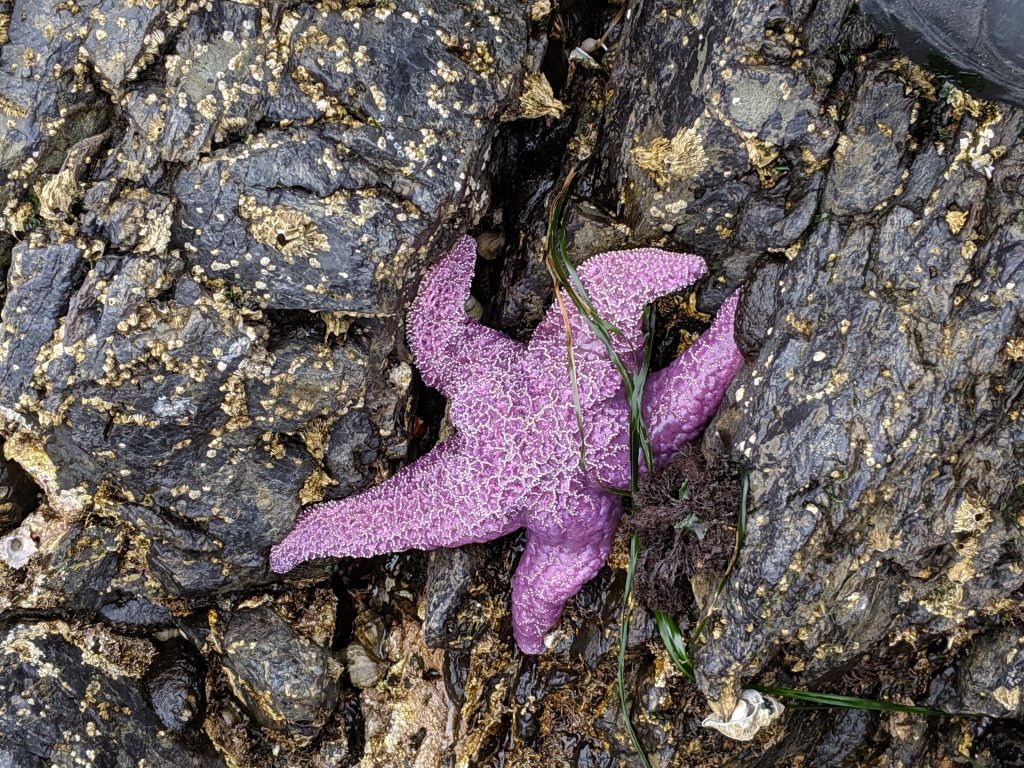
Photo Credit: Ezra
Afterwards, we had the good fortune to hear presentations from two renowned scientists who were presenting at Friday Harbor Laboratories, Dr. James Murray and Dr. Andreas Heyland. Dr. Heyland is a specialist in the field of environmental toxicology. He presented ro many scientists at the labs, and us, on the topic of the effects of different metals and pharmaceuticals on the lifecycle and adaption of freshwater plankton.
Dr. Murray, on the other hand, presented on the neurology of nudibranchs. Nudibranchs are mostly blind and deaf sea slugs that roam the seafloor. Nudibranchs are unique as they own neurons so big, they can be seen with the naked eye. In addition, the sensory inputs of the nudibranch are mostly touch and “smell” related. Throughout the presentation, we learned about how open brain surgery on T. diomedia slugs revealed different links between limbs and senses and how each sense functioned. Afterwards, we got the rare and unique opportunity to got into his workspace and look at how he developed the discoveries. He showed us around the nudibranch holding tanks and his Faraday cage. Throughout the fascinating experience, Dr. Murray was very open and eager to answer any and all questions.
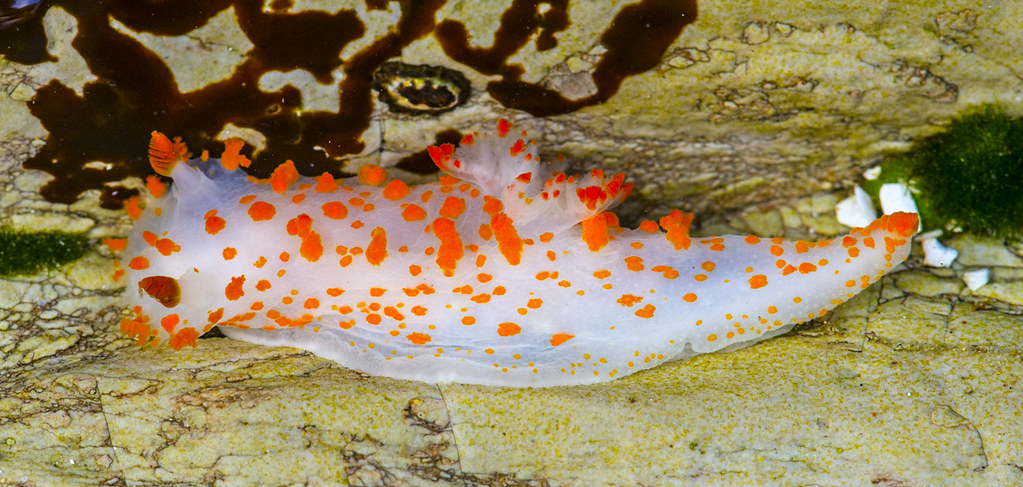
Image labeled for reuse
Image credit: https://www.flickr.com/photos/jkirkhart35/14361459417
Today was an opportunity for Salish Sea Sciences that very few people get. Take advantage of your unique opportunities in life to learn about our wonderful world.