Prose and Peaks

By Denny Bromley, with Elspeth, William, and Jonathan

Today, on the first day of July, the students of Salish Sea Sciences practiced their inner poet and tested their endurance on two hikes.

After the usual breakfast (no more birthdays) students practiced writing poetry outside. The poems could be about anything and had no required structure. Many students wrote about nature, but many students also wrote deep reflections on power and the ease of abusing it. Ian’s poem, “Grassy”, was highly intellectual and incredibly sophisticated prose about “that stupid thing that won’t go away”. Later, some of these poems were shared in a circle.

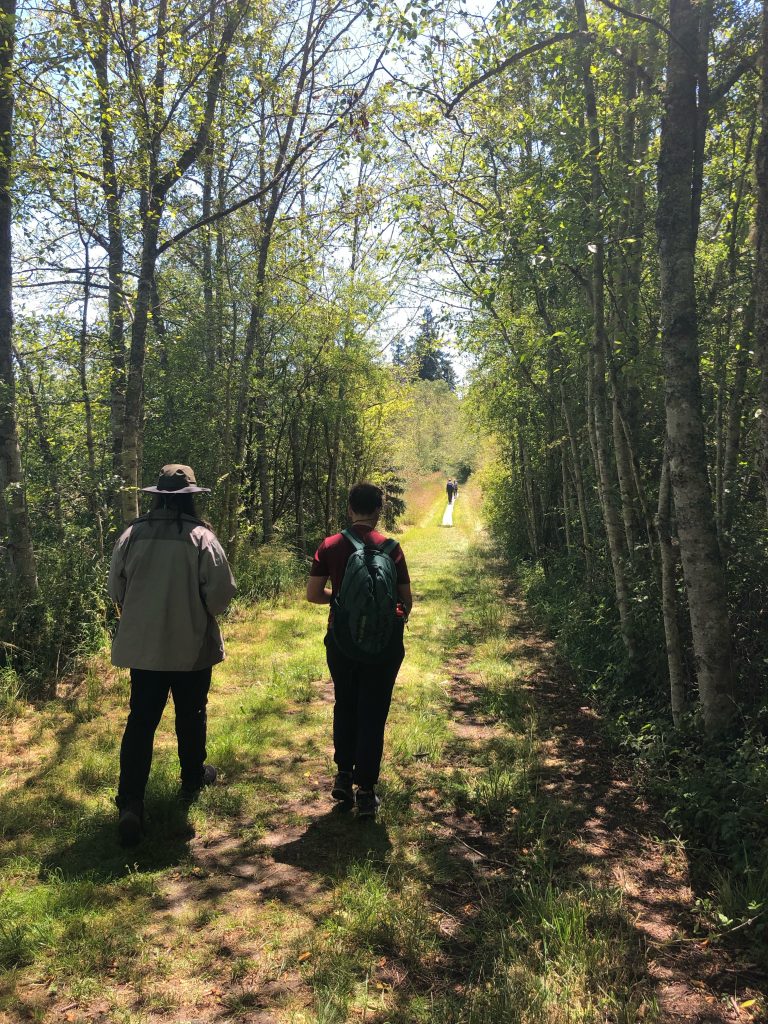
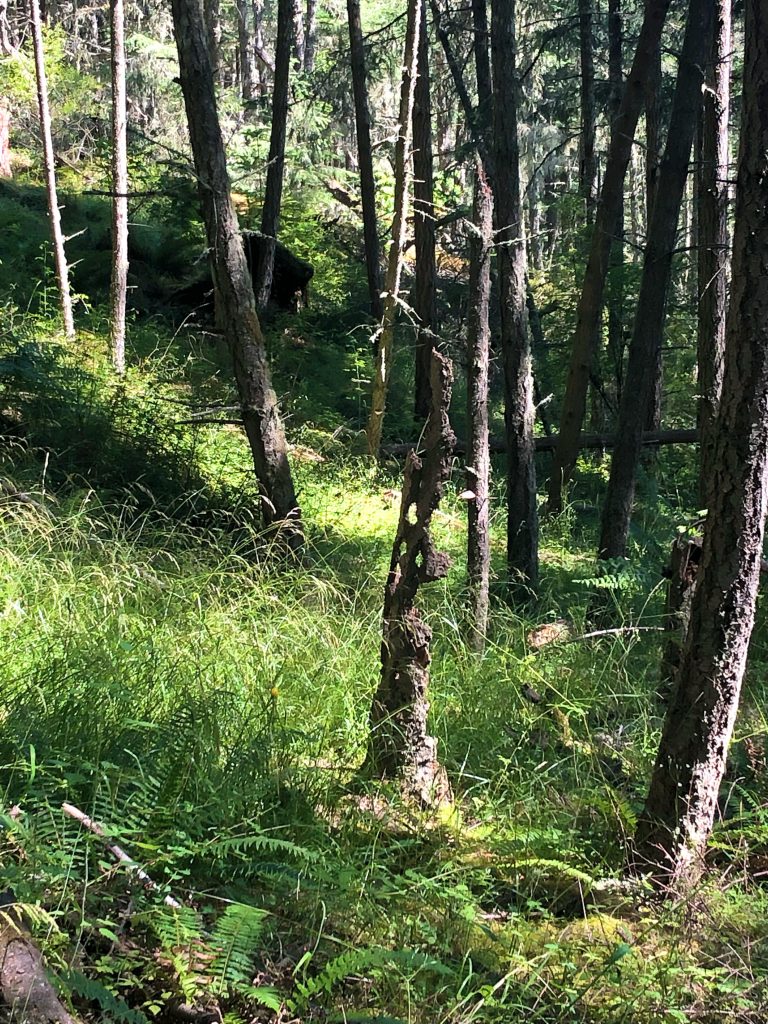
After poetry, students embarked on a hike to climb Mt. Grant, a local biopreserve. As far as mountains go, this was a bit close to a steep hill, but it still had a lovely view at the summit. Many islands and the ocean were visible over a beautiful canopy of evergreens covering the mountain’s slopes. The hike up took a journey through gorgeous old-growth forests, and Shauna (our guide at the time) showed us how to read the landscape and to see how environmental sustainment had impacted the forests. Later, students went on another hike around Lake Zylstra, a manmade lake in the center of the island. We counted birds and enjoyed the scenic views as we did a full loop of the lake.
Eelgrass, Epiphytes, and Edible Coral Reefs

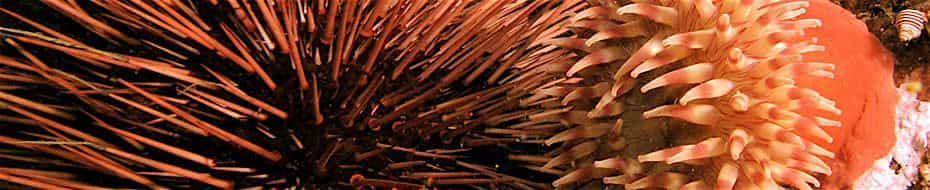
One of the Hooded Nudibranchs we found at Fourth of July Beach. Photo by Ian.

Our day started off with a leisurely sleep in and then breakfast before our taxonomy lesson with Alex McIntire, who is completing his major in marine biology with a minor in chemistry at Oregon State University, in the science room on campus. After learning a bit about taxonomy, we then set out to look at the eelgrass beds on Fourth of July Beach. There, we took measurements using transects and quadrants to determine both the number of plants in one square meter as well as the amount of epiphytes growing along the blades of the grasses. We found a number of Hooded Nudibranchs and some juvenile Dungeness crabs as we wandered. Alex provided us with a wealth of information about the importance of eelgrass in the ecosystem, acting as both a nursery for fishes and a filter for toxins that have been introduced to the ecosystem. They are a welcome home for epiphytes which grow on the blades, blocking out sunlight are a nuisance to the plants. Recently eelgrass has come under threat by diseases that blacken the leaves and kill the plants. After wandering the mud flats, we loaded back into our van and drove to the local fairgrounds where a small competition was being held. We each tried to build our best edible coral reef out of candy. Congratulations to Henry who got the prize for worst reef.

Day 10: A Star-Studded Adventure

by Eliza and Henry and Samuel

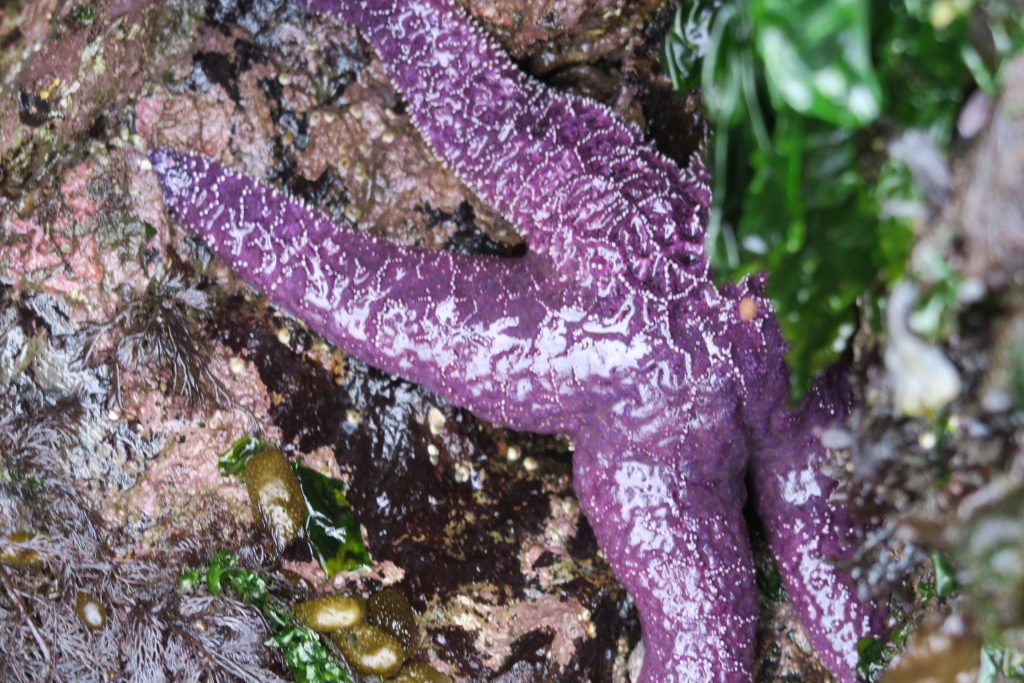
Photo of a purple Pisaster Ochraceus sea star taken by Samuel Slutz

Is this the krusty krab? No, this is Patrick! Today, Salish Sea students were guided today by Alex McIntire, a college senior working his marine biology major degree along with a minor in chemistry at Oregon State University, who also happens to be a San Juan local. We loaded up in the van after a delicious pancake breakfast made for Sarah’s birthday courtesy of Henry. made our way to the rocky tidepools at Reuben Tarte. There, we searched for a variety of different sea star species. Their stleather, purple ochre, and blood sea stars scattered around the multiple tidepools. We then proceeded to tally up the sea stars we found and take photos of them, cataloging the species for future ID. Once we had a good l on the number of sea stars in the area, we tested the pH of the ocean and tidepools. We learned from Alex that the open ocean has an average pH of around 8.1 but here in the Salish sea our waters are more acidic with a pH of 7.8 since the Salish sea is more enclosed and thus experinces less water exchange which leads to higher pH. However, our pH test showed the water as extremely acidic with a pH of around 6.4 in the ocean and 6.2 in the tide pools! Luckly it was our pH test strips that were damaged not our ocean which just goes to show the importance of having the right tools for the job when it comes to science. Monitoring the sea star population is an important task as many star populations have been dramatically reduced by Sea star wasting disease has managed to drastically decrease our sea star population over the years, causing their tissue to decay until they eventually die. Currently, we know little about how sea stars contract, carry, and spread this disease so students had to be very vigilant about not touching any of the stars as to not transfer the illness from sick stars to healthy ones.

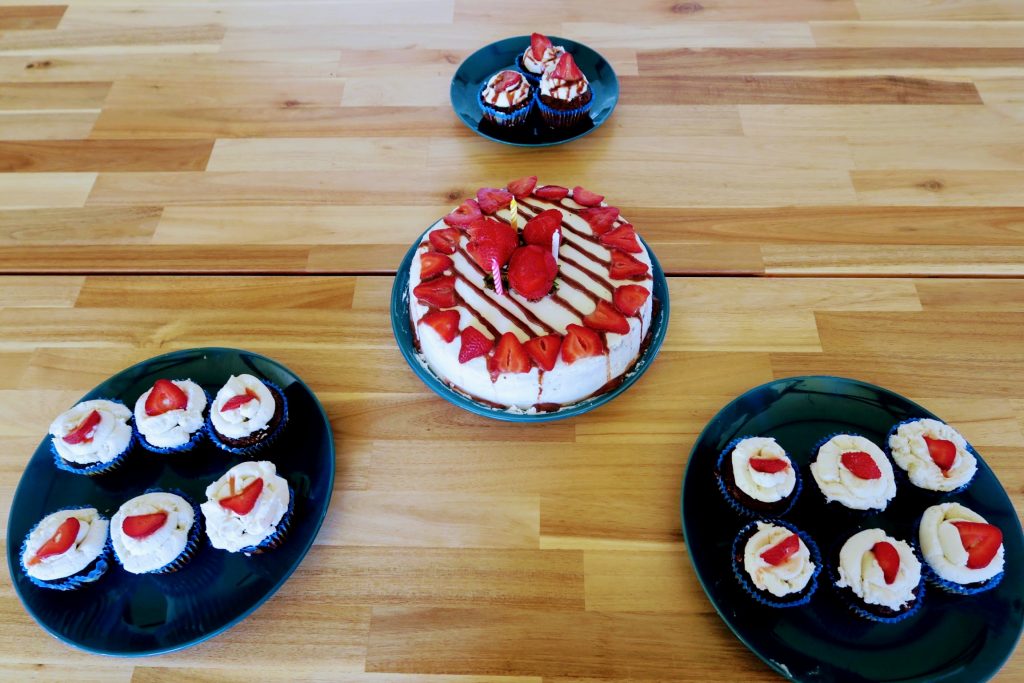
The cake and cupcakes made by Elsbeth and Sam picture by Samuel Slutz

After the tidepools we headed back to the dorms and pooled our data on water temperatures along with starfish populations. That evening Samuel and Elsbeth finished the Birthday cake and cupcakes which we had after our tostada diner.