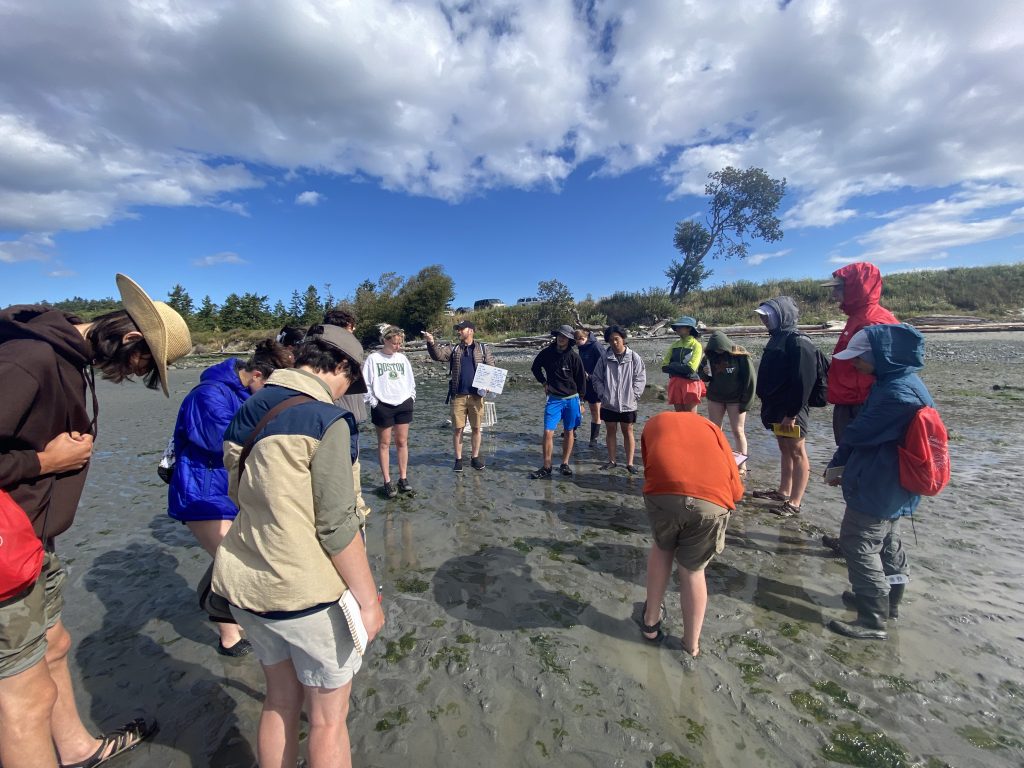
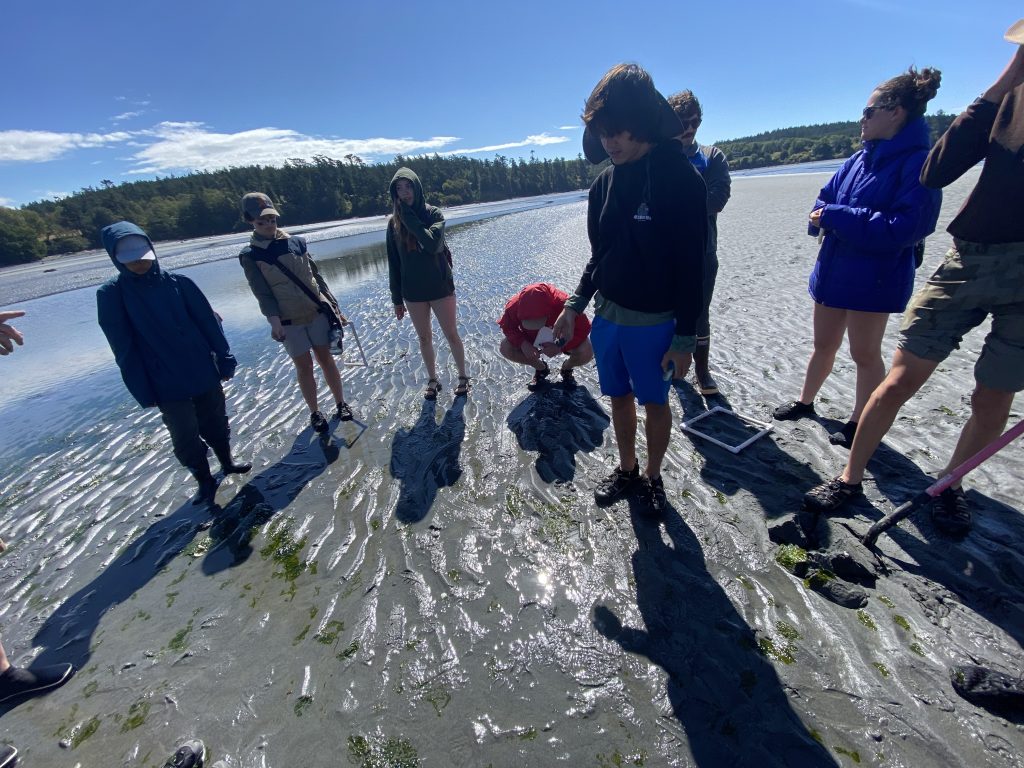
We are now in the full swing of our projects. Today, we spread out across San Juan Island and had a slow and steady day, some of us collecting data and resources, while others stayed back at the dorm and did more research.
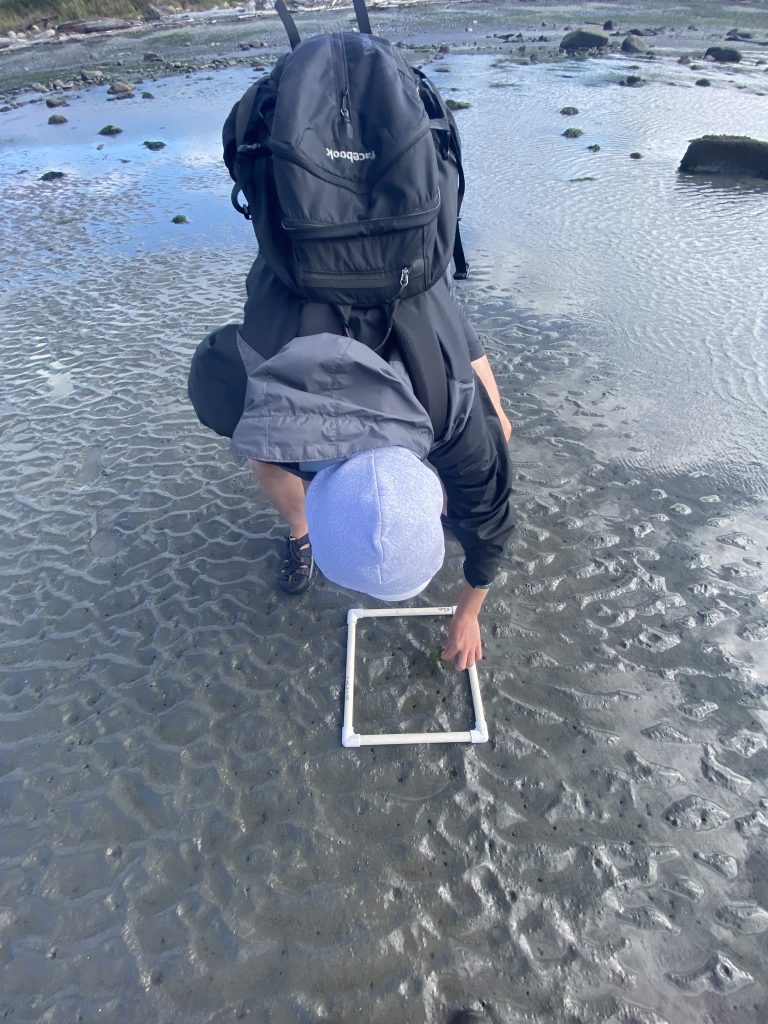
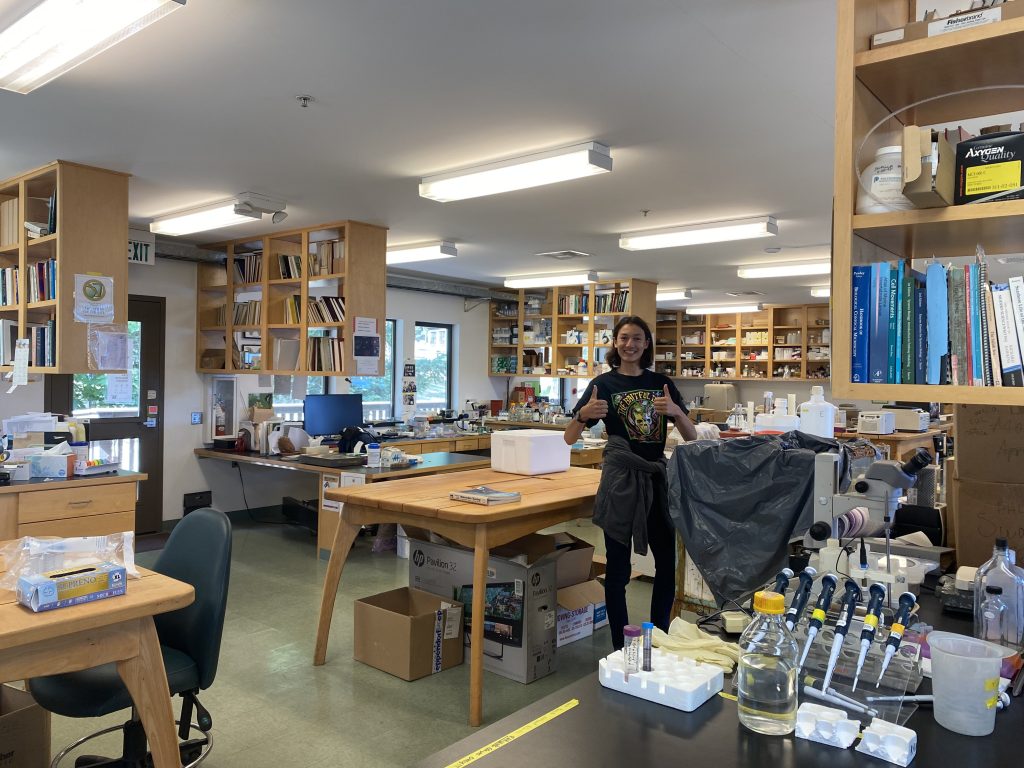
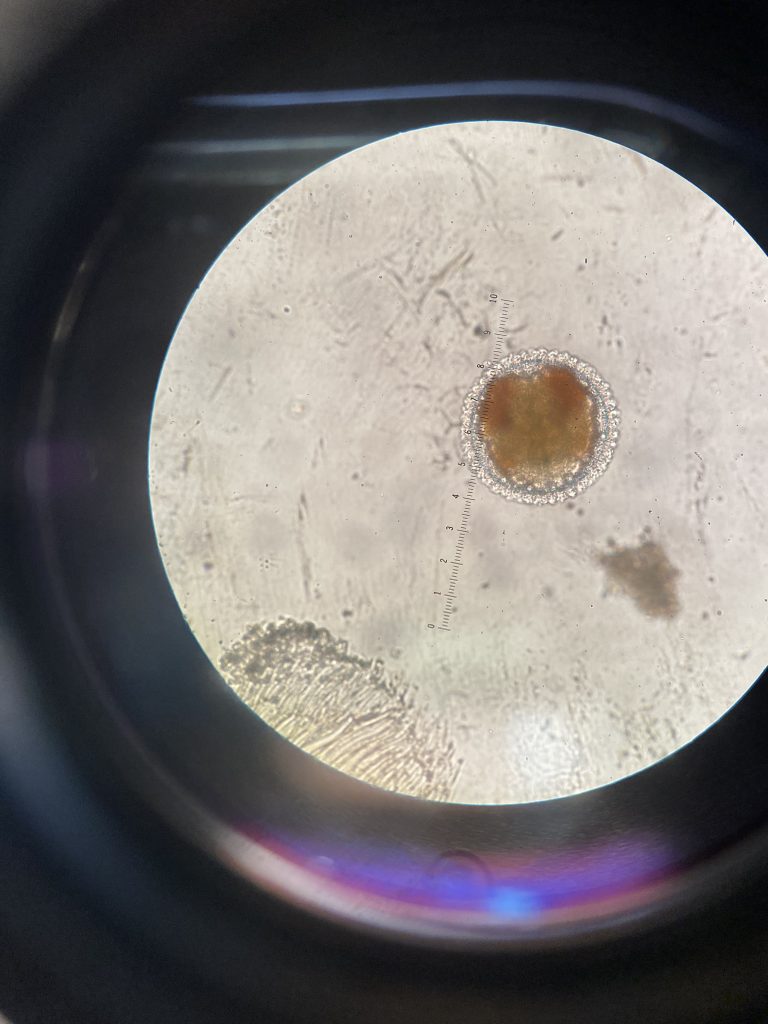
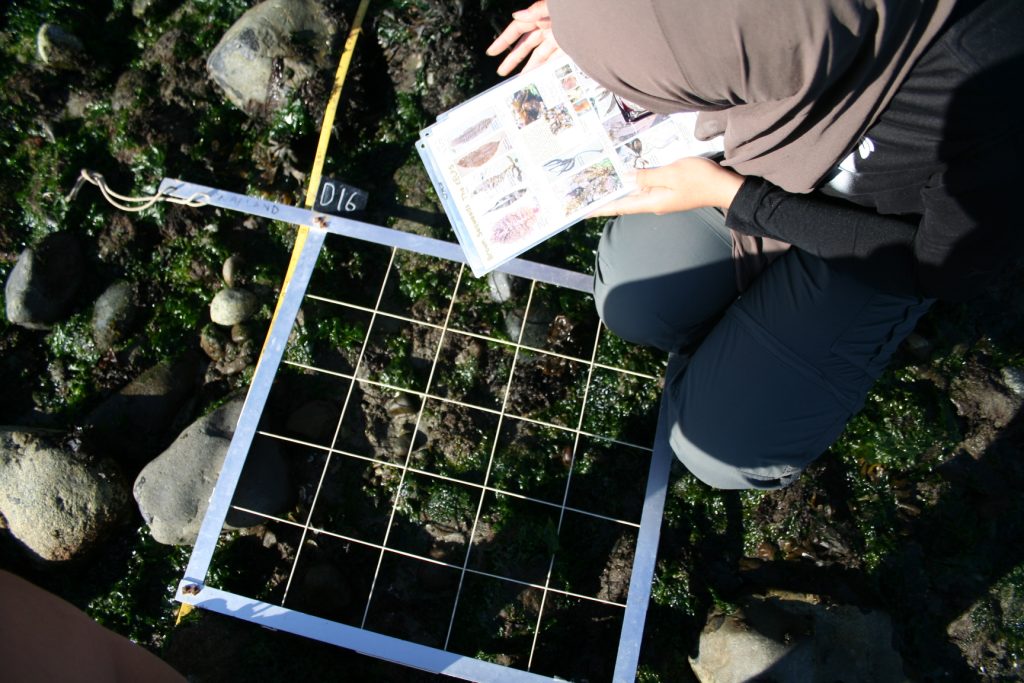
One of our beloved peers, Hannah, had a full day at Friday Harbor Labs researching her Tunicate embryos under the guidance of Dr. Billie J Swalla. Olivia and Khadija were also at Friday Harbor Labs, searching for decorator crabs. Unfortunately for them, their search proved fruitless and yielded no crabs whatsoever. On the other hand, many people were out in the fields, scrounging San Juan Island’s many beaches for data and materials for their projects and busting with excitement. Maddie and Philip went venturing out into the harsh lands of False Bay, where they encountered trials and tribulations in the form of nasty spikes and heavy water buckets. Tommy and Ethan were also on the great plains of False Bay, scavenging for an assortment of bubble snails. On the other side of the island, Finlee went to the joyous Fourth of July beach, to collect eelgrass specimens and photograph them. Vedha was also with Finlee, and, with the help of Emma, took soil samples and identified different species of seaweed within quadrats.
We ended the day with a presentation from Dr. Tom Mumford, who is an active voice in the kelp community where he stresses the importance of protecting kelp and the species that rely on kelp. His current projects are “Kelp Recovery Plan for Puget Sound, Washington” and the development of the Ocean NOMAD (Nautical Off-shore Macroalgal Autonomous Device) for low-cost production of biomass of food, fuel and feed. We urge anyone who is interested in kelp to check him out.
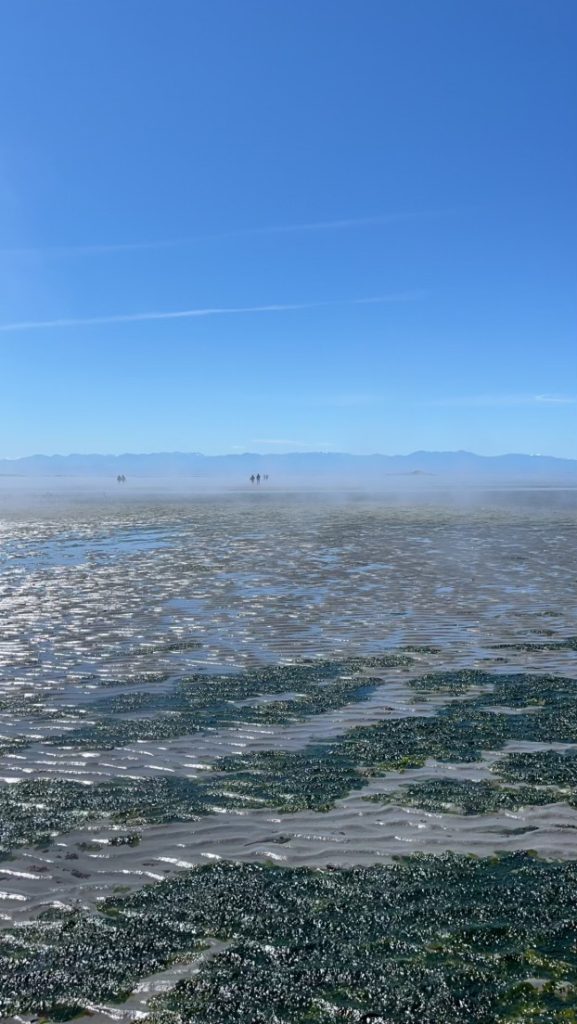
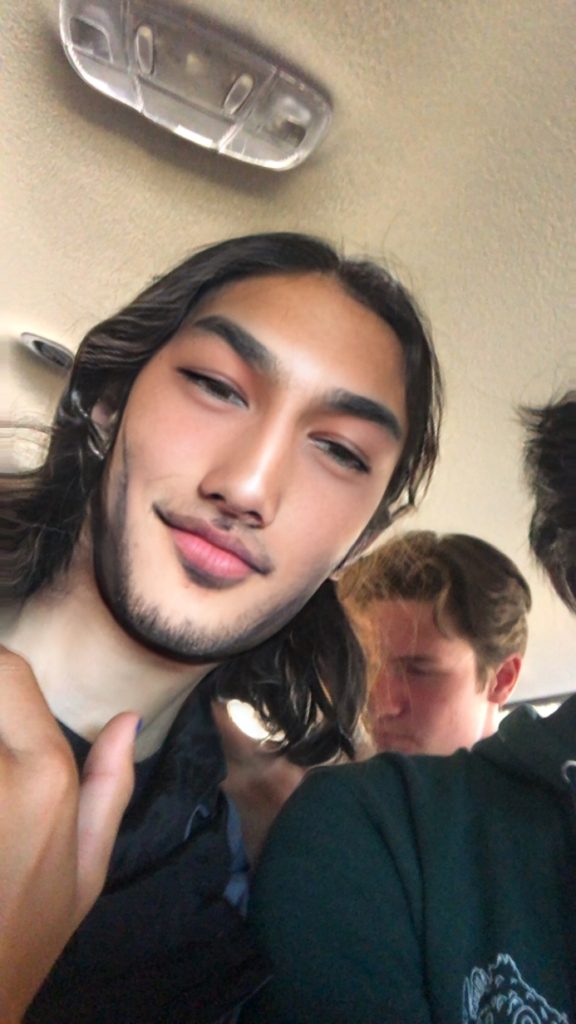
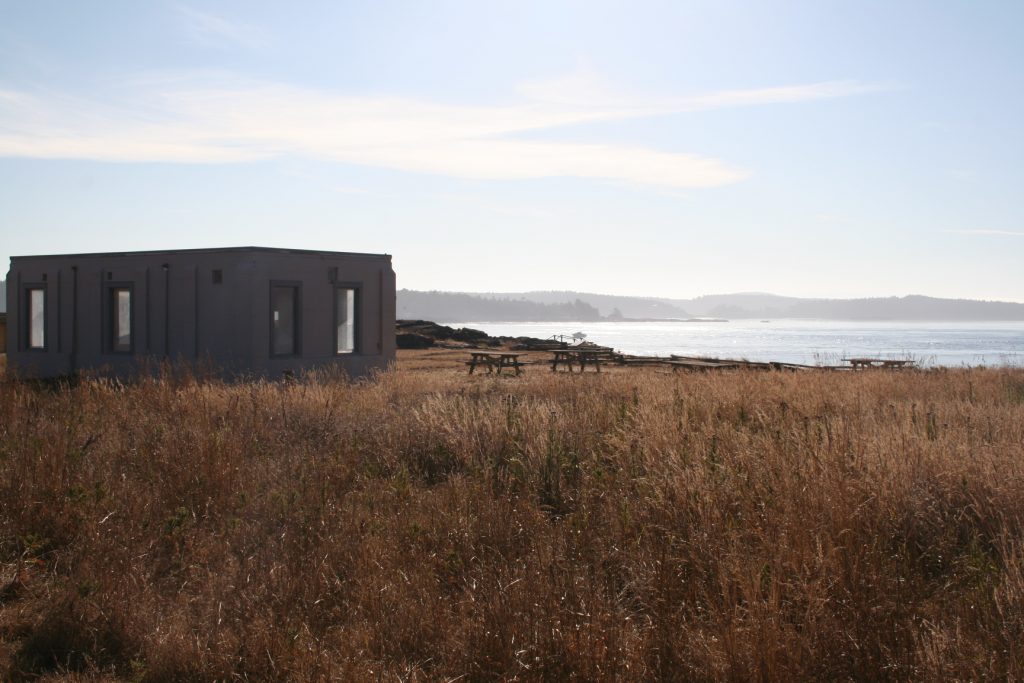
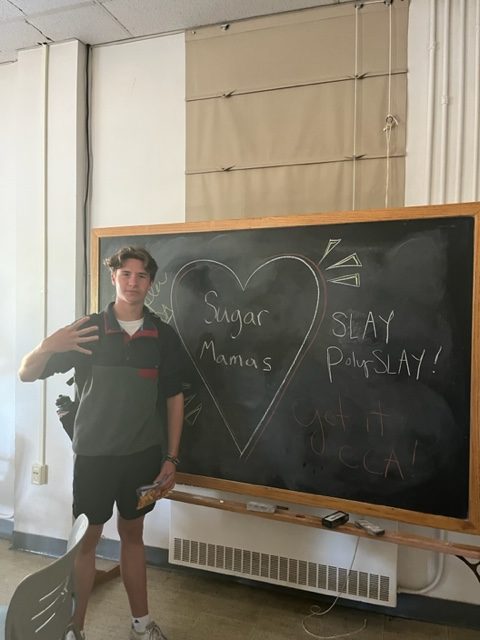
A beautiful picture of False Bay by our very own James Thomas Jerome Becker while him and Ethan were on the hunt for Bubble SnailsHere we see a very real photo of Philip “6’2” Yohan Miller
Today was a truly action packed day, but maybe the real action was the friends we made along the way.
Today the Salish Sea Sailors (unofficial official team name (even though we don’t sail)) got up to some worm hunting at False Bay with our previous dinner guest, and renowned scientist Tim Dwyer.
At False Bay, we ran an experiment tofind the preferred habitats of lugworms, a type of polychaete worm. By haphazardly throwing quadrats around the beach, we got a good idea of the average population statistics in the near-shore area and the area closer to the land. We also had a team digging for worms to gain an understanding of the actual number of worms relative to the number of burrows. We discovered that there was a vast difference in the number of worms further inland vs. further out in the tide.
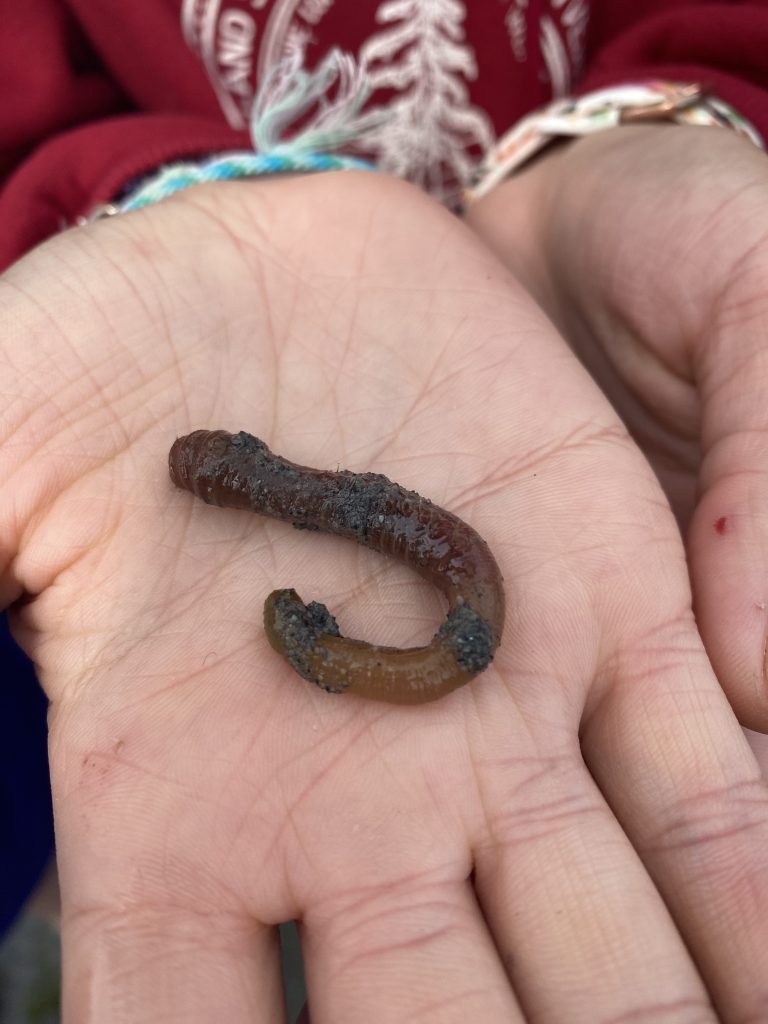
This is a lugworm. Head is to the top left and anus is the lower right. Since these worms clean the sand they ingest of bacteria and nutrients, their “fecal casts” contain cleaner sand then what is around them!
After checking on Adam’s (one of our two science directors) ongoing eelgrass restoration project, we had a little bit of exploring time. Many bubble snails made it to our hands, and under our feet. Don’t worry everyone, there is certainly not a lack of them there.
Tommy effortlessly demonstrating the scientific technique of this delicate process: Scientifically throw quadrat, count amount of fecal casts next to a burrow. Repeat x50.
Birds of feather flock through mudflats together (photo creds to Hannah+Emma)
When we got back to the dorms, we had lunch and a poster workshop for our future presentations. Next was project work time, and we split up, with some students going to Friday Habor labs to further gather information for their studies, and some staying back at the dorms to do more research.
There will be no guest tonight, as it is Thanksgiving. (That is not the actual reason, we just don’t have a guest. However we have still decided that today is Thanksgiving.) We wish you happy holidays! Christmas is only 4 days away. (Can you believe it??)
Thanksgiving:
Our dinner tonight consisted of a traditional Thanksgiving dinner, consisting of mached potatoes, beans, salad, stuffing, and of course, turkey. Before we dug in, we had to grab some photos outside of our amazing dinner fits, and giving thanks at the table before we continued the feasting.
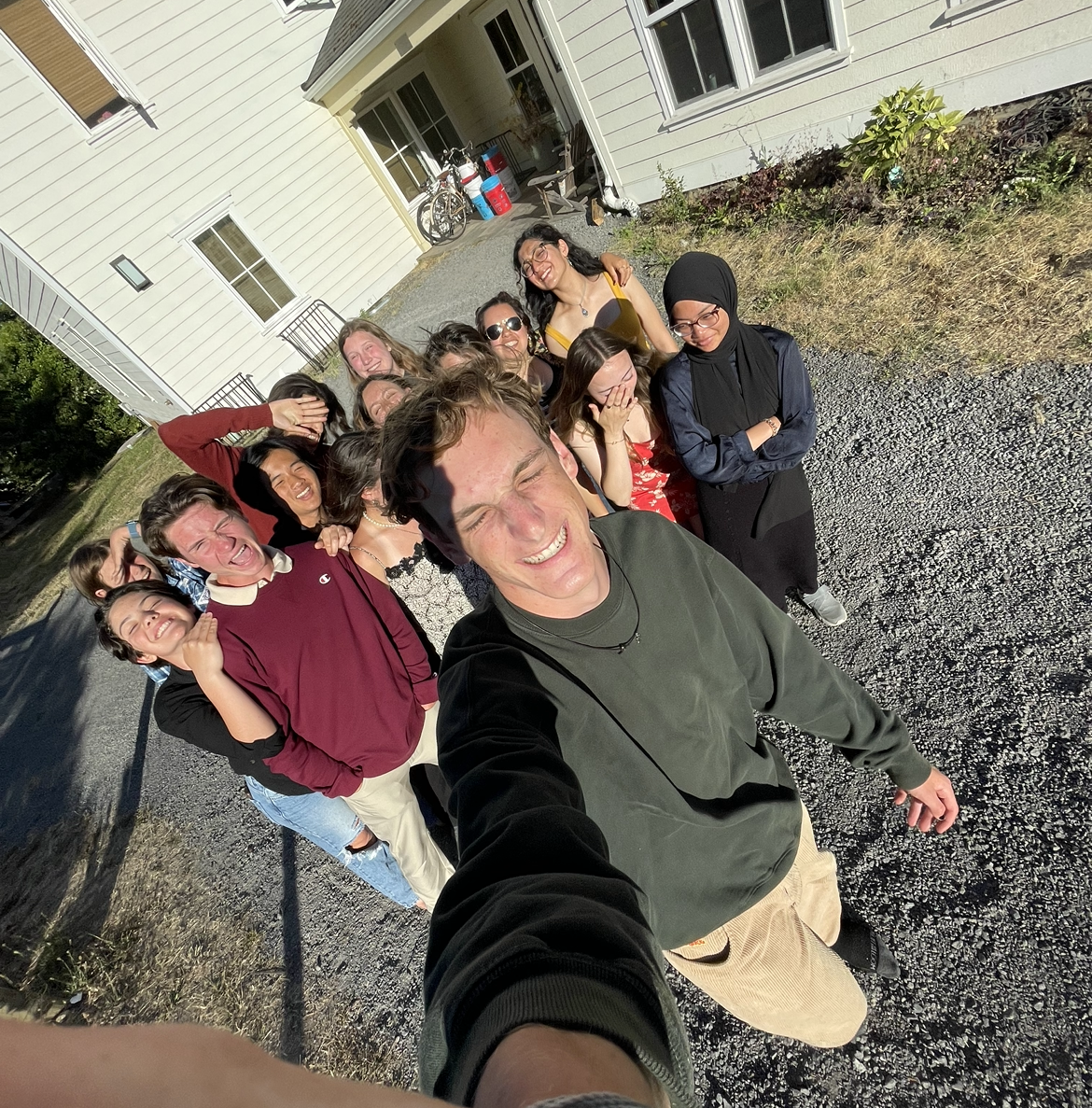
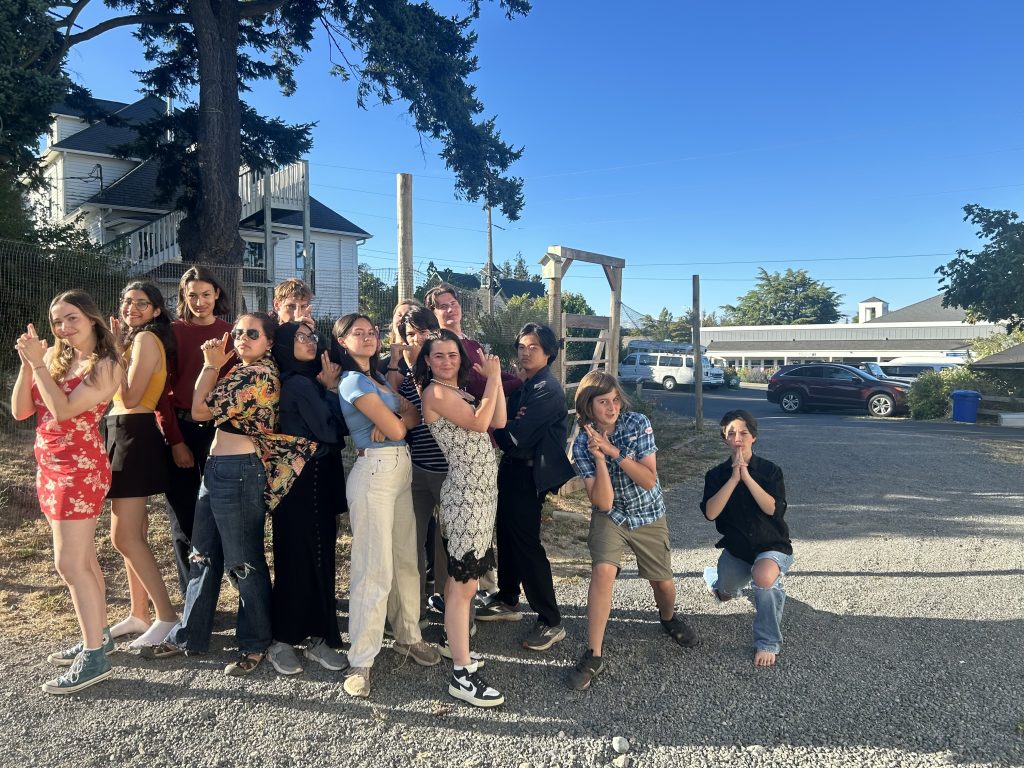
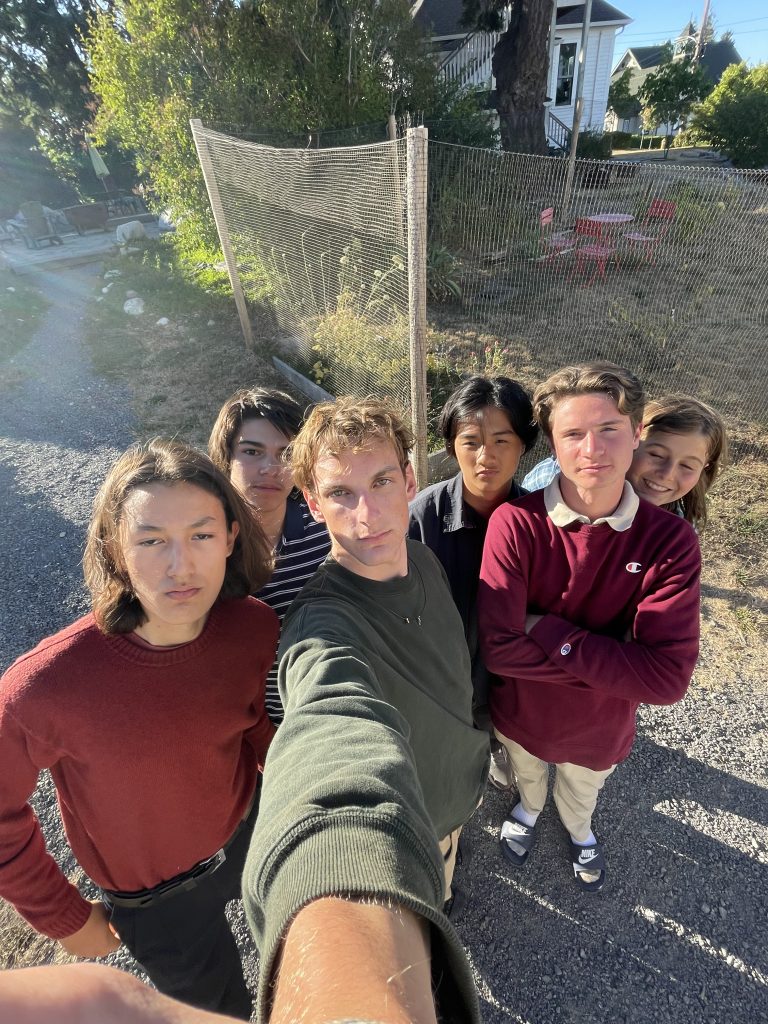
All of the Salish Sailors posing for a photo. Someone(Leo) decided it would be a good idea to look straight into the sun, hence the various faces!We’re actually the coolest people around, and totally not a whole bunch of nerds (photo cred to Barrie !)Quick flick with the CCCCC (Crazy Cwuirky Cool Crab Club), nothing but dapper for the commencing Thanksgiving feast.
Signing off – Leo (AKA The Wall AKA California gurl AKA Ryan G), Finlee (AKA Finland), and James (AKA The Mountain)
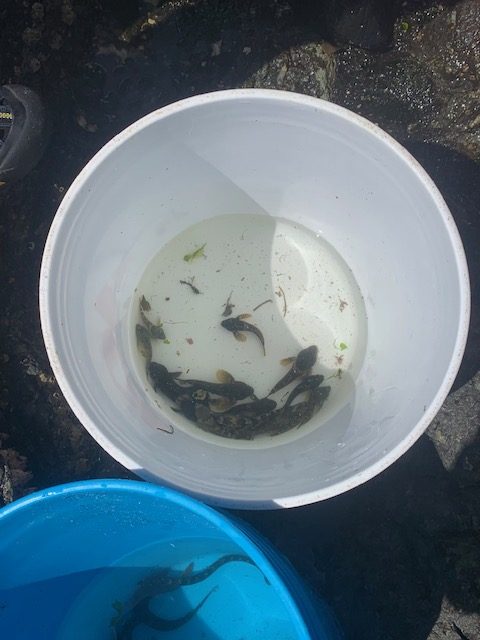
Welcome back to the blog! Today we started the day off early in an attempt to locate the Rockhead Poacher at Deadmans Bay’s intertidal zone. We assisted ichthyologist, Daniel Geldof in finding his research project about this specific type of Poacher and their oddly shaped head. The first step of this process was emptying the water out of two specific tidal pools. To achieve this, we used numerous buckets by passing up and down the intertidal zone. After this long process we were left with the different types of creatures that inhabited these pools, making it easier to catch them with nets. After many scrapes and falls we finally finished the grueling task with absolutely no poachers, but we did find other species of marine creatures. Even though we didn’t succeed, we still had a great time exploring the intertidal zone.
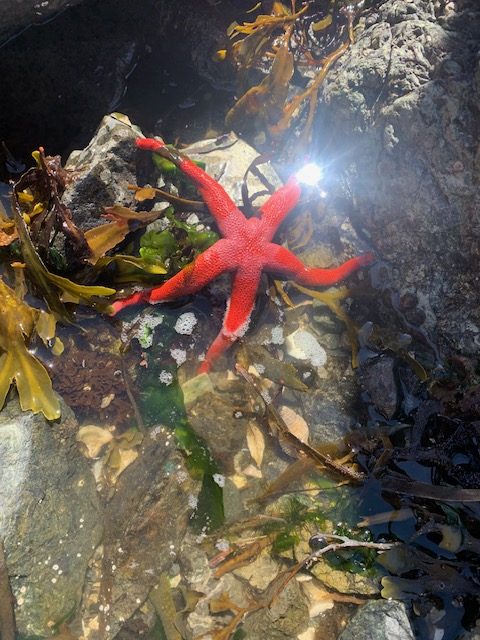
Pictured is a pacific blood star in one of the tidal pools. Picture taken by MaddiePictured are the fish we caught in our nets from the tidal pools. Most were released back while some were kept for furth research back at the labs. Picture taken by Maddie.
After a good lunch it was time to go for a little hike at the well known historical park, American Camp. With the help of multiple signs and our personal tour guide Ms. Bea, we were able to grasp the captivating history. The American Camp was inhabited by US soldiers back in 1850s in order to stake out the land and sea from above. With little interaction from others they ultimately decided to abandon the camp, leaving it’s ruins for curious tourists to observe centuries later.
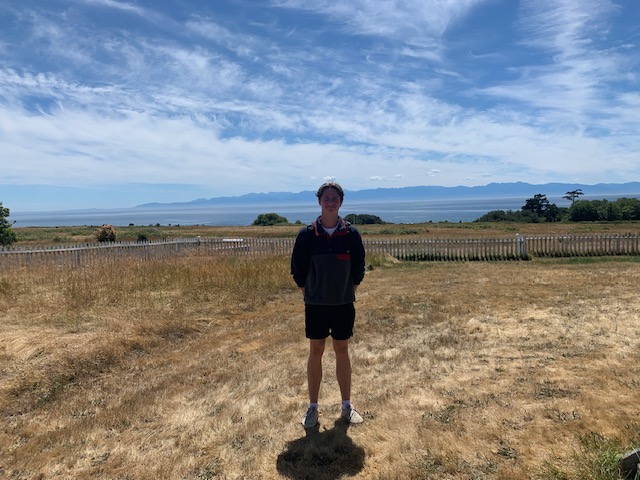
Pictured here is Tommy, and behind him the gorgeous panoramic view of the mountains across the water. Picture taken by Maddie.
Our first stop of the journey was the town, where only two of the houses remained. After little history talk we ventured more into the settlement being able to view the water from all sides.
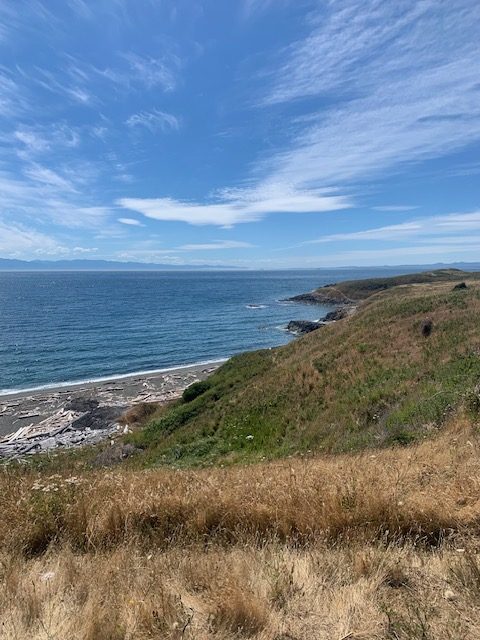
Pictured is the view from the ruins of the houses left from the American camp. Picture taken by Maddie
We made our way to the rocky cliffs where we were able to climb and explore the terrain before heading down the the beach. We played in the sand and water along with climbing the near by rocks.
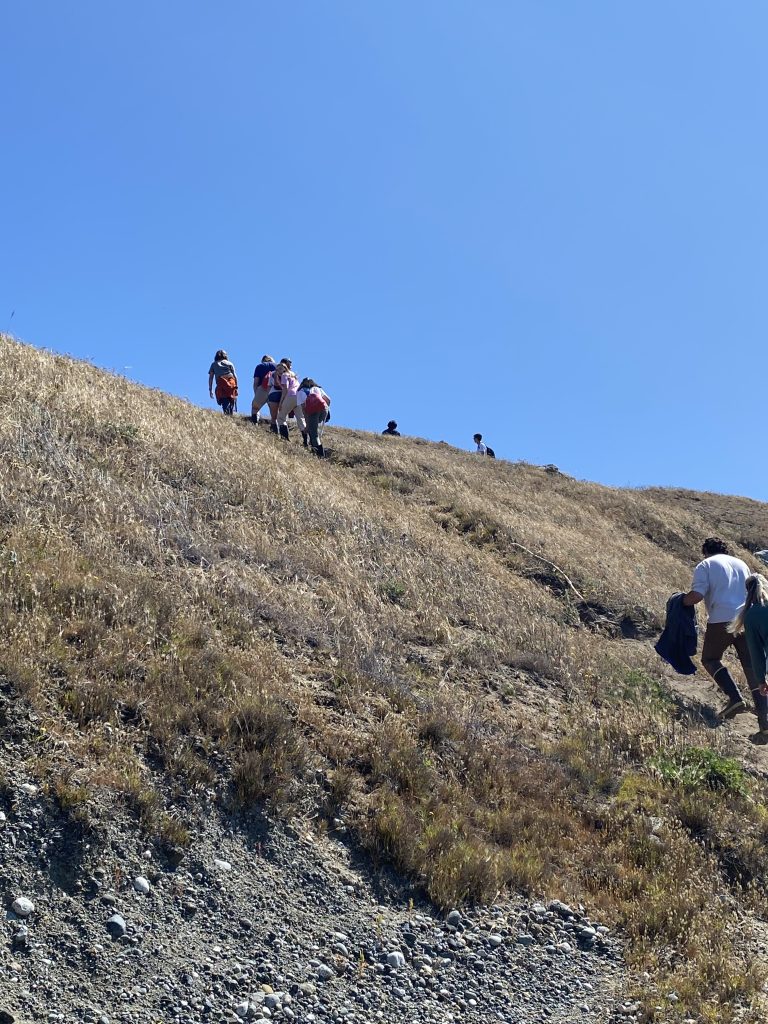
Soon it was time to depart dragging ourselves back up the hill towards the van. Finally we got back to the dorms preparing for the night ahead with our special guest, Mr.Tim Dwyer who was the previous director of Salish Sea Science Program. Tim gave us a an in depth lecture on his experiences in Antarctica specifically on gigantism in marine arthropods. Some of his amazing work has been published in National Geographic. He is also a science teacher at the local high school here. We thoroughly enjoyed his talk due to how interesting the diversity of the marine environment in Antarctica can be. After he left, everyone was convinced that they wanted to live there. Later we all decided to go play volleyball to finish off the day. Signing off for now!
The Salish Sailors (written by Maddie, Ingrid, and Tommy)
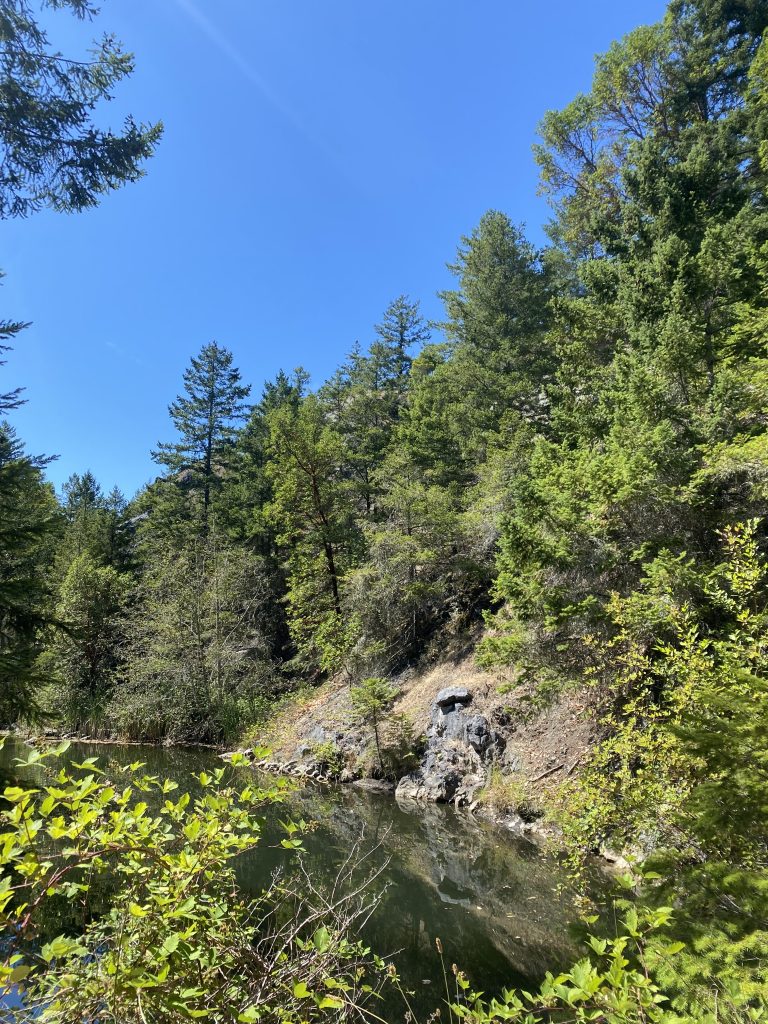
Today most of us got to sleep in till 9, with a select few getting an early morning at the Friday Harbor Labs. We quickly ate breakfast, excited to make our way to the farmers market and feast our eyes on the array of hand made crafts, sweet smelling pastries, and locally grown berries. After a few hours of shopping and enjoying the local island life we made our way back to Spring Street for lunch before heading out to the secret lake spot with an awesome rope swing. Everyone chose a unique way to enter the water, some with a better form with others, luckily there were no concussions. While we were enjoying our time out in nature, Hannah and Phillip were having a blast in lab 10 where they got to inject embryos with B. J. Swalla. We are soon going to be having dinner with Dr. Daniel Geldof.
The lake where we swam today
Philip, at Friday Harbor Labs
An embryo I guess?, Hannah said to add it
(Hannah here, it’s an ascidian embryo Philip and I fertilized today with Dr. B.J Swalla !!)
Salutations fellow citizens of our green world, it’s the students of Salish Sea Sciences writing yet another blog. Today was yet another eventful and action-packed day for us. The day started off a little early with a 6:30 wake-up call that I could only describe as harrowing for many of us tired teenagers. Despite this momentary challenge, we were all able to push through and commence our first activity of the day. We drove over to Cattle Point where we rendezvoused with Dr. Dobkowski, the scientist who spoke to us the night prior.
The wonderful Katie, decked out in her FHL swag as many of us are now too !A beautiful view of the start of Cattle Point at a nice and early 8 am
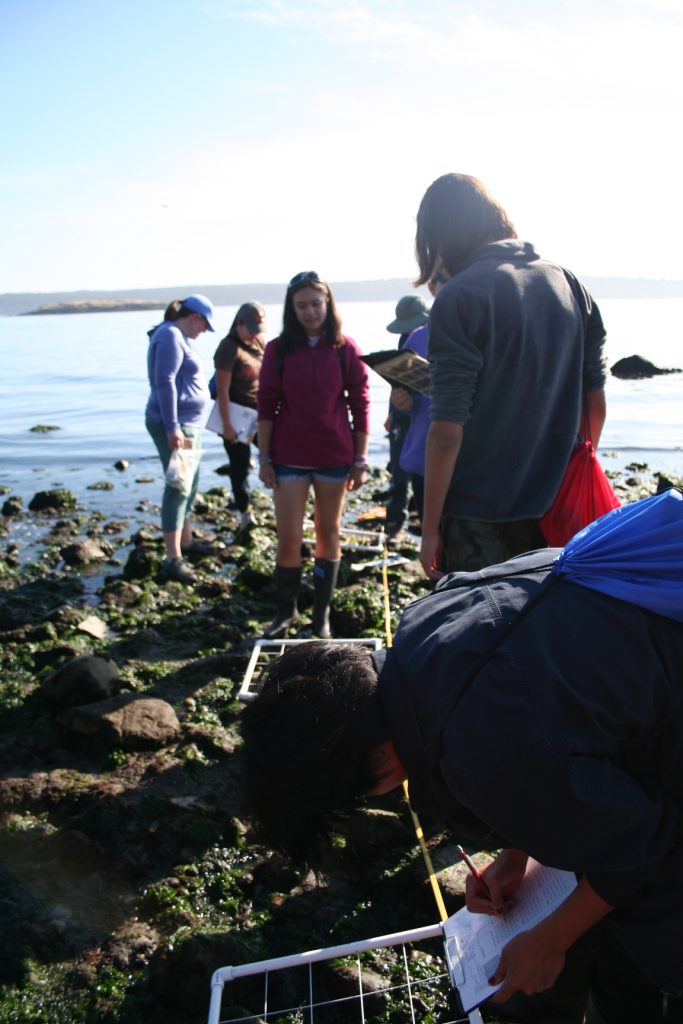
The primary goal of our Cattle Point expedition was to survey different squares filled with algae within a medium-sized grid called a transect. We used data sheets to record which species of algae we could identify and the general percentage of each square they covered along 4 different sections of the beach. The explanation I’m writing probably doesn’t do an adequate job of explaining the process, but the general idea was simply that we were helping Dr. Dobkowski collect data on species diversity in different locations.
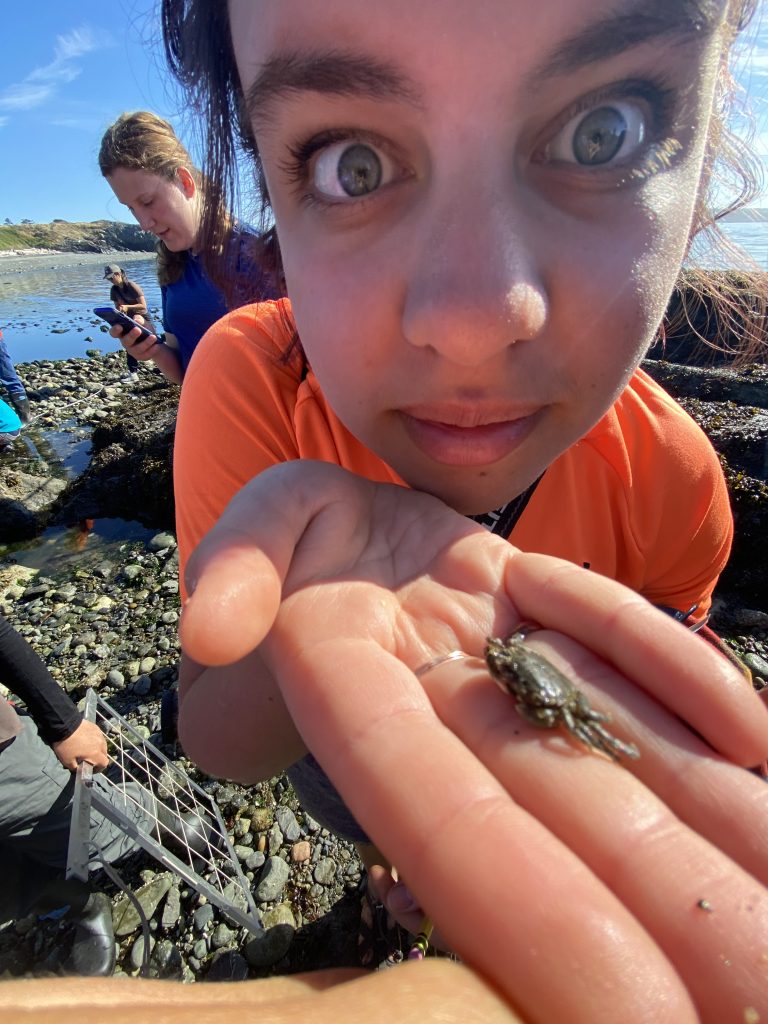
Finlee proving to everyone just how qualified (and excited !!) we were to be doing research with professionalsMy wonderful and experienced research partner Khadija demonstrated extreme professionalism in the fieldMe reallyyyyyyyy excited over a tiny crab kelp I found !! photo creds to Maddie 🙂The squad doing as the squad does: absolutely crushing it out in the field
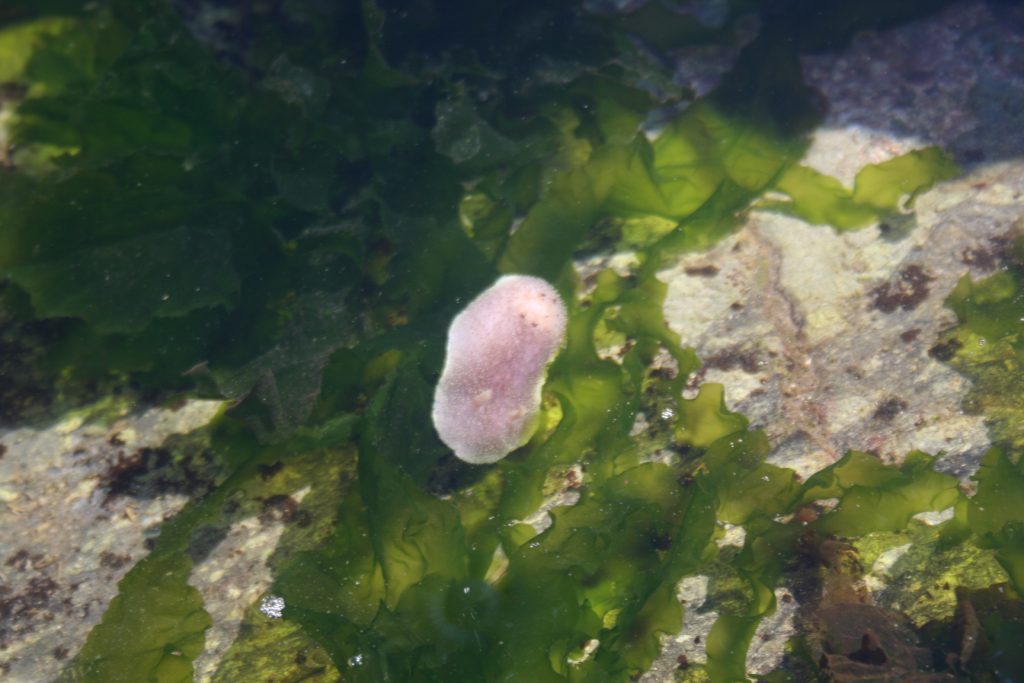
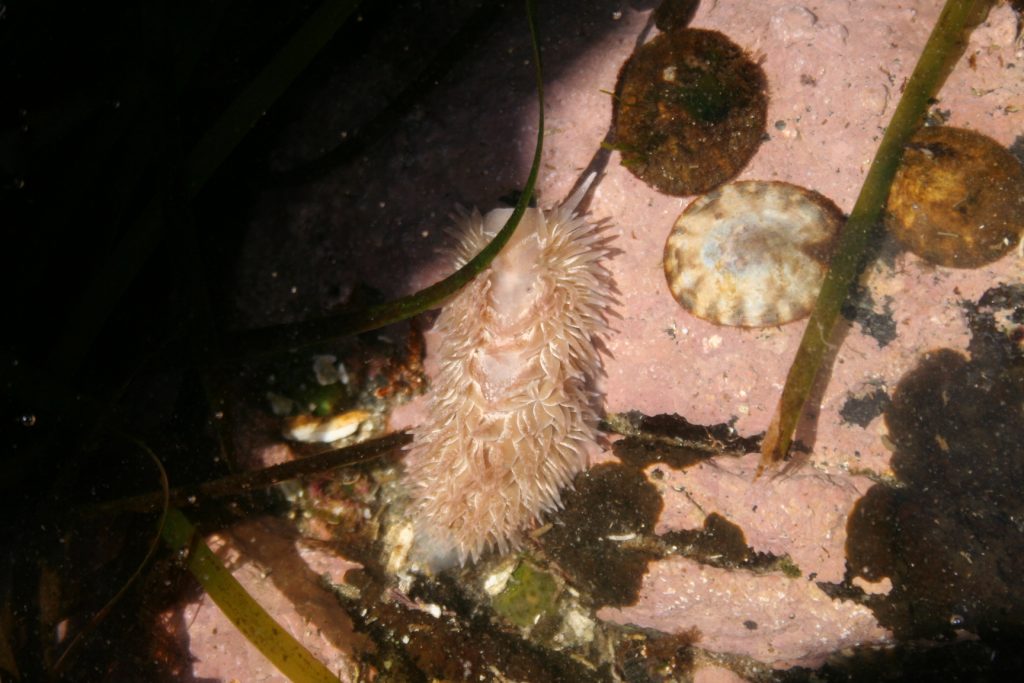
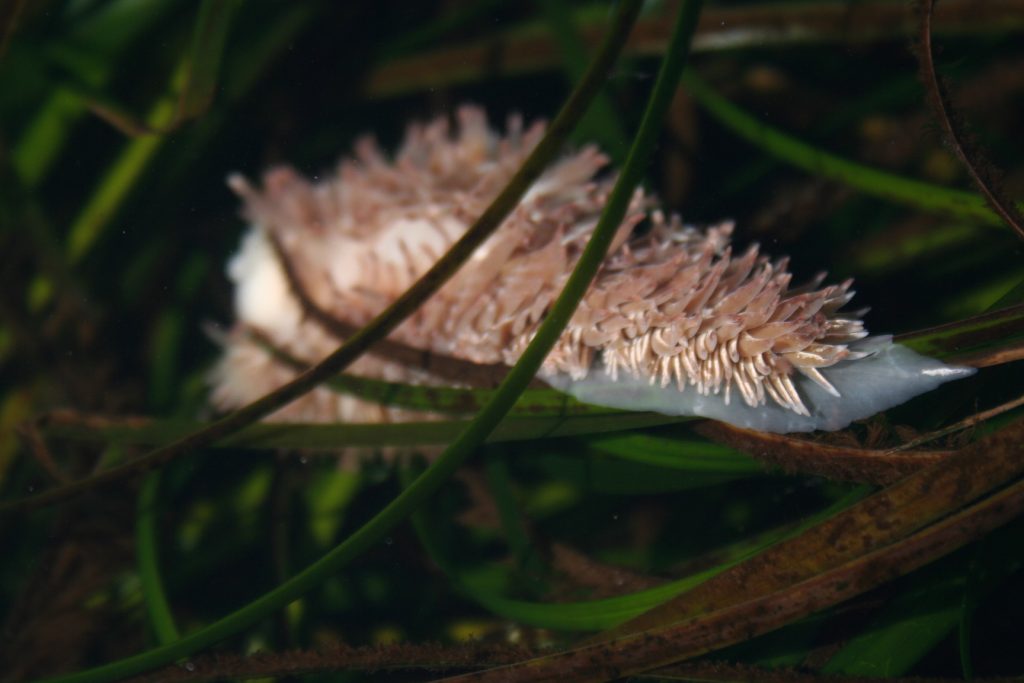
On our walks along the shore from site to site we also encountered some pretty cool creatures in the tidepools. Some of us even saw a fuzzy-looking nudibranch chilling in some grass. Overall, it was a pretty busy morning but it was also a good introduction to the kind of field work that marine biologists do to determine the health of an ecosystem.
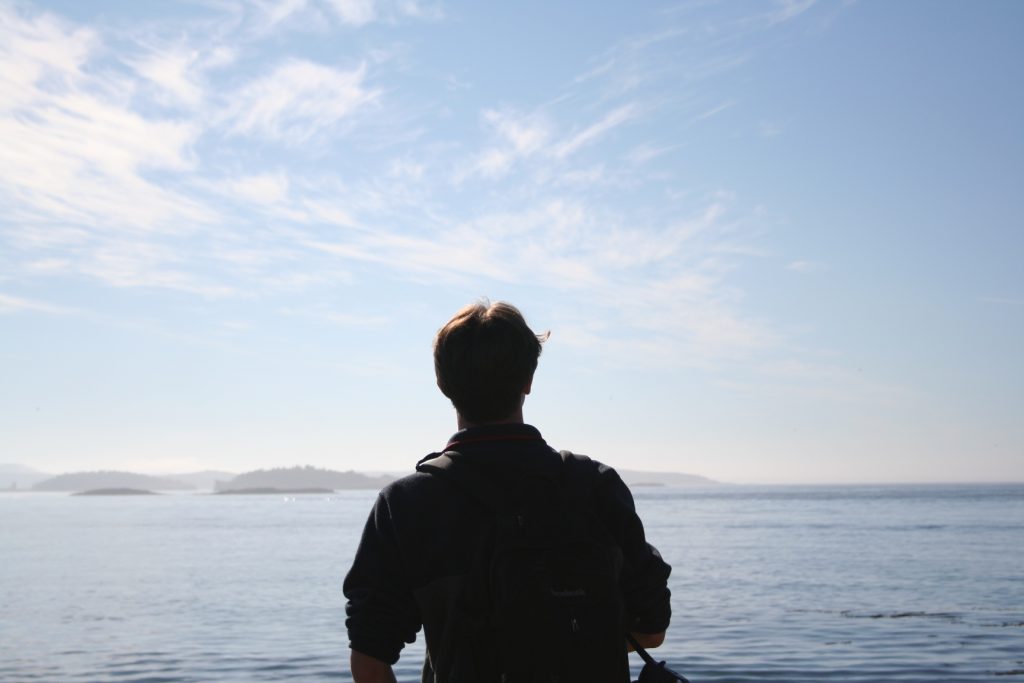
One of the creatures: Tommy getting in his daily hours of staring off into the distance longingly
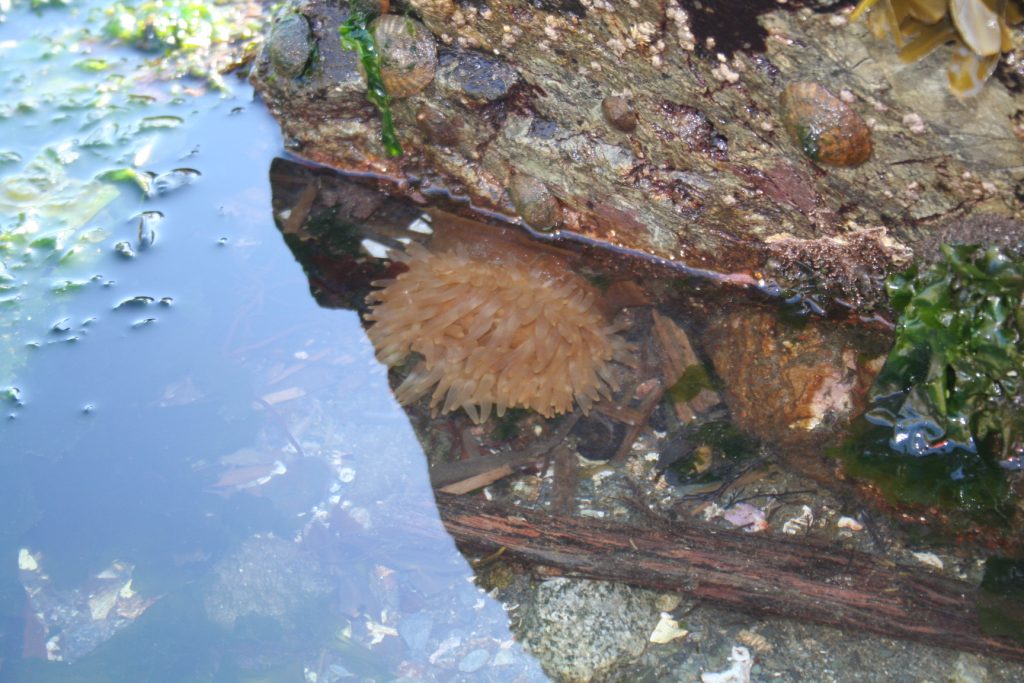
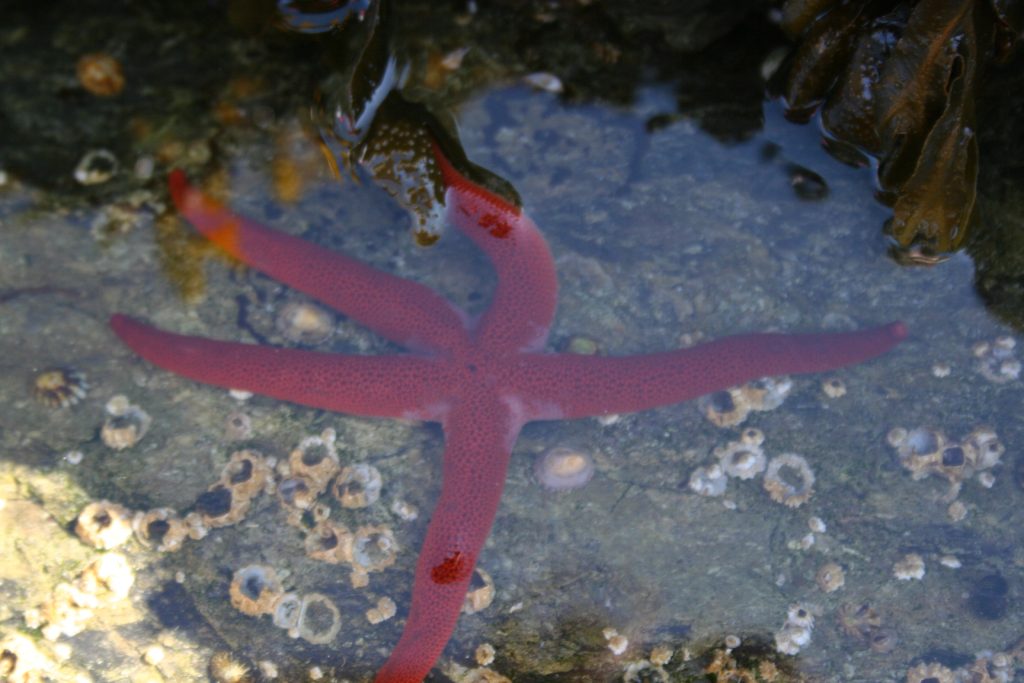
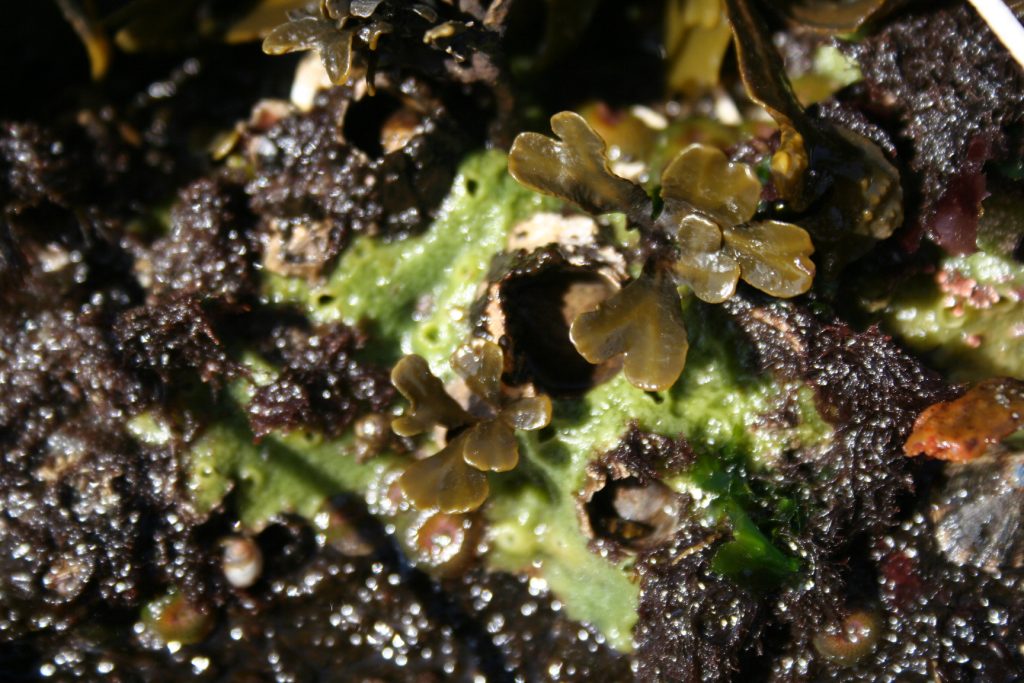
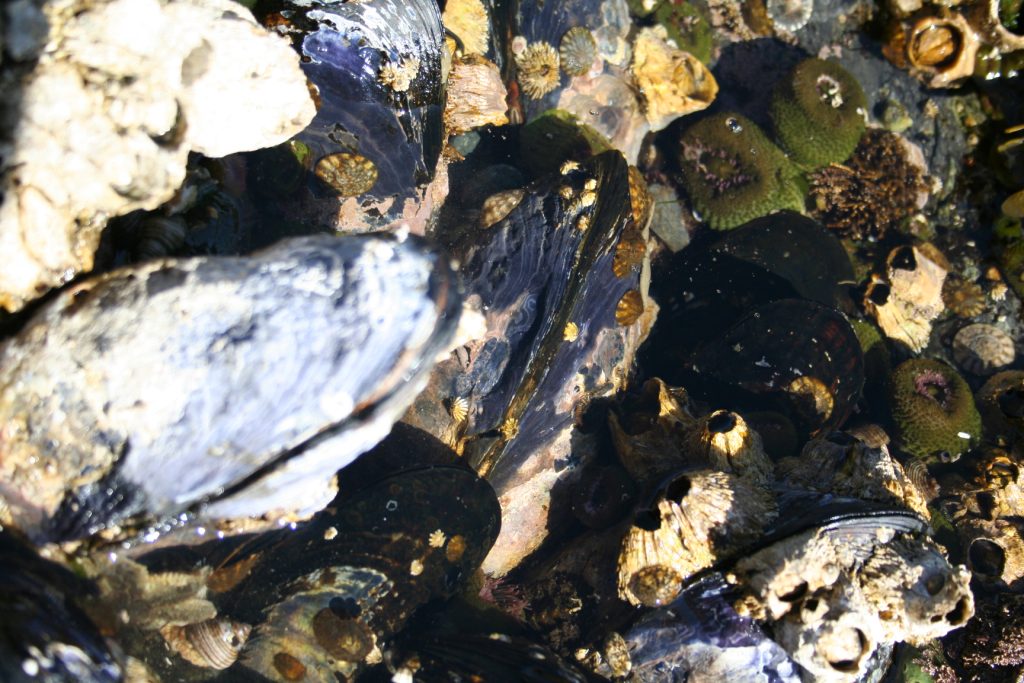
Only some of the super mega awesome critters and things we found today; a nudibranch yet to be identified, a huge anemone, a blood star, neon green ascidians+sponges, huge mussels, and more anenomes, an amphipod, 2 !! shaggy mouse nudibranchs, and a really cool and wacky textured alga called turkish towel !!The squad taking a well-earned break after 3 hours of hardcore fieldwork ft. Adam and Bea (don’t be fooled, they just watched us struggle across all kinds of horribly slippery surfaces for the entirety of the morning)Hiking back the steep and sandy trail back to the parking lot via lighthouse
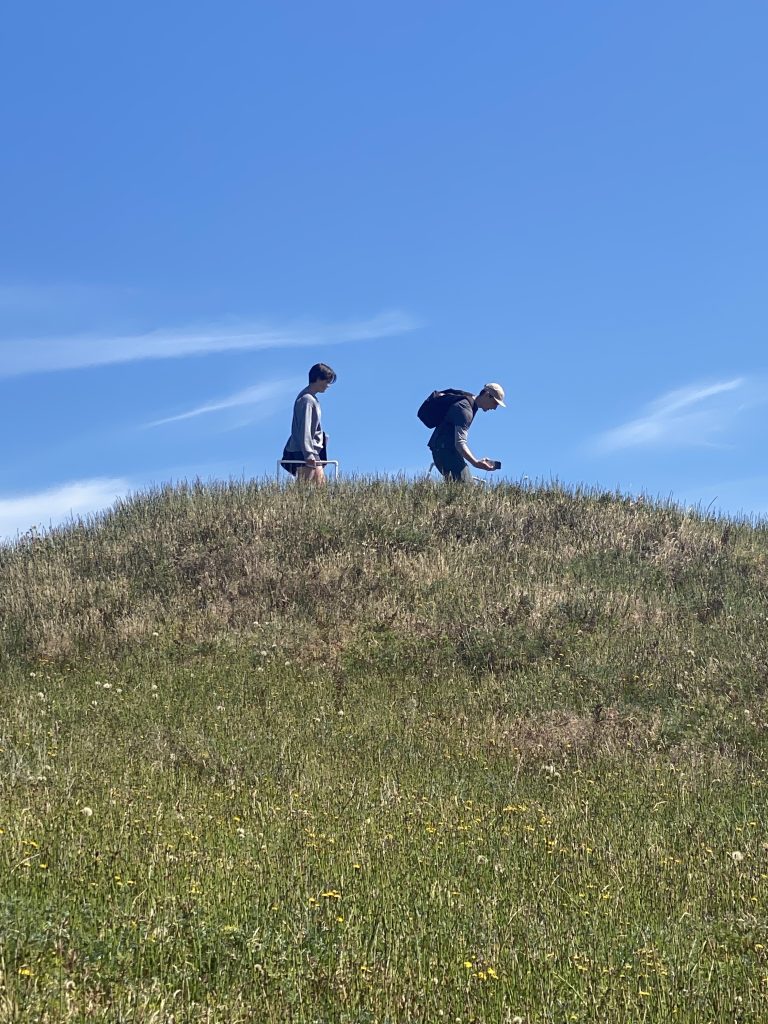
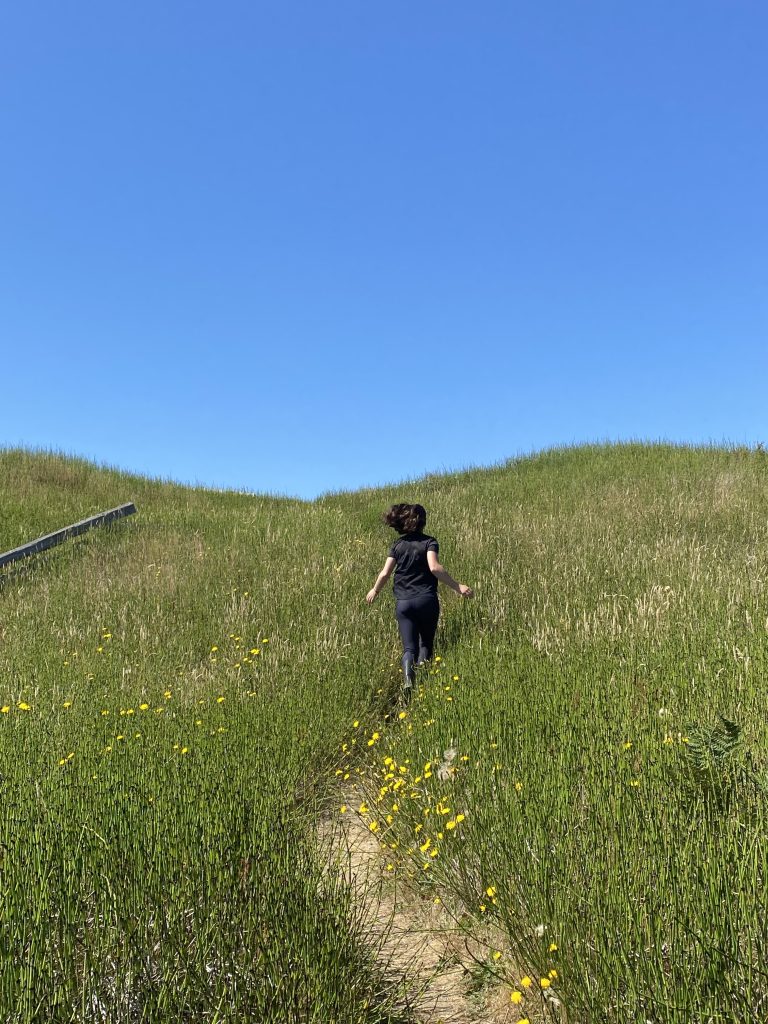
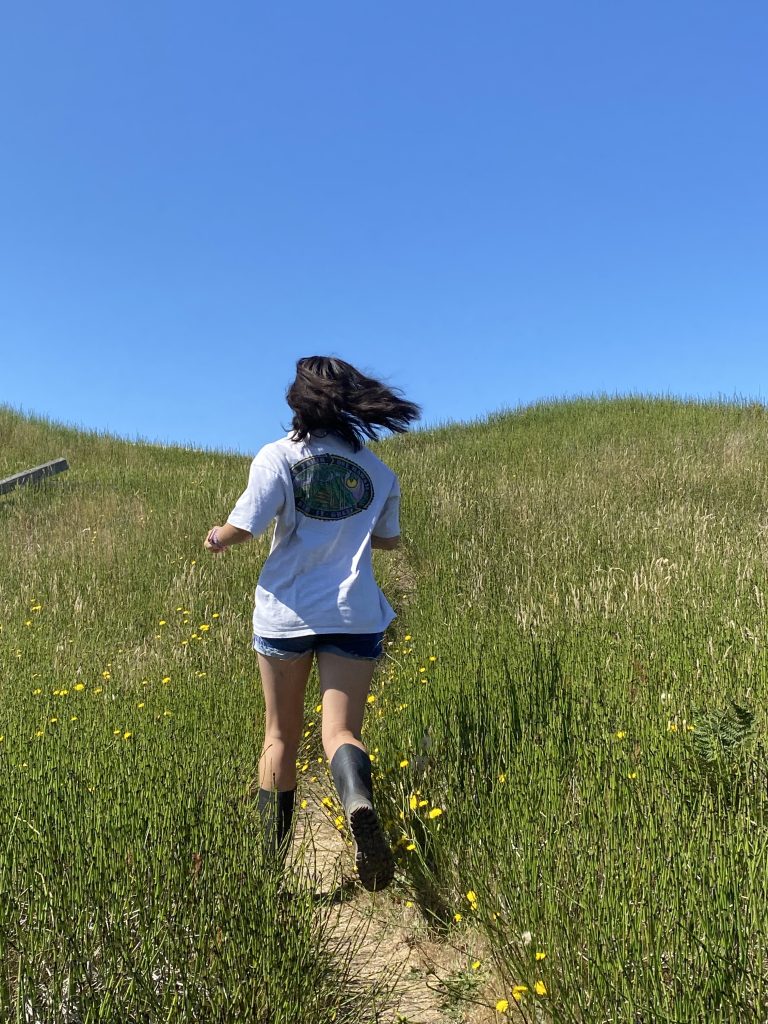
Everyone continues to be terribly photogenic in flower fields, and I continue to take aesthetic photos of them
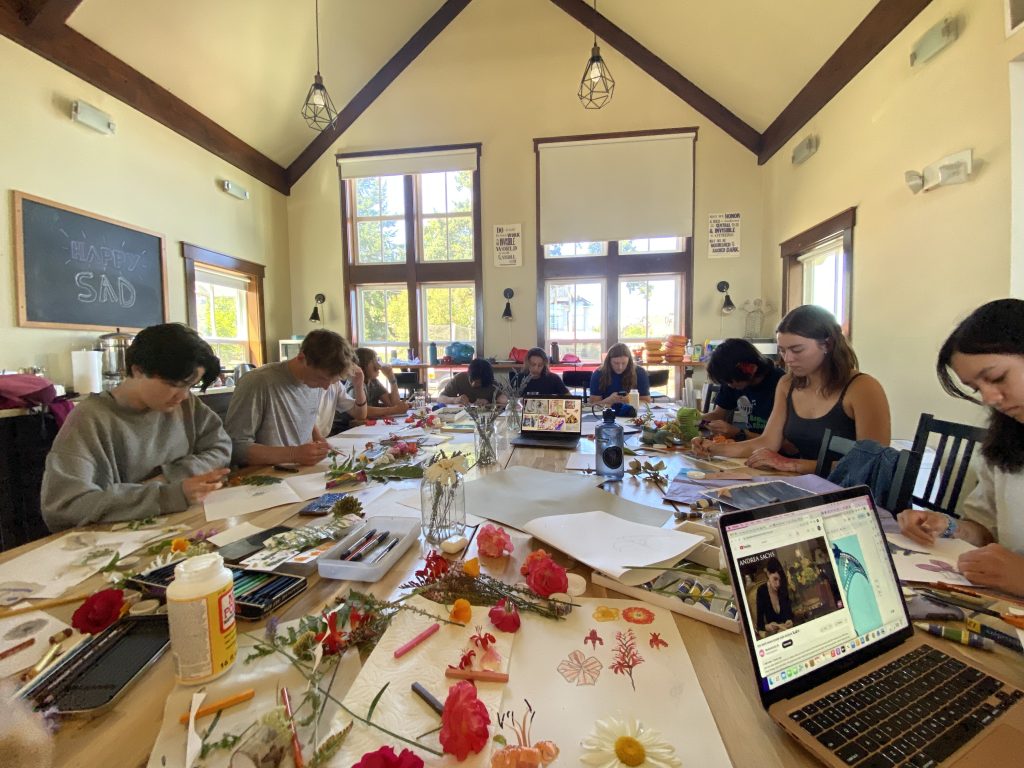
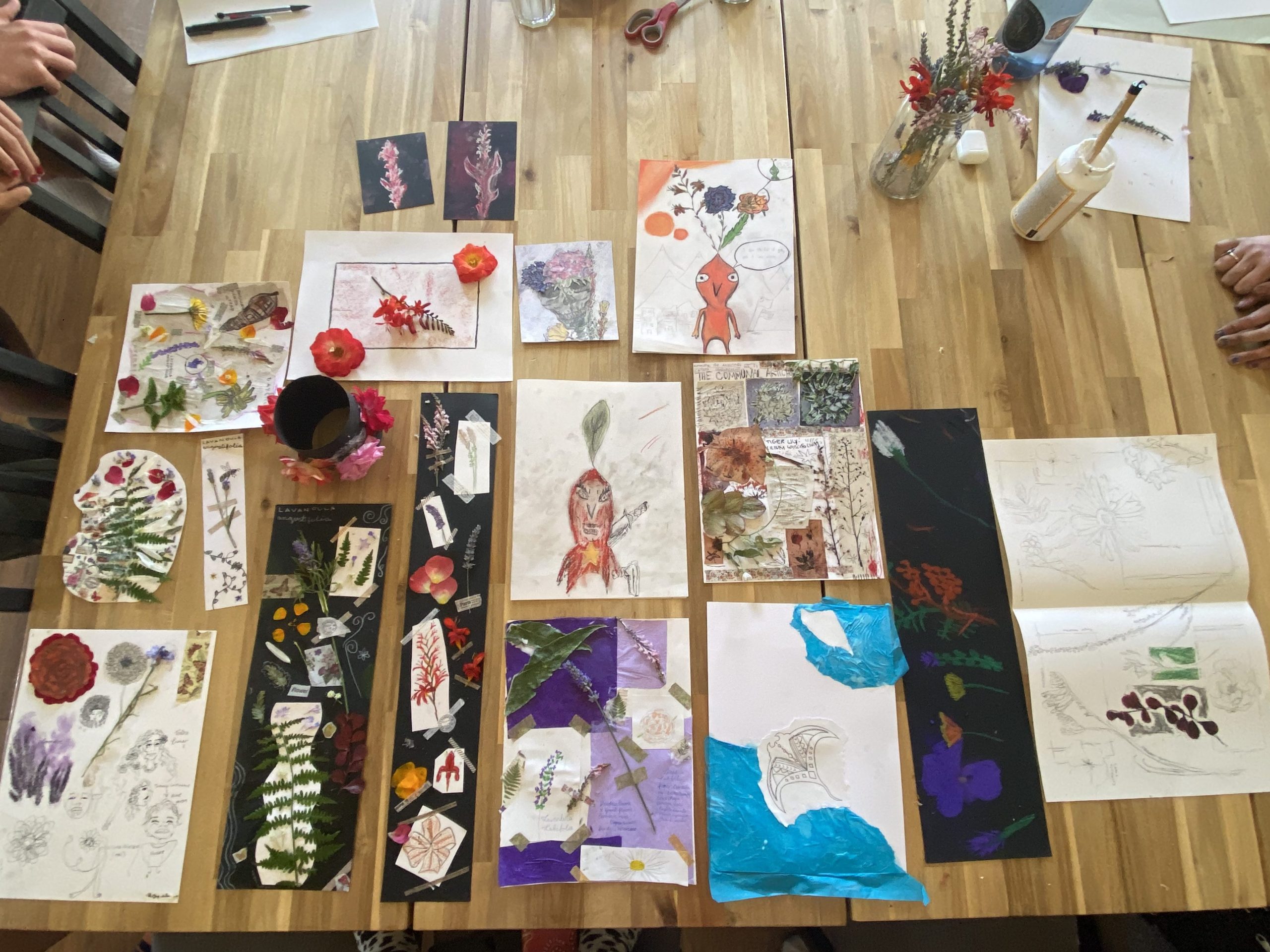
After our morning of walking and collecting data, we retreated back to the comfort of the house for a few hours. After an uneventful lunch and some time spent further developing project ideas, we were met with a welcome surprise as Islay, a former Salish Sea Sciences student came in to help us work on art and scientific drawings. While some of us certainly made more scientific drawings than others, at the end of our art time, we created some pretty awesome art pieces.
The scientists turned artists hard at work (yes, those are real flowers, no, we definitely did not just take them from the school’s garden)Our masterpieces spawned across multiple mediums, inspirations, and styles, some more avant-garde than others but museum-worthy nonetheless
I think almost all of us enjoyed our little art venture as it was not only an excellent way to unwind but also a good practice for creating art in multiple mediums. Some of us even created collages and 3D art pieces which was super cool!
All in all, today was another good day for the students of Salish Sea Sciences. A busy morning contrasted a very relaxing afternoon quite well! As projects continue to develop there will be plenty of opportunities to individualize our research and apply the skills we have been learning steadily over the past two weeks. Hopefully, tomorrow will offer something just as awesome as today!
We had a quiet and peaceful start to the day with a cheeky 7:30 AM wake-up, however, we were quickly rushed to the van in order to make our 9:00 AM appointment at Friday Harbor Labs. At Friday Harbor Labs, we split into groups and rotated amongst many stations to learn about various student projects. These projects had an emphasis on the ideology of how future generations will maintain their place within the ocean. Shortly after our visit to the labs, we attended a Marine Botany lecture on the diversity of non-articulate Crustose Coralline algae. Then, with our busting excitement, we made our way back to Spring Street International School while blasting Lady Gaga in the van. Once we made it, we settled into the afternoon finalizing our research project ideas and what we want to work on for the next two weeks. Nearing the end of the day, we got to unveil the kelp presses we made a week prior. These works were simply astonishing. The pieces were incredibly versatile, varying from intentionally organized seaweed kelp to abstract pieces of art that would rival even the works of Pablo Picasso. Finally, to end our night, we were all busting with anticipation to have dinner with Doctor Katie Dobkowski, who works in the Department of Biology at Bates College. Her studies also includes ecology, biomechanics, and physiology. After she left, we had so may questions to ask her, luckily we were able to see her the next day for field work at Cattle Point.
Signing off for now, The Salish Sailors
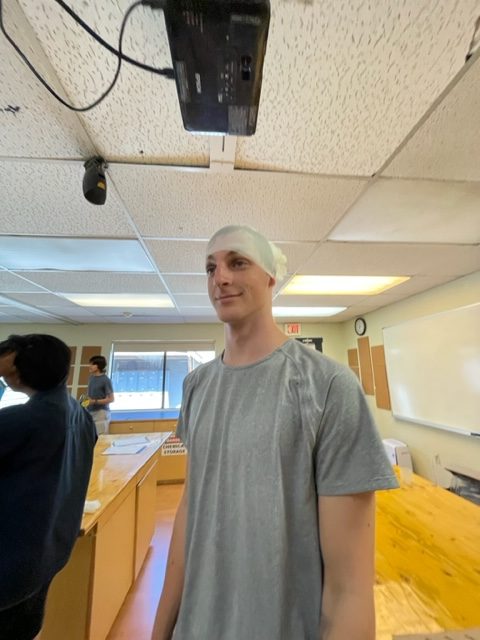
Pictured here is Tommy before the lecturePictured here is Leo taking extra precautions in the lab.
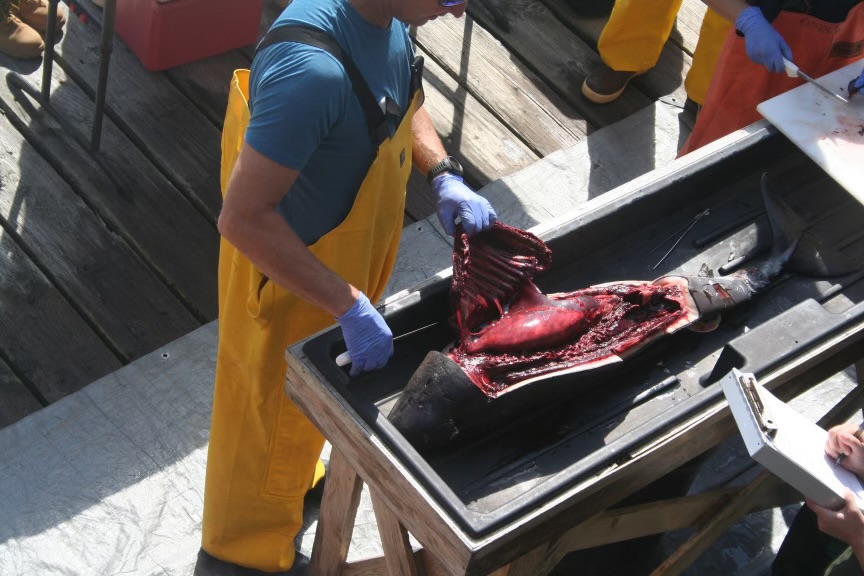
TRIGGER WARNING: Today’s blog post includes pictures of a porpoise necropsy. While the procedure was done respectfully and carefully, the images include blood and/or other exposed innards of the specimen. Thank you for reading!
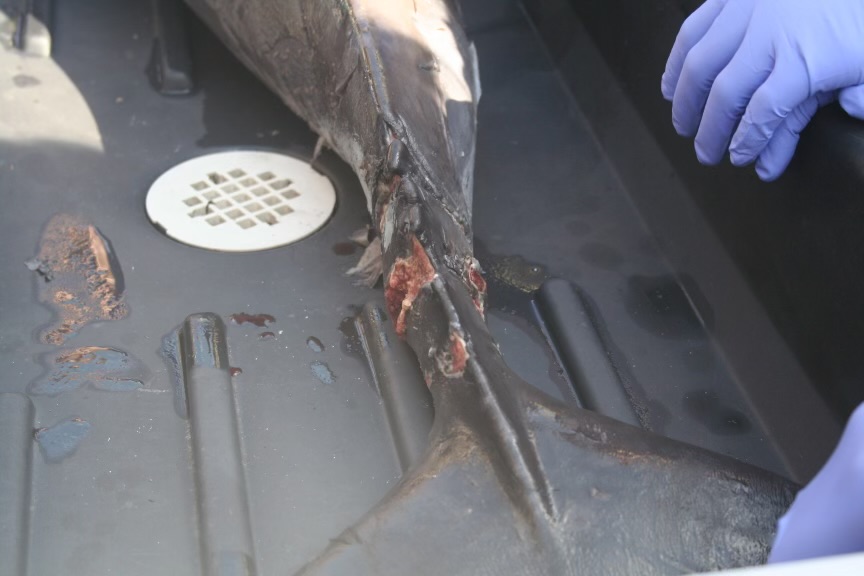
Today’s adventures were quite a treat. Recently, a Harbor Porpoise was found floating off of Lopez island, so Friday Harbor Lab’s necropsy of the week was examining this unique creature. It exhibited severe scavenger damage around it’s left eye, and large, evenly spaced lesions on it’s tail stock (the area that connects the body to the tail) likely caused by a boat strike. Without further microscopic investigation or testing, the most clear and probable cause of death was some kind of infection (meningitis or bacteremia of some sort) that entered through the cuts caused by a boat strike and travelled through the blood.
Lesions pictured above were presumed to be an inficted injury caused by a propeller, the infection spreading to the rest of the body (Picture Cred. Hannah)
Vetrinarian Dr. Joe Gaydos shows that the lungs of a 7 month old porpoise, an interesting part of the body to see!(Picture Cred. Hannah)
After we went back to the dorms for lunch, and some project developement time, we went with our science director Adam Rogowski to examine Fecal coliforms in the Friday Harbor Marina. This bacteria is found, as you might have guessed, in feces or other waste materials from all warm blooded animals, including humans. We came to start the procedure for measuring the concentration of this bacteria in different areas of the marina in order to understand the water’s safety to other animals, where it might be coming from in the case of a high concentration, and how it could affect the local ecosystem.
Todays guests are… US! Tonight Salish Sea Sciences is having Presentation Night. Half of our students will be giving a presentation about a topic of their choice. The other half of our students will be presenting next week, and this week, their job is to introduce a person that is presenting as if they were a scientist joining us for dinner. This will include a brief introduction, and a summary of that students studies.
Some highlights of the presentation included: How breeding 54,000 lobsters can make you a quadrillion dollars, what a sandwhich ACTUALLY is, and the rising of Mario and Luigi, telling us about how our society works in the rising age of the softboys.
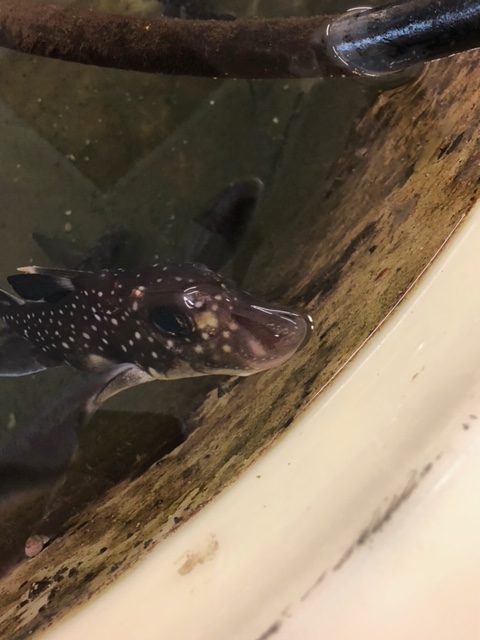
Hey blog! As we get back to our regular posts, we return to FHL for an in-depth tour of their fish labs, observing the many fascinating species held within. From the slippery prickleback , to the almost birdlike ratfish, there was a plethora of marine life being held in the labs for various research.
Pictured above is a ratfish from the tanks in the fish lab at FHL. This was taken by Ingrid.
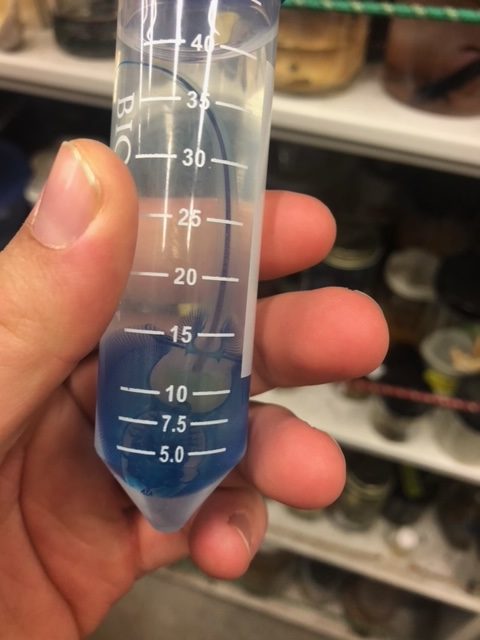
We received a tour of the preserved specimens, as well as a walkthrough of how the dyed specimens are stained and preserved in jars.
Pictured above is a dyed preserved skate specimen in a tube. The blue shows the cartilage, and the clear body is from enzymes that were injected to eat away the tissue to leave it clear to dissect. This was taken by Ingrid.
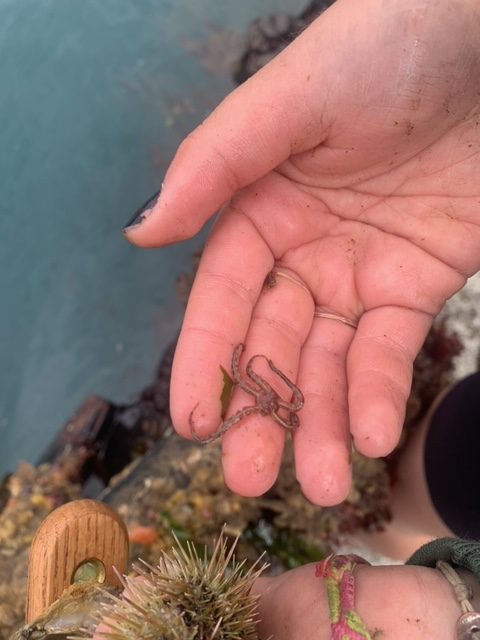
Our group continued the tour with a demonstration of the lab’s CT (computerized tomography) machine, often used in the medical field. This particular CT was being used to create high quality 3D scans of fish later used to created life-like models. Next, we listened to a lecture from two resident scientists studying baleen whales and the mechanics of how they feed. After that, Dr. Sebens (Professor in the Department of Biology at the University of Washington) whom we had over for dinner the previous night lead us down to the FHL docks to collect all sorts of marine organisms. To do so, we flipped over tires along the docks covered in all types of algae, sponges, crustacean, urchins, etc.
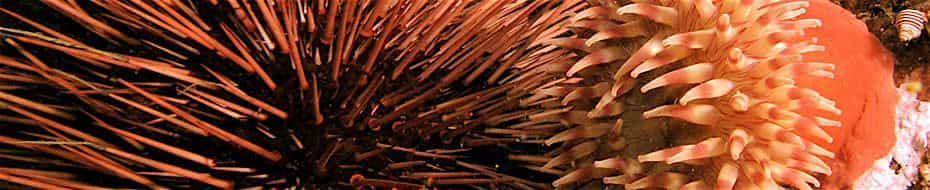
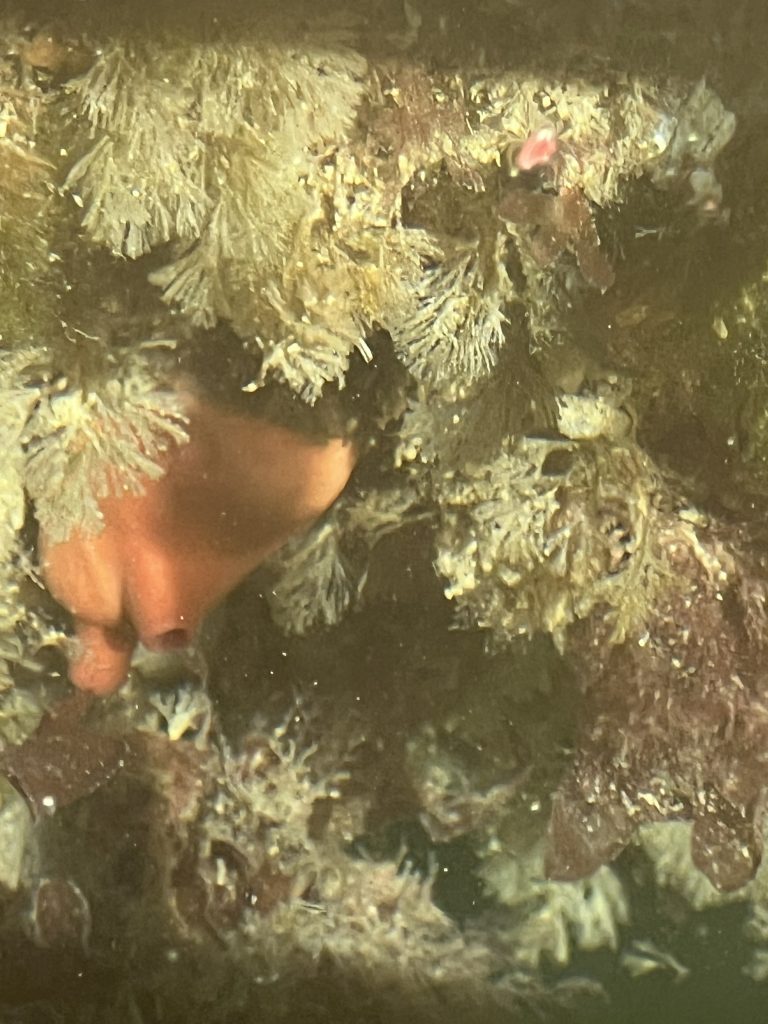
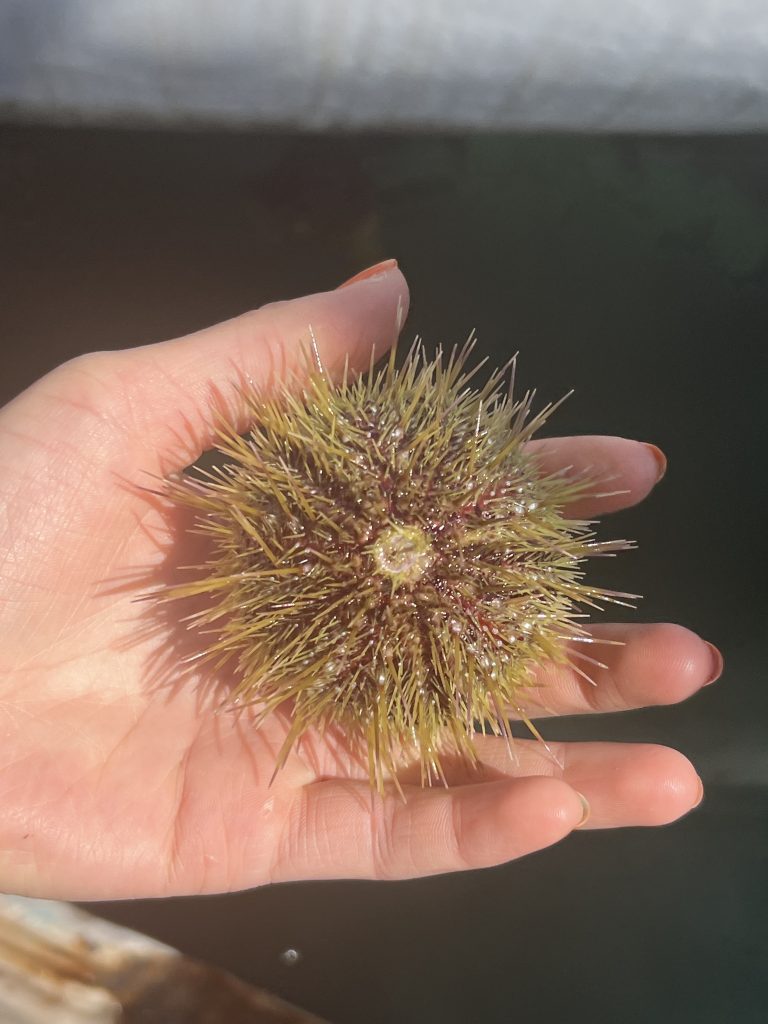
Pictured above is a brittle sea star that was found on one of the tires we flipped over. A green urchin is also shown, which we also put in the bucket. This was taken by Maddie.
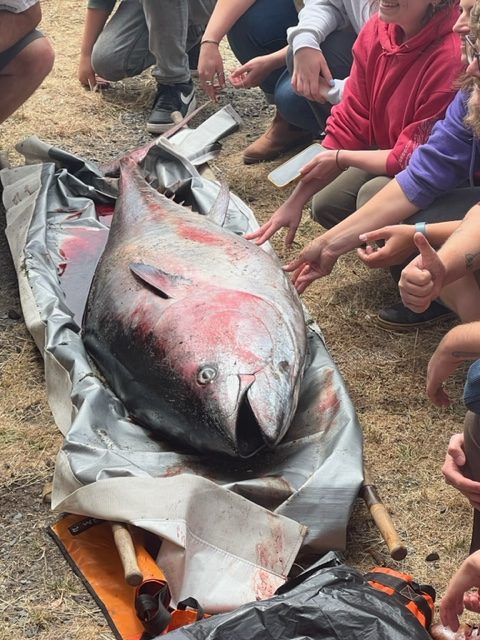
We put the organisms that we gathered in a bucket to be later taken to the labs for further inspection. As we were finishing up, a boat full of scientists came rushing back revealing a one of a kind discovery. A group of six of them carried a covered figure on a stretcher, later being told it was a giant blue fin tuna. What we didn’t realize is that we were about to witness history. Apparently, tunas are only found in warmer water which is why it was so strange to see a tuna so far up north.
Pictured above is the bluefin tuna that was found by the scientist on Orca Island. This was taken by Vedha.
Finally, it was time to head back the van to our next destination.
This destination was the Lime Kiln State Park also known as the “Whale Watch Park” due to it being known as one of the best places to whale watch in all of the San Juan Island. The park also has a rich history most commonly known for the beginning of lime kiln production. Caroline introduced us to Erin Corra who was a naturalist along with many past duties such as being the head director of Friends of Lime Kiln Society. As she took us through the park she quizzed us on many difference species of trees which Finlee answered all. Next, she took us to the watch point where there was many signs talking about the marine animals that passed through the Haro Strait. Many stops later we finally reached the main feature of the park, the lighthouse. Inside there were many displays of posters showcasing the vast history of the lighthouse and of marine life in the surrounding area. Unexpectedly, we were told that we could venture to the top of the building. We split in to groups for this due to the small staircase and size of the upstairs. From the top, we got a wider view of the area, being able to see much of Vancouver Island.
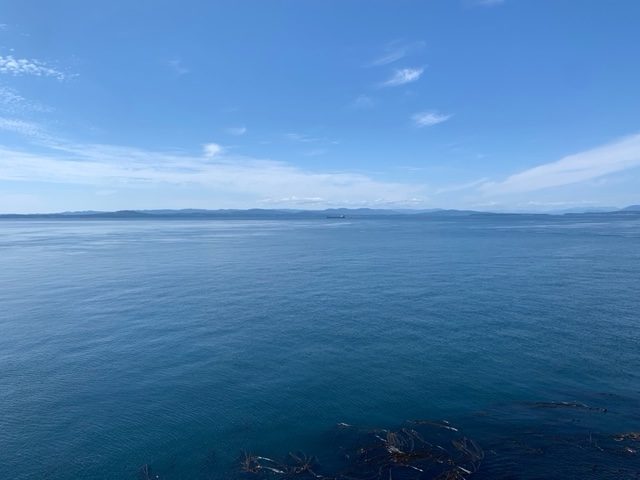
Pictured above is the panoramic view from the top of the lighthouse. Across the sea is Vancouver island. This was taken by Maddie.
After all of the groups got back down we hiked over to the Lime Kiln where a small beach took our main focus. We explored the area by dipping our feet into the cold salty water along with climbing the nearby cliff.
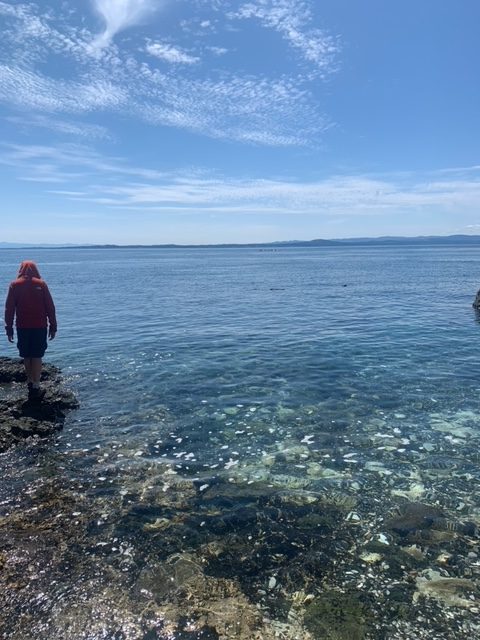
Pictured above is the intertidal zone we could explore around in. There were many marine organisms that were found such as sea anemones, crustaceans, etc. This was taken by Maddie.
Finally, we made our way back to the van to return back to the school.
Overall, this was a very enjoyable experience where everyone learned something new that was so close to our school. We got see the daily life of marine biologist and what they do to help the science community out. That’s all for now. Signing off from the Salish Sailors! (Written by Tommy, Ingrid, and Maddie)
Today we woke up early and headed towards Cattlepoint, where we talked to Jessica Lundquist who is a professor at the University of Washington who taught us about coastal fog it was wonderful and very educational, we all learned about electromagnetic radiation and its effects as well as convection cells.
We then headed back to a delicious lunch and brainstormed some ideas for our projects (we all were so excited). After a small break we walked down to the Friday Harbor Marina to investigate the differences in biodiversity in both this area and the Friday Harbor Labs (it was amazing) we saw many different sea animals such as a crab, sea urchins, sponges, kelp, sea cucumbers and more. We then discussed what we saw and prepared for our dinner with Dr. Kenneth Sebens whose interests are in marine benthic ecology, coral reef ecology, hydrodynamic effects on marine benthos and theoretical ecology. After dinner, Dr. Kenneth Sebens presented to us about many of the marine organisms in the Salish Sea. We learned about everything from nudibranchs to bryozoans. Most of us had very little knowledge of marine invertebrates prior to this experience so Dr. Sebens was pretty helpful in teaching us a lot more about them.
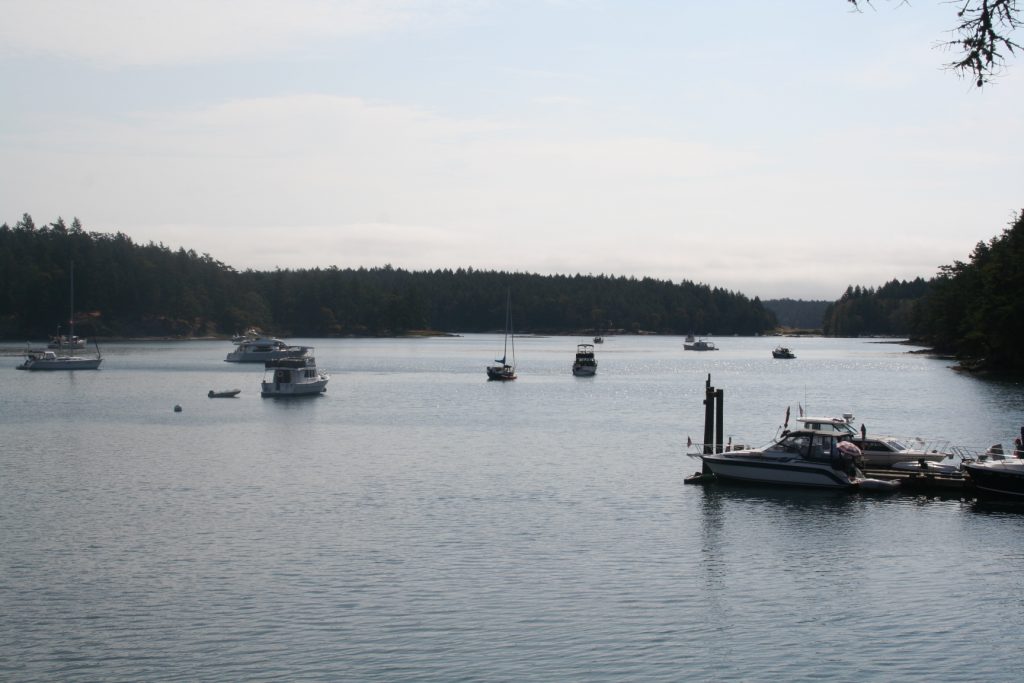
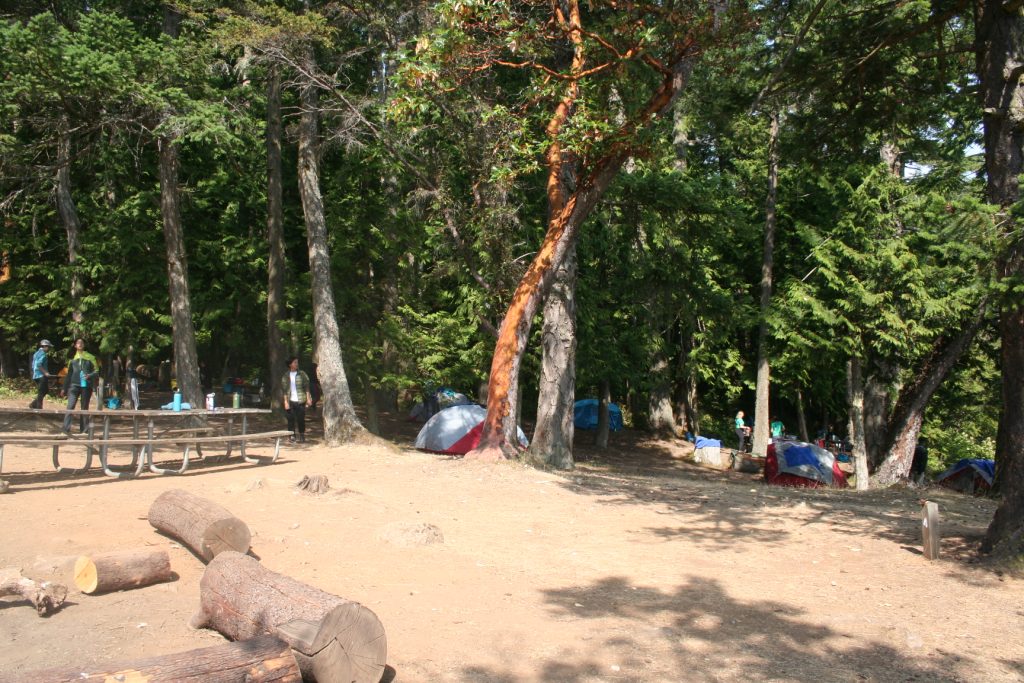
Well, it certainly has been a little while since the last blog post! These past 3 nights have all been devoted to a kayaking and camping trip. On our first day, we traveled from Roche Harbor to a campsite on Stuart Island. While the 7-mile paddle there proved to be arduous for some, the paddle was anything but uneventful. Prior to departing, many campers talked about how cool it would be to see orcas in the wild. In an extraordinary stroke of luck, the campers’ hopes were fulfilled as a roaming pod of transient orcas was spotted in the channel. On this ride to our campground, we also found a number of other interesting sea creatures. Harbor seals, harbor porpoises, jellyfish, and crabs were all spotted on our way to Stuart Island.
The view from one of the docks on Stuart IslandThe campsite !!
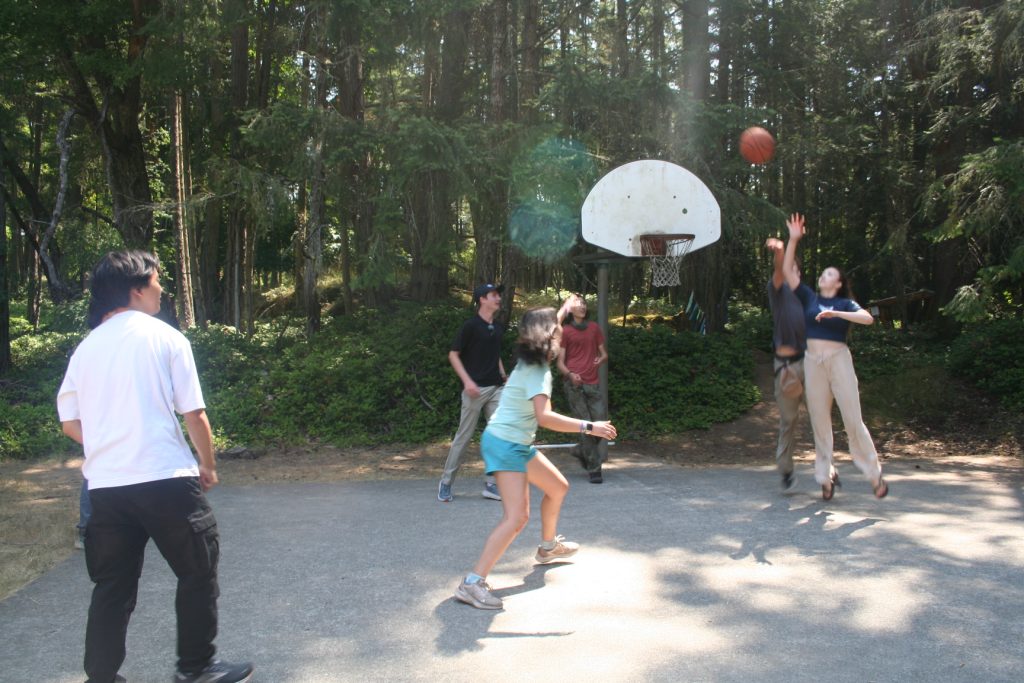
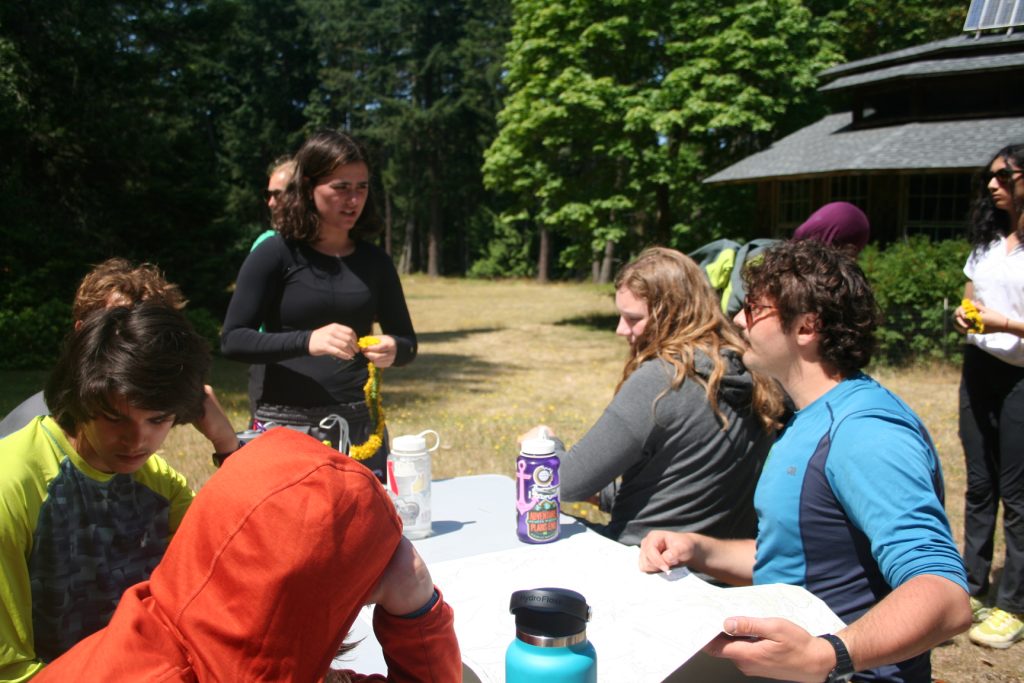
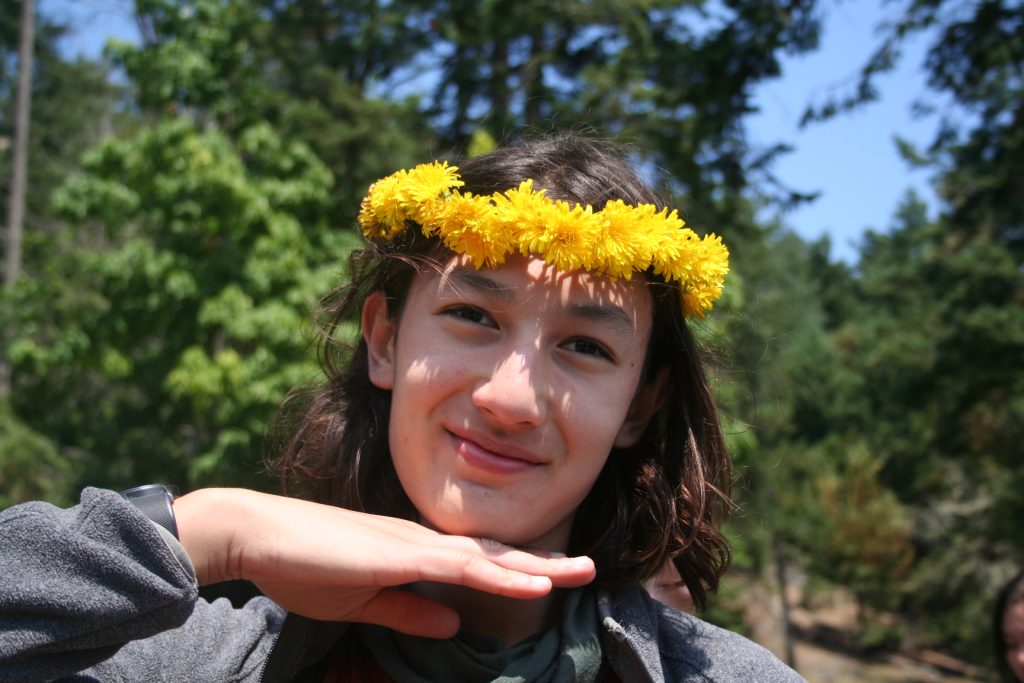
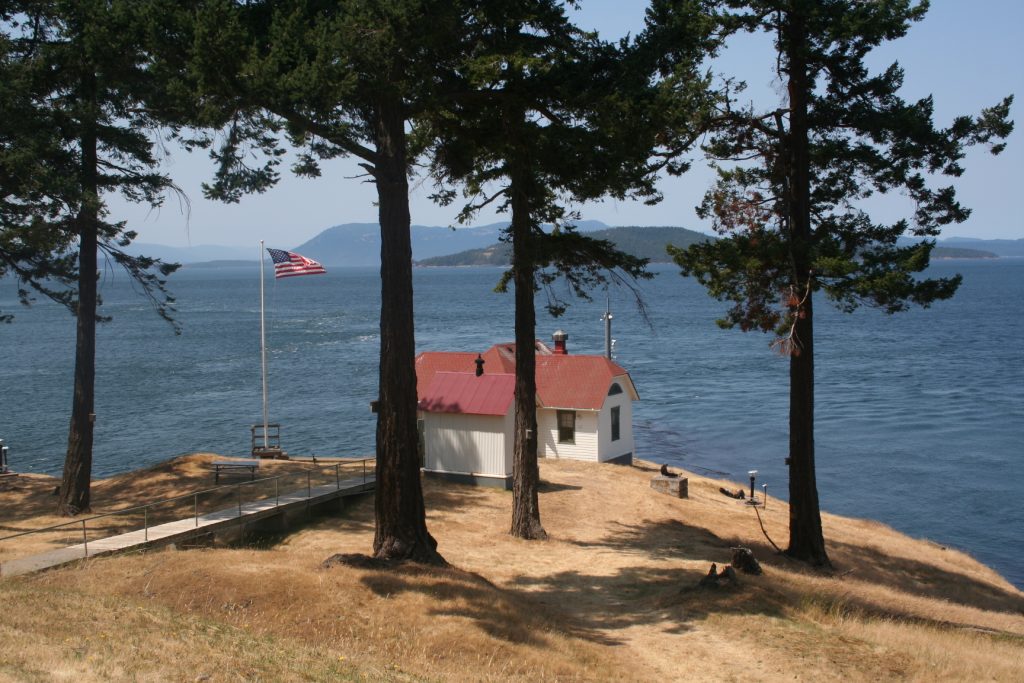
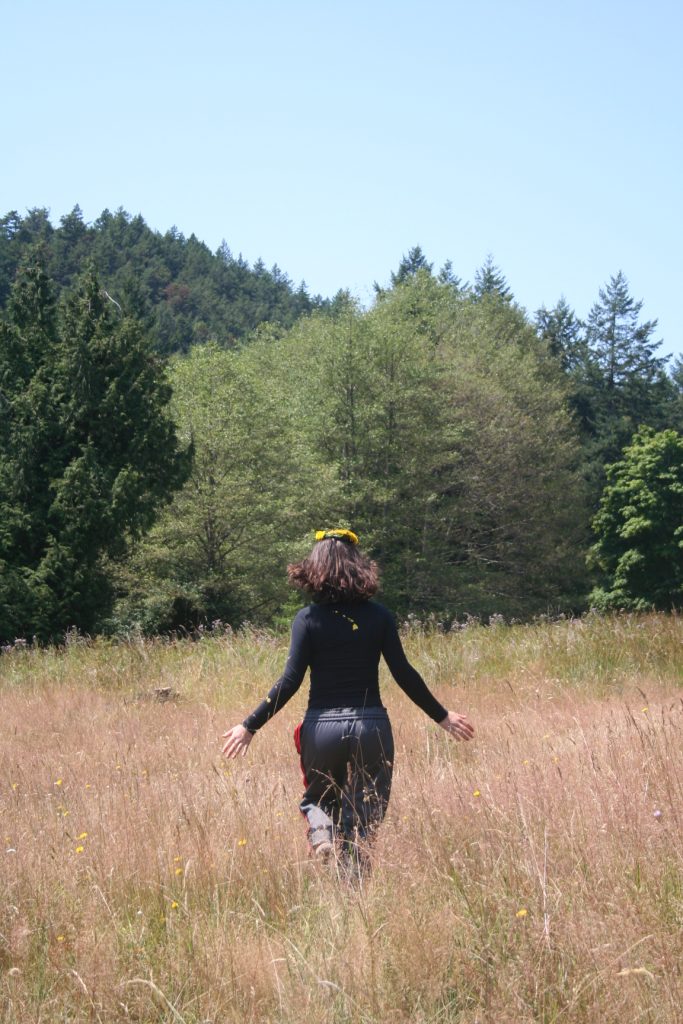
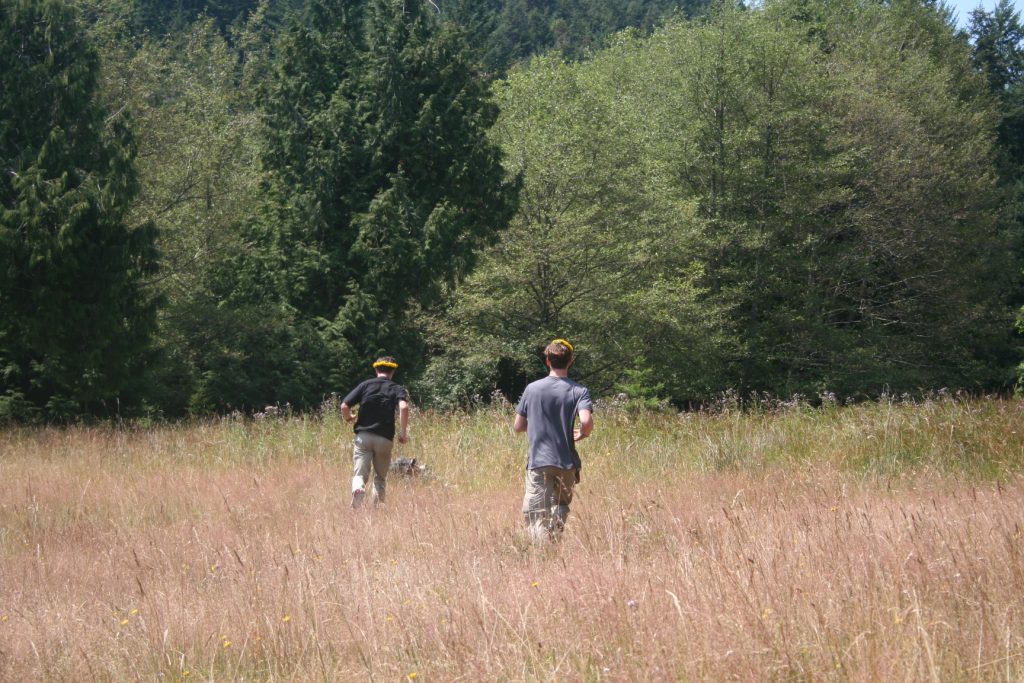
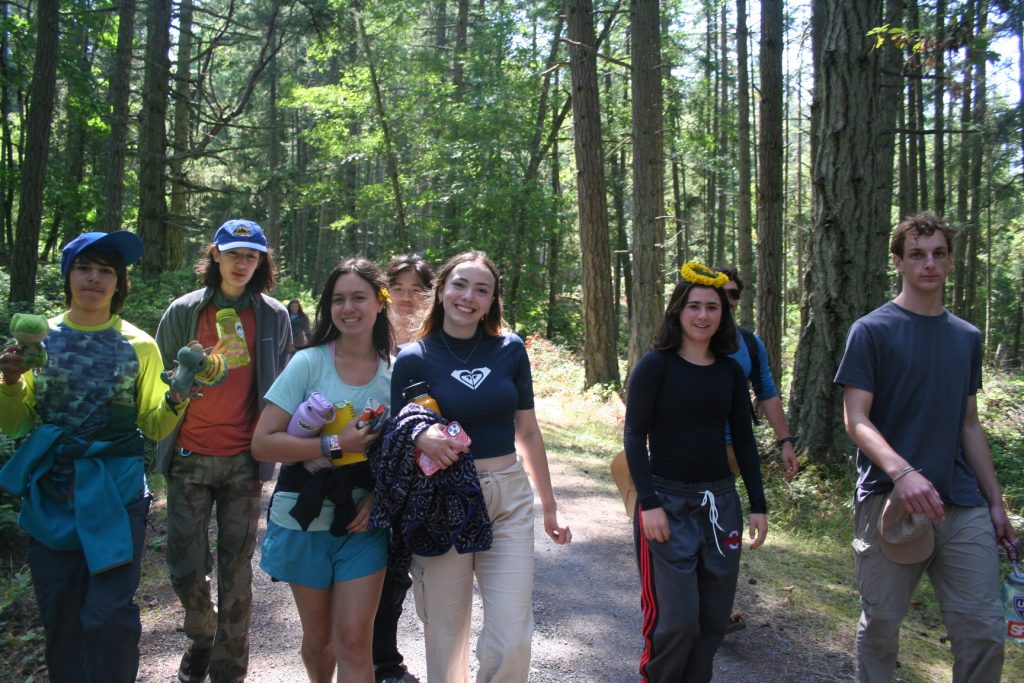
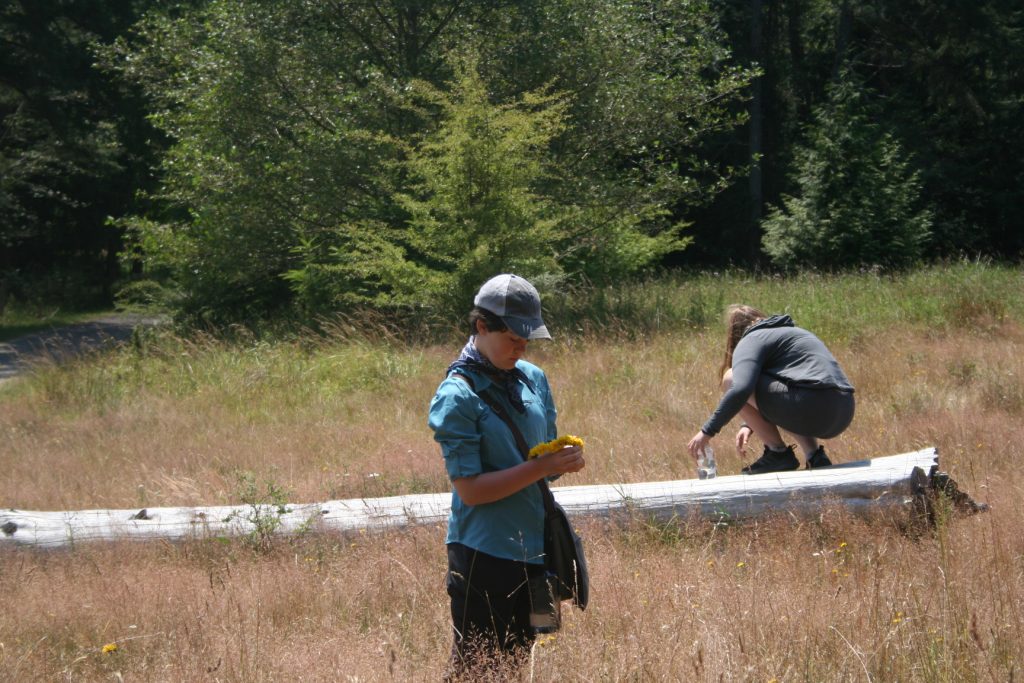
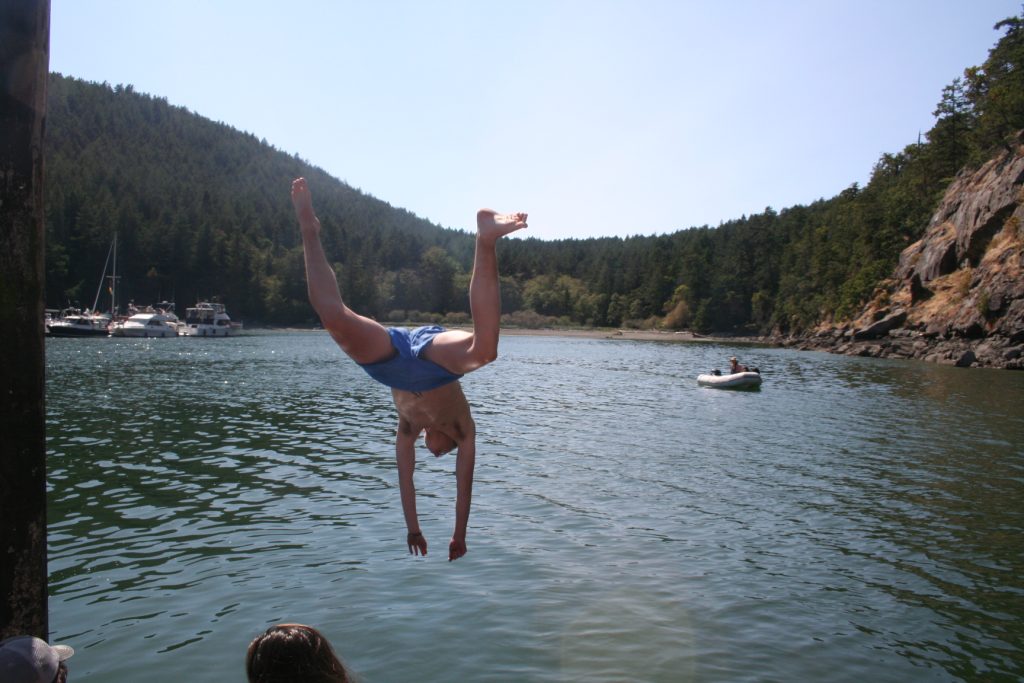
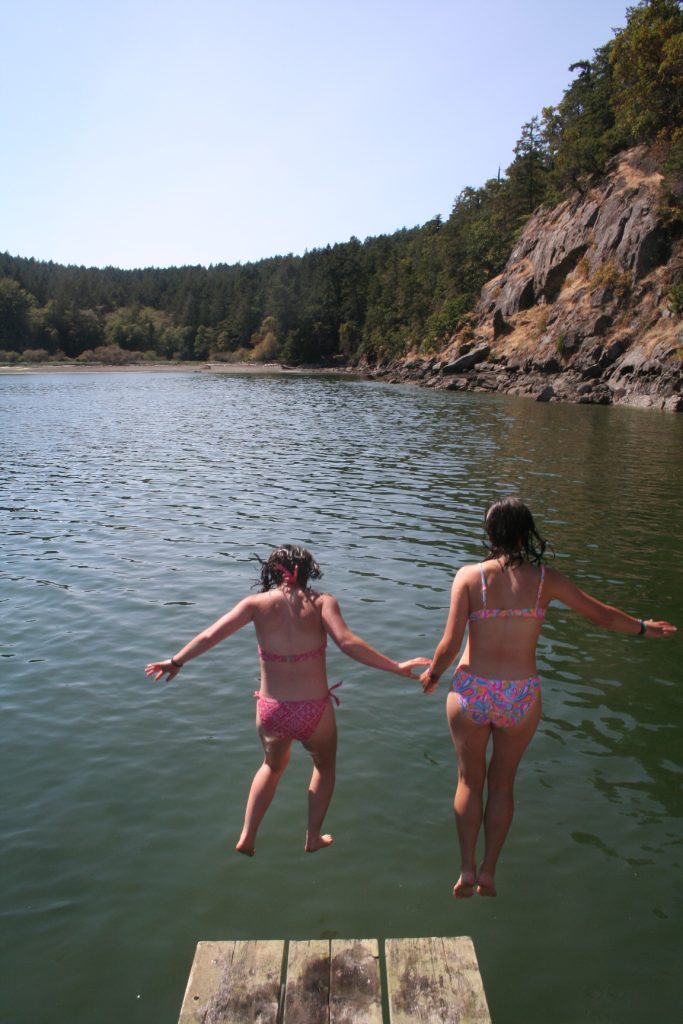
Even after an action-packed first day of paddling, setting up camp, and observing local wildlife, the excitement only continued to grow. The second day gave everyone a much-needed break from paddling. Paddling time was exchanged for time to explore the island and its many hiking trails. To start our day off, some of us decided to dock jump in the early morning into the freezing cold water. Despite the extreme cold, it did the trick and woke us up very nicely. Our main activity of the day was an extended walk from our campsite all the way to the lighthouse on the other side of the island. On the way to the lighthouse, our trails took us to a library/schoolhouse where we took a quick break to drink water, look at maps, and frolic in the meadow nearby. Flower crowns were made and modeled by all. Some people even used their free time to play some intense basketball games before we resumed our walk. When we finally reached the lighthouse we had great opportunities to look out at the ocean and explore the rocky shores. We also had lunch and toured some pretty mediocre museums detailing the lighthouse’s history and its keeper’s quarters. After we had our fill of the lighthouse we walked back and had the remaining part of the day to chill and relax. Some of us even named areas on the island such as the ethereal garden and the cliff of wisdom. The ethereal garden in particular was a great place to nap on the soft moss as several of us fell asleep in the evening sun. To end our day off, after dinner, we shone a light off the dock and observed some mating polychaete worms. We even saw some devilish raccoons peering at us from the trees with their beady little eyes and foul stares. Rest assured they would be dead if they had the courage to come down and face us for real.
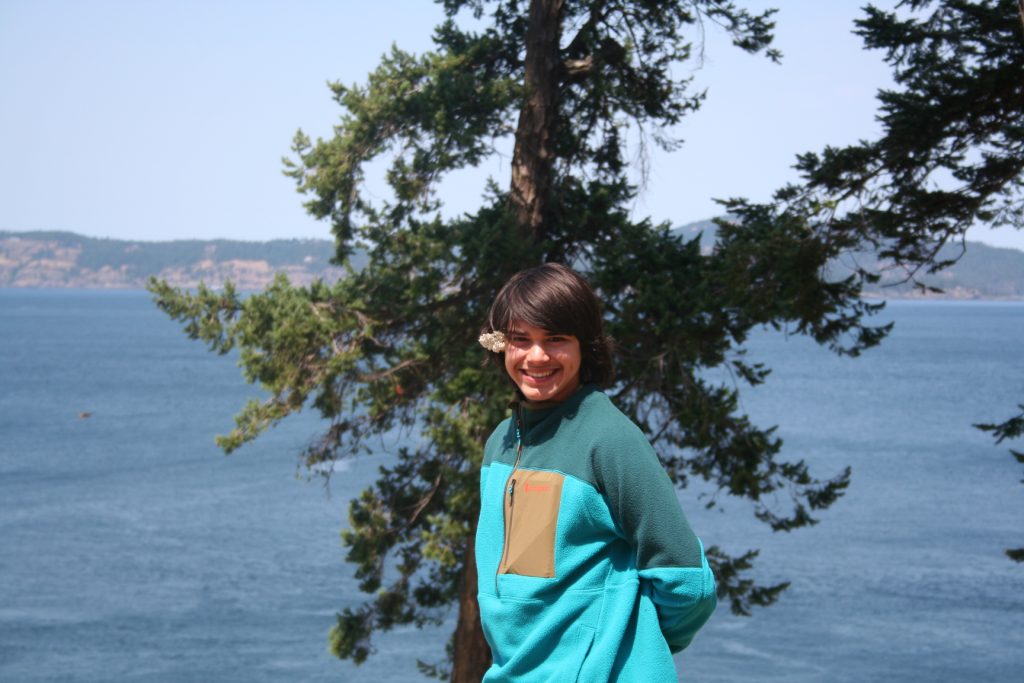
A very intense round of basketballLearning about currents in the San JuansOur author rocking a flower crown 🙂
Lighthouse of Stuart IslandFlower crowns are perfect for running through fields
More flower crowns and running through fields aesthetically !!
The squad mid-hikeMore flowers, more gorgeous modelingPhoto taken seconds before the disaster (a snake)
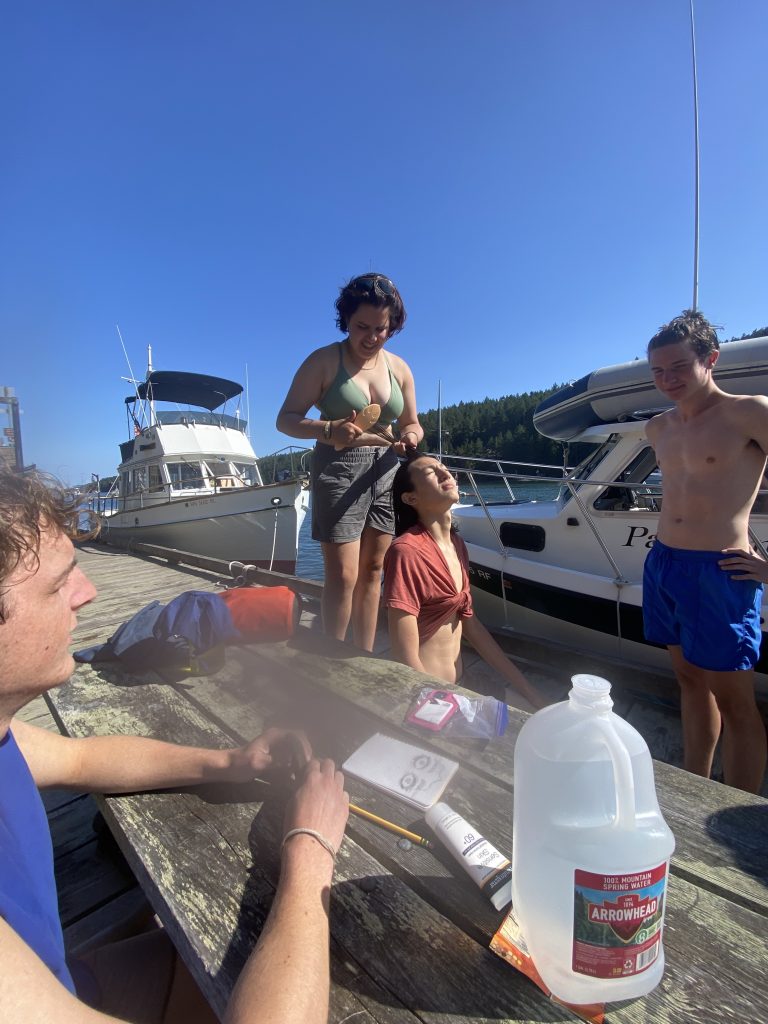
Day 3 went by remarkably quickly as we all slept in much later than the day before and went paddling once again. We decided to go and paddle a little bit as we worked our way through some harsh currents and then stopped and ate some pulled pork sandwiches for lunch. The beach where we ate lunch was also a great place to find sea glass and cool shells. Later in the day we jumped off the docks again and tanned in the sun. We also had our hair braided and got some makeovers (courtesy of Hannah and Maddie). Overall, day 3 was pretty awesome and had a good mix of activity and relaxation.
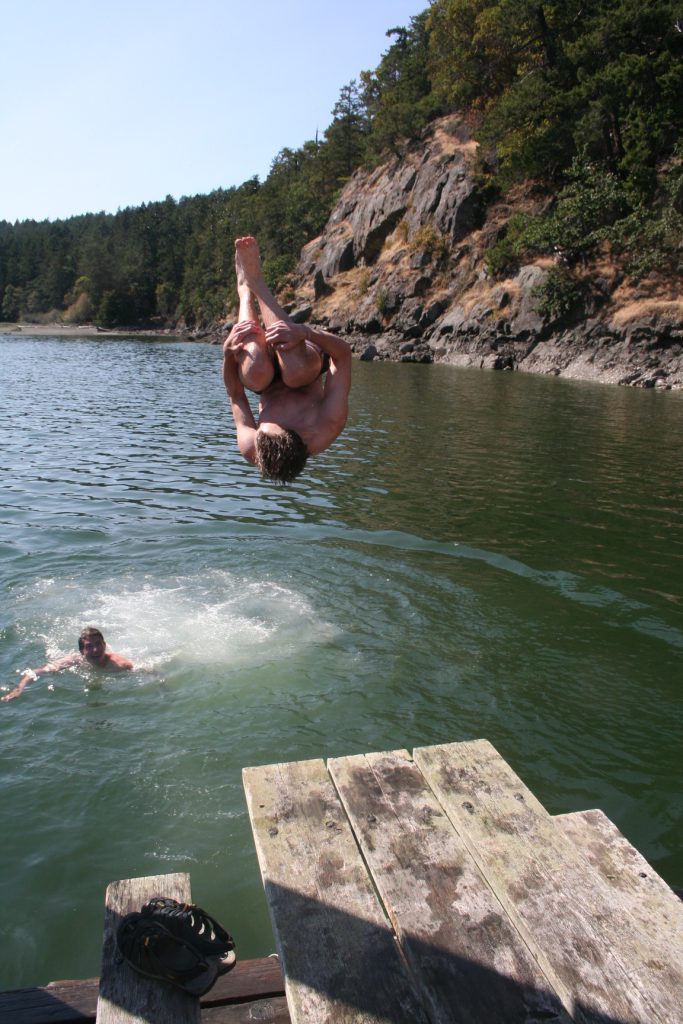
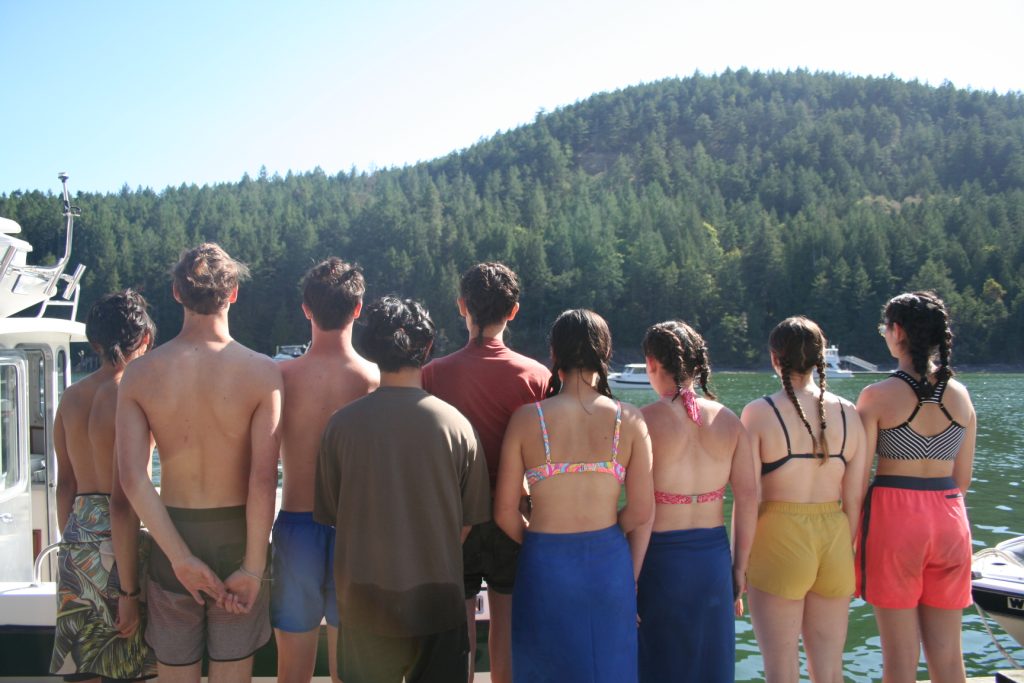
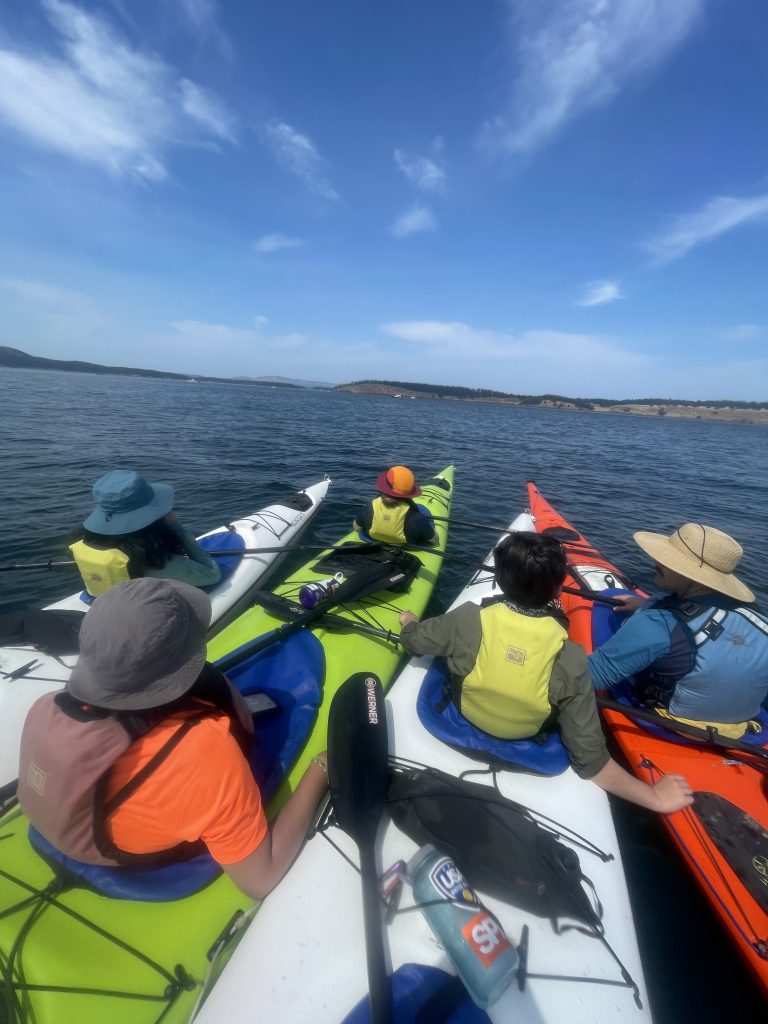
Our resident diver perfecting his frog diveAt camp, we learn how to overcome gravityWe go down togetherThe squad fully decked out in their braidsMe braiding Philip’s hair a little too tightly (sorry !) (taken by Khadija)Kayakers from a tall person pov (photo creds to Leo)
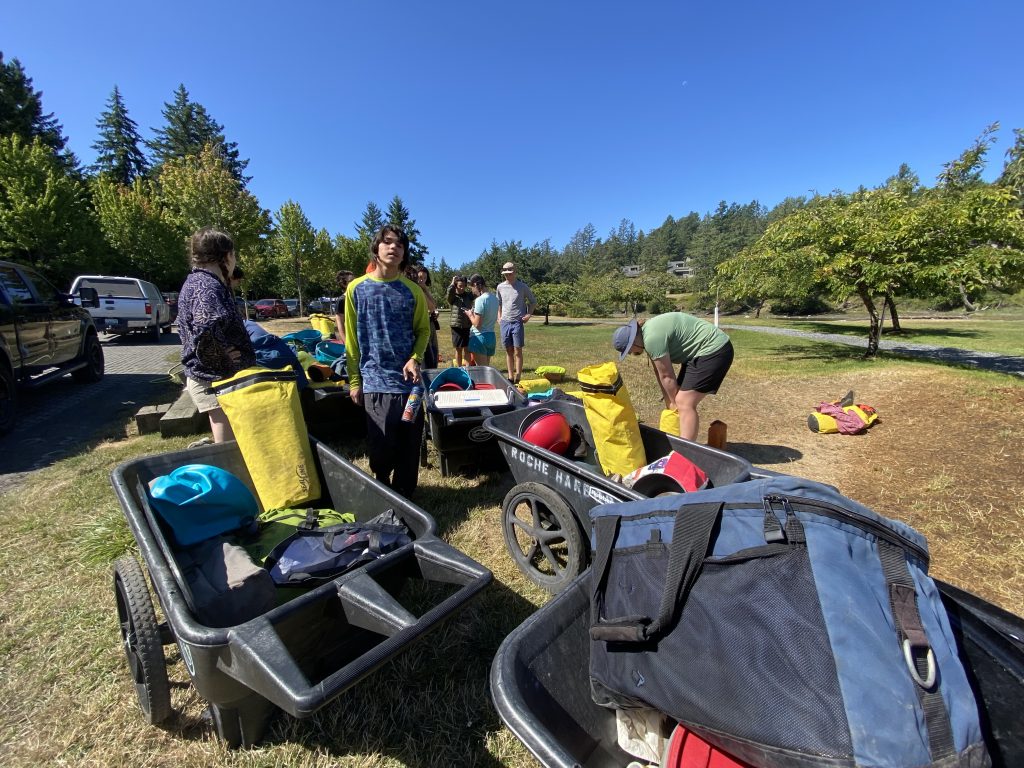
Finally, day 4 was a challenging day where we woke up early and packed our bags so we could kayak back to camp before any major currents started up. We completed a journey estimated to be 4 hours in a little over 2 hours of paddling with some beautiful conditions. All in all, the entirety of the kayaking trip was an extraordinary experience where we got to experience a really close and personal connection with the wilderness around us and a multitude of different cool animals.
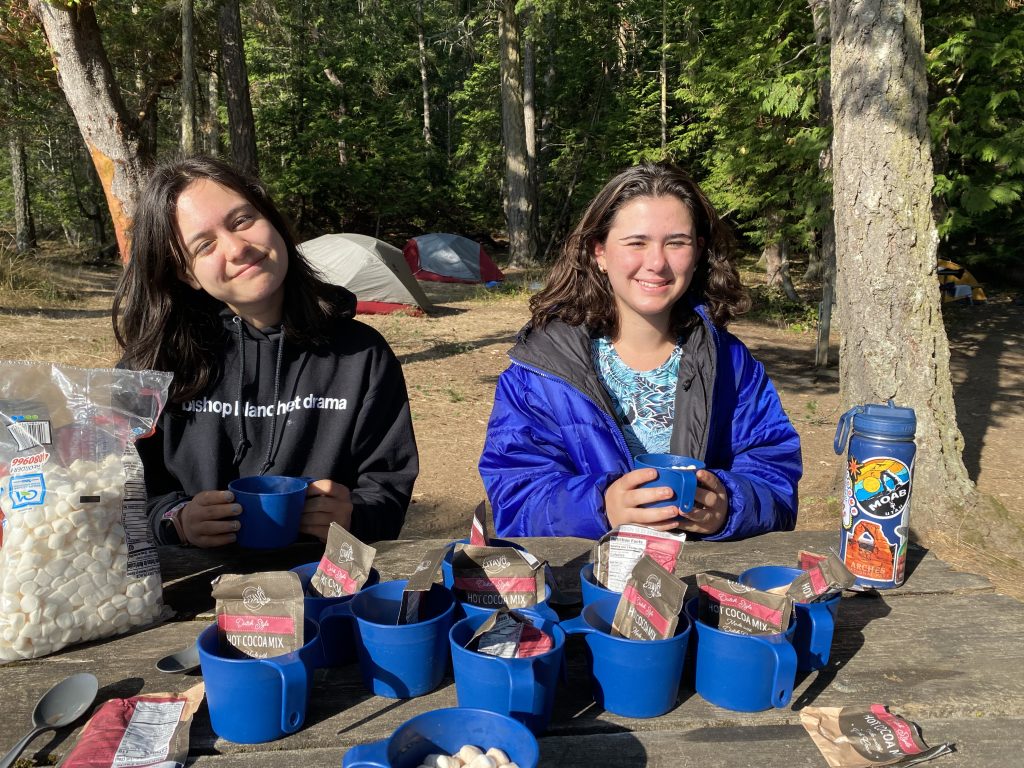
Hot chocolate is best enjoyed at 7 am after a cold swimUnpacking after kayaking a 4-hour route in 2 hours is not done with a lot of energy left