Pictures of everything we’ve been up to so far!
Day 2, June 24th

Photo Taken by Finlee
One of the first activities we partook in was a field trip to the Whale Museum. There we learned about baleen, the precarious situation of the San Juan resident orca whales, and more. It was a great experience to kick off the program.
Photo by Finlee

A photo of Adam. One of the amazing science directors for Salish Seas. He has a wide range of knowledge and is always ready to answer all of our questions! In this photo, he is posing underneath a whale skeleton in the whale museum.
Taken by Finlee

A picture of Caleb holding a sea cucumber, one of the many creatures featured on the intertidal bingo. One of the best parts of this trip was the opportunity to see creatures that many of us had never seen before.

Taken by Finlee
After we went to the whale museum, we drove to Dead Man Cove. We went to the intertidal zone where we played intertidal bingo where we tried to find everything from cnidarians to kelp crabs.

Taken by Morgan
This is a photo of some of the girls and boys taking a very cold and daring dip into the ocean after dinner to cool off and have fun
Day 3, June 25th

Picture taken by Morgan
On our second full day, we travelled to Cattle Point Beach. The water was calm and the sun was shining at full force. We were ready to search for and ID crab moults!

Picture taken by Morgan
This photo of the slime of the students having fun eating lunch and chilling out while conducting some research at the tide pools on the west side of the island yesterday.

Picture taken by Soren
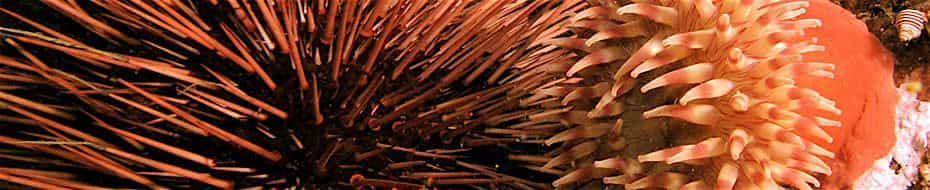
This picture was taken of a plumose anemone at the beach directly below the lighthouse. While we were searching for crab moults we also found several other creatures like sea stars and anemones!
We also met with Professor Billie Swalla over dinner where she talked about her work with evolutionary biology and what she did in that field. You can check out her biography here:
Day 4, June 26th
After our now-daily morning walk, the group headed back to the Whale Museum. Under the guidance of marine mammal extraordinaire Tracie, we assembled the skeleton of a steller sea lion and attempted to determine the cause of death. Finlee was correct with the diagnosis of blunt force trauma from orcas! We also discovered that the sea lion had been shot in the mouth, but the injury was not fatal, as there was evidence of healing and wear on the damaged tooth.

Picture taken by Soren
We returned to the dorms to discuss and prepare for the upcoming four-day kayaking trip and then promptly departed to catch low tide at Deadman’s Bay. At the beach, we formed human chains to bail out a waist-deep tidepool for (future doctor) Meg Vandenberg, hoping to find armoured poachers. (https://cascadiaresearch.org/intern/meg-vandenberg/). Although we didn’t find the armoured fish, we did catch a variety of gunnels which were transported back to Friday Harbor Labs, identified, and sorted by species.

Picture taken by Katie

Picture by Morgan
Of the students participating in the tide pool draining, none worked harder than Finlee, Tatum, and Soren, catching the slippery Gunnels.

Picture by Morgan
We worked hard to empty the water of the tide pools to find gunnels and other fish. It was hard work, but it was a great bonding experience!
A highlight of our time at the beach was the orcas passing by. We even spotted a playful juvenile breaching!


Picture taken by Katie
In the evening, we ventured back to the labs to attend a seminar by Dr. Spencer Fire about harmful algal blooms and their effects on marine mammals. We learned about three major biotoxins– domoic acid, brevetoxin, and saxitoxin– and the symptoms exhibited by marine mammals like sea lions after acute exposure. These include reproductive failure and a loss of fear of humans.(https://firelabfit.weebly.com/)