Day 4: Searching for Sea Stars

Today’s blog by Joey and Maddy 🙂

Today’s search for Sea stars at Lonesome Cove was a huge and exciting success! Today tide times were much more agreeable with our sleep schedules, and we were able to start the day a bit later than usual. Some of us used the extra time to go get breakfast and coffee in town at the Bean, a local coffee shop. Those that went agreed that the poppyseed muffin was average, but said that the ham and cheese breakfast sandwich was very good. 

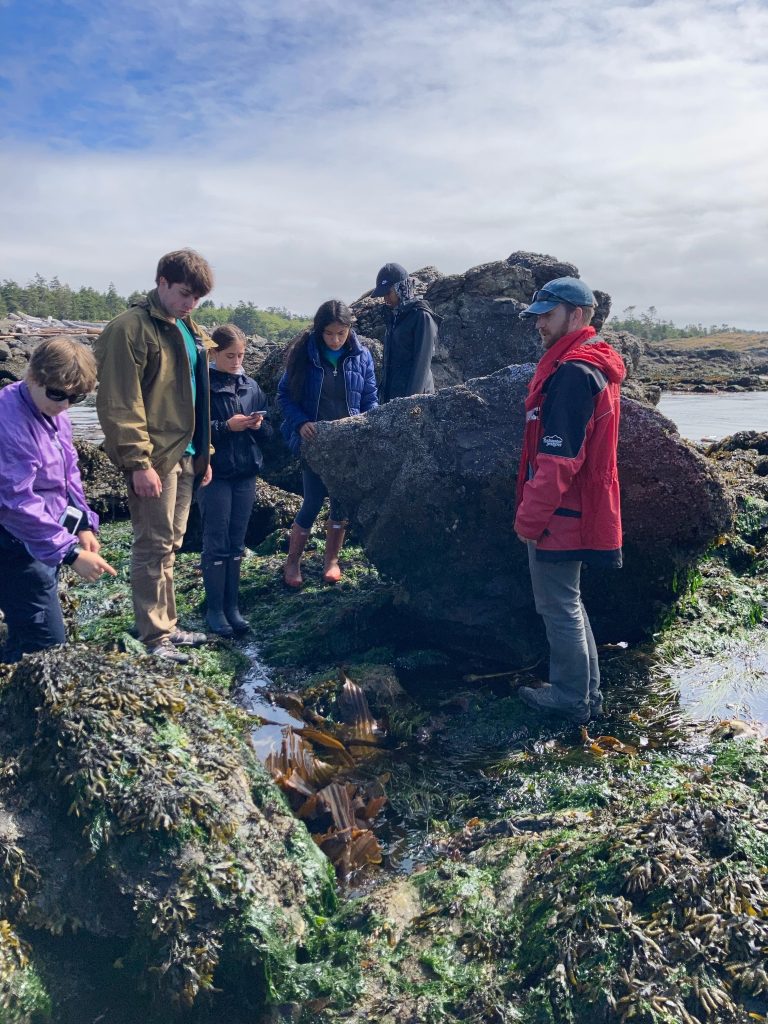
Once everyone had eaten and packed lunch, we headed straight to Lonesome Cove. In the intertidal zone, we were greeted with the salty smell of the sea and many seaweed covered rocks. After quickly changing into our water shoes, Miranda, who studies Sea Star Wasting Disease (SSWD) as a science co-instructor at SSS, showed us how to conduct a sea star survey. For the next two hours, we scoured the rocks for hidden creatures, carefully traversing the slippery seaweed patches and trying to avoid cutting ourselves on the sharp barnacles.
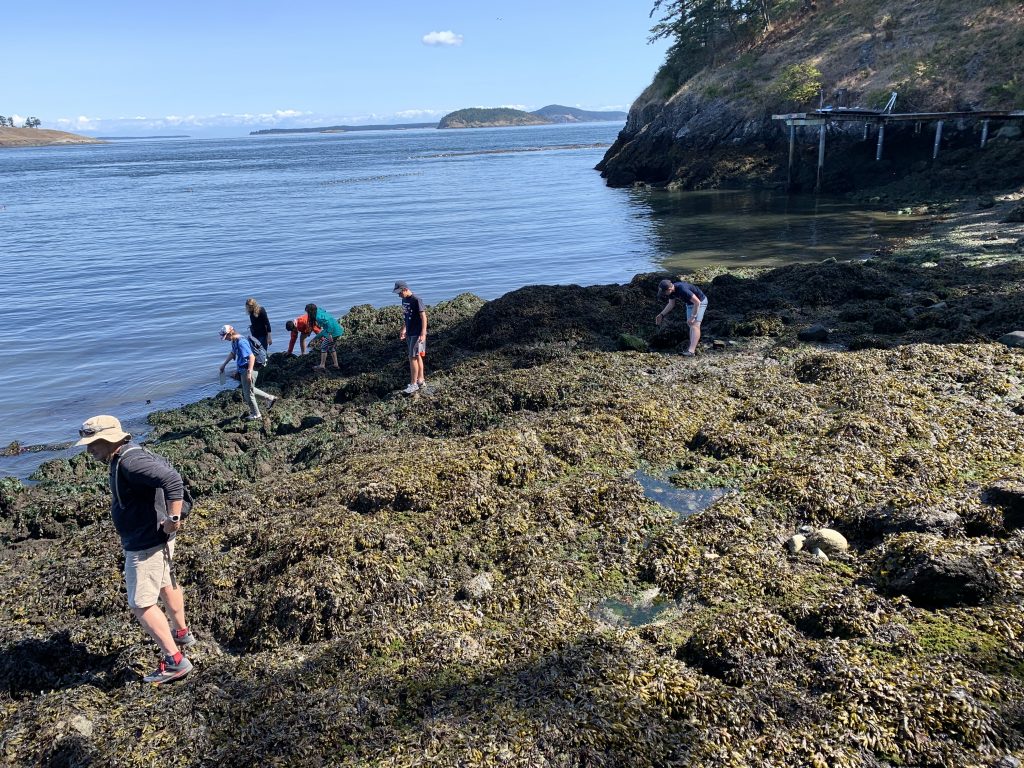
Everybody working together to spot stars on the beach! (Photo: Derek Smith)

We were amazed by the many bright red sea cucumbers and slimy anemones, but the most stunning animals were the bright purple Ochre sea stars. Unfortunately, due to SSWD, the population of sea stars of all species are greatly reduced; according to Miranda there used to be hundreds of orange and purple stars lining the rocks. But even despite the large declines, we were able to find 56 total stars, 22 of which were Ochre stars! Hopefully this data will help scientists around the world further understand SSWD and save the sea stars!

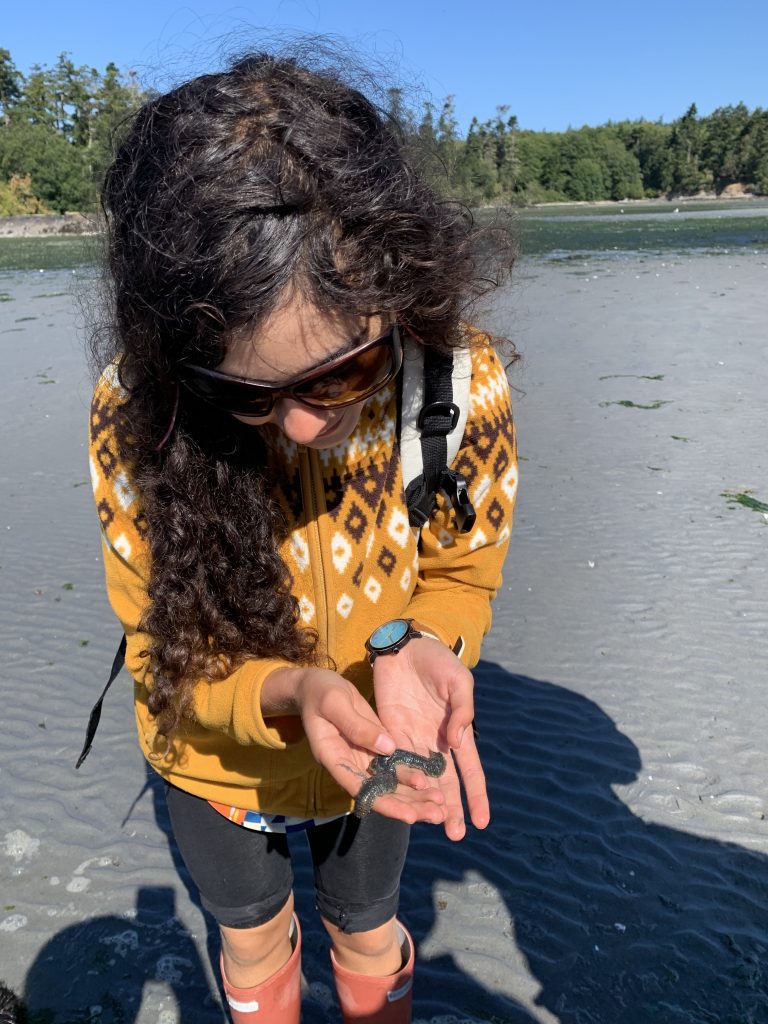
Kika and a sea star that she found! (Photo: Derek Smith)

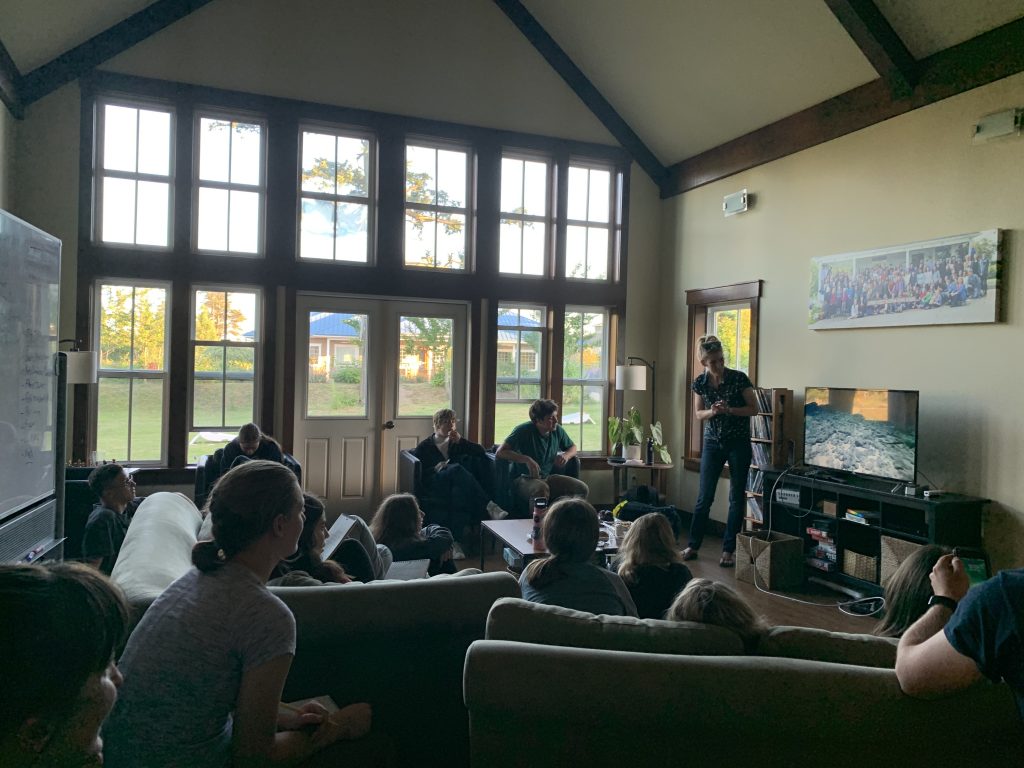
When we were done, we had lunch on the beach; all of us enjoyed the perfect view of the ocean, with Canada in the distance. After a little down time at the dorms, (during which Joey beat Gray in a game of Xiangqi) Morgan gave a presentation about eelgrass wasting disease (EGWD) and explained how it related to our survey excursion. In her presentation, she honed in on different experiments that people have conducted to understand how EGWD spreads. Specifically, she told us about an experiment she ran to test whether EGWD transfers through the water column. Her team placed healthy eelgrass samples around different distances from a natural bed of eelgrass. Two weeks later they retrieved the eelgrass and tested it for EGWD. Her results showed that EGWD can spread through the water column, and that a concentration of only 6 cells/mL of the pathogen is needed to infect eelgrass. This presentation was extremely interesting and helped us gain an insight into how a real scientific experiment is run.

After that, Derek gave us an excellent and engaging presentation, full of colorful photos of various marine organisms. For his Ph.D, Derek studied marine ecology in various parts of the world, and the goal of his presentation was to help us understand what it’s like to work in his field. After pulling us in with beautiful data displays and interesting facts, he gave us an activity that would allow us to truly understand what it feels like to be a marine biologist.

For dinner we had vegan patties or chicken with delicious turmeric rice with a side of Israeli salad, prepared by Tom (Caroline’s Husband and excellent chef), Jacob, and Madelyn. We thoroughly enjoyed our dinner as we joked and conversed about the events of the day, happy with our sea star searching success.

We challenge you to figure out how to solve his puzzle – it’s not that hard and we put the puzzle and the answer below.

Derek’s Puzzle

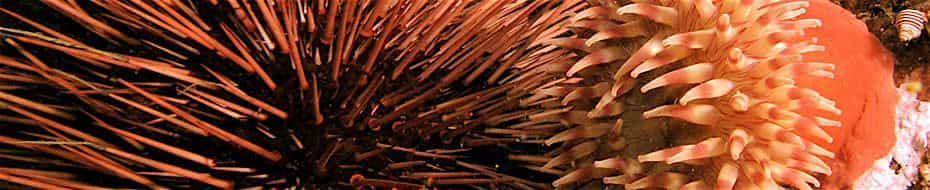
Derek has analyzed tens of thousands of photos of different parts of the Salish Sea seafloor. With his accumulated wisdom, he has come up with three simple rules to determine the characteristics of where a certain photo was taken.

  1. Pink is shallow
  2. Orange is deep.
  3. Horizontal areas have less organisms than vertical areas. 

Using the rules, determine which characteristics each of the following 6 photos have. One has each combination (i.e. only one photo is deep and vertical). (Making a table is a useful thought organizer). Good luck! The answers are below the photos.

Image 1:

Image 2:

Image 3:Image 4:Image 5:

Image 6:

(Photos by Dr. Derek Smith)

ANSWER BELOW. SCROLL AT YOUR OWN RISK.

Answer: Soooo…. We don’t know the answers either. Now you know what it feels like to be a marine ecologist!! (This is what Derek did to us, unfortunately)
Day 2: A Ferry Fiasco

Today’s blog by Maddy, Jacob, and Kika.

This morning, we woke up bright and early in preparation for a ferry trip scheduled for 7:50 AM, destined for Anacortes. Derek drove his van down at 5:30, right after the earliest ferry left, in an attempt to guarantee us a space – we thanked him profusely for his generosity. However, despite all of our careful planning and early rising, we were outcompeted by a tow truck! So, instead of collecting eelgrass samples at Padilla Bay, we adapted our plans and took a detour. False bay provided an opportunity to observe the local flora and fauna and collect algae samples, for pressing later. We saw numerous species of crabs, infinitesimal strands of seaweed, and several shorebirds and gulls that fled at the sight of our troop. The tide was marvelously low, which permitted our scientific outing – however, even our high-grade water equipment (our boots) failed to shield us from the wrath of the incoming tide (aka getting water in our boots). 

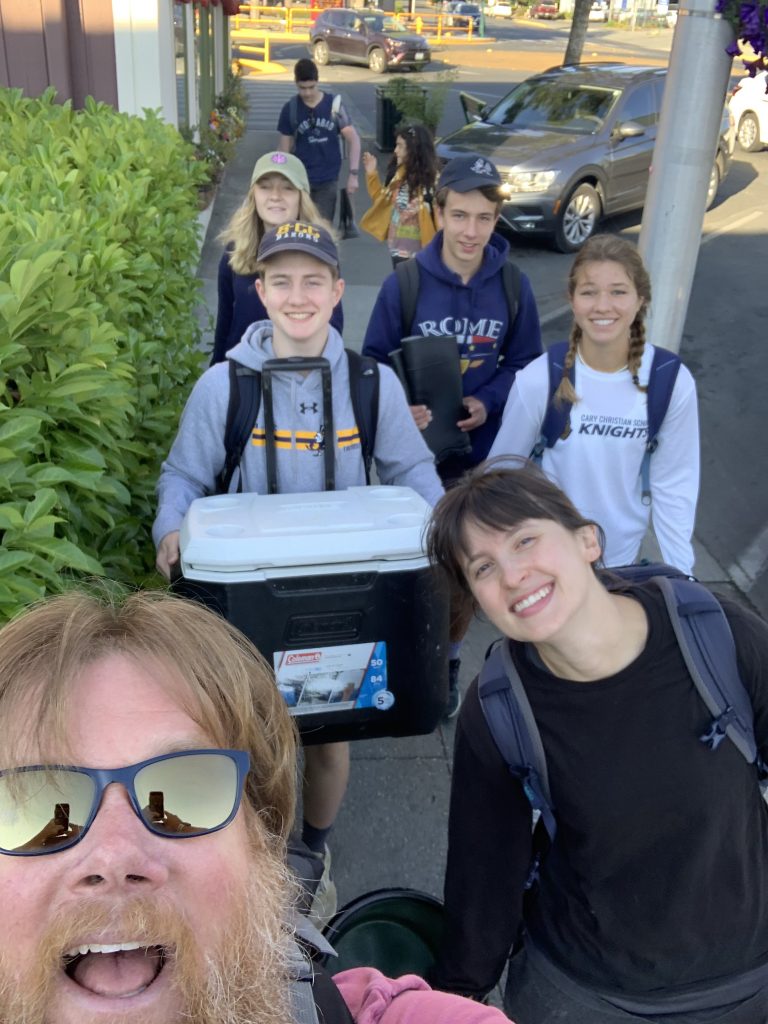
On our way to the ferry (before it got cancelled).

After wringing out our sopping wet socks, we proceeded to the Fourth of July beach. We decided to ditch our sopping socks, and Madelyn, Jacob, and Joey elected to walk to the beach barefoot. Unfortunately, the tide beat us to the beach, and our second eelgrass samples were completely submerged by the time we arrived. We explored along the coastline, but Madelyn’s foot was sliced by a wayward barnacle, prompting us to break out our med kit and plenty of bandaids. Once the calamity was quelled, we settled down to eat our packed lunch. 

Kika holding a polychete worm at False Bay!

After returning to the dorm and washing our boots, Derek gathered us on the couch and gave us a challenge; to find the oldest article possible that mentions eelgrass. Instantly we set off on our computers, testing a myriad of search options and websites. We found news articles, books, scientific charts, and graphs, all dating back to the early 1800s. Finally, Jacob found a source from 1753 – the original naming of Zostera marina by Carl Linneaus! 

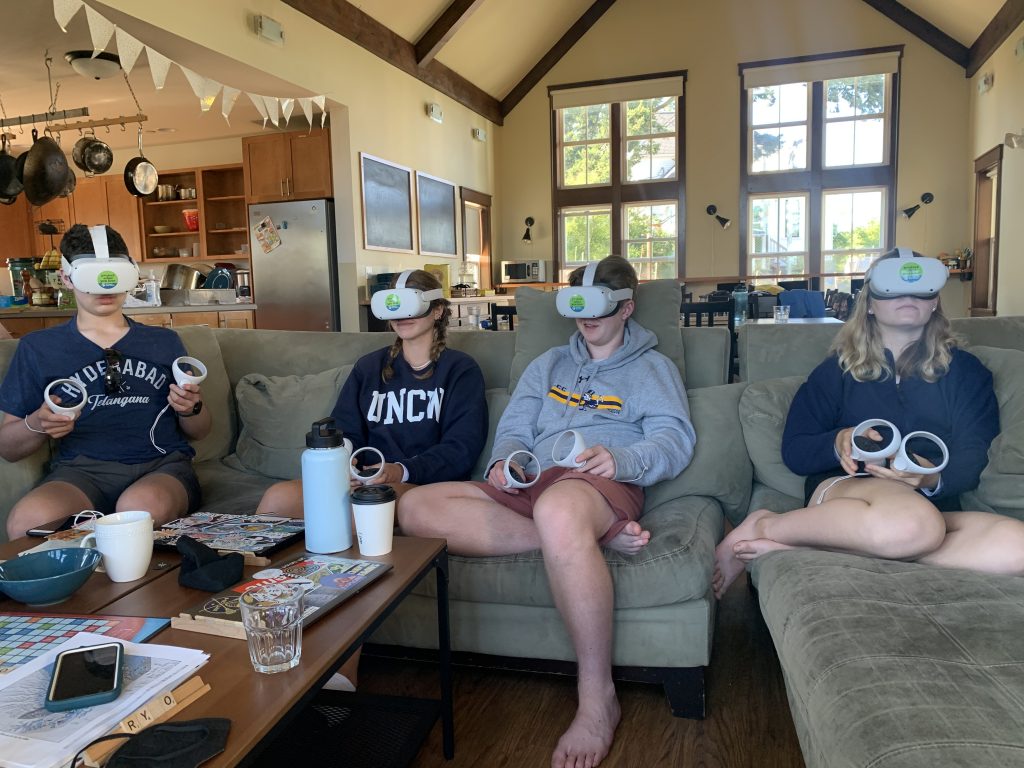
Then, Jess Newly arrived to talk to us about eelgrass and forage fish! At first glance, these organisms seem boring and unimportant, but if you take a deeper look, you’ll realize that they’re integral to the Salish Sea ecosystem.  Jess talked extensively about how organisms interact with each other, and how even the smallest creatures have a big impact on their environments. She passed around incredibly interesting samples of forage fish larvae and eggs for us to look at. Lastly, she brought out VR headsets! We excitedly adjusted the straps and put them over our heads, plunging ourselves into a 360 world of eelgrass beds and salmon. It was fascinating to see giant schools of herring from their very own underwater habitat, as if we were one of them!

We explored our underwater worlds in VR!

After that, we were all starving, so Madelyn, Gray, and Joey whipped up a fragrant stir fry, with tofu and lots of veggies. It was beautiful to look at, and also so tasty! Miranda remarked that it was one of the best meals she’s ever eaten. Afterwards, we headed off to bed.

Day 22: The Beginning of the End

Today’s blog by Maddy and Estevan!

This morning, Caroline came to talk to us about colleges! Caroline is the director of the Salish Sea program, and coordinates all of our activities. She also buys us lots of ice cream, which we appreciate greatly. Although it can seem pretty daunting, Caroline helped demystify the admissions process and answer many of the questions we had. She outlined how to choose your college, what they look for in an applicant, scholarships, essays, and much more. She gave us tips and tricks on how to write essays, even giving us some practice prompts to complete. This exercise really allowed us to be more introspective, and see what aspects of ourselves we want to show in essays.

Although there are so many things to consider when looking for colleges, she emphasized that the most important part is keeping your interests and loves in mind.

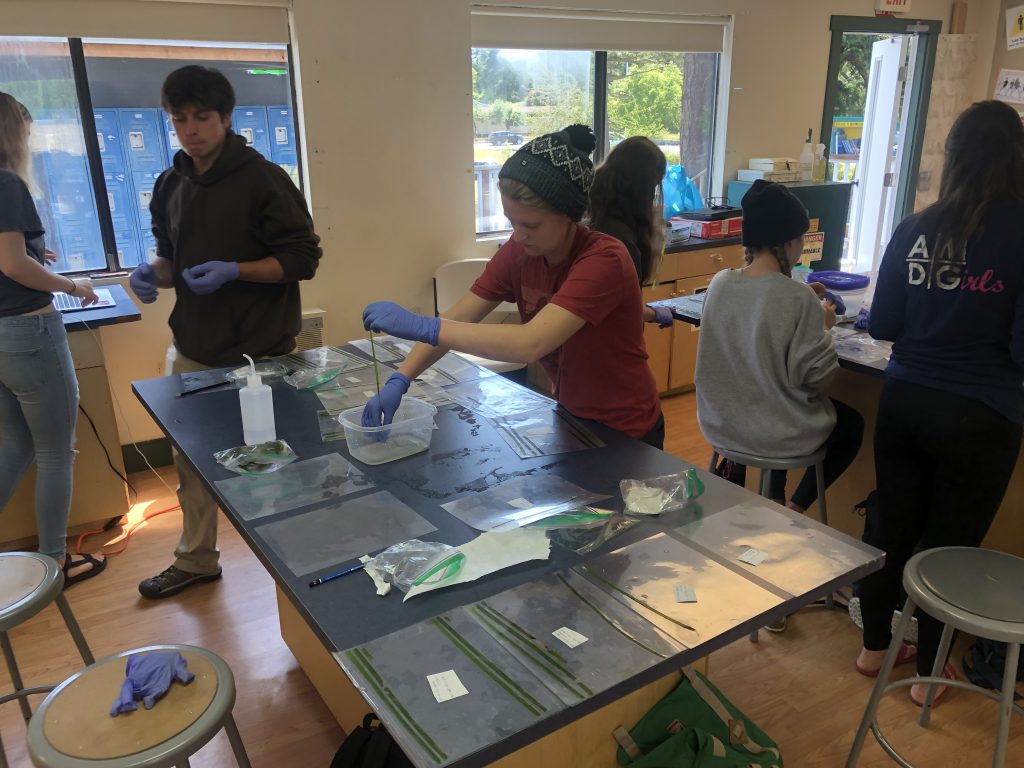
Following Caroline’s talk, we went straight to the lab, where we processed the eelgrass samples we collected yesterday. Morgan showed us how to rinse the eelgrass in freshwater, place it onto the clear sheets and label it with the necessary information. Meanwhile, Maddy began to scan the transparencies and turn them into images that can be used later for a variety of purposes, such as disease prevalence surveys. Although it was tedious, these data are contributing to a yearly monitoring of eelgrass health at Fourth of July Bay (and it’s really helpful to Maddy’s project)! 

Dustin rinses and cleans an eelgrass shoot, preparing to put it in a plastic sheet.

After lunch, we returned to the lab yet again. This time, Derek talked to us about statistics, and the various ways for us to present the data we have. It was really informative and a little mind boggling to see all of the programs and possibilities! We then brought all of this newfound information into project development time. We’re all working really hard in order to finish our projects before the week ends!

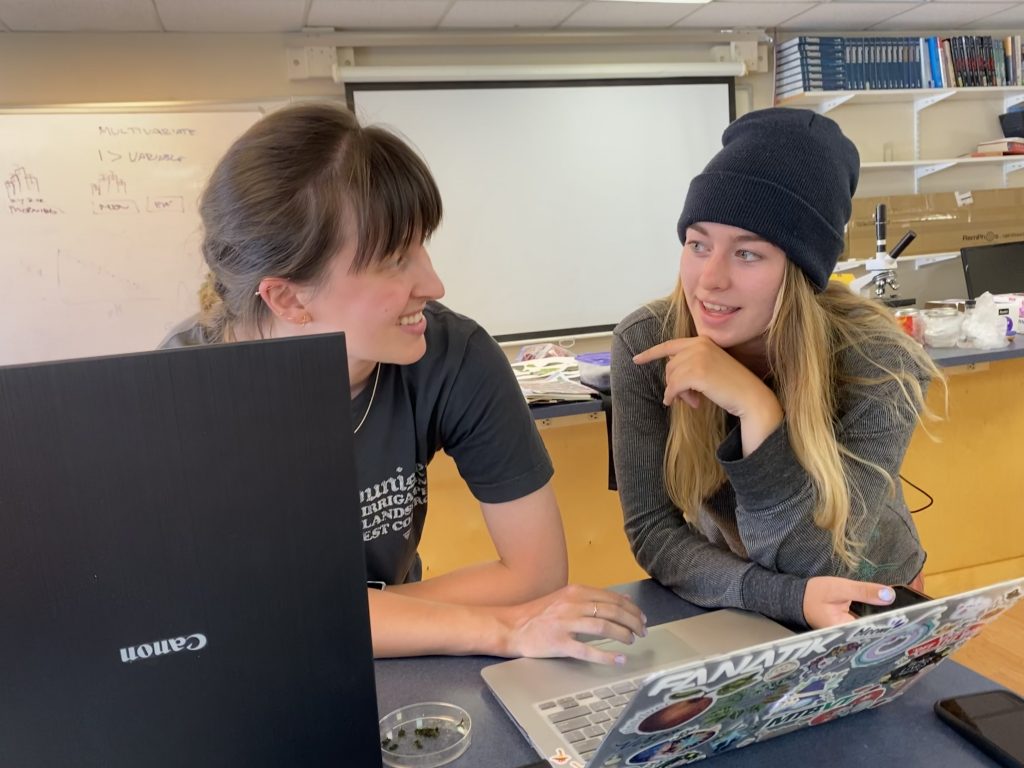
Miranda and Islay discuss an interesting sample of algae!

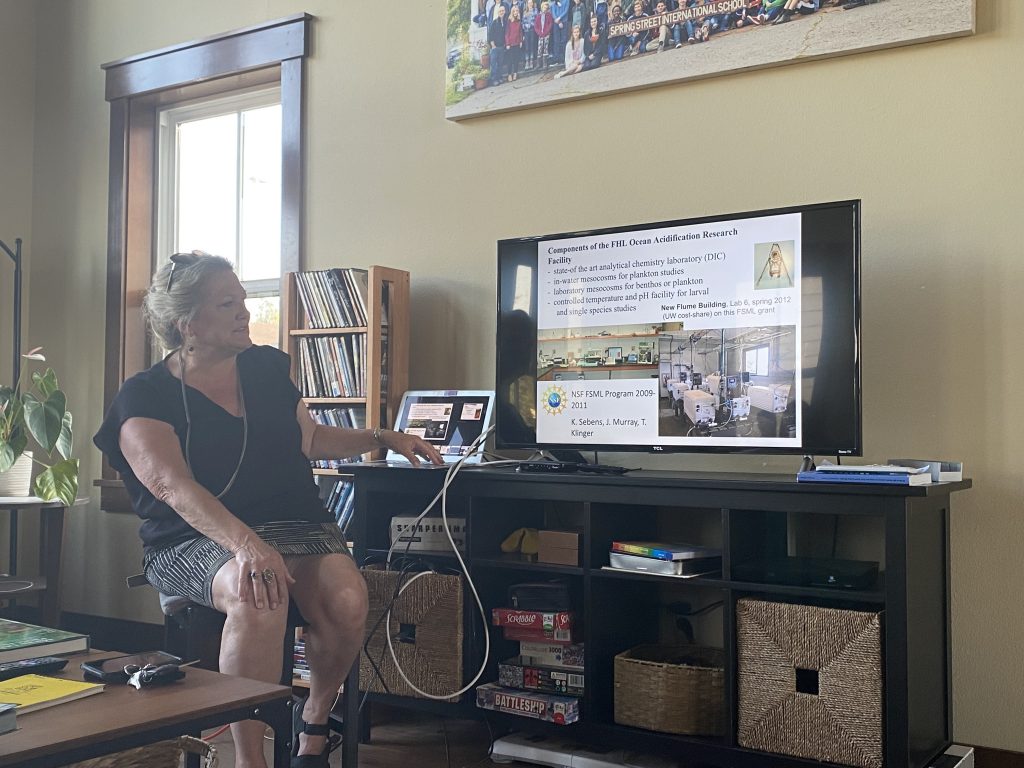
Finally, as the day came to a close, we met with our lovely guest Dr. Billie Swalla. She studies evolutionary biology, genomes, embryos, and a lot of other really cool stuff, particularly with marine invertebrates. She is also passionate about diversifying science and making it more accessible to everyone! Her enthusiasm was infectious, and we learned so much about little creatures most of us have never heard of.

Dr. Billie Swalla briefly tells us about the ocean acidification lab at UW, and research opportunities associated with it.

A highlight of her presentation was a video of an Ascidian embryo developing; it was fascinating to watch and hear her explain each stage of development! Lastly, we tied up the night by unveiling our tie dye t-shirts. The colors and patterns are each so unique and beautiful, almost like a reflection of ourselves. 

Day 17: Earwigs Sprinkled with Kelp

~ Today’s blog is brought to you by Hebaq, Maddy, and Estevan!

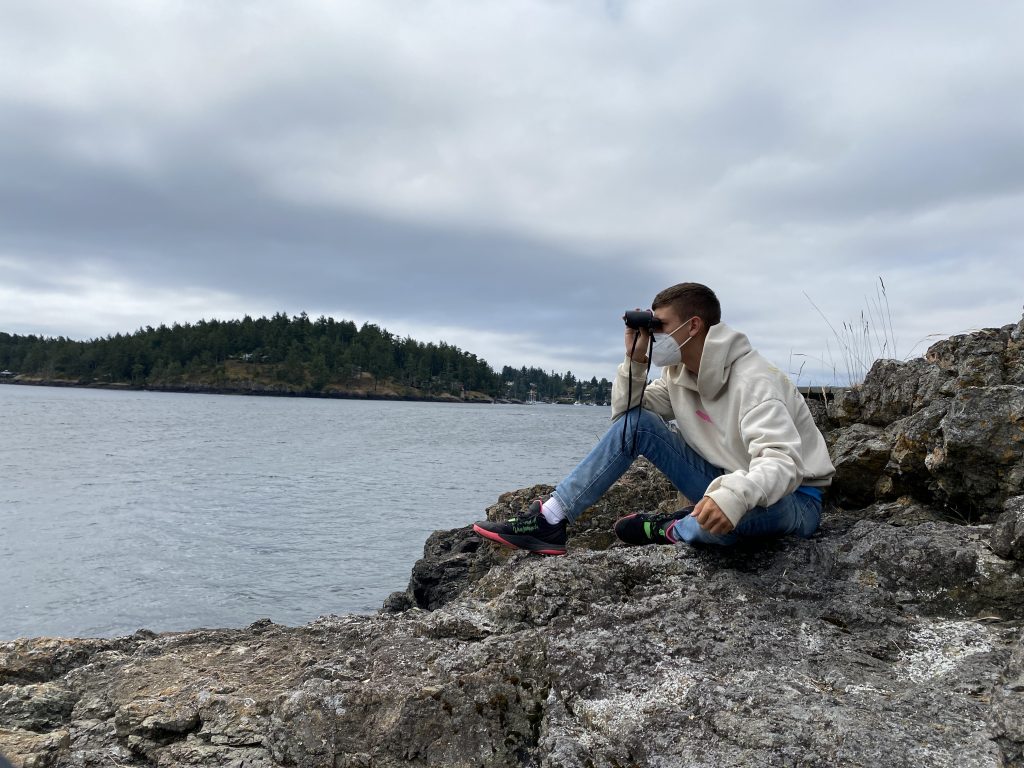
This morning, we groggily got ready and ate breakfast, before learning the knot of the day, which is useful on sailboats for attaching things. After that, we headed out to Friday Harbor Labs for another data collecting session! Those of us who already had data or couldn’t collect at FHL opted to help other people collect data instead. A few hours later, after spotting jellyfishes and surveying tide pools, we gathered at the windy observation deck, where another group was carefully looking out for whales. The whale watchers, Hebaq and Estevan, had finished their survey, and unfortunately saw nothing. However, as we gathered our stuff, ready to leave, we heard Tim excitedly point out an orca on the horizon!! We watched in awe as it came up a few times. It was an amazing way to end a tired morning.

Estevan, the GOAT (greatest of all time) surveys the water, hoping to see a marine mammal! (Photo: Maddy Glaser)

Earwig Experiments

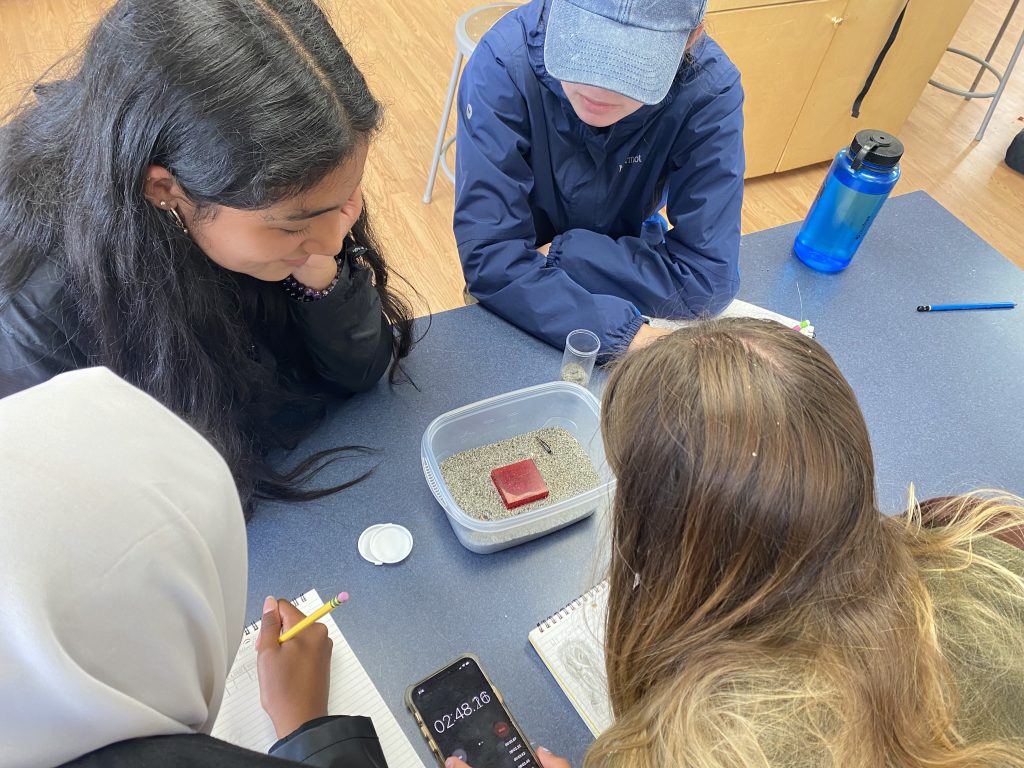
We came back to the dorms to eat a delicious lunch of leftovers and sandwiches. After filling our stomachs, we went up to the labs to continue our experimentation with the earwigs. The first experiment tested the environment that the earwigs would prefer to live in. One of the shelters was covered with sand and the other was left exposed to natural light. Our results drew inconclusive information, so we decided to alter the experiment further. We noticed that we hadn’t put two earwigs together in the same environment, our curiosity began to spin into new designs and ideas. 

Our second experiment consisted of male and female earwigs being put into one shelter environment. This was when earwigs began to draw their pincers. The female’s aggressive nature was seen as they quickly attacked the male earwigs. We watched in amazement for the next 10 minutes as we let the experiment run its course. Weirdly enough, we enjoyed the entertainment we were receiving by watching the earwigs fight. We observed not only how they used the shelter, but also how these organisms interact with each other. After 2 hours of running the experiments, altering, and repeating, we said goodbye to our earwig friends and changed activities. 

Andrea, Hebaq, Sonja, and Islay watch and record earwig behavior. (Photo: Maddy Glaser)

Project Time

After the change of pace, we settled down in the dining area to begin our independent work time. Tim, understanding the fatigue that some of us were dealing with, also let people take care of their bodies with short rest times. The evening began to quiet down and we transitioned into exploration time. Tom and the cooking team, Sonja, Colette, and Elliott, prepared a beautiful dish of alfredo pasta. We enjoyed it over conversations with today’s guest, Tom Mumford, an expert on algae and seaweeds of all kinds! He’s studies seaweed since 1965, and now teaches classes on marine algae at the University of Washington!

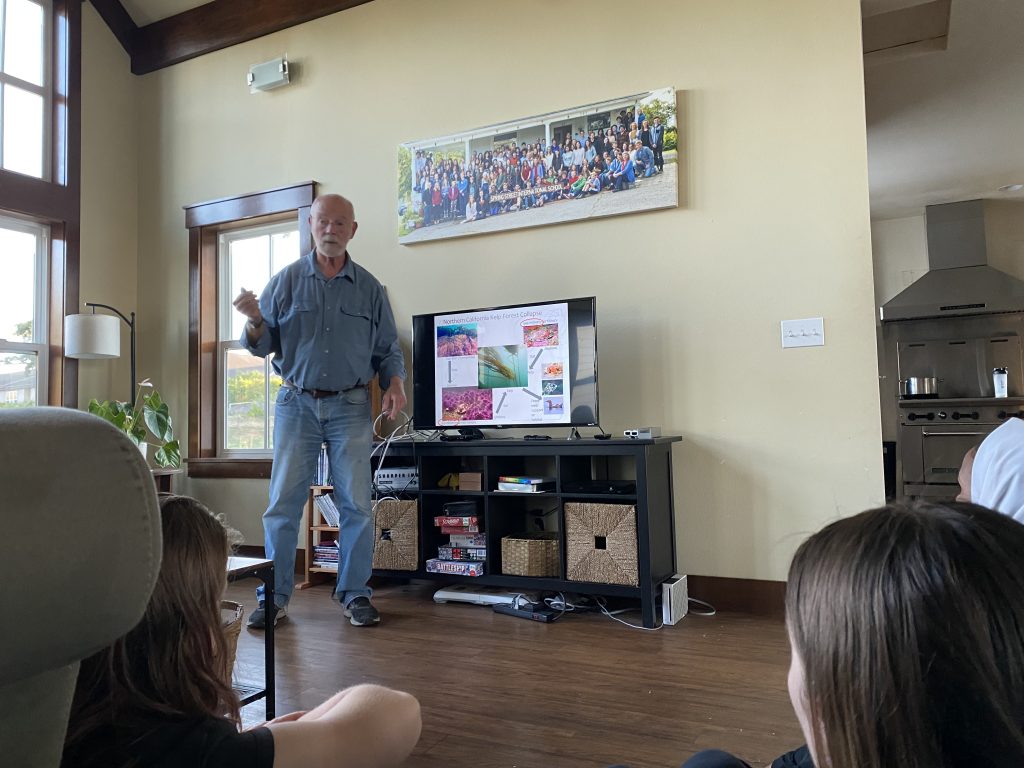
Dr. Tom Mumford teaches us all about kelp, and their vast importance in the marine ecosystem. (Photo: Maddy Glaser)

Our views and understanding of kelp definitely has grown over this evening. Dr. Mumford began the evening with his bold claim that kelp is the basis of the ecosystem in the Salish Sea. Kelp, a diverse group of brown seaweed, was one of the first things that we were introduced to when we began working in the intertidal zone. Their role as mitigators of ocean acidification is one that is often overlooked, despite the fact that they are essential to almost every organism that resides in the ocean. We are so thankful to have met with such an amazing and influential person tonight, and we’re sure to carry this knowledge with us into our future careers!

Day 8: A Hot, Hot Day

Brought to you by Meg, Hebaq, and Maddy!

Today has been full of adjustments and attempts to cope with the rising temperatures. For the majority of us, ninety degree weather is a whole new territory; a few others mock us weak PNW locals for being so sensitive to the heat (yes, we mean the California folk). The heat affected us all, especially at the start of the day when we discovered the difficulty of waking up in very warm and humid rooms. From there, we gobbled up our breakfasts and headed down to our next adventure: the Friday Harbor Labs! There, we observed the light trap Tim placed in the water just days before.

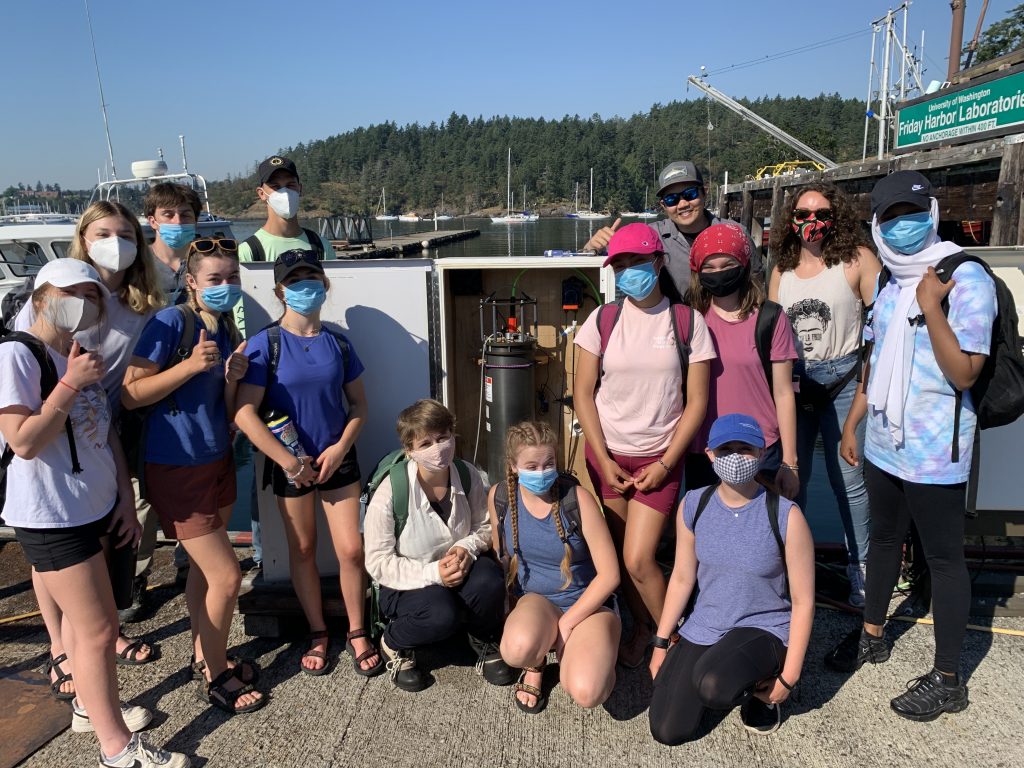
When we arrived, Sam Garson and Dr. Kirk Sato were there to guide us through the mechanics of F.H.L.O.O. (Friday Harbor Labs Ocean Observatory). F.H.L.O.O. is a brand new development for the island; it tracks pH, salinity, turbidity, carbon dioxide, oxygen, temperature, conductivity, and chlorophyll. Although these abiotic factors can be measured in other ways, the F.H.L.O.O. is special because it measures and records this data hourly (or half-hourly). Because F.H.L.O.O. is a digital, computational system, Kirk and Sam also taught us a bit about the roles of computers when working in Marine biology.

A group picture of everyone standing in front of the amazing F.H.L.O.O (Photo: Tim)

We found a break from the hot sun under the shade where we cleaned out saltwater researching tanks/sinks to prepare for our upcoming individual projects. We unclogged PVC pipes and learned the intricate saltwater system that allows for scientists to keep animals comfortable throughout their projects. As cool as it was, we will admit it was very dirty. We stuck a small metal rod up the pipe in an effort to release the pressure of the water. Although it was helpful, our help came at the expense of some of our clothes. After a while of scrubbing, we headed down to look at the shore. On our way down the rocks, we were thrilled to see a river otter on the beach!

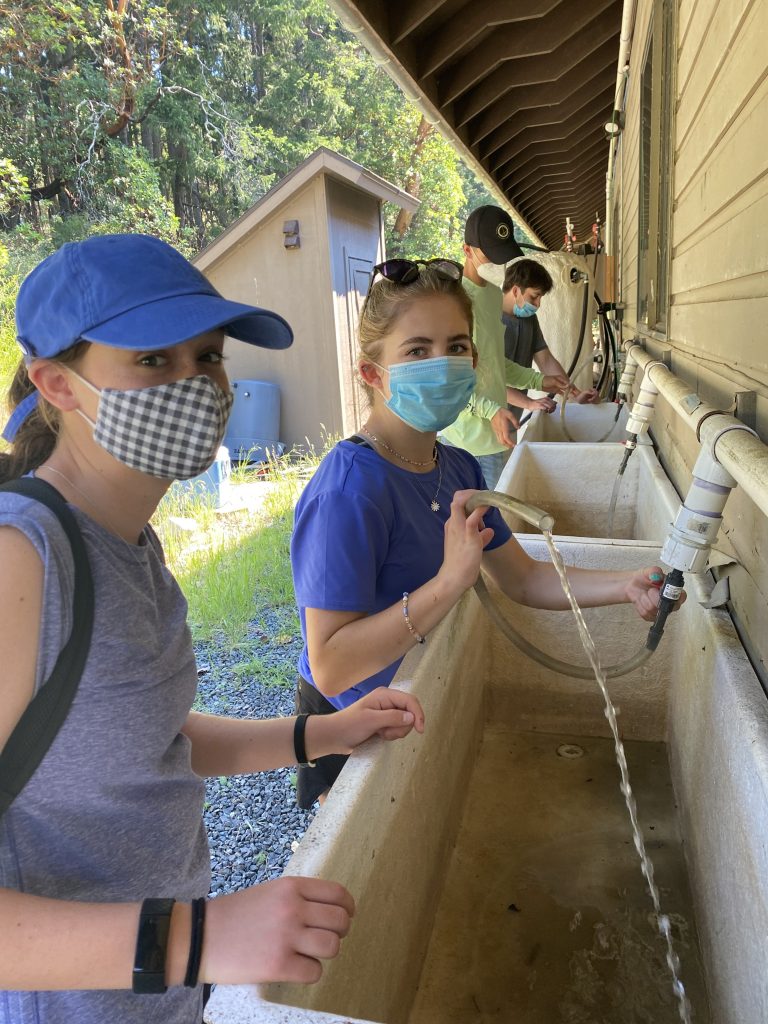
Naomi and Colette clean a seawater tank at FHL! (Photo: Maddy Glaser)

Afternoon

We made our way over to the dorms to begin the second half of our day, expecting to begin a lesson at the labs. However, Tim let us know that the building was smoldering hot – far too hot to host a class. We transitioned the class over to the dining area, where we appreciated the newly discovered AC. Then, Tim presented us a few commonly used tools in the science arena. From Niskin Bottles to Secchi Disks, our understanding on what we have the ability to test while on our canoe expeditions expanded.

The whiteboard after one science lesson and many, many drawings. (Photo: Maddy Glaser)

Driven by the curiosity of how pH and CO₂ measurements correlate, we also dug into the chemistry of the ocean (chemical oceanography), led by Tim. Some of us were finally able to see the struggle of Chemistry class pay off. We wrapped up the long, hot day with a picnic at South Beach; we packed paper bag meals and towels and headed down. Although the heat was nearly unbearable at times, we’re all glad we were able to get through it and are hopeful that the rest of the week will be much cooler. See you tomorrow!

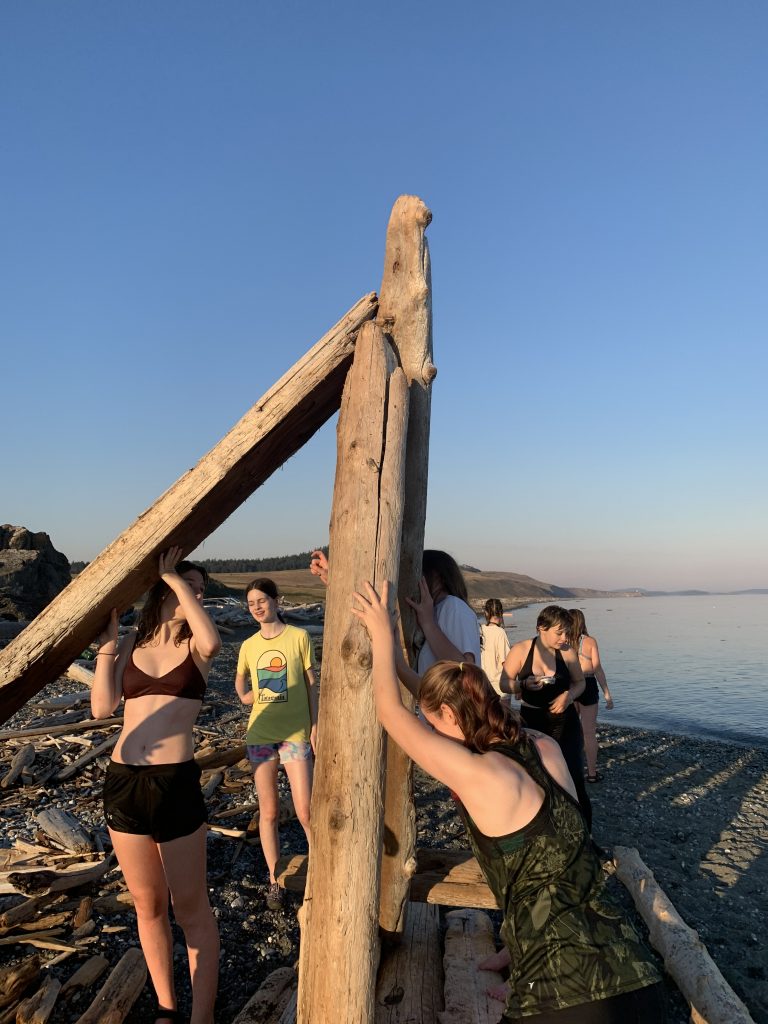
An attempt at fort building on South Beach. (Photo: Sara Sarmiento)

Day 3: Coastlines and Classrooms

Today’s blog was written by Maddy Glaser, Hebaq Farah, and Meg Carrier

Last night, Derek Smith, a UW PhD with a specialization in subtidal communities and who is also President of the American Academy of Underwater Sciences, gave a captivating presentation following an unorthodox style – he gave us twenty different pictures, each one with a story, and instructed us to pick ones we wanted to hear. However, we could only pick ten and couldn’t go back to a picture after deciding (eek!). We sat on the edge of our seats as we struggled with our indecisiveness. Sometimes, the unveiling of a certain picture would result in an unanimous show of hands; other times, a picture would evoke nothing but a silent room. The stories we ended up picking were super entertaining and gave us a glimpse of what Derek actually does for work!

We awoke this morning pumped to go on yet another sea star surveying adventure. As we made our various breakfast meals, we told stories of the slippery rocks we faced the day before. Skimming the daily schedule and collecting our things, we wondered what the day would have in store for us. We split into teams and boarded different cars to set off for our next expedition. 

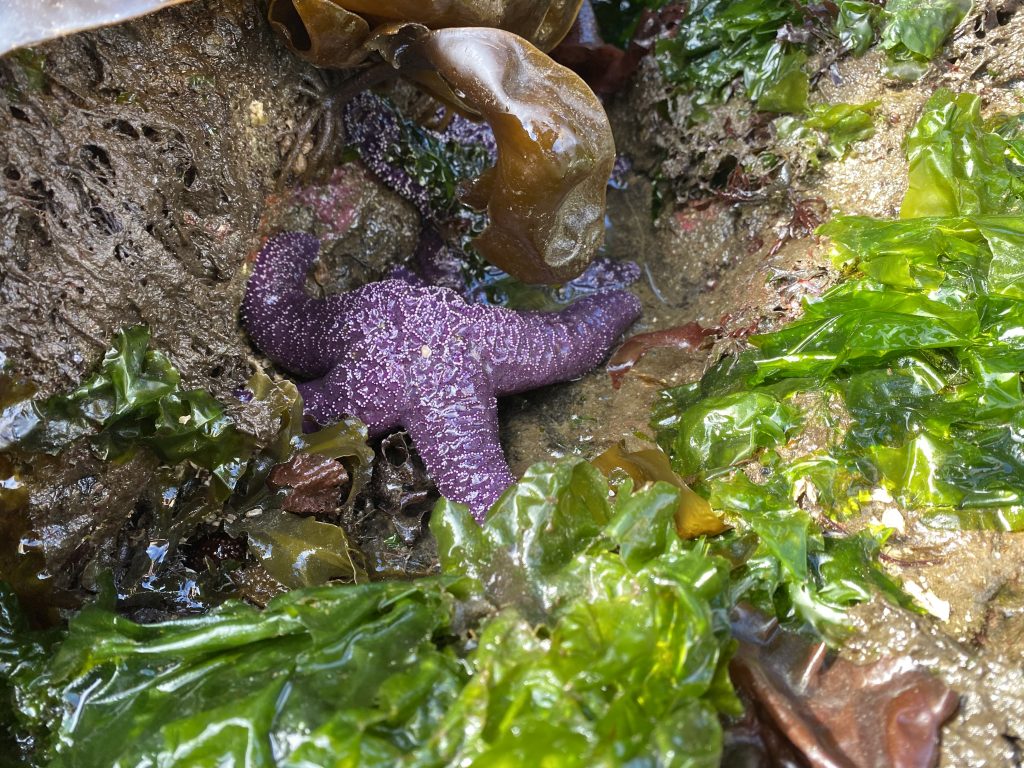
A purple Pisaster Ochre Star rests under a rock looking for food (Photos by Maddy Glaser)

Morgan and Drew’s group: Seven of us set off to Point Caution, where we would spend the next hour and a half clambering over rocks and tide pools to find Pisaster Orchaceus, or Ochre Sea Stars with Dr. Drew Harvell, Professor of Ecology and Evolutionary Biology at Cornell University who has a lab at FHL and Morgan Eisenlord, who has been a student of Dr. Harvell and is defending her PhD thesis this summer. This summer, Morgan is Salish Sea Sciences Resident Scientist and dorm parent. Once we found the sea stars, we were told to record their size, color, and whether they had any signs of Sea Star Wasting Disease (yesterday’s blog goes more in depth on that disease and its effects!). Although we were just looking for Ochre stars, we also found Mottled sea stars, Leather stars, massive sea cucumbers, little crabs, Gunnels, and some interesting worms! Although finding the creatures was really fun, I think the most exciting part was that our data will be used by scientists around the world to potentially help the sea stars recover! 

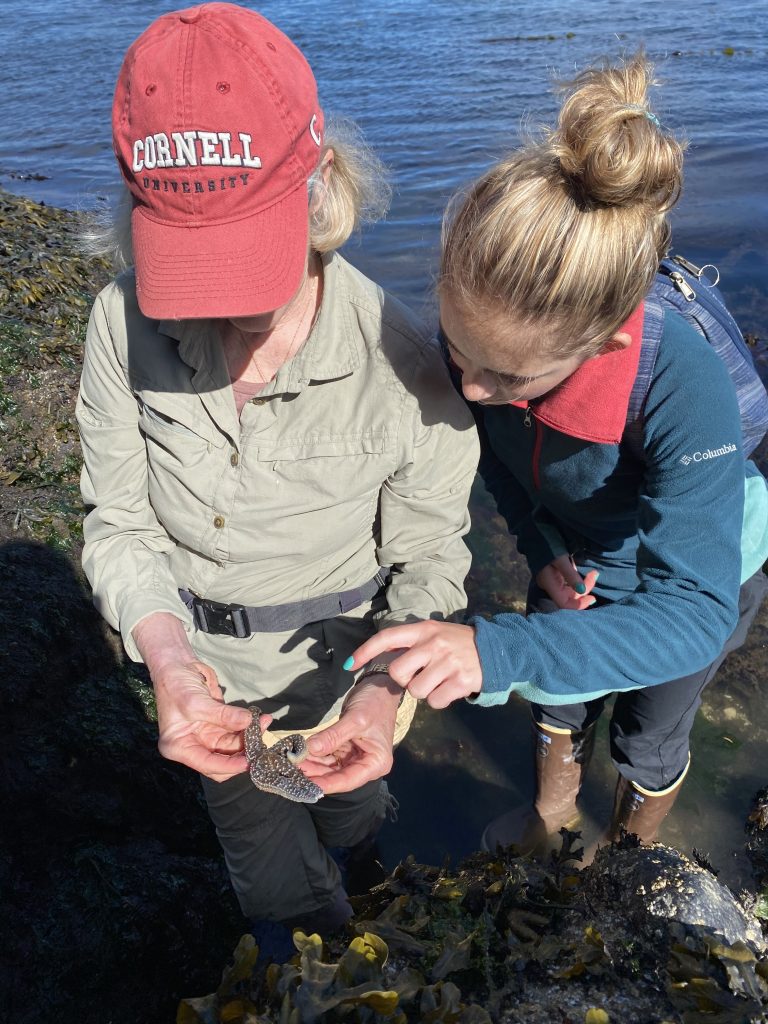
Cornell professor Drew Harvell and Colette inspect a mottled sea star (Photo by Maddy Glaser)

Tim and Miranda’s Group: The remaining eight of us arrived at Pile Point, excited to start surveying with Tim Dwyer, Salish Sea Sciences Science Director for this program and Miranda Winningham, a graduate of Cornell University who has done a lot of research at the Friday Harbor Labs, especially about sea stars, and at Western Washington University’s Shannon Point Marine Laboratories. Much to our surprise, a beautiful house stood at the top of the hill, overlooking it’s own private beach (the one in which we surveyed). We admired its beauty, then started the walk down to the shore, which was a bit steep and very rocky, but luckily there were no casualties. Today’s surveying seemed to go better than yesterday’s – we found fifty-two Ochre sea stars and lots of babies! We hypothesized that this was due to the lack of people using this beach as it’s privately owned.

After our surveying, we hopped back in the cars and shed off our extra layers that became unnecessary as the morning cold transitioned into afternoon warmth. We drove back to the dorms and enjoyed some reflection time – today this included classic Disney movies Princess and the Frog and Frozen

Tim inspecting and explaining how Whelks eat the Barnacles attached to the rocks, showcasing the unique Ecology of the Salish Seas (Photo by Meg Carrier)

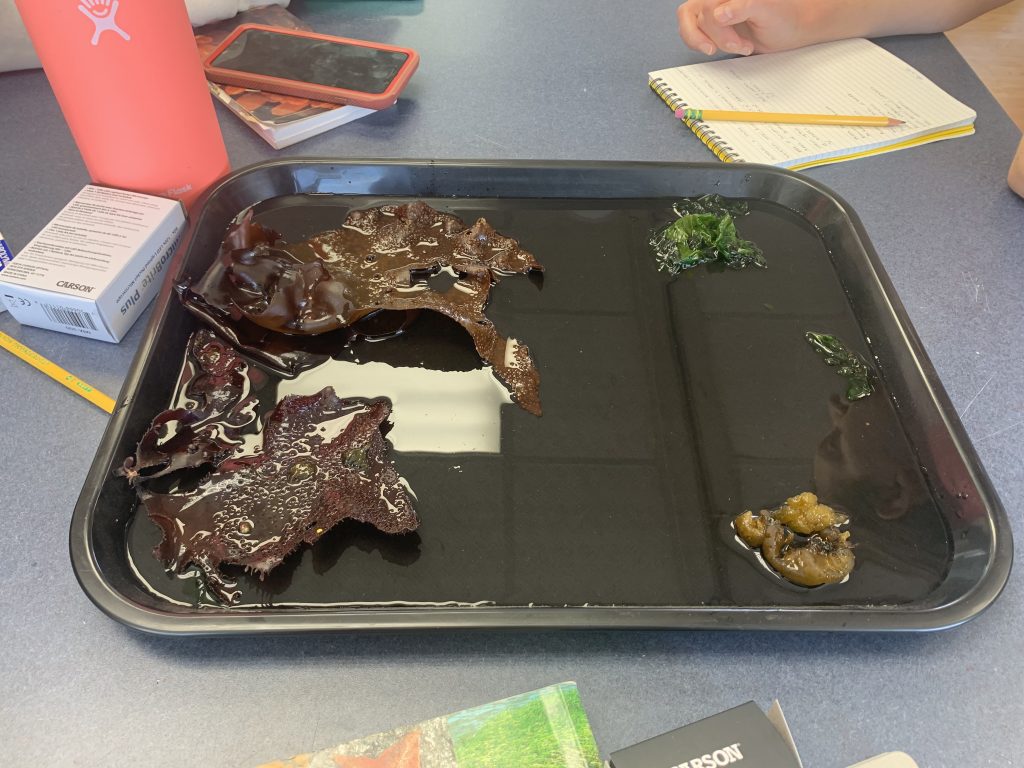
While we were enjoying the pretty sea stars, Tim was hard at work. He collected various types of seaweed and algae to bring into the classroom so that we could begin building necessary identifying skills. Derek Smith also joined bringing his container filled with Seawater. We took our picks of organisms and placed them on our desks to observe. The flipping of papers and googling of names occupied the entire classroom. We also learned the process of pressing algae to preserve the memories we made today. The combination of art and science left everyone excited for our future classes.

Four different organisms collected from Pile Point that students identified and studied with microscopes (Photo by Hebaq Farah)

As we continue learning in the classroom setting, we also were given the amazing ability to look a couple years down the line through the young scientist panel. We heard from Morgan and Miranda, and also Sara Sarmiento-Ruiz—Salish Sea Sciences Communications Intern/Dorm Assistant and a recent graduate of St. Olaf’s College with majors in Environmental Studies and Mandarin (she also is a Salish Sea Sciences alumna!), Sarah Lincoln—a rising senior at MIT and researcher in the Vander Heiden lab at MIT’s Koch Institute, and Beatrice Grauman-Boss, a recent graduate of Wellesley with honors in Biology and Politics and Lab Manager and Technician for the Hemann Lab at MIT. Bea began her scientific journey studying echinoderm evolution and development at the Friday Harbor Labs. They gave great advice on how to get the most out of college experiences, research experiences, and how to apply yourself to different areas. This panel was not only interesting, it was also extremely influential and helpful when thinking about our futures. 

Tonight’s presentation was hosted by Megan Cook, an ocean explorer whose primary work is Manager of Education Partnerships and Programs for Ocean Exploration Trust. She told us all about her own expeditions and the amazing things she’s witnessed aboard the Exploration Vessel Nautilus. She also described the Hercules ROV, which captures marvels of the sea, such as octopus laying eggs on hydro-thermal vents. The Hercules footage is live streamed daily on the Nautilus website, and Megan encourages everyone to tune in as she begins her cruise in July. Additionally, she stressed the fact that only 20% of the ocean has been explored! It has felt like such a privilege to be surrounded by so many brilliant scientists!

Students intrigued by Megan Cook’s deep sea footage taken on the Exploration Vessel Nautilus (Photo by Sara Sarmiento)