Poor porpioses and maniac marinas

TRIGGER WARNING: Today’s blog post includes pictures of a porpoise necropsy. While the procedure was done respectfully and carefully, the images include blood and/or other exposed innards of the specimen. Thank you for reading!

Today’s adventures were quite a treat. Recently, a Harbor Porpoise was found floating off of Lopez island, so Friday Harbor Lab’s necropsy of the week was examining this unique creature. It exhibited severe scavenger damage around it’s left eye, and large, evenly spaced lesions on it’s tail stock (the area that connects the body to the tail) likely caused by a boat strike. Without further microscopic investigation or testing, the most clear and probable cause of death was some kind of infection (meningitis or bacteremia of some sort) that entered through the cuts caused by a boat strike and travelled through the blood.

Lesions pictured above were presumed to be an inficted injury caused by a propeller, the infection spreading to the rest of the body (Picture Cred. Hannah)
Vetrinarian Dr. Joe Gaydos shows that the lungs of a 7 month old porpoise, an interesting part of the body to see!(Picture Cred. Hannah)

After we went back to the dorms for lunch, and some project developement time, we went with our science director Adam Rogowski to examine Fecal coliforms in the Friday Harbor Marina. This bacteria is found, as you might have guessed, in feces or other waste materials from all warm blooded animals, including humans. We came to start the procedure for measuring the concentration of this bacteria in different areas of the marina in order to understand the water’s safety to other animals, where it might be coming from in the case of a high concentration, and how it could affect the local ecosystem.

Todays guests are… US! Tonight Salish Sea Sciences is having Presentation Night. Half of our students will be giving a presentation about a topic of their choice. The other half of our students will be presenting next week, and this week, their job is to introduce a person that is presenting as if they were a scientist joining us for dinner. This will include a brief introduction, and a summary of that students studies.

Some highlights of the presentation included: How breeding 54,000 lobsters can make you a quadrillion dollars, what a sandwhich ACTUALLY is, and the rising of Mario and Luigi, telling us about how our society works in the rising age of the softboys.

Signing off, James, Leo, and Finlee.

Day 9: Friday Harbor Labs and the Lime Kiln State Park Tour

Hey blog! As we get back to our regular posts, we return to FHL for an in-depth tour of their fish labs, observing the many fascinating species held within. From the slippery prickleback , to the almost birdlike ratfish, there was a plethora of marine life being held in the labs for various research.

Pictured above is a ratfish from the tanks in the fish lab at FHL. This was taken by Ingrid.

We received a tour of the preserved specimens, as well as a walkthrough of how the dyed specimens are stained and preserved in jars.

Pictured above is a dyed preserved skate specimen in a tube. The blue shows the cartilage, and the clear body is from enzymes that were injected to eat away the tissue to leave it clear to dissect. This was taken by Ingrid.

Our group continued the tour with a demonstration of the lab’s CT (computerized tomography) machine, often used in the medical field. This particular CT was being used to create high quality 3D scans of fish later used to created life-like models. Next, we listened to a lecture from two resident scientists studying baleen whales and the mechanics of how they feed. After that, Dr. Sebens (Professor in the Department of Biology at the University of Washington) whom we had over for dinner the previous night lead us down to the FHL docks to collect all sorts of marine organisms. To do so, we flipped over tires along the docks covered in all types of algae, sponges, crustacean, urchins, etc.

Pictured above is a brittle sea star that was found on one of the tires we flipped over. A green urchin is also shown, which we also put in the bucket. This was taken by Maddie.

We put the organisms that we gathered in a bucket to be later taken to the labs for further inspection. As we were finishing up, a boat full of scientists came rushing back revealing a one of a kind discovery. A group of six of them carried a covered figure on a stretcher, later being told it was a giant blue fin tuna. What we didn’t realize is that we were about to witness history. Apparently, tunas are only found in warmer water which is why it was so strange to see a tuna so far up north.

Pictured above is the bluefin tuna that was found by the scientist on Orca Island. This was taken by Vedha.

Finally, it was time to head back the van to our next destination.

This destination was the Lime Kiln State Park also known as the “Whale Watch Park” due to it being known as one of the best places to whale watch in all of the San Juan Island. The park also has a rich history most commonly known for the beginning of lime kiln production. Caroline introduced us to Erin Corra who was a naturalist along with many past duties such as being the head director of Friends of Lime Kiln Society. As she took us through the park she quizzed us on many difference species of trees which Finlee answered all. Next, she took us to the watch point where there was many signs talking about the marine animals that passed through the Haro Strait. Many stops later we finally reached the main feature of the park, the lighthouse. Inside there were many displays of posters showcasing the vast history of the lighthouse and of marine life in the surrounding area. Unexpectedly, we were told that we could venture to the top of the building. We split in to groups for this due to the small staircase and size of the upstairs. From the top, we got a wider view of the area, being able to see much of Vancouver Island.

Pictured above is the panoramic view from the top of the lighthouse. Across the sea is Vancouver island. This was taken by Maddie.

After all of the groups got back down we hiked over to the Lime Kiln where a small beach took our main focus. We explored the area by dipping our feet into the cold salty water along with climbing the nearby cliff.

Pictured above is the intertidal zone we could explore around in. There were many marine organisms that were found such as sea anemones, crustaceans, etc. This was taken by Maddie.

Finally, we made our way back to the van to return back to the school.

Overall, this was a very enjoyable experience where everyone learned something new that was so close to our school. We got see the daily life of marine biologist and what they do to help the science community out. That’s all for now. Signing off from the Salish Sailors! (Written by Tommy, Ingrid, and Maddie)

Day 8: A detour to the Friday Harbor Marina!

By: Vedha & Max

Today we woke up early and headed towards Cattlepoint, where we talked to Jessica Lundquist who is a professor at the University of Washington who taught us about coastal fog it was wonderful and very educational, we all learned about electromagnetic radiation and its effects as well as convection cells.

We then headed back to a delicious lunch and brainstormed some ideas for our projects (we all were so excited). After a small break we walked down to the Friday Harbor Marina to investigate the differences in biodiversity in both this area and the Friday Harbor Labs (it was amazing) we saw many different sea animals such as a crab, sea urchins, sponges, kelp, sea cucumbers and more. We then discussed what we saw and prepared for our dinner with Dr. Kenneth Sebens whose interests are in marine benthic ecology, coral reef ecology, hydrodynamic effects on marine benthos and theoretical ecology. After dinner, Dr. Kenneth Sebens presented to us about many of the marine organisms in the Salish Sea. We learned about everything from nudibranchs to bryozoans. Most of us had very little knowledge of marine invertebrates prior to this experience so Dr. Sebens was pretty helpful in teaching us a lot more about them.

Sea squirt
Sea Urchin
Shrimp

Kayaking Expedition

Written by Philip and Photos by Hannah !!

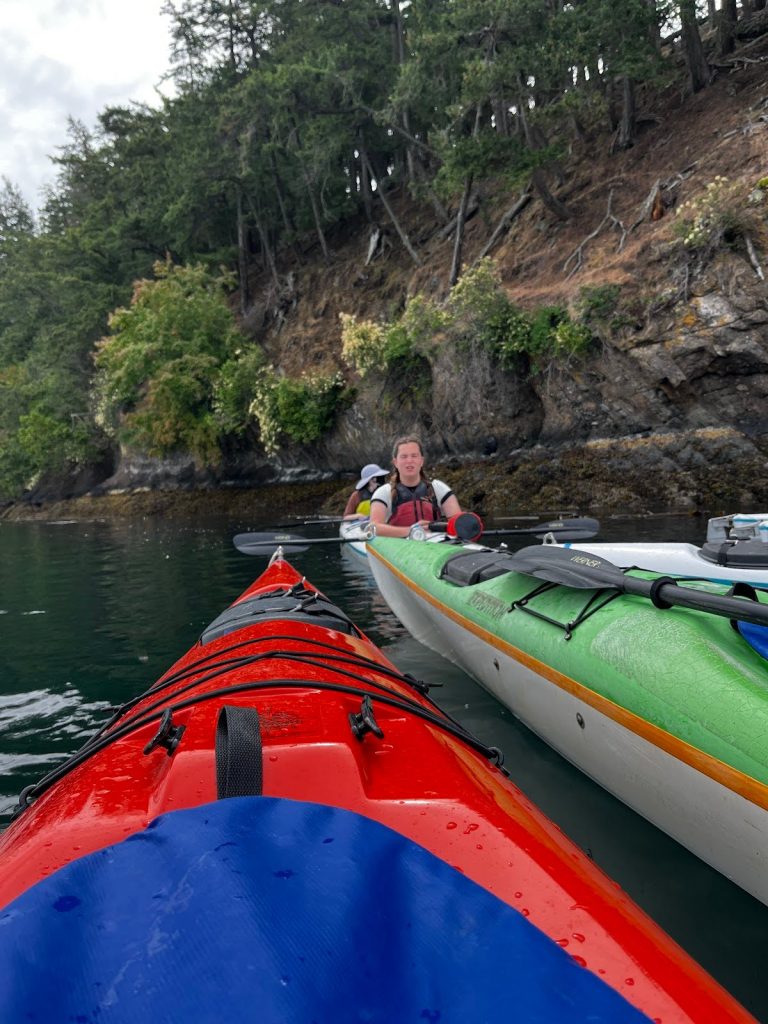
Well, it certainly has been a little while since the last blog post! These past 3 nights have all been devoted to a kayaking and camping trip. On our first day, we traveled from Roche Harbor to a campsite on Stuart Island. While the 7-mile paddle there proved to be arduous for some, the paddle was anything but uneventful. Prior to departing, many campers talked about how cool it would be to see orcas in the wild. In an extraordinary stroke of luck, the campers’ hopes were fulfilled as a roaming pod of transient orcas was spotted in the channel. On this ride to our campground, we also found a number of other interesting sea creatures. Harbor seals, harbor porpoises, jellyfish, and crabs were all spotted on our way to Stuart Island.

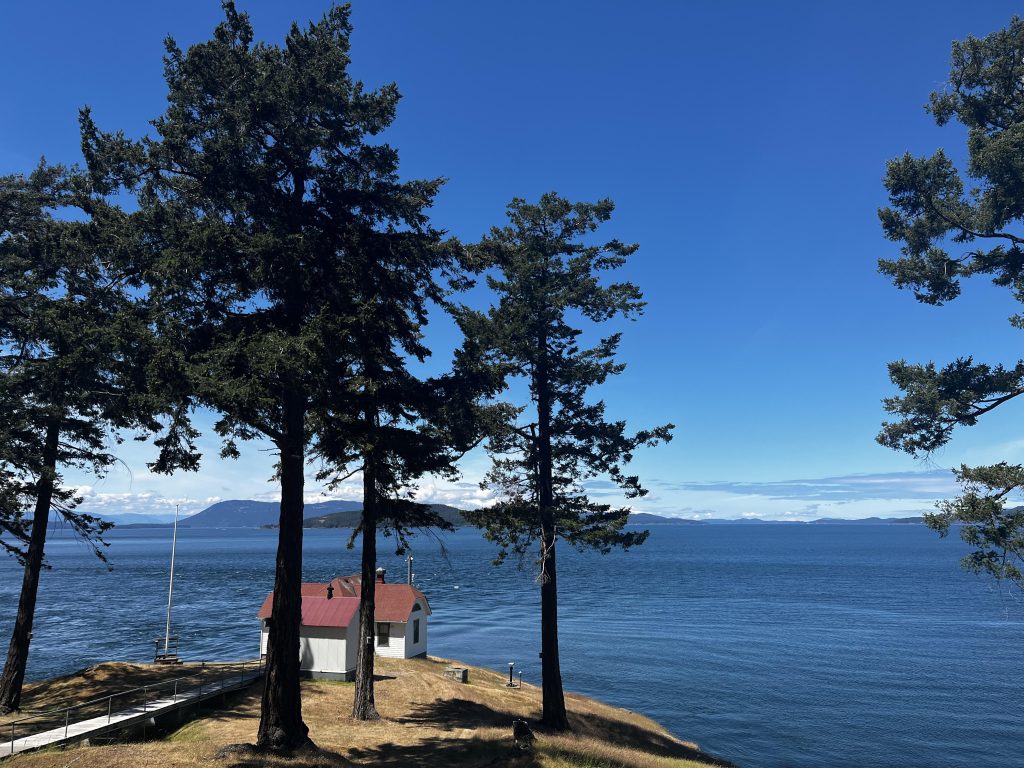
The view from one of the docks on Stuart Island
The campsite !!

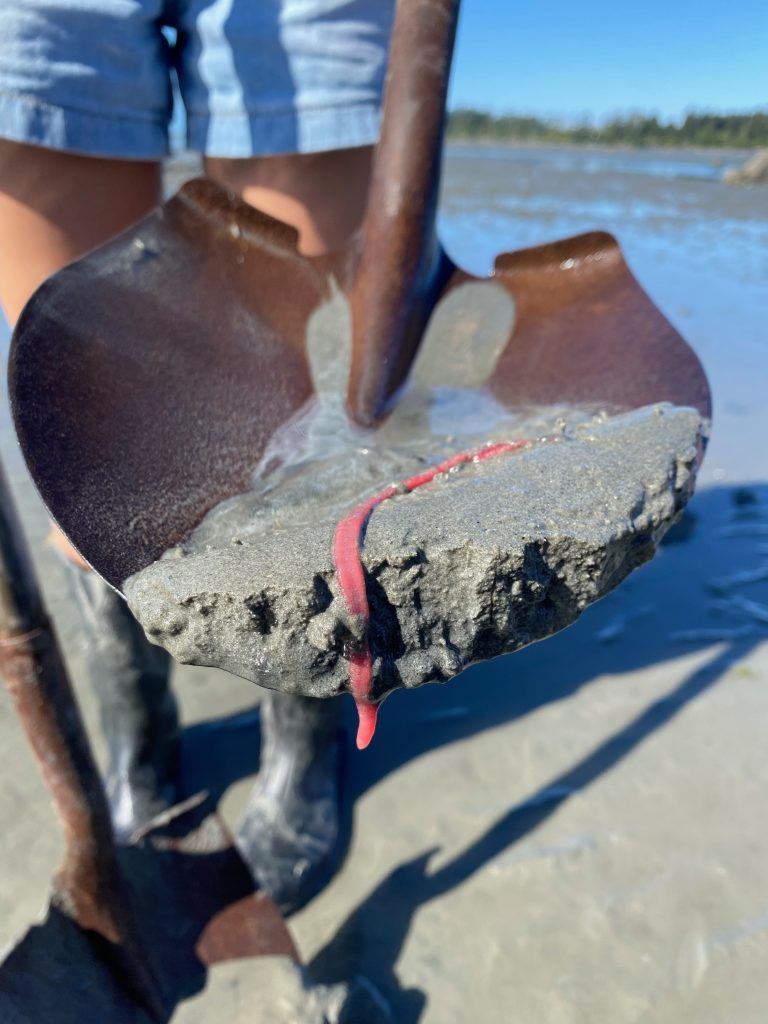
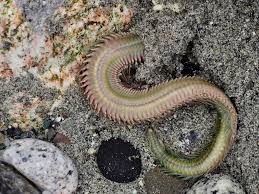
Even after an action-packed first day of paddling, setting up camp, and observing local wildlife, the excitement only continued to grow. The second day gave everyone a much-needed break from paddling. Paddling time was exchanged for time to explore the island and its many hiking trails. To start our day off, some of us decided to dock jump in the early morning into the freezing cold water. Despite the extreme cold, it did the trick and woke us up very nicely. Our main activity of the day was an extended walk from our campsite all the way to the lighthouse on the other side of the island. On the way to the lighthouse, our trails took us to a library/schoolhouse where we took a quick break to drink water, look at maps, and frolic in the meadow nearby. Flower crowns were made and modeled by all. Some people even used their free time to play some intense basketball games before we resumed our walk. When we finally reached the lighthouse we had great opportunities to look out at the ocean and explore the rocky shores. We also had lunch and toured some pretty mediocre museums detailing the lighthouse’s history and its keeper’s quarters. After we had our fill of the lighthouse we walked back and had the remaining part of the day to chill and relax. Some of us even named areas on the island such as the ethereal garden and the cliff of wisdom. The ethereal garden in particular was a great place to nap on the soft moss as several of us fell asleep in the evening sun. To end our day off, after dinner, we shone a light off the dock and observed some mating polychaete worms. We even saw some devilish raccoons peering at us from the trees with their beady little eyes and foul stares. Rest assured they would be dead if they had the courage to come down and face us for real.
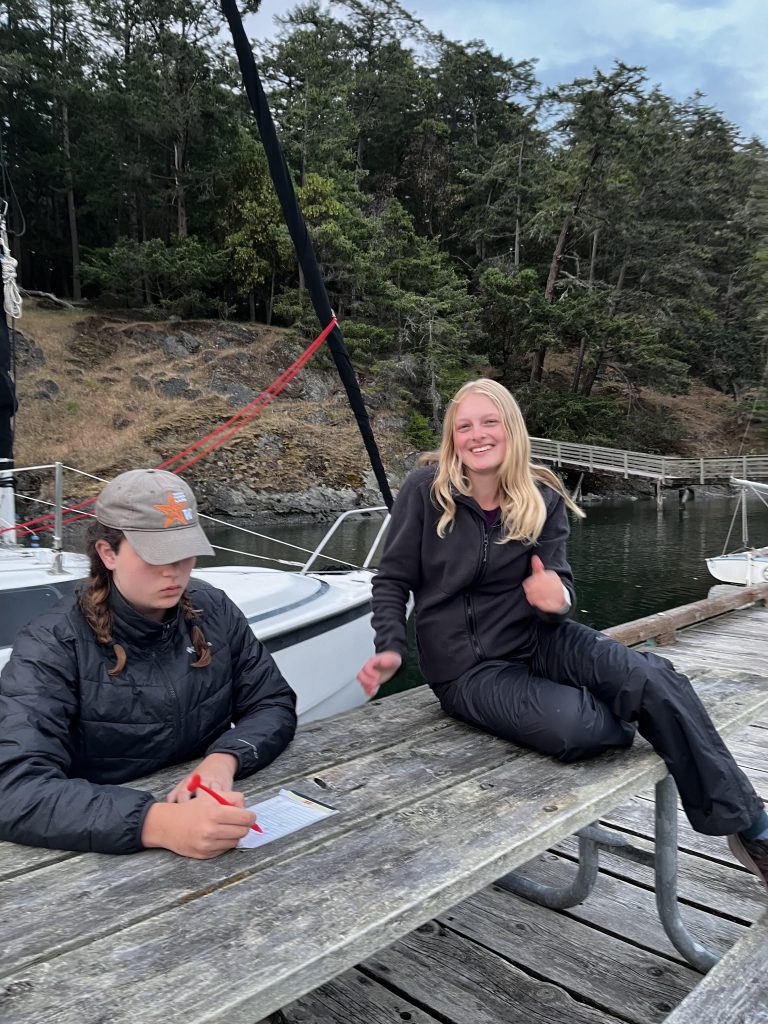
A very intense round of basketball
Learning about currents in the San Juans
Our author rocking a flower crown 🙂
Lighthouse of Stuart Island
Flower crowns are perfect for running through fields
More flower crowns and running through fields aesthetically !!
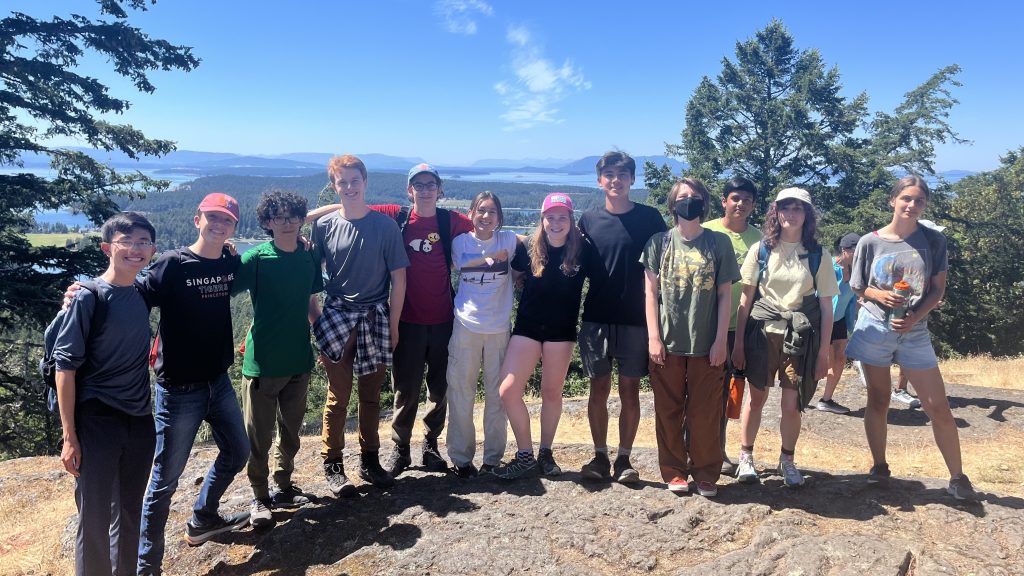
The squad mid-hike
More flowers, more gorgeous modeling
Photo taken seconds before the disaster (a snake)

Day 3 went by remarkably quickly as we all slept in much later than the day before and went paddling once again. We decided to go and paddle a little bit as we worked our way through some harsh currents and then stopped and ate some pulled pork sandwiches for lunch. The beach where we ate lunch was also a great place to find sea glass and cool shells. Later in the day we jumped off the docks again and tanned in the sun. We also had our hair braided and got some makeovers (courtesy of Hannah and Maddie). Overall, day 3 was pretty awesome and had a good mix of activity and relaxation.
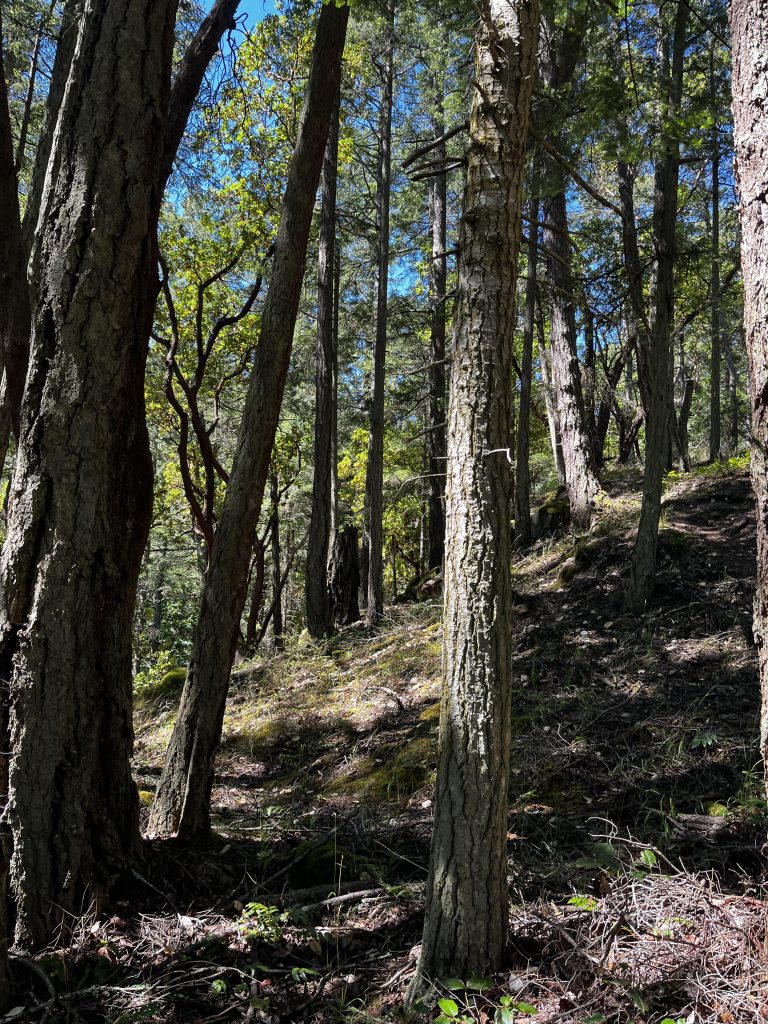
Our resident diver perfecting his frog dive
At camp, we learn how to overcome gravity
We go down together
The squad fully decked out in their braids
Me braiding Philip’s hair a little too tightly (sorry !) (taken by Khadija)
Kayakers from a tall person pov (photo creds to Leo)

Finally, day 4 was a challenging day where we woke up early and packed our bags so we could kayak back to camp before any major currents started up. We completed a journey estimated to be 4 hours in a little over 2 hours of paddling with some beautiful conditions. All in all, the entirety of the kayaking trip was an extraordinary experience where we got to experience a really close and personal connection with the wilderness around us and a multitude of different cool animals.
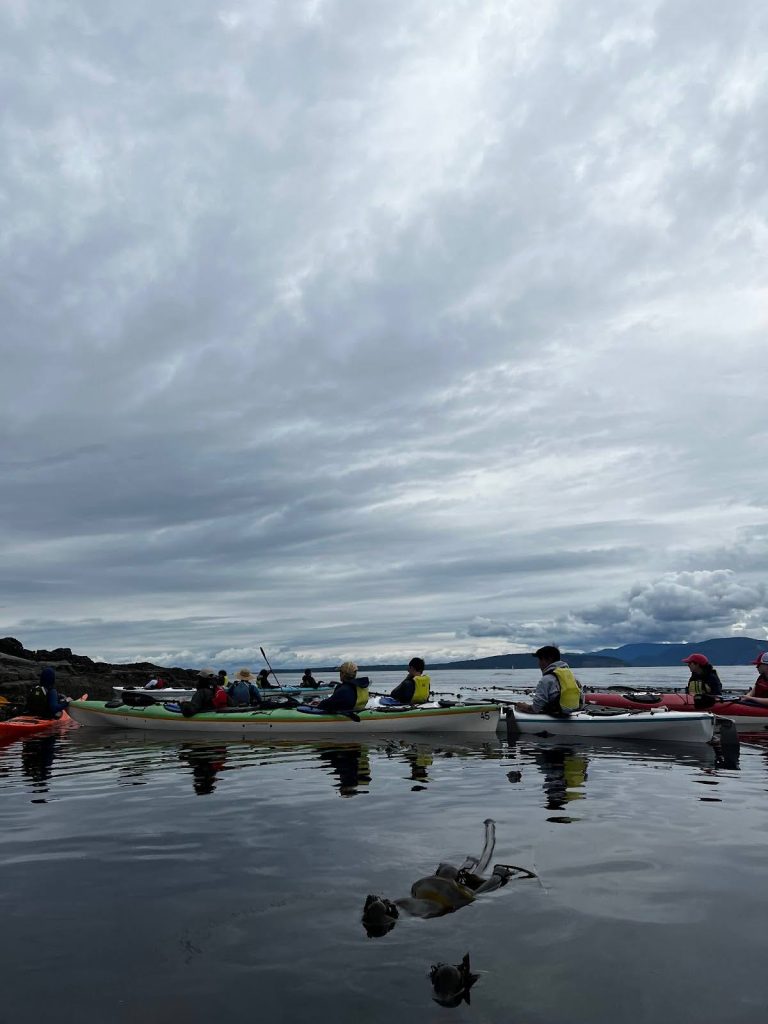
Hot chocolate is best enjoyed at 7 am after a cold swim
Unpacking after kayaking a 4-hour route in 2 hours is not done with a lot of energy left

Day 4: The paddle into the unknown

By: Khadija, Emma, and Ethan
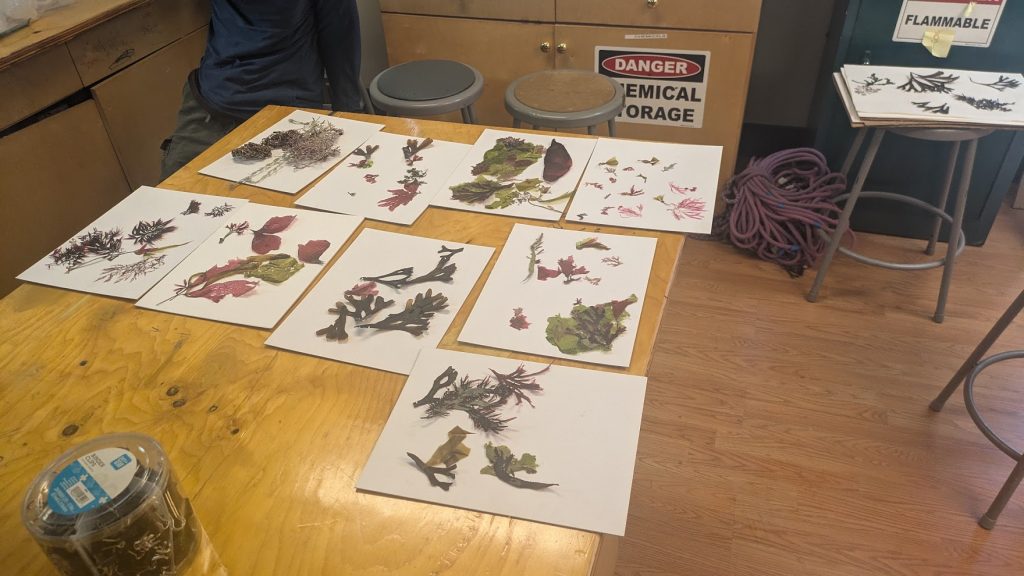
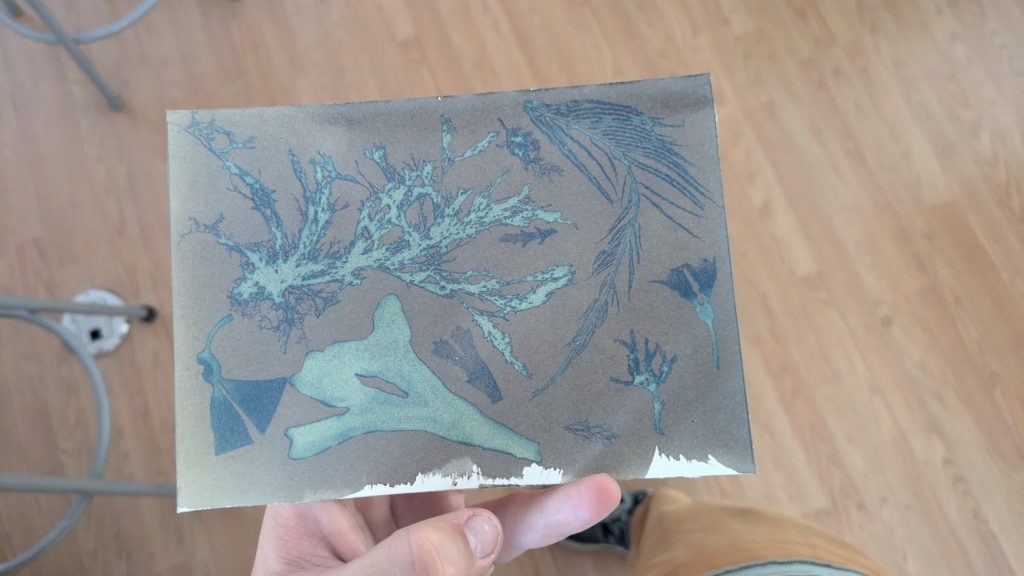
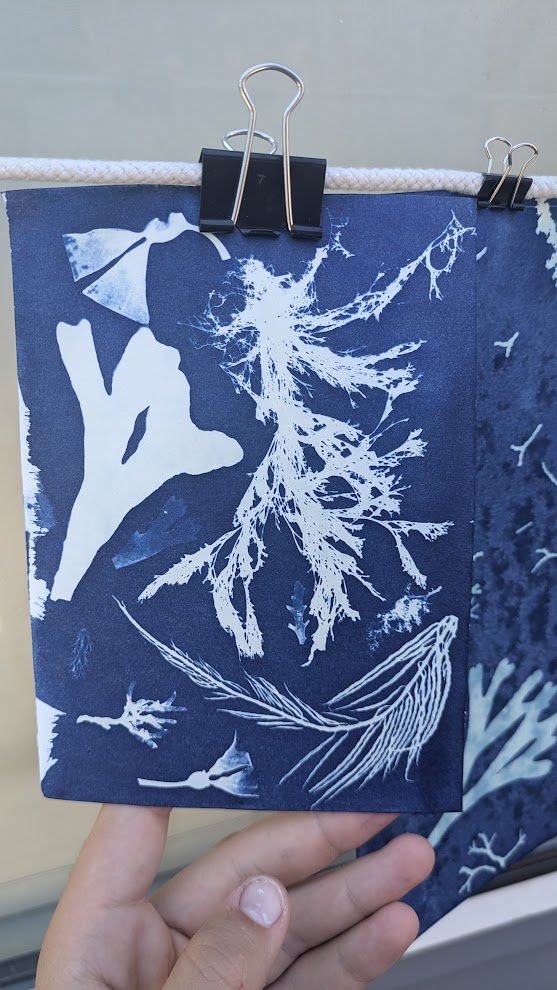
We start in the late morning allowing everyone the chance to sleep in and have time to exercise. Anticipation is building for our eventual departure on our kayaking trip, which we embark on tomorrow. Shifting gears, we took the Big Candied Red Apple Van for a short jaunt to Friday Harbor’s fabled Whale Museum. Listening to the fascinating information from our glorious tour guide, we learned about different types of mammals. We were encouraged by the conversation messages to protect our orcas across the Salish Sea. However, in the middle of our tour, our hearts sank as deep as the Titanic when we observed the bones of deceased conjoined harbor seal twins. We reflected on our humanity as we moved passed the exit. To kick off the afternoon, we had a quick, and zippy lunch. Followed by an eloquent speech done by Dr. Rebecca Guenther, Ph.D., that used a plethora of hard words that were incredibly hard to spell. As people press flowers, Dr. Guenther taught us how to press seaweed. Everyone worked hard to express their minds through algae. We placed certain seaweeds in certain places to create an image, whether it was organized or abstract. We winded down the afternoon by positioning algae on posters, which gave a contemporary, surrealist look to our modern pieces of art. Finally, we finish off the day packing for our greatest adventure yet: the brilliant 3-day kayak trip. For our jaw-dropping lecture, we have the stupendous Dr. Billie J. Swalla speaking about evolution theory in marine organisms. Dr. Billie J. Swalla’s research is focused on the life cycle of Ascidians, colloquially referred to as sea squirts. These captivating creatures go through an immense amount of physical changes throughout their short lives. Their action-packed lifecycles see them change from petite embryos that are slightly reminiscent of gunnel fish (but more minute) into strange tubular growths on the sea floor. Divergent evolution truly puts life into perspective. The formation of similarly performing traits from completely different ancestry was intriguing to our small little brains. We were bedazzled and bewildered by the bold claims made by Dr. Billie J. Swalla. Truly an experience like no other. Although this experience was incredibly insightful and offered a deep introspective into the world of Friday Harbor Labs, perhaps the real experience was the friends we made along the way.

Pictured here are Emma and Hannah next to a whale scapula bone.
Pictured here is a diagram of the different whale species in the Salish Sea.


Signing off for now,
The Salish Sailors

Day 3: Fourth of July and Seaweed!

This Fourth of July, we got to spend lots of time at Friday Harbor Labs, including touring research spaces, looking at different types of algae with Dr. Gunther, and learning about what sea urchin research projects are currently in progress. We got to take part in an amazing Fourth of July parade and experience quite a bit of what holidays are like here in Friday Harbor. The parade was attended by what we think was the entirety of Friday Harbor, and visitors looking for a great experience. Lots of candy, many dogs, great floats, stickers galore and smiling faces were enjoyed by everybody.

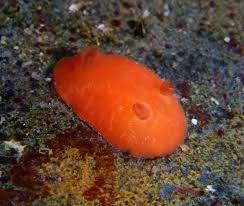
Nudibranch
Decorator Crab at the Dock

After the parade, we went to the Pig War Picnic, which had wonderful food, music, and people to be around. Others explored town while some stayed back to enjoy the festivities.

As the fun in the sun continued, we went back to Friday Harbor labs to tour all the different research facilities, including sea urchin and sea star research, ichthyology, and the library, which stored a world of information at the touch of our fingers. After the tour we met with Dr. Gunther to explore seaweed and the micro-ecosystems on the docks’ tires. While we explored we also collected seaweed samples that we will later press to make beautiful art pieces.

Tire ecosystems

We ended the day with dinner and a fireworks show that we attended at the Friday Harbor Marina.

Signing off, Finlee, Leo and James

Day 1 & 2: Exploring the Intertidal Zone

By Vedha, Max and Olivia

Day 1 (part 1): It was a long journey for most of us today. I had previously come to Seattle on a 15-hour flight, but despite this, it was an amazing car drive to the ferry. It was so interesting to meet everyone and learn more about their interests and backgrounds (even though it was a bit cramped). We made it to the dorms at around 8:00 p.m. and had a lovely dinner. The pizza was delicious.

– Vedha

Day 1 (part 2): On the other end, I had a quite peaceful day today. Arriving on the Island early and getting lunch at a sandwich shop before dropping my things off at Spring Street School and decorating my room that would be my new home for the next 4 weeks. I was excited to meet everyone and enjoyed our first dinner together as the Salish Sea School family.

– Olivia

Day 2: Today we woke up early to start our day, had a fantastic breakfast, and completed a quick town photo safari to get familiar with the island. The Americans (us) won! the other teams were T.M.I, Sharks, Patriots and CCP. We then quickly packed our lunches and visited the tidal zones! It was so interesting; we were particularly fascinated by the egg yolk jellyfish (it was poisonous). We saw numerous anemones, shrimps, sponges, starfish, sea cucumbers, crabs, limpets, and algae gracefully swaying in the tide pools. We all learned about the littoral zone, cnidarian species, sessile animals, and bivalve species. We learned all this through a fun game of Intertidal Bingo!

We are now going to enjoy delicious baked potatoes with our guest speaker, Dr. Cassandra Donatelli, who is a very talented Ichthyologist who completed her Ph.D. at Tufts University and is currently an assistant professor at the Fowler School of Engineering. Her research focuses on biomechanics and bioinspired design using fish as a model group.

Day 11: Spending Time with Jacob Land Bank

(Our favorite little silly goofy guy)

By Akira, Athena, and Uma

We slept in today, set off at around 9:30, and made our way to Mount Grant to pick weeds. We were greeted by our favorite goofball, Jacob from the San Juan County Conservation Land Bank as his expert volunteers, Bob and Barry. In today’s hot sun, we went after our greatest enemies, and the island’s greatest threat, Thistle and Tansy Ragwort. They have made it on our wanted list because of their prickly personality and invasive nature. Also, there were some cool bugs like… LADYBUGS 🙂 After a short battle, we stopped for lunch, but in the process…ran…out…of…WATER (oh no) !!!!!!!! After our short break, we ventured out to continue the saga. In the end, we “harvested” two bags of #weeds. The rest of the day was filled with working on our projects, cleaning, playing, and having a reunion with Tom. Here’s some pictures. Bye.

PS: weeds suck

Day 10: Birdwatching and more FHL

Before we begin on day 10, let’s add a bit onto day 9. Last night, we went back to Friday Harbor Labs to learn about eelgrass, from the differences between seagrass and seaweed to conservation efforts.

Now let’s begin on day 10. To start the day, right after breakfast, we left to go birdwatching at Zylstra lake with Sharon Massey. We all brought our binoculars and observed bald eagles, turkey vultures, and some smaller birds such as goldfinches, yellow finches, and white-crowned sparrows. We went home for a few minutes, then departed for Friday Harbor Labs. There we went on a tour around the campus, went into different Labs, saw experiments in progress, learned about the green fluorescent protein, a transmission electron microscope, and saw many animals including Spiny dogfish, which are in the shark family. After our tour, we went back to the house, ate lunch, and proceeded to work on our projects for the duration of the afternoon.

Day 9: Friday Harbor Laboratories

Today started off early; we were up and out of the house at 8:30! After packing our bags and piling into the van, we drove over to the Friday Harbor labs to observe Dr. Olivia Graham and her intern Katie Philipp. The dynamic duo were in the middle of an eelgrass study to determine at what points eelgrass wasting disease enters the plant. We had the fortune of arriving as they were removing and extracting their samples, and had the opportunity to help and observe the process! After helping remove the samples, we explored the tide pools along the coast of the observatory, checked out their dock, and headed back to the dorm.

After a little downtime, we headed out again to Fourth of July beach to observe eelgrass beds to take a closer look at them in their natural habitat. Along the way, we stumbled across students of the University of Washington, who were studying at Friday Harbor labs, and were taking a marine disease course. During our conversation, we learned more about the carbon cycle, and what role organisms and eelgrass plays.

After our discussion, we drove back to the dorm and continued to work on our presentations. After working on our presentations for a couple hours, we prepared the house for our guest of the night; Jessica Newley! Ms. Newley works with VR exploration and education, and films 360 degree video of her exploration in the Puget Sound and Salish Sea. With her, we had the opportunity to learn about the salmon lifecycle, and how the Salish Sea plays a huge role in the development of juvenile salmon.