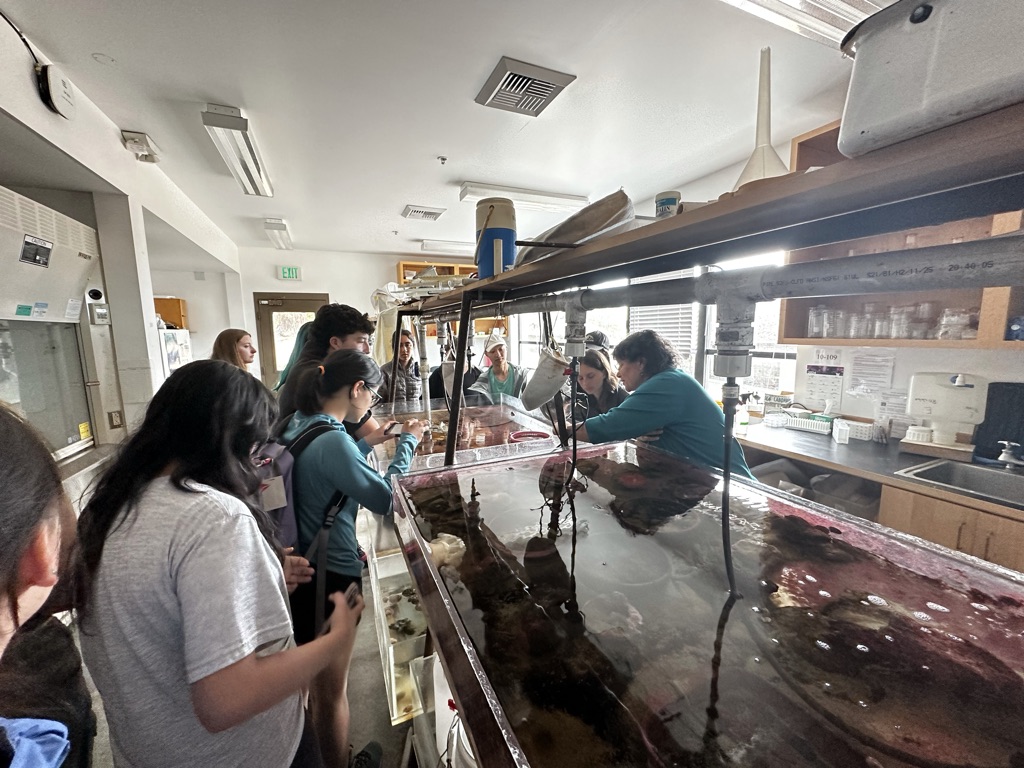
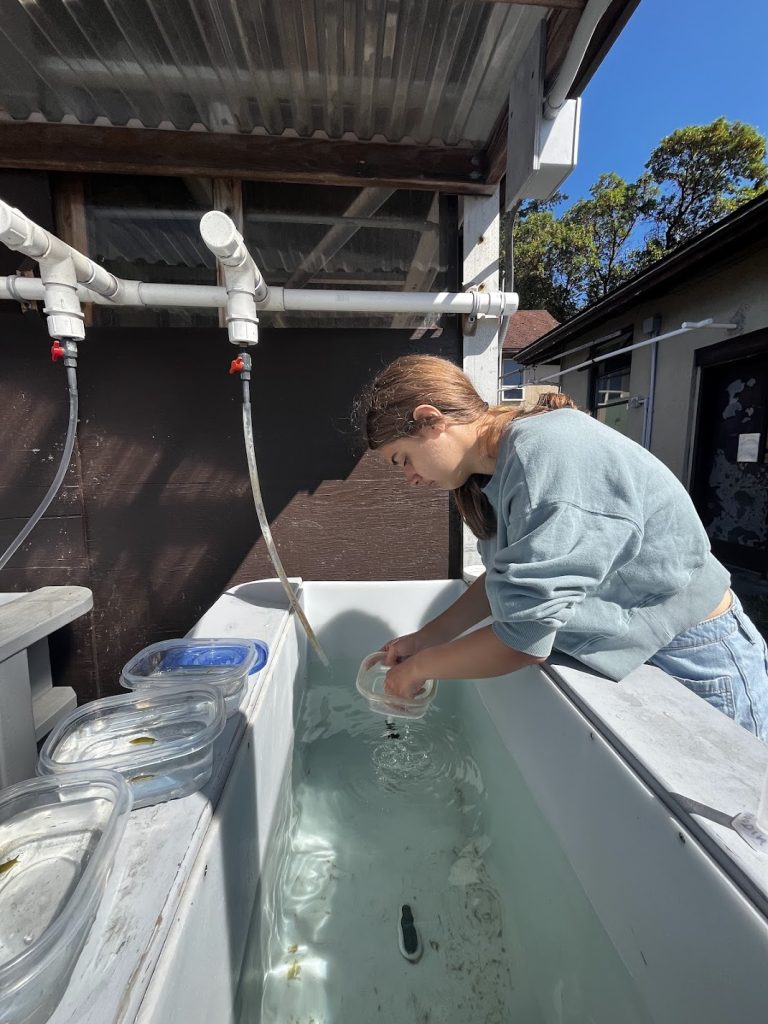
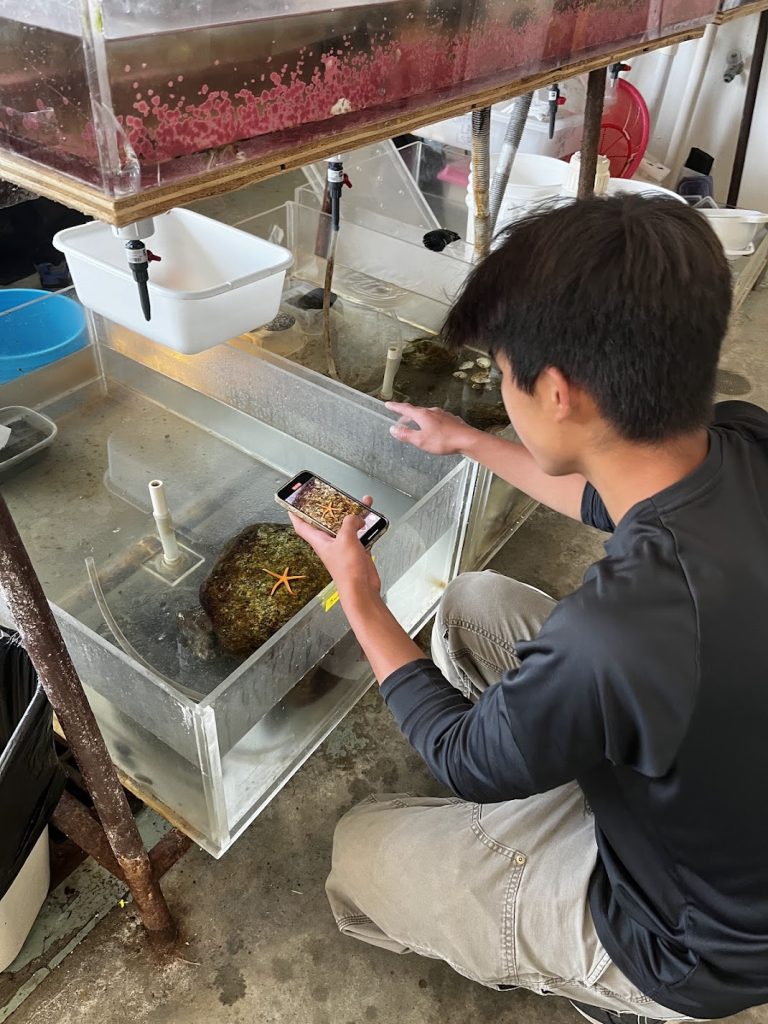
The group looking at sea tables in one of the lab buildings at Friday Harbor Labs–Credit to Evan
Today was a later morning, with wake-up an hour later at 8:30. Our first “activity” of the day was learning about the packing for our imminent kayaking trip to Jones Island with Crystal Seas Kayaking. We learned more about how to pack and what we would need for our 3-day trip. At around 10:30, we left for Friday Harbor Labs, a world-renowned research facility used by professors and students from all over. The facility has 12 labs and can accommodate 80 researchers and 175 people. Michelle Hecko was kind enough to give us a great tour of the Lab’s campus, and provided an interesting insight into some of the projects and unique features of the facility. One of the most interesting things about the lab as a whole was their flow-through water system, which brings water in and out of the facility quickly, allowing the scientists to observe the creatures in their sea tables and aquariums in a very natural water setting. In fact, this is one of the top reasons for people to come and use the labs! Another thing we learned about was a fairly new project regarding sunflower stars. Sunflower stars are a type of sea star that was heavily affected by the sea star wasting disease, and the labs are home to a project attempting to grow them artificially and return them to their natural habitats. This has been done before, but no other labs have been able to grow them from their first larval stage to full adults before releasing them, which was really interesting to learn about!
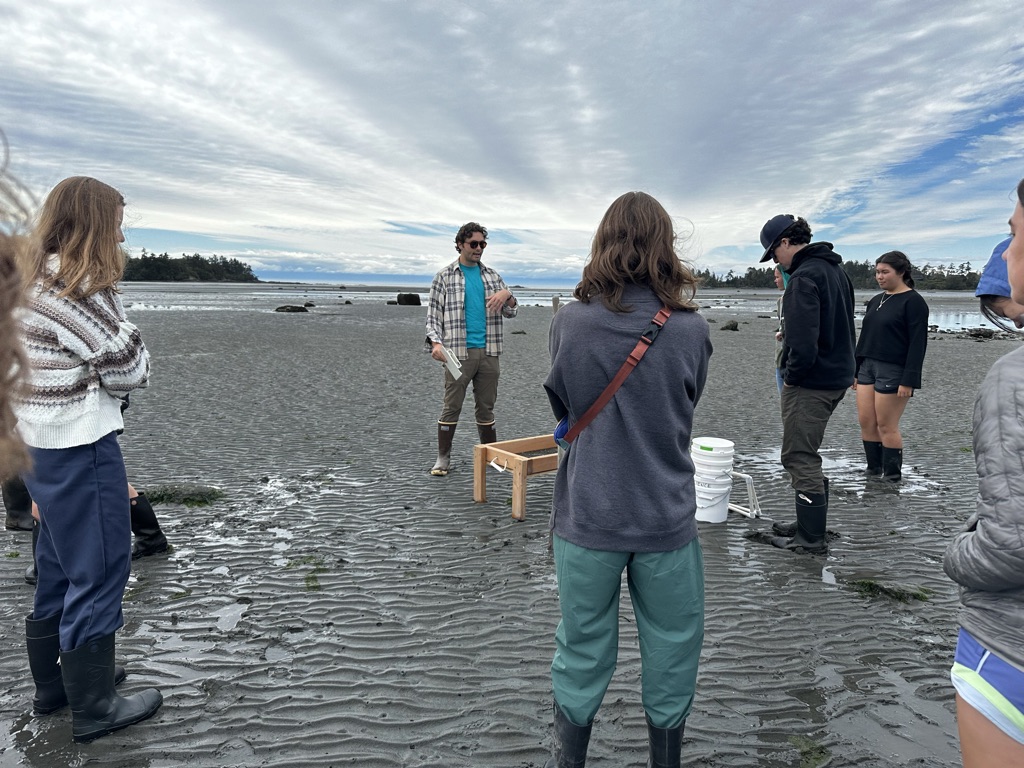
The group learning about survey methods at False Bay.–Credit to Evan
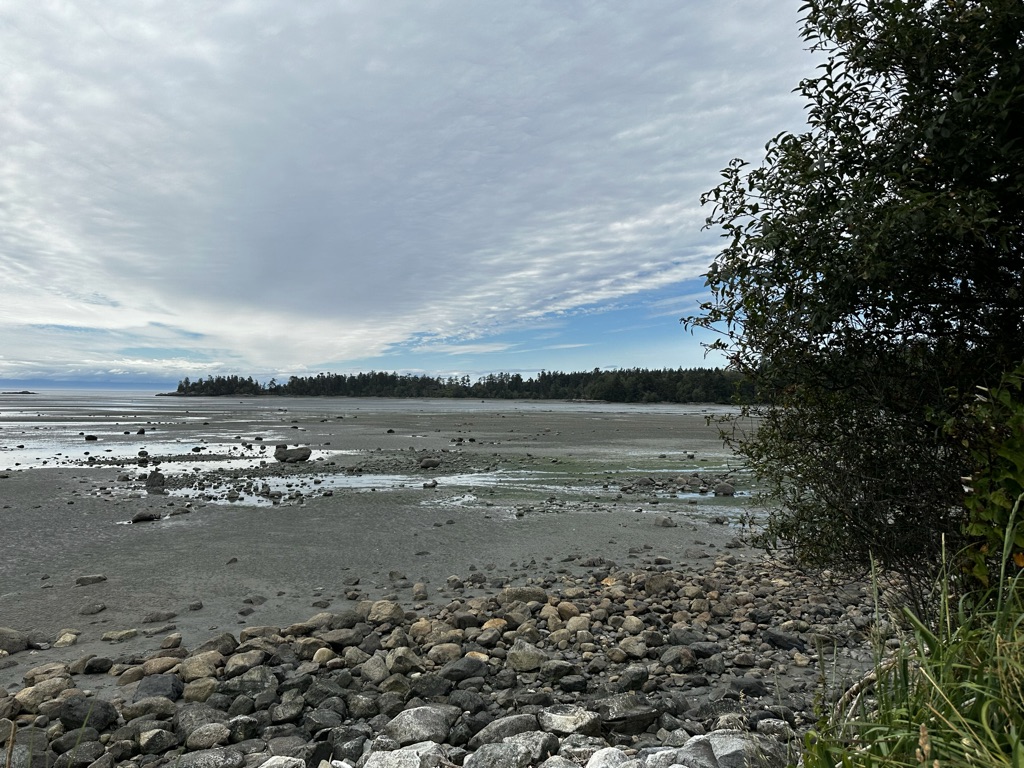
After leaving Friday Harbor Labs, we went to perform field research at False Bay. We first ate lunch by the vans and then we finally got to wear our mucking boots! We had all been eagerly awaiting this moment since we first picked our boots. We took research equipment such as quadrats, shovels, buckets, and a big sieve (not like the one in your kitchen). We all had a surprise when we learned we were looking for lugworm fecal casings (poop). We split into three groups. One group walked through the muddy water with quadrats (a quarter meter slate) to count the number of fecal casings throughout the beach. Another group shoveled holes in the beach in spots, where there was evidence of critters crawling under the sand/mud, to see what we could find other than fecal casings. The last group sifted through the shoveled sand in the big sieve to try to see what was hiding in the sand. We found some shrimp, lugworms, crabs and even some jellyfish in the water. At the end we stood in a circle and discussed our findings, some of us sunk into the mud and got stuck, but overall it was a very fun and educational experience!
A view of False Bay’s mud flats from the rocks above. –Credit to Evan
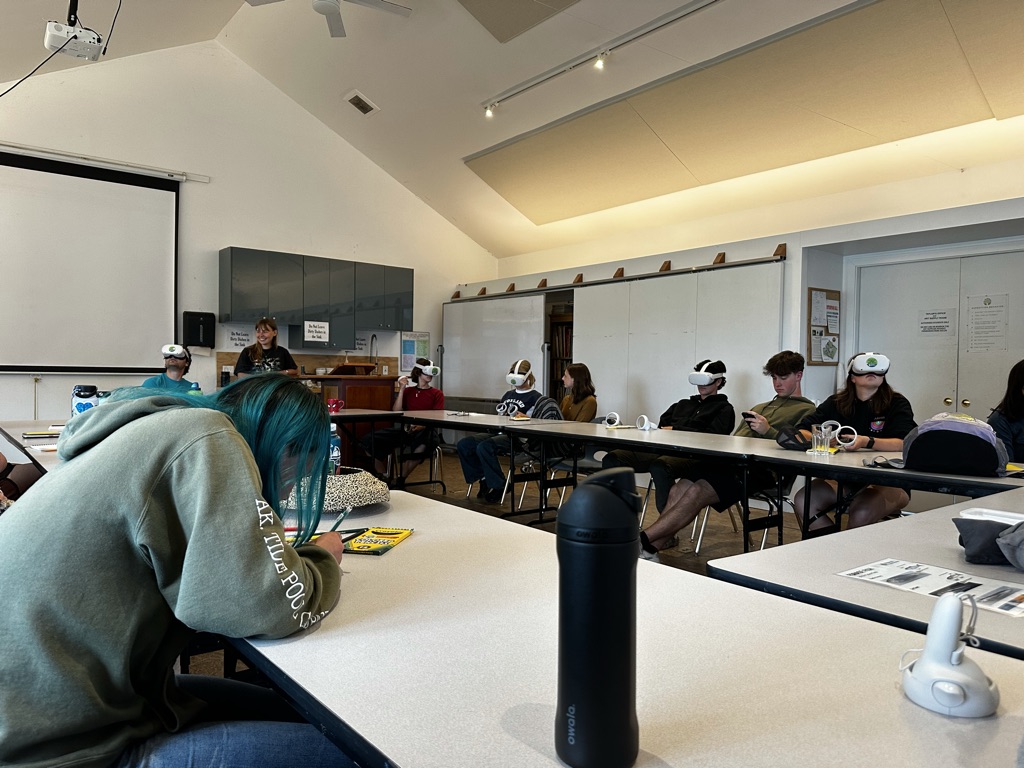
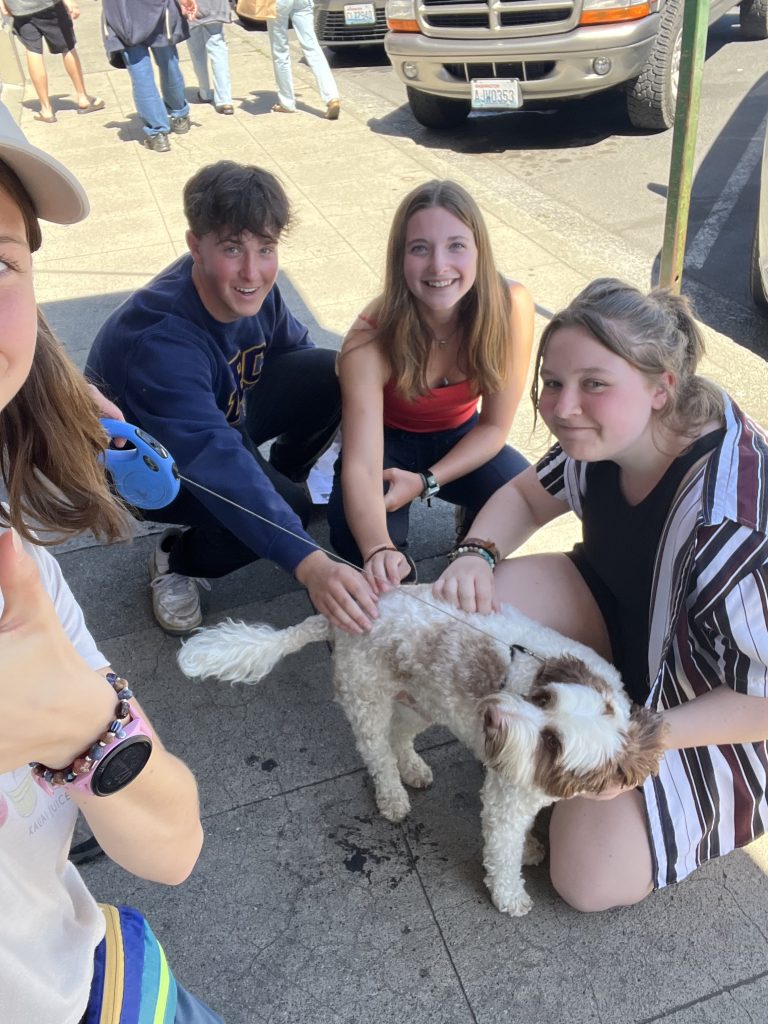
At about 2:00 pm, we went to the art classroom to hear a talk from Jess Newley of the “Friends of San Juan Islands” organization. She brought along her cute dog Ollie! We learned about significant organisms in the waters around the San Juan Islands, but we mainly learned about her teaching style! Jess believes it’s super important to incorporate what you love into your teaching (for her, it’s ocean photography!) At the end, she showed us the product of her underwater photography, using Oculus VR sets to show us salmon she encountered on her 360° camera to present to students!
The group trying out Jess’ VR headsets!–Credit to Evan
After eating the amazing sandwiches provided by the team at Salish Seas Sciences we attended a lecture at the Friday Harbor Labs commons where speaker Alyssa M Hernandez presented her talk “Robots For Biology”. During this presentation, Hernandez covered her story in science regaling her journey through biology to engineering where she continues to use her knowledge of the natural world to inspire her current work. We learned about her studies in robotic mobility where she used beetles in designing terrain-effective legs. We also learned about improvements to suction cups inspired by fish such as the cling fish and Snail fish. This was a great way to experience a college lecture and learn about new ways that robotics can help people learn about biology and vice versa. Overall, this was a busy but fulfilling day and we’re all looking forwards to our kayaking trip tomorrow morning!
This morning we woke up at 7:30 again and after enjoying our breakfast together listened and read about our session capstone project. The project will be an environmental proposal aiming to solve an environmental problem or execute continuing research to further conserve our environment. We saw some project examples and then made our lunches together. This project will be completed throughout the session, and we are excited to begin brainstorming.
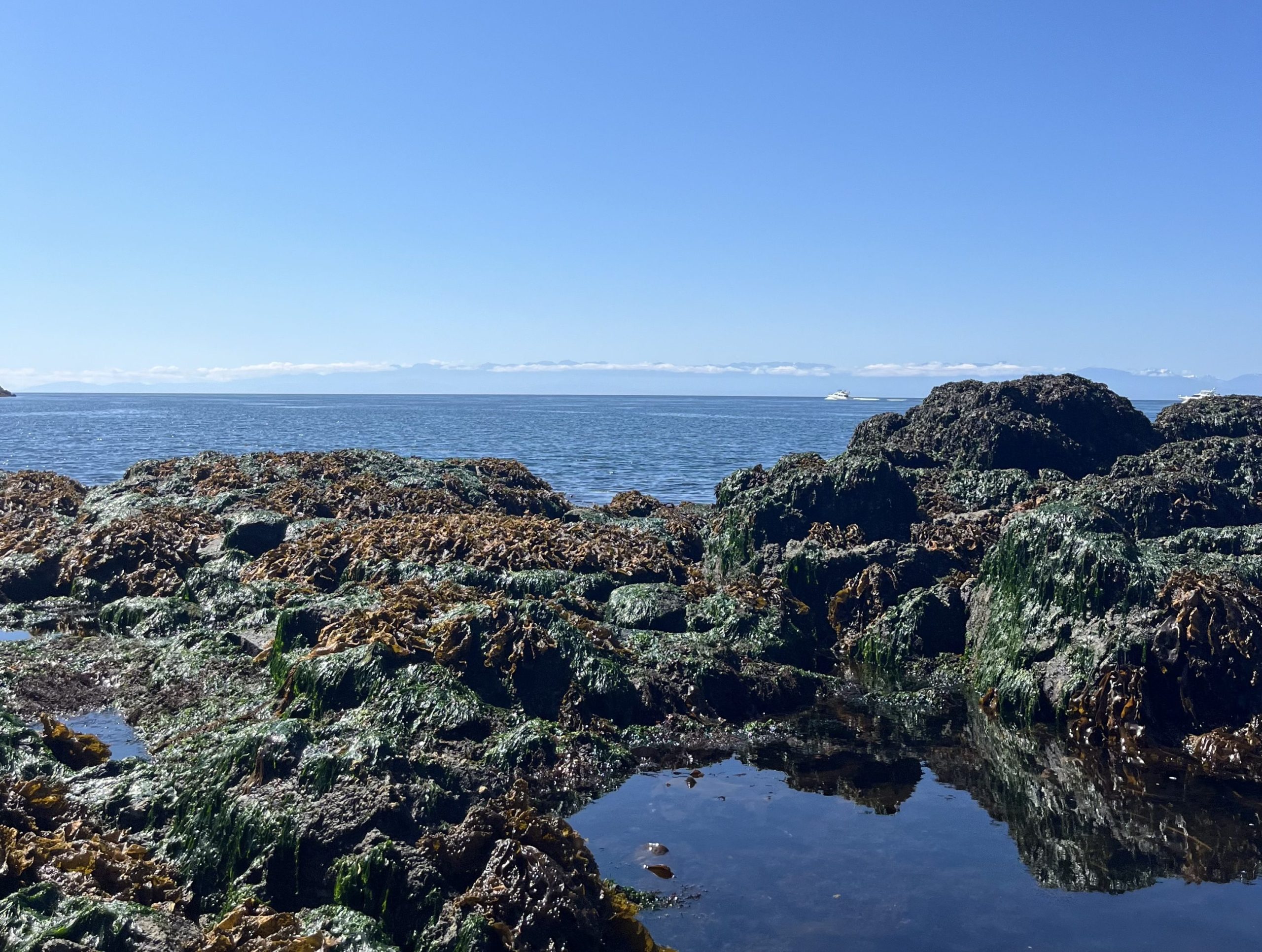
Tide pools at Deadman’s Bay
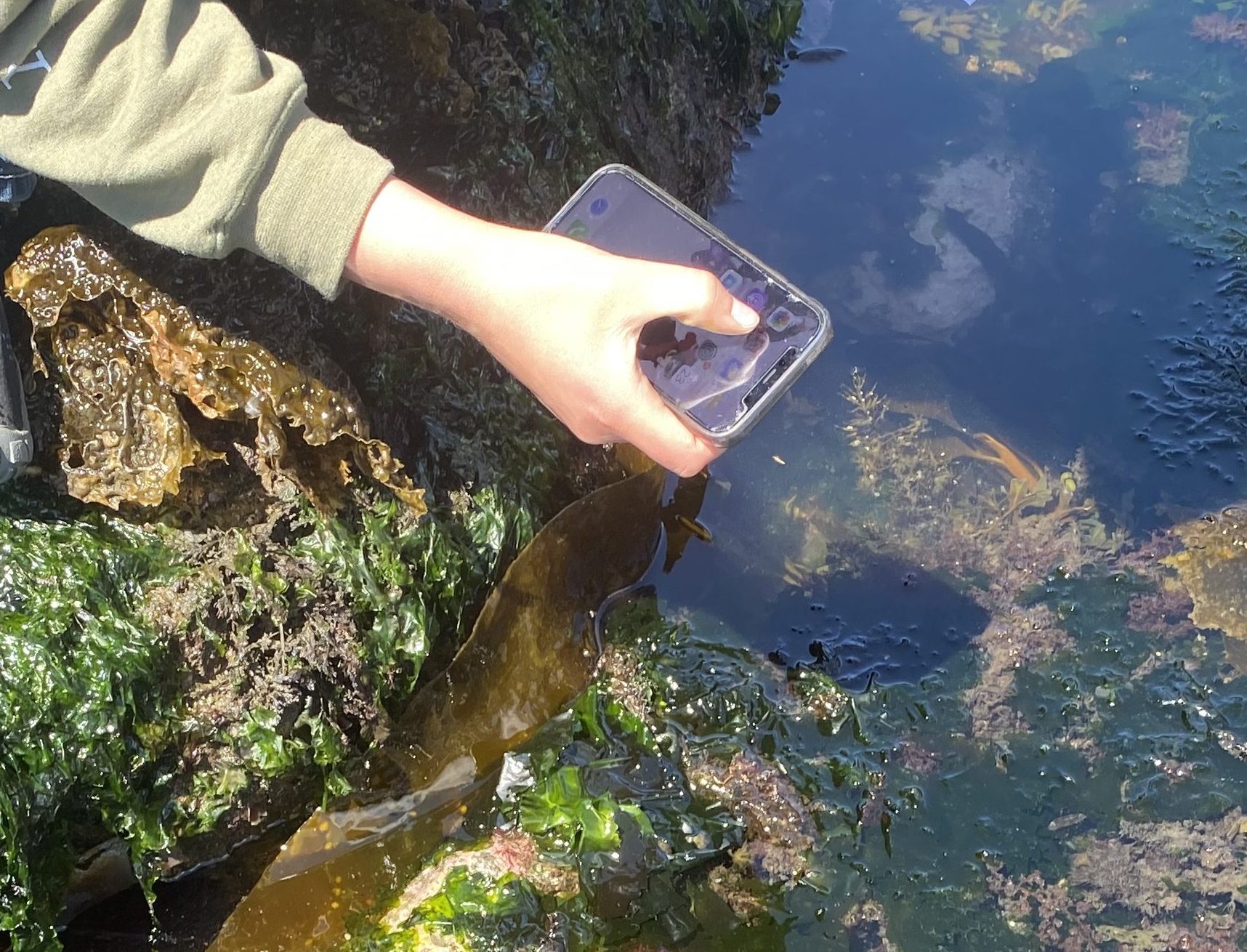
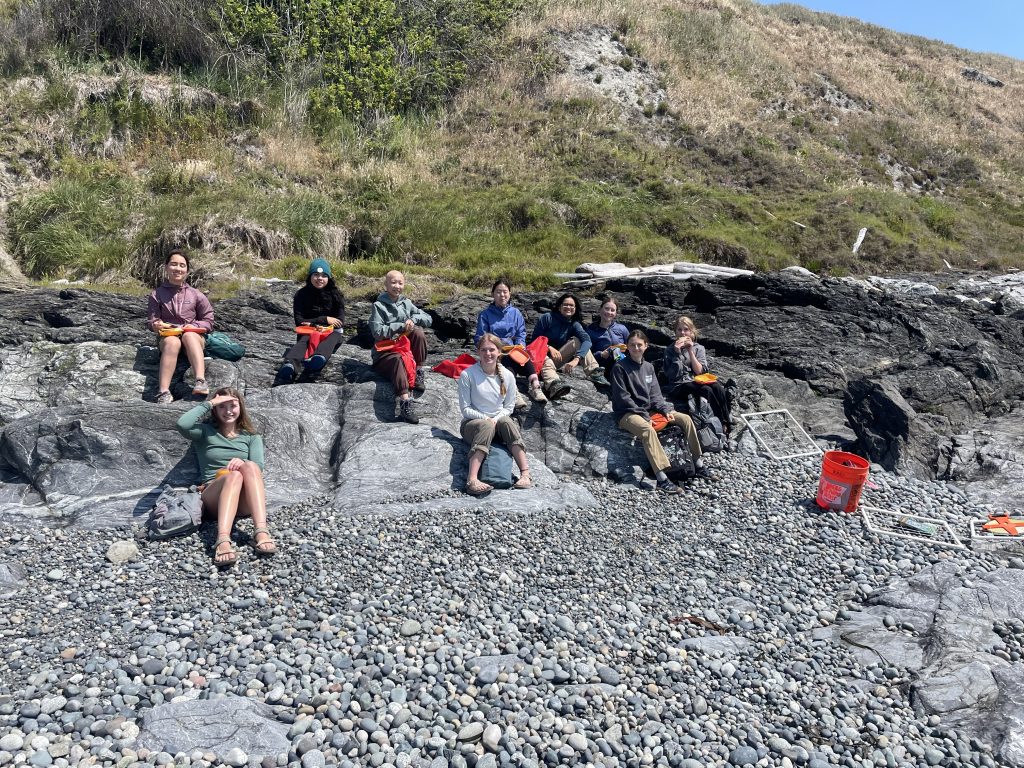
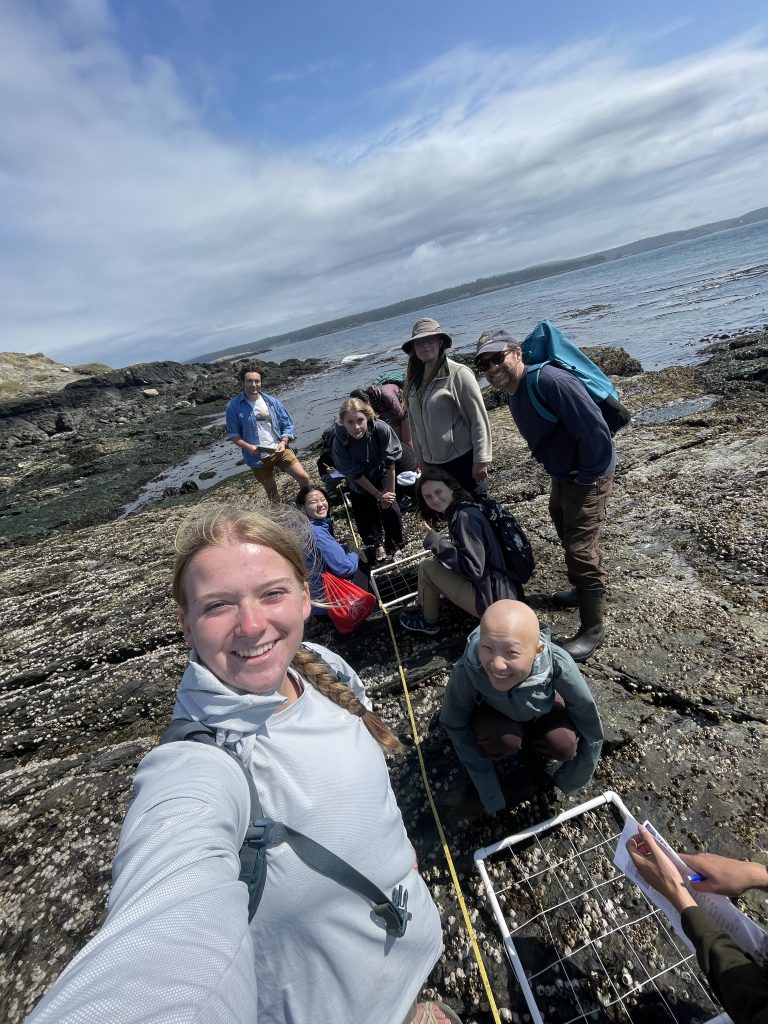
At 10:00, we left for Deadman’s Bay, crawling over plenty of seaweed to find different species for a game called Intertidal Bingo. We crossed off squares based on how many separate species we could find in the tide pools and on the beach, and thanks to a bit of teamwork, many of us were able to black out our bingo cards. The sea lettuce caused the rocks to become slippery, but luckily none of us sustained notable injury. This was a great opportunity to learn about the different creatures living in tide pools and how they interact with one another.
Finding a Sea Urchin to help complete Intertidal Bingo!
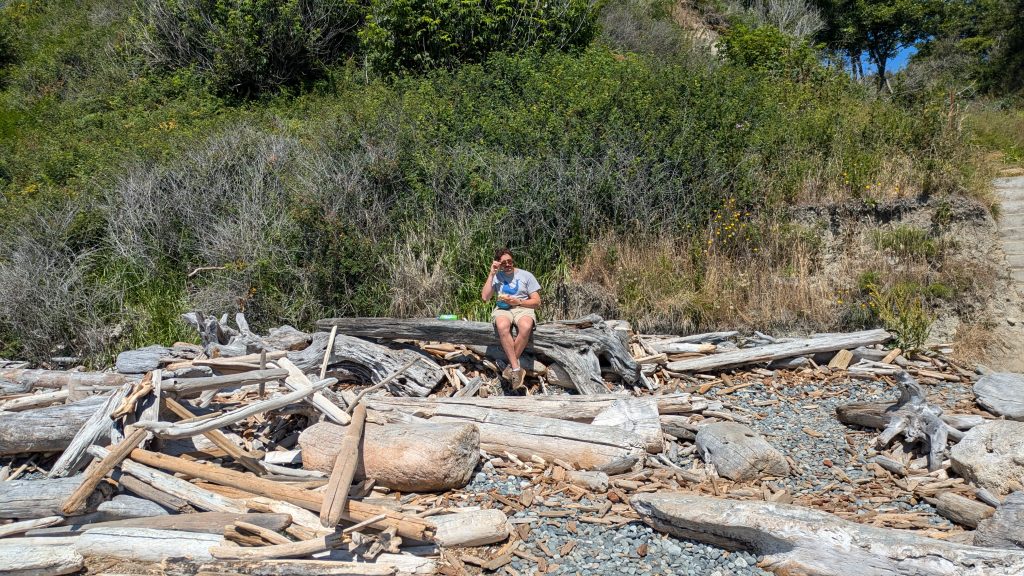
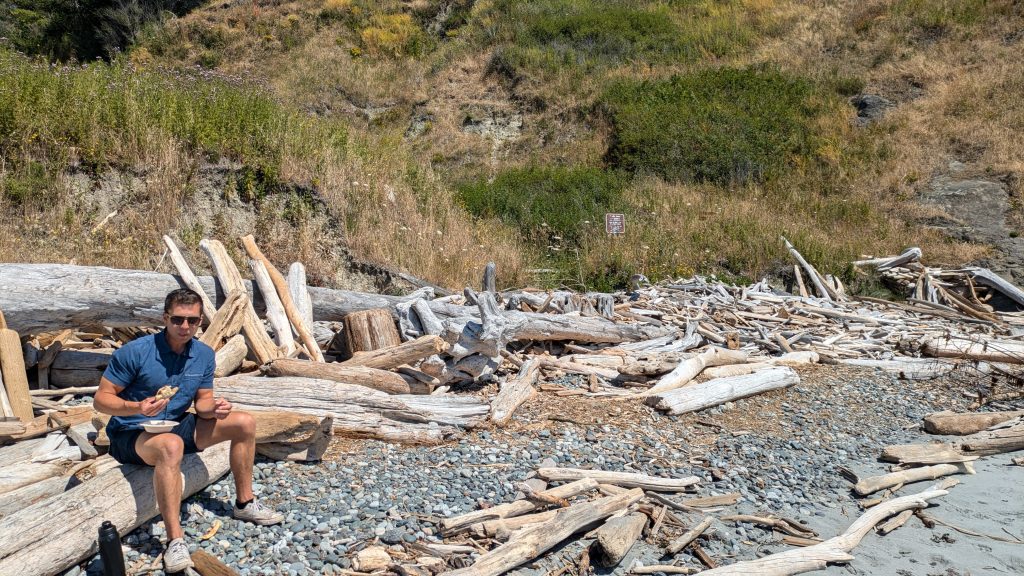
After tide pooling, we sat down on some large driftwood for lunch before piling back into the vans and heading to the Whale Museum.
In the afternoon our group toured the Friday Harbor Whale Museum, our tour guide explained the different groups of orcas living in the Salish Sea. We learned about many types of whales and porpoises living in our area. The tour guide talked about the endangerment of the orca whale, human impact, and that there are many ways that we can help.
After a quick drive back from the museum we prepared for our next activity, team town scavenger hunt. Each team had to find specific locations or actions and take a photo of everyone at or doing the task. Each team had a blast exploring the town and finding all sorts of different places. In the end, every team did quite well, with three teams getting over 375 points and the winning team getting a total score of 405. Tonight we will meet with Tim Dwyer who is currently co-teaching the Marine Subtidal Ecology course with Dr. Katie Dobkowski at the Friday Harbor Labs and was the founding Science Director for Salish Sea Sciences. Mr. Dwyer will teach us more about marine biology in the Salish Sea as we enjoy a delicious dinner and, afterwards, he will regale us with his experience with marine science research and communications in Antartica!
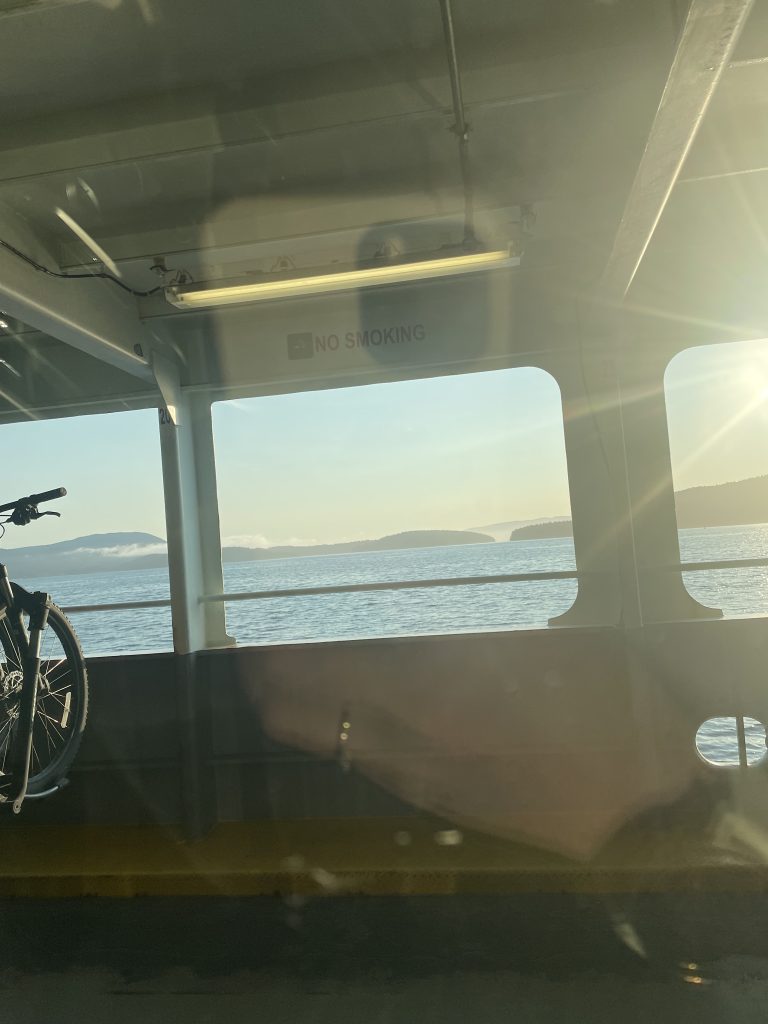
Yesterday was an exciting day, anticipation was high as students finished last-minute packing and readied themselves for a long day of transportation. Two students touched down from out of state before seven more piled into the van for the long drive to Anacortes. After meeting three more students there, we enjoyed a scenic ferry ride to Friday Harbor, the place we’d be spending the next two weeks learning about and exploring the Salish Sea. After being acquainted with the final seven students at the dorms, all 19 of us were excited and ready to begin the program. We met our roommates, settled into our dorms, and ate a delicious meal together before turning into a good night’s sleep before an eventful day.
Photo provided by Sophia – Ferry to Friday Harbor
On the morning of the 22nd, we woke up at a very acceptable 7:30 am, ate a quick breakfast that consisted mostly of Cheerios, and went to Cattle Point to meet Dr. Dobkowski for seaweed surveys! Dr. Dobkowski’s research seeks to provide sound science for future conservation, restoration, and management efforts; she was a perfect fit for this activity. throughout the activity, all groups were able to identify different types of seaweed that are including but not limited to rusty rock, fucus, sea cauliflower, sea lettuce, sea moss, rockweed, and much more. overall a very fun experience, and a perfect way to start out this 2 week adventure.
Photo provided by Sophia – Eating lunch at Cattle Point Photo provided by Maxene – Seaweed surveys with Friday Harbor Lab students Photo provided by Sophia – More seaweed surveys!
Shortly after eating lunch, we rode the van to Lake Zylstra, a nature preserve on the San Juan. Lake Zylstra is one of the most fertile lands on the San Juan Islands and is home to many keystone species. Today, Lake Zylstra is used for low-intensity recreation, farming, fishing, and hiking. Students were introduced to Shauna Barrows, a field assistant at the San Juan Conservation Land Bank. Barrows started off by describing the lake and land, that it was important to preserve. She described her stewardship and her dedication to the land, such as the importance of water quality in the streams and creeks. Our 2-mile hike started in the parking lot, then we made our way to the Beaver Dam Analog Area. Barrows stated how the Land Bank worked with native communities on how to best conserve the Land, motioning to the wooden posts. Soon followed a discussion on water ownership, the effect of cow feces on the land, invasive species such as thistle, how the indigenous people burned the land to maintain it, and more. Around us were Gary oak trees, English daisies, Salmonberries, and more. Afterward, we left and rode the van back to Spring Street International School, arriving around 3 pm.
Photo provided by Maxene – View from Lake Zyltra
After our long day full of adventures we came back to Spring Street, where Ms. Caroline enlightened us with an orientation to the program. She told us how to preserve and respect the island. This is so important because we want to make sure that everyone can experience this beautiful island as we get to do. We had a great ending to our wonderful first day, officially, with Tom’s delicious Lausanne! Which was graciously prepared with help from the dinner prep team. Our meal was nicely accompanied by a guest speaker, Ms. Shauna Barrows. Ms. Shauna works for the San Juan County Conservation Land Bank. It is her mission to create a better environment by providing help to the numerous ecosystems that are interconnected on the island. She demonstrates how the poor water quality in one stream can have an effect on the wildlife from inland to the bay. Ms. Shauna and her team have already done so much to better this island. We are so very thankful to Ms. Shauna and all of our wonderful staff members who made our first day a success.
Kindly recounted by Caleb Zulauf, Finlee Rice, and Tatum Bunting
Co- Scientific Director Adam eating lunch at Eagle Cove – Photo Credits: Caleb
Today was a day. As we are all gearing up for the end of the program, the presentations that come along with it, and our posters that are due tomorrow at noon, we didn’t have much time to go out and about. For most of us, our day was dominated by statistical and graphical analysis, polishing our posters’ content, and struggling to format our long lists of acknowledgements. A few students working at FHL headed to the labs early this morning, for the first of their three trips of the day, to finalize data collection.
Co- Scientific Director Riley eating lunch at Eagle Cove – PC: Caleb
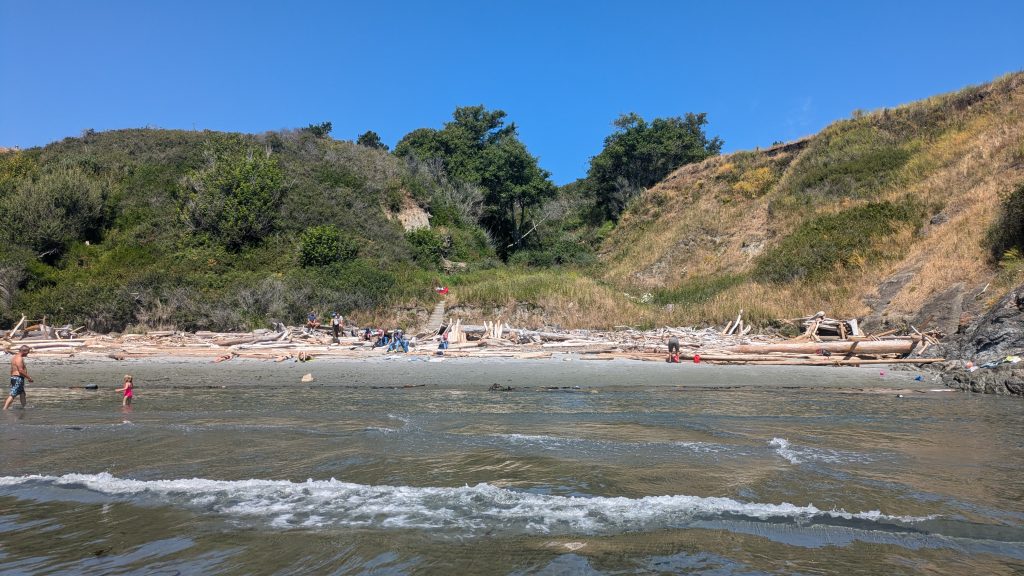
After a long morning of stress-fueled productivity, we regrouped at the dorms for a beach lunch at Eagle Cove.Scarlett, Nina, Max, and Caleb all went swimming while the others spent their time on the sand laughing and looking at the driftwood. So far, every workday has been broken up by a nice long lunch break, giving us students the much needed chance to touch grass and mentally refuel before returning to our work.
Eagle Cove from the water – PC: Caleb
The afternoon mirrored the morning in terms of productivity by the students. However, thanks to Cara, we could also snack upon delicious rice crispy treats, lemonade, and sweet tea from her very successful lemonade stand.
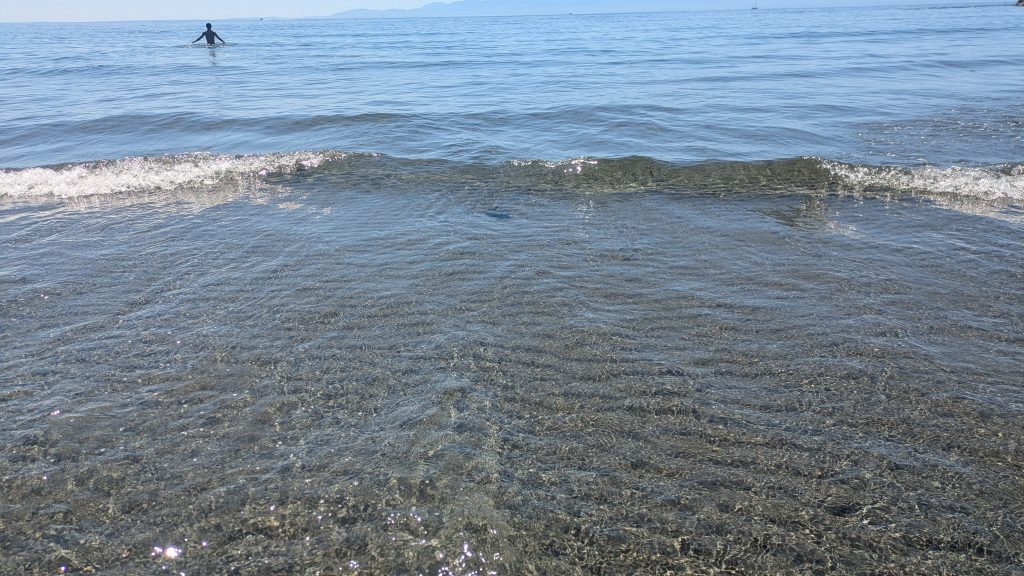
Water at Eagle Cove – PC: Caleb
Tonight Helen Yip and Dr. Joe Heras have been gracious enough to agree to join us for dinner and give a talk on both DEI and genetics. Ms. Yip has worked with WISEST (Women In Scholarship, Engineering, Science, and Technology) in order to promote the presence of women and genderqueer people in STEM (you can find the link to the very cool WISEST women-in-STEM posters here) and has a master’s in biology, with a focus on marine biology. Dr. Heras works using gene sequencing to look at the history of evolutionary adaptations in fish. His research program also examines how gene expression and the gut microbiome of fish shape their dietary specialization.
Sam and Katie working away on their projects – PC: Adam
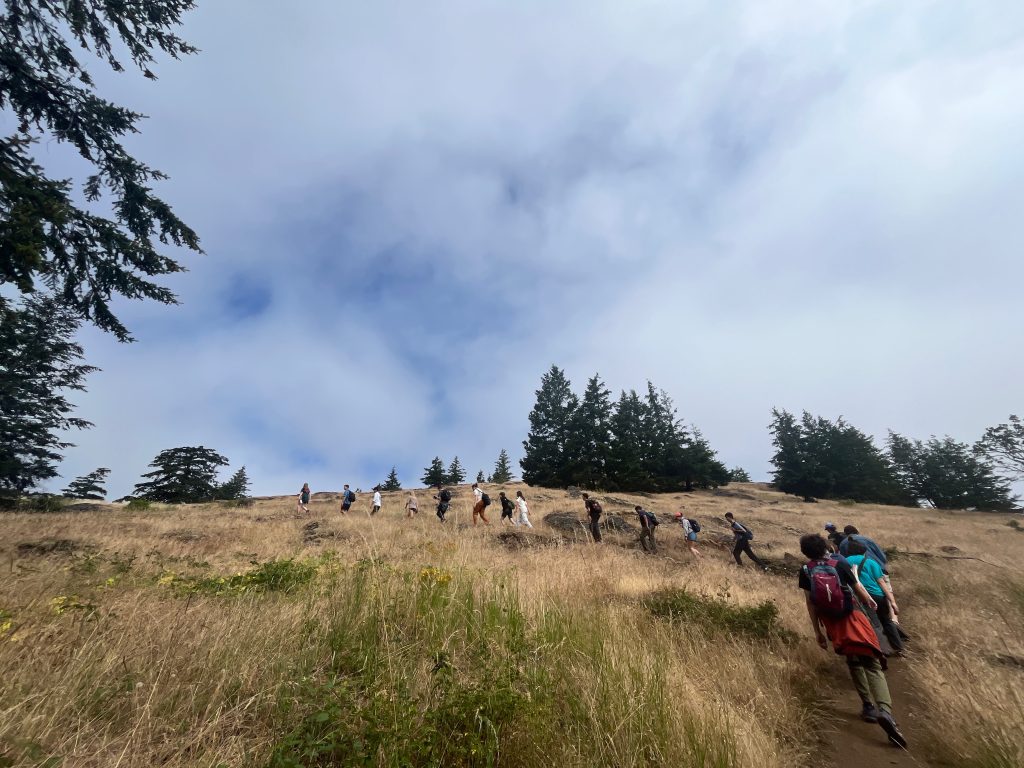
Today the group took a day off and headed to Orcas Island! After a short ferry ride over, we drove to Turtleback Mountain. As we hiked up, Riley, one of our science directors, gave us some background on the importance of preserving native plants in the Pacific Northwest. Specifically, he described his work with the Land Bank on Orcas Island. As we strolled, we noted the diversity of the plants, as well as the presence of native trees such as Garry Oaks, which land stewards and conservationists have been working hard to protect.
The group hiking up Turtleback Mountain to a scenic lunch spot (Taken by Katie Chin)
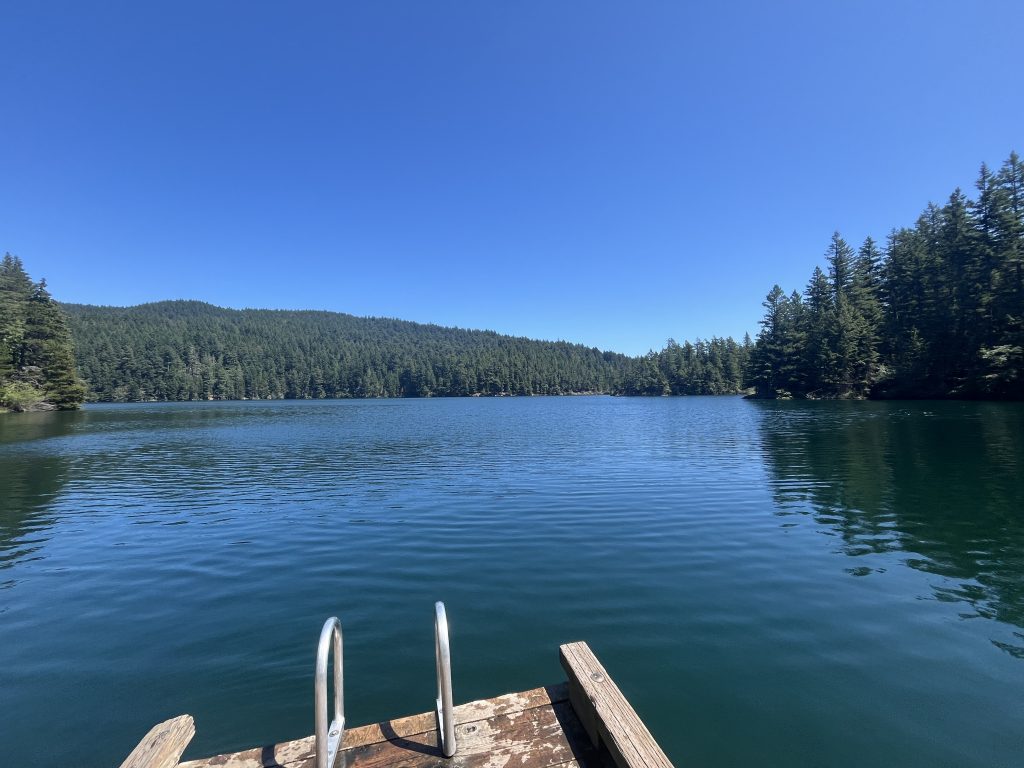
After Turtleback Mountain, we drove to Cascade Lake. Although the morning had been cloudy, the sun was shining when we arrived. We spent several hours swimming, paddle-boarding, and enjoying a change of scenery. Some people explored the lake on paddle boards and rafts, while others opted to sit on the dock, read, or fish. The water was warm, and everyone enjoyed a day off in the sun!
A view of Cascade Lake (Taken by Katie Chin)
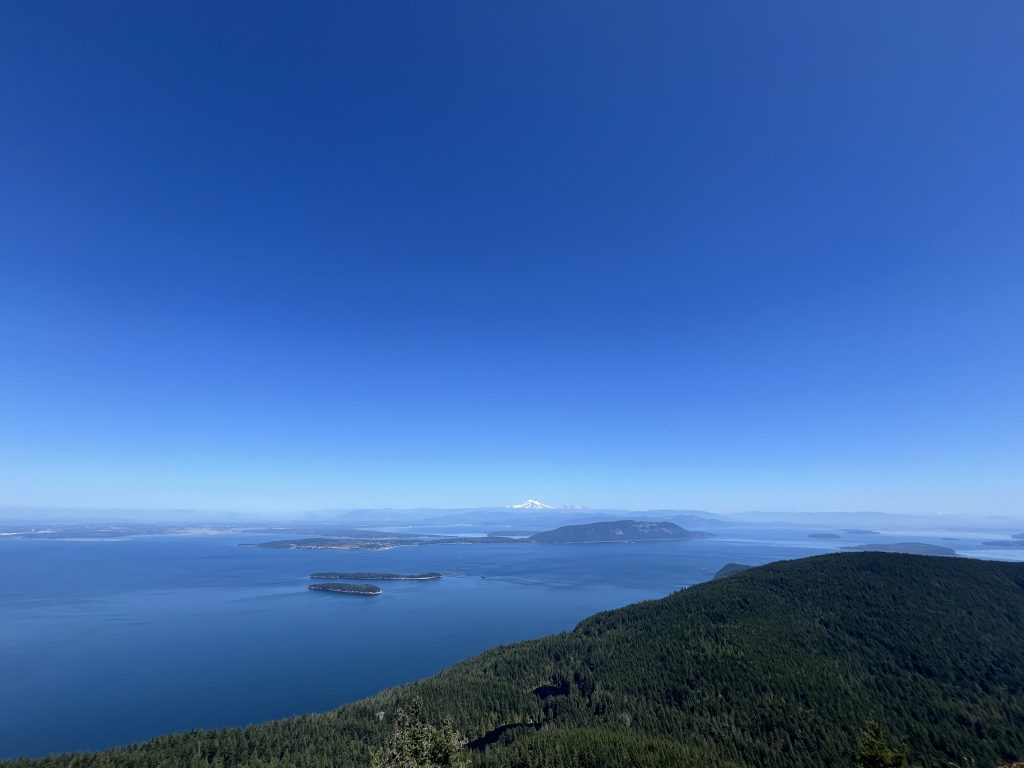
We then drove up Constitution Mountain for another scenic viewpoint. The beautiful weather allowed us to see the islands in the area, as well as catch a glimpse of Mt. Baker in the distance.
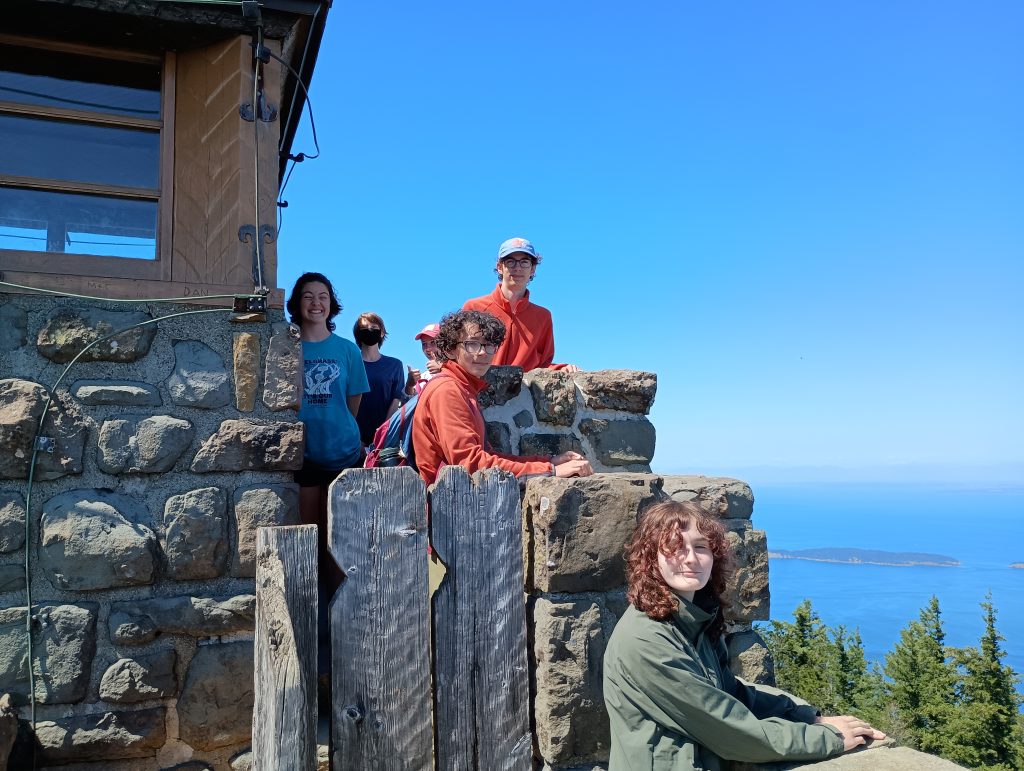
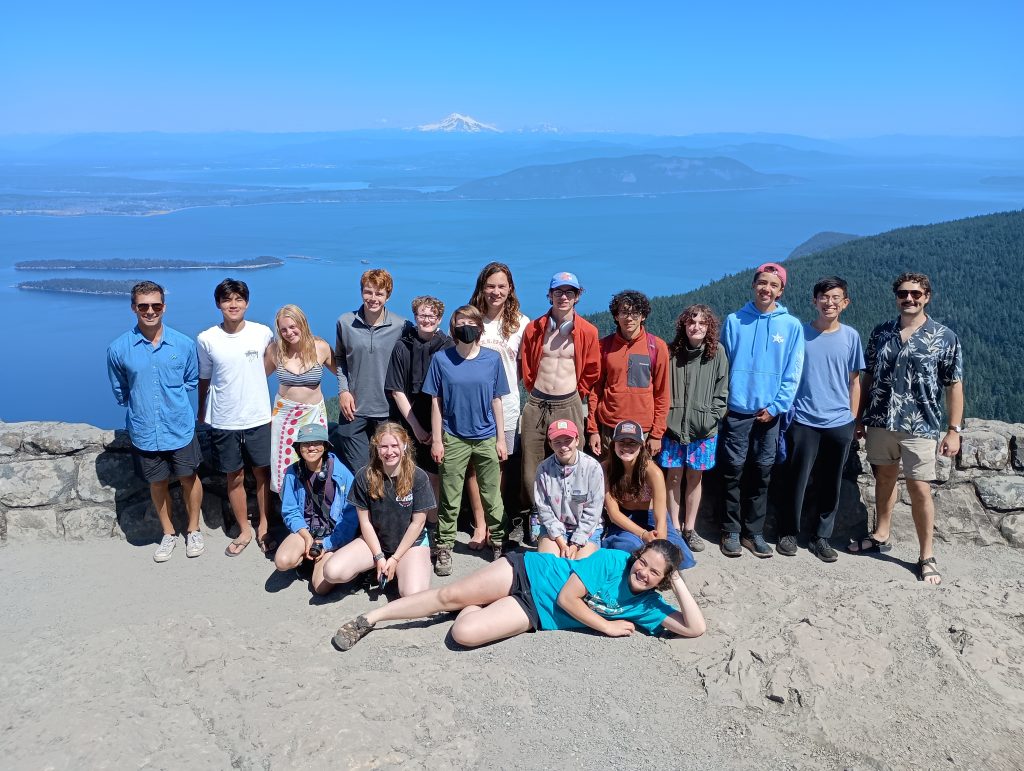
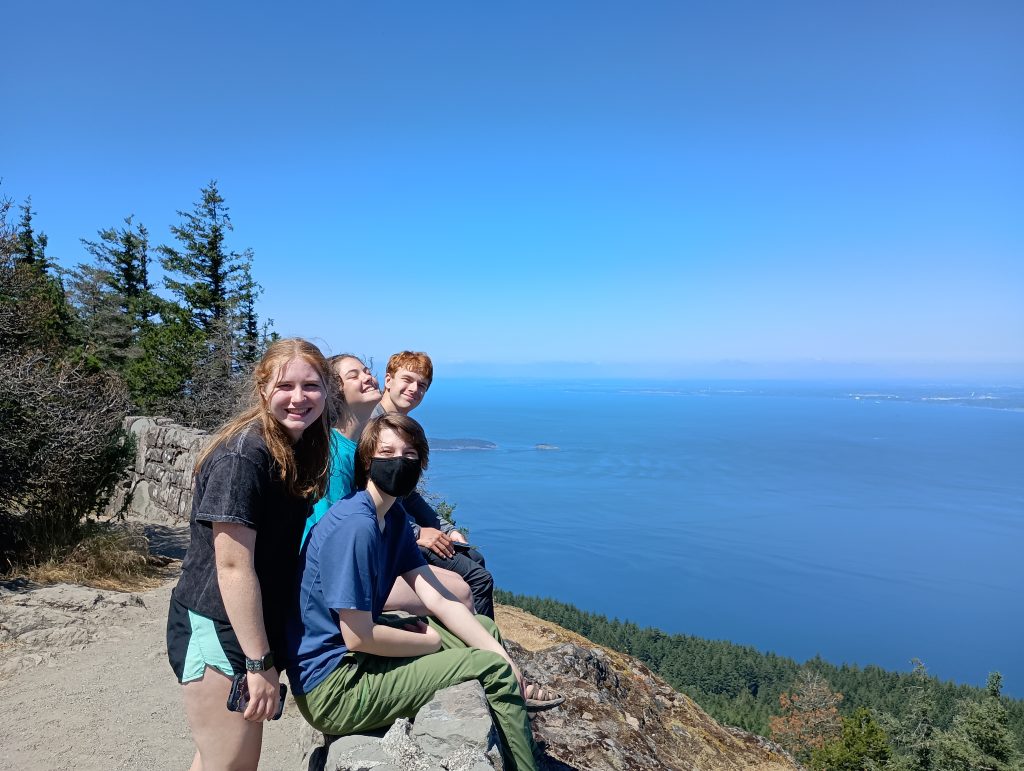
The view from the summit of Constitution Mountain (Taken by Katie Chin) Finlee, Soren, Tatum, Ian, Sam, and Claudia at Constitution Mountain (Sourced from Adam Rogowski) The group at Constitution Mountain (Sourced from Adam Rogowski) Morgan, Soren, Finlee, and Ben (Sourced from Adam Rogowski)
We then took the ferry back to San Juan Island. Once back at the dorms, the group reunited with Flora and Ansuya who had opted to stay back at Friday Harbor Labs for the day and work on their projects. Although we missed them at Orcas Island, we were happy to hear they had had a successful day of work. After a quick dinner, some people headed off to JP’s for trivia night and then caught the sunset with a view off the Friday Harbor docks.
We began our morning by heading straight into project work time. Most of the group spent time analyzing their data and working on posters. Tatum woke up early this morning to hang out with her Pigeon Guillemot friends and had lovely conversations with Dr. Amy Cook. Many of us are heading into the project enzone as the camp is coming to a close.
Geological Hike with Park Ranger Jeff Hodge:
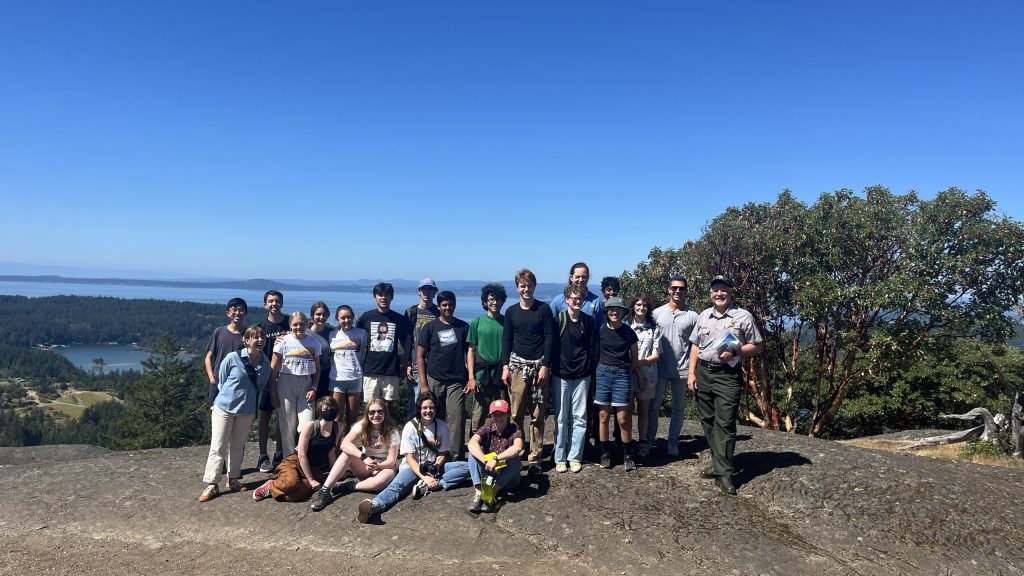
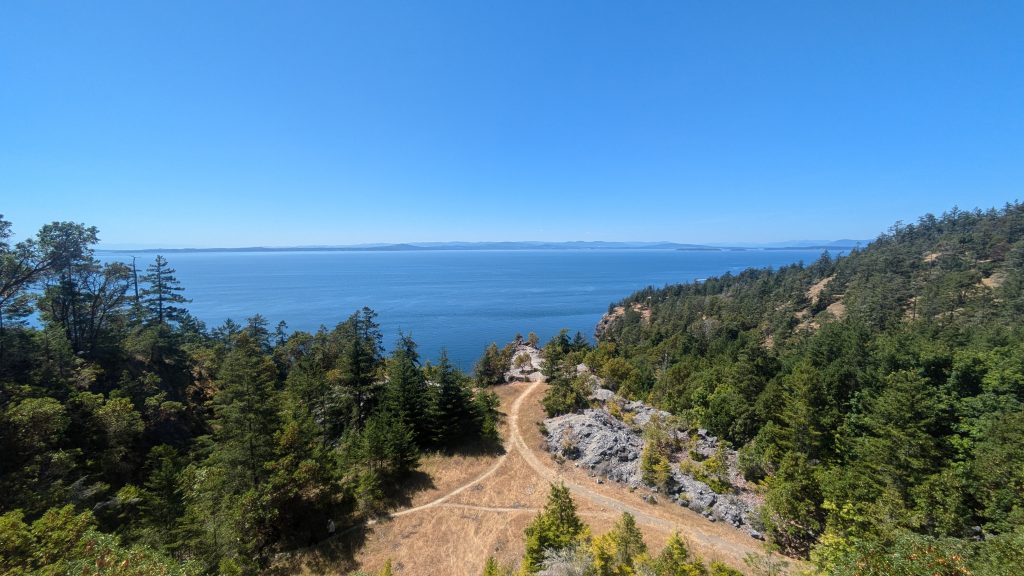
The group headed out on a tour of English Camp with Park Ranger Jeff, who gave us an in-depth look into the geology of the San Juan Islands, and the causes of development of the islands in the first place. We had a lovely hike up to the top of Young Mountain (Hill) with Ranger Jeff leading us to deeper thoughts about the geological creation of the islands. He mentioned to us how glaciers a mile high carved out the San Juan Islands. Thank you to Ranger Jeff Hodge for coming out and spending his time hiking and teaching us.
Photo credits to the nice lady also taking a hike
Friday Habor Labs:
After the hike up Young Mountain, Ansuya, Flora, Scarlett, Nina, Max, and Ian headed to FHL to continue their research projects. Ansuya and Flora frantically ran around the lab, rushing to get their research done in the short timeframe. Conversely, Max leisurely ran tests on his seastars, Scarlett and Nina walked around the lab to get their data together, and Ian sat around learning the R coding language. Overall, it was a very productive lab time as all parties made steady progress on their projects.
-Image of Ian’s coding
Lime Kiln with Shauna Barrows:
Later we went to Lime Kiln Preserve which is run by the San Juan Island Landbank. There we met with Shauna Barrows a Field Assistant for said landbank who took us on an interpretive hike. Along the hike, we learned about the limestone mines and their effects on the local environment. We talked about the changes to the changes to the soil, specifically how they are now more rocky and have a higher pH. We also were taught about how many trees have adapted to San Juan Island. These trees have typically become better at living with more rocky soil, salty air, and low humidity. Many people working in the forests of San Juan Island predict that just like how it was found that the coastal juniper is different from the rocky juniper, other trees might be genetically different enough from their closest relatives to be considered a new species. Some of these supposed new species include Madrona, Big Leaf Maple, Douglass Fir, and Western Red Cedar.
Along the hike, we were shown an old quarry. Some of us wandered off from the group to explore the winding path through the quarry. Shauna Barrows afterward led us over to Carefree Lake where Northern Pike has been infiltrating the ecosystem, leaving devastating impacts on the ecosystem. We are exuberant for Shauna to join us at dinner tonight, to continue our conversations. If you want more information on the Land Bank head over to their website.
We started our day at the modest time of 8:00, waking up to prepare for our statistics workshop with the wonderful Dr. Cassandra Donatelli. We downloaded the necessary software, R, to get ready. After that, our paths divulged, with some staying at the dorms and some going to Friday Harbor Labs with our favorite Riley.
At the labs, many of us were continuing data collection, either in Dr. Billie Swalla’s lab space or down at Dr. Sandy’s tanks. It was a beautiful day on the island.
Salish Sea from FHL Taken by Scarlett
Flora and Ansuya were working on sea hare behavior, while Ian and Max were in the lab observing their behavior under certain stresses.
Flora working with the sea hares Taken by ScarlettMax observing a blood star Taken by Scarlett
Supervised by the wonderful Emma, the rest of the students plugged away on their individual projects: designing posters, analyzing data, and compiling all the information we’ve gathered over the past three weeks. It was more productive for some than others, but with the program coming to a close, all the students are locking in to get their projects done.
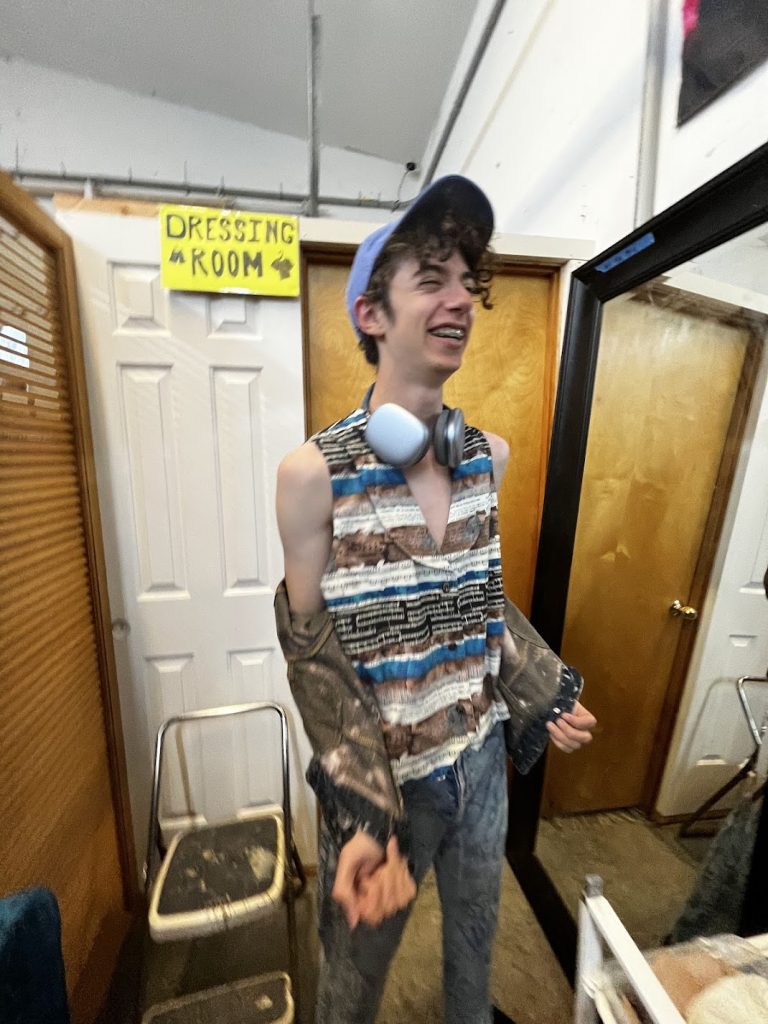
After an intense work period, everyone needed a well-earned break. Emma and Riley took us all to Community Treasures, an eccentric and abundant collection of knick-knacks, doo-dads, and proverbial diamonds. We wandered around the complex, exploring antiques, cassettes, and fascinating fits put together from the various oddities.
Sam in all his glory Taken by Scarlett
After our terrific thrift trip, we returned to the dorms for our statistics workshop! For a second pleasant time, we had the honor of hosting Dr. Donatelli to teach us about the R program. We learned how to do many things with our data, including creating plots, graphs, and making calculations. This was incredibly helpful and provided a strong backbone for our data analysis work.
Kindly recounted by Caleb Zulauf, Finlee Rice, and Tatum Bunting
After two days of running all over the island for various project needs, the students at Salish Sea Sciences were in need of a late start. Ever the generous leaders, our co-science directors Adam Rogowski, Emma Ledin, and Riley Conley granted us a 9:00 wake-up and a delicious hot breakfast this morning. Cassandra was kind enough to prepare waffles, sausage, bacon, and eggs for a lovely start to the day. Though most took advantage of the late start, a few students were eager to get on top of things and began work on projects (mostly eelgrass related) at FHL.
Once we had all regrouped, we continued our streak of untimeliness by barely getting out of the door at 10:20 to venture off to Friday Harbor High School.
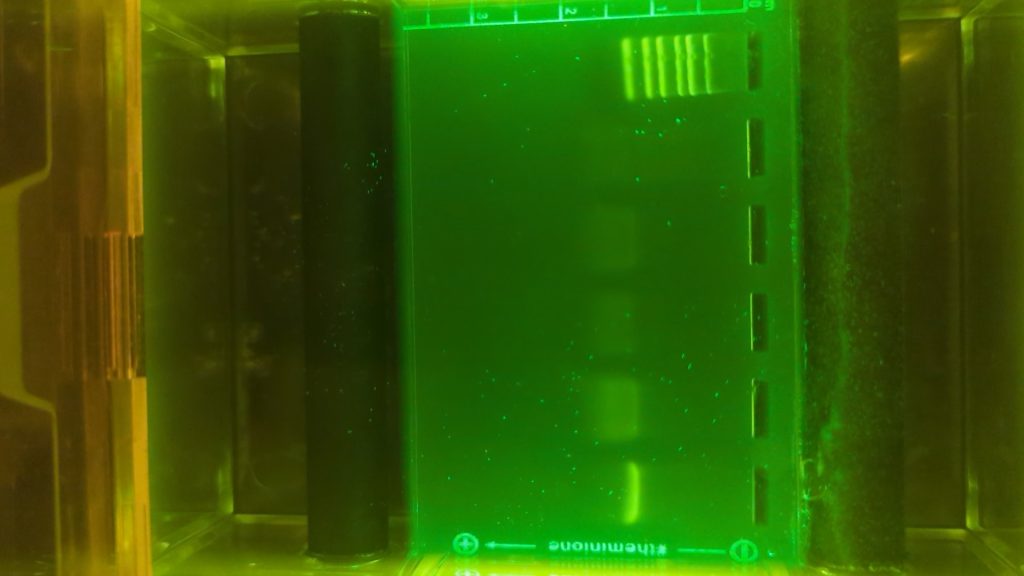
Under the guidance and help of Sam Garson, we conducted a PCR (Polymerase Chain Reaction) to identify the species of various mussels we collected at Cattle Point. Frustratingly, the invasive mediterranean mussel is nearly impossible to distinguish from the native pacific mussel based on appearance alone. Because of this, DNA analysis is essential to gauging the presence of this intruder in the Salish Sea and beyond.
Mr. Garson, beyond guiding a very interesting lab, is an incredibly accomplished educator, communicator, and scientist who has worked on everything from deep sea exploration with the Nautilus to infectious disease at Children’s Hospital in Seattle. He is now utilizing his skills to encourage and inspire the next generation as a high school educator on San Juan Island. These authors would highly recommend reading about his unbelievable accomplishments in everything from managing ferocious army ants in the Amazon Basin to dominating spelling bees at the Kremlin. Or to learn more about his eventful past few weeks in Brazil, click here.
One of our less than ideal PCR results (photo credit to Caleb).
Utilizing a new type of TAQ polymerase, we were able to condense a multi day process into just a few hours. After crushing and extracting tissue from our mussels (some more gently than others), we created our PCR cocktail and eagerly awaited our gels to phoresis. After a few hours of careful micropipette work, deliberate mussel crushing, and many conversations about our deepest fears to fill the time, we saw… *drumroll please*… few legitimate results (likely due to the Jenga tower that is global shipping). Despite finding few results from our PCR tests, we did learn a lot about micropipetting, PCR (polymerase chain reaction), and invasive mediterranean mussels.
After saying goodbye to the icon that is Mr. Garson, we were scheduled to go on a hike with Shauna Barrows of the San Juan Island Land Bank at the Zylstra lake land preserve. Unfortunately it didn’t work out, and instead we had more project work time. A lot of us spent our time at the dorms compiling and analyzing data, learning how to use certain scientific tools (specifically dissolved oxygen meters), and observing wildlife. Another small group ventured back to the labs to monitor and work on their projects.
Tonight we are going to be dining on Tom and the kitchen crew’s finest (rumor has it spanakopita might be involved).
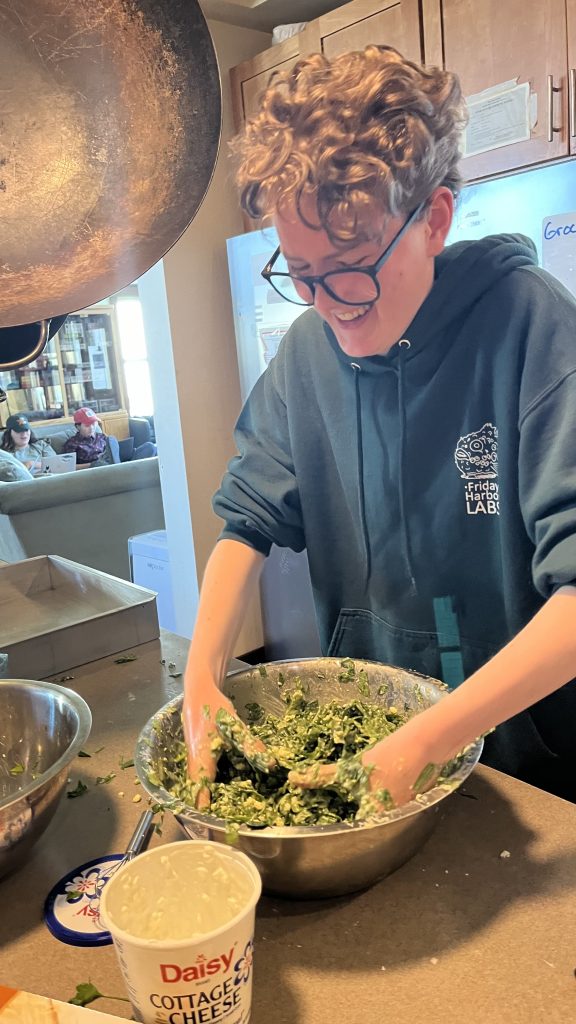
Gretchen thoroughly enjoying mixing the Spanakopita filling we look forward to enjoying (photo credit to Morgan)
We will be joined by Jess Farrer who is the Research Director at The Whale Museum and previously served as the San Juan County Marine Mammal Stranding Network Coordinator and Data Specialist. Currently, she is also working with SR3 (SeaLife Response, Rehabilitation, and Research) as a researcher studying Killer, Minke, and Humpback Whale populations in Antartica. She has extensive experience on this remote continent, having worked with the United States Antarctic Program studying Weddell seals at a small camp near McMurdo station and as a naturalist for National Geographic expeditions.
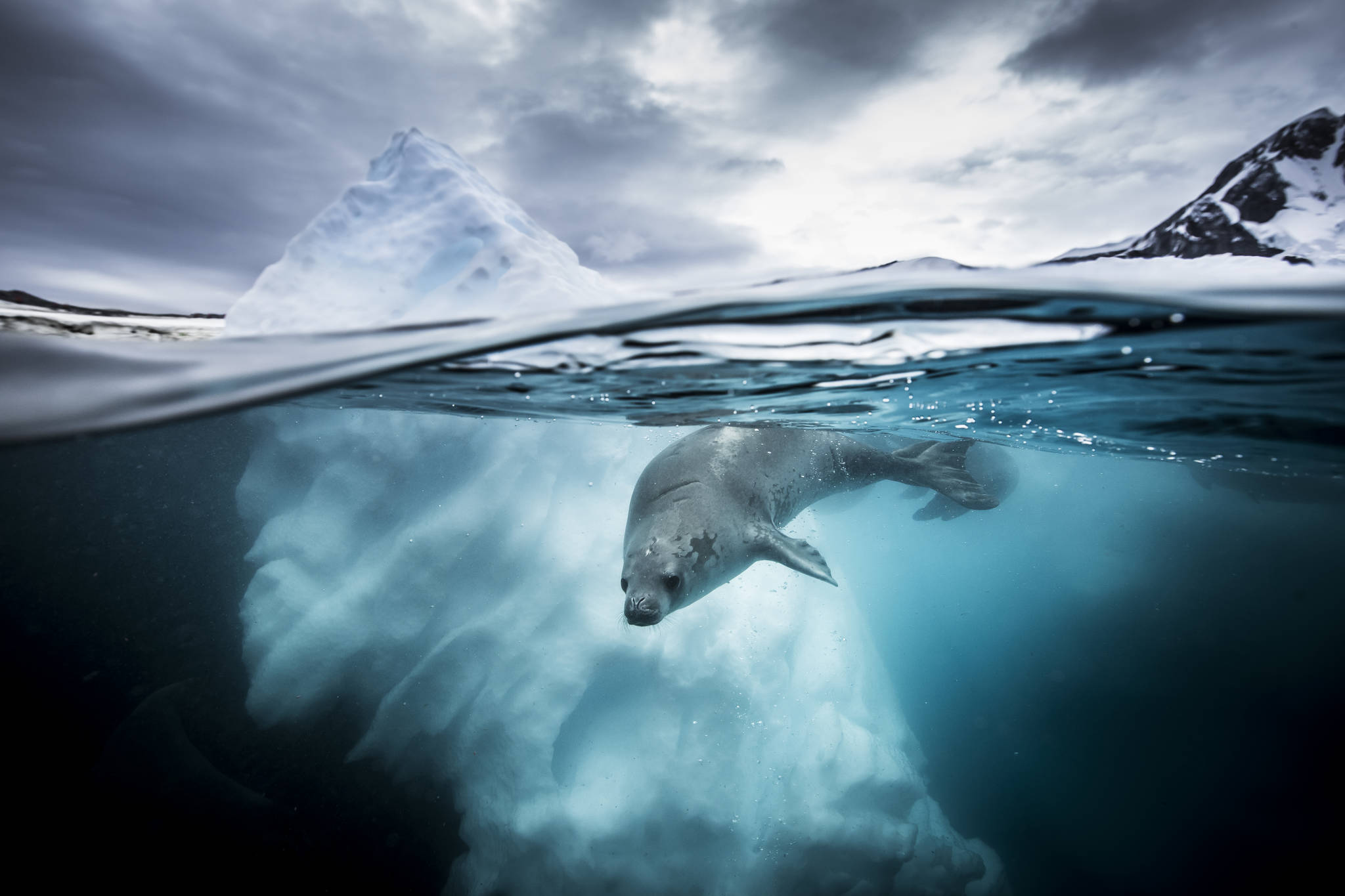
While working in Antartica, Farrer started utilizing photography and videography to document and share this incredible region. In 2019, the photo, “Curious Crabeater”, earned her runner up in The Underwater Photographer of the Year Competition in the wide-angle category. This award was founded in 1965 by British diver and magazine editor Bernard Eaton and it receives around 5000 entries every year.
On the videography side of things, (besides filming one of the most influential cinematic masterpieces of the 21st century, “Crybaby Learns to Swim”) Farrer has also worked with the BBC as a contributor to Frozen Planet.
Also, check out “Crybaby learns to Swim”, a video recorded by our esteemed guest, Jessica Farrer.
To explore more of her wildlife photography, find her on instagram @jessica_farrer.
We woke up earlier than normal to go to a harbor seal necropsy at FHL. Before we headed out, we spent half an hour cleaning the dorms, splitting up tasks so everyone could partake in the process. Upon arriving, we walked down the pier, only to discover the necropsy was not happening. This cancellation was due to no megafauna ex. seals, sea lions, or orcas dying and being collected to be examined. While a disappointment we were glad nothing had died.
Cattle Point
Picture by Nina Johnson
Caroline graciously drove Ben, Morgan, Finlee, and Nina to Cattle Point at 11:30 AM. Nina was in pursuit of mussels to use for her project and a group activity tomorrow. With Ben’s help, she collected over twenty. Morgan was also looking for organisms to support her project. Ben assisted Morgan in finding two crabs, a disappointing number compared to the success they had had the day before with a collection of over one hundred crabs. Finlee collected surf grass for her project as well. After a successful day at Cattle Point, Ben impressively carried a heavy bucket of seawater up the steep trail back to the lighthouse.
Friday Harbor Labs:
Sam, Ian, Flora, Ansuya, Scarlett, and Max went to FHL in the afternoon. Each person began working on their individual projects. This included Ian and Soren working with worms from Frankie Hedge’s Lab. Max started his data collection with blood stars. Ian began to ID polychaete worms collected from the night-lighting last night. Unfortunately, Sam lost one of his nudibranchs, meaning that he will need to transition to another project. Ansuya, Flora, and Scarlett met with Dr. Sandy Wyllie Echeverria to continue working on their projects relating to eelgrass and sea hares.
Harrowing hand happenstance
Picture by Nina Johnson
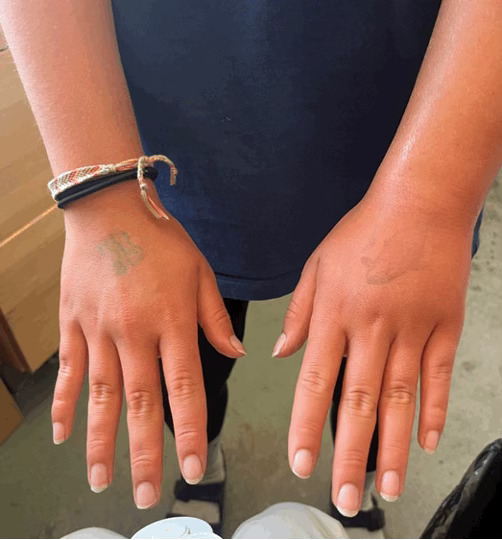
The day did not come without injury, however. Scarlet’s left hand, stung by a wasp yesterday, began to swell like a balloon. Caroline stepped in and assisted in a journey to Urgent Care. Luckily, it was not a severe injury.
Other Sites:
While most of the group was at FHL, a small portion split off to work in the field. Gretchen and Katie headed to Argyle Lagoon to survey chitons, Sid headed to Eagle cove to record aggregating anemones, and Claudia headed to 4th of July Beach to collect eelgrass samples.
LimeKiln State Park:
photo by Claudia
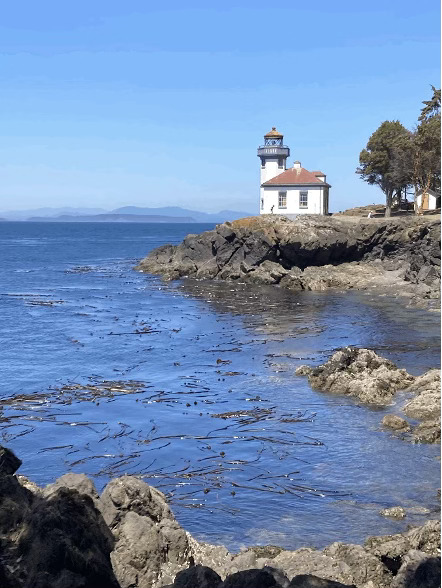
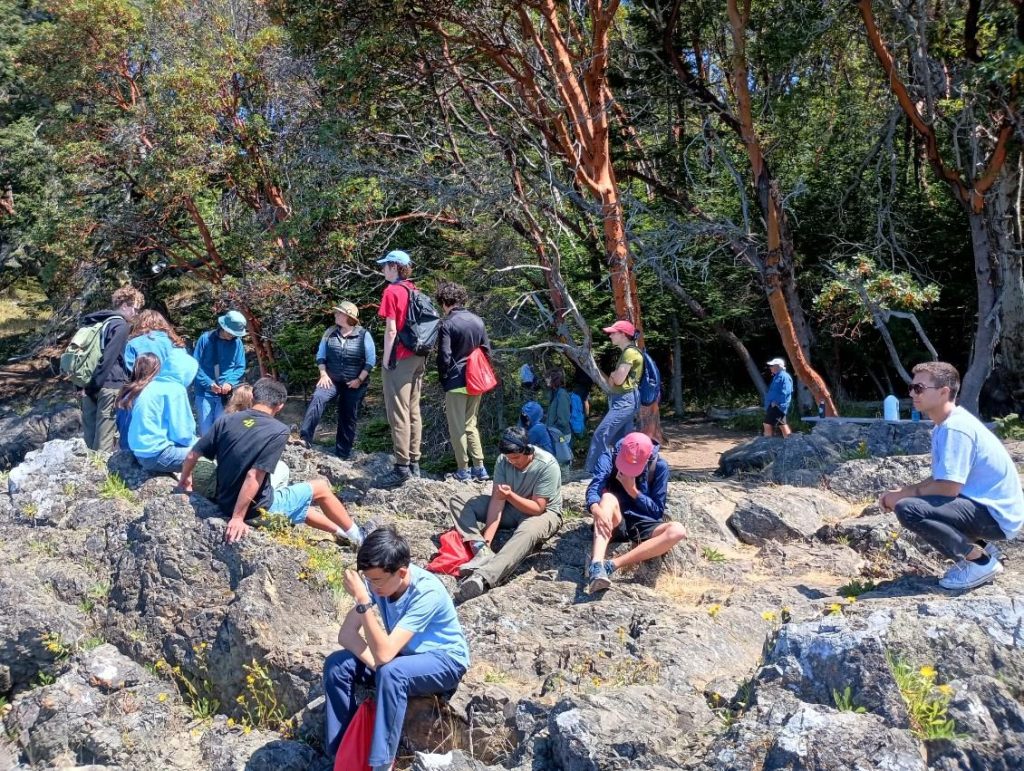
Meanwhile, the rest of us headed over to Lime Kiln State Park where we were given a tour by Erin Corra, the founder of FOLKS, a nonprofit that works to provide education about Lime Kiln State Park. We learned about the park’s history as well as its environment, all the while admiring the wonderful view of the lighthouse. We ended off our tour with a visit to the hydrophone, where we learned about the importance of using research methods that do not impact our environment.
Photo by Adam Rogowski
Seminar:
In the evening, we went to a seminar on diversity, equity, and inclusion by Helen Yip. She addressed the importance of scientific perspectives from marginalized people, as well as promoting women in STEM. Her fascinating lecture incorporated a lot of audience participation, and we learned a lot!
Note: This post was originally interactive, but WordPress does not allow hyperlinking within a document, so now you just have to scroll.
Good morning! After a restful night’s sleep, the world seems ripe with possibilities. How will you start your day?
Go to Friday Harbor Labs
Collect data at the beach
Work in the Spring Street Lab
Watch the pigeon guillemots at the docks
Welcome to Friday Harbor Labs! By appointment you can…
Meet with Dr. Sandy
Go to the fish lab
Eelgrass symposium: Flora, Ansuya, and Scarlett
You meet Dr. Sandy in his office. In a packed 45 minutes, he reviews your procedure, gives you valuable input, and imparts a few life lessons. You learn the importance of precise language and providing scientific reasoning behind the choices in your procedure. You now have several other trials that you need to perform in preparation for your experiment including observation to determine how long it takes for a sea hare to get hungry and a test run of scraping the epiphytes off an eelgrass leaf to determine how much the sea hare eats. In preparation for the germination of the eelgrass seeds, two of Dr. Sandy’s tanks must be cleaned and filled. You embark on a quest to gather the variety of pipes Dr. Sandy directed you to, during which you run into Adam and Soren. CONTINUE TO ORIGAMI BITES BACK.
Formalin Fish Fun- Soren (and Adam)
“I want to live here one day.” – Soren
You accompany Soren and Adam to the fish lab. Future Dr. Meg gives you a tour of the wet specimens.
Surprise: You found a diaphonized frog specimen!
Diaphonized specimens are made by using a chemical solution to clear the organism. Then dyes are added, the pink dye is attracted to the collagen rich bone and the blue to the cartilage.
Soren is doing his project on the preservation of wet specimens. Wet specimen refers to an organism that has been preserved in liquid. The organism is first placed in a fixative liquid (usually a formalin solution) this will halt any decomposition and the organism will stiffen into the position it is placed in. After around 24 hours the organism will be removed from the solution, rinsed in water, then go through a dehydration series. Placed first in 25% ethanol alcohol gradually it will be moved through higher concentrations of alcohol until it will be indefinitely preserved in 70% ethanol alcohol.
Hooray! Future Dr. Meg agreed to help Soren with his project. With her help, Soren will test how well different species hold up to preservation.
You have extra time before lunch, you help Adam sanitize sea water for Claudia’s experiment. On the way back to his office, you run into Flora, Ansuya, and Scarlett. CONTINUE TO ORIGAMI BITES BACK.
You and five others head down to the tanks in order to clean them. As you begin to wash the tanks, Scarlett yelps. Something has bit her! Upon further investigation, you discover a wasp nest on one of the tanks. These are paper wasps, distinguished by their tendency to bite rather than sting. As Caroline informs you later, their hive essentially functions as a condo where females lay eggs and feed their own young without forming close connections with the other wasps.
Adam, allergic to wasps and notorious for not carrying his epi-pen, informs Dr. Sandy of the hive. The daring Dr. Sandy assures you he will take care of it. Thwarted once again by circumstance, you return to the dorms for lunch.
Choose to
Return to the dorm
Follow Dr. Sandy’s sidequest
Ahoy! Welcome to the docks…
Pursuing Pigeons- Tatum
You and Tatam head down to the docks to observe the pigeon guillemots. Tatum finds a way to survey the birds that will allow her to establish a baseline of their behaviors. Watching the birds is a meditative experience, though the ferries were extremely disruptive. Interrupting both the vibe and the view. After a successful day of collecting preliminary data you and Tatam head back to the dorms. CONTINUE TO DORM.
Welcome to the Spring Street Lab! Though she be little, she is fierce.
Sand Dollar Shenanigans- Caleb, Finlee, and Claudia
“I’m out of my depth, I’m just an average Joe!”- Caleb Zulauf
Yesterday, Caleb acquired sand dollars from FHL. Today, you help him extract gametes by injecting potassium chloride into the center of the five septa for his experiment which will test how pH affects sand dollar development. Perched on a beaker, the cilia of the sand dollars wave in hypnotizing patterns. Cooped up in the lab all day, surrounded by super-sanitized glassware and a strangely UFO-shaped centrifuge, you feel like you’re boiling alive. You struggle to keep all your water cool. In the end, it’s all worth it, as you fertilize the eggs. Tomorrow, you will have larvae.
You’re collecting Data at the beach!
You’re headed to the field, but what beach do you choose?
Cattle Point Beach
Deadman’s Bay
Go to Cattle Point Beach
Focus on:
Mussels
Nudibranchs
Muscles and Mussels- Nina & co.
You accompany Nina on a perilous quest to collect mussels from the rocks for her project. She will observe the effects of temperature on the strength of mussels’ byssal threads. In her intrepid attempts to pry the bivalves from their substrate, Nina bangs her head on a log and injures her knee. Luckily, others are nearby, and she promptly receives help.
Oh no! You forgot the knife and spatula used to scrape up the mussels at the beach. Head back to the beach to collect the abandoned items then go back to the dorms. CONTINUE TO DORMS
The Elusive Red Sponge Nudibranch- Sam & co.
“There was more Ulva than seawater” – Sam Feit (frustrated)
At cattle point, you assist Sam, Max, Nina, and Ian in their pursuit of red sponge nudibranchs for Sam’s project which involves observation of their egg-laying behaviors. Max spies and collects one in the first ten minutes, but you spend the next hour up to your thighs in seawater. Due to the high density of sea lettuce, your visibility of everything below the surface is extremely obscured, and you do not find any more. Sam nearly loses a finger to a red rock crab and your boots are now full of water. You drop the one nudibranch off at the labs then head defeated back to the dorms CONTINUE TO DORMS
Congratulations! You have chosen to go to Deadman’s Bay!
You now have another choice ahead of you.
You can focus on:
Chitons
Limpets
Crabs
Anemones
Coasting with Chitons- Katie and Gretchen
You and a friend start a survey looking at the mossy chiton. Starting from the rocks then heading deeper into the intertidal zone. Your mission is successful! You find many mossy chitons! Afterwards you head back to the dorms. CONTINUE TO DORMS
Out of the Tide Pool, into the Bucket- Matt
You notice that he has a heavy heart due to some unforeseen circumstances regarding his project and some recent changes. You also realize that he is armed with a scraper and a spatula, which vastly increases his chances of collecting more mossy chitons at the beach. However, all hope is not lost. You and him work together to collect a whopping 6 mossy chitons at the beach, heading back to the dorms on a high note. CONTINUE TO DORMS
Looking for Limpets – Tyler
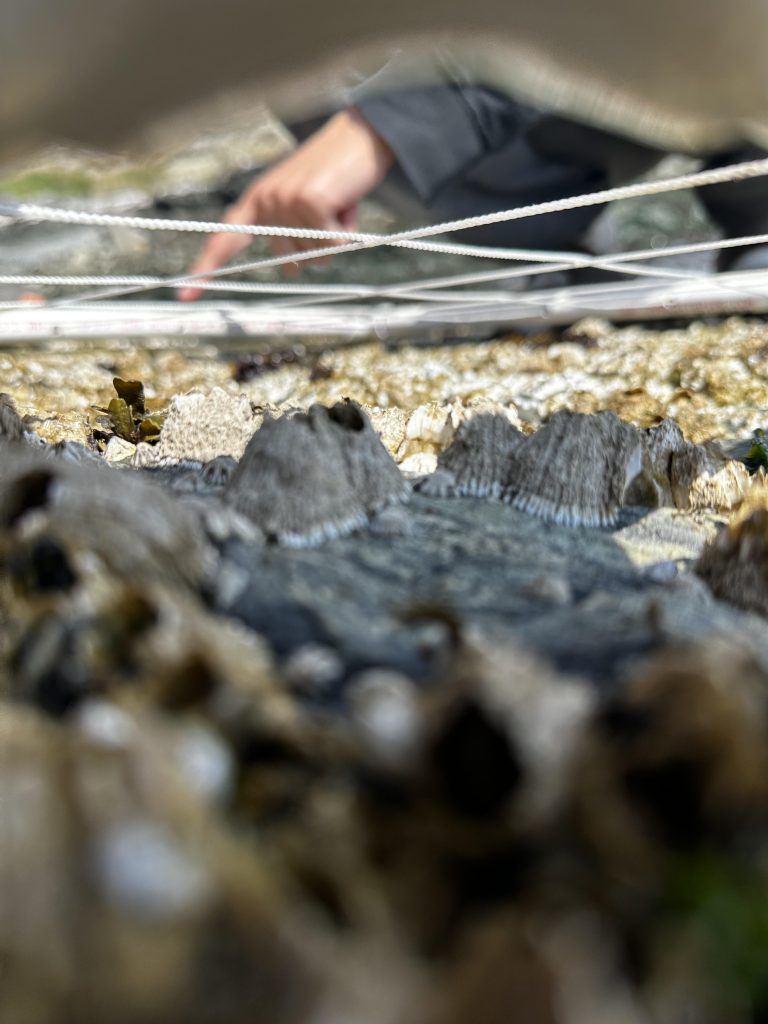
You get out to the beach after a short drive with 6 others. With your quadrant and transect in your hands, you pick a good spot and start taking some measurements. Your data sheet in hand, you start noting down how many limpets are in the transect. Finger, shield and mask limpets are dotted throughout the rocky intertidal area as your paper slowly starts to fill up with numbers. You head back to the dorms with a sense of accomplishment knowing that all your data is now collected. CONTINUE TO DORMS
Sticky Pincers- Morgan and Ben
With a couple good buddies on the journey, you are glad that you are able to get outside to look at some crabs to help with Morgan’s project. You find an assortment of crabs hidden underneath the wide variety of rocks found at Deadman’s Bay. You also eat a delicious sandwich lunch while you are there. With full stomachs and crab buckets, you head back to the dorm. CONTINUE TO DORMS
Image by Morgan Aman
Sea Anemone Roundup – Sid
You set out to collect data on Sea anemones, using a transect. You are fairly successful, ending up with 20 data entries by the end of the expedition. The anemones seem to grow better in the sun, but still the data is inconclusive and more information is needed. You head back to the dorms. CONTINUE TO DORMS.
It’s lunchtime! Thanks for collecting data with us. You return to the dorms for a quick bite to eat. Meanwhile…
Fighting Fire with Oil- Dr. Sandy Wyllie-Echeverria
When Dr. Sandy receives Adam’s message about the wasps, he fearlessly takes it upon himself to clear the creatures. He strategically selects his weapon- a can of WD-40. After dousing the nest, he rolls coolly up to maintenance to inform them of the situation. Wasps begone!
We have a few more decisions for you to make…
You can either:
Relax at the dorms
Accompany students to Friday Harbor Labs
Sea Hare Fliplimpics- Flora and Ansuya
Image taken by Flora Vaught
After a brief detour (due to wasps) during which you run into Future Dr. Frankie and Future Dr. Yohan, you head back to the labs to finish your preparations. As the hose method of washing the tanks is not working, you resort to bailing it out with a sponge. You are concerned when you begin filling the tank and the water appears dirty, but soon remember that is normal, as it is seawater. You proceed to gather two sea hares from Dr. Sandy’s tanks and accompany Ansuya and Flora to the lab space Dr. Swalla has so kindly allowed you to share. The test you perform will determine how long it takes for a sea hare to get hungry, a crucial detail in Flora and Ansuya’s projects. This is determined through the amount of time it takes for the sea hare to right itself after being flipped over, as this can only be performed when all of the sea hare’s biological processes are occurring properly. After acquiring the data you need, you return the sea hares to their tanks. Finally, you enlist Adam to assist you in examining the eelgrass Scarlett courageously dived blind to collect at 4th of July beach. You are looking for signs of eelgrass wasting disease which is caused by a protist that enters the plant through lesions. This is related to Ansuya’s experiment which will compare sea hare’s grazing habits on healthy and diseased eelgrass. CONTINUE TO DORMS.
You’ve almost made it through the day! You only have one more decision to make!
Head to the beach
Relax in the dorms
Sunbathing at South Beach- The Pebble Pitchers
“So what are we supposed to do now?”- Ian Gafford
Although you probably thought you were going on a hike, you are pleased to be redirected to a north-facing beach for some brief fun in the sun. As Tatum emphasizes, this beach has it all: a gorgeous mountain view, a comfy pebble beach, and a variety of colorful stones. Snacking on grapes, you enjoy the plunk of the pebbles in the calm waves.
Detour! On your way back from the beach, you head to Cattle Point to retrieve Nina’s abandoned implements. CONTINUE TO DINNER
Decompress at the Dorm- The Tired Troupers
You’ve probably been wondering what Salish Sea Science students get up to in their scant free time. Some choose to hang out in the common area working on their posters, or getting some leisure time. Some people go for a walk around the town. Some people even take a nap! Really, it’s just relaxing and recharging after a long day. CONTINUE TO DINNER
Hungry? Good thing it’s time for dinner!
Infiltration- The Mussel Maniacs
Image taken by Flora Vaught
We all come together at the end of the day to eat dinner. You and all the others are happy to welcome our guest speaker Dr. Mike Nishizaki. After dinner we all circle up to listen to Dr. Nishizaki talk about 3 of his ongoing projects including investigations of the effects of temperature fluctuation and water flow on mussels. He also mentioned one of his creations. Robo-mussels! Robo-mussels are engineered to mimic real muscles in order to gain accurate temperature readings. He leaves us with beautiful stickers designed by one of his students, Raquel Santamaria Germani, that contain a QR code which leads to an in-progress poster of the muscle bed ecosystem.
It’s finally dark… Get your headlamp on, we’re going nightlighting.
Fear is the Mind Killer- The Polychaete Pursuers
Image taken by Katie
After dinner you and the rest of the students wait for darkness to fall. Then everyone heads out to the docks at the Friday Harbor Labs. At the docks a light probe is lowered into the water and you watch in amazement as it illuminates the water allowing you to see a myriad of organisms. Ian and some other students are there to collect polychaete worms for their projects. With his delicate hand and dubious British accent, Adam summons the worms from the depths, along with a few “propa fish”. Caleb is a menace with the net, snatching up unsuspecting worms left and right, even braving a bite from the biggest. Ian, the worm whisperer, is thrilled to collect more than enough worms for his experiment.
Suddenly, Katie gasps in shock. There’s a harbor seal! You watch as the seal circles around the light, dipping in and out of visibility. When the seal disappears you gaze up at the starry night sky with Sam until it’s time to head back to the dorms. Once you get back you can feel your eyes telling you it’s time to fall asleep. You get ready then fall into bed. As you close your eyes you look back at everything you did today. So much was going on, no one person could experience all of it. Perhaps you should ask others about their days, listen to their stories and see what choices you could have made.
Congratulations! You’ve made it to the end of the day. Crawl into bed for your beauty sleep before the next packed day tomorrow.