Brought to you by Meg, Hebaq, and Maddy!
Today has been full of adjustments and attempts to cope with the rising temperatures. For the majority of us, ninety degree weather is a whole new territory; a few others mock us weak PNW locals for being so sensitive to the heat (yes, we mean the California folk). The heat affected us all, especially at the start of the day when we discovered the difficulty of waking up in very warm and humid rooms. From there, we gobbled up our breakfasts and headed down to our next adventure: the Friday Harbor Labs! There, we observed the light trap Tim placed in the water just days before.
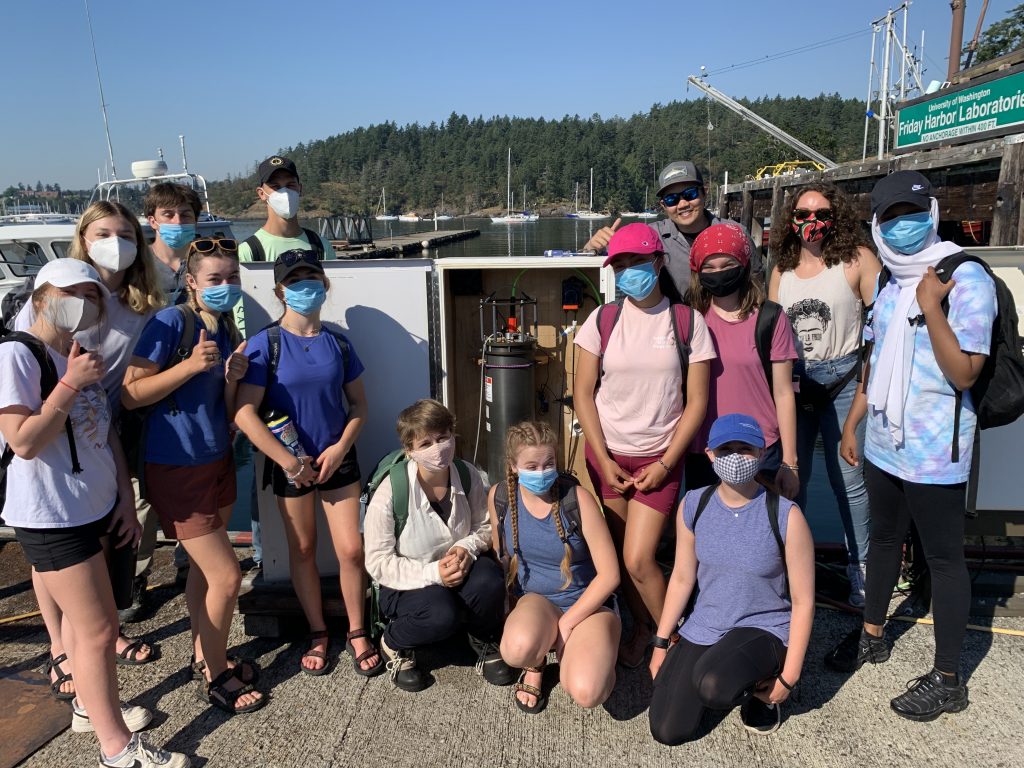
When we arrived, Sam Garson and Dr. Kirk Sato were there to guide us through the mechanics of F.H.L.O.O. (Friday Harbor Labs Ocean Observatory). F.H.L.O.O. is a brand new development for the island; it tracks pH, salinity, turbidity, carbon dioxide, oxygen, temperature, conductivity, and chlorophyll. Although these abiotic factors can be measured in other ways, the F.H.L.O.O. is special because it measures and records this data hourly (or half-hourly). Because F.H.L.O.O. is a digital, computational system, Kirk and Sam also taught us a bit about the roles of computers when working in Marine biology.
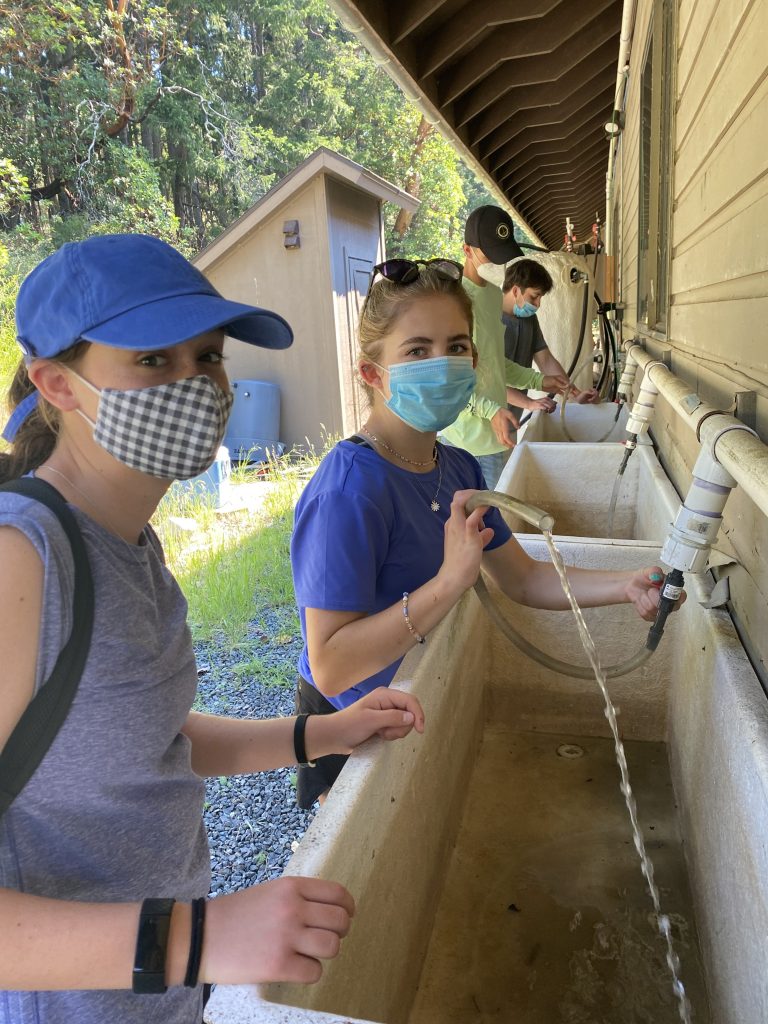
We found a break from the hot sun under the shade where we cleaned out saltwater researching tanks/sinks to prepare for our upcoming individual projects. We unclogged PVC pipes and learned the intricate saltwater system that allows for scientists to keep animals comfortable throughout their projects. As cool as it was, we will admit it was very dirty. We stuck a small metal rod up the pipe in an effort to release the pressure of the water. Although it was helpful, our help came at the expense of some of our clothes. After a while of scrubbing, we headed down to look at the shore. On our way down the rocks, we were thrilled to see a river otter on the beach!
Afternoon
We made our way over to the dorms to begin the second half of our day, expecting to begin a lesson at the labs. However, Tim let us know that the building was smoldering hot – far too hot to host a class. We transitioned the class over to the dining area, where we appreciated the newly discovered AC. Then, Tim presented us a few commonly used tools in the science arena. From Niskin Bottles to Secchi Disks, our understanding on what we have the ability to test while on our canoe expeditions expanded.

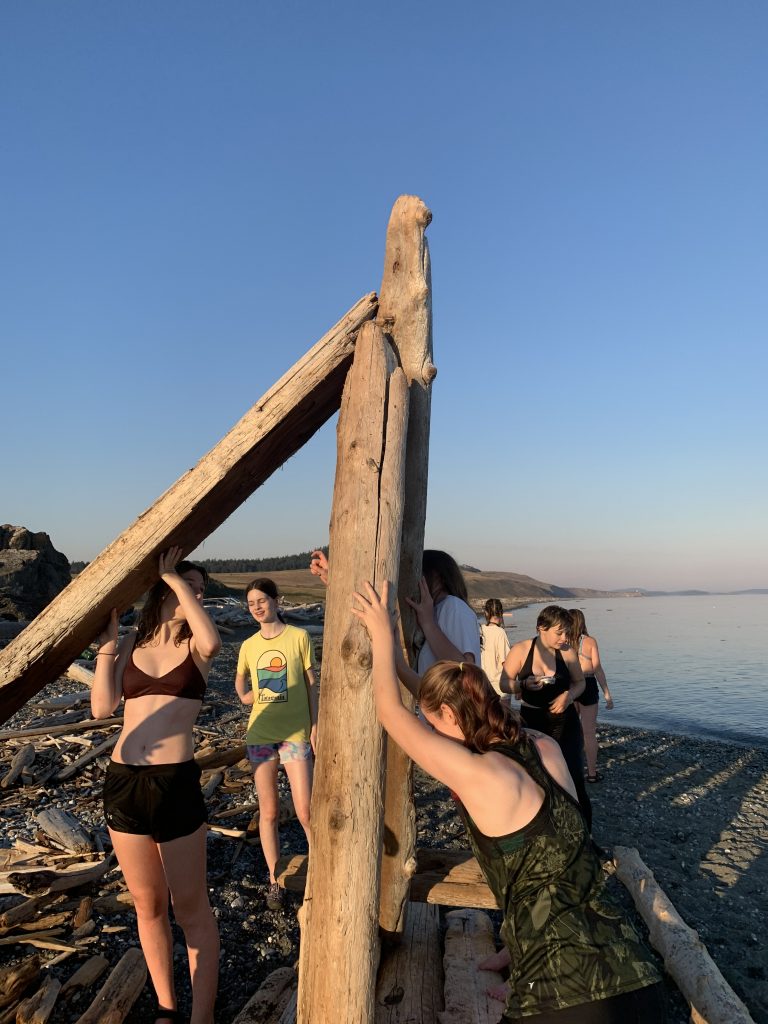
Driven by the curiosity of how pH and CO₂ measurements correlate, we also dug into the chemistry of the ocean (chemical oceanography), led by Tim. Some of us were finally able to see the struggle of Chemistry class pay off. We wrapped up the long, hot day with a picnic at South Beach; we packed paper bag meals and towels and headed down. Although the heat was nearly unbearable at times, we’re all glad we were able to get through it and are hopeful that the rest of the week will be much cooler. See you tomorrow!