Today’s blog is brought to you by Dustin, Islay, and Setharonious.
This morning we visited members of the Sea Mammal Research Unit (SMRU) in a small office/garage building less than a 10 minute walk from the dorm. There we met Jason, who manages the North America chapter of SMRU; Jessica, who is a junior scientist; and Jesse, the field technician, who explained to us what they do related to bioacoustics. Jason gave us an overview of the physics of sound, Jessica showed us how the computer identifies and compiles orca noises from hours of sound data from the hydrophones and Jessica reviews it. Jesse is the technician and he constructs Coastal Acoustic Buoys which hydrophones are attached to and then deployed in the ocean. Currently, Jesse is working on assembling CABOWs (Coastal Acoustic Buoys for Offshore Wind) for companies that are building offshore wind power on the East Coast.
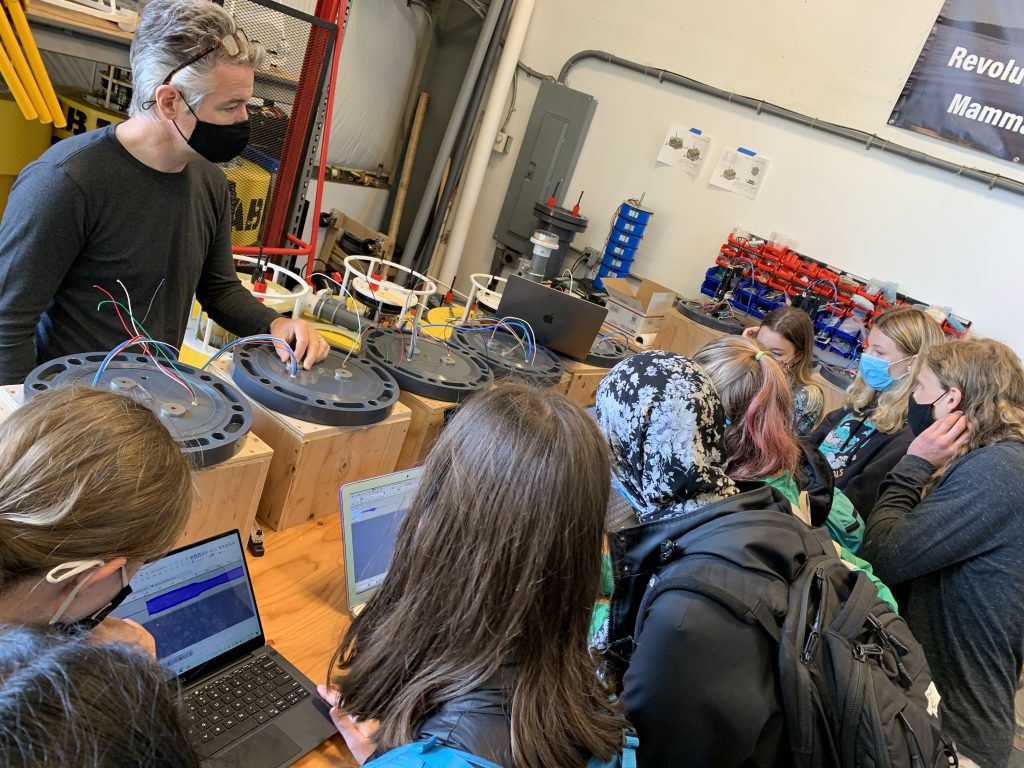
This team is aiming to generate a solution to the rampant noise pollution humans have introduced into the ocean. Right whales are endangered in the Atlantic and the noise pollution from the construction disrupts their behavior. Therefore there are regulations in place which require companies to avoid creating noise when whales are observed within a 10km radius. About 10 CABOWs would be placed in the water to detect Right whale sounds and notify people on land to stop creating noise.
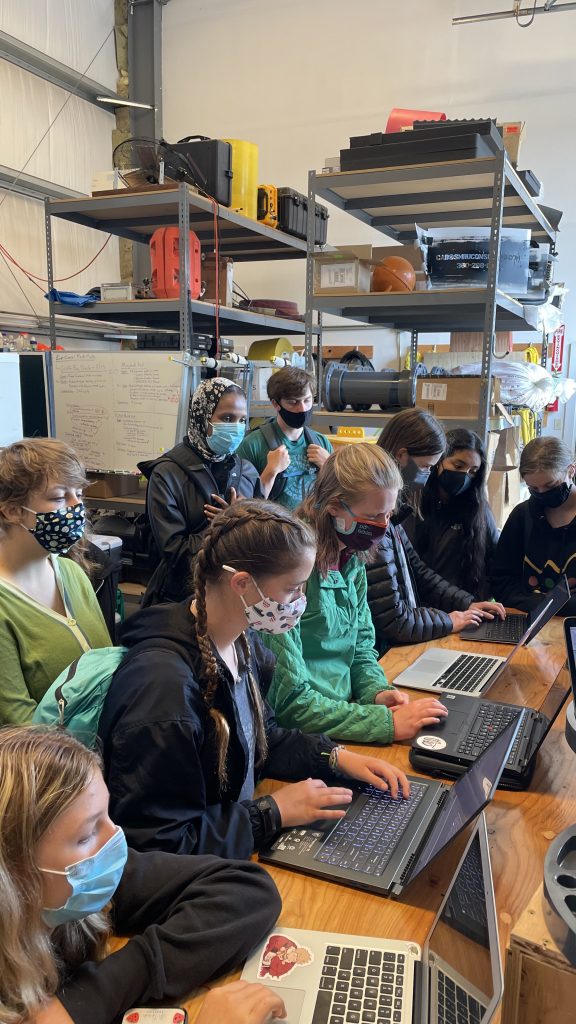
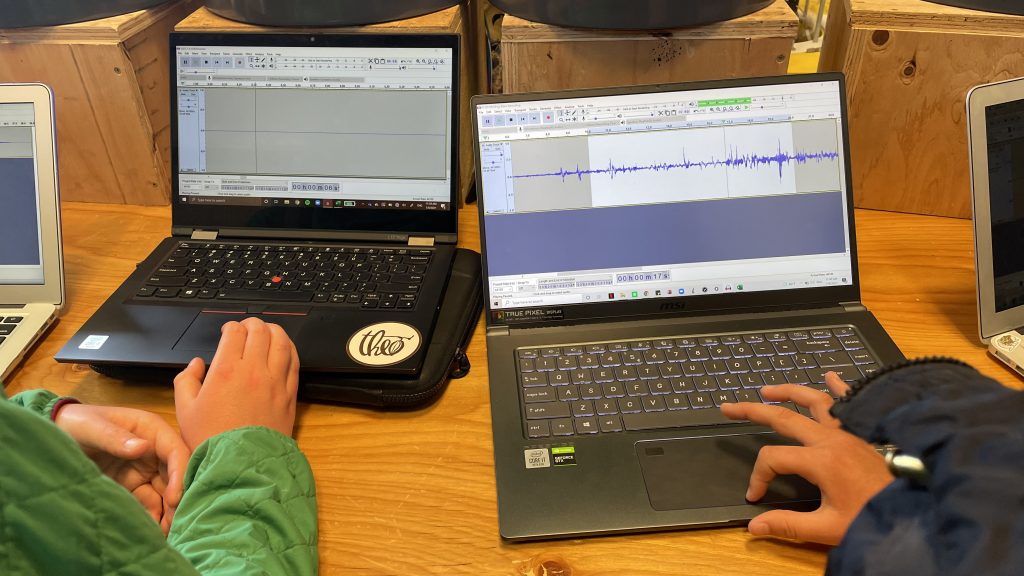
-Students calibrating sound waves on the Audacity program. Photos by Islay Ross
After the SMRU’s engaging presentation on whale calls and sound level zonation, we dove into creating our own sound waves to analyze. We downloaded the Audacity program onto our computers, and recorded a 10-second tone clip to find each individual computer’s calibration number. Long story short, we imported 442,368 individual data values from vibration graphs into cells in a Google spreadsheet; squared each cell; found the average of those squared values; and added our initial calibration value…etcetera. Then, divided into 5 groups, we dispersed into town and individually recorded minute-long sound clips. When we returned from town, we got to see our sound bytes in wavelength form! Some of us had tourist chatter, passing cars, or airplanes- it was awesome to apply theories of bioacoustics to everyday sound effects. Then, we headed off to lunch!
After our lesson on marine acoustics we returned to the dorms to make progress on our final projects. Some students stayed at the dorms to continue their research in physical and online scholarly literature, and others went to Friday Harbor Labs to do field work and collect data. Just about all of us have a clear goal in mind, and this program is doing more than enough to make them possible. From orcas to the violent and dangerous behavior of chitons, our various interests will be presented in depth on our posters. I must go now, the chitons draw closer with every passing moment… I can not keep outrunning them, this may very well be my last entry. REJECT SOCIETY RETURN TO MATT.
Stay safe out there,
-Setharonious (and friends)