~ Today’s blog is brought to you by Hebaq, Maddy, and Estevan!
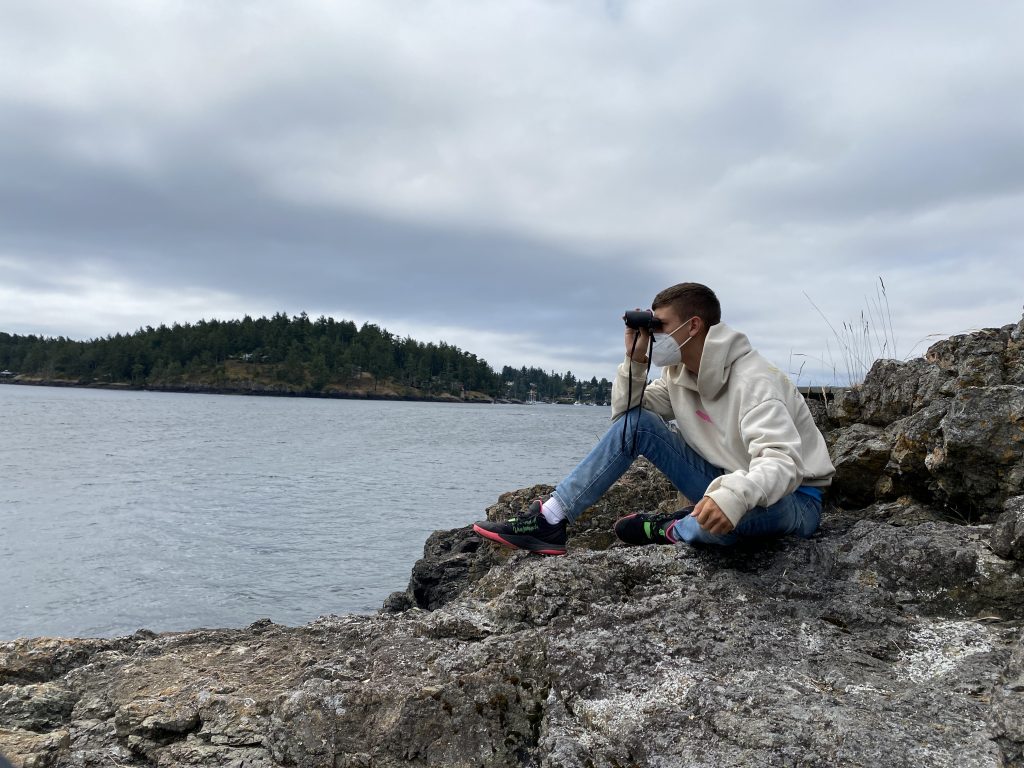
This morning, we groggily got ready and ate breakfast, before learning the knot of the day, which is useful on sailboats for attaching things. After that, we headed out to Friday Harbor Labs for another data collecting session! Those of us who already had data or couldn’t collect at FHL opted to help other people collect data instead. A few hours later, after spotting jellyfishes and surveying tide pools, we gathered at the windy observation deck, where another group was carefully looking out for whales. The whale watchers, Hebaq and Estevan, had finished their survey, and unfortunately saw nothing. However, as we gathered our stuff, ready to leave, we heard Tim excitedly point out an orca on the horizon!! We watched in awe as it came up a few times. It was an amazing way to end a tired morning.
Earwig Experiments
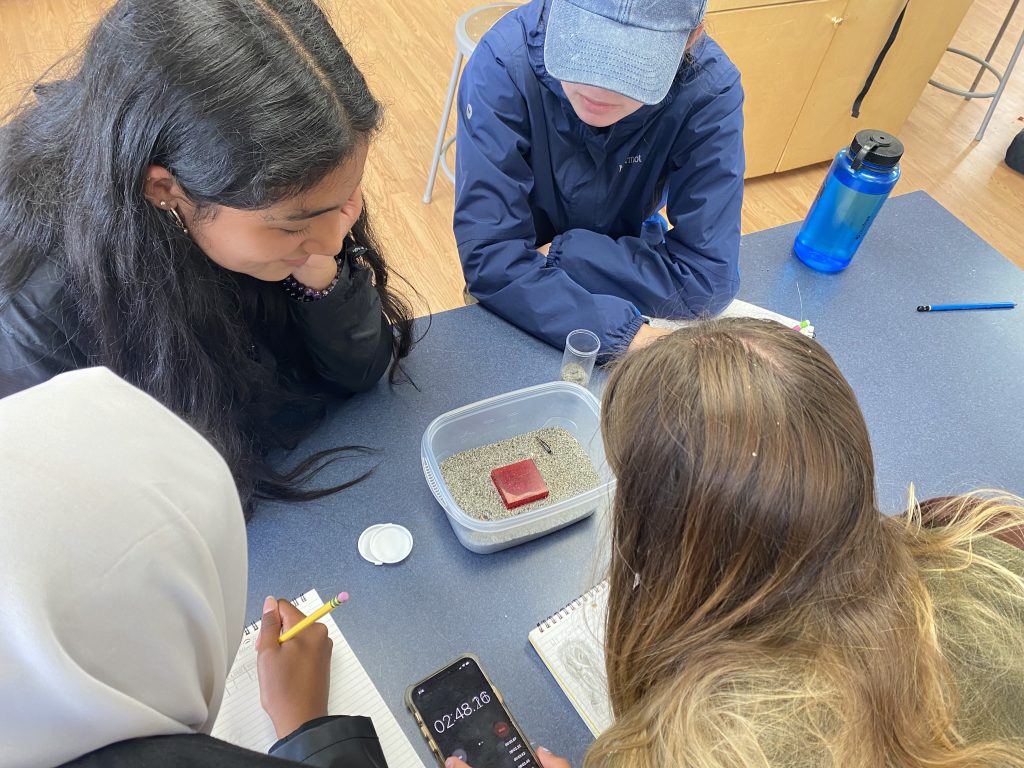
We came back to the dorms to eat a delicious lunch of leftovers and sandwiches. After filling our stomachs, we went up to the labs to continue our experimentation with the earwigs. The first experiment tested the environment that the earwigs would prefer to live in. One of the shelters was covered with sand and the other was left exposed to natural light. Our results drew inconclusive information, so we decided to alter the experiment further. We noticed that we hadn’t put two earwigs together in the same environment, our curiosity began to spin into new designs and ideas.
Our second experiment consisted of male and female earwigs being put into one shelter environment. This was when earwigs began to draw their pincers. The female’s aggressive nature was seen as they quickly attacked the male earwigs. We watched in amazement for the next 10 minutes as we let the experiment run its course. Weirdly enough, we enjoyed the entertainment we were receiving by watching the earwigs fight. We observed not only how they used the shelter, but also how these organisms interact with each other. After 2 hours of running the experiments, altering, and repeating, we said goodbye to our earwig friends and changed activities.
Project Time
After the change of pace, we settled down in the dining area to begin our independent work time. Tim, understanding the fatigue that some of us were dealing with, also let people take care of their bodies with short rest times. The evening began to quiet down and we transitioned into exploration time. Tom and the cooking team, Sonja, Colette, and Elliott, prepared a beautiful dish of alfredo pasta. We enjoyed it over conversations with today’s guest, Tom Mumford, an expert on algae and seaweeds of all kinds! He’s studies seaweed since 1965, and now teaches classes on marine algae at the University of Washington!
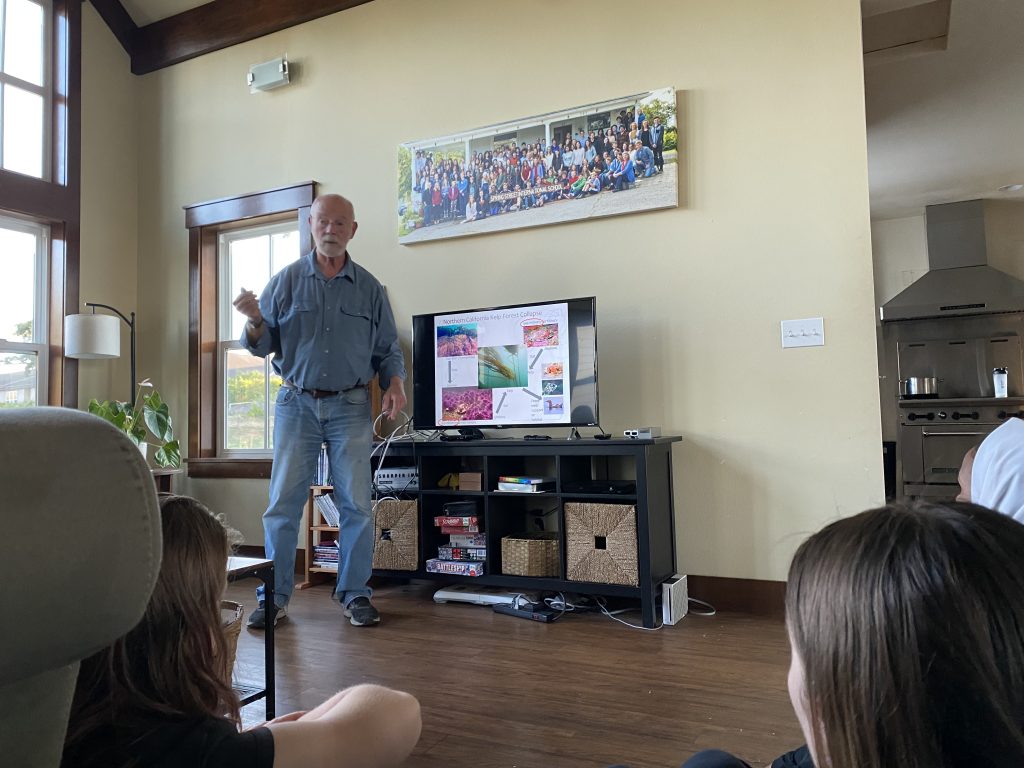
Our views and understanding of kelp definitely has grown over this evening. Dr. Mumford began the evening with his bold claim that kelp is the basis of the ecosystem in the Salish Sea. Kelp, a diverse group of brown seaweed, was one of the first things that we were introduced to when we began working in the intertidal zone. Their role as mitigators of ocean acidification is one that is often overlooked, despite the fact that they are essential to almost every organism that resides in the ocean. We are so thankful to have met with such an amazing and influential person tonight, and we’re sure to carry this knowledge with us into our future careers!